Evil Medical Technicians. “Old 37” review!

14412
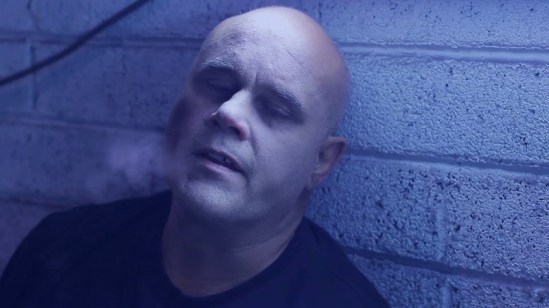
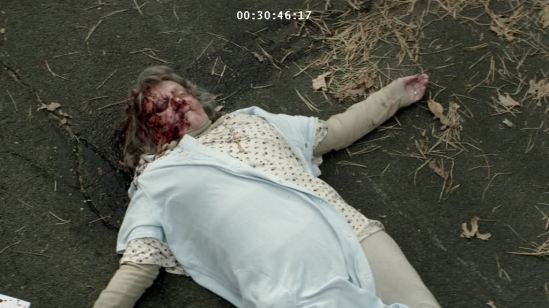
Under the sadistic thumb of their ruthless father, two physically and mentally abused brothers as children follow in their father’s footsteps in adulthood, falsely portraying to be EMT’s in old ambulance 37 and slaughtering those who desperately need medical attention on an infamous and isolated stretch of road. When the brothers’ loving mother becomes the victim of a hit and run by a group of young teens, the brothers’ quest to kill gets personal. Unbeknownst to them as the brothers’ targeted prey, the arrogant and rowdy teens live their complex and immature lives, overflowing with trivial matters such as fast cars, dating, and cosmetic surgeries.
vlcsnap-2016-01-18-19h06m49s251
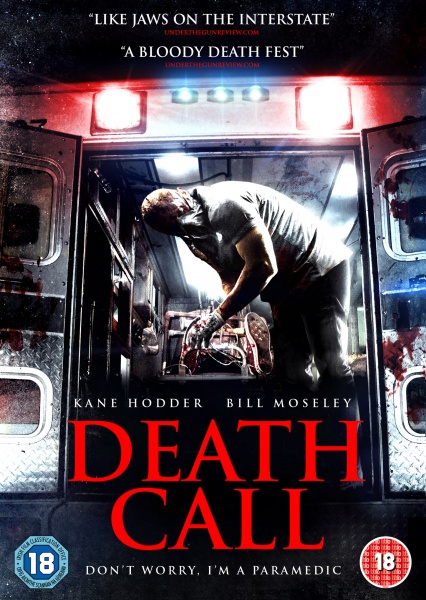
“Old 37” (aka “Ambulance 37” or aka “Death Call”) wrecks before reaching the finish line. Bittersweetly, the story by Paul Travers, written also by Paul Travers and Joe Landes, is an interesting concept of life savers taking lives and, interestingly enough, a similar idea was in the news recently where a supposed unmarked cop cart pulls over young women, but the driver is actually a cunning rapist instead of an actual officer of the law. “Old 37” is essentially art mimicking real life.  We feel safe when an emergency civil servant or agent is present or tells us not to worry, as exhibited in “Old 37.”  “Don’t worry, I’m a paramedic,” says one of the demented brothers.
vlcsnap-2016-01-18-19h16m41s31
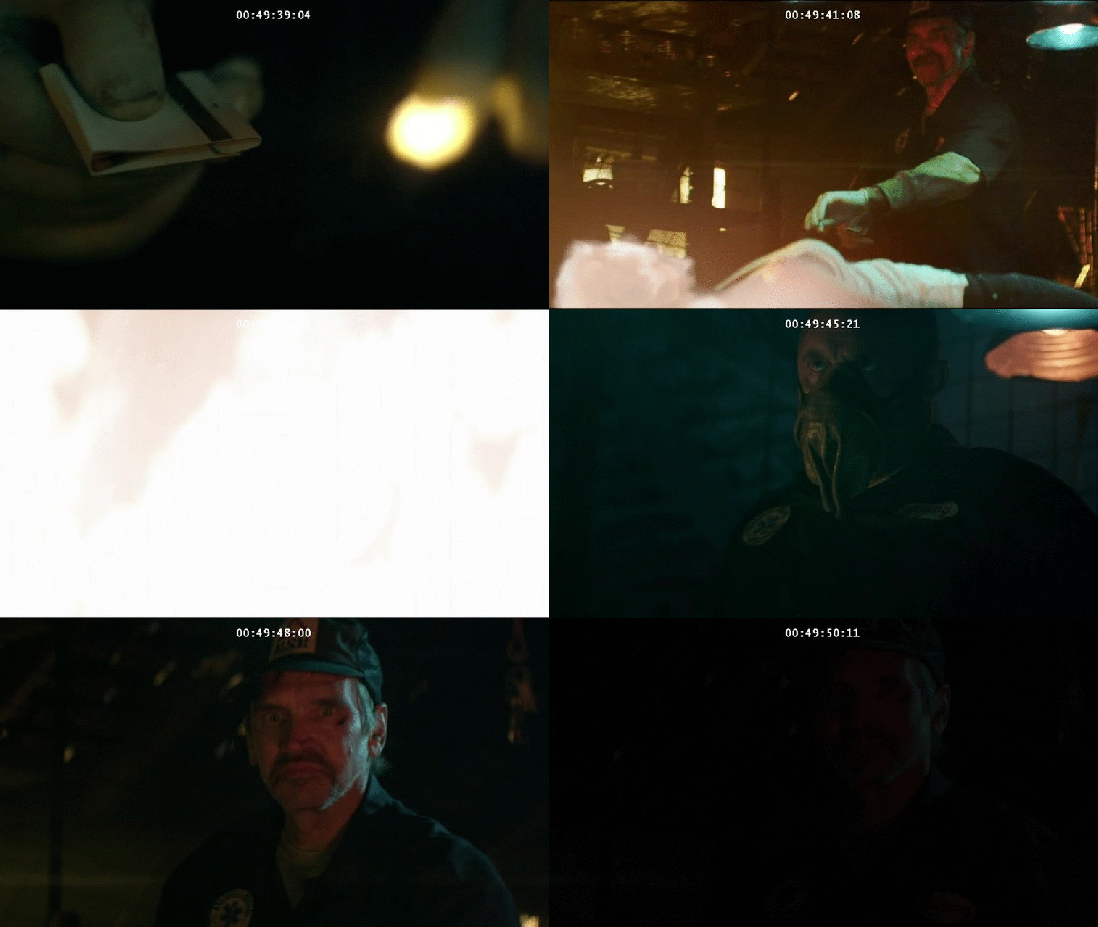
“Old 37” greatly has much going for the Three Point Capital funded movie.  Three Point Capital has backed many other notable films such as “Insidious:  Chapter 2,” “Nightcrawler,” and Kevin Smith’s “Red State.”  Partnered up with Joe Dante’s “Burying the Ex’s” post-production company Siren Digital, the two companies had the mucho dinero to sleekly design, which it does, and to hire a moderately formidable cast, which they do.  Kane Hodder and Bill Moseley headline, being the pair of horror icons forced to be reckoned with, and slide into the shoes of the two ambulance driving, bloodthirsty brothers, intercepting 911 calls via their scanner for victims.  Hodder hasn’t lost that Jason Voorhees gait and menacing body motions and Moseley, without even trying, has the uncanny ability to sinister up an entertaining and terrifying persona. Together on screen, a powerhouse of an unimaginable magnitude as they are, hands down, the highlight of “Old 37.”
output_wTBXrG
With high-end production value and two of probably the most prolific names in horror attached, what could go wrong? Well, the first wrong is “Old 37” is mostly an unfunny teen comedy rather than a horror movie. It’s more “She’s All That,” than “Scream.” It’s more “American Pie,” than “I Know What You Did Last Summer.” It’s more “10 Things I Hate About You,” than…you get the picture. Horror didn’t surface into full eligibility until about the last 20 minutes with the archetypical final girl chase finale and even then was the horror story still underdeveloped. The teen characters’s lives are too complex as they take over the story, including one awkward, self-loathing lead character, Samantha, eager to fit in (even though she does), eager to look beautiful (which she already does), and eager to obtain breast augmentation (though she doesn’t need them). The breast enhancement scenes drastically change the direction of the film, throwing me for a serious loop for various reasons: Samantha gets the okay right away when she asks her mother for new breasts, she gets new breasts in a matter of days, and she isn’t sore or in pain directly after receiving them. Time is an illusion when two the contrasts display Samantha throughout going forward from the entire beginning to end process for new flesh pillows while one of her crude friends gets murdered. Something doesn’t add up.
vlcsnap-2016-01-18-19h24m45s1
Special effects guy Pete Gerner and his talented crew do blood spattering justice with the sanguinary written murders and while I feel the brutality and the blood is amongst the film’s aurora, the gooey gory scenes are quickly edited, taking away the time to where we can’t fully appreciate, fully engulf, nor fully digest the “I Sell The Dead” Gerner effects. The final nail in the coffin is director Alan Smithee. If you Google Alan Smithee, results will show that Alan Smithee is a pseudonym used by directors who want to disown a project. Christian Winters removed his name from “Old 37” because he thought his control over the film wasn’t his anymore. And that’s fairly accurate as “Old 37” seems and feels incomplete, much like Rob Schmidt’s 2011 unfinished debacle “Bad Meat,” directed under his pseudonym Lulu Jarmen, and just like “Bad Meat,” “Old 37” has the potential, the substance, and the talent to what could have been a solid horror narrative.

Overall, “Old 37” has the financial backing, has some serious blood that made the cut, has a great soundtrack assortment, and has motherfuckin’ Bill Moseley and Kane Hodder. What the disowned film lacks is a well-written narrative, contains poorly written and idiotic teenage characters, and needs a director with an eye for direction instead of a producer with greedy big pockets. “Old 37,” under the name “Death Call,” will be hitting DVD shelves from UK distributor High Fliers films. If you’re a fan of Hodder and Moseley, but don’t expect a typical horror movie as this film goes through multiple genre transitions and doesn’t settle just on one at any point. There is one delicate scene of Olivia Alexander which I’m sure will be pleasing to any viewer.

#Programming_Evil. “Nightmare_Code” review!

output_CIyNHS
Brilliant programmer Brett Desmond has been hired at a tech start-up to quickly complete the groundbreaking coding of a previous programmer Foster Cotten who went on a murderous rampage at the start-up’s tenth floor office right before killing himself. Desmond, struggling with the federal government breathing down his and his family’s necks due in part of him leaking sensitive classified material, works night and day and around the clock to crack Cotten’s code for ROPER, a behavior recognition program. A small work group remains with Desmond during the day, but at night, Desmond sleeps at the office, working aggressively to make the deadline and get his life back in order. The further Desmond or anyone else becomes familiar with the code, the code starts to modify their behavior, twisting their thoughts, and succumbing them to it’s will of the dead programmer.
vlcsnap-2016-01-17-20h28m17s239
From time to time again, the film industry on the subject of pioneer technology relays information upon the fears and consequences of intertwining arrogant brilliancy and controversial technology. From the genres of cyber punk to Sci-Fi horror, decades old films such as the virtual reality plotted “The Lawnmower Man” and “Virtuosity” to the more recent “Transcendence,” transferring consciousness into the machine, have been outspoken against the use of behavior modification and recognition programs. The idea behind the notion can said that the person envisioning the possibilities of such software will become obsessed, power hungry, or vengeful if the creation is taken away from them to which all three can be attributed to director Mark Netter’s 2014 film “Nightmare Code.”
vlcsnap-2016-01-17-20h24m11s79
Shot entirely through a surveillance-like setup and notebook web cams, “Nightmare Code,” for most of the duration, is viewed through four screens as like security footage. Netter and cinematographer Robert Fernandez designed this structure not for the sole purpose of a novelty exhibition, but to also confine characters in a small box coded by technology, as explained in an DVD’s bonus featurette, and creating a sense of isolation and distant connections that make the life of a programmer very lonely and depressing which develops in the characters very thoroughly. The story is told through the virtual eyes of ROPER, using it’s self-awareness and advanced modules to voyeuristically watch the small group of programmers and manically motivate their actions by use of altered video projections. ROPER also accesses the past, filling in the gaps that only the infamous story of the genius Foster Cotton can fill, and by accessing the past, the dead programmer’s coding can be understood for it’s malevolent behavior modification.
vlcsnap-2016-01-17-20h28m42s232
“Nightmare Code” is complimented by an underrated cast whom work well together through the smaller ROPER displays in the small screen film industry. Andrew J. West, better known for his role as the Terminus cannibal Gareth on “The Walking Dead,” takes on the protagonist role of Brett Desmond who battles legal and family trouble and West epitomizes isolation by effectively taking a man with a moral conscious in leaking immoral government information and leading him down a path of legal morality, but at the same time, being unfaithful, deceitful, and prone to corruption. He becomes pitted against antagonist Foster Cotton, played by veteran actor and long time supporting actor Googy Gress, notably recognized as a NASA mission controller from Ron Howard’s “Apollo 13.” The two foes never have screen time together as their stories live separate lives, tangled by their connection to ROPER, and so without that nourishment from the other actor, West and Gress use their talents to virtually interact with one another, developing a realistic struggling relationship that isn’t really there. The characters that surround Desmond and Cotton are negatively affected by both main characters and Mei Melançon’s supporting character Nora Huntsman figures into that coded nightmare as she becomes affectionate with Desmond. Even though he’s married, Nora feels the urge to fulfill her needs after separating herself from addictions: gaming, abusive boyfriend, and drugs. Melançon, who had portrayed a minor role as a major character, Psylocke, in the mutant world of “X-Men: The Last Stand,” had another hugely important role as a side dish techie lover, but her role doesn’t seem very present and that might because of the editing technique to create the dooming cyber vision.
vlcsnap-2016-01-17-20h27m50s226
Netter’s resulting editing style inefficiently told the story, I thought. We’re well aware that ROPER can mislead the performance buggy human race, but ROPER, in my mind, wasn’t responsible for some of the delayed or fast forwarded actions of the characters seen through the security footage as it stylishly seemed unimportantly and pointless. Luckily, these particular editing moments are far and few in between and don’t exactly hinder the narrative. What does hinder the narrative are the quick, considerably choppy, edited scenes. Netter creates long, sometimes drawn out, scenes to convey the office solitude, but then transitions to the numerous and quickly implemented scenes that spawn a constant stop and go narrative that loses the ominous factor. The longer scenes tend to generate gloom, dread, and despair. Supporting characters become underdeveloped in the quickly edited in scenes, affecting not only life recovering Nora, but also the rest of Desmond’s team – Louis, Kevin, and Ray – who become the underdeveloped characters and they are worthless to the viewer, essentially. Still, check out the Tonya Kay scenes as you might care about hers.
vlcsnap-2016-01-17-20h37m45s27
The Indie Rights Inc. produced film and MVD distributed release has a clean and sleek 1.78:1 anamorphic widescreen presentation. Colors seem balanced and bright. There lies some minor noise, but that only adds to the security cam charm. The Dolby Digital 5.1 audio is clean and balanced in all channels and douses with Ari Balouzian’s synth soundtrack that embarks to terrorize. Balouzian’s score reminds me of Ennio Morricone’s “The Thing” theme, developing a soundtrack character that contributes to the intensity of “Nightmare Code.” Extras includes the film with commentary and a handful of featurettes explaining briefly the characters, the production, and the fear on the technology horizon. Mark Netter, along with the cast and crew, has good source material here and though this sort of tech horror isn’t exactly novel, “Nightmare Code” is fiercely entertaining and forebodingly frightening on a low-budget, startup scale.

2016 AKA The Year of Celebrity Death?

With only 15 days into the new year, 2016 is shaping up to be ‘the year of celebrity deaths’ as a string of well-known, and some well-loved, celebrities have succumbed to the Grim Reaper.

Alan Rickman – 69 years old – Cancer took the life of “Die Hard’s” Hans Gruber, “Harry Potter” series’s Professor Snape, and other many, many more interesting characters on 1/14/16.

David Margulies – 78 years old – Most famously known as the mayor from the two Ghostbuster movies, Margulies died 1/11/16.

David Bowie – 69 years old – Cancer, once again, claims a life and the androgynous and iconic pop music star became the man who fell from earth on 1/10/16.

Dan Haggerty – 74 years old – Cancer, what a bitch, claims the life of Grizzly Adams who is no longer on the run since today 1/15/16.

Tera Wray Static – 33 year old – The widow of the late Static-X frontman Wayne Static and former adult star fell into the suicide pool as her body was discovered on 1/14/16.

Angus Scrimm – 89 years old – The unforgettable “Tall Man” from the Phatasm series departed our dimension 1/9/16

Who’s next? Who’s on the verge of 2016 being their last year alive? Its a scary thought, but that’s life, unfortunately.

deaht2016
angus_scrimm

Evil Can’t Be Contained. “Captive” review!

dT1hSFIwY0Rvdkx6TmpMV2R0ZUdOdmJTMWljeTV6WlhKMlpYSXViR0Z1TDIxaGFXd3ZZMnhwWlc1MEwybHVkR1Z5Ym1Gc0wyRjBkR0ZqYUcxbGJuUXZaRzkzYm14dllXUXZkR0YwZERCZk1TMHRMWFJ0WVdreE5ESTJNREJrWlRjMk5EY3pZamc1TzJwelpYTnphVzl1YVdROU9FWkNNVUV4Tnprd1JEVTNOakJHTkRneE1
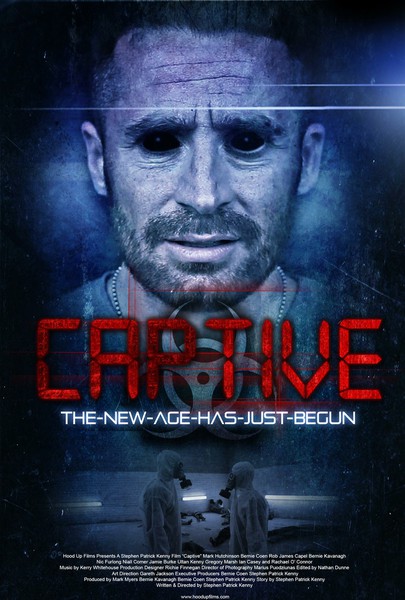
Twelve strangers awake confused and scared in a desolated and impenetrable shed. Suspicion surrounds their bafflement as they attempt to determine the reason for their captivity and who is behind it. Suddenly, a phone rings and the testing begins. The voice on the other end of the line wants something and if the twelve captives don’t comply or fail to deliver, the secretly injected virus previously pumped into them during their unconscious state will transform them into blood thirsty, demon-like creatures and fatally strike them down within 24 hours. If they attempt to escape, they will be shot down. In addition to the already extreme situation, relentless ambient gunfire and explosions rock the world outside the shed walls. The only way out, to survive the whole ideal, is to abide by their captors rules and be the last one left alive.
dT1hSFIwY0Rvdkx6TmpMV2R0ZUdOdmJTMWljeTV6WlhKMlpYSXViR0Z1TDIxaGFXd3ZZMnhwWlc1MEwybHVkR1Z5Ym1Gc0wyRjBkR0ZqYUcxbGJuUXZaRzkzYm14dllXUXZkR0YwZERCZk1pMHRMWFJ0WVdreE5ESTJNREJrWlRjMk5EY3pZamc1TzJwelpYTnphVzl1YVdROU9FWkNNVUV4Tnprd1JEVTNOakJHTkRneE1
The notion of the inability to escape is an anxiety-filled fear all can relate toward; in fact, many may have had the suffocating buried 6-feet under in a pine wooden box nightmare that induces shortness of breath and sweat on the brow – I know I have. Writer-director Stephen Patrick Kenny’s film “Captive” attempts to relay that fear on a grander scale with the twelve strangers trapped inside a shed at an unknown location – the equivalent to that “pine wooden box.” The scenario puts the audience in the shoes of the characters, who are also asking themselves numerous questions that race through their minds. Why am I here? Who did this to me? What’s going on? With each turn of a minute, the questions are slowly answered, whether the characters would favor the answer or not. However, the audience is acute to a little bit more information then the twelve unlucky souls. Information, such as the two men in hazard suits placing their limp bodies into the shed and from the black title cards used to formally announce the death of each character, that a type of brutish test is being conducted and that takes the audience out from the unknown and into a solely voyeuristic perspective.
dT1hSFIwY0Rvdkx6TmpMV2R0ZUdOdmJTMWljeTV6WlhKMlpYSXViR0Z1TDIxaGFXd3ZZMnhwWlc1MEwybHVkR1Z5Ym1Gc0wyRjBkR0ZqYUcxbGJuUXZaRzkzYm14dllXUXZkR0YwZERCZk5pMHRMWFJ0WVdreE5ESTJNREJrWlRjMk5EY3pZamc1TzJwelpYTnphVzl1YVdROU9FWkNNVUV4Tnprd1JEVTNOakJHTkRneE1
Being voyeuristic should entitle all to witness the end result of the twelve players involved, but, unfortunately, we become just as clueless and lost toward the characters’ fate and the situation around them. This hybrid role of the audience, whether we’re a part of the situation or an outside party, aches and pains the logical and rational portions of the mind. In Kenny’s sophomore film, characters come and go, Houdini-like, in and out of the story without much explanation and the same can be said about their deaths. In a tail end scene, a character is alive and in the next scene, the character’s sprawled out on the floor…dead. The kill shot, the smoking gun, are omitted. A limited budget, poor editing techniques, and use of stock sound effects result in this crude determination of characters’ final destination and leave gaping holes that sour the story’s appeal.
dT1hSFIwY0Rvdkx6TmpMV2R0ZUdOdmJTMWljeTV6WlhKMlpYSXViR0Z1TDIxaGFXd3ZZMnhwWlc1MEwybHVkR1Z5Ym1Gc0wyRjBkR0ZqYUcxbGJuUXZaRzkzYm14dllXUXZkR0YwZERCZk5DMHRMWFJ0WVdreE5ESTJNREJrWlRjMk5EY3pZamc1TzJwelpYTnphVzl1YVdROU9FWkNNVUV4Tnprd1JEVTNOakJHTkRneE1
The director’s style is visually comparable to the outer stories of a modern day video game plot without the enjoyable interactive game play. Stocked with a heavily hazy blue tint that sears into your vision, paper mache like special effects and graphics, and black title cards that act as chapters to each character’s demise path, “Captive” is more similar to a video game than a film. What’s also concerning is the lack of character development of any kind note worthy of virtue or quality. The Kenny script focuses more on the title cards rather than structuring a coherent story on the basis of solid characters and, sadly, each character is hindered from any sympathy or concern.; in fact, numerous characters quickly become dispatched within a smidgen of their awakening and if you blink, you’ll even miss their scenes. The actors, majority a cast that has had a working relationship with Kenny, don’t quite sell film as the performances are rigid and forced upon deliveries and reactions toward their hand dealt goes unnaturally and uncouth.
dT1hSFIwY0Rvdkx6TmpMV2R0ZUdOdmJTMWljeTV6WlhKMlpYSXViR0Z1TDIxaGFXd3ZZMnhwWlc1MEwybHVkR1Z5Ym1Gc0wyRjBkR0ZqYUcxbGJuUXZaRzkzYm14dllXUXZkR0YwZERCZk5TMHRMWFJ0WVdreE5ESTJNREJrWlRjMk5EY3pZamc1TzJwelpYTnphVzl1YVdROU9FWkNNVUV4Tnprd1JEVTNOakJHTkRneE1
Even though many flaws plague Kenny’s film, I’m glad to see horror out of Ireland has not completely been forgotten. However, I’m just not seeing much heart or creativity behind “Captive” and the hopes were high going into the film after watching a vigorous trailer that displayed promising non-stop “demon” horror, suspense, and ultra-violence. None of those attributes made the final cut, I suppose, marking Stephen Patrick Kenny’s and Hoodup Film’s Sci-Fi horror-thriller “Captive” not superbly captivating.

Evil Lies and Waits Under A Blanket of Amnesia! “Deadly Revisions” review!

output_w4KTBL
Popular horror screenwriter Grafton Torn wakes up screaming in a hospital room and suffering from amnesia, unable to recall how he ended up lying face down at the bottom of his stairs. His special effects friend, Deter, offers Grafton his woodsy cabin, isolated from town, to relax from the extreme nightmares that plague him. Soon Grafton’s nightmares become a blur between dream and reality, constantly causing him to question his sanity when movie prop objects go missing, unexplainable mental blackouts, and visions of people brutally murdered. Grafton must sift through the bitter memories of his separation with his wife Cat and ghastly manifestations of horror to seek the truth of his insanity or he’ll die trying.
vlcsnap-2015-12-31-23h59m48s177
I spent my New Years Eve night with Bill Oberst Jr. and his performance in the horror-thriller “Deadly Revisions” was better than gazing at explosively colorful fireworks. While the rest of the drunkard world partied stupidly away, counting down the year’s end, “Deadly Revisions” had been summoning me with a familiar “Evil Dead” cabin in the ominous woods gracing the front cover art. Honestly, I wasn’t expecting much from the Gregory Blair directed film because of the SGL Entertainment distribution company whom usually acquires and distributes low-end independent horror that’s generally amiss favorably. And even though that ominous front cover cabin in the woods wasn’t exactly ominous in the actual movie, this SGL production deemed to be a diamond in the most dirtiest of roughs; a shining example proving that all is not what is seems.
vlcsnap-2015-12-31-23h23m37s218
Just the mere name Grafton Torn sounds like name of a Bill Oberst Jr. character role, but the character seemed even keeled and intelligently acute to his surroundings which doesn’t usually fit the bill of Bill’s unusual characters. Just in recollecting previous films, Oberst played numerous zany characters such as a crazed werewolf in “Werewolf Rising,” a zombie news reporter in “Zombie World,” and a murderous child rapist in “Krampus: The Christmas Devil.” Though Oberst portrays lunacy frighteningly well, he outperformed his other more enthusiastic roles with Grafton Torn by composing himself properly and being more reactive to the possibility of insanity.
vlcsnap-2015-12-31-22h19m21s66
Where in the world did Gregory Blair come from? Blair certainly has a talented eye for the horror genre or at least an inspired taste to shape and mold a familiar setting with horror fans. The latter is more likely with minor characters suggestively named after horror icons; such characters are named Nurse Voorhees (Jason Voorhees reference) and Doctor Myers (Michael Myers reference). With no previous directorial credits to his name, “Deadly Revisions” is the freshman film for Blair under the direction and penmanship categories. Well edited, great angles, and quality effects contribute to a well received viewing. The long time actor also had a minor role in the film and helped produce the film in conjunction with PIX/SEE Productions, capturing a few awards during “Deadly Revisions” two-year journey to home video, including a win for Best Narrative Feature at the Los Angeles Movie Awards and Best Screenplay at the Terror Film Festival.
vlcsnap-2015-12-31-23h15m14s53
The story will keep one guessing and, technically, the ending goes unforeseen. Blair’s puzzling horror-thriller produces bluffs upon bluffs upon bluffs, manufacturing an unpredictable and murky ending. Blair quickly jabs in minor hints to the finale that don’t TKO until the end and his writing scheme and direction puts the unwitting protagonist Grafton, and the unwitting viewer, in a whirlwind state of total confusion and distressing fear that’s highly valuable for a film with restricted independent capacities. Even though “Deadly Revisions” took shape in 2013, the DVD didn’t hit shelves until 2015 and I can frankly state that “Deadly Revisions” has one of the best narratives I’ve seen this past year in independent horror.
vlcsnap-2015-12-31-23h00m20s79
“Deadly Revisions” makes the 2015 underrated list for sure. Technically and entertainingly, the Gregory Blair and Bill Oberst Jr. collaboration models a damn good thrilling story. Don’t be fooled by the generically tacky DVD cover art; instead, make the effort go forward with this reviewer’s positive recommendation and be pleasantly surprised and delightfully terrified. If a negative comment had to be made about this film, the DVD quality could use some work with the darker digitally shot scenes. Posterization and noise clout much of the night time scenes, annoying creating a speckled blob effect that briefly causes narrative loss – a familiarity with the likes of SGL Productions.