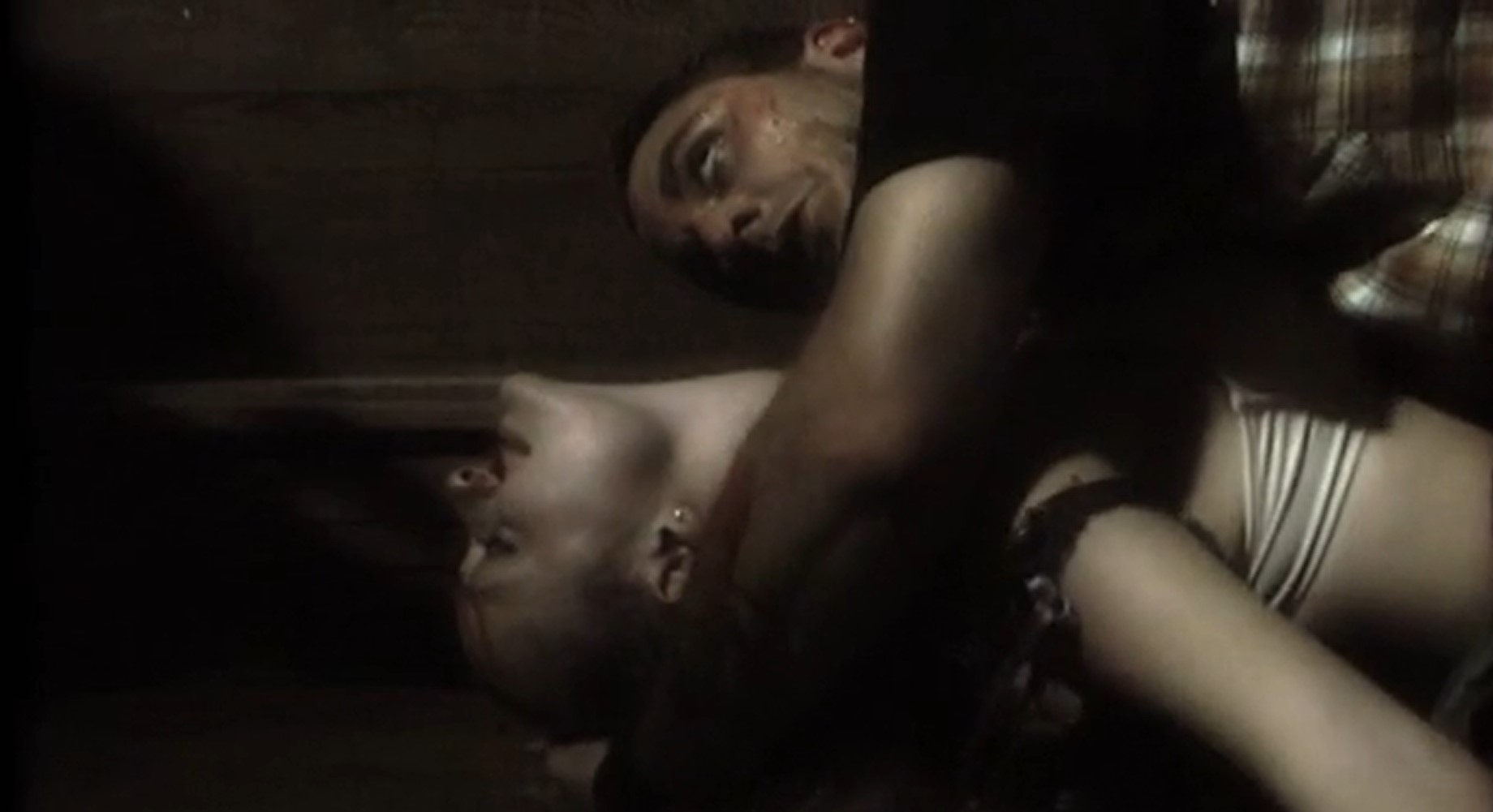
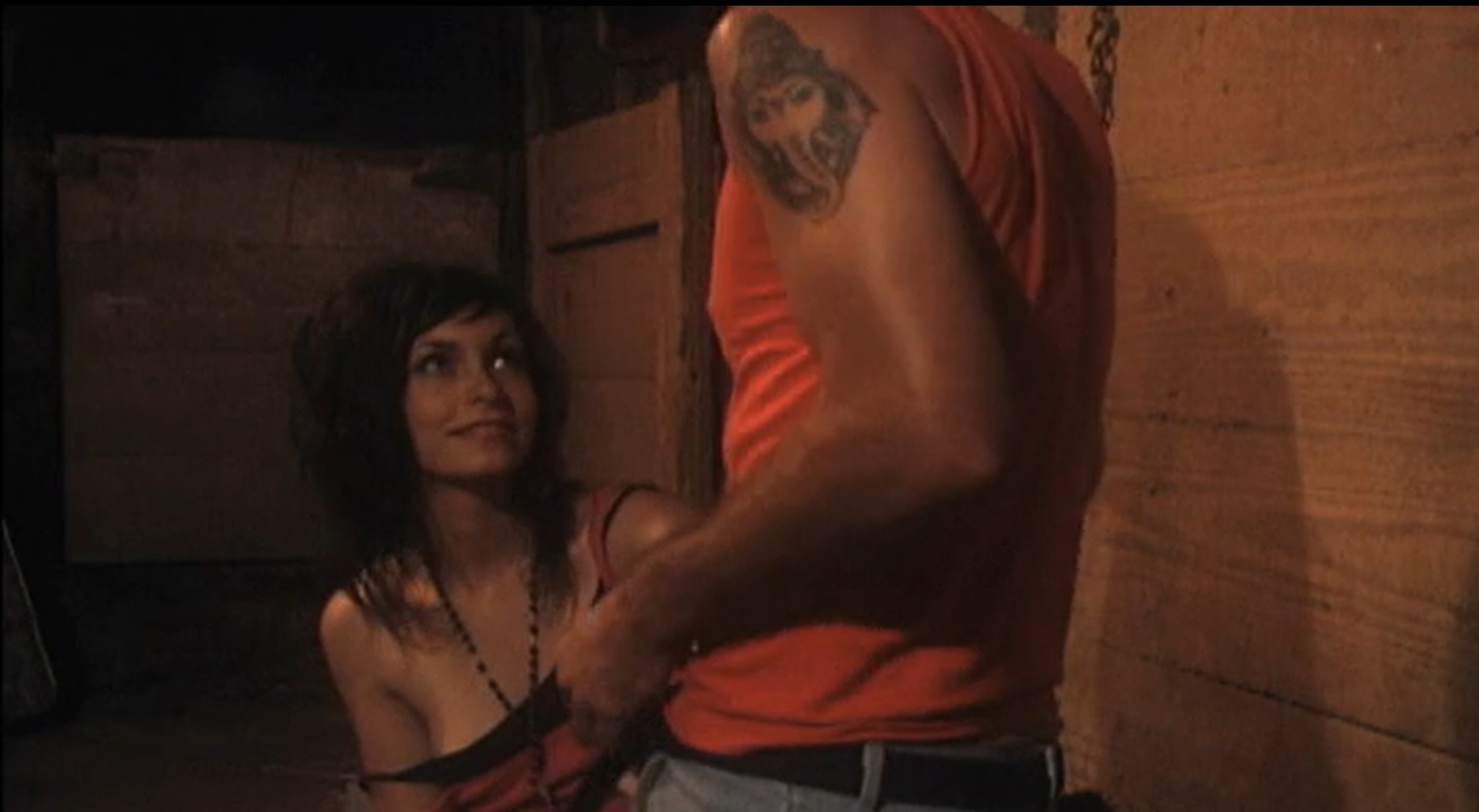
Be Careful Of Your Friends. They May Be EVIL! “Stabbed in the Face” reviewed! (Wild Eye Releasing / DVD)

“Stabbed in the Face” is now on DVD!

A high school Halloween party becomes the catalytic event for a motley of friends that plan a party in a remote haunted house where the urban legend of the three legged lady had brutally slain her husband and his mistress before her own insanity was gunned down by local authorities.  Simultaneously, a prison escaped murderer roams free around the same area, living a few friends on edge but reassured by the others that nothing will happen.  As the party begins, sex, drugs, and alcohol fuel the night away until one of the girls winds up missing and all that is left is a blood-stained bathroom where she was last seen heading.  Fingers begin pointing at each other as panic and anxiety sets in but as the thought of a deranged escape convict overtakes as best suspect, the others quickly split up to find more of their roll-in-the-hay and pothead friends only to discover the hard way that splitting up is a bad idea when hidden agendas come to light.

A character trope loaded slasher forms the foundational framework and sets up filmmaker Jason Matherne’s 2004 feature with a killer-thriller twist.  With an unambiguous forthcoming of brutality right smack-dab in the middle of the title of “Stabbed in the Face,” Matherne, the low-budget director of the franchised “Goreface Killer,” an if-you-can-believe-it less profane name to the film’s true title of “the Cockfaced Killer,” helms his sophomore gruesome gorescape off a script by fellow “Goreface Killer” writer and collaborator Jared Scallions.  The independent gore-and-shocker set in the late 1980s lands a setting in Louisiana and Mississippi, specifically around the off-beaten trails and areas of New Orleans, under Matherne’s New Orleans-based horror and exploitation yielding Terror Optics Films, under the copyright of CFK (Cockface Killer) Enteratinment, which innately chairs Matherne with the executive producer hat as well as with Jaren Scallions co-executive producing and having a principal role in the story.

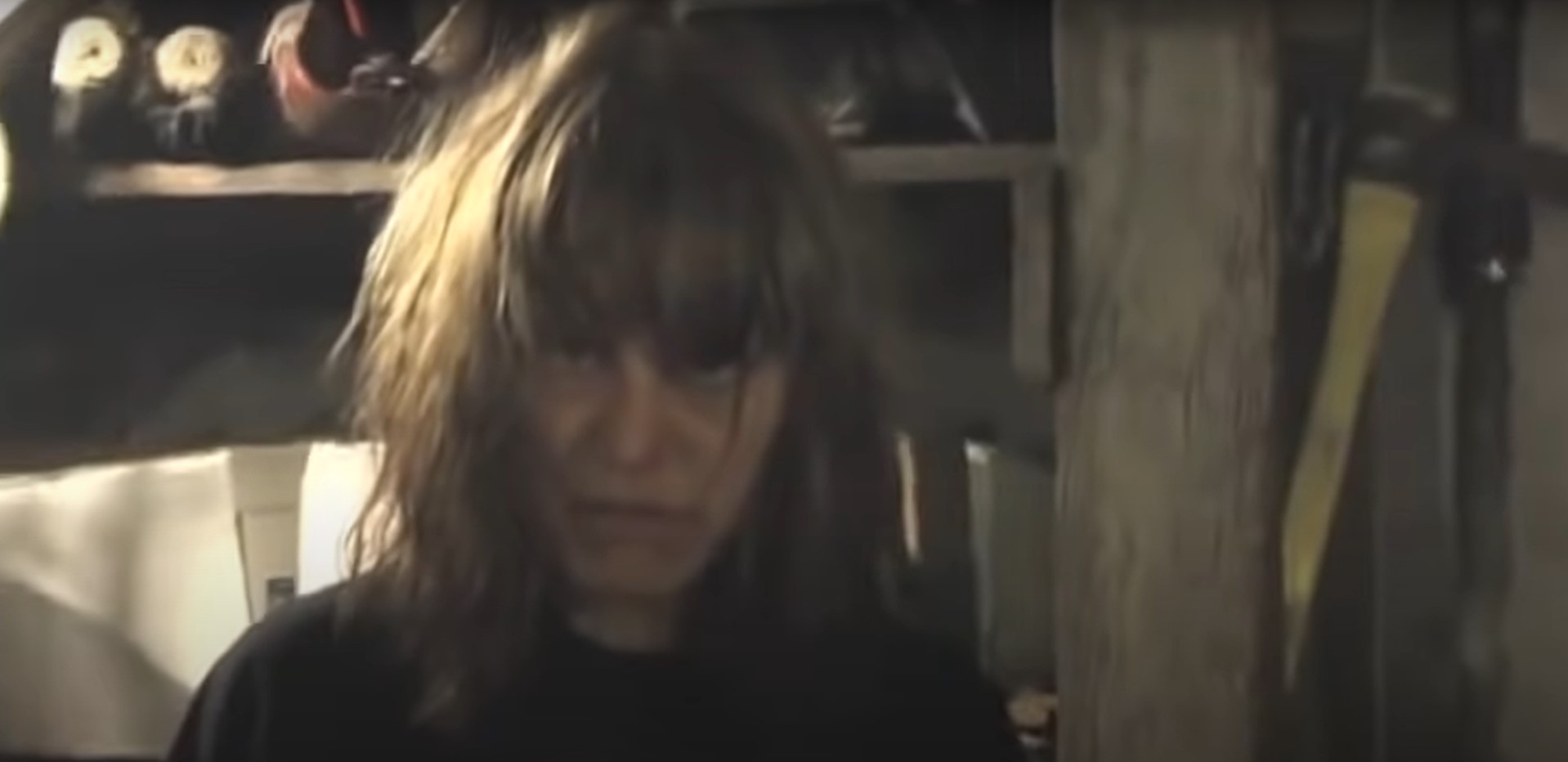
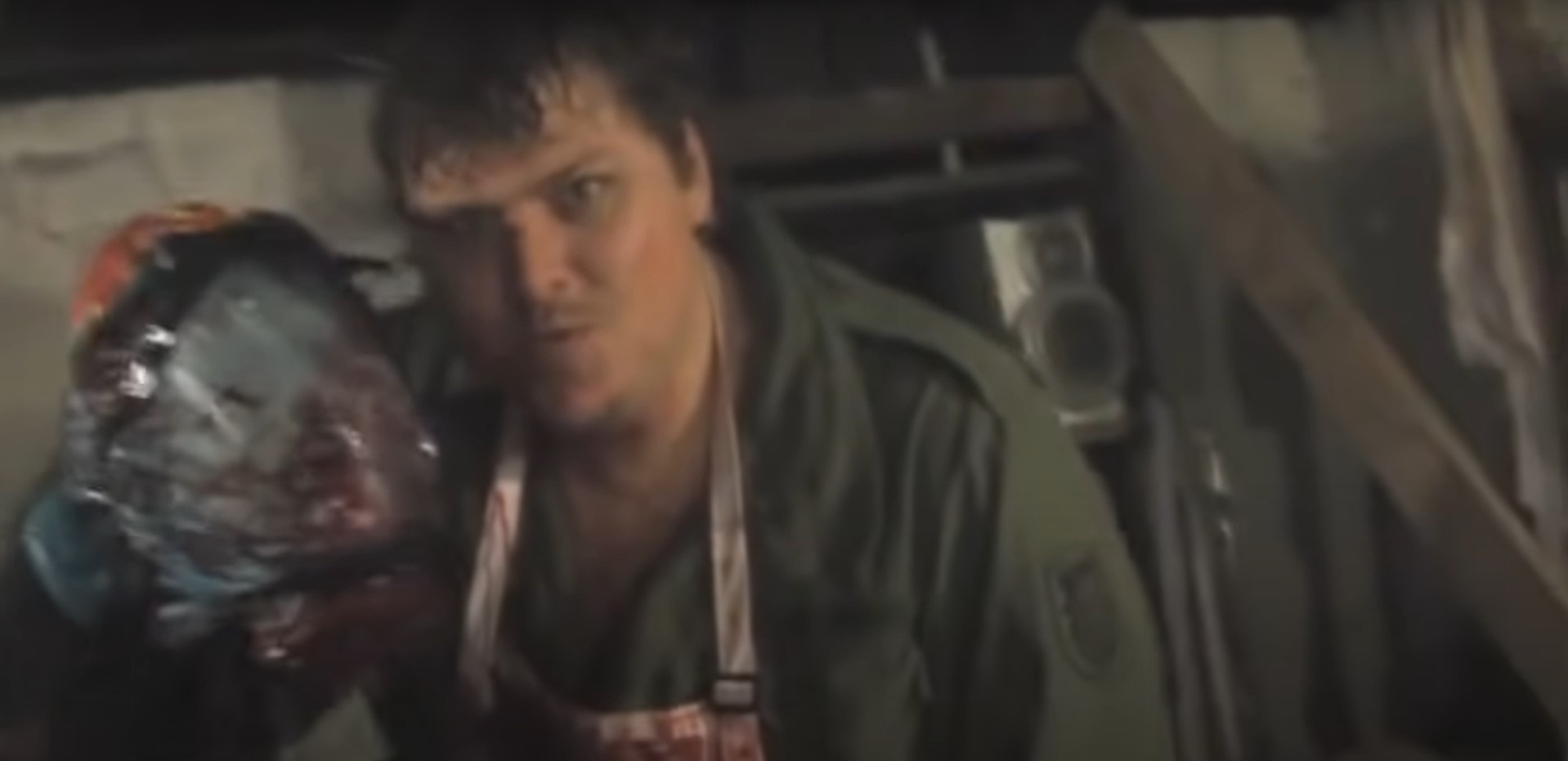
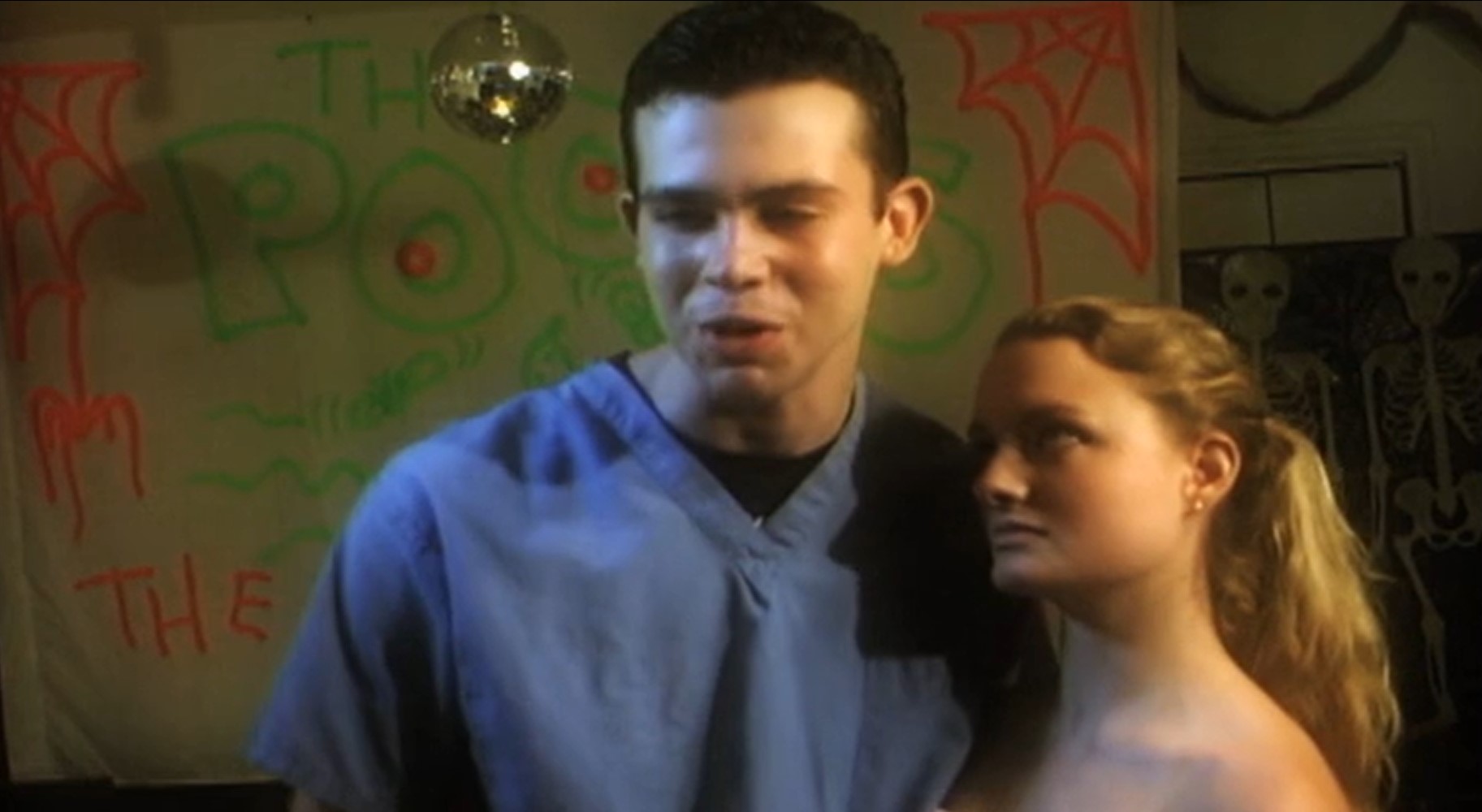
Character clichés clutter the chain of events with your typical pot smokers (Jared Scallions and André Le Blanc), bad boy (Eric Fox), jock (Bill Heintz), nerd (Steve Waltz), slut (Kristen McCrory), bitch (Dana Kieferle) and goody two-shoe virgin (Amanda Kiley).  The gang is all here for the slaughter, initiating formulaic conventionalisms that would make any horror aficionado cringe with an internal “here we go again” snide rippling through their gore-bore heads at the lack of originality and creativeness from another indie production.  Yet, if you stick with the story and pay attention (instead of doom scrolling your phone), Scallion’s script evolves out of being a simplistic carbon-copy primate and into a singular, secerning Homo Sapien with idiosyncrasies because though most characters remain on the routine attribute course, more than one don’t in an an uncommon but rarely explored concept that puts audience theories and callouts to bed before the unsuspecting reveal.  If needing a comparison, think about the “Scream” franchise as those films are really good at playing out the whodunit in complicated pairings with a big surprise at the very end.  In “Stabbed in the Face,” the unmasking is not as potent but the possible advents serpentine the story, some more obvious than others, and each carry a different motivation crashing head-on with each other after a few Matherne measured red herrings to throw off the plot predictable scent as well as building up tropes to the max of their mechanics, such examples would be the overly unchaste Starr who bed hops men without shame or overstating Bruce’s money and smarts with talks of getting into Harvard and his girlfriend is only with him for his family’s wealth.  Scallion slathers principals thick with stenciled overflow and when that bottom drops and all hell breaks loose, the ostensible outcome dissolves like wet paper.  Katheryn Aronson, Samantha M. Capps, Matt Mitkevicious, Bonnie W. Picone, Jerry Paradis, Helen Whiskey, Betsy Fleming, and J.C. Pennington complete the cast.

“Stabbed in the Face” is about as savage as it sounds.  Perhaps not as graphic or intense as the Wild Eye DVD illustrated cover art (we secretly wished it was), kills that amount to the titular act has a mortality rate of only two and those pair of perforations don’t live up to the wonderfully ghastly illustrated cover but, overall, fulfills the promise.  It’s quite evident that Matherne has no qualms about using splatter and sex, two of the biggest keys to a successful slasher, in his punk-scored abjection of lewd-laced murder.  Yet, it would be very remiss of me if I didn’t point out that “Stabbed in the Face’s” blade strikes air at times with the story.  Disconnection between the first couple of scenes and the haunted house party planning and then on completely omits the transpiring moment of the jock’s sister’s murder as scenes progress, passing through the event without as much of a whisper.  She’s just there in a scene and then she’s not and that isn’t explained until after the planning of the haunted house trip when the virgin naively asks while settling into his car about the girl who apparently was hacked to pieces on school grounds two months prior.  The heavy weight of that loss isn’t there for the jock, not even a fleeting moment of sadness or shock, as everything continues as if nothing happened.  The other characters are not struck by the loss either and this sweeps the character’s death under the rug and insignificant to the plot, but does a film entitled “Stabbed in the Face” really care about emotional scarring?  Or is the intention to leave open wounds to fester with more knife strikes, decapitations, and eviscerations?  If I was a magic eight ball, all signs would be point to yes toward the latter as special effects team Jason Bradford, Robert Masters, and Richie Roachclip pull their weight (professionally, not emotionally) creating better than anticipated morbid scenes of murder albeit the one or two obvious CGI blood splatter.

An 80’s teen slasher incarnate, “Stabbed in the Face” glorifies gratuitous sex, drugs, and gore, appropriately curated and displayed by our friends at Wild Eye Releasing on their Raw & Extreme sublabel.  The 78th released title on the sublabel is presented in a blown-up aspect ratio of 1.85:1 widescreen, eliminating the horizontal bars, on a MPEG2 encoded DVD5.  Resolution retains the image tautness with only a handful of scenes cropped and zoomed in even more that reduces pixels to a more granular façade.  Matherne owns the softer presentation with instances of posterization, especially when creating a period piece using stark colored gels and less light for positioning thicker shadow that hazily defines objects, as if lurking in the dark.  The English language Dolby Digital 2.0 stereo track has great dialogue strength that does sound boxy.  I suspect a ADR dub but highly unlikely with the really good synch and might just be more carefully attained specified audio with key boom placement.  Eric Fox’s electron and punk soundtrack parallel “Stabbed in the Face’s” indie-grunge horror with synthesizing tells of inspiration from the 80’s era.  Punk and hillbilly rock bands on the soundtrack include multiple tracks from The Poots, The Projections and The Pallbearers – the three Ps.  The static menu features full-length tracks from the soundtrack overlaying its static menu with the only bonus feature being a “Stabbed in the Face” Featurette, a behind-the-scenes look in raw and polished form at the film’s genesis and production with discussions from cast and crew.  Along with the feature’s own trailer, also included but separate from the bonus features are other Raw & Extreme trailers of “Crimewave,” “Goregasm,” “Whore,” “Video Killer,” “Blood Slaughter Massacre,” “Hotel Inferno,” and “Acid Bath.”  This portion of the menu options does not include a music track.  To turn consumers onto the film, more so the gore fans than popcorn film goers, the ultraviolent cover keeps in accordance with the Raw & Extreme profile.  The cover art is also semi-reversible with magnified bloody image on the inside of the frosted Amaray DVD case.  The disc is printed with the same cover art image, just downsized.  The unrated DVD has a runtime of 81 minutes and is region free.  Just hearing the title can induce the sensation of a sharp edge going through soft flesh and with that phantom impression of pain, “Stabbed in the Face” is horny, bloody, and punk!

“Stabbed in the Face” is now on DVD!

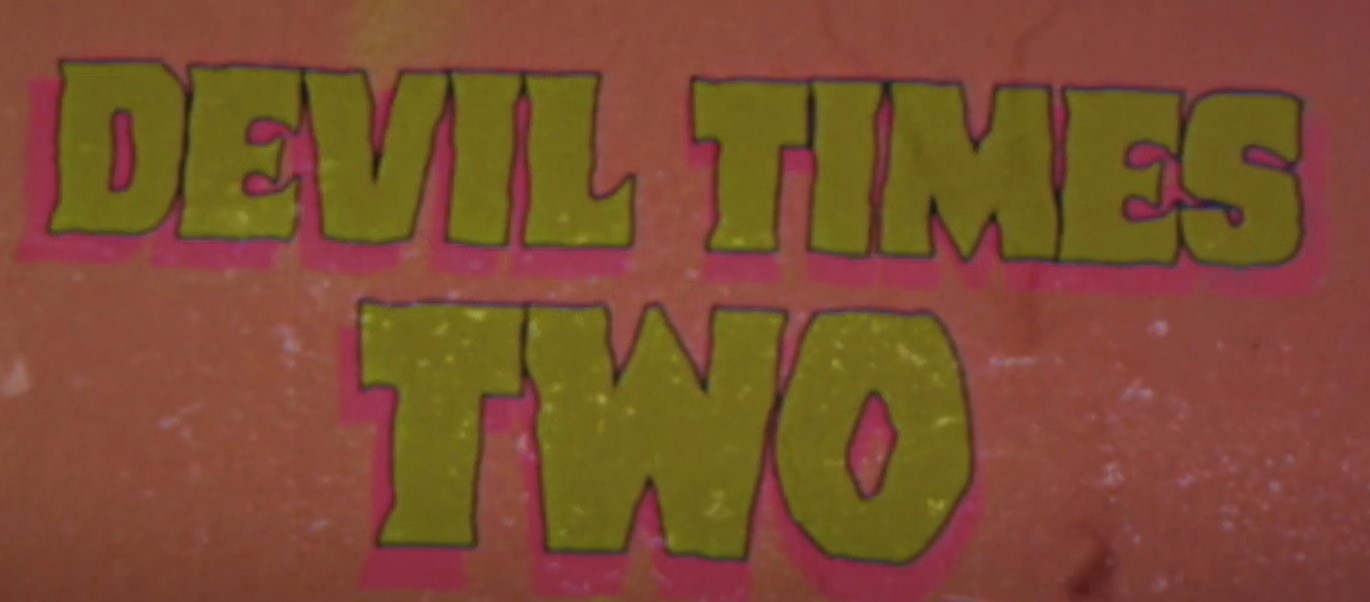
Prancing Forest EVIL Will Seduce You to Death! “Devil Times Two” reviewed! (SRS Cinema / DVD)

“Devil Times Two” on DVD from SRS Cinema

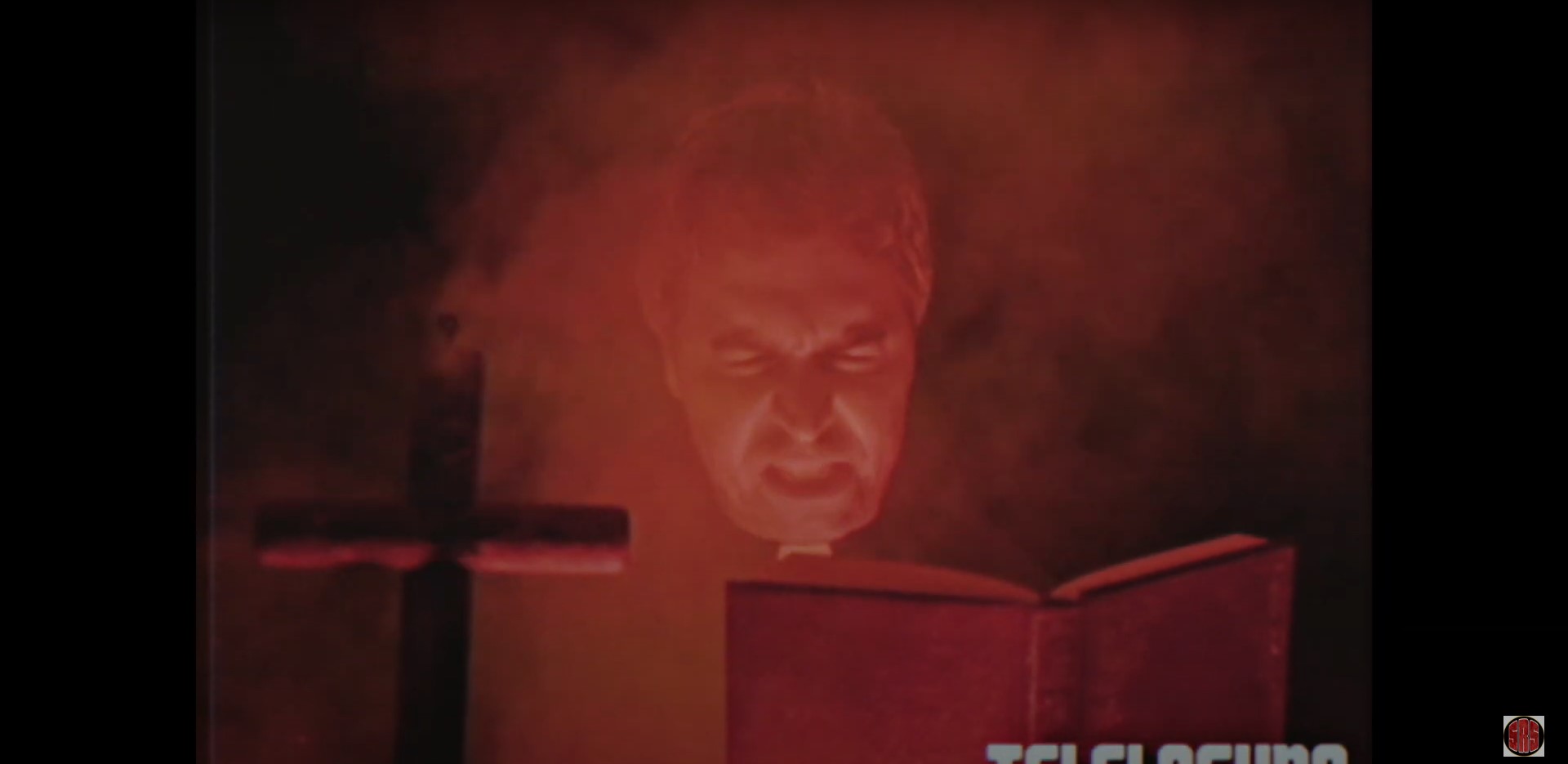
A forest encircled convent hidden away from the Milan population undertakes an occult responsibility to keep bloodthirsty and callous demons from entering the human world.  On the verge of retiring, Father Ernesto Taro, a once formidable force for good who exorcised a powerful demon decades ago that cost the lives of many in his fellow cohort except for Mother Dolores, takes on a younger understudy to be his replacement, the ambitious Father Chuck Bennet.  Father Taro and Bennet were summoned by Mother Dolores when grisly body of a young hiker is discovered.  A pair of former Nazi sadists turned Netherworld demons come to Father Bennet in a vision and are suspected to be the carnage culprits.  Souls are at stake and the world is on the brink of falling into darkness as the Returnees are only the right hand of a more profound evil itching for complete and utter omnipotence. 

“Devil Times Two” is an Italian-made, demonology-contextualized horror from Italy writer-director Paolo del Fiol.  Having purveyed grindhouse horror in anthological means with previous films “Connections” and “Sangue Misto,,” del Fiol branches out into his solo feature-length narrative set in the 1970s as a faux lost film recovered onto VHS from the only known syndicate televised program on Telelaguna to account the terrible tale full of profane hostilities, sexual stimulating supremacy, and, of course, gore in the interlacing recognition between the popular devil, demon, or hell on Earth inspired movies and the obscenities connected to eurotrash and sleaze movement of the 70s topped a hint of Japanese adulation, a motif heavily sprinkled into the film carried over from the director’s previous work as well.  Underscored by the tagline Quado le Tenebre escono al Bosco, or When Darkness comes out of the Woods, “Devil Time Two” once again pits religious good versus irreligious evil in this Himechan Movie Production self-produced by Paolo del Fiol.

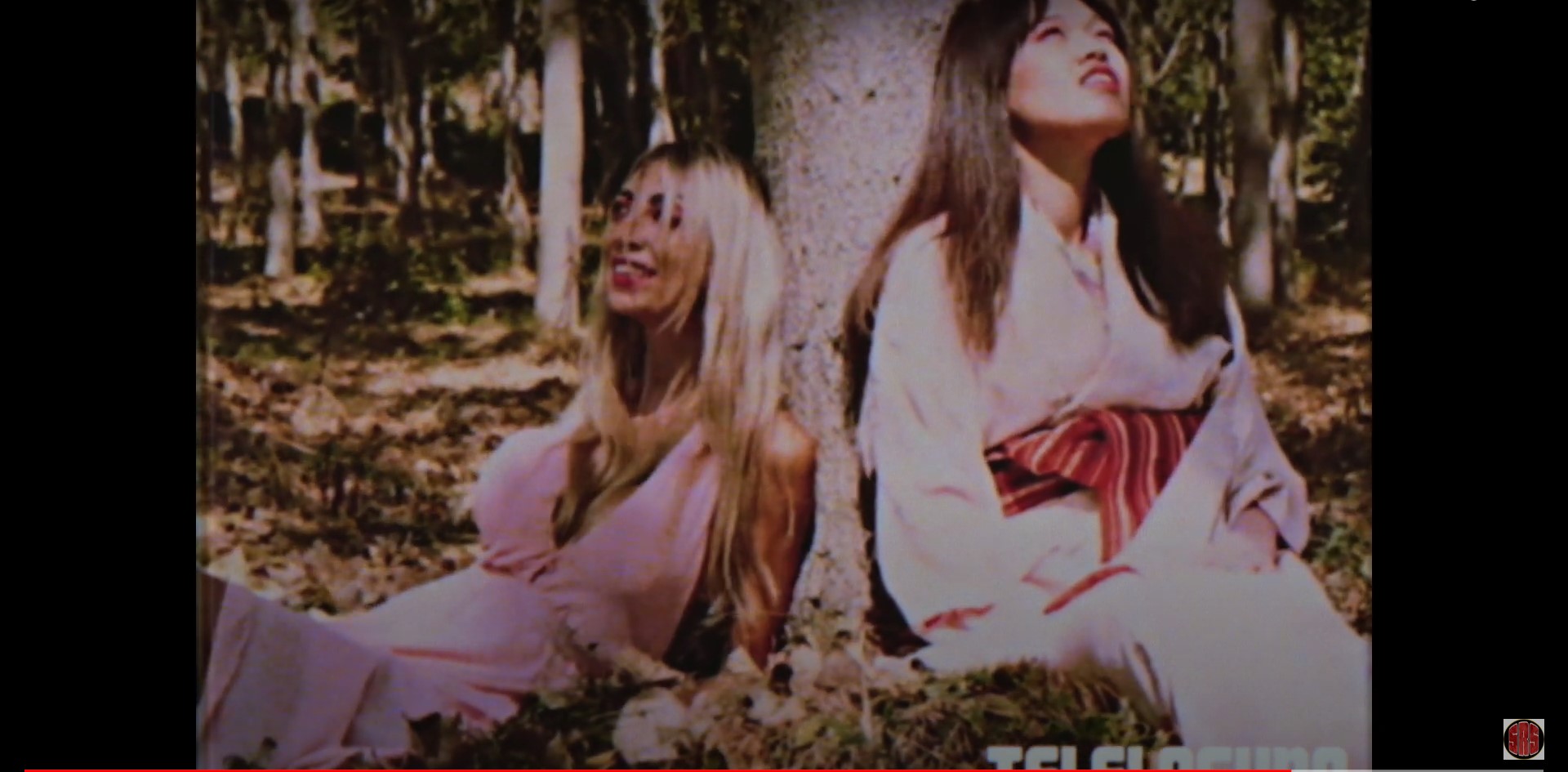
Characterized as the titular pair, Returnees Jasmine and Umeko are the ethereally evil duet of diabolical detriment who seemingly float in and out of the material world as alluring succubi, seducing prey into their web of demonic lust and languish.  Some turn up grotesquely inside out while some others disappear, saved for later for special ritualistic planning.  Erika Saccà, an Italian fitness instructor in her debut role, plays the blonde Returnee Jasmine in a sleeveless, lowcut gown and with nearly ever kill, exposes and massages her augmented bosom with underboob scarring in a change to showoff her toned physique, and Reiko Nagoshi (“Re-Flesh”) wears a kimono without any unveiling of skin but does a bit of thrust-damage on her quarry that initially and inexplicable appears to be a strange phenomena when everyone in the scene is a woman but becomes apparent there’s something unholy and very “War of the World’s” alien under that traditional Japanese garb.  Saccà and Nagoshi wear many hats in this product but also don’t have the dialogue to hoist their demonesses higher.  The dialogue is left with the trio of convent gatekeepers in Father Taro (Enrico Luly), Father Bennet (Paolo Salvadeo, “Occultus”), and Mother Dolores (Amira Lucrezia Lamour, “Re-Flesh”) in what becomes a deeper understanding of their backstories around Father Taro’s deadly bittersweet exorcism decades ago, his on the sly and subtle affection for Mother Dolores, and Father Bennet’s questionable rise to supersede Father Taro, laying a foundation of doubt within the current gatekeeper.  While I like the contrasting dynamics of the two factions within the cast, I found the discourse overly bulk and tedium between the trio of piety that strung on scenes way too long with way too much talk that it ultimately suppresses the pacing when every little detail has been uncovered and explained. All the casted bits in between are slaughter fodder with Denise Brambillasca, Alessandro Carnevale Pellino (“The Wicked Gift”), and Martina Vuotti in non-defying death roles.

Paolo del Fiol’s unaccompanied and independent deluge of demonian debut has doses of phantasmagorical imagery sublet by its more shocking and odd immolation of incognizant individuals unlucky enough to cross paths with the Returnees. Likely to have never seen, Fiol’s film very similarly compares to James Sizemore’s “The Demon Rook” by creating unique mythos not reliant on a religious bedrock and use independency as an advantage for showcasing practical makeup and effects and while “The Demon Rook” would overwhelm with prosthetic made-up characters, “Demon Times Two” focuses attention more on the guts of the matter, the gore, but though not pernicious enough to the story, the eyeball sucking, throat lacerating, or intestine exposing bloodshed is prosaic panoply that won’t outshine in the sea of subgenre synonyms. Aforementioned dialogue scenes can be a slog to get through with many exchanges overstaying its course between the pious gatekeepers, especially between Father Taro and Dorlores, and that hurts the pacing to pick up the gore more frequently for more potency. Instead, exchanges are more elucidations that go around-and-around to where we’re lost on the mounting reveal of the Returnees’ mission and master which turns out to be visually more stimulating and visceral in the last ten minutes than in the first 100 minutes of runtime. The backlot lore is Fiol’s greatest achievement simulating a 70’s style grainy movie caveated as only broadcasted once on December 8th, 1983 (a few days before this reviewer’s birthday) and never seen again until it’s VHS recording is recovered.

Under a pretense of being a buried lost film, under the tribute of a grainy and scratched psychotronic celluloid, and under the falsity of genuine huge knockers, “Devil Times Two” is twice baked into a classic contemporary dish served by SRS Cinema on DVD. Arriving on the SRS Cinema: Extreme and Unrated Nightmare Fuel label, “Devil Times Two” is nothing short of being a modern-day emulator of once was with suitable grain overlay, a hazy, if not washed, overcast grading, and trope-laden atmospherics with dense fog, unnerving dissonances within earshot, and blood brilliantly cut with pseudo Telelagua commercial programming of brief adverts until returning to regular scheduled programed checked in and out by a gondola and it’s gondolier in dusk silhouette. Presented in a pillar box 1.33:1 aspect ratio, the fuzzy and non-delineated details are not a punch to the salient gut as the intent here is to be obscure, opaque, and ominous in nature and in technique bathed in 480p. The Italian PCM is the exact recreation of a time period post-dubbing with the actors re-dialoguing their performances as it was common practice in most motion picture industries, especially Europe, at the time. ADR is clear but not necessarily clean to recreate that shushing and crackling of an older recording. The subtitles are also forced or burned into the film with the sole Italian audio option. Bonus content includes what is called Backstage, a raw filming look into the production shoots and behind-the-scenes footage with no real direction or cosmetics, a photo gallery, a trailer with English subtitles, and other SRS Cinema released trailers. The SRS Cinema DVD front cover resembles mock-70’s, thick-red font with a bare woman’s back dressed in a painted Satanic symbol within the border of a VHS-esque rental casing with rental stickers. Inside the amaray case is a pressed disc with an extreme close up and crop of the same front cover with no insert in the adjacent slot. Pacing burdens this release, especially in its near 2-hour runtime with a clock-in at 114 minutes which is approx. 24-minutes too long in my opinion and the film comes not rated and has region free playback. No matter how much arcane the content is, or how grotesque the horror show, or how much perversity and skin can be unclothed, “Devil Times Two” has difficulty retaining a flow of fascination in a rather windbag approach to a rather devilishly good salvo construction.

“Devil Times Two” on DVD from SRS Cinema

The Home Recordings of a Pure EVIL! “August Underground: Mordum” reviewed! (Unearthed Films / Blu-ray/DVD combo)

“August Underground:  Mordum” Limited Collector’s Edition!

Uncompassionately deranged serial torture and murderer Peter Mountain is back.  Along with his maniacal partner Maggot and his depraved sister Crusty, whose also Peter Mountain’s girlfriend, the terrorizing trio videotape their exploits with no shame and with no end from no matter how mundane to no matter how gruesomely vile.  Rage and lust mix together with sociopathy and psychopathy, resulting in a dangerous combination for whomever crosses their path.  Shocking glimpses of their killing spree reflect through the lens of their camcorder, capturing every kidnap, imprisonment, confinement, rape, mutilation, torture, and eventually murder of their sadomasochistic onslaught onto every random, unlucky soul but with every moment of madness captured, their no so friendly friendship verges ever closer toward a volatile collapse when Maggot and his sister Crusty hook up from time-to-time and the perpetually aggressive juggernaut Peter Mountain is on the brink of breaking more beyond his broken mental state.

The return of Peter Mountain marks the return of shock and gore director Peter Vogel with “August Underground:  Mordum,” the 2003 sequel to Vogel’s unnervingly raw depiction of depravity and exploitation in “August Underground” released two years prior.  Not a traditionally subsequent sequel, “Mordum” is a standalone entry with only the presence return of Peter Mountain to connect the two stories together, but “Mordum” initially didn’t start out as a sequel and only morphed into a feature when Vogel was requested to shoot gruing material for the aptly named death/gore metal band Necrophagia and the band’s lead singer, Frank “Killjoy” Pucci, suggested to turn the material in a follow up film of “August Underground” with Killjoy co-wring alongside Toe Tag Picture’s Vogel, Christie Whiles, Michael Todd Schneider and Jerami Cruise.  What emerged felt like an organic chapter in Peter Mountain’s found footage mausoleum of bloodlust mayhem.  Shot in and around the Pittsburg, Pennsylvania area, “Mordum” is a production of Toe Tag Pictures under executive producer Jerami Cruise.

2001’s “August Underground” brought a terribly raw image to the independent cinema fold that house realistic depictions of the utmost evil and perversion.  So much so, a few of the cast members decided to not use their real names.  For Peter Vogel, a follow up film was like another day walking in the park as a proud papa of his villainous protagonist Peter Mountain, an eclipsingly large and laughing feverishly fiend of a man who preys on the cries and screams of his victims.  “Mordum” introduces us to two new actors into the fold with Christie Whiles, who would reprise Mountain’s girlfriend Crusty in the third Entry “Penance,” and Michael Todd Schneider (“I Never Left the White Room”) as Crusty’s brother Maggot.  It’s not exactly made clear if Maggot is a returning character, the hyena chuckling man behind the character played by pseudonym Allen Peters, or not.  In either way, Whiles and Schneider are equally as vicious on screen as Vogel but invite a whole of a hell a lot more nudity, non-simulated genitalia fondling, and induced vomiting to give “Mordum” that extra mile of stomach-churning, eye-adverting discomfort.  As the fluids deluge in scene-after-scene of massacre depictions, the triple threat come across a like-minded individual, played by the person who very much encourage and inspired for the sequel.  The late Frank Pucci, aka Killjoy, the front man for Necrophagia plays an equal with a slaughter shed full of rotting, putrid corpses, beheaded babies with maggots, and prime meat tied and lying in wait for him to butcher as his leisure.  “Mordum” offers up a slew of victims in different abattoir and snuff scenarios, casted with a rising makeup artist in a pre-crew acting role Midian Crosby (with makeup credits including “Halloween Ends,” “Cop Car,” and “Guardians of the Galaxy Vol. 3”) and Elmo Painter in the vomit and viscera evacuation scene, Rick Kundrach and Tim Grubjesik as unfortunate junkies, as well as Chris Shaw, Shelby Lyn Vogel, Allana Sleeth, Dave Brown, Erika Schultz a few pseudonyms in Daisy, M. Kadath, and E. Jay, and with Ultra Violent Magazine editor Art Ettinger.

Similar to the first film, “Mordum” has no plot in it’s a series of found footage flashes in the day in the life of a serial killer.  This approach makes what you’re having to behold for 70-minutes that much more plausible and realistic and what you’re seeing is quintessential gore porn.  “Saw” wasn’t the basis of the coined term.  No, my sanguine licking friends.  Fred Vogel pioneered that course three years earlier with his sick and twisted show of seminal underground.  The only reason why Vogel wasn’t at the top of the gore porn list was because none of his films had mainstream theatrical runs.  However, literally, “Mordum” contains that borderline porn element of exposed and molested nudity, the below the waste naughty parts that don’t see a tone of skin-to-skin action, and there’s certainly enough gore to go around and around and around and around again.  Some of those smaller gore elements were real, such as skin cutting.  Another element that makes “Mordum” effectively morbid is the special effects work by Vogel, Jerami Cruise (who has gone on to do major studio films from his extreme horror indies), and the late Ryan Nicholson (director of “Gutterballs” and who also was a special effects supervisor on a wide scope of studio and indie films) who provided many of the dismembered and grimed up dummy props framed through a standard definition, commercial camcorder for the Necrophagia music video.  If no story arises, one hell of a damn good show must come out of the horrific footage and Peter Vogel and the Toe Tag team achieve diabolical decadence with stomach content-emptying pizzazz.

Unearthed Films and Toe Tag Pictures have teamed up to release limited edition releases of Peter Vogel’s “August Underground” trilogy.  “Mordum” receives the royal physical release treatment with a 2-disc, Blu-ray/DVD, Limited Collector’s Edition.  The Blu-ray is an AVC encoded, 1080p high-definition, BD50 can only be so detailed with a shaky, consumer cam but the image could not look any better, or gruesome.  Presented in a pillarbox framed 1.33:1 aspect ratio, RGB color model leans more toward warmer reds, yellows, and greens so you don’t get an authentic color scheme on objects or skin tones.  Darker scenes render nicely enough despite the MiniDV magnetic tape’s e-interference compression artefacts and some tracking lines onto digital recording that makes the image jittery/jumpy, but all the in-your-face closeups, low-quality picture quality adds to “Mordum’s” rancid-sensing realism.  The English PCM 2.0 audio track has copious clarity for its unrefined, raw built-in mic recording that comes with some crackling and echoing if the decibels rise during screaming or shouting and the built-in can’t handle the received input. Depth is lossy with the range of the recording and range doesn’t factor into play as dialogue pushes through whereas the low-budget constraints leave the action audibility left to the imagination. Subtitles are not available on either format. The limited-edition regurgitation of the sequel warrants a ton of special features in its inauguration to the mainstream masses. Both formats share most of the extras but the Blu-ray features many more. Brief Dave Fogel touchpoints on certain aspects of “Mordum’s” obscure longevity Mordum Lives!, the climax’s most disturbing visuals The Most Disturbing Scene, and an ode to Necrophagia’s front man Remembering Killjoy dive into those specific nuts and bolts of involvement, a new interview with Michael “Maggot” Schneider A Family Affair of Love and Hate which also includes The Ravenous music video from Necrophagia, offering some more cut scene insight, a sit-down interview with between Unearthed Film’s Stephen Biro and Tog Tag’s Jerami Cruise on the gruesome special effects work on a budget of literally what was lying around, Necrophagia’s promotional video of Rue Morgue Disciple, a new Rue Morge Disciple Behind-the-Scenes gallery, deleted and extended scenes that prolong the violence of the most graphic, extreme scenes and add another level of behind-doors sexual deviation to near pornographic heights, the U.S. premiere from 2003, a brand new extensive photo gallery, original animation work, and trailers while the Blu-ray includes these features, also on the hi-def disc is a new interview with Ultra-Violent’s editor Art Ettinger and Allana Bleeth who both have small roles in the film, a new interview with Zobo With A Shotgun’s Zoë Rose Smith interview director Fred Vogel, filmmaker Dave Parker interviews Vogel as well, Severed Cinema interviews Vogel too in Snuff Purgatory, a new mockumentary and its trailer for Sickcess: A Necrophagia, and a Zombie Demo from Flashback Weekend circa 2004. On top of the special feature filth, the physical aspects of the release come in a clear and traditional Blu-ray snapper case housed inside a cardboard slipcover showcasing the infamously disturbing scene. The same scene is also illustrated on the Blu-rays cover art with reverse cover art providing a rough-and-ready composition alternative of the same scene. Both disc arts are pressed with camcorder blurry images of depicted carnage. The region A/Region 1 locked Unearthed Films combo set has a runtime 91 minutes and comes, obviously, not rated. If looking for the original 3 from Hell, Peter Vogel’s “August Underground: Mordum” assembles three monsters to ever savage the screen with their horrible, unspeakable acts of sadism. The unabashed Unearthed Films rightfully doesn’t lubricate our hole of curiosity, sodomizing our prurience with the metallic taste of blood and madness.

“August Underground:  Mordum” Limited Collector’s Edition!

Limited Edition EVIL to the Extreme! “August Underground” reviewed! (Unearthed Films / DVD/Blu-ray Combo)

Limited Edition “August Underground” Ready to be Received! 

A young farm owner invites his quirky, video-taping friend into the soiled and confined basement of his home where he keeps a nude, young woman gagged and rope bound to a chair, previously been tortured, and covered in her own blood and filth.  Both feeling giddy with excitement over their new plaything, the two sociopaths revel inflicting more torment and pain on the woman while her boyfriend’s mutilated and dead corpse is being dismembered in the next room.  When their basement plaything expires after days of neglect, the two joy killers hit the New Jersey and Pennsylvania turnpikes and backroads to continue a merciless killing spree of whomever stands in their path.  Convenient store clerks, hitchhikers, prostitutes, even their tattoo artist and his twin comic book enthusiastic brother are not safe from their chockful of callous carnage and every moment is recorded via videotape for reliving the moment in posterity. 

As far as underground horror goes, Fred Vogel’s “August Underground” is about as extreme and underground as they come and still be recognizable amongst the most casual of horror fandom.  Vogel’s inaugural written-and-directed, pitilessly violent, exploitation begins a direct-to-video trilogy of torture-on-tape with SOV quality, imparting grisly shudders to the unfathomable amount of blank-labeled VHS cassettes through man’s stowage, collecting dust bunnies and remaining unseen over the years to the horrors the magnetic tape just might behold.  What “August Underground” essentially boils down to is a raw day-to-day look of two maniacal serial killers on a free-for-all of a butcher’s market, the shooting locations stretch from the recesses of Vogel’s hometown of Warren, New Jersey and all the way to the surrounding back roads and isolated areas of Pittsburgh, Pennsylvania.  Self-produced by Fred Vogel and co-producer John A. Wisniewski, “August Underground” set inaugural voyage on the blood red sea for Vogel’s Toe Tag Productions in 2001.

There is a severe lack of story for Vogel’s debut and that’s no oversight or a sign of omission of a subconscious creativity.  Most normal, everyday people video-record with the intent on not making a feature-length film but rather to capture memories and store them away for another day.  Vogel strives for that realism here where a plot is, for lack of a better word, pointless for the depicted atrocities where the sole purposes is to exhibit dementedness and insanity.  The same can be said about the cast of nameless characters.  The freeform recording does not spout off introductions or make references to monikers to, again, portray as much as organic conversation or realism as possible to further skewer an already gore and violence skewed imagination into thinking what we’re seeing is authentic and inconclusive of its entertainment purpose.  Fred Vogel, under his so-called porno stage name of Peter Mountain, plays the main principal dressed in arrogance and apathy as he’s recorded in a thumbed selection of runtime filmed by an equally bad-natured, sociopathic friend behind the camera, played by a post-release distancing actor under the pseudonym of Allen Peters.  The two complement each other in a Beavis and Butthead friendship kind of way with Vogel in synch with his character’s bloodlust as well as the burly bulk while camera buddy perversely watches, giggling to his friends’ blood shedding exploits.  Their relationship feels like a lonesome outlet to do harm and senseless killing makes the connection firmer, more enjoyable, in the easiest opportunities of a rural area where bored people do evil just to pass the time.  Vogel sets up a series of scenarios rather than plotting acts of a linear story in what becomes an anthology of anarchy that has us climbing down the manhole of maniacal mischief.  Mania is soaked into every inch of “August Underground” and that fits snug and makes warm the scattered story into a much more coagulated coherency.  “August Underground” rounds out the victims, I mean cast, with AnnMarie Reveruzzi, Erika Risovich, Randi Stubbs, Aaron LaBonte, Ben LaBtone, Victoria Jones, Alexis Iris, Stephen Vogel, Dan Friedman, Casey Eganey, Kyle Dealman, and Andy Lauer.

“August Underground” is ugly, nasty, grimy, sordid, perverse, tasteless, callous, and not shot with technical or detailed perfection.  “August Underground” is also unique, bold, unafraid, successful, gory, realistic, practical, and not shot with technical or detailed perfection that’s actually, in its own way, gorgeous.  “August Underground” is all those things and more with its rough-and-ready, extreme exploitation that will be polarizing amongst horror fans and not be a film for everyone’s taste or collection.  Frankly, there are worse underground and extreme horror films out there in the world, but “August Underground,” through the disgusting trices of dismemberment, force feeding of feces, and vomit inducing snuff, has somehow ,at least in this reviewer’s humble opinion, who like in a Dr. Seuss line, has been here, there, and everywhere within the horror spectrum, slipped through the veil of obscurity, having a foot well positioned in the land of the universal acknowledgement where many genre fans putter around with the same old formulas.  The depth of this story is so shallow that digging any deeper into the themes and the possibilities isn’t necessary with its home-made movie facade of people joyfully torturing and killing people being already horrific enough. 

For certain to go out of stock and out of print into physical release obscurity once again, Unearthed Films’ limited-edition collector’s edition of “August Underground” is the 2-disc DVD/Blu-ray combo set to act on right now. The AVC encoded, high definition 1080p, BD50 comes from a MiniDV print, often considered the transitional format from analog and to digital in a tape format with lossy compression. Presented in the original aspect ratio of 1.33:1 aspect ratio, don’t expect image quality to be pristinely detailed and sharp as the MiniDV maxes out at 720p resulting in both, standard and Hi-Def formats, having indistinguishable presentations. Resembling the amateur, at-home movie, scaled down tape quality renders ghosting which shapes and details are bleary and the coloring resembles ember or incandescent with a warm, red-and-yellow layer. What we don’t see much of is a ton of tracking, static, or a ton of noticeable interlace but blacks can be prominently spotty with the horizontal bars. The lossless on-board MiniDV English audio is a PCM 2.0 that doesn’t extend beyond the limits of the camera’s microphone, but the clarity fairs well with clean and commanding dialogue with a natural range between the proximitous cameraman and his killing machine star of a friend in front of the camera. Also, equally interchangeable between the physical formats with what’s made to be a rough recording, discernible differences are minute at best. The Blu-ray and DVD have many of the same special features with the Blu-ray containing a few more frills over its format counterpart with a new Dave Parker interviewing Fred Vogel as well as a separate interview with Vogel and Mike Watt of Rue Morgue Magazine, another new interview with Fred Vogel from Severed Cinema Revisiting Infamy. The formats shared bonus content includes never before seen and new material, such as the original screener version of the film that comes with watermark and a slightly different color grading, a new audio commentary by Fred Vogel and Ultra Violent Magazine’s creator Art Ettinger, a new 10 questions with Fred Vogel answering some of the longstanding queries surrounding the film’s realism achievements and behind-the-scenes permissions and achievements, and a new Toe Tag Masterclass that compares storyboards with the screen version. Archived bonus content include audio commentary with Vogel and actors-producers-brothers Aaron and Ben LaBonte, another commentary track with Fred Vogel alone, an audio commentary by the witty, giggly “Killer,” Hammer to the Head closer look at “August Underground,” on location behind-the scenes, a behind-the-brutality of the film, outsiders’ perspective take in a Too Real for Comfort discussion, an introduction by director Fred Vogel, photo gallery, and trailers. The limited-edition collector’s set comes with a cardboard slipcover with a blurry, interlaced still of Vogel’s character wrapping a forearm around a gagged-girl’s throat while peering into the camera, but it’s the clear snapper case’s front cover that’s more developed with a graphic pencil-graphite illustration of the same slipcover image with more visible mutilated skin and visual weapon of human body destruction. Front cover is also reversible with an interlacing black-and-white image of the main killer. Both discs also sport two different art presses with the Blu-ray mirroring the slipcover image while the DVD has nearly the identical position of killer and victim but with a whole new victim. The region A locked edition has a digestible 70-minute runtime and is, of course, not rated. I would never say Unearthed Films has been diluting their pool of extreme underground gore and guts horror, but their “August Underground” release puts the brazen company back on the mondo-macabre map with definitely a too real for comfort twisted depravity and an au naturel sense of debauchery.

Limited Edition “August Underground” Ready to be Received! 

Amongst the EVILs of Digital, Analog Rises from the Grave! “Night of the Zodiac” reviewed! (SRS Cinema / DVD)

A Mock VHS Retro on a Mock VHS Retro DVD!  “Night of the Zodiac” from SRS Cinema!

A bizarre and grotesque dream about the once notorious Zodiac killer inspires Richard Gantz to create a movie worthy of his idol’s praise.  With little income and having just lost his girlfriend and his job, Gantz is on the brink of being homeless and unable to materialize his dream into reality until he receives a mysterious, unexpected phone call.  The Zodiac killer got wind of his project and is offering support to finance and bestow guidance to Gantz’s film as long as the struggling, yet eager, filmmaker can crack Zodiac’s cipher and stomach the enigmatic task before him.  Gifted the Zodiac’s iconic mask and murder knife, Gantz sets out to record his first kills that pays homage to his aging idol but his mentor wants him to be creative with the new chapter worthy of the Zodiac name and gathering a whole new set of slaves for his paradisal afterlife.  When Gantz hits a barrier of inspiration, he solely becomes reliant on the Zodiac’s encouragement that has become few and a far in between. 

Susana Kapostasy is who I like to label a mad genius.  Many filmmakers have attempted to create antiquated formats of yore with watered down imitations, but for the Michigan-born videographer and editor-by-trade Kapostasy, what has been a challenge to most to faithfully recreate has simply become second nature for the video production enthusiast.  Scraping up any and all elderly video camcorders she could find, the “Metal Maniac” director wrote-and-directed her sophomore feature film “Night of the Zodiac,” pulling inspiration from one of the most notorious unsolved murder cases in America by the Zodiac Killer in San Francisco.  From the West Coast to the Midwest, “Night of the Zodiac” is filmed in and around the backdropped Detroit area for the Zodiac’s next round of sliced-up slaves – only in the creative, moviemaking sense, of course.  The 2022 film has the spitting image of a 1980s/1990s SOV with ghastly, gory effects, a killer hair metal soundtrack, and video characteristics that’ll have you trying to adjust the tracking setting on your DVD/Blu-ray player.  The Johnny Braineater Production is produced by star Philip Digby with Kapostasy serving as executive producer alongside co-cinematographer Apollo David Zimmerman.

Stepping into the shoes of the infamous serial killer to embark on a theoretical continuance of the real life mass murdering character is Philip Digby.  Channeling his best Jeffrey Dahmer vibe in looks alone with a crazed and obsessive personality suited for Charles Manson, Digby plays a hodgepodge of America’s most notorious killers, adding his own flare for film into the fold to make him a full-fledged psychopath, as he internally celebrates the moniker after his disparaging roommate/Landlord (Victor-Manuel Ruiz) labels him with an ear-to-ear grin and a nearly whoopie jump for joy.  Digby’s eccentric mania thrusts us beyond a threshold we didn’t even realized we had crossed from the very first opening dream sequences of a rotting, coffin-thronged corpse oozing maggots and putrid viscera and, believe it not, my opinion is this thrust doesn’t do justice to Gantz’s character because of the lack of foundation of setting up viewers with an inbred psychosis that puts into question, how did he survive this long without killing someone before?  Dreams are power but are they powerful enough to twist a seeming normal film lover into a frantic frenzy of vile fates and videotapes?  I think only Freddy Krueger can answer that.  Gantz goes around town slaughtering people in parks, in their driveways, and even makes one very bad magician (Derek Dibella) wish he requested to hire Gantz as a videographer for a promotional video disappear as Gantz strangles him to death.  “Night of the Zodiac” completes the cast with Logan O’Donnell, Mark Polonia (director of “Splatter Farm”), Tim Ritter (director of “Truth or Dare?”), and Benjamin Linn as the voice of the Zodiac.

From the video production veneer to the set decorations and locations to the characters themselves, “Night of the Zodiac” perfectly captures SOV horror in this modern day time capsule.  Not until the credits, when I see master craftsman of SOV horror filmming, Tim Ritter and Mark Polonia, appear in the cast credits did it dawn on me that what Susana Kapostasy had accomplished was a labor of love for the niche market, resurrected four decades later and revered by horror fans who were likely still in diapers or weren’t even born yet – maybe to go as far as not even a twinkle in their parents’ eyes.  Yet, there were clues to “Night of the Zodiac’s” contemporary construction, such as the opening title which had a clean, well-polished illustration and Kapostasy’s film is very self-aware by slathering horror in every recessed corner with mountainous stacks of VHS tapes, posters, and  and often, perhaps every other scene, displayed tribute to filmmakers, like Ritter and Polonia, who were still counterparts and establishing themselves as independent videotape artists during the 80s-90s.  This self-awareness harnesses more comedic relief than horror, accentuated by Gantz’s matter-of-fact imbalance, and the humor loosens the reins on “Night of the Zodiac’s” cold cruelty a tad but what the gore spools back in audiences by spilling lots of blood. 

SRS Cinema releases “Night of the Zodiac” onto DVD with a single layer encoding and presented in a throwback letterbox 1:33:1 aspect ratio.  Kapostasy uses a slew of equipment – Cannon XL2, Sony Video 8 AF, Panasonic AG 450, JVC GY X2BU, JVC GY X3, Panasonic AG 456, Panasonic AG 196, Sony CCD FX 330, and a Sony VO 4800 U-Matic S VTR – with some be more present-time cams run through U-matic VHS playback to degrade for SOV quality.  The intentional SOV has a variety of distinct looks with distinct quirks that flexes higher magenta levels in earlier scenes as well as tracking lines and aliasing artefacts.  Detail levels also vary but the overall VHS brands generally remain the same with soft, indistinguishable contours with also a surprising amount of depth and hue range.  The English Dolby Digital 2-channel (2.0) mix can sound boxy at times and come accompanied with a piercing, underlining interference.   Telephone conversations have no distortion depth so the other person on other line sounds present in the room.   The soundtrack from Anguish, Locust Point, and the brunt of it provided by Stoker is metal madness but does overshadow the dialogue when shredding through the scenes.  Dialogue is often clear, but again, no depth and echoey.  There are no subtitles available for this release.  Bonus Features include an audio commentary by director Susana Kapostasy, star Philip Digby, and costar Victor-Manuel Ruiz that goes over a lot of technical aspects of “Night of the Zodiac’s” look and how they obtained the gore and blood for the film, a Tim Ritter conversation about how he became involved with Kapostasy’s video enthusiasm and provided analog input, a blood cannon showcase that’s instructionally descriptive as well as you’ll see Kapostasy’s foot accidently go into the 5 gallon Homer bucket, a gore score Ouija board gag, recreating the Zodiac cipher, and the trailer.  SRS Cinema’s release dons a retro VHS design front cover with an exact and beautiful illustration of Gantz’s copycat Zodiac attire with a cropped version of the front cover on the disc art inside the traditional black snapper case.  “Night of the Zodiac” has a runtime of 86 minutes, is not rated, and has an all-region NTSC playback. Difficult to immerse oneself into a half-a-century old unsolved murder while sticking to glorifying merely the guts and gore, “Night of the Zodiac” stuns more qualitatively with video techniques thought archaic and obsolete but Susana Kapostasy steadfast proves otherwise in her undying love for the flawed, yet nostalgic format.

A Mock VHS Retro on a Mock VHS Retro DVD!  “Night of the Zodiac” from SRS Cinema!