Uncalcified Penal Glands and Designer Drugs are an EVIL Around-the-Clock Cocktail. “Synchronic” reviewed! (Blu-ray / Well Go USA Entertainment)

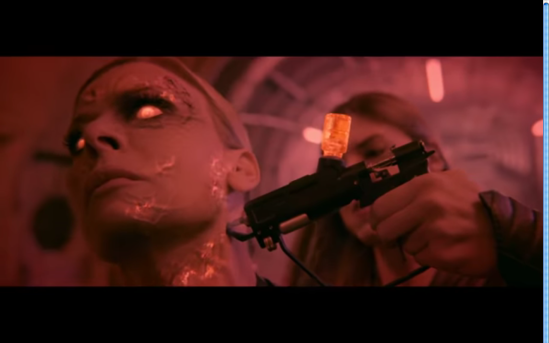
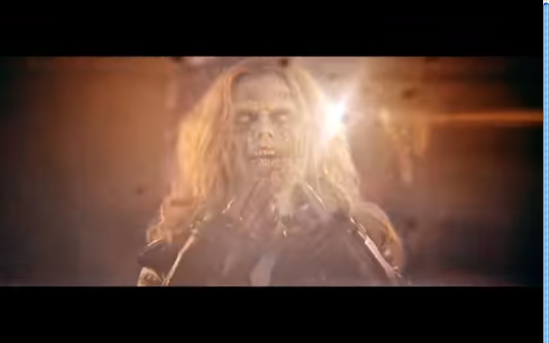
A new over-the-counter designer drug called Synchronic has been at the center of a string gruesome deaths in New Orleans.  Simultaneously, two best friend paramedics, Steve and Dennis, individually battle their own life-altering personal problems while responding to the grisly emergency calls.  With each horrific scene of Synchronic’s doing, Steve decides to take matters into his own hands by purchasing the remaining supply in all of New Orleans after Dennis’ teenage daughter mysteriously disappears after ingesting the drug.  With no leads on the missing girl’s whereabouts and after being visited by the time abstract ramblings of the chemist responsible for creating the drug, Synchronic’s harmful hallucinogenic properties have more tangible dangers than what meets the eye leaving Steve no choice but to pop one of the pills to understand where, or when, his friend’s daughter may have disappeared to.
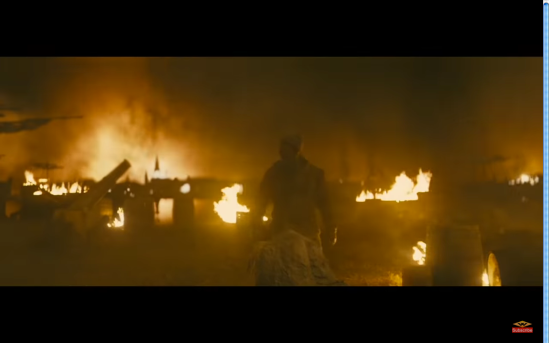
I’ve said it once before and I’ll say it again, Aaron Moorhead and Justin Benson are visionary filmmakers with a penchant for the larger-than-life and otherworldly terrors.  From their directorial of a mind-bending death cult in “The Endless” to their producing hand in Jeremy Gardner’s lost love and creature feature, “After Midnight,” and Amy Seimetz deathly contagious, “She Dies Tomorrow,” under Rustic Films, the ambitiously talented duo returns with “Synchronic,” an anything but plain spoken, time-winding, Sci-Fi tale revolving around themes of redemptive purpose and grateful circumstances stitched by the uncanny temporal effects of artificial illicit drugs.  Lying somewhere between the cognitive warping psychedelic drug and feeling disconnected from the environment of a dissociative drug, “Synchronic” sojourns random grooves with the needle of time in a culminating enlightenment that now, the present, is a gift worth enjoying.     Along with Moorhead and Benson’s Rustic Films, Patriot Pictures, and XYZ Films bring to fruition the filmmakers’ biggest production yet. 
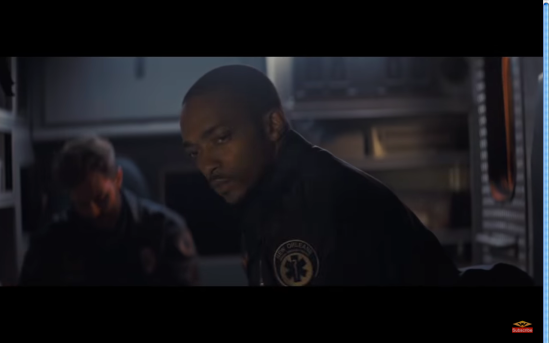
Like most of us during pandemic times, but not quite exactly like us who are working stressfully from home, is Anthony Mackie acting comfortably in his hometown of New Orleans, Louisiana.  The “Captain America” star temporarily hangs up Falcon’s wing harness to play lonely paramedic Steve frequented by his tragic past that has led him down a path of casual flings and an inability to attach to anyone romantically.  Opposite Mackie is Irish actor and “Fifty Shades of Grey” star Jamie Dornan as Dennis, a man kicking himself hard for marrying and starting a family too early in life that’s created a bizarre Prince and the Pauper dynamic where Steve and Dennis are envious on each other’s life.  Mackie is pitch perfect in the timing of a seemingly tailored-to-Mackie script that is funny as it is engrossing and thought-provoking.  “Synchronic” is truly the Mackie show with Dornan playing second fiddle as a compliment to Mackie’s more clandestinely troubled character who aims to upend and mend many wrongs in his life, including those of his best friend, and weaves in and out through the fabrics of time with Katie Aselton (“She Dies Tomorrow”), Ally Ioannides, Ramiz Monself, and Bill Oberst Jr (“DIS”).
Time travelling is a finnicky concept.  Lots of variables have to be ironed out in order to break the planes of chronological, set-in-stone, thinking and construe time as an infinite recording always available for repeat and playback.  Time travel is perhaps science fiction’s most powerhouse model, producing some of the most influential and staple films of the genre in our time that include “The Time Machine,” “The Terminator,” and “Back to the Future” that have carried out repeated viewings of admiration, a franchise legacy, and been the source of inspiration and remakes.  Plot holes and flaws in these films go without saying and are considered expected, but if filmmakers can get away with convincing audiences otherwise, then expect a blast from the past, present, and future.  Moorhead and Benson’s “Synchronic” has a gripping and cosmically vast story done in only one small corner of the world, the historically rich and diverse culture of New Orleans, and that isolating effect pressed upon by the distant and ominous unknown, a supremely niche and bracing style from the directors.  “Synchronic,” like time jumping films before it, has the anticipated plot holes in the mechanics of the designer drug’s side effects that are seemingly straight forward to the experimenting character only after attempting a handful of pill-popping jumps.  There are also no adverse butterfly effects stemmed from any of the Synchronic’s users.  You’ll find yourself lost in time over these questions that routinely shoot up other films to smithereens in the ole inconsistency corral thanks to Moorhead and Benson, along with the riveting and hilarious performance from Anthony Mackie, who suck you in with their relatable and humanizing story premised around Steve and Dennis’ life regrets mended by an eye-opening slight tear in the fabric of time to understand what you have now could have been a lot worse then.
 

“Synchronic” is stylish, Sci-Fi craftsmanship coming to you onto Blu-ray home video from Well Go USA Entertainment. The film is also available on DVD and digitally. Presented in 16:9 widescreen format, “Synchronic” barrages with a somber and slick, yet almost alien, plating over the Creole and double gallery architectures in a mesh of robust multicultural with the grimy slums, envisioned by director of photography, Aaron Moorhead, who, in part with Ariel Vida, the production designer, is able to capture era slithers native to Louisiana lineage. The Blu-ray comes with an English language DTS-HD master audio 5.1 surround sound that’s crisply makes distinct every track element defined by individual scenes. Jimmy Lavalle returns to collaborate with Moorhead and Benson once again to compose an unique compositional score that can only be described as driving nails into your soul while also being powerfully moving without being an echo out of inspiration. The release is rated R with a runtime of 101 minutes and comes with a fair amount of bonus features including commentary with Aaron Moorhead and Justin Benson, a making of featurette, a previsualization (a fancy word here for live-action storyboarding with a camera phone), a VFX breakdown (which is touched upon a lot in the making of featurette), a deleted scene, and an alternate ending that will doggone blow your mind! “Synchronic” is intense medication to repair a kindred friendship falling into disrepair in this literal mind-boggling must see it to believe it thriller. Expect more great things from Aaron Moorhead and Justin Benson to come!

Order “Synchornic” on Blu-ray by clicking the poster above!

And We All Thought Puppy Mills Were EVIL! “Breeder” reviewed! (Eureka Entertainment / Blu-ray Screener)

Avid and accomplished equestrian, Mia, yearns for a child of her own with husband Thomas as the clock on her ovaries continues ticking into her 30s, but something keeps her husband from digging himself out of a sexually frustrated trench, causing strain on their marriage.  Mia thinks his imperative financial venture, a collaboration alongside ruthless businesswoman and unorthodox scientist named Ruben, has made him sexually reclusive being wrapped up in a delicate investment of reversing the aging process that could crumble at any time, but when a beautiful and youthful neighbor goes missing after frantically showing up bloodied at her front door, Mia follows her trail to an abandoned candy factory where Ruben holds hostage young women for her violating biohacking experiments.  Becoming caged herself at the mercy of Ruben, Mia, and the rest of the women, are left to the sadistic and misogynistic whims of Ruben’s henchmen, the Pig and The Dog, in between the good doctor’s examinations. 

What happens when the powerful elite, using wealth and influence, circumvent ethical red tape in order to receive medical advancements as soon as possible?  Director Jens Dahl and screenwriter Sissel Dalsgaard Thomsen explore that radical and illegal biohacking ideology with an intense and extreme feminist view in their 2020 released, invasively graphic, horror thriller, “Breeder.”   Hailing from Denmark, not too many extreme films come out of the Nordic country, but taking a cue from their German neighbors from the South with a sexual and age dysphoria viscosity, “Breeder” takes an urban legend-esque approach to age defying that’s more Countess Bathory than anything Aveeno facial creams could ever manufacture in a story based on biohacking blended loosely with the French folklore of Bluebeard where an affluent man has an obsessive habit in murdering his wives, one after another, per director Jens Dahl.  “Breeder” might not be that black and, well, blue with a tough love message and an illicit theme of subversive genetical achievements produced by Peter Hyldahl, Amalie Lyngbo Quist, Penelope Bjerregaard and Maria Moller Christoffersen of Beo Starling (Beofilm) production company.

Leading the pack of caged, exploitered women in this human puppy mill comes with a hefty price of compromising positions and uncomfortable scenarios. The 32-yeard old actress, Sara Hjort Ditlevsen, plays an age appropriate Mia whose coming down to her last straw when coming to her husband’s inability to commit to their teetering marriage, but Mia comes with a twist in that she never gives up, achieving her end goal even if that means strapping on her riding boots and stirrups, dropping her panties, and digging those spurs into her hind parts while masturbating just to release the sexual tension. Ditlevsen gives a gradual fuming performance gaslit by the abusing sustained by the sadistic misogynist, monikered The Dog (Morten Hoist) who, in appearances, has the visual looks of a greasy Bill Oberst Jr. Jackson Pollock’d from a Mads Mikkelsen portrait and has the temper to match. The Dog and his partner, The Pig, played by Jens Anderson in an unbalanced contrast to the The Dog’s screen time, are harnessed and weaponized by a mad scientist role that was originally intended for a man before screenwriter, Sissel Dalsgaard Thomsen, had an epiphany that her feminist script was playing right into that systemic, male dominant, structure. Instead, the role was flipped, in gender only, and performed by “Wild Witch’s” Signe Eghom Olsen. Olsen gives a chillingly cold performance in Ruben’s contradictory indifference for life by snatching youth and beauty from young women, those who spite Ruben just by the mere fact of their innate good genes and healthy reproductive system, and selling the epitome of their stolen essence to the highest, or oldest, bidder in an age-reserval scheme. Ruben does have another motive with self-preservation as her rare genetic makeup makes finding a genome match nearly impossible, but she slays away a lot of women and a lot of infants in order to unearth her type. Anders Heinrichsen, Eeva Putro, Elvira Friis, Eja Rhea Mathea Due, Oksana Kniazeva, and Sara Wilgaard Sinkjær round out of the cast.

One of the “Breeder’s” core themes is the power one holds over another, but absolute control is not a singular reoccurring motif as power ebbs and flows from one character to another in a rolodex of examples that include Thomas’s financial control of Ruben’s rebellious operational decisions, The Dog’s inhumane dominance over captive women he loathes, and, on the receiving end, an enslaved woman’s embracing of a submissive, masochistic posture to The Dog’s punishing sadism, but control can be fleeting as seen in many movies yet proved to be in an abundance in Dahl’s “Breeder” with plot points that overturn sovereign power through a pendulum sway of brute, bloody force and hostage exploitation ugliness.  One bizarre recurrent through the cat and mouse power struggles is urination.  Yup, bodily fluids make an appearance, but go beyond the one-time shock value affect with three, count them three, acts of peeing in which two scenes reflect dominance as the powerful relieve themselves all over the, at that time, docile weak as a dog would when marking his claimed spot in the yard.  “Breeder” continues the varied questionable character tactics when primary plot turning points fail to impress plausible reactionary needs; an example would include when Ruben uses Thomas’ affection for Mia to control his unpredictable behavior, but the obsessed mad scientist, not to be bested by losing her financial support, lets Thomas run freely around her private abandoned factory of horrors which allows Thomas to become a monkey wrench in her biohacking laboratorial machine.  The same easy street escapes run rampant throughout and is even unintentionally spoofed when one women is able to escape not once but twice The Dog and The Pig’s rigorous grasps, taking “Breeder’s” serious new wave extreme a level down to a sickly stage of story blunders with rough draft written characters and scuffle.


If golden showers are not the extreme go-to for brutal survival horror, “Breeder” offers a variety of acrid amenities from stapling lips together to a trash can full of dead, dismembered babies and is homeward bound in the UK on Blu-ray from Eureka Entertainment under the company’s Montage Pictures banner.  Available February 15th, 2021, the first 2,000 prints of the Blu-ray will come with a limited edition O-card slipcase.  If you’re not a physical media aficionado (…loser.  J/K), “Breeder” will also be available digitally and will be presented in the film’s original aspect ratio of 2.35:1.  The Danish language DTS-HD MA 5.1 audio mix will be accompanied with optional English subtitles.  Since this review is based off a Blu-ray screener, I will not go into depth with the audio and visual conditions, but the cinematography work is from the sophomore feature of Nicolai Lok.  Behind the camera, Lok’s settles on a drab color schemes of mostly black and grey of a sterile environment, with the Lindberg house or inside Ruben’s medical popup tent, along with hard yellows, like mustard, to accentuate the rust and grime in closeups to medium shots within the tight confines of the abandoned candy factory turned into an unsweet meat market, but uses a fisheye lens on the regular to the effect I couldn’t pinpoint other than to fishbowl dysphoria an already narrow area. The end result made scenes unnecessarily warped for the viewers already stomaching a large amount of women battering. The special features included an October 2020 answer only interview with director Jens Dahl and screenwriter Sissel Dalsgaard Thomsen discussing in depth the reason they wanted to make this film. “Breeder” opens with Mia prancing her horse Karat and she inner dialogues how they move in tandem, but she questions the pecking order of master and prisoner between them knowing for certain she’s Karat’s jailor and that translates perfectly into her own subhuman treatment as a branded and caged animal for the pleasure of others; however, this type of depth thinking begins to rotate the hamster wheel but, as soon as momentum picks up on those tiny legs of collusion and betrayal, a gradual limp slows that hamster’s endurance with not enough plot developmental pallets to digest in order to keep up the effort.

EVIL is a Giant Cockroach Trying To Bite Your Head Off…Man! “Love and Monsters” reviewed! (Paramount / Blu-ray Review)

For seven years, monsters have ravaged the human race to nearly extinction after nuclear nations destroyed an planet killing meteor in space, but the radioactive debris that fall back to Earth mutated the smallest creatures into monstrous killing machines.  Humans have been divided into colonies forced into underground bunkers.  Joel Dawson has been barely surviving with bunk mates who see him as a liability in his inability to act when faced with a monster situation and has been unable to connect, romantically, with another person.  When Joel discovers his high school sweetheart is 85 miles away in another colony, Joel decides to leave the bunker safe haven and journey across the dangerous surface for seven days for the sole purpose of love.  Forced to face his fears and adapt to survive a perilous land full of giant centipedes, hungry massive toads, and a crusty crab the size of a two story building, Joel must rely on his instincts and the help of rule-following topside survivors to see again the girl he thought he lost.

Add “Love and Monsters,” a monstrously romantic creature feature, right up there with “Warm Bodies” as this decade’s version of horror and love dancing the tangled tango in this kill or be eaten comedy-love pursuit directed by Michael Matthews.  The 2020 release is Matthews’ sophomore directorial from a script co-written between Brian Duffield and Matthew Robinson off a Duffield’s original “Monster Problems” script.  Duffield is best known for penning last year’s water leviathan success, “Underwater,” starring Kristen Stewart, with “Monster Trucks’” Robinson coming aboard to finesse the grand adventure mechanism that makes “Love and Monsters” a singular trek through heart-thumping terrorland.  The Canadian production filmed in the amalgam terrain of Australia is produced by Dan Cohen and Shawn Levy, who both know a thing or two about doomsday premises in producing Netflix’s “Stranger Things” and the Denis Villeneuve sleeper sci-fi first contact film, “Arrival,” under 21 Laps Entertainment in association with Entertainment One and Paramount Pictures distribution in North America.

A singular journey of bushwhacking and survival falls upon the shoulders of a young man who hasn’t yet transitioned to be an adult. From the time he was 16 years old, Joel Dawson knew love, but didn’t know how to fend for himself when life gets tough….really tough, like, full of carnivorous creatures in an end of humanity and heading to extinction tough. Yet, as adults, we thrive on challenges as our brains have learned to adapt with each new level of adversity and obstacle. For Joel, being stuck in the past, reliving a swift romance, has suspended him in nowheresville as he struggles to find love and age-appropriate interaction with of his kind peers. Dylan O’Brian captures Joel’s inability to see the clearly world around him because, literally, he hasn’t seen or experienced the world for about a third of his young life. Portrayed early on in young adult fiction with his feet firm in the heartthrob remake of “Teen Wolf” television series and coming out of adapted for film “The Maze Runner” trilogy, O’Brien discovers that being feeble and lonely can be just as powerful as being a werewolf or a dystopian survivalist; instead, O’Brien up-plays the quirky, quick-witted, outcast with delusions about his solitary and unpopularity as he finds fortitude by trekking seven days through a monster-riddled hell to rekindle his relationship with Amiee, the last person he personally felt a connection to who hasn’t been squished under the foot of a Granddaddy Long Leg. “The Head Hunter” and “Underwater” star, Jessica Henwick, retunes her vocal chords to present her best American English accent in order to be Joel’s live-or-die love interest, if she hasn’t changed in the last seven horrible years. Yet, before Joel and Amiee reunite in what’s a finger-crossable moment of love again at first sight, the meek Joel Dawson needs to go through, what half the monsters outside have already gone through, is a metamorphosis of sorts to be bigger, tougher, and more self-reliant. This is where MCU alums, Michael Rooker (“Guardians of the Galaxy”) and Ariana Greenblatt (“Avengers: Infinity War”) step in. As Clyde, Rooker’s the Bear Grylls of monster land, knowing all the tips and tricks of topside survival all the while sporting a Richard Simmons perm, whereas Greenblatt, as the orphaned Minnow traveling in companion with Clyde, is just rugged despite her pintsize. “Love and Monsters” really focuses on these four individuals that mainly perpetuate only one of them, Joel, to be the best survivor he can be at the bottom of the food chain, but other minor characters do arise and nudge brash action that requires the solidity of an unbroken community chain. Dan Ewing (“Occupation”), Ellen Hollman (“Asylum”), Pacharo Mzembe, Tre Hale, Senie Priti, Amalie Golden, and “The Road Warrior’s” Bruce Spence makes a cameo appearance as Old Pete.

What I find interesting about “Love and Monsters,” that’s more prevalent in most post-apocalypse themed plots, is the lack of dog-eat-dog between humans.  While the story mainly skirts around the concept with a running gag that the real reason Joel left his colony is because he’s a no-good food stealer, Joel’s interactions with his and Amiee’s colonies, plus in his travels with Clyde and Minnow, showed no sign of deception or greed, a rare and humbling dynamic when starved, weary, and scared people are backed against a wall and cutthroat advantages are at arm’s length; instead, a real sense of community and compassion is committed that brings a sense of hope, not for just Joel in a world conquered by monsters, but for also audiences with pessimistic views about the volatility of man.  Even with all the fears of A.I hostile takeover, tender moments of man face-to-face with machine seals that threat into inexistence as Joel comes across a damaged MAV1S unit, an anatomical automaton built for servicing humanity, borders that plane of complex human emotions with all the right things to say and able to read what Joel needs to here to keep him moving in a sacrificial scene of the androids’ last hurrah before complete battery drain.  “Love and Monsters” doesn’t do a complete withdrawal from the hypodermic needle of inhuman poison, but the concept is certainly not the emphasis.  With a title like “Love and Monsters,” you want the monsters to be, at the very least, half of the story, as promised, and we’re treated to a slew of different monsters with different personalities and with different innate weapons. Not all the monsters are blood thirsty. Some are gentle, but judged for their immense size and scary physical attributes and Matthews points this important theme out in a trope about-face, signifying that just because this is a monster movie, doesn’t mean all monsters have been unjustly deemed vicious and terrorizing. In a way, these monsters parallel in being judged just as inaccurately as Joel is by his survivalist peers without so much as the benefit of the doubt and only when a trust evolves from out of being scared is when judgements wash away with sheltered conventional thinking. Diminutive inside a fantasyland of behemoth horrors, “Love and Monsters” has a tremendous heart with an interpersonal message about understanding connections with people inside the mixed-messaged confines of coming into adulthood.

If we don’t nuke ourselves out of existence first, the lifeforms underneath the soles of our shoes will gladly seize dominance for an easy, human-sized, snack in Michael Matthews’ “Love and Monsters” now released on Blu-ray plus digital, as well as 4K Ultra HD and DVD, courtesy of Paramount Pictures. The PG-13 action-adventure creature feature is presented in high definition, 1080p, widescreen 2.35:1 aspect ratio. Australia is already a futuristic land of gorgeous overgrowth and untouched wonder, Lachlan Milne trades in the practical (zombie horde) aesthetics of “Little Monsters” to a transcending larger types of monsters to scale an open world environment to eventually be combined with post-production visual effects of Kaiju-sized myriapods, crustaceans, and amphibians to just name a few. Award winning VFX company, The Mill, has seamless and organic creations that blend truth and deception with the scariest of ease as creatures explode out of the ground or lumber above head with no angle left uncovered or underdeveloped in giving audiences unmistakable visuals of our nightmares. The English language 7.1 DTS-HD master audio mix is the epitome of well balanced with clear dialogue, a complimentary soundtrack, and a long range and diverse depth of sound engineered monsters being monsters from low, sonorous gutturals to the high cracks and pops of creature movements. Inside a cardboard slipcover, The Paramount Pictures Blu-ray comes with a digital movie code to add to your digital movie collection to watch anywhere, but the release also comes with deleted scenes, a “Bottom of the Food Chain” featurette feature snippet interviews with the cast and crew, and “It’s a Monster World: Creating a Post-Apocalyptic Landscape” that dives into the natural preserve combined with production design to create the apocalypse illusion. Adventurously invigorating and outside the norm of telling story patterns, “Love and Monsters” romanticizes the post-apocalypse with a self love theme in a hope-inspiring and fun creature-crammed monster movie.

Blu-ray of “Love and Monsters.” Click poster to purchase at Amazon.com!

EVIL is Undead…And Rides a Shark! “Sky Sharks” reviewed (Umbrella Entertainment / DVD)

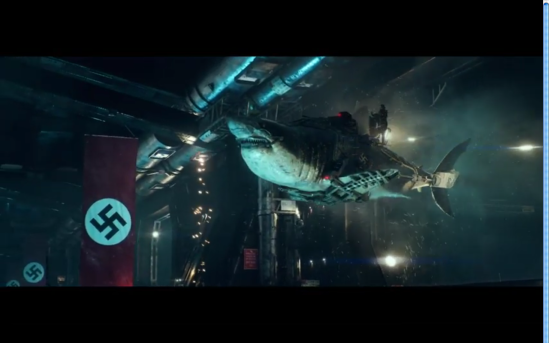
Former Nazi scientist Dr. Klaus Richter’s past has finally caught up with him after 70 years when a clandestine German laboratory, disguised as an aircraft-battleship hybrid, thaws from behind a globally warmed sheet of frozen ice and rock, releasing Dr. Richter’s regenerated legion of undead Nazi super-soldiers piloting genetically engineered flying battle sharks complete with guided missiles alongside their razor sharp jaws.  Loyal to the Third Reich, the sky sharks continue their master race patronage with a blitzkrieg in the skies, attacking commercial aircraft, boarding the cabins, and slaughtering every last person on board before crashing.   Now contractually working for the U.S. Government as the biggest name in technological advancement, Dr. Klaus, with the help of his two daughters, has a plan to nullify the sky sharks’ defenses to make them vulnerable to his latest newest experiment in warfare, Dead Flesh, under the guidance of his fellow covert government agency heads.

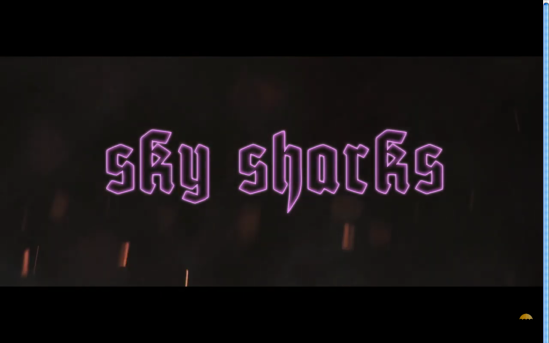
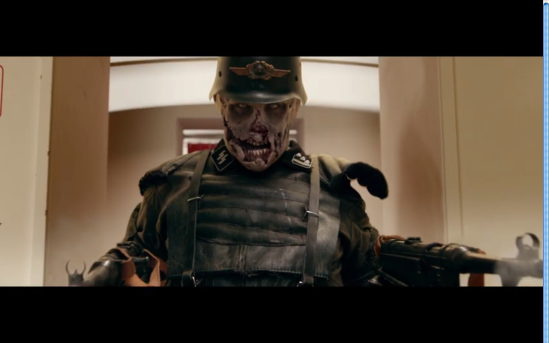
Apex predators of the waters are now apex predators of the skies in Marc Fehse’s ridiculous, frenzied, and utterly mad ultra-violent Nazi-exploitation, “Sky Sharks.” Soaring through the heavens soaking fluffy white clouds with blood, the Carsten Fehse and A.D. Morel co-written film took off virally in 2020 with the promise to the internet, especially horror fans, of zombified SS soldiers mounted standing on humungous Great White, Hammerhead, and Megalodon jet-propelled sharks. Fehse’s team delivered. “Sky Sharks” has not one single serious bone in all it’s cartilaginous gory-glory body in what’s Fehse’s second film behind the 1999, straight to video, “Mutation” involving the what-if factor of a surrealistically free reigning and sadistically unbridled Nazi force hellbent on winning World War II no matter how many lives needing to be sacrificed for the sake of the Führer’s dominion. The Germany-made production is a Fuse Box Films and Fantom Films.

“Sky Sharks” is studded with cult stars, but those studs pop out mostly after the carnage-laden opening scene of passengers on a commercial flight being ripped to shreds by undead super-soldiers hog-wild about killing. Robert LaSardo (“Strangeland”), Lynn Lowery (“Model Hunger”), Tony Todd (“Candyman”), Diana Prince (“The Last Drive-In with Joe Bob Briggs”), Mick Garris (director of “Critters 2”), Dave Sheridan (“Scary Movie”), Amanda Bearse (“Fright Night” ’85), Asami (“Gun Woman), Naomi Grossman (“American Horror Story” franchise), Lar Park-Lincoln (“Friday the 13th Part VII:  The New Blood”) and “Mortal Kombat’s Shang Tsung himself, Cary-Hiroyuki Tagawa, make an appearance in some minor way, shape, or form, but since “Sky Sharks” is a German production, much of the cast is geared toward German and Austrian actors with Thomas Morris spearheading the lead role of the inverted mad scientist, Dr. Klaus Richter, a centenarian mastermind behind the birth and, hopeful, destruction of his monstrous airborne jaws of death experiment.  The role itself isn’t very exciting that refrains Morris to be nothing more but a talking head who recounts his failed World War II and Vietnam resurrection serum to turn the tides of war.  While Dr. Richter has immense blood on his hands from a long and rich background, the present day Richter has lackluster appeal and Morris doesn’t provide much zest either.  More complexities reside in Richter’s two tech-savvy and kickass daughters, Diabla and Angelique.  Their signifying names alone provide some foreshadowing of events, but the close sisters are boots on the ground with their father being the eye in the sky; yet, Diabla and Angelique have been kept in the dark from their father’s horrid past that factors little into parting ways from being daughter’s little girls.  Blonde beauties Eva Haberman and Barbara Nedeljakova successful roles in Germany and the U.S. include “Hostel” and the sci-fi tele-series “Lexx,” but their blind obedience to the patriarch roles downscales any moments to shine individually as free thinking agents of good.  Any other character factored into “Sky Sharks’” whiplash narrative come and go without a single ounce meaningful impact becoming background noise for the fray. There’s not even a singular villain to speak of as a focal point to direct a challenger against forces of good.

As much as the concept excites me on an obscurely dysfunctional level, a real telling tale of who I am as a person, who also praises “Snakes on a Plane” as cult candy, “Sky Sharks” has atrocious issues with pacing and story quality.  The opening scene sets up what to expect of gore drenched Nazis yoking back on genetically mutated sharks, zipping through high altitude to acrobatically infiltrate commercial planes for complete and total annihilation of every passenger onboard.  Tickles me in all the right places.  Yet, the sky sharks’ unveiling background whizzes past right into death from above world apocalypse, skipping keynote details resolving the giant warship beached on the Antarctic ice.  Fehse decides to redirect our focus with a bunch of explicit violence and sex and while that’s all nice and good…really good…the misdirection can’t coverup the necessities needed for a good story even if the story is absolutely bonkers. The visual effects are not distinct from the ream of shark-sploitation films that have become popular over the last decade in a cheaper slaved effort to capitalize on the majestic beasts of the sea…who sometimes mistake a surfer for a sea lion. The flying sharks swim in a stiffly pattern and move inorganically through their uncharacteristic ecosystem as they rocket in a school of steampunk nightmares. Not all visuals fall short of satisfaction when they’re appropriately blended with practical effects. Under that hood of tangible horrors is “Iron Sky: The Coming Race’s” Martin Schäper and, the legendary, Tom Savini, who we haven’t seen special effects work from since 2012’s “Death from Above” (an also fitting title for killer sharks in the sky). Schäper and Savini bring it with blood. Each plane sequence, there’s two of them, exhibit different deaths with each one more outrageous than the next. My favorite is the inverted periscope through a guy’s cranium and having a looksie at the screaming, bloodied passengers. “Sky Sharks” is, literally, an over-the-top scream of slice’em and dice’em fun.

Cresting through the blue yonder and painting the sky blood red is the deadliest gang of shark riding Nazi’s to ever grace a cinema platform in “Sky Sharks,” coming to DVD in Australia, no stranger to large, deadly sharks, courtesy of Umbrella Entertainment in association with Raven Banner. The NTSC encoded, region 4, rated R release will present the film in a widescreen 2.35:1 aspect ratio. “Sky Sharks” is a turbulent wonderland of rustic computer generated visual effects with a Marco J. Riedl and Olaf Markmann cinematography, typifying a clashing style, of keeping actors tightly in focus to sell a futuristic fluorescent environment. A few scenes give a sense of layered paper mâché sitting in front a green screen as the forefront images seemingly pop out of their backdrops. The English and German Dolby Digital 5.1 surround mix falls victim to an overpowering score of a weak dialogue track that washes key pieces of exposition that might explain more as the scenes fleet away in the rushed paced 103 minute runtime. Aside from a brilliantly detailed DVD cover robust with a glowing eyed, half-decaying Nazi soldier as centerpiece amongst flying, weaponized sharks and Robert LaSardo and Lynn Lowry cameoing off to the left side with a half-naked female warrior on the right, the DVD has no bonus features included. After the credits, a fake commercial for “Sky Frogs,” starring that half-naked female warrior I just mentioned, is a satirical happy ending full of even worse, 80’s caliber, visual effects worlds and frogs. Though not at the top of the food chain being one of the grossly ostentatious and shoddily visual effects films ever, the mindless, search and destroy, crudeness of “Sky Sharks” chums our oceans of entertainment with some of the bloodiest fun we’ve seen in a long time from a Nazisploitation.

Own Umbrella Entertainment release of “Sky Sharks” on DVD! Click the poster!

Keep the EVIL Family Drama for Your Mama. “Abigail Haunting” reviewed (High Fliers Films / Digital Screener)

While searching for a life in Reno, Katie reluctantly becomes an accomplice in a heist job with her abusive boyfriend, scoring a small brown paper bag packed with stolen money.  In the middle of post-heist uncertainty, an opportunity to escape a troubled relationship presents itself and Katie hightails it to her hometown of Prescott with the loot, leaving the dark life behind her in Reno.  Unsure of her next steps, she hides away by moving back into her childhood trailer home with foster mother, Marge, who has nearly deteriorated into a completely catatonic state over the last few years.  As the days pass and Katie catches up with Brian, rekindling a relationship with a high school crush, her secretive past becomes plaited into Marge’s sinister skeleton in the cupboard that pulls both of them into the supernatural wrath of a tormented spirit haunting the trailer home, merging the past and present with a shocking conclusion.

Cursed.  No, not the vengeful spirit who resurrects to plague havoc on the still breathing, flesh and boned to set their tortured, spiritual planed souls to rest.  The curse I speak of involves putting Haunting into the title of any ghost film that has been released in, oh let’s say, the last 20 or so years culminating into being one mediocre release after another of mainstream and independent films that has, frankly the lack of a better word, cursed the subgenre.  Type haunting in the IMDB search field and just glaze over as hundreds of films crash over you in a tsunami of stale capitalism ever since the remake of Robert Wise’s “The Haunting” in 1999 with Liam Neeson and Catherine Zeta-Jones.  “The Haunting of Connecticut.”  “An American Haunting.”  “23:59:  The Haunting Hour.”  Being one step behind the hackneyed “possession” in nearly every title about, well, possession, these post-2000 ghost films are just morsels of the bigger crapola pie that investors love to sink as little of their money into as possible because the return is greater because ghost film don’t necessarily a R rating unlike other subgenres and, sometimes, piggyback off a successful film with the parlance.  PG-13 in slashers is an oxymoron, if you ask me, but in with ghosts, fear of mysticism and the unknown has enough power to scare if done correctly, i.e. the original “Poltergeist.”  This unbecoming setup leads us to the 2020 release of the revenant thriller “Abigail Haunting,” the latest Kelly Schwarze written and directed full length film after tackling an Area 51 inspired bloody battle beyond the stars set in our backyard with “Alien Domicile, and before we go into whether the Schwarze film, co-written alongside Charisma Manualt, can tame an unbridled use of title-exploitation with a first rate story, the Indie Film Factory production will receive full benefit of the doubt until the end of the review.


The story follows a small town girl, Katie, from Prescott, Nevada who falls into small time crime with a lowlife boyfriend that quickly turns sour and deadly after an armed cash grab, presumably from a Reno casino.  Chelsea Jurkiewicz fits that small description recipe of stuck in a rut local girl without much cause for disbelief.  As Katie, Jurkiewicz’s able to be the part of a young, harried woman running from a checkered past and into the flames of a paranormal bombardment.  The then early 20-something, “Stalker” actress kept Katie balanced between her cash stealing time in Reno, integrating back into what was a rough patch with an unreasonable and abusive foster mother, and dealing with unexplainable occurrences of nightlights turning on by themselves, her room being ransacked, and succumbing to disturbing visions while reminiscing of being a scared child hidden behind a makeshift potato sack mask that becomes a reoccurring object throughout.   While Schwarze loosely ties all the facets together in a nice, tight bow that leads to a climatic unraveling of Katie’s past, the visually assaulted Katie suffers as the centerpiece punching bag that connects them altogether.  To top Katie’s mounting pressure, a face from the past tries to pry his way into her life.  A lost fling in Katie’s fleeting existence is Brian, played by Austin Collazo in his debut film performance, forcing himself into her life in what reeks of single parent desperation.  A moment involving Katie looking through a photo scrap book shows the two smiling together in a lone picture, as if she’s reflecting upon a previous romance or friendship that has since fizzled, but that’s about the extent of their history that doesn’t dive deeper into the reflection or explain the spark from the sudden interest from Brian.  At the crux of the story is Marge (Brenda Daly), a dirtied, nightgown wearing middle-aged woman who fostered abandoned at 4 months old Katie in what only has been, in Katie’s sole exposition, a terrible experience.  Schwarze instinctively ties the trailer home and Marge together as a single entity, enacting as one to push Katie around in a fit of unmotivated hysteria.  Katie doesn’t seem too eager to lift an investigated finger any of phenomena that has plagued her in the home, in the back shed, or even follows her out on a date with Brian.  Instead, Brian initiates digging into her past that sends Katie down Marge’s rabbit hole of hidden secrets in an off kilter directional take where a protagonist stands indifferent or remains stagnant after multiple Abigail encounters that would seemingly rouse up curiosity or for the sake of proving sanity.  Rounding out “Abigail Haunting” is Michael Monteiro, Christopher Brown, and Taylor May as the titular ghost.

Not a positive start with flat, often time dunce, characters in “Abigail Haunting.”  The mindset behind Katie’s involvement with the Reno robbery and a scoundrel lover strains to play a bigger role into the eerie defense she’s positionally locked into at Marge’s dreary trailer home.  Schwarze remains on the fringes around the preoccupations that descend Katie into this dark place in her life between searching for her real mother that abandoned her as an infant, the deadly robbery in Reno, and the abusive ex that all seem to be weighing less on Katie’s shoulders than the duffle bag of a couple thousand dollars that would typical skewer one’s psyche, manifesting more than just the typical side effects of pressure.  Instead, Schwarz doesn’t fold in well enough the incorporation of our angry spirit, Abigail, whose unexplained appearance out of the Nevada blue sky in between Katie’s leaving and returning to Marge’s home denotes not one single explanation of when and why Abigail chooses to be a resurrected, phantasmal spite.  More jeopardizing toward Katie’s past and present life is her obsession with the stolen money versus living a decent life with possibly Brian and his dissociable, divorce struck kid, who the former is clearly obsessed with her, but the story more so saturates with a free floating, full torso phantasm, as the Ghostbusters would say, that undermines the subterranean psychology at work here and clouds the ghost foundation built on deceits, lies, and ugly truths. What “Abigail Haunting” succumbs to is being about as rudimentary as they come with a climax too riddles with plot holes that squish much of good establishing camera work and some decently laid jump scares. Haunting, as in a title, still curses the horror subgenre with middle-of-the-road dynamism.

Death clings to us all. In “Abigail Haunting,” death clings to vengeance in this supernatural thriller dropping on DVD in the UK on February 8th courtesy of High Flier Films and ITN Distribution. The region 2, PAL encoded DVD will be presented in a widescreen 2.35:1 aspect ratio with a runtime of approx. 85 minutes. I initially had high hopes for Abigail to be at least be a derivative carbon copy of “The Conjuring” as “Scare Me’s” Michael TusHaus’s shows off impressive camera work that organically flows through Marge’s tight quartered trailer, as well as in other scenes when applicable outside the trailer location, with generous use of a stepping in-stepping out steady cam. TusHaus’s hard lighting also creates stern atmospherics with full bodied shadows that symbolically keep secrets and spirits in the dark. The digital release had no extra bonus feature available with none displayed on High Flier Film’s website. There were also no bonus scenes during or after the credits. Solid cinematography and palatable performances couldn’t plug up all the plot holes that stiffen “Abigail Haunting” into a two-bit carnival attraction that looks cool upon entry but not worth the money on exit.