The Dying Baltic Traditions Live in the Ashes of EVIL. “Cult Girls” (Umbrella Entertainment / DVD)

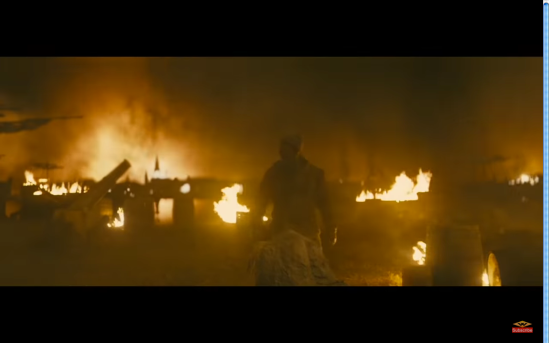
The pagan Cult, the Golden Path, remains nearly all that is left of the ancient practice as Lithuania becomes one of the last countries to be converted to Christianity in the late 14th century.  Led by an archaic, yet powerful, goddess named Ragana, the Golden Path promises to flourish once again with the power of death, reincarnation, and control through sordid misdeeds.  When Dalia and her two young sisters become prepped for a ritual of an important role in the cult, potentially leading them down the path of sex and sacrifice, a traitorous follower helps the sisters attempt to escape their emmeshing fate as the police raid the Golden Path compound ensuing a firefight that leads to the death Ragana and Dalia’s getaway, but her sisters are kidnapped and held captive by the remaining cult members.  Years later and riddled with guilt, Dalia must know what happened to her sisters and she tracks down a death metal cultist, Moloch, who seemingly has a connection to Golden Path, with the help of Samoth, a black metal fanatic, but Moloch forestry hermit lifestyle cuts off Dalia and Samoth from the rest of the world and the convicted arsonist against all things Christianity may have more up his sleeve than what meets the eye.

With a title that sounds like an all-girl goth band from the grunge era of the 1990’s, or maybe even more so from the “Scooby Doo” franchise (Hex Girls anyone?), “Cult Girls” summons the actuality of being an acute quasi-historical and dark fantasy thriller hailing from the Ozploitation capital of the world, Australia.  “Cult girls” is the second, non-documentary film from “The Matrix’ inspired “Narcosys” director, Mark Bakaitis, who directed, wrote, and edited his the multi-location sophomore film that has on location scenes from not only in Australia, but also in Lithuania, at the notable Hill of Crosses landmark, and in the indiscernible urban locations of Germany.  Bakaitis serves as producer alongside executive producer Douglas Kaplan of the diverse arts platform production company, All Edge Entertainment, based in Santa Monica, California. 

The Australian production casts an American to star as Ragana, the brood matriarch destined to rejuvenate Golden Path’s permanence, with “V’s” very own Jane Badler.  Badler brings an international presence to the feature and isn’t a stranger to films from the down under.  With the actress’s soul-seducing cutting eyes and demonic empress allure, the New York born Badler exacts Ragana’s clutching strength as an underground Pagan seeking unlimited decadent power.  However, Badler is overshadowed by the timorousness of Dalia whose polar opposite presence is granted a more favorable chunk of screen time.  Finnish born Saara Lamberg plays the humbled Dalia, living her life out of a covenant while searching out the cult that once almost stitched her into the sew of sleazy affairs to unearth the whereabouts of her younger sisters.  Dalia’s a bit of a dull principle with no substantiated efforts in finding her siblings and it isn’t until Samoth stalks her one night, recognizing the Golden Path’s symbol tattooed on her wrist and offering his manhunt services to find the expelled Moloch, an exaggerated black metal anti-Christianity anarchist in a saturating performance by Albert Goikhman.  In the middle, masked brutes, half naked women, and, fallen by the waist side, Dalia’s sisters in standalone plot point narratives that, as far as story structure goes, does nothing to motivate the narrative other than be an ostentatious aesthetic of locations and debauchery.  “Cult Girls” rounds out the cast with Tony Markulin (“MurderDrome”), Algias Karazija, Dean Kirkright, a handful of Bakaitis’s family, and Simay Argento, a distant relative to Dario Argeno playing a Cult Auntie in the film.

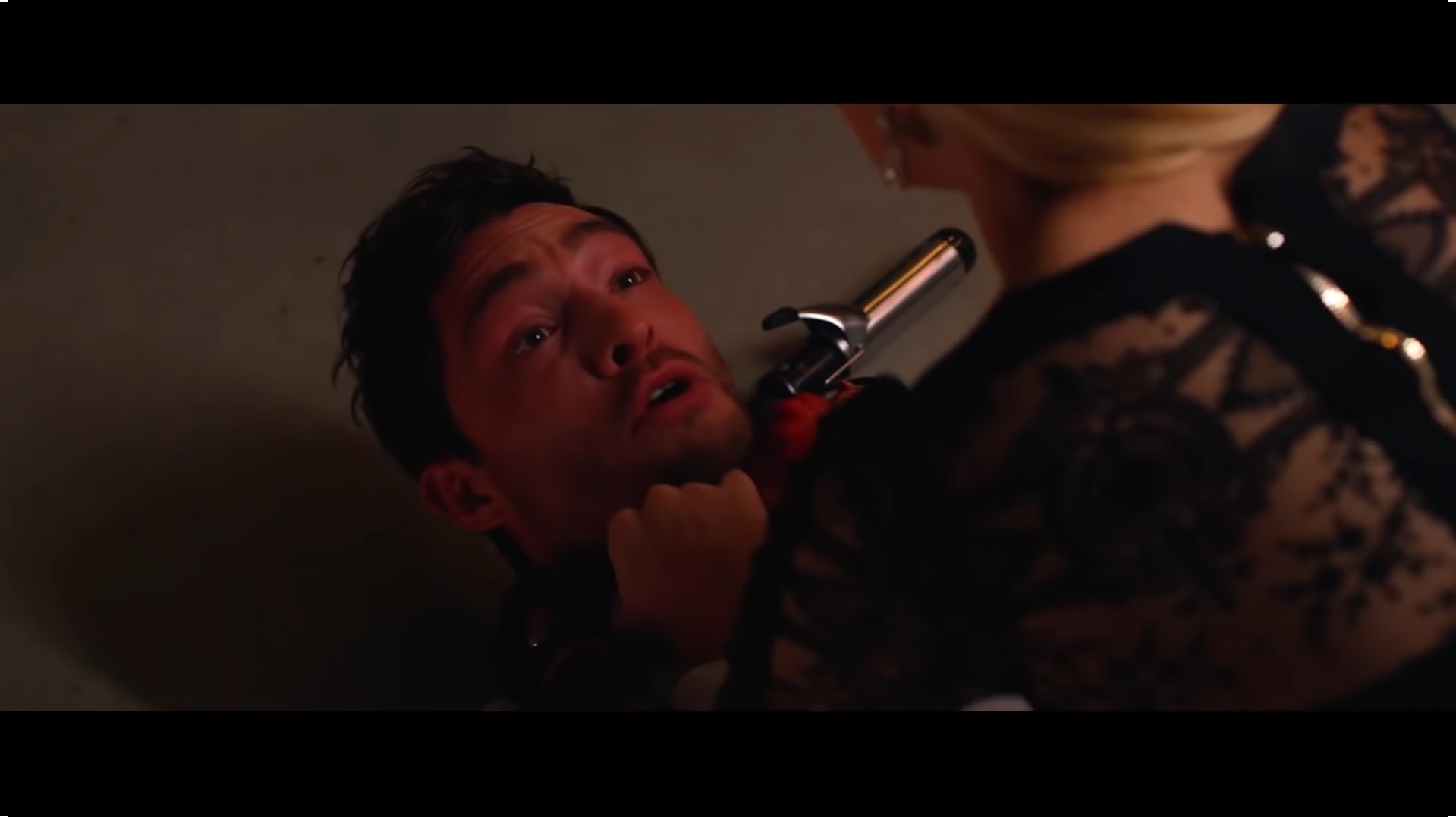
“Cult Girls” borders being avant-garde of an unfiltered auteur’s will in a mesh of artistic polishes and prose dialogue, but the film slides into being more of an 83 minute music video over staying it’s welcome and drudges through a repetitive stylistic cycle to an almost nearly unwatchable extent.  Yet, “Cult Girls” somehow manages to retain attention despite the chewy acting and it’s ambling story that hits a dam wall of uncertainly of where the script should head. Bakaitis shoulders the story for modern Gothicism tapped with half naked occultist, sometimes bathing in blood, and a plague of nightmare imagery that director of photography Trent Schneider tunes into well with noir vitality despite being the cinematographer’s debut feature film, but through the shiny exterior of a handful of solid mise-en-scene work, “Cult Girls” numbs the impact of the soul corrupting Pagan syndicate, that may or may not be shrouded with supernatural foundations, and the anti-Christian propaganda with half-baked violence from geriatric men, masked with Dia de los Muertos style masks, able to be kingpins of an untouchable prostitution ring façade for their occult sacrifices in broad public without a bat of an eyelash.  Granted, prostitution is likely legal in Germany and Lithuania so authorities might turn a blind eye, but brothels are a convenient opportunity for police investigations. “Cult Girls” treasures the fact of Lithuania’s languishing heritage without being overly filmic heresy by blending in shaded sleaze and death, but there lies no story in Dalia’s unenthusiastic search for her sisters in a much more preacherly themed death metal horror that confuses cult with religion.


Apocalyptic reincarnations and traditional folklores collide in Mark Bakaitis’s “Cult Girls” on DVD now from Umbrella Entertainment. The Australian release is a single layer DVD with region 4, PAL encoded format, presented in a widescreen 2.40:1 aspect ratio. Trent Schneider’s keen eye captures a grim fairytale surface of black magic masochism and, at the same time, breathtaking in the pure nature scenes, but the imagery is mostly in devoid of richer color that lingers around a bluish-gray monochrome tone and struggles with hazy details, especially around facial features, that smoothly fuzz over. The English, German, and Lithuanian Dolby Digital 5.1 surround sound mix battens down with shiplap genres of traditional Lithuania folk and modern metal from composing sound designer Erin McKimm, implementing the traditional songs of Lithuania sung by the Melbourne-Lithuania community singers, The Lost Clogs. Industrial action fills in every nook and cranny of the remaining score with decent range and depth of ambiance. While the dialogue is prominent and clear, there are spelling errors and tiny text issues with the English subtitles when the narrative lands in Germany and Lithuania. The DVD’s bonus features includes audio commentary, making of featurettes with cast and crew interviews, Bakaitis’s short film, “Mercy Kill” that serves one of the founding themes for “Cult Girls,” and music videos directed by Mark Bakaitis. For an Australian film, “Cult Girls” will feel more worldly, unlike anything else that comes out of Australia, and have partisan propaganda against Christianity, but in the end, the insidious Pagan evil, on the precipice of resurrecting, wearies on, like a tireless sermon of doom.

Millennial Martian Mayhem Is EVIL’s Wheelhouse in “Save Yourselves” reviewed! (Bleecker Street Media / Digital Screener)

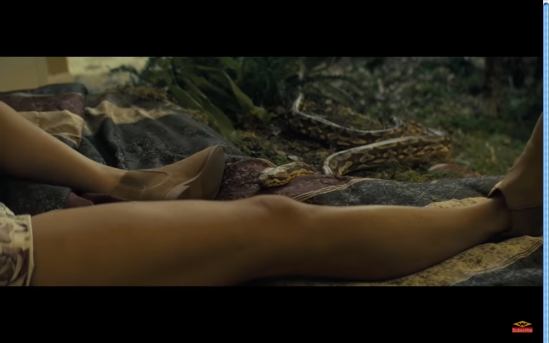
Brooklyn couple, Su and Jack, find their noses constantly buried in their devices as the relationship between them begins to stagnate with unfulfilled measures.  In an effort to reconnect with each other meaningfully and detach themselves from the wedging worldwide web, they accept a close friend’s offer to use his upstate cabin as a rekindling retreat getaway from the mundane routine, away from the bustling city, and away from their highly addictive technological devices, shutting themselves off from the numbing side of the world to focus on each other.  As they become acquainted with their isolated surroundings and truly work on themselves, an attack from an alien race of pouffe balls has invaded Earth.  When they finally figure what’s happening, the serenity cabin therapy has been abruptly severed by besieging extraterrestrial furballs from space and they must rely on their little know-how to survive.

To all the modern millennial couples living comfortably in urban stasis and experiencing the world vicariously through the internet, “Save Yourselves!” is a calling and an unlikely savior you didn’t even know you needed from the writing-directing team of Alex Huston Fischer and Eleanor Wilson.  The duo’s introductory feature length film is a satirical sci-fi side-splitter of the celestial kind that, frankly, exposes the rudimentary sustaining people like Su and Jack who we all know exist and wouldn’t know how to start a fire with the quick strike of a match let alone save themselves from an apocalyptical alien invasion, but much like Su and Jack’s understanding of their surroundings and also to their defense, what does anybody know about surviving creatures from another planet?  “Save Yourselves!” is produced by Peter Traugott and Adi Ezroni of the New York based Keshet Studios as the company’s sophomore feature, Eamon Downey and Philip Erdoes of Last Rodeo Studios (“Scare Me”), and Joshua Blum of Washington Square Films.

Internet obsessed couple Su and Jack can barely not fiddle with their phones, laptops, and even Alexia for more than a minute, scouring the limitless online resource for information and entertainment that even infiltrates into their livelihood of administrative assistant scheduling and online popup box retail services.  “Mr. Robot’s” Sunita Mani sits into the internet top 10 list fixated mindset of Su with a complimenting structure revolving around her character’s meticulous life layout constructed by internet page browser tabs.  Equally as reliant on the power of the internet is her beau Jack, played by “Stranger Things’” John Reynolds in a hipster blend of Crispin Glover with the voice comparisons to Hanna-Barbera’s The Funky Phantom.  Mani and Reynolds accorded a charmingly naïve pair of social media engulfed millennials on a path of monotonous self-implosion and take their characters’ arcs over the growth threshold as their thrust to survive without knowing nothing of the tangible (Jack’s own word) world.  “Save Yourselves” is essentially the Sunita Mani and John Reynolds’ show, but the cast rounds out with bit part performances from Ben Sinclair, John Early, and Johanna Day.

Su and Jack are extremely likeable characters with some real and some fantastical unlikeable problems of social media addiction and space beings snatching their planet right under their touchscreen pressed noses. “Save Yourselves” knits a palpable double meaning that not only conveys the impractical saving of themselves from the impending attack of furry aliens, isolated in a thick, unfamiliar wooded ecosystem, but also save themselves from their own social network debilitated selves who rely too much on the glitzy pyrite of the Gram (Instagram) and Facebook to rule their lives.  Directors Fischer and Wilson gamble with a good chunk of the story’s unresolved aspects the plot points build up so well that might leave audiences scratching their heads while a lip-curling complexity freezes their mouths agape in wondering next steps for hapless couple Su and Jack. For the defense of the unexplained, the Earth invasion is an, as we know it, impenetrable fact of pure science fiction, glimmered in 1960’s fashion with resemblance to the Shatner era Star Trek “Trouble with Tribbles” alien pouffe balls (the filmmakers must have been “Star Trek” fans) of various shapes and colors beleaguering an assault with Spider-Man-like bio-lash to get around, an unquenchable thirst for Ethanol, and sonic fluctuance. When you type it out loud it sounds ridiculous, but “Save Yourselves!” harps back on the classic Sci-Fi features with a contemporary wit toward the inept abilities of today’s modern young adults and their reliance on social media.

Going off the grid nonplusses city dwellers with formidable diurnal life routines in the indie science fiction comedy “Save Yourselves!” that has invaded theaters and at-home platforms this week, distributed Bleecker Street Media. The 93 minute, rated R social commentary satire is shot mainly in an unfiltered, natural light with a handheld and steady cam, grounding the filming within the wilderness of New York’s upper state with a sound staged to recreate the tuning fork of kooky otherworldly sound bites and soundtracks. Since this is a theatrical new release, there will be no review on the A/V aspects. There were no bonus material included or any bonus scenes during or after the credits. “Save Yourselves!” is an eye opening gag of real time, real world dependents forced to outlast the odds and grow individually, and collectively, as independent people valued more than thought.

Pre-orde “Save Yourselves!” on DVD ahead of it’s October 9th release.

EVIL Presses the Reset Button For Killer Results! “To Your Last Death” reviewed! (Quiver Distribution / Blu-ray)

Miriam DeKalb has just survived a bloodbath inside her tycoon father’s high-rise, walking out shaken, bloodied, and carrying an axe.  When the police detain her in the hospital, construing a case against her for the death of her siblings and father based off her previously unhinged mental state inside a psychiatric institute, Miriam is visited by an otherworldly being known as the Gamemaster.  Miriam is given two choices:  stay at the hospital to be pursued as the murderous villain in her harrowing escape from near death or restart her traumatizing experience to save her siblings in an intergalactic wager by infinite being gamblers eager for amusement, blood, and a clear winner.  Miriam’s foreknowledge of how the events play out should give her an edge in saving her family, but the restart is the Gamemaster’s game with the Gamemaster’s rules as timelines and outcomes are determined limitless. 

“To Your Last Death” is a science fictional brawl of Darwinism in this eviscerating adult animated survival horror from director Jason Axinn.  Originally titled as “The Malevolent” during the crowd-funded Indiegogo campaign, which raised 114% above film’s budget, “To Your Last Death” is Axinn’s first full length feature from a script co-written by Jim Cirile (writer of horror-comedy “Banned”) and is the first credited work of Tanya C. Klein, both who’ve previously collaborated on the superhero short “Liberator” in 2016 starring the original Hulk himself, Lou Ferrigno  With an animated direction similar to that of FX’s “Archer,” Cartoon Network’s “Metalocalypse,” or an even slightly more advanced version of “Space Ghost Coast to Coast,” but, in fact, the hand-drawn, puppetry style animation is the first ever 2-D animated horror under the meticulous art direction of Carl Frank along with lead artists Luca Romano and Vicente Saldivar, who interned on “Metalocalypse,” that keeps in tune with the adult themed animation trend, but levels up the explicit nature that kisses the sordid substance of “Heavy Metal” with strong bloody violence and some nudity.  “To Your Last Death” is the first feature film of Jim Cirile and Tanya C. Klien’s Coverage Ink Films, a subsidiary of the screenplay analysis and development service group, Coverage Ink, and Quiver Distribution (“Becky”) with Cindi Rice, Paige Barnett and Jason Axinn taking on a producer role. 

The voice work is comprised of some of the most distinguishable voices in genre land; voices that carry the unparalleled weight in intensity, tenor, and madness to their darkly depicted illustrated characters.  You can almost feel the veins throbbing out of Ray Wise’s neck when spewing the murderous insanity of warfare kingpin and diabolical businessman, Cyrus DeKalb.  The “Dead End” and “Jeepers Creepers 2” actor’s inhumane avatar, who looks just like him, devises a plan to solidify his company’s legacy by eliminating his four children who, if banding together, can derail his egomaniacal runaway train.  His children are distinct individuals themselves, beginning with the BDS&M buff and death metal rocker, Ethan (Damein C. Haas), a pill-popping wrist cutter, Kelsy (Florence Hartigan “Phoenix Forgotten”), and a mirror-image disappointment and homosexual, Collin (Benjamin Siemon “Thankskilling 3”).  The fourth child, Miriam, is the principle lead.  Voiced with perpetual mixed reactions by Dani Lennon, a regular from the videogame-themed horror comedy and zombie apocalypse television series, “Bite Me,” Miriam’s complexities stem from a web of junctures that lead her to being a control freak amongst her siblings, an obsessive activist against her father, and a certified schizophrenic, but Miriam is also pragmatic with the strongest will to see through and survive her maniacal father’s abhorrence.  While everyone’s voice work is solid, Steve Geiger’s Eastern European accent replicated for the sadistic, warmongering henchman, Jurek, imprints a nightmare man unabashed by his decadent desires.  You wouldn’t think just be reading this review, but Bill Moseley (“Devil’s Rejects”) and William Shatner (“Star Trek” franchise) also have voice roles that are more cameo resembling as Moseley voices a short lived, facially disfigured hired gun and Shatner is the narrating voice in between the void as the Overseer, filling in with cryptic exposition of the Gamemaster’s existence, much like his narrative work on the reboot of the children’s show, “The Clangers.”   Mark Whitten, Bill Mishap, Rom Lommel, Paige Barnnet, Jim Cirile, Tanya C. Klein, Ruairi Douglas, Jason Axinn, and “Deadpool’s” Morena Baccarin as the Gamemaster round out the cast.

The way “To Your Last Death’s” story is structured runs along the same quivering line that’s equal to pure madness and this narrative path of unstoppable carnage is purposefully trekked to dislodge any judgements about what we, the viewer, think we know about the Gamemaster’s macabre game for galactic gambling.  Is the whole “Saw”-like designed bloodbath really a part of Cyrus DeKalb’s hatred and vindictiveness toward his children or is the lucid experience just a figment of Miriam’s break from reality?  Remember, Miriam was depicted to an ex-committed, living with and within the pressures of her father’s ever present, looming shadow. Miriam finds herself repeating moments but blueprinted differently than before or is manipulated by the Gamemaster’s gamer’s high for the adrenaline voyeurs betting on the outcome. The story’s effervescently fluid in pivots, tactics, and style; yet, the constant modify and rebuild was, perhaps, done one or two many times as staleness begins to set in and I eventually find himself anxious for a more linear goal for Miriam and her siblings to be out of limbo, out of being hacked to pieces on the fourth or fifth go-around, and reach the final stage, the final boss, to not be jerked back (or jerked around) to the beginning or midpoint like in unendurable game of chutes and ladders. Soon after that sensation of being uninterested in another rewind, the feeling immediately washes away as the story finally did progress, climax, finish, end, close, and put to sleep a rotunda of violence engendered by cosmic sadists that is “To Your Last Death.”

Like some warped version of “Clash of the Titans,” the insouciant Gods in “To Your Last Death” are not generous or kind in their gamble of human entertainment on this Blu-ray release distributed by Quiver Distribution. The feature is presented in a windscreen 1.78:1 aspect ratio with rich colors through but favor toward scenes splotched of dark red or saturated in full tints of blue. The animation can be a little jagged at times but tolerable and only one scenes stood out compromised with two character stuck still for a few seconds too long and color banding rear its little ugly head on their animated faces. The English Dolby Digital 5.1 surround sound renders equally gratifying that includes a pulsating and terror riddled soundtrack by Rene G. Boscio. Typical with animation, ambience is generally underused as the filmmakers control much of what’s in the frame and the same can be said with this film, but with the much of action stationary inside the building, the confinement fills in the auditory gaps in conjunction with lucrative and well timed effects, such as a ripping roar of gas guzzling chainsaw, the squirting sounds of blood sprays, and even with the lossless details of minor necessities, such as Jurek whistling, to build upon character development. Dialogue is prominent, clear, and syncs okay with the marionette animation. The Blu-ray case is sheathed in a cardboard slipcover, both arranged with the same front and back cover image and layout. The bonus features are lack as the bare bones release only comes with a high definition trailer of the film. “To Your Last Death” is this year’s cinematic graphic novel to knock back and lap up, loaded with transcendent selfish twists and second-chance carnage with dysfunctional family issues spot lit on center stage.


Pre-Order “To Your Last Death” for a October 6th release!

Nurses’ Put Up With All Kinds of EVIL in a “12 Hour Shift” reviewed! (Magnet Releasing / Digital Screener)

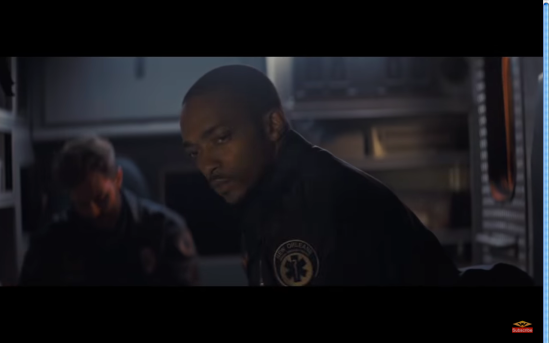
In the dwindling days leading up to the turn of the century, Mandy is about to start a 12 hour nursing shift at an Arkansas Hospital.  As a side gig, Mandy must supply fresh internal organs to her dimwitted cousin and organ mule, Regina, to earn a little extra cash to pay for her narcotic habit, a condition prolonged and sustained by a front desk colleague.  When Regina misplaces the bag full of internal organs and doesn’t deliver them to her ignoble black market boss, she returns to the hospital desperate and corners Mandy into coughing up more, even if that means killing a patient or two.   When Mandy profusely refuses, but reluctantly complies, Regina still takes matters into her own reckless hands and as the bodies begin to pile, Mandy has to stave off police interrogation and suspicion long enough to get through the long night shift of twisted circumstances and peculiar characters.

As if nurses didn’t already work tediously long hours on normal circumstances as it is, Brea Grant’s pitch black comedy, “12 Hour Shift,” is a cardiac inflamed melee of drug users, a convicted cop killer, and black market goons slaughtering it out with hapless patients caught in the middle.  “12 Hour Shift” is the sophomore film written and directed by Grant, released 7 years following her feature debut of the apocalyptic drama, “Best Friends Forever,” in 2013 as Grant also costars alongside Vera Miao as a pair of BFF journeywomen.  Now, Grant steps fully behind the camera, cherry picks real life headlines, and blends them with urban myths to inject cynicism right into our plump veins with pulpy anti-heroes and a graphic violence backdropped with a Y2K hyperbole.  Shot on location in Jonesboro, Arkansas, the film is produced by Matt Glass and Jordan Wayne of HCT Media and alongside actors, Tara Perry and David Arquette, and David’s wife, Christina McLarty Arquette. 

“May” star Angela Bettis jumps into scrubs as the steely junkie, Mandy, who teeters on benevolence after a streak of merciful killings of terminally ill patients for vital organs in exchange for addiction withdrawal averting cash. Mandy is stuck between a motley nursing staff, unpredictable cops, and a pair of bad guys as the coupling link scrambling to tread above water.  Bettis brings her harried eyed fortitude as a sarcastic and solitude-immersed nurse who is a jack of all trades contending internally with paper thin sympathetic motivations paralleling her self-preserving abilities.  Mandy’s calculating, on-the-fly smarts comes under threat by Regina’s halfwit, caution to the wind, sociopathy, housed under blonde teased hair sitting upon a model’s thin frame from the build of Chloe Farnsworth (“Crying Wolf 3D”) who dons crazy like a dunce cheerleader of a Renaissance slasher of an 80’s throw back, but instead of being the chest-baring victim killed while having prematernal sex in the woods, Regina is a scrappy and determined go-getter with more Cheeto dust on her fingers than braincells in her brain.  Grant paints a hefty list of colorful characters, written to ooze their own sanctimonious nature or Podunk refinement, a pair of inglorious splendor fallacies of small Southern townsfolk.  Dusty Warren plays one of those roles in the tactless ponytail wearing Mikey, the right hand muscle of the organ trafficker, and Mikey has nerveless feelings toward those that surround him except for his boss and, then, there’s Tara Perry’s Dorothy, a religious chatty-Cathy nurse who is essentially the most good, but less influential character of the whole rotten bunch.  “12 Hour Shift” cast rounds out with Kit Williamson as the cute, but hopelessly funny beat cop, Nikea Gamby-Turner as Mandy’s side hustling quasi-employer/colleague of drugs and organ, Brooke Seguin as the tireless nurse shift supervisor, and a pair of wrestlers, the only and only Mankind, Mick Foley, and the actor-turned-wrestler, David Arquette (“Scream”), who I must note is perhaps in the best shape of his life for this film.

“12 Hour Shift” comes off as like a big, crass joke on Southerners with a bloody knuckle one-two punch domino effect of disaster after disaster mayhem.  Grant satirically captures the hackneyed perceptions of a small Arkansas town from the late 1990s, complete with tube televisions and really bad hairstyles, that doesn’t the support the age old Southern mantra that is Southern Hospitality.  Every character touts an awful version of themselves.  Even Mandy, a junkie who commits unauthorized euthanasians with bleach in exchange for cash, crowns being perhaps the absolute worst of the entire character pool, but endeavors through the chaos as an anti-heroine we want to cheer for but is nowhere on the brink of amiability.  A strong point for Grant is giving every character, from scarce to principle, a once over and also touching on them periodically throughout to keep the minor parts existing in the back of the mind  Only David Arquette’s convicted death row inmate, emitted into the hospital due to self-harm, is the only role that feels half-heartedly fleshed out as a small story outlier or maverick whose dynamic is to only add another layer of obstacle fear without becoming too involved with the heart of the organ trafficking plotline.  The comedic air is dry, bloody, and not egregiously over the top in savoring enough plausibility of the abstracted truths to be told in a verse narrative that relies much on Matt Glass’ cymbal, bass, and snare drum soundtrack to provide an unique rhythm for a feminist story.  The two female leads absorb, react, and solve the issues on their own without male assistance; Mandy’s very own half-brother lies comatose for all of the duration and he’s even the reason for Mandy’s pounding addiction, but she still exhibits compassion for family, as we also see with her cousin by marriage, Regina, in the last act, and will do anything to guarantee his safety.  The attributes of the male characters are inversely heroic with qualities like whining, coquettish, uncouth, and gullible running rampant amongst the behaviors; ergo, female characters Mandy, Regina, and even Nikea Gamby-Turner’s Karen have room to grow in the timespan of Brea Grant’s “12 Hour Shift.”


Magnet Releasing and HCT Media in association with One Last Run presents “12 Hour Shift,” stat, releasing this Friday, October 2nd in theaters and video on demand.  The black comedy from the United States clocks in at 87 minutes of a shift from hell.  Since the screener provided was of a new theatrical release, there will be no A/V specs listed and critiqued.  The only bonus feature outside the any kind of physical release is an extended last scene after the principle credits role that encourages more hospital mayhem, but will alas leave open ended about the destruction that would ensue.   Aforesaid, Matt Glass serves as the composer on the film, but the multi-hatted filmmaker also serves as the director of photography, producing tactile scenes with a lot of rich, natural lighting on a slightly higher contrast scale and with pockets of brilliant, soft hues to exude more dastardly situations. “12 Hour Shift” goes to show you, in extreme measures and unpredictable circumstances, much like real life hospital scenarios, the rigors and pressures of nursing can be unfathomably taxing, but under the gun (literally in the movie), the nursing staff can overcome all obstacles and filmmaker Brea Grant, in her own style, honors with a gritty, black comedy for the profession that, in many instances, goes unappreciated and thankless.

An Elite, EVIL Assassin Loses Herself as the “Possessor” reviewed! (Neon / Digital Screener)

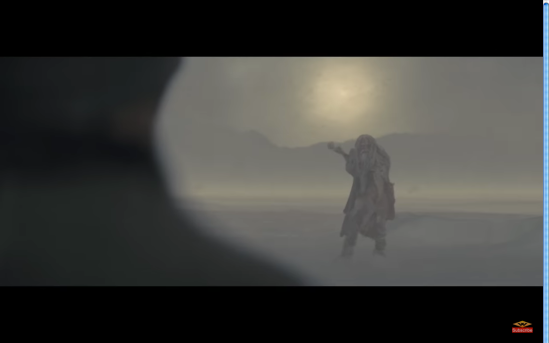
Tasya Vos is the top professional assassin employed by a hire-for-murder agency who uses surgically implanted brain transceivers to insert agents’ consciousness into a person’s body who can get close to their intended kill target. The no contact procedure has been successful with some severe drawbacks, such as the potential for slipping out of your own identity in being, in one way, a part of many distinct personalities. When Vos’s next assignment is to insert herself into the mind of the soon-to-be son-in-law of a powerful tech CEO, her individuality begins to crumble, losing her grip as the primary inhabitant of the body. The commingled souls share thoughts and memories and when Vos takes a backseat in a body that’s no longer under her control, her life becomes vulnerable to a confused and unhinged man seeking vindictive measures to evict the assassin from his mind.

Like an existential extension of his father’s career, writer-director Brandon Cronenberg’s foothold within sci-fi horror is anchored by functional practicality, substantial social commentary, and a knack for exhibiting cynical undertones in his sophomore film, “Possessor,” a gripping tech-thriller avowing the soft-pedaled ambiguous identity and corporate invasiveness. “Possessor” is the blood soaked corrosion of individualism that strips morality and replaces it with unapologetic nihilism in a film that feels very much David Cronenberg’s “eXistenZ” merged with Paul Veerhoven’s “Total Recall” with that plug-and-play dystopian coat of paint that’s being brushed over the quickly disappearing free will. Studios involved in the making of “Possessor” include Rhombus Media (“Hobo with a Shotgun”) and Rook Films (“The Greasy Strangler”) in association with a WarnerMedia division company, Particular Crowd.

“Possessor’s” leading lady, Andrea Riseborough, is no stranger to idiosyncratic roles in equally atypical films having starred in “The Duffer Brothers'” “The Hidden” and played the titular character in the avant-garde horror, “Mandy,” across from Nicholas Cage; yet, from her experience with big-budget studio films, such as “Oblivion” starring Tom Cruise, the English actress felt the uneasy atmospherics to be pressurizing and uncomfortable Riseborough has thus exceled with films such as Cronenberg’s “Possessor” that’s pivots into an alcove just off the main halls of horror and science fiction. Riseborough looks nothing like herself from “Oblivion” by sporting a stark white hair on top of a thin frame, which could be said to be the very counter-opposite of what a typical, bug-budget assassin should look like, but Riseborough delivers stoic and uncharitable traits of a character on the brink of losing herself. Christopher Abbot delivers something a little more chaotic when his conscious retreats back into the depths of his psyche only to then seep back into his mind where he stumbles to catch up on current events. The “It Comes At Night” Abbott disembodies himself not once, but twice, becoming an avatar for Tasya Vos to play, picking up where Abbot’s Colin left off, and then Abbot has to regain control, splicing Colin back into the cockpit where Tasya commands the yoke. The dueling dispositions cease being unique as one attempts to control the other in a mental and corporeal game of chess, confounding audiences of who is in control during certain scenes, especially when Colin goes into a blackout murdering spree of people Colin himself knows and trusts. As a puppeteer moving a marionette, pulling as an influential strings behind company lines, is Girder, a poker-faced agent head seeking the absolute best in the company’s interest, who finds her thimblerigger in Jennifer Jason Leigh. Leigh, whose experience with David Cronenberg’s “eXistenZ” brought a high level of cognizance to “Possessor” having been an cerebral deep virtual reality trouper previously, folds in the nerve of any level of management that would guilt someone else into doing the work necessary to get the job done. Girder opposes Tasya’s external humanity in a silent, but deadly manner by appealing to the killer instinct in Taysa, letting red flags of the out of body experience fly by the waist side that ultimately wears away at her star pupils moral conscious and turn her into a stone cold killer. “Possessor” cast fills out with Tuppence Middleton (“Tormented”), Kaniehtiio Horn (“Mohawk”), Rossif Sutherland (“Dead Before Dawn 3D”), Raoul Bhaneja, Gage-Graham Arbuthnot, and “Silent Hill’s” Sean Bean in a worthwhile role just to see if his role will succumb to a typical doomed Sean Bean character as the undesirable tech CEO.

Its safe and sufficient to say that Cronenberg’s “Possessor” is not a feel good story; the amount of tooth-chipping, eye-gouging, and throat stabbing gore takes care of any hope and ebullient energy that one could misperceive. Yet, while the disgorged grisliness stands on it’s own, Cronenberg possesses a factor of tropes that multiply the film’s bleak, icy landscape inhabited by unpleasant characters that ultimately seek and destroy the little good exhibited. The obvious theme is the disconnect from one’s own identity. Tasya Vos mental capacity nears the breaking point being an inhabitant of numerous bodies and with each callous, bloodletting assignment, Vos’ indifference for the things she should hold dear strengthens immensely drowns in the persona of another person and the psyche breaking acts of violence. Her latest assassination attempt even blurs the lines of her sexuality as her feminine body parts merge with Colin’s masculinity in one of the craziest sex scenes to date. Colin’s individuality is too threatened but from Vos’ intrusion, equating the quiet, strange behavior to a sudden vagary toward a person’s dejection, being estranged from their own life, on the outside of “Possessor’s” alternate reality of science fiction’s hijacking of one’s brain. On the subject of intrusion, a not-so obvious theme, but certainly has a strong motif, is the severe invasion of privacy. Vos’ spying on Colin and his lover for personality intel, Vos’ inspection of the entire Colin body while inside inhabiting him, and the data mining of Sean Bean’s character’s tech company, which pries itself through the optics of people’s computer cameras to garner information, such as the fabric of window curtains in this case, divulge an uncomfortable message that privacy is a luxury we are unable to ever grasp. There’s even a scene where Vos, in Colin, becomes a voyeuristic participant of a couple’s explicit sexual intercourse during data mining work hours. Despite the breadth of technology that are brimming near our fingertips today, “Possessor” has a very analog approach with dials and switches of seemingly antiquated electronic circuits, thus rendering the story grounded in nuts and bolts rather than being lost in the overly saturated and stimulated advanced tech. Beguiling with a somber serenade, “Possessor’s” a highly-intelligent work of diverse, topical qualms seeded by years of body horror and existentialism and is released into a world that’s perhaps not ready to come to terms with much of the themes it will present.

Come October 2nd* to select drive-ins and theaters, “Possessor” will be distributed uncut by Neon, implanted in the midst of horror’s biggest month of the year. Since not a physical release as of yet, the A/V attributes will not be critiques, but the film is presented in 1.78:1 aspect ratio and is under the cinematography direction of Karim Hussain, who has previously worked with Brandon Cronenberg on his debut film, “Antiviral.” Hussain adds rich two-tone coloring for a symmetry of sterilization that is, essentially, white and black with every shade of both in between tinted slightly with a dull hue on the spectrum and with the blood being that much more graphically illuminated against the backdrop. There are moments of composites that could render a person disabled with epilepsy, so be warned. The audio is a smorgasbord of a jarring ambience and soundtrack, adding to “Possessor’s” fluxing turmoil, but the dialogue discerns a little less sharply across; there was difficulty in understanding characters’ monologues or discourse who came across mumbling through scenes of fuzzy earshot. There were no bonus materials to mention nor were there bonus scenes during or after the credits. Perhaps the best movie you won’t see this year, “Possessor’s” an impressive follow up feature that reaches out beyond the outlining border of a vast and prolific filmic shadow looming over the filmmaker, but Brandon Cronenberg contrives new vitiated wonderments and is capable of casting his own umbra that would eclipse to throw light onto his soon to be seen cathartic body of work.


* Release date correction (9/29/20)