Write Down Your EVILEST Desire and Have It Become Reality. “Invitation Only” reviewed! (Unearthed Films / Blu-ray)

Have the “Invitation Only” Blu-ray Stapled to Your Face!  Purchase by Clicking the Cover Art Below!

Chauffeur driver Wade Chen wasn’t born with a silver spoon in his mouth.  The humble, low-on-the-totem pole young man has dreams and aspirations of super models and sports cars but can’t even afford a new suit.  When Wade’s accidently catches his wealthy construction tycoon passenger, Mr. Yang, sexually engaged with the beautiful model of his dreams in the backseat of the limousine, the nice guy in him didn’t think too much of it, but Mr. Yang surprises Wade with an invitation to an exclusive, high-brow party.  Unable to attend the party himself, Mr. Yang sends Wade under the pretense of being the tycoon’s cousin and hooks him up with nice clothes and money for gambling.  At the party, Wade is joined by four others who are also first timers amongst the high-class guests and are greeted with welcoming arms by the host, Mr. Warren, who offers them their wildest dreams, whatever they desire, by manifesting them into reality, but their reality turns quickly into a nightmare when the party is a façade for the opulent to put on a stage show of hunting down, torturing, and gruesomely murder the poor who believe envying the rich degrades their lives.

A class dividing social commentary where the disillusioned rich continue to believe the lower-class are exploiting their pedestaled luxuries when, in reality, the wealthy continue to take an unfair advantage for their own benefit and whimsical desires!  Labeled as Taiwan’s very first slasher, Kevin Ko’s debut pecking order demarcating film specializes in serrating into the other half a sort of social class justice.  Ko, who continues to work in and around the East Asian market having just released last year his written and directed Chinese folkloric thriller “Incantation,” helms the gore heavy script from the screenwriting duo Sung In and Carolyn Lin as their only credited treatment.  Shot near entirely inside a dilapidated converted warehouse in Taipei City, “Invitation Only” becomes the entrapment and last straw abattoir for all classes looking up and salivating over the greedy greener grass separated by that invisible, money-driven, societal line.  Maxx Tsai (“Memoria”) and Michelle Yeh (“The Heirloom”) produce what some critics and fans might denote as torture porn and, truth be told, “Invitation Only” is very “Hostel”-esque with its plot revolving around deep pockets getting away with murder, literally.  The 2009 released film is a production of principal producer Michelle Yeh’s Three Dots Entertainment company.

What’s admirable about Kevin Ko’s “Invitation Only” is its hyper local aplomb. From Taipei City location to the mostly local cast from Taiwan, Ko’s feature is a celebration of Taiwan’s filmmaking life despite the plot being about taking lives. In the lead role, Bryant (Ray) Chang (“The Perfect Girl”) plays the passive doormat that is Wade Chen, a nice and principled guy but has no gumption to claw himself out of just scraping by in life. Chang’s no confidence spell over Chen is just want the doctor ordered when casting a bumbling nobody lost in the crowd and touching elbows with plutocrats eating escargot Tapas and drinking champagne. Chen immediately meets the sweetly awestruck Hitomi with a provided backbone persona by “The Ghost Tales” Julianne Chu. At this point you’re thinking Chen and Hitomi will hit it off, become love interests, and be the Formulaic heroes of the story at stemming from this connection.  Partially, that’s true, but then Chen quickly becomes beguiled by that very same supermodel of his dreams, the same supermodel he stumbled upon in the car with Mr. Yang (Jerry Huang, “49 Days”), who is now eating from his lucky-streaked hand at the roulette table.  Former JAV starlet Maria Ozawa is the delicate tigress who beds Chens in an offshoot room of the party to bring the on cloud nine chauffeur a taste of high society to a culminating head.  Ozawa, who left the adult industry and went on to have a modest genre film career to this day with principal roles in “Erotibot” and “Geisha of Death,” is intoxicating on screen in her debut mainstream feature, but the actress doesn’t speak a lick of Mandarin and forces English to the dialect conversation to which then Bryant Chang has forced the dynamics with poor English reciprocation.  In bed, Chang and Ozawa connect charismatically, but other than that, the dialogue exchanges can be painful to get through.  Other invitees on the “Invitation Only” casting list include Joseph Ma, Ying-Hsuan Kao, Vivi Ho, and another English speaker Kristian Brodie in the mix to balance out with Ozawa to make the film a Mandarin-English hybrid.

Being a product of the early 2000’s, at the backend of the first decade after the turn of the millennium, “Invitation Only,” with Kevin Ko’s quick, erratic editing style, very much epitomizes the era of time as a party-hardy, balls-to-the-wall, slasher with a survivalist edge. “Invitation Only’s” social commentary all but surely smacks you in the face with the fairly common theme of social class division, but the story twists the biding inner dark thoughts of the one percent upper class. The story evokes this justifiable fear amongst them where those willing to cheat, scam, and steal to obtain wealth from off the back of the wealthy deserve an unmerciful, unrelenting, and unpardoning execution with an affluent audience clapping and cheering their horrible mutilation and demise. With an unlimited cash at their disposal, to them, there are an unlimited number of ways to die, and Ko certainly illuminates that ragbag of weapons of bodily destruction every chance he gets. The annual gathering of denotes a “Purge” like affect that for once a year, for the last five years as the host, the English-speaking Mr. Warren, states, the Rich handpick lowly schemers for excruciating extermination. This year, however, a simple misjudgment of character foils a night of brain bashing and staple facing into the downfall of the Rich’s unscrupulous principles and steadfast convictions as Wade is a humble nice guy at the wrong place, wrong time blundering into Mr. Yang giving Ms. Supermodel the wang. The whole annual affair is the rich cathartically getting their hands dirty, purging their distaste with a medieval axe or with jumper cable attached to a car battery. Ko invites not only the wealthy getting away with murder but being utterly brutal about it without shame or guilt as if they are truly on top of the world. The kill scenes are gorgeously horrific with the Hollywood trained special effects artists to provide that it-factor when considering blood, guts, and dismemberments.

“Invitation Only” is exclusive extreme horror not for just for anyone. Gore genre distributor “Unearthed Films” knows this and rejoices in the niche market of everything that would usually make one squeamish. “Invitation Only” is the survival horror that refuses to be a party-pooper as the Kevin Ko film arrives onto a high definition, 1080p, AVC encoded Blu-ray. Presented in a widescreen aspect ratio of 1.78:1, this particular Unearthed Films product doesn’t convey my favorite transfer quality. The codec bitrate for a high-definition release is all over the place as there are severe dips in the Mbps that can be as high as mid-to-low 30Mbps to upper DVD quality around 9-13Mpbs. With that breadth of range, the transfer supplies an inconsistent quality in waves; some scenes are sharp and very delineated while when in the dip, the scenes fall from grace into a sea of pixel blocks in low-lit scenes that nearly wash out the image entirely. Color graded virtually nonexistent as Ko keeps the scheme along the lines of neutral coloring. There are three audio options for selection: a Mandarin, with some English, 5.1 DTS-HD, a Mandarin, with some English, 2.0 PCM, and an English 2.0 PCM. Discerning between the pair of Mandarin options proves less distinctive compared to the distinct dub, for oblivious reasons, but there’s an edge more deepening into the surround sound mix with an intensity richer soundtrack. The lossy dialogue tracks often sound flat and muted as the screams and frantic getaways never pierce the ear’s soul, but for the most part, dialogue is clear and clean. There’s also an issue with the release’s coding on the in-feature audio selection as I toggle between the three audio options, they’re all listed as English with their respective format and channel output. Bonus features include behind the scenes discussions from select cast, such as Bryant Chang, Maria Ozawa, and Jerry Huang, a photo gallery, and theatrical trailers. Unearthed Films’ release comes in a clear Blu-ray snapper case with latch and reversible cover art in which both art styles reflect the dark and grim brutality of the film’s thematic nature. With a runtime of 95 minutes, the unrated and region A coded release does have an evolving story to tell unlike its likeminded brethren that usually gets in and through the dirty, ugly business in just above an hour’s time to keep the gore porn from getting stale. For a feature debut, Kevin Ko goes all in on the knife’s edge with commentary-laden “Invitation Only,” a viciously cold take on the extreme cruelty genre when money, the root of all evil, divides our common sense against one another.

Have the “Invitation Only” Blu-ray Stapled to Your Face!  Purchase by Clicking the Cover Art Below!

The EVIL Gutierrez Family Accommodations are to Die For! “Fucking Bastards” reviewed! (Wild Eye Releasing / DVD)

Those “F**king Bastards” on DVD at Amazon.com

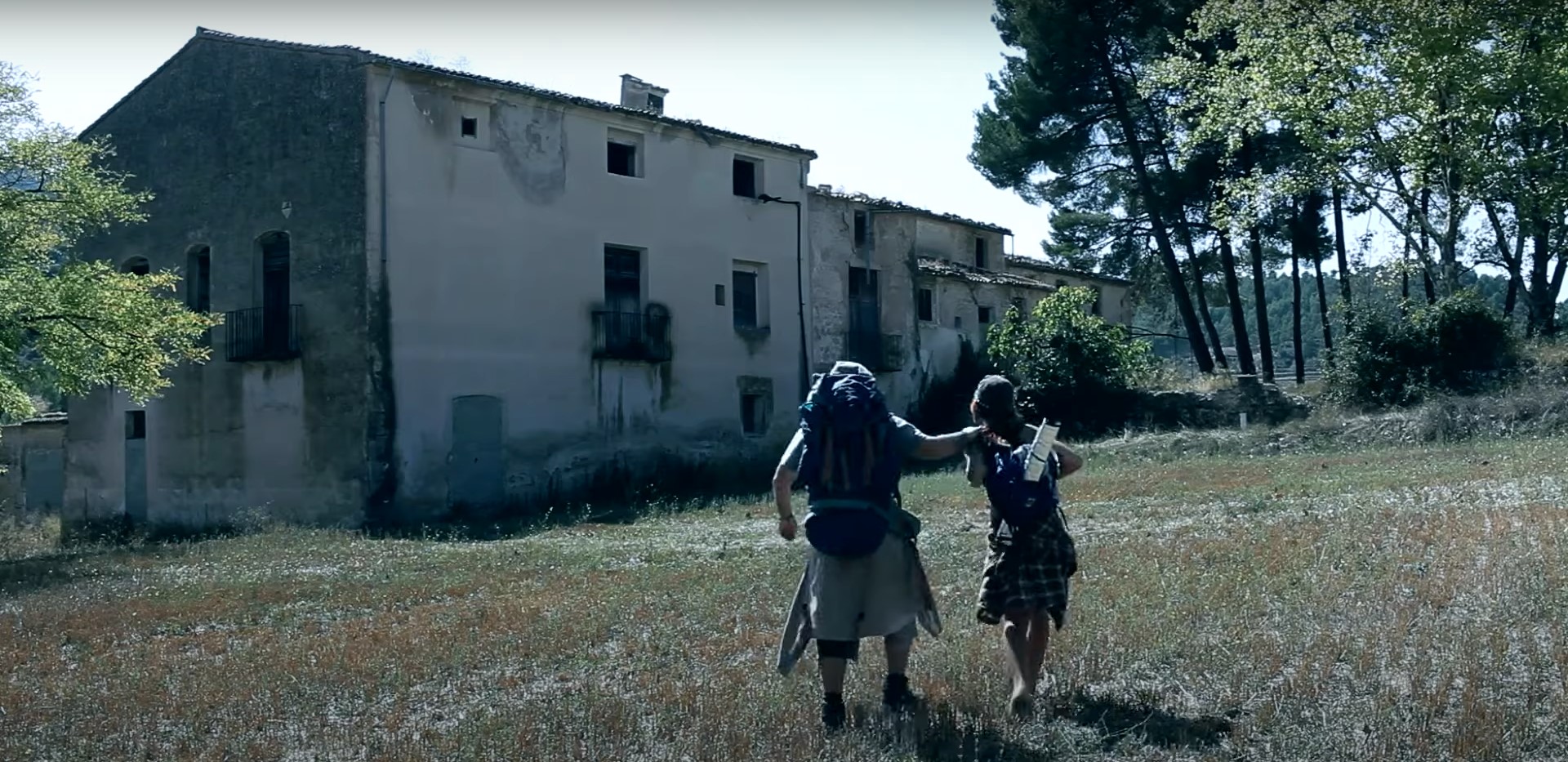
On the walk path to Santiago, on an isolated stretch of the trail, hikers Richie and Lucia run into a bit of bad luck when Richie’s foot is severely injured by a speeding car driving recklessly on what’s typically a walking path.  Needing immediate aid, they’re forced down a offshoot path to the isolated Hotel Gutierrez, a local hostel ran by the eccentric manager, Arturo Gutierrez, and his family.  Unsure about the odd hostel manager and even more unsure about the temperamental cook serving questionable, gloopy slop but continue to entertain their hosts’ hospitality to not offend or make upset, Richie and Lucia quickly realize they’ve made a grave mistake in staying when the Gutierrezes are actually a deranged family of cannibals exploiting their guests for the one thing, to be the main course on the Gutierrez menu.  The path trekkers find themselves on the receiving end of a butcher’s block that might not have been an accident after all.

“Jordidos Kabrones” aka “Fucking Bastards” is the 2012 precursor film to Manolito Motosierra’s “Spanish Chainsaw Massacre” from 2017, introducing viewers to the morbid-madcap antics of the Gutierrez family. The comedy-horror uses the Camino de Santiago, or the walk to St. James, as the backdrop that ultimately leads to an unprovoked massacre of the pilgrims traversing to the shrine of the first martyred apostle St. James at the cathedral of Santiago de Compostela in Spain. Some believe that walking the trail is a part of a sinner’s expiation toward God. In Motosierra’s case, as seen in “Fucking Bastards,” the seemingly normal hiking trail is a gateway to Hell for all when a local family exploits the pilgrimage as a source of unconventional comestibles that has been a tradition passed down from generation to generation. Over-the-top with nauseating ordure and gore, Motosierra refuses to hold back in the mire situation that leaves Richie and Lucia being the unfortunate guests of the Gutierrez hostel. The feature is produced by Motosierra and Kiko Navarro, who’ve went on to collaborate on “The Corpse Grinders 3” and “Spanish Chainsaw Massacre,” assistant producers Santi Banjo and Fernando Montano Galvañ, and is a Spanish conglomerate production of AGP Productions in association with Olga Underground, Yosoyfande Reanaimator Association, Dark Times Visual, Esquizoide Productions, San Jorge School of Film and Audio, and the Alcoi Film Office.

If you’re like me and ended up watching the follow up film, “Spanish Chainsaw Massacre,” first, then you may recognize a couple of familiar faces in “Fucking Bastards” of the atrocity paving duo of Arturo and Guti Gutierrez, played by José Luís Tolosa and Manuel Rodriguez. Tolosa tall stature, wide, sinister grin, and antsy movements perfects Arturo’s wildly tormenting behavior as the collected, but not also cool and calm, head of the family. Then, there’s Guty, the clearly deranged imbecile delighted to follow Arturo’s direction and take verbal abuse times infinite as long as he gets to tenderize, fillet, and serve up guests for breakfast, lunch, dinner, and dessert. Rodriguez plays a derived goof that’s nothing really to note and write home about in his goon and goof performance that does support Arturo’s more sophisticated role as a deviant duo. While “Spanish Chainsaw Massacre” inundated viewers with extended family member of maniacs, “Fucking Bastards” starts out with slow with select immediate relations, such as their veiled and grunting grandmother played by Motosierra himself. The Gutierrez family’s pilgrim victims come in pairs. The main hapless marks are Richie and Lucia, played by Ricardo Pastor and Miriam Larragay and who both went on to have a new role in Motosierra’s “Spanish Chainsaw Massacre,” are suitable enough saps to be slaughtered by their own dimwittedness by ignoring that little voice inside their heads screaming at them to run for the hills upon meeting Arturo and Guti. Pastor and Larragay, compared to Tolosa and Rodriguez, are satisfying normal pilgrims without life infractions, without ulterior motives, and with nothing other than the backpacks on their back on what should have been a simple hike to pay respects to St. James and God, making their detour-to-death that much more nihilistic and grotesque. Sonia Ayala, Pedro García Oliva, Xima Perpinyá Mira, Marino, Yolanda Berenguer, Raúl Darío Gandoy, Jaime Martínez Moltó, and Jaime Martínez Moltó round out the cast.

By all means, “Fucking Bastards” is no great cinematic masterpiece. With an offensive title, not one person should expect it to be a great Spanish cine, but what should be expected from the Manolito Motosierra picture is a ton of gore and a load more of offensive and garbage slopped material to flaunt to shock the casual cinema consumer or speak the niche lurid language of gore film fiends around the world. Motosierra accomplishes both as “Fucking Bastards” will disgust the weakest of stomachs and will galvanize others to glue themselves to the story to see what happens next. Those viewers excited for the kills will find the gore effects to be inconstant at best from special effects artist Ruben Vallés Guerrero who has worked the movie grade gamut from the micro-indies, such as “Fresh Flesh,” to moderately budgeted films like “Down a Dark Path,” starring Uma Thurman (“Kill Bill”), and “A Monster Calls” with Sigourney Weaver (“Alien”) and Liam Neeson (“Darkman”). The Motosierra picture became a jumping point for Guerrero to show off his effects skills and delivers on some Tom Savini-inspired hand chopping and leg slicing but in the same breath also approves the use of an augmented plastic baby, with non-lifelike stiff arms and legs, in the bashing of a pregnant woman to force deliver. Whether due to limited funds, or the content was too shocking overall, or out of respect for depicting infant children in hugely Catholic culture, the scene sorely cheapens the already shoddy, low-budget production with artificial appearances. Refreshing is not a term I would say defines Manolito Motosierra’s “Fucking Bastards” but there’s a sense of unassuming relief from the lack of pretense because from front cover to end credits, you know exactly what type of vulgarity to expect.

Coming right in as spine number 69 on Wild Eye Releasing’s Wild & Extreme label, “Fucking Bastards” offers its sadistic viewing pleasure onto DVD home video. Presented in an open matte widescreen 1.78:1 aspect ratio, the feature is housed on a lower storage format, likely a DVD 5, that suffers tremendous compression pockmarks, such as smoothed out textures, blotchy-pixelated patches, banding, and contrast issues. Video presentation is watchable and not a terrible eyesore but definitely not the pretty picture around with a good portion of the issues stemming from commercial grade equipment. The Spanish language Stereo 2.0 audio tracks varies in dialogue levels, leaving depth unaccounted for and very little in range value as there’s not much of an ambient arrangement. Though varied, dialogue is clean and clear with English subtitles that have some synch/timing issues. There were a few occurrences where the subtitles on flashed and vanished in an instant. The English subs are also severely consolidated with characters’ throwing out much more than what is being translated…trust me, I know enough Spanish to tell. Bonus features only included the theatrical trailer plus other Wild Eye previews which, in my opinion, are worth checking out. No dialogue, just impressively edited, impressively scored, make-you-want-to-check-it-out handful of trailers that include “Death to the Ten Commandments,” “Gore Grind,” and “The Thrill of a Kill.” Stay tuned for an after credits bonus scene that displays the horrors of the Gutierrez children. The exterior features include a clear DVD snapper with a photoshop filtered act of asphyxiation on the front cover while the inside reveals a reverse cover of a screen grab of one of torturous moments of the story. The Wild Eye release of the film is unrated, has a runtime of just over an hour at 63 minutes, and is region free. Get your gonzo gore on with Manolito Motosierra’s humble beginnings in “Fucking Bastards” that could be considered the Rob Zombie’s Firefly family of Spain.

Those “F**king Bastards” on DVD at Amazon.com

Never Tour Mistakenly into an EVIL Murder Bar! “La Petite Mort” reviewed! (Unearthed Films / Blu-ray)

“La Petite Mort” is Orgasmically Gory and on Blu-ray!

Vacationing to Mallorca should have been a relaxing getaway for Simon, his blind girlfriend Nina, and their longtime friend, Dodo, but their flight layover in Frankfurt leaves down idle town to explore the city that’s only a mere two hours from home. Tension between them begin to bubble to the surface when uncertain emotional steps to take relationships to the next level arise and they become inadvertently scammed by a local grifter. Exhaustion sets in and forces them to take refuge in a local dive bar with a specialty for S&M play. The bar is actually a front for the Maison de la Petite Mort, an underground snuff house owned a sadistic woman named Maman who livestreams kink-murders and sells hapless victims to wealthy businessmen with whimsical and perverse deviancies. The flight to Mallorca will be indefinitely delayed as the three friends are now a part of the bloody basement decor awaiting the horrors before them.

“La Petite Mort,” translated from French as literally the little death, is also known as the post-orgasmic sensation, such as a weakness or loss of conscious, that serves as an analogy to death. The phrase is also the title of the 2009 torture-gore film written-and-directed by the German-born Marcel Walz more than a decade before the formation of his now Neon Noir production company. Walz, who later in his career went on to remake the Herschel Gordon Lewis 1963 film, “Blood Feast,” blossoms as a torture porn filmmaker as Walz’s directorial catalogue contains more blood than a blood bank and often stretches the subgenre range of plot machinations from cannibals to dark web to snuff. Made on a few thousand-dollar budget and shot in a real sex club in Mannheim, Germany, “La Petite Mort” touches upon all three plot devices to create a dungeon of splatter and sadism using elements of an unsolved true crime case of a couple gruesomely murdered in an underground murder house as the narrative base. Before Neon Noir, Walz and filmmaker Michael Effenberger, director of “Tortua,” formed Matador Films that became the company behind “La Petite Mort” with Thomas Buresch (“Unrated: The Movie”) and feature actor and director of photography, Andreas Pape (“Toxic Lullaby”) producing.

Films like “La Petite Mort” is a special breed not because of the torture and gore-porn element, which can be an acquired taste for consumers with dark thoughts, fantasies, and morbid curiosities (I fall into the latter category if you’re wondering), but rather the story caters to no singular principal lead nor does is the focus on an ensemble cast.  “La Petite Mort” transitions from one group, the naïve backpacking travelers, to the S&M snuff-makers in a flip-flop of point of view and storytelling.  All the relationship complexities between the out of concern love from Simon (Andreas Pape) to his even keeled blind girlfriend, Nina (Inés Zahmoul, “La Isla”) as well as the insignificant tiffs and spats between Simon and friend Dodo (Anna Habeck, “Popular”) to see who is in Nina’s favor are quickly swept aside when the trio is trapped and tethered to the S&M spider web of Maman’s Maison de la Petite Mort.  While the three travelers produce a mild interest spun out of frivolous dramatics to the like of the normal human population and very much up played by Walz for that very purpose to produce stark contrast against what’s normal for sadomastic pleasure-seekers, Maman, the orchestrator of pain and profit, is the most earnest of principals with a crone-like presence, played inexorably and ruthless by French punk-goth singer Manoush.  The certified gypsy and former bodybuilder has made a name for herself in a plethora of extreme, Germanic horror pictures over the last decade, but “La Petite Mort” came early in Manoush’s career and is exhibits why she’s so good at horror, especially at the sadism brand.  Maman’s schadenfreude business employs two lesbian dominatrixes, Dominique and Angélique, with strong-stomachs and a healthy bloodthirst.  The beautiful femme fatales serve Maman’s unquestionably, almost mindlessly, that only glimpses into possibilities of how the two women became betrothed to do Maman’s bidding.  Annika Strauss, who’s been in the screen queen business about as long as and has starred alongside with Manoush on a number of films, is also a Marcel Walz regular casted actress who fits and transforms into just about every character under the black sun of ghoulish and macabre material thrown her way.  As Dominique, Strauss is provided more depth to why and how the brunette basket case has come under Maman’s greedy and depraved thumb as the actress shows some slither of concern for the captives while explaining she had no choice just they like them and exhibiting more reserve than her blonde counterpart Angélique (Magdalèna Kalley, “Violent Shit 4”) when the cameras are rolling.  Conversations rooted into provocative thought, sympathy, or reason are often few and far in between the constant pleas for help and the screaming matches of pelting threats.  “La Petite Mort” finalizes the cast with Martin Hentschel (“Zombie Reanimation”), Tanja Karius (“Necronos”), and Thomas Kercmar (“Space Wolf”) as Klaus der Kobold, a Napoleon-sized elitist wealthy enough to buy people’s lives and enjoy seeing them horrifically mutilated.

One scene overwhelms the diagnostic side of my brain and that is why Maman is torturing Dodo with needles as Manoush delivers a surprising genuine villainous monologue about sadomasochists being judged by normal people and how her character has a liberated, uninhibited sexuality in a moment that is a powerful argument in favor for sadomasochism to exist without shame.  Thinking about this, I’m not aware of any publicized S&M clubs, especially those that aren’t criticized for being deviant, perverse, and secular.  After that one moment of vulnerability, “La Petite Mort” turns into a choke-down bloodbath with some great and some not-so-great special effects by one of Germany’s gore film greats, Olaf Ittenbach, director and F/X artist of “Premutos:  The Fallen Angel” and “Legion of the Dead.”  Ittenbach brings me to another overwhelming scene, one that churns the contents of your stomach, involving a meat grinder, a hand, and a chalice.   “La Petite Mort” has other notable grisly moments of scalping, castrating, eye-plucking, and disemboweling, all of which are in great gooey-gory detail.  What takes away from the gore scenes is Walz fluttering effect or grindhouse-esque edited framed overlay that, in my wildest guess, is supposed to enhance the extreme acts of violence, torture, and death in conjunction with composer Michael Donner’s industrial rumble and pulsing synth score. Instead, the effect becomes nothing more than a cinematic nuisance, an eyesore that dilutes Ittenbach’s best handywork because that scalping scene is the chef’s kiss of tactual realism. Based on a true story that I can’t seem to find any record of, “La Petite Mort,” for a brief few minutes, becomes a promulgating champion for alternate sexualities and is also a showcase for Olaf Ittenbach to shock and disgust but for what the feature is worth, “La Petite Mort” offers only emptiness in both character conviction and story narrative.

A fitting entry into the shockingly weird and grotesque “Unearthed Films'” independent film catalogue, “La Petite Mort” arrives onto a high definition, 1080p Blu-ray home video. Presented in a 2.35:1 widescreen aspect ratio, Walz bookends his callous-cladded cult film with a yellowish-tan tint while the girth of the story is laced with more gel coloring under no hinderance of tint. Low lighting with low contrast markers, mixed with tropical-warm gel coloring and strobe flashing fabricates the sunless and dank murder basement but any exterior shots, even the bookend act one and act three are rendered with poor resolution for digital recording. Only a single audio track is available with a German LPCM 2.0 with burned-in English subtitles and what’s rendered is likely the best quality to get from the masters from the lossy format. Dialogue is often unrefined, and the levels vary, but for the most part clean and free from obstruction. The track has limited ambience and harps heavily on the gory moments while Michael Donner’s dark industrial score takes the brunt of the overall soundtrack. Subtitle synchronization varies as well with millisecond flashes of translations that are impossible to read or even pause perfectly on, but the translations appear flawless and consolidated from the dialect for easy reading. The Unearthed Films’ bonus content is aplenty with a new commentary and interview with director Marcel Walz. Also included is a feature-length making of “La Petite Mort” with raw handheld camcorder footage, shot by The Bad Boy character in the film, behind-the-scenes footage, and even some 16mm footage that go reel deep into the effects and life of independent filmmakers. An archived interview with special effects artist Olaf Ittenbach, deleted scenes, photo gallery, teaser trailer, official trailer, “La Petite Mort 2” trailer, and the VHS intro that’s essentially a Marcel Walz introduction of the VHS home video release round out the bonus content. The physical attributes are a clear, Blu-ray snapper case with reversible cover art with the inside sleeve containing a more graphic torture not suited for retail shelves. The region A encoded, 77-minute feature is not rated. If invested for the kills, “La Petite Mort” pleases to overindulge the desire and is a solid first torture-porn effort from a then young Marcel Walz who continues to rise in the niche market.

“La Petite Mort” is Orgasmically Gory and on Blu-ray!

EVIL Cabbie Takes Beautiful Women for the Ride of their Lives. “Maniac Driver” reviewed! (ReelGore Releasing / Blu-ray)

Hail down the “Maniac Driver” on Blu-ray!

Taking a taxi should be a reliably safe to get from point A to point B and once you settle the serviceable transaction with payment, you can forget you ever saw that taxi driver again.  But what if that taxi driver follows you home, obsesses over you, and has psychotic plans to take your life as well as his own?  One Tokyo cabbie has those very inclinations toward the beautiful women.  These women intoxicate his severe guilt over a past personal tragedy involving the merciless murder of his wife.  He scours his passenger pool for the perfect beauty to be his closing opus, a gift to society that dealt him the same hand and will take her life as a maniacal masked killer with a blade before he turns the blade on his own neck. 

From the director of “Gun Woman” and “Karate Kill” comes the latest gore-soaked, nudity-laden, psychotronic grindhouse picture from Tokyo filmmaker Kurando Mitsutake.  Labeled as a Japanese giallo film, the writer-director Mitsutake pulls inspiration from one of most influential and prolific Italian giallo filmmakers ever, the late Lucio Fulci, and stylizes his idolizing film with his own proclivity for flair.  The 2020 released film is a thirst trap of the subgenre upon reading the heavily enticing description and its basic but effective cover art of a leather glove and jacket cladded masked maniac holding tightly onto a half-naked woman, almost in an embracing manner rather than a malice one.  Sex and blood sell and “Maniac Driver” doesn’t disappoint but what about the story?  What drives the killer from one woman to the next and does it all make sense?  “Maniac Driver’s” title suggests not, and I believe Kurando Mitsutake felt the same way when writing the script, produced by “After Life” and “Paster Shepherd” producer Mami Akari under the Akari Pictures banner.

Titling the story around the maniac driver binds the film solely to the cab driver, much in the same way William Lustig’s “Maniac” focuses on Joe Spinell’s spiraling madness and scalping mutilations, and we’re pretty much left with the driver’s innermost thoughts, about his process, about his reasons, and about his plans.  Essentially, the maniac driver drives the narrative with a contemplative fare.  Tomoki Kimura has surpassed the challenge with a pendulum crazed performance sought to not only express his derangement but can also infect the viewers with the character’s warped mind.  Kimura keeps his expression stoic and sour in a role that barely requires him to speak as we mostly hear prosy, abstract, and murderous inner thoughts.  In regard to the women the driver stalks and involves himself sleazily with, Kurando Mitsutake goes the JAV actress route and is familiar with as having the alluring Asami star pretty much naked through the entirety of “Gun Woman.”  With adult actresses, Mitsutake receives uninhibited support for the victimized characters the maniac driver fantasizes over and kills as well as Mitsutake’s satirical whims in exploiting the subgenre’s penchant for gratuitous flesh.  Adult starlets from softcore actress Saryû Usui (“Sex Detective Hatenashi”) to the hardcore Ai Sayama (“Date with a Busty Nymph”), Ayumi Kimito (“Love Kimomen”), and SOD (Soft on Demand) Create’s Iori Kogawa (“One Wife + 10 Husbands) add a little titillation with gratuitous exposure, bondage, and fornication to the max. 

“Maniac Driver” paves its own neo-giallo path that swerves away from the traditional calling cards. Instead of a typical Italian murder-mystery, Mitsutake intentionally divulges the killer cab driver with a delusional hunger and fate. All the other hallmarks of a giallo killer are there in a Fulci tribute form with leathery glove hands, a gleaming blade, a masked face, and a killer who makes a duck-like sound that’s far more menacing than comical. “Maniac Driver” also pulls from other inspirations, such as Lustig’s “Maniac” as well as Martin Scorcese’s “Taxi Driver” with Tomoki Kimura channel his best Robert De Niro impression with the iconic You Talkin’ To Me line. Behind the whole ghastly facade and polychromatic style, entrenched is a theme of survival’s guilt that leads the cab driver to the point of no return. Severely injured and helpless to save his wife from a crazed killer, he’s wrought with putting forth into the world exactly what was taken from him in the same fashion, but how the deeper we spiral with and into his derangement, piecing together his mental episodical puzzle might not be so easily pegged. Mitsutake’s seemingly straight forward narrative is a blindsiding blade to the throat when looking in the opposite direction, expecting a different outcome, and when the principal character is kept to his innermost thoughts, viewers are treated with only the maniac’s disenchantment of life. The curveball is more than welcome despite all evidence being in plain view, but with the bizarre fiendishness, schizo-universe, and the T&A, to see clear through it all is impossible, especially when Mitsutake really goes off the rails with the maniac driver’s fantasies that mesh seamlessly with reality. Scenes with Iora Kogawa and Tomoki Kimura are intolerably hazy as the actors engage coquettishly as an exquisite, kimono dressed female passenger and a public transportation service man peering his eyes through the review mirror and this leads to an explicit one-on-one encounter that includes some bondage as well as a Iaido showdown with swords drawn. Through Mitsutake’s various closeups and depth-shots, sprinkled with tight up shots to emphasize body parts and to create an oppressive world, “Maniac Driver” ebbs and flows that sort of satirical, aggrandized chaos to make light of the oversexualization, as skirts hike up while running and exposed chest flop out underneath tightly bound tops, and the sheer madness of a broken mortal man. “Maniac Driver” is an uber giallo of sleaze and psychosis, a steady ride of burning yearning, and is gory where it counts.

To be honest with you, I thought I’d never see a ReelGore Releasing again. When speaking with Cult Epics founder Nico B., who launched the label with producer Steve Aquilina (“Violent Shit: The Movie”) in 2016, I had asked the popular curator of cult cinema whether he would continue with banner that sought to specialize in the release of extreme, violent horror after the releases of the ItsBlogginEvil generally well received “The Orphan Killer” and “The Curse of Doctor Wolfenstein?” The answer I received was a flat out no from Nico B. because, simply, the label didn’t generate enough profit. Well, lo and behold, ReelGore Releasing has been resurrected and the blood is flowing once again with a pair of new titles with “Manic Driver” being one of them. Though Nico B. has confirmed no involvement with the releases, it’s still great to see the label back in action again. “Maniac Driver” is released on a ReelGore Releasing AVC encoded Blu-ray, a BD25, and presents the Mitsutake film in 1080p, high definition and a 2.35:1widescreen aspect ratio. Despite heavily saturating to a blur scenes with brilliant, primary coloring, familiar to the giallo subgenre, the overall details are quite pleasant and palpable. Mitsutake utilizes different lighting and shadowing techniques to create different atmospherics but never seems to inherently kill the textures as they maintain a sharp, tactile presence. The Japanese DTS-HD 5.1 audio track, with forced English subtitles, is vibrant with an 80’s inspired blend of synth and riff-rock. Japanese dialogue is strong, clear, and innately clean with the digital recording, balanced by an error free and aptly timed English subtitles. “Maniac Driver” has a robust, yet sometimes overelaborated, sound design that outputs nicely through the side channels. The killer’s leather glove sounds can be overkill with every scene being loused with the individual stretches of the fabric while the energy-thumping engine combined affixed shots around the tire and grill is a powerful effect of the cab driver’s routine hunting method. The release also comes with French and Spanish subtitles. Bonus features include a making of featurette with interviews with the cast and crew, an audio commentary with director Kurando Mitsutake, photo slideshow, and the trailer. There are no stinger scenes during or after the credits. The physical appearance sheaths the 25GB disc inside a sleek red Blu-ray snapper case with reversible cover art that has two alternate posters on the inside. The film is not rated, region free, and has a run time of just under 75 minutes. “Maniac Driver” is no passenger in the giallo subgenre; the Kurando Mitsutake might be a bundle of homages and inspirations but takes the wheel of the Japanese sexploitive-giallo gas guzzler with deranged brutality.

Hail down the “Maniac Driver” on Blu-ray!

The EVIL Fat Man Delivers a Sack Full of Slaughter in “Christmas Cruelty!” reviewed! (Unearthed Films / Blu-ray)

Oh, Its Starting To Look a lot Like “Christmas Cruelty! on Blu-ray!

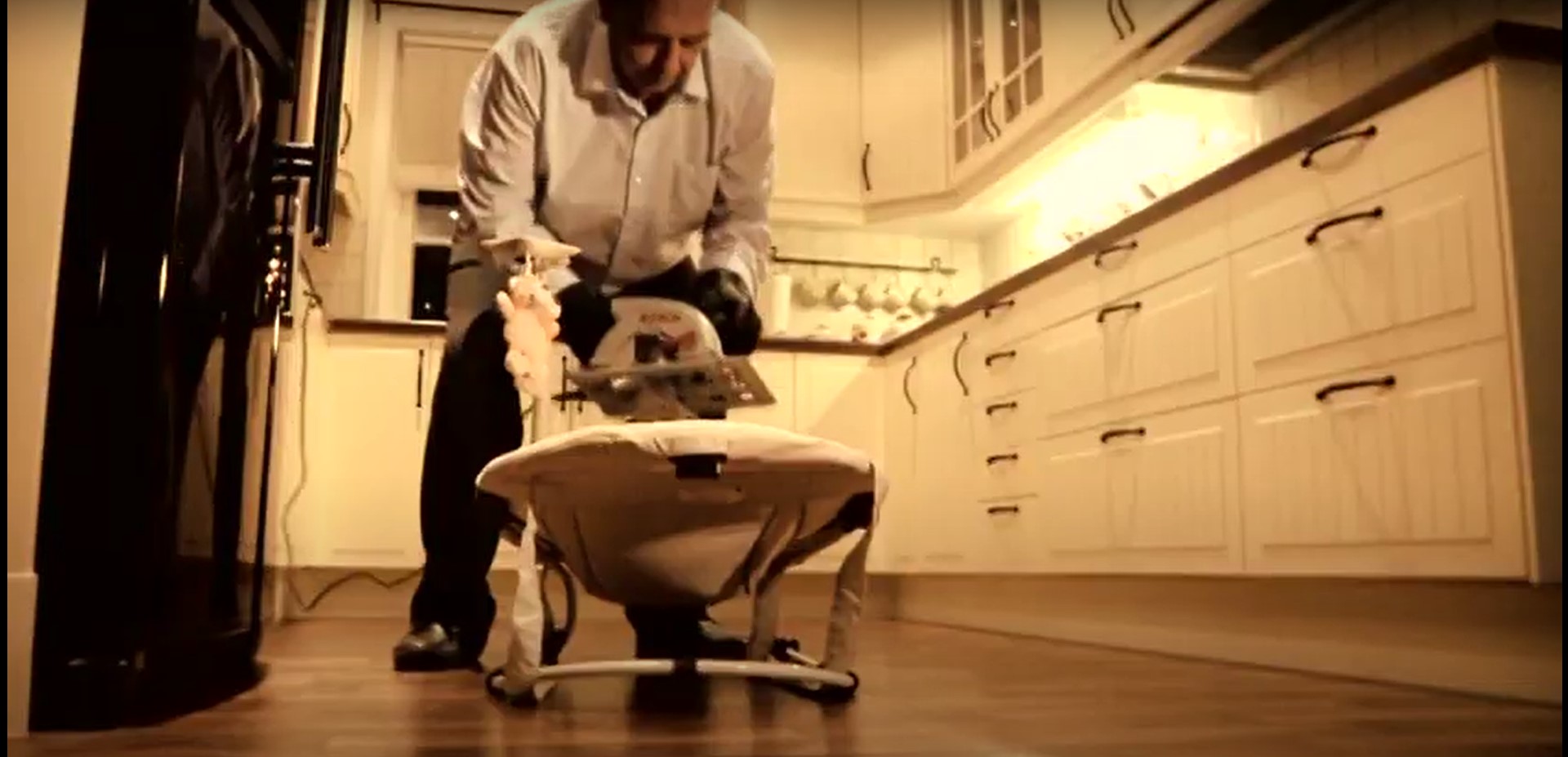
Eline, Per-Ingvar, and Magne are three close and eccentric friends preparing for the jolliest time of year, Christmas. Concocting a unique Christmas spirit of their own with scarring passers dressed as Krampus and brewing an alcohol infused cocktail, the unconventional celebration reflects their individual perspectives on the holiday: a knowledgeable Eline embraces more traditional values, Magne goes against the grain with a loose grasp on the concept of it all, and the lack of mental acuity for wheelchair bound Per-Ingvar leaves him in naive, gullible belief. All the while the friends prep the groundwork for a Christmas party, a homicidal sociopath tracks and records their every movement, habits, and personal attributes and when Christmas comes, the meticulous and brutal serial killer dresses as Santa and infiltrates what turned from being a joyous bash into Santa bashing in heads with a hammer, decapitates party guests, and rip-roars a chainsaw with blood splattering apathy.

It’s that time of year again to ride the Christmas slay down the hills covered with blood-red snow. Santa, usually a sign of pure good and jovial togetherness, is transformed to embody terror and evil across the holiday season. In 2013, Norwegian filmmaker Per-Ingvar “PIT” Tomren (“Bonzai Motherfucker!”) and his co-director Magne Steinsvoll (producer of “Killungard” and “Lyst”) not only star in another Yuletide horror that yields itself to violence and blood but also adds their perspective entry into the vast Scandanavian subgenre of ole’ Saint Nick, or an imposter of the jolly fat guy, going postal in the worst possible way. Tomren and Steinsvioll work into their debut feature film off a script penned by principal co-star Eline Aasheim as well as Janne Iren Holseter, Anita Nyhagen, and directors Tomren and Steinsvoll. Originally entitled “O’Hellige Jul!” in Norwegian, the 2013 released “Christmas Cruelty” is a Stonewall Productions and presented by DC Medias under the producing credits of Magne Steinsvoll, Kim Haldoersen, and Raymond Volle (“Saga”).

Instead of hiring an outside cast for a serial rapist and killer Santa flick, why not just star in the film yourself? In order to get their feet wet in film production as well as learning the rigors of acting, Per-Ingvar Tomren, Magne Steinsvoll, and Eline Aasheim essentially portray themselves as the three friends spending unique quality time together during Christmas. Per-Ingvar works into the script the corporeal truth of this delicate skeletal structure that battles brittle bone disease aka osteogenesis imperfecta. Confined almost entirely to his wheelchair, Tomren curbs his wellbeing for the sake of art as the filmmaker doesn’t exempt himself from the various physical altercation scenes to have a stuntman take the glory. The same kind of sentiment can be said for Eline Aasheim whose character must endure an invasive attack, one that’s deeply uncomfortable and intimate in nature surrounded by a virtually an all-male cast which includes offscreen friendships. Then there’s Magne. If Per-Ingvar and Eline embodied metaphorically everything that is good about the Christmas spirit, Magne was the complete opposite as a complaining, sexist, and indelicate sourpuss living in the moment rather than grasping his own barbed attitude. The malarky between the three friends on screen is perhaps very mirrorlike offscreen as there is a comfortability level with each other performances that keeps the dynamic on the edge of combusting but yet you never feel like a change in their relationship will ever mount, keeping their friendship close, tight, and compact. The outsider, the Serial Santa, is played mid-50’s Norway actor Tormod Lien. I mention Lien’s age because he is older than the other principal characters and that plays into his character’s wisdom as a family man who takes notes on who’s halls he will soon deck. Calm, organized, and deviant, Lien plays into the apathy without a twinkle of empathy and engineers a bloody show of planned homicide with some comedic bits put on by Lien when Serial Santa has to go off script because of interruptions.

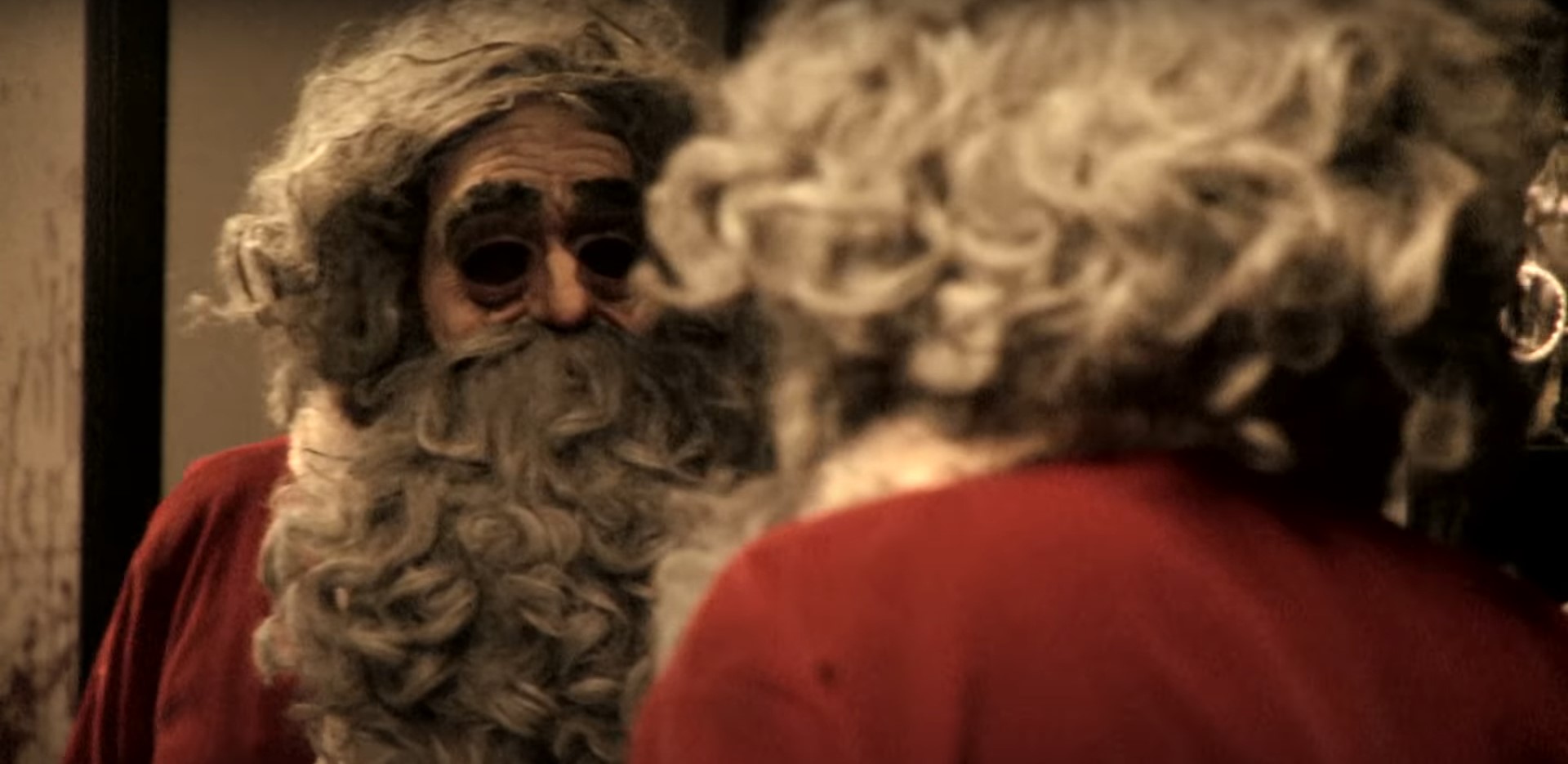
In my mind, there are two types of Christmas horror films: the uncanny universe where Santa, or something related to Santa, such as his toyshop elves or Krampus, world’s lives and breathes in a twisted malevolency while the other type resides in fact with sociopathic and mentally unstable Santa impersonators who go on a merry murdering spree. “Christmas Cruelty!” falls in that latter category with serial killer, dressed as Santa and a grotesque mask, gatecrashes the good protagonists’ party for the nefarious primordial urge to hurt, rape, and kill. Maybe even dabble in a little cannibalism. “Christmas Cruelty!” is a lump of extreme exploitation for next level nihilism. I’ve seen my fair share of messed up movies, but the Tomren and Steinsvoll defiling picture doesn’t even have a millimeter of morality. Without a theme, a message, or a basic point, “Christmas Cruelty!” is hollow atrocity for the sake of shock and slaughter. The principal goods are either too afraid to help each other, too unwilling to help each other, or are too conceited to even take notice that something is amiss. Instead, it’s the Serial-Santa who has his ducks in order, unabashed to simply walk into a room and start his plan of cold-hearted perversion, but before even getting to that moment with deliciously diabolical practical special effects that can produce a gut-wrenching impact, the story goes static with the principal goods chitchatting about history of Christmas, their likes and dislikes of the season, and nursing a hangover from hell. This portion to build character doesn’t actually build character as we’re skirted around victimized trio’s reason for to deserving of our sympathy. Yeah, there’s a person with learning disabilities in a wheelchair and a young woman with an inkling of a moral compass but I find them aimless, sleepwalking through life, and without purpose.

Christmas comes early with the release of “Christmas Cruelty” on Blu-ray home video from our friends at Unearthed Films and MVD Visual. Presented in 1080p with a widescreen 1.78:1 aspect ratio on an AVE encoded BD50, Unearthed Films rendering of the transfer goes without a hitch, but the stylistic choices of Tomren and Steinsvoll are an eyesore with a mustard yellow overlay intended for a grindhouse veneer that also correlates with the large font and embossed opening credits. Much of the details and natural look are lost in the yellow tint. The erratic editing is supposed to reflect Serial Santa’s fragmented mind which idiosyncratically finds footing but can be off-putting to its experimental quality. The Norwegian language DTS-HD 5.1 surround sound mix reflects no issues with depth and range despite having limited need for both and has mostly clear dialogue albeit some obstruction from the soundtrack that is heavily integrated into the sound design and becomes a character in itself with a blend of English-lyrical Christmas themed tunes, instrumental string melodies, acoustic solos by Magne Steinsvoll, generic rock tracks, and folksy jamming that ends with the loud roaring of a chainsaw slicing through body parts. The bonus features include an audio commentary with co-director Per-Ingvar Tomren and producer Raymond Volle, retrospective interviews in How Cruelty Changes Our Lives featurette, blooper outtakes, photo gallery, The Last Rebels hit “Endless Highway,” an interview with Morten Haagensen, “Tradition” short film, Press Conference, a watch-a-long session with Flesh Wound Horror, and teaser trailer. The Unearthed Films menu options were a bit cumbersome to navigate when trying to play the movie as the next screen goes to the three audio options – either two commentaries that run along with the film and the play movie without commentary, but the options are not terribly intuitive and had to go through the options before I was able to play just the movie. The physical release comes in a traditional blue snapper case with the soulless, dead eyes of the Santa mask illustrated with liver sports and aged wrinkles on the front cover. Unearthed Films’ release comes not rated, region A encoded, and has a runtime of 94 minutes. Probably not the perfect holiday gift for the conventional horror filmgoer, “Christmas Cruelty” is difficult to ingest and digest as not only an extreme exploitation film but as a film as whole, but with the callous chunks of coal and the striped blood red candy cane of scrumptious special effects, the Norwegian definitely offers a good stocking stuffer.

Oh, Its Starting To Look a lot Like “Christmas Cruelty! on Blu-ray!