The Death of a Daughter Leads Down to a Psychological Path of EVIL! “The Haunting of Julia” reviewed! (Imprint / Blu-ray)

Limited Edition of “The Haunting of Julia” Available at Amazon.com!

This morning was like any other as the Julia rustles up breakfast for her all-business husband Magnus and their lively vivacious daughter Kate, but when Kate violent chokes on a piece of apple and Julie performs a bloody, untried tracheotomy in a state of panic in order to save her daughter’s life, their lives are forever changed as Katie dies in Julia’s arms. For weeks, Julia’s melancholic depression commits her to hospital care. When she’s ready for release per the Doctor’s recommendation, Julia avoids returning to Magnus as their relationship was never a mutually loving one but rather a normal route connected by the presence of their daughter Kate. In order to restart her life, Julia separates from a controlling Magnus and purchases a magnificent London house only to then be plagued by ghostly occurrences she suspects is the work of her late daughter. What Julia comes to find out is the troubling history of her newfound home.
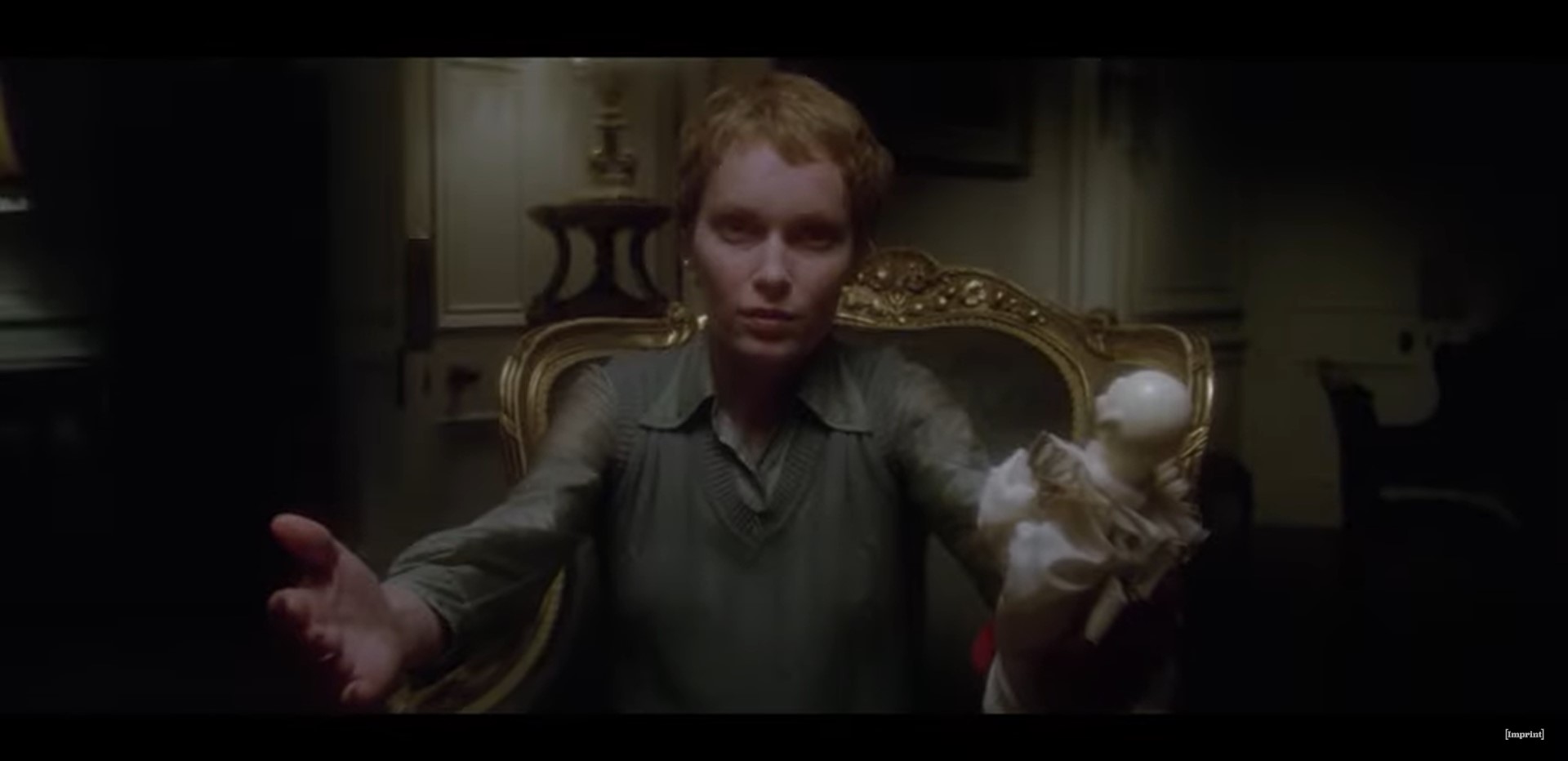
Mia Farrow solidified herself as a genre actress by starring in the archetype for films revolving around the prince of darkness, Satan, in 1968 with “Rosemary’s Baby.”  Unlikely seeing herself as a prominent woman of a notable rite horror, Farrow quickly understood her value in the genre as a complex female lead in the unsettling and gothic protuberance atmosphere style.  Nearly a decade later, Farrow stars in the Richard Loncraine directed “The Haunting of Julia,” similar only to the menacing supernatural child component but digs deeper in manipulative complacency, psychological guilt, and of that distorted reality created by the stout motherhood connection.  The “Slade of Flame” director set his sights off of Rock’N’Roll inspired dramas around the ugliness of the music industry and onto the filmic adaptation of the Peter Straub novel “Julia,” penned by the Dave Humphries and “Xtro” trilogy director Harry Bromley Davenport.  The joint United Kingdom and Canadian production, titled originally as “Full Circle” in the UK, is produced by Peter Fetterman (“The Exorcism of Hugh”), under Fetterman Productions, and Alfred Pariser (“Shivers”) of the Canadian Film Development Corporation. 
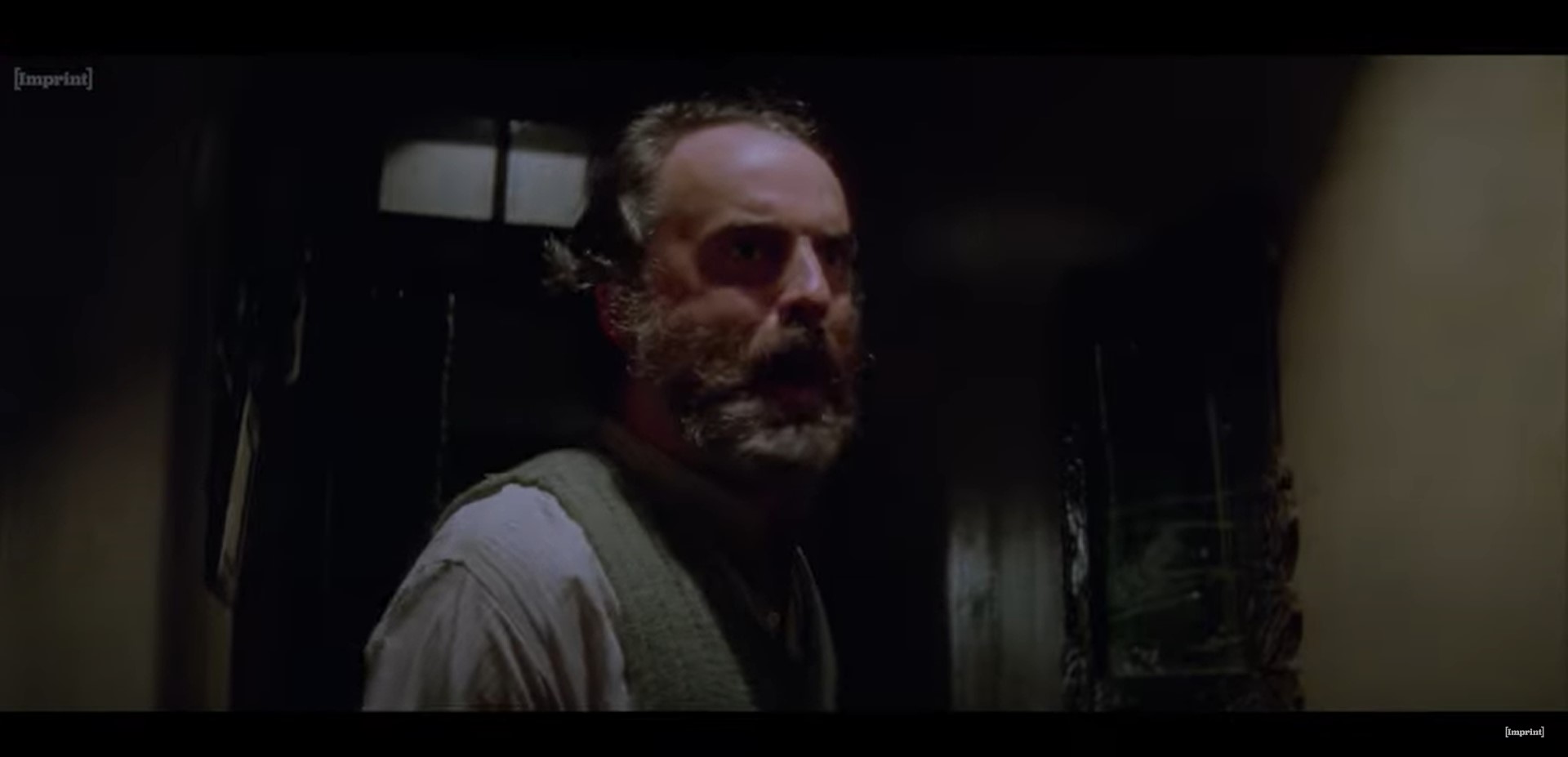
Mia Farrow’s distinct reactions and acting style very much engulfs the majority of horror experienced in “The Haunting of Julia,” as well as exhibited in “Rosemary’s Baby.”  The glassy eyed, long stares, the frightened, coiled emotions that swirl seemingly out of control, and the switch-gear ability to be strong and compliant in tense-riddled situations that just only involve herself in the scene.  While “Rosemary’s Baby’ and “The Haunting of Julia” may exact the same gothic aperture for child-themed horror and both are adapted literary works, “The Haunting of Julia” unfolds not in the anticipating of child birth but rather postmortem with the aftermath affliction of a child’s sudden and terrible demise that occurred in the frantic mother’s misguided embrace to take a knife right to her child’s jugular in hopes of dislodging an air denying obstruction.  This opening scene shocks us right into a grim framework that simultaneously divides trust and empathy for Julia as circumstances unveil what we might suspect all along, that Julia’s mental health suffered immensely.  What pushes Julia into undue stress is her controlling, dispassionate husband Magnus. Played by “Black Christmas’s” Keir Dullea.  Dullea pulls off the unsympathetic impassive father who just lost a child and can’t see the underlying psychological unrest his wife suffers.  In short, Magnus attempts to gatekeep Julia’s damaged psyche by trying to strong arm her back into normalcy, even going as far as manipulating Julia and his own sister Lily (Jill Bennett, “The Skull”) into slipping his foot into the door with a wife who fled from his grasp as soon as released from the hospital for essentially shutting down after their daughter’s death.  That toxic pressure is coupled with the seemingly unnatural incidences in her new home that clash her old life, chained to an unconsciously broken family, with her new life that seeks to decompress from a pair of diverse traumas.  “The Haunting of Julia” rounds out the cast with Tom Conti (“Blind Revenge”), Mary Morris (“Prison Without Bars”), Anna Wing (“Xtro”), Pauline Jameson (“Night Watch”), Peter Sallis (“Frankenstein:  The True Story”), Susan Porrett (“Plunkett & Macleane), Edward Hardwicke (“Venom”), and Sophie Ward (“Book of Blood”).

More or less forgotten by U.S. audiences due to no fault of the film’s own acclamatory measure or the audiences willing participation, the international produced “The Haunting of Julia” wasn’t publicized in the U.S. despite the two American leads – Mia Farrow and Keir Dullea.  Richard Loncraine’s film has incredible merit to the idea of a mother’s loss within the construct of gothic horror, which, in another aspect of unfathomable irony, resembled more closely to the American gothic style of the supernatural sequestered dark house.  Yet, this house is in London, wedged in like row homes, but as mentioned numerous times in the film, the house has distinction and grandeur that overlooks the buried ghostly history of the previous owners.  Julia absorbs the stories, filters through them, and comes to believe her own daughter is either trying to reach out to her or is hellbent on revenge for the amateur hour tracheotomy.  Loncraine does the phenomenal job of shocking our core with the early choking death scene of Julia’s daughter but once that dust settles, the pacing becomes more rhythmic to the point of building, slowly, Julia’s encounters with unknown forces that, at first, are just seemingly bizarre happenstances of left on bedroom plug-in radiators and playground visions of a girl that resembles her daughter cutting up another kid’s pet turtle.  These events play into their evident conspicuousness to push audiences deep into Julia’s mysterious milieu, officially sealing something isn’t right with the clairvoyant Ms. Flood’s scarred-screaming vision of a bloody child.  Julie become engrossed into learning the truth, eager to determine if that child is her late daughter and is fed tidbits of the house’s history that not only continues her own investigation but other research into other house tragedies that fork-split her presumptions.  As all this noise tornadoes around Julia, the stories, the occurrences, the deaths, viewers will never deduce to a reason closer to home, to Julia herself, until possibly too late at the end with a grisly open-ended finale that what Julia has been experience may have been done at her own forlorn hand. 

Atmospherically sound, undoubtedly creepy, and spearheaded by strong performances, “The Haunting of Julia” is the unspoken heroine of late 1970s supernatural horror – until now.  Imprint and Via Vision of Australia release a limited edition, high definition 1080p, 2-disc Blu-ray set with an AVC encoded BD50 of a new 4K scan transfer of the original 35mm negative. Presented in an anamorphic widescreen 2.35:1, the 4K scan is super sharp with virtually no compression issues on the formatted storage. Blacks, and negative spaces in general, are rich and void, despite Peter Hannan’s low-contrast and hazy surreal veneer that definitely plays into a psychotronic dreaminess. The resolution goes unaltered, and the natural grain maintains the original theatrical presentation for a revered 4k transfer. The English LPCM 2.0 mono track mix audibly delineates a viable one input split to make the dialogue and all other tracks comprehendible. Despite some slight here and there hissing, dialogue is amped up nicely for better resolved results that still remains mingled with the ambience in an all for one, one for all audio format. “Space Trucker’s” Colin Towns’s insidious and distinctly composed soundtrack reaches into the recesses of soul and strikes at the very nerve of fear with an unsettling score, perfectly suited for a mother drowning in the pitfalls of a supernatural sanctum. Optional English Hard-of-Hearing subtitles are available. The first disc special features include two audio commentaries – one with director Richard Loncraine and Simon Fitzjohn and the second, brand new, commentary with authors Jonathan Rigby and Kevin Lyons, new interviews with composer Colin Towns Breaking the Circle, cinematographer Peter Hannan Framing the Circle, and Hugh Harlow Joining the Circle, a new video essay by film historian Kat Ellinger Motherhood & Madness: Mia Farrow and the Female Gothic, the original trailer, and an option to play the film with either “The Haunting of Julia” or “Full Circle” opening title. The second disc is a compact disc of Colin Town’s 11-track score featuring 20 minutes of previously unheard music out of 60:52 of music. The limited-edition set comes with a neat lenticular cover on front of the hard box of what we assume is Julia’s ghost glaring at you from all angles as her eyes follow you. Inside is a clear Blu-ray snapper that’s a little thicker than your traditional snapper and comes with a built-in secondary disc holder. The cover art is simply Mia Farrow cowering outside the bathroom door but the reversible cover displays an original “Full Circle” poster as the front image. The disc arts are illustrative and compositions with the feature presentation disc the same as hard box lenticular without it being lenticular and CD pressed with Mia Farrow’s face in the background and a child’s cymbal banging toy in the foreground. Also in the hard box is a 44-page booklet feature an historical background essay by critic/writer Sean Hogan that has black and white and color photos and various poster art. The film, which comes in as Imprint catalogue # 218, runs at 97 minutes, is unrated, and, is assumed, for region A playback as it’s an Australian release – there is no indication on the package. “The Haunting of Julia” is Mia Farrow’s shining, yet lost effort post Roman Polanksi and is a remarkable look at subtle disconnection from extreme guilt when in every corner, every sign, is thought to be about your lost child.

Limited Edition of “The Haunting of Julia” Available at Amazon.com!


EVIL is Released When the Rent is Due! “The Dead Girl in Apartment 03” reviewed! (Wild Eye Releasing / Blu-ray)

Get Spooked by “The Dead Girl in Apartment 03” on Blu-ray!  Purchase at Amazon.com!

Massachusetts native Laurel has been living in New York City for a few months with a roommate she barely knows or sees because of their opposite work schedules.  When Laura discovers her roommate’s dead body in their shared apartment, the living space no longer feels comfortable, and the uneasiness keeps her awake long after the police and coroners remove the body that has left them baffled with a cause of death.  The mystery of her roommate’s demise, the agony splayed on the corpse’s face, and knowing her lifeless body has been undiscovered for at least a couple of days just next door to her room leaves Laura shuddered to the point of reaching out to her ex-boyfriend to hear a friendly, comforting voice, but bizarre and supernatural occurrences slip Laura in a state of panic and fright with a presence that has suddenly haunted her urban home and with the unearthing of her roommate’s black magic paraphernalia and a demonic symbol under her bed, Laura just uncovered a hidden nightmare that would have been a life saver if listed in the roommate wanted newspaper ad.

Atmospherically creepy and part of the reason I don’t like having roommates, “The Dead Girl in Apartment 03” is the little known, highly effective supernatural haunt horror from writer-director Kurtis Spieler.  Spieler has crossed our paths previously with the 2013 released lowkey thriller under the guise of a werewolf with “Sheep Skin” distributed by Unearthed Films and the review came out on top with a positive write up that noted the film as “a fresh suspenseful spin on lycanthrope mythos.”  Since then, the American filmmaker has re-directed and completed the 1984, John Liu unfinished cult and martial arts actioner, “New York Ninja,” for a Vinegar Syndrome exclusive release and has also preceded his dead girl paranormal enigma model with “The Devil’s Well” that has a similar plot but with a found footage medium.  Spieler’s latest venture provides the opportunity to work again with a couple of actors from “Sheep Skin” under the banner of Invasive Image with the director co-producing alongside longtime collaborator and Invasive Image co-founder, Nicholas Papazoglou, and one of the film’s principal leads and “The Sadist” screenwriter, Frank Wihbey. 

“The Dead Girl in Apartment 03” is one of those indie films that snags and headlines a genre icon to thrust the title into the spiraling coil of a massively oversaturated low-budget horror pool in the hopes that the film sticks to the now desensitized fans who have been burned too many times too often by radioactive junk.  The tactic is not always necessarily nefarious or a fool’s paradise to lure in fans into a schlock storm of insipid independent media as “The Dead Girl in Apartment 03” proves that though the original “Friday the 13th” actress and scream queen, Adrienne King, might be the top billed, the actress is definitely not the star and the film still manages to provoke a keen spine-tingler with a lesser known and younger cast dipping their toes into the what King has already lapped twice, if not three times, over for decades.  King’s name becomes the proverbial foot in the door for new, upcoming talent for audiences to be exposed to, such as with Laura Dooling playing as, well, the spookily chipped away, panic-induced Laura.  Dooling immerses us into her character’s complete physical cutoff from friends and family as a woman stewing in an uncomfortable sixth sense that surrounds the disturbing faculties of her roommate’s death.  Dooling nails the superb chiller despite the one-sided act with no other cast to react off of for the majority of the runtime, paralleling her character’s isolation with her own to root out goosebumps unaccompanied.  King and Frank Wihbey head up the detective detail as the around-the-block Detective Richards and the fresh understudy Detective Miller.  The older woman, younger man character dynamic rides a similar trajectory to their professional colleague one and I’m not talking about cougars, if that is where your mind take you.  Though she certainly can be a cougar if she wanted to, King is more of a mentor on camera than she is off camera, playing the seasoned detective who warns the ambitious Miller not to get involved with active case women.  Wihbey’s a suitable fit as the double-edged sword eager rookie to King’s cooler, calmer approach to bestow path-treaded wisdom for a reason.  One of the highlighted performances stems from “Sheep Skin” actor Michael Shantaz, a tall and intimidating presence that sizes up Dooling’s terror tenfold from the very first scenes of the deceased’s dazed boyfriend Derrick crossing the threshold into Laura’s apartment.  Subdued and stony-faced, Shantaz adds to the tangible terror in contrast to the paranormal one at hand, yet both are ostensibly woven from the same thread.  Fellow “Sheep Skin” actor Bryan Manley Davis along with Jasmine Peck and Jennie Osterman (“Dickshark”) fill out the cast.

I’m always intrigue, or maybe just easily entertained, by titles that goad into viewership for the simple fact of fulfilling title-spurred questions with answers.  The title “The Dead Girl in Apartment 03” elicits many unexplained uncertainties that become an itch you can’t scratch until the end credits fade to black.  I want to know who is the Dead Girl?  Why is she dead?  What’s terribly important about the specified Apartment 03?  Do the Dead Girl and Apartment 03 correlate more significantly somehow in the story?  All these internal queries, prompted by a non-generic, puzzling title, are just cascading through the mind in a deluge of I-gotta-knows and for the most part, the team behind the quaint thriller does rub the itch to a smoothed over satisfaction while also working the edits, the angles, the sound design, and the lighting toward a decent scary movie.  What’s fascinating about the story is the exploration of the immediate after when Laura is left shivering in shock, solitude, and a sense of grim thought knowing she’s been living with a corpse for the last 48 hours.   She hits all the stages of a post-traumatic situation by reaching out to family and friends, diving into comforts like making tea or taking a shower, and even finding ways to keep busy and remove the macabre image from her mind by cleaning up the crime scene herself.  That portion of etching into Laura’s psyche distracts her in an ironic, detrimental way because as she attempting to self-soothe by any means possible, she oblivious to the grotesque presence coming and going and in-and-out of the negative space with its body jerking as it glares at Laura with blood running down it’s shirt.  Laura is also not cognizant of the things that go bump in the night as they barely make a blip on her radar or trigger her into a deeper stage of fright until it’s too late.  The climatic ending stretches the story further into love hexes and demonic contracts that perk up the ears in interest as the story gets into the nitty-gritty of details of what’s happening and why but doesn’t quite reach the finish line of resolve with a deflated conclusion that supposed to leave you shocked when it really just leaves you. 

Not your typical bottom-of-the-barrel budgeted or gore-drenched debauchery Wild Eye Release, “The Dead Girl in Apartment 03” looks and feels like a big-budget ghost film with all the muscle-seizing suspense.  The bold independent home video distributor delivers the Kurtis Spieler picture onto a Blu-ray collector’s edition, which, again, is atypical for the label.  The AVC encoded, high-definition, 1080p Blu-ray is presented in a 2.35:1 widescreen aspect ratio.  Spieler has defined himself as a master of the negative space and, fortunately, there’s no lossy image from a deficient compression, leaving a crisp view of the lurking, crooked dead entity soon to fill the void or not as the director tends to position the camera for an uncertain possibility.  Details are relatively good within a muted color scheme and many of scenes are dark lit, bordering on a neutral to high contrast with a palpable delineation, with only the dead girl’s room projecting a stony mustard illumination and spotted moments of candle and hand torch lighting.  Other scenes, more so involving Detective Richards and Miller, dip into the cop-noir with gel and back lighting that looks vivid and mysterious on screen.  The surprisingly backwards tech of the English language LPCM stereo relies heavily on dialogue than ambient jolts of jumps scare sounds though there are a few, effective examples about and is balanced well with the dialogue that is a little on the mumbling side but comprehensible and free of obstruction, interference, sound design, or otherwise. The dual channel stereo works and is adequate for the size of the picture that doesn’t require a multi-channel audio format as there are no explosions, whirring bullets, or a large cast to create depth range.  Soundtrack composed by Connecticut based, VHS-inspired synthwave artist, Brian Burdzy – aka Satanic Panic ’81, delivers a low and lively and often deadened (pun intended) but rhythmic sound reminiscence of John Carpenter scores that gives Spieler’s film a very “Halloween” vibe. Aforesaid, Wild Eye Releasing doesn’t accompany a ton of special feature material with their releases unless on their Visual Vengeance sister label but the seemingly new special edition line, in conjunction with a regular standard release, bears more supplementals for the storage.  An audio commentary with filmmaker Kurtis Spieler , a behind-the-scenes featurette featuring cast and crew retrospective interviews of their time on the film, Spieler’s 2011 short western thriller “No Remorse for Bloodshed” (though mistitled on the back cover as “No Remorse Bloodshed,” Take 3S Video – a montage of actress Laura Dooling humorously pretending to be clipped by the marker clapper on third takes, an image gallery, and Wild Eye Releasing trailers of “Smoke and Mirrors,” “Wicked Ones,” and “The Bloody Man.”  The physical aspects of the release include a clear Blu-ray latch snapper with a macabre illustration of the titular dead girl holding a knife on the front cover, as you’ll see in the image below for the trailer.  The cover art is reversible with a still image of Laura Dooling in one of the more thrilling scenes on the reverse side.  Inside the snapper insert is a folded mini poster of the SE’s O-case slipcover with another illustration of two more characters in a 70s inspired retro design.  The region free, unrated film clocks in with a 72-minute runtime – an easy, breezy thriller with punch.  “The Dead Girl in Apartment 03” is a perfect selection for a Halloween night movie. An eerie apparitional residuum that’s character-driven, tense, and thoroughly carried by the small cast.

Get Spooked by “The Dead Girl in Apartment 03” on Blu-ray!  Purchase at Amazon.com!

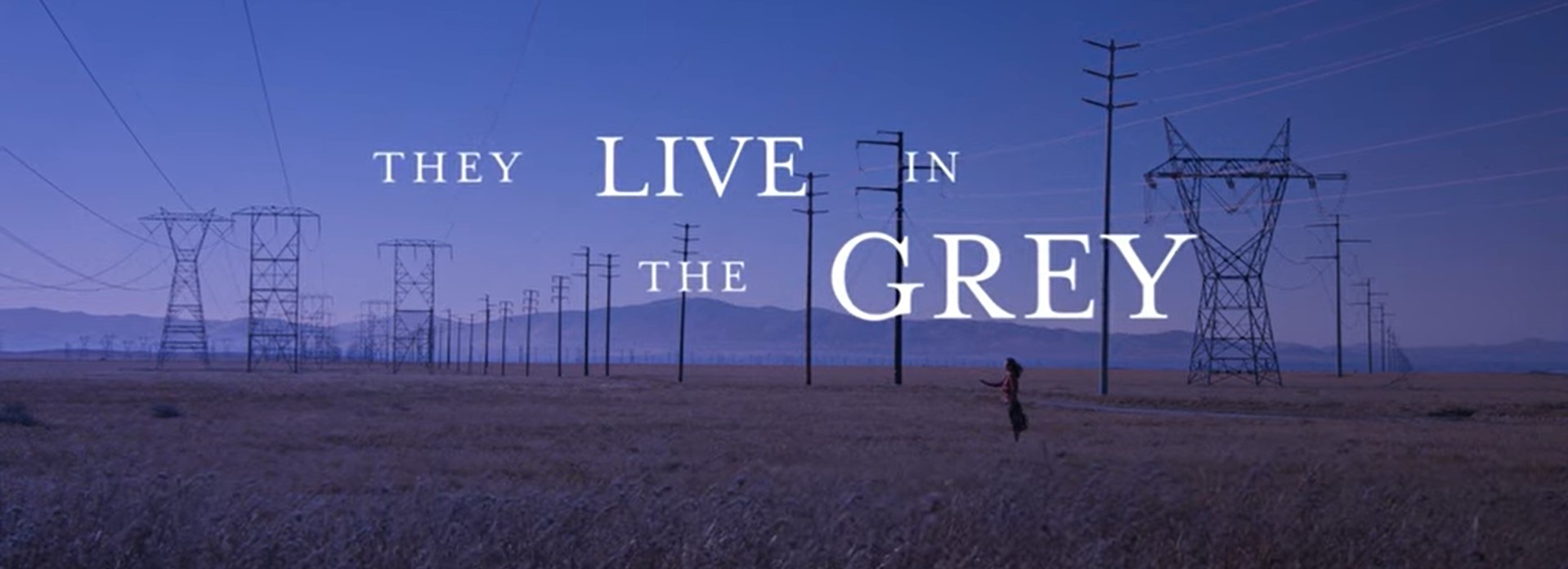
All You Will See is EVIL if Blinded by Grief. “They Live in the Grey” reviewed! (Acorn Media / DVD)

Not the Blue, Not the Red, but the Grey!  “They Live in the Grey” on DVD!

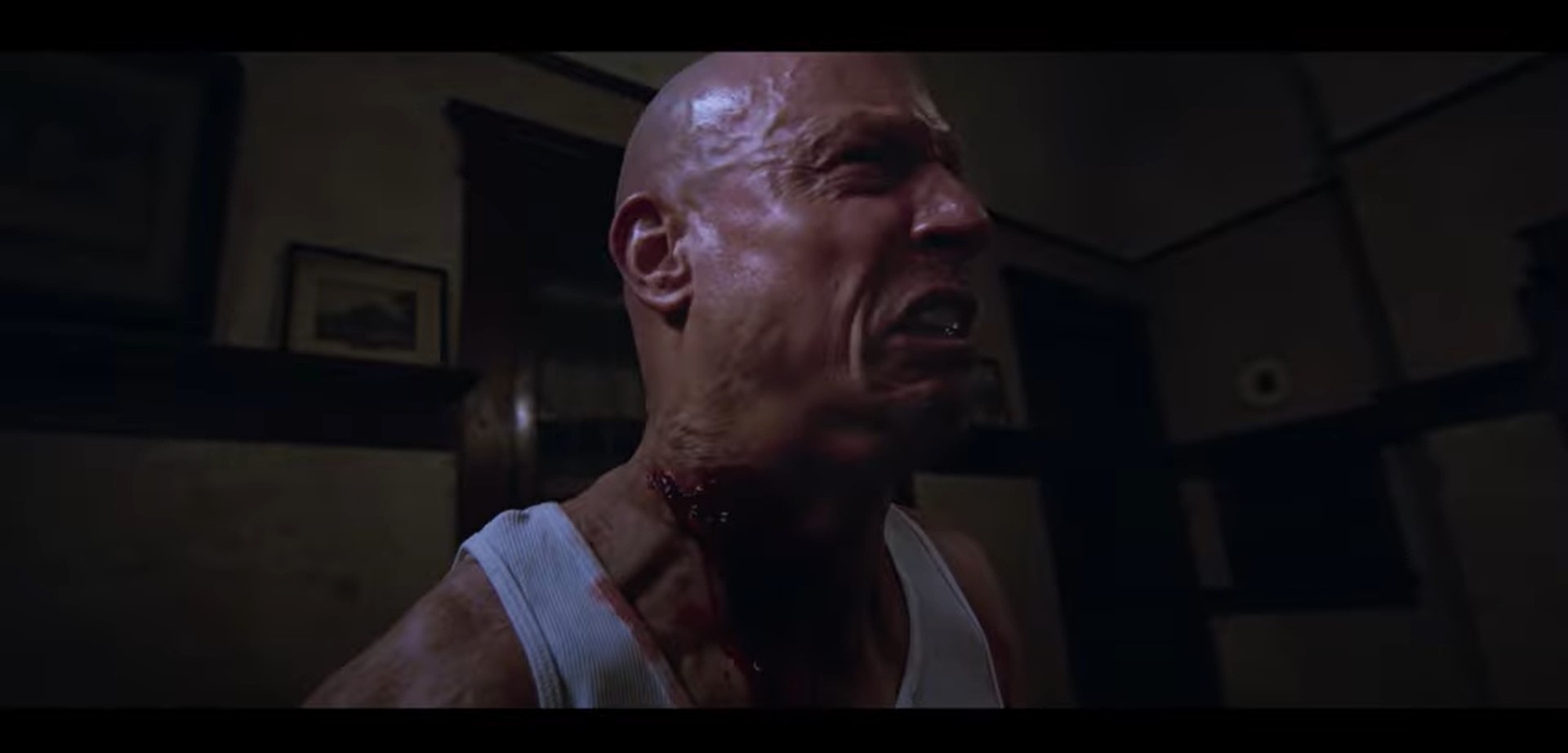
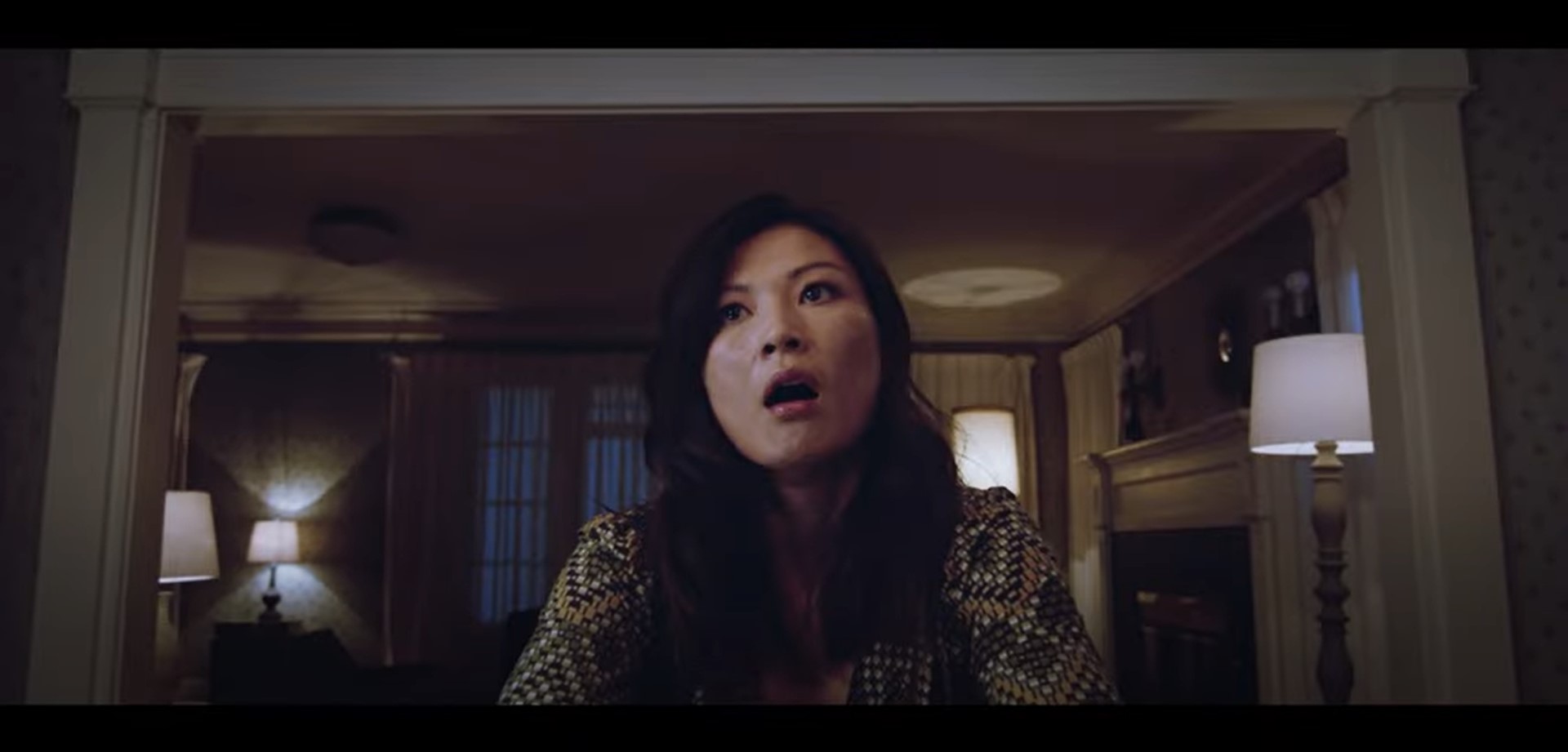
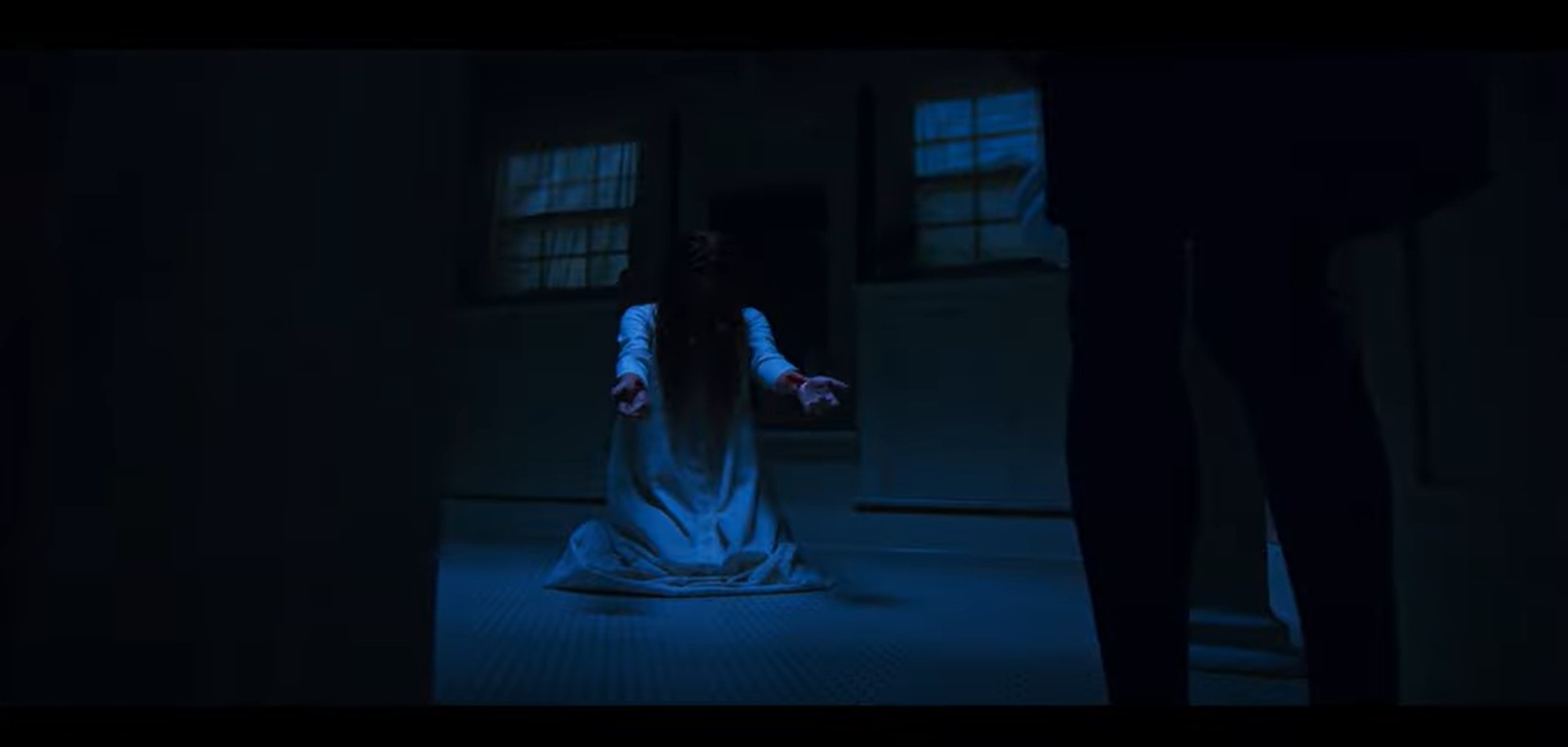
CPS investigator, Claire Yang, struggles to cope with the untimely loss of her young son.  The tragedy forces her to push away her husband and have suicidal thoughts.  What’s also driving Claire further from the edge of sanity is her ability to see glimpses unhinged, and sometimes physically harmful, spirits.  When a child-protective case comes across her desk to look into the possible abuse of a young girl, Claire learns quickly that it might not be girl’s parents abusing her.  Tormented by an angry supernatural entity, Claire walks careful and hesitant thin line of keeping the girl with her family and attempt to prove that the parents are not responsible for the bruises and cuts, but when upper management pressures her to close the case at the school’s behest and a variety of ghastly come and go across her path, the churning burn of hurt and guilt grows inside her as she confronts her personal demons while trying to do the right thing for the abused girl in the middle of it all. 

“The Sixth Sense” meets “The Conjuring” in The Vang Brothers’ 2022 supernatural thriller, “They Live in the Dark.”  As the sophomore written-and-directed project for the Fresno, California raised Abel and Burlee Vang, following up on their 2016 release of the moderately successful supernatural and social media mashup debut, “Bedeviled,” continuing to venture off their solo work and into a collaborating unit, “They Live in the Dark” tackles various topical concepts and troubles with overwhelming grief and how it manifests negatively on an individual and family level.  Previously once titled as “The Uncanny,” the story is set in nowheresville, U.S.A., the brothers really set the tone that this story, or more realistically its themes and messages, are broad and non-exclusive and we also see that in the cast for the film, a segment that we’ll dive into further in the next paragraph.  The Shudder exclusive film, “They Live in the Grey,” is a production from Standoff Pictures in association with Whiskey Stream Productions with the Vang Brothers producing alongside former filmmaker-turned-film academic-turned-filmmaker Stephen Stanley.

Coming from Hmong ancestry, The Vang Brothers found personal importance to cast mostly Asian-Americans for the film.  Taiwan born Michelle Krusiec (“The Invitation,” “The Bone Box”) plays the lead and is the very first character we meet in an awkward and frightful position as a woman attempting suicide by hanging herself near the home staircase.  Immediately, we don’t know what we’re exactly in for, but we know when we’re introduced to the threadbare Clair, she has a major depressive factor that beleaguers her existence to the point of removing it from the equation all together.  The Vang Brothers thoughtfully shroud details into exactly what’s devouring Claire from the inside out and keep close to the chest in securing that ace of revelation in the back pocket until the time is just right in the story to unveil the dealt bad hand.  As the details trickle and we learn more about Claire’s disintegrating family life, we also learn of her ability to see lost spirits and how she handles those more than often visceral visions is dose up on medication that ultimately factors into her current state of mind.  Though I wouldn’t say the performance pops offscreen, but Krusiec does cruise through the role with meticulous character conditioning and the actress can tremble and look scared with the best in the business, anchoring Claire as the rooted principal and establishing a tone that works with the casted cohort.  Ken Kirby, who plays Clair’s estranged beat cop officer husband Peter, goes outside the usual comedy element for the Vancouver-born actor-comedian, walking the emotional pathway of a husband on the ousts by no fault of his own.  The heartbreaking tension that’s both expressed outward and internalized between the teetering from loss parents, husband and wife, fills the scenes with raw and relatable emotion and barrier-laden endeavor to fix what is thought hopeless. As Claire becomes closer to the case of Sophie Lang (Madelyn Grace, “Don’t Breathe 2”), nothing is as it seems from a family already on shaky ground with not only the school system’s case of suspected abuse, but also inwardly as past troubles fester toward a frenzy. Ellen Wroe (“Final Destination 5”), J.R. Garcia, Willie S. Hosea, and Mercedes Manning fill out the cast.

The Vang Brothers accomplish phenomenal representation in a female leading role with the talented Michelle Krusiec. Reaching back into my mind to access the cache of catalogued films I’ve watched over the decades, I find myself in extreme difficulty in recalling an American made story where an Asian woman female lead is not a martial arts expert. The Vang Brothers with “They Live in the Grey” expand the palette with a supernatural scenario that could curse not just the single white female rearing and protecting their child from a plethora of supernatural predators, but also afflict a person of color who has already suffered tremendously and who has to still have to find and work on themselves in the muck of overcoming a millstone. Instead of a double whammy, “They Live in the Grey” is a triple whammy of pitfalls that rival similar grief-stricken genre films like “The Babadook” and “The Orphanage.” “The Vang Brothers elicit a stillness in their shooting of an extremely melancholic yarn by not being too fancy with their camera footwork that doesn’t track or follow, no hand-held or drone, and is allowed to have a more natural tone with an unfiltered gravitate toward the austere and the tormented. Though nothing too striking to make a spectacle from Jimmy Jung Lu’s cinematography but each shot is carefully setup and the slow zoom in and out is effective enough in breath-holding moments. Early into the story, the first can be choppy and disorganized with the back and forth of present and past and though heavily focus or strict on the narrative’s virgin veneer, there’s distinguishable indication to the audience that we’re looking into the present viewfinder or the past’s. As a whole, the scenes blend together in a seamless patchwork that hinders more than helps.

“They Live in the Grey” extends that lack of light and vitality for the living and the dead. Now, you yourself can experience the saturnine of atmosphere of the film that lives on DVD from Acorn Media International. The region 2, PAL encoded, 124-minute DVD comes from our overseas friends in the United Kingdom with an 18 certification for strong injury detail – aka – stabbing and blood. Presented in a 2.39:1 widescreen aspect ratio, the 2-hour runtime coupled with a compressed presentation appears to have shepherd in some compression issues, such as banding and fuzzy details. The picture is not the sharpest it should be with old wooden house’s textures could have added texture to the nerve-wracking tension builds. The English Dolby Digital 5.1 track represents a solid audio inlay with clear dialogue and a diverse depth and range. The musical soundtrack is subtle but works hand-in-hand with the story. Optional English subtitles are available. Bonus features include only a behind-the-scenes photo gallery. When it comes down to brass tacks, a strong story is a good story and “They Live in the Grey” may miss a few technical marks, but the horrid truth of grief is personal, potent, and packed full of demons.

Not the Blue, Not the Red, but the Grey!  “They Live in the Grey” on DVD!

EVIL Spirits and Japanese Internment Camps in “The Terror: Infamy” reviewed! (Acorn Media International / Blu-ray)

Chester Nakayama floats through life living with his immigrant parents on Terminal Island in San Pedro, California during World War II. A photographer hobbyist who helps on his father’s fishing boat and studies at a university, Chester doesn’t have steady employment and has recently learned his girlfriend, Luz, is pregnant with his baby. But those are not the height of Chester problems, or his family’s, when the country of Japan declares war on the United States by bombing Pearl Harbor and mysterious deaths surrounding the Nakayama family point to ancient Japanese beliefs of a Yūrei, or a ghost, clinging to a grudge. As the years past, Japanese American citizens are move from one internment camp to the next with no end in sight being projected as potential spies for the country of the rising sun and for Chester, Luz, and his family and friends, the Yūrei’s scheme endangers Chester’s life and legacy.

Following the success of the Ridley Scott (“Alien”) produced AMC horror television series, “The Terror,” the second season aims to build a new path of dread with a storyline plucked from the late 1900’s of two stranded artic explorer British ships trying to navigate a Northwest passage and now placed in a whole new and different, massive turbulent story and setting laid out in the early-to-mid 20th century during World War II America with Japanese Internment camps.  The second season comes with a partially new title, “The Terror:  Infamy” along with a new cast and new crew as well.  The subtitle’s double entendre refers to the then era United States 32nd President Franklin D. Roosevelt’s Day of Infamy speech given to the public after the assault on Pearl Harbor and also refers to another American infamous time of the mistreatment of the country’s own citizens, the Japanese Americans, placed into internment camps and constantly scrutinized as potential Japan spies.  “Infamy” showrunners Guymon Casady, David Kajganic, Scott Lambert, Alexandra Michan, Jonathan Sheehan, and David W. Zucker, along with Ridley Scott, return to the AMC, Entertainment 360, EMJAG Productions, and Scott Free Productions series.

At the tip of the ensemble cast spear, most consisting of Japanese heritage actors and actresses, is Derek Mio as the Yūrei plagued Chester Nakayama.  Perhaps the biggest role for the Mio, the role transcends Chester from a stagnant part-time fisherman on the dead-end Terminal Island settlement of San Pedro, California to a responsible man of action that sees Chester fight for his family, his wife, his children, and even fight for his country despite the maltreatment in order to course his loved ways safely through a plethora of evil.  While the character grows in an arc of accepting responsibility as a son, husband, and father, Mio never expresses the range of a story of his magnitude that takes him across various domestic terrains and on the other side of the conflict-engulfed world as he’s afflicted by a malevolent spirit.  Constantly confident and seemingly unafraid, Chester just simply endures the hardships along “The Terror’s” bombardment of grim reality.  Comparatively, the younger Japanese American generation are culturally more expressive next to the immigrated older generations in Chester’s father (Shingo Usami) and eldest family friend Nobuhiro Yamato (“Star Trek’s George Takei”) who we witness keep mostly in line with their stoic composures.  Takei, born in 1937, and his family were actually forced into living in converted horse stables and official internment camps across the country during the War and that gives the series a morsel of 100 times it’s weight in authenticity with firsthand experience. Along with the deep sympathies and an infinite amount of shame for the wrongfully imprisoned citizens of war, there’s also immense compassion for Chester’s wife, Luz, played by Chrstina Rodlo (“No One Gets Out Alive”). Rodlo runs the gambit of emotions that convey happiness with her time with Chester, to despondent loss, and to fear while on the run from the American government as well as an evil spirit who threatens her child. Just like the first season of “The Terror,” character staying power is often short lived as the horror and, well, the terror catches up to them in one way or another, but we see fine performances from Miki Ishikawa (“I Don’t Want To Drink Your Blood Anymore”), Naoko Mori (“Life”), Alex Shimizu, Lee Shorten, Hira Ambrosino, and Kiki Sukezane as the incessantly stubborn Yūrei and C. Thomas Howell (“The Hitcher”) with another flimsy performance as a hardnose major serving as head of an internment camp.

Subtly contrasting two very different kinds of horror between the yore of the fantastical Kaiden ghost stories coming to fruition with the Yūrei and the very non-fictional blight on American history that was falsely imprisoning American citizens with Japanese roots no matter what age. Both unsettling constructs are unequivocally provided equal weight in dread much like with season one that showcased the dog-eat-dog desperation of man isolated and trapped in extreme terrain with the supernatural forces of nature with a monstrous, polar bear like creature hunting them down one-by-one. Though the same dance, but a different song, season two has a very welcoming different take of blending of yore with lore that separates itself into a new entity, a new engagement, and a new facet of terror very befitting to the anthological series. Eventually, “Infamy” starts to lose steam when the Yūrei side of the story insidiously infringes fully into the fold when Chester and Luz have fled the internment camps and are living in nowheresville New Mexico. The camps fade away from the story and also from our consideration with only bits and pieces to chew on just to check in on principal characters and has a resolution that’s about as cheated as the Japanese Americans survivors given $25 by the American government to start a new life. Yet, “The Terror: Infamy” is poignant and informative, a better picture of what really happened on the American home front better any textbook could ever properly depict, and exposes the mainstream into the Kaiden-verse of Japanese culture.

The 2-disc, 10-episode Blu-ray set comes from UK distributor, Acorn Media International, with each episode with a runtime on an average of 40 to 45 minutes long and a total runtime of 419 minutes. The region 2, PAL encoded release is presented in a standardized for television widescreen format of 16X9 and the Acorn release doesn’t present a flawless picture with noticeable issues with severe cases of banding and compression artefacts around the darker portions of the scene and trust me, “Infamy” is plenty dim and leaden between John Conroy and Barry Donlevy’s cinematography unlike the previous season’s artic white landscape that brightens much of the frame. The Dolby Digital soundtrack produces a better product with satisfactory quality in all categories of score, ambient noise, and dialogue and is accompanied by well-synced and timed English subtitles. Bonus features include a look at the series part 1 (for disc 1) and part 2 (for disc 2) and the biographical and inside the head look at the characters through the eyes of their portrayers. “Infamy” is UK certified 15 as it contains the AMC edginess of bloody graphic content as well as some offensive language. “The Terror” series as a whole has remarkable historical insight commingled with soul-stirring, skin-crawling old wives’ tales. “Infamy” may not supersede its predecessor but is still one hell of an engaging and unique story that salivates us into wanting a third season.

A 10-Year-Old Girl Pieces Together an EVIL Tragedy. “Martyrs Lane” reviewed! (DVD / Acorn Media International)

Purchase ACORN Release of “Martyrs Lane” on DVD

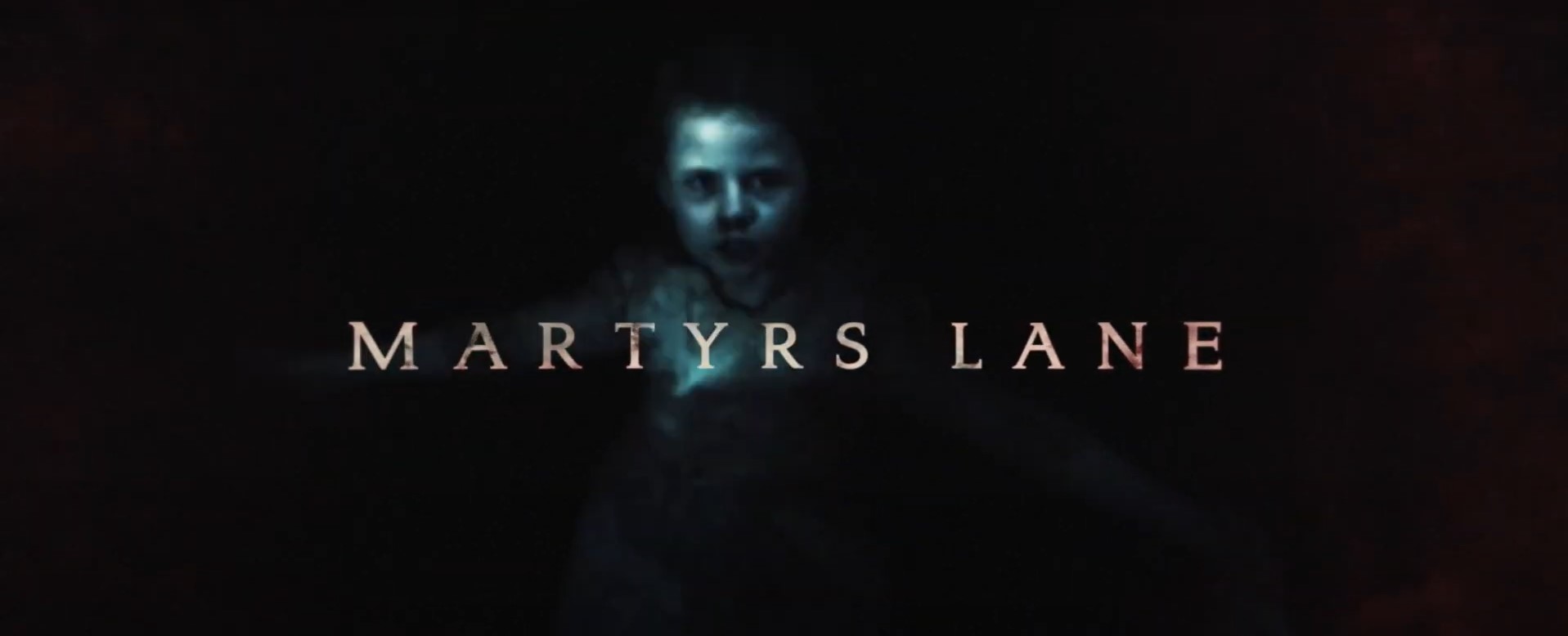
10-year-old Leah is a curious, quiet child, living in a vicarage household.  Her nightly nightmares surrounding her mother’s necklace locket and her mother’s stern conduct along with her constant obsession with her necklace locket leads Leah into an interest in the ornament’s contents.  Inside is a lock of hair and Leah takes it and loses a day later, sending her mother into a tailspin of anxiety.  That same night, a little girl knocks on Leah’s window and provides Leah momentary comfort and friendship until every visit after that, the little girl grows sicker and more ominously enigmatic in her play, providing clues and the whereabouts of thought-lost items that will open up the truth about the mystery girl’s identity as well as her family’s dark secret.

“Martyrs Lane” is a thoughtful and empathetic drama with supernatural delicacies surrounding complexities in loss and grief of bottled-up family secrets.  The British film is the third feature film, second in horror, for actress-writer-director Ruth Platt (“The Lesson”) who has commented that “Martyrs Lane” is a plucking of aggregated events from her own childhood woven into the very fabric of the story. Platt’s 2021 release is a fined tune extension upon her 2019 short of the same title that recasts the core principal roles from original actresses Indica Watson, Phoebe Lloyd, and the live action adaptation of “Beauty and The Beast’s” Hattie Morahan and turned the short into a 96 minute closed book feature about a scrutinized and consuming locket and a slowly decaying little girl playing two truths, one lie with the main character during bedtime hours who then has to unravel the mystery behind it all. Ipso Facto Productions’ Christine Alderson, who also produced “Valhalla Rising,” “Alpha Alert,” and even Platt’s original short film, produces “Martyrs Lane” alongside Katie Hodgkin and partly funded by the British Film Institute (BFI) in association with Sharp Films, Lypsync, and LevelK.

Recasting the short’s linchpin framework actresses took an audition to bring to light exactly the kind of talent Platt needed to express the different levels of somber ambivalence toward a family obviously struggling to deal with something more than just the day-to-day tasks. Kiere Thompson took over for Indica Watson as Leah in her feature performance debut and Thompson smashes a complex role and gains high marks on the voyeur scorecard as the youngest child who watches as her mother ebbs and flows in various states of anxiety while serving a milder, yet vastly different, dish of dynamics with the levity being around her vicar father and to be always primed to deal with her tormenting much older sister Bex (Hannah Rae). The best chemistry is between Thompson and age-appropriate counterpart Sienna Sayer, taking over Phoebe Lloyd’s role from the short as the strange visiting little girl. You can see two youngsters’ genuine play and natural innocence come through their smiling faces, wide eyes, and contagious giggles and when the winch of fear washes over them, called for by the story’s puzzling rising of events, mirthless moments are quickly produced, snapping us back into Platt’s eerie cold quandary. Hattie Morahan is replaced by Denise Gough as the mother Sarah and though her performance is fine, there just wasn’t enough of the mother’s side of the story to evoke a sense of empathy or sympathy and ultimately just falls into right into apathy even though Sarah is a pivotal piece to the theme. Catherine Terris, Charlie Rix, Donna Banya, Anastasia Hille, and Steven Cree as the vicar and Leah’s father rounds out the cast.

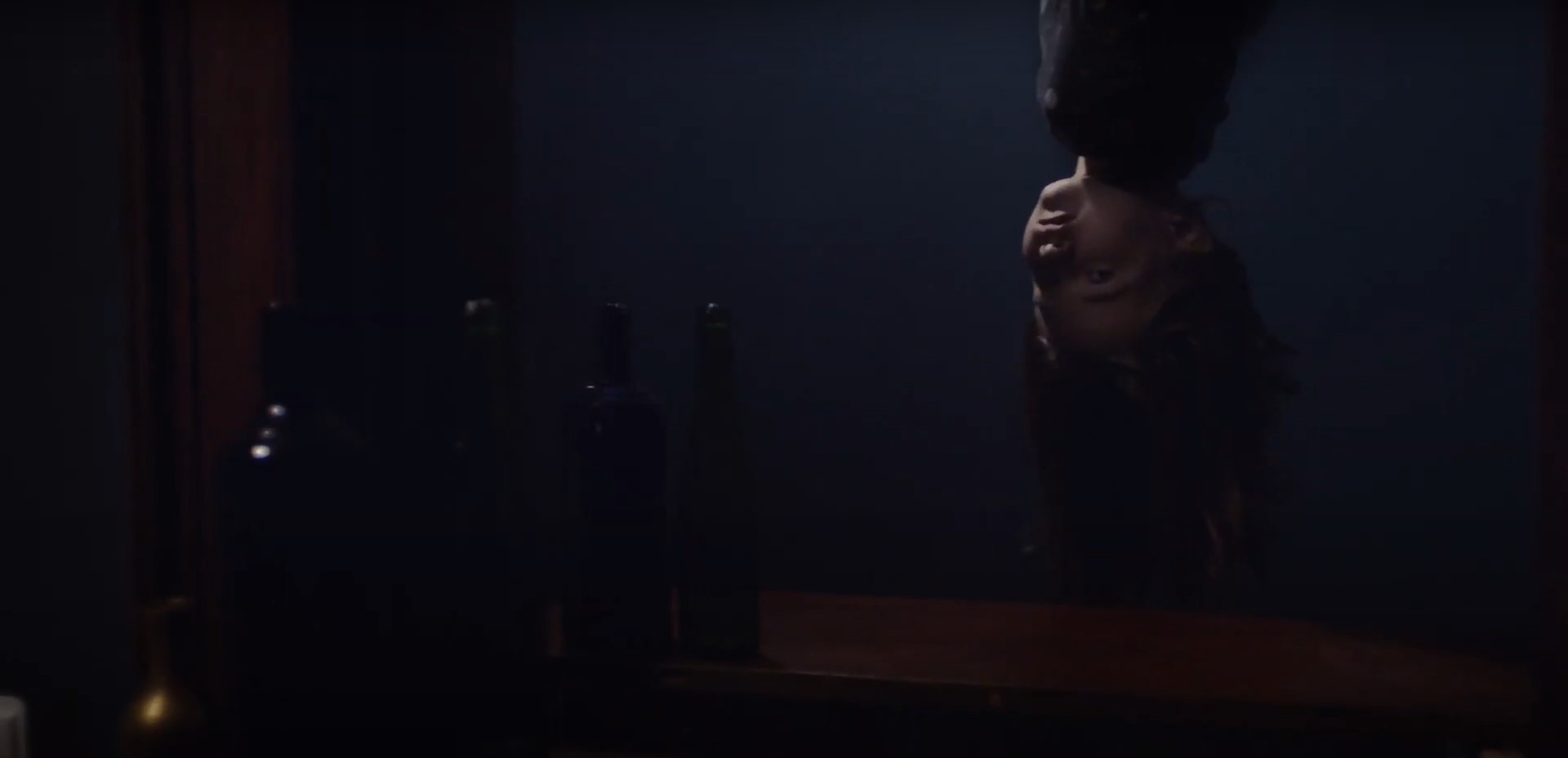
A blend between “Let the Right One In” and “The Babadook” but with less blood and less malevolent atmospherics, “Martyrs Lane” offers an imposing exhumation of a secret told in a way that doesn’t carry the sensation of something being hidden from Leah or even the audience in general.  Instead, Platt invests into the thematic subtleties with the bigger picture on the supernatural element of a strange, orphaned girl who knocks on the outside of Leah’s second story window, wearing dress up angel wings and is slowly deteriorating health wise with each passing night.  Yet, despite her appearance and reluctance at times, Leah’s peculiarly drawn to opening her window, letting her in, and even play childish games with her and tell jokes but soon those games become clues, near riddle-like, for Leah to push the envelope that link her mother, the locket, and this strange girl together.  Platt tacks on a silent and tenebrous after-hours backdrop during Leah’s sleepless nights and the stillness is greatly encroaching upon into the terror senses that you find yourself holding your breath and jumping at the breakneck editing aimed to momentarily scare you until a sigh of relief for when it’s over.  “Martyrs Lane” is externally melancholic and mood driven from outside Leah’s perspective as she, herself, internalizes and absorbs the emotions of others, studies them, and puts the pieces together to unravel the truth.

Ruth Platt’s “Martyrs Lane” is a wistful, and often eerie, entry into the creepy child subgenre. UK distributor, Acorn Media International, releases the Shudder exclusive-streaming film onto a PAL encoded region 2 DVD.  Presented in a widescreen 1.85:1 aspect ratio, there’s virtually no issues with the compression as even the night sequences retain the thick and obscuring black levels with almost unnoticeable banding, and it’s a clean dark too with balanced contrast to really home in on and define the shadows.  Details and textures are good for Platt’s dreamy-presented cinematic approach of slight overexposure and blur are more a stylistic attribute than an issue with the imagery.  I liked the tactile details in the loose strands of hair around Leah and the mystery girl that plays on their differences, and sometimes similarities, really well.  The English Dolby Digital 5.1 surround sound retains no significant issues.  Dialogue track perceives slightly muted or distant in some scenes and clarity, though free from audio blemishes, can be straining.  English subtitles are available.   Bonus features include a behind-the-scenes with snippets of interviews from Ruth Platt and the cast, an interview with Ruth Platt (which contains the same segments pulled for the behind-the-scenes), and a behind-the-scenes photo gallery.  The Acorn DVD is certified 15 for strong supernatural threat and injury detail.  In the end, “Martyrs Lane” is a dead-end road to melancholy, a family-affecting affair that peripherally chronicles not only one person’s struggle to maintain a slither of normalcy but also profoundly hits innocent youth who know nothing of the skeletons kept in the closet.

Purchase ACORN Release of “Martyrs Lane” on DVD