Copperton Cult Commands You to be EVIL! “Heartland of Darkness” reviewed! (Visual Vengeance / Blu-ray)

Own Your Copy of the Lost Linnea Quigley Film “Heartland of Darkness” by Purchasing at Amazon!  Click Here to Amazon.

Copperton, Ohio – a quaint and quiet, unsuspecting small town if looking to downsize from the big city hazards.  However, beneath the provincial veneer lies a satanic cult spearheaded by the local Reverend Donovan and his flock of townsfolk worshippers.  Donovan’s grip reaches far beyond just the local municipality as the insidious cult schemes to turn the state’s top officials into devoted followers of Satan.  Copperton’s new local newspaper editor, Paul Henson, along with eager reporter, Shannon Cornell, use their journalistic gut instincts to unearth and expose the corruption by Donovan up to the ladder of the town’s sparse governmental hierarchy, but with only a few residents unsubscribed to Donovan’s fanatical sermons, Paul and Shannon have nowhere to turn in order to protect themselves, Paul’s daughter Christine, and the entire state of Ohio from succumbing to Satanic domination. 
Once lost in limbo for three decades, “Heartland of Darkness” finally sees the light of retail shelves day!  Left unfinished for many years, director Eric Swelstad, then an Ohio State film student, supervises the completion of the horror thriller that revolves around satanic cults, grisly sacrifices, and sheep mentality based on the 1980’s satanic panic craze that swept the nation.  Penned by Swelstad, who moved on with this lift and helmed a handful of direct-to-video titles, such as “The Curse of Lizzie Borden 2:  Prom Night” and “Frankenstein Rising” in the early 2000s, and filmed in and around Columbus and the Granville village of Ohio, the 1989 principal photographed production was thought to be ultimately completed by 1992 but due to funding and production constraints, that was not the case.  The film also went through a couple of other titles, beginning with Swelstad’s original script title “Fallen Angels” and then changed to “Blood Church” at the behest of a possible financier that eventually fell through.  In the end, the film settles on “Heartland of Darkness” as a privately ventured production Steven E. Williams (“Draniac!”), Wes Whatley, Michael Ray Reed, Thomas Baumann, Mary Kathryn Plummer, and Scott Spears (“Beyond Dream’s Door”) serving as producers.
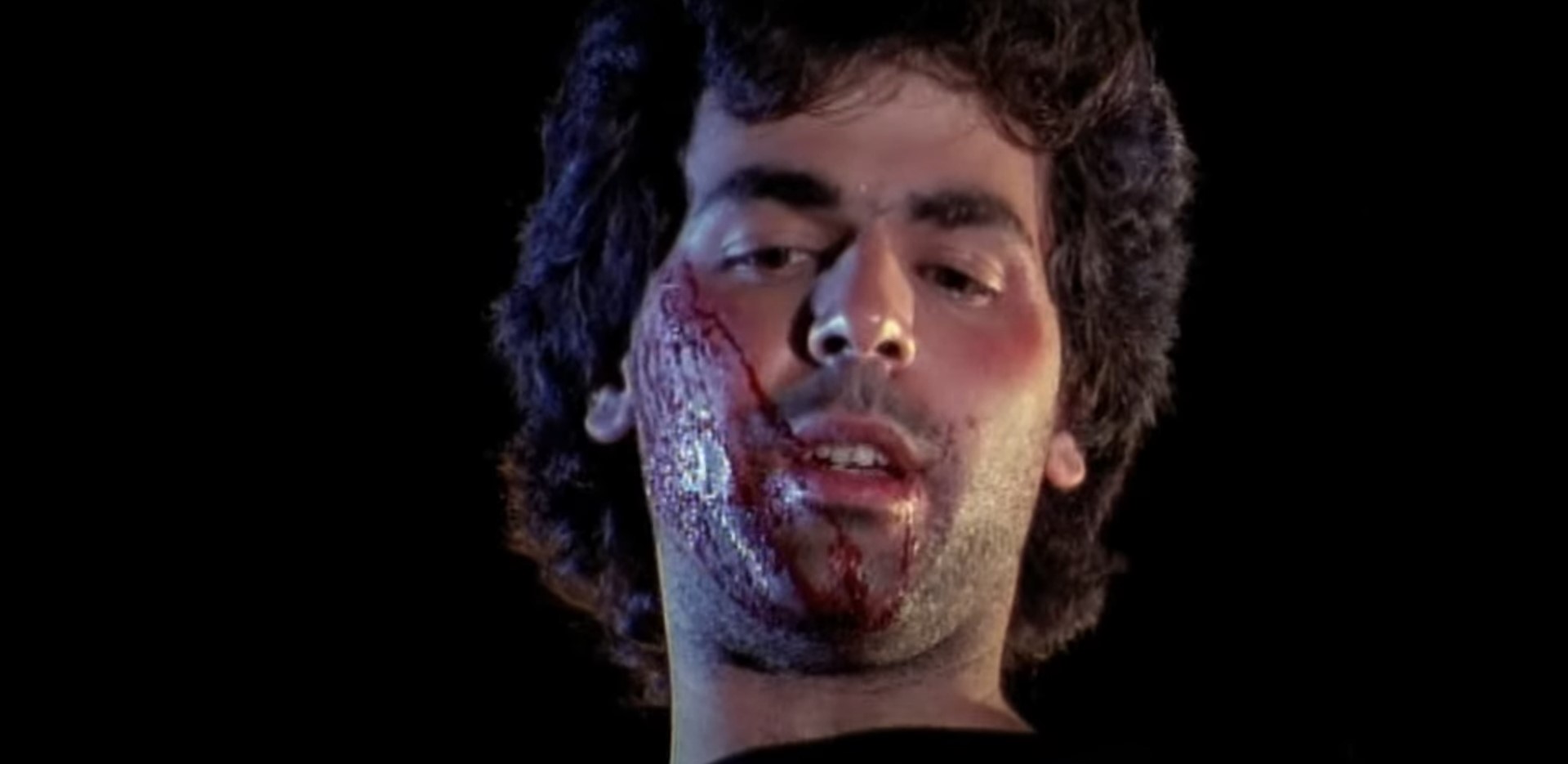
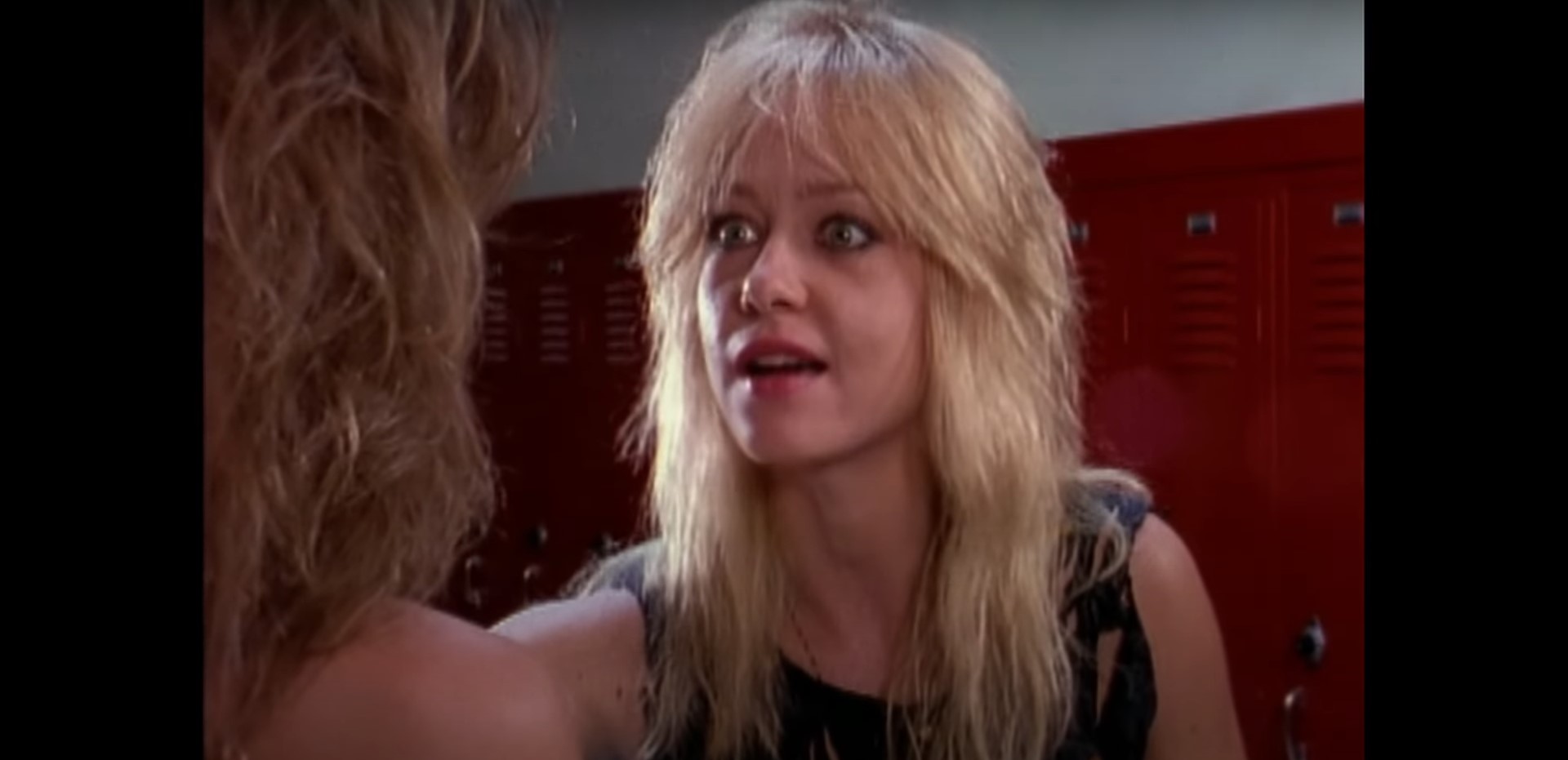
One of the reasons why the obscurity adrift “Heartland was Darkness” was so sought after by horror fans is because the title became one of the lost films of scream queen Linnea Quigley.  Standing at only 5’2’’ tall, the “Return of the Living Dead” and “Night of the Demons” actress was a hot commodity during the late 80’s and a genre film giantess who ended up having a fairly prominent, written-in role just for her hire in what is, essentially, a student film.  Quigley’s role as the town’s high school teacher, Jessica Francine, makes the hormonal boy in me wish my teachers actually looked than beautiful and provocative in high school, but in the same perspective, Quigley doesn’t appear or is barely older than Sharon Klopfenstein as Paul Henson’s daughter, Christine.  The two share a high school hallway moment while sporting crop tops, tight bottom wear, and discussing paganistic occultist Aleister Crowley and Nazi mass murderer Adolf Hitler and while the additional scene gives Quigley screen time, it evokes risibly campy optics.  Dino Tripodis defines the principal lead Paul Henson, a former Chicago Tribunal editor having left the midwestern journalism powerhouse after the death of his wife.  Stepping into a world of cultism, Paul’s eager to save what’s left of his family at all costs by exposing grisly murders as more than just drug-related collateral damage (I didn’t know drug wars were such a big thing in Ohio).  The debut of Tripodis’s performance fairs well enough to solidify himself as the marginalized hero against a Goliathan opposition that’s deep rooted and backed by powerful leaders, but hands down, Tripodis is outdone by Nick Baldasare as the dark featured, maniacally calm Reverend Donovan.  Baldasare has such a tremendous presence as a fire and brimstone agent of the most notable archfiend that his performance swallows the shared screen moments with Tripodis.  A few principals come off as rigid and flat in their efforts.  As the sheriff of Copperton, Lee Page is the biggest offender with an obvious staged act of busting Tripodis’s balls for a better part of the story.  “Heartland of Darkness” is a mixed bag of showings from a remaining hyper-localized cast compromised of new to little experiences actors including Shanna Thomas, Sid Sillivan, Ralph Scott, Dallas Dan Hessler, Ray Beach, Mary Alice Dmas, and with the John Dunleavy in a magnetic role of a cult-crime fighting preacher.
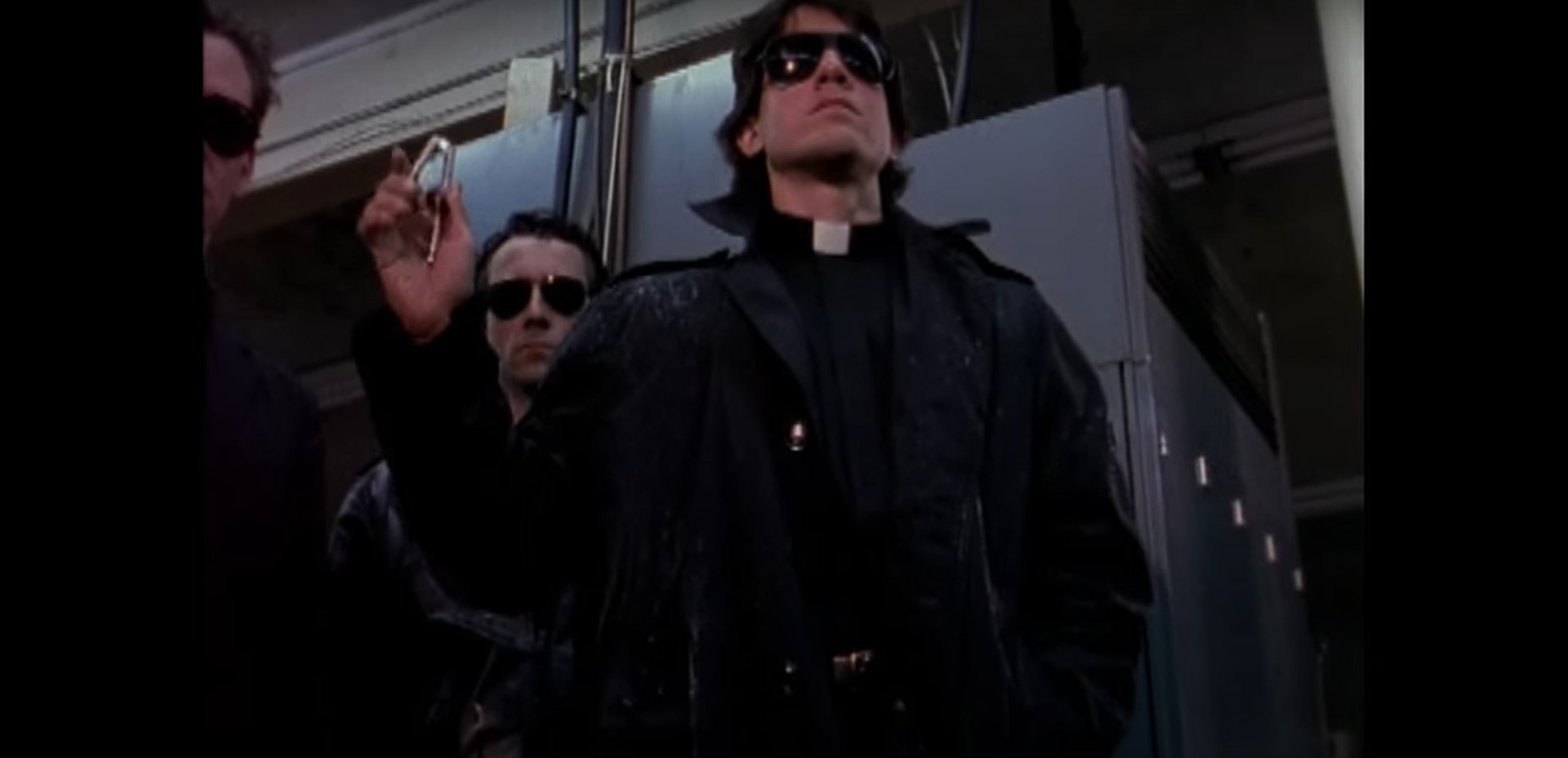
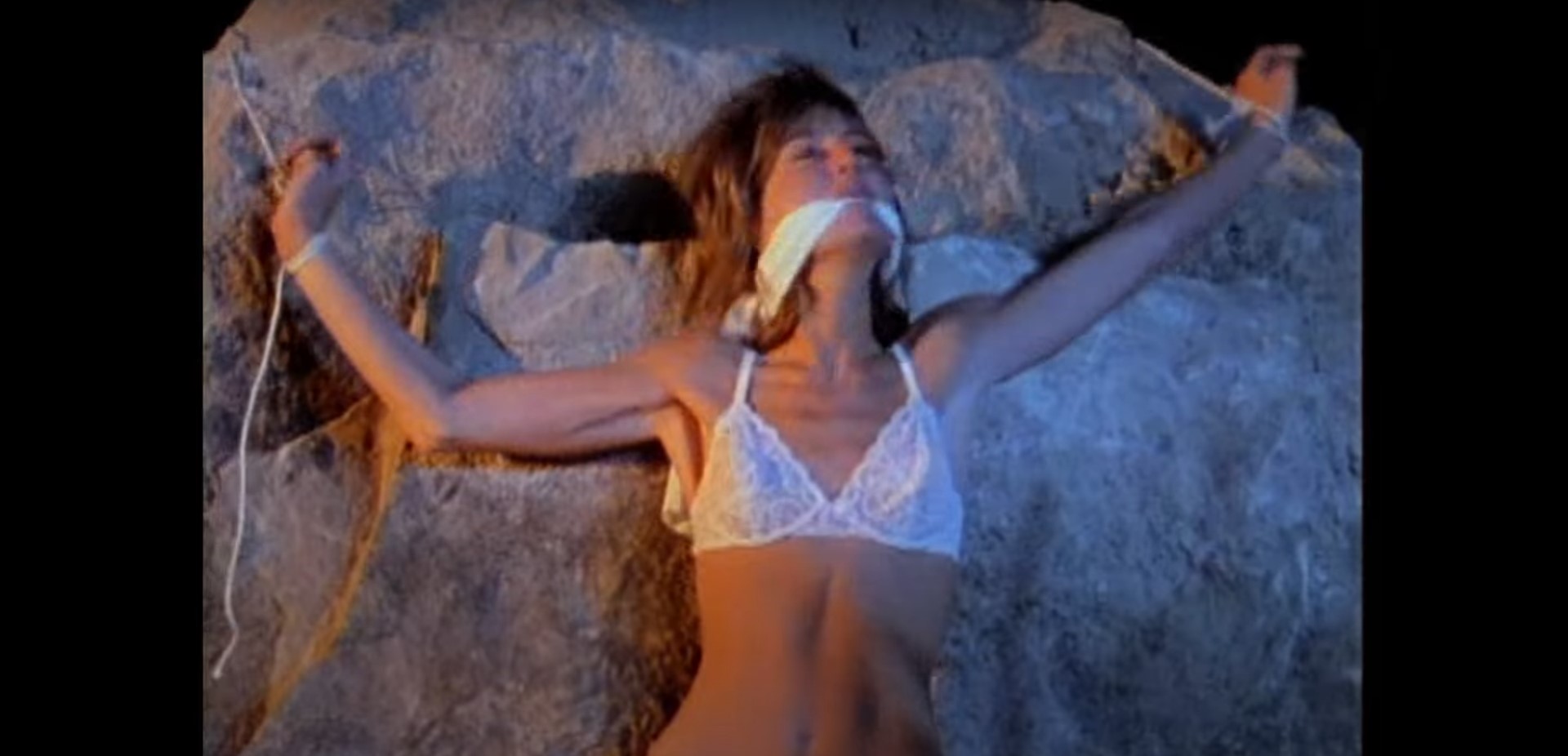
Hard to fathom why but still completely understandable how “Heartland of Darkness” remained in celluloid purgatory for so many years.  Swelstad had tremendous ambitions for a student film that included a visual effects storefront explosion, but the money well dried up to finish shooting, touch ups, effects, and digitizing the filmmaker’s efforts onto a marketable commodity to distribute.   At last, here we are, 33 years later with a finished copy of the “lost Linnea Quigley film” and, boy-oh-boy, does not disappoint, living up to the expectational hype surrounding the film’s once stagnant, hidden from the world existence.  Swelstad creates the illusion of vast world from the small town of Copporton to the big cities where the District Attorney and Governor reside.  Car chases, rock quarries, a church nave, animal intestine smeared ditches, and a slew of constructed sets, an array of offices, and an abundance of diverse exteriors. “Heartland of Darkness” might have a lot going on and is often repetitive in the scenes with Paul and Shannon pleading their case to multiple officials to probe into gruesome deaths and the cult’s leadership but not to the story’s detriment as all the progressive storyline dig Paul and his small band of investigators into a deeper danger hole with Donovan and his Devil devotees under the guise of God’s Church. Scott Simonson’s entrail splayed and blood splattering special effects culminates to a shotgun showdown at a virgin sacrifice and an impressive full-bodied impaling that is, frankly, one of the best edited shots of the film. “Heartland of Darkness” is rayless and scary, callous and cold, formidable and shocking with a pinch of sex and is finally within our grasp!
Visual Vengeance, a pioneer in curating the lost, the forgotten, and the technically shoddy indie cult and horror films, releases for the first time on any format ever “Heartland of Darkness” on Blu-ray. Coming in as VV08 on the spine, the Wild Eye Releasing banner strays their first seven SOV features to bring aboard a 16mm negative transfer, director-supervised from original film elements of the standard definition masters. Visual Vengeance precautions viewers with the usual precursing disclaimer that due to the commercial grade equipment and natural wear of aging, the presentation is the best possible transfer available, but, honestly, the full screen 1.33:1 aspect ratio presentation looks outstanding without much to critique. Obvious softer details were expected but with the celluloid film, there’s not much in way of macroblocking or tracking complications as common with shot-on-video tape features. Compression verges to a near perfect reproduction of the picture quality. Skin coloring and overall grading is congruously natural in grain and stable image. The English stereo mono track doesn’t pack a punch but isn’t also frail with strong mic placement and the dialogue is clean and clear of imperfections as well as major hissing or popping. The faint 16 mm camera whir can be heard but isn’t distracting, adding a comforting churr to the footage. Optional English subtitles are available. Special features include a new 40-minute behind-the-scenes documentary Deeper into the Darkness, an audio commentary by writer-director Eric Swelstad, actor Nick Baldasare, cinematographer Scott Spears, and composer Jay Woelfel, a new interview with cult icon Linnea Quigley, commentary with Tom Strauss of Weng’s Chop magazine, an archival Linnea Quigley TV interview, the complete “Fallen Angels” 1990 workprint, the same workprint with audio commentary with Swelstad, vintage cast and crew Ohioan newscast interviews in the Making of Fallen Angels, the original promotional video for “Blood Church,” a behind-the scenes image gallery and footage, and the original TV spots and trailers, of this feature and other Visual Vengeance films, from the static, composite menu. Ready for more? “Heartland of Darkness” comes with just as much physical bonus swag with a limited-edition prayer cloth, a six-page liner notes from Tony Strauss complete with color beind-the-scene stills, a folded mini-poster of a leather-cladded Linnea Quigley’s high school hallway scene, and retro Visual Vengeance stickers inside a clear Blu-ray latch snapper with new, illustrated cover art that also has reversible art of the original “Blood Church” promo art, sheathed inside a cardboard slip cover with a different and new illustrated cover art. The region free, 101-minute release is unrated. Visual Vengeance continues to pump out gilded, undiscovered treasures and giving them the royal treatment. For “Heartland of Darkness,” this sublime release was 33 years in the making and is one Hell of a bounty!

Own Your Copy of the Lost Linnea Quigley Film “Heartland of Darkness” by Purchasing at Amazon!  Click the Cover Below.

Never Tour Mistakenly into an EVIL Murder Bar! “La Petite Mort” reviewed! (Unearthed Films / Blu-ray)

“La Petite Mort” is Orgasmically Gory and on Blu-ray!

Vacationing to Mallorca should have been a relaxing getaway for Simon, his blind girlfriend Nina, and their longtime friend, Dodo, but their flight layover in Frankfurt leaves down idle town to explore the city that’s only a mere two hours from home. Tension between them begin to bubble to the surface when uncertain emotional steps to take relationships to the next level arise and they become inadvertently scammed by a local grifter. Exhaustion sets in and forces them to take refuge in a local dive bar with a specialty for S&M play. The bar is actually a front for the Maison de la Petite Mort, an underground snuff house owned a sadistic woman named Maman who livestreams kink-murders and sells hapless victims to wealthy businessmen with whimsical and perverse deviancies. The flight to Mallorca will be indefinitely delayed as the three friends are now a part of the bloody basement decor awaiting the horrors before them.

“La Petite Mort,” translated from French as literally the little death, is also known as the post-orgasmic sensation, such as a weakness or loss of conscious, that serves as an analogy to death. The phrase is also the title of the 2009 torture-gore film written-and-directed by the German-born Marcel Walz more than a decade before the formation of his now Neon Noir production company. Walz, who later in his career went on to remake the Herschel Gordon Lewis 1963 film, “Blood Feast,” blossoms as a torture porn filmmaker as Walz’s directorial catalogue contains more blood than a blood bank and often stretches the subgenre range of plot machinations from cannibals to dark web to snuff. Made on a few thousand-dollar budget and shot in a real sex club in Mannheim, Germany, “La Petite Mort” touches upon all three plot devices to create a dungeon of splatter and sadism using elements of an unsolved true crime case of a couple gruesomely murdered in an underground murder house as the narrative base. Before Neon Noir, Walz and filmmaker Michael Effenberger, director of “Tortua,” formed Matador Films that became the company behind “La Petite Mort” with Thomas Buresch (“Unrated: The Movie”) and feature actor and director of photography, Andreas Pape (“Toxic Lullaby”) producing.

Films like “La Petite Mort” is a special breed not because of the torture and gore-porn element, which can be an acquired taste for consumers with dark thoughts, fantasies, and morbid curiosities (I fall into the latter category if you’re wondering), but rather the story caters to no singular principal lead nor does is the focus on an ensemble cast.  “La Petite Mort” transitions from one group, the naïve backpacking travelers, to the S&M snuff-makers in a flip-flop of point of view and storytelling.  All the relationship complexities between the out of concern love from Simon (Andreas Pape) to his even keeled blind girlfriend, Nina (Inés Zahmoul, “La Isla”) as well as the insignificant tiffs and spats between Simon and friend Dodo (Anna Habeck, “Popular”) to see who is in Nina’s favor are quickly swept aside when the trio is trapped and tethered to the S&M spider web of Maman’s Maison de la Petite Mort.  While the three travelers produce a mild interest spun out of frivolous dramatics to the like of the normal human population and very much up played by Walz for that very purpose to produce stark contrast against what’s normal for sadomastic pleasure-seekers, Maman, the orchestrator of pain and profit, is the most earnest of principals with a crone-like presence, played inexorably and ruthless by French punk-goth singer Manoush.  The certified gypsy and former bodybuilder has made a name for herself in a plethora of extreme, Germanic horror pictures over the last decade, but “La Petite Mort” came early in Manoush’s career and is exhibits why she’s so good at horror, especially at the sadism brand.  Maman’s schadenfreude business employs two lesbian dominatrixes, Dominique and Angélique, with strong-stomachs and a healthy bloodthirst.  The beautiful femme fatales serve Maman’s unquestionably, almost mindlessly, that only glimpses into possibilities of how the two women became betrothed to do Maman’s bidding.  Annika Strauss, who’s been in the screen queen business about as long as and has starred alongside with Manoush on a number of films, is also a Marcel Walz regular casted actress who fits and transforms into just about every character under the black sun of ghoulish and macabre material thrown her way.  As Dominique, Strauss is provided more depth to why and how the brunette basket case has come under Maman’s greedy and depraved thumb as the actress shows some slither of concern for the captives while explaining she had no choice just they like them and exhibiting more reserve than her blonde counterpart Angélique (Magdalèna Kalley, “Violent Shit 4”) when the cameras are rolling.  Conversations rooted into provocative thought, sympathy, or reason are often few and far in between the constant pleas for help and the screaming matches of pelting threats.  “La Petite Mort” finalizes the cast with Martin Hentschel (“Zombie Reanimation”), Tanja Karius (“Necronos”), and Thomas Kercmar (“Space Wolf”) as Klaus der Kobold, a Napoleon-sized elitist wealthy enough to buy people’s lives and enjoy seeing them horrifically mutilated.

One scene overwhelms the diagnostic side of my brain and that is why Maman is torturing Dodo with needles as Manoush delivers a surprising genuine villainous monologue about sadomasochists being judged by normal people and how her character has a liberated, uninhibited sexuality in a moment that is a powerful argument in favor for sadomasochism to exist without shame.  Thinking about this, I’m not aware of any publicized S&M clubs, especially those that aren’t criticized for being deviant, perverse, and secular.  After that one moment of vulnerability, “La Petite Mort” turns into a choke-down bloodbath with some great and some not-so-great special effects by one of Germany’s gore film greats, Olaf Ittenbach, director and F/X artist of “Premutos:  The Fallen Angel” and “Legion of the Dead.”  Ittenbach brings me to another overwhelming scene, one that churns the contents of your stomach, involving a meat grinder, a hand, and a chalice.   “La Petite Mort” has other notable grisly moments of scalping, castrating, eye-plucking, and disemboweling, all of which are in great gooey-gory detail.  What takes away from the gore scenes is Walz fluttering effect or grindhouse-esque edited framed overlay that, in my wildest guess, is supposed to enhance the extreme acts of violence, torture, and death in conjunction with composer Michael Donner’s industrial rumble and pulsing synth score. Instead, the effect becomes nothing more than a cinematic nuisance, an eyesore that dilutes Ittenbach’s best handywork because that scalping scene is the chef’s kiss of tactual realism. Based on a true story that I can’t seem to find any record of, “La Petite Mort,” for a brief few minutes, becomes a promulgating champion for alternate sexualities and is also a showcase for Olaf Ittenbach to shock and disgust but for what the feature is worth, “La Petite Mort” offers only emptiness in both character conviction and story narrative.

A fitting entry into the shockingly weird and grotesque “Unearthed Films'” independent film catalogue, “La Petite Mort” arrives onto a high definition, 1080p Blu-ray home video. Presented in a 2.35:1 widescreen aspect ratio, Walz bookends his callous-cladded cult film with a yellowish-tan tint while the girth of the story is laced with more gel coloring under no hinderance of tint. Low lighting with low contrast markers, mixed with tropical-warm gel coloring and strobe flashing fabricates the sunless and dank murder basement but any exterior shots, even the bookend act one and act three are rendered with poor resolution for digital recording. Only a single audio track is available with a German LPCM 2.0 with burned-in English subtitles and what’s rendered is likely the best quality to get from the masters from the lossy format. Dialogue is often unrefined, and the levels vary, but for the most part clean and free from obstruction. The track has limited ambience and harps heavily on the gory moments while Michael Donner’s dark industrial score takes the brunt of the overall soundtrack. Subtitle synchronization varies as well with millisecond flashes of translations that are impossible to read or even pause perfectly on, but the translations appear flawless and consolidated from the dialect for easy reading. The Unearthed Films’ bonus content is aplenty with a new commentary and interview with director Marcel Walz. Also included is a feature-length making of “La Petite Mort” with raw handheld camcorder footage, shot by The Bad Boy character in the film, behind-the-scenes footage, and even some 16mm footage that go reel deep into the effects and life of independent filmmakers. An archived interview with special effects artist Olaf Ittenbach, deleted scenes, photo gallery, teaser trailer, official trailer, “La Petite Mort 2” trailer, and the VHS intro that’s essentially a Marcel Walz introduction of the VHS home video release round out the bonus content. The physical attributes are a clear, Blu-ray snapper case with reversible cover art with the inside sleeve containing a more graphic torture not suited for retail shelves. The region A encoded, 77-minute feature is not rated. If invested for the kills, “La Petite Mort” pleases to overindulge the desire and is a solid first torture-porn effort from a then young Marcel Walz who continues to rise in the niche market.

“La Petite Mort” is Orgasmically Gory and on Blu-ray!

EVIL Cabbie Takes Beautiful Women for the Ride of their Lives. “Maniac Driver” reviewed! (ReelGore Releasing / Blu-ray)

Hail down the “Maniac Driver” on Blu-ray!

Taking a taxi should be a reliably safe to get from point A to point B and once you settle the serviceable transaction with payment, you can forget you ever saw that taxi driver again.  But what if that taxi driver follows you home, obsesses over you, and has psychotic plans to take your life as well as his own?  One Tokyo cabbie has those very inclinations toward the beautiful women.  These women intoxicate his severe guilt over a past personal tragedy involving the merciless murder of his wife.  He scours his passenger pool for the perfect beauty to be his closing opus, a gift to society that dealt him the same hand and will take her life as a maniacal masked killer with a blade before he turns the blade on his own neck. 

From the director of “Gun Woman” and “Karate Kill” comes the latest gore-soaked, nudity-laden, psychotronic grindhouse picture from Tokyo filmmaker Kurando Mitsutake.  Labeled as a Japanese giallo film, the writer-director Mitsutake pulls inspiration from one of most influential and prolific Italian giallo filmmakers ever, the late Lucio Fulci, and stylizes his idolizing film with his own proclivity for flair.  The 2020 released film is a thirst trap of the subgenre upon reading the heavily enticing description and its basic but effective cover art of a leather glove and jacket cladded masked maniac holding tightly onto a half-naked woman, almost in an embracing manner rather than a malice one.  Sex and blood sell and “Maniac Driver” doesn’t disappoint but what about the story?  What drives the killer from one woman to the next and does it all make sense?  “Maniac Driver’s” title suggests not, and I believe Kurando Mitsutake felt the same way when writing the script, produced by “After Life” and “Paster Shepherd” producer Mami Akari under the Akari Pictures banner.

Titling the story around the maniac driver binds the film solely to the cab driver, much in the same way William Lustig’s “Maniac” focuses on Joe Spinell’s spiraling madness and scalping mutilations, and we’re pretty much left with the driver’s innermost thoughts, about his process, about his reasons, and about his plans.  Essentially, the maniac driver drives the narrative with a contemplative fare.  Tomoki Kimura has surpassed the challenge with a pendulum crazed performance sought to not only express his derangement but can also infect the viewers with the character’s warped mind.  Kimura keeps his expression stoic and sour in a role that barely requires him to speak as we mostly hear prosy, abstract, and murderous inner thoughts.  In regard to the women the driver stalks and involves himself sleazily with, Kurando Mitsutake goes the JAV actress route and is familiar with as having the alluring Asami star pretty much naked through the entirety of “Gun Woman.”  With adult actresses, Mitsutake receives uninhibited support for the victimized characters the maniac driver fantasizes over and kills as well as Mitsutake’s satirical whims in exploiting the subgenre’s penchant for gratuitous flesh.  Adult starlets from softcore actress Saryû Usui (“Sex Detective Hatenashi”) to the hardcore Ai Sayama (“Date with a Busty Nymph”), Ayumi Kimito (“Love Kimomen”), and SOD (Soft on Demand) Create’s Iori Kogawa (“One Wife + 10 Husbands) add a little titillation with gratuitous exposure, bondage, and fornication to the max. 

“Maniac Driver” paves its own neo-giallo path that swerves away from the traditional calling cards. Instead of a typical Italian murder-mystery, Mitsutake intentionally divulges the killer cab driver with a delusional hunger and fate. All the other hallmarks of a giallo killer are there in a Fulci tribute form with leathery glove hands, a gleaming blade, a masked face, and a killer who makes a duck-like sound that’s far more menacing than comical. “Maniac Driver” also pulls from other inspirations, such as Lustig’s “Maniac” as well as Martin Scorcese’s “Taxi Driver” with Tomoki Kimura channel his best Robert De Niro impression with the iconic You Talkin’ To Me line. Behind the whole ghastly facade and polychromatic style, entrenched is a theme of survival’s guilt that leads the cab driver to the point of no return. Severely injured and helpless to save his wife from a crazed killer, he’s wrought with putting forth into the world exactly what was taken from him in the same fashion, but how the deeper we spiral with and into his derangement, piecing together his mental episodical puzzle might not be so easily pegged. Mitsutake’s seemingly straight forward narrative is a blindsiding blade to the throat when looking in the opposite direction, expecting a different outcome, and when the principal character is kept to his innermost thoughts, viewers are treated with only the maniac’s disenchantment of life. The curveball is more than welcome despite all evidence being in plain view, but with the bizarre fiendishness, schizo-universe, and the T&A, to see clear through it all is impossible, especially when Mitsutake really goes off the rails with the maniac driver’s fantasies that mesh seamlessly with reality. Scenes with Iora Kogawa and Tomoki Kimura are intolerably hazy as the actors engage coquettishly as an exquisite, kimono dressed female passenger and a public transportation service man peering his eyes through the review mirror and this leads to an explicit one-on-one encounter that includes some bondage as well as a Iaido showdown with swords drawn. Through Mitsutake’s various closeups and depth-shots, sprinkled with tight up shots to emphasize body parts and to create an oppressive world, “Maniac Driver” ebbs and flows that sort of satirical, aggrandized chaos to make light of the oversexualization, as skirts hike up while running and exposed chest flop out underneath tightly bound tops, and the sheer madness of a broken mortal man. “Maniac Driver” is an uber giallo of sleaze and psychosis, a steady ride of burning yearning, and is gory where it counts.

To be honest with you, I thought I’d never see a ReelGore Releasing again. When speaking with Cult Epics founder Nico B., who launched the label with producer Steve Aquilina (“Violent Shit: The Movie”) in 2016, I had asked the popular curator of cult cinema whether he would continue with banner that sought to specialize in the release of extreme, violent horror after the releases of the ItsBlogginEvil generally well received “The Orphan Killer” and “The Curse of Doctor Wolfenstein?” The answer I received was a flat out no from Nico B. because, simply, the label didn’t generate enough profit. Well, lo and behold, ReelGore Releasing has been resurrected and the blood is flowing once again with a pair of new titles with “Manic Driver” being one of them. Though Nico B. has confirmed no involvement with the releases, it’s still great to see the label back in action again. “Maniac Driver” is released on a ReelGore Releasing AVC encoded Blu-ray, a BD25, and presents the Mitsutake film in 1080p, high definition and a 2.35:1widescreen aspect ratio. Despite heavily saturating to a blur scenes with brilliant, primary coloring, familiar to the giallo subgenre, the overall details are quite pleasant and palpable. Mitsutake utilizes different lighting and shadowing techniques to create different atmospherics but never seems to inherently kill the textures as they maintain a sharp, tactile presence. The Japanese DTS-HD 5.1 audio track, with forced English subtitles, is vibrant with an 80’s inspired blend of synth and riff-rock. Japanese dialogue is strong, clear, and innately clean with the digital recording, balanced by an error free and aptly timed English subtitles. “Maniac Driver” has a robust, yet sometimes overelaborated, sound design that outputs nicely through the side channels. The killer’s leather glove sounds can be overkill with every scene being loused with the individual stretches of the fabric while the energy-thumping engine combined affixed shots around the tire and grill is a powerful effect of the cab driver’s routine hunting method. The release also comes with French and Spanish subtitles. Bonus features include a making of featurette with interviews with the cast and crew, an audio commentary with director Kurando Mitsutake, photo slideshow, and the trailer. There are no stinger scenes during or after the credits. The physical appearance sheaths the 25GB disc inside a sleek red Blu-ray snapper case with reversible cover art that has two alternate posters on the inside. The film is not rated, region free, and has a run time of just under 75 minutes. “Maniac Driver” is no passenger in the giallo subgenre; the Kurando Mitsutake might be a bundle of homages and inspirations but takes the wheel of the Japanese sexploitive-giallo gas guzzler with deranged brutality.

Hail down the “Maniac Driver” on Blu-ray!

The EVIL Fat Man Delivers a Sack Full of Slaughter in “Christmas Cruelty!” reviewed! (Unearthed Films / Blu-ray)

Oh, Its Starting To Look a lot Like “Christmas Cruelty! on Blu-ray!

Eline, Per-Ingvar, and Magne are three close and eccentric friends preparing for the jolliest time of year, Christmas. Concocting a unique Christmas spirit of their own with scarring passers dressed as Krampus and brewing an alcohol infused cocktail, the unconventional celebration reflects their individual perspectives on the holiday: a knowledgeable Eline embraces more traditional values, Magne goes against the grain with a loose grasp on the concept of it all, and the lack of mental acuity for wheelchair bound Per-Ingvar leaves him in naive, gullible belief. All the while the friends prep the groundwork for a Christmas party, a homicidal sociopath tracks and records their every movement, habits, and personal attributes and when Christmas comes, the meticulous and brutal serial killer dresses as Santa and infiltrates what turned from being a joyous bash into Santa bashing in heads with a hammer, decapitates party guests, and rip-roars a chainsaw with blood splattering apathy.

It’s that time of year again to ride the Christmas slay down the hills covered with blood-red snow. Santa, usually a sign of pure good and jovial togetherness, is transformed to embody terror and evil across the holiday season. In 2013, Norwegian filmmaker Per-Ingvar “PIT” Tomren (“Bonzai Motherfucker!”) and his co-director Magne Steinsvoll (producer of “Killungard” and “Lyst”) not only star in another Yuletide horror that yields itself to violence and blood but also adds their perspective entry into the vast Scandanavian subgenre of ole’ Saint Nick, or an imposter of the jolly fat guy, going postal in the worst possible way. Tomren and Steinsvioll work into their debut feature film off a script penned by principal co-star Eline Aasheim as well as Janne Iren Holseter, Anita Nyhagen, and directors Tomren and Steinsvoll. Originally entitled “O’Hellige Jul!” in Norwegian, the 2013 released “Christmas Cruelty” is a Stonewall Productions and presented by DC Medias under the producing credits of Magne Steinsvoll, Kim Haldoersen, and Raymond Volle (“Saga”).

Instead of hiring an outside cast for a serial rapist and killer Santa flick, why not just star in the film yourself? In order to get their feet wet in film production as well as learning the rigors of acting, Per-Ingvar Tomren, Magne Steinsvoll, and Eline Aasheim essentially portray themselves as the three friends spending unique quality time together during Christmas. Per-Ingvar works into the script the corporeal truth of this delicate skeletal structure that battles brittle bone disease aka osteogenesis imperfecta. Confined almost entirely to his wheelchair, Tomren curbs his wellbeing for the sake of art as the filmmaker doesn’t exempt himself from the various physical altercation scenes to have a stuntman take the glory. The same kind of sentiment can be said for Eline Aasheim whose character must endure an invasive attack, one that’s deeply uncomfortable and intimate in nature surrounded by a virtually an all-male cast which includes offscreen friendships. Then there’s Magne. If Per-Ingvar and Eline embodied metaphorically everything that is good about the Christmas spirit, Magne was the complete opposite as a complaining, sexist, and indelicate sourpuss living in the moment rather than grasping his own barbed attitude. The malarky between the three friends on screen is perhaps very mirrorlike offscreen as there is a comfortability level with each other performances that keeps the dynamic on the edge of combusting but yet you never feel like a change in their relationship will ever mount, keeping their friendship close, tight, and compact. The outsider, the Serial Santa, is played mid-50’s Norway actor Tormod Lien. I mention Lien’s age because he is older than the other principal characters and that plays into his character’s wisdom as a family man who takes notes on who’s halls he will soon deck. Calm, organized, and deviant, Lien plays into the apathy without a twinkle of empathy and engineers a bloody show of planned homicide with some comedic bits put on by Lien when Serial Santa has to go off script because of interruptions.

In my mind, there are two types of Christmas horror films: the uncanny universe where Santa, or something related to Santa, such as his toyshop elves or Krampus, world’s lives and breathes in a twisted malevolency while the other type resides in fact with sociopathic and mentally unstable Santa impersonators who go on a merry murdering spree. “Christmas Cruelty!” falls in that latter category with serial killer, dressed as Santa and a grotesque mask, gatecrashes the good protagonists’ party for the nefarious primordial urge to hurt, rape, and kill. Maybe even dabble in a little cannibalism. “Christmas Cruelty!” is a lump of extreme exploitation for next level nihilism. I’ve seen my fair share of messed up movies, but the Tomren and Steinsvoll defiling picture doesn’t even have a millimeter of morality. Without a theme, a message, or a basic point, “Christmas Cruelty!” is hollow atrocity for the sake of shock and slaughter. The principal goods are either too afraid to help each other, too unwilling to help each other, or are too conceited to even take notice that something is amiss. Instead, it’s the Serial-Santa who has his ducks in order, unabashed to simply walk into a room and start his plan of cold-hearted perversion, but before even getting to that moment with deliciously diabolical practical special effects that can produce a gut-wrenching impact, the story goes static with the principal goods chitchatting about history of Christmas, their likes and dislikes of the season, and nursing a hangover from hell. This portion to build character doesn’t actually build character as we’re skirted around victimized trio’s reason for to deserving of our sympathy. Yeah, there’s a person with learning disabilities in a wheelchair and a young woman with an inkling of a moral compass but I find them aimless, sleepwalking through life, and without purpose.

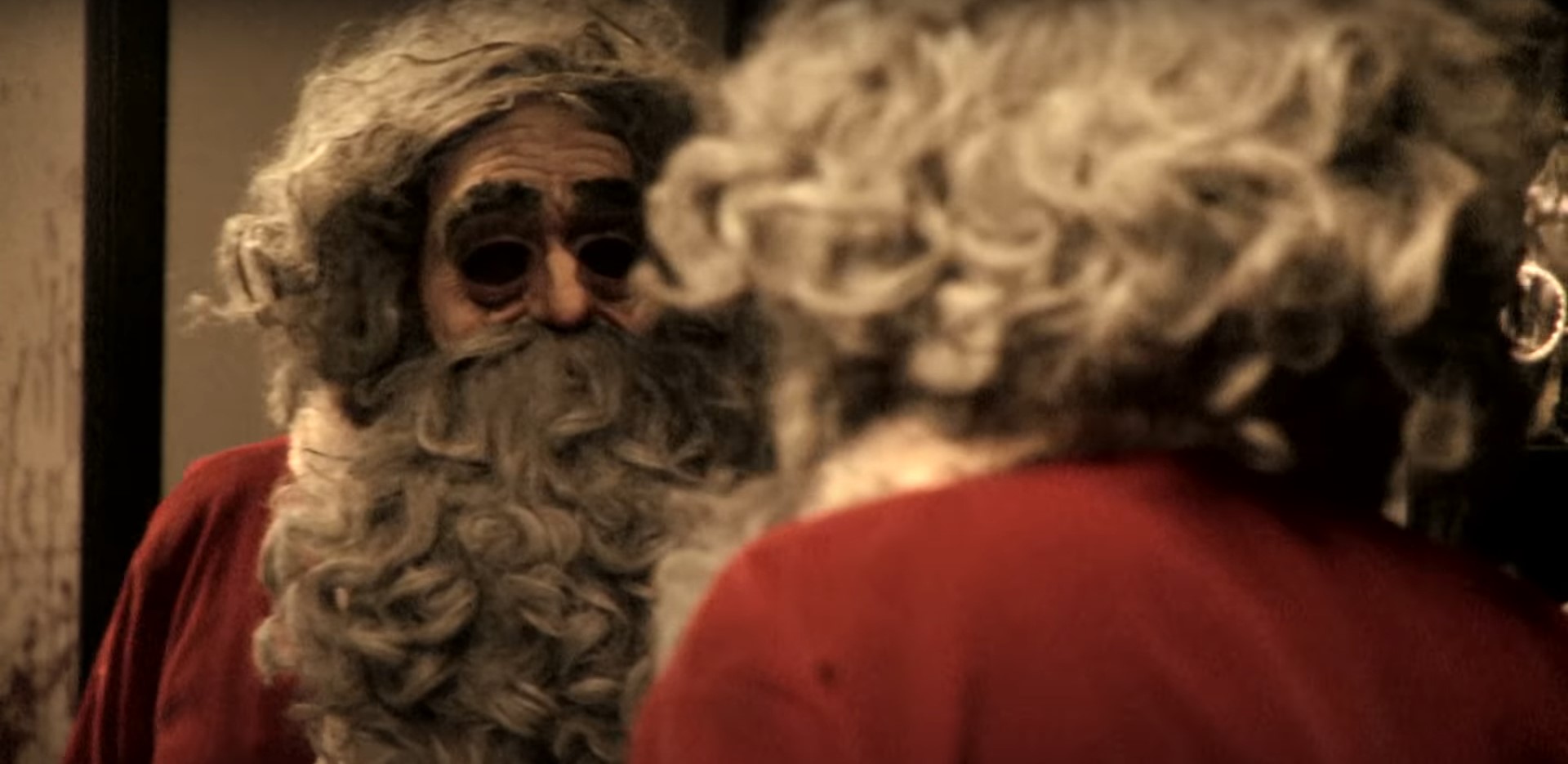
Christmas comes early with the release of “Christmas Cruelty” on Blu-ray home video from our friends at Unearthed Films and MVD Visual. Presented in 1080p with a widescreen 1.78:1 aspect ratio on an AVE encoded BD50, Unearthed Films rendering of the transfer goes without a hitch, but the stylistic choices of Tomren and Steinsvoll are an eyesore with a mustard yellow overlay intended for a grindhouse veneer that also correlates with the large font and embossed opening credits. Much of the details and natural look are lost in the yellow tint. The erratic editing is supposed to reflect Serial Santa’s fragmented mind which idiosyncratically finds footing but can be off-putting to its experimental quality. The Norwegian language DTS-HD 5.1 surround sound mix reflects no issues with depth and range despite having limited need for both and has mostly clear dialogue albeit some obstruction from the soundtrack that is heavily integrated into the sound design and becomes a character in itself with a blend of English-lyrical Christmas themed tunes, instrumental string melodies, acoustic solos by Magne Steinsvoll, generic rock tracks, and folksy jamming that ends with the loud roaring of a chainsaw slicing through body parts. The bonus features include an audio commentary with co-director Per-Ingvar Tomren and producer Raymond Volle, retrospective interviews in How Cruelty Changes Our Lives featurette, blooper outtakes, photo gallery, The Last Rebels hit “Endless Highway,” an interview with Morten Haagensen, “Tradition” short film, Press Conference, a watch-a-long session with Flesh Wound Horror, and teaser trailer. The Unearthed Films menu options were a bit cumbersome to navigate when trying to play the movie as the next screen goes to the three audio options – either two commentaries that run along with the film and the play movie without commentary, but the options are not terribly intuitive and had to go through the options before I was able to play just the movie. The physical release comes in a traditional blue snapper case with the soulless, dead eyes of the Santa mask illustrated with liver sports and aged wrinkles on the front cover. Unearthed Films’ release comes not rated, region A encoded, and has a runtime of 94 minutes. Probably not the perfect holiday gift for the conventional horror filmgoer, “Christmas Cruelty” is difficult to ingest and digest as not only an extreme exploitation film but as a film as whole, but with the callous chunks of coal and the striped blood red candy cane of scrumptious special effects, the Norwegian definitely offers a good stocking stuffer.

Oh, Its Starting To Look a lot Like “Christmas Cruelty! on Blu-ray!

To All the EVIL Devil Horns Out There “Death to Metal” reviewed! (Wild Eye Releasing / Blu-ray)

“Death To Metal” available on a Collector’s Edition Bluray!

Already with the traumatic distaste for heavy metal music, the fire and brimstone preacher, Father Milton Kilborne, addresses his congregation with a bigotry homily aimed to categorize not only heavy metal music as a sin, but also homosexuality, internet porn, and other indulging vices. When Father Kilborne is suspended by the church’s head priest, the zealous Kilborne drives himself into a stuporous accident that upends his car into a toxic waste dumping ground. The accident mutates the ardent Father, still blinded by God’s Wrath rather than his Mercy, into a superhuman and disfigured killing machine who stumbles into one of the biggest heavy metal concerts of the year – The Holy Saturday Metal Massacre. Metal bands and metalheads unite for a headbanging, guitar-rifting, super loud four-show rockfest and what was supposed to be the best part of metalhead Zane’s abysmal day has now turned into a bloodbath as he and his friend Mariah are caught in the middle of Father Kilborne’s devout judgement and faith cleansing.

The tritonic Devil’s music needs not to fear God but fear his misguided instrument of destruction! “Death to Metal” is the 2019 Metalsploitation mutant slasher from written-and-directed by Tim Connery (“Black Web”) and cowritten by Kevin Koppes. What began in the Summer of 2016 under the working title of “Good Friday,” an Indiegogo fundraising campaign was launched with a goal of $50k and with a modest turnout of supports, “Good Friday” received more than half its goal, plus additional private contributions that provided enough moola pull off the campy thrasher-slasher filmed in mostly in New Vienna and Dubuque, Iowa with latter scenes of the downtown Dubuque area and in the historic, post-industrial converted, cultural arts and music venue building appropriately called the Smokestack because of its monolithic warehouse smoke funneling circle chimney. Double Dubuque Films in association with DreamCatcher Productions presents the Smoking Section Films’ “Death to Metal,” a holier-than-thou slasher produced by Connery and Samantha Cihak and associate producer Gary Greco with executive producers Noel Kapp, Trent Lind, Joe Scherrman, and Charlie and Lara Lind, most of all of whom were involved previously in Connery’s freshman feature “Black Web.”

“Death to Metal’s” parallel story follows two unfortunate souls connected by church and who are having the worst day of their lives. For Father Kilborne, his stubborn, one-sided dogmatism lands him in hot water with the residing church priest. Going through the stages of grief having lost the right to perform a holy sacrament and been punished for what he wholeheartedly believes, Kilborne bends the word of God while going on a bender that sends him hurling into a monstrous “Toxic Avenger” fate that isn’t as anti-heroic and doesn’t come with a melee mop but comes with a sharp edged broken wooden cross. Andrew Jessop’s enthusiastic performance glorifies the evilly enthusiastic Father Kilborne’s human form while Trent Johnson takes the lumbering approach of the mutated, Knights of the Templar version of the fanatical Father. As Kilborne becomes a toxic terror, churchgoing Zane has just been dumped by his band Withered Christ and girlfriend. Played by Alex Stein, Zane ventures to self loathe in the comfort on longtime friend Mariah (Grace Melon). Stein’s the unlikely head banger with a quietly spoken and easygoing demeanor but can be a sleeper metalhead with vehemence for the genre, candidly naming off bands and their technical attributes with excitement in their eyes is a telltale sign of fan no matter what they’re wearing, how they look, or how docile they act. “Death to Metal” fills the mosh pit crowd of characters with supporting bit performances from Charlie Lind, Steve Thompson, Sean Weis, Dean Wellman, Neal Kapp, and Dan Flannery.

Being not a tremendous metal fan, I find that metalsploitation is not terribly hard to love. Horror and metal have gone hand-and-hand for decades since the 1980s with films such as “Hard Rock Zombies” and “Trick or Treat” but has soared under the radar for much of that time and only recently has horror and metal has found some commercial success in the indie market with hits “Deathgasm,” “Lords of Chaos,” and I would say “Psycho Goreman” with its Gwar inspired grotesque costuming. “Death to Metal” is another entry that has had a rough go of breaking the surface with a lack of financial supported marketing, yet the Tim Connery film is a campy crusade to highlight and farce religious sectarianism as well touch upon the hypocrisy of band politics. In a modest showing of practical special effects, first timers Trent Johnson and Brad Vondra bang out simple, yet credible death metal death strokes of broken bottle nipples, a bleach chug, and a metal show circumcision abortion. In contrast, Vondra and Johnson show very little of their bloody work against a slather of offscreen kills that coat “Death to Metal’s” more gritty-grungy veneer and its metacognitive reason for being, to be a sweaty mosh pit of knavish metal and horror. Conner and Jackson Cooper Gango reteam from “Black Web” to not only providing a dingy and smokey atmospherics and stylize with stark blue filter gels but they also make up where special effects lack with impressive camera work with subtle zooms to narrow the center focus, crane shots to make visualize the body-high carnage, and a stationary car-cam next to the wheel well to enrich and stretch “Death to Metal’s” humble budget. One of the best parts of “Death to Metal” is the opening prologue of Romans 1:18, speaking to the wrath of God being revealed against all ungodly and unrighteous men, and then quick cuts to title track “Fuck Your God” in big, bold red lettering.

Compiled of horror and metal, with actual metal bands such as Telekinetic Yeti and Mutilated by Zombies, “Death to Metal” arrives on a collector’s edition Blu-ray from Wild Eye Releasing. The AVC Encoded BD50 presents the film in high definition, 1080p resolution with a widescreen 1.85:1 aspect ratio. Not the most tapered image for an indie scaled, indie market distributor with banding issues at every dark-toned turn. Textures on the skin, liquids, and clothing do have a tactile decking that can’t be ignored, especially on the higher contrast focus to create tension-laden semi-opaque shadows. The release comes with two English audio mixes, a Dolby Digital 5.1 surround sound and a stereo 2.0. Honestly, I had difficulty distinguishing between the two mixes flipping back-and-forth. Both tracks appear to be identical in a quizzical effort to not make the metal music stand out in a more than dual channel output. Dialogue renders over fine, clear and clean with a nice balance between the club patron and club skirmishing chaotic ambience. The soundtrack’s a phenomenal plethora of metal band sampling with music from Mutilated by Zombies, Exmortus, Boar, Driftless Sisters, Inquiring Blood, Netherworld, Monolithe, and The Rising Plague. Optional English subtitles are also available. Special features include raw Snapchat behind-the-scenes footage, music video for the fictitious metal band Grandma Incinerator’s End of the Elderly, Indigogo fundraising videos back when the film was under the working title “Good Friday” with dark humored skits and pleas for funding, a behind-the-scenes photo gallery, the official “Death to Metal” drinking game rules, and Wild Eye Releasing trailers. The physical features include a clear Blu-ray snapper case with an illustrated father Kilborne gracing the dual sided cover art. The reverse side displays an iconic scene from the film enveloping a mini poster in the Blu’s insert. There’s also a more grotesque rendering of Father Kilborne and one unlucky impaled metalhead screaming in agony illustrated on the cardboard slipcover. “Death to Metal” comes unrated, region free, and has a runtime of 80 minutes. A slaying entry into the niche metalsploitation subgenre, “Death to Metal” goes hardcore with deathcore when church and metal clash!

“Death To Metal” available on a Collector’s Edition Bluray!