

A Church youth group voluntary attends a Saint Christopher’s Catholic Middle School weekend cleanup before the school’s much needed reconstruction and restoration. As soon as they start with the sweeping, dusting, and polishing, three demon nuns, let to suffer behind an enclosed brick wall by a child molesting priest, unleashes their vengeful wrath, a gift from their new lord and savior, the devil, to whom they’ve sold their soul. Quickly, one-by-one the volunteers fall to the flesh hungry demonic nuns, using their sins against them, and extracting their souls for hell bound eternity. The select few to survive the ordeal of nuns will come face-to-face with Satan himself where praying for mercy will get them nowhere and is the same as burning in hell.

Director Richard Griffin once again pushes down the throttle to wrap the shooting of an entire movie in a matter of days on another lightweight budget. “Flesh for the Inferno” had a 9 day shoot with, and no surprise here, Griffin hiring some of his entourage of talented actors and actresses. The stage actors employed are always remarkable to watch; the underrated Michael Thurber, even in a toned down performance, is such a joy to watch with his adaptable skill set to jump into the shoes of any role in any film. The same can be said about the co-leads, Jamie Default and Jamie Lyn Bagley, who easily adjust into various roles from one Griffin film to the next. However, to my surprise, Griffin’s works with new faces, such as Ryan Nunes, Andrew Morais, and Kevin Michael Strauss, whom fit into his homage work of European possession horror. Then, there’s the talented Aaron Andrade who puts any other actor’s portrayal of Devil to shame.

Griffin and long time collaborator and cinematographer Jill Poisson purposefully softens the lens to give the photography a dreamlike or surreal state to mimic the iconic European director styles such as from Mario Bava or more in tunely with Lucio Fulci and though this respectable style was succesffully achieved and did contribute to the Bava or Fulci level of cinematic and atmospheric charm, the haziness was a bit overbearing, almost closing in on the actors within a modified frame of dominating clouds. The effect mostly shadows from what I noticed, right off the bat, the recognizable set from a previous Griffin film, “Future Justice,” sporting a new coat of paint and constructed with new, or new-ish, set pieces to create the Catholic school locale.

Screenwriter Michael Varrati churns out a script in less than a week to give Griffin much time as possible on a location rented much longer than needed. Varrati has written remarkable natural banter between opposition, connected, and flirtatious characters and does well with the dynamics for a quickly progressing story where shit hits the fan, crossing over into act two, in a matter of minutes. Its the dialogue, however, that slightly over saturates “Flesh for the Inferno” and it’s demonic, habit-wearing nuns. Fully engaged conversations between the nuns and the unlucky survivors cross over into theological debates rather than leading into a sacrilegious and unholy curse. Though at times, scenes like the one with Michael Thurber chasing his own tail in a Groundhog Day movie-type scenario was well placed in the story and well shot, even if little-to-no dialogue was present.

“Flesh for the Inferno” was suppose to be Griffin and his crew’s all out gory effects movie the homage attuned director has ever filmed. Yet, I can’t help but feel as if the opportunity was bobbled to recreate a “Demonia’s” bloodshed. The John Dusek effects were simply effective though, catering to all the film’s intention and needs to pull off a nasty nunnery narrative. The Timothy Fife soundtrack isn’t necessarily Fulci inspired as well that perhaps resemble more of a Goblin and Ennio Morricone blend and that’s highly more notable.

Scorpio Film Releasing and MVDVisual distribution together created and distributed another fantastic film that’s graced with retro-sleek cover art, like always, and I’m always impressed by director Richard Griffin’s capability to turn low budget horror into a formidable admiration of the old days of all kind of horror. Griffin and his entourage are on a whole separate level than their counterpart in their Hollywood doppleganger Eli Roth. The MVDVisual DVD looks sleek with a 16:9 widescreen presentation for the 79 minute feature. Bonus material is limited, but informative, that includes a crew commentary, cast commentary, and the film’s trailer.
Category Archives: Just fucking awesome
Stopping Evil Takes Relentless Determination. “Bound to Vengeance” review!

Twenty-one year old Eve has been chained to a basement structure of a desolate house in the desert. She turns the tables on Phil, her sexual predator, by clocking him hard with a stone brick and escaping his hellish domain, until she realizes, through Phil’s pictorial archive, that he has more girls in similar captivity. Driven by guilt over her sister’s own demise at the hands of their captor, Eve sets forth a nonstop mission to release girls no matter the cost even if that means bringing her injured rapist along for the ride. As they stop from location to location, not all the victims are as calm and collected as Eve and her predator isn’t the only dangerous one in this particular sex trafficking ring.

“Bound to Vengeance,” also known under the working title “Reversal,” would naturally seem from first glance reading the title as a rape-revenge exploitation film by José Manuel Cravioto, except the story begins in the basement with Eve’s escape. Cravioto’s film fast forwards past the pre-show character story development, the terrifying abduction, and the uncomfortable rape scenes or sequences. Instead, the story bee lines straight toward the revenge act, raising Eve out of the ashes like a worn torn Phoenix and obtaining the upper hand on Phil. From there, only sporadic interjections of her prior abduction are revealed through video tape footage of her and her boyfriend. Even without displaying all the horrible things that have happened to Eve, a successfully conveyed cognizance of her strife goes without saying, or in this case, showcasing because the Rock Shaink Jr. and the late Keith Kjornes, whom I remember from his first penned wacky work in “Repligator,” cover Phil’s monstrous and unquenchable sexual rampage through the scared and scarred eyes of all the victims Eve intends on liberating and from Phil’s spew of lies from his own snake forked tongue.
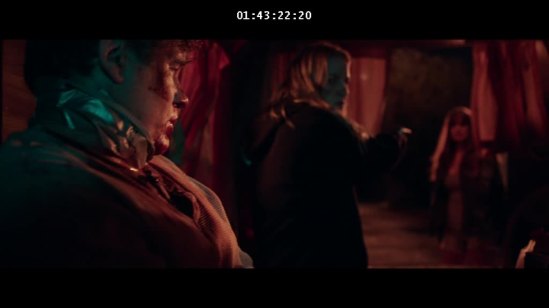 Dark Factory Entertainment, for a company as a whole, is as small as a guppy when compared to bigger, badder fish in the ocean; however, “Bound to Vengeance” is like a piranha, a flyspeck river fish with a vicious bite. I’m also impressed to see “Kindergarten Cop” star Richard Tyson presenting a delightfully decadent performance in his character Phil, whose a mid-40’s man living a double life, living the American dream with a beautiful wife, innocent young child, and living in a grand house while a darker, hidden side revels in an oversight role in the world of sex slavery. Phil represents the very definition of a very real evil inside our society and Tyson, through that slightly raspy and baritone voice of his, brings out the character’s warranted ugliness. Tyson opposites Stephanie Charles, saddling into the empowering female role Eve, and Charles meets the veteran Tyson eye-for-eye on all their scenes together, never once sensing a performance recession.
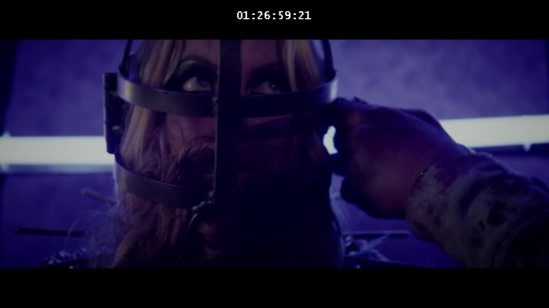 The rape-revenge flick, minus the rape, concentrates, just outside the surface, around the sex slavery ring. In fact, the insightful story is quite educational and informative, sectoring separate pieces of the sex trafficking ring from a simple abduction, restraint, and rape to a criminal empire consisting of various locations and various hands in this particular ring. Victims also go through stages of stockholm syndrome, such as with one of the girls Eve attempts to free, but she’s too far gone under the influence of Phil and his forceful philandering friends. And for a film that’s about sex trafficking, sex has nearly been omitted from the entirety with only some disheveled and scanty covered women, some with BDS&M outfits. Criavioto’s suspense thriller breaks the narrative barriers without being, story suggestively, sexually explicit and gratuitous.

The High Fliers distributed DVD and Dark Factory Entertainment production is a win-win for both companies where dynamic actors and sexually charged subject matter thoroughly straps you forcibly in the passenger seat and causes a five-finger death grip on the oh-shit handle bar. Prepare to have your eye balls glued to screen and your jaw drop when each scene becomes more intense than the other, from girl-to-girl, to house-to-house. Gravitate to this release as soon as possible as I swear disappointment will be far, far away from any reaction bestowed upon this Cravioto film.
Now, a Little Evil from Youtube: “We Love Our Monsters”
Teenage horror-throbs. Young, dumb, and full of chum.
#Programming_Evil. “Nightmare_Code” review!

Brilliant programmer Brett Desmond has been hired at a tech start-up to quickly complete the groundbreaking coding of a previous programmer Foster Cotten who went on a murderous rampage at the start-up’s tenth floor office right before killing himself. Desmond, struggling with the federal government breathing down his and his family’s necks due in part of him leaking sensitive classified material, works night and day and around the clock to crack Cotten’s code for ROPER, a behavior recognition program. A small work group remains with Desmond during the day, but at night, Desmond sleeps at the office, working aggressively to make the deadline and get his life back in order. The further Desmond or anyone else becomes familiar with the code, the code starts to modify their behavior, twisting their thoughts, and succumbing them to it’s will of the dead programmer.

From time to time again, the film industry on the subject of pioneer technology relays information upon the fears and consequences of intertwining arrogant brilliancy and controversial technology. From the genres of cyber punk to Sci-Fi horror, decades old films such as the virtual reality plotted “The Lawnmower Man” and “Virtuosity” to the more recent “Transcendence,” transferring consciousness into the machine, have been outspoken against the use of behavior modification and recognition programs. The idea behind the notion can said that the person envisioning the possibilities of such software will become obsessed, power hungry, or vengeful if the creation is taken away from them to which all three can be attributed to director Mark Netter’s 2014 film “Nightmare Code.”

Shot entirely through a surveillance-like setup and notebook web cams, “Nightmare Code,” for most of the duration, is viewed through four screens as like security footage. Netter and cinematographer Robert Fernandez designed this structure not for the sole purpose of a novelty exhibition, but to also confine characters in a small box coded by technology, as explained in an DVD’s bonus featurette, and creating a sense of isolation and distant connections that make the life of a programmer very lonely and depressing which develops in the characters very thoroughly. The story is told through the virtual eyes of ROPER, using it’s self-awareness and advanced modules to voyeuristically watch the small group of programmers and manically motivate their actions by use of altered video projections. ROPER also accesses the past, filling in the gaps that only the infamous story of the genius Foster Cotton can fill, and by accessing the past, the dead programmer’s coding can be understood for it’s malevolent behavior modification.

“Nightmare Code” is complimented by an underrated cast whom work well together through the smaller ROPER displays in the small screen film industry. Andrew J. West, better known for his role as the Terminus cannibal Gareth on “The Walking Dead,” takes on the protagonist role of Brett Desmond who battles legal and family trouble and West epitomizes isolation by effectively taking a man with a moral conscious in leaking immoral government information and leading him down a path of legal morality, but at the same time, being unfaithful, deceitful, and prone to corruption. He becomes pitted against antagonist Foster Cotton, played by veteran actor and long time supporting actor Googy Gress, notably recognized as a NASA mission controller from Ron Howard’s “Apollo 13.” The two foes never have screen time together as their stories live separate lives, tangled by their connection to ROPER, and so without that nourishment from the other actor, West and Gress use their talents to virtually interact with one another, developing a realistic struggling relationship that isn’t really there. The characters that surround Desmond and Cotton are negatively affected by both main characters and Mei Melançon’s supporting character Nora Huntsman figures into that coded nightmare as she becomes affectionate with Desmond. Even though he’s married, Nora feels the urge to fulfill her needs after separating herself from addictions: gaming, abusive boyfriend, and drugs. Melançon, who had portrayed a minor role as a major character, Psylocke, in the mutant world of “X-Men: The Last Stand,” had another hugely important role as a side dish techie lover, but her role doesn’t seem very present and that might because of the editing technique to create the dooming cyber vision.

Netter’s resulting editing style inefficiently told the story, I thought. We’re well aware that ROPER can mislead the performance buggy human race, but ROPER, in my mind, wasn’t responsible for some of the delayed or fast forwarded actions of the characters seen through the security footage as it stylishly seemed unimportantly and pointless. Luckily, these particular editing moments are far and few in between and don’t exactly hinder the narrative. What does hinder the narrative are the quick, considerably choppy, edited scenes. Netter creates long, sometimes drawn out, scenes to convey the office solitude, but then transitions to the numerous and quickly implemented scenes that spawn a constant stop and go narrative that loses the ominous factor. The longer scenes tend to generate gloom, dread, and despair. Supporting characters become underdeveloped in the quickly edited in scenes, affecting not only life recovering Nora, but also the rest of Desmond’s team – Louis, Kevin, and Ray – who become the underdeveloped characters and they are worthless to the viewer, essentially. Still, check out the Tonya Kay scenes as you might care about hers.

The Indie Rights Inc. produced film and MVD distributed release has a clean and sleek 1.78:1 anamorphic widescreen presentation. Colors seem balanced and bright. There lies some minor noise, but that only adds to the security cam charm. The Dolby Digital 5.1 audio is clean and balanced in all channels and douses with Ari Balouzian’s synth soundtrack that embarks to terrorize. Balouzian’s score reminds me of Ennio Morricone’s “The Thing” theme, developing a soundtrack character that contributes to the intensity of “Nightmare Code.” Extras includes the film with commentary and a handful of featurettes explaining briefly the characters, the production, and the fear on the technology horizon. Mark Netter, along with the cast and crew, has good source material here and though this sort of tech horror isn’t exactly novel, “Nightmare Code” is fiercely entertaining and forebodingly frightening on a low-budget, startup scale.
Evil Lies and Waits Under A Blanket of Amnesia! “Deadly Revisions” review!

Popular horror screenwriter Grafton Torn wakes up screaming in a hospital room and suffering from amnesia, unable to recall how he ended up lying face down at the bottom of his stairs. His special effects friend, Deter, offers Grafton his woodsy cabin, isolated from town, to relax from the extreme nightmares that plague him. Soon Grafton’s nightmares become a blur between dream and reality, constantly causing him to question his sanity when movie prop objects go missing, unexplainable mental blackouts, and visions of people brutally murdered. Grafton must sift through the bitter memories of his separation with his wife Cat and ghastly manifestations of horror to seek the truth of his insanity or he’ll die trying.

I spent my New Years Eve night with Bill Oberst Jr. and his performance in the horror-thriller “Deadly Revisions” was better than gazing at explosively colorful fireworks. While the rest of the drunkard world partied stupidly away, counting down the year’s end, “Deadly Revisions” had been summoning me with a familiar “Evil Dead” cabin in the ominous woods gracing the front cover art. Honestly, I wasn’t expecting much from the Gregory Blair directed film because of the SGL Entertainment distribution company whom usually acquires and distributes low-end independent horror that’s generally amiss favorably. And even though that ominous front cover cabin in the woods wasn’t exactly ominous in the actual movie, this SGL production deemed to be a diamond in the most dirtiest of roughs; a shining example proving that all is not what is seems.

Just the mere name Grafton Torn sounds like name of a Bill Oberst Jr. character role, but the character seemed even keeled and intelligently acute to his surroundings which doesn’t usually fit the bill of Bill’s unusual characters. Just in recollecting previous films, Oberst played numerous zany characters such as a crazed werewolf in “Werewolf Rising,” a zombie news reporter in “Zombie World,” and a murderous child rapist in “Krampus: The Christmas Devil.” Though Oberst portrays lunacy frighteningly well, he outperformed his other more enthusiastic roles with Grafton Torn by composing himself properly and being more reactive to the possibility of insanity.

Where in the world did Gregory Blair come from? Blair certainly has a talented eye for the horror genre or at least an inspired taste to shape and mold a familiar setting with horror fans. The latter is more likely with minor characters suggestively named after horror icons; such characters are named Nurse Voorhees (Jason Voorhees reference) and Doctor Myers (Michael Myers reference). With no previous directorial credits to his name, “Deadly Revisions” is the freshman film for Blair under the direction and penmanship categories. Well edited, great angles, and quality effects contribute to a well received viewing. The long time actor also had a minor role in the film and helped produce the film in conjunction with PIX/SEE Productions, capturing a few awards during “Deadly Revisions” two-year journey to home video, including a win for Best Narrative Feature at the Los Angeles Movie Awards and Best Screenplay at the Terror Film Festival.

The story will keep one guessing and, technically, the ending goes unforeseen. Blair’s puzzling horror-thriller produces bluffs upon bluffs upon bluffs, manufacturing an unpredictable and murky ending. Blair quickly jabs in minor hints to the finale that don’t TKO until the end and his writing scheme and direction puts the unwitting protagonist Grafton, and the unwitting viewer, in a whirlwind state of total confusion and distressing fear that’s highly valuable for a film with restricted independent capacities. Even though “Deadly Revisions” took shape in 2013, the DVD didn’t hit shelves until 2015 and I can frankly state that “Deadly Revisions” has one of the best narratives I’ve seen this past year in independent horror.

“Deadly Revisions” makes the 2015 underrated list for sure. Technically and entertainingly, the Gregory Blair and Bill Oberst Jr. collaboration models a damn good thrilling story. Don’t be fooled by the generically tacky DVD cover art; instead, make the effort go forward with this reviewer’s positive recommendation and be pleasantly surprised and delightfully terrified. If a negative comment had to be made about this film, the DVD quality could use some work with the darker digitally shot scenes. Posterization and noise clout much of the night time scenes, annoying creating a speckled blob effect that briefly causes narrative loss – a familiarity with the likes of SGL Productions.

