EVIL Knocks, A Child Listens. “Cobweb” reviewed! (Lionsgate / Blu-ray)

“Cobweb” on Blu-ray at Amazon.com!

Eight-year-old Peter isn’t allowed out on the forthcoming Halloween night.  Frightened by a neighborhood girl who went missing years ago, his strict parents keep a very close eye on their only son who’s social life has been squashed like one of the rotten pumpkins growing in his family’s backyard patch.  Relentlessly bullied and severely sheltered at home, Peter spends most of his time isolated from others until he hears knocking from the inside of his wall in the middle of the night.  Frightened at first in hearing the ensuing young girl’s whispering voice behind the wall, Peter’s loneliness entices a friendly, conversational voice after his parents dismiss the occurrence as Peter’s overactive imagination.  As the two talk through the nights, Peter learns the mysterious voice behind the wall is a terrible secret his parents have been hiding since before Peter was born, but the truth is much more darker and scarier than Peter could ever over imagine.  

Following the success of his written-and-directed 2019 French horror series “Marianne” on Netflix, surrounding the manifesting nightmares of a young writer who returns to her home town, director Samuel Bodin dives right into the spooky season with a Halloween-themed dysfunctional family horror feature that metaphors helicopter parenting as a harmful detriment that eats itself from within the nuclear structure.  The French director builds his vision off the back of the creepy children subgenre and off of the script by Chris Thomas Devlin, an American screenwriter behind the 2022 direct from the original sequel, “Texas Chainsaw Massacre,” that happens to be another Netflix debut release.  Devlin trades in rip-roaring chainsaws for rickety old houses lined with gaudy, antiquated-pattern wallpaper in this what’s-behind-the-walls thriller, produced by the Seth Rogen and Evan Goldberg company Point Grey Pictures (Amazon’s “The Boy’s” and “Invincible”) with Josh Fagen alongside producers Roy Lee (“Barbarian,” “It”) and Andrew Childs of Nu Boyana Productions and Vertigo Entertainment with Lionsgate distributing. 

Ironically at the center of attention is the loneliest boy Peter casted with UK child actor Woody Norman (“The Small Hand,” “The Last Voyage of the Demeter”) to ensure Peter’s anemic spirit with a head full of shoulder length brown hair, downcast eyes, and melancholic demeanor. Yet, like most child dependent horror schemes, Normal can thrust out a gutsy sprint to survive and save the day against not only his oddly adjusted parents who quarterly channel the onscreen unionization of Wendy Robie and Evertt McGill in fiercely fearful “The People Under the Stair’s,” but also something far more secretive and far more sinister.  Anthony Starr, who has worked with Seth Rogen’s Point Grey Productions in “The Boy’s,” is aptly a father suppressing to fold and diminuendo his son’s curiosity and venture with scary stories of disappearing children and a stern childrearing with a sinister smile only Anthony Starr can produce.  Then, there’s Lizzy Caplan as the austere-dressed matron with a retractable badge for her small set of keys, which are an underemphasized plot device for all the doors in the house, both unconcealed and concealed.  I struggled with Caplan’s mother that borders being simplistically prose, like speaking in a fairytale without the elegance of being a dainty princess or the maniacal barbs of an evil sorceress.  The “Cloverfield” actress’s take on how a reticent mother is overly proper and out of place even in this tale that stretches the imagination and even beyond the film’s other flawed portions, which lead me into Cleopatra Coleman’s benignant substitute teacher Ms. Divine, a name not abashed in its metaphorical properties.  Ms. Divine overreaches herself secondary educational authority by interjecting her nosiness into what she mistakenly thinks is Peter’s subconscious cry for help.  The “Infinity Pool” actress goes unnecessarily lone wolf into the lion’s den that would make any parent understandably concerned and angry whether hiding something or not.  “Cobweb’s” cast fills out with Jay Rincon and Gary Busey (“Predator 2”) and Stephanie Sampson’s (“Sharknado 4:  The 4th Awakens”) preteen son Luke Busey who I must say is the spitting image of his father. 

Funny and coincidently enough, this is my second Grey Point Production film watched back-to-back with “Teenage Mutant Ninja Turtles: Mutant Mayhem,” “Cobweb” is not children’s film but resembles more like a Grimm fairytale with elements pulled from various volumes, some from more popular stories such as the long locks of Rapunzel or the pretense of a wolf in planned deceit of the eager youth, and the film certainly embodies the charmingly dark and rustic patina of such tales.  From the words on a page to the visual effects of the screen, “Cobweb” introduces us to a new kind of terror co-bred out of bigotry and fear of a polar difference so severe, so monstrous, that it warrants a shameful imprisonment and a simultaneous misappropriation of tutelage of starkly unalike children because, as parents, we can have this innate fear for ourselves being replaced with the creation transcending the creator threat.  Pour these twisted tales and themes together into a cauldron of storytelling and we can easily overlook how flawed “Cobweb” can appear on the surface, as if to say the story’s phantasmal qualities exempt narrative structural norms.  “Cobweb” has repetitive use of the imagination as an excuse for Peter’s hearing something, someone beyond walls or could even stretch to the parent’s feigning ignorance or diverting tactics as part of making believe whatever they’re secretly hiding doesn’t exist.  Aside from the title, other allusions to an arachnid theme suggests Peter might have an overactive power of invention, integrating his already schoolyard bullied mind and body to form an embodiment of fear. His rigid parents mixed with an overwhelming fear of spiders creates, or wills, a person or creature of shared relations, someone he can converse with quietly and share his concerns but, in the same breath, be frightened of when out from the wall.  Peter has the same reaction between the spider that crawls on his desk in the class and see the wall dweller’s floating out from a hole in a wall, signifying a one-in-the-same fear.  When inevitably revealed, the creature skulks with the movement of an eight-legged arthropod, has hair like a large, draping web, a face with bulging eyes and fangs, lives within and between walls, and has tiny spiders crawling through its hair.  Intense and portentous, “Cobweb’s” creepy-crawlies are sure to be hair-raising with a shocking turn of events.

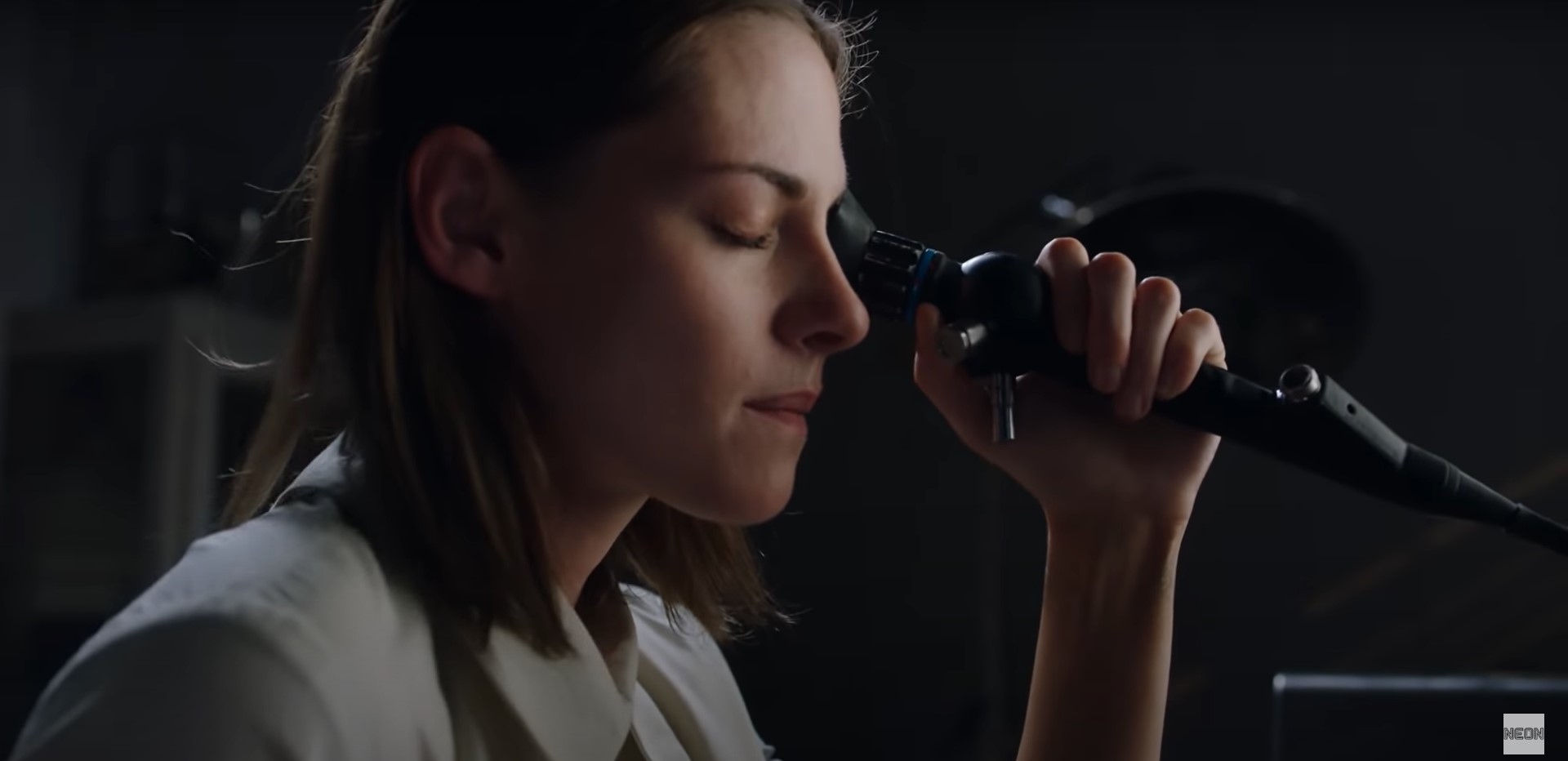
Become caught up in Lionsgate’s release of “Cobweb” on the Blu-ray + Digital release. The AVC encoded, high-definition 1080p, BD50 has a Mbps decode rate of low 30s and presented in a 2.39:1 widescreen aspect ratio. Centered around the Fall season, “The Transporter’s” Philip Lazano’s cinematography lives in the dichotomy of shadows and a cool blue-green grading. Exteriors look potently seasonal in a dreary-overcast kind of way that fits “Cobweb’s” austere approach to an atypical straightforwardness in such a dark fairytale theme. Unostentatious, Lazano does a remarkable job with shadows, and dim lighting in general, to convey just enough to make the creature’s skuttling a double dose of undetectable dread before you know what hits you. The main audio option is an English DTS-DS 5.1 master audio with Spanish and French Dolby Digital 5.1 alternatives. Again, the skuttling around the house, the faint scraping of dry, old hair on the wood floors, the creaks, oh the creaks, of every inch of that house make “Cobweb” cue every traditional trope of audible terror right to your sensory receptors. Dialogue is clean, clear, and prominent with the only issue being the behind the wall speak that renders more like whispering in the same room than a muffled subdued voice as the layered dialogue overlap in volume. English subtitles are optionally available. Special features are not in-depth with a to the point featurettes with Becoming the Girl that express Bodin’s vision of the person behind the wall and contortionist Aleksandra Dragova’s efforts to bring that vision to life, Through the Eyes of a Child focuses on a small child in a bigger, uglier world through one-sided interviews with the cast and director and how those differences translates an uneasiness not only with the child but also the viewers who are engrossed by the contras, and A Primal Fear rounds out the specials with underlining fears of creaky house sounds, amongst other combined sounds, and how they’re arranged into a design that innate scare us. Physical aspects of the release come in a traditional Blu-ray amaray case housed with a beautifully composition shot that immediately grabs the eyes on a sturdy O-slipcover laced with a slight embossed spine title. Disc art goes for the less is more visage of a blueberry blue background with white font “Cobweb” at the top. In the insert slot is the digital copy waiting for you to either download and discard the physical release (which I hope you don’t) or neglect for way longer than the expired date allows. “Cobweb” is rated R for horror violence and some language, has a runtime of 88 minutes, and is region locked on A. Lionsgate has distributed the boogeyman, or in this case, the boogeywoman in the fretfully concentrated “Cobweb” that turns every scurry or scratch behind your own walls worth your undivided attention.

“Cobweb” on Blu-ray at Amazon.com!

EVIL Will Always Get You in the End! “Ghoulies” reviewed! (MVD Visual / 4K-Blu-ray set)

“Ghoulies” Will Get You in the End With a 4K-Blu-ray set!

When a satanic ritual of sacrificing an infant boy is foiled by the acolyte mother, the child is taken far away from the fathering dark warlock who attempted to harness the boy’s youth for his own.  Fast forward 25-years-later, the malevolent father dies and the curse of the fiendish family tree has thought to be lifted.  The mansion is bestowed to very same young boy, Jonathan Graves.  Now a man in graduate studies and with Rebecca, his longtime girlfriend and love of his life, the inherited gothic mansion quickly entrances him into the urge for dark rituals, finding fascination in drawing and calling out the spirits and demons to do his bidding as their exclusive master.  In spite of Rebecca’s concerns and hoodwinking his unsuspecting close friends into a dark rite, Graves unwittingly resurrects his deceased and powerful father who seeks to pick up where he left off with his own callous ceremony from 25 years ago. 

If there are pint sized characters with a mischievous, devious edge, you better believe it that Charles Band is more than certainly behind the little terror-tykes hellbent on hell’s work.  One of the more successful ventures to come out of Charles Band’s empire, literally out from his Empire Production studio, is the 1984 released “Ghoulies.”  Written-and-directed by Luca Bercovici, as his debut feature film and who would later direct “Rockula” and “The Granny,” and co-written with Jefery Levy, who would go on to inevitably write a pair of sequels off the original film, the American-made production masters a flawlessly edited and sound designed layer composition mixed with the imprudence of 80’s stereotyped horror-teen character and nostalgic lighting and matte effects that make “Ghoulies” a travel-sized cult classic.  “Ghoulies” is produced and distributed by Empire pictures with Charles Band as executive producer, Jefery Levy as producer, and Debra Dion (“Oblivion”) as associate producer.

You can’t have a story about necromancing sorcery and demonic disinterring without big personalities and, fortunately, “Ghoulies” has a few that standout with memorable dark magic melodramatics.  Opening scenes of a ritual’s beginning introduces Malcolm Graves, an infernally flamboyant, wide-eyed, and animated with his hands sorcerer who likely won’t win the father of the year award.  “Mulholland Drive” and “Waxwork II:  Lost in Time” actor Michael Des Barres lights up the lurid life of Malcolm Graves with great enthusiasm and piercing eyes.  Graves eccentricity is balanced by another Lynchian actor Jack Nance as the acolyte turned mansion caretaker who oversees the Jonathan Graves’ wellbeing.   Nance meticulous eye gazes and gestural articulation combat and numb down Barress over-the-top dark magic ringmaster.  The “Eraserhead” and “Blue Velvet” actor definitely transposes his defined and evident presence of idiosyncrasies over to this little monster movie with manipulating occultist mascara that make “Ghoulies” that much more special.  The third actor is principal lead Peter Liapis who swings the pendula between normalcy and obsessive occultist as Jonathan Graves quickly swept up by an invisible force that drives him to become an intermediate master of miniature minions.  Liapis has that on/off switch ability to be sane one second and completely maniacal the next and when acting tranquil and the boyfriend of nicety to Rebecca (Lisa Pelikan, “Jennifer”), you better believe that we are convinced by his prosaic act.  Jonathan’s friends are an mixed lot of stereotypical lambs for the slaughter, to be used as pawns, and never know their role in the ritual of resurrection.  Stoners buds Mike (Scott Thomson, “Parasite”) and Eddie (David Dayan) fill “Ghoulies” with comedic jokester relief, rockabilly rake Dick (Keith Joe Dick) has eyes on the bedding prize with promiscuous Anastasia (Victoria Catlin, “Maniac Cop”), and an awkward dork Mark aka Toad Boy (Ralph Seymour, “Just Before Dawn”) tries to tickle swoon hottie Donna (a very young Mariska Hargitay, “Law & Order:  SVU”) are the paired up friends to fall into the, pun-intended, Graves trap.  “Ghoulies” round out the cast with the blonde and busty “Evil Spawn” and “Mausoleum” actress Bobbie Bresee as an open-armed invitation for sex and sacrifice while persons of short stature, Peter Risch (“Malibu Hot Summer”) and Tamara de Treaux (“Don’t Be Afraid of the Dark”), credited as the smallest actress in the world, made up a pair of mischievous, quarrelling minions fed up with the current incumbent of infernal dealings. 

For a 1984, Charles Band production, especially one of his first to be distributed under his Empire Productions, “Ghoulies” establishes the bar for the miniature maniac mogul’s subsequent earlier films that may have been the peak era for Empire and even Full Moon pictures, having and hitting all the hallmark tropes of effectual horror.  A fog permeating production design with enough gothic hulk in the mansion and in the out-the-window small gravesite to immerse atmospherics, a matte composition of brilliantly simple visual effects blended with the catastrophe force inspired practical effects that aggrandizes the budget, the fantastic editing by now longtime Full Moon filmmaker Ted Nicolaou (director of “Subspecies,” “Don’t Let her In”) to piece together a more-than-palatable sound design and image, the carnivalesque soundtrack by Charles Band’s brother, Richard Band, to enrich impish latency around the characters, and, of course, the icky-coated and reptilian-rinded puppet demons by creator John Vulich (“Dolls,” “From Beyond”) in dynamic surroundings with the living, breathing characters.  What “Ghoulies” could use is fine tuning on was to further the story development.  A little more exposition into the background of who Malcom Graves is or who Jonathan Graves was calling from the slither of beyond could go a long way.  The ending transition also took a lighter approach, an additional aspect in this pre-Full Moon, Empire Production we don’t typical see in the ensuing works that grinds the desolation gears by shifting the clutch into third gear of blood, boobs, and bodies. 

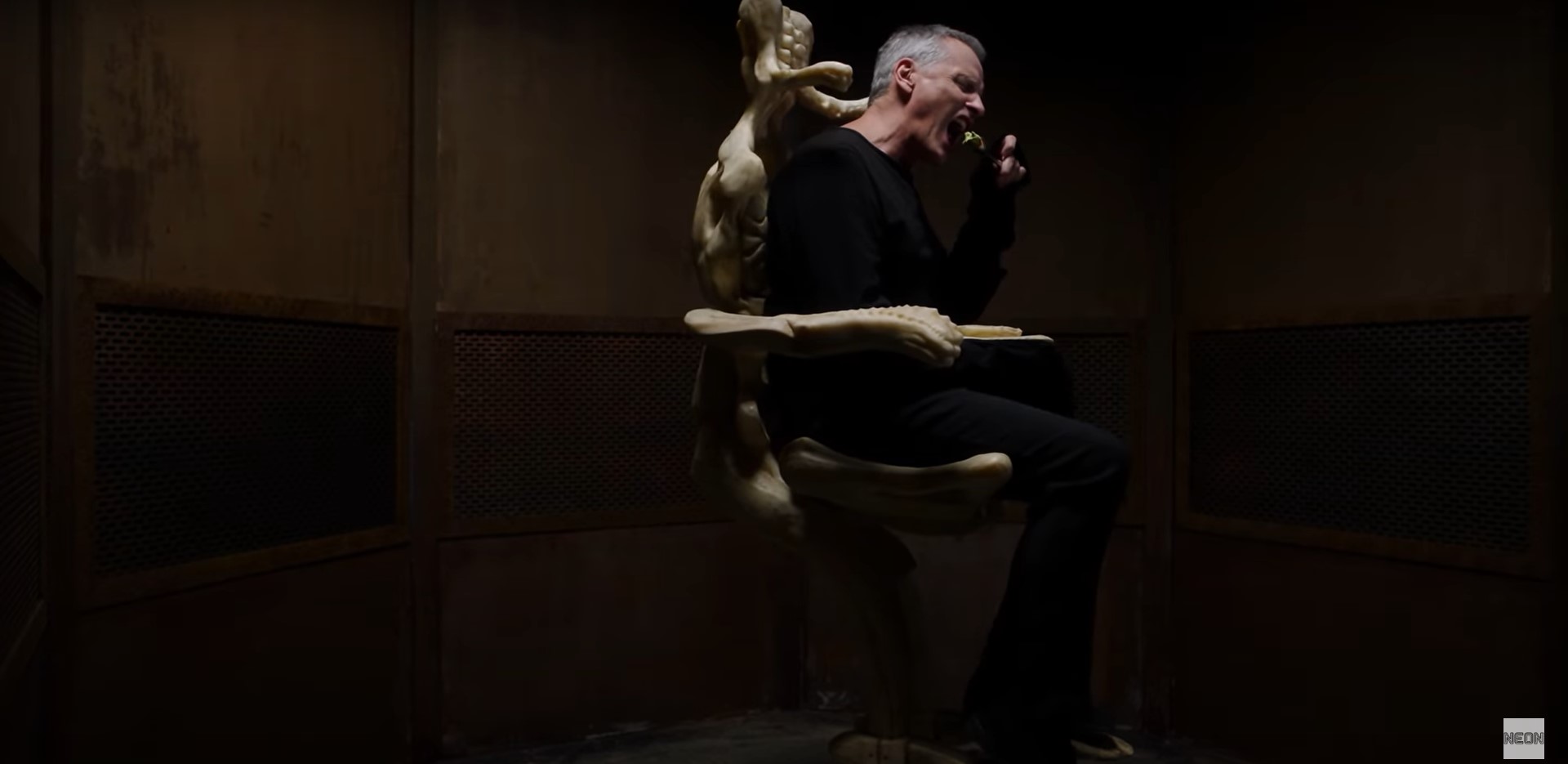
Coming in at number two on the spine of the MVD Rewind Collection, as part of the 4K UHD LaserVision line, “Ghoulies” comes a 2-disc UHD and Blu-ray set. Presented in a 4K Dolby Vision HDR restoration from a16-bit scan of the original camera negative in 2460p and a sister 1080p Hi-Def restoration for the Blu-ray, both transfers exhibit in the original widescreen aspect ratio 1.85:1. Both transfers cherish the source material and even celebrate it with a clean print scan that elevates the definition of a gloomy, brooding abode under the cast of many a shadow. No issues with compression as black levels remain inky and the in-lined picture isn’t blighted by artefacts, revealing the natural grain without a combover to smooth out any original veneer from the 35mm acetated celluloid. Both discs come with an English DTS-HD 2.0 master audio that’s stark as it is clear and orderly with a prominent dialogue track and a ridiculously good sound design edit that enhances the rituals and rambunctiousness of the cult and kids. Boosted levels are balanced and well overlayed to provide max composition as we get a good range and depth of sound and space with the eye lasers, atmospheric house creaks, and an Earth-rattling finale. English subtitles are available on both formats. As usual due to the vast number of gigabytes needed, the Blu-ray special features outnumber the 4K UHD. The 4K special features include once Shout Factory! exclusives, such as a 2015 archival audio commentary by director Luca Bercovici, a 2016 audio commentary with Bercovici moderated by Terror Transmission’s Jason Andreasen. With the Blu-ray, you receive the 4K content plus a video introduction by Bercovici, which is quick, simple, and not much too an opening recollection of the keystone of his career, an interview with editor Ted Nicolau Editing an Empire that more so Nicolau’s career from beginning to current, an interview with actor Scott Thomson A Mind Is a Terrible Thing to Waste as he exchanges his “Ghoulies” remembrance in that same stoner-fog as his character, an interview with Luca Bercovici Just for the Chick Man, a half-hour behind-the-scenes featurette From Toilets to Terror, a photo gallery, four television spots, and the theatrical trailer. The physical contents include a faux crumpled cardboard slipcover of the iconic Ghoulie in the toilet marketing ploy complete with security tag at the bottom. Sheathed inside is a black Blu-ray amaray with an ironed version of the cardboard O-slip. Inside, both discs are pressed with laserdisc-esque pattern art, and the insert contains a folded collectible mini-poster of the faux crumpled slipcover. The 80-minute, region A locked release doesn’t list a rating on the back cover but I suspect an unrated feature like with most Empire/Full Moon products and this seems to be the complete, unedited version. “Ghoulies” is a must-see for the casual horror fan, “Ghoulies” is a must-see for die-hard fans, and this MVD 4K and Blu-ray Rewind Collection release of “Ghoulies” is a must-own for the collector at heart.

“Ghoulies” Will Get You in the End With a 4K-Blu-ray set!

Always Wear Protection From EVIL! “It Follows” reviewed! (Second Sight Films / Blu-ray)

“It Follows” You Home on Blu-ray and 4K Home Video!  

After sleeping with a young and handsome man in the back of his car, Jay wakes up strapped to a wheel cheer in an abandoned and dilapidated Detroit warehouse.  The panicked and apologetic man explains that having sex passed something to him and now he has passed it to her.  What it is is a supernatural force, a shapeshifter, always walking toward the last person implanted with an imperceptible sexually transmitted beacon.  Slowly but surely, the entity continues with a steady pace until reaching the infected person and brutally murdering them.  The only way Jay can unload this burdensome curse is to pass it along to someone else, but her tightknit group of friends aim to help her despite not being able to see the entity and drive her out beyond the stretches of her Detroit suburb home.  Yet, no matter how far Jay travels the entity eventually catches up to her, endless following her to wherever she goes, leaving her and her friends without options to alleviate her paranoia and fear.

David Robert Mitchell’s breakout horror success “It Follows” is the 2014 released supernatural teen terrorizer with an immutable edge of not only absolute apprehension but also with a distorted real-world dreaminess not based in vague abstraction.  Mitchell, who not only directed by wrote the film as well, is the sophomore feature from the “The Myth of the American Sleepover“ director who persists in the unravelling of apparent teenage problems, dramas, and sensations in the metro area and in the suburban borders of Detroit, Michigan, the state in which Mitchell was born.   “It Follows” barely scratched a significant budget for production but managed to succeed expectations earning domestically here in the U.S. 13x the film’s budget amount plus the additional international box office revenue and at-home media sales saw Mitchell’s indie horror a major sleeper amongst surprised genre fans who couldn’t get enough of the sexual transmitted spook.  Mitchell, along with Erik Rommensmo, Roby K. Bennett, Rebecca Green, Laura D. Smith Ireland, and David Kaplan, produced the venture under production companies Animal Kingdom and Two Flints with Northern Lights Films presenting.

At the center of a parentless predicament are a group of friends with the nucleate being the followed Jay under the performance of Maika Monroe, who also saw simultaneous and unexpected success in another 2014 thriller, “The Guest.”  Monroe’s slow burn sauntering becomes hit with complete shock when her lover betrays her, sends her spiraling in post-trauma harm, and instills a paranoia that can’t be ignored.  Jay no longer floats in life’s little wonders of love and romance; instead, she finds herself on the other side of the idyllic fantasy with the repercussions of her choices amplified by the supernatural spin.  At her side is her sister Kelly (Lili Sepe, “The Intruder”), childhood friends Paul (Keir Gilchrist, “Dead Silence”) and Yara (Olivia Luccardi, “Kappa Kappa Die”), and the across the street cool guy Greg (Daniel Zovatto, “The Pope’s Exorcist”).  Each play a role in Jay’s post-sex paranormal plight, some are a conductor of relief, such as providing a comforting presence as bodyguards per se or even become the next person to pass along the curse while others project future spurs of ominous ambiguity without the direct intention of doing so.  Though Mitchell might be invoking a dream state of events that may play into the following, I still found the groups’ idle hands to be concerning, especially during a school period from which we see Jay and Greg sitting in class together in one scene.  The cadence of time and responsibility doesn’t exist and that can be really jarring to our sense of natural order where school is an afterthought, juvenile attention is an afterthought, and the only thing that really matters is Jay’s imperceptible anxiety without any other exterior consequences pressuring their decision making.  “It Follows’” complete cast consists of Jake Weary, Bailey Spry, and Leisa Pulido.

Many of the film critics and analysts deconstruct and piece “It Follows” as an allegory for the sexually transmitted disease that will always be with you and how easily, or naively, it can be spread amongst friends and peers in casual intimacy and while that point can be seen as valid, there’s definitely merit behind that theory, I have come to an alternate conclusion of what the entity might represent that has been following me much like the entity has been following Jay. Since parents, or adults in general, are faceless, absent, or represented as attackers, Jay and her friends represent teens having to deal with the peak problematic adolescence with suggestions of suicide, drugs, neglect, abuse running rampant without ever having to be laid out in exposition or be straightforward and evident. The entity represents time running out in their youth dwindling quickly with every adult choice that they make, sex being the main sample of a larger grouping. No matter how hard the teens try to run from their issues, time never ceases and will eventually cause their mortal coil to succumb at an early age. Mitchell’s weirdly timeless set productions and props add systematic value in what has been longstanding through the decades of wriggling deviant teenage behavior. The indifference adult caregivers in themselves can be much scarier than the entity itself, a lack of experience and control often turns wild, unpredictable, and irrational, and set the story’s backdrop as the tatterdemalion surroundings of a once booming Motor City and you have a complete and total degradation of city to soul in one tailgating terrifier.

Follow Second Sight Films for a special release of David Robert Mitchell’s “It Follows” on an AVC encoded, high-definition 1080p, United Kingdom Blu-ray with an anamorphic widescreen aspect ratio of 2.39:1. Looking sharp and retaining original grading, this particular new Second Sight product, the standard Blu-ray version of the two-part deal along with a 4K UHD release, doesn’t hinge on perfecting or upgrading the digitally record video. Still, image quality renders like definite de facto distinctness that separates objects with delineated depth and a realistic color palette while the master of the slow pan, Mitchell, keeps scenes alive with an ever-moving camera shooting alternative, odd angles. Backside of the Blu-ray suggests a bitrate decoding at 23 Mbps but I had clocked it higher at low 30s that better suppresses any kind of compressions issues on the more than adequate BD50. The release comes with two English audio options: a Dolby Atmos produced by Second Sight and a DTS-HD 5.1 master audio surround sound. The Atoms provides a pedestal for the original composed score by Disasterpiece aka Richard Vreelord with his note firmly pressed on the slasher pulse while keeping a discordant arm’s length away from being too terribly catchy; instead, we shrill in fear with ever crescendo in letting us know the entity is here and near, foot-over-foot toward the target. Depth and range fathom well to create space and provide more than just a dialogue robust narrative with suburban ambiance as well as the exertion surrounding motivation to stay alive or to be followed and killed. Though not an A/V level up, Second Sight pours all their love and respect in new special features including new experience and opinion-laden interviews with Keir Gilchrist Chasing Ghosts, a new interview with Olivia Luccardi Following, a new interview with produce David Kaplan It’s in the House, new interview with composer Disasterpiece (Rich Vreeland) Composing a Masterpiece, and a new interview with production designer Michael Perry A Girl’s World that focuses on the out of time and oddly placed set dressings for era ambiguity. There’s also new commentary by author Joshua Grimm, an archived commentary with authors/film scholars Danny Leigh and Mark Jancovich, and a Joseph Wallace video essay surrounding “It Follows” Architecture of Loneliness, providing a deep-dive look into Mitchell’s curation of isolating loneliness in all areas of the cinematic story. The green Blu-ray casing has new simple, yet effective, artwork of Maika Monroe floating head bathed in small strips of rainbow glints contrasted against a dark background. No reversible cover or insert inside the Blu-ray but the disc pressing contains an equally color arrangement to the front cover with Monroe bound to the wheel cheer from a plot point moment. The region locked B release plays at a 100-minutes and is UK certified 15 for strong threat, sexualized nudity, violence, gory images, and strong language. Architecturally sound to be great horror movie of originality and inspiration, “It Follows” never succumbs to the frustratingly breeziness with when the entity enters the picture as director David Robert Mitchell is able to keep us ever vigilant with high suspense, stunning visuals, and keep characters from wandering too far off path.

“It Follows” You Home on Blu-ray and 4K Home Video!  

Magnetism Will Separate the EVIL from the Rest of You! “Black Circle” reviewed! (Synapse Films / Blu-ray)

Cosmic horror is the “Black Circle.”  2-Disc Blu-ray/CD on Amazon!

After Isa manages to clean up her life and obtain a upper management job, she’s eager to share her tremendous focus secret with sister Celeste, a university student hitting a mental wall with an important term paper.  Isa says the key to her success came after cleaning out the belongings of their grandmother’s deceased cousin, where she unearthed a record LP on magnetism produced decades ago by a master of the craft.  Celeste is instructed to listen to the LP’s backside right before going to sleep with the promise of her life changing for the better.  After setting the needle, Celeste wakes up next morning feeling unburdened by the challenges ahead and is able to knock out her paper in one day, but she senses another presence following her, watching her, and having vivid dreams of a monstrous double of herself from being inside what the LP calls the black circle.  Shortly after, Isa has disappeared, exiting her new job with erratic and paranoid behavior, only to resurface on Celeste’s doorstop ranting about LP’s frighteningly powerful suggestion and that she’s being followed by someone driving her car.  The sisters track down Lena, creator of the LP and master of magnetism, where they also meet a pair of young psychics who explain the unforeseen, accidental harmful side effects of the LP she thought were all destroyed.  Lena agrees to save the sisters who are faced with losing themselves from themselves. 

Hypnotism has diminutively entranced storytelling, scratching only a limited surface of films with only a few being widely known, such has “Office Space,” “Stir of Echoes,” or “The Cabinet of Dr. Caligari” to name a select few recognizable titles.  To further hypnotism into obscurity, a similar spellbinding field is introduced by filmmaker Adrian Garcia Bogliano.  The Spanish writer-and-director of “Here Comes the Devil” and “Come Play with Me” chills us with a cosmically laced and existentialism albatross with his 2018 “Black Circle.”  The Swedish production, natively titled “Svart cirkel,” pulls loose inspiration from the often-controversial works of German physician Franz Anton Mesmer, as in mesmerize, who first coined animal magnetism as an invisible force within the human body that can be manipulated by skilled magnetizer.  “Black Circle” is produced by Bo and Rickard Gramfors and Bogliano’s longtime collaborator Andrea Quiroz within a conglomerate of production companies that include Klubb Super 8, Njuta Films, Salto de Fe Films, and Evilinski Productions.

Felice Jankell (“The Bunker Game”) and Erica Midfjäll play the two sisters, Celeste and Isa, embroiled in magnetism bad luck happening up on an old of circ 1970s-1980s LP in today’s age.  There’s quite a bit of tension between the two sisters who are not conjoined at the hip like most close-in-age siblings as they battle their own personal demons that are only talked about rather than exhibited.  Yet, we get the sense of their daily struggles through Jankell’s body language for Celeste and the recollecting conversations both sisters have regarding Isa’s troubles keeping glued together and those existential problems are what connects them, or rather what connect us all as sentient beings, making the characters relatable.  Isa exposes Celeste to the LP in hopes to help Celese regain control over her life but what ensues is not only a weight lifted off her capacity to overcome but also an underlining fear of being followed, watched, and frightened by grotesque dreams of herself in a monstrous form.  At this point, Isa and Celeste are experience parallel psychosis spurred by the record that leads them, and us, to the headliner of film, genre icon Christina Lindberg   The once sweet-faced Swedish brunette, who once donned an eyepatch and took a shotgun to her rapists in the role of Madeleine in “Thriller:  A Cruel Picture” and who once debuted as a 16-year-old virginial maiden in the sexploitation “Maid in Sweden,” has now grown up to become a woman basking in the essence of power and control at all times with Lena, a magnetism expert attempting to rectify unintended mistakes distributing a soul separating, charmed-grooved vinyl from decades earlier.  Lena has rich history that’s dropped in segments from the moment she’s introduced on screen, almost immediately displaying her limitless power on two young, intrusive psychics (Johan Palm and Hanna Asp) who enter her home by the summoning Supreme, an exterior planed creature who supervises the psychic realm.  Performances are incredible skintight as actor brings an elevated show for their individual role, including the rest of the supporting cast in Hans Sandqvist, Iwa Boman, Inger Nilsson, and Erica Midfjäll’s twin sister, Hanna, to sell the “Black Circle’s” premise and promise more convincingly terrifying.

If you were forced to only see one indie contemporary release this year, “Black Circle’ should be it.  Bogliano’s “Black Circle” doesn’t dazzle with a ton of effects nor is production value or exotic and grand set locations applied to lure in viewers, but what Bogliano does do well, and what ultimately instills a fascinating story, is the well-written script, character developments, and the subtle effects that bore a fear of the unknown dread persistently and consistently throughout.  Bogliano delivers a unique story sold on the rarity of proto-hypnosis with a premise fashioned around the development of his own mythos of psychic realm rules and beings. Best part about Bogliano’s piece of the macrocosmos is the way he chapters the narrative, ushering viewers gently and with explanation inside a context construction that uses phantasmagorical visuals and voice over narration to interpret magnetism jargon or to provide inside to setup the next chapter. This processing style of breaking up the acts accentuates, or offsets, the rather raw Dario Goldgel cinematography of the reality story, turning “Black Circle” in pedagogic inside into the basis of the wildly scrutinized, often criticized, hypnosis. What’s also neat about “Black Circle’s” story is the lack of a clearcut antagonist. Neither Lena, the two psychics, or even the monolithic, fazing Supreme serve as opposition against the two sisters but, in a twist of the tale, the sisters are actually their own worst enemies with doppelganger trouble in what afflicts us all at one point or another – existence. Yes, “Black Circle” is about the existential encounter that relates to good and evil, a theme of duality done without a tale of twins (or if you want to get technical, “Black Circle” was casted with a set of twins) and involves more with a separation of, what the story calls, an ethereal double that will eventually absorb itself into being the stronger, dominant replacement if the magnetism vinyl continues to be listened to in enough times it will weaken the original, strengthen the evil carbon copy, and there will be no going back.

Become entranced by Adrian Garcia Bagliano’s “Black Circle” now available on a Synapse high-definition Bluray release. The AVC encoded, 1080p, dual-layered BD50, presented in a 2.40:1 to really grab the space of tighter quarters and lengthen the berth, has less transfer complications than let’s say most of Synapse’s catalogue. The digitally recorded video doesn’t require as much remastering as a decades old production on celluloid or videotape, but the narrative does feign video degradation or aging in the more elucidation scenes on magnetism 101. Details are fine and textured, blacks are especially inky and void-encompassing, and no signs of compressions issues with a bitrate average around low-to-mid 30s. The light sepia grading envelopes a welcoming, steely coldness around the characters and their astral plight. The Blu-ray comes with a Swedish DTS-HD 5.1 surround sound mix and an English dub Dolby Digital 2.0. With being reliant on pulsing waves to match the hypnotic scheme, the backdropped soundtrack adds to the unsettling pensiveness, like the metallic hum of a tuning fork, that never protrudes outright and even into the character’s dialogue space. Not a ton of spacing depth between dialogue and ambient but enough to sate directional awareness and atmosphere. English subtitles are optionally available. Bonus features include an audio commentary with the director, two individual interviews with director Andrea Garcia Bogliano and star Christina Lindberg, both in fluid English, an Inside Black Circle behind the scenes featurette, a still gallery, and the original teaser trailer. Synapse’s release is actually a 2-disc set containing a CD of producer Rickard Gamfors score. Inside the black Blu-ray casing, a red and black insert card with the three faces of main principal characters, the sisters and Lena, in linear composition overtop the black circle with the title underneath. On the backside, the complete 18-piece CD track list complete with instrument and mixing acknowledgements. Also in the insert liner is a 2023 Synapse product catalogue. Front cover art has retro appeal with a black background emphasizing the perfect spiral red and black circle being touched by disembodied and flat matted red hands. The disc itself mirrors the front cover’s spiral but sheens like a vinyl LP but in red and black alternate rings. Dread the duplication, fear the far-side of yourself, when becoming magnetized by magnetism of the underutilized genre that knows no limits and has a plethora of petrifying possibilities inside the “Black Circle.”

Cosmic horror is the “Black Circle.”  2-Disc Blu-ray/CD on Amazon!

Hail Down EVIL for a Ride! “Taxi Hunter” reviewed! (88 Films / Blu-ray)

“Taxi Hunter” Now Available on Blu-ray!

A moderately successful and mild-mannered insurance salesman is soon to be a new father.  As he and his wife baby prep with shopping around town for supplies, a few run ins with crabbily rude and scamming cab drivers make it known that the cab drivers flood the market with lawlessness.  When his wife unexpectedly goes into labor and his personal car out of service, he has no choice but to hail a cab but when the cabbie refuses the fare due excess vaginal bleed, the cabbie quickly shuts the passenger door and speeds off during the torrential rain stop, not realizing snagging the woman night gown and dragging her down the street a few yards, killing her and the unborn child, and speeding off in attempt to save his own skin.  Spiraling down into a deep depression and pushed beyond his moral limit, he justifies killing the taxi drivers for their abhorrent behavior that makes him a hero of the common people while also making him be public enemy number one with the taxi union and the police. 

History has proven, at least since the pre-2000s, that taxi drivers have had a long notorious stigma of being rude, uncouth, and greedy, especially in big metropolitan areas where traffic jams on a daily basis and the amount of fares determine your livelihood wage can eventually and insidiously get under a driver’s skin and turn the once service-needed necessity into a crabby-cabbie, a side-effect symptom of the profession one could assume.  Hong Kong’s 1993, Cat III shocker “Taxi Hunter” releases that pent up anger most of us have experienced under the clicking of the fare meter when Joe cab takes the long way around town.  Written by Wing-Kin Lau (“The Untold Story III”) and Kai-Chung Mak (“Twist”), “Taxi Hunter” marks the second collaboration effect of the same year as “The Untold Story” and “The Untold Story’s” co-director Herman Yau.  “Black Blood’s” Hung-Wah “Tony” Leung and “Tiger Cage” franchise’s Stephen Shin produce under Galaxy Films Limited and distributed theatrically by Media Film Asia.

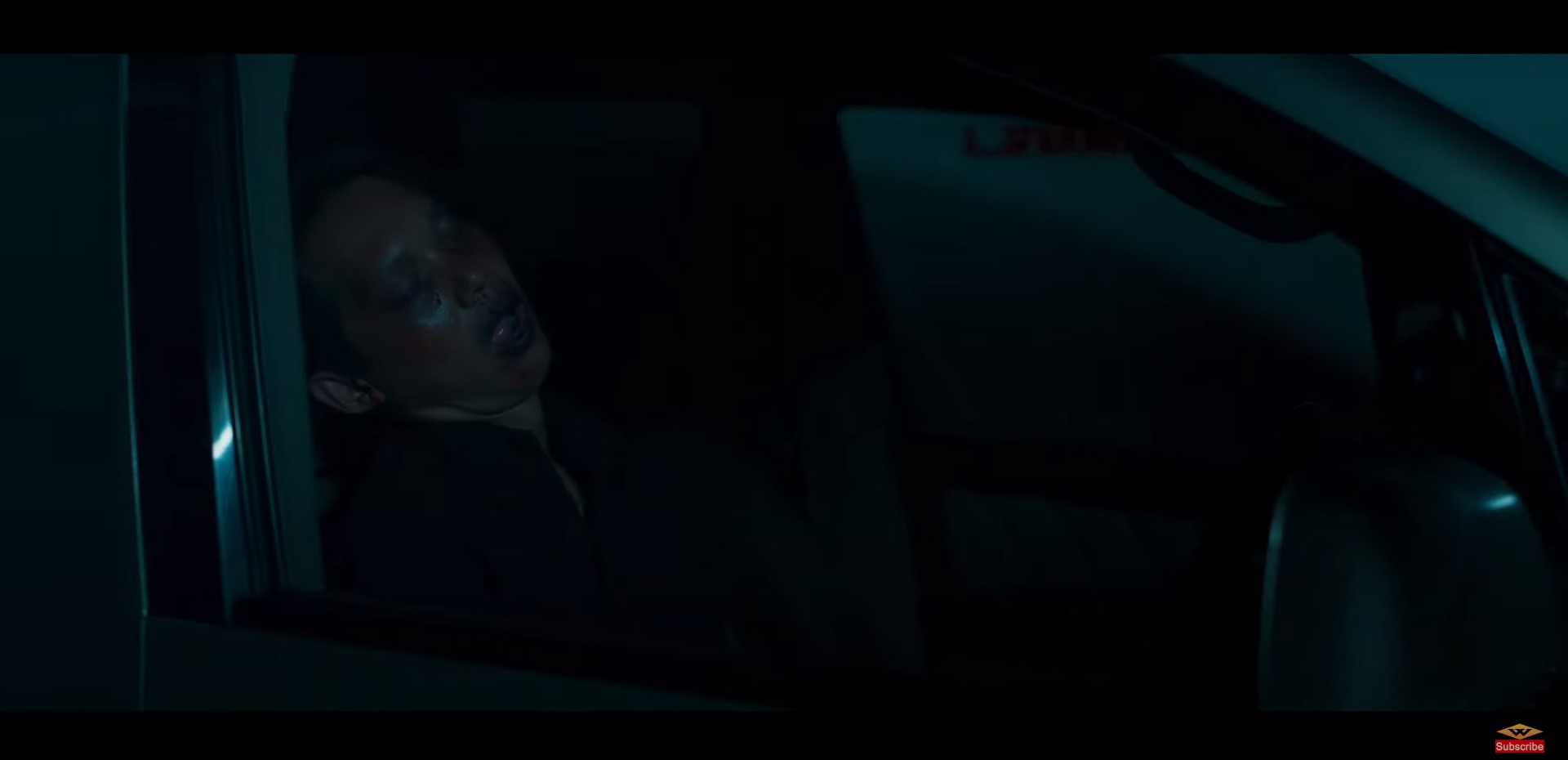
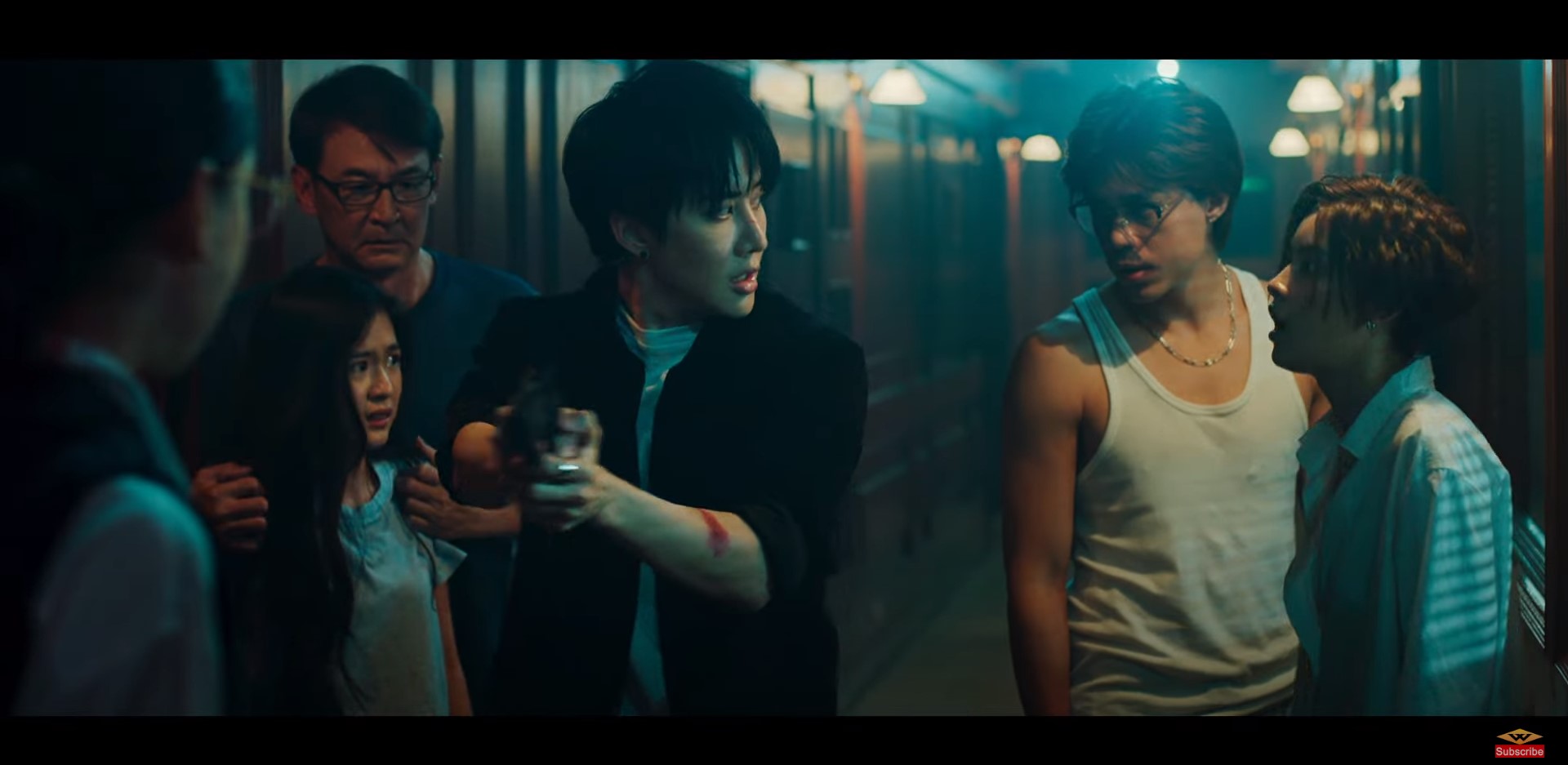
Not only do the writers and director Herman Yau reteam to develop another controversial Category III picture but “The Untold Story’s” star Anthony Wong steps foot into another unraveled monster of a man with Kin, an amicable insurance salesman good at his job and eager to be the best father as possible quickly spins into melancholy and murder after the death of his pregnant wife at the hands of an unprofessionally hasty taxi driver.  Unlike the quietly stewing and maniacally murderous pork bun shop owner, Wong’s villainous runs takes backseat to his anti-hero performance, a punisher of taxi scum.  As Kin, Wong can be the delicately wonderful husband and the brazen barbaric with an easy slippery slope transition in between as he works to perfect Kin’s killing craft.  Unbeknownst to him, tracking him down is Kin’s own police detective brother Yu and his fun-loving goofy partner Goh, but unbeknownst to the detectives is the taxi serial killer is Kin.  “Iron Monkey” star Rongguant Yu offers up tough cop like it’s his job, mixing a humble blend martial arts and entrenched investigator into his character while also being blind to his brother’s moonlighting massacres.  Goh, on the other hand, played Man-Tat Ng (“Shaolin Soccer,” “Tiger Cage”) is supposed to provide the levity, the comic relief, the humor, but the cartoony way Goh is portrayed, in garb and in gab, reduces him to be nothing more than a Western Poser of the East with NBA and other Western branded gear from head to toe.  Goh feels very much like an attempt to jab fun at what Hong Kong might have perceived as American culture:  tasteless, worthless, and clueless.  Goh seemingly only exists to be a link between Kin and his brother when Kin hops into Goh’s undercover operation of pretending to be a taxi driver to which Kin takes his numbskull manner as cantankerous cabbie.  “Taxi Hunter” chauffeurs in the rest of the core supporting cast with Athena Chu (“Super Lady Cop”) and Hoi-Shan Lai (“Dr. Lamb”).

However still managing to provoke potency in parental guidance, to me, “Taxi Hunter” is perhaps the least intense Category III film I’ve experienced to date, but don’t let that keep you from taking a ride in Herman Yau’s rancorous retribution vehicle that has scores of variable car action scenes and a sordid glaze of street-level grime amongst the taxi industry.  “Taxi Hunter” engages us to think about the minor point As to point Bs in our lives that can easily subvert the well-oiled machine that is our existence.  Kin has a promising career, money (a motif we’ll revisit later), and a baby on the way and aside from the money, bizarrely enough, it all comes crashing down in the moment of a car door slamming shut. Those micro-fissions separating our good moments with nastiness slog us into another mindset, a killer’s mindset, when we’re wading at the very bottom of the losing everything depression. Lau and Mak don’t immediately set Kin’s path shortly after the turning point event, which also had a good chunk of setup. Posthumous need to kill cabbies didn’t occur directly after the tragedy as the script allowed time for Kin to try and stomach digesting tremendous loss, even giving away much of his money, as aforementioned, for services gone unrendered such as with the prostitute he didn’t end up sleeping with or being overcharged a child’s trading card just to make a crying child, a future version of his own child now deceased, happy when his parents would not purchase it. “Taxi Hunter” has more than just a singular character-driven story with plenty of suspense from Kin’s evolving practice of killing taxi drivers to the plethora of practical car action. “Taxi Hunter” is metered madness that shies away disgusting you with overt violence or seducing you with graphic sex of other Cat III film in its purer requital black comedy only Herman Yau and Anthony Wong could chauffeur in.

Presented in full high-definition 1080p from the original 35mm stock, “Taxi Hunter” has been flagged down for a new Blu-ray release from 88 Films, shown in anamorphic widescreen 1.85:1 aspect ratio. The transferred print keeps the natural grain of the 35mm film but swells the pixelations to ramp up details and textures tenfold without appearing touched up or improperly enhanced. 88 Films’ coloring grading leans slighting into the metallic blue steel, offering a gritty detective thriller with the overcast effect. The print also shows hardly any age or damage that results in a clean redress of a pristine print. Only one audio option is available for selection, a Cantonese LPCM 2.0 mono. Curious to why there isn’t a Mandarin option leads to speculation that Cantonese sole use was due to the dialect being more widespread in Hong Kong to keep a product of Hong Kong, typically with CAT III products where mainland China censorship would have picked “Taxi Hunter” to pieces. Though in original language, ADR is still used in post and while dialogue is cleaning in the forefront of the rest of the audio tracks, there’s not a ton of depth being too at the forefront, especially with Goh’s goofball gab. However, the action-laden and quarrelsome dynamics provide a plentiful range of sounds from screeching of tires, to the car crashes through windowfronts, to the multiple gunshots that make this sound design rich and energetic. English subtitles are offered and though glibly bland and concise, a lot of repetitive words and phrases, such as a wide use of bro, the subtitles are error-free and paced well. This special edition release includes a new audio commentary with Hong Kong film expert Frank Djeng, a new interview with producer Tony Leung Hunting for Words, a new interview with actor Anthony Wong Falling Down in Hong Kong, a new interview with action director James Ha How to Murder Your Taxi Driver?, still gallery, and trailer. Physical features available, if you’re quick enough, include a limited-edition cardboard slipcover with Sean Longmore’s compositional illustrated art and a folded poster insert of the same art. Also available inside the green Blu-ray case is reversible cover art with the initial same design as the slipcover or, my personal favorite, the original Hong Kong poster art that I proudly display on the shelf. Disc art is pressed with a slight variant of Longmore’s art and the not rated disc’s format comes region A and B playback with the film clocking in at evenly paced 90 minutes. Classic 1990’s fare without charging us an arm and a leg in wasted time, “Taxi Hunter” is solid CAT III with more vindictive and veridical visceral moments that change gears often and punches the gas into accelerating this terminal taxi tormentor.

“Taxi Hunter” Now Available on Blu-ray!