EVIL Cabbie Takes Beautiful Women for the Ride of their Lives. “Maniac Driver” reviewed! (ReelGore Releasing / Blu-ray)

Hail down the “Maniac Driver” on Blu-ray!

Taking a taxi should be a reliably safe to get from point A to point B and once you settle the serviceable transaction with payment, you can forget you ever saw that taxi driver again.  But what if that taxi driver follows you home, obsesses over you, and has psychotic plans to take your life as well as his own?  One Tokyo cabbie has those very inclinations toward the beautiful women.  These women intoxicate his severe guilt over a past personal tragedy involving the merciless murder of his wife.  He scours his passenger pool for the perfect beauty to be his closing opus, a gift to society that dealt him the same hand and will take her life as a maniacal masked killer with a blade before he turns the blade on his own neck. 

From the director of “Gun Woman” and “Karate Kill” comes the latest gore-soaked, nudity-laden, psychotronic grindhouse picture from Tokyo filmmaker Kurando Mitsutake.  Labeled as a Japanese giallo film, the writer-director Mitsutake pulls inspiration from one of most influential and prolific Italian giallo filmmakers ever, the late Lucio Fulci, and stylizes his idolizing film with his own proclivity for flair.  The 2020 released film is a thirst trap of the subgenre upon reading the heavily enticing description and its basic but effective cover art of a leather glove and jacket cladded masked maniac holding tightly onto a half-naked woman, almost in an embracing manner rather than a malice one.  Sex and blood sell and “Maniac Driver” doesn’t disappoint but what about the story?  What drives the killer from one woman to the next and does it all make sense?  “Maniac Driver’s” title suggests not, and I believe Kurando Mitsutake felt the same way when writing the script, produced by “After Life” and “Paster Shepherd” producer Mami Akari under the Akari Pictures banner.

Titling the story around the maniac driver binds the film solely to the cab driver, much in the same way William Lustig’s “Maniac” focuses on Joe Spinell’s spiraling madness and scalping mutilations, and we’re pretty much left with the driver’s innermost thoughts, about his process, about his reasons, and about his plans.  Essentially, the maniac driver drives the narrative with a contemplative fare.  Tomoki Kimura has surpassed the challenge with a pendulum crazed performance sought to not only express his derangement but can also infect the viewers with the character’s warped mind.  Kimura keeps his expression stoic and sour in a role that barely requires him to speak as we mostly hear prosy, abstract, and murderous inner thoughts.  In regard to the women the driver stalks and involves himself sleazily with, Kurando Mitsutake goes the JAV actress route and is familiar with as having the alluring Asami star pretty much naked through the entirety of “Gun Woman.”  With adult actresses, Mitsutake receives uninhibited support for the victimized characters the maniac driver fantasizes over and kills as well as Mitsutake’s satirical whims in exploiting the subgenre’s penchant for gratuitous flesh.  Adult starlets from softcore actress Saryû Usui (“Sex Detective Hatenashi”) to the hardcore Ai Sayama (“Date with a Busty Nymph”), Ayumi Kimito (“Love Kimomen”), and SOD (Soft on Demand) Create’s Iori Kogawa (“One Wife + 10 Husbands) add a little titillation with gratuitous exposure, bondage, and fornication to the max. 

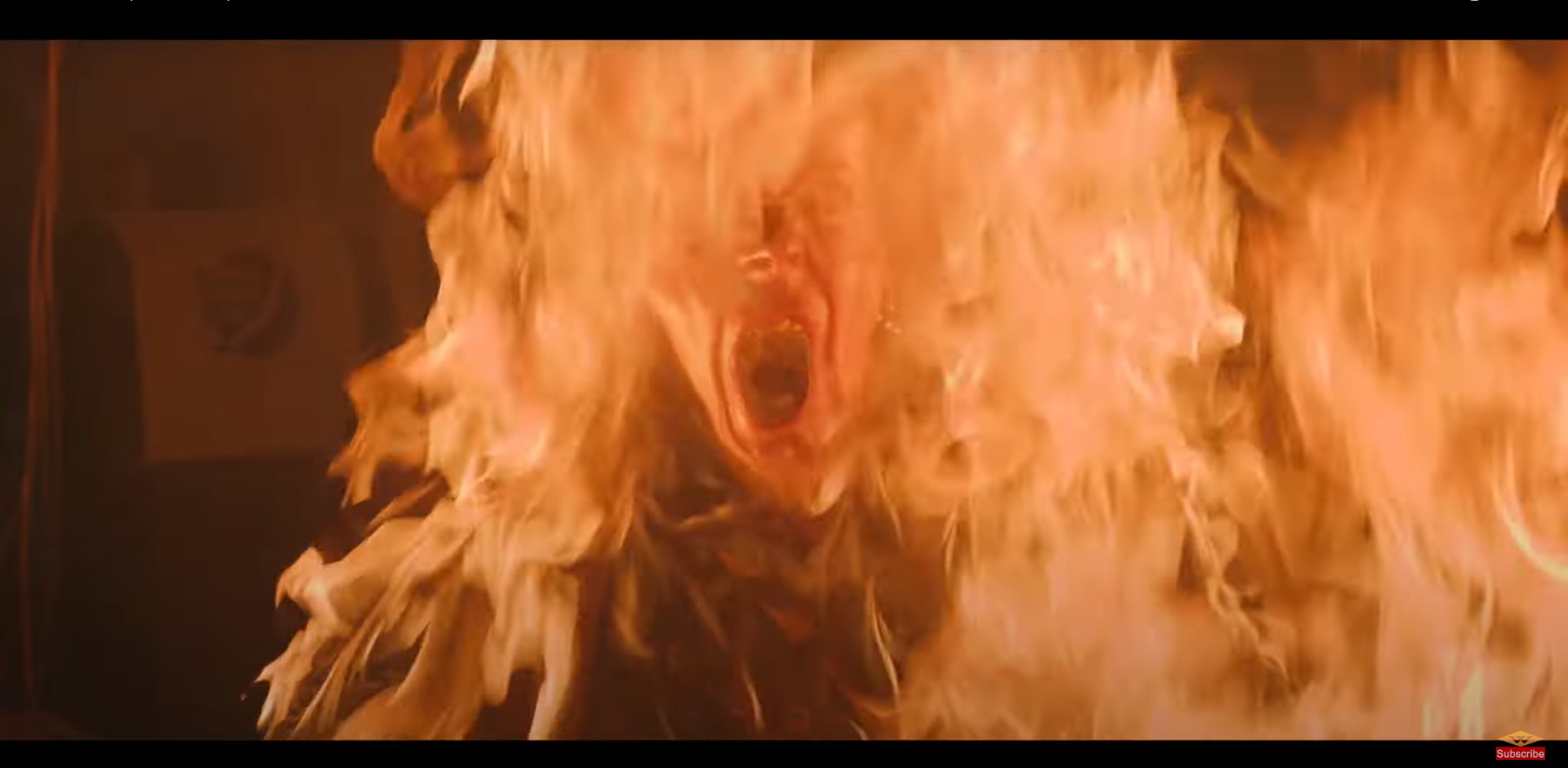
“Maniac Driver” paves its own neo-giallo path that swerves away from the traditional calling cards. Instead of a typical Italian murder-mystery, Mitsutake intentionally divulges the killer cab driver with a delusional hunger and fate. All the other hallmarks of a giallo killer are there in a Fulci tribute form with leathery glove hands, a gleaming blade, a masked face, and a killer who makes a duck-like sound that’s far more menacing than comical. “Maniac Driver” also pulls from other inspirations, such as Lustig’s “Maniac” as well as Martin Scorcese’s “Taxi Driver” with Tomoki Kimura channel his best Robert De Niro impression with the iconic You Talkin’ To Me line. Behind the whole ghastly facade and polychromatic style, entrenched is a theme of survival’s guilt that leads the cab driver to the point of no return. Severely injured and helpless to save his wife from a crazed killer, he’s wrought with putting forth into the world exactly what was taken from him in the same fashion, but how the deeper we spiral with and into his derangement, piecing together his mental episodical puzzle might not be so easily pegged. Mitsutake’s seemingly straight forward narrative is a blindsiding blade to the throat when looking in the opposite direction, expecting a different outcome, and when the principal character is kept to his innermost thoughts, viewers are treated with only the maniac’s disenchantment of life. The curveball is more than welcome despite all evidence being in plain view, but with the bizarre fiendishness, schizo-universe, and the T&A, to see clear through it all is impossible, especially when Mitsutake really goes off the rails with the maniac driver’s fantasies that mesh seamlessly with reality. Scenes with Iora Kogawa and Tomoki Kimura are intolerably hazy as the actors engage coquettishly as an exquisite, kimono dressed female passenger and a public transportation service man peering his eyes through the review mirror and this leads to an explicit one-on-one encounter that includes some bondage as well as a Iaido showdown with swords drawn. Through Mitsutake’s various closeups and depth-shots, sprinkled with tight up shots to emphasize body parts and to create an oppressive world, “Maniac Driver” ebbs and flows that sort of satirical, aggrandized chaos to make light of the oversexualization, as skirts hike up while running and exposed chest flop out underneath tightly bound tops, and the sheer madness of a broken mortal man. “Maniac Driver” is an uber giallo of sleaze and psychosis, a steady ride of burning yearning, and is gory where it counts.

To be honest with you, I thought I’d never see a ReelGore Releasing again. When speaking with Cult Epics founder Nico B., who launched the label with producer Steve Aquilina (“Violent Shit: The Movie”) in 2016, I had asked the popular curator of cult cinema whether he would continue with banner that sought to specialize in the release of extreme, violent horror after the releases of the ItsBlogginEvil generally well received “The Orphan Killer” and “The Curse of Doctor Wolfenstein?” The answer I received was a flat out no from Nico B. because, simply, the label didn’t generate enough profit. Well, lo and behold, ReelGore Releasing has been resurrected and the blood is flowing once again with a pair of new titles with “Manic Driver” being one of them. Though Nico B. has confirmed no involvement with the releases, it’s still great to see the label back in action again. “Maniac Driver” is released on a ReelGore Releasing AVC encoded Blu-ray, a BD25, and presents the Mitsutake film in 1080p, high definition and a 2.35:1widescreen aspect ratio. Despite heavily saturating to a blur scenes with brilliant, primary coloring, familiar to the giallo subgenre, the overall details are quite pleasant and palpable. Mitsutake utilizes different lighting and shadowing techniques to create different atmospherics but never seems to inherently kill the textures as they maintain a sharp, tactile presence. The Japanese DTS-HD 5.1 audio track, with forced English subtitles, is vibrant with an 80’s inspired blend of synth and riff-rock. Japanese dialogue is strong, clear, and innately clean with the digital recording, balanced by an error free and aptly timed English subtitles. “Maniac Driver” has a robust, yet sometimes overelaborated, sound design that outputs nicely through the side channels. The killer’s leather glove sounds can be overkill with every scene being loused with the individual stretches of the fabric while the energy-thumping engine combined affixed shots around the tire and grill is a powerful effect of the cab driver’s routine hunting method. The release also comes with French and Spanish subtitles. Bonus features include a making of featurette with interviews with the cast and crew, an audio commentary with director Kurando Mitsutake, photo slideshow, and the trailer. There are no stinger scenes during or after the credits. The physical appearance sheaths the 25GB disc inside a sleek red Blu-ray snapper case with reversible cover art that has two alternate posters on the inside. The film is not rated, region free, and has a run time of just under 75 minutes. “Maniac Driver” is no passenger in the giallo subgenre; the Kurando Mitsutake might be a bundle of homages and inspirations but takes the wheel of the Japanese sexploitive-giallo gas guzzler with deranged brutality.

Hail down the “Maniac Driver” on Blu-ray!

Bend a Knee to the EVIL “Alien Goddess” reviewed! (Darkside Releasing / Blu-ray)

“Alien Goddess” available on Blu-ray on Amazon.com!

After school hours is more than just detention, it can be paranormal purgatory when a class reviewing an education course about death, a saucy night photoshoot with a camera man and two models, and two lovers rendezvousing in the hallways are trapped inside the confines of the school building, unable to leave to exit the structure that is seemingly protecting them from an excruciatingly painful force that rings their ears and causes nose bleeds.  Cell phones cease to work and those outside the building inexplicably can’t see or hear their pleas for help.  Without much choice, they roam the hallways in search for answers, but something sinister is behind the walls, a force of evil that manifests out of a formless haze and towers over them.  The alien presence is a wonder to behold and is just as deadly when collecting the hapless souls stuck inside the building with the life-taking lifeform.

Unless you’re a whizz kid and enjoy academia like I enjoy horror movies, most people don’t want to be in school.  If you’re at school during the night and trapped with an amorphous alien with long, sharp talons, then you definitely relish in the terrors of school a lot less!  That’s the surreal sensation of Andreas Marawell’s 2022 cosmic horror “Alien Goddess.”  Marawell, who also penned the film, directs his fourth feature length production, following up from another supernatural hellbound-ish picture, “Black Ghosts,” from 2015.  Marawell trades damned deadly spirits for a more unearthly malaise with many of the interior shoots of inside the Östra Real, one of Sweden’s oldest schools, along with the other shooting locations around the country, such as Matteusskolan and Solna.  The indie sci-fi horror is the filmic production of the audio editing and record studio, Swesound Studios, and is self-produced by Andreas Marawell as well as George Beckman (“Flame Beings,” “Black Ghosts”) and Vassllis Maravelias.

The Swedish produced film comes with a lineup of indie Swedish or other European and Asian-born actors that roam the halls filled with dread and a presence that has selected them for the seizing.  “Alien Goddess” has no real principal lead but an ensemble principal cast to shadow through the dark corridors.  The ensemble is separated into three groups:  Group 1 – an intimate night class with the subject on death taught by instructor Lori (Birgitta Rudklint, “Black Ghosts”) with very knowledge and interested in death students in Alice (Gloria Ormandlaky), “A.Z.A.B”), Phillip (Sebastian From), and the most peculiar, perhaps slightly autistic Max, played by Johan Sjöberg wearing a bad wig.  Group 2 – a suggestive bad schoolgirl shoot with models Julie (played by the real-life fetish model and professional dominatrix by the name of Luna Dvil) and Dorothy (Johanna De Vera) in front of Paul Ray’s (Okan Akdag, “Control the Hunt”) photo lens. Group 3 – a lovers’ tryst between Wendy (Karin Engman) and Miranda (Julija Green) that goes deep into an existentialism and identity conversation that alludes to what’s to come. After a few fall into the Alien Goddess’s daggerish claws, the groups merge together, coming and going, becoming lost in the tenebrous tomb that was once a place for learning (and apparently naked photoshoots). Most of the story progression is pretty straight forward, people become trapped and die off one-by-one for the most part, but there’s a bit of sleight of hand with Miranda, one of the two lovers, who morphs into another person (Chantel Gluic) that is reticently connected to the extraterrestrial presence in a way that’s about as clear as mud. Every other character’s is fairly straight forward under the power of their will until faced against their maker as they try to escape the imprisoning school.

If the abstract of cosmic horror isn’t already opaque enough, “Alien Goddess” is no different with a roundtable approach to introducing cast without actually introducing the cast. Instead, Marawell dives right into their realm of happenings with discussions about the various stages and processes of death decay, an intense and provocative classroom photoshoot that whitewashes men’s sexual misconceptions of women, and nightmarish dreams of depersonalization that Wendy has of girlfriend Miranda changing into someone else and that someone’s dreams are Mirandas. I believe much of “Alien Goddess’s” themes revolve around identity and fear of death that shapes into a Carl Jung smorgasbord of psychotropic maladies that consists of disconnection of self through past dreams that aspire to an unfit future, compounded by the conscious notion of human mortality, and spliced with a sexual awkwardness that all factors into their common predicament that is very much a nightmare where the trapped groups are in an arcane space between reality and subconsciousness. Marawell also creates a colorful, strobing ambience for the groups that differ from outside the school or from those unaffected and view the school from the outside in. The combination of deep lighting gels and tints, mostly in a blue hue, flickered by the white orb light of a dancing flashlight and the flipping on-and-off of the overhead room lighting sends viewers into the portal of purgatory, so if intense strobing negatively effects your senses or triggers your known epilepsy, you’ve been warned as there is no caution before the film itself. “Alien Goddess” pays homage to the select sci-fi horror works of the late English filmmaker Norman J. Warren (“Inseminoid”) and also pulls heavy inspiration from H.P. Lovecraft’s cosmicism and the fear of the unknown as well as delivering the dialogue in prose akin to the Edgar Allen Poe’s Gothicism and macabre, as adverted to with a complete collection book of Poe’s being read and referenced to indirectly by a couple of characters. “Alien Goddess’s” hodgepodge of literary and psychological inspirations often feels jumbled, clunky, and dissonant when clashing with the amorphic idol storyline of a beautiful, awe-inspiring, ethereal evil with eye plucking and chest puncturing bestowments.

“Alien Goddess” is perfectly bizarre and unsettling to fit into the Darkside Collection catalogue of uncanny esoteric obscurities. The distributor’s high definition, 1080p, Blu-ray release is presented in a widescreen 1.85:1 aspect ratio on an AVC encoded BD25 and, unfortunately it shows the inferiority of the low storage capacity against compressing the high-density array of colors and luminance during confined and compacted night shoots. Banding and posterization plague an already heavily digital noise image, leading to no details to be delineated and leaving a contour-less and smoothed over appearance on all focal objects. The result is not terribly unforsaken as far as quality goes and the Marawell effect establishes an eldritch presence despite the lossy definition on a high-definition format at a decoding average of 20Mbps. “Alien Goddess” would have been just fine on DVD. Though a Swedish production, the audio mix is half-English, half-dubbed English 5.1 surround with lossy compression. Consistent electrical interference just beneath a monotonous overlayer of electrical zaps and isolated character actions, lots of shuffling feet no matter the floor surface. Half the actors’ dialogue is in a not-so-terrible dub; the performers are dubbed include Luna Dvil, Sebastian Form, and Julija Green for a semi-seamless, second language experience. Bonus features include Darkside Releasing trailers and interviews with the “Alien Goddess” cast and crew, or so does the back cover states but in reality, it’s all cast with response-portioned interviews from Okan Akdag, Birgitta Rudklint, and Johan Sjöberg. The physical Blu-ray comes in a traditional blue snapper keep case with Lovecraftian inspired, mustard-colored composite art of Octopus tentacles protruding out of a woman’s mouth with the school’s silhouette in the background. “Alien Goddess” has a runtime of 107 minutes and is unrated. Andreas Marawell directs theories and contexts of psychological art and science into an untapped nerve too hard to reach that “Alien Goddess” will simply fall short of being absorbed as full-blown cosmic terror.

“Alien Goddess” available on Blu-ray on Amazon.com!

Starve EVIL With Unseen Faith. “A Banquet” reviewed! (Second Sight / Blu-ray)

After the long-term care of her terminally ill suffering husband, he suddenly commits suicide right in front of her and right in front of their oldest daughter who just came home.  Holly must now pull it together for her two teenage daughters, Betsey and Isabelle.  Drowning in debt to maintain a wealth front of normalcy, Holly puts on the facade to juggle life’s adversities to order to keep the family above water, but when Betsey is overcome by an apocalyptic vision that intermittently possesses her behavior, Holly’s unsure of how to cope as any threats of committing Betsey for treatment is rebutted by talks of suicide.   Betsey goes into deep trances, deep sleeps, and won’t eat despite not losing any weight and as imaginations run wild of what’s driving her unusual behavior, Holly must contend to survive and triumph not only in her daughter’s wellbeing but in all of the seemingly insurmountable problems threatening to tumble down and crush her spirit.

If you’re a fan of elevated horror then Ruth Paxton’s debut dysfunctional family drama horror, “A Banquet,” will tickle your thinking pickle.  While some would argue there is no need for elevated horror in the genre, sometimes exercising the old thinker can be immensely stimulating as well as scary in the same breath.  The 2021 psychological thriller-horror hailing from the United Kingdom was one of the first productions shot in the thick of government issued pandemic lockdowns that tossed the moviemaking job market into a frenzy, scary void of uncertainly and, what seemed like, an eternal limbo, similar to what “A Banquet” offers in its multifarious themes and interpretations that involve faith and religion, family hierarchy, and postural image.  With many departmental crews and cast out of a job and unable to find work during forced lockdowns, “A Banquet” became a beacon of hope and a chance to indulge a passion no matter how little it paid.  “A Banquet” is penned by Justin Bull (“Merge”) and was secured by first time producer Leonora Darby with Nik Bower (“Replicas”), James Harris (47 Meters Down”), Mark Lane “Cockneys vs Zombies”), and Laure Vaysse (“A Dark Place”) co-producing the conglomerated production from HanWay Films, Riverstone Pictures, Tea Shop Productions, and Reliance Entertainment Productions 8 LTD.

“A Banquet” surrounds around a nuclear family minus the patriarch who immediately removed from the picture within the first five-minute opener in a powerful scene of weary difficulty, distressing pain, and a harsh untethering of a burden that begins the inklings of the uncanny to come. Enter mother Holly (Sienne Guillory, Paul W.S. Anderson’s “Resident Evil” franchise) and her two daughters, Betsey (Jessica Alexander) and Isabelle (Ruby Stokes), into the frame weeks, maybe months later, and resided to the loss. Playing the center of concern is the raven-haired Jessica Alexander in what is one of her first feature film performances and it’s a doozy.  As Betsey, a mild-manner older teenage girl at the forefront of adulthood, Alexander earns the chance to showcase herself in a variety of ways with a role that transcends from a docile daughter to a variable vessel of unknown origin that’s haunting and unpredictable as you can never tell what’s taken control over Betsey is naturally good or evil.  Alexander even gets to dip her toes into, or rather dig her fingers into, gross and horrifying practical effects with brilliant results.  Opposite Alexander in the role of the mother, Holly, is Sienna Guillory, a beguiling veteran actress now in the throes of maintaining the routine and keeping appearances aggregated up to snuff.  Guillory exudes a bottled-up pressure that’s so immense it can be translate right off the screen and into the viewer.  There’s plenty of tension in the story but most of it is concentrated right on Guillory’s embodiment of a mother treading desperately in deep waters.  A maelstrom of frustration, fear, loathing, and neglect eviscerate Holly open to shoulder her family’s bleeding and she claws frantically, with poise, to cauterize the fissure.  Isabelle is a fascinating and almost unintentionally forgotten character that is meant to evoke that effect as the neglected younger sister.  While we’re constantly orbiting Holly and Betsey’s, we lose track of Ruby Stokes’s Isabelle yet the upcoming star for Netflix’s “Lockwood and Co.” Stokes paints a potent psychological picture of Isabelle being on the backburner.  Raw and tragic, Stokes subtly pushes Isabelle, who initially is the more cavalier and disobedient of the two sisters, to strive for attention in her own way whether be that longing glance into the stands when her mother isn’t paying her mind during figuring skating instruction or wanting to reluctantly engage in alcohol and sex just to outlet that notice me energy elsewhere.  Concluding this bloodline of women is the more draconian matriarch, Grandmother June, with an uncompromising and plain-spoken fascia erected by Lindsay Duncan (“Body Parts”).  Duncan’s fine snide performance compounds the pressure on Holly and is a cold bucket of ice water to her granddaughters when speaking her mind, telling them simply stop pretending, and remind them of their mother’s own historical mental problems in a matter-of-fact tone.  Between the four, there’s individualistic dominance over each of their domain without an ounce of withdraw or relief until the bitter end and that dreadful dynamic sets the tone for the “A Banquet” austere veneer and tone.

“A Banquet” is a lot to unbox and chew on in this women-driven created film.  Open for a many number of interpretations, based on one own’s spiritual outlook or personal opinions, Ruth Paxton tees up a broader theme of centrical growth of stepping outside another’s shadow.  The message can be applied to Holly and her two daughters as each one of them attempts to move forward or past a routine of some form of contempt.  Isabelle is trying to get out of her sister’s shadow, Holly bristles against her overbearing mother, and Betsey is being supernaturally guided through a symbolically painful transition of growing up into an adult as if the process came naturally. Blunt defiant moments shine Betsey’s overall separation from mother’s control, such as threatening to kill herself if her mother institutionalizes her or in during the number of elaborately prepped dinners that Holly slave over are just pushed aside and untouched by Betsey. Those dinners, in themselves, are a sign of privileged with fine dining right at their fingertips with no sign of hot dogs or sloppy joes in sight. Holly strives to maintain that sense of luxury, which is another form of control but, in this case, is Holly’s mother June whose elitist fundamentals enslave Holly to live up to the hype. Systematically, each member of the family, working up the ladder from youngest to oldest, breaks the inherent status quo. What Betsey undergoes is mystically charged after she emerges from the woods a changed woman and what might seem like a possession of sorts, we don’t exactly know if the extent of what inhabits her is wicked or actually good as the pendulum sways constantly between being enlightened and being cursed. There’s plenty of allusions toward a religious experience with encouragement of faith and rapture talk that not only spooks Holly but also makes her the primary subject of Betsey’s claim to save. When the time does come, and Betsey passes through a substitutionary atonement, the end scene shows Holly being embraced by a candescent light that illuminates from within her. Is it being saved or is it something else? Ruth Paxton smashes her first feature with an elevated deconstruction of a family obliviously rotting at the core and attacks the film with dispirited ambiance sewn to dread.

Feast your eyes on the new limited-edition Blu-ray set of Ruth Paxton’s “A Banquet” from Second Sight films. The region B, PAL encoded UK boxset presents the film in 1080p widescreen 2.39:1 aspect ratio with a frame rate of 23-24 fps. David Liddel’s deep and encroaching cinematography of somber is highly effective in dulling out any kind of hope that might try to sneak in and with Liddel’s close-to-mid shots of macro-sized foods of all fresh and decaying varieties and in the middle of the more volatile struggles between mother and daughter opens up “A Banquet” to a plethora scene being uncomfortable moments. Details are sharp and colors are about as rich as Liddel can make them inside a grey-covered world. The English language set comes with two audio options: a DTS-HD 5.1 and a LPCM 2.0 stereo. DTS is clearly more robust through the various channels with a well-balanced mix. Other than a few outlier moments in the forest that disperse the dialogue in a naggingly boxy echo that doesn’t fit the environment, dialogue is discerningly clean and clear of obstructions and damage, as if there would be any on a digital record. Optional English subtitles are also available. Bonus material includes an interview with director Ruth Paxton Deformity of the Flesh on creating her first film during the height of the pandemic, an interview with star Jessica Alexander Improvised Exorcism in which she discusses her experience soup-to-nuts from hiring to completion, an interview with producer Leonora Darby Producing a Feast who notes about the difficulties of being a first-time producer in pandemic time, an interview with cinematographer David Liddel Dark Edges on how he creates “A Banquet’s” gloomy aura and creative shooting angles, the Q&A from Glasgow Film Festival with Paxton, Alexander, and Sienna Guillory, and a making of featurette. The limited-edition physical boxset is a sturdy vessel of beauty with a rigid slipcase with new artwork by Jen Davies, a 56-page soft cover picture and essay book with thoughtful examinations by novelist Alexandra Heller-Nicholas (“1000 Women in Horror”), film critic and writer Jennie Kermode, and Heather Wixsn, the managing editor of the Daily Dead. The contents round out with 6 collectable art cards. The film has a runtime of 97 minutes and is certified 15 for strong threat, language, suicide, self-harm, and drug misuse. “A Banquet” is lavishly cataclysmic as a divinely damning dish of a broken, dysfunctional family made to order by first time director Ruth Paxton with more to say.

Another Cabin of EVIL in the Woods. “Exposure” reviewed! (Scream Team Releasing / Blu-ray)


Get exposed ot “Exposure” on Blu-ray at Amazon.com!

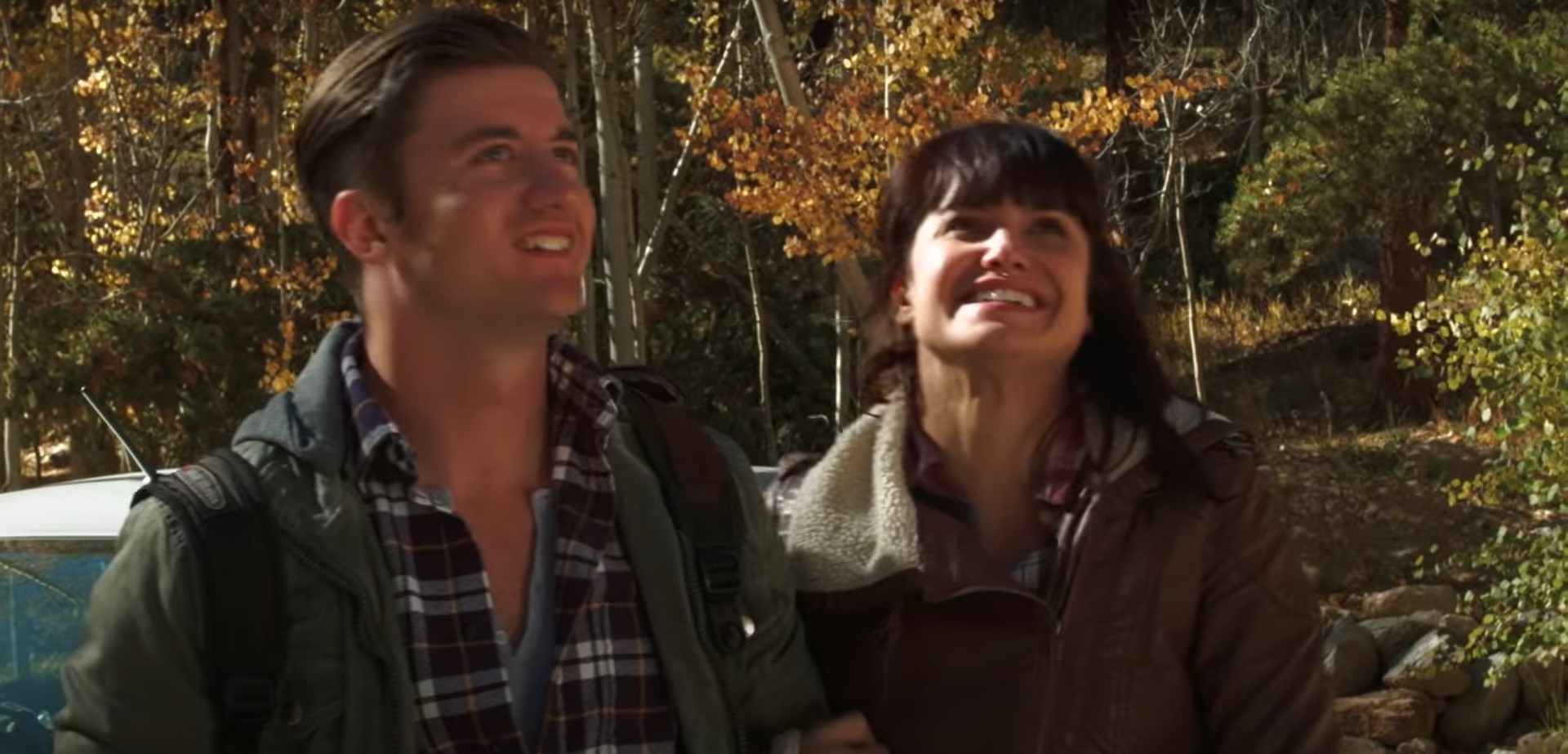
A rough patch in an abusive relationship opens up an opportunity for Myra and Owen to reconnect on a retreat at Owen’s family mountain cabin.  With wilderness for miles around, not a soul can disturb their serene getaway in retrieval what is lost in their relationship.  What they find is a biotic evil that has cursed Owen’s family once before and has returned to build a divide between the struggling lovers as a single, break-the-skin nip can transform anyone into a beastly monster.  Myra and Owen’s love for one another is put to the test when the monster blood insidiously begins to take over, leaving nearly nothing recognizable left behind the eyes. 

A complete monster movie bred out of the indie spirit with a callback to prosthetic practical effects that evokes a mental and emotion psychological theme around the durability of a relationship after being compromised by internal abuse and, possible, heredity mental health.  That’s the deep dive, suppositional story surrounding Austin Snell’s 2018 sophomoric feature film “Exposure” with a script penned by Snell and first-time screenwriter Jake Jackson.  “Exposure” is filmed in the wooded mountains of scenic Leadville, Colorado just outside the city limits of the quaint, stuck-in-time downtown where annual skijoring is a popular attraction right in the heart of town on mainstream.   Snell and Jackson produce the film alongside Clayton Ashley, who has worked as a gaffer on Snell’s debut feature “Erasure,” under their Kansas based LLC production company, Sunrunner Films.  

You can bet your lift ticket that the cast of “Exposure” is not strapping on skies and gripping to a rope for their dear life as a horse pulls the skier through the streets of downtown to go over manmade slopes and obstacles.  I wouldn’t think Snell would want to risk his four-person cast to such revelry actions that could result in injury.  Instead, a quiet, cabin-in-the-woods shoot leaves the actors to focus on the story at hand where a ingrained woodland evil infects and destroys an already bridle relationship between young couple Myra (Carmen Anello, “Zombie Beauty Pageant” and “I Am Lisa”) and James (Owen Lawless, “Hell Town”).  Anello and Lawless make a cute couple with some baggage hanging over their heads that is mostly implied rather than fully divulged and they sell well what their characters are struggling with, which is mainly trust.  Afraid of Owen’s temper, Myra is reluctant about moving forward in their relationship whereas Owen’s trust lies with Myra separating herself from an affair with a doting fling with a penchant for sending her sweet nothing texts she tries desperately to ignore.  I honestly don’t feel the immense love and hate tension in the room between Anello and Lawless who are more like best friends with an occassional spat than lovers going through a severe rough patch.  The more show of passion between them clings to the insincerity but that’s the high note for the connection between them.  Lynn Lowery (“I Drink Your Blood,” “The Crazies”) has a small role in flashbacks as Owen’s grandmother and Bruce Smith as the grandfather.

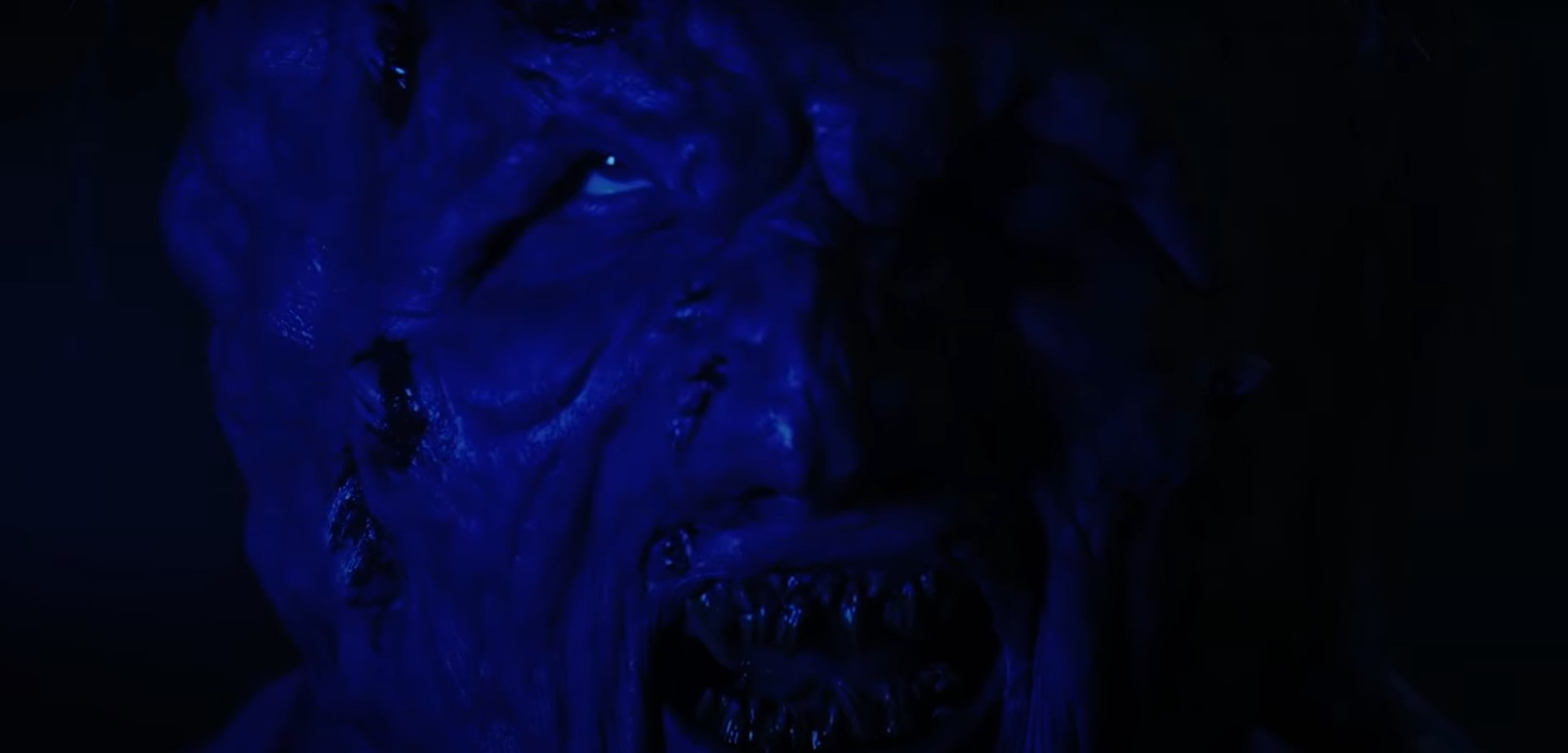
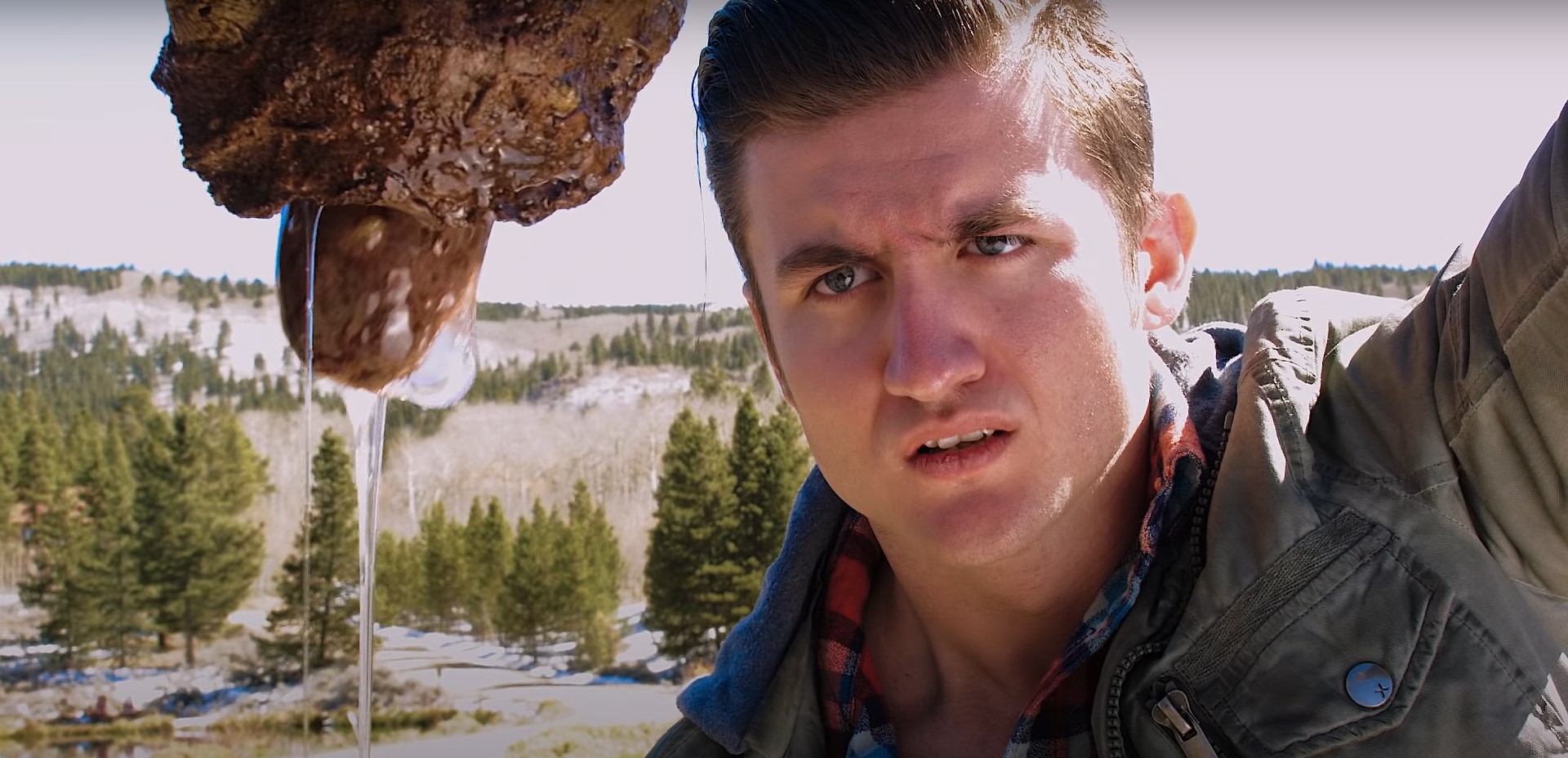
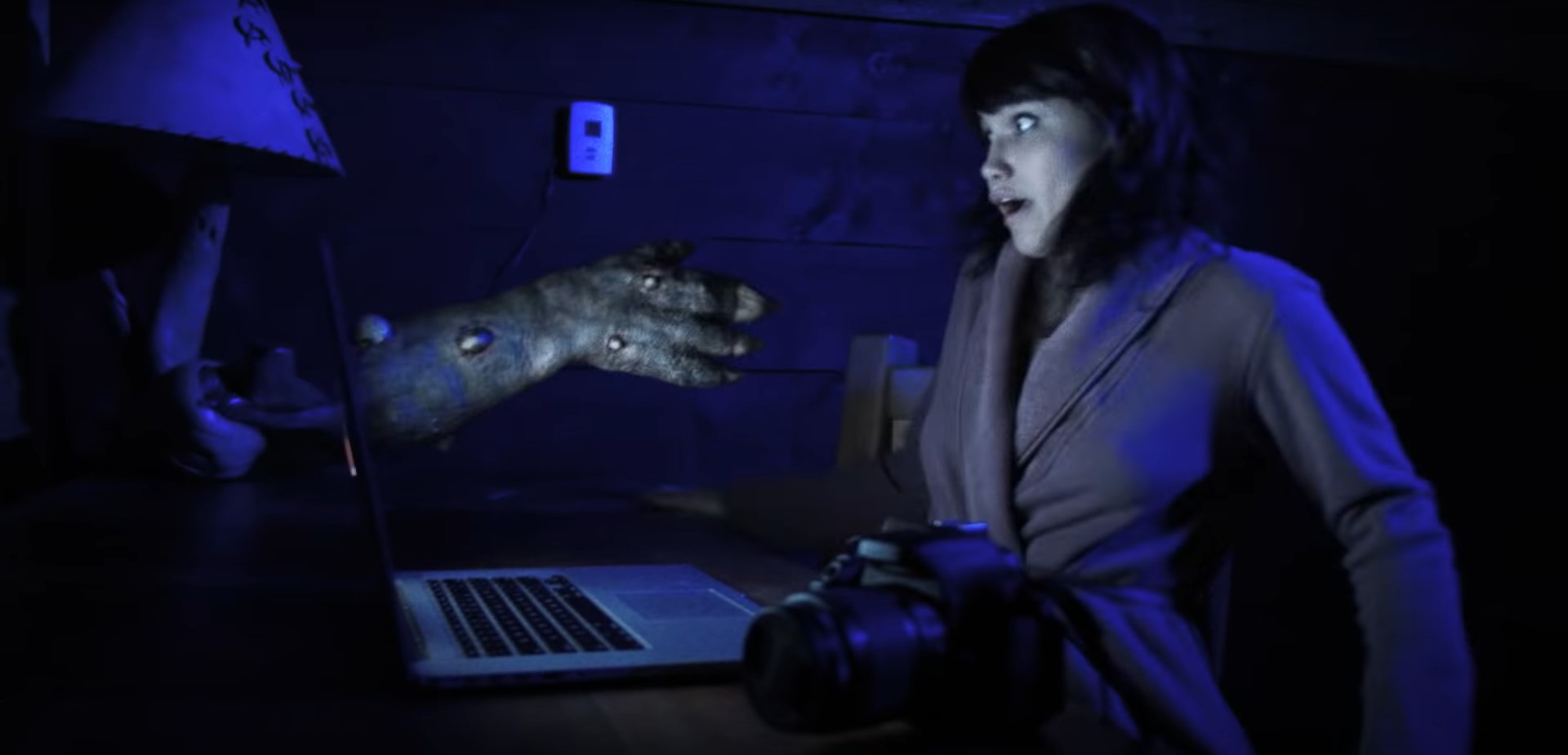
If you have already viewed Austin Snell’s “Exposure” then you likely know that the title is entangled in a double meaning. Perhaps even a triple meaning. Mountainous woods surrounded by frigid air with little-to-no help in sight leads to the vulnerability against the natural elements. In this case, the evil is the element, an unnatural one, that has laid claim to the area and sought the generational organic matter of Owen and Myra for its vile purposes – to spread its wickedness through the veins and mutate its victim into a hideous, baleful beast with a mind to match. The third meaning is more metaphorical as the term exposure can also be defined as the revelation of a typically bad thing that wasn’t clear before. In the film, Owen and Myra are going through a tough period in their romance with one of the inimical causes is Owen’s explosive and hurtful anger. Slithers of his masked morose behavior bubble to the surface in a motif view of just why they need to sort out the turbulent present in order for their possible future to resemble their merry past. The flashback story about Owen’s grandparents shed some light that what Owen may be going through is inborn, hereditary, and unchangeable; Owen’s reason and love mutates toward a gradual descent into monstrous behavior and that’s what the evil symbolically represents. Snell just happens to spin genuine relationship woes into an emblematic story with campy practical creature feature prosthetics and makeup. What most will dislike about “Exposure” is Snell’s true indie, natural approach to the special features that relies heavy on the cheesy, rubbery prosthetics and tangible tube and rod special effects without a lick of visual imagery for a smoothed over appearance. I applaud Snell for his raw, if not antiquated, choice that nods the throwbacks in the absence of contemporary conveniences.

For the first time on home video, “Exposure” makes a Blu-ray debut courtesy of Scream Team Releasing and distributed by MVD Visual. The not rated, NTSC region free, AVC encoded Blu-ray is presented in a widescreen 16X9 (1.78:1) aspect ratio. The 1080p, high-definition resolution looks pretty good and detailed, despite the heavy blue tint and gels, with negligible compression issues, especially with the heavy use of fog machine and a number of night scenes that don’t display noticeable banding or fuzzy/blotchy pixelation. The English language PCM 2.0 stereo audio provides a lossy amplitude that’s definitively detrimental to “Exposure’s” teetering success with audiences and the tracks don’t punch like that should for an atmospheric creature feature. The dialogue also sounds a bit boxy and artificial at times but, nonetheless, the dialogue track is still clear and discernible. Special features include cast and crew audio commentaries, a quick glimpse featurette into the behind-the-scenes of the special features, production stills, theatrical trailer, and retro VHS trailer. The physical Blu-snap case comes with reversible cover art, which, if you ask me, the secondary cover is the best with the illustrated, shadowy monster looming over a brightly lit heroine carrying a flashlight and a small axe. “Exposure’s” tribute veneer to the 80’s creature feature is spectacular without a doubt but lacks the energy to fully come to terms with its theme that’s become caught in the throes of a throwback rather than in the throes of relationship reconciling.

Get exposed ot “Exposure” on Blu-ray at Amazon.com!

At 42,000 Feet, EVIL Can Hear You Scream! “Row 19” reviewed! (Well Go USA / Blu-ray)


Don’t Miss Your Connection For “Row 19” on Bluray!  

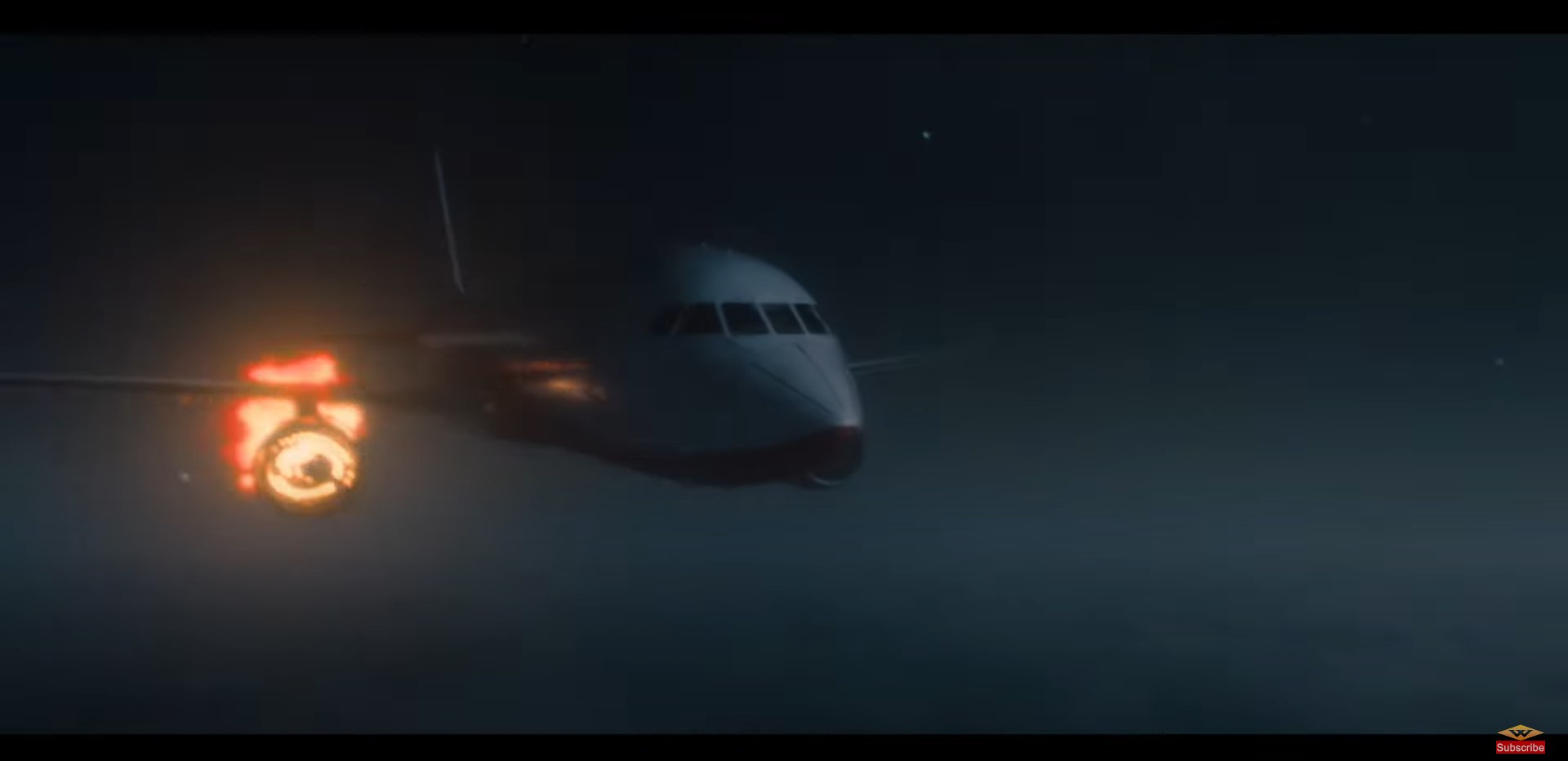
Young Katerina survives a deadly commercial plane crash that killed her mother.  As the only survivor to miraculously to alive, she becomes the center of the public and media attention over the next 20 years.  Now as a grown woman with a young daughter of her own, around the same age of her deadly tragedy, Katerina is about to embark on a plane for the first time to visit her mother and though past feelings leave her tense and scared, her daughter and her being a psychologists help soothe her fears…to an extent.  The late-night flight during a snowstorm leaves half the cabin empty with only a few passengers and the flight dwindles the numbers even more when passengers begin to die off in mysterious random misfortunes.  Lines blur between reality and the past for Katerina who’s about the relive the worst day of her life. 

I consciously realize that all things Russian is likely on everyone’s blacklist at the moment with the unfounded war Ukraine, but anything not created by the authoritarian Russian governing body could be, more-or-less, independently controlled by the people of Russia who are, again more-or-less, against the bloody and unnecessary Putin-fueled conflict outside their country.  So, when I sit and analyze Russian native Alexander Babaev’s latest film, a mile-high horror known as “Row 19,” I’m objectively looking at the artist and his craft rather than the possibility of a stalwart countryman just doing his propaganda duty for the motherland.  In fact, there’s none of that latter statement present in Babaev’s paranormal 2021 thriller that touches upon regret and facing fears, penned in the debut feature film screenplay by James Rabb. “Row 19,” or “Ryad 19” and, in South America, “Passenger 666” is the high-flying, dark mystery of the air film from multiple production studios in KIT Film Studio (“Mermaid: Lake of the Dead”), Central Partnership, Monumental Film, and Red Media.

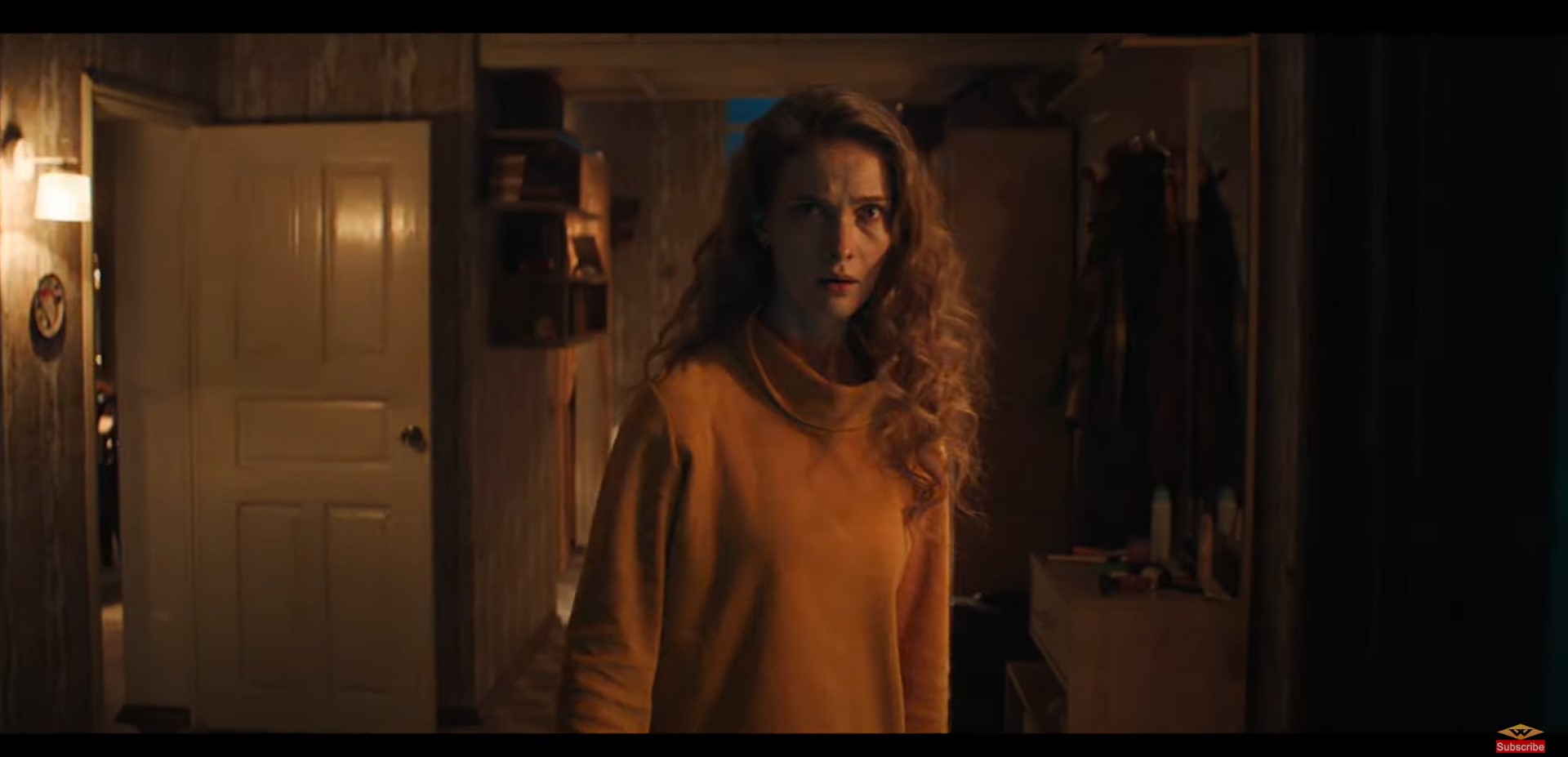
“Row 19” sets the stage with a handsome cast of ensemble characters boarding a sole frostbitten and nearly vacant plane bound for a destination that audiences know all too well will be a landing zone that is anywhere else, but the destination printed on their purchased tickets. A variety of character flavors is always a classic touch when elucidating an unexplained threaten situation. At the yoke is Svetlana Ivanova (“The Blackout”) playing the adult version of the Katerina who bested death being the only survivor of a deadly plane crash 20 years ago. Scarred not only on her leg but also in her head, Katerina vouchsafes herself into getting back on than massive flying steel horse with an internalized pep talk by way of her psychologist vocation who she also helps people with their own internalized issues. However, Katerina is not a very good psychologist when the cabin goes into a tailspin of unexplained death and disappearances. The impression from the film is that the script, at one point or another, had Katerina as a medical physician as she’s often called upon and looked toward by the other passengers to know what to do when a passenger faints or another passenger is burnt to a crisp. She also doesn’t help the matter when she claims to be a doctor (and neglect to mention she’s a mind doctor. I believe that warrants a case for malpractice.). In the adjacent row is the hunky former combat news reporter Alexey (Wolfgang Cerny, “The Red Ghost”) who makes small talk with Katerina and her daughter Diana (Marta Timofeeva) and yet, the suspected sexual tension between them became never present and never materialized. Instead, Katerina and Alexey go back and forth on their mental blocks that causes drug use and shaky hand syndrome, a welcoming change to a rather routine love interest path that’s been overtrodden in other films in similar plots. However, there’s never a full understanding of Katerina’s role in this topsy-turvy spin through realities that only suggests that Katerina has a mighty will that can’t be contained even for her own good. Anatoliy Kot, Denis Yasik, Irina Egorova, Viktoriya Korlyakova, Ivan Verkhovykh, Anna Glaube, and Yola Sanko as the Witch (yes, there is a regular Baba Yaga-esque in the character list!) round out of the cast.

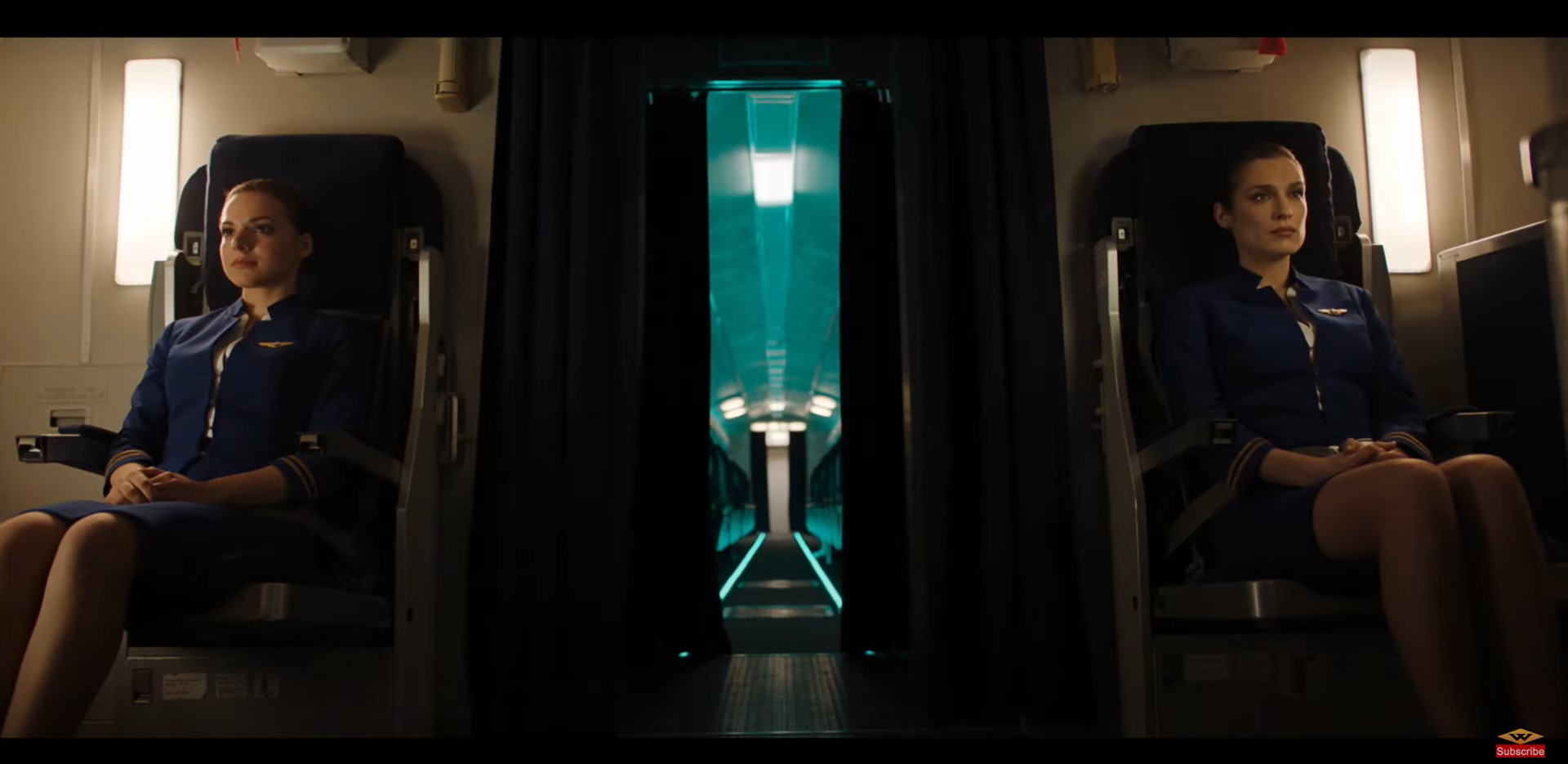
The sky is the limit with airplane horror as the concept of inescapable terror above the clouds can be the most frightening experience for not only acrophobia or claustrophobic individuals, but for average joe passenger looking to earn extra flyer miles on their fear membership cards.  We’ve seen zombies on a plane (traditional and Nazism), we’ve seen gremlins on a plane, and, hell, we’ve seen snakes on a plane.  Now, Babaev introduces the spell-casting witch confined to the rows of the tightly packed, small, and uncomfortable airplane seats and served the Salisbury steak with a side of rancid bag peanuts.  I can see why a witch would be pissed off as well.  However, there’s more than what meets the eye in Babaev’s witch that isn’t just on an obvious killing spree because her inflight cocktail was a little watered down or because of something a little more worthy of a massacre.  “Row 19” aims for misdirection in trying to get the audiences thinking one way by using sleight of hand but really a behind-the-scenes motive is kept in the dark for most of the runtime.  Babaev keeps the momentum fairly charged by setting up individual character personalities with just enough of a touch of odd behavior to make the atmosphere feel foreboding and keep interest in the next key scenes of story progression and at the climatic reveal is where the director’s momentum takes a nosedive, losing the altitude and the cabin pressure of smooth flight with a bow-wrapped-gift exposition that takes all the air of the suspension. 

Fasten your seat belts. Secure all lose items. Lift your tray table and lock it in the upright position. “Row 19” is about to take off and take flight on a Blu-ray home video release from Well Go USA Entertainment. The not rated, region A Blu-ray is presented in a widescreen 16:9 aspect ratio with a decompression of around 20-26 Mbps, rendering picture quality of this AVC encoded release better than expected from Well Go USA. Image is sharp, well-delineated, and abundant with the right amount of color, appropriately denoting flashbacks with a filtered color reduction with only the slightest of change by director of photography Nikolay Smirnov. The Russian language 5.1 DTS-HD master audio track is crisp and clear. A solid track, well-established, full-bodied fidelity track that hits all the right channels with the right balance. There is an option English dub as well as available English subtitles on the Russian track. The subtitles synch well, though fast, and are transcribe with no errors detected. The 79-minute feature comes with a static menu, scene selection, and zero bonus features, which is typically the case with these U.S. distributed Russian releases. “Row 19” is visualized phobic fear, a self-flagellation of trying to change the past with what ifs, and director Alexander Babaev instills a shadowy creepiness inside the cockpit of consternation, but stalls at the height of the film’s storytelling success with a wrap-it-up quick and loose ending.

Don’t Miss Your Connection For “Row 19” on Bluray!