Fear is Evil. “A Taste of Phobia” review!


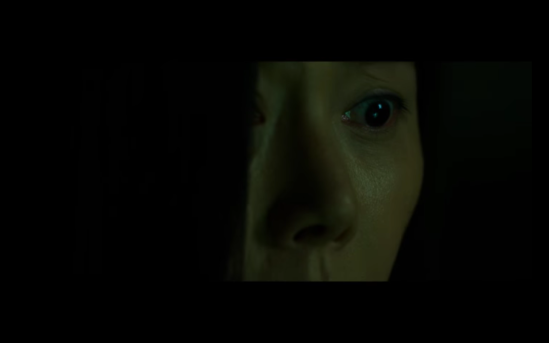
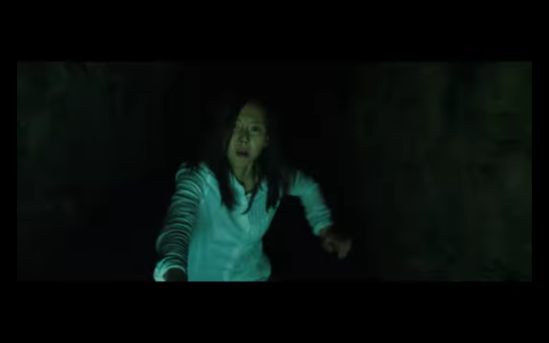
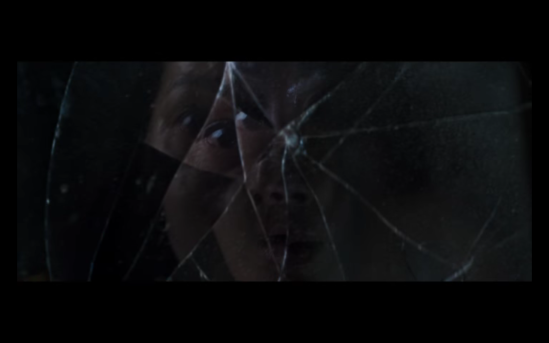
“A Taste of Phobia” brings together 14 international directors to the fold, executing their creative version of terror of various fears. From the fear of the dark to the fear of feces, each short compiled into this feature length film delves into what it means to be afraid of something that an average person regularly encounters on a daily basis. No ghouls, no monsters, and no ghosts stories here; “A Taste of Phobia,” or otherwise known as “Phobia,” explores the inherit human element, the everlasting internal struggle, and the mental conjuring of demons and the anxiety of the unknown that fabricates by and into fear itself. The psychological terror of phobias plagues each and every one of us and is never exclusive to a particular group or race of people, and that’s a haunting reality, especially in an time and age where suppressed personal emotions and issues lead to unfortunate suicidal circumstances. Some of the directors include Lorenzo Zanoni, Alessandro Sisti, Alessandro Redaelli, Alessandro Giordani, Rob Ulitski, Sam Mason Bell, and Davide Pesca.
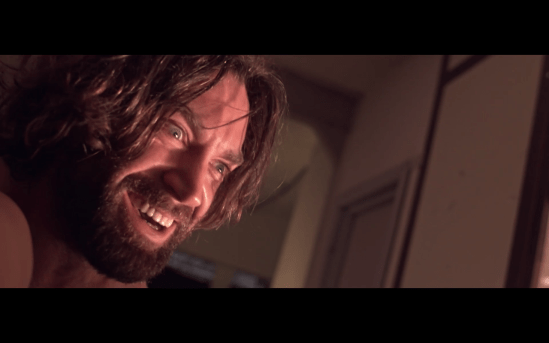
A number of these filmmakers I’m not familiar with, but I do recognize a few names from the bunch by examining their previous work. Somniphobia is a sleep anxiety disorder which is the basis for the short written by Sophia Cacciola and directed by Michael J. Epstein, who also steps into the lead. “Blood of the Tribabes,” a vampiric melodrama, was my last experience with the Cacciola and Epstein duo, who have a passionate dynamic and chemistry when it comes to horror. Somniphobia is a whole different animal that’s more on a compact scale in comparison to their vampire feature and doesn’t necessarily tackle the perpetual fear of sleep; instead, Epstein portrays a contractor pushed to the limits, practically threatened by an employer, to finish coding a project to the point where he hasn’t slept in days. The lack of sleep and the various methods to try and stay awake by the power of suggestion have fried his brain to the point of self-inflicted harm. The writings good and the dark humor direction is a nice touch. Another recognizable filmmaker that stands out to me is Domiziano Christopharo. The “House of Flesh Mannequins” and “Red Krokodil” director has always exhibited a thirst for body horror and the Italian director places his talents in the kitchen with Mageirocophobia, aka the fear of cooking. Christopharo continues his brand of body-manipulation motif by telling a story of a woman, whose seemingly very good at putting together a tasty and savory fish dish, into a deeply disturbed woman who contemplates and nightmarishly fantasizes herself being the sliced, diced, and cooked to a crisp main dish.
Then, there are many filmmakers I’m not familiar with at all, but did enjoy their short entries. Sunny King’s Nyctophobia, aka fear of the dark, is hands down one of the best entries despite the slight ghost-like manifestation, but the Nigerian director fosters a tangible evil constructed by fear and his version of Nyctophobia is classic, very timeless, sans blood and shock to the point where the story plays out like a simple spook film. Very enjoyable, subtly powerful, and basically classic in tone, King reigns “A Taste of Phobia.” Now, that doesn’t mean Nyctophobia stands alone; UK’s Jackson Batchelor and his fear of politics, Politicophobia, has to be one of the more honest entries and, certainly, one of the more timely. The political undercurrent of two-faced politician is a phobia we can all get behind with their scummy, repetitive, and subliminal messaging campaign ads. Batchelor polar extreme sheds light on what a fear invoked person might experience when viewing just one of the hard-hitting, lying through the teeth campaigning juggernauts. The previous examples pinpoint heighten the emotional aspect of fear, but what if fear perpetuated madness, such as in Poison Rough’s Mysophobia, or fear of germs. The idea of bugs, dirt, or even microbes, crawling in the hair or on the skin gives one very particular man the creepy-crawlies to the breaking point where he’s forced to self-remove his own skin in order cease the sensation.
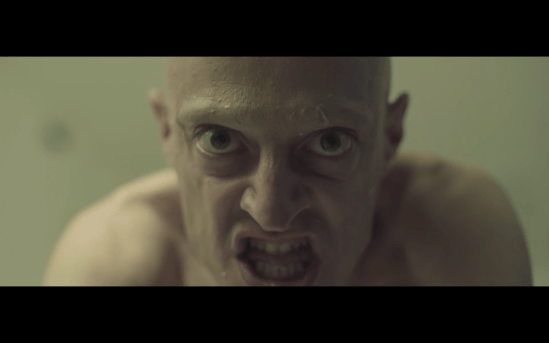
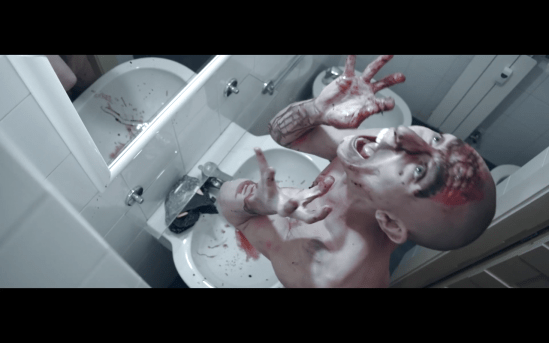
On the opposite end of the spectrum, some shorts didn’t make muster. Fear of feces, or Coprophobia, was just bizarre, daft, and, well, not even that gross for the titular phobia. The approach by churning schlock director Jason Impey was more juvenile than expected with a feces covered stuff animal rising out of the depths of a shit covered toilet and have actor Martin Payne portray a fight of physicality in a small bathroom that ends with Payne naked stabbing the metaphorical stuff animal. Dustin Ferguson’s Mazeophobia, fear of mazes, was another that flared out with a hispanic man driving around lost in America’s unforgiving conservative countryside. He eventually winds up in the hands of a pair of Trumpian wing nuts and the climax becomes a little fuzzy from there into editing shambles that hesitates to make sense of how the series of events play out.

Artsploitation Films, a Philadelphian based distributor seeking the dark and desolate corners of the world to bring to light international entertainment, releases horror-anthology “A Taste of Phobia” onto DVD home video. The anthology is presented in various ratio formats due to the different styles of filmmaking and, thus, a range of image qualities stand out to some that’s suffer from aliasing and blotching atrocities to others that surprising peak in picture value. The 2.0 stereo audio track, mostly English with some Italian and Spanish, have varied ranges, depths and balances as well. Bonus features include a bonus fear mini-movie entitled Achluophobia from director Jason Impey, a behind the scenes look at Michael J. Epstein’s Somniphobia and Chris Milewski’s Pharmacophobia, an interview with producer and one of the 14 fear directors Domiziano Christopharo, a little inside on the special effects for Pharmacophobia and Mageirocophobia, and a theatrical trailer. “A Taste of Phobia” pushes the limits to extremely visualize the niche fears in us all by packing 14 deadly phobias up into an anxiety-riddled anthology released by the good, but probably psychologically insane, people at Artsploitation Films!

Buy Artsploitation Films’ “A Taste of Phobia”

Don’t Let Those Evil Voices Fool You. “The Mimic” review!


When the Mt. Jang cave is broken into by a couple of lethal wrongdoers, a ominous presence is released onto the mountainside, a malevolence that can precisely mimic voices of loved ones to lure victims to their ultimate doom. A young family, hanging on to a last bit of unnerving hope, moves into a house on the surrounding area, seeking to reverse the impossible by rejuvenating their semi-catatonic grandmother whom perhaps knows the last whereabouts of their missing boy from five years ago, but what the family encounters on the mountainside is a harmful specter hellbent on using the body of a obsessive and loyal shaman and his innocent, preschooler daughter to obtain more souls for a fearful urban legend, the Jangsan Tiger.

Based off the South Korean folklore involving the Jangsan Tiger, a man-eating beast that lives and hunts on the Jangsan Mountains and can imitate a woman’s screams or the sound of running water to lure people in, “Hide and Seek” director Huh Jung helms “The Mimic,” his sophomore 2017 fantasy thriller that explores a highly entertaining, opt-ed version of the urban legend. Originally titled “Jang-san-beom” in South Korean, Huh also pens the script catered to blend fantasy with delusional, family-destroying hope. Even though hope is more than usually a positive aspect in all dire situations, Huh manipulates hope by molding it as an entrapment, leading friends and family members down a path to a false reality, psychological impairments, and, ultimately, to a melancholic demise.

“The Mimic” stars “A Tale of Two Sisters'” Yum Jung-Ah as a grieving mother, Hee-yeon, looking for answers to the mystery of her son’s disappearance while in the care of her grandmother. Jung-ah tackles a role that’s compiled with emotional affliction, fear, and chimera to which the Seoul born actress challenges herself to depict each complication as one connective element. Park Hyuk-kwon plays her husband, whom is struggling to cope with his wife sadness and inadequacy to let go of the past. Together, Jung-ah and Hyuk-Kwon’s character dynamics strive to unearth deep-rooted, therapeutical hurdles and they accomplish just that with the help of influential costars, especially in the 9-year-old actress Shin Rin-Ah. The sweet, fresh face of Rin-Ah Shin becomes the ultimate deception, a suspected sheep in wolf skin, that this pint-sized bundle of cuteness could be the family’s undoing. The cast rounds out with Heo Jin, Bang Yu-seol, and Lee Jun-hyeok.

Now while “The Mimic,” not to be titularly confused with Guillermo del Toro’s “Mimic,” is laced with unsettling camera angles and bottom-popping jump scares, the embodied Jangsan Tiger regrettably places the Huh Jung one notch lower on the proverbial grade scale. The shaman’s body, a rather thick individual, has been possessed by the Jangsan Tiger that’s been depicted covered with stringy white coat, long arms and legs like a sloth, a tiger-like maxilla and jowl on a human-esque face, and with cold, blank eyes. Instead, the Jangsan Tiger remains in human form throughout with subtle changes that reference the tiger; for example, the horizontal white fur on each side of the shaman’s rather gnarly face. Transformation effects just don’t do the antagonist justice and, frankly, should have kept the shaman a wretched shell of himself, spawning through mirror gateways, ever reaching to touch the next soul to digest, but when Hee-yeon and her husband enter the labyrinth Mr. Jang cave system, the shaman is a rabid dog, a ravenous trickster, but not as ferocious as the description might sound.

Arriving on Digital & Blu-ray June 12, Well Go USA Entertainment distributes “The Mimic” onto an unrated, 1080p Blu-ray presented in a widescreen, 16:9 aspect ratio, and the image suffers no compression issues, has a fine palette that more-or-less of a blue or yellow hue, and has a leveled up bitrate. The 100 minute runtime feature has a Korean 5.1 surround sound DTS-HD Master Audio that’s effective with the Jangsan’s imitation lures. The waterfall rain and echoing animal ambient tracks are spot on with range and depth. Optional English subtitles are available and, considering the film’s duration, are considerable accurate and timely, but I did manage to catch one error where “leaves” was typed instead of “lives” where appropriate in the context of the sentence. Extras are slim with a cursory making of featurette and the film’s original trailer. “The Mimic” revels in South Korean lore, even if it’s a variation of, and the menacing atmospheric and audio cues exhibit a precision that’s a testament to director Huh Jung’s psychological spook show filmmaking, but the build up behind the mysterious small girl, the bricked cave, and the alluring voices are quickly summed up with meretricious humanoid value instead of a mystical and enchanting beast.

Become Evil’s Best Bud in “My Friend Dahmer” review!


Senior year 1978, right before the start of his 13 year killing spree, Jeffrey Dahmer struggled to fit into the high school equation. Spending much of the time in his makeshift laboratory, dipping roadkill into jars of acid to retrieve the bones that were still intact, Dahmer didn’t have many friends to socialize his unbalanced behavior. His interest in dissecting animals and an unearthed fascination with the same sex drove him to stay in serene isolation, but when his parents, between the marital spouts and his father’s projections, pressure him to make friends, to live an active lifestyle, Dahmer reduces himself to being the class clown for acceptance, catching the attention of three students who befriend him because of his classless antics. Just as his life begins to form something that similar normalcy, the familiar urges overwhelm when he fantasizes about a young male doctor of sleeping with his fresh corpse. With the inkling to kill creeping to ahead, Dahmer drowns himself in alcohol while still maintaining what’s left of his friendship that suddenly feels more like his exploitation for the benefit of others.

What a hell of an origins story! “My Friend Dahmer” is the 2017 biographical docudrama from writer-director Marc Meyers that becomes the looking glass into the catalytic events, or even last moments of hope to reform, infamous serial killer Jeffrey Dahmer. The film is a visual adaptation of John “Derf” Backderf’s graphic novel of the title. Backderf was also one of Dahmer’s only friends in high school and relates his experiences through exaggerated illustrations of his graphic novel. With in the film, Meyers notably recounts the pages of the Backderf’s novel with a story that puts Dahmer justifiably at the epicenter that focuses almost entirely from Dahmer’s disturbed and warped point of view of inner body interest, homosexuality, and standards of social acceptance. Rarely, does Meyers stray from that structure in obtaining the external thoughts and opinions of Dahmer’s friends, and perhaps even enemies, who’ve made some sort of interaction, but being that the novel is a work of someone else’s non-fictional perceptions and not of Dahmer’s, Meyers puts weight forthright with Backderf’s opinion with the characterized Backderf interjecting here-and-there on accounts that significantly courses Dahmer’s actions.

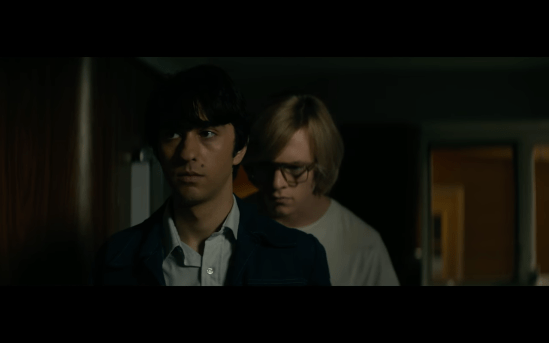
Surely an eye brow raising casting choice, Disney Channel actor and Kids’ Choice Award winner Ross Lynch enters into a polarizing role that is the pre-monster of Jeffrey Dahmer and creepily channels in a powerful performance the embattled younger image of the soon-to-be murderer, cannibal, and necrophiliac. Lynch portrays Dahmer as a rare emission of emotion and almost frighteningly stiff or mechanically with hunched shoulders just below his wavy blonde hair that wrap around the large and rounded rectangle glasses. New York City born actor Alex Wolff picks up the graphite pencil to spun out probably Dahmer’s closest friend John “Derf” Backderf. Perhaps in a way, Backderf had manufactured a piece of Dahmer’s destined genetic makeup and Wolff lays in the guilt, and the fear, thick when around Dahmer near the end. Anne Heche (“Psycho” remake) and Dallas Roberts (“The Walking Dead” and “Mayhem”) become Joyce and Lionel Dahmer, Jeffrey’s parents. Heche and Roberts seize every on screen opportunity to lay into one another, a persistent and regular difficulty that stemmed between Joyce’s mental and physical heath and Lionel’s withering patience for his anxiety riddled wife. The cast rounds out with Vincent Kartheiser Liam Koeth, Tommy Nelson, and Harrison Holzer.

Aside from the retelling of Backderf’s recollections, “My Friend Dahmer” shoots scenes right inside what was once Dahmer’s actual home in Ohio. That bit of realism adds monumental flavor to enrich the inherently dark subject matter of how a young Dahmer was subjected to compounding blows to his psyche in the short timespan that was his senior year. From his father tearing down his makeshift laboratory and junking his precious dead animal experiments, to his mother’s divorce inducing schizophrenia, and to being the class clown in order to make friends, Dahmer couldn’t maintain control over his ebb and flow urges and Meyer effectively highlights these chapters in Dahmer’s frayed playbook of life that tipped the scales of unfavorable malice.

FilmRise and MVDVisual present “My Friend Dahmer” on a AVC encoded 1080p High Definition Blu-ray with a 2.40:1, widescreen presentation. Through a vista of small town quaintness, picture quality immensely defines a cold embrace of a softer, fluffier effect. The color palette strongly reflects the whitewashed and faded of the era. The English Dolby Digital 5.1 stretches the ambient with a film that doesn’t necessary pack an audio punch. The dialogue is rendered cleanly and the retro soundtrack is a boost to docudrama with clarity and pace. Bonus features are a bit thin for a non-fictional individual with humungous notoriety and they include a brief interview with star Ross Lynch, Behind-the-Scenes slide show, and a theatrical trailer. “My Friend Dahmer” revitalizes the feelings and the chills that washed over us who are old enough to remember Jeffrey Dahmer’s grim-storied apprehension and, yet, director Marc Meyers is able to strip Dahmer of his monstrosity for 107 minutes and make him simply human as a young man with everyday problems without a ounce of parental, professional, or friendship guidance, funneling to the notion that we all have a little Jeffrey Dahmer in us.

“My Friend Dahmer” is on the Amazon today!

Be Careful of the Evil You Wish For! “Pyewacket” review!


In the wake of losing their father and husband, Leah and her mother struggle to cope and are at their wits ends with each other. Leah, an impressionable and angst-filled teen, embraces the occult lifestyle after her father’s untimely death despite her mother’s distaste for it. Leah’s mother also battles the everyday familiar feelings of her constant surroundings that remind her of her dear husband and the sensations compel her to move her and Leah more than an hour away, away from Leah’s only friends including a boy she’s become fond of, but the constant and languishing heated disagreements invoke Leah to act impulsively, gathering her ritual articles, and while in the woods, naively summon a witch, named Pyewacket, to kill her mother. Regretting her actions almost immediately and fearful of what’s to come, Leah is cautiously ever attentive to her surroundings as each passing night a presence makes itself known and is eager to not only harm Leah’s mother, but also intends to rise it’s wickedness toward Leah.

“Pyewacket” is a 2017 Canadian horror-thriller from writer-director Adam MacDonald. The Montreal born MacDonald constructs an impressive and suspense-riddled sophomore film that offers a beautifully bleak atmosphere while touching upon layered themes that are relatable to anyone who grew up with an overbearing parent. “Pyewacket” succeeds as a stark melodrama of a hurting mother and daughter who are looking for some kind of pain relief and a fresh start. MacDonald takes it to the next level, churning out a cautionary tale, by implementing the theme of being careful for what you wish for because you just might get it. Oh, and there’s spine-tingling moments involving a ghoulish witch with an appetite for deception and have you squinting yours eyes in fearful anticipation of when she’ll strike.

Another Canadian, the Vancouver born Nicole Muñoz stars as the disquieted Leah. Muñoz dark assets heighten her disdain and resentment she evokes out from her character toward her mother, played by the former “The Walking Dead’s” Laurie Holden. Tall and blond with a more verbose attitude in putting her feelings outward, one would have difficulties placing Muñoz and the “Silent Hill” star as daughter and mother on screen. Holden manages to be the glue that keeps the story moving as Leah rarely has much to the say and is only reactive instead of proactive about her situation, making the two actresses dynamically challenging that purposefully sparks uneasiness in every scene. Leah’s friends serve as her lifelines to the world outside her new country home that her mother has unfairly displaced her to. Her best friend Janice, the Toronto born Chloe Rose, whose alternative appearance and nonchalant, cocky persona encourages her to be Leah’s confidant. Rose seemingly enjoys the role that offers vibrantly colorful stripes of hair with lots of gothic makeup that comes complete with leather and plaid outerwear. I was a little disappointed with Leah’s love interest that was Aaron, shoed by the tall and thin Eric Osborne. Aaron really wasn’t showcased much though MacDonald’s script attempts at hinting more to the character, but unfortunately for Osborne, Aaron falls the ranks of a back burner boyfriend trope.

What might be the undoing of “Pyewacket” is simply the timeliness. Robert Eggers’ “The Witch” and André Øvredal’s “The Autopsy of Jane Doe” completely overshadow the JoBro Production & Film Finance (which is kind of funny because the same production company also did some funding for “The Witch” so in essence, “Pyewacket” is “The Witch’s” little cousin) with two already fantastic tales of non-broom riding and mind tampering witches that share the same intense ferocity of pure hatred and dark magic on a much bigger and grander scale when considering production value that relies on a viewer relatable story. A story involving a mother-daughter warfare is inarguably human to us all, but in competition with that, MacDonald seems to embrace that side of the story with slight favoritism as the director is light with a slow burn of the catalytic turn of events that evokes the titular character despite it being the most gripping portion of the film; instead, the focus is more honed in on Leah’s experience that intimately distances her from each of those that are closest to her: Janice, Aaron, her mother. Left in the wind is much of the witch’s background and how the witch becomes familiar to Leah which goes relatively unknown. And, also, not to forget to mention that the witch, or familiar spirit, is screened through shadows, long shots, and quick takes so to get a shape or a image around the appearance, all I can suggest is that Pyewacket resembles Samara from “The Ring” with stringy, filthy hair, slender figure, and moves around like a spider. Aside from a popular teeny-bop occult novelist, Rowan Dove played by “Bitten’s” James McGowan, the only facts touched upon about “Pyewacket” are that the spirit is extremely malevolent and can deceive the perception of people and events.

From Signature Entertainment, the DVD and Digital release of Adam MacDonald’s “Pyewacket” hits retail shelves April 23rd and digital retail shelves even earlier on April 16th. Since a digital screener was provided for this review, an in-depth critique of the video, audio, and bonus material will not be covered. Though clutching to the money-bagged coattails of bigger, better witch films from the last three years, “Pyewacket” is still a mighty story with complex characters complete with sheer dread from an obscure and grievously sorcery crone pure with black heart that will definitely elicit shortness of breath and rapid heart palpitations if watched alone in the dark.

The Evil That Doesn’t Kill You Makes You Stronger! “Jungle” review!


Yossi Ghinsberg yearned for more than the comfy, cushy life he was born into and being young and adventurous, Yossi travels abroad to backpack in Bolivia to pursue self-discovery and beauty in places far less travelled despite his father’s wishes. He quickly befriends fellow backpackers Marcus and Kevin and together, they lay tracks through the eclectic terrain of the breathtaking Bolivian landscape, but wasn’t until an Austrian geologist named Karl approached Yossi about a promise of unearthing gold and experiencing hidden tribes deep inside the lush jungle. After some convincing, the three friends venture into the jungle with only Karl to guide them and, at first glance, the wilderness is an escape from the noise and pollution of human corrupted inhabitations, but a drastic realization quickly washes over them when they’re force to separate and that the jungle is a cauldron of constant survival. Along with captivating beauty, fire ants, poisonous snakes, symbiotic organisms, jaguars, and torrential rains tip the iceberg of everything that embodies the sequestered jungle and Yossi must endure the trials and tribulations alone in order to make it out alive.

Based off the book of true events from Yossi Ghinsberg comes the motion picture retelling of Ghinsberg harrowing tale of survival in “Jungle.” The 2017 biographical adventure-thriller is penned by Justin Monjo (teleplay writer for TV hits like the sci-fi odyssey “Farscape”) and directed by “Rogue” and “Wolf Creek” director Greg McLean. “Jungle” showcases the night and day environment of one of the world’s most beautiful, yet deadliest locations, cascaded with awesome uncharted landscapes with an augmentation of great mortality once man is introduced. However, the thing with the jungle is that no matter what man’s objectives may be with the rainforest, whether it’s to destroy it or to embrace it as were Yossi’s intentions, nature treats all with the same merciless brutal as it’s kill or be killed. Yossi is in the midst of a man versus nature thematic element where Darwin’s survival of the fittest lays all well true and from his book, Yossi Ghinsberg went through a nearly three weeks of severe isolation, stomach-devouring starvation, and vigilant hyperawareness against the local wildlife. Yet, somehow, he survived.

To play such as downtrodden character needed an actor committed wholeheartedly to the story and, luckily for McLean and the rest of the crew, Daniel Radcliffe encompassed Yossi Ghinsberg and his plight with passion and dedication. So much dedication that the Harry Potter famed actor lost about 14 to 15 pounds in order to mimic starvation and really put his body close to the hazards Yossi had faced. “Jungle” has certainly solidified his range as an actor inside the genre of not only fantasy films, but also thrillers as well. From “Horns” to “Imperium,” the English-born, 5’5”, 28-year-old actor has placed a major footprint in the industry that stretched from low-budget to Hollywood stardom and doesn’t seek to stop in the near future. Radcliffe is joined by a pair of Australian actors in Alex Russell (“Chronicle” and “Bait”) as American photographer Kevin Gale and Joel Jackson as Swiss teacher Marcus Stamm on sabbatical. A standout performance, one that really rivals Radcliffe in cliffhanging suspense with cryptic intentions, is that of Thomas Kretschmann (“Blade II”) playing the Austrian geologist Karl Ruprecther. Fantastic chemistry between all four men with spot-on performances, especially not portraying their native heritage.

While Greg McLeans has no fear in getting gritty where gritty needs to be get, “Jungle” has a tame nature about it for a director well-known for Outback cruelty. McLean doesn’t exact the right amount of perilous attitude that was unfortunately bestow upon Yossi. Much of Yossi Ghinsberg’s book was not translated to screen such as his rectum being impaled by a large stick when he falls down a slope. The hard stop editing and pivot bounces the viewer around being out of control on a trampoline. When we meet Yossi for the first time and he encounters Marcus Stamm, a cascading event of one jointly pursuit with another that string along and attach Kevin Gale to a web of awkwardly editing scenes of traveling through Bolivia in what felt like a slapdash montage with the sole purpose of setting up the trio’s friendship in an unsympathetic way. Another issue with the editing was that the film had to keep reminding the viewers about previous events, such as when Yossi was bitten by a fire ant, and those scenes ended up being a redundant time filler that points audiences to being naive and inattentive to cherry pick previous actions.

Umbrella Entertainment releases “Jungle” on a rated mature, region B Blu-ray with crystal clear full high definition, 1080p presented in a widescreen 2.35:1 aspect ratio. Image quality bares no marks of compression issues nor any flagrant fouls in the coloring, whether natural or generated. Aliasing is also a non-issue. The 5.1 DTS-HD English soundtrack has moments of low fidelity at the beginning of the film where making out the dialogue can be challenge, but the jungle ambiance and the Johnny Klimek (“Land of the Dead”) score bring alive the eclectic atmospherics of the wild, wildlife. Bonus features include a featurette that extends up Danial Radcliffe becoming Yossi Ghinsberg, the making of the Yossi Ghinsberg story, cast and crew interviews, and the theatrical trailer. “Jungle’s” adventurous first half sets up the catalytic downfall into desperation and despair of a man versus nature thriller in the latter half, splitting Daniel Radcliffe into two auspicious roles of enchanting self-discovery and a fight for survival. The movie most certainly encourages one to read the book of Yossi Ghisbergs edge of death misadventure.