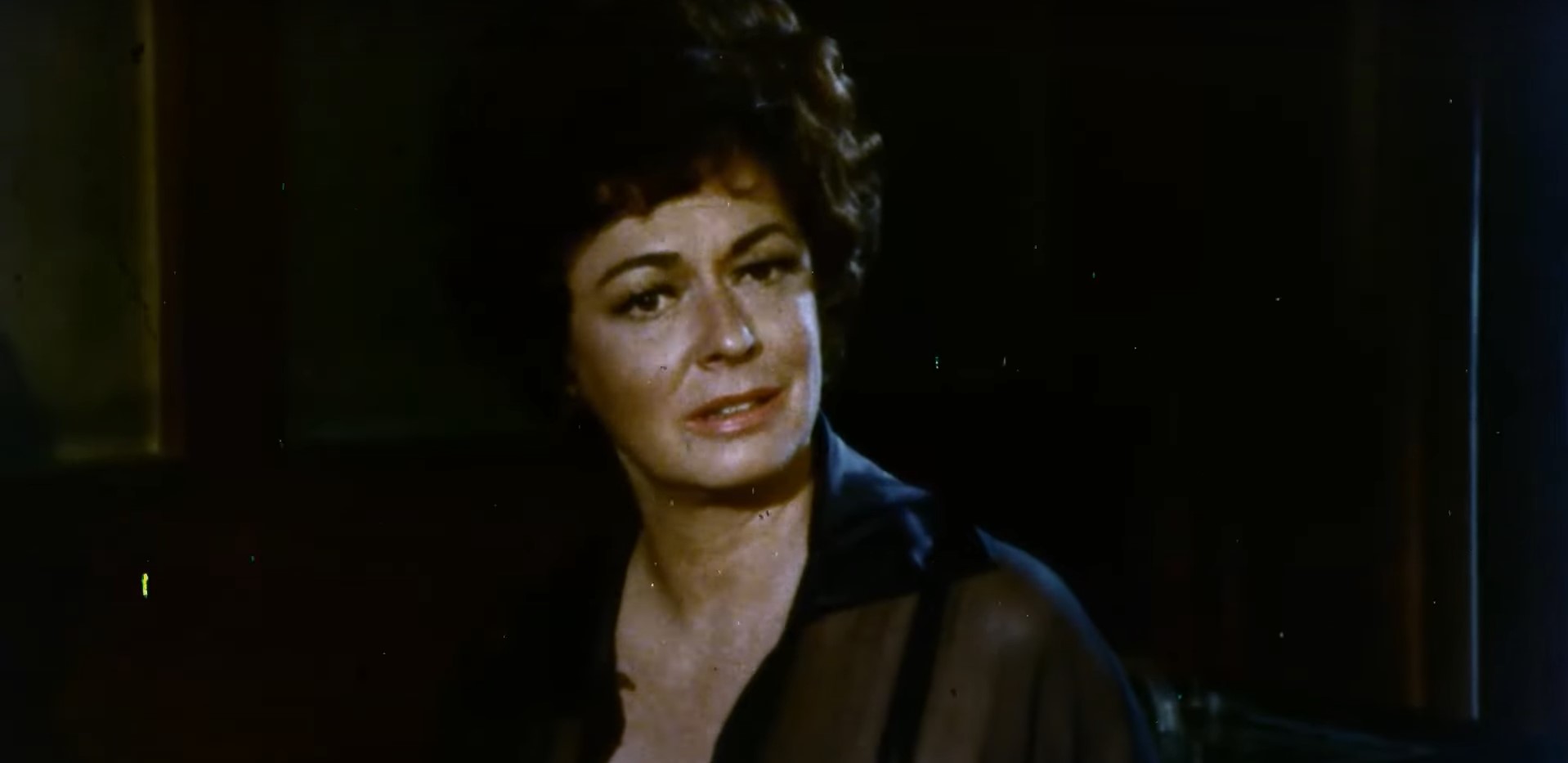
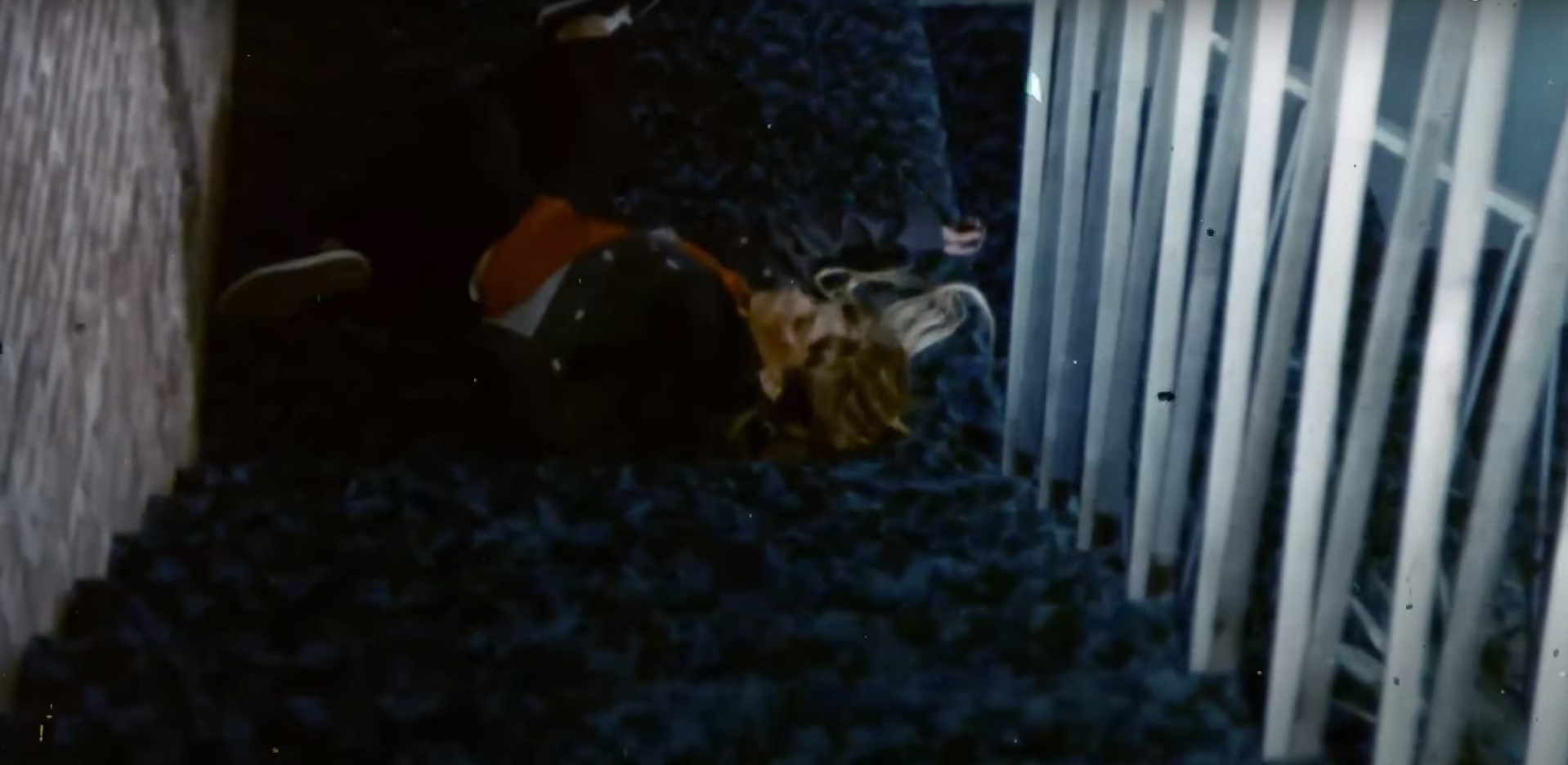
‘Twas the Night Before Christmas, When All Through the EVIL “A Creature Was Stirring” reviewed! (Well Go USA Entertainment / Blu-ray)

Purchase “A Creature Was Stirring” Here at Amazon.com

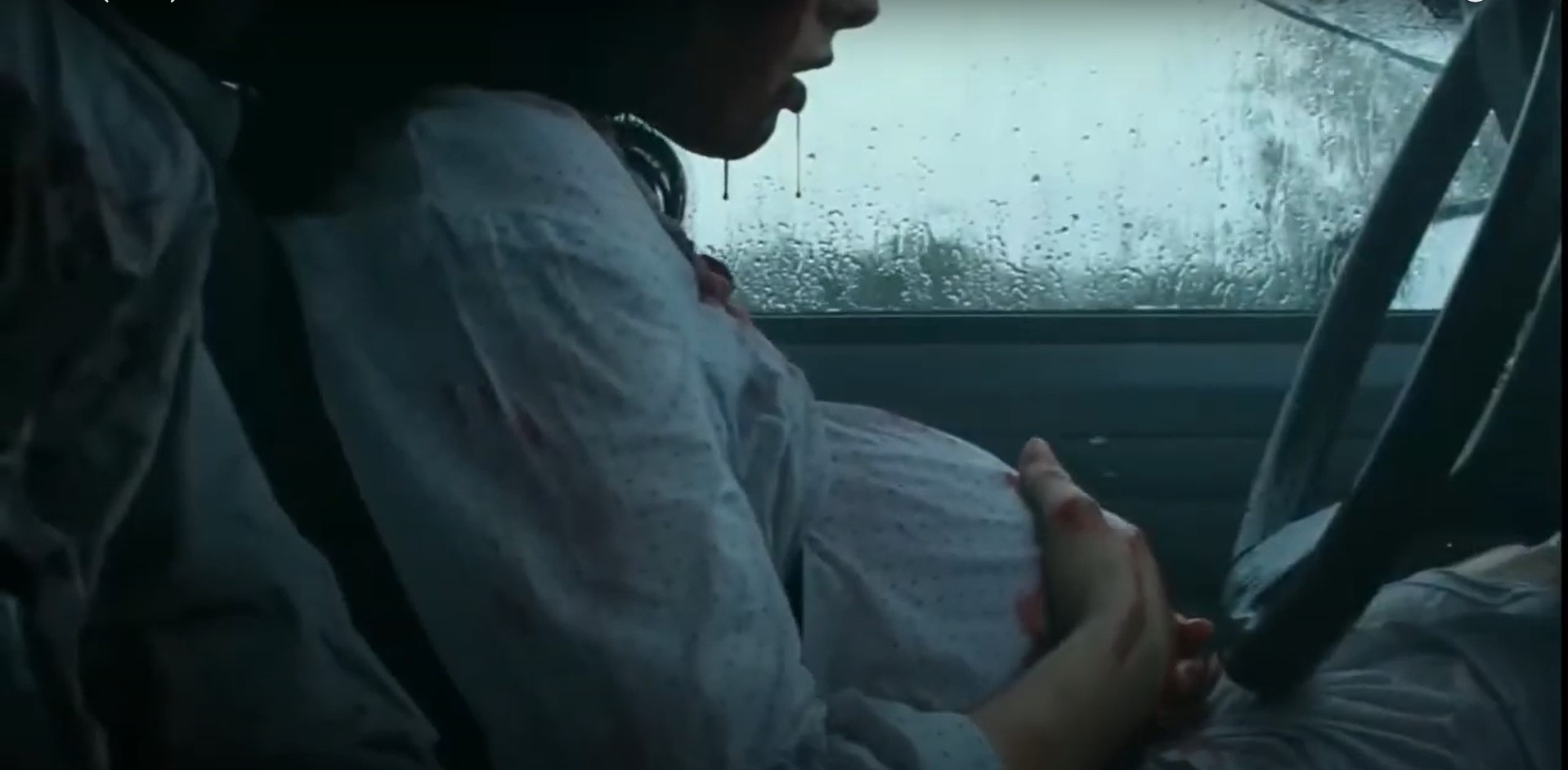
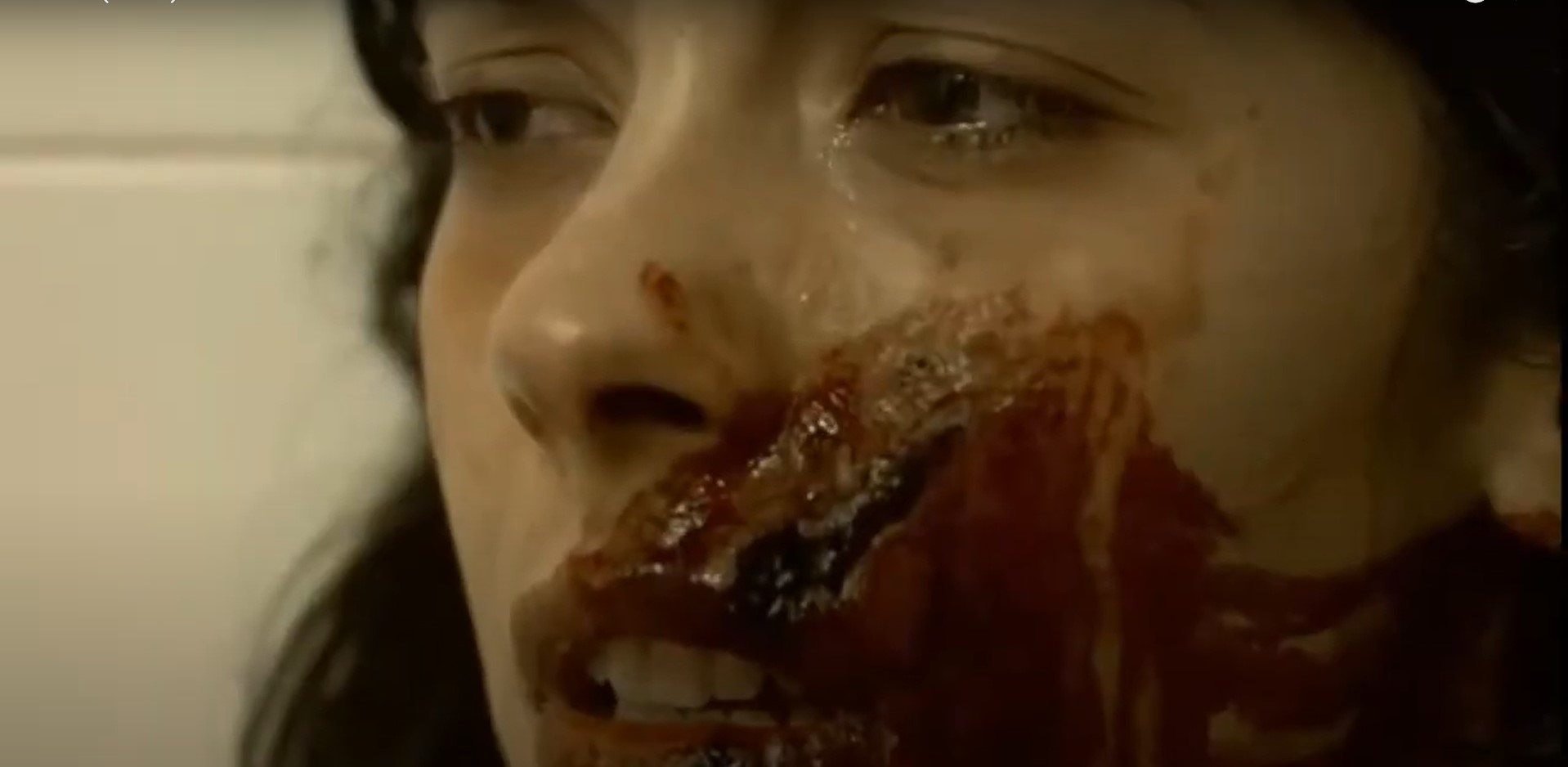
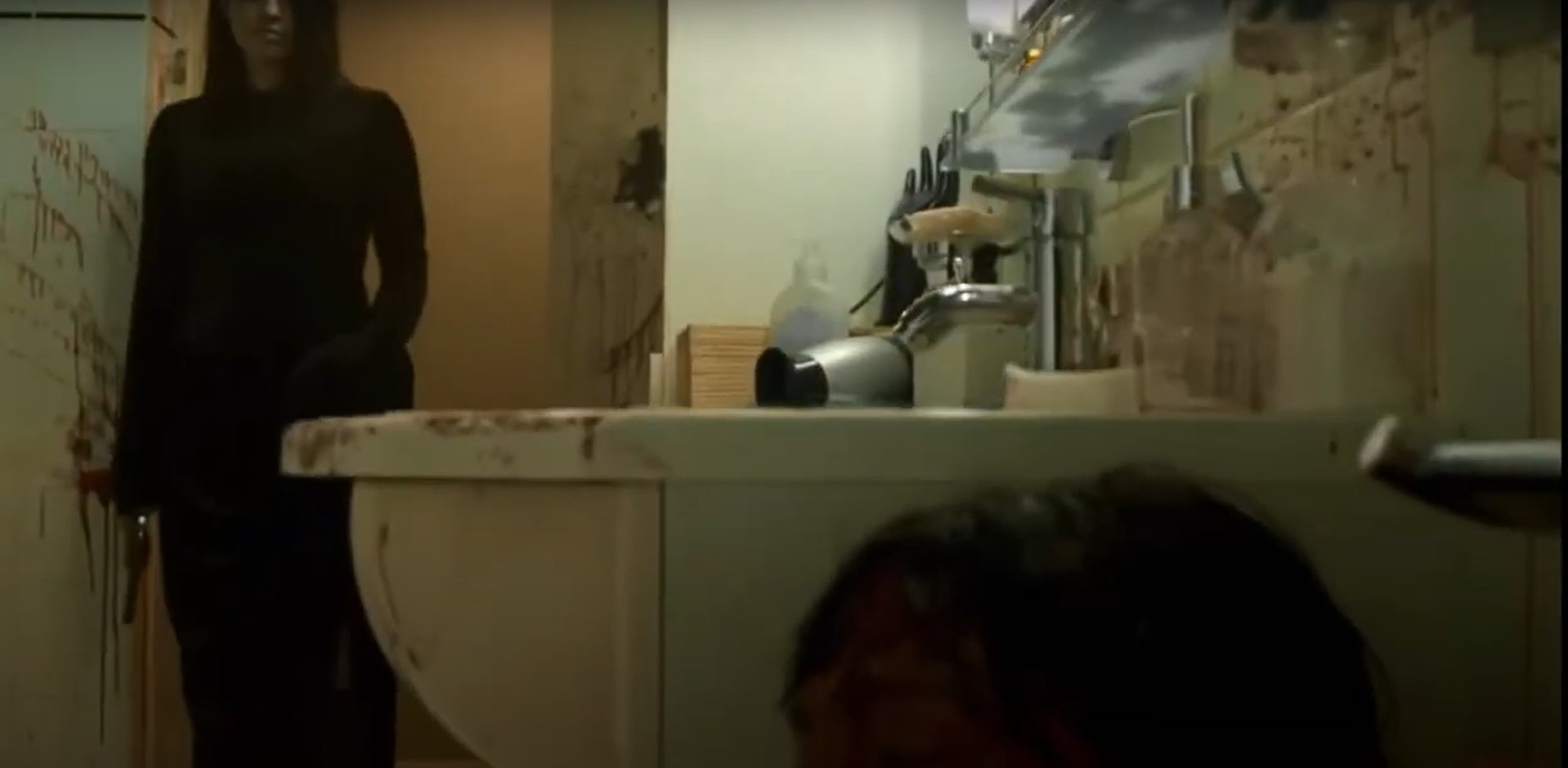
During the height of a 6-day Christmas blizzard, nurse Faith remains home to care for her mysteriously afflicted daughter Charm.   Faith diligently stays vigilant over her daughter’s inexplicable condition with test after test and maintaining Charm’s constant body temperature between 102 to 104.4 degrees, seemingly stabilizing Charm’s condition.  If the temperature exceeds beyond, Charm transmogrifies into a barbed humanoid creature.  While Faith works on a compound cure, Liz and Kory, a sibling pair of Jesus zealots, break into the house seeking shelter out of the deadly snowstorm.  Faith has no other choice but to let them stay the night until the storm subsides but the appearance of Charm’s at-home care and the young girl’s sudden seizures and erratic behavior sends Liz into savior mode, meddling into more than she can comprehend.  Yet, something else lurks inside the house, between the shadows, and beneath the veil of reality that is way more terrifying. 

Even though Christmas might be long over and all the gaudy and brilliantly lit decorates are stowed away back into Grandma’s attic that doesn’t mean the holiday horror train has to depart the station.  And I’m not talking about no Polar Express with the edging on creepy motion capture animation.  I’m talking about “The Cleansing Hour’s” Damien LeVeck’s Twas the Night Before Christmas-inspired titled “A Creature Was Stirring.”  The equivocal creature feature set in the throes of a raging blizzard and inside a very decked the halls house is penned by debut screenwriter Shannon Wells under the original title of “Good Luck, Nightingale.”   Aimed to be more than what meets the eye, “A Creature Was Stirring” blends the involuntary struggles of drug addiction with potent secretions of supernaturalism.  The U.S. production was shot in Louisville, Kentucky, produced by LeVeck, wife Natalie, as well as “Scare Package” producers Aaron B. Koontz and Cameron Burns with Vladislav Severtsev (“The Bride”) under the production companies Skubalon, 10/09 Films, and Paper Street Pictures. 

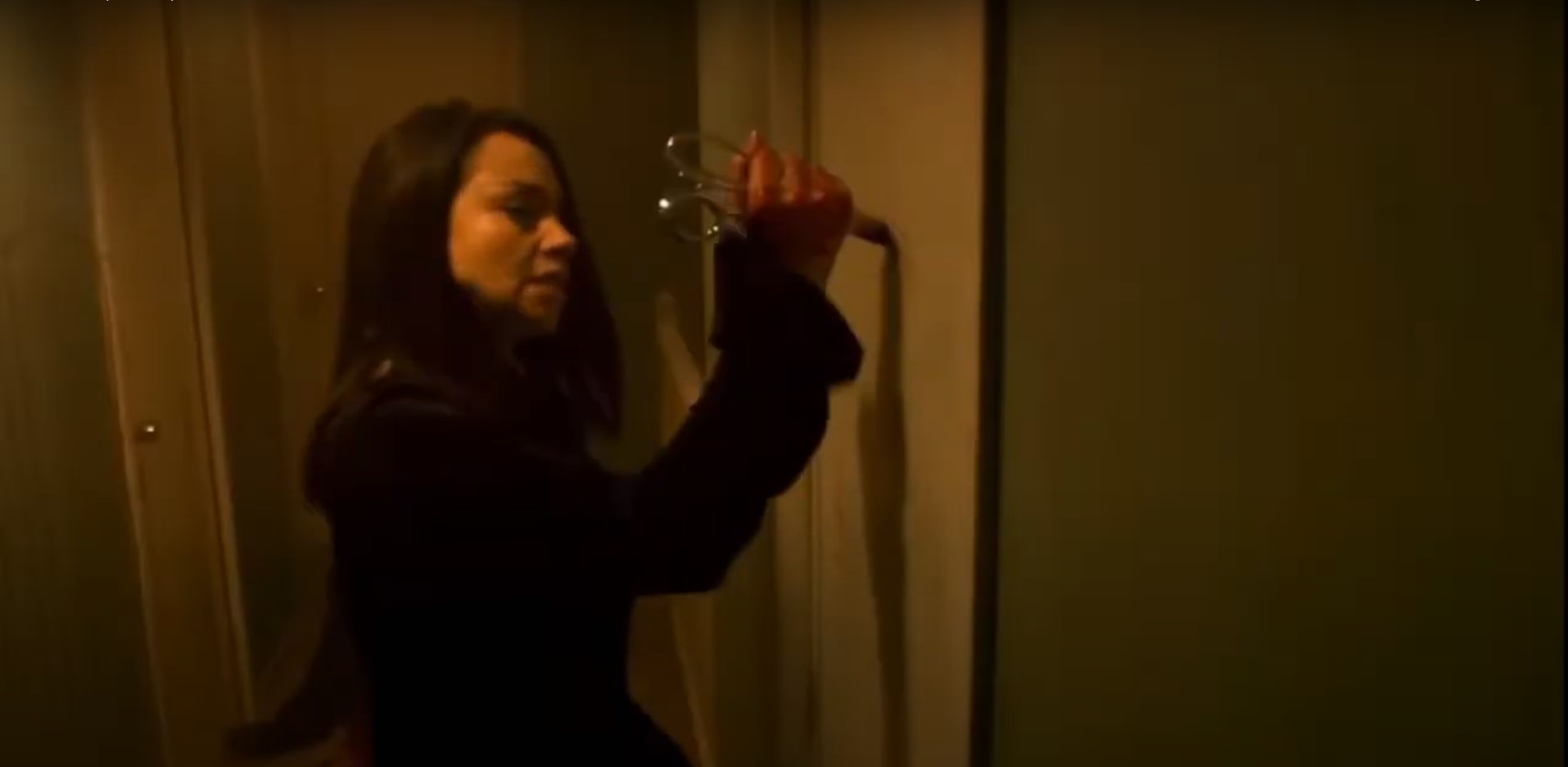
Topping the bill as Faith is “This Is Us” star Chrissy Metz, portraying a nurse practitioner and mother desperate on concocting a cure to her daughter’s strange, monstrous manifesting condition.  Metz brings the multifaceted mania between being rock solid and stringent with medical checks and procedures and being able to turn aggressive when the moment calls for it, especially swinging a screwed-spiked baseball bat.  This underlines an underlying secret or hidden predicament viewers will be dipped into and begin processing all the little traces of one-offs that don’t necessary make sense to an already peculiar narrative.  Then, there’s Charm, played by Annalise Basso (“Oculus”), in constant oversight, constantly mutable, and urging to constantly be free from her mother’s impervious iron grip to lighten up.   Basso retains angsty opposition while tossing moments of reflective consideration for her mother and for herself, disquieting the teetering tranquility when Liz and Kory come into play.  Respectively played by “Halloween” ‘07’s Scout Taylor-Compton and “Stake Land’s” Connor Paolo, siblings Liz and Kory stir the pot that’s slowly simmering to a boil as one religious dogmatist and one eager to break the constraints of his sister’s purity with sex and drugs complicate the strained mother-daughter relationship with their intrinsic quirks that expose a deeper, rooted-to-reality problem.  The now generational scream queen Compton dons colorful dreads and a large Messiah back tattoo amongst a high and mighty attitude while Paolo can be praised for the sarcasm brought out from the scripted dialogue.  Each of the four principals are inherently different and clash, in a good way, to provoke complications. 

Drug addiction has infiltrated horror years ago and have been the basis of many notable films such as Abel Ferrara’s “The Addiction,” Larry Fessenden’s “Habit,” and Frank Henelotter’s “Brain Damage” to name a few from the massive lot.  “A Creature Was Stirring” taps into that same vein as LeVeck’s injects and shoots up his own interpretation of horrors with withdrawals.  Long time addicts suffer through agonizing, powerful withdrawals that screenwriter Shannon Wells incorporates symptomatically with a figurative approach and while Wells’ story invokes colorfully rich characters and enigmatic tale of terror, brought to life by LeVeck’s vibrantly warm and glow Christmas adorned and atmospheric house, the finished feature, that really has nothing to do with Christmas oddly enough, feels uneven when revealing the irony of surprise doesn’t become catchall illumination.   The most ambiguous part about the tale is the spiny-signified creature, a mutated, zoomorphic porcupine of sorts, to represent ferocity of the withdrawn drug with its hypodermic needle-like defense mechanism and malevolence nature.  The shadowy man-thing is given such a threadbare association between Charm’s anecdotal encounter with large rodent and its manifestation metamorphosis into the fold that the hostile has hardly any staying power as a villain and, like a rodent, really does feel just like a mouse was stirring as it scurries arbitrarily throughout the house but not all is negative as there are scenes that make you go holy crap when recollecting character and creature interactive moments that suddenly click and make sense, often coinciding and juxtaposed against really neat interior cinematography bathed in mixture of hard light and soft glows. 

Well Go USA Entertainment presents “A Creature Was Stirring” on a high-definition Blu-ray home video.  The AVC encoded, 1080p, BD25 has soft illumination but a grading design that’s befits the ’tis the season paradigm with the primary color warmth radiating out from Christmas lights strung up around the house and the beaming brilliance of white battery-operated light-up decorations. Between the crude adornment lighting, some lighter translucent gels, and with a splash of black-and-white, Alexander Chinnic cinematography, presented in an anamorphic widescreen 1.78:1, resembles a rave clad fitting into the drug theme as an echo of the one character’s pill-popping, molly-dropping past. Details become diffused by the varying, indiscriminate incandescence and shadowy fields that play into the creature’s tenebrific threat, but those same shadows are often deep without posterization. The English 5.1 DTS-HD master audio achieves the goal of the very title of something stirring inside creating rustling movements and spiny-shifting clacking, coursing through the back and side channels and maintaining an even keeled LFE. Space awareness is key for close quartered tension and that’s rendered well in the design. Dialogue comes off without a hitch and is elevated above the rest of the tracks with no issues with compression faults or a fractured recording. English SDH subtitles are available. Like most Well Go USA releases, “A Creature Was Stirring” shoulders only Well Go USA preview trailers with no real bonus features of its own in the semi-static main menu but what we do get is a better than modest laid out standard Amaray Blu-ray package with a lightly titled embossed cardboard O-slipcover and on the back two different texture types, a polaroid slick abutted against the smooth cardboard. Image design is a greatly detailed silhouette of the porcupine creature looming over the house. The same image is also on the Blu-ray cover with a simple red-beaded or red-string light encircling the title on the disc. There is no insert inside. Rated R for violence, bloody images, drug context, language, and some sexual suggestion, the 96-minute Blu-ray comes region A locked. 

Last Rites: Chrissy Metz battling a deformative disease, drug addiction, an angsty teen, two home invasive siblings, and a large porcupine monstrosity all in the name of “A Creature Was Stirring” is the prickly cold turkey suspenser this side of the New Year.  

Purchase “A Creature Was Stirring” Here at Amazon.com

EVIL Explains EVILThings! “Mansplained” reviewed! (SRS Cinema / DVD)

“Mainsplained” on DVD. Do You Need Me to Explain It To You?

Middle class professional Sara has just been mansplained how to be better at her job.  Numb by the experience, the humiliating moment eats at Sara’s sanity like a nagging drip of a leaky pipe.  In fact, drip sounds of a leaky sink invade her mental space as she nonchalantly places a towel and bucket under the constant dribble.  When her boyfriend Ryan comes home, his exasperation is triggered by Sara’s acute indifference and he breaks up with her, mansplaining in bullet points the reasons this relationship has failed.  Her blank stares send him off only to return later at the behest of his sister to make amends, but when he notices the leak and starts to mansplain and nitpick her solution, even though she called a plumber, the fed-up Sara stabs him in the eye and hides his body in the closet.  When the plumber arrives and begins mansplaining and making gross advances, she stabs him as well and hides his body in the closet.  Sara descends further into madness as the mansplaining and the dripping continue, and continue, and continue….

Mansplaining.  The newly conjoined word, that’s combines man and explaining is defined as a man condescendingly explaining a process or a subject they, themselves, know little about and assume the knowledge extent of the other person is less than their own, was officially added to the U.S. dictionary in March of 2018 during the height of the #MeToo movement.  Evan Jones, the man responsible for write and directing the substandard classics “Death Toilet” and its numerous killer commode sequels, is now behind “Mansplained,” a bareboned, indie psychological thriller self-described as Roman Polanski-esque and inspired from a story concept by SRS Cinema’s Ron Bonk who also produces the derogatory pejorative term and wokeness themed film alongside Jacobs’ microbudget production company Anhedenia Films.

One aspect of microbudget is a micro cast.  Not only is Evan Jacobs the writer, director, and producer, the filmmaker with 52 directorial projects under his belt since 1995 also dons four different characters mansplaining to Sara, played vacantly by Angelique Flores, to show masculinity similarity as well as to save a little mullah on the production bottom line.  Jacobs in multi-roles wouldn’t be so much of an issue if there putting in more variety of persona; instead, Jacobs just puts his own off-camera fundamentals into each role, rehashing the same guy, with the same inflections, with the same gestures, and with the same face and bald head.  Perhaps that carbon copy plays into the formula of a faceless man creeping into Sara’s one bedroom apartment to tell her how it is and how it should be.  I would like to think that’s how Evan Jacobs conveys this story but without any other real indicator that’s the vehicle we’re supposed to be taking a ride in, we’re still stuck at the curb waiting for our elucidation Uber to arrive.  As Sara, a woman internally cracking under ignorant male chauvinism, Flores is given no lines nor direction to do anything but to stay virtually silent with a 1000-yard stare.  Even when at a boiling spillage point where stabbing is the only way to mute mansplaining, there’s no fire in Flores’s eyes nor any searing-red anger people sometimes go blind to when up to their eyeballs in fury.  Sara stultifies about her apartment, looking out the window, looking the drip under the sink, meandering around the square footage, and this goes on for the allotted runtime.  “Mansplained” rounds out the cast with an experienced bunch typecasting themselves as various media talking heads, mostly men in newscasters, vloggers, etc., roles, with Clint Beaver (“Woods Witch”), Erica Dyer (“Macabre Mountain”), Brandon Farmer (“Amityville Apocalypse”), Francis Erdman (“Yule Log”), Paul Bradford (“Amityville Karen”), Rudy Ledbetter (“Night of the Tommyknockers”), and Jeffrey Wolf (“Motorboat”) with Lindy Hartsfield and Erin Hickman providing the telephone voice and physical presence of Michelle in a mixed up of associations with Sara.

To be honest, “Mansplained” is a slog which is more Polanski-lite than Polanski-esque.  The channeled madness Sara displays only nibbles the bait of being in the deluge of mansplaining by what is, essentially, the same person in her eyes and even the titular mansplaining comes off slightly feeble, never pushing the condescending boundaries of Sara’s limits and is more repetitive nonsense than patronizing prodding.  Without Sara reacting or trying to get a word in edge wise against Evan Jacob’s motor-mouthing salvo, a one-sided approach to a two-person dynamic renders the madness useless and impotent, especially when there are no other devices to support it.  Only in the very end does sanity crack open for us to peer into Sara’s disturb nature but even that moment of clarity has its legs cut out from under it, erasing the acrid accumulation of Sara’s stoically murderous, pent-up rage from the past hour in a quickly summed up way of an unexpected twist-like ending.  The periodic splice-ins of news reporters, vloggers, podcasters, and the like plant seeds of the philosophical sense around objective and subjective views, posing questions and raising awareness as if speaking to the audience watching the movie rather than to drive the characters in the story.  What Jacobs set out to accomplish was woman empowerment over condescending men in an enough-is-enough, kill-the-man way but what results is more the opposite with the heroine cracking under the bombardment of man’s sexist spew, succumbing to a catatonic and deranged state as she’s unable to handle the pressure. 

Produced by Ron Bonk, it comes to surprised that the home video rights would fall under Bonk’s SRS Cinema, a safe haven distributor for DIY indies.  The DVD is a MPEG2 encoded, standard definition, dual-layered DVD9, plenty of format space for adequate compression outcome as the bitrate maintains an average of 7.7Mbps.  Yet, the not as sharp quality stems from commercial grade video equipment that’s jittery, possible motion blur with the handheld and compounded by the slow-motion frame rate for stylistic effect and doesn’t produce finer details in the electronics’ finite capabilities.  Aside from some flashbacks and inner thoughts denoted by black and white imagery, “Mansplained” stays the natural color course without any strategic lighting to jazz up the appeal.  The English language Dolby Digital 2.0 mono has no complains inside a one location set with no vigorous action.   Overlaid telephone and podcast conversation audio, dripping/leak soundbites, and the brooding, discordant string soundtrack clearly come through with in-frame recording being very satisfactory, like ASMR satisfactory, in the minor, around-the-apartment hubbub as well as the dialogue albeit the audibly innate elbowroom echo.  There are no subtitles available.  Special features include a feature audio commentary with Evan Jacobs going into the genesis of the idea and his explanation for his methods and style choices, a 22-minute making-of featuring interviews with Evan Jacobs, Angelique Flores, and Lindy Hartsfield with crew including cinematographer Mike Hartsfield, “Mansplained” rehearsals that’s chiefly a PJ’ed Evan Jones acting alone in his residence, and the trailer.  The standard DVD Amaray case carries no ancillary material with the disc that has the same disc art as the DVD front cover, photoshopped with a maniacal Evan Jacob’s face grinning ear-to-ear between the opening of a chained lock door. The feature has a runtime of 74 minutes, comes not rated, and the SRS DVD has a region free playback.  Too much ambiguity on the table and not enough production value trumps the underlying expression as we actually need to be “Mansplained” to fully understand the endgame. 

“Mainsplained” on DVD. Do You Need Me to Explain It To You?

EVIL Says Talk to the Hand. “Talk to Me” reviewed! (Lionsgate / Blu-ray)

“Talk to Me” on Blu-ray/DVD/Digital!

The two-year anniversary of the death is a solemn time for Mia to mourn the hard loss of her beloved mother who took her own life, or at least that is what her father tells her.  Feeling uneasy by her father’s account that circulates doubt uncontrollably, Mia pries her way into her best friend Jade’s family for comfort and becomes equally amiably with Jade’s younger brother, Riley, as like another sister.  When social acquaintances post viral videos of peers supposedly being possessed by an embalmed hand of a psychic for party games, Mia is eager to participate.  All is fun and games with the dead inhabiting and speaking through the hand holder for a limited time until Riley’s spirt takes a violent turn, leaving the boy severely injured and in a comatose state after exhibiting Mia’s mother possessing him.  Obsessed to speak again with late mother, Mia uses the hand to talk to the dead and learns Riley’s soul is stuck on the other side and being tortured by the countless, malign spirits. 

Grief can be so powerfully self-destructive that holding an embalmed hand, becoming connected with the grotesque spirit, and letting the shadow world possess you can be addictive and even as far as a parlor game to pursue answers or a desperate release from suffering.  The 2022, breakout Australian production “Talk to Me” explores that forced hand of grief, literally, with a socially pressuring aspect that can be contagiously engrossing and collaterally harmful if unchecked.  The Southern Australian-born brothers Danny and Michael Philippou come out swinging on their debut feature-length film penned by Danny alongside Bill Hinzman based on a concept by “Bluey” executive producer of all people, Daley Pearson.  “Talk to Me” is a coproduction between The South Australian Corporation, Screen Australia, Head Gear Films, and Causeway Films with Christopher Seeto (“The Flood”), Samantha Jennings (“Cargo”), and Kristina Ceyton (“The Babadook”) producing.  The film is released theatrically by A24.

“Talk to Me” opening with a young, shoulder length haired man desperately searching for his younger brother through a sea of people at a house party.  The scene sets the film’s take-no-prisoners tone with begins with compassion as the older brother comes to the rescue of his disturbed, shirtless kin, trying to display the flashlight gleaming phone camera sharks who smell viral video blood in the water, when in a surprising turn of events the younger brother stabs his sibling before ramming the chef knife into his own skull.  “Talk to Me” segues into the cast of teenage characters, spanning the age spectrum of 14 to 20, letting us know right off the bat that youths are on the chopping block and no one will be safe.  The mostly untried cast pulls through with a trypanosome performance that gets under your skin, festering in its linger.  Sophie Wilde helms being the principal lead Mia still shell shocked by the sudden death of her twinning mother two years after later.  Suspicious of her father’s role in the death, Mia escapes and integrates herself into best friend Jade’s family, a role resting in between two uncomfortable rocks of being the new girl beside Mia’s onetime ex.  Alexandra Jensen as Jade floats carefully portraying Mia’s friend and a pursuant tiptoe toward the relationship with Daniel (Otis Dhanji) that passively irks Mia in the form of playful jokes, side glares, and inner demons becoming fruition ones expressing desires.  Sophie Wilde, on the other hand, spans the gamut with a flip of a switch soul spectrum polarized by spirit madness, grief over loss, and a fallback friendship.  When Wilde turns on the darkest light of possession, when her character lets the spirit into her body, the disheveled whole of Mia lives up to the actress’s surname becoming an uninhibited periapt for the spirit within that lusts over the youngest in the room, Riley (Joe Bird), for his childlike purity and when the spirits have control of over his soul in what is an orgasmic suffering that neither is parlous fun or exciting.  “Talk to Me’s” cast rounds out with Zoe Terakes, Chris Alosio, Marcus Johnson, Alexandria Steffensen, Ari McCarthy, and “Homeland’s” Miranda Otto. 

“Talk to Me” is an original byproduct stemmed from the cursed fetish genre.  The inexplicable mummified hand with unknown origins, thought to be once the hand of a medium, falls into the hands of a difference kind of representation.  Not to be bestowed conventional tropes like an inanimate object to be feared, the mirror in “Oculus” comes to mind or the cenobite unleashing puzzle box of “Hellraiser,” the persevered curled open hand doesn’t hold that sort of malevolent power, at first.  Despite its powerful connection to the purgatorial other side with frightening results of classic possession cases – levitation, catatonia, dissociative profanity and behavior, etc. –  these more-or-less new generational children treat something they don’t completely understand, such as ancient, mystical artifacts and in this case, human remains to be exact, without respect and humility, using the hand as if an additive drug, parlor game, or write to go viral amongst peers.  Directors Danny and Michael Philippou use the peer-pressuring viral video social commentary of their film as a sensationalized stern warning that has equal cause-and-effect results.  Ostentatiously showcasing more of the adolescent revelry spree rather than the mangled, decaying, and water-bloated entities in front of them or recklessly inhabiting their bodies once let corporeally inside.  For someone like the character Mia who continues to process close loss and has troubling thoughts, or maybe even delusions, regarding her father’s role in her mother’s untimely demise, she yearns for answers and when Mia receives a glimpse into what she believes is her kindred spirit mother through the vessel that is her friend Riely, aching impulses take over already crumbling judgements and she goes down the rabbit hole despite the consequences to herself, to her father, and to her adopted family.

Get a grip and take “Talk to Me’s” hand to experience the possessively powerful Philippou brothers’ debut film on a Lionsgate 2-disc Blu-ray/DVD/Digital release.  The AVC encoded, 1080p high-definition, BD50 and the MPEG-2 encoded, upscaled standard definition, DVD are presented in a 2.39:1 widescreen aspect ratio.  What’s achieved out of the Aaron McLisky’s through-the-looking-glass visual vignette is focus driven, claustrophobic, and engaging to be present of a reality teetering the line between two worlds.  Details inarguably shine, casting a great deal of deep shadows within the hard lighting to set the ominous tone.  Skin textures gleam within the light as well as coarse change with the vapid and pale makeup adjustments of the dead-entered body or even when we do brief see a condemned soul, the greatly applied contusions, decay, or bloating is reflected with great care from the infinite image detail.  The release has an English Dolby Atomos output reaching the difficult crevices of the inaudible dark holes and exposing them to immense carousal and haunting zeal that makes the experience more palpable. Dialogue renders nicely through albeit a heavy-handed score that relentlessly attempts to knock down the channel-leveled door and a strong Australian accent on most of the cast may sway those who don’t have a keen and distinct diverse ear away from the film or may find discerning a challenge to channel from beginning-to-end. While most of the camera’s frame stays in medium closeup to closeup, McLisky’s able to find depth where advantageous to bring a creep building dark cloud after Mia’s one minute over willing but felt forced possession participation. English SDH and Spanish subtitles are optionally available. Special features include an audio commentary with brothers Philippou, a featurette with the cast and crew in their experience and thoughts on the film, entitled In the Grip of Terror, deleted scenes, and theatrical trailer. Behind a rigid O-slipcover imaged with the centerpiece un-ensepulchered, plaster anoint, and sanskrit-esque-ladened hand upright and in the forefront with phone flashlights dully lit in the background. The typical Blu-ray snapper houses the same slipcover image slipped in between the plastic sheeting whilst the two discs are held on snapper locks on each side of the interior accompanied by an insert for the digital download. Both discs are pressed with the same font and coloring on in reverse with a baby blue stark against white. The 95-minute minute feature is region A locked and is rated R for strong bloody violence, some sexual material, and language. “Talk to Me” is utterly and terrifyingly fresh and freakish in more so with the naturality toward the touching and the facetious ways with an embalmed hand that’s a one-way personal radio to the dead as a means to be engaged in popular, peer-pressuring social activity and as something to prove with reckless naivety.

“Talk to Me” on Blu-ray/DVD/Digital!

Sucked Into Hell. Surrounded By EVIL! “Vampires and Other Stereotypes” reviewed! (Visual Vengeance / Blu-ray)

Hell Wants You To Stay for Dinner!  “Vampires and Other Stereotypes” on Blu-ray!

Ivan and his hard-nose partner Harry work between the shadows as protectors of the Earth realm.  The pair of paranormal guardians battle demons attempting to sneak from the Netherworld for more domain and power in the human world.  After thwarting a demon’s reneging plans with a wealthy businessman, they find themselves sucked into a portal to Hell after a group of young partygoers become lost and inadvertently crossover everyone in the abandoned warehouse to the underworld, including the warehouse itself.  Confined to a room with the portal opening, they must band together to survive the night where gnarly demons roam behind every door and are master tricksters with one goal in mind – to breed human women with half-breed demons to procreate more of Hell’s minions.  Its up to Ivan and Harry to see the survivors through until dawn but not everyone is who they seem and when the masks are dropped, real Hell will pounce upon them.  

The northeastern American horror-comedy, “Vampires and Other Stereotypes” is the topsy-turvy and totally-transcendental SOV feature from first-time writer-director Kevin J. Lindenmuth (“Twisted Tales,” “Monsterdocom”).  Shot primarily in Cherry Hill, New Jersey with some exterior city shots of New York City, the film alternatively known as “Hell’s Belles” sought ambitious Hell below Earth undertakings, creating a maze-like dwelling for disfigured dwellers of the demonic kind, and a down-the-rabbit hole story where the head-lopping queen is actually the devil in a leatherjacket playing procreator matchmaker and the Cheshire Cat is a overgrown rat looking to nibble on human flesh rather than cheese.  The rat, as ostentatiously cool as it sound, is simply a slither of one of “Vampires and Other Stereotypes” few themes, which is fear.  Kevin J. Lindenmuth’s production Brimstone Media Productions serves as the studio and Lindenmuth serves as sole producer of his self-funded venture into the vile mouth of the demon world.

“Vampires and Other Stereotypes” follows two difference groups related to the existence of Hell, the demons that inhabit it, and the rogue demons splicing themselves into the human world. One group is the guardians Ivan (Billy White) and Harry (Ed Hubbard) who are very much aware of the esoteric magnitude of the abysmal situation and background while the other group, young Generation X’ers oblivious to the signs of Satan’s underworld seeping into their own. Lead by serial-dater and college girl Kirsten (Wendy Bednarz, “There’s Nothing Out There”) and her two tagalong best friends Linda (Anna Dipace) and Jennifer (Suzanne Scott, “Child of the Sabbat), the ready-to-party trio provide the state of affairs with Kirsten’s nonchalant taste in bad boy boyfriends, believing her courting apathy, treated as an impulse indulgence for the sake of fun, will one day run her out of luck. Enter Erik (Mike McCleery, “Deep Undead”), another misfit miscreant unearthed by Kirsten in her ever unquenching need to be wined, dined, and spoiled by the bottom layers of the dating pool. The two parties clash walking into the epicenter of an open investigation, denoted by an aperture in the middle of the room, where dead, decapitated bodies are strong upside down and Kirsten and her businessman father (Rick Poli, “Blitzkrieg: Escape from Stalag 69) are unexpectedly reunited in an air of something more happening behind the scenes other than Kirsten’s father’s flailing dealings with the demons and Erik’s party-sniffing nose leading them to astray and lost. The rest of the cast comes together with Laura Vale as Rosa the psychic, Monica Batavanis as the wife lost to the dark side, Mike Memphis as the Elvis impersonator, Bean Miller as the Lizard King aka Jim Morrison impersonator, and Sally Narkis as the demon waitress.

Lindenmuth’s dragged to Hell premise is a neat enough concept to peak the interests of the casual and diehard horror fan. However, the executed result is a whole other animal that tends to claw back, trying to maul away your viewership.  The special effects Scotts – Scott Hart and Scott Sliger – pull off practical prosthetics and latex with some side curb appeal that helps lift up “Vampires and Other Stereotypes” as best as possible, but the effects have a difficult time keeping up with the film’s innate ambitious concept to where much of the story relies on character exposition to fill in the gaps and where I note the exposition has a few cracks and leaks in themselves is in the very first word you see in the title that sets the expectation right off the bat before going far into a narrative that constantly and hurriedly builds upon the demonic construct.  That edifice evolves so high and so quick that the air becomes thin when the very first presence of a vampire insert comes late into the third act.  You nearly forget that the word Vampire was ever in the title.  Where Lindenmuth succeeds in this frenzy of fiends and folly is passively providing verbal cues of one of the character’s monotone-delivered pangs of extreme hunger.  Being a New Yorker and a rather large individual, you believe a NYC pizza or a greasy burger would be in mind here to feed the need but then the gag drops with well-timed revelation albeit the severe tardiness inside the narrative framework that suggests maybe the title should have been reworked or better thought through to really add upon that element of surprise and not sit waiting and waiting until bloodsuckers join the jittery jamboree.  While the demons are jovially wicked, their wily ways are playful to a fault compared to an “Evil Dead” Kandarian demon or a twisted and ugly demon from “Night of the Demons,” a class of demons that craft a special kind of deviance that maniacally fun as they rip you to shreds.  Not to say the “Vampires and other Stereotypes” demons are painfully dull or too good to be terrible, quite the opposite in the variety of severed head yappers or an oversized rodent, but they don’t offer that same fear-inducing merriment of playing with their food before they eat it. 

The 12th release on the Visual Vengeance line of dusted off sidelined SOV horror and cult films with a brand-new Blu-ray release with an AVC encoded, 1080p (note: off the original standard definition master 1-inch tape), BD50 presented in the original pillarbox of a 1.33:1 aspect ratio. Visual Vengeance provides the usual prefatory statement about the using the best possible elements out of consumer grade equipment, but I do think “Vampires and Other Stereotypes” has the best details within the Betacam SP camcorder, which was, at the time, the crème de la crème of videotape, and then have the video run through a millimeter gauge emulator to give it a 16, or even stretched to a 35 mm, appearance at times. Tullio Tedeschi cinematography is soft, light, and dreamy that forsakes stark details but does offer a sheen along the surfaces and textures that size up and adds to depth to the objects, even more so with the film’s hard lighting and deep shadows to provide a diversion away from the cheap sets but also a diversion away from what could be lurking from the horror-set tropes. The English language stereo 2.0 has decent dynamism between the dialogue, ambience, and soundtrack. Dialogue has a voice above the other sublayers, separating its prominence in front of the batty surroundings of a demon-riddled rodeo and against a soundtrack, or lack thereof, that’s repetitively uninspiring to takes away from the spirt of the level Lindenmuth attempts to reach with his debut. Optional subtitles are available. Special features include three new audio commentaries with director Kevin Lindenmuth, actor Mike McCleery and Lindenmuth, and Weng’s Chop Magazine’s Tony Strauss. Also included are new, brief interviews with Lindenmuth on the technical tangents of his film, actress Laura McLauchlin surrounding her role as Rosa and various recollection of principal photography, actor Mike McCleery as bad boy Erik fitting into his skintight, nonbreathable demon mask and having a good time on set overall, Suzanne Turner on playing Jennifer, Sally Narkis in her brief role as demon waitress and her sidetracking fashion career, and plus interviews with makeup effects artist Ralis Kahn, special effects artist Scott Sliger, photographer Sung Pak, and publicist Joe Mauceri with behind-the-scenes image gallery, original trailer, Visual Vengeance trailers, and Lindenmuth early Super 8 films along with commentary by the director. As always, the physical presentation is nothing short of a thing of pure beauty with a rigid slipcover graced with new illustration by Tom “The Dude Designs’ Hodge with a traditionally sized clear Blu-ray amaray case with reversible front cover that includes more new looming demon heads art and the original one-sheet on the reverse side that really relates to the dreaminess of the photography. In the insert pocket is stuffed a color trifold essay from Tony Strauss with behind-the-scene stills, a folded mini poster of the Blu-ray case cover art, and retro VHS stickers. Disc art is pressed with the slipcover art. Region free for the world to see, the Blu=ray is unrated and has a 87 minutes. Nominal and ambitious, “Vampires and Other Stereotypes” fights an uphill battle coming off the heels of an extremely gorified video nasties of the 1980s, but Lindenmuth fulfills with an indiscriminate spread of insanity at every turn with some vivid and vibrant vanward effects to drive this one home to the great people at Visual Vengeance, a boutique distributor of lost, but not forgotten, SOV buried treasure ready to be rediscovered.

Hell Wants You To Stay for Dinner!  “Vampires and Other Stereotypes” on Blu-ray!

Magnetism Will Separate the EVIL from the Rest of You! “Black Circle” reviewed! (Synapse Films / Blu-ray)

Cosmic horror is the “Black Circle.”  2-Disc Blu-ray/CD on Amazon!

After Isa manages to clean up her life and obtain a upper management job, she’s eager to share her tremendous focus secret with sister Celeste, a university student hitting a mental wall with an important term paper.  Isa says the key to her success came after cleaning out the belongings of their grandmother’s deceased cousin, where she unearthed a record LP on magnetism produced decades ago by a master of the craft.  Celeste is instructed to listen to the LP’s backside right before going to sleep with the promise of her life changing for the better.  After setting the needle, Celeste wakes up next morning feeling unburdened by the challenges ahead and is able to knock out her paper in one day, but she senses another presence following her, watching her, and having vivid dreams of a monstrous double of herself from being inside what the LP calls the black circle.  Shortly after, Isa has disappeared, exiting her new job with erratic and paranoid behavior, only to resurface on Celeste’s doorstop ranting about LP’s frighteningly powerful suggestion and that she’s being followed by someone driving her car.  The sisters track down Lena, creator of the LP and master of magnetism, where they also meet a pair of young psychics who explain the unforeseen, accidental harmful side effects of the LP she thought were all destroyed.  Lena agrees to save the sisters who are faced with losing themselves from themselves. 

Hypnotism has diminutively entranced storytelling, scratching only a limited surface of films with only a few being widely known, such has “Office Space,” “Stir of Echoes,” or “The Cabinet of Dr. Caligari” to name a select few recognizable titles.  To further hypnotism into obscurity, a similar spellbinding field is introduced by filmmaker Adrian Garcia Bogliano.  The Spanish writer-and-director of “Here Comes the Devil” and “Come Play with Me” chills us with a cosmically laced and existentialism albatross with his 2018 “Black Circle.”  The Swedish production, natively titled “Svart cirkel,” pulls loose inspiration from the often-controversial works of German physician Franz Anton Mesmer, as in mesmerize, who first coined animal magnetism as an invisible force within the human body that can be manipulated by skilled magnetizer.  “Black Circle” is produced by Bo and Rickard Gramfors and Bogliano’s longtime collaborator Andrea Quiroz within a conglomerate of production companies that include Klubb Super 8, Njuta Films, Salto de Fe Films, and Evilinski Productions.

Felice Jankell (“The Bunker Game”) and Erica Midfjäll play the two sisters, Celeste and Isa, embroiled in magnetism bad luck happening up on an old of circ 1970s-1980s LP in today’s age.  There’s quite a bit of tension between the two sisters who are not conjoined at the hip like most close-in-age siblings as they battle their own personal demons that are only talked about rather than exhibited.  Yet, we get the sense of their daily struggles through Jankell’s body language for Celeste and the recollecting conversations both sisters have regarding Isa’s troubles keeping glued together and those existential problems are what connects them, or rather what connect us all as sentient beings, making the characters relatable.  Isa exposes Celeste to the LP in hopes to help Celese regain control over her life but what ensues is not only a weight lifted off her capacity to overcome but also an underlining fear of being followed, watched, and frightened by grotesque dreams of herself in a monstrous form.  At this point, Isa and Celeste are experience parallel psychosis spurred by the record that leads them, and us, to the headliner of film, genre icon Christina Lindberg   The once sweet-faced Swedish brunette, who once donned an eyepatch and took a shotgun to her rapists in the role of Madeleine in “Thriller:  A Cruel Picture” and who once debuted as a 16-year-old virginial maiden in the sexploitation “Maid in Sweden,” has now grown up to become a woman basking in the essence of power and control at all times with Lena, a magnetism expert attempting to rectify unintended mistakes distributing a soul separating, charmed-grooved vinyl from decades earlier.  Lena has rich history that’s dropped in segments from the moment she’s introduced on screen, almost immediately displaying her limitless power on two young, intrusive psychics (Johan Palm and Hanna Asp) who enter her home by the summoning Supreme, an exterior planed creature who supervises the psychic realm.  Performances are incredible skintight as actor brings an elevated show for their individual role, including the rest of the supporting cast in Hans Sandqvist, Iwa Boman, Inger Nilsson, and Erica Midfjäll’s twin sister, Hanna, to sell the “Black Circle’s” premise and promise more convincingly terrifying.

If you were forced to only see one indie contemporary release this year, “Black Circle’ should be it.  Bogliano’s “Black Circle” doesn’t dazzle with a ton of effects nor is production value or exotic and grand set locations applied to lure in viewers, but what Bogliano does do well, and what ultimately instills a fascinating story, is the well-written script, character developments, and the subtle effects that bore a fear of the unknown dread persistently and consistently throughout.  Bogliano delivers a unique story sold on the rarity of proto-hypnosis with a premise fashioned around the development of his own mythos of psychic realm rules and beings. Best part about Bogliano’s piece of the macrocosmos is the way he chapters the narrative, ushering viewers gently and with explanation inside a context construction that uses phantasmagorical visuals and voice over narration to interpret magnetism jargon or to provide inside to setup the next chapter. This processing style of breaking up the acts accentuates, or offsets, the rather raw Dario Goldgel cinematography of the reality story, turning “Black Circle” in pedagogic inside into the basis of the wildly scrutinized, often criticized, hypnosis. What’s also neat about “Black Circle’s” story is the lack of a clearcut antagonist. Neither Lena, the two psychics, or even the monolithic, fazing Supreme serve as opposition against the two sisters but, in a twist of the tale, the sisters are actually their own worst enemies with doppelganger trouble in what afflicts us all at one point or another – existence. Yes, “Black Circle” is about the existential encounter that relates to good and evil, a theme of duality done without a tale of twins (or if you want to get technical, “Black Circle” was casted with a set of twins) and involves more with a separation of, what the story calls, an ethereal double that will eventually absorb itself into being the stronger, dominant replacement if the magnetism vinyl continues to be listened to in enough times it will weaken the original, strengthen the evil carbon copy, and there will be no going back.

Become entranced by Adrian Garcia Bagliano’s “Black Circle” now available on a Synapse high-definition Bluray release. The AVC encoded, 1080p, dual-layered BD50, presented in a 2.40:1 to really grab the space of tighter quarters and lengthen the berth, has less transfer complications than let’s say most of Synapse’s catalogue. The digitally recorded video doesn’t require as much remastering as a decades old production on celluloid or videotape, but the narrative does feign video degradation or aging in the more elucidation scenes on magnetism 101. Details are fine and textured, blacks are especially inky and void-encompassing, and no signs of compressions issues with a bitrate average around low-to-mid 30s. The light sepia grading envelopes a welcoming, steely coldness around the characters and their astral plight. The Blu-ray comes with a Swedish DTS-HD 5.1 surround sound mix and an English dub Dolby Digital 2.0. With being reliant on pulsing waves to match the hypnotic scheme, the backdropped soundtrack adds to the unsettling pensiveness, like the metallic hum of a tuning fork, that never protrudes outright and even into the character’s dialogue space. Not a ton of spacing depth between dialogue and ambient but enough to sate directional awareness and atmosphere. English subtitles are optionally available. Bonus features include an audio commentary with the director, two individual interviews with director Andrea Garcia Bogliano and star Christina Lindberg, both in fluid English, an Inside Black Circle behind the scenes featurette, a still gallery, and the original teaser trailer. Synapse’s release is actually a 2-disc set containing a CD of producer Rickard Gamfors score. Inside the black Blu-ray casing, a red and black insert card with the three faces of main principal characters, the sisters and Lena, in linear composition overtop the black circle with the title underneath. On the backside, the complete 18-piece CD track list complete with instrument and mixing acknowledgements. Also in the insert liner is a 2023 Synapse product catalogue. Front cover art has retro appeal with a black background emphasizing the perfect spiral red and black circle being touched by disembodied and flat matted red hands. The disc itself mirrors the front cover’s spiral but sheens like a vinyl LP but in red and black alternate rings. Dread the duplication, fear the far-side of yourself, when becoming magnetized by magnetism of the underutilized genre that knows no limits and has a plethora of petrifying possibilities inside the “Black Circle.”

Cosmic horror is the “Black Circle.”  2-Disc Blu-ray/CD on Amazon!