Invisible As They May Be, Their EVIL is Palpable. “Imaginary” reviewed! (Lionsgate / 2-Disc Blu-ray and DVD Combo)

Chauncy Wants You To Be his Friend! “Imaginary” on Blu-ray DVD/Combo set!

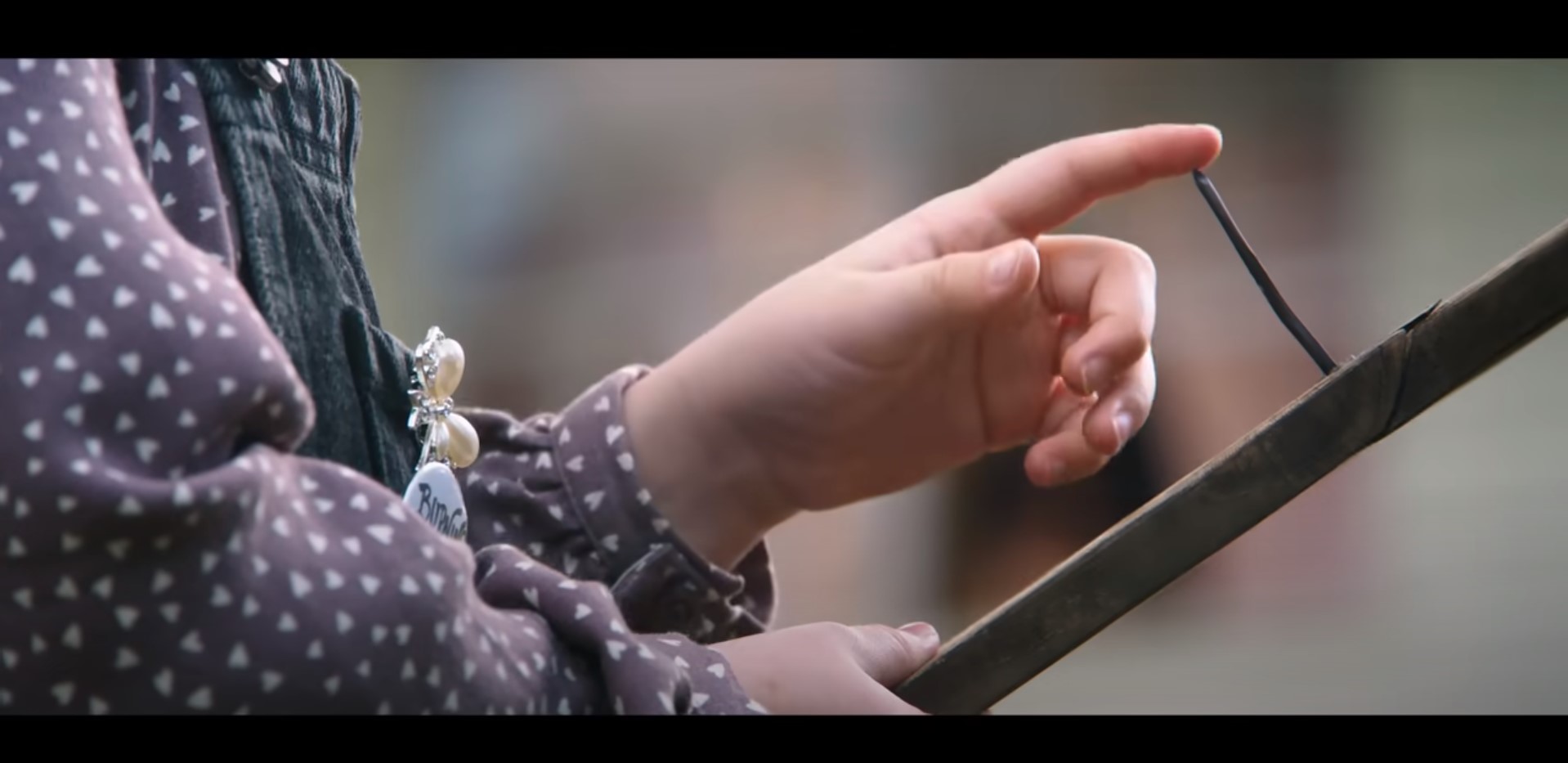
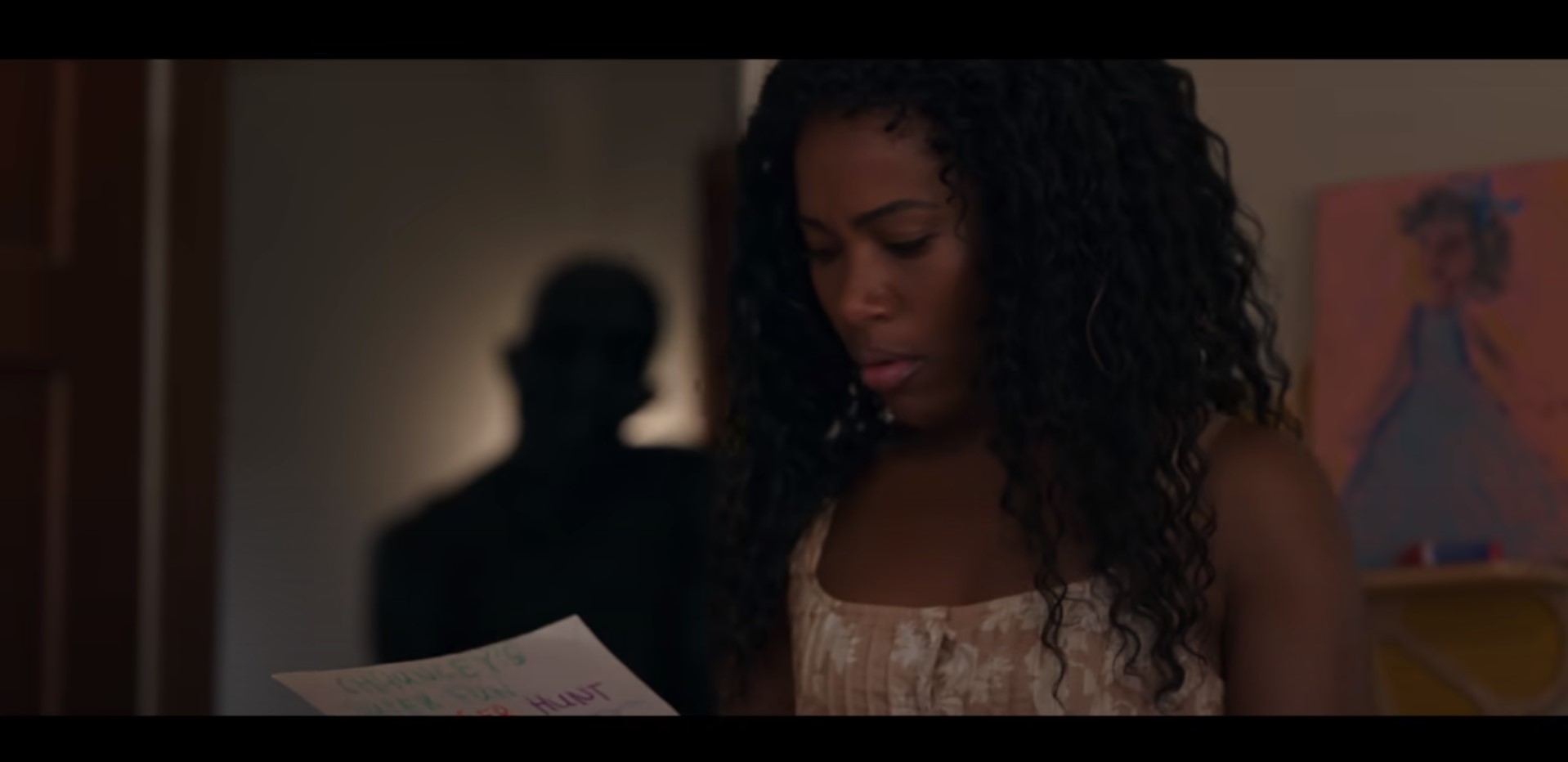
Jessica purchases her family home, moving in with her new husband and stepchildren where she reminisced being happy once as a child up until her father’s mental breakdown forced her to move out of the house and live with her grandmother.  Returning to her childhood home might have suppressed most of memory but has also spurred a few good recollections she aims to share with the conflicting attitudes of her stepdaughters, the angsty, teenager Taylor and her little sister, Alice, who suffers from a traumatic past.  When Alice discovers a stuffed bear in the basement and conjures up an imagery friend named Chauncy, Jessica feels content knowing Alice is coping with a new friend outside intense therapy sessions but when Chauncy’s seeming innocent scavenger hunt turns to hurt Alice, all the forgotten, difficult memories of her past surface and Chauncy is more than an Alice’s imaginary friend but spurned entity seeking to reconnect to Jessica, feed off her unique creativity, and keep her always in the Never Ever world of imagination.

At least once during our childhood, we all had an imagery friend to lean on, to play with, to cope with difficult situations.  For me, my imagery friend was an 8-foot white teddy bear I would snuggle into its lap and read my adventurous stage one or two books to.  For Lionsgate and Blumhouse, their imagery friend is much, much more sinister!  “Imaginary’s” dark twist on the juvenile fantasy is the brainchild of writer-director Jeff Wadlow, the filmmaker behind 2018’s “Truth or Dare” and 2020’s “Fantasy Island.”   The Charlottesville, Virginia native seemingly has thing for spinning games and fantasies into crooked, ill-fated variants.  “Princess and the Frog” writers Greg Erb and Jason Oremland cowrite the script with Wadlow, adding their experiencing in writing children stories for Wadlow’s eviscerating of childhood joy.  Lionsgate Films and Blumehouse Productions distributor the Tower of Babble Entertainment film with Jason Blum, Sean Albertson, Paige Pemberton, Paul Uddo, Jennifer Scudder Trent, and Jeff Wadlow producing.

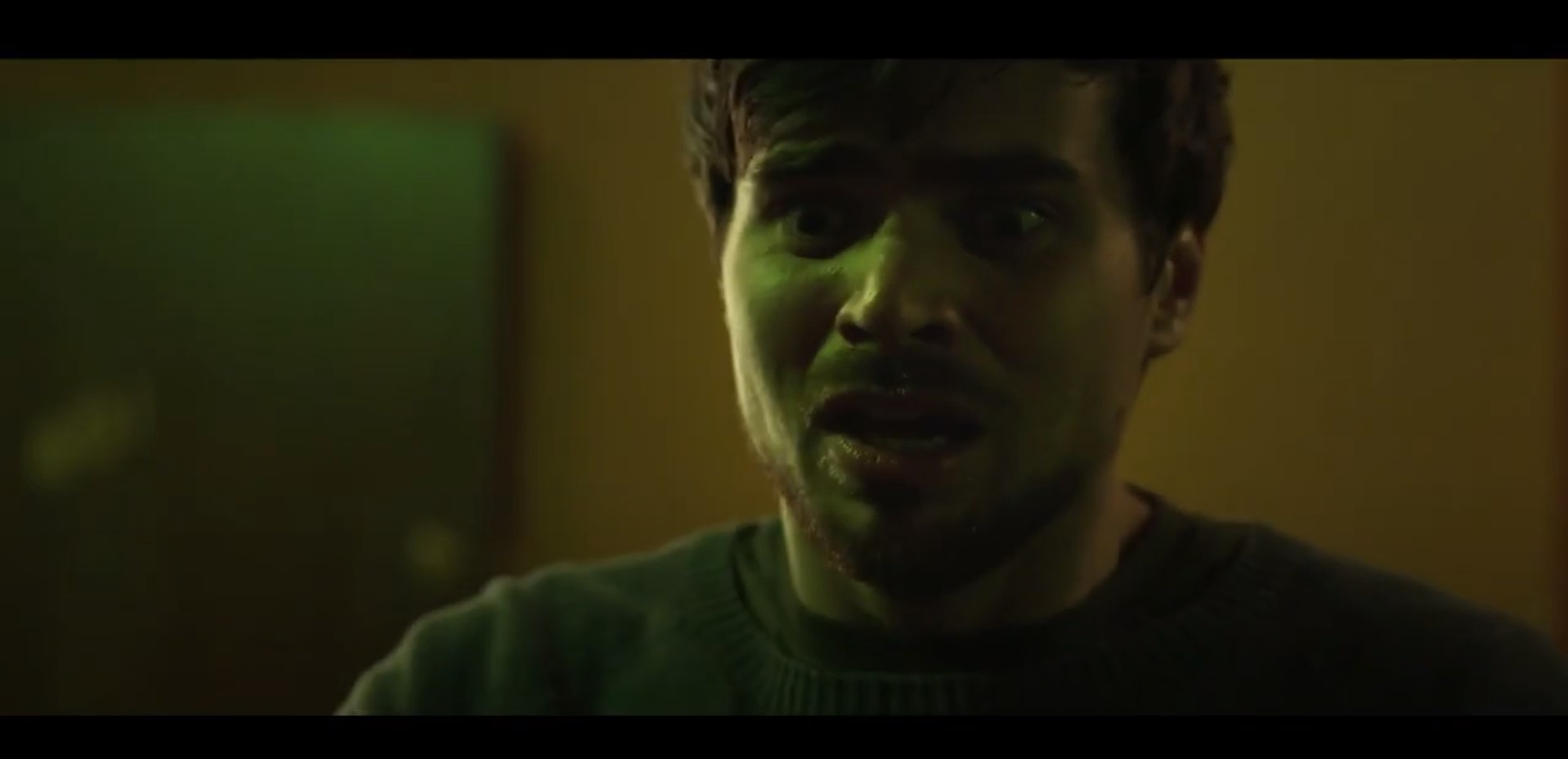
In the crosshairs of a targeting imaginary friend is Jessica, a successful children’s book author on the outside of trying to assimilate herself into a new family while, at the same time, struggling to understand her nightmares and troubled childhood past.  DeWanda Wise (“Jurassic World:  Dominion”) stars the struggling, but good-natured stepmother Jessica who’s married to “The Walking Dead’s” Jesus, I mean Tom Payne.  Taegen Burns and Pyper Braun play Payne’s sibling daughters in their respective roles of Taylor and Alice as they make their horror film debut.  Detrimental to “Imaginary’s” silkiness of a happy couple is the artificial interactions between Wise and Payne who appear to be just going through conventional motions of a very awkwardly scripted and painfully garish couple.  When Payne departs the entire climatic acts for his character’s musical tour, other characters begin to flourish more naturally from between Wise, Burns, and Braun who become entwined into a certain teddy bear’s revengeful plan and this fountains a pleasant range of character arcs with overcoming fears, building character emotions, and settling the tension between them within the context of a common foe narrative.  One crucial, tell-all character goes critically by the wayside because, at the very last possible moment, Betty Buckley (“Carrie”) as the longtime neighbor Gloria becomes a deluge of exposition and she’s only introduced in full much later into the story because the writers had no idea how to integrate her earlier and make the information Gloria sits make sense until desperate moments arise.  Buckley, though monotone at times, makes for a good crazy lady.  “Imaginary’s” cast fills out with Veronica Falcón (“The Wind of Fear”), Samuel Salary, Matthew Sato, and Alix Angelis (“The Cleansing Hour”).

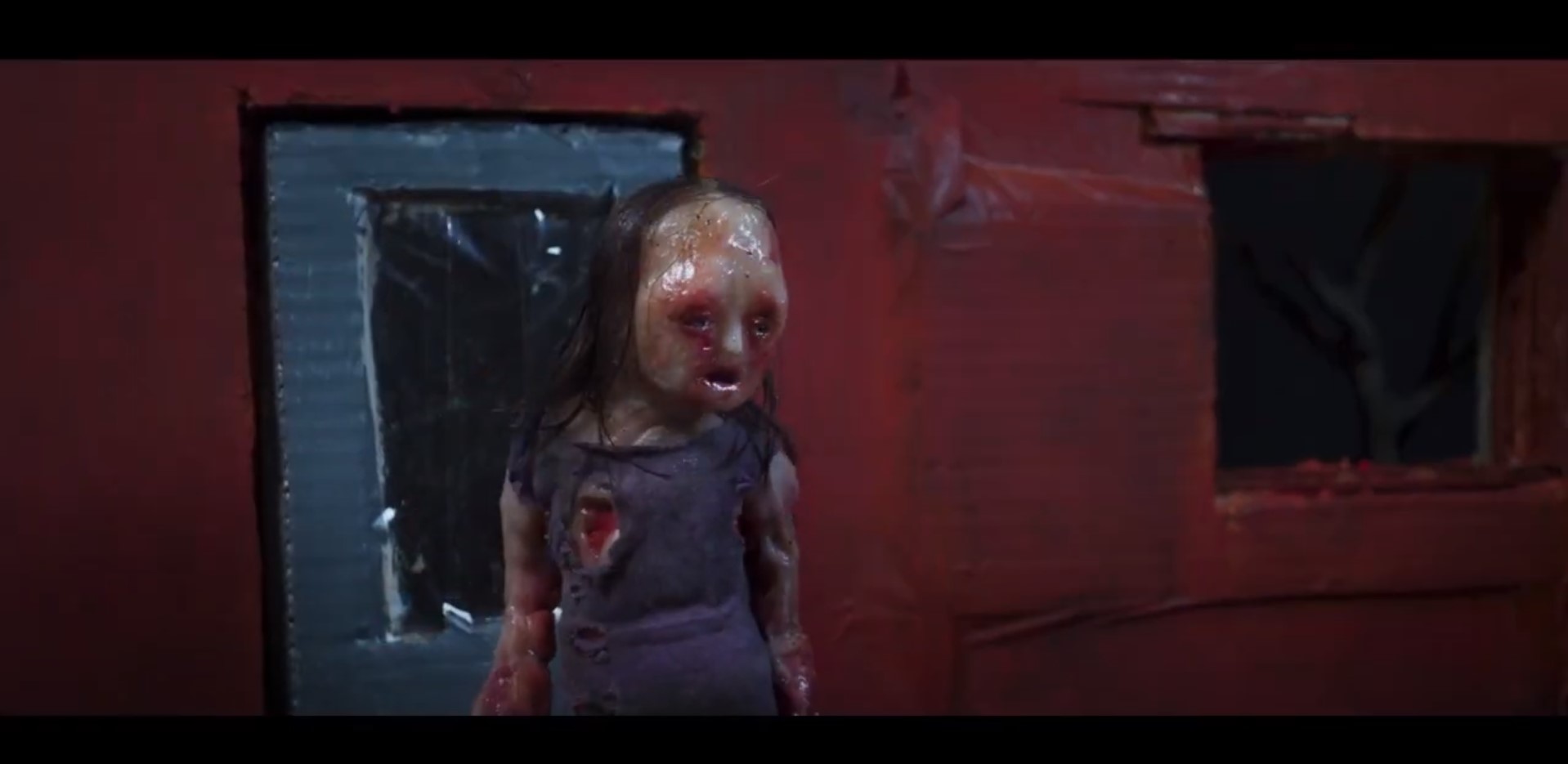
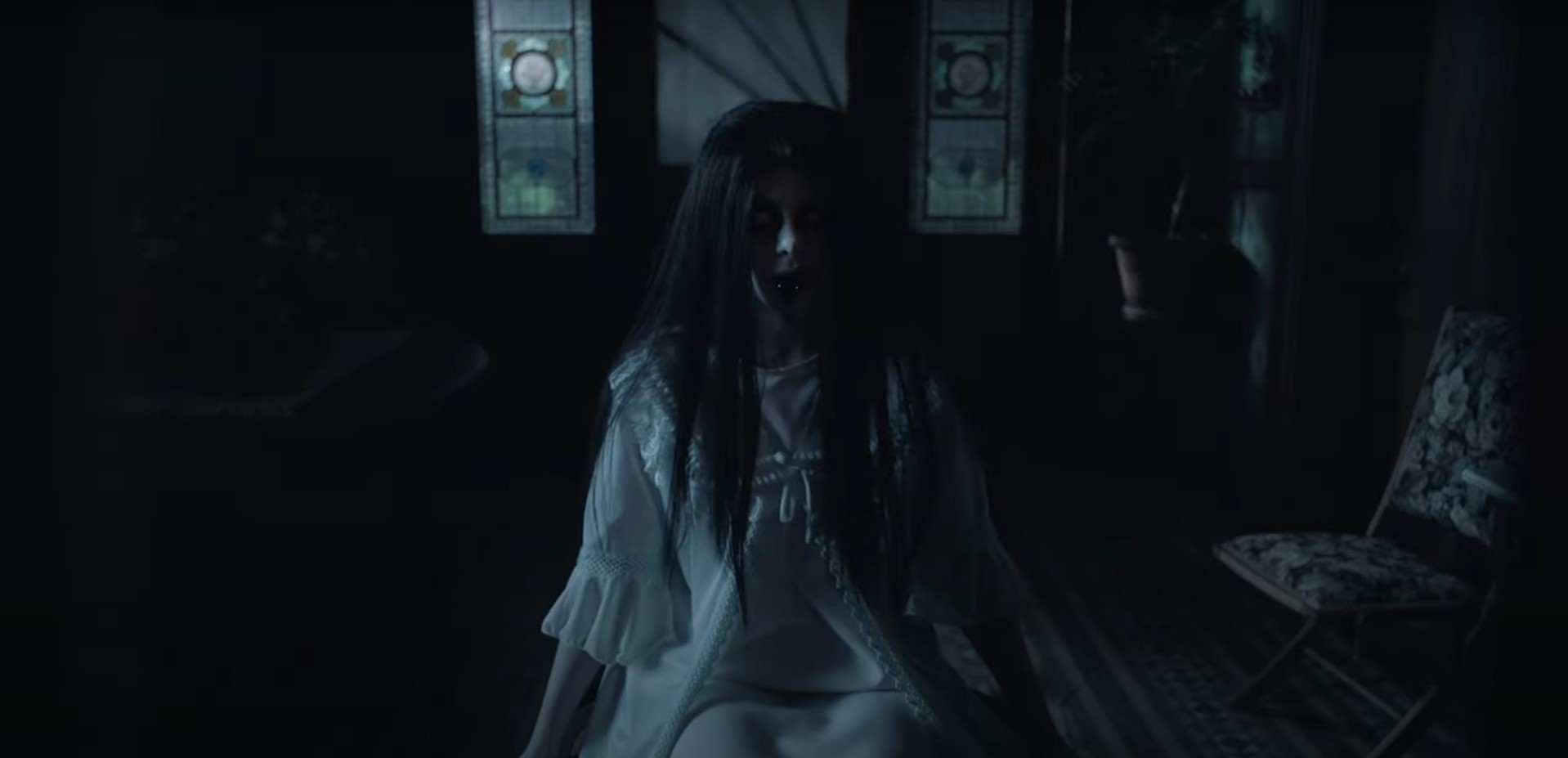
Audiences will need to expand their imaginations to get immersed into “Imaginary’s” interdimensional, child creativity-eating plot that careens through the specifics and details.  “Imaginary” suggests children have this invisible pal that snake tongues into their ears, feeding them childish ploys and harrying shame to get them to do what they want, and, inevitably, suck them into the Never Ever world through a checklist bizarre ritual.  The story suggests a globally subversive circle of these entities have been explains that every culture has a take on the imaginary friend concept and even throws into the dialogue other children having disappeared shortly after speaking of the Never Ever but the shorted change of the widespread disappearances background and the fact that crazy old, neighbor lady Gloria somehow surmised a pile of information on the subject, self-published knowledgeability on the ritual, being, and even the Newer End world, provides threadbare, credulous support for the storyline.  Stylistic and visually, “Imaginary” endorses its own title with tactile manifestations of the entity’s power.  Men in nightmare costumes is always preferable over overly silky-smooth and impalpable computer-generated monsters and the work done by the effects crew greatly engenders childish fears with an overgrown, toothy, scary teddy bear and a topsy-turvy world that are magical yet foreboding. 

Snuggle up with your Teddybear and get ready to be scared in “Imaginary” on a 2-Disc DVD and Blu-ray set from Lionsgate Films. The AVC encoded, 1080p high-definition, BD50, presenting the film in a 2.39:1 widescreen aspect ratio, is a solid showing of image integrity with crafty cinematography from James McMillan (“Twisted Metal“) that avoids the seams of the monster suits, keeping them in a considerable degree of low-level shadows, and using odd angles to make contradictory scenes flush in the Never Ever. Yet, despite the max storage capacity of a 50-gigabyte disc, compression banding still rears its ugly between gradient tones contrasting dark and lit scenes; problematic areas are not entirely throughout the picture but intermittently spotty to say the least. The DVD9 is MPEG-2 encoded with an upscaled 1080p. The English language option is a three-dimensional Dolby Atmos surround sound and if Dolby Atmos was going to be used for anything feature, “Imaginary” would be that feature with tons of range and depth mechanicals to float audio into the spatial fields above and below. When Never Ever doesn’t formulate a logical structure and up is down and down is up, Atmos caters and evolves to the fluid environment, emitting pinpoint ambience to be shaped to the size of television room. Dialogue comes over clean and clear, established in the forefront amongst the other audio layers. Spanish and French 5.1 Dolby Digital surround sound are also available audio options with English, Spanish, and French subtitles to select from. Special features include a feature length audio commentary by director, and cowriter and producer, Jeff Wadlow with producer-actress DeWanda Wise. Also, encoded into one long featurette, are four medium-short mini-featurettes of Meet Your New Imaginary Friends of getting to know the characters of “Imaginary,” Frills and Thrills of taking a child’s joyous creativity and twisting it into a creature-laden nightmare, Crafting the Beast of Imaginary is a look at the tangible creations of “Imaginary’s” monsters, and Bringing Nightmares to Life looks at how the Never Ever is constructed and shot to get the illusion of an upside down interior slice of another dimension. Sheathed inside a glinty, nearly lenticular, cardboard slipcover is the traditional Blu-ray Amary, both with the innocently, ominously looking Chauncy bear on the front cover. In the interior, each side houses a respective format within a push lock. A digital copy does come with the release within the insert clasps. “Imaginary” is a PG-13 horror (are they trying to appeal to kids?) with a runtime of 104-minutes and a region A playback.

Last Rites: I Imagine “Imaginary” could have gone over ten times as smoothly and more coherent with a longer runtime time to flush out more characters and a better designed narrative. Instead, pacing is quickened to race through unpacking more complex themes: childhood abuse, childhood trauma, the division of the original and regluing of a new nuclear family, family history of mental illness, the concept of imaginary friends, and so forth. The result is a less than desirable bastardization of an imaginary friend that leaves us high and dry for more context and substance than just a puppeteered scare bear.

Chauncy Wants You To Be his Friend! “Imaginary” on Blu-ray DVD/Combo set!

What EVILS Lie After Death? “We Go On” reviewed! (Lightyear Entertainment / Remastered Blu-ray)

Get Haunted as “We Go On” is now on Blu-ray!

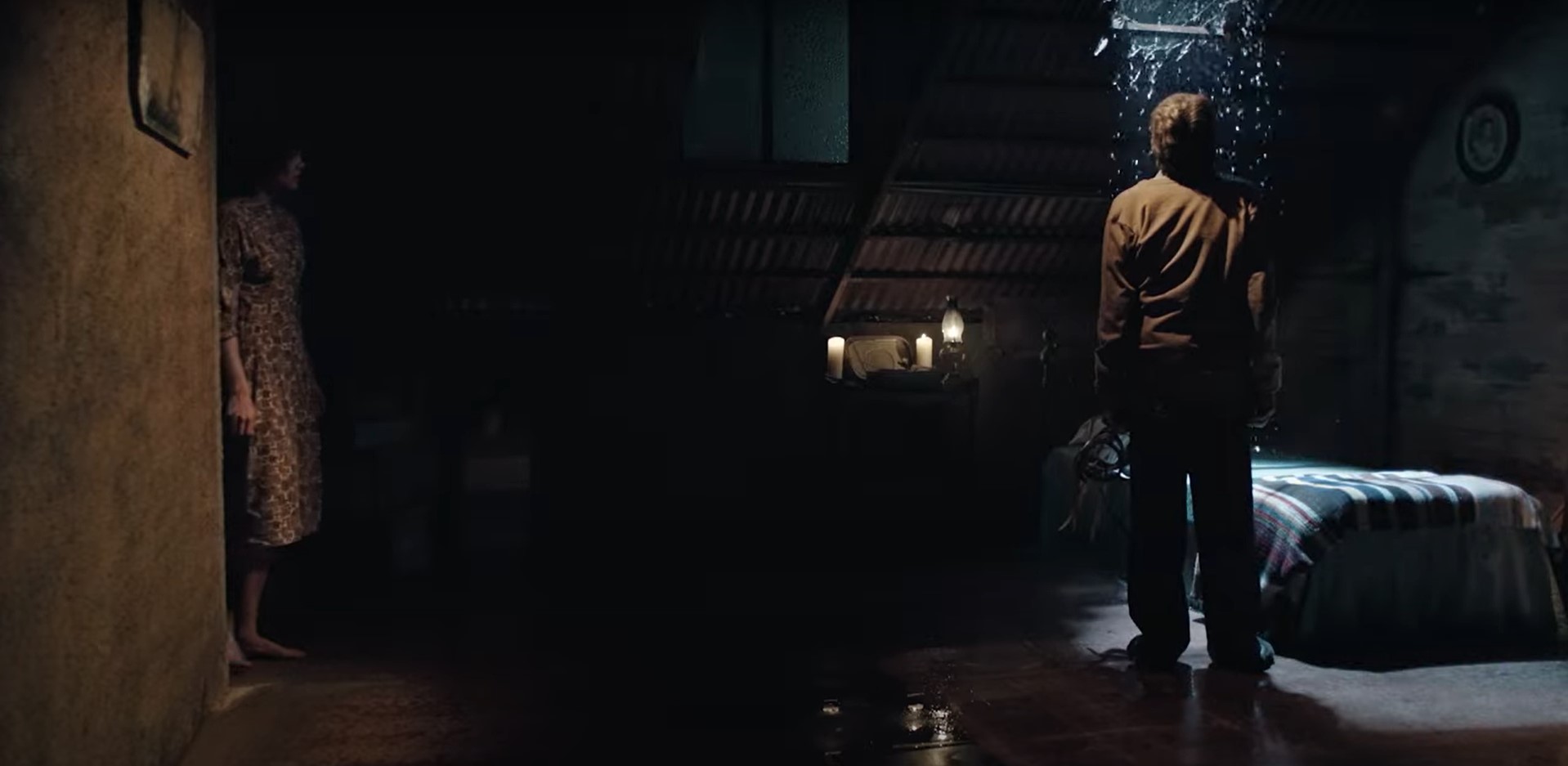
Miles Grissom lives in fear every minute of his life.  What scares the editor of shoddily performed, midnight television infomercials the most is the unknown after death.  The question is Is there a life after you die or is there just a black void of nothingness?  To answer that existential question, Miles places a quarter page newspaper ad seeking an ounce of proof of the afterlife with a $30,000 reward attached for one single person who can show him that there is an existence beyond death.  With the unconditional support of his mother, he scours through hundreds of fakes, solicitors, crazies, and the like until he narrows down the advert answerers to a few possibilities that have real promise.    As Miles investigate the claims of each one, he finds himself closer to the truth than he ever wanted to be and now he’s forever trapped between existential planes for the rest of his life.  

One of the longstanding and biggest questions in the universe is what happens to us when we die?  Where does our immortal soul, the individualistic essence of our being, wander to after the corporeal shell is empty?  Or does it just poof vanish, like an extinguished candle flame?  While all of these questions can be up for philosophical debate amongst the various, and often contentiously stubborn, religious groups and cultures, filmmakers Jesse Holland and Andy Mitten use the idea for their 2016 drama-horror “We Go On” that gives one possible, uncontested and cinematically electric, explanation as well as imparting a somethings are better left unknown dread.  The duo behind “YellowBrickRoad” returned to write-and-direct their sophomore U.S. production with a principal photography location shoot in Los Angeles.  “We Go On” is produced by Logan Brown, Irina Popov (“Chilling Visions:  5 Senses of Fear”), and Richard W. King (“The Witch in the Window”) under the production banner Filmed Imagination.

Miles Grissom is a mild-mannered and scared into solitude individual.  His loneliness, though not conspicuous to any extent, extends to his profession of a video editor of infomercials and other overnight television programming.  Agoraphobia and thanatophobia keeps Miles securely isolated in his modest apartment building where a recurring dream of a car accident sends his heart racing, a side effect of a core, back history moment yet to be explored when we meet Grissom, who is played by a stiff, but gets the psychologically wounded character across, Clark Freeman who has worked previously with Holland and Mitten on “YellowBrickRoad.”  “Cat People” and “Superman III” actress Annette O’Toole fills in as Miles’s ride-or-die, overprotective mother with a deep, dark secret of her own coated with a thin film of backseat family drama that’s doesn’t make her character shine like it should, especially being an important piece and highly influential to Grissom’s character.   Instead, the exposure of the secret and the impact it’s supposed to have is left on the backburner for Nelson to come into play, a greasy airplane janitor with deadly drug problem in what can be described as the best Sean Whalen role he never played with Jay Dunn filling those janitorial coveralls.  Dunn, who would go on to have a role in Andy Miton’s solo project, “The Harbinger,” dons slicked over balding hair, grimy teeth, and a deep, sunken eyes to be a bane toward Grissom’s existence and while Dunn doesn’t have dialogue for half of his onscreen time, he makes for a perfect hang around the background, meanspirited glarer.  The rest of the “We Go On” cast pop in and out as Grissom dwindles down his list of fakes and phonies with appearances from Laura Heisler (“YellowBrickRoad”), Giovana Zacarías, and the always wonderful on screen, “Gremlins 2’s” actor, John Glover, as a scientist trying to scare Grissom into giving him the reward money.

“We Go On” encases more drama elements than horror but the circling horror imagery enclosed has a beautifully grim layout with the minor touches, such as the slow turn of a hanging corpse or the statement of a ripe smell of a long dead overdose victim, that add a palpability, reinforcing the horrific moments and increases the ghastly tension.  The further we journey with Miles Grissom in his obsessive search, the grislier the imagery gets in what is essentially a two-part tale that firstly puts us and Miles on the hunt for life after death that quickly nosedives into a leeching supernatural torment.  Oddly, Grissom takes his newfound nuisance almost instantly in stride with not a ton of obstacle or self-realization work to warrant an acute enlightenment of how to handle an orbiting ghost that flashes disturbing images every other minute inside his mind and allows him to see between the planes of other gruesome ghosts stuck in limbo.  There are other examples of these sudden reversals or improvements that work against the pacing and don’t invite reward through struggle or pain in what is a walk in the park for Miles Grissom to see and handle ghosts being introduced to audiences as a man emotionally crippled by a traumatic, underlying fear.

Via Lightyear Entertainment, an American coast-to-coast independent film distributor, “We Go On” receives the Blu-ray treatment with an AVC encoded, 1080p high-definition resolution, BD25.  There’s little information regarding the remastering of the film with the only kick up being a digital restoration and enhanced visual effects and touchups to provide a smoother, cleaner picture presented in the film’s original anamorphic widescreen aspect ratio of 1.78:1.  Having never watched the DVD or first Blu-ray version, I have to take Lightyear’s restoration at face value which does have a crisp, clear picture full of natural color and graded with brilliance that sometimes makes the picture look too digitally sterile with not a ton of contouring shadows that can make the picture look depthless at times.  The infused visual digital f/x add about the same flavor, but the images never linger on screen, turning brevity to the film’s effects advantage.  No apparent issues with compression on the 25gig BD; textures modestly tactile despite the bright and airy grading and blacks are deeply saturated with spectrum banding.  The English language audio options include a lossy Dolby Digital 5.1 and a lossy Dolby 2.0 Stereo.  Dialogue is clear and projecting over the other layers but lacks that full-bodied, full-channeled trait of lossless.  Supernatural effects find distinctive ground and synch greatly with the sudden scares in transition between reality and the ghost realm.  Range and depth are favored by the remastering in the scenes that warrant both, such as the LAX’s airstrip takeoffs that considers the jet plane’s positioning in the background or above, increasing steadily the jet noise volume whenever a plan is in the extreme background to a more overhead location.  Also added for the remastered release are three new, feature-length commentaries:  two with the individual directors in Andy Mitton and Jesse Holland with the third houses the two stars, Annette O’Toole and Clark Freeman. The clear Blu-ray Amaray arranges a darker composition cover art than what the movie actually entails with an interior disc pressed with the same cover and a reversible cover that has one of the more memorable scenes from the feature. There are no insert materials included. The region free, unrated release has a runtime of 89 minutes.

Last Rites: You get what you ask for is the moral of the story maxim in Andy Mitton and Jesse Holland’s “We Go On,” a commercially technique, light-weight thriller with a thin lining of grim imagery between drug overdoses and suicide and adequate performances by Annette O’Toole and Clark Freeman that drops the everlasting question of desire and extreme, emotional fear for instant peace of mind, even if experiencing the terrifying truth firsthand.

Get Haunted as “We Go On” is now on Blu-ray!

Headstrong EVIL Bedeviled by the Past and the Younger Generation. “Peacock” reviewed! (Indiepix Unlimited / Blu-ray)

“Peacock” on Indieflix Unlimited Blu-ray!

Unable to fit into The Foundation’s draconian conducts of an in-home professional caregiver, the organization decides to place Anna into the isolated home of Sarel Cilliers, a once prominent South African theologist aged into a feeble old man with prim and proper, religious convictions and living on the edge of a psychotic break.  Anna finds her hands are full with the demanding and stubborn Sarel and his almighty morality but his life’s work and past, strewn about his house as Sarel ceaselessly reopens boxes upon boxes of old files to study, draws in Anna as it strangely feels familiar to her as well as raising internal concerns about Sarel’s esteemed history.  The deeper she digs the more Anna falls into a psychosexual fixation that parallel and merge into Sarel’s own delusional state, soon the two share common afflictions of masked followers and surreal, terrifying imagery of a subjugated past that hasn’t loosened its traumatizing grip on them yet.

A psychological thriller that aims to suppress and shame youthful desire while simultaneously manifesting guilt as ghosts from an older generation’s sordid past at the behest of righteous expectations and a patriarchal society, “Peacock” is a strangely transfixing mental and sexual tug-a-war horror-thriller full of emblematic evocations and provocations from director Jaco Minaar.  Minaar’s debut 2022 feature film, under the native title of “Pou” from South Africa, is cowritten alongside David Cornwell in what has become the duo’s third collaborative project and is the first South African film to employ an intimacy coordinator for the strong sexual content scenes crucial to Anna’s storyline as well as perhaps a few bathing scenes with the older Sarel.  The Gothically-charged horror is a financial production of The Ergo Company with the organization’s Dumi Gumbi and Catharina Weinek, who produced “The Tokoloshe,” serving as co-producers alongside David Cornwell. Fever Dream Pictures, Monolith Film, and Indigenous Film Distribution are co-productions of the picture.

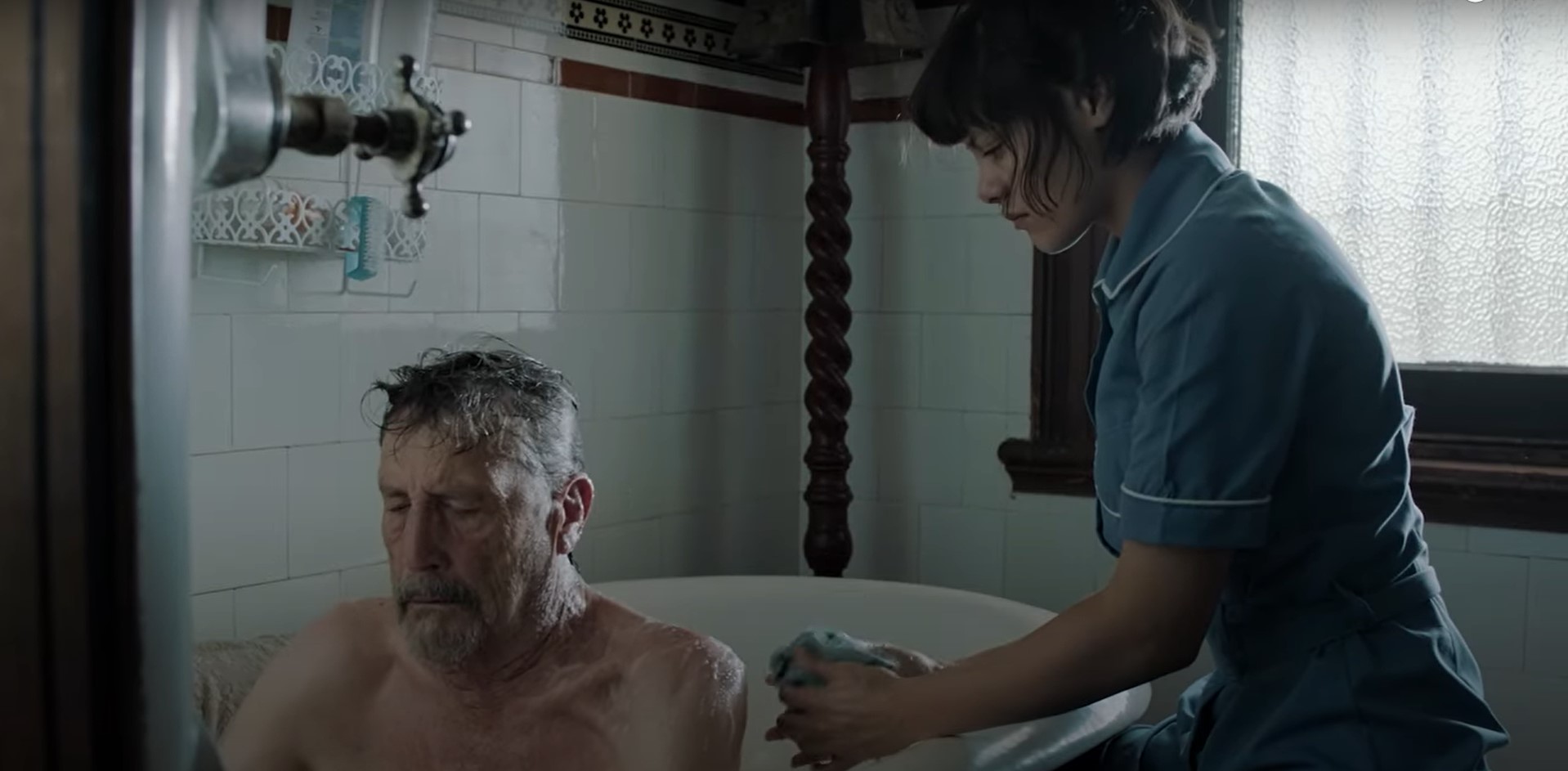
The principal pair of Anna and Sarel, played by South Africa Television actress, “Dam’s” Tarryn Wyngaard, and longtime actor Johan Botha, are representational characters in numerous ways.  Sarel is the established, iron-fisted patriarchy of yore having come to the end of his rope in life with his past transgressions, ones that represent heavily in the socio-political air of South Africa in decades ago, finally catching up to him in the form of a sort of indeterminable dementia.  Anna, on the other hand, is symbolic of youth, desire, and itching for liberty from a repressive system, such as The Foundation that houses young women, supposedly orphans, to be raised subservient and attentive but Anna’s regarded taboo lifestyle clashes with The Foundation’s, as well as the theologian Sarel’s, archaic belief system and so Anna then goes on this obstacle-laden journey of self-discovery that’s historically painful as well as excitingly new on the horizon as she meets Jean Basson (Ruan Wessels), son of Sarel’s house call doctor (Alida Theron), and whom both are virtually a mirror of Anna and Sarel on a lesser intense level.  Wyngaard and Botha earnestly stand firm as individualistic, idealistic characters butting heads to a culminating point of surreal transition of power.  Liza Van Deventer and Nicola Hanekom costar. 

“Peacock” isn’t a knock-your-socks off, popcorn thriller with edge of your seat terror and special effects nor does it claim to be.  Instead, “Peacock’s” fable tale is fashioned delicately out of South Africa’s rough transitioning between conflicting oppositions from, and set as the period in the film, of the 1980s dealing with Apartheid.  From Anna’s atypical of the times perspective, as an outcast young woman growing and maturing in an era in which the old, patriarchal ways of doing things are quickly dwindling, much like the deteriorating mind of Sarel, the young woman tussles externally and internally in trying to conform to the brittle status quo while that’s not subsiding without a fight, yet the desires inside of her are eager to express themselves in a sexual way.  The contrasting phasing out rigidity and the phasing in tolerance courses through a single conduit of uneasy, shared surrealism that frightening and confusing to them both but affects them differently; the ghastly images forces Anna to face her past while those same images torment Sarel like a type of Hell he has to relive over-and-over and that is what the house represents to Sarel, being caged in a purgatory state that parallels the actual peacock living encaged and screeching just outside of the house.  The peacock itself embodies Sarel’s daughter, an image kindred to that of Anne’s illicit lover at The Foundation, who he locked away in the attic for having an improper relationship with a young, black man, an archaic and unfounded taboo from South Afrikaners shamefully stubborn history of the racially segregating Apartheid akin to the historical racism of American culture.  In the end, it’s the overwhelming guilt that plagues us all in “Peacock’s” thematical version of Hell.

Streaming service Indiepix Unlimited is slowly, but surely, releasing their repertoire onto physical media venue.  Granted, these DVD and Blu-ray releases are not top-notch quality, being mostly encoded onto DVD-R and BD-R with very little special features to accompany, but still better suited for viewing than the inconsistent determinants of steaming. The AVC encoded, high-definition 1080p, 25 gigabyte BD-R has sufficient storage to render a decently detailed feature that suffers little-to-no compression issues, presented in a widescreen 1.78:1 aspect ratio. Graded on a darker, bluer scale, “Peacock” does often have color reduction aspects that either is part of the story’s period approach or is a reproachable side effect of the writable disc, losing a richness to the black levels and leaning slightly more on a higher contrast. Details, too, appear smoother to a lesser degree but there are enough texture and tactile elements, such as the cracked leather of dusty old books, Sarel’s haggard and loosely wrinkled skin, or Anna’s striking dark features, to become swirled into its morose mixture of metaphors and surreal horror cerebralism. The Afrikaans language LPCM stereo 2.0 has lossless appeal that fills in the dual channel output quite substantially and with equipoise. Finding depth in a psychological thriller can be a tad be tricky to isolate the terrorizing trepidation trimmings of what’s beleaguering the mind and that can subdue the intended effect on the viewers. Dialogue is strongly delivered in the foreground of all other audio layers with the optional English subtitles available. The English subtitles are of European English translation and are without grammatical error; however, the pacing is at a breakneck speed. Other than the film’s theatrical trailer, the region A encoded, not rated, 89-minute Indiepix Unlimited release does not contain any bonus content. The traditional Blu-ray Amaray houses a lifeless in a monochrome-purple colored print out of Anna and a peacock feather over her eye. Inside is an advert of Peacock with a QR code and a disc pressed with a plain white circular sticker with the title in a font close to American Horror Story.

Last Rites: Noted having inspiration from Francisco Goya’s Black Paintings, the soul-swallowing torment of “Peacock’s” sundering, secluding visuals plays into the deteriorating psyche of forced solitude and the iniquitous guilt that eats away at our being, like an inhabiting demon, recognized in redux of South African sins that sees a trial by fire with a turning in the country’s tide.

“Peacock” on Indieflix Unlimited Blu-ray!

Psychological and Psychotic EVIL Descend Upon a High School Boy! “Butcher, Baker, Nightmare Maker” reviewed! (Severin Films / 2-Disc 4K UHD and Blu-ray)

The 2-Disc UHD and Blu-ray Available for Pre-Order. Due to Release 5/28!

Orphaned Billy Lynch has raised by his Aunt Cheryl after his parents are tragically killed in a motor vehicle accident.  On the verge of his 17th birthday, Billy is ready to move on from his old life living under the overly caring Aunt to building a relationship with girlfriend Julia and possibly moving to Denver on a basketball scholarship, but the threatened Aunt Cheryl will do anything to keep Billy home, even if that means murder.  A brutal, stabbing incident of a local television repair man in their home leads to Detective Joe Carlson to suspect Billy as the main culprit and begins digging into the young man’s life that, coincidently, unearths the dead repair man had a homosexual relationship with Billy’s basketball coach.  Bigotry and intimidate course through Detective Carlson being as he prejudicially hounds and interrogatingly paints Billy as a gay, jealous lover without an ounce of hesitation.  Between his crazy Aunt and an intolerant cop, Billy’s life spirals dangerously out of his control. 

‘Butcher, Baker, Nightmare Maker,” also known as “Momma’s Boy,” “Night Warning,” or just “Nightmare Maker,” is the 1981 queer awareness and maturing suppression horror-thriller from “Bewitched” TV-series director William Asher.  Trying his hand at an edgier storyline with plenty of graphic violence and subversive themes, Asher helms the picture working off a script by a trio of debuting writers in Steven Breimer, Alan Jay Glueckman (“The Fear Inside”), and Boon Collins (“The Abducted”).  The American-made production brought considered taboo topics to the table when homosexuality was becoming more prominent in American culture in light of the AIDs epidemic and while the sexually transmitted disease has no part in this story, the derogatory fear of same-sex coupling is mercilessly present.  “Butcher, Baker, Nightmare Maker” is a Royal American Pictures production, distributed theatrically under Comworld Pictures, and is produced by screenwriter Steve Breimer and “Class of 1999” producer Eugene Mazzola.

Hardly does any film ever made have the perfect cast.  “Butcher, Baker, Nightmare Maker” does not reside in that genus of imperfection.  Every performance is spot on and fitting for this early 80’s video nasty, each actor playing the singular part ingrained into their act that deciphering if their behavior is actually like that in real life can be tremendously difficult and a completely disorienting.  The story focuses on Jimmy McNichol’s 17-year-old high schooler Billy Lynch who, until recently, has been living moderately comfortable under his Aunt Cheryl’s roof.  That is until school sis nearly over and the prospect of college and girls sows the seeds of springing him from his childhood home.  Though the story is supposed to be centrically Billy Lynch, it’s the quirky and unusuality of Susan Tyrrell as the undefined obsessed Aunt Cheryl with a thick undertone of sexual tension toward her nephew that just makes McNichol and Tyrrell’s scenes enormously uncomfortable.  The late actress, who starred in Richard Elfman’s “Forbidden Zone” and would later have roles in “Flesh+Blood” and “From a Whisper to a Scream,” could charm audiences with perky provocativeness and scare into submission with the ability to pivot to a crazed madwoman.  And while we’re slightly turned on and also frightened by Tyrrell, we’re completely in disgust of “The Delta Force’s” Bo Svenson’s one-train-thought, homophobic detective strongarming high school teens, coaches, and even his sergeant (Britt Leach, “Weird Science”) into being cocksure of his own short-sighted homicide theory driven by hate for homosexuality.  Marcia Lewis (“The Ice Pirates”), Steve Eastin (“Killers of the Flower Moon”), Julia Duffy (“Camp X-Ray”), and before he was a big superstar, a young Bill Paxton (“Aliens,” “Predator 2”) bring up the supporting cast rear.

For an early 80s video nasty, “Butcher, Baker, Nightmare Maker” is without a doubt intense and provocative with timeless themes that nearly table the trenchant violence for corrosive mental issues, systematic homophobia, and pressures of maturity.  The two prong antagonistic sides bear down on Billy Lynch and the one principal who still technically a child and learning all the facets of adulthood has his own good being thwarted by conventional adult role models of family and law enforcement.  Director William Asher, through the script, inlays a pro-queer avenue where the gay basketball coach displays immensely more wit, sense, and compassion than that of Aunt Cheryl and Detective Carlson, awarding the coach with more likeability and favor to come out of this ugly business unscathed.  Asher’s very intent on defining the personalities and the actors deliver tenfold under a surly environment of not only the brusque characters but also Cheryl’s home that is a tomb for one of Aunt Cheryl’s past lovers and is becoming a tomb for Billy who will either bend to Aunt Cheryl’s sexually-toned obsessiveness or die a terrible a death.  “Butcher, Baker, Nightmare Maker” also predates the infamous “Final Destination 2” log truck scene with its own that’s equally hard hitting and macabre, the latter also being expressed thoroughly throughout the entire narrative with a morose overhang that’s simmering to explode. 

Arriving onto a 2-disc UHD and Blu-ray set, “Butcher, Bake, Nightmare” is Severin’s latest title to go ultra-high definition, first for the William Asher film, with an HVEC encoded, 2160p 4K resolution, BD100 and an AVC encoded, 1080p high definition, BD50 for the Blu-ray.  Presented in an anamorphic widescreen 1.85:1 aspect ratio, “Butcher, Baker, Nightmare Maker” favors a stark and naturally vibrant color scheme with low profile compression issues on a pristine transfer, scanned in 4K from the original camera negative.  I could not detect any compression artefacts with the dark spots retaining their inky cohesion and the details retain superior depth in a slightly more saturated contrast of a healthy-looking, grain-appropriate picture quality, even elevated more definitively with the extra pixels.  The English uncompressed PCM mom track has lossless appeal with some foremostly faint dialogue hissing and crackling that’s more of given with age rather than a flaw in the mix.  The mix also doesn’t establish depth all too well with one channel doing all the heavy lifting, but the layers are well-balanced in proportional volume that make the audio composition effective and scary.  English subtitles are available. Encoded special features include 6 hours of content. On the UHD in lies three audio commentaries: one with star Jimmy McNichol, one with cowriters Steve Breimer and Alan Jay Glueckman, moderated by Mondo Digital’s Nathaniel Thompson, and the last one with co-producer and unit production manager Eugene Mazzola. The theatrical trailer cabooses the UHD special features. All of the above are also on the Blu-ray special features with additional content that includes a new interview with Bo Svenson Extreme Prejudice, a new interview with director of photography Robbie Greenberg Point and Shoot, a new interview with editor Ted Nicolaou (“Don’t Let Her In”) Family Dynamics, archival cast and crew interviews with Susan Tyrrell, Jimmy McNichol, Steve Eastin, make-up artist Allan A. Apone and producer Steve Breimer, and a TV spot as the cherry on top of some sweet special features. However plentiful and well-curated the special features are, my favorite attribute of this Severin release is the exterior with a dual-sided cardboard slipcover that has new illustrated compositional art and tactile features. Underneath, a reversable cover art featuring the film’s one-sheet poster art with a more Severin Film’s retro constructed “Nightmare Maker” arrangement that’s more red-blood heated. Inside does not contain any insert goodies or booklets and a disc on either side of the interior featuring the slipcase and black UHD Amaray case cover art. Both formats are region free, have a runtime of 93 minutes, and are not rated.

Last Rites: Seriously messed up on so many levels, if being a teenage boy isn’t pressurized enough right before manhood, becoming an adult can be arrantly deadly in this superbly packaged shocker “Butcher, Baker, Nightmare Maker” now on 4K UHD for the first time ever on May 28th!

The 2-Disc UHD and Blu-ray Available for Pre-Order. Due to Release 5/28!

Gaudy, Superfluous EVIL Sits in Your Living Room and Destroys Your Family. “The Coffee Table” reviewed! (Cinephobia Releasing / DVD)

“The Coffee Table” Would Look Good in Your Living Room! Purchase It Here Today!

Jesús and Maria are new parents with a beautiful baby boy.  Maria has been eager for a baby and sent through several medical treatment for the bundle of joy while Jesús continuous rides the fence about being a father.  When the baby arrives, the boy becomes a source of usually one-sided bickering and jabbing contention as Maria feels Jesús could be a better father to their newborn son.  When they move into a new apartment, they find themselves in a furniture store looking at a gaudy glass coffee table Maria can’t stand the sight of, but Jesús very much can’t live without.  While Maria steps out to shop for an upcoming luncheon with Jesús’s brother and young girlfriend, Jesús briefly stops assembling the table to take care of the baby until a tragic accident happens that reshapes everything and everyone Jesús cares about, and impels him to bottle in the tragedy, hiding it in extreme guilt from his wife and guests, as he struggles to find the right moment to relieve his soul. 

Marriage is hard.  Parenting is even harder.  Choosing a coffee table should be a delicious piece of decision-making cake but for director Caye Casas choosing living room décor can be deadly.  The “Killing God” director follow up his debut feature with the 2022 released domestic disturbing comedy-horror “La Mesita Del Comedor,” aka “The Coffee Table.”   Casas cowrites the film with Cristina Borobla, her first screenwriting credit but not her first collaborative effort working with the director as the vocational Art Director has been involved in Cases’s other works, such as “Killing God,” his 2017 short “RIP,” and amongst others.  Maria José Serra (“Amigo Invisible”) and Norbert Llaràs (“Killing God,” “The Perfect Witness”) put their producer café mugs onto “The Coffee Table” with the hailing from Spain production companies La Charito Films, Alhena Production, and Apocalipsis Producciones. 

Much of “The Coffee Table” is set inside the tiny, newly moved into apartment of Jesús and Maria who even though rag on each other’s opinions and one of them don’t necessarily favor being a parent, deep down the unlikely pair do have a strong love attraction that swims upstream against the repelling.  In the roles of Jesús and Maria are David Pareja, whose worked with Casas inner circle before with “Killing God,” and Estefanía de los Santos with an unforgettable, characteristic raspy voice that magnifies the role tenfold.  Both Pareja and de los Santos are comedically bred with a long list of hilarious Spanish features to prep them to see the gut-punching, black humor of what’s to come in “The Coffee Table.”  Frankly, there’s nothing negatively to report in Pareja and de los Santo’s flawless, funny, and unfortunate family dysfunctional performances surrounding their love-hate relationship and the knot of culpability and the bliss ignorance contrast that’s delineated between them.  Floating into the mix of repressiveness are side stories that become assimilated by the untold tragedy, such as the neighbor’s daughter (Gala Flores) with an intense belief Jesús loves her, the smarmy coffee table salesman (Eduardo Antuña, “Killing God”) who also have an interest in Jesús, and Jesús’s brother Carlos (Josep Maria Riera, “RIP”) and his barely 18-year-old girlfriend (Claudia Riera, “The Communion Girl”) being ribbed for their own odd couple relationship and giving a surprise announcement of their own. 

Though a comedy and a horror, I didn’t find “The Coffee Table” all that funny but more so quirky, outrageously bold, and shockingly hard-hitting instead.  Horror, definitely without a doubt, comes through but not in a typical to be scared or to exact fear way with any of the conventional themes to support its harrowing weight.  The horror that uncoils is every parent’s worst scenario, the underlying nightmare that grabs the soul and squeezes until every drop of anxiety is wrung out of our wet bag of bones and meat.  The incident itself is gnarly and unspeakable but the post-trauma slithers in a nasty case of guilty conscious, shame, and fear that can freeze someone to the spot to where they clam up, sweat profusely, stomach twisted, and have self-harming thoughts from the conjoined cause and effect of having to tell your partner the most terrible of news and see their composure, their affection flush away in a blink of an eye.  Casas able to string along the aftermath to extract a feature length film without it ever approaching critically forced or farfetched, adding on and expanding upon the luncheon or Jesús’s wiggling through painfully with excuses on why Maria should leave the baby sleeping peacefully in their room.  The passively aggressive sparring atmosphere quickly turns into colossal tension and hopelessness through the mechanism of dark black comedy.  As a parent myself, “The Coffee Table” evokes great sadness and mental strife of the situational possibility, the greatest horror of all time.    

The cruel film by Caye Casas arrives onto a Cinephobia Releasing DVD. The MPEG2 encoded, upscaled 720p, DVD5 comes in at being the eleventh release for the Philadelphia based, eclectic independent film distributor. And, boy, is it a doozy. For “The Coffee Table’s” image, not the two, artificially gilded naked women holding an oval shape, unbreakable pane of glass, the feature’s picture quality renders about as good as any single layer capacity unit can decode in a digital age with modest details, muted hues, hard lit, and a good amount of spectrum banding in the darker areas. Not to fret, however, as there’s plenty to discern with a film that isn’t reliant on details but more reliant on hitting you wear it hurts, heavyheartedly. The Spanish language Dolby Digital 5.1 uses a lossy compression that, again, suitable to the movie’s means of conveying a contortioned, ruthless story defining the very meaning of a no way-out, no-win situation. Dialogue really is key for this type of narrative to work and progress and does come through fine without an ounce of earshot hinderance. Also, not that type of film that provides a breadth of range or depth as much of the layers express in a very near arrangement, as expected in a concentrated setting of Jesús and Maria’s apartment home. English subtitles are optionally available, and they synch up and pace well with only one noticeable grammatical error. Not much in the way of special features as only Cinephobia Releasing trailers fill that spot and there is not mid or end credits scene. The 90-minute film’s DVD release comes not rated and has region 1 playback. Other regions are untested, and the back cover does not state the official region playback capacity.

Last Rites: Caye Casas and Cinephobia Releasing has the cajónes to not table this wonderfully bleak black comedy-horror from reaching audiences far and wide. “The Coffee Table” is a painful reminder of just how fragile life can be, much like a cheapy made piece of tawdry decor from China.

“The Coffee Table” Would Look Good in Your Living Room! Purchase It Here Today!