EVIL Does Not Sit and Rollover. “Good Boy” reviewed! (Visions Home Video / 4K UHD Blu-ray)

“Good Boy” Now Available on 4K UHD Blu-ray from Visions Home Video

Indy is a good boy, a loyal nova Scotia Tolling Retriever pet and friend to his owner Todd who’s had him since being a puppy.  When Indy senses trouble, a troubling shadowy figure lurking and following his owner, he tries to do all that he can to protect the one he loves the most.  Struggling with a chronic illness, Todd retreats to his grandfather’s isolated cabin deep within the woods for a little rest and relaxation after a medical scare that put him in the hospital.  Indy senses the supernatural force has followed them away from the city and into the rural family home.  As the presence moves about the house, moving closer and closer toward his friend, Todd’s chronic illness becomes increasingly worse, and Indy’s nightmares bend reality as the shadow begins to take a horrifying shape.  Todd’s disease has him nearly incapacitated and unaware of the dangers that surround him, leaving Indy as the last line of defense against the looming dark force that wants to take him.
Pet owners rejoice!  A horror movie with a story from the perspective of its star, a dog.  The 2025 supernatural thriller “Good Boy” has Indy, the then 8-year-old dog’s real name, headlining the film, directed by Indy’s owner Ben Leonberg, horror short filmmaker with such recent credits as “The Fisherman’s Wife” and “Dead Head” from within the last decade.  Leonberg also wrote the script alongside Alex Cannon and took over three years to make due to the complexity of working with untrained animal actors, a task that’s easier said than done, to accomplish Indy’s character narrative from his point of view, and, of course, the rigorous A-to-Zs of creating a feature length film. Leonberg coproduces “Good Boy” with Kari Fischer and Brian Goodheart.  “Good Boy” is a self-referential studio made film with the company name called “What’s Wrong With Your Dog?”
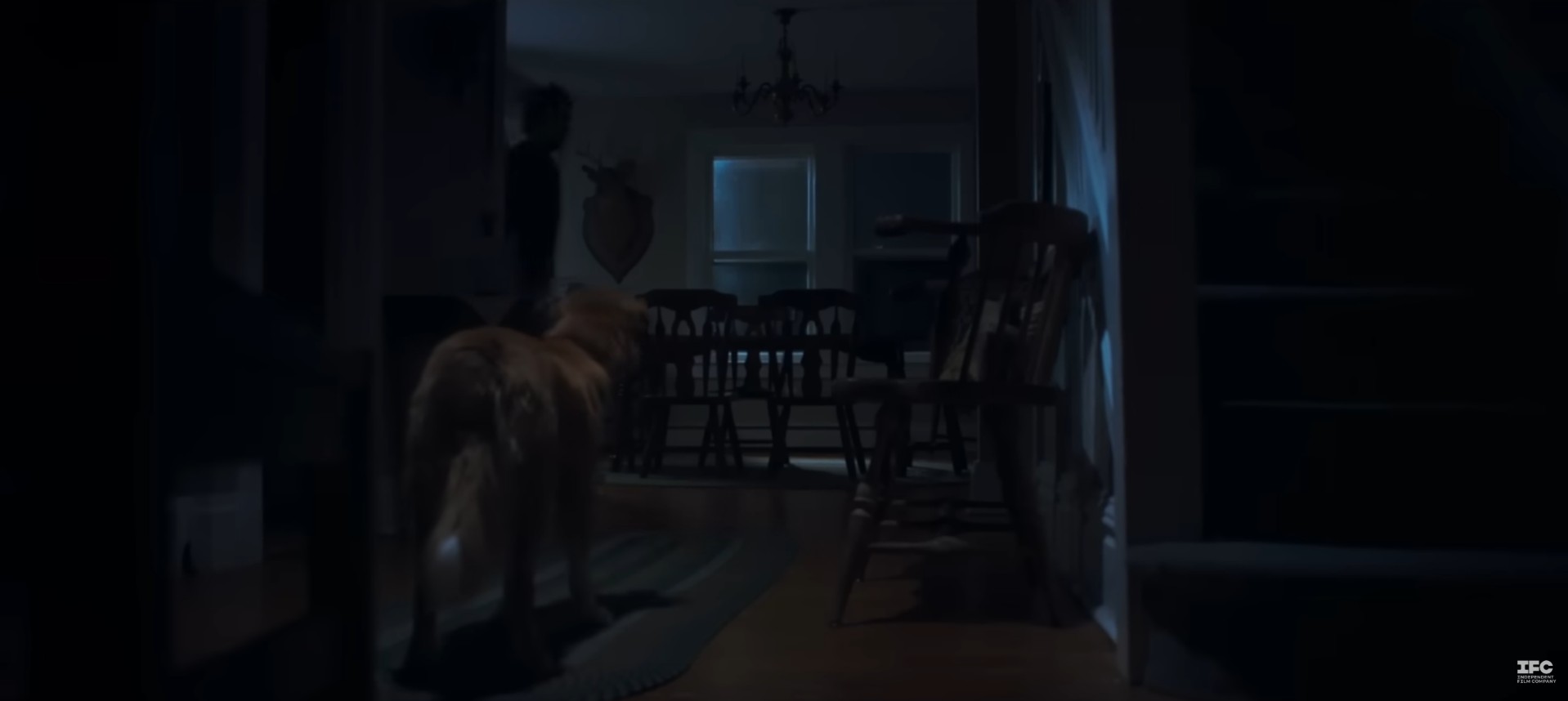
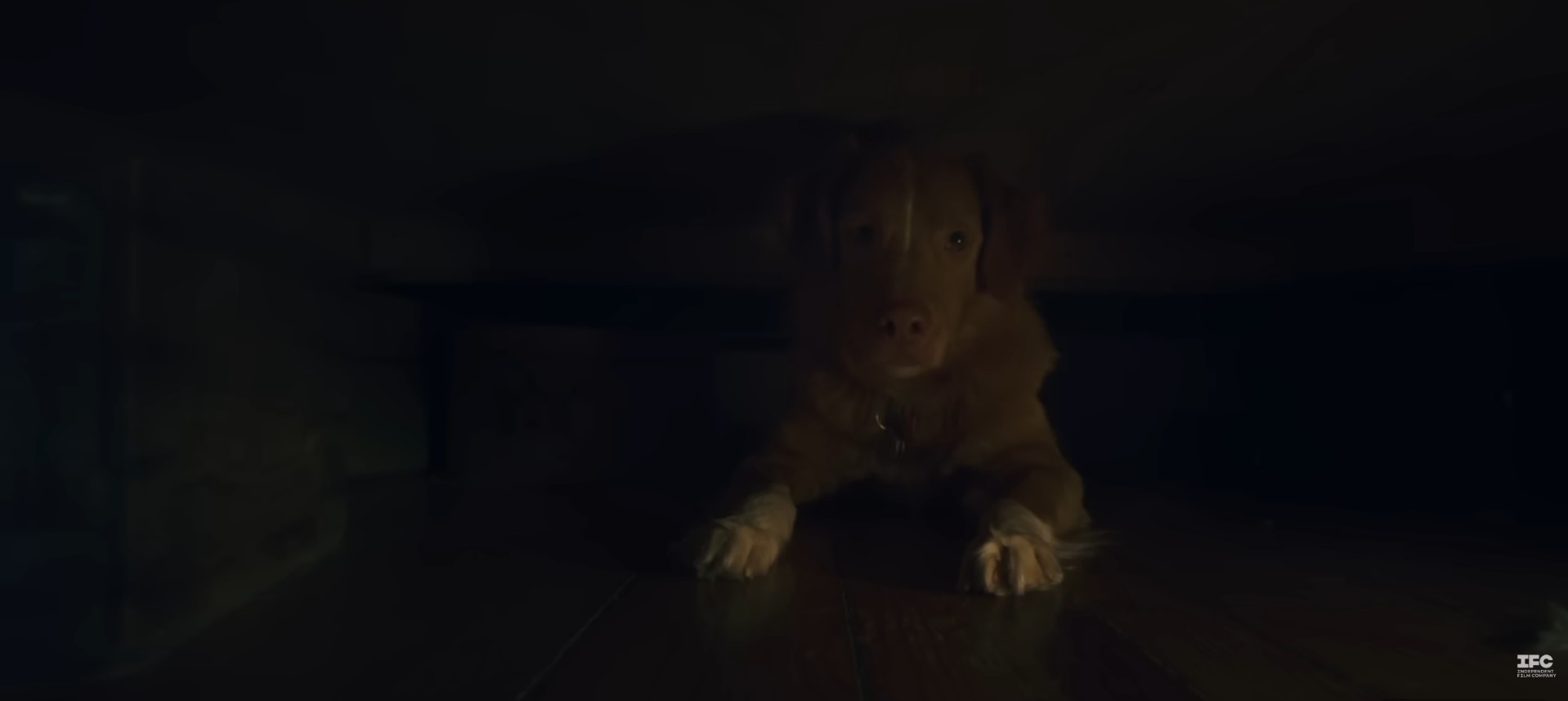
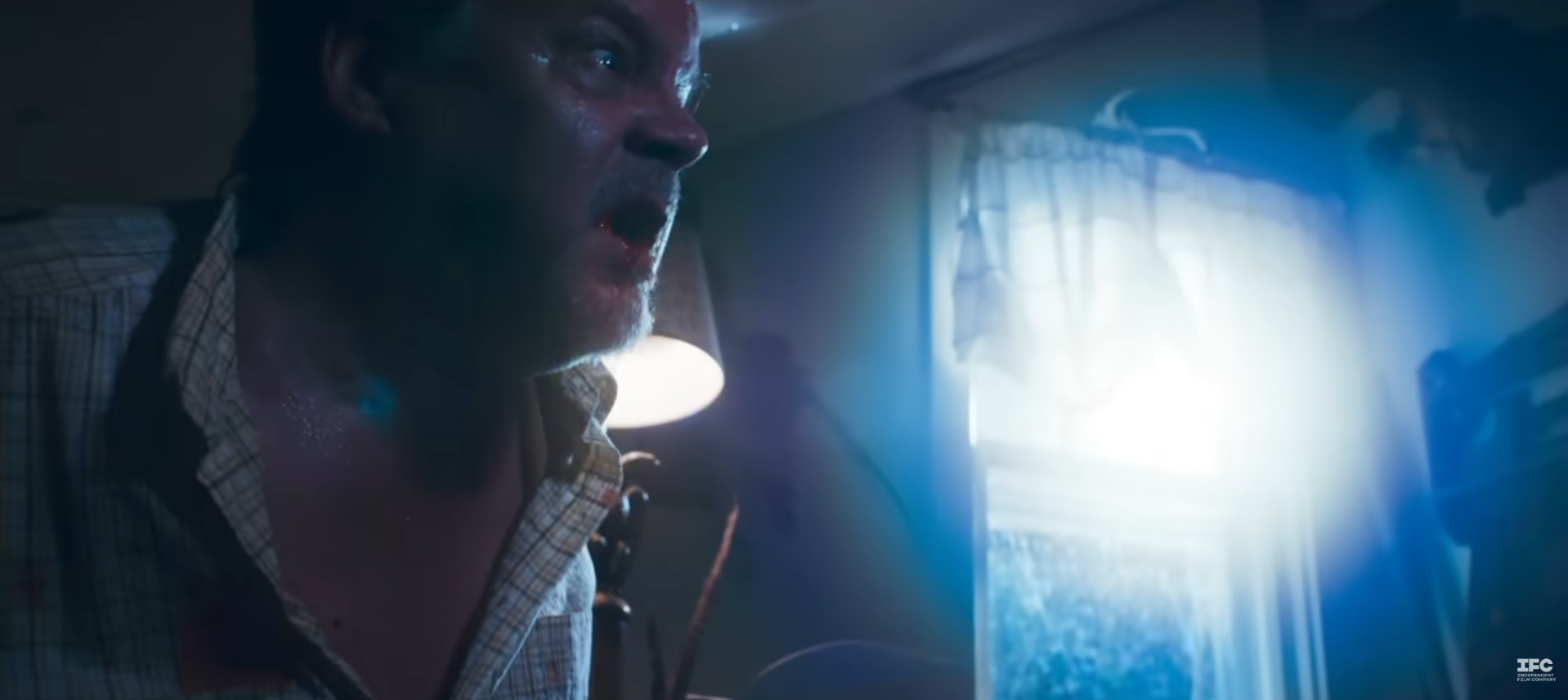
If casting an animal with a hesitation stillness and pensive piercing eyes, Indy is the four-legged fur baby on the short list.  This specific Nova Scotia Tolling Retriever, a breed known for his hunting qualities and retrieval of gunned down carcass and not acting, is an untrained thespian by all means but has a multitude of expressions that work toward the menacing supernatural sense of dread and uneasiness.  When Indy stares into a dark corner, it’s shadows expanding slow across the walls and floors, the stare does convey concern.  When Indy cries and whimpers in apprehension of being left alone or his owner unaccompanied outside the house, those high-pitched cries and frantic movements from window-to-window bring narrative tension to unsafe separation from man and his loyal best friend-protector.  It’s clear that director Ben Leonberg treats his star pup with star focus, providing a dog-level perspective view that incepts and evokes a reaction just like any human character.  This applies even to the interactions with Todd (Shane Jensen) and his swaying, emotional reactions working through his own ebb-and-flow pain of a mysterious illness that plagues him.  Our first scene with Todd has him sitting motionless on the couch, in the dark, and drooling blood from his mouth in an indistinguishable view of his face, a motif amongst all human characters in frame to keep the focus on Indy’s facial Rolodex of emotions.  We never do know what’s wrong with Todd, whether be cancer, organ failure, or perhaps even the supernatural’s malevolent exposure, but it’s made clear he’s on death’s door in more ways than one.  The only human face shown is through the VCR playback of Todd’s grandfather and it’s the unique bone structure of horror friend Larry Fessenden (“Habit,” “Jakob’s Wife”) who often seems to be in, in some way, shape, or form, in a number of Shudder distributed films recently.  Arielle Friedman and Stuart Rudin bring up the small cast rear. 
“Good Boy” is simply not a novel concept.  There have been a few animal centered and perception movies throughout the decades, to name a few we start with “Babe,” the loveable little pig who finds friendship with a barn spider, then there was the tearjerking one with an orphaned bear cub who hitches to an adult male to avoid game hunters in “The Bear,” and, lastly, “Homeward Bound” was an adventurous return home with human voiceovers for two dogs and one cat team.  The element “Good Boy” does differ from those aforesaid examples.  Aside from giving Indy a voice, the non-personified canine is dropped into an intensely atmospheric horror framework that removes the safety net of having opposable thumbs and the misunderstanding between man and animal that makes the tense situation that much more riveting when Indy can’t express to his human the danger that lurks.  There’s a heavy theme of animal sensing danger or something amiss with someone carrying an unseen disease, that disease in “Good Boy” manifests as the shadowy figure that acts like the harbinger of death, or to the dark tune of a grim reaper, lying-in-waiting and eventually reaching for Indy’s human pal, Todd.  In this concept is the tragic downhill of Todd and the heartbreaking care Indy tries to protect and care for his unsuspecting master but in between all of that concern and drive for Indy is a steady fear something isn’t right, looking past Todd’s ailment toward a showier threat that, to an extent, plays like a device of ignorance for Indy, one that truly distracts him for the real danger plaguing Todd that bets the question, do dogs cope with trouble by creating a diversion? 
Visions Home Video, a premium home media label from UK’s Vertigo Releasing, retrieves “Good Boy” for a UK-Ireland 4K UHD Blu-ray release that’s supported on a HEVC encoded, 2160p ultra high-definition, BD100.  Through surreal nightmares, inky darkness, and graded with primarily dark gray and bluish tones, “Good Boy” faces images challenges with an indie production attempting to instill atmospheric fear and subtle bumps in the night.  That challenge is ultimately met its match with DolbyVision that’s able to decode those type, often blocky, negative spaces and darker color scheme in its high dynamic range.  Texturing works to fiber explicate Indy’s golden coat but much of the other details are kept in the dark as Indy’s, with his coloring, is represents almost like a bright spot amongst the color palette, even Todd is obscured in darkness, rain, or mist, but the details that do show do emerge.  Two English audio tracks are encoded with a 5.1 DTS-HD Master Audio and a LPCM 2.0 Stereo.  In regard to the surround mix, back and side channels diffuse the atmosphere non-diegetic sounds to create an immersive environment of a creaky old house pitter-pattered by rain and gusts of wind.  Coupled with the front work dialogue and the forceful jump scare moments creates a cinematic bubble that puts viewers right into the dark and stormy eeriness while sitting in their living room, if the viewer has the appropriate audio setup.  Dialogue is clean, clear, and prominent albeit ambiance tries to nudge it out of the way at times to but unsuccessfully.  Minor instances of depth of Indy, or even the presence, scurrying about the house have leveled balance in what is mostly a still air progression of Indy’s voiceless communication efforts. English is the only available subtitles. Special features include a making-of featurette Making an Indy Film and the theatrical trailer. There are more attractive physical features within Visions Home Video’s black and silver two-toned cardboard O-ring slipcover that leans into the shadow motifs. The same image art is also on the Scanova one-sided sleeve but inside, in the insert, is a double-sided folded mini poster with the same art plus an additional design. There are also four post cards with stills from the feature. The UK 15 certified release has strong horror and bloody images in its brisk 72-minute and region free runtime.

Last Rites: In horror, animals are mostly the perceptive ones, able to see and sense danger that can’t be seen with the human naked eye, and Ben Leonberg captures that phenomena through a fear-induced illness metaphor, one that lies and waits until terminal lucidity knows there’s no escaping the inevitable. Not even man’s best friend can stop it.

“Good Boy” Now Available on 4K UHD Blu-ray from Visions Home Video

Enjoy The Last Night in EVIL’s Hotel. “The Innkeepers” reviewed! (Second Sight Films / 4K UHD Blu-ray)

Book a Copy of “The Innkeepers” on 4K Ultra High-Definition!

The Yankee Pedlar is a historic hospitality hotel with over 100 years of service that comes with its own notorious past and haunted tidings.  On the verge of closing for good, the Yankee Pedlar has one more weekend to remain open and house guests but with only a handful of rooms occupied, there’s not much else to do for the two innkeepers, Claire and Luke.  As a way to pass the time, Claire is eager to video capture spooky events to feed into Luke’s website based off the hotel’s history in the death of Madeline O’Malle, a bride to be who committed suicide on her wedding day when the finance no-showed and her corpse was left to rot for 3 days in the basement as hotel owners feared for bad publicity, but when eerie begin to plague, call for her, with visions of a bloodied O’Malle in a white gown, Claire finds herself in the dangerous company with a permanent guest at the dying hotel. 

Ti West, the established genre director with the famed “X” trilogy, kept audiences pale in fear and the hairs on the back of their neck stiff and straight up with his written-and-directed horror films that retained staying power amongst fans.  2009’s “The House of the Devil” is considered one of the more recent better throwback horrors of our time surrounding classic tropes like a satanic cult and a home alone babysitter.  West’s 2011 film  “The Innkeepers” comes at a rebound time when his commercial picture, “Cabin Fever 2:  Spring Fever”, sequel to Eli Roth’s breakthrough hit from 2002 about a flesh-eating virus, didn’t quite feel like his film and “The Innkeepers” also hit a little different by shielding audiences from any type of horrific, on screen splatter violence and be concentrated on pure fear of the senses.  Though narratively set in perhaps Pennsylvania due to some references of towns an hour outside of Philadelphia, “The Innkeepers” was actually filmed more North in Connecticut with the real-life Yankee Pedlar building.  Larry Fessenden (“The Last Winter,” “Rehab”) of Glass Eye Pix and Derek Curl of Darksky Pictures co-produce the film along with Peter Phok and Ti West. 

In the two principal roles of Claire and Luke is “Barbarian’s” Sara Paxton as an unmotivated hotel clerk coasting until the very, bitter end and “Cheap Thrill’s” Pat Healy as a blasé and uninterested front desk colleague interested in getting on the popular haunted house train with his own website about their employer’s centenarian hotel.  Paxton inarguably shoulders much of the screentime as the girl who cried wolf when she experience’s the sounds of a wolf, aka the spooky serenades of one Madeline O’Malle, and the visual eviscerations of her bloodied corpse that would scare the bejesus out of anyone.  However, the frights are not enough to seemingly strike fear in Paxton’s shield of composure or even enough to put West’s story to rest with a simple I’m outta here as most of us chickens would flock toward the exit on the first instance waking from a vivid dream too real for comfort.  Healy ultimately steals the primary performance away from Paxton with his own gruff and irritated by everything:  the hotel, the guests, his own pitiful existence.  Healy does a nice job creating that subtle tension between Luke and Claire, knowing Luke’s own hangups lie somewhere in between and haven’t been exposed yet, all the while being a sarcastic boor for most of the time.  There are also side characters in the form of random guests occupying the skeleton-crewed hotel bringing with them their own set of baggage.  One of guests is Kelly McGillis and the “Top Gun” actress, in a bit of a meta-role of an aging actress turned mystic.  There’s also Alison Bartlett (Gina from various Sesame Street shows and specials) and Jake Ryan (“Asteroid City”) as scorned wife and her son and the peculiar older gentlemen, played by George Riddle, who requests a special room and will not take no for an answer.  One of the more curious castings is Girls’ Lena Dunham as a coffeeshop barista in a one and only brief scene that doesn’t add really anything to the whole in a pointlessly random interaction with Claire that, perhaps, plays off Claire’s repetitiveness and stasis life of going there everyday but not really knowing much about the barista, who is apparently always there too. 

Juggling between the blended tones of comedy and horror, Ti West doesn’t commingle the two directly into one scene, keeping distinction for one or the other in their individualized moments.  This leaves little room for alleviating dread levity inside the scare moment after building tension and fear of being chased or waiting for the silence to be broken but an unsuspected jump scare.  Outside the context of the fright-filled moment, back and forth quips and playful antics between Luke and Claire as two bored and starved for company innkeepers in the hotel’s waning days are delivered in brightly lit rooms and mostly shared with another person to be a telltale safe space against the malevolence of serrating spook-house intensity that often lingers and waits on with bated breath.  In the innermost between is Claire’s internal struggle to cope with the impending outcome that there is nothing on the horizon for her.  No secure job, no ambitions, no plans of any kind are seemingly providing the character with no hope and in that stagnation, she desperately holds onto what’s nearby – Luke’s interest in the Yankee Pedlar’s hauntings.  Enhanced by the odd actions and placement of the modicum of guests – McGillis as a crystal charm intuitive and Riddle as a strange-enough older man with a specific room fascination – Claire motivation to reveal Madeline O’Malle becomes tenfold because of her unconscious lack to move forward in life, which then spurs the question, is Claire’s experiences grounded in truth or are they just a downspout of manifestations induced compensation?  You’ll have to be the judge.

Like “House of the Devil,” another of Ti West films makes the Second Sight Film cut onto a newly restored 4K scanned UHD Blu-ray release.  “The Innkeepers” HVEC encoded, 2160p ultra high-definition, BD100 has the true presence of quality video with a gradual improvement in the finer details of a greater pixel count inside the HDR with Dolby Vision.  Though digitally recorded with a no imperfections to note from previous releases, Second Sight’s release does appear sharper and deeper around the black levels that often improve with better resolution and suitable compression and with a good portion of the story taking place in the dark recesses of a hotel basement and the in the shadows of unlit rooms, there’s no visual compression issue or loss of expected detail.  Contrastively, darker scenes appear more lit by a lower contrast but still, the details are there in depth and in closeup.  The English DTS-HD 5.1 surround sound audio track diffuses the spread of atmospheric creepiness – ghosts whispers, nondiegetic bangs and clangs, and a Jeff Grace building orchestral score that keeps the heart bumping (think Richard Band’s “Re-Animator” but with more lulls”).  Dialogue is prominently clear and in front of the aforesaid layers with depth mostly between Claire and Luke’s conversing in the lobby and range limited to, again, the aforesaid.  English subtitles are available.  Though this review is catered to the limited edition, rigid slipbox release full of tangible goodies, the standard release does have encoded a small army of special features that has two audio commentaries with the first including Ti West, producer Larry Fessenden of Glass Eye Pix, producer Peter Phok, and sound designer Graham Reznick and the second commentary also West but with principal actors Sara Paxton and Pat Healy.  A slew of new interviews provide a well-rounded, in-depth look at the creative design as It West A Lasting Memory, Pat Healy Let’s Make This Good, Larry Fessenden Our Dysfunctional World, director of photography Eliot Rockett Living in the Process, composer Jeff Grace Cast a Wide Net, and line producer Jacob Jaffke A Validating Moment contribute to the retrospective.  Special features round out with archival behind-the-scenes and the trailer.  The physical presence of Second Sight’s “The Innkeepers” keeps in-line with previous standard edition 4K releases with a black Amaray case and a monochromic grayish illustrative cover art setting audiences up for ghostly expectations.  The UK certified 15 release contains strong horror, gore, language, and sex reference – though the gore is subtle and definitely not over-the-top or even explicit.  This particular UK release, that has a runtime of 101 minutes, is region free and presented in a widescreen 2.40:1 aspect ratio.

Last Rites: “The Innkeepers” works, if not wriggles, into the brain, much like the invasive worthlessness inside Claire’s swirling mind, and the Second Sight Films’ 4K UHD Blu-ray is an ultimate celebration of not only the film itself, but also the venerable work of the horror genre’s freshest master Ti West.

Book a Copy of “The Innkeepers” on 4K Ultra High-Definition!

Babysitter Wanted….by EVIL! “The House of the Devil” reviewed! (Second Sight Films / Blu-ray)

University student Samantha is strapped for cash when trying to express her independence from an invasive and inconsiderate college roommate by renting a house.  In need of quick money to put down the first month’s rent by upcoming Monday, Samatha answers a babysitting billboard ad that leads her to an isolated house outside city limits on a night when the moon is going to be fully eclipsed.  Misled by her employers, the Ulmans, that the care job is not for a child, but rather Mrs. Ulman’s elderly mother and in her desperation, Samantha accepts the odd job for the money needed to secure her new home.  Alone in a dark old house, Samantha’s nerves quickly tingle and recoil at every sound and strange occurrence, quickly coming to realize the Ulmans may be lying to her more than she knows, especially behind the locked rooms where satanic secrets reside and she’s the key to their black practices during the occultation. 

Perhaps one of the hottest directors in the horror genre today with his “X” trilogy, within the trilogy is also “Pearl” and “MaXXXine,” Ti West has been a consistent genre filmmaker since his first feature “The Roost” two decades ago.  Yet, before the “X” trilogy, the year was 2009 when West caught the attention of horror fans with his 198’s inspired and veneered satanic panic film, “The House of the Devil.”  Shot in Connecticut, primarily in an older woman’s gothic Victorian style home, West wanted to bring back the alone babysitter and old dark house theme from decade the story is set, shooting entirely on 16mm that, too, provides that grainy image and darker aesthetic through each frame of the stock.  Initially called just “The House” in initial script treatments, Ti West’s completed film is a production of Larry Fessenden’s Glass Eye Pix (“The Last Winter”) in association with RingTheJing Entertainment and Construtovision with MPI Media Group (“Henry:  Portrait of a Serial Killer” presenting and is produced by Fessenden, Josh Braun (“Creep”), Derek Curl (“Stake Land”), Roger Kass (“A History of Violence”), and Peter Phok (“X”).

In her western, button-up plaid shirt and high-rise mom jeans, Jocelin Donahue (“Doctor Sleep,” “The Burrowers”) epitomized the look of young college girl of the 1980s and with her dialogue and her eclectic 2-minute dance session through the Ulman house proved she has the speech and movements that resemble the timeframe as well.  Donahue is extremely good of taking her character, Samantha Hughes, from a panic scale of one straight up to panic scale of ten in this slow burn, tension-building thriller that isn’t a rollercoaster ride of the next attention deficient disorder event but rather a steady increase of anxiety and anticipation that nags in the back of one’s mind.  Donahue has good reason to be as frightened as she appears on screen with the towering presence of the ever something’s-terribly-off-about-this-character portrayal by “Manhunter’s” Tom Noonan and the malicious grim of a steely wolf under a pearly sheep’s wool from “Night of the Comet’s” Mary Woronov as a pair of satanists.  Noonan and Woronov don’t have immense screentime and are behaviorally underused in the interactions with their babysitter Samantha as West intended target is for Samantha to dynamically degrade within the shadows and creaks of a creepy old house rather have characters be the foremost formidable, focused fear.  In the peripherals is Samatha’s wealthy and vocally blunt friend Megan (Greta Gerwig and, yes, the same Greta Gerwig who wrong and directed that “Barbie” movie) who provides that calling of rationality toward a strange situation only to find herself too wrapped up in her friend’s choices rather than seeing the danger that’s in front of her and there’s also fellow Satan cultist Victor (AJ Bowen, “You’re Next”) who is more or less the son in this Ulman trio of terror.  The cast rounds out with Heather Robb (“The Roost”) as Samantha’s inconsiderate roommate and the genre actor Dee Wallace (“Cujo”) in a small cameo role of the Landlady who, refreshingly, isn’t part of the core plot to burden the actress as an accelerant to pulse the heart of the story faster.

Ti West really did harness and recreate the dark, solemn energy of the alone babysitter and/or the old dark house subgenres that propelled films such as “When a Stranger Calls,” “Black Christmas,” and even “Halloween” into the cult favorite cosmos.  These particular horror categories are obviously nothing new to diehard fans but they have unfortunately been, for a lack of a better term, forgotten, conjured up only in stored memory banks of those old enough, like me, to have lived consciously through the 70s and 80s and, maybe because of West, audiences starting to see a revival of sorts with modern day retrograding to relive the golden age of the slasher renaissance, popularized by hardcore and gory scares with films like “All Hallows Eve” and the “Terrifier” trilogy,.  Yet, “The House of the Devil” is not an overly gory and squirmy disgusting feature as West meticulously structures the narrative to be evidently tense in an uncomfortable, unfamiliar environmental setting of an antiquated house owned by equally antiquated, and frankly weird, bunch in Tom Noonan and Mary Woronov and West guides audiences step-by-step very slowly up to craggy edge before pushing us violently into the infernal grips of satanists and the demons that seek a female vessel for, whom we presume will be, their unholy lord and destructor.  The third act rips ferociously in contrast to earlier acts in a spiral fit of rite and sacrifice that incorporates more characters, more blood, and a cynical ending that requires no more exposition, no more scenes, and no further explanation in its wayward wake. 

Second Sight Films delivers Satan to us with a new UK Blu-ray release.  The AVC encoded, 1080p high-definition, BD50 is jam-packed with bonus content and a more than satisfactory A/V package.  Presented in a widescreen aspect ratio of 1.78:1, the colorist reproduction leans into that of an 80s horror with a diffused, mid-level saturation of frame cells on 16mm stock, bestowing the image quality with more noticeable grain elements because of its smaller size blown up.  The seemingly white fleck-riddled darker areas or clustering grain experience may discourage audiences of a broad digital generation but for those who know, know how great “The House of the Devil” aesthetically looks as a whole, complete with era appropriate wardrobe and set dressings.  Textures and details do come through despite the stock naturalities but they’re not terribly overpowering or as substantially present an a mostly tan or brown color scheme in a lower contrast.  The English language DTS-HD 5.1 Master Audio offers superb audio reproduction and spatial dissemination, especially through the wood-laden house to where the strain creaks of wood floors and doors offer a side and back-channel chill.  There’s plenty of front loaded, two channel action between the dialogue and the rest of the meium-to-close range shots with a range of diegetic effects – i.e. gunshots, telephone rings, and other actionable movements within the frame – and non-diegetic effects that include demonic whisper through moveless lips and, of course, those creaky noises amongst the empty house.  Dialogue is clean, clear, and prominent throughout.  There are English subtitles optionally available for selection.  Second Sight films did a ton of legwork here for special features, conducting and encoding new interviews with director Ti West The Right Vibe, actress Jocelin Donahue Satanic Panic, actor AJ Bowen Slowing Down is Death, producer Peter Phok A Level of Ambition, producer Larry Fessenden An Enduring Title, director of photography Eliot Rockett It All Feels Appropriate, and composer Jeff Grace Hiding the Seams, sound designer Graham Reznick Writing Through Sound.  There are also a pair of audio commentaries with 1) writer-director Ti West and actress Jocelin Donahue and 2) West with producers Larry Fessenden and Peter Phok along with sound designer Graham Reznick and the rounds out with a making-of featurette, deleted scenes, and original trailer.  Since we’re reviewing the standard Blu-ray release from Second Sights, this version does not call with all the physical bells and whistles associated with the limited, rigid slipbox releases that contain lobby cards and booklet, usually.  Instead, the standard release is a streamlined, green-hued Blu-ray Amaray with uncredited illustrated artwork of Donahue’s character overtop of the titular house with the dark and spooky moon in the background.  Instead, is just the disc pressed with the same front cover image of the house sans Donahue and the moon.  The UK certified 18 release contains strong violence and gore, is hard encoded B for regional playback, and has a runtime of 95 minutes.

Last Rites: The 80’s knock back with Ti West’s satanic panic inspired alone babysitter thriller with a sleek new Blu-ray, overflowing with new retrospective interviews, from Second Sight Films!

‘Twas the Night Before Christmas, When All Through the EVIL “A Creature Was Stirring” reviewed! (Well Go USA Entertainment / Blu-ray)

Purchase “A Creature Was Stirring” Here at Amazon.com

During the height of a 6-day Christmas blizzard, nurse Faith remains home to care for her mysteriously afflicted daughter Charm.   Faith diligently stays vigilant over her daughter’s inexplicable condition with test after test and maintaining Charm’s constant body temperature between 102 to 104.4 degrees, seemingly stabilizing Charm’s condition.  If the temperature exceeds beyond, Charm transmogrifies into a barbed humanoid creature.  While Faith works on a compound cure, Liz and Kory, a sibling pair of Jesus zealots, break into the house seeking shelter out of the deadly snowstorm.  Faith has no other choice but to let them stay the night until the storm subsides but the appearance of Charm’s at-home care and the young girl’s sudden seizures and erratic behavior sends Liz into savior mode, meddling into more than she can comprehend.  Yet, something else lurks inside the house, between the shadows, and beneath the veil of reality that is way more terrifying. 

Even though Christmas might be long over and all the gaudy and brilliantly lit decorates are stowed away back into Grandma’s attic that doesn’t mean the holiday horror train has to depart the station.  And I’m not talking about no Polar Express with the edging on creepy motion capture animation.  I’m talking about “The Cleansing Hour’s” Damien LeVeck’s Twas the Night Before Christmas-inspired titled “A Creature Was Stirring.”  The equivocal creature feature set in the throes of a raging blizzard and inside a very decked the halls house is penned by debut screenwriter Shannon Wells under the original title of “Good Luck, Nightingale.”   Aimed to be more than what meets the eye, “A Creature Was Stirring” blends the involuntary struggles of drug addiction with potent secretions of supernaturalism.  The U.S. production was shot in Louisville, Kentucky, produced by LeVeck, wife Natalie, as well as “Scare Package” producers Aaron B. Koontz and Cameron Burns with Vladislav Severtsev (“The Bride”) under the production companies Skubalon, 10/09 Films, and Paper Street Pictures. 

Topping the bill as Faith is “This Is Us” star Chrissy Metz, portraying a nurse practitioner and mother desperate on concocting a cure to her daughter’s strange, monstrous manifesting condition.  Metz brings the multifaceted mania between being rock solid and stringent with medical checks and procedures and being able to turn aggressive when the moment calls for it, especially swinging a screwed-spiked baseball bat.  This underlines an underlying secret or hidden predicament viewers will be dipped into and begin processing all the little traces of one-offs that don’t necessary make sense to an already peculiar narrative.  Then, there’s Charm, played by Annalise Basso (“Oculus”), in constant oversight, constantly mutable, and urging to constantly be free from her mother’s impervious iron grip to lighten up.   Basso retains angsty opposition while tossing moments of reflective consideration for her mother and for herself, disquieting the teetering tranquility when Liz and Kory come into play.  Respectively played by “Halloween” ‘07’s Scout Taylor-Compton and “Stake Land’s” Connor Paolo, siblings Liz and Kory stir the pot that’s slowly simmering to a boil as one religious dogmatist and one eager to break the constraints of his sister’s purity with sex and drugs complicate the strained mother-daughter relationship with their intrinsic quirks that expose a deeper, rooted-to-reality problem.  The now generational scream queen Compton dons colorful dreads and a large Messiah back tattoo amongst a high and mighty attitude while Paolo can be praised for the sarcasm brought out from the scripted dialogue.  Each of the four principals are inherently different and clash, in a good way, to provoke complications. 

Drug addiction has infiltrated horror years ago and have been the basis of many notable films such as Abel Ferrara’s “The Addiction,” Larry Fessenden’s “Habit,” and Frank Henelotter’s “Brain Damage” to name a few from the massive lot.  “A Creature Was Stirring” taps into that same vein as LeVeck’s injects and shoots up his own interpretation of horrors with withdrawals.  Long time addicts suffer through agonizing, powerful withdrawals that screenwriter Shannon Wells incorporates symptomatically with a figurative approach and while Wells’ story invokes colorfully rich characters and enigmatic tale of terror, brought to life by LeVeck’s vibrantly warm and glow Christmas adorned and atmospheric house, the finished feature, that really has nothing to do with Christmas oddly enough, feels uneven when revealing the irony of surprise doesn’t become catchall illumination.   The most ambiguous part about the tale is the spiny-signified creature, a mutated, zoomorphic porcupine of sorts, to represent ferocity of the withdrawn drug with its hypodermic needle-like defense mechanism and malevolence nature.  The shadowy man-thing is given such a threadbare association between Charm’s anecdotal encounter with large rodent and its manifestation metamorphosis into the fold that the hostile has hardly any staying power as a villain and, like a rodent, really does feel just like a mouse was stirring as it scurries arbitrarily throughout the house but not all is negative as there are scenes that make you go holy crap when recollecting character and creature interactive moments that suddenly click and make sense, often coinciding and juxtaposed against really neat interior cinematography bathed in mixture of hard light and soft glows. 

Well Go USA Entertainment presents “A Creature Was Stirring” on a high-definition Blu-ray home video.  The AVC encoded, 1080p, BD25 has soft illumination but a grading design that’s befits the ’tis the season paradigm with the primary color warmth radiating out from Christmas lights strung up around the house and the beaming brilliance of white battery-operated light-up decorations. Between the crude adornment lighting, some lighter translucent gels, and with a splash of black-and-white, Alexander Chinnic cinematography, presented in an anamorphic widescreen 1.78:1, resembles a rave clad fitting into the drug theme as an echo of the one character’s pill-popping, molly-dropping past. Details become diffused by the varying, indiscriminate incandescence and shadowy fields that play into the creature’s tenebrific threat, but those same shadows are often deep without posterization. The English 5.1 DTS-HD master audio achieves the goal of the very title of something stirring inside creating rustling movements and spiny-shifting clacking, coursing through the back and side channels and maintaining an even keeled LFE. Space awareness is key for close quartered tension and that’s rendered well in the design. Dialogue comes off without a hitch and is elevated above the rest of the tracks with no issues with compression faults or a fractured recording. English SDH subtitles are available. Like most Well Go USA releases, “A Creature Was Stirring” shoulders only Well Go USA preview trailers with no real bonus features of its own in the semi-static main menu but what we do get is a better than modest laid out standard Amaray Blu-ray package with a lightly titled embossed cardboard O-slipcover and on the back two different texture types, a polaroid slick abutted against the smooth cardboard. Image design is a greatly detailed silhouette of the porcupine creature looming over the house. The same image is also on the Blu-ray cover with a simple red-beaded or red-string light encircling the title on the disc. There is no insert inside. Rated R for violence, bloody images, drug context, language, and some sexual suggestion, the 96-minute Blu-ray comes region A locked. 

Last Rites: Chrissy Metz battling a deformative disease, drug addiction, an angsty teen, two home invasive siblings, and a large porcupine monstrosity all in the name of “A Creature Was Stirring” is the prickly cold turkey suspenser this side of the New Year.  

Purchase “A Creature Was Stirring” Here at Amazon.com

Let EVIL Free You! “Jakob’s Wife” reviewed! (Acorn Media International / Blu-ray)


Anne is a minister’s wife living in a dying small town where the only thing left for the residents is their faith.  Once inspired to travel and do something meaningful with her life, Anne has found that the last 30 years of marriage to Jakob has robbed her of her self-empowerment, diminishing her as nothing more as than just Jakob’s wife.  When the opportunity to impress an old fling during a business trip turns into a nightmare with an attack by a shrouded figure in a rundown, vacant mill, the disorienting days after having provided Anne with a sense of expressive freedom, a chance to be bold, and to feel more alive than she has felt in years.  Her new lease on life comes with a ghastly cost, a severe hunger for blood.  With the help of Jakob, they realize the dark forces of a vampire has infected Anne and their road back to normal life, a life where Anne is dull and drab, will the paved in blood. 

Horror is such a versatile and malleable medium to convey allegorical messages, drawing audiences into the writer’s or director’s world of the fantastic and the horrific while laying down a subfloor of real world truth most passionate to them in a social, religious, or political context.  To point out a few examples (most of us already know), George Romero was renowned for his multiple social commentaries throughout his “Living Dead” series and a slew of vampire films construct the bloodsuckers as metaphors for an addict going through the ugly turmoil of addiction.  “Jakob’s Wife” is a different kind of vampiric allegory film that bites into feminism values.  The “Girl on the Third Floor” writer and director Travis Stevens follows up his introductory haunted house film with an inverted Nosferatu-esque dark comedy co-written alongside “The Special” screenwriter, Mark Steensland, and the “Castle Freak” remake’s Kathy Charles.  The Canton, Mississippi location evokes the dried up, small Southern town aimed to build a depression enclosure around the titular character.  Barbara Crampton’s Alliance Media Partners, whose spearheaded creative and imaginative films such as Justin Benson and Aaron Moorhead’s Sci-Fi cult looper, “The Endless,” and the Romola Garai demonizing guilt film, “Amulet,” presents “Jakob’s Wife” in association with executive producer Rick Moore’s Eyevox Entertainment (“Purgatory Road”) at one of the banner’s production studio locations in Canton, Mississippi.

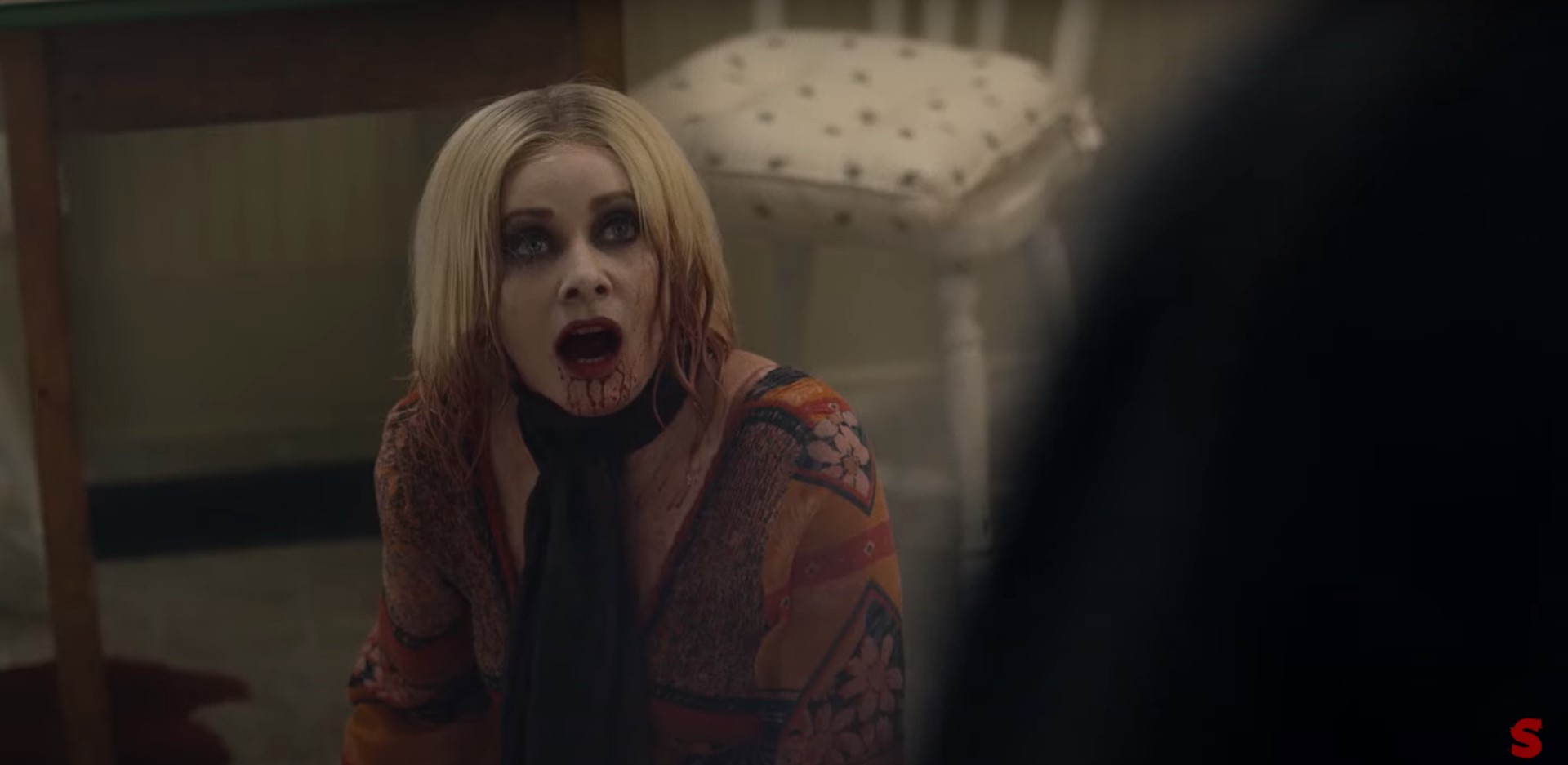
In concurrence as a producer of “Jakob’s Wife,” scream queen of horror legend, Barbara Crampton (“Re-Animator,” “From Beyond,” and most recently, “Sacrifice”), steps into the torn role of the titular character.  In Stevens’ direction, as well as Crampton’s portrayal, Anne is so diminutively overlooked in the first act, you’ll hardly notice her even though Anne is practically in every scene.  Between Jakob’s interruptions, meek output, and overall quiet behavior, Crampton’s able to exact the very essence of the idiomatic phrase the calm before the storm.  Also, I must mention, just like I’m sure others have already pointed out, the early 60s Barbara Crampton looks smokin’.  She must have been bitten by an actual vampire in order to seemingly de-age right before our eyes.   Larry Fessenden, who does age accordingly but also very handsomely in his genre characters, is the God-fearing minister playing opposite Crampton.  The “Habit” and “Jug Face” actor has always been quite the character actor and as husband Jakob, that beneficial streak continues as an old ways man of God with an innately built-in chauvinistic ritual of keeping everything the same day in and day out.  Jakob’s absentminded blinders suppresses Anne into a depressive submissive state until she comes across The Master, the sorely underutilized and shamefully absent from more screen time chieftain vampire played superbly by Bonnie Aarons in an unexpected female version of Nosferatu.  Aarons gives her best Max Schreck performance while commanding a distinctive mentorship that’s unusual for the vampire race; The Master is greatly highlighted in the most subtle of ways as being a repressed liberator and Aarons understood that compulsion to educate, revitalize, and blossom others by offering a new kind of death, the burgeoning power and desires of a vampire, from their previous one, a rather dull life stuck in a no-win circumstance.  “Jakob’s Wife” rounds out the cast with Jay DeVon Johnson, Phillip “CM Punk” Brooks (“Girl on the Third Floor”), Robert Rusler (“A Nightmare on Elm Street 2:  Freddy’s Revenge”), Angelie Simone, Mark Kelly (“Dead & Breakfast”), Sarah Lind (“The Exorcism of Molly Hartley”), Omar Salazar, and Nyisha Bell.

“Jakob’s Wife” is a treasure trove of feminism and lesbianism undertones that stands on higher ground without pulverizing masculism to a pulp.  There’s seemingly little-to-no ill will against the minister Jakob Fredder previous inattentive and subservient expectations of his wife Anne.  Anne even becomes conflicted by her newfound self, a rebirth of life that sheds the shackles of monotony and, as it were, it’s overstepping masculinity, and she questions the power, she questions her choices, and she maintains the unity of marriage despite a little taste of tantalizing freedom from it all.  The Master becomes the allegorical test of faithfulness to another in a bored housewife scenario and I’m not talking about Anne’s old high school fling Tow Low, played by Robert Rusler.  I’m speaking of the lesbian undertones involving The Master, a female vampire who stood in Anne’s shoes and was turned, in more ways than one, toward a new path.   The Master sparks a long-lost fire in what is now only a shell of an unhappy woman and Travis’ scenes of Anne touching herself, mimicking The Master’s moves, plays into theme of fantasizing about that other woman and what secret they share, being perhaps symbolically the intimate nature of the attack that puts Anne into The Master’s craving sites.  The innuendo is rich and robust and coupled with fire hose sprays and gallons upon gallons of an unquantifiable amount of blood and gratuitous violence, “Jakob’s Wife” is the vital vampire film of 2021. 

Darker powers answered the call of Anne’s internalized prayers. I don’t even think Jakob’s God even picked up the receiver. In any case, pick up your copy of the RLJE Films and Shudder exclusive, “Jakob’s Wife,” on a full high-definition Blu-ray releasing next year, January 17th, 2022, courtesy of Acorn Media International. The PAL encoded, region 2 BD25 is presented in a widescreen 1.85:1 aspect ratio. Compression issues have never really been a problem for the Acorn Media releases that detail and texture greatly under “Jakob’s Wife’s” austere color palette that favors more of a nature fixture than a stylish one. Darker color tones, such as the blood, are viscosity rich looking and, perhaps, the most color the film plays to its strength. The English language DTS-HD 5.1 Master Audio track bares no complaints either in the distinctive and effective channels that isolate each output neatly, cleanly, and blemish free. Prominent is the discernible dialogue, that in due course becomes more pivotal to the story, while giving way to an original score from Tara Bush. Special features include the making of the film with clip interviews with the film’s stars – Barbara Crampton, Larry Fessenden, and Bonnie Aarons – and deleted scenes that provide more insight and background on the finished cut’s bit characters. The Blu-ray is rated UK 15 for strong bloody violence, sex, and language (there’s also brief nudity for all you puritans in the U.S.). With the duo of Crampton and Fessenden in the middle of matrimony-macabre, “Jakob’s Wife” is a no-brainer success.