Hail Down EVIL for a Ride! “Taxi Hunter” reviewed! (88 Films / Blu-ray)

“Taxi Hunter” Now Available on Blu-ray!

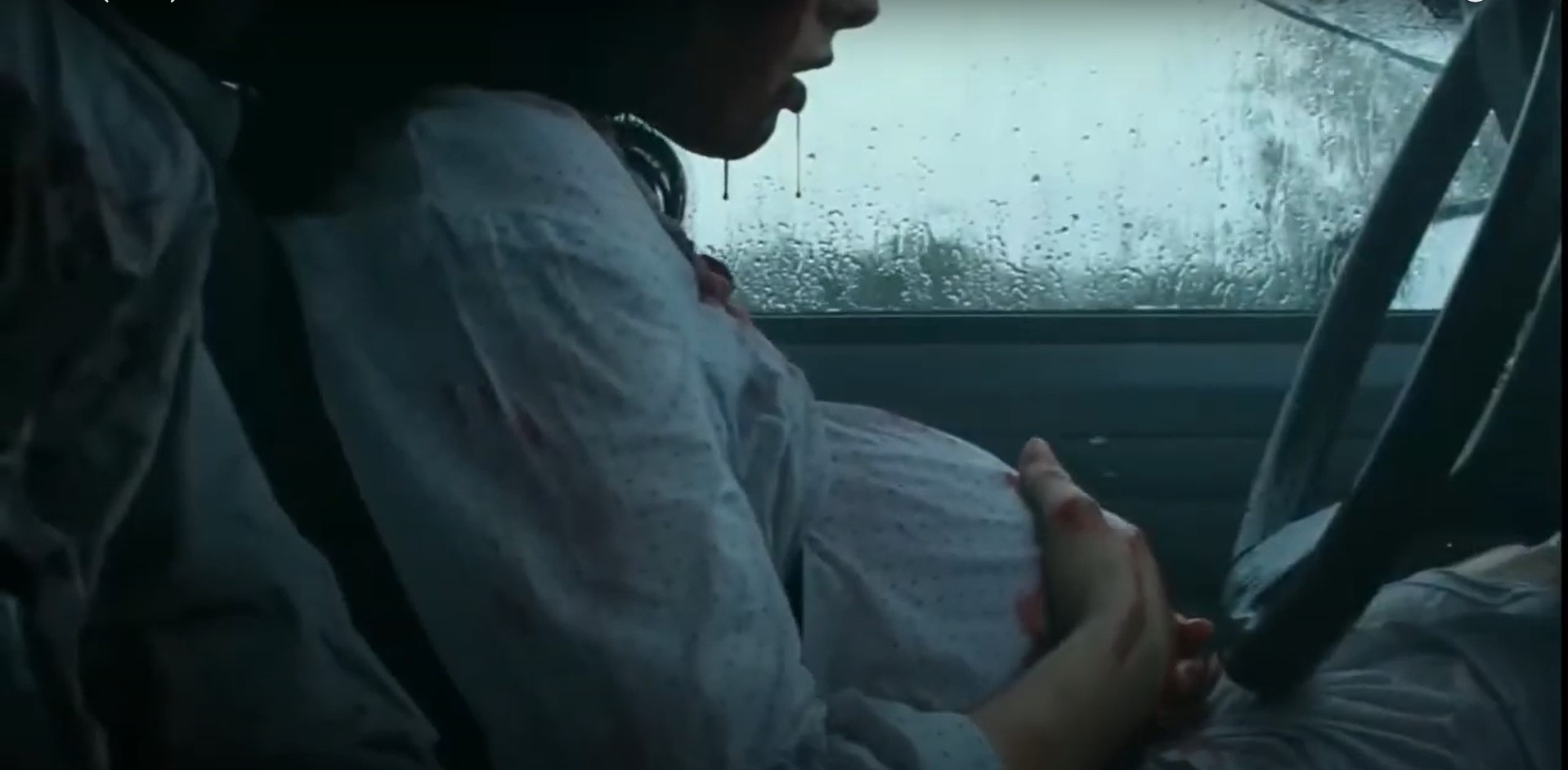
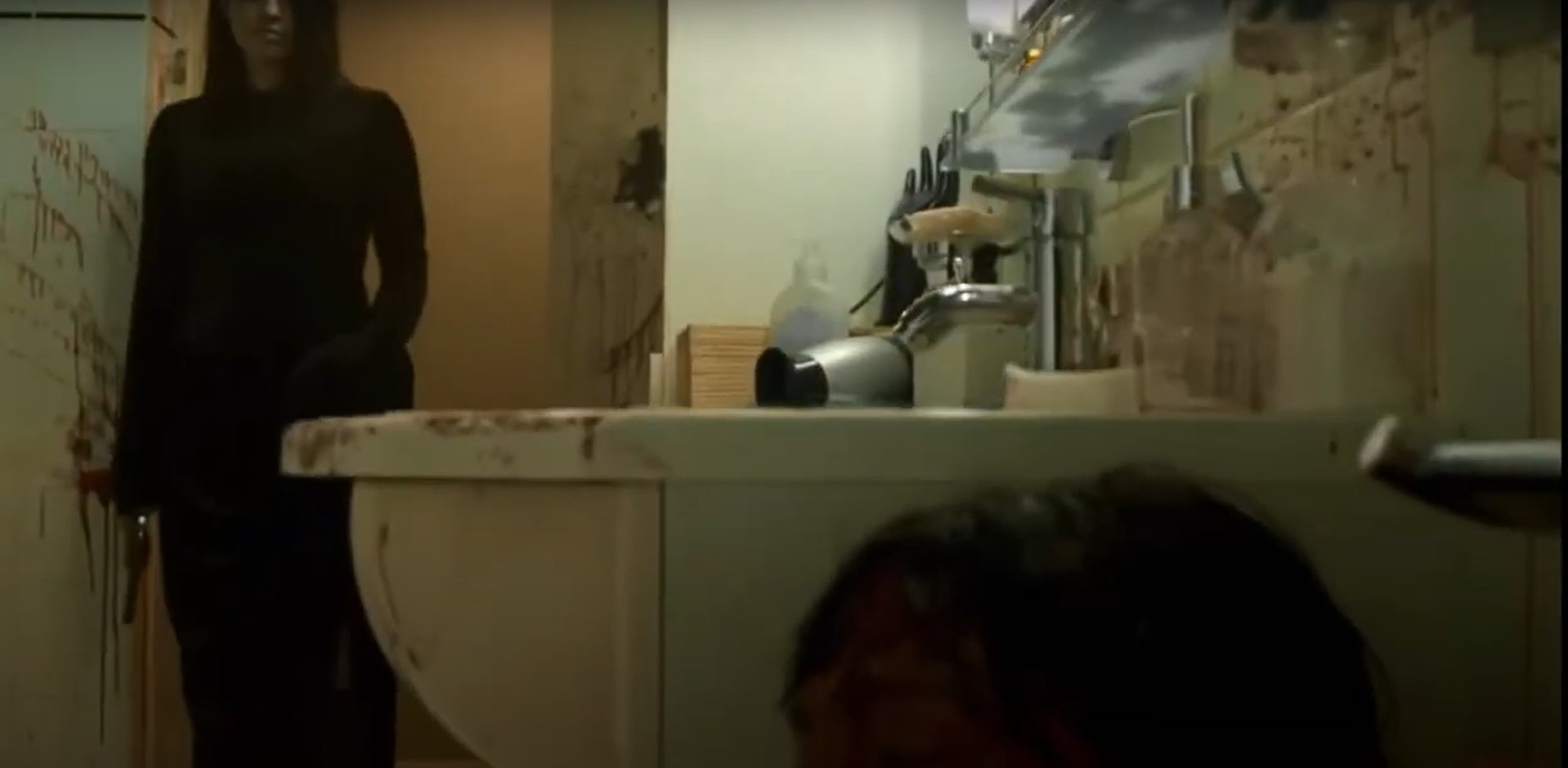
A moderately successful and mild-mannered insurance salesman is soon to be a new father.  As he and his wife baby prep with shopping around town for supplies, a few run ins with crabbily rude and scamming cab drivers make it known that the cab drivers flood the market with lawlessness.  When his wife unexpectedly goes into labor and his personal car out of service, he has no choice but to hail a cab but when the cabbie refuses the fare due excess vaginal bleed, the cabbie quickly shuts the passenger door and speeds off during the torrential rain stop, not realizing snagging the woman night gown and dragging her down the street a few yards, killing her and the unborn child, and speeding off in attempt to save his own skin.  Spiraling down into a deep depression and pushed beyond his moral limit, he justifies killing the taxi drivers for their abhorrent behavior that makes him a hero of the common people while also making him be public enemy number one with the taxi union and the police. 

History has proven, at least since the pre-2000s, that taxi drivers have had a long notorious stigma of being rude, uncouth, and greedy, especially in big metropolitan areas where traffic jams on a daily basis and the amount of fares determine your livelihood wage can eventually and insidiously get under a driver’s skin and turn the once service-needed necessity into a crabby-cabbie, a side-effect symptom of the profession one could assume.  Hong Kong’s 1993, Cat III shocker “Taxi Hunter” releases that pent up anger most of us have experienced under the clicking of the fare meter when Joe cab takes the long way around town.  Written by Wing-Kin Lau (“The Untold Story III”) and Kai-Chung Mak (“Twist”), “Taxi Hunter” marks the second collaboration effect of the same year as “The Untold Story” and “The Untold Story’s” co-director Herman Yau.  “Black Blood’s” Hung-Wah “Tony” Leung and “Tiger Cage” franchise’s Stephen Shin produce under Galaxy Films Limited and distributed theatrically by Media Film Asia.

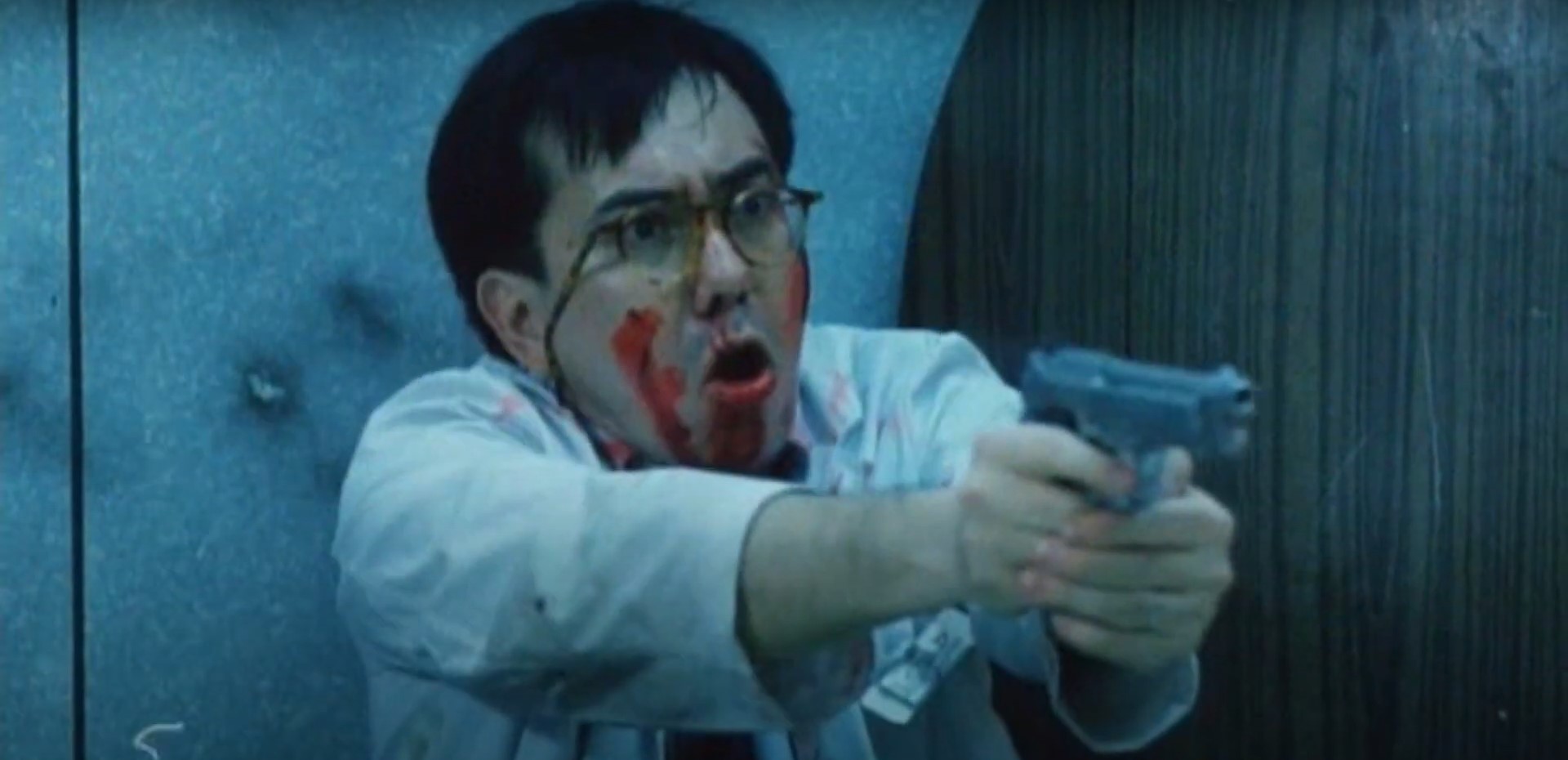
Not only do the writers and director Herman Yau reteam to develop another controversial Category III picture but “The Untold Story’s” star Anthony Wong steps foot into another unraveled monster of a man with Kin, an amicable insurance salesman good at his job and eager to be the best father as possible quickly spins into melancholy and murder after the death of his pregnant wife at the hands of an unprofessionally hasty taxi driver.  Unlike the quietly stewing and maniacally murderous pork bun shop owner, Wong’s villainous runs takes backseat to his anti-hero performance, a punisher of taxi scum.  As Kin, Wong can be the delicately wonderful husband and the brazen barbaric with an easy slippery slope transition in between as he works to perfect Kin’s killing craft.  Unbeknownst to him, tracking him down is Kin’s own police detective brother Yu and his fun-loving goofy partner Goh, but unbeknownst to the detectives is the taxi serial killer is Kin.  “Iron Monkey” star Rongguant Yu offers up tough cop like it’s his job, mixing a humble blend martial arts and entrenched investigator into his character while also being blind to his brother’s moonlighting massacres.  Goh, on the other hand, played Man-Tat Ng (“Shaolin Soccer,” “Tiger Cage”) is supposed to provide the levity, the comic relief, the humor, but the cartoony way Goh is portrayed, in garb and in gab, reduces him to be nothing more than a Western Poser of the East with NBA and other Western branded gear from head to toe.  Goh feels very much like an attempt to jab fun at what Hong Kong might have perceived as American culture:  tasteless, worthless, and clueless.  Goh seemingly only exists to be a link between Kin and his brother when Kin hops into Goh’s undercover operation of pretending to be a taxi driver to which Kin takes his numbskull manner as cantankerous cabbie.  “Taxi Hunter” chauffeurs in the rest of the core supporting cast with Athena Chu (“Super Lady Cop”) and Hoi-Shan Lai (“Dr. Lamb”).

However still managing to provoke potency in parental guidance, to me, “Taxi Hunter” is perhaps the least intense Category III film I’ve experienced to date, but don’t let that keep you from taking a ride in Herman Yau’s rancorous retribution vehicle that has scores of variable car action scenes and a sordid glaze of street-level grime amongst the taxi industry.  “Taxi Hunter” engages us to think about the minor point As to point Bs in our lives that can easily subvert the well-oiled machine that is our existence.  Kin has a promising career, money (a motif we’ll revisit later), and a baby on the way and aside from the money, bizarrely enough, it all comes crashing down in the moment of a car door slamming shut. Those micro-fissions separating our good moments with nastiness slog us into another mindset, a killer’s mindset, when we’re wading at the very bottom of the losing everything depression. Lau and Mak don’t immediately set Kin’s path shortly after the turning point event, which also had a good chunk of setup. Posthumous need to kill cabbies didn’t occur directly after the tragedy as the script allowed time for Kin to try and stomach digesting tremendous loss, even giving away much of his money, as aforementioned, for services gone unrendered such as with the prostitute he didn’t end up sleeping with or being overcharged a child’s trading card just to make a crying child, a future version of his own child now deceased, happy when his parents would not purchase it. “Taxi Hunter” has more than just a singular character-driven story with plenty of suspense from Kin’s evolving practice of killing taxi drivers to the plethora of practical car action. “Taxi Hunter” is metered madness that shies away disgusting you with overt violence or seducing you with graphic sex of other Cat III film in its purer requital black comedy only Herman Yau and Anthony Wong could chauffeur in.

Presented in full high-definition 1080p from the original 35mm stock, “Taxi Hunter” has been flagged down for a new Blu-ray release from 88 Films, shown in anamorphic widescreen 1.85:1 aspect ratio. The transferred print keeps the natural grain of the 35mm film but swells the pixelations to ramp up details and textures tenfold without appearing touched up or improperly enhanced. 88 Films’ coloring grading leans slighting into the metallic blue steel, offering a gritty detective thriller with the overcast effect. The print also shows hardly any age or damage that results in a clean redress of a pristine print. Only one audio option is available for selection, a Cantonese LPCM 2.0 mono. Curious to why there isn’t a Mandarin option leads to speculation that Cantonese sole use was due to the dialect being more widespread in Hong Kong to keep a product of Hong Kong, typically with CAT III products where mainland China censorship would have picked “Taxi Hunter” to pieces. Though in original language, ADR is still used in post and while dialogue is cleaning in the forefront of the rest of the audio tracks, there’s not a ton of depth being too at the forefront, especially with Goh’s goofball gab. However, the action-laden and quarrelsome dynamics provide a plentiful range of sounds from screeching of tires, to the car crashes through windowfronts, to the multiple gunshots that make this sound design rich and energetic. English subtitles are offered and though glibly bland and concise, a lot of repetitive words and phrases, such as a wide use of bro, the subtitles are error-free and paced well. This special edition release includes a new audio commentary with Hong Kong film expert Frank Djeng, a new interview with producer Tony Leung Hunting for Words, a new interview with actor Anthony Wong Falling Down in Hong Kong, a new interview with action director James Ha How to Murder Your Taxi Driver?, still gallery, and trailer. Physical features available, if you’re quick enough, include a limited-edition cardboard slipcover with Sean Longmore’s compositional illustrated art and a folded poster insert of the same art. Also available inside the green Blu-ray case is reversible cover art with the initial same design as the slipcover or, my personal favorite, the original Hong Kong poster art that I proudly display on the shelf. Disc art is pressed with a slight variant of Longmore’s art and the not rated disc’s format comes region A and B playback with the film clocking in at evenly paced 90 minutes. Classic 1990’s fare without charging us an arm and a leg in wasted time, “Taxi Hunter” is solid CAT III with more vindictive and veridical visceral moments that change gears often and punches the gas into accelerating this terminal taxi tormentor.

“Taxi Hunter” Now Available on Blu-ray!

A Corrupted Nation, Operated by EVIL Drug Lords, Are No Match for “McBain” reviewed! (Synapse Films / Blu-ray)

“McBain” Explodes onto Blu-ray from Synapse!

Vietnam War has officially ended, and U.S. troops evacuate the worn torn country almost immediately until Robert Santos and his squadron happen upon a Vietcong-controlled POW camp still operating under the merciless thumb of North Vietnamese soldiers either unaware of the news that war is over or are blatantly disregarding defeat to deface the enemy. During the trouncing of opposition in a fury of firearms and explosions, Santos saves POW Robert McBain seconds before being stabbed in the back by the enemy. McBain pledges a debt to Santos for saving his life. Eighteen years later, the now Colombian revolutionary Santos, in fighting for his countrymen’s freedom and end of suffering, is killed by an iniquitous President controlled by a narcotic cartel. Santos’s wife travels to America to find McBain where the former soldier regroups Santos’s old platoon to avenge their brother in arms as well as to free the struggling people of Colombia from dictatorship and tyranny.

Director James Glickenhaus, known for his handful of thrifty, R-rated, action thrillers with some of the biggest names of the 1980s, including Jackie Chan, Sam Elliott, and Peter Weller, had previously not helmed a picture with a budget more than $5-10 million. That is until he met “McBain,” a fictional, titular character Glickenhaus created and wrote the screenplay for in his first feature at the turn of the decade. The 1991 film tripled in budget compared to the filmmaker’s previous films, aimed high for a larger scale that took the retribution guts of the story to multiple locations from around the New York metropolitan area to the surrounding waters of the Philippine islands that doubled for politically despotic Colombia in South America and multiple, sizeable explosions around every scene corner. “McBain” also hired an esteemed actor to bear the weight of the title that would contest the very robust budget against “The King of New York’s” star power, paid for by Glickenhaus’s own production banner, Shapiro-Glickenhaus Productions with executive producers Leonard Shaprio (“Black Roses”) and Alan M. Solomon (“Moontrap”) and producer J. Boyce Harman Jr.

“The King of New York,” if you haven’t clued in on the hint by now, is Christopher Walken playing a former Vietnam veteran turned NYC steel worker fulfilling his promise to repay a life debt to fellow former soldier Roberto Santos (Chick Vennera, “Last Rites”). Walken, in at least my eyes, has always been a one note kind of character and as McBain, that note remains true here as well.  Don’t get me wrong about Walken’s feature-after-feature character continuity as the acclaimed actor has his cool-cat idiosyncratic inflections and pompadour hairdo.  There’s also a relaxed swagger about the now 80-year-old actor that remains recognizable from his earlier work to all the way to today.  Usually, we do not see Walken paired up with a love interest and “McBain” is no different in a side-by-side with “Running Man” and “Predator 2” actress Maria Conchita Alonso as Christina, sister of Robert Santos.  The two are more servants of doing what’s right, connected by singular retribution, to provide justice for a mass of people drowning in injustice because of a small group of corrupt and dangerous empowerment.  McBain and Christina rarely share the screen together in a strategic mix of accomplishing their own parts of the mission:  McBain rallies sympathetic mercenaries to obtain money and gear while Christina rallies her people to rise up and raze the crooked administration.  Walken makes the ordeal look like a stroll in the park with lofty assurance to take down an entire country’s military power juxtaposed against Alonso soulful, teary-eyed pursuance in the eyes of Christina that’s more compassionate and real, especially with Alonso’s investment as a Cuban born actress who may know a thing or two about dictatorships.  McBain mercenaries are not a ragtag bunch but the former military unit that saved him from POW Hell along with Santos, but they are more of a ragtag, mixed lot cast of actors amassed to be characters ready to leave their professions and livelihoods for a South American throwdown.  Michael Ironside (“Scanners,” “Starship Troopers”), Steve James (“The Warriors”), Thomas Waites (“The Thing”), and Jay Patterson (“Hard Rain”) see to it that those mercenary warriors are committed beyond a shadow of a doubt and, no, Michael Ironside does not lose a limb in this film.  A rather bland McBain is backed by a rather highly skill set of commandos, such as post-Vietnam billionaires with long-reaching tech and a war pilot who is also now a surgeon, and this creates some depth complexity between a former POW turned steel worker McBain and those who saved him and came out better in life than the titular character.  “McBain’s” explosive action rounds out with roles from Forrest Compton, Hector Ubarry (“Crocodile Dundee II”), Nigel Redding, Victor Argo (“True Romance”), Michael Joseph Desare, and Luis Guzman (“Innocent Blood”). 

Explosive would be one of the words I would use to describe “McBain” to someone who hasn’t seen the film.  Another word I would use would be rudimental.  “McBain” struggles to provide opposition for our band of solicitous to the cause heroes who steamroll over the entire Colombia army and air force with little-to-no resistance or demise unless it was their own decision.  What basically unfolds is a much more expensive version of the A-Team with high powered gear and a will to flatten just about anything that lays in their path, making “McBain” shallow like an extended television episode rather than a saga of epic explosive proportions.  The one good aspect about Glickenhaus’s production is the pyrotechnics are ridiculously off the charts with a nonstop stop bombardment of military armament, combat vehicles, and personal convoys strapped with a weaponry assortment of M50’s, incendiaries, and stingers to light up every scene with miniature mushroom clouds glow with the heat of orange, yellow, and black.  “McBain” might as well have titled “McSplosion” with all the hellfire that lit up the budget.  Unfortunately, “McBain” doesn’t yield any other megaton fringe benefits from the acting to the story that seemed to have been caught in hoopla of the collateral damaging combustion, like an Andy Sidaris actioner but without the equalizing T&A to extinguish the bad by igniting another kind of pants fire.

Synapse Films delivers another high-quality product with the new 2K transfer of “McBain” on an AVC encoded, 1080p, Blu-ray.  Presented from its OAR of 1.85:1 to a high-definition 1.78:1 widescreen aspect ratio, Synapse’s Blu-ray release clearly has a pristine transfer to work from, likely the reason why there’s no mention of restoration printed on the back cover.  No significant signs of damage, age wear, or unnecessary augments on the 35mm print.  No notifiable compression issues on the information decoding that averages around the high 30s on a sizeable BD50.  A varied color palette has a renewed, clean, and stable appeal, pleasing to absorb and delineate objects within the primaries as well as patterns and sundry hues that separate into a range of objects and locations.  Specified new is the English DTS-HD MA 5.1 surround soundtrack created this release.  Accompanying also is the original theatrical LPCM 2.0 stereo mix.  The DTS-HD mix has superior strength to maximize the explosions across the cross-media channels. There’s also an unobstructed dialogue track that prominent but maintains the varying degree of depth during bullet buzzing skirmishes and the flaming tailed rockets.  Transmissions and comms hold the range to the appropriate subdued amount and, even more so, when the enemies engage each other in aerial combat. Exclusive to the release are newly translated, optional English subtitles. Bonus content underperforms on this particular Synapse title with only an audio commentary with director James Glickenhaus and film historian Chris Poggioli as well as the original theatrical trailer. Physical content comes home in a green, standard-sized Blu-ray snapper case with one of the more illustratively warm “McBain” poster arts on the single-sided cover art. Inside, a multi-page advert catalogue is included for your browsing pleasure and the disc art is rendered with the front cover art. “McBain” is rated-R, has a 104-minute runtime, and the release has a region free playback. “McBain” promises a retreat back into action for those missing action after the war is long over, but though there is a lot of bang, there isn’t a lot of buck with a seldomly challenging fight that practically makes McBain an invincibly dull crusader.

“McBain” Explodes onto Blu-ray from Synapse!

When Men Want More, They Receive More… EVIL! “Red Sun” reviewed! (Radiance Films / Blu-ray)

“Red Sun” on Limited Edition Blu-ray from Radiance Films!

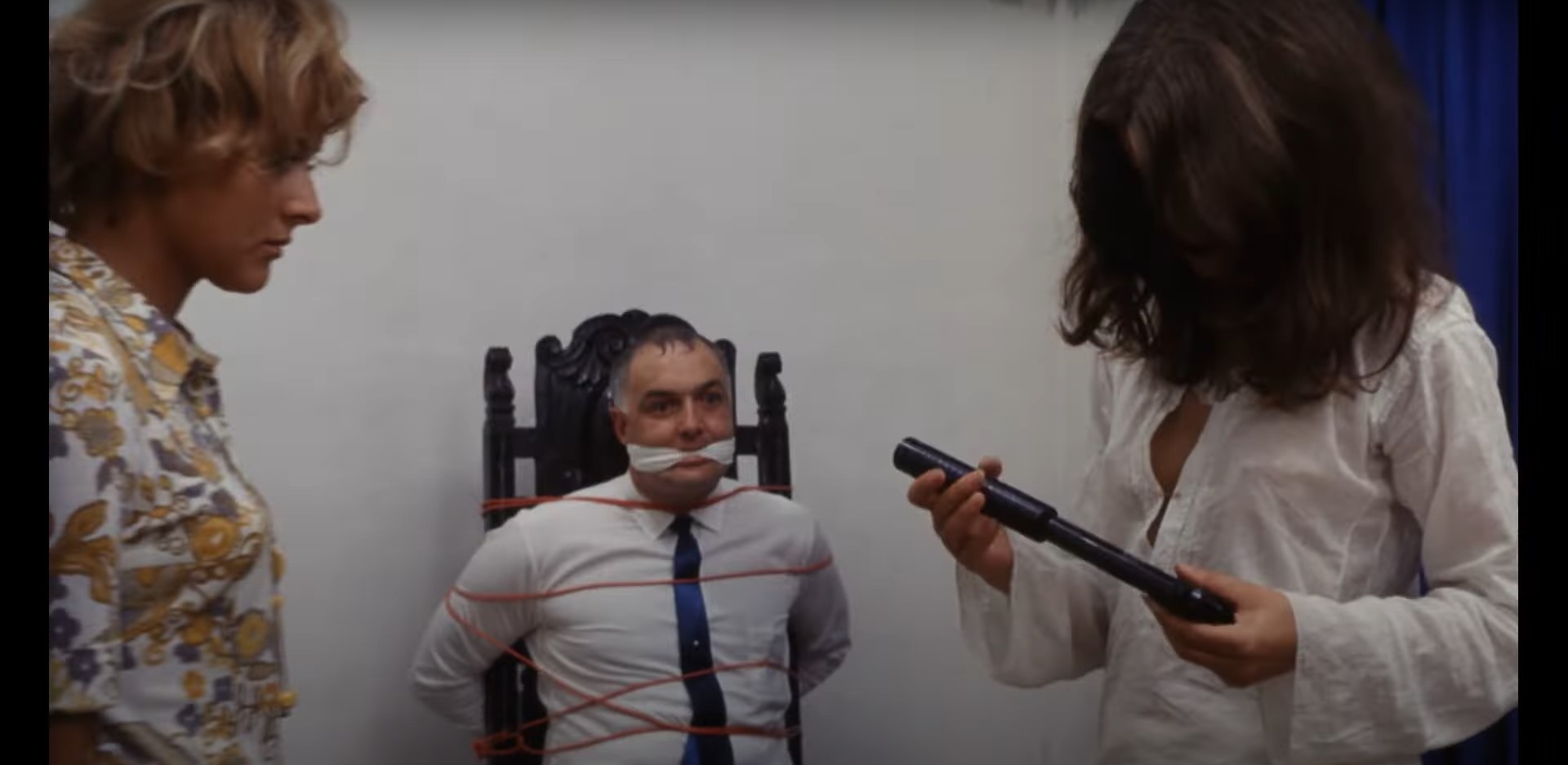
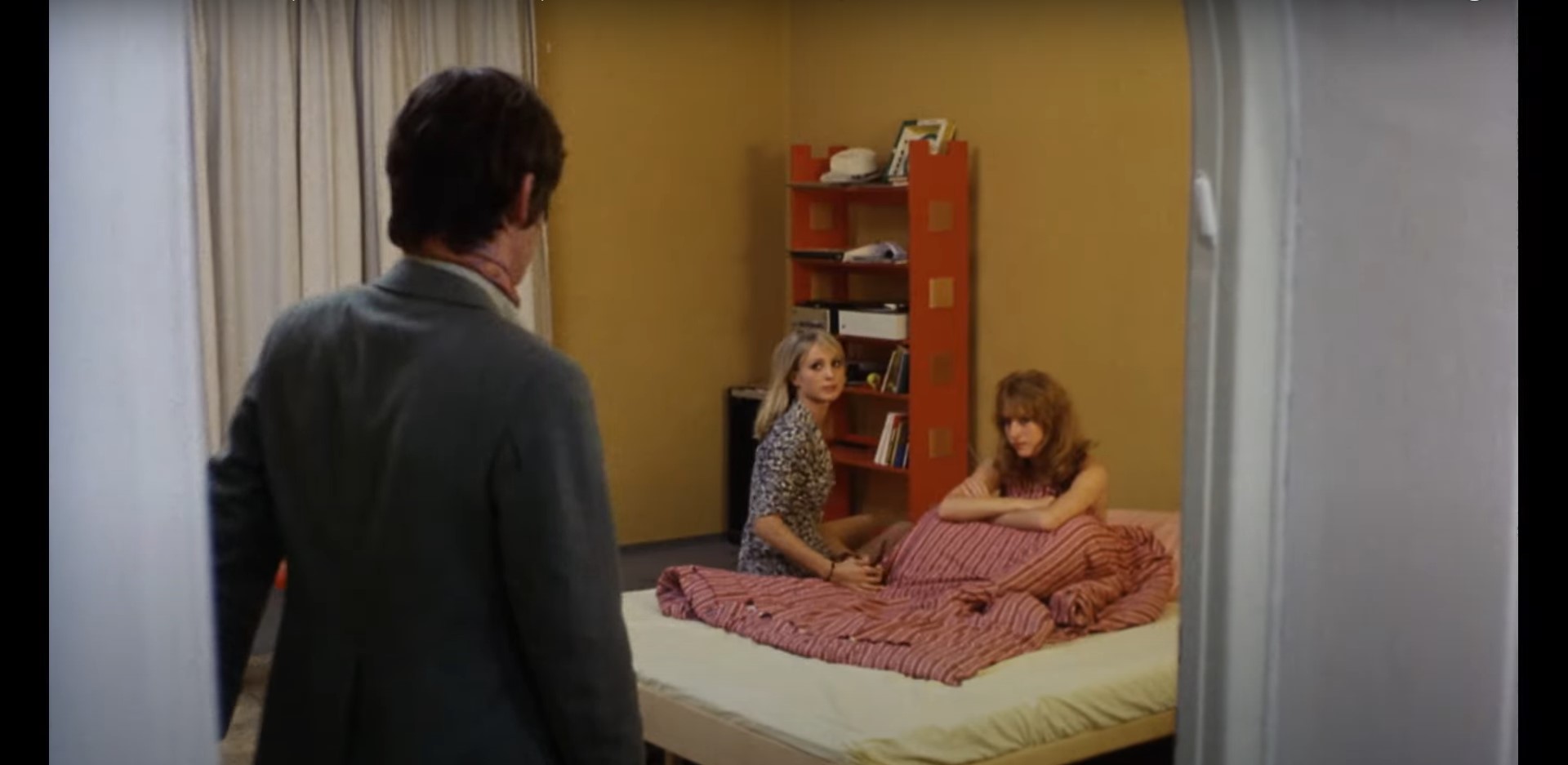
Peggy, Sylvie, Christine, and Isolde have made a mortiferous pact to lure wanton men into their spider’s web before snuffing them out. Armed with guns and homemade explosives, the four women find themselves strapped for cash but managing to get by with their all-in scheme to take out as many licentious men as possible. When the nomadic loafer Thomas re-enters Peggy’s life, she initially sees him as just another mark to relieve from the mortal coil, but Thomas’ uninterest in sexual desires appeal to Peggy’s compassion and care for the man she once loved who just happened to show up in her life one night. As the two become closer, Peggy’s accomplices continue their deadly ideology, working their individual johns, but Christine and Sylvie find Peggy slipping under Thomas’ beguiling draw, an affect she can’t seem to comprehend, and pressures Peggy to be thorough with Thomas to the bitter end.

“Rote Sonne,” or “Red Sun” translated into English, is the 1970 feministic crime drama from German filmmaker Rudolf Thome and penned by the late Switzerland born screenwriter, Max Zihlmann.  Thought-provoking as it is enticingly cold, “Red Sun” tears open a void between lust and violence that separates the sexes of scorned scars.   The pre-European Union film looks at feminism during a highly patriarchal Germany time, West Germany to be specific, when women rights were essentially molded and determined by men.  Wives relied heavily on their husbands to make decisions for them on a permissible granted condition and even some marriage-related abuse crimes we’re not punishable under German law.  Thome helmed a politically anti-conservative and socially anti-inequality picture during the second wave of German feminism of the 1960s with ironfisted and revenge-seeking protagonists as an active cell blending into cultural norm.  “Red Sun” is produced by the director as well as Heinz Angermeyer of Independent Film productions and is part one of our double bill look at radical feminism with Marleen Gorris’ “A Question of Silence” to follow.

At the tip of the cast spear is a Rudolf Thome regular, Marquard Bohm, having had roles in another of Thome’s empowering women feature “Supergirl – The Girl from the Stars” as well as the skin-laden “Detektive,” and the narrative’s focal character stirs confounding interest in that it revolves around a male principal of a women liberation-by-force feature.  As Thomas, Bohm is not a traditionally depicted German man but has all the some of the minuscular familiar qualities of masculine behavior.  Thomas loafs into to life of Peggy, played by fellow “Detektive” star Uschi Obermaier, and her cohort of conniving men eaters – Christine (Diana Körner, “Barry Lyndon”), Sylviie (Sylvia Kekulé) and Isolde (Gaby Go) – simply by being at the right place at the right time or visa-versa, depending on how you look at it.  For Thomas, his nonchalant leeching onto Peggy morphs into something more than just freeloading off of already strapped for cash Peggy and friends, becoming a distraction and an attraction from his previously failed relationship in Munich.  The role is in a mirror reversal of the then current German society with Thomas being a stay-at-home man, running errands at the behest of the woman Peggy as she goes to work and earns to keep their clandestine killing chugging along, but Thomas does what he wants, whether be spending Peggy’s extra cash on cigars or eating all the food in ladies’ fridge.  Opportunistically asserting his needs onto their, often inimical, hospitality, Thomas is the Peggy beloved free-range chicken strutting his stuff around other hungry, more axe-wielding, farmers that put the pressure on Peggy to nix him before he insidiously collapses their pact.  Under the “Red Sun,” the cast fills out with Don Wahl, Peter Moland, and Henry von Lyck.

Unfortunately, Thomas has inadvertently sowed the seeds of destruction within the four women, dividing the group’s cause and on what to do with Thomas.  The women are arranged in a spectrum range of how to handle their contested guest; Thomas has caught the eye of Peggy and Isolde, though active in certain measures of man-slaughter, refuses to partake in the act of killing altogether where Sylvie pushes back against her indifference amiability for Thomas to continue the good fight and Christine just flat out owns her oppositional stance to eliminate the man many would find lackadaisical and nocuous to their friendship and plans, like an usurping boyfriend coming in between two best friends.  What Thomas represents is the potential squash, or delay of, the feminist movement against an arrogant and authoritatively unfair patriarchal society and each woman is a different perspective and reaction to the measures of feministic movement.  “Red Sun” is also a tragic love story that pits rightful duty against the heart’s urges and Thome is able to fashion a path through the commentary to depict both views in a sad, yet heartful conclusion.  What Thome doesn’t do well is the appropriate stitching of time passed.  Perhaps through editing or the within the confined text of the script, what feels like weeks passed is actually only a handful of days, but Thomas’s comfort level is so ingrained, coupled with the brief mentioning of how long he’s been around, the comings-and-goings of time blend into one jerky story that can’t properly materialize a granular tone and “Red Sun” becomes a bit sun blind at times when trying to keep with the characters’ narrative.

“Red Sun” blazes onto a world debut, limited edition Blu-ray release from independent cult film distributor, Radiance Films. The AVC encoded, high-definition release has been scanned in 2K from the original 35mm camera negatives, supervised by director Rulfe Thome, at the Cinegreti Postfactory in Berlin as well as additional touchup restoration work to spruce up the dust, dirt, and scratches. Radiance Films’ presentation features a brilliant quality that has restored to void out any celluloid cankers. Grading appears natural and vivid under the breadth of the welcomed 35mm grain. Aside from a handful of faint vertical scratches here and there, this Blu-ray has none the worse for wear with compression issues as the transfer is stored on an ample BD50 to reduce any compression artefact effects. The original German language LPCM 2.0 mono track vivaciously keeps up with a clean, clear, and robust post-production dialogue recording. No major issues with hissing or popping though minor specimens rear their ugly audibles sporadically to a negligible outcome. Since ADR is used, depth is lost amongst the dialogue track, but the environmental ambience nicely courses through the output with a small explosion and episodic skirmishes to keep the range from being too concentrated. English subtitles are available and are well-synced, well-paced, and are grammatically sound from start to finish. Bonus features include an audio commentary track with director Rudolf Thome and Rainer Langhans and also two visual essays with film academics Johannes von Moltke, in German with English subtitles, on the subject of cultural and social influences on “Red Sun” titled Rote Sonne: Between Pop Sensibility and Social Critique, and Margaret Deriaz exploring the developments on the New German cinema, titled From Oberhausen to the Fall of the Wall. The physical attributes are just as enticing with non-traditional and clear Blu-ray snapper case with a thicket, 51-page color booklet insert featuring the 2022 Guerrilla girls: Radical Politics in Rudolf Thome’s “Red Sun” essay by Samm Deighan, an interview with the director, Letters to the German Film Evaluation Office by Wim Wenders and Enno Patalas from 1969, film review extracts between 1970 and 1991, and transfer notes and full package release credits. Sheathed inside the case is a reversible cover art with a Bond-esque prime cover of Uschi Obermaier in a white, short-skirted outfit holding a revolver in front of a shoreline red sun. Alternate, inside cover notes the original German language title “Rote Sonne” with the 3 of the 4 femme fatales posed around Peggy’s VW bug. The disc press art is perhaps the less exciting aspect with just a plain, off-white disc with red letter of the title. Radiance Films’ release comes region free, has a runtime of 87 minutes, and is not rated. Limited to 1500 copies should not stop a film aficionado from looking directly into the “Red Sun,” a highly provocative and pulpy thriller full of contempt and full of ambivalence curated to pack a punch on a new Radiance Films Blu-ray.

“Red Sun” on Limited Edition Blu-ray from Radiance Films!

Bruce Lee Fought EVIL for Justice. Mark Swetland Follows Lee’s Footsteps in “Blood and Steel” reviewed! (SRS Cinema / DVD)

Hiyah! “Blood and Steel” – the Lost Kung-Fu Film now on DVD!  

The brutal murder of his sister and her husband sends Mark Swetland into a vengeful fury.  Behind the heinous act, a drug smuggling organization, using a steel fabricating warehouse and a dojo school as a front, had sent a merciless assassin to take out Mark’s sister after a previous incident with the organization’s personnel that could bring down the whole drug shipment operation.  As Mark investigates for answers and track down those responsible, he’s greeted with hostility and uses his extensive martial arts experience, and a little help from a few of his closest allies, to bring the syndicate down once and for all, but the cruelty conscious conspirators don’t plan to go down without a fight as they kidnap Mark’s girlfriend and hire a mercenary fighter to bring the fight to them on their own terms. 

If you’re a martial arts film connoisseur or just an aficionado of the action-packed genre, here’s an obscure title from 1990 you desperately need to get your hands on, today if at all possible!  “Blood and Steel” is the Bruce Lee dedicated crime and martial arts actioner from producer, writer, and director, Mark Swetland.  Yes, Mark Swetland plays himself, Mark Swetland, as the unstoppable, vengeful vigilante hero in his own production that pits him going solo against a scumbag kingpin and his narcotic import-export empire.  Only recently discovered after being lost for decades, “Blood and Steel” breathes fresh 2023 air with a new DVD release and institutes a brand new, never-before-heard maxim, created by yours truly, of though white men can’t jump, they can certainly Kung-Fu.  Perms, handlebar mustaches, and tight fitting and unappealing fashion grace the screen as nunchakus and hook kicks pave the way for this seriously gratifying choreographed Kung-Fu spectacular to be resurrected from the cache of forgotten films of the cinematic cemetery, shot in and around upstate New York complete with the N.Y. accented, short-a phonological vernacular.

Mark Swetland, proprietor of a safe and vault cracking company in Cheektowage, New York, was once a martial arts instructor.  At the current age of 62, Mark has looked to cracking open safes instead of cracking open heads with his mixed martial art skills but Swetland also once dappled in film, developing his own low-budget Kung-Fu caper, inspired by his martial arts idol, the late and legendary Bruce Lee.   Ponying up much of the funds for what would be “Blood and Steel,” Mark poured every ounce of his soul and craft into the film that displays his range as a fighter as well as getting his chops busted in delivering lines and acting out emotions.  The former was more of his forte with asserting a magnetic presence as both an onscreen fighter and a competent choreographer to have the fight sequences appear realistic and quick against a slew of antagonistic opponents.  As a thespian, Mark often borrows too heavily from Bruce Lee with overzealous fist poses to even echoing Lee’s idiosyncratic short and elongated kiai sounds.    Swetland’s one-on-one scene with fellow martial artist David Bobnik, as the hired hitman Steiner, is well thought out coordination with lighting punch-kick combinations that would rival the best genre films of its time.  Neither Swetland or Bobnik are overly muscularly cut bodybuilders or the zero percent body fat of Bruce Lee’s rail frame as both men are in an ideal, physically fit shape to add to scenes test of time and doesn’t yell amateur hour of wannabe martial artist attempting half-hearted roundhouse kicks for their low budget movie.  “Blood and Steel” round out with a cast that includes Joanne Gargliardo as Mark’s girlfriend, David Male as drug kingpin Mr. Patterson, Elaine Arnone as the slain sister, Diane Zdarksky as the sister’s best friend, Rick Swetland as the sister’s slain husband, and cinematographer Al McCracken has the role of Mark’s best friend and sidekick to the end, Roy. 

Influenced by quintessential Bruce Lee films, “Blood and Steel” is entirely an homage to the exceptional action icon.  Mark Swetland’s film derives elements from “Enter the Dragon” with a plotline of the protagonists’ sister being killed by a drug trafficking enterprise as well as straight down to Mark Swetland’s yellow tracksuit, the same Bruce Lee wears in “Game of Death” with black lines down the arms and legs.  Despite the derivative aspects, Swetland still manages to output an entertaining reel in what has resulted as a passion project that has been stowed away and forgotten only to be unearthed as a transmogrified time capsule of awesomeness.  Swetland, who wore many productional hats, also edited, scored, and did sound design with a fair amount of adequate know-how.  Transitionally between scenes, “Blood and Steel” works to segue into the next scene with various connective images or fade away dissolve without appearing abrupt or muddled.  The additional Foley work, such as the whipping sound of the nunchakus, are done on a synthesizer with an unquestionable audio yield.   “Blood and Steel” has a little bit of everything that is very indicative of a Bruce Lee actioner.  Dirt bike chases that soar from off of a cliff into an exploding heap at the bottom of a ravine, forward and reverse car chases involving a 80’s Corvette Stinger, practical effects from throats being cut to spike cleats becoming lodged into the back of skulls, ridiculous over-the-head, over-the-knee backbreaking fatalities, helicopter entrances over the colossal Niagara Falls, shotgun squib explosions, and much, much more blood-churning excitement can engage the viewer into “Blood and Steel’s” edge of your seat conflict. 

Emerging victorious as a SRS Cinema home video release is the obscure revenge-action thriller “Blood and Steel” on DVD.  Presented in the boxy 1.33:1 aspect ratio, the standard definition 720p resolution, plus the type of camera being used seen in the bonus feature’s outtakes and the impurity characteristics of the image quality, all point to a super 8 shot feature.  Lined left with barely visible sprocket holes and occasionally lined right, a visible magnetic audio strip, often blue in hue, “Blood and Steel” is without a shadow of a doubt a glorified home movie in the right hands of Mark Swetland.  The washed look is a tell sign of no overlay grading, the tri-color emulsion layer remains as the original, natural grading, creating less shadowy contrast but remaining consistent and more-or-less delineated.  The English, single-channel mono track is about as flat as a pancake, if a pancake could make noise.  With hardly any depth, a steady crackling throughout, and depending on the camera mic placement in the shot, some scenes’ dialogue can barely be heard under what sounds like a soft breath or mumble while others are clearly audible and render no issue with understandability. SRS Cinema’s special features include a Fight Analysis with Mark Swetland and David Bobnik going over scene-by-scene, sometimes in slow-motion repeat, their fight sequences and explaining in commentary fashion how the crew set that all it up. Also included are outtakes, the original trailer, the new trailer, and other SRS trailers! The physical DVD sports the original “Blood and Steel” poster plastered inside a standard DVD case of an 80’s retro-rental mockup with color-coded round stickers of the genre action and of the Please be Kind & Rewind phrase. The disc art is a blowup of Mark Swetland from the original poster art. The film runs at a brisk 87 minutes, is region free, and is not rated. “Blood and Steel” has the independent spirit of the dragon, a fierce and fire-breathing martial arts film with fervent laudation for the late Bruce Lee, and is a white knight knockaround and Kung-Fu Flick that is vengeance glorious.

Hiyah! “Blood and Steel” – the Lost Kung-Fu Film now on DVD!  

A Family of EVIL Walks, Talks, and Comes in a Putrid Shade of Blue! “Super Z” reviewed! (Synergetic / DVD)

“Super Z” Has Bites and Baffoonery!  Amazon.com Has it on DVD!

A genetically produced, made-to-order zombie foursome are grown in a private laboratory and continue to be experimented on by a greedy CEO and his team of mad scientists from conception to create a group of governable, intelligent, and unstoppable do-bidders.  The latest batch of untested cultivating serum provides the four with the ability to think and talk, the only severe drawback side-effect is the  foulmouthed and uncivilized behavior makes them spitefully aggressive.  Able to speak for the first time, the zombies are actually a family of four and are able to use their undead abilities to escape with their undead lives to plot a revenge on all of humankind for all the cruelty brought down upon the zombie gene.  Feasting on a nearby couple to stave their hunger and infecting the couple’s white-boy rapper son to join the family as one of their own, a male heir of sorts amongst two older sister siblings, the now nuclear zombie family forages for human flesh while turning a rundown cabin in the woods into a place they can call home and plan their worldwide retribution, but as mother and father work on their relationship issues, a son finding love to become a man, and two sisters with an uncontrollable bloodlust, the impatient CEO hires mercenaries to hunt them down as retrievable property.

Who better to create an absurd, over-the-top zombie comedy than the people of France, the national birthplace of the absurdism philosophy.  That is what the gonzo-gory “Super Z” reflects, a heightened realization of life and intelligence after many years of being a docile dead becomes the basis for French writer-directors Julien de Volte and Arnaud Tabarly in their first feature length film.  Grossly saturated with explicit pejoratives, zany antics, and is hairbrained on a level I never would have thought could be achieved, “Super Z,” short for Super Zombie, is based off the filmmakers’ 17-minute 2014 short film “The Foodies” and now in 2022, the film unlocks yet again a very seldomly explored narrative that walks the same flip-the-script lines on taking the George Romero-style zombie perspective, such as with 2007’s “Aaah! Zombies!!” or 2013’s “Warm Bodies,” and laces it with an unrestrainable absurdist style.  To be honest, “Super Z” will repel the majority of audiences who can’t embrace its border crossing childishness and cartoon consorting pursuance.   Following the success of the short film, Tabarly and Volte’s Orléans, France based La Ruche Productions is the production company’s first feature film outside the regular shorts and documentaries accomplished by the company and is produced Laura Townsend.

The story engrosses us into the ebb and flows of family dynamics, but not just any kind of family dynamics as it’s made up of genetically modified zombies.  Yet, Arnaud Tarably and Julien de Volte don’t divide the extremities of the living and dead too far apart.  Family dinners are still held together around the table, the purpose of existence within the fragile relationship construct comes into question quite about between father and mother, and even a teenage boy coming into manhood when washed over with an overpowering smitten sensation at first sight of a farm girl are all the things the zombie family experience making a life away from human interaction with the only human interacting being the one where the zombies have the upper hand as well as the severed torsos, the castrated genital organs, or the decapitated heads as a full table spread with dad’s special gravy (aka blood) as the secret sauce.  While their performances won’t win any kind of awards, at all, I do believe “High Lane’s” Johan Libéreau as the father Gertre and “Savage State’s” Julien Courbey as the mother Stephana cater to the bloody nub of gnarly passion between two also covered in filth and body fluid zombies lovingly trying to protect their unique family at a normalized primal cost and formulate a monumental revenge against humans.  One question that rises out of Gertre and Stephana’s relationship is is Stephana supposed to be a man actor playing a woman character assigned gender by genetic disposition or a zombified gay man in transition?  It’s never clear but it also doesn’t really matter as it adds to Stephana idiosyncratic comedy as she removes a female corpses breast to sew to her own chest but also pees blood standing up!  It becomes just a curiosity that arises but the crux of the character is nailed down by Courbey who shows a sensitive and savage side being a cabin-wife to three children and providing for Gertre’s quest to queen her zombie world domination.  Gertre and Stephana’s children are played by returning “The Foodies” actors Fabien Ara as the baby boy Yvon and Florence Bebic-Veruin as sister Georgette with the addition of Audrey Giacomini being adopted into the ferociously multifaceted family cast as the second sister Marcelline.  Ara and Bebic-Veruin reprise their colorfully blue necrotic-skinned and blood-red splattered characters as squabbling siblings as the babied Yvon is coddled to the point of seeking love in a local farmer’s verbally abused but carefree and nearly toothless daughter Augustine, another reprised performance by Marion Mezadorian who was also a farm gal in “The Foodies.”  “Super Z” fills out the cast with lots of zombie fodder but also includes Jean-François arises, (“Time Demon”), Ludovic Schoendoerffer (“Crime Scenes”), Jacques Boudet (“Dracula and Son”), Laurent Bouhnik, and Jo Prestia of “Irreversible” as the mercenary’s very much alive cousin and the zombie family’s bodiless uncle!  Wait, and you’ll see what I mean.

“Super Z” will not sate everyone’s thirst of comedy nor will be gripping horror, but the French absurdist film will quench with gore galore with a setup that’s real light on its feet, swiftly making haste through a narrative that if you blink or didn’t hear a certain part of the dialogue, or read the subtitles if you don’t understand French, than you’re left holding the bag trying to play catchup on what the hell is going on.  Not your fault by any means as “Super Z” goes at a super breakneck speed that aggressively aggregates zombie intelligence, a laboratory escape, a zombie-turned-son, and a quiet, secluded abode to make camp all within the first 15 minutes or so.  From there, we ease into the zombie family country life, getting to understand their troubles, their ambitions, and their family squabbles more-and-more while father and his daughters hunt down bypassing humans with a machete and make a smorgasbord of homecooked organs, blood, and flesh out of them that is fit for an undead king while the wife cooks the food and showers the biologically unrelated brat with pet names and adorable little hairdos to much of his disgust.  Zany can’t describe “Super Z’s” overzealous rubbish yet within that zany overzealous rubbish, a thin stream of guilty pleasures can result in keeping attentions from pressing the off button and burning the disc to a crisp.  “Super Z” is not a too terrible horror-comedy as long as understanding the premised background helps focus on the filmmakers’ key conveyances within an absurdist designed paradigm that just happens to have lots of blood and guts. 

If the zombie subgenre was becoming too stale as week old bread, then “Super Z” keeps the rotting bags of walking meat fresh with a managing ménage of the uncouth undead. Synergetic distribution goes international with domestic releases with “Super Z” on DVD. The Smart-Ass Zombies are presented in a widescreen 2.39:1 aspect ratio with a picture quality that renders clean just like many modern-day digital models. The Synergetic DVD has consistent Mbps decoding reliability on the DVD5, decoding at a rate of 8.9 Mbps with hardly a blip on compression. In regard to the coloring, the zombie family’s forest background pops with lush greenery that becomes invariably evident in other mise-en-scene aspects as a higher contrast delineation defines the boundaries super well, materializing emerging imagery with deep shadows and a vibrantly eclectic color palette resembling near comic book visuals that luckily absorb Cyril Féron’s cut-and-paste visual effects into the crass configuration. The French Stereo 2.0 offers free from nuisance tracks but definitely output in a two-dimensional standard that, since there’s more range than one might expect, softens the punch of this madcap zombie mayhem to a par mix that works well enough. The zombified autotune adds a layer of obstruction over the dialogue track but if reading the burned in English subtitles, then there’s nothing lost in that respect. The entire mix is an overall healthy dose of ambient bustle, sprightly dialogue, and lots of buffoonery snaking in between. The Synergetic DVD doesn’t support bonus material with only the feature and a chapter selection on the main menu but there is an after credits stinger of a cow and a severed head that attempts one last quick chuckle out of the viewer. Supporting all region codes, the DVD has a runtime of 80 minutes and is seemingly unrated, there is no stated rating on the back cover. Speaking of which, Synergetic DVD covers skirt the cost with slapdash compositions an eighth grader learning AutoCAD could have completed for a solid C+. The mustard yellow with black, nearly indistinct, vignettes don’t provide any kind of appetizing stimulation and, oppositely, can snuff out any sort of enthusiasm toward checking this French absurdist piece out, but don’t let the lackadaisical cover art dishearten a peak into what could be a considerably wild and gory experience. Just be warned that “Super Z” isn’t for everyone and everyone isn’t for “Super Z” living on a different, bizarro plane of existence.

“Super Z” Has Bites and Baffoonery!  Amazon.com Has it on DVD!