A Father and an Assassin Fight Against EVIL Corruption! “On the Run” reviewed! (88 Films / Blu-ray)

“On the Run” Now Available from 88 Films!

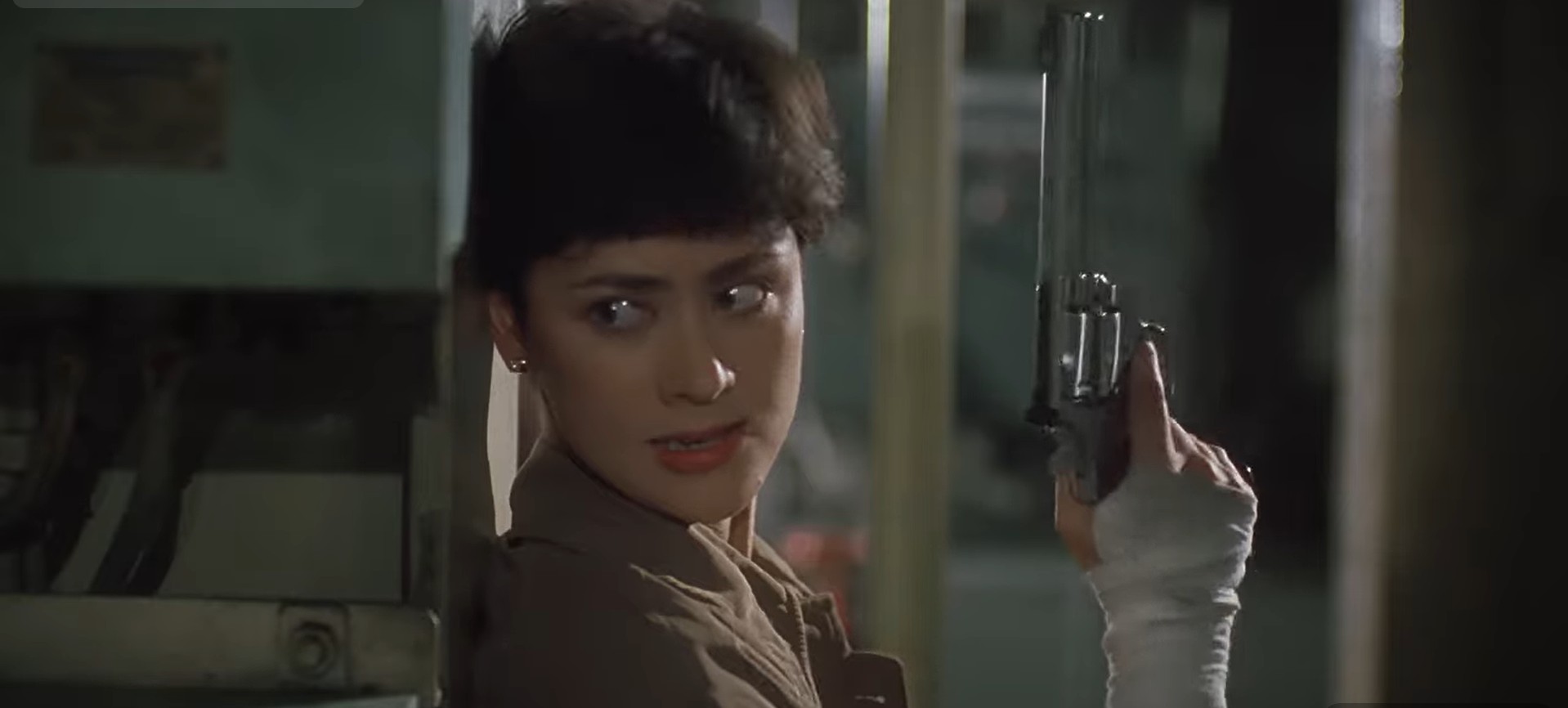
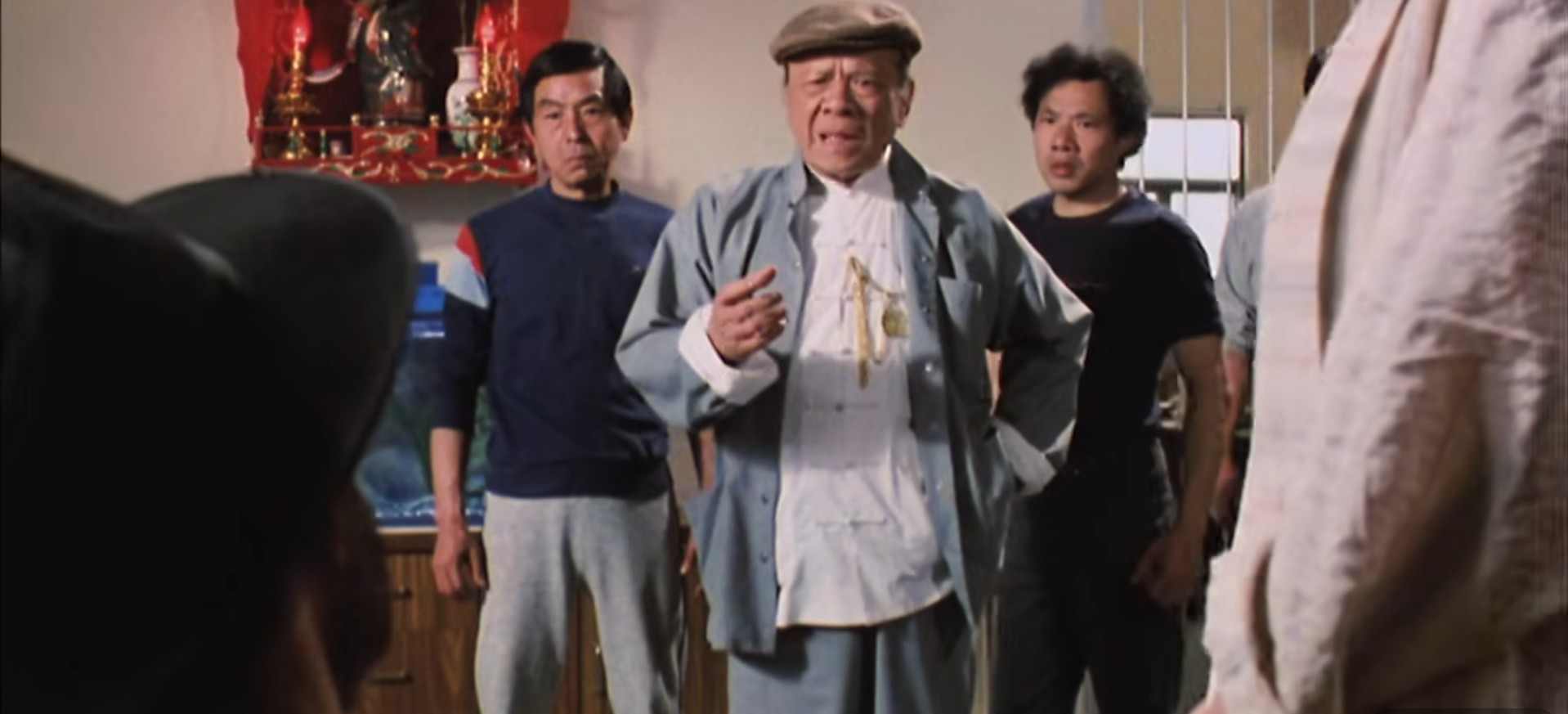
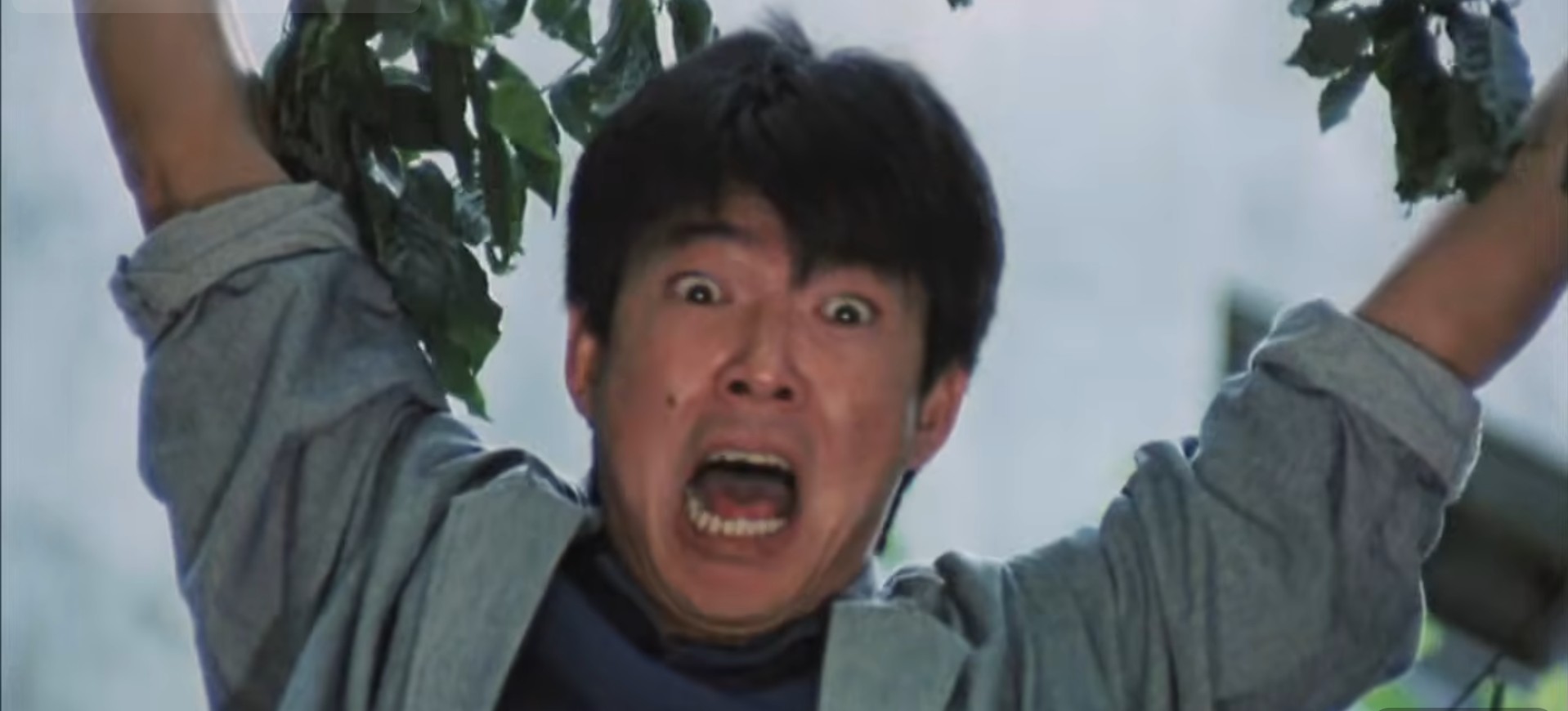
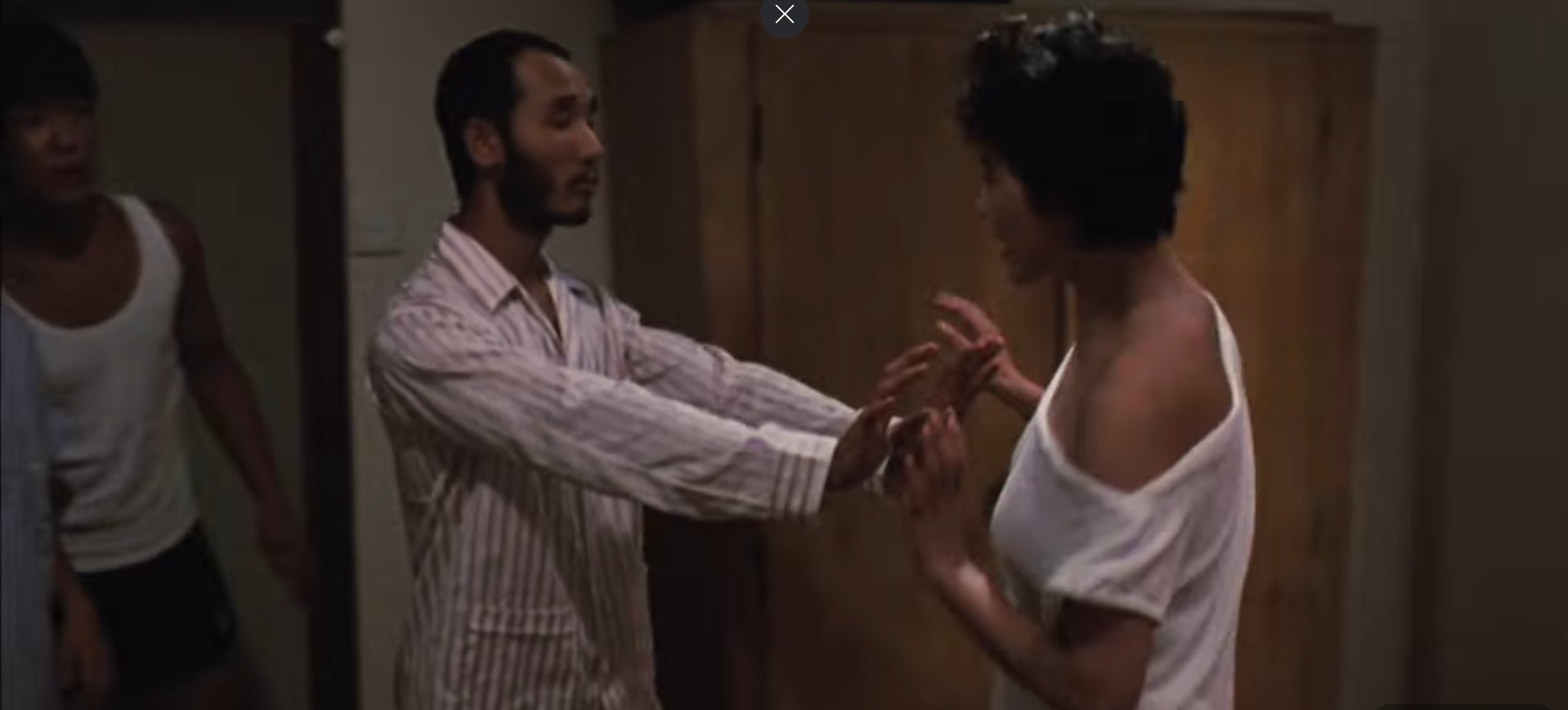
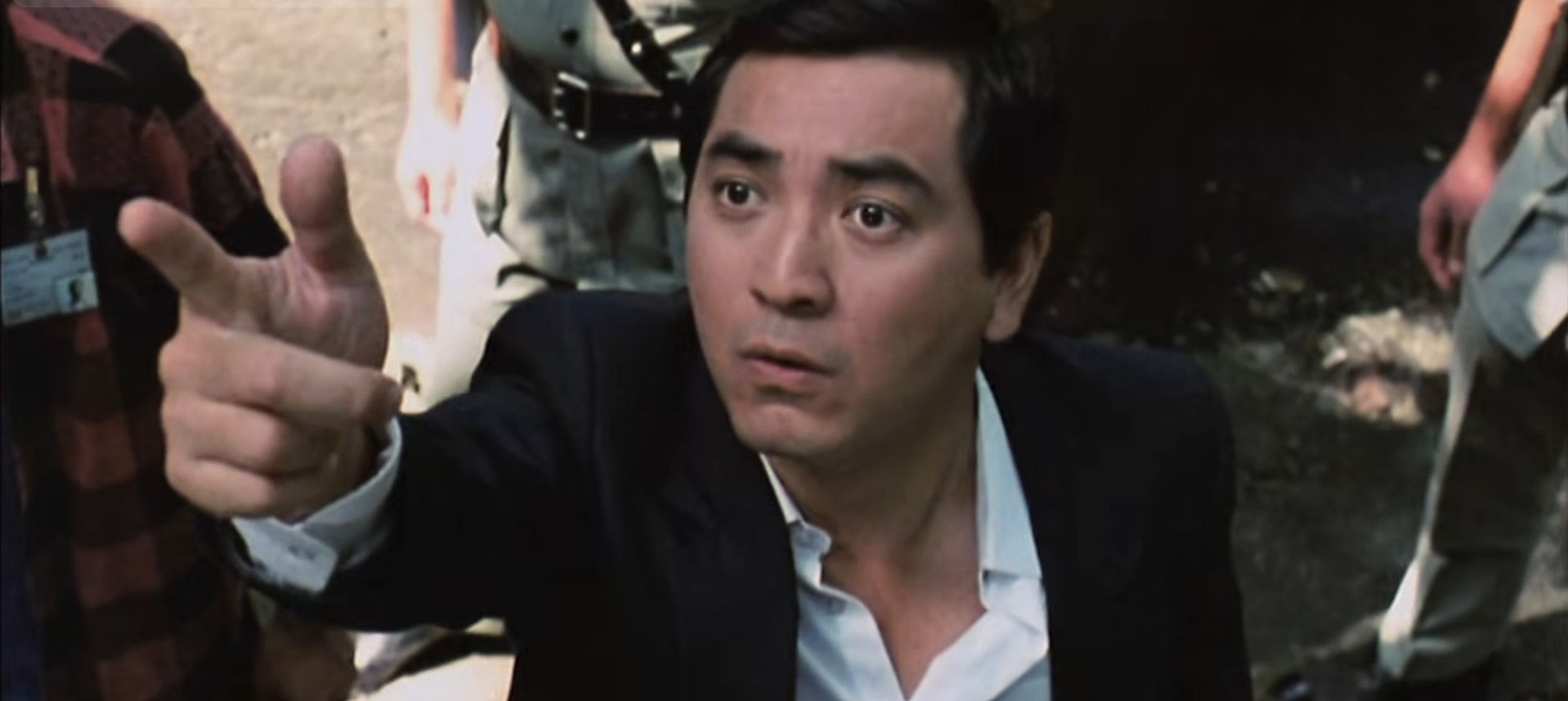
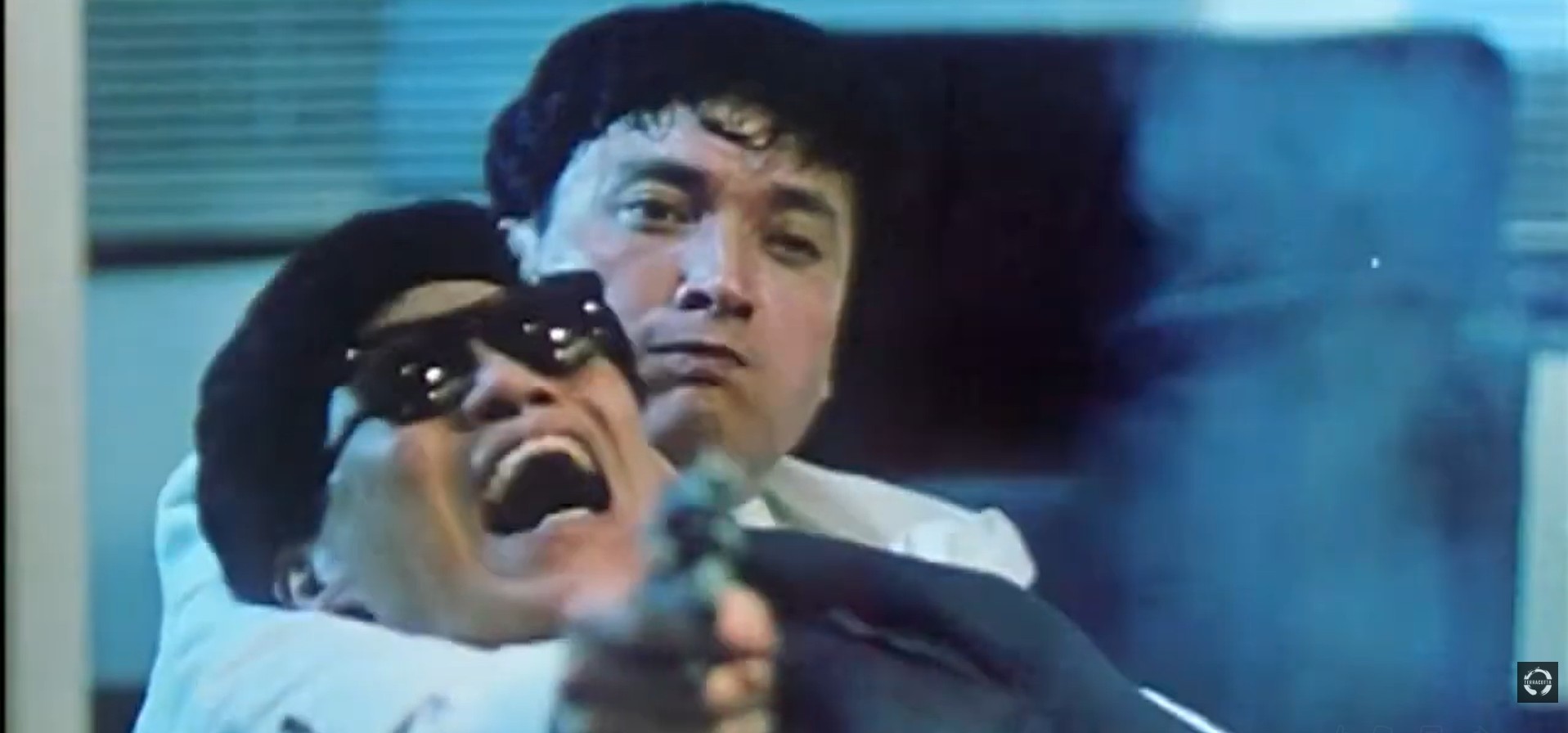
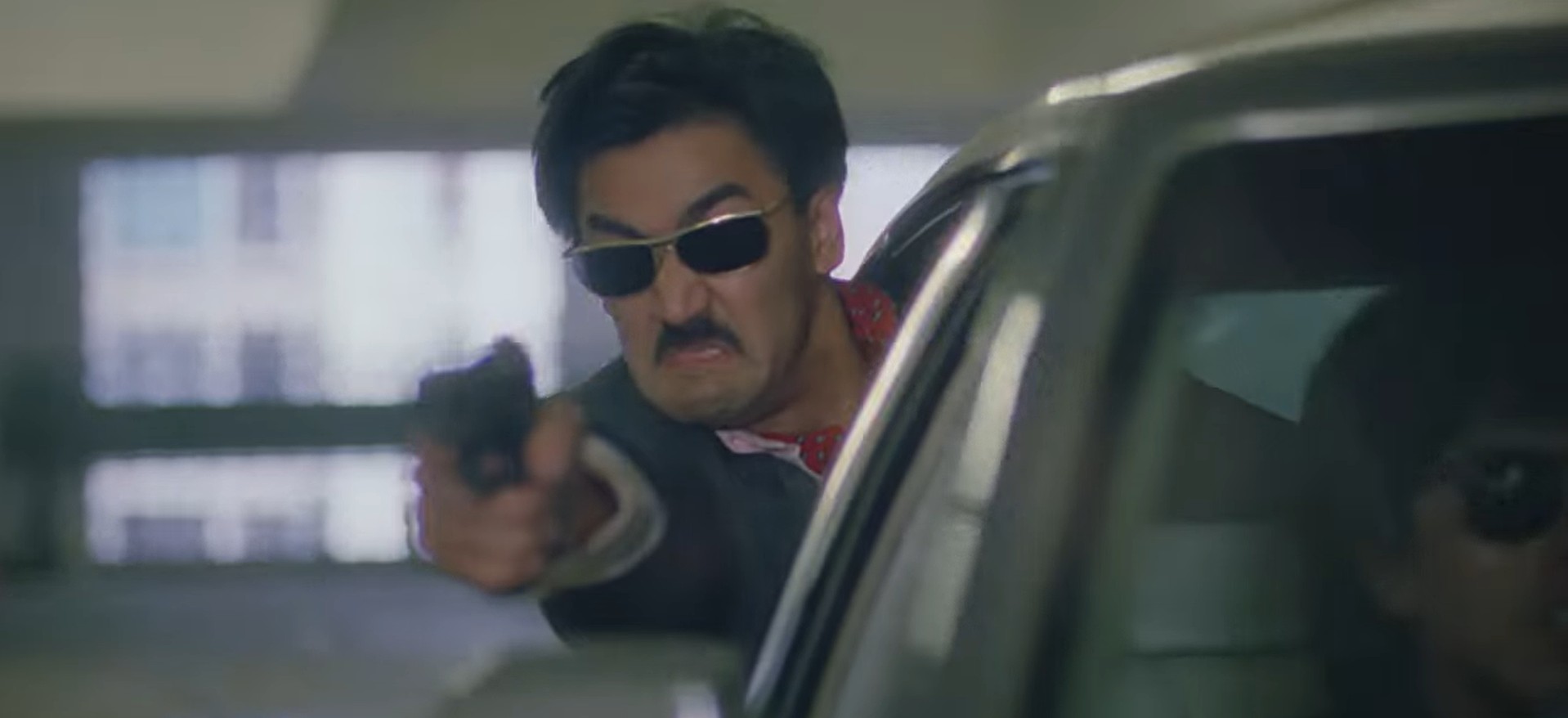
CID special operations police officer Hsiang Ming is going through a separation with his wife, who also works for the CID in the narcotics division.  As the two attempt to work out an amiable agreement with their young daughter before she moves to the U.S., his wife is brutally slain by a female assassin, a hired gun employed by corrupt cops involved in a large drug smuggling operation.  One of those cops is her new boyfriend, a high ranking CID officer.  Accused of murder, Ming is on the run with his youngest daughter and even tracks down his wife’s murderer, Miss Pai.  Extenuating circumstances leaves Ming at the mercy of Pai who didn’t know her target was a cop and has immense sympathy for Ming and his daughter, a problem she’s directly responsible for.  Outnumbered, outgunned, and friends quickly diminishing. Ming has no other option but to accept the deadeye Pai’s help and the two quickly form a bond that goes beyond just surviving insidious corruption.
In 1988, Bo Ho Film Company and Golden Harvest Productions released the Alfred Cheung-directed, Hong Kong heroic bloodshed flick “On The Run,” penned by Cheung alongside cowriter Keith Wong (“Her Fatal Ways” trilogy). “Mong ming yuen yeung,” aka “Fleeing Couple,” is the literal title which also included another alternate title, “Hong Kong Connection – On The Run,” in more broad English titles.  The fast-paced, action-packed fight or flight thriller told a narrative of ingrained corruption within the ranks of the law, bonded unlikely heroes with conflicting professionals and a sore point connection, and really pushed the exodus, or export, of emigration at the time because of the seedlings of British rule coming to an end with a handover of Hong Kong back to the Republic of China, an act that eventually took a decade to complete.  Anhtony Chan, Leonard Ho, and Sammo Kam-Bo Hung produced the film with Paragon Films and Mobile Film Production as associated studios.
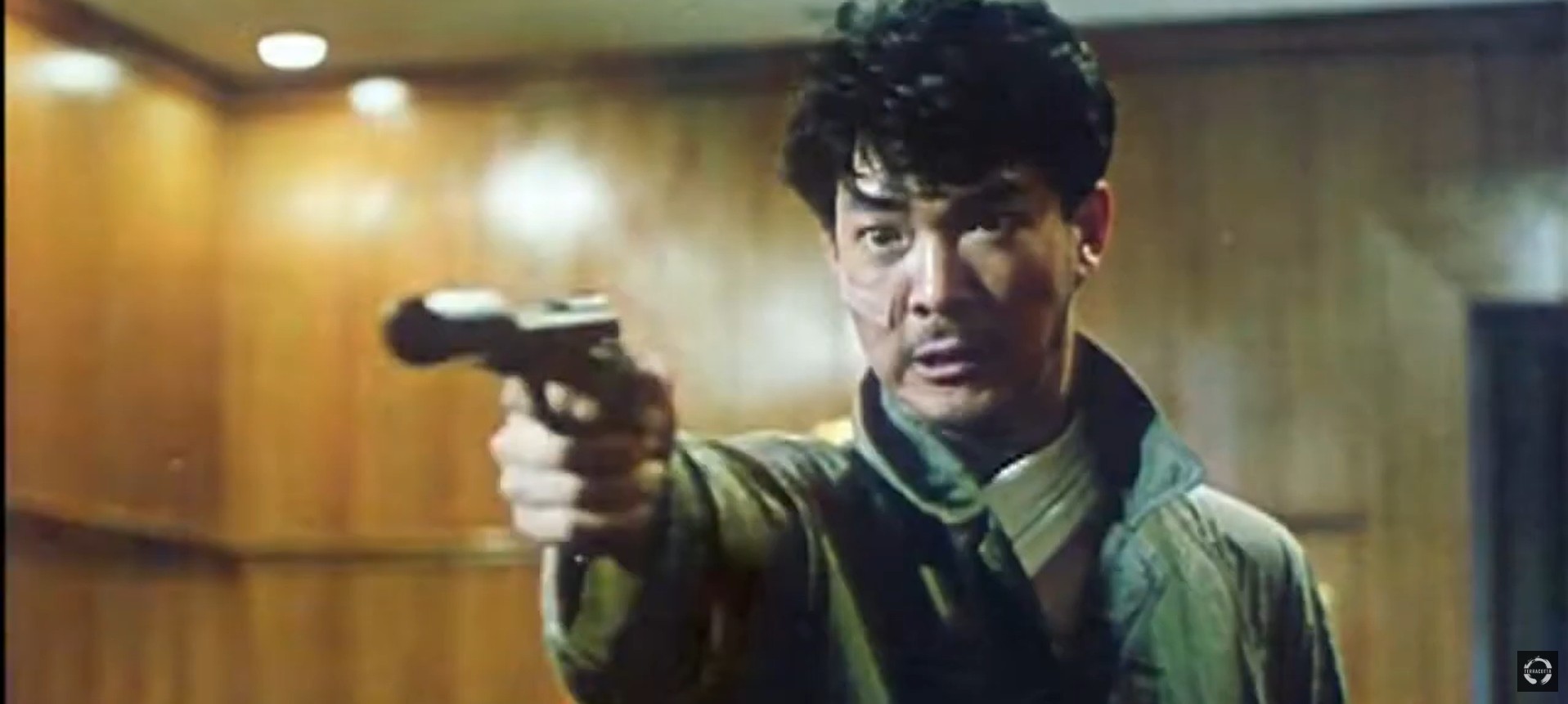
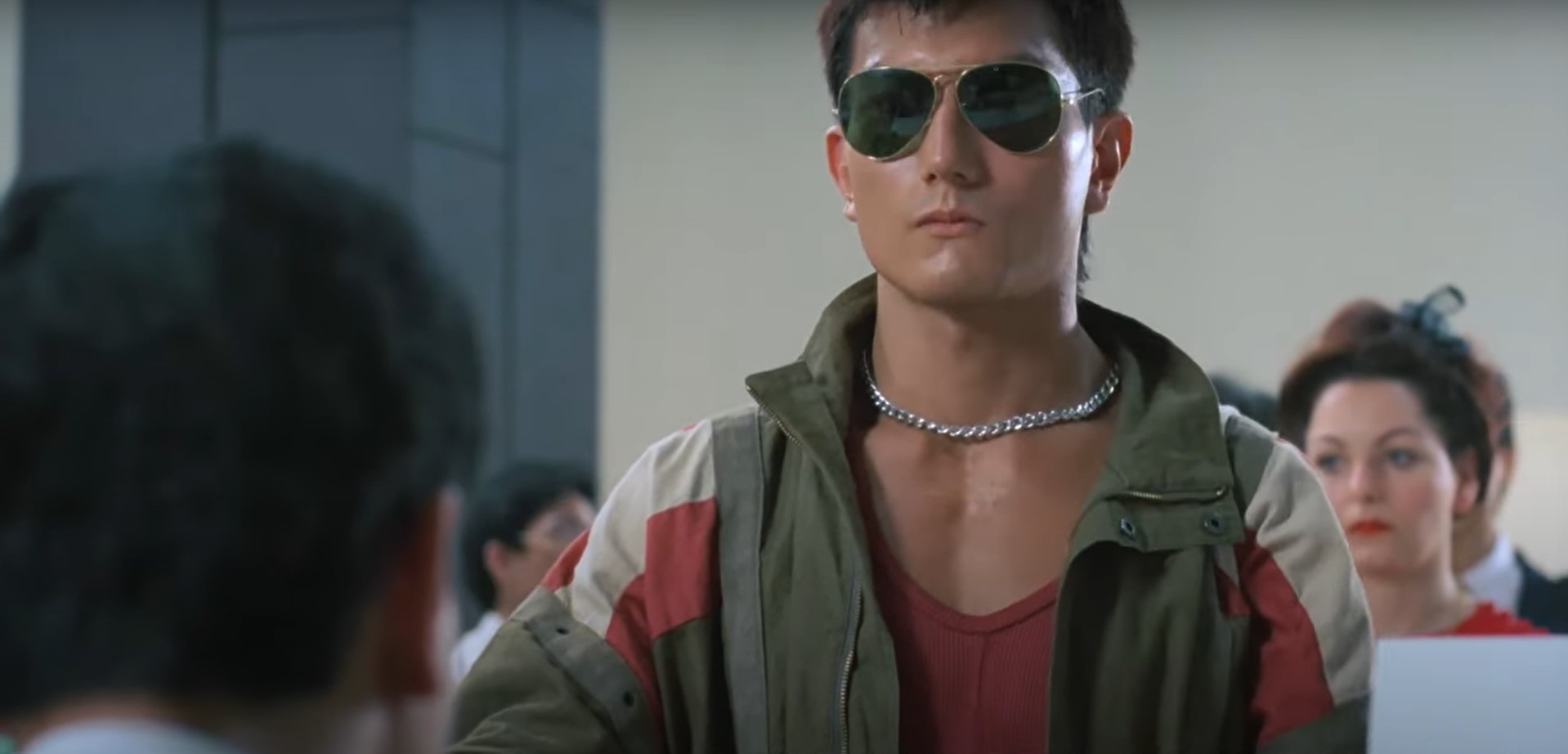
“Picture of a Hymph” and “The Peacock King” martial arts action star Biao Yuen is a sorely underrated action star from the 1980s, overshadowed greatly by the versatile Jackie Chan and the quickly rising through the heroic bloodshed ranks Chow Yun-Fat.  Though immensely popular in Hong Kong for his contribution to the acrobatic style of fighting and palpable stunt work, Yuen should be a household name in the States with select films that carried over.  The only problem was Yuen was never really a part of those niche works unlike the aforementioned stars and amongst others, but Yuen never stopped working, starring in a co-principal production as Hsiang Ming, a CID officer whose special operations department is being phased out, mirror his own life as he is being phased out amicably by his emigrating wife (Idy Chan, “The Siamese Twins”) and child (Chan Cheuk-yan, “Bless This House”).  As Ming, going through a separation is already difficult enough and Yuen’s able to show the meek and reserved desperation that initially stunts him as a husband but breaks through that limitation when she’s shot in the head and he must step up to be the protective father for his young daughter.  The father -daughter aspect is a narrative opposite that strays from the typical damsel in distress device.  Instead, Patrica Ha (“Flaming Brothers”) embodies the strong protector as the assassin Miss Pa.  Quiet natured and a crack shot, we’re introduced to Ha’s unique solitude of naked contemplation and, later, her retro appearance of a woman plucked from the 1960s with the flick up hairstyle.  Ha’s portray adds a lot to Pai’s mysterious past and her cold nature but her character’s arc travels across a sympathetic bridge when Miss Pai’s target ends up being an law officer with a cute family being hunted by money greedy and morally corrupted officials in Lu played by Charlin Chin (“The Imp”) and his entourage of varied goonies (Lo Lieh, “The Untold Story III”) – Wah Yuen, “Mr. Vampire” and Phillip Ko, “Cannibal Curse”) who are so individualized they are worth more than just the general and broad charactered henchmen that tend to be forgettable.  Bowie Lam, Kam Kong Chow, Peter Pau, Lap Sal Lam, Yung Kwan, Cheuk Yan Chan, Shek-Yin Yau, Kwai-Bo Chun and Heung-Kam Lee costar. 

Cheung’s “On the Run” is not only fast-paced, hard-boiled, and well-executed, the story is also dark and unforgiving.  No one is safe from the ingrained corruption even when lives are already upended through a natural course of hardships between sentient people making conscious choices that best suites them, such as Ming and his wife’s separation involving a small child.  Good guys are bad, bad guys are good, “On the Run” doesn’t define and cement the roles of the players as cops turn out to be corrupted drug smugglers and ruthless killers and an assassin for hire becomes a life savior for a father and his daughter with immense sympathy.  Each one of them are looking to escape one way or another:  Ming’s wife wants to move to America, Miss Pai wants to go back to Thailand, Lu’s looking to get away with murder and money, and Ming is open to explore the possibility of either moving to American before all the chaos ensued or flee to Thailand with his wife’s assassin in attempt to not only be out of the reach of Lu and his men as a witness to their treachery and victimizing transgressions but also to escape from his accusations of murder as well as be with his new found affection for his wife’s killer.  This speaks to the current Hong Kong climate of the looming power change and the state of affairs that drive denizens to abscond an unwanted change in rule with Lu and his men likely representing Chinese corruption of a communism power.  The film’s neo-noir veneer capitalizes suspense and danger around every corner and the level of trust certainly wavers in a directional wind that gives a scent of deceit.  “On the Run” is not gun-fu nor is it straight up martial arts; instead, the conflict basis is strictly melee and projectile based without the heavily influenced martial arts action of Hong Kong historical cinema, grounding “On the Run” with more realism in it’s darkest, grittiest narrative that makes the Andrew Cheung thriller more intense.   
88 Films releases “On the Run” onto a new Blu-ray home video that’s AVC encoded with Full HD 1080p high-definition resolution on a BD50 capacity disc.  The new 2K transfer from the original film elements has no qualms about it with a clean picture quality underneath it’s naturally healthy grain and diffused color palate that’s designs around shadows, neon lighting, and low-key lighting.  The negative spaces are often pleasantly inky without any decoding blotches or issues to divide into a couple of shades of black.  Skin and fabric textures are nicely highlighted with full perspective of the grime that builds up on the characters put through the violent wringer.  Patrica Ha is stunning with her character’s introductory getup much to the thanks of the transfer’s refined detail from her retro hairdo to the equally attributed outfit ensemble that’s plain, but she wears plain in a cool, sexy fashion.  The film is presented in a widescreen 1.85:1 aspect ratio.  The uncompressed Cantonese LPCM mono track funnels right, left, and center audio through a singular speaker so there’s an unfortunate lack of spatial direction, but this cleanly presented ADR track still offers strong, robust audio in its action and in its unobstructed dialogue albeit some low buzzing interference from the studio recording.  This strength of quality also extends to the action that has powerful measure despite being held in a crowded, single audio design.  The new remastered, optional English subtitles are of the UK lexicon with 88 Films being a UK label.  Special features include an audio commentary by Kenneth Brorsson and Phil Gillion from their Podcast on Fire Network, a second audio commentary with Asian cinema expert Frank Djeng and F.J. DeSanto, an interview with director Alfred Cheung Running Away, an interview with David West Predicting the Future, an alternate ending that cuts shaves off scenes on the tail end, and the Hong Kong trailer of the feature.  Graphic artist Sean Langmore continues to supply 88 Films with tremendously detailed slipcover and primary sleeve art compositions of characters and memorable moments meshed into a single image.  The reversible sleeve inside the green Blu-ray Amaray case houses the original Hong Kong poster art, which is more simplistic and not as busy as Langmore’s.  The region A/B encoded Blu-ray is not rated and has a runtime of 89 minutes.

Last Rites: Hong Kong heroic bloodshed and noir is defined by many filmic entries but “On the Run” has paradoxical attractiveness about it that separates it from the rest as it treads a gloomy disposition and an expat dream.
“On the Run” Now Available from 88 Films!

When EVIL Messes with a Family of Blue, There’s No Other Choice Than Street Justice. “She Shoots Straight” reviewed! (88 Films / Blu-ray)

“She Shoots Straights” and She Never Misses! On Blu-ray Today!

A widowed mother has four daughters and one son whom all work for the Honk Kong national police, more specifically called the CID, Criminal Investigation Division.  Her only son, Huang Tsung-pao, marries another cop, a promising officer named Mina Kao who is quickly rising up the ranks between her supervisor husband and the superintendent.  One could say the Huang family bleeds a brotherhood and sisterhood of blue, but none of Tsung Pao’s sisters approve of Mina despite her being a colleague in arms with the belief she’s stealing their brother away from them and receiving special treatment and recognition from a flirting superintendent who has eyes for her.  When the investigation team tracks down a dangerous, transgressing gang of Vietnamese refugees planning on robbing a night club at gunpoint, Tsung Pao is tragically killed in the one of the tussles, leaving Tsung-pao’s sisters, wife, and mother to seek revenge-seeking justice before the killers flee the country.

If you thought female-driven action films weren’t prevalent enough in the 1990s, 皇家女将,aka “She Shoots Straight,” aimed to prove that theory incorrect.  The Hong Kong production by “Yes, Madam!”) director Corey Yuen is nothing but women-in-action in this gun-fu actioner penned by Yuen, Kai-Chi Yuen (“Once Upon a Time in China”) and Barry Wong (“Mr. Vampire,” “Hard Boiled”).  The action dares with high wire acts that are kept grounded in reality but there’s plenty of intense hand-to-hand skirmishes made to be not only appear feasible on screen but awesomely cool while doing it.  Sunt coordinator and filmmaker Sammo Kam-Bo Hung, who we just covered as the stunt coordinator and second unit director in our review of Jean-Claude Van Damme’s “Knock Off,” produces the 1990 released venture to ensure palpable contact fighting with Pui-Wah Chan serving as co-producer and Leonard Ho serving as executive producer under the Sammo Kam-Bo Hung and Leonard Ho studio, Bo Ho Film Company.

Men certainly take a backseat to “She Shoot Straight’s” policewomen with a vendetta, removing all the substantial and good out of the few male roles assigned, and spearheading the task to Joyce Godenzi.  “The Ghost Snatchers” actress finds herself lead aggrieved party, the widow Mina, in grief and out for revenge her way.  She’s joined by her late husband’s closest sister Huang Chia-Ling whose character arc began loathing Mina’s acute entry into their large law enforcement family.  Played by “2046’s” Carina Lau, the two women compliment their initial oppositions while solidifying their bond over a tragic commonality that shows being an officer is more than just a pageantry rise to the top, it’s, as Dominic Terretto would say in “Fast and the Furious,” family.  Even the on the villain side of characters, the main Vietnamese agitator and all-around bad guy Nguyan Hwa (Wah Yuen, “Kungfu Hustle”) is overshadowed by his sister Nguyen Ying, a peak physical specimen of physical strength, courage, and loyalty to her brothers.  Agnes Aurelio is a pure picture of strength as Ying who is not only a presence on screen with her muscular look and large curly hair, she also takes the final one-versus-one showdown with Mina in a dusty exhibition of martial arts skill but it’s Hwa’s sister who also breaks him out of refugee camp, sets up his escape plan, and gives more a fight with physicality than her gun-reliant brother.  The other male parts are equally as overshadowed with the superintendent (Chi-Wing Lau, “Police Story”) a horndog for the married Mina, Sammo Kam-Bo Hung in perhaps the least as the dismissed Huang relative on the force who’s continued to be mocked for his in-law status, and even Mina’s husband (Tony Ka Fai Leung, “Flying Dagger”) is killed in the most transfixing way right in front of Mina and Chia-Ling to harden their character story’s broken relationship.  Pik-Wan Tang rounds out the chief cast as the respected matriarch Mother Huang honors her late husband with five children who follow his footsteps and as a mother hyper aware of her family dynamic-suspended micro drama between the women.  Anglie Leung (“Vampire Buster”), Lai-Yui Lee (“School on Fire”) and Sandra Ng (“Ghostly Vixen”) found out the sister siblings. 

This Yuen entry of heroic bloodshed has deeper shades of comedy that wade around the waters of slapstick rather than be an abyss of tenebrous noir.  While the comedy is apparent and can be considered outrageous in the action-comedy framework, there’s an underlining serious tone with the demonstration of violence with blood squibs and even a body being impaled multiple times.  There’s no skirting around the violence that shows little result from the martial arts portion of the action, leaving flying projectiles to be the ill-fitting, carnage-laden lifetaker.  Yet, the sibling squabbling, the flirtatious foreplay, and the snarky remarks tone down the severity, cleaving the intensity in two for the film’s bifold persona that makes “She Shoots Straight” an interesting little film aside from the strong heroine aspect in a male dominated era of martial art films that began to incline with the likes of Michelle Yeoh, Cynthia Rothrock, and Cynthia Khan to name a few.  Joyce Godenzi’s name is definitely on that list with her performance in “She Shoot Straights” that deliveries a diversity of fast and hard moves with a beauty and grace in tandem.  The story’s lose approach with the unlawful Vietnamese refugees keeps plot pliable to change on a moment’s notice, such as an undercover operation turning into a deadly consequence that pivots from the lighthearted antics with slivers of action to a grittier payback overreaching the law with vigilantism, that results and retains a positive and fresh narrative progression.

“She Shoots Straight” has a brand new 2K restoration Blu-ray from UK label 88 Films for the North America market.  The AVC encoded, 1080p high definition transfer is scanned from the original 35mm negative and stored on a BD50.  In a nutshell, 88 Film’s transfer is impeccable and flawless to present the naturally graded cinematography.  Colors are balanced in a diffused saturation, details are highly visible and charted with precision for the best-looking image, and the print restoration is one of the better products I’ve seen lately from a pristine original print from the Fortune Star Asian film archive.  The freshened image could even rival most shot-on-film movies of today, if not exceed it. The film is presented in the original aspect ratio of 1.85:1 widescreen.  The language ADR track is the original Cantonese mono with English subtitles.  The post-production audio hits all the necessary markers between action, environment, and dialogue, capturing with balance a crisp and clean dialogue that syncs very well with the subtitle pacing and is error free in t’s King’s English.  The fight hits have palpable impact with low muffled effects rather than the traditional chop-socky slappy whacks that all sounds alike in kicks and punches.  There’s never a time the action doesn’t synch with the audio and this create an authentic product rather than an evident post-production track that can be off-putting and feel disingenuous for viewers.  If subtitles are not your thing, there is an English dub available in 5.1 DTS-HD Master Audio and a LPCM 2.0 mono.  Special features include an in tandem commentary by Asian film expert Frank Djeng, an interview with scriptwriter Yuen Kai-Chi, alternate English credits, an image gallery, and the original Hong Kong trailer.  An impressive characteristic of the 88 Films’ Blu-ray is their ever color, ever stylized, and ever showcasing slipcover with a rigid O-ring that has some great artwork by graphic artist Sean Langmore that is also as the primary art on the reversible inner sleeve of the Amaray case.  The reverse side has the original Hong Kong compositional design that shows off more of Agnes Aurelio muscular definition and badassery.  The not rated film is region A locked, which is surprising only the North American rights are acquired because it’s a UK-based company, and clocks in at 92-minutes.

Last Rites: 88 Film’s 2K restoration of “She Shoots Straight” looks astonishing that elevates this police action comedy with a violent edge from Hong Kong. With a perfect blend of humor, gun-fu, and emotional weight, director Corey Yuen’s fortunately legacy lives on, now in Hi-Def, for future generation moviegoers.

“She Shoots Straights” and She Never Misses! On Blu-ray Today!

Two Cops. Two Girls. One EVIL Crime Boss! “Rosa” reviewed! (88 Films / Limited Edition Blu-ray)

Grab the Limited Edition Blu-ray of “Rosa” from 88 Films!

Little Monster and Lui Gung didn’t get along to begin with when Little Monster’s accident put Kung’s sister in the hospital for minor injuries but when the two rookie cops get on the bad side of their direct supervisor, Inspector Tin, they have no choice but to work together under his pleasure to see them suffer.  The two cops are assigned to the case of Li Wei-Feng, a smalltime crook who tries to black male mob boss Wong with incriminating photographs of a deal gone deadly.  They stay on top of and befriend Wei-Feng’s ex-girlfriend Rosa in hopes he’ll show up but the cops find themselves going on more double dates between Kung wooing the model Rosa and Little Monster courting Kung’s sister than actually doing any detective leg work.  Before they know it, they’re assisting Rosa out of her gambling debts with medium level bosses and on hot coals with Boss Wong’s formidable henchmen who will stop at nothing and will kill anyone in their way from obtaining the smoking gun film roll. 

“Rosa” is the 1986, Tung Cho “Joe” Cheung directed buddy cop comedy-action film from Hong Kong,  Cheung has delivered a string of action comedies prior, such as with the a torn Kung Fu novice must jealous mend the rift between his two masters before a war ensues in “The Incredible Kung-Fu Master” in 1978 and the story of a veteran police officer who must work both sides of the law to manage his wife’s gambling addiction is paired with a rookie cop to take down transgresses in “Shadow Ninja,” release in 1980.  “Rosa” is another notch of comedic effort in Cheung’s belt but on a bigger scale with well-known actors, a large cast, incredible stunts, and fast martial arts choreography in a script penned by the “Chungking Express” director Wong Kar-Wai and “Hard Boiled” and “Mr. Vampire” writer Barry Wong.  Wong and Anthony Chow (“The Cat”) produce the film under the Golden Harvest Company and Bo Ho Film Company flags.

“Rosa” uses an ensemble cast more for comedic purposes rather than to instill dramatic action, beginning chief principal Biao Yuen, who we’ve recently reviewed in another new phenomenal physical 88 Films Blu-ray release in “Saga of the Phoenix” and has had roles in “Game of Death,” “Encounter of a Spooky Kind,” and “Picture of a Nymph,” as the endearingly named Little Monster, a go-lucky rookie cop with skilled martial arts moves.  Charming and confidence, Yuen plays the most sensible of protagonists without absorbing a lot of humiliation unlike his costar Lowell Lo who finds himself in a more subordinate role of Lui Gung underneath Little Monster’s suavity by having more overreactions, slapstick, and chasing with his tongue out a lost cause – that being Rosa.  “Inferno Thunderbolt’s” Hsiao-Fen Lu plays that titular role, a gambler addict and model with loan shark debt with ties to a small-time crook that incidentally involve her in a deadlier high-stakes blackmail with a power crime boss, but her importance is depreciated by Yuen and Lo’s buddying comedy and not the driving focus of the plot.  In all, the progression is a group effort rather than encamping around a centralized person.  With that being said, Kara Ying Hung Wai (“The Ghost Story”) often feels like an afterthought, a proverbial fourth wheel, as Gung’s sister Lui Lui whos’ gifted lines and a presence here and there but is mainly only Little Monster’s love interest in corporeal presence only.  Rounding out the good guys is the hapless Inspector Tin (Paul Chun, “To Hell With the Devil”), an arrogant supervisor who doesn’t want to get his hands dirty with police work and recruits Little Monster and Kung as punching bags for wrong him in their individualized opening, mishap run-ins with the inspector, another comedy outlet absorbing Rosa’s unintended entrenched Mob connection.  The Mob and other baddies fill out the cast with Billy Sau Yat Ching, James Tien, Charlie Cho, Fat Chung, Chen Chuan, and Dick Wei. 

As far as “Rosa’s” action is concerned, it is topnotch quality between the wide-variety of stunts, the pinpoint choreography, and the excellently executed martial art fights that disproportionately leaves the narrative as a quintessential chop-socky police story.  I say disproportionately because the action is overly consumed by the comedy that, in itself, has struggles.  The humor physicality lands with precision with big hits taken in accidental error or are made within the context of choreographed fight scenes mostly stemmed by Lowell Lo and Paul Chun as they bumble their way through situations, but the dialogued jokes and other vocal gags are terribly corny that unfortunately dilute the overall mirth-murky pool that it becomes too often cringeworthy to swim in.  The light-hearted and sexualized humor is blended with an endless wooing and an outdo rivalry between the forced partnership that evolves into a fond friendship between Little Monster and Lui Gung, who is often referred to as Big Brother.  Lowell Lo embodies a larger slapstick piece of the pie with his distinguishable friendly face and doughy-eyed demeanor, contrasted against the athletic slender of Biao Yuen who outshines him on the conventional society determined good looks scale with an unassuming martial arts skillset to match.  All the serious and grim nature comes out of the Hong Kong’s criminal element with deadly assassins that use piano wire and large caliber handgun to lacerate jugulars and explode cars full of betrayed crooks.  The third act finale finally puts the pieces together and creates a harmonious brawl that blends action and comedy evenly, even integrating Lui Lui into the fold with an out of the blue ability to hold her own and fight just as fast and furious as Little Monster.  

Another Golden Harvest distributed production garners attention once again on 88 Films, in association with Fortune Star Films, with a definitive Blu-ray set from the UK boutique label making their presence known here in the North American market.  The AVC encoded, 1080p high-definition transfer, onto a BD50 has remarkable presentational quality with a pristine print transferred onto a 2K scan from its original 35mm negative.  The immersive quality shows no sign of destabilizing the matrix, leaving audiences with the immense scope of a cleaner, natural image full of depth and range of saturated and diffused color.  Skin tones appear organic and nitty-gritty with the stubble, sweat, beauty marks, and the subtle contrasts of tones.   88 Films’ flexes their restoration efforts that extends the color palate to suitable measure and each scene, through its superb editing by chop-socky veteran Peter Cheung, segues into the next without missing a color resolution beat.  The film is also presented in original 1.85:1 widescreen aspect ratio.  There are two ADR mono tracks, Cantonese and English.  Cantonese is preferred with the better mouth-to-sound synchronization, but both deliver a really good decoded mono mix despite the singular direction of all the audio but with post-production sound, that can be manipulated to exact timing with the exact sound to create a better disbursed audio design.  There some crackling and hissing in the dialogue but very low-level interference that doesn’t hinder the prominence and really affect the clarity.  The newly translated UK English subtitles are available from Ken Zhang and synch fine with a steady pace and come without typos.  Encoded special features have a new audio commentary by Hong Kong Cinema experts Frank Djeng and F.J. DeSanto, a second new commentary from another Hong Kong Cinema expert David west, an interview with director Tung Cho “Joe” Cheung and assistant director Benz Kong, alternate English opening and closing credit titles, an image gallery, and the original trailer.  The limited-edition set comes with a rigid slipbox sheathed by an O-Ring slipcover with new artwork by Sean Longmore that plays into Rosa’s bosomy running ga. Inside the slipbox is a 40-page color booklet with stills and a pair of essays from Fraser Elliott and Paul Bramhell, a collectible postcard, and the clear Amaray case with the same primary Langmore art on the sleeve that can be reversed for the original Hong Kong poster art.  The booklet and slipbox have more original art as well that speaks the action and slapstick.  The not rated, region A and B encoded release has a runtime of 97 minutes.

Last Rites: Fun, exciting, and moderately droll, “Rosa” might hit-and-miss on the comedy, but what definitely hits is the martial arts action defined in a harmony of perfect scrappy chorography.

Grab the Limited Edition Blu-ray of “Rosa” from 88 Films!

You, Me, and EVIL Makes Three on “The Island” reviewed! (Eureka Entertainment / Special Edition Blu-ray)

“The Island” from Eureka Entertainment and MVD Visual! Order Here!

Geography teacher Mr. Cheung faith in his student’s studies lacks encourage and their grades likely won’t improve.  He decides to take his class on a field trip to an isolated island he once visited more than a decade ago as a young man.  With the intended purpose of relaxation, Mr. Cheung refuses his students of mentioning any schoolwork and studies to try and enjoy the coasting waters and the native nature the island has to offer.  However, there’s more than just animals and plants inhabiting the island as a family of three eccentric brothers welcome them with strange behavior and creepy vibes.  When the younger brother selects one of the student girls as his bride to carrier on their lineage, the once ideal getaway traps Mr. Cheung and his students without a way of escaping the irrational whims and delusions of the three brothers.  With a retrieval boat still a day out, the cornered teacher must keep his party alive at all costs. 

Considered Hong Kong’s answer or version of the backwoods pursuers of cutoff society people, 1985’s “The Island” secludes normal kids and their acquiescent teacher on an island where inbreeding has corrupted the copies of three brothers who’ve recently interred their adamant mother to rest and who’ve been searching for mainland women suitable to be the unsterile youngest’s wife.  Leung Po-Chi, or Po-Chih Leong, director behind “He Lives By Night” and “Hong Kong 1941,” produces a Jekyll-and-Hyde contrasting tale that’s sad and bleak to the core with a script not pinpointed to one particular writer but rather to a creative team within the production company D & B Films, aimed to capitalize on the western grim nature of the deranged and callous upon the unsuspecting and innocent seen in such exploitation and other B-pictures as Hong Kong shifts from the longstanding yet now waning Kung-Fu pictures.  Dickson Poon, Sammo Hung Kam-Bo, and John Sham, the founders of D & B Films, produce the film. 

John Sham may not be the ideal looking or sounding hero with a receiving hairline close to Three Stooges’ Larry Fine, thick, round spectacles, and about as average build of a middle-aged man as they come, but for “The Island” the ‘Yes! Madam” actor and D & B Films’s cofounder is suitable and ideal to be the pliantly, run-of-the-mill geography instructor looking to leave the woes of education behind him for a chance to revisit a place from his youth.  Unfortunately, Sham’s inadvertently the head of the snake as everyone remembers the exposed poisonous fangs threateningly elongated from with out the jowls underneath the reptilian beady and glowing eyes.  No one really remembers the slithering body unless there’s a warning rattle connected at the end.  That’s how the rest of the student body reproduces in trying to portray characters to care about but not really achieving the level of sympathy needed to rise about that film of understanding.  One of the more prominent kids is Phyllis, labeled the chunkier one by youngest aggressive, the snotty-simpleton Sam Fat (Billy Sau Yat Ching, “Scared Stiff”) and she’s targeted for Sam Fat’s procreation affections.  Played by Hoi-Lun Au, Phyllis has a working but tiffed relationship with Ronald (Ronald Young, “Sex and Zen III”) and see the untimely death of Ronald sends Phyllis into seeing red, being a formidable survival combatant against the remaining Fat brothers Tai (Lung Chan, “Encounter of the Spooky Kind”) and Yee (Jing Chen, “Riki-Oh:  The Story of Ricky”).  Billy Sau Yat Ching, Lung Chan, and Jing Chen are distinctly diverse to the best possible way, and each deliver their own dish of crazy that gives “The Island” an inescapable locked inside a padded cell substructure all too familiar on its base componentry but alien enough to master a new diverging kind of terror.  Che Ching-Yuen, Chan Lap-Ban (“Hex After Hex”), Kitty Ngan Bo-Yan, Lisa Yeun Lai-Seung, and Timothy Zao (“Diary of the Serial Killer”) costar in the relatively fresh faced and unknown at the time casted film. 

Leung Po-Chi wets our whistle with an opening of an intense forced marriage ceremony involving shuddering sexual exploitation and personal space invasive mistreatment of a mainland young woman, a swimmer who swam her way into trouble with the island’s inhabitants – an elderly mother and her three disturbed sons with the goal of using her for breeding a new bloodline.  This ultimately sets up the tone for a bleaker story that tells of nihilist cruelty with a thematic division between the urban educated and the unsophisticated rural folk, in this case the rural Bumpkins are isolated island inhabitants, but then Leung switches gears with a lighthearted introduction of frolic scurrying teacher and his students as they spread amongst the island’s sandy beaches wearing brilliantly colored skin tight swimsuits and bask in the island’s natural beauty with a couple of them going tangent into their own personal secondary storylines.   Those subplots never vine out and upward to flower fully but there’s enough stem and leafing groundwork between the good old gay times and a few individual internal affairs to setup sympathy for at least a select few as the relationship between visitors and residents quickly sours with Sam-Fat’s eyes growing bigger and bigger and his drool becoming slobbery and slobbery for Phyllis.  There’s not a ton of autonomy for the brothers who do their mother’s bidding long after she expires, committing themselves to the original plan of marrying off Sam-Fat in a show of take and force that robs Mr. Chueng’s dual purpose plan of a good time of fun and nostalgia.  Leung acutely abrupt faces again, back to the cruel inklings from the beginning, that displays unsettling camera shots, dark and low-warmth lighting, and a ferocity that’s always been with the brothers now more evident and growing inside the remaining survives who must fight for each other as well as themselves.  Leung’s style feels very much like a blend between the quick editing and fast action of a martial arts production but has the lighting and chaos-laden horror of an Italian video nasty that does see and lingers onto blood spilled. 

“The Island’s” a terror-riddled getaway that has arrived onto a new Blu-ray from UK label Eureka Entertainment routed through North American distributor MVD Visual.  For the first time on the format outside of Asia and as part of the company’s Masters of Cinema series (#324), Eureka’s Special Edition release is AVC encoded, 1080p high-definition resolution, BD50 and presented in the original widescreen aspect ratio 1.85:1.  With a brand new 2K restoration scan, “The Island” has impeccable quality measure that emerges the most minute details in every frame.  Skin tones have inarguable organic quality and a true-to-form reactionary sweat-gleam look induced when the chase is on.  The textures pop through in garb, foliage, and in dilapidated structure that gives certain discernibility and depth of object.  The original print has virtually no wear or tear as well as any aging problems, appearing to be a fresh off the reel transfer with natural appeasing grain.  The original Cantonese mono track is the only track available and is really the only mix we could expect and receive without a remastering, but, in all fairness, the mono works well enough to satisfy dialogue, ambient, and soundtrack integrity in its limited fidelity box  Dialogue is clean and clear on the encoding with no damage or other verbal obstructions but the modulation favors the antiquate characteristics of the era and the paralleling ADR offers little synchronous value, both to not fault of Eureka.  The optional, newly translated English subtitles by Ken Zhang pace well and are in flawless transcription.  The special edition is encoded with a new commentary with East Asian film expert Frank Djeng, a second new commentary by genre connoisseurs Mike Leeder and Arne Venema, a 2023 interview with the director Po-Chih Leong Surviving the Shoot, East Asian film expert Tony Rayns provides an appreciation video essay Tony Rayns on “The Island,” and the film’s trailer.  The limited-edition set comes with a red and yellow pastel colored O-card slipcover with new beaitfully illustrated artwork by horror graphic artist Ilan Sheady, whose supplied extreme and gory “Terrifier” franchise artwork to European media books, and delivers “The Island” a warm glaze of trouble-in-paradise, capturing the essence of what to expect from the story.  Original poster art graces the clear Amaray façade with a sepia image of John Sham from the opening scenes on the reverse side.  The limited set also includes a 19-page color booklet containing photos of “The Island” as well as other Leong productions, cast and crew credits, To Genre and Back:  The Cinema of Po-Chih Leong program notes by Roger Garcia for a strand celebrating Po-Chih Leong at the 2023 Far East Film Festival, an interview with the director conducted by Roger Garcia All Within the Same Film:  An Interview with Po-Chih Leong, and bring up the booklet’s rear are viewing notes and release credits.  The not rated feature has a runtime of 93 minutes and is region A/B locked for playback.

Last Rites: Director Po-Chih Leong’s trip to “The Island” is beyond bleak in social commentary and in of dire situation of nothing but pure innocence being destroyed by those left forgotten on the outskirts of mainlanders and of sanity. Eureka Entertainment’s Blu-ray honors “The Island” with praise upon praise for its slick high-definition picture, solid extras, and beautifully designed O-slipcase and design.

“The Island” from Eureka Entertainment and MVD Visual! Order Here!

Yeoh, Rothrock Beat the EVIL to a Pulp! “Yes, Madam!” reviewed! (88 Films / Blu-ray)

“Yes, Madam!” on Blu-ray from 88 Films!

Hong Kong’s Inspector Ng and Scotland Yard’s Inspector Carrie Morris reluctantly join forces to solve the murder of an undercover British national on the verge of exposing a fraudulent real estate contract helmed by crooked businessman Mr. Tin.  When a small piece of key case evidence, a microfilm, winds up in the bumbling hands of three low-level thieves after coincidently robbing the undercover British agent’s hotel room, they find themselves at a crossroads; do they give up the kill-for microfilm to the police in the name of self-preservation or ransom it against Mr. Tin’s syndicate for a big payday?  The elusive Mr. Tin becomes enemy number one in Ng and Morris’s crosshairs despite his circumventing the law.  Not deterred by the failed arrest, the tough as nails inspectors track down the microfilm thieves to make their case and take down by force one of Hong Kong’s most powerful criminal organizations.  

An accelerating knockaround action-comedy from Corey Yuen (“Ninja in the Dragon’s Den,” “The Transporter”), “Yes, Madam!” is a fight-heavy, female-driven super cop emprise with martial arts daggers drawn and slicked in a vigorously lubed burlesque dark comedy.  The 1985 Hong Kong production, penned by Barry Wong (“Hard Boiled”) and James Clouse, as his sole credit, teams an unlikely and highly skilled, international partnership between a twosome of type A personalities who not only initially combat each other and then the unscrupulous bad guys and their mischievous plans but also against the historically prejudiced gender role reversals outside the borders of the story.  Action-packed choreography mixed with slapstick comedy, “Yes, Madam!” is entertainingly fun to watch and hard-hitting, produced by stuntman Sammo Hung (“Long Arm of the Law”) and film’s costar John Sham (“Royal Warriors”) and along with Sammo Hung, executive producer Sir Dickson Poon develops “Yes, Madam!” under their cofounded martial arts and action feature producing D&B Films.

If you’re ever looking for a celebrity roots film, a launching pad feature of success, “Yes, Madam!” has that inner circle, star-studded power and deliverance that not only showcases the beginnings of two presently well-known action and martial art film women but also joins the East with the West in a singular chop-socky fracas.  Oscar winner Michelle Yeoh (“Crouching Tiger, Hidden Dragon,” “Everything Everywhere All at Once”), credited as Michelle Khan, and black belt martial arts competitor and World Champion Cynthia Rothrock (“China O’Brien,” “Tiger Claws”) explode to the thousandth degree on screen as apex inspectors forced to work together to take down crime boss Mr. Tin (James Tien, “Fist of Fury”).  They’re fast, they’re ferocious, they’re incredibly talented in what could be considered their debut principal performances, especially Rothrock in her first feature film in which she doesn’t speak an ounce of either of the native Hong Kong’s Cantonese or Mandarin dialects.  Yeoh and Rothrock are top dog heroines in a yard full of marginal, blundering thieves caught in the middle of a grander operation.  Under incognito with pain reliever aliases are actor-producer John Sham (“Winners & Sinners”) as Strepsil, Hoi Mang (“Zu:  Warriors from the Magic Mountain”) as Aspirin, and Hark Tsui (“Working Class”) as Panadol and though they act like, and sort of resemble, the Three Stooges, the three thieves and counterfeiters embody a mutual brotherhood with background history and a all-for-one, one-for-all attitude as their minor caper turns into a full collapse of their con game.  Characters and performances are all over the board between the various groupings in the melee but does weirdly gel together in an artificial way toward a poignant culmination collision of what’s just and unjust that destroys, and unites, friendships and bonds.  “Yes, Madam” rounds out the cast with Melvin Wong, Wai Shum, Eddie Maher, Michael Harry, and Dick Wei (“Five Deadly Venoms”) and Fat Chung (“To Hell with the Devil”) as Mr. Tin’s nonpareil sub-bosses. 

Barreling along from the very beginning of an armored car hijacking turned into a bloody shootout to the grand finale that pageants the marvelous, born-for-this skill of Michelle Yeoh and Cynthia Rothrock as they plow down foes with acrobatic fists and kicks galore, “Yes, Madam” doesn’t dwindle as a debut disappointment but rather is a tour de force of destruction, drollery, and delictum prevention.  Outlandish at times, of course, with a story slightly straying off course here and there but that feverishly, cyclonic filmmaking condenses to being nothing new or novel for the reputably fast-paced, churn-them-out style of Hong Kong cinema and palpable fighting is taken to a whole new level of ouch and woah.  Multiple takes from various angles equates to the stunts being depressed continuously onto the repeat button, solidifying prolific editor Peter Cheung (“Ready to Rumble,” “Mr. Vampire”) as one of the best in the business, globally, to manage the multiple strands of film and make a coherent and entertaining yarn out of the celluloid chaos.  The crux of the kerfuffle isn’t delineated well enough to justify and muster this kind of police force and exaggerated villainy but the theme majority inside the broadly cartoonish veneer is mostly about respecting the girl boss and grasping friendship that has been taken for granted, dipped in a furiously candy-coated rouse of visually exciting stimulation. 

88 Films adds “Yes, Madam!” into their U.S. distribution cache with a new, well-curated Blu-ray release.  The AVC encoded, 1080p high-definition, BD50 presented 2K scanned and restored feature has the original aspect ratio of 1.85:1 in the Hong Kong cut. Beautifully diffused and vibrant color, there’s no hue deficiency under this well-lit production, restored to nicely detail skin tones and textures in every aspect of the lighting. No issues with compression during the rapid-fired sequence cells, such as aliasing or ghosting, and black levels are solid albeit there’s not a ton, if any, negative space to experience as even the night shots are illuminated in a “moon” diffusion. Delineation reflects a deepened background contrasted against foreground objects, creating ideal space between objects in what is mostly a close quartered, hand-to-hand combat with only a handful of medium, medium-long shots to make the scenes more realistic than choreographed on a wider frame. Two audio options encoded are the original Cantonese DTS-HD 2.0 mono and an English DTS-HD 5.1, both use ADR dialogue which incurs only minor negative separation and synch between actor and script. Cantonese track fairs slightly better with the native tongue but much like the story’s brisk pace, vocals are also quick as a whip and often times outpace the lips. What’s interesting about “Yes, Madam!’ is the score which is credited to Romeo Díaz (“A Chinese Ghost Story”) but samples much of John Carpenter’s “Halloween” in tense moments. “Halloween” comes through so prominently that it shadows and hurts Díaz’s own work, if any of it exists. Ambience tracks work with the grain with some of the fighting emphasized for chop-socky effect. English subtitles synch fine and have scribed errorfree. Product special features an audio commentary by Frank Djeng on the Hong Kong cut, a new interview with star Cynthia Rothrock, Rothrock and Djeng also provide select scene commentary, a new interview with Mang Hoi who played Aspirin, archive interview with Michelle Yeoh, an archive Battling Babes featurette, and with the Hong Kong trailer rounding things out. New action-packed compositional artwork from graphic designer Sean Langmore graces the primary cover art with original artwork on the reverse side. The disc art is pressed to promenade the two female actresses and there is nothing across the way in the insert clips. The region A playback release has a runtime of 93 minutes and is listed as not rated.

Last Rites: There’s nothing more to say other than “Yes, Madam!” A top-notch, assertive action film starring two worldclass women in the fighting subgenre who stir in the cool and the kickass with silky, smooth ease.

“Yes, Madam!” on Blu-ray from 88 Films!