An Expedition to Hunt EVIL is now EVIL Hunting the Expedition. “The Yeti” reviewed! (Well Go USA Entertainment / Blu-ray)

“The Yeti” Stomping Its Way onto Blu-ray!

Alaska, 1947 – an oil tycoon’s expedition goes missing after the team doesn’t report to the return boat and a SOS is transmitted days later.  The oilman’s son gathers his own team of uniquely skilled experts to track down the whereabouts of his father and the rest of the missing expedition.  Ellie Bannister, a washed out of cartographer and explorer, is hired to lead the trip because her estranged father Hollis was a part of the first expedition.  Despite her own self-doubting hesitations, Ellie agrees to aid her services but when they arrive, they’re met with a force of evil long thought of urban legend.  One-by-one, they’re being picked off, chewed apart, and spat out in a heap of blood and guts as the creature after them is hunting them down as intruders and pillagers of their snowy forest land.  It’s up to Ellie and the remaining survivors had to contact the boat in the midst of a storm in order to escape with their lives and bodies still intact. 
Horror films about the Abominable Snowman, or even his forestry cousin Big Foot, are always hit or miss, with most of them being duds that don’t do the urban legendary big fellas justice.   And don’t even get me started on those grandiose-embellished documentaries.  Co-writers-and-directors Gene Gallerano and William Pisciotta are taking their shot on the snowy sasquatch with their latest 2026 film, “The Yeti.”  The film is Gallerano and Pisciotta’s first feature length film after having a decent, more than a decade’s worth of short film credits to their name.  The U.S. production builds snowy, forest-filled stages inside Buffalo, New York’s Buffalo FilmWorks to double as the harsh, snowy landscape of Alaska, avoiding long and wide shots in full light to make it more claustrophobic while and contained to effectively represent a location in the 49th state. Torfoot Films and Hardscrabble Film Company serve as the film studios with Johnathan Browniee (“Satanic Panic”), Frank Coppola (“Givers of Death”), Ross Meyerson, and Romano Natale producing. 
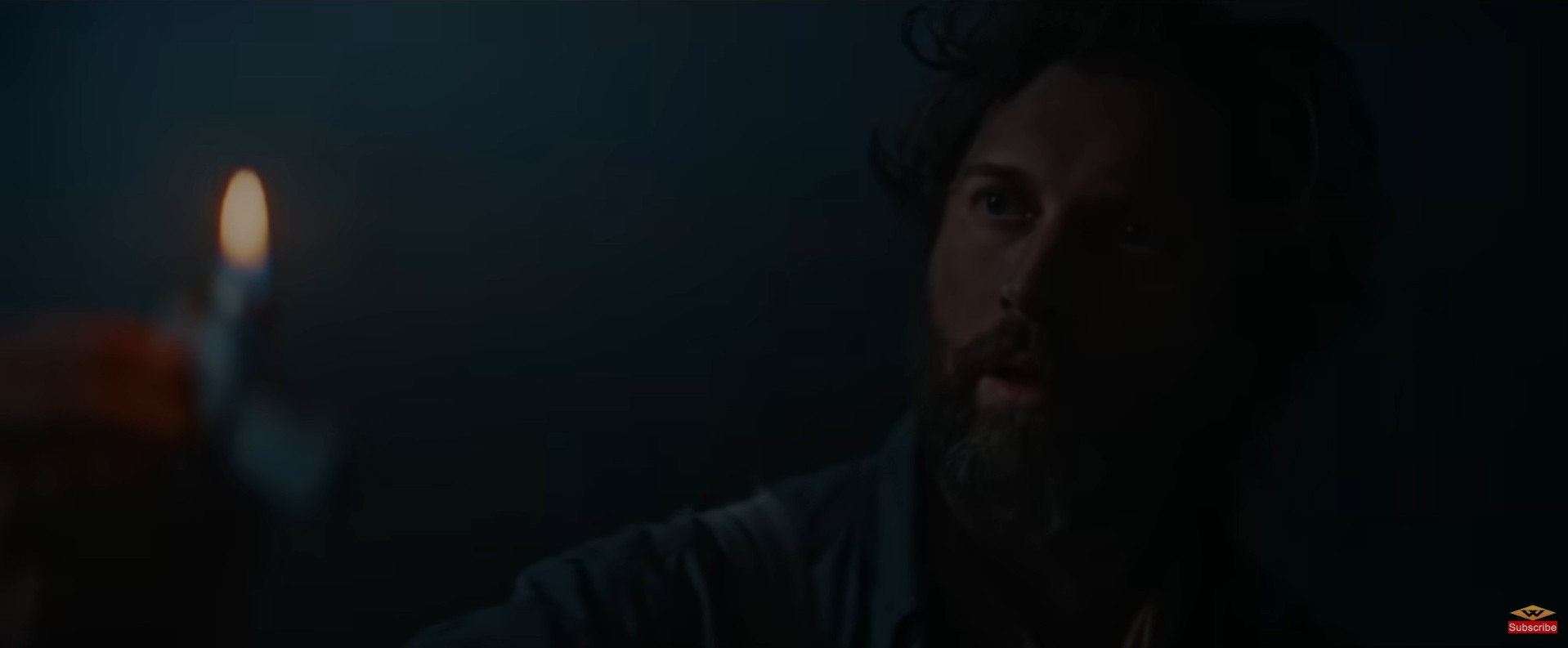
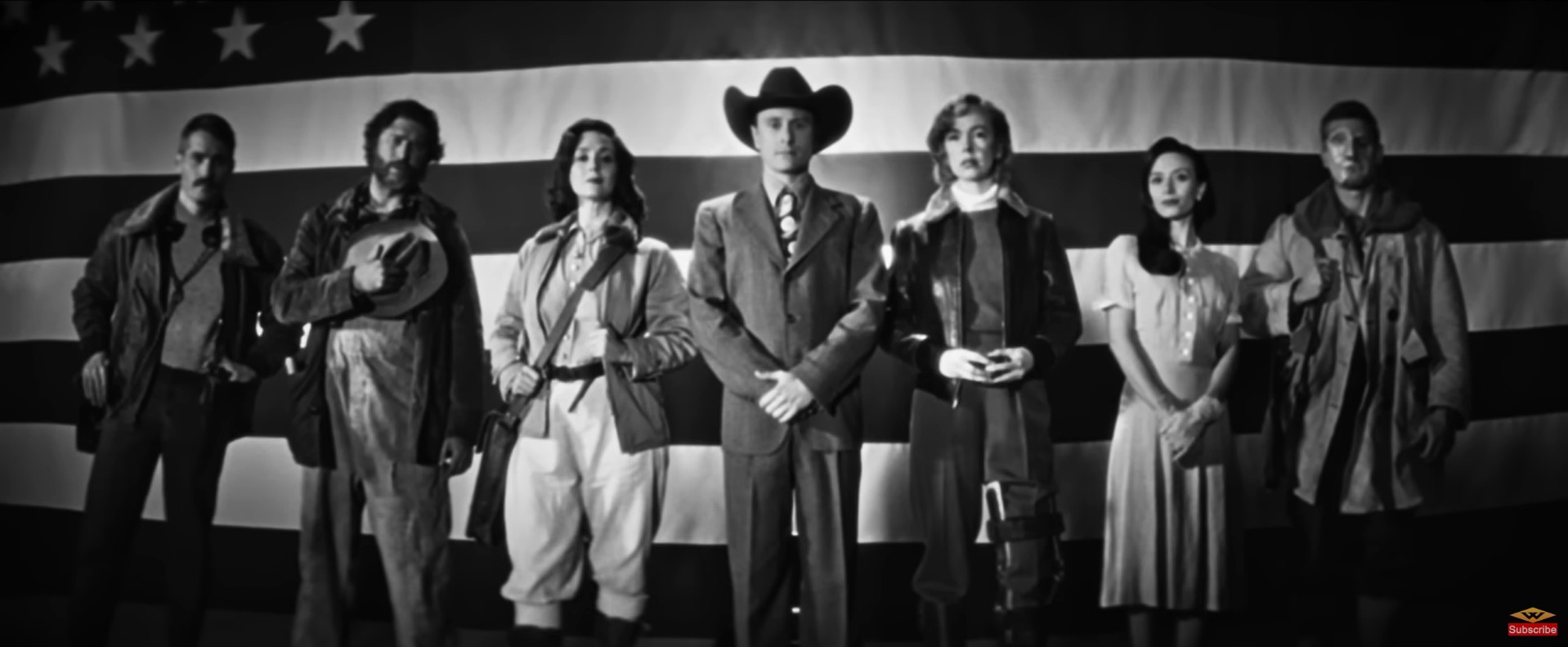
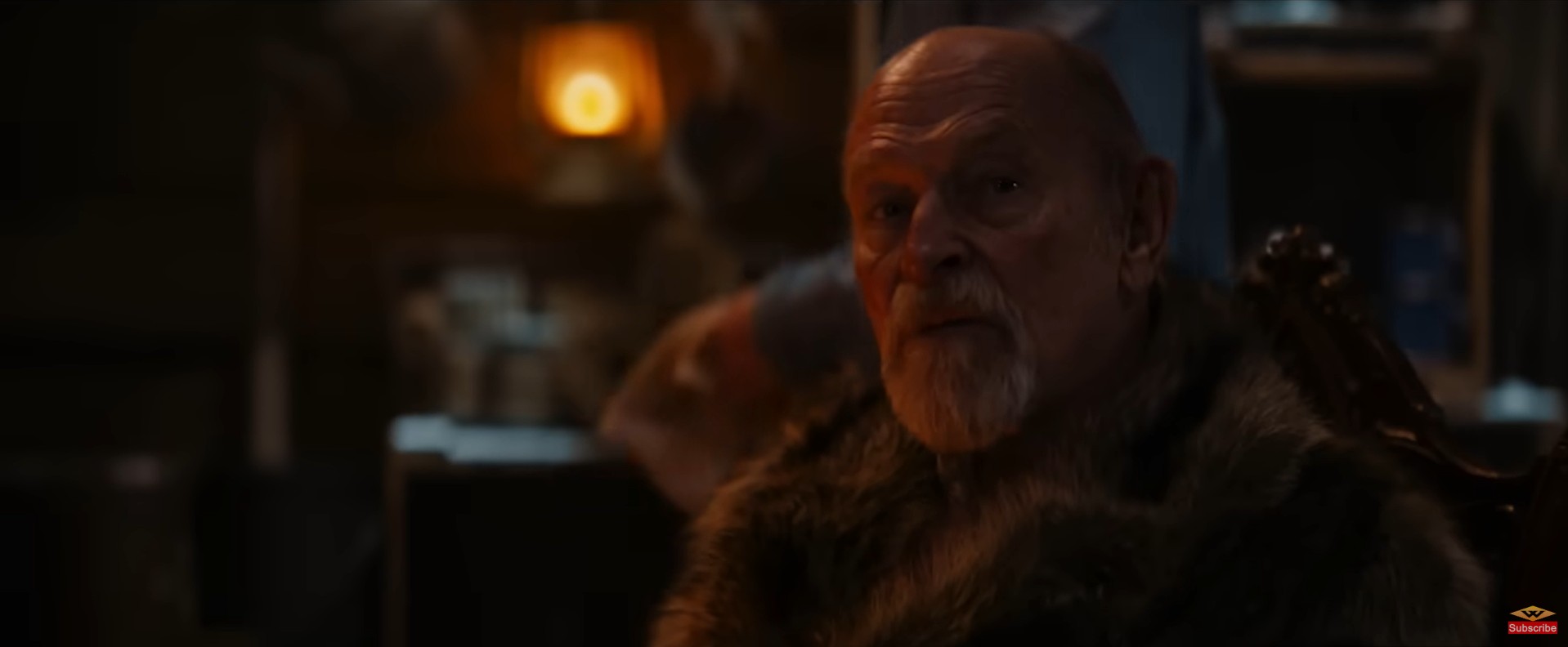
“The Yeti” is compromised of an ensemble cast of mostly rescue expeditioners heading into the unknown parts of Alaska to make contact with another expedition team who fell off the radar.  The story is female-led by Brittany Allen (“Jigsaw,” “What Keeps You Alive”) as an afraid of failure Ellie Bannister with haunted history and a bum leg due to polio.  Though deeply flawed in a traditional sense, this doesn’t stop Bannister from accepting the position of expedition leader and cartographer-explorer and while Bannister is rising to the challenges to meet her character arc, Allen doesn’t exude the attributes of heroism with freezing in fear, drifting off with music, and never really coming toe-to-toe with the titular villain and, instead, having more complex conversations and actions with her estranged father as part of a rekindling process.  The rest of her team shows more guts – literally and figuratively – without much of a backstory to them and that wastes the potential to have some sort of strong feelings toward their characters, such as war vet Leander Coates (Linc Hand, “The Other Side”)) who wears a half-mask painted with a crude imitation of a human face, Daniel ‘Dynamate’ Hewitt (Gene Gallerno) as a spacy, good ol’boy drunk and explosive expert, Booker (Jim Cunnings, “Halloween Kills”) as the silent and stoic radio ma, Merriell Sunday (Eric Nelsen, “Nightmare Cinema”) as the missing Tycoon’s son who either has a hidden agenda or has ants in his pants, Margaret Lamb (Christina Bennett Lind, “Calico Skies”) as an animal expert who doesn’t get to use much of her skills and knowledge, and Belle Parker (Elizabeth Cappuccino, “Super Dark Times”) as…well…I don’t really know, assistant to the Tycoon’s son possibly?  Parker’s contribution to the expedition team is never really explained.  The film rounds out with two big hitters in Corbin Bersen (“Major League”) as the oil Tycoon who does have a hidden agenda and William Sadler (“The Shawshank Redemption”) as Ellie’s father trying to stop that agenda. 
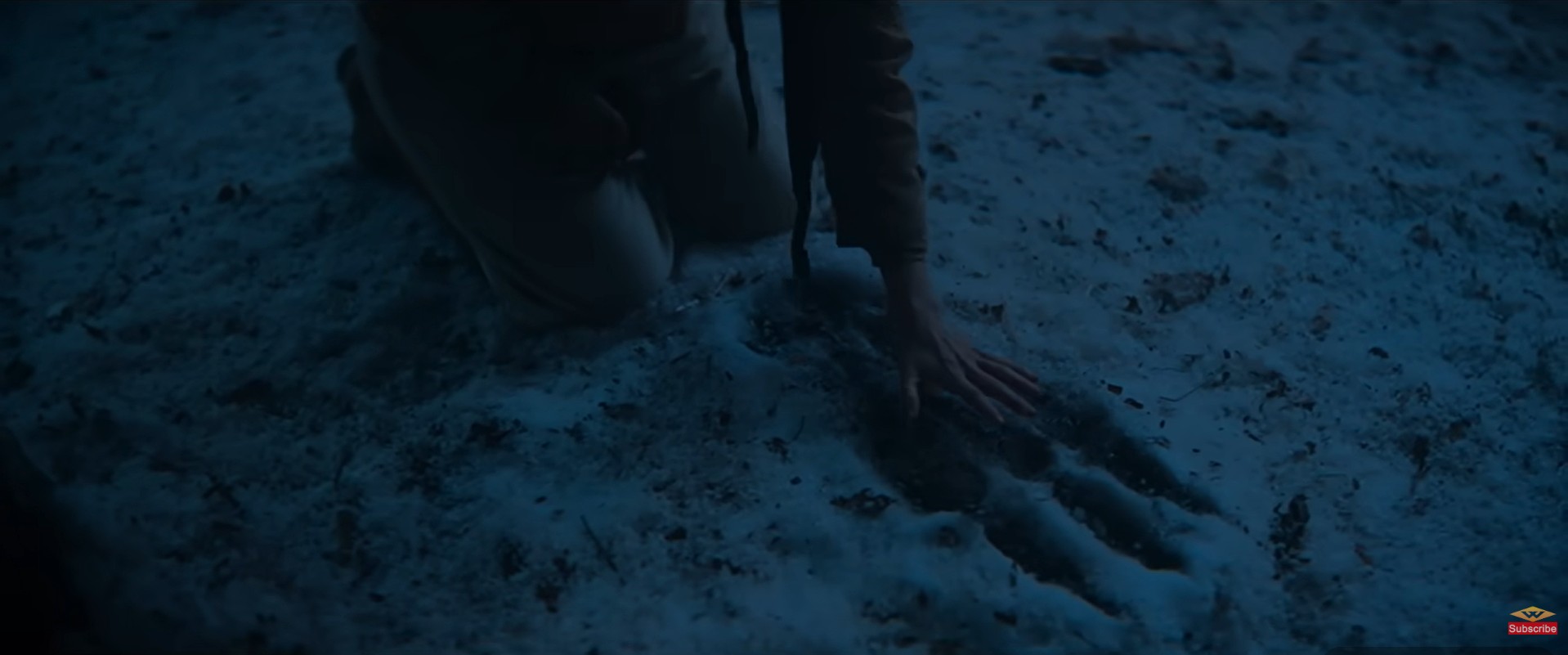
Yeti centric stories should exhibit the ugliest, ferocious, hairiest, tallest, and meanest, white furred primate to ever walk the Earth in folklore.  “The Yeti” accomplishes that in a modest level that tries to meet eye-to-eye with Ryan Schifrin’s 2006 film “Abominable” that truly does have a ruthless creature in its blood soaked and gory entrails.  Gallerano and Pisciotta’s Yeti, brought to life by Wayne Anderson (“The Predator”) and Ali Gordon (“Hellraiser” ’22), is tall, stringy and matted hair, large mouth with razor teeth, sharp claws, and an overall, an oversized, white gorilla on steroids.  Couple this beast’s design with gory practical effects by Anderson and Gordon as well and you have potential breathing down your neck!  Yet, “The Yeti” fails to impress despite a visually visceral creature and buckets of bloodshed as the story can’t hold the pieces together even in its rudimentary and predictable state.  Characters are never given the opportunity to make an impact, becoming quick Yeti fodder for the sake of impressive on-screen kills – one man eaten in half, another perforated by a claw, and another’s arm is ripped right off as the Yeti compresses his foot down onto his chest.  There’s little to like about the actions taken and the lack of empathy in their behavior that snag “The Yeti’s” success for an indie product that tries, and to the point, succeeds being larger than its creature mythology.  The creature has more depth and understanding, holding onto a rationality universally understandable, while the characters, who are supposed to be the protagonist and principal good guys on the side of nature or humanity are terribly murky to the point trying to relate to them felt futile. 
Well Go USA Entertainment brings Gene Gallerano and William Pisciotta’s “The Yeti” to physical media with an AVC encoded, 1080p Hi-Def resolution, BD25 Blu-ray.  I’m curious why the decision was made for a smaller capacity Blu-ray because aesthetically, “The Yeti” uses low light, fog, has plenty of tenebrous portions that tend to wreak havoc on the compression decoding.  Same can be said here as “The Yeti” suffers from obscurity infractions that reduce the detail considerably.  If looking at the backside of the physical release, as we’ll also go over later, the stills are quite sharp, suggesting the master to have peak quality whereas the Blu-ray sees a reduction in quality.  Joel Froome’s cinematography is an initial mix bag of harsh lighting, black-and-white, and lower color saturation to be more a period pieces of the 1940s-1950s but once the rescue team is out in the field, Froome switches gears quickly to a claustrophic and cold color mise-en-scene that doesn’t expand landscapes, keeping the area tight amongst the trees with poor visibility due to the blizzard-lite conditions.  The film’s aspect ratio is a widescreen 1.78:1.  The release comes with two English audio tracks, a primary DTS-HD Master Audio 5.1 and a Dolby Digital 2.0 Stereo.  The lossless 5.1 is hands down the option to go with with plenty of atmospherics wind gusts, tree rustles, and off-screen Yeti sounds to build tension and isolation.  Dialogue renders over nice and clear with prominence amongst the rest of the layers.  The soundtrack is also equally balanced and integrated but also camouflages in the background, never really becoming a character itself nor being remarkably memorable.  English and French subtitles are optionally available.  Other than trailers and Well Go USA Entertainment previews, the Blu-ray is a feature-only release with no bonus content or stinger scene.  An O-ring slipcover with a telling image of size and ferocity sheaths the standard Blu-ray Amaray.  The same slipcover image art is also the single-sided sleeve and there are no tangible extras within.  Rated R for bloody violence content and some gore, “The Yeti” Blu-ray from Well Go USA Entertainment has a feature runtime of 93 minutes and is region A locked.

Last Rites: “The Yeti’s” a strong enough entry to viciously vilify the snowbound mythical urban legend but directors Gene Gallerano and William Pisciotta don’t finish the job giving the narrative feeble legs on the stand where it counts as blood and guts alone can’t make an abominable snowman film worth watching.

“The Yeti” Stomping Its Way onto Blu-ray!

Who Dat? Dat EVIL! “Creature from Black Lake” reviewed! (Synapse / Blu-ray)

“Creature From Black Lake” on Blu-ray is Bigfoot’s Bestfriend

Two University of Chicago students interested in discovering the legendary creature bigfoot take a road trip down to Oil City, Louisiana where there have been multiple reports and sightings of a ape-like man wandering in the Bayou and even an attack on a local trapper, witness by the gruffy drunk, Joe Canton.  Met with stern resistance from the Oil City Sheriff Billy Carter and some reluctance from scared locals in the Bridges family after an mortal encounter with the beast that killed two of their family members, the students dig in and continue their swampy-laden search for bigfoot as well as finding the time to mingle with Louisiana women.  When they discover the mythical beast actually exists, nothing can stop them into catching sight of the creature or maybe even snaring it, not even the Sheriff’s threat of jail time if they don’t high tail it out of town could persuade their mania, but their expedition deep into the swamp and coming in proxmital contact with the aggressive primate outlier may prove to be a fatal mistake rather than a claim to fame. 

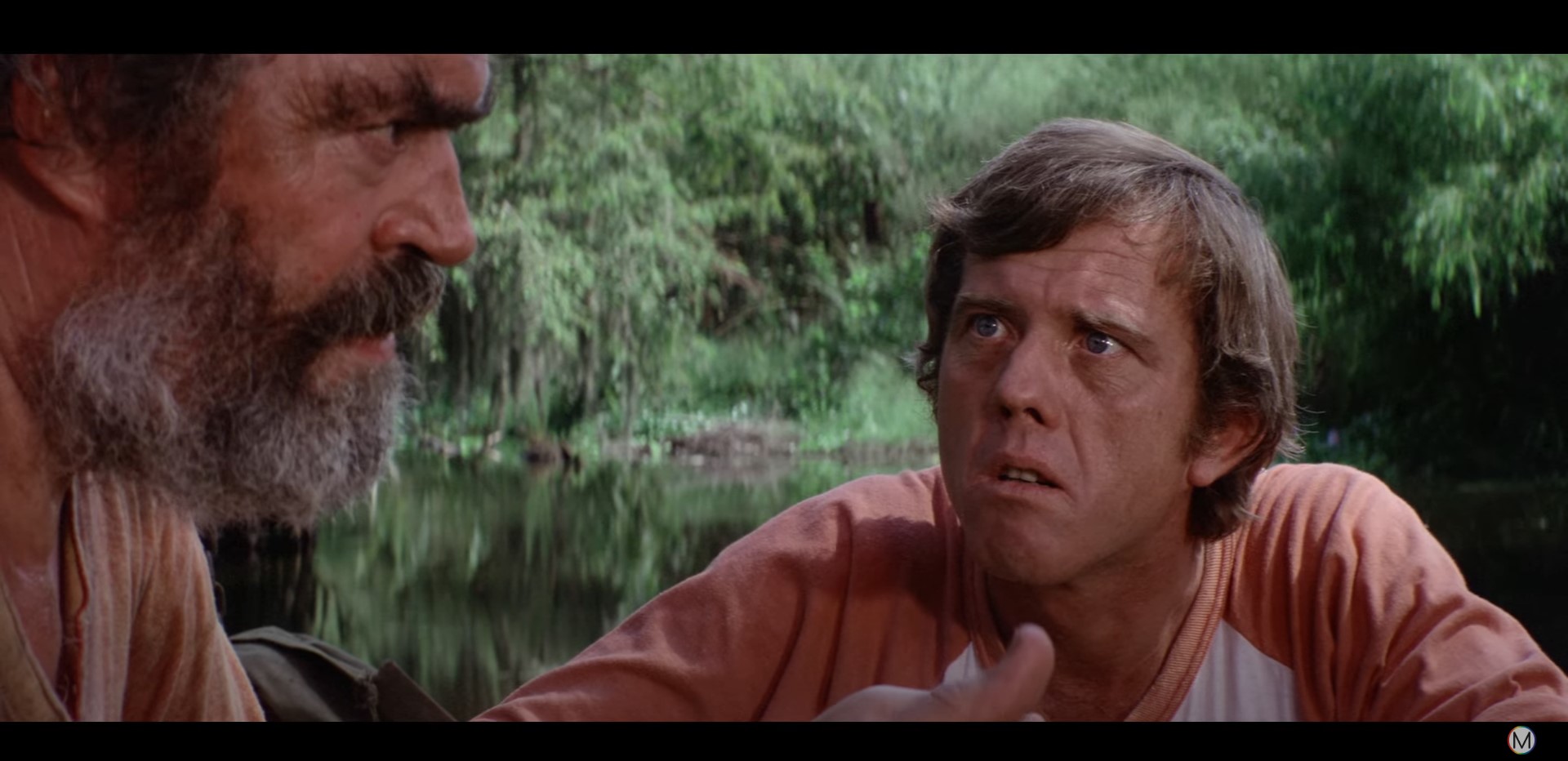
Having searched high and low for many years to review just any Bigfoot film that’s above average worthy has been a wearisomely long and arduous task.  A slew of movies dedicated to the big hairy fella have been nothing but a mockery, whether intention or unintentional, of the Sasquatchsploitation horror subgenre.  Instead of being subjugated to the countless, blasphemous modern tales of the mythical monster, I had to travel back in time to 1976 to retrieve what I’ve been searching for in the last decade or so.  The late J.N. Houck Jr’s “Creature from Black Lake” fulfills a great need with very little in its idiosyncratic cast and its obscure visibility of the creature that creates upscale mystery.  The based out of Louisiana “Night of Bloody Horror” and “The Night of the Strangler” director, whose father, owner of The Joy Theaters, already had an established footing not only in the movie business but also in the horror genre when helming a script penned by Jim McCullough Jr. as his first grindhouse treatment blessed by his father, producer Jim McCullough.  McCullough Jr. co-produces the film under the Jim McCullough Productions banner along with William Lewis Ryder Jr. serving as executive producer of the shoot shot on location in Oil City and Shreveport, L.A.

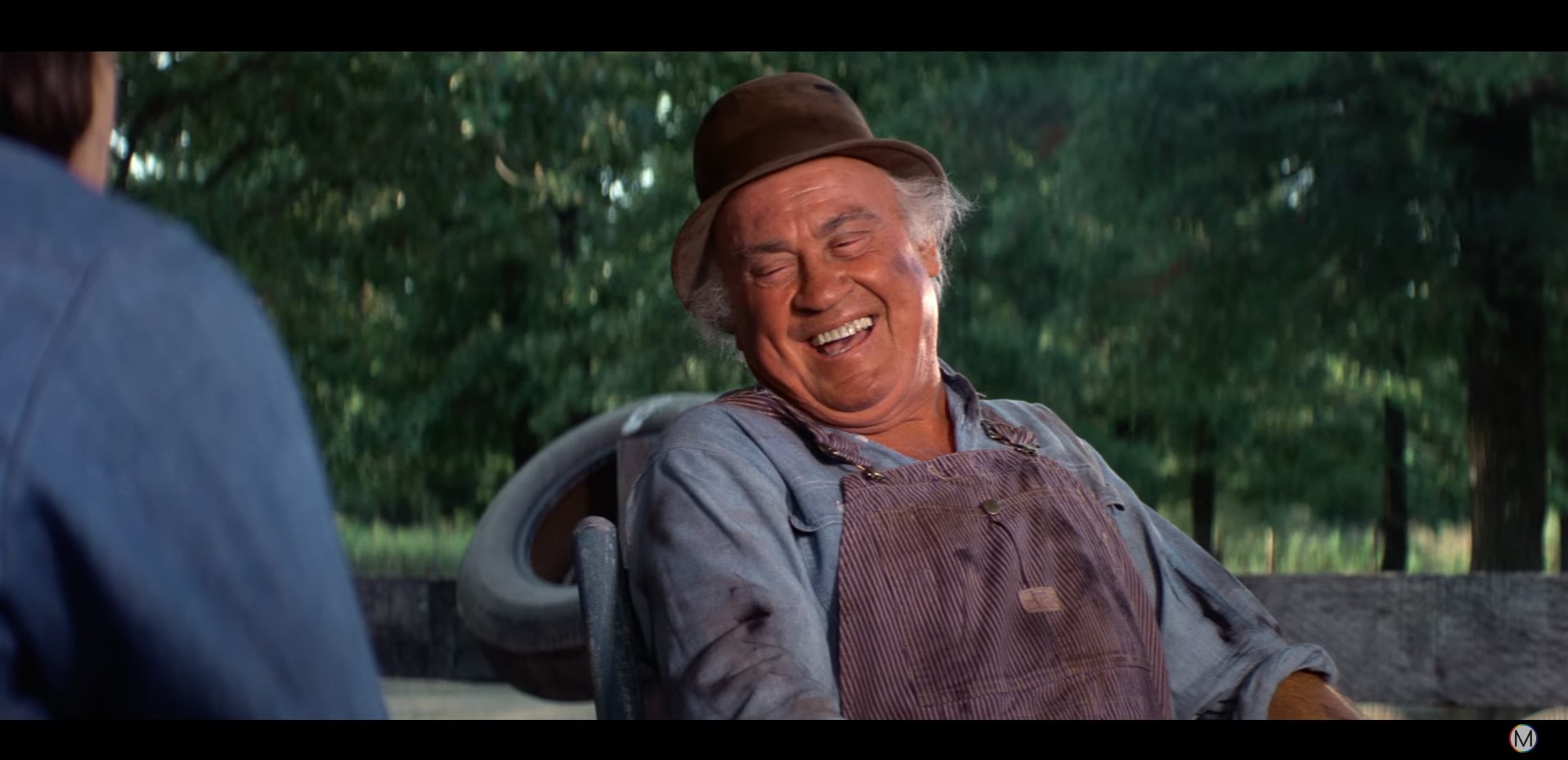
“Creature from Black Lake’s” cast is a distinctive assembly as aforementioned earlier.  Not only do they play their roles well by incorporating localisms where needed but they add a blend of intensity with chunky bits of comedy marbled through a storyline that’s half-anecdotal and half-present action. University of Chicago students Rives (John David Carson, “Empire of the Ants”) and Pahoo (Dennis Fimple, “House of a 1000 Corpses”) set course to Oil City, Louisiana where an indistinct creature is suspected to be in area based of science and suspected fish stories told by local kooks and drunks that turned out to be horribly true. Rives and Pahoo, who in McCullough script is constantly chaffed about his unique name but shrugs and deflects like he’s done it all his life, interview Oil City residents who believed to have bare witnessed firsthand the beast’s atrocities that has taken the lives close to them. These Bayou denizens are enriched by veteran actors with robustly created caricature personalities. Surly voiced with bulging, wild eyes, typecasted western actor Jack Elam had branched out from films like “Gunfight at the O.K. Corral” and “Once Upon a Time in the West” to play a similar grouchy character dwelling in the swamps as a trapper. Elam’s great a feigning an intoxicated mess as you can literally taste the alcohol sweat from his porous skin sheltered by an unkempt beard and a loose fitting crumpled up onesie that’s staple motif for any drunk Cajun or drunk cowpoke, so Elam was fairly comfortable in the role. Dub Taylor is another big old-timey name in the western genre and rarely saw horror as a place to call home. For Taylor, his role as Grandpaw Bridges gave the actor a chance to play an old hayseed complete with a solid effort in Cajun English. Taylor’s lively at times with an animated excitement but can turn somber and stern as soon as his character’s scorned and calls for a more serious tone. Compared to Elam and Taylor, youngsters Carson and Fimple pilfer very little from the veteran’s epic role characteristics but do fine in their own rite with carrying the hunt’s harrowing third act. Bill Thurman (“‘Gator Bait”), Jim McCullough Jr., Cathryn Hartt (“Open House”), Becky Smiser, Michelle Willingham, and Evelyn Hindricks round out “Creature from Black Lake’s” cast.

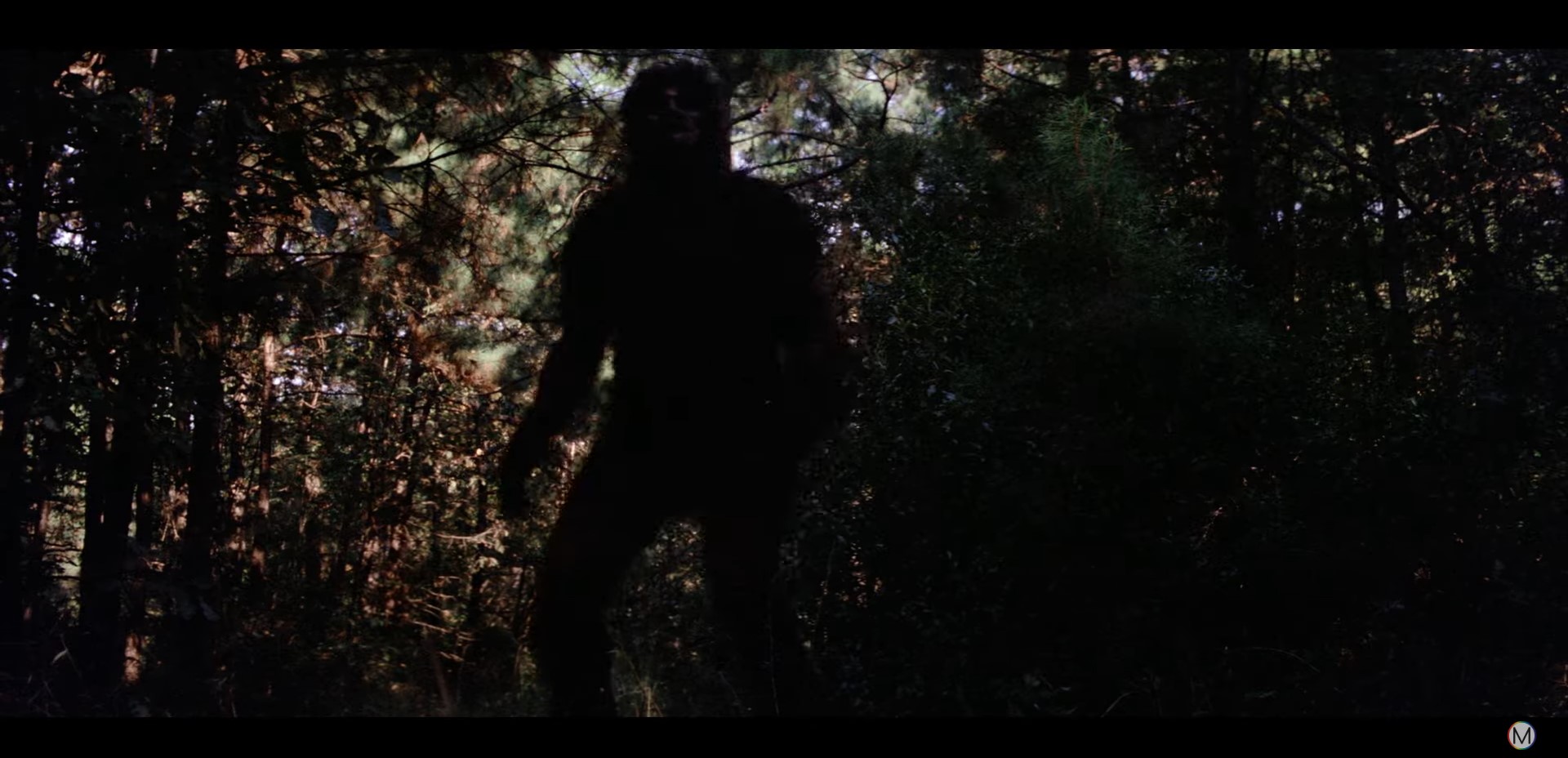
How could a 1976 bigfoot feature be more surprising and compelling than any modernized version? Well, one of the biggest pros to “Creature from Black Lake’s” success is Jim McCullough Jr.’s script that’s surprisingly well written by the first go-around screenwriter and while I’m not primarily speaking on behalf of the principal leads’ motivation or the slightly lack thereof, there lies more interest in the quick-witted dialogue and the blunt banter to keep Rives and Pahoo from being dullards and to keep the story from being a slog. Another aspect that is sharp as a tack is Dean Cundey’s cinematography that keeps the creature firmly in the shadows, producing that suspenseful and mysterious “Jaws” effect where we actually don’t see the shark until the third act. Cundey, best known for handling the cinematography on titles you might have heard of such as “Jurassic Park,” “Death Becomes Her,” and “Big Trouble in Little China,” made a name for himself first in grindhouse horror and exploitation of the early 1970s.  Cundey keeps the apelike creature shrouded from direct light, lurking mostly in the shadows with only a glimmer quickly streaking across the snarling face and an animalistic outline of its furred body and tall stature.  The full effect of bigfoot is never directly in your face or full in view which can be best at times depending on the look of the creature.  Cundey had partially designed the face of bigfoot and thus covering up perhaps his own shoddy work with how to film the titular antagonist of Black Lake.  Now, Black Lake is an actual lake in Louisiana but is about 100 miles SE of Oil City and Shreveport and likely used a combination of Big Lake and Cross Lake that were near the majority of shooting locations to serve as representation of Black Lake.  Where “Creature from Black Lake” struggles is with the Rives and Pahoo dynamic that barely tether’s to how their friendship, though diverse individually, becomes stronger up the end with a near death experience.  Pahoo’s a Vietnam vet and with his wartime experience, he’s the more on edged character out of the two suggesting an underlining PTSD theme when the creature’s roar and circling of the camp puts Pahoo into an eye-widening internal panic.  Rives is cool as a cucumber and is determined to prove something inexplicable in pushing forth and bagging a big hairy beast.  At times, contention flares up between them but is quickly extinguished with a simple sharing of homemade fireside baked beans to sate Pahoo’s ever ravenous stomach.  Their hot and cold amity and indeterminable mission into the Bayou shapes very unsatisfactory their resulting unbreakable bond that hints at something more than just friendship, as if there is metaphorical points of betrayal and forgiveness that makes their connection scar tissue stronger but are not clearly delineated.

Finally!  A bigfoot feature that works mostly at every angle, is more than just palatable from a story standpoint, and has a formidable bigfoot presence that’s more than just a man in a monkey suit. Synapse Films restores not only “Creature from Black Lake’s” original widescreen 2.35:1 aspect ratio onto a high-definition Blu-ray from the dreadfully cropped VHS and TV versions but also restores the creature feature with a brand new 4K scan from the original 35mm camera negative. The result is phenomenal with a widow’s peak view and the grading is touch of tailored class that freshens the 46-year-old with new vigor. No instantaneous signs of compressions issues on the AVC encoded BD50 with inky black shadows and profiles that are sharp around the edges, never losing sight of image and never losing the quality. The Blu-ray comes with only one audio option – DTS-HD Master Audio 2.0 mono track. Not the best representation but perhaps the best that’ll get, some audio elements succumb to the production limitations, such as the stifled dialogue track early on in the film that leaves exchanges between Rives and Pahoo soft and scarcely perceptible. The dialogue issues alleviate as the story progresses, falling in line into an even keeled dual channel output. “Creature from Black Lake” has ample range between the booming closeup shotgun and rifle shots to the light tinkering of utensils and camping gear. We don’t receive much depth, not even with the creature’s roar as it thunders into much of audio space and overtakes everything else. Newly translated English subtitles are available. Bonus features includes an audio commentary with author/filmmaker Michael Gingold and film historian Chris Polliali, a brand-new featurette with cinematographer Dean Cundey Swamp Stories, the original theatrical trailer, and radio spot. The physical release comes in a blacked-out Blu-ray snapper, Synapse Films’ catalogue insert, and has Ralph McQuarrie illustrated cover art that’s an unmistakable masterstroke of his craft. The region free Blu-ray of “Creature from Black Lake” is rated PG and has a runtime of 95 minutes. If you’re on a quest to quench a midnight movie about bigfoot, journey no further as Synapse Films delivers one of the better, more comical and terrifying, Sasquatch movies of our time and in beautiful high definition!

“Creature From Black Lake” on Blu-ray is Bigfoot’s Bestfriend

EVIL Bigfoot is All About the Amputating and Mutilating! “Suburban Sasquatch” reviewed! (Visual Vengeance / Blu-ray)

“Suburban Sasquatch” On Sale Now at Amazon.com!

A mystical, murderous beast of lore has suddenly appeared in the woods of a small Pennsylvanian town.  Hikers, fishermen, urbanites, and even grandmothers are not safe from the carnage dished out by Bigfoot.  Sniffing around crime scenes is eager freelance reporter Rick Harlan to unearth the truth about the recent string of grisly attacks and make a name for himself as a journalist.  Harlan finds himself in the middle of a police coverup, a Native American woman-warrior, and one suburban playground where a phasing in-and-out Sasquatch can make a killing whenever and wherever.  The Native American, Talia, is destined to square off against the evilest anthropoid her tribe has ever faced, one that thirsts for blood and does the unspeakable with the women it abducts.  The story and clash of the century may be Rick and Talia’s last in this brutal man versus beast showdown. 

As an aficionado of the horror genre, I’m on what seems to be an eternal quest to unearth the best (I’ll even settle for just good at this point) Bigfoot/Sasquatch film that really can scare the pants off viewers while providing a good storyline and solid special effects for the hairy big guy. Is that so much to ask?  The next undertaking to flash across our eyes, like a brisk fur of man-beast in the forest thicket, is the classic SOV-shot and shamelessly spooled special effects endeavor that is “Suburban Sasquatch.” The 2004 Dave Wascavage film is the sophomore project for the writer-director, following up from his deadly fungi party comedy-horror, “Fungicide,” with a shot at the title for best-worst, or is it worst-best, Bigfoot movie in the early 2000s. Shot in my old stomping grounds of West Chester, Pennsylvania, the suburban setting is authentically captured in that piece of the Commonwealth state with sprawling neighbors that give wide berth of land between houses and plenty of parks and wooded areas to Sasquatch-suit tramps. Wascavage produces the film himself, while also wearing multiple hats in many other crew roles and creates the feature under the filmmaker’s very own Troubled Moon Films, a production company that prides itself on low-cost video production and storytelling in which Wascavage self-proclaims Z grade movie making results.

“Suburban Sasquatch” is a pendulum swing between character perspectives, disassociating any one character from being a main lead and focusing more on a group of principals that even includes the suburban sasquatch itself.  If focusing on the heroes of the story, or the hero-ish types, then Rick Harlan (Bill Ushler, “Viscera”), Talia (Sue Lynn Sanchez), and the two officers – John Rush (Dave Bonita) and Steve Parker (Juan Fernandez) – would be your best bet as the unorganized protagonists deal with the beastly menace in their own way.  The acting is forced and rigid all around but not entirely at the cast’s culpability.  The script is extremely breathy and scenes last too long by lingering exposition that resulted in the film’s too-lengthy 100-minute runtime, likely drafted as a shorter run film but dialogue was added to flesh out a full-fledged feature.  Even so, performances are blankly vanilla and, to be fair, that’s to be expected inside the low-budget market. Dave Weldon, Rush, Parker, and even director Wascavage himself enact Bigfoot’s posturing and behavior familiar to a mountainous silverback gorilla with wild cupped hands waving overhead and while this seems silly in the obviously cost-efficient makeshift suit packed with unnatural folds of the stomach, a bulging bosom, and a mouth that chews like a latex-fitted gumming grandmother, the trio make the best of Bigfoot’s monstrosity and hirsute lumbering to the point of knowing what you’re getting in a sasquatch for the rest of the film. It’s all about consistency, especially when four actors interpret the movements. Wes Miller, Dallas Quinn, Troy Stephen Sanders, Loretta Wascavage, Edward Wascavage, and David Sitborn, who I thought had the most natural dialogue in the entire story, rounds out “Suburban Sasquatch’s” mania.

Has “Suburban Sasquatch” become the Bigfoot film of my long-awaited dreams? Unfortunately, no. However, what the 2004 inexpensive picture offers is invaluable cabbalism that theorizes one reason why Bigfoot is only briefly caught out of the corner one’s eye, a peripheral phantom, with a phasing feature that allows Bigfoot to go in and out of reality. Like a good b-movie horror writer-director, Wascavage also capitalizes on the creature’s stature by not only arranging a towering comparison against his enemy and food but also by fabricating a big hairy foot, larger than man’s chest, to emphasize more on the beast’s epithet. In order to achieve the height, Wascavage uses easy, practical tricks to jumboize, such as playing with different depths, but Wascavage, in another one of his many hats, also attempts his hand at crude computer generated graphics that stretch beyond the images’ limits to achieve his desired effect. Pixelated and warped without any depth or any amount of smoothness, the cut and paste photoshopped animation is jerry-built “Monty Python” at its worst in a so bad its worth seeing phenomena and certainly priceless for internet memedom, especially when coupled with severed appendages doctored from the local Spirit Halloween flying in all different directions in a Bigfoot’s fit of animalism. A couple of slashing eviscerations, a head-popping decapitation, caricature arrows and tomahawks, attack crows, and a whole lot of thwacks summarize much of the monkey business violence “Suburban Sasquatch” unfurls and while not completely bottom-of-the-barrel terrible, translating better than most SOV post-work, this Bigfoot berserker extends the search for a better entry in the subgenre.

Much like the first three predecessors on the Wild Eye Releasing Visual Vengeance banner, “Suburban Sasquatch” receives a massive, special features loaded Blu-ray upgrade coming in catalogued at number four. Also, like the first three volumes, Visual Vengeance precautions viewers about the source material quality, an array of standard definition master tapes. The region free release is presented unrated in full-frame 1.33:1 aspect ratio and the picture quality fairs better than most SOV releases. While still heavy on the electrical interference with dancing pixels finding difficulty delineating the image, there is less tracking line obstructions and no macroblocking. Details are standard definition quality with softer details, more like smudgy, in the natural color tones and lighting. The English language lossy stereo audio mix has no punch behind unlike Bigfoot who comes out swinging like Rocky Balboa in every human encounter. I would take a wild guess and say the audio is more mono as every aspect from the dialogue to the soundtrack sounds muffled or muted, likely door to poor audio recording equipment and no boom mic, making the actors’ articulation often difficult to hear. Sound effects are the only mix that has any kind of stereo potency with an overboard variation of the impact or ambient sound that adds to “Suburban Sasquatch’s” slipshod satire. Optional English subtitles are available. But if you’re buying the release because you’re interested in the special features, then Visual Vengeance has you covered with a brand new 2021 audio commentary featuring director David Wascavage, a second commentary with Sam Panico of B&S About Movie and Bill Van Ryn of Drive-In Asylum, and a third commentary track, a RiffTrax episode special, that provides hilarious MST3K-like comedy throughout the feature. Other bonus material includes an archival behind the scenes featurette, the designing of the Bigfoot costume, outtakes, the so-called CGI making-of, an interview from David Wascavage, a behind-the-scenes image gallery, the original teaser and theatrical trailer, and other Visual Vengeance trailers. The physical release itself comes with a cardboard slipcover with artwork with new artwork, a reversible Blu-ray cover with the original artwork on the inside, a two-sided insert, retro VHS stickers, and a mini poster. All that is missing, beside the link, is the kitchen sink. To conclude, Visual Vengeance ample format and bonus material enrichment doesn’t take away from the fact that “Suburban Sasquatch” remains the trashiest sasquatchsploitation on SOV ever!

“Suburban Sasquatch” On Sale Now at Amazon.com!