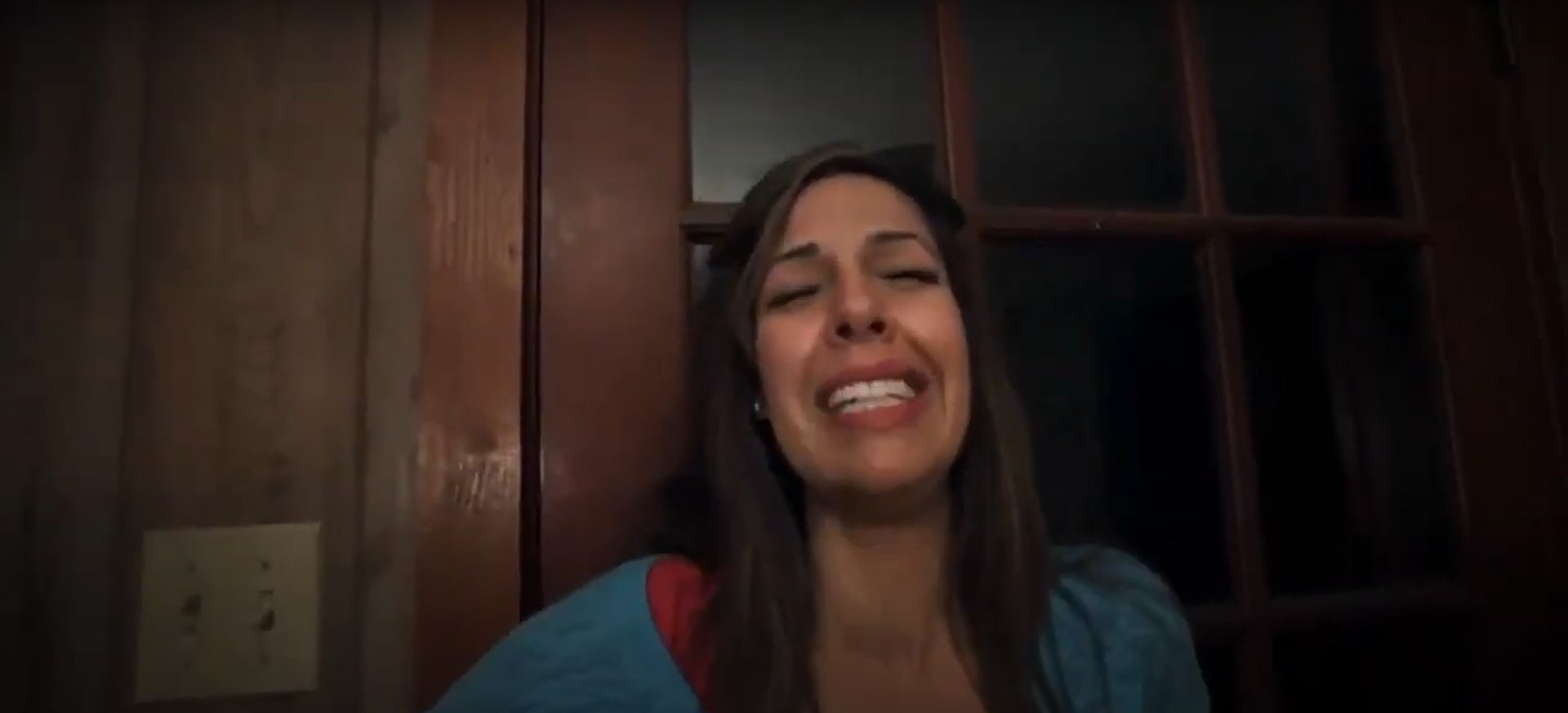
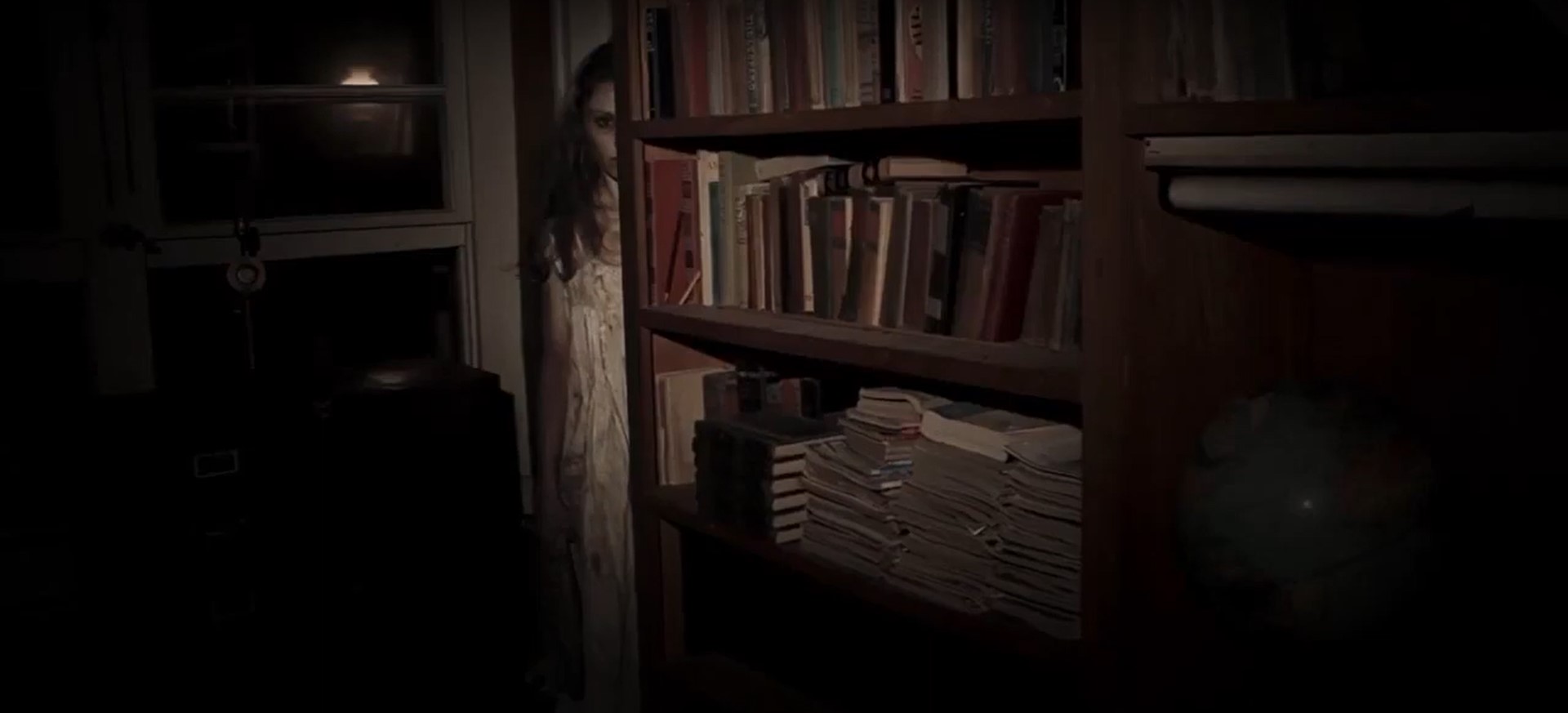
Everything is EVILLER in Texas. “The Hoot Owl” reviewed! (Brink Vision / Blu-ray)

“The Hoot Owl” on Blu-ray is Slasher-iffic! Available at Amazon.com!

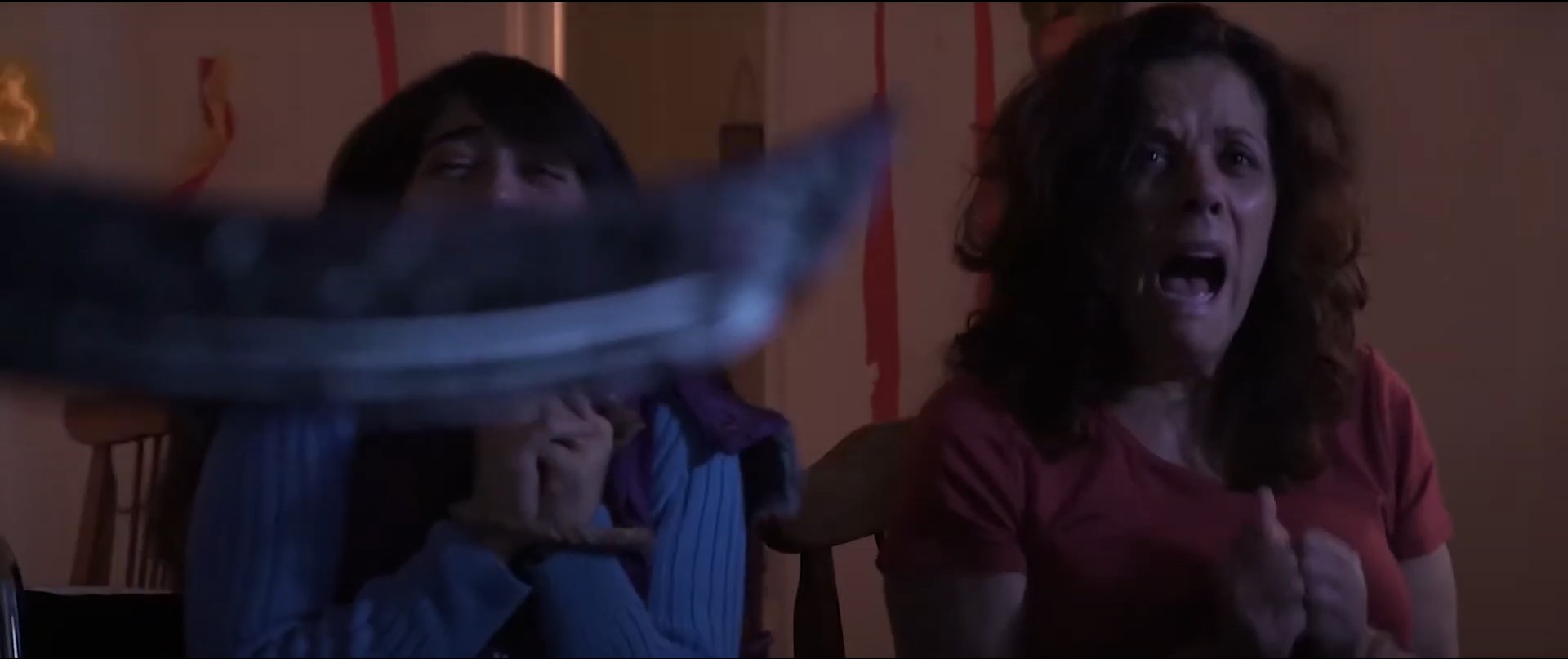
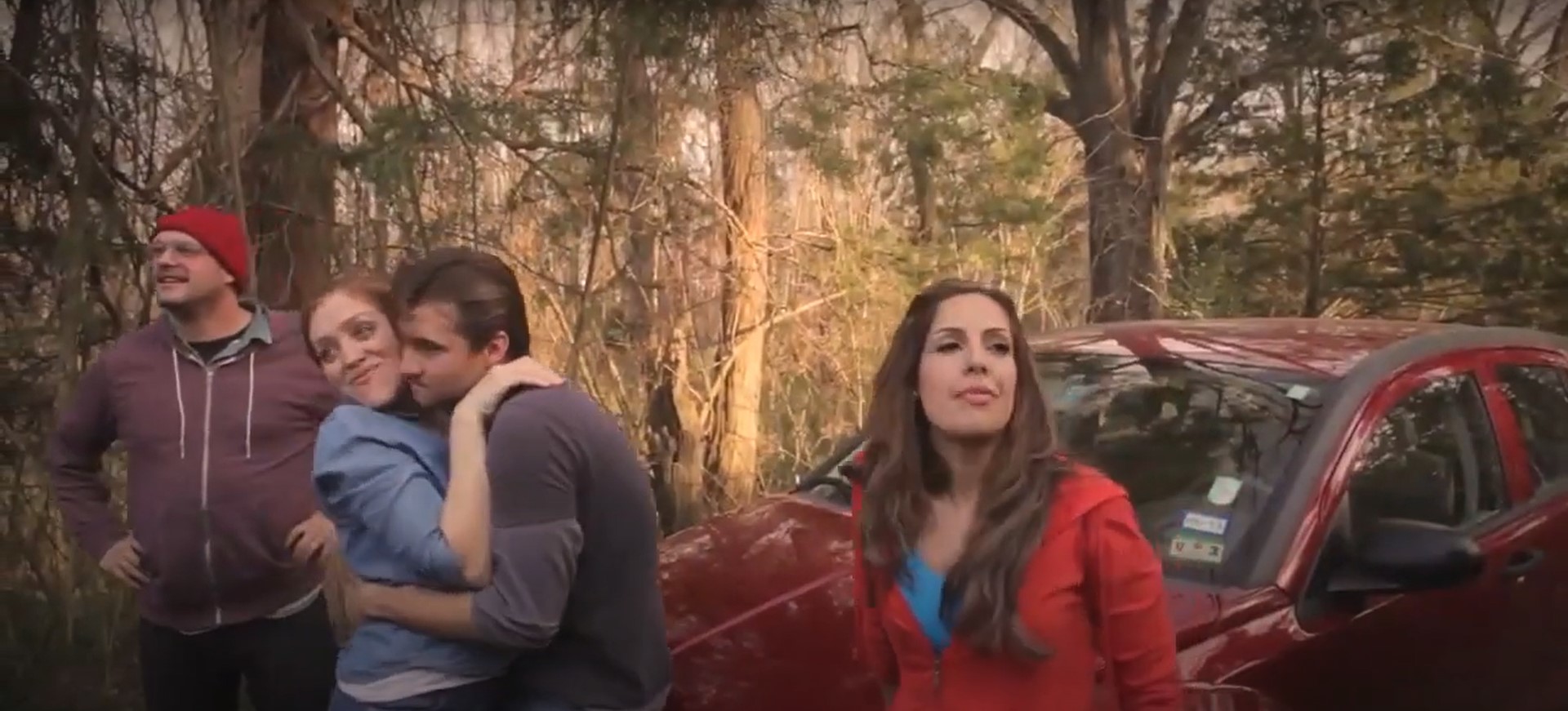
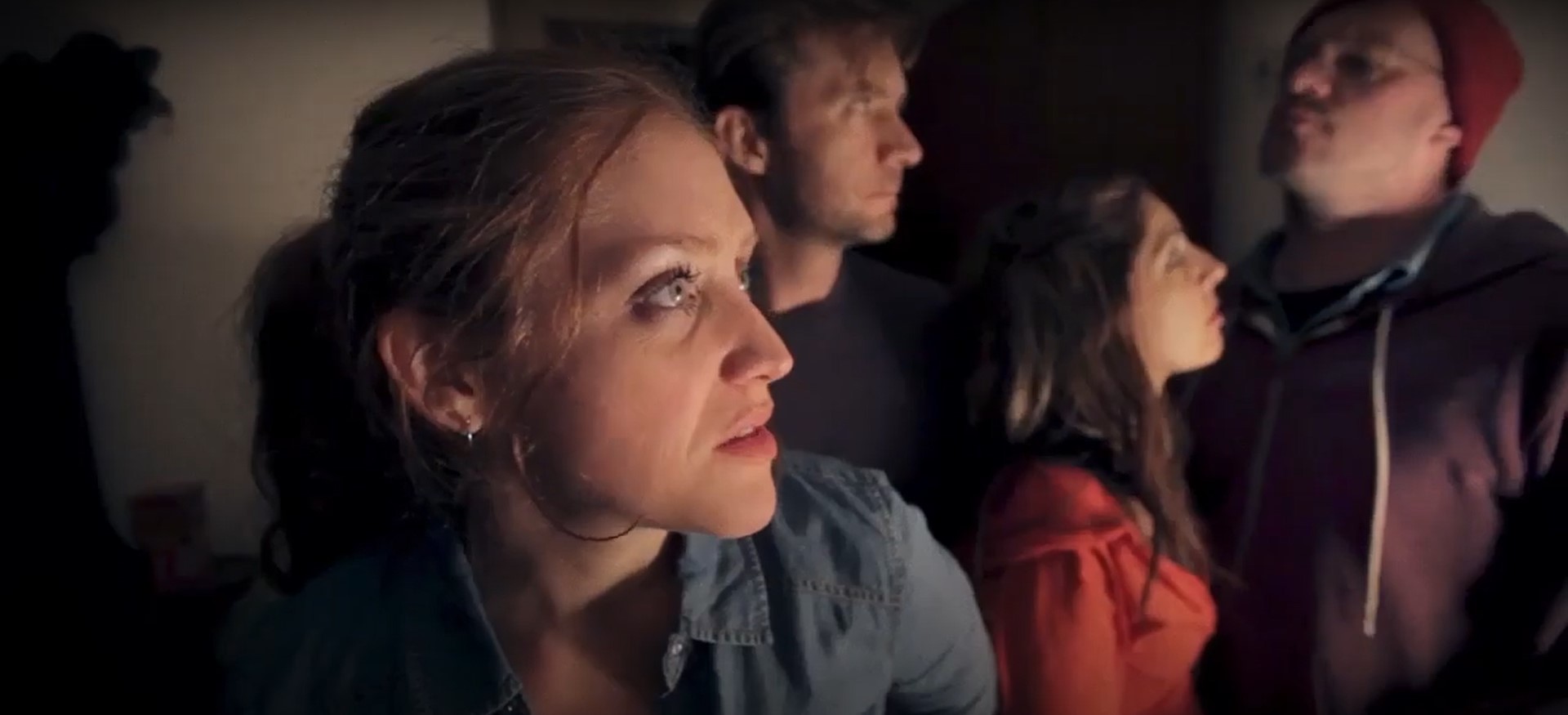
Blind buying a house is never good idea.  Blind buying a murder house in the middle of nowhere should be on the list of if you bought it, you deserve what’s coming to you.  Scott and April do just that as the recently troubled couple start afresh with a purchase of a fixer upper after suffering a late term miscarriage.  Deciding to not have Chip and Joanna Gains to rehab the dilapidated new residence set deep in the woods, the couple invite a small group of friends and family to assist in the much-needed repair and cleanup.  Interrupting their pass-the-doobie high and their positive high spirits while renewing an old house into a home, death and destruction erupts as a pair of demented squatters don’t take too kindly to the new homeowners. 

As far as debut feature films go, “The Hoot Owl” is a gory practical effect driven, true-to-form independent slasher film born and bred out of the great state of Texas.  The co-directing, co-writing Jasons, Jason Rader and Jason Von Godi, are the masterminds behind the cow head-boned masked killer and the very pregnant and very inbred wild woman lying in wait for the naive trespassers to drop their guard and thin out before the slaughter.  Having worked together for years making short films together, the 2022 released slasher was setup by Rader and Godi as a crowdfunding campaign on Indiegogo, but out of the filmmakers’ flexible 20K goal, “The Howl Owl” concept received a measly $275 from four backers.  That roadblock was only temporary and didn’t stop the aspiring retro-slasher artists to complete their foot-in to the passion project that took over 9 years to complete from pre-production-to-post-production under their co-created company banner, Vanishing Twin Productions, in association with Rise Above Productions and producer Raymond Carter Cantrell.

If you’re going all out to make a slasher film, then you’re going to need victims to slash! Most indie slashers nowadays have a synopsis that begins something like this, “a group of teens go into the woods…,” and just by those few key introductory words, we know perfectly well what to expect as the drinking, smoking, and sex-crazed youth meet the homicidal maniac with a bloody machete in one hand and a decapitated head in the other. There’s a rhythmic comfort in that classic symbiosis. The downside to the structure always boils down to the shot in the dark cast and cast of characters that can make or break a slasher film’s success. Scott (Jason Skeen, “By the Devil’s Hands”) and wife April (Augustine Frizzell) bring along Scott’s longtime good friend Drew (J.D. Brown, “Cross Bearer”) and April’s estranged sister Suzy (Katharine Franco, “The Inflicted”) offer a little bit of everything in a hodgepodge of backstories that don’t quite become reinforced in the end with the exception of April whose miscarriage and loss transcends into twisted maternal madness. Frizzell’s glow for the first two acts doesn’t really yell grief but when the ardency takes over, stemmed by her vivid gruesome dreams of her miscarriage, the Texas-born actress steps up to the plate of a psychotic break. Suzy’s also interesting enough character to spark curiosity with the enigmatic contentiousness in a heartfelt scene of two sisters rekindling their bond while actually actioning those same emotions on screen; instead, Franco enjoys the blithe nature of Suzy’s indecisiveness about school and about her family but discovers a quick and sudden fascination with Drew, the least interesting principal that hires two colorful buddies: Hank (Carl Bailey, “A Ship of Human Skin”), a father of two who a penchant for sexual harassment, and an obvious long hair wig-wearing oddball Bugs (Roger Schwermer Jr.). Bailey resembles pure Texan posture but is stiff as a board in his sleazy contractor role. “The Hoot Owl” rounds out the cast with Joshua Ian Steinburg playing the boned-face killer and Johnny Wright reaching inside to extract his inner Neanderthal-like wild woman ready to emulate a putridly picturesque birth.

“The Hoot Owl” is a by-the-numbers man-in-a-mask slasher riddled with familiar tropes and conventional clichés.  Baseline fact is that the film is not breaking any molds here and won’t be a contender for horror picture of the year.  With that said, and as harsh as that may sound, what “The Hoot Owl” represents is pure spirit and appreciation for what the film ultimately represents – a love for the heyday horror. Rader and Godi firmly believe in their film with a sincere attempt at a feature and pulling all the material together during a near decade-long process to get the film released out into the world. Far from perfect, “The Hoot Owl” relies heavily on the gruesome practical effects and there are some good gory terminations with a piledriving beartrap, a split-head decapitation with a large chain, and a long, rusty drill bit through the eye socket that ends in a spurting splatter of blood. The expo is an impressive effort from Allan David Caroll in his first go-round with the effects trade that could rival the early works of Tom Savini or Greg Nicotero. What breaks up the story most of all are the secondary shoots used to swell and cut into the first-round material shots to beef up a feature production. For instance, the opening credit chase sequence of a maniac cop (at least I think it was a cop) hunting down a man and his pregnant wife is a moment that is never clearly referred backed to, but the assumption is that the pregnant woman is the encountered savage later on in the unveiling climatic and the bone-head killer is her child from the rundown who then impregnates his own heathenized mother…? Connectively, it’s all unclear in unfused ends, causing a break in the signal from the lead-in to the trunk of the story, and that underdevelopment pursues throughout with loops never coming to a close.

In my first brush with Brink Vision since reviewing their DVD release of the 2008 alien transmitted dead-resurrecting bacteria film, “Evilution,” a tinge of satisfaction embraces my little heart to see Brink Vision come back across with a Blu-ray release of their latest “The Hoot Owl,” distributed by MVD Visual. The quick-paced 72-minute film is presented in a widescreen 1.78:1 aspect ratio, is not rated and is region free. Video quality doesn’t represent the best-of-the-best of the 1080p high-def resolution with a commercial standard definition equipment and know this mainly because compression that doesn’t display a myriad of issues. Details are not as sharp and there is banding more obvious in one scene of negative space, but the picture is otherwise free of artefacts and other data loss issues. The English Language 5.1 surround mix fairs much of the same albeit the electrostatic noise. While not overwhelming the dialogue to a point of murkiness, the steady shushing combined with the poor audio recordings can vary the quality and depth with a blunt flatness. Bonus features includes a commentary with directors Jason Rader and Jason Von Godi, a second commentary with Creepy Peepy Podcast, a featurette of Rader and Godi looking back at their 9-year pilgrimage to completion, Godi’s short film ‘The Voyeur,” trailer and still gallery. The physical release has beautiful artwork of the Hoot Owl killer in a throwback, almost Scream Factory-esque, illustration. The back cover is a little wonky with a composite that’s hard to read with deep purple lettering on the credits and bonus material listing almost invisible amongst the black background. “The Hoot Owl” endears the slasher fandom with a callback to the brute strength of a wanton villain and if only the script was smoothed over, this little indie film from Texas could have better laid a stronger foundation.

“The Hoot Owl” on Blu-ray is Slasher-iffic! Available at Amazon.com!

Hypothermia is EVIL’s Coldest Best Friend. “Frost” reviewed! (Cleopatra Entertainment and MVD Visual / Blu-ray)

Get the Bluray and Soundtrack for “Frost!”

Seeking to reconnect with her estranged father, Grant, after five years, pregnant Abby drives up the mountainous rural cabin.    Though not the warmest welcome she was expecting with the sudden pregnancy announcement dropped into her father’s lap, the two manage to find common ground and connect again while reliving memories of Abby’s mother.  Their threadbare bond sparks an impromptu finishing trip to the local creek and as the begin to open up a little more with each other, their car accidently runs off the road and declines down a gradual mountain decline before becoming wedged in a thicket of tree branches.   Abby, stuck in the passenger seat facing a steep cliffside dropoff, is trapped and injured.  As Grant goes for help up the mountain, a severe storm rolls in bringing harsh weather and freezing temperatures down upon Abby who desperately tries to keep warm and prays to not go into early labor before emergency rescue can come to her aid. 

Snowy winter thrillers can be harrowingly exciting as much of the plot is fused with the icy and treacherous environment that make lives at stake higher. The snow and the ice become threatening characters and when combined with, at times, a more conventional and concentrated story antagonists, foreseeing path for survival can often feel frigidly impossible. There’s little room for error, there’s little room for warmth, but there’s always an unpredictable heap of bone-chilling snow as far as the eye can see and the elements are only but nature’s natural attributes man has yet to confidently conquer. “Frost” plays into mother nature’s strength when squalling down below freezing wind and snow upon a woman trapped in her own car. The 2022 released, Brandon Slagle (“Attack of the Unknown”) directed “Frost” goes for the jugular in a woman versus nature survival suspenser penned by frequent Slagle aide-de-camp Robert Thompson. The “Aftermath” and “Crossbreed” screenwriter adapts “Frost” from a story by “From Jennifer” writer-director James Cullen Bressack. Shot during the winter in the San Bernardino mountains, “Frost” is produced by the film’s star Devanny Pinn and Cleopatra Music’s Vice President Tim Tasui under the bankroll and production support of Bressack’s JCB Pictures, Inc., Snow Leopard Entertainment, Sandaled Kid Productions, Multiverse Cinema, and Cleopatra Entertainment founders Brian and Yvonne Perera along with Pinn’s co-star Vernon Wells and The Asylum’s Jarrett Furst serving as associate producers.

“Frost” fits into the solo survivalist subgenre category and only characterizes with three actors and a trained wolf. At the tip of the cast spear is independent film producer and broad-brush horror actress and filmmaker Devanny Pinn (“Nude Nuns with Big Guns,” “The Dawn”) in the principal role of Abby, a woman seeking to rekindle her relationship with her reclusive father living in the mountains because of her pregnancy. Genre legend actor Vernon Wells (“Innerspace, “Commando”) opposites Pinn as Abby’s estranged father who’s happy to see his daughter but feels initially threatened by the pregnancy announcement. Understanding the dynamic between Abby and her father was easy as we’ve seen this type of teetering relationship before from a slightly rebellious, new age child returning home to find familiarity with a widowed and waning parent. Pinn and Wells pull off the several stages of reconnecting from the heated exchanges to the sappy moments of loss to the unexpected joy the two characters can bring out of each other, but what’s more difficult to comprehend is the source material. What causes the father and daughter to divide in the first place and how does that division’s role play out in the perilous predicament of an isolating car crash during a severe winter storm? For the sake of critique, one could say that their dissolving disputable divisiveness ends in irony as if the cosmos ultimately pulls them a part in a fitful storm of rage. Wells does what he can to make the initial crash scene comforting while exuding a positive outcome, but the veteran actor appears blank to severity, especially as a woodsman father soon to be a grandfather. Much of “Frost’s” edge of your seat trepidation is shouldered upon Devanny Pinn to take reins of providing the emotional embattlement against the unforgiving weather elements and animal food chain. Armed with nothing more than the dwindling car’s battery to provide heat and a charged lighter as well as whatever lures and first aid accompaniments in her father’s tacklebox, a rather lightly dressed, nearly to term pregnant Abby is pinned to her seat, backed to the edge of a cliff, and must face the cold and wolves until her father retrieves a rescue party. Pinn does what she can to fill in a quivering battle between life and death with a story that’s heavily reliant on a cigarette outlet to ward off a snarling wolf and can burn through seat belts in a single charge. That’s independent move magic for you, folks!

Any kind of solo act surrounding a single location, remote at that, with no other actor or other mobile organic object to feed off and bounce off its energy is a difficult task to undertake, especially on a hyper cost-efficient production.  Slagle’s “Frost” is certainly not immune to the difficulties and the filmmakers, and his crew and cast are well aware of the challenges to make the survival thriller engaging despite fluffing and padding the story with filler clichés and needless setup.  The production and location value are comparatively impressive against the limitations of the budget with a practical and computer-generated encroaching tundra of snow, ice, and wind that can insidiously invade a cold snap into the viewers bones, creating that intended atmospheric of a hell freezing over complete with the teeth of a hungry wolf, a biting rime, and deadly falling icicles.  More obvious than what perhaps Slagle and creative team realize is that “Frost” relies terribly on the shocking climatic scene, a scene so unimaginable and so appalling that it hits all the right gut-checking spots, but the setup to the scene and all the trials and trepidation Abby has to endure doesn’t quite mesh with a well-rounded plight that usually cradles an emotional pull string for the viewer to continuously root for and support those in the thick of the predicament.   Honestly, that heaviness for empathy never provides the emotional weight toward the character and never sparks that flame of hope to keep us warm and fuzzy on the inside to then quickly be extinguished by merciless mother nature. There’s also the plausibility of survival and the way that survival instinct is applied that makes “Frost” too far-fetched to be a strong contender in the subgenre. At near subzero temps, Hypothermia can set in in under an hour. In “Frost,” three days of severe snowstorm pummeling has past, segued by scene time stamps, before Abby becomes a popsicle and is delusional. I’m pretty sure with almost nothing to eat and very little warmth, Abby would have expired in under 48 hours. Yet, the 72-hour mark becomes the most chilling, literally and figuratively, in “Frost’s” invigorating third act snack that’s more abominable than it is nutritional!

Cleopatra Entertainment, the cinematic subsidiary of Cleopatra Records delivers a 2-disc Blu-ray set for Brandon Slagle’s icy thriller “Frost.” Presented in a widescreen 2.35:1 aspect ratio, the 91-minute film has a crisp, lively picture compressed without much to complain about. Banding issues are held to barely any and the details don’t whiteout during the wintery whiteout, leaving key delineations to be present in bold contrasts, especially during the severe snowstorm scenes. Foliage looks thick and green before for the storm with a lot of good textural details on the impaling branches that perforate the car and Abby. The English language 5.1 surround mix conveys the problematic sound design issues that have been consistently found in many of Cleopatra’s releases. Mostly in regard to the dialogue tracks, the dialogue tracks pick up static and other minute ambient noise during microtonal intervals, creating an unwelcoming and stark contrast with a dialogue mix that cuts obviously cuts in and out between character speak and isn’t simultaneous with the score. However, much like with other Cleopatra releases, the score is production and distributor company’s best trademark with a full album including music from various artists, such as L. Shankar, Big Electric Cat, Terry Reid, Rick Wakeman, and amongst others. The 2nd disc, an audio CD, contains the 15-song soundtrack. Other physical noteworthy aspects of the release include the double-sided cover art – one filmic and the other CD listing with both include different variations of the front cover as well as a translucent Blu-ray snapper cast that adds to the snowy theme. Software bonus features include only the theatrical trailer and a still gallery slideshow. Exposure to “Frost” is deep freezing frills for most of the picture but if able to withstand the coldshoulder of cliches, the mare peaks with a blood-filled and tasty horrific morsel that makes the frippery first half worth the wait.

Get the Bluray and Soundtrack for “Frost!”

The Devil Is Never Pretentious with His EVIL! “Satan’s Little Helper” reviewed! (Synapse Films / Blu-ray)

Bluray is Currently Cheaper than DVD!  Grab “Satan’s Little Helper” Fast!

Obsessed with his new video game Satan’s Little Helper, where a little boy helps the Satan dispense murderous bloody mayhem, naïve Dougie, sporting his own hot red Satan costume and mask, swears he’ll have a chance to meet Satan himself during Halloween.  Who Dougie believes he stumbles upon is the master of darkness but, in reality, the overactive and imaginative adolescent has discovered a deranged, untalkative serial killer in a Satan costume going house-to-house setting up realistic looking gruesome displays as Halloween lawn decorations.  Feeling slighted when his college-age sister comes home to Bell Island with a new boyfriend unexpectedly, an upset Dougie wants Satan to kill the boyfriend, but the killer insidiously uses the boy as a pawn and works his way into Dougie’s family home and everyone thinks it’s the new boyfriend masked as Satan to impress and please the difficult child.  Set in motion is a flight of wickedness throughout the night on the island town that’s unprepared for the chaos yet to come. 

Jeff Lieberman is already something of a cult horror director amongst fans. Having written-and-directed obscure classics “Just Before Dawn,” “Blue Sunshine,” and “Squirm” within 5 years between 1976 and 1981, Lieberman took horror by varietal storm by dipping his toes into different subgenres and doing moderately well at it., establishing a legacy with re-releases of his films into the new millennia. Though quiet for many years in the realm of horror, Lieberman makes a return with 2004’s “Satan Little Helper,” a killer horror-comedy filled with an innate fear of the unknown with what or who is truly behind that devilish mask. Lieberman wrote and directed the feature with a dark and morbid stamp perfect for the Halloween season. If you’re looking for a good Halloween movie, “Satan’s Little Helper” should be on your short list. Set on the fictional location of Bell Island, which is actually Long Island, New York, “Satan’s Little Helper” is a production of Intrinsic Value Films (“The Last Thing Mary Saw”) and the limited liability company under the alteration of the film’s title with Satan’s Little Company and is self-produced by Lieberman as well as Mickey McDonough, Isen Robbins, and Aimee Schoof with Carl Tostevin serving as executive producer. Screen Media Films waived the theatrical rights route by releasing the insta-cult film directly onto the video market.

Gracing prominently most physical releases with a sinister grin is a dialogue-less and faceless principal character, who with every centimeter of his latex teeth and showing a lackadaisical posture as he turns Bell Island upside down as his own massacring playground, is obviously the serial killer, played by Joshua Annex. Annex spin on Satan Man reaps the story’s benefits by creating a mischievous antagonist to the likes we’ve never seen on screen before despite being playing the murderer behind the mask trope. Annex might be playing Satan but the actor is not playing the titular character, or is her? The double entendre can be interpreted in two ways: the masked killer is actually Satan’s helper on Earth or Dougie, the annoyingly naive brat with an unhealthy infatuation with the Lord of Darkness. Played by a then adolescent Alexander Brickel in his debut performance, Dougie’s only kicks the hornet’s nest even more for not only the residents of Bell Island, but also for his family as the young loutish lad invites the killer his family abode under false pretenses and never revels the truth until it’s too late. Brickel is intense in an aggravating Dennis the Menace kind of way, but the act works all too well with the flanking character players who need to feed off of Dougie’s hellion deposition that all stems from wanting to marry his sister. Is there some kind of symbolism or metaphor there? Speaking of the sister, Katheryn Winnick (“Hellraiser: Hellworld,” “Polar”) levels the eccentricity with normal reactionaries as the sister Jenna. Counterbalancing to make sure her normalcies don’t overstay their welcome is the great Amanda Plummer (“Pulp Fiction,” “The Prophecy”) with sublimely odd mother that only Amanda Plummer could pull off and make it feel right. Stephen Gramham, Wass Stevens, Melisa McGregor, and Dan Ziskie round out the cast.

Perfect for the season, perfect as a cult film, perfect to just be for everyday viewing, “Satan’s Little Helper” has been kept in the shadows far too long and needs to be risen from the netherworld for all to bear witness the unsystematic carnage from someone who just wants to see the world burned. The Lieberman film intoxicates with spontaneity as you never know what to expect or happen next. The script is simple, yet smartly contrived to work as a haphazard horror with a foundation foe with no limits, no boundaries, and no motivation. There’s a relief that there’s no supernatural or actual Satanic force driving the plot and, instead, unravels in a prevailing fashion with an accepted and logical fear that the person behind the mask is not always the person you believe wearing it. While Lieberman’s script does a nice job fleshing out a feature length film where the doesn’t have one single word of dialogue, there are moments when suspicions amongst the family would have or should have come a lot sooner and that stretches the reality some, making act two gummy around the midsection when the serial killer is playing the part of Jenna’s boyfriend. Lieberman caveats Jenn and her boyfriend, Alex, as a pair of studious actors and Alex is just immersed in his role as Satan to please Dougie and while that seems very plausible, how long the act maintained its course did not. Eventually, Lieberman became wise to the Satan costume’s stagnancy and moved the character along into another facade of choice that then goes into a guess who game of deception. An aspect of the killer’s intelligence that makes the character uber-clever and that much more deadly.

“Satan’s Little Helper” is one of Synapse Film’s more contemporary releases that doesn’t require a hefty image upgrade but the new 1080p high-definition upgrade and a supplemental bonus features make this new Blu-ray release very attractive. Presented in a widescreen 1.78:1 aspect ratio, the AVC encoded Blu-ray craves out a resolute image as expected since the modern film is digitally recorded and hasn’t been affected by the wear-and-tear of age and neglect. Perhaps not as glossy as an expensive Hollywood type production with a late 90’s-early 2000s glaze, gel, or filter, “Satan’s Little Helper” keeps a more than adequate showing of details and a medley of colors amongst is more natural cinematography with a handful of night scenes shot in a day under a dark filter. Only one scene of concern stands out on the ferry pier and in what’s supposed to be a close up of Dougie’s dumbfounded face when meeting Jenna’s boyfriend for the first time has somehow turned into a blown up shot that stretches the image fuzzy and masking the delineation. The English language DTS-HD master audio shows no signs of issues with a flawless and lossless sound design. The clean and clear dialogue raises the bar on Dougie’s testy tantrums and cleans out with the ambient effects toward the killer’s actions to compensate for his lack of chit-chat. Optional English subtitles are offered on this release. Bonus features include a commentary with director Jeff Lieberman, an archival behind-the-scenes featurette, The Devil in the Details making-of featurette that goes into cast and crew interviews with Lieberman, Alexander Brickel (now older and with longer hair), director of photography Dejan Georgevich, and special effects artist Anthony Pepe, a tour of the filming locations guided by Lieberman in Mister Satan’s Neighborhood, and the promotional trailer. The physical release comes in the nifty blackout Blu-ray case with a Synapse catalogue insert in case you want to buy their releases via mailed order form. Synapse Film’s “Satan’s Little Helper” new Blu-ray comes home at the most opportune time during this 2022 Halloween season and is sure to be viewed as a delightful deluge of dark comedy carnage and destruction, some of the best attributes of any good horror film.

Bluray is Currently Cheaper than DVD!  Grab “Satan’s Little Helper” Fast!

The EVIL Anti-Abortion Film You Never Knew You Wanted. “Evil Dead Trap 2” reviewed! (Unearthed Films / Blu-ray)

Aki is a self-solitude movie theater projectionist who avoids talking to men and to pretty much everyone in general.  Her high school friend, Emi, is the complete opposite, a socialite of sorts, with a previous celebrity career as a singer and a high profile television news reporter.  While Emi thrusts her unusual interests upon encouraging her married boyfriend, who is more than game, to sleep with Aki, the projectionist has a secret of her own in being the culprit of a string of grisly murders involving young women with their ovaries ripped from the inside out.  When these murders occur, Aki is in a feverish, yet reserved state of mind that borders being sexually and dangerous uninhibited and totally blackout deranged.  She discovers mementos of the night before in her home and questions her actions, especially as the kill count grows and Aki’s mind wanders between reality and the supernatural as a mysteriously eerie boy keeps popping up everywhere, even at the crime scenes.  Emi’s dangerous game and her smug prodding of Aki sends her friend down a rabbit hole of a disturbing past. 

If you’ve seen “Evil Dead Trap” then essentially forget everything you knew about the first film as the sequel is not a direct follow-up and concerns a different tale of prenatal byproduct revolving around a common moniker that connects both films.  That name of evil that binds would be Hideki with the sequel titled “Evil Dead Trap 2:  Hideki,” bestowed the subtitle to ensure proper acknowledge.  Another aspect that’s different is the person in the director’s chair as “Akira’s” screenwriter Izô Hashimoto helms the 1992 sequel from a script cowritten between Hashimoto and the then early in career Chiaki Konaka who would go on to pen teleplays for a number of Ultraman series and get his hands colorfully deep within various anime project, such as the Digimon series.  With such anime talent behind one of the more brutally savage renditions to sow the seeds early in the J-horror supernatural genre that incited the widely popular “Ringu” and “Ju-on” franchises less than a decade later, “Evil Dead Trap 2” pelts a supernatural and homicidal esoteric storyline riddles with themes of abortion, guilt, and deriding judgement.  Naokatsu Itô and Mitsuo Fujita produce the Japan Home Video production, the company behind metal-horror “Tetsuo” and the Yakuza-zombie film “Junk.” 

“Evil Dead Trap 2” washes the slate clean with a new cast enveloped into a ghastly chaos the abhorrent an the unnatural.  The story takes on a bold female lead in Shoko Nakajima at the beginning of her career and the fresh faced actress doesn’t also have the typical physique of leading lady.  Nakajima is not only a fascinating and curious choice to be the centerpiece principal but her performance is rock solid with an unsettling, mild-manner manic approach of a night stalker of women opposite her appearance.  Now, whether Hashimoto intended juxtaposition is completely unknown to me, but I find the affect potent nonetheless in unification with Nakajima’s near-subdued and muted act.  On the flipside, there’s “Last Frankenstein’s” Rie Kondoh as Aki’s good friend Emi.  Emi’s a hotshot in her mind fabricated from the television reporter’s brief stint with fame and is cavalier in nature when it comes to her friends and flings.  The contrast between the two is often playfully contentious that never settles on firm ground about how these two become to be friends to begin with, but when their friendship comes to a head in a heated and bizarre one-on-one skirmish with a boxcutter and film sheers, all bets are off and all our conclusions about the two friends are thrown to the wind.  What sets them off is a man, Kurahashi to be exact, a role filled in by Shirô Sano (“Infection”) playing a boyish-behaving philanderer between the two women.  The character of Kurashashi, much the same as Aki and Emi, have his own offshoot piece of the narrative pie with an unsound wife who waits for son to return home – the only problem is, Kurashashi’s wife never had a child.  This is where the 3 characters arcs begin to meld together in a disorder of surrealism between reality and nightmare and those entangled in that web are, for lack of a better phrase, entering a consuming darkness from which they can’t escape, and Hideki is in the middle of it all.  Performances are perfectly unhinged and coy, a variety of personas that make “Evil Dead Trap 2” engaging enough until the end, with a cast list that fills out with Sei Hiraizumi (“Orgasm: Mariko”), Kazue Tasunogae (“Ring 0:  Birthday”), and Shôta Enomoto as the ominous, tangible presence of Hideki.

Comparing the original to the sequel is like comparing worn infested apples to bloody rotten oranges.  The melding of the characters in the third act succumbs to an arthouse avalanche of symbolism, upon symbolism, upon symbolism.  The audience is expected to piece together the chunks of sinew and connect the dots of sibylline secrets of a past contrition. There are strong themes of abortion that persist up into every other few scenes and mostly allude to Aki as the one who gave up a child that has somehow manifested into living, breathing, perceptible and tangible man-child. Aki’s haunted under her fragile, if not delusional, state and while making sense of the manifestations, that hasn’t quite come clear, yet the mental noise leads her to murder when provoked and has her staggering out into the middle of the night to be willingly ravaged by strange men. A logical response to Aki’s action is that internally grieved recluse has snapped, coming unhinged outside the guise of regret as she kills exclusively around a maternity ward that has since closed and is under heavy construction. However, you can’t disregard the supernatural element so easily as Aki visits a miko, a Japanese shaman of sorts, who is senses Aki’s connection to the other side. Multivocal like primordial Hell, Hashimoto works in beautifully shot scenes with brilliant urban lighting that collocates looming, in-your-face figure over the head of the antisocial Aki and shepherds the characters’ darkest secrets to summit before the entity rips them a part in a bloody showcase of madness.

Unearthed Films continues to reverse coagulation and let the blood flow once again with another obscure Japanese gory horror, “Evil Dead Trap 2: Hideki,” onto a new Blu-ray home video coming in at number nine on the spine for company’s Unearthed Classics banner. The release’s image is presented in a widescreen 1.85:1 aspect ratio and retains much of the luminescent coloring of heavy neon-lighting and intended gel filters to play down the story moment’s stitch in questioned reality. Skin textures appear really defined and that also translates into much of the other details as well. No bulky discolorations, splotchiness, or banding stand to say that there were no real compressions with this release albeit having virtually no special features to go along with the single layered feature. The release comes with two audio options, a lossy Japanese LPCM mono and a far more robust LPCM stereo. Both tracks outline a clean and clear passage with no real threats to the audio with only minor white noise in the background. Optional English subtitles provide an error-free experience and pace well with the film. Aforementioned, a lack of bonus features is reduced to only a photo gallery of scene stills and Unearthed trailers, “Evil Dead Trap 2: Hideki” included. “Evil Dead Trap 2: Hideki” challenges each and every one of us to think outside its basket case box and dredge up reason from an addled, abortion-deviled, and serial murdering narrative.

“Evil Dead Trap 2:  Hideki” on Blu-ray Home Video from Unearthed Films!

To Death Do Us EVILLY Part! “Savage Vows” reviewed! (SRS Cinema / DVD)

“Savage Vows” on DVD at Amazon.com

A fatal car crash claims the life of Mark’s wife.  Plagued by vivid nightmares of death and grief-stricken by the loss, Mark finds comfort in his closest friends who have come to console and stay with him after the funeral.  Slowly, Mark’s friends begin to thin out.  Thinking they’ve gone home or stepped out briefly, Mark continues to spend time with his remaining friends, watching horror movies, and eating fast-food hamburgers while contemplating how to handle the sorrow for the rest of his life without his wife by his side.  Other than a select few of his friends attempt to take advantage of his vulnerability, what’s really happening behind the scenes is a crazed killer is taking out his friends one at a time and while Mark continues to sink deeper into self-pity and become contentious with the greed of others, the killer mercilessly works closer to him by wiping out his entire friend network before he even comprehends what’s going on.

Let me take you back in time to the archaic and fashion disreputable (or maybe just plain questionable) year of 1995 where the hair was bigger, the cars were more manual, and where Blu-rays, DVDs, and those godawful streaming services were a futuristic glimmer in the eye as cassette videotapes were stocked the shelves. One of those physical retail locations was a brick-and-mortar store owned by Robert (Bob) Dennis who became enticed to stick his hand into the movie making machine and convinced to direct his one and only full length feature film, a shot-on-video slasher indie entitled “Savage Vows.” Bob Dennis’s then wife-now-ex, Carol Dennis, co-wrote the 80-minute script of an obscured death dealer racking up a body toll of Mark’s disputable friends who secretly despise each other and have sub rosa intentions. Shot in and around Wilkes-Barre, PA, where Dennis operated and shared ownership alongside brother Michael J. Dennis his video store, Full Moon Video (no relationship that I can deduce to Charles Band’s Full Moon aside from selling his hot horror commodities on tape), “Savage Vows” retains a two-location shoot encompassing Mark’s house and an always tight budget cinema staple cemetery for full blown low-budget honors. Gage Productions funds the project under another Dennis relation, executive producer Gage Dennis, along Carol Dennis wearing the dual hat of producer.

“Savage Vows” transposes the family affair from behind the camera into the forefront of the camera as Bob and Carol Dennis not only nurture widowed-slasher concept into a full-fledged video feature but also take on principal, yet ill-fated roles themselves while also employing Bob’s brother, Mike Dennis, and Jamiece Dennis into the background and extra fatality-fodder to fill in where needed. The scene interactions transcend through naturally as suspected with having family members mimic being mincemeat for the grotesque grinder and to put forth their best foot in the dialogue despite the rather cliched and trite rap. Though Bob Dennis and his cohort crew of closely related cast member might not be the marquee glowing luminaries of low-budget lore, there is one name, a singular cast member, that sticks out as a present-day household name in rinkydink D-movie horror. The filmmaker who has made a notorious name for himself for his schlocky and shoddy sharksploitation films, has trespassed and exploited the property of Amityville on more than one occasion, and continues to be an unfazed direct-to-video deity amongst the bedrock in the bottom of the barrel genre pool is none other than Mark Polonia, the director, who often collaborated with his late twin brother John Polonia, brought us “Splatter Farm” and has also a defacing sharksploitation rut-rack with the so-bad-it’s-drinking game good grievousness of “Land Shark,” “Virus Shark,” and, most recently, “Sharkula.” Mark Polonia has more than just the role of Adam, Mark’s best friend, in this story as the then just hitting his stride Polonia encouraged Bob Dennis to expand beyond his wishful thinking of creating a horror movie and also provided creative notes during principal photography. Just being this far down in the character-cast paragraph section, you know “Savage Vows” Armando Sposto (“Night Crawlers”) barely makes a blip on the radar as the widowed Mark, but the shame of it all is that Sposto provides fathoms of depth when juxtaposed to any other in the cast. Having just lost his beloved, Mark’s up against the wall of grief and Sposto does his damnedest to convey that without flinching as the young actor has to teeter between misery and another self-conscious emotion pivotal to the endgame. Kelly Ashton, Adam Bialek, Jackie Hergen, Grand Kratz, and Sally Gabriele make up the rest of the “Savage Vows.”

To death do us part” is the ceremonious idiom that signifies an everlasting commitment to one another. For Bob Dennis, it’s the marginally grim phrase that also drives the plot, but “Savage Vows” wanes nearly entirely from matrimony motifs, never really genetically incorporating the sacred act of bonding two people itself into its slasher anatomy.  Instead, Bob Dennis (and Mark Polonia) land on the ghastly side, or rather the latter side, of a marital life span with the untimely splitting of a union and this particular union, Mark’s marriage, ends in tragedy and therefore a gothic-cladded funeral of gloom and despair are rooted and entrenched into the story.  Though perfectly suitable to drown oneself woes, “Savage Vows” reaches further into that dispirited nature with Mark having fallen into negativism and his friends lend their sympathy with a sleepover offer of consolation. That’s where the comradeship becomes icky at best with friends who disguise their underhanded true intentions with a show of spurious sympathy and that kind of malevolence benevolence within the closeness of others mirrors itself, in a foreshadowing type of way, in the heart of the plot that lacks the pith of solid slasher kills. The kills scenes are of the run-of-the-mill stratification that slowly ascend to a not so bigger or better rehashed versions of themselves. The finale cap sets the bar a little too late in my book with a deserved kneecapping kill that simultaneously sums up “Savage Vows” skin-deep concept.

A longtime leader in resurrecting obscure SOV horror back from the 80s and 90’s analog grave, SRS Cinema does what SRS Cinema does best with a supremely graphic and retro-approached DVD of Bob Dennis’ “Savage Vows.” The NTSC encoded, region free DVD5 presents the film in the original aspect ratio of a matted 1.33:1 with a shot on video quality that’s high on fuchsia hue in what’s a warm, inflamed, infrared color palette that obtrudes in a non-stylistic choice. Certain trope-filled nightmare scenes have a catered good synth score and stay ablaze with visual terror fuel in which the hot pink-purple palette would have worked to the scenes advantage. As expected, as these imperfections add that wonderful je ne sais quoi to the shot-on-video epoch, the subpicture white noise and tracking lines are a welcome treasure trove for trashy rare cinema albeit the gargling of quality. The English Mono track never flushes or levels out with any promise due to a lack of a boom recording and far-removed mic placement. The dialogue remains boggled down also by e-interference with a slog of hissing issues, but still manages to be intelligible. Bonus features includes an 80-minute, feature length, commentary track with supporting star Mark Polonia on the phone with writer-director Bob Dennis, a bloopers reel, and theatrical trailer. Say, I do to “Savage Vows,” a love-it or hate-it, little known, SOV slasher with a can-do attitude of stab-happiness of the unprincipled so-called nearest and dearest.

“Savage Vows” on DVD at Amazon.com