And We All Thought Puppy Mills Were EVIL! “Breeder” reviewed! (Eureka Entertainment / Blu-ray Screener)

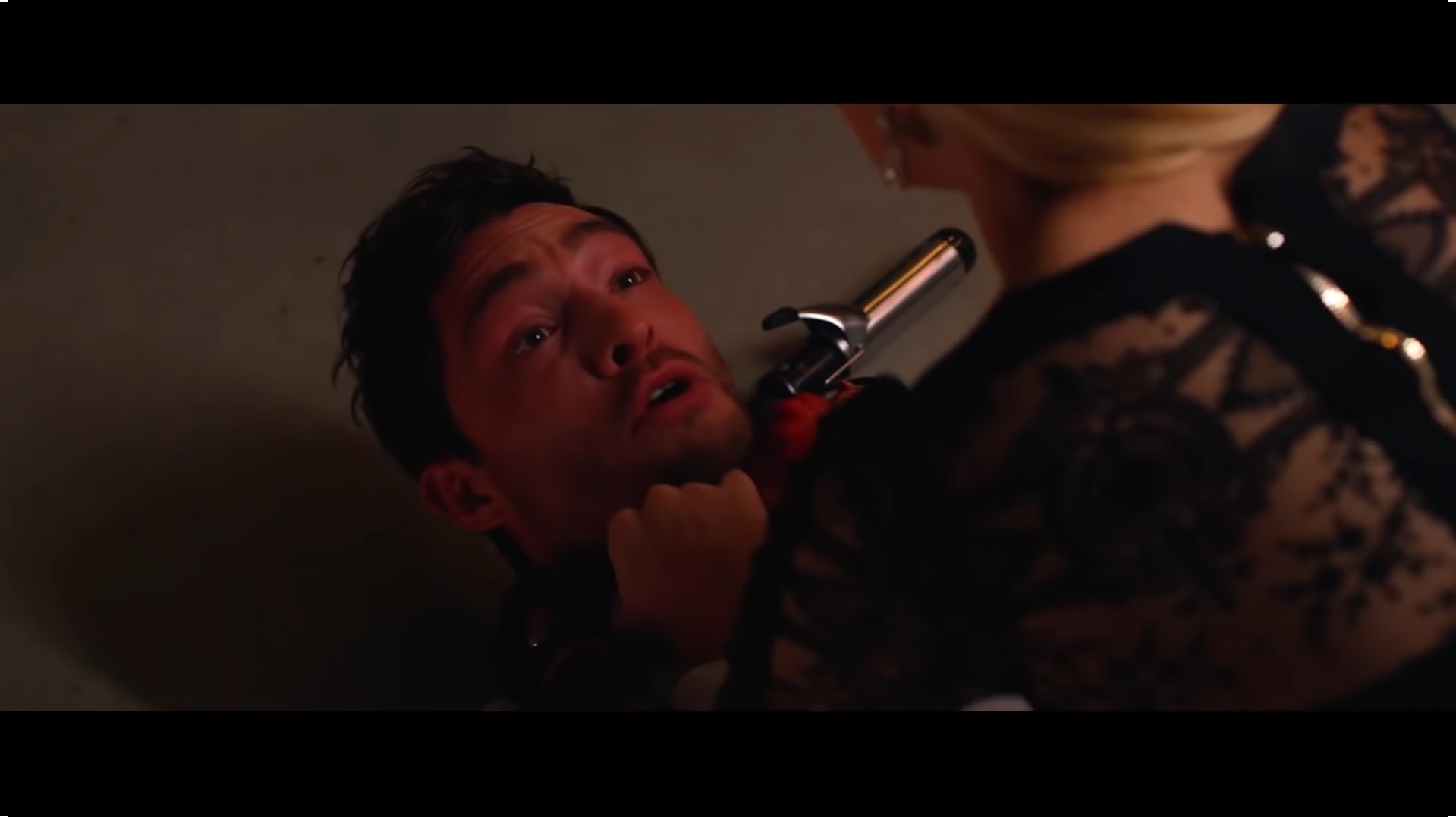
Avid and accomplished equestrian, Mia, yearns for a child of her own with husband Thomas as the clock on her ovaries continues ticking into her 30s, but something keeps her husband from digging himself out of a sexually frustrated trench, causing strain on their marriage.  Mia thinks his imperative financial venture, a collaboration alongside ruthless businesswoman and unorthodox scientist named Ruben, has made him sexually reclusive being wrapped up in a delicate investment of reversing the aging process that could crumble at any time, but when a beautiful and youthful neighbor goes missing after frantically showing up bloodied at her front door, Mia follows her trail to an abandoned candy factory where Ruben holds hostage young women for her violating biohacking experiments.  Becoming caged herself at the mercy of Ruben, Mia, and the rest of the women, are left to the sadistic and misogynistic whims of Ruben’s henchmen, the Pig and The Dog, in between the good doctor’s examinations. 

What happens when the powerful elite, using wealth and influence, circumvent ethical red tape in order to receive medical advancements as soon as possible?  Director Jens Dahl and screenwriter Sissel Dalsgaard Thomsen explore that radical and illegal biohacking ideology with an intense and extreme feminist view in their 2020 released, invasively graphic, horror thriller, “Breeder.”   Hailing from Denmark, not too many extreme films come out of the Nordic country, but taking a cue from their German neighbors from the South with a sexual and age dysphoria viscosity, “Breeder” takes an urban legend-esque approach to age defying that’s more Countess Bathory than anything Aveeno facial creams could ever manufacture in a story based on biohacking blended loosely with the French folklore of Bluebeard where an affluent man has an obsessive habit in murdering his wives, one after another, per director Jens Dahl.  “Breeder” might not be that black and, well, blue with a tough love message and an illicit theme of subversive genetical achievements produced by Peter Hyldahl, Amalie Lyngbo Quist, Penelope Bjerregaard and Maria Moller Christoffersen of Beo Starling (Beofilm) production company.

Leading the pack of caged, exploitered women in this human puppy mill comes with a hefty price of compromising positions and uncomfortable scenarios. The 32-yeard old actress, Sara Hjort Ditlevsen, plays an age appropriate Mia whose coming down to her last straw when coming to her husband’s inability to commit to their teetering marriage, but Mia comes with a twist in that she never gives up, achieving her end goal even if that means strapping on her riding boots and stirrups, dropping her panties, and digging those spurs into her hind parts while masturbating just to release the sexual tension. Ditlevsen gives a gradual fuming performance gaslit by the abusing sustained by the sadistic misogynist, monikered The Dog (Morten Hoist) who, in appearances, has the visual looks of a greasy Bill Oberst Jr. Jackson Pollock’d from a Mads Mikkelsen portrait and has the temper to match. The Dog and his partner, The Pig, played by Jens Anderson in an unbalanced contrast to the The Dog’s screen time, are harnessed and weaponized by a mad scientist role that was originally intended for a man before screenwriter, Sissel Dalsgaard Thomsen, had an epiphany that her feminist script was playing right into that systemic, male dominant, structure. Instead, the role was flipped, in gender only, and performed by “Wild Witch’s” Signe Eghom Olsen. Olsen gives a chillingly cold performance in Ruben’s contradictory indifference for life by snatching youth and beauty from young women, those who spite Ruben just by the mere fact of their innate good genes and healthy reproductive system, and selling the epitome of their stolen essence to the highest, or oldest, bidder in an age-reserval scheme. Ruben does have another motive with self-preservation as her rare genetic makeup makes finding a genome match nearly impossible, but she slays away a lot of women and a lot of infants in order to unearth her type. Anders Heinrichsen, Eeva Putro, Elvira Friis, Eja Rhea Mathea Due, Oksana Kniazeva, and Sara Wilgaard Sinkjær round out of the cast.

One of the “Breeder’s” core themes is the power one holds over another, but absolute control is not a singular reoccurring motif as power ebbs and flows from one character to another in a rolodex of examples that include Thomas’s financial control of Ruben’s rebellious operational decisions, The Dog’s inhumane dominance over captive women he loathes, and, on the receiving end, an enslaved woman’s embracing of a submissive, masochistic posture to The Dog’s punishing sadism, but control can be fleeting as seen in many movies yet proved to be in an abundance in Dahl’s “Breeder” with plot points that overturn sovereign power through a pendulum sway of brute, bloody force and hostage exploitation ugliness.  One bizarre recurrent through the cat and mouse power struggles is urination.  Yup, bodily fluids make an appearance, but go beyond the one-time shock value affect with three, count them three, acts of peeing in which two scenes reflect dominance as the powerful relieve themselves all over the, at that time, docile weak as a dog would when marking his claimed spot in the yard.  “Breeder” continues the varied questionable character tactics when primary plot turning points fail to impress plausible reactionary needs; an example would include when Ruben uses Thomas’ affection for Mia to control his unpredictable behavior, but the obsessed mad scientist, not to be bested by losing her financial support, lets Thomas run freely around her private abandoned factory of horrors which allows Thomas to become a monkey wrench in her biohacking laboratorial machine.  The same easy street escapes run rampant throughout and is even unintentionally spoofed when one women is able to escape not once but twice The Dog and The Pig’s rigorous grasps, taking “Breeder’s” serious new wave extreme a level down to a sickly stage of story blunders with rough draft written characters and scuffle.


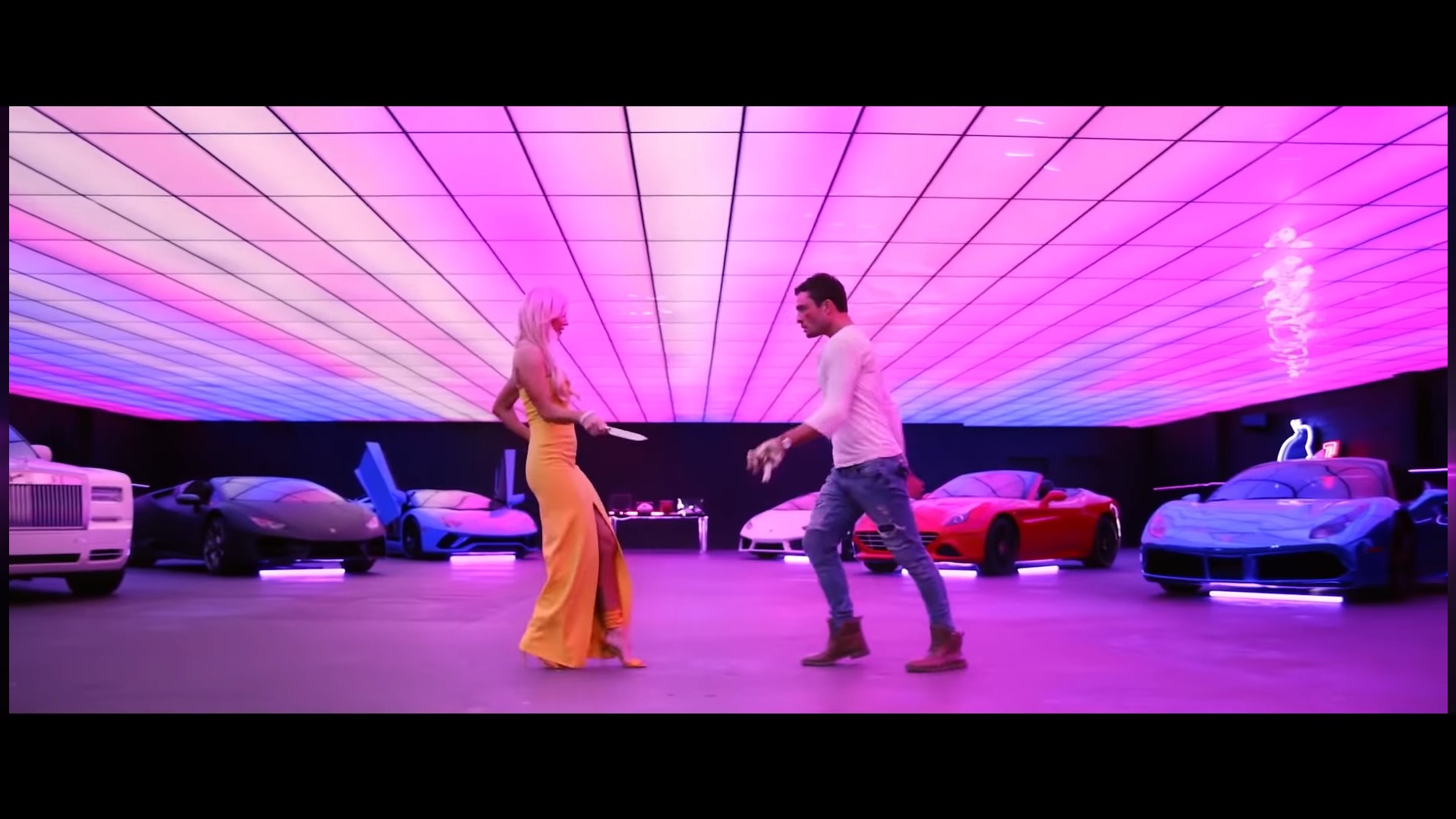
If golden showers are not the extreme go-to for brutal survival horror, “Breeder” offers a variety of acrid amenities from stapling lips together to a trash can full of dead, dismembered babies and is homeward bound in the UK on Blu-ray from Eureka Entertainment under the company’s Montage Pictures banner.  Available February 15th, 2021, the first 2,000 prints of the Blu-ray will come with a limited edition O-card slipcase.  If you’re not a physical media aficionado (…loser.  J/K), “Breeder” will also be available digitally and will be presented in the film’s original aspect ratio of 2.35:1.  The Danish language DTS-HD MA 5.1 audio mix will be accompanied with optional English subtitles.  Since this review is based off a Blu-ray screener, I will not go into depth with the audio and visual conditions, but the cinematography work is from the sophomore feature of Nicolai Lok.  Behind the camera, Lok’s settles on a drab color schemes of mostly black and grey of a sterile environment, with the Lindberg house or inside Ruben’s medical popup tent, along with hard yellows, like mustard, to accentuate the rust and grime in closeups to medium shots within the tight confines of the abandoned candy factory turned into an unsweet meat market, but uses a fisheye lens on the regular to the effect I couldn’t pinpoint other than to fishbowl dysphoria an already narrow area. The end result made scenes unnecessarily warped for the viewers already stomaching a large amount of women battering. The special features included an October 2020 answer only interview with director Jens Dahl and screenwriter Sissel Dalsgaard Thomsen discussing in depth the reason they wanted to make this film. “Breeder” opens with Mia prancing her horse Karat and she inner dialogues how they move in tandem, but she questions the pecking order of master and prisoner between them knowing for certain she’s Karat’s jailor and that translates perfectly into her own subhuman treatment as a branded and caged animal for the pleasure of others; however, this type of depth thinking begins to rotate the hamster wheel but, as soon as momentum picks up on those tiny legs of collusion and betrayal, a gradual limp slows that hamster’s endurance with not enough plot developmental pallets to digest in order to keep up the effort.

This EVIL Santa is Ho, Ho, Horrible. “Slayed” reviewed! (Terror Films / Digital Screener)

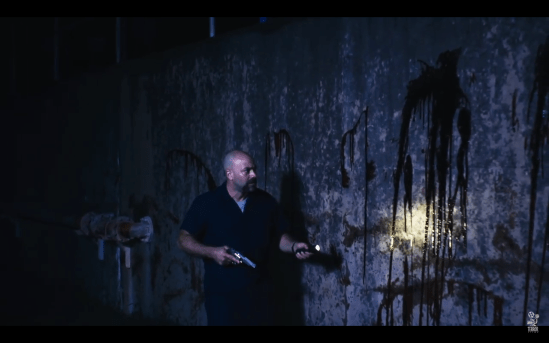
Five years after a murderous, Santa Claus-cladded maniac massacred a couple of young women in the dank basement of a water treatment plant in Harris County, AZ, the stigma of the plant being open has caused enough controversy, heartache, and notoriety for the local residents and will soon close the chained-link gate forever to soon transform into a car dealership. On the last day of operation, Christmas Eve night, the lone survivor of that night five years ago walks vigilantly around the perimeter with a tingled sense that something just isn’t right as he stashes weapons around the facility…just in case. With the last administrative staff gone for the night and a novice guard at the helm of watch, not a creature was stirring, not even a mouse, until there arose such a clatter and who did the guard and the survivor find? It was the return of Jolly Old Saint Nick with an axe to grind.

Merry Christmas, readers! You can’t spread Christmas fear without watching at least one, count them one, homicidal Holidays flick starring our favorite Yuletide strangler, Santa Claus. This year, the Fatman reins down upon a few unfortunate recipients on his coal gifting list in Jim Klock and Mike Capozzi’s “Slayed” that was released digitally this last month of 2020. The script is penned by Jim Klock following another Klock and Capozzi collaboration, the 2019 released Devil trickery detective-thriller, “Red Letters,” that has the unconventional atmospherics of a Christmas themed slasher set in the fictional location of Harris County, Arizona even though the climate of Arizona is semiarid and “Slayed” appears to be taking place in a lush, semi-tropic climate that’s perhaps more in tune with a Floridian winter. However, production company, Jim Klock and Darrell Martinelli”s Code 3 Films, is based out of New Jersey with offices in Los Angeles, suggesting a summer shoot with the cut off shorts, short sleeves t-shirts, and the wicking sporty running attire being worn amongst the limited primary characters.

Klock not only directs, writes, and produces the serial killer Santa but also co-stars as a new-to-the-area, aspiring actor standing in for a regular security guard. Klock enacts a classic clueless constitution for a baffled and bumbling outsider caught in the middle of historical notoriety having returned from the grave. Standing side-by-side and opposite is co-director, Mike Capozzi, who institutes a doomsday prepper’s fantasy come to fruition as the lone survivor of the 5-year bygone Harris County water plant massacre. The role of a water plant operator turned lone wolf of misanthropy never truly fleshes out of a state of rigid inflexible measures that stagnant the character’s mysterious backstory of surviving Santa’s bloody red-handed carnage and extend his development into an explanation of his long-awaited revenge obsession. Klock and Capozzi only bookend the film being in the same scene together, leaving much of the midsection, essentially the second act, for distressing females as hunting game for Santa’s slay. Coel Mahal and Kyra Kennedy, who have previously worked with Klock and Capozzi on previous projects, adequately fill in those rolls to an extent. Mahal’s masculine bity, water plant administrator acutely shifts into trope slasher-fodder of hapless articles of loosely bound prey. Things worsen with Kyra Kennedy’s rando abductee with an uncontrollably irritating sniveling in unprompted immediate danger as she sits in the passenger seat of a truck and just inconsolably cries, cries, and cries. Luckily, “Slayed” is a indie-reined in production that doesn’t swarm with halfhearted and ill-deserving characters as the film rounds out with minor roles casted to Delton Goodrum, Chuck Roberts, and Jennifer Meakin and Crystal Cameron as half-naked, strung up torture toys for a deranged Kris Kringle.

In a peeve already mentioned, “Slayed” rarely invokes as a Christmas chronicled horror film, striking lukewarm resemblances to that of “Silent Night, Deadly Night” or “Christmas Evil,” to which those films set a very low bar to emulated, unless you’re a trash-loving, so-bad-it’s-good, cult film enthusiastic, like yours truly, than its nothing but top shelf quality. However, the unexplained warm weather upholstery cripples “Slayed’s” genre-blend construct that’s been in august status of next level output over the last few years to dispel the happiest time of year into a certifiable time of fear in an apparent hostile seasonal takeover in a return of spite that Halloween shortens every year with Christmas nipping at the heels as soon as the first brown leaf hits the ground. If the shooting location is truly set in Arizona, winter months typically hover around a light jacket and shorts 60 degrees during the day and nippy 40 degrees at night, but the sweaty, wintery deficient clothing worn suggests a sweltering otherwise. Klock and Capozzi’s good faith effort into “Slayed’s” festive fare is in the garish Holiday decorations and ornamental lighting production design denotes the showy display of Christmas spirit, held in which season is not exactly clear. To speak more on the lighting, Emily Adam, another patron believer of Klock’s work, uses a restrained soft fuchsia lens tint, among other vivid primary colors, to elevate the seasonal veneer and Adam’s lighting is especially a favorable hallmark of the season with the use of the soft, but brilliant glow of Christmas string bulbs utilized to lash and tie up up naughty listers. Yet, up to scratch cinematography can’t fix what’s inherently broken with a story penned as a sequel structure that assumes the audiences’ knowledge of past events when, in fact, leaves viewers in blackout darkness with many questions: Why the Harris County water plant? Where did maniacal Santa go for five years? How did the water plant survivor make it out alive and is now determined to end not only maniacal Santa’s life but also his own? Why did maniacal Santa kidnap this random young lady from her house? What’s the significance of Christmas for maniacal Santa and why this period in time to return? I enjoy Christmas horror as much as the next genre votary but wrapping your head around “Slayed” topples any chance of actually enjoying the disgruntled, menacingly muttering “Ho Ho Ho” catch-phrasing, maniacal Santa terrorizing an unjolly skeleton crew on Christmas Eve night.

Ho Ho Horror! Santa delivers the gift of sufferable tidings and killjoys in the Terror Films distributed “Slayed” digitally only onto Prime Video. If you didn’t catch “Slayed” before Christmas when released on December 18th, then no worries! Quickly nosedive into your laptop or television set and catch Santa axing away on Prime Video today! An interesting tidbit about the crew of “Slayed” comes from the music department with composer Jojo Draven, former guitarists for a number of Las Vegas shows such as performance artists, the Blue Man Group, and Gothic street illusionist, Chris Angel. The Indonesian-American female rocker’s agreeable experimental-industrial sound comes across professionally astute toward the context with unbuckling tension baked right into the scene. There were no bonus material included with the screener nor where there bonus scenes during or after the credits. Instead of racing down the stairs, excited by the prospect of unwrapping that one main horror-inspired Christmas movie on Christmas Day, “Slayed” turns out to be a disappointing hefty lump of coal with a few diamond patches sparkling through the sedimentary rock and catching our eye in a rather humbug holiday horror falling short of that so-bad-its-good set bar.

Watch “Slayed” on Prime Video by clicking the poster!

This Dinner Party Dishes the EVIL! “Happy Times” reviewed! (Artsploitation Films / Digital Screener)

A small, but affluent, Los Angeles Jewish community dine together at a Hollywood mansion in celebration of the Shabbat.  Mixed feelings about each other compounded with mixed drinks stir the emotions of heated topics, including business ventures, religious attitudes, social statuses, marital qualms, and hidden desires.  Lines are being drawn and sides are being taken when one thing leads to another and undisclosed secrets become evident in a clash of suburban violence that pits friend versus friend, colleague versus colleague, and husband versus wife to the death. 

Director Michael Mayer reminds us that you should never mix business with pleasure with a keep your friends close, but your enemies closer black comedy entitled “Happy Times.”  The brawl of survival centered around Israel immigrants living in the U.S. is the second written and directed film from Mayer, following polar oppositely against another Israel themed, 2012 picture, “Out in the Dark,” a gay drama in the backdrop of the two rival and patriarchal sides of the Israeli-Palestinian conflict.  The only conflict in this 2019 thriller-com is of the gravely plentiful and concentrated kind inside a L.A. mansion turned battle arena that sees about as much confrontation as the war-torn Gaza strip.  Co-written with Guy Ayal, “Happy Times” is a collaboration produced by Erri De Luca and Paola Porrini Bisson of OH!PEN and, the Israeli born, Gabrielle and Tomer Almagor’s Urban Tales Productions in association with Michael Mayer’s own company, M7200 Productions.

The Israel-nationality cast can be an immersive experience and a sign of good faith casting from the filmmakers as well as a show of open diversity from the production studios that casting Hebrew speaking, Israel background actors implies a serious interest and respect embroidered into the project. Mayer, born in Haifa, Israel himself, is a breath of a fresh air of non-appropriation in a time where whitewashing can still be prevalent in the movie industry. Israel born actresses Shani Atias, Liraz Chamami, and Iris Bahr command the screen not only as Israeli women in lead roles, but as different personas that interact and keep lively the one night, single dinner party narrative. Chamani especially dazzles in the details as the dinner hosting socialite wife and mother, Sigal, who exacts an assertive Jewish woman with a cooped up attitude and a knack for handling her own while also worried about her social status, an extravagant exhibition of a screen trope that you might experience on shows like “The Marvelous Ms. Maisel” or movies like “The Slums of Beverly Hills,” enacted on point when she’s handing a frightened dinner guest, outside their Jewish circle and fleeing from the scene, tin foil wrapped leftovers with a wide menacingly unsure smile, while holding a medieval crossbow to go frag another party guest, in the plain view driveway. The wives’ counterparts are equally as Jewish and equally as prominent in the fold of the affair with Ido Mor as a unscrupulous businessman co-hosting the dinner, Guy Adler as a construction manager with money problems, and Alon Pdut as an unhappily married Ph.D engineer bothered by his fellow dinner guests’ lack of education and tact. In all, most of the characters are undilutedly snobbish with the exception of Sigal’s struggling actor cousin, Michael, played by Michael Aloni, whose magnified Hollywood liberalism deconstructs the Hebrew bible as racist and inaccurate among other colorful adjectives and becomes the catalyst that begins all hell breaking loose. Stéfi Celma, Mike Burstyn, Daniel Lavid, and Sophie Santi become the filament around the principle leads that strengthen the kill or be killed melee in “Happy Times.”

As if dinner parties weren’t already stressful enough, having to make trivial small talk, possibly acquaint or re-acquaint with unaccustomed faces, or pretend to enjoy the slop being served as food, “Happy Times” turns the internally exasperating dinner party debacle on its head with guests and hosts who are just too terribly comfortable with each other as volatile personalities explode like little active volcanos plumed to reach every corner of the house in a deadly playground for unstable, on-edge adults spewing their strident emotions and Mayer is able to maintain a layered pace with a narrative that’s snowballing quickly.  Where “Happy Times” struggles is the redline occurrences that trigger things to go very badly.  Though hardly trivial episodes between the guests, involving innocent infidelity affections or a slight practical joke stretched beyond devastating consequences, the harried moments afterwards diverge into a blown out result while more nefarious consequential revelations are held back, in after the fact chaos, and these differently graded spurs seem unbalanced, if not flip-flopped, in the story.  The characters themselves adequately course into being delightfully insane and as about as relatable as the internal frustration against our friendly-façade enemies, but there’s a part of me that personally wanted more development.  Military vet Avner, for example, exhibits symptoms of post-traumatic stress disorder (PTSD) as the horror sounds of war play in his head when under stress.  As he stares into oblivion when the rage fills into his face, especially by a nagging, browbeating wife who doesn’t seem to be aware of his condition, the subconscious killing-machine overcomes the mild-manner tech engineer.  There’s also Yossi’s opaque tax evasion scheme, Michael’s thespian struggles, and Mati, the late arriving Rabbi, who pockets money on the side from Yossi and Sigal that factor into an erratic equation that’s a mind field surprise every step of the way.

“Happy Times” relishes in unpredictable violence as a round table of feast or famine hatred in this dog-eat-dog thriller coming to you from the Philadelphia based distributor, Artsploitation Films. Slated for a February 9th, 2021 release, the unrated film will be presented in a widescreen, 2.39:1 aspect ratio, in a gorgeously rich color of a modest, natural color scheme. Kazakhstani cinematographer, Ziv Berkovich, distills a solid, yet uninspiring, photography of mostly still cam mixed with subtle steady cam, rooting firmly to particular rooms without capturing the flow of a big mansion, reducing much of the in clover luxuries of the hosts. The Hebrew, English and some Spanish 5.1 Dolby Digital mix offers well balanced layers of audio tracks with dialogue clarity and establishing good range with depth not really set up because of the close up or medium shot frames. Guy Aya;’s score offers a good blend of a violin-screeching from a murder mystery dinner theater with the inklings of traditional Israel folk sprinkled in to create an anxiety riddled brew of trouble. There were no bonus material included with the digital screener nor were there any bonus scenes during or after the credits. The best of times and the worst of times doesn’t compare to the bloodletting of “Happy Times” in a wildly amusing dark comedy with every impulsive-driven and tension-wrought scene chockfull with bated breath.

Pre-order “Happy Times” on DVD or Blu-ray at Amazom.com (Click the poster)

Sit Back. Relax. And Wank Off to EVIL’s “Live Feed” reviewed! (Unearthed Films / Blu-ray)

While on vacation in China, five friends traverse the local festivities and drinking holes, relaxing in the surroundings of an alien culture of their getaway destination, but when one of them accidently bumps into a depraved Chinese Triad boss, they believe to have nearly escaped a localized international incident with the help of a Japanese vacationer who seems to know quite a bit about this particular Triad boss.  To blow off steam, and to blow off some loads, the friends patron the Venus Theater, a sleazy porno theater offering 1-hour couples VIP rooms.  Their short-lived, and short-comings, visit turns into a terrifying nightmare of broadcasted kill rooms as they find themselves trapped inside the theater owned by the Triad boss for his personal snuff cinema experience and fine dining of cannibal cuisine.  Fried dong and balls are 100% MSG free. 

With a Ryan Nicholson directed film, you never know just what to expect.  From our reviews of the Vancouver native’s work, his teen slasher “Famine” was an angsty disappointment, his destitute slaughterhouse “Collar” collided technical gaffes with sordid satisfaction, and his most renowned direction on the bowling-themed retro-slasher, “Gutterballs” displayed a primal brilliance that rolled one hell of a strike down the lanes of indie filmmaking, but the late, great gore hound filmmaker always lit up our screens with a single reoccurring theme – flashes of red.  Lots and lots of red blood that is!  The blood geysers and gushes in heaps in Nicholson’s 2006 release, the written and directed, “Live Feed” that touts SOV violence in an arcane snuff style.  Co-written with his father, Roy Nicholson (“It Waits”), the self-taught, special effects prodigy bursts onto the full length feature scene with an introductory exploitation and survival horror full of ambition, insane effects, and a narrative bred specifically for fountaining blood.  Self-funded under Nicholson’s Plotdigger Films, the ”Live Feed” legacy continues to output interest in the gore and snuff subcategories with updated home video distributed releases throughout the years, keeping the resourceful, twisted humor filmmaker alive and well in our hearts and collections. 

The story revolves around five friends, or more intimately, the hapless stars of a snuff theater production, who are not the most chaste or morally concerned individuals finding themselves center stage because of their wanton whims and uninhibited fortes.  Out of the touristy Americans in a given the impression of being a strange and sordid foreign land, one of them quickly becomes established as the primary beacon of hope as an unassertive wiser in Emily played by Taayla Markell in her first lead performance.  Though their long history makes for easy persuasion into participating, from a distance, in their lewd behaviors, Emily’s hemmed in around familiar perversities derived from her good friends and even her finance.  Mike, a muscular, drug-fueled blowhard develops his crass charisma from “Stan Helsing’s” Lee Tichon, Mike’s current and former girlfriends, Sarah and Linda, in tinge of tattered relationships by Caroline Chojnacki and Ashley Schappert, and Darren, Emily’s douchebag, philandering fiancé played by “Skew’s” Rob Scattergood, lead Emily astray from her own self-preserving inner voice when their arrogance and laxed attitudes place them in hot water with a sadistic Triad Boss.  Stephen Chang fills in the gangster roll with a plastic energy that’s over-the-top and absurd just like the two women who hang off each side of his arm in hackneyed fashion, offering very little to outshine as a sadistic megalomaniac.  Luckily for the out-of-towners who are soon-to-be-goners, they coincidently meet the conversant Miles Nakamura (“Mortal Kombat: Legacy’s” Kevan Ohtski) who round houses his way through a torrent of bad guys to save his newfound American friends, but for what reason goes over our heads other than the potential guilt of knowing he left them to their demise.  Greg Chan, Mike Bennett, Ted Friend, Colin Foo and introducing boner-fide stripper, Charlene McCulloch, with an in your face pole dance rounding out the cast.   

Whether in a stroke of good luck or an ill-timely misfortune, Eli Roth’s highly popular and profitable “Hostel” was released a year earlier in 2005 and while Nicholson’s surely cantered behind that gore porn locomotive in the early 2000’s that sauntered a path for many filmmakers to make unbridled torture and tits productions in the wake, “Hostel” undoubtedly provided some hinderance by scraping some of the shock value from off the sticky theater venue floors of “Live Feed.”  The characters were also nothing to write home about, or in this case, to write highly about, as the circumstances that churn the dynamics amongst their closed circle friendship don’t dissolve until well onto the cusp of being dismembered and thus becoming a moot investable or relatable venture that was, in a way, still crawling for the finish line with spotty payments on Darren and Emily’s acute about-face relationship, the only turbulent character context that saw contentious action.  Yet, there is wonder why “Live Feed” even attempts to brittle or outright break the bonds between friends and lovers in a film that’s all about the blood, about the blood, no trouble, as I channel my Megan Trainor phrases that probably sounds better in my head than in my review.   Unless Emily and Darren’s woes play later into the story, as a point of significant break from the other or in a glimmer of salvaging something between them, the purpose is purposeless and the blood should pool together the entire snuff narrative without an emotional hiccup.  Speaking of blood, the effects between Jason Ward (“American Mary”) and Ryan Nicholson couldn’t have been better executed with a pliable, tangible, and free from visual imagery arsenal at their fingertips with prosthetics upon prosthetics of grisly skirmish matter.

“Live Feed” has it all:  cannibalism, decapitations, sex, bondage, medieval torture, kung fu, snakes, pole dancing, barbecued penis, sword play, a “Big Trouble in Little China” old man Lo-Pan lookalike, and gallons of spattering blood.  All of the above now arrives uncut and uncensored onto an Unearthed Films Collector’s Edition Blu-ray release.  The region A BD50 presents the transfer in a widescreen, 1.85:1 aspect ratio, enclosed with various formatted styles from the poor resolution of SOV to a full-bodied and unstrained digital playback lit up with vibrant neon lightening by director of photography, Sasha Popove, to create an illuminating florescent color splay of a universal Asian urban district.  The sundry of styles can be weighty on the sequences that challenge what should be natural segues into the next scene, but the format choices, from mostly handheld vantage points, interrupt the flow with a nonsensical fluidity.  Unearthed Films amassed a legacy-stamping amount of extra content with a commentary with Ryan Nicholson and cast, a making-of segment entitled “Behind the Blood” which is geared toward being a tell-all on how they spun and produced “Live Feed’s” fruition, a return to the Venus Theater location with a low-key walkthrough of scene locations and you get a little X-rated show during a live project run, deleted scenes, alternate scenes and ending, the video feed footage, photo gallery, trailers, and a short film entitled “Womb Service” of the softcore feature playing background of the feature story. There’s also an “Adult version” of “Live Feed” in the bonus material that includes the original runtime feature but with edited in hardcore footage; however, personally, did not notice any sultry inserts. Maybe they’re brief and missable…? In the experience unravelling Ryan Nicholson’s work, “Live Feed” is the filmmaker’s second best movie with wholehearted intention to jazz it up with as much blood and exploitation as possible and his loss, as a person and an exorable filmmaker with room for ghoulish growth we’ll never experience, stings to this day.

“Live Feed” blu-ray now on sale at Amazon.com. Click the cover to go to Amazon.

A Major Book Deal Isn’t Worth This EVIL. “Writer’s Block” reviewed! (Gravitas Ventures / Digital Screener)

Skip Larson has become a one hit wonder in the literary field.  The aftermath of his initial work, a best seller success, has never again been duplicated as Larson’s wretched and dispassionate heart and mind hit an unscalable writer’s block that can’t afford to pay the ever mounting bills.  When a stranger approaches him at one of his dismal book signings, an opportunity presents itself to meet serial best-selling novelist, Chester Everett McGraw, at his private ranch where Larson has to decide whether to sign McGraw’s rigorously partisan and severe contract for wealth, prestige, and a chance to co-author McGraw’s next big novel after being cut off from the outside world for six months or walk away from everything without penalty and return to his mundane life struggle.  Larson agrees to McGraw’s extreme terms and begins working chapter after chapter on McGraw’s next literary masterpiece, but as the days turn to weeks and each draft is ridiculed and critically trashed, an irritated Larson itches to leave but the snake-tongued McGraw, his brutish bodyguard, and even the beautiful maid, who has suddenly taken a liken to him, keep tortuously motivating him back to novel drawing board whether he likes it or not. 

Putting pen to paperwork with a looming deadline on the horizon is already stressfully hair pulling, but when the cold steel of a gun muzzle is pressed against your sweaty temple, the pressure grows tenfold to get the creative juices flowing before the contract is up in Jeff Kerr and Ray Spivey’s co-written and directed 2019 exploitation thriller, “Writer’s Block.”  The independent feature is the second collaborated project between Kerr and Spivey following their 2016 documentary, “The Last of the Moonlight Towers,” about the obsolete street illumination system, the last of its kind, of electric light towers in Austin, Texas.  Continuing the trend of holding their filmmaking shop in their home state but not exploring non-fictional antiquated monolithic engineering marvels, the directing duo concentrate their Texas-based shot film toward being a cinematic turn-pager saturated with perfidious suspicion and crackpot characters that keep the road toward a clandestine endgame alluring and mysterious, unfolding in a similar regard to that of its general context of an exceedingly multifarious murder mystery novel.  Kerr and Spivey’s Sharp Town Productions serve as the attached production company.

Kerr and Spivey shop locally when choosing their downtrodden literary hero, Skip Larson, plagued with a wretched past and the desirable callings of the bottle.  The filmmakers settle on “Fear the Walking Dead’s” Craig Nigh who can sell smartass with the best of them and be as tough as nails when push comes to shove.  On paper, Larson’s a forlorn gambler risking his chance at life by accepting a seemingly glamorous, one-in-a-life, game-changing deal by a fellow writer he admires, but with a number of fishy, tall-tail signs of deception and corruption by McGraw and his goon, Digger, Larson can come off naïve, especially when he sticks around still after his free will fractures under physical violence and threatened to be shot.  The oppressive McGraw obviously has an ace up his sleeve in his proposed partnership with Larson and, never once, feels sincere in building Larson’s library with his dreams.  I found Mike Gassaway’s performance as McGraw to be one-note.  “The Next Kill” Gassaway tussles with sly intentions of a manipulative best-seller author, devolving into an unintentional weaker ranch obstacle that dwindles down McGraw to be more of a façade behind the true game being played against an unwary Larson.  Though McGraw as the brains, the cowboy hat wearing former oil rig worker, Digger, provided much of the muscle whose anxious temperament kept him from seeing the final stages of McGraw’s malevolent game.  Chris Warner finally lands a principle role that isn’t a short lived bit part that’s labeled Flatbed Driver or Prison Guard.  Instead, Digger Haskell seems like a teddy bear good old boy that Warner can inherently step into without having to get lost in a new persona and Warner fleshes out Digger’s hasty disdain in how the slow progression keeps him for enjoying what he loves to do best – being a hired goon – but the character rarely established a definitive connection of servitude toward McGraw other than the notable writer taking the oil rig injured man under his wing, causing some unresolved character development.  Cataline is perhaps the most underwhelming character as the immigrant house cleaner who falls in love with Skip Larson.  Played by Jeannie Carter-Cruz (“Sasquatch!  Curse of the Tree Guardian”), Catalina bashfully wills herself around the house, not really cleaning much in the audiences scope of her profession, and becomes discreetly entangled with the struggle writer for unknown reasons she herself couldn’t explain, leaving her, and Carter-Cruz, exposed in an under-seasoned character course. Katusha Robert, Avery Lewis, and Natasha Buffington rounds out of the cast.

“Writer’s Block” shoves an easily relatable theme of success never comes easy right into audiences’ laps as Skip Larson’s humiliation exhibits as much through literary famed Chester McGraw’s browbeating tactics ranging from verbal assaults to unwanted sexual persuasions. Not by McGraw. That would be gross. Yet, in essence, the actual frustration condition of writer’s block for an author in any facet is akin to the sensation of conquering in what seems the impossible. Once Skip Larson tips the odds into his favor, the woebegone writer’s line graph to success skyrockets off the chart after a bit of tough love motivation stemmed by McGraw and his boot camp, side-hustling ranch. However, “Writer’s Block” suffers from the titular misgiving in the form of pacing irregularities, a loitering third act, and a paper thin Skip Larson backstory that only dabbles into his post-family tragedy alcoholic stupors and his peradventure subversive dealings with his gangster cousin. The gangster cousin tangent is by far the most offshoot subplot underlined only in flashbacks and at the finale that introduces a character that has seemingly never been a functional part of the story but is pivotal in Skip Larson’s corner. The crux of the story’s issues is that it tries to incorporate too much whereas the basic building blocks, the pure premise, would have sufficed and have been modestly more successful if stuck to instead of throwing a curve ball of horror into the macabre construction of McGraw’s collective work of best sellers as trophies that becomes synonymous with his obsession for hunting, if not more so conquering, the wild game he annihilates.

When a wordsmith’s mental typewriter stalls and the hands hang still with fingers dangling above the alphanumeric keys, waiting for inspiration to flow through the very fingertips that provide financial stability and creative vigor, use the Gravitas Ventures released “Writer’s Block” as a tool to unstick the tacky words, pry open the oppressive blockade of the expression dam, and let the flood of literature be unbridled. Released earlier this month on November 3rd, “Writer’s Block” is now available on VOD and streaming platforms, such as Amazon Prime Video, Apple TV, Fandango Now, and Google Play as well as all major cable and satellite platforms. The 98 minute film is shot in the capable hands of Alex Walker who stays put mostly in natural lighting, swerving almost unnoticeably at times into various colored lighting (mostly blue or purple) and utilizes the story’s drone to capture effective aerial shots. There were no bonus features included with the screener nor were any bonus scenes during or after the credits. “Writer’s Block” is a tousle survival-thriller careening toward a grisly surprise that requires a little more spick and span shaping for a grittier exploitation.

Own “Writer’s Block” on Prime Video!