Crawldaddy and Her Two EVIL, Incestual Kids in “Skinned Alive” reviewed! (Tempe Digital and Makeflix / Blu-ray UE)


Crawldaddy and her two children, Violet and Phink, are psychopathic makers and sellers of fine leather apparel right off the backs of, well, literally ripped right off the fleshy backs of anyone they come across! When their van breaks down in a small, dumpy, low-bred Ohio town, Crawldaddy is forced to play nice with the town’s only mechanic, Tom, who offers a complete line of unreciprocated hospitality to the strange out-of-towners, but that doesn’t stop her and her children from committing slice and dicing of the local residents while bunkering in Tom and wife’s basement spare room. When Tom’s neighbor, Paul, an alcohol abusing ex-cop on the edge as a result of a brutal divorce, senses trouble and discovers Crawldaddy’s den of skin, the quiet small town explodes with bullets and blades in a macabre showdown.

Forget the Firefly family that has brought backwoods kin-in-arms killers to the masses in vogue fashion. Otis, Baby, and Captain Spaulding have nothing on Crawldaddy’s foul-mouth, foul-smelling skinner family who ranks as the top trash, living the nomad lifestyle with all the depraved trimmings of the criminally insane. Written and directed by Jon Killough, who after working on J.K. Bookwalter’s “The Dead Next Door” and “Robot Ninja” in multi-hat roles, “Skinned Alive” was bestowed a greenlight by Bookwalter to explore the creative side of Killough’s vile and offensive laden hillbilly horror that was released in 1990, before that very subgenre was coined and monetized years later. David DeCoutea, who envisioned the eviscerated virtuoso of the gruesome filmmaking talents from Todd Sheets to J.R. Bookwalter, served as executive producer and Bookwalter’s The Tempe Suburban Company tackled “Skinned Alive” with all the ingenious bloody pizzazz and outlandish death set financier and production company while filming the project in Ohio.

Since The Suburban Tempe Company is a tight-knit production company, familiar faces from Bookwalter’s previous films have been cast, beginning with Paul Hickox, the ex-cop with a drinking and ex-wife problem, played by Floyd Ewing Jr. The Hickox character crosses over from “Robot Ninja” into “Skinned Alive,” but exhibited in a dichotomous life position. While Ewing nails being a man dragged through the pig slop of divorce, Paul feels cut short with the amount of buildup written for the character that’s centered around ex-wife woes of losing his house and kids, depressed into drinking, and has to deal with a sleazy lawyer whose also litigating his former wife in a court of a sex. However, “Skinned Alive” is all about the bad guys.  In the majority of horror films, the bad guys are always the most interesting because of their rancid flavored persona and for our culturally-collective love of the eccentric, the offbeat, and the grim of villainy.  Crawldaddy embodies those despicable characteristics without so much of breaking a sweat with a abhorrent-welcoming performance by the late Mary Jackson.  Jackson, who went on later to work Bookwalter again in a minor role in “Ozone,” is transformed from a singing beauty to a basket case of a wretched, wheelchair bound hag, unearthing her uncouth Hyde at the flip of a switch.  Jackson is complimented by Susan Rothacker as the alluring-but-deadly Violent, a roll filled in the last minute by the film’s makeup artist when things didn’t work with Jackson’s daughter Lorie, and the one and only Scott Spiegel as Phink.  The energetic Spiegel has been a part of the longstanding Sam Raimi entourage, having minor roles in Raimi films, such as “The Evil Dead,” “Darkman,” and “Drag Me to Hell,” and when “Skinned Alive” became in need of a Phink, Spiegel may have just saved the film by his presence alone as the “Intruder” and “Dusk Till Dawn 2:  Texas Blood Money” director brings the manic ticks and callous charisma to Phink’s traits.  Rothacker ups the character dynamics with Phink as the pair’s love-hate relationship is a slap-stick of incest and homicidal cravings that fits right into the vile veneer of the story.  “Skinned Alive’s” cast rounds out with Lester Clark (“The Dead Next Door”), Barbara Katz-Norrod (“Kingdom of the Vampire”), Mike Shea (“Robot Ninja”), Mike Render (“Robot Ninia”), J.R. Bookwalter as a tortured Jehovah’s witness, and Jon Killough as an unlucky the hitchhiker.

As Killough’s indirect byproduct of Tobe Hooper’s “The Texas Chainsaw Massacre,” “Skinned Alive” is the skewed, bad dream version of the devious Sawyer family with heavy notes of black comedy chucked into the fold for an all-out odious assault on all fronts, but Killough’s first and only feature didn’t come out totally unscathed as a harmonious horror-comedy.  With little film stock left to shoot with and production controversial new scenes written by Killough and then altered by Bookwalter without consent, “Skinned Alive” became a rapid fire production of short shots compiled together that resulted in a choppy flow.  You could also discern which filmmaker wrote which dialogue in the filler scene between ex-cop Paul and his ex-wife with her sidepiece arrogant lawyer; Bookwalter adds witty, if not smart, dialogue to reinforce Paul’s degrading life while Killough’s dialogue for the rest of the feature is an expletive warzone without much of a strategy.  Both discourses work for the benefit “Skinned Alive,” but do cause a blatant, patchwork barrier between the conversing styles.  David Lange and Bill Morrison’s special effect makeup work is a complete continuation from “The Dead Next Door” and “Robot Ninja” of rendering gooey, gory visuals on a budget.  Sometimes, yes, you can see how unflattering the realism can be and easily securitize the flaws, but at the same time, the ingenuity trumps over cost and that elevates the effects beyond any dollar figure the film might cost.  That partial prosthetic of ripped flesh on Spiegel’s Phink when he’s hot in the face is one my favorite effects not only for the gruesome details, but for also its versatility.  It could easily be a bear claw swipe or a flesh eating bacteria, making the possibilities endless for Lange and Morrison.  Thirty-years later, “Skinned Alive” has preserved a rightful staunch cult following for it’s unparalleled grotesque veneer that will endure to linger for another 30 years plus thanks to technological advances and vehement filmmakers who are also filmic preservationist like J.R. Bookwalter.

Speaking of which, J.R. Bookwalter and his company, Tempe Digital, has painstakingly restored “Skinned Alive” and released it on a region free ultimate edition, dual-format Blu-ray/DVD, distributed by Makeflix.  The original 16mm A/B roll cut negative was scanned in 2K and is presented in the retained 1.33:1 aspect ratio.  The scan brought the transfer int a low-contrast in order to color correct and bring more life into the presentation from previous untouched versions and removed all of the white speckled dirt and scratches from nearly much of movie; a silver-lining made possible by COVID-19 quarantine that allotted the time to do so.   The color grading now has a much more vibrant appeal though slightly losing details from the high contrast with some of the more brilliant red glowing scenes in Tom and Whinnie’s basement.  Limited to 1000 pressings, “Skinned Alive,” the 30th Anniversary ultimate edition, by visuals alone, should be blipping frantically on any avid collector’s radar and sought by all genre aficionados.   The English 5.1 DTS-HD Master Audio surround sound stem from the DA-88 tape archives of the original 16-track audio masters and while much of the dialogue and musical score remained, a good chunk of the ambience and effects were rebuilt and remixed, defining a clearer, cleaner audio track presentation of balanced levels from all different file sets.  Aside from some small synchronization issues between the dialogue and the scenes, the range is pitch perfect and the depth is excellent.  There are optional English and Spanish subtitles included.  Bonus features, you say?  The ultimate edition has you covered with the BR disc one containing a 2020 commentary with writer/director Jon Killough and moderated by Tempe historian Ross Snyder of Saturn’s Core Audio and Video as well as a 2002 audio commentary with producer J.R. Bookwalter and makeup effects artist David Lange.  Other new material includes a 16 minute featurette entitled “Carving Up 30 Years of ‘Skinned Alive,'” featuring a number of interviews with the cast and crew recollecting good times on set, a remembering Mary Jackson featurette that includes Jackson’s son and daughter, among cast and crew, commemorating the Crawldaddy actress, an interview with Scott Spiegel, 2020 location tour, artwork and promotional gallery, behind the scenes gallery, production stills, and, my personal favorite, J.R. Bookwalter walking through the restoration process step-by-step giving insight on the time and effort into restoring the films such as “Skinned Alive.”  Disc 2, the DVD, includes a 2002 audio commentary with Doug Tilley and Moe Porne of The No-Budget Nightmares Podcast, the 1987 and 1988 “roommates” TV sitcom episode featuring the “Skinned Alive” cast and crew, the Joy Circuit “Love Turns to Darkness” music video, a making off featurette of “Skinned Alive,” behind the scenes, Camera and wardrobe tests, a short 2 minute segment about the 2002 remastering and the original DVD release trailer.  That’s not all!  Let’s not forget to mention the equally packed release package that includes a reversible wrap featuring original 1990 VHS artwork in the casing and new cover art by Alex Sarabia on the slip cover, plus an eight-page color booklet with liner notes by Ross Snyder.  The only thing missing is a soundtrack CD compact…wait, there is one!  Come September 18, the original motion picture soundtrack, featuring 29 tracks, will be released with scores composed and performed by J.R. Bookwalter, songs by Hang Dangle, Foxx, Virgil Pittman, Joy Circuit, Dave Jackson and Kenny Boyd, Seven Sez U, The Ninja Sequencers, and Willie and the Wagon Wheels.  This 2-disc set is the holy grail for die hard “Skinned Alive” fans who know and appreciate the unique, second to none hillbilly horror that’s flagrant on every level.

Pre-order the soundtrack!!! Click to go to Amazon.com

When Music Videos Go EVIL! “The Backlot Murders” reviewed! (Dark Force Entertainment and Code Red / Blu-ray)


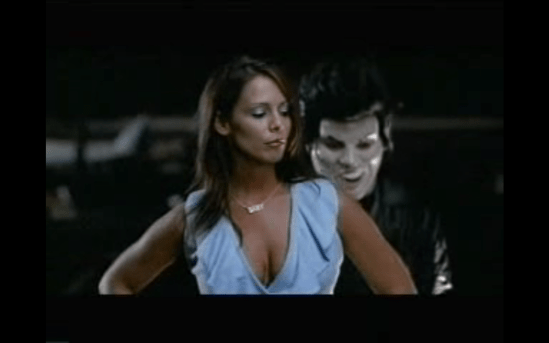
After a night of drinking that ends in breaking a bottle over the bar owner’s head, a struggling and internally conflicted rock band kicks out the cancerously unhinged and troublesome member before their rise to stardom. Unfortunately, all the talent went out door along with the excommunicated band member, forcing the band to impress with an extravagant music video shot on Universal’s iconic backlot, sponsored by their agent and the lead singer’s girlfriend’s music mogul father. Instead of intense pyrotechnics and scantily cladded female groupies dancing on their crotch, the band, their girlfriends, and the crew find themselves caught in the gloomy, labyrinth-like movie lot, housing spooky interior and exterior sets, unaware the lurking murderous manic taking them out one-by-one.

By far a polar opposite polished genre film than the sadistically raw brutal rape and murder extravaganza that was “Chaos,” writer and director David “The Demon” DeFalco dabbles in the early 2000’s revival of the slasher genre with his 2002 released feature “The Backlot Murders” in the wake of the widespread success of the “Scream” franchise. In much of the same way “Chaos” came to fruition derived from “Last House on the Left,” DeFalco, once again, finds inspiration in the form of cult horror director Wes Craven. However, DeFalco strays away from the meta-horror and trope-reversal techniques and replaces it with a satirical façade of the music industry where glam is more important than meaningful substance. The slasher-comedy carves up nods to Van Halen, Pearl Jam, Aerosmith, and even Elvis Presley with a horrendously skewed mask version the killer wears. “The Backlot Murders” were co-written by Paul Arensburg and Steven Jay Bernheim with the latter writer serving also as co-producer with DeFalco in association with Dominion Entertainment.

A contributing factor to “Scream’s” success was the diverse in career cast that clicked together as well as twisting archetypical roles into atypical whammy that veered audiences to the edge of their seats. “Scream” shocked audiences with the immediate death of a well-known actress right out of the gate, nabbed “Friends’” star Courteney Cox, “SLC Punk” and “Hackers” actor Matthew Lilliard, teen heartthrob Skeet Urlich, one of the Arquettes with David Arquette, and, perhaps, would have guaranteed Neve Campbell a slab of concrete for the Hollywood Walk of Fame along with an already cemented label as a scream queen and a final girl. The same eclecticism could be transfixed by “The Backlot Murders’” acquisitions but on a more obscure scale with a cast from all walks of life that includes the Roger Rabbit voice actor himself, Charles Fleischer, “Three’s Company” star Priscilla Barnes, 1997’s Playboy Playmate Carrie Stevens, and the late Corey Haim (“The Lost Boys”) as the band’s guitarist in a role that seemed below his fame stature. Most gaps are plugged with interesting characters treated with some backstory buildup that becomes more stagnant than footfall companions in order to get to know them better before their demise, but their persona conductors include Brian Gaskill (“The Bloody Indulgent”), Tom Hallick, Jaime Anstead, Dayton Knoll, Lisa Brucker, Ken Sagoes (“A Nightmare on Elm Street 3: Dream Warriors”), LoriDawn Messuri, Angela Little, and Tracy Dali.

“The Backlot Murders” didn’t set out to revolutionize the slasher genre, but only relished in the after success and donned a more satire effort that purposefully retreated back into the conventional tropes to form an entertaining run of sex, drugs, and rock’n’roll gags, but the one thing missing, and it’s a doozy, is the actual killer presence in the film who is treated as an afterthought of slim importance and chucked into a insignificant plot twist that forces DeFalco’s hand to become a routine hack’n’slash lemming. One positive aspect of “The Backlot Murders” is the extremely high body count that produces a continuous stream of nixing off a slew of characters with their own death scenes inside the renowned confines of a Universal backlot backdrop that’s not only good-humored irony but also a sizeable effort by the Bernheim/DeFalco producing team. Yet, despite the high body count, the kills and gore felt sorely uninspired and underwhelming, rehashing into homage death scenes from “Friday the 13th” and “Scream” with a few forgettable approaches to call its own, until DeFalco breaks the damning goreless streak with a gruesome Columbian necktie effect that goes for the throat. I make “The Backlot Murders” seem unenjoyable and heartless when, in fact, the early 2000 slasher-comedy is immensely funny with a Charles Fleisher gold recorded, laugh track amongst the relentless mocking of the music industry from a far in this true to form slasher accessorized with a high body count kill dozer of a villain.

When things are quiet on set, “The Backlot Murders” evoke the slasher spirit on a new-to-Blu Blu-ray release in the U.S. from Dark Force Entertainment and Code Red with MVDVisual handling distribution. The 1080p, hi-def release is presented in an anamorphic widescreen from a brand new 4K scan of the original 35mm negative. The cool contextual colors render nicely amongst the shadowy gloom and foggy backdrop that’s reminiscent of a softly lit late 90’s and early 2000s slasher. The textures are sharper than the Razor Digital DVD release; the tactile feeling of asphalt when a bluish white glow hits the pavement or the gritty backlot sets vibrant with an ominous glow strike powerful chords of a lively presence from the transfer. There doesn’t seem to be any cropping, edge enhancing, or any other manipulation to the transfer present. The English mono track, which leans away from the LFE, has the opposite, lackluster appeal with a single channel blockade that doesn’t project the bands pyrotechnics, the screams of being chased, and settling for limitations on other wide range of girthy resounding audio. However, the dialogue is clear, unobstructed, and in the forefront. Bonus material includes a new audio commentary with director David DeFalco and Code Red’s Banana Man plus three new and very bizarre interviews with Carrie Stevens lingering from effects of the #MeToo movement to making home fudge, with Charles Fleisher and dissociative disorder or madman genius insight, and ending with a fairly regular interview with Brian Gaskill recollecting the film and his career through a tough industry standard. The Fleisher and Gaskill interviews end with a video op with The Demon himself, David DeFalco. “The Backlot Murders” had forefront potential of systemic slasher films of the time period, but pitter-patters for levity and a sweeping kill count that reconstructs the dread into death and comedy.

“The Backlot Murders” on Prime Video!

Neighborly Isn’t In EVIL’s Vocabulary in “Red Letter Day” reviewed! (Dread and MVDVisual / Blu-ray)


A divorce lands Melanie Edwards and her two teenage children, Madison and Tim, to redefine their live a new and quiet suburban community called Aspen Ridge. While adjusting to their new normal and becoming acquainted with their new neighbors, the Edwards receive a mysterious red letter in the mail, calling for each person to kill a neighbor from an algorithm, created by a masked anarchist group named The Unknown, has vied them against by working from the parameters set to calculate each individuals’ polar opposite personal, political, or religious beliefs. Every resident in Aspen Ridge has received a red letter with the same instructions that mounts tension amongst friends and neighbors until, eventually, all hell breaks loose and it’s kill or be killed.

Welcome to part one of my unofficial independent horror films out of Canada series where we take a look at Cameron Macgowan’s written and directed 2019 horror-comedy, “Red Letter Day.” Filmed entirely in Calgary, Alberta providence, Macgowan and his production crew claim numerous AirBnB rentals to exact the sleepy, suburban, sanctuary to instill the murderous wrath that simmers just beneath the surface of every mild-manner person living next door, seething with contrasting opinions and beliefs. As a sort of a permission granted for carnage, “Red Letter Day” aims to set itself a part from the typical archetypes that hide the horror in the dark shadows and obscured corners with a bright and sunny morning melee armed with shotguns, baseball bats, sledgehammers, and a kitchen knife with a transfixed cooked chicken on it. “Red Letter Day” is a product of Macgowan’s Calgary, Alberta based production company, Awkward Silencio” in association with Tanda Films.

“Red Letter Day” focuses around the Edwards family who have just gone through the trials and tribulations of divorce proceedings, settling into their new surroundings with relative ease in Madison finding love with an older boy, Tim rounding out a routine, and their mother Melanie shaping a safe haven environment as a soft cushion for her children from the spoils of her ex-husband, but their ease comes with some conventional teenager microscopic social nuisances beneath the surface that places the barely adult Madison as a defiant outlier and the 17-year old, almost in adulthood, Tim as a clinching mama’s boy. All the breakdowns of their everyday life becomes superficial and, at the same time, becomes thought provoking on how they view themselves as a family when a domestic terrorist group invokes hunting season on the neighbors to kill their specific opposite of themselves. Dawn Van de Schoot (“Ice Blue”) steps into a role she’s relatively familiar with in being the mother, Melanie, and while Van de Schoot is perfect as the down to Earth, cool mom with some loose ground rules and sizes up tolerably being a proactive mother, her overall performance is shaky at best as she never finds solid ground in the malicious circumstances that are unfolding around her. Despite being a good chunk of exposition, there isn’t much on-screen friction between Melanie and her daughter, Madison, played by Hailey Foss making her feature film debut. Foss well walks the shoes of a naïve and expressively angst teen that unfortunately does cross beyond that as her character is written to almost physically fade out of the story with an inaptitude toward re-bonding with her mother. The introduction as Kaeleb Zain Gartner as kind of a dorky, smart-mouthed, but overall nice kid, Tim, is perhaps the better of the three character and performance to not only be written as a dependent driven millennial who musters up an ounce of strength to defend his mother, but also acted well by Gartner’s boyish charm. Together, the three less inexperienced actors harness the story enough to push it forward, even if that bind is attached by a thread. Rounding out “Red Letter Day” is Roger LeBlanc (“Painkillers”), Arielle Rombough, Michael Tan, Peter Strand Rumpel (“Devil in the Dark”), and “Friday the 13th Part V’s” Tiffany Helm in a religiously passionate cameo.

“Red Letter Day” could be construed as an interesting social experiment if people were given the freedom to carry out their anger on another person due to their conflicting ideologies. The film feels very much like a part of a small world portion of “The Purge” universe in a sense that the premise allows individuals to blow off resenting steam in the most old testament way: murder. Being that the story’s setting locale is in Canada, a typecast for welcoming benevolence, adds to the already dark and dry humor charm director Cameron Macgowan has applied to his script paralleled with some terrific gory prosthetic work from Stacey Wegner (“Decoys 2: Alien Seduction”) involving a bloodbath drenched meat fork through the neck and a gnarly split down the middle jaw courtesy of a meat tenderizer, adding yet another layer of subtle comedy with household items turned into melee weapons. Macgowan’s adamancy about practical effects hones in on the fork to the neck and a prologue kill scene involving a shotgun being the only two scenes to receive a VFX treatment by adding touches of gore components to sensationally sell the effect and the result is simply and effective complement to the scene without the visual effect grossly absorbing the moment with an indelicate cringe of an ornate polish that becomes the unintended main focus. With a runtime of just 76 minutes, “Red Letter Day” jockeys right out of the gate in this don’t-mess-with-mama bear fighting frenzy.

Presented by Dread, “Red Letter Day” finds home onto a Blu-ray home video distributed by MVDVisual. The region free release is presented in widescreen 2.35:1 aspect ratio, and the digital image has no obvious imperfections or color obstacles to hurdle over in this vividly detailed hi-def release. The cinematography by Rhett Miller poises a neighborly atmosphere of a bright and sunny picturesque community in the throes uncuffed chaos. The English language Dolby Digital 5.1 surround sound displays a well-balanced layer between dialogue, ambience, and soundtrack with the dialogue in the forefront. Considering the material, range isn’t a big factor into the film’s repertoire built into the story, but is sufficient to pass with minor edits of videogame jingles, various gun shots, and a few whacks with a sledgehammer or meat tenderizer. This also translate well into the depth that some of the acts happen offscreen up or down stairs in these community’s houses and that’s reflected properly as well along with the minor random acts of implied violence in the distance outside. Bonus features includes a commentary by director Cameron Macgowan, a make-of documentary that charts pre-production through post-production with cast and crew interviews, an interview with Tiffany Helm who recollects her filmic career, and Dread trailers. File “Red Letter Day” as a social media thriller bordering on an episodic premise similar to that of “Black Mirror” that infuses technology with the deinstitutionalize of ethical niceties and neighborly good deed for miscreant terror and murdering.

“Red Letter Day” is on Blu-ray and Included in Prime Video!

EVIL Metal vs EVILER Zealot! “We Summon the Darkness” reviewed! (Lionsgate / Digital Screener)


Set in the Midwest of the late 1980’s when a satanic cult has killed upwards of 18 people, slain in groups of threes, across the United States, three good girlfriends set forth on a road trip to a heavy metal concert. The girls bump into and befriend three aspiring musicians and fellow metal heads at the venue, inviting them to beers and some company while rocking out to killer show. The after show party moves to one of the girl’s father’s pastoral home for some late night boozing around the firepit, reminiscing about their favorite bands, and whatever else the dark night has in store for them, but the night of hedonism turns quickly into a night of terror when that satanic cult comes calling for three more souls. Some of the group isn’t truthful about their intentions and dead bodies pile up as the ritual killings aim to continue to spread.

Harking back to that killer trope oddity, a setup very keen in the 1980s, of a mysterious killer hiding behind a friendly façade, “We Summon the Darkness” is a modern day remembrance of such a subgenre in the slasher-survival field set along the drab bible belt of Indiana landscape, though, in actually, filmed in Winnipeg, Canada. At the helm is “My Friend DahmerMy Friend DahmerMy Friend Dahmer” director Marc Meyers from a script by Alan Trezza, who is the creative mind behind the short and feature film versions of another Alexandra Daddario comedy horror, “Burying the ExBurying the ExBurying the Ex,” that co-starred the late Anton Yelchin. May he rest in peace. Meyers moves his hand from the somber and inquisitive mutilations to murder of the Jeffrey Dahmer biopic origins story to the fanatical whims of pious psychopaths, daggering the crux of the issue into the misperceptions of stigmatic cultures and beliefs while at the same time being an extension of the dark comedy tone that worked charmingly with the tale of zombified ex-girlfriend hellbent on revenge. “We Summon the Darkness” is a product from a conglomerate of production companies, highlighting The Fyzz Facility,= (“47 Meters Down: Uncaged47 Meters Down: Uncaged47 Meters Down: Uncaged”), Grey Hawk Productions, Nightshade Entertainment, MEP Capital, and Common Enemy as well as Daddario, herself, pitching in into the producer pool that isn’t her first rodeo in that role.

If you haven’t guessed already, Alexandra Daddario (“Burying the Ex,” “True Detective”) stars as Alexis Butler, one of the three metalhead girlfriends cruising to the show, and sequestering herself the ringleader of the road tripping trio as a level headed, parental type with an edge to keep her ostentatious blond friend, Val, played to the fine tune of being uninhibited crazy well by Maddie Hasson, and the timidly sharp Beverly, a role docile to the point of uncertainty and shepherd well by “Hell Fest’s” Amy Forsyth. The three very attractive concert goers bump into another trio of friends, more haplessly hazardous, if not hopeless, band mates who try their hardest to be as metal as they can be, even if that meals throwing a chocolate milkshake out of the window of their speeding van onto the gals’ Jeep. Austin Swift, Logan Miller (“Scouts Guide to the Zombie Apocalypse”), and Keenan Johnson (“Alita: Battle Angel”) make up the group caught red handed in a stroke of coincidence that the girls find them at the very same concert. As much as the two groups mirror each other in personalities, matching up almost perfectly in the varying degrees of state, one group holds a darker secret that could cost the other their very lives. That level-headedness Daddario portrays onto Alexis’ mindset becomes ravaged with wild fires in her eyes and her laid back amount of patience becomes threadbare frazzled when the bodies start to drop in a satanic twist of murder and mayhem, frenzied with extreme ideology founded on multiple levels of greed. Daddario wears crazed well in a very different side to her usually starry eyed and elegant approaches, making all the others seem abhorrently normal in comparison. “We Summon the Darkness” rounds out with Allison McAtee, Tanner Beard, Harry Nelken, and that “Jackass” Johnny Knoxville as Pastor John Henry Butler.

Despite Daddario’s rising stardom and luminous performance, “We Summon the Darkness” falls hard into a mosh pit of despair. The concept is sound and promising, but the execution couldn’t rise to the occasion with limited secretion of the murderous evil that has spread like a pandemic across the nation that’s has sorely downgraded and diluting the nature of the news and media’s role in beyond hammering in the deaths. When story turns dark, the effect feels whiffed and not as jarring as hoped as little is then diagramed to help assist the viewer grasp just what these satanic cultist wish to accomplish. Also, Trezza’s script is highly predictable as the twist is unfolded fairly early on even before the catalyst transition to a darker tone, spoiling the unveil with too many gnomic sidebar conversations and a slew of obvious character tells that don’t exactly shield the truth of their true wolf in spiked studded, black jacketed, metal band patched sheep’s attire. Also, the film pulled too many punches, teetering on the balancing beam whether it’s an edgy killer comedy or a killer comedy with that’s soft around the belly area. Plus, I’m still trying to figure out why a walk-in pantry has a lock on the inside…?

Metal posers rule while the victims haplessly mewl in this Marc Meyers’ film, “We Summon the Darkness,” hitting retain and digital shelves this week on DVD, Blu-ray, and Digital courtesy of Lionsgate and Saban Films. Since the screener provided was a digital streamer, the video and audio aspects will not be covered; however, the Blu-ray specs will feature a 1080p High Definition, 16X9 (2.39:1) widescreen presentation with an English 5.1 Dolby True HD mix while the DVD is presented in the same aspect ratio and will sport an English 5.1 Dolby Digital Audio. Both releases with have optional English, Spanish, and English SDH subtitles. Special features will include a featurette entitled “Envisioning Darkness” and an audio commentary with director Marc Meyers and writer Alan Trezza. “We Summon the Darkness’s” cheekiness is fresh for an 80’s maniac homage armored with solid performances by Alexandra Daddario and an uncharacteristically stoic Johnny Knoxville as a devout pastor against metal music, but seizes up, derails off the tracks, and fizzles to a reduced version of the greater version it could have been.

“We Summon the Darkness” out now on Blu-ray / DVD/ Digital! Click the cover!

Rock And Roll is the EVIL’s Music! “Dark Roads 79” reviewed! (Terror Films / Digital Screener)


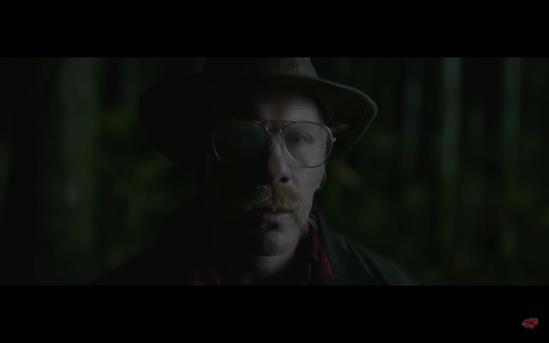
Frontman Bobby Gray and his Southern rock band, Dark Roads, were supposed to be next big hit next to The Rolling Stones, but there fame and fortune started dwindling after some short-lived success. Barely surviving on a here-and-there gig in 1979, Dark Roads manager, Grace King, secures a secluded cabin in the woods for them to find their new sound before being dropped by their record label. Along with their female companions, chatty coach driver, their sensible roadie named Cash, and a handful of some hallucinogenic drugs, the trouble band members continue to squabble amongst themselves, especially more so against the vain and alcoholic Bobby Gray. Gray holds a terrible secret from his bandmates, a secret involving a pact he made with the Devil ten years ago and, now, the debt is due, placing the entire group in mortal danger…the price for fame and fortune.

Based loosely surrounding the tragic circumstances of the infamous 27 Club mythos, a moniker given for a collection of up and coming talented musicians who die unexpectedly and prematurely at the ripe young age of 27, “Dark Roads 79” incorporates into the fold the legendary tale of Blues musician, a 27 club victim named Robert (Bobby) Leroy Johnson, who sold his soul to the devil at a Georgia crossroads during midnight for to be the greatest blues musician, or so the story is told. The 2017 film is the fifth macabre picture from writer-director Chase Smith who co-wrote the film with documentarian filmmaker, Richard Krevolin, who no doubt kept the script on a historical accuracy path, as much as one supernatural storyline can stay on. “Dark Roads 79” is a production from Smith’s Georgia based independent filmmaking company, Spirit World Productions, and brought to viewers by “Old 37” executive producer “Jason Anderson” and co-executive producer Nicholas Frank Auger.

Already donning many hats, Chase Smith slips on one more broad brim and trashy cowboy mesh hat with Ian Cash, the level-headed, good natured roadie with a voice like an angel, but built like a Mack truck. Cash serves as narrator who sets up the story that swerves across the dotted line into spoiler territory just a tad, but Cash becomes the vehicle that brings the viewers up to speed on the legend of Bobby Johnson and the rise and fall of the Dark Roads, like a cowboy quick connect in case you needed help in establishing that Dark Roads’ success hinges on a fatal pact with the Devil himself. While Cash may seem like the focal point of the story, there’s a split with lead singer Bobby Gray (David A. Flannery, co-star from a few of the homoerotic thriller series “1313”) whose vanity flushes Dark Roads’s stardom down the toilet. Cash and Gray go toe-to-toe many times and Smith’s emits formidable tough guy appearance on screen while Flannery impresses with a complete loathsome veneer. Neither Smith or Flannery make top bill however as long as “Devil’s Rejects” Bill Moseley has a show stealing bit role as the wicked tongue Christian, Caretaker Williams. Moseley’s short, catchy tune of “Boys and Girls they’ll make some noise. They’ll all be burning in Hell” is a classic, archetypal Bill Moseley character idiosyncrasy. Though Moseley’s scenes are short, they’re definitely sweet and rememberable. “Dark Roads 79” rounds out with “Creature Feature’s” Austin Freeman, Lance Paul, Libby Blanton, and Chance Kelley alongside April Bogenshutz (“Attack of the Morningside Monster”), Jessica Sonneborn (“Never Open the Door”), Jennifer Masty (“Rabid”), Eddie George, Ramona Mallory (“Piranha Sharks”), and co-writer Richard Krevolin as the bands’ chatty driver, Thomas ‘Motormouth’ Jones.

“Dark Roads 79” is categorically a a mystery slasher with a supernatural edge that tinkers with blending lore and the theme of lost good times and friendships despite how unfriendly and uncouth they might be, but Smith and Krevolin purely tiptoe around the keynote of terrible, yet sense of family, camaraderie, failing to capture the coherency of the melancholic essence due to loss and despair built upon years of cathartic criticism, distrust, loathing, and continuous bickering between best buds. In fact, the band and it’s entourage displayed little love if it wasn’t under the influence of some drug, but we must remember that the narrative is told through the perspective of roadie Ian Cash who believed in the band, and, in so, believed in each band member albeit their merciless fair share of busting his balls. The editing, cuts, and transitions are, perhaps, some of the most interesting with “Star Wars”-like wipe transitions that effectively heightened as a hallmark of the swanky 1970s era and the emotion-extracting lingering shots, such as with the handheld super 8 cam that roams the room of an abiding jovial moment in time, capture more of the tender times between the group of bitter and weary druggies, alcoholics, and vain temperaments. Unfortunately, the positives do not outweigh the negatives with a scatterbrained and predictable story that comes off as another failed spawn of the 27 Club urban legend and shaves off the emotional baggage with cheap kills and too many unfulfilling characters.

Make a pact with the Devil himself by watching Chase Smith’s “Dark Roads 79” that’ll debut on stage with a wide digital release by the end of May from genre distributor, Terror Films. No set date has been announced. The film will be hosted on multiple digital platforms, such as TUBI TV, Google Play, Prime Video, ITunes, and various other streaming options. Since “Dark Roads 79” will be a digital release, the video and audio specifications will not be reviewed as it’ll be different for all personal devices, but I will note that some minor portions of the dialogue elements were echoey at times. The original soundtrack has strength behind it with Southern Rock tracks by Black Mountain Shine, Mark Cook, Benton Blount, and HK Jenkins, who composes the single “The Road You’re Going Down,” written by Chase Smith, for the film’s official music video. There were no bonus features with the digital screener. “Dark Roads 79” has the necessary ingredients of a backwoods-frat party gone awry slasher except with Southern Rock, but this Georgia based production is tuneless and tone deaf as it stutters through the Devil’s network of deadly deals.