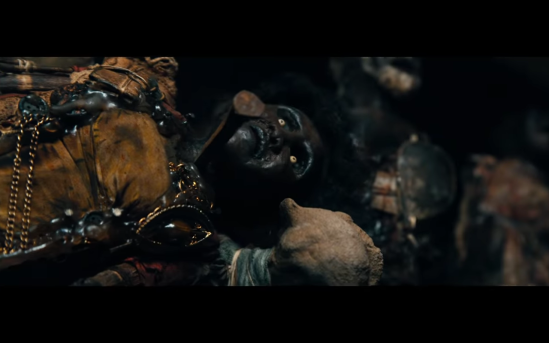
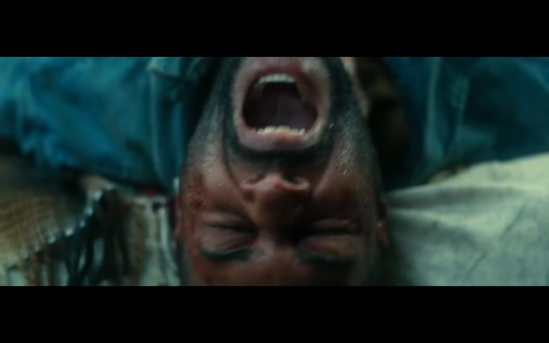
Never Poke Isolated EVIL. “Darkness in Tenement 45” reviewed! (Wood Entertainment / Digital Screener)

In an alternate reality of the 1950s, the Soviet Union has obtained components for long range biological weapons that threaten United States’ borders.  New York City has been declared as a tangible target and the city is evacuated of all residents, but one tenement, number 45, remains occupied, boarded up by the frightened tenants to shield themselves from the biological threat and from a possible USSR invasion.  Cut off from the outside world and running low on food and supplies, the building’s owner, Felix, ventures outdoors to forage what’s left on the streets of NYC, leaving Martha in charge of the dilapidated building, the anxious children and the terrified adults.  Martha’s adolescent niece, Joanna, arrived just before the evacuation; a measure taken by Joanna’s mother due to her daughter’s “darkness” of violent outbursts, but Joanna’s darkness conflicts with Martha’s authoritarian leadership leading up to a faceoff between children and adults in already tense surroundings.
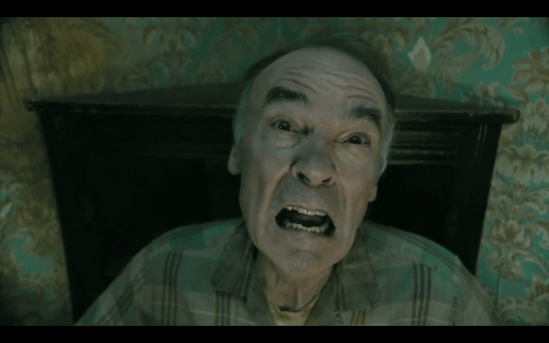
In August 2017, production finished on “Darkness in Tenement 45.”  In 2019, a Kickstarter campaign was launched to complete the post-production of the Nicole Groton written and directed psychological thriller based off fear and intimidation in the context of a Red Scare backdrop.  As her breakthrough feature film, Groton probably couldn’t have imagined that the release of her quarantine isolating and germ warfare agog could have coincided right in the middle of a current pandemic climate of self-quarantining anxiety and globally enforced lockdowns.  Yet, “Darkness in Tenement 45” can be viewed a sentiment of triumph in a time of actual worldwide darkness for a film with a crew that is comprised of primarily women and with a cast that favors the majority of dialogue roles also for women.  Groton supports her own cause by contributing as producer under her production label, A Flying Woman Productions, a North Hollywood, California based indie picture production company.
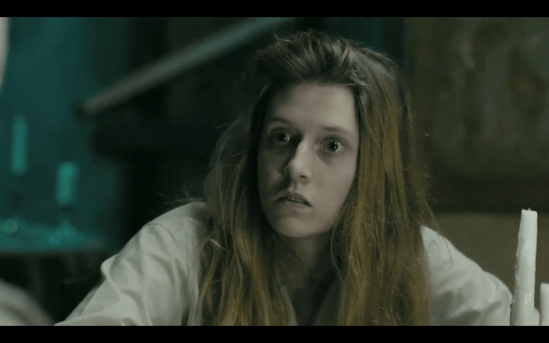
While there might be a contingent of characters that could easily be in the vying for lead, Nicole Tompkins is the discernible “darkness” descriptor in the “Darkness in Tenement 45” title.  The Texas-born actress has developed a little darkness of her own in her career corner being a principle lead in the 2018’s nightmares of the netherworld, “Antrum:  The Deadliest Film Ever Made” and also landing a voice role of one of survival horror’s most renowned heroines, Jill Valentine, in the remake of “Resident Evil 3” video game released this year.  Now, Tompkins scales the identity range as a damaged young woman sheltered in place from the elements of war only to be stuck as an afterthought amidst toxic authority that could endanger all tenants, creating a boiling tension culminating into a volatile climax with Martha, a role drenched with an unapathetic interest in children’s opinions, especially from the unstable ones.  Martha is played sardonically by “Blood of Drago’s” Casey Kramer with a seething disdain for anything that isn’t in her interest.  Overall, the performances and characters are grounded enough to development the story along it’s simple narrative lines, but not everything support character, who are supplemented with individual portions of the story pie, are well bloomed to sate their character.  For instance, Tomas, the youngest child of the building owner, Felix, has an undisclosed autistic side him and becomes obsessive with the breast of one of his older sisters, and while that plays out in Groton’s themes of partisan power when Tomas is given authority over his sisters from his venturing father, because of their innate Latina patriarchal culture, Tomas’s motivations fall short of really being dug out from the undercurrent context as an individual arc.  Same kind of broke off development can be said with Emmy Greene and Joseph Culliton’s characters as fellow adults who blindly follow Martha’s do-as-I-say mentality like lemmings toward their self-destructions.  The cast rounds out with a wide range assortment of children and adult actors that include David Labiosa (“The Entity”), Melissa Macedo (“Blood Heist”), Keyon Bowman, Marla Martinez (“Blood of Ballet”), and Anthony Marciona (“Invasion U.S.A.) who provides more of a 1950’s white man NYC accent true to the era.
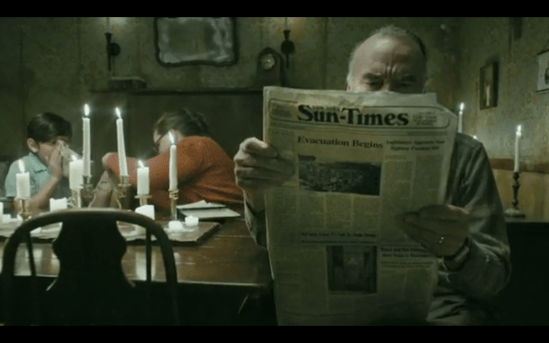
Revolving around the theme of isolation, “Darkness in Tenement 45” operates under the similar structure of John Carpenter’s “The Thing” by establishing a group of people cutoff from the rest of the world trying to survive a different kind of infection and the antagonist alien, represented as the darkness in Groton’s film, is the villain that tears the remaining survivors apart from the inside, metaphorically in the house instead of their bodies in this case.  “Darkness in Tenement 45” is by no means on tenterhooks or as a molecularly gruesome as John Carpenter’s classic re-imagining of an actual 1950s film, but the basic principles of the story present plenty of suspicion, hegemony, and stir craziness to go around, fueling the dreams and anxiety to Joanna’s snowballing psychosis redlining toward critical.  While I feel that the performances and wardrobe are not the best representation of the 1950s time period, the Caitlin Nicole Williams’ production design shoulders much of that responsibility.  Williams, who worked as the second unit production designer on the satirical-slasher “Dude Bro Massacre III”, creates a delineable vividness out of a bare bone lined tenement setting, appropriate for the depicted social class and period, while exuding the crude shiplap finish that fits the narrative, adding confinement and angst to the space.  “Darkness in Tenement 45” is Groton’s groundbreaking effort that dishes out this disorder of a safe haven in dismay; yet, the story pulls plot point punches that should have landed to knockout a more effective thriller that touches importantly upon the very livelihood and fate of each individual tenant in an alternate universe wartime backdrop.

On the biggest day of every four years, as anxiety-riddled clouds loom over the entire nation as we all wait in the shadows with bated breath of who will be the next President of the United States of Election Day, Wood Entertainment has embraced another kind of tense darkness with their release of “Darkness in Tenement 45” onto various digital platforms, including iTunes; Amazon; Vimeo, Xbox, Google Play, iNDEMAND, FandangoNOW, and more. Continuing the praise of the female-led thriller is with the Carissa Dorson cinematography that deposits two shot styles of the conscious and subconscious. When awake, Joanna and the others are engulfed in a hefty, deep dark and light wood brown scheme that compliments the slummy environment of their tenement. When asleep, Joanna is rendered in a softer image to resemble the hazy or airy atmosphere of her dreams. This style is also complete with a medium scaled purple-pink tint often associated with the hallmark callings of a 1970s-1980’s foreign supernatural horror. Dorson never intertwines the two styles, giving clarity to Joanna’s conscious and subconscious state without going deeper into the character’s easily agitated and short fuse temperament, while also setting up some neatly framed shots that make things look bigger or more menacing than they appear, such as the overly boarded up entrance door or the candle lit supper table that becomes a point of contention. Flashes of incubus imagery and the dissonance of gearworks clanking around an unhinged mind give “Darkness in Tenement 45” a morsel of allure amongst the thematical discord of breaking the chains of restrained individualism and overprotecting those with a firm hand from self-harm and while the film might not be pitch perfect, the spirit is strong in the vanguard of female-driven filmmaking.

“Darkness in Tenement 45” now available for rent on Amazon Prime!

A Troubled Family’s EVIL Dynamic. “Kindred” reviewed! (IFC Midnight / Digital Screener)

When Ben and Charlotte declare a decision to move from the English countryside to Australia, Ben’s ardent mother, Margaret, refuses to let her son move away from his family and responsibility in overseeing the massive manor property that’s been in his family for generations.  Despite friction between mother and son, even after the unsuspected announcement of Charlotte with child, the young couple are eager to start their new lives abroad.  An accident causes the sudden death of Ben that takes a psychological toll on Charlotte.  Margaret, and Ben’s aim-to-please brother-in-law, abruptly move Charlotte into the grand manor home as she floats through grief, but their overwhelming generosity turns into obsession with her every move, corralling her to do what’s best for the unborn child with undue stress based off her own family’s mental history.  As Charlotte resists more against the family’s insistence she stay, the stronger their grip on her tightens. 

Sometimes, meeting your partner’s family can be uncomfortably standoffish.  In Joe Marcantonio’s psychological thriller “Kindred,” reticent of personal gain and admission of truth becomes a thick, abrasive wall of tension that crimps the fringes of family relations and mental instability.  The writer-director’s debut feature film hailing from the United Kingdom, releasing this November 6th, tampers with the control over one’s own body through the traumatized perception of a pregnant woman with predispositions on having children in the first place and on her dead boyfriend’s unusual family, coursing with unsettling mental and emotional warfare that’s already tipped in one side’s favor.  The 101 minute, English-made thriller is a co-production of Reiver Pictures and Serotonin Films in association with the makers of “Pride, Prejudice, and Zombies,” Phil Hunt and Tom Harberd of Head Gear Films and Compton and Elliot Ross of UK based Kreo Films.

The players in this tumbling mix of disturbing cat and mouse antics are more or less confined to a skewed variation of an immediate family though none of characters are exactly blood relatives.  Neither Charlotte, Margaret, or Thomas share an smidgen of the same DNA, but have become entangled, in one way or another, into Margaret’s hampering incubator that shelter’s their distinct and varied, sometimes uncooperative, personalities.  Margaret is beholden to memory to her late son, Ben, and exposing Margaret’s egotistic manipulations so wonderfully subtle and true is Fiona Shaw of the “Harry Potter” saga in a role that isn’t so dissimilar to the blunt nastiness of her Aunt Petunia character, but renders a more fierce, enshrouding malice that’s less caricature.  The Irish born Shaw and “DunKirk’s” Jack Lowdon dance a beguiling routine of mother and son as Lowdon plays Margaret’s step-son, Thomas.  Thomas tends to Margaret’s every snippy whim, being a charming and gleaming host, and an overall nice guy, but deep in the recesses of our minds we know something is just not right with Thomas’s polished veneer that soon will explode with true intentions out of dormancy.  Yet, things might not be okay with our seeming heroine either in Charlotte.  Charlotte is very weary of Margaret and Thomas who indirectly, through her eyes, hold hostage the mother-to-be from fleeing the family now that the connection is broken with Ben’s death.  In her debut principle feature film performance, Tamara Lawrance’s Charlotte scribbles outside the lines that smudges the contours of perception reality, adding a complexity component to her character that may or may not being suffering from parental depression commingled with external stress that treats Charlotte like a child in herself.  Chloe Pirrie, Anton Lesser (“Game of Thrones”), and Edward Holcroft (“Vampire Academy”) round out “Kindred’s” strong supporting cast.

Marcantonio’s “Kindred” splits the focal point of isolating tension, dividing the source into two distinct paths from the point of a view of the self-protective besieged.  In one hand, the pregnant and mentally vulnerable Charlotte experiences apprehension of being forcibly, and manipulatively, instructed by Margaret and Thomas to do what’s best for the baby…Ben’s baby.  Having never seen eye-to-eye or felt comfortable around Ben’s instable mother and peculiar brother-in-law, Charlotte has no Ben as a buffer against their coarse personas, overpowering her as a tag-team of self-interest, but most of everything Charlotte experiences is filtered by past judgements about them.  Alternatively, Margaret, Thomas, and even her boyfriend Ben, note directly to Charlotte her mother’s history with postpartum depression.  The undercurrent theory that it produces brings an under the table perception of how audiences will then try to solve Charlotte’s predicamental puzzle.  On the surface level, Charlotte is being held captive and drugged by her late boyfriend’s estranged family; obscurely, Charlotte’s terror is manifested by a loathed family lineage of mental illness and when your observations goes in one direction per the mind’s pre-wired setup, but all the evidence points to the contradiction, audiences will begin to empathize more closely to the harrowing experiences, through childlike control, of an unstable mind on the brink of a break.  Marcantionio very clearly makes things unclear of an in-between reality that challenges not only audiences, but also Charlotte, on what’s real and not real of the mind’s emphasis.  However, not everything is teed up perfectly as some of the abstract visuals, i.e. Charlotte’s dreams of ravens and horses, fall more into the rigors of psychological concepts that become lost in the affect of either pathway toward what could be considered a Schrodinger’s Cat finale as Charlotte, stuck inside a manor house that’s symbolically a box, could be both sane and insane.


Family can be a finicky thing and “Kindred” is a fastidious look at the instability of family and mental illness which can be, in filmmaker Joe Marcantonio’s eye, interchangeable.  Setting up shop before families get together for the impending holiday season, IFC Midnight will release “Kindred” in select theaters, on digital platforms, and on VOD November 6th.  In regards to the look of the film, director of photography, Carlos Catalan, hones in on a series of medium to medium-closeup shots while grasping very little toward widescreen shots, especially being shot mostly in a grand manor house in Scotland.  When Catalan has symmetrical framing, the allusion is gesturing grand with loneliness, but the cinematographer rarely has the frame centered, often creating an unnerving amount of space in the depth when juxtaposed with an uncentered character in the closeup all the while in natural light to not feign cynicism through use of color or filter. The only time filters are used are in the purple hued airy dream sequences with the raven and horses that become a metaphorical motif of Charlotte’s embattled dreams. The score is composed by a UK collaboration of multi-instrumental composers in Natalie Holt and Jack Halama. Holt’s harsh violin chords with Halama’s drama-fueling classical style produced hints of Mark Korven’s “The Witch” in similar tones, but explode with targeted dissensions that spur equally emotional dissensions amongst the characters. There were no bonus features included with the digital screener nor were there any bonus scenes during or after the credits. “Kindred” is relationally disjointing, disturbingly psychological, and textbook taut with tension as one of the best familiar thrillers to come out of the United Kingdom in the last quarter of the year.

Never Had An EVIL Friend Like Me! “Come Play” reviewed! (Focus Features / Digital Screener)

Elementary student Oliver has autism that impedes his speech, requiring near obsessive use of the phone and tablet to communicate with touchtone words as well as using the device for recreational binge watching of SpongeBob SquarePants to calm him when agitated.  Unable to make friends, Oliver’s loneliness causes him to sink deeper into his devices while his parents bicker amongst themselves on the endless topic of caring, treating, and assisting with Oliver’s needs, such as speech therapy and daily routine.  On another dimensional plane, looking inside-out of Oliver’s devices, is Larry, an equally lonely, misunderstood monster trying to break into Oliver’s world and take him away to be forever friends.  It’s up to his overprotective mother and insouciant father to stop Larry’s aggressively desperate out reach into Oliver’s world and pluck him forever from a life of being misunderstood. 

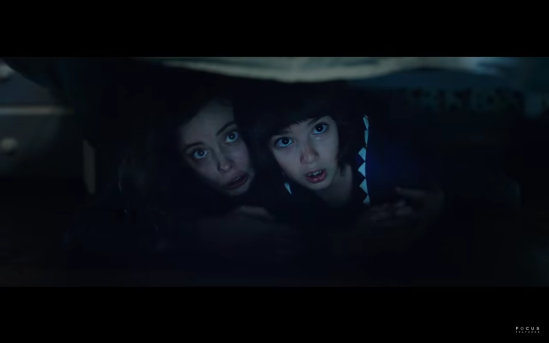
Forget the monsters lying in wait underneath the bed!  Forget the monsters lurking inside the dark closet!  The monster in your phone, capturing your attention span on a glossy-eyed level, should be the monster we all fear from Jacob Chase’s written and directed tech creature feature, “Come Play.”  “Come Play” introduces Jacob Chase into feature filmmaking after being involved wearing multiple hats in a series of short films, spanning over in the last decade and half, with his 5-minute long short film, “Larry,” plotted out as one third shift bored parking lot attendant who discovers an abandoned iPad inside the lost and found box located in his booth and releases a disfigured titular creature that lumbers toward him after reading through  “The Misunderstood Monster” children’s tale on the device, becoming the foundational work inspiring a 96 minute, fully fleshed out narrative with dangerous undercurrents of voyeurism and loneliness coinciding with an equally-hazardous theme in the detriments of being a helicopter parent, hindering the independent growth and maturity of youth. “Come Play” is a co-production of Amblin and Reliance Entertainment.

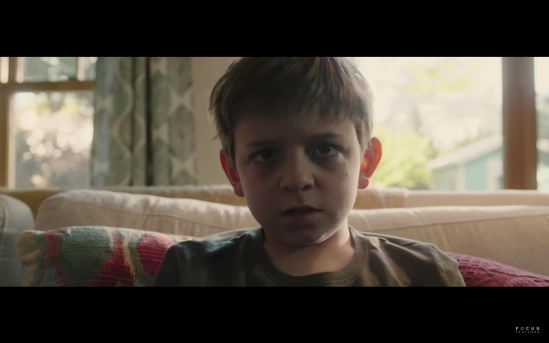
When they’re in a career hot zone, child actors flourish and grow inside a broad base of horror, being nurtured either from or by the creepy child sub-category or from or by being the unlikely hero that has the save the oblivious adults (just look at the kiddie cast of “Stranger Thingsfor example). Azhy Robertson falls into the latter as the epitome of innocence in playing Oliver, a young boy with autism unable to communicate clearly the monster stalking him from a stratum between two existences. “Marriage Story’s” Robertson continues to gleam versatilely as an actor who can use his imagination to not only react to a rendered behemoth creature but also submerse into the characteristics of autism and not oversell beyond what’s needed. Robertson also continues his girth toward a well-rounded career that now has a notch for horror under his broadening belt. Like many monster-plagued kid horror, the parents are always oblivious and dismissive to the situation and “Come Play” continues the trope with a pair of quarrelling parents in the midst of separation that undoubtedly adds to the extramundane energy fueling Larry’s need for Oliver. Gillian Jacobs (“Bad Milo”) and John Gallaghar Jr. (“Underwater”) butt heads sorely on one topic: Oliver. As their marriage dissolves through unspoken subtleties under the Oliver epicenter, that missed mightier connection could have been more powerful on how the split up affects the reactionary consequences of Oliver’s developmental disorder, an affect so tremendous that it componentizes Larry and his aggressive and brazen abduction tactics that are not so discreet. However there characters are perceived, Jacobs and Gallaghar modestly pack a punch in what has been laid to be the Azhy Robertson show of a vulnerable, yet smart, child versus a relentless and grotesque monster. Winslow Fegley, Jayden Marine, Gavin MacIver-Wright, and Eboni Booth round out the cast.

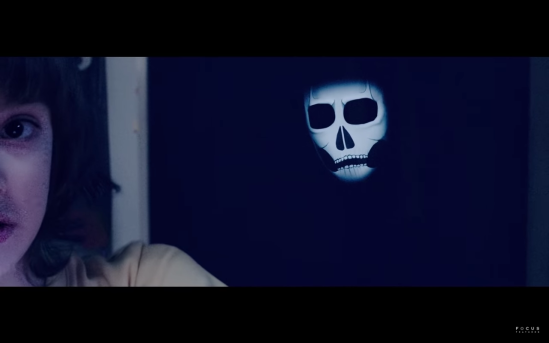
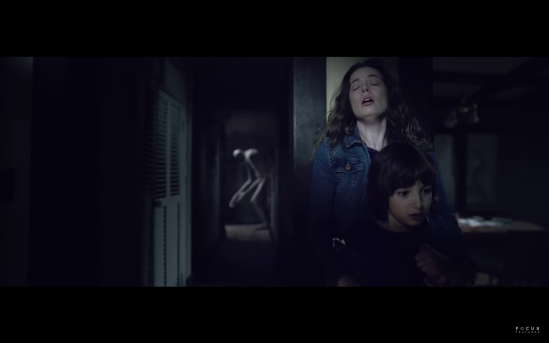
Jacob Chase has proven to be able to handle building breath-holding suspense and tension with the otherworldly plane Larry, a Slenderman-like in appearance and character inspired villain lumbering around not only in Oliver’s house, coursing through the electrical currents in his sub-plane world, but also by peering from out of closets, shying away in the darkest corners of the house, and looming around in a parking lot’s graveyard shift hours only to be perceptible through the phone and tablet camera lenses and, at times, manifesting a translucent presence that has force behind, the latter being an added side dish, transcending from Chase’s short film, to Larry’s predacious tech-manipulating arsenal when obstacles stand in the way of his BFF.  Even if “Come Play’s” superlative thrills ride on the heels of potent jump scares and unnerving silence with bated breathed, hiccups do arise in a more alleviated roller-coaster that shreds holes into the well-established terror instead of nurturing the tone.  Now while I understand the rating is PG-13 to secure a wider audience and, maybe, be a little lighthearted at times, an awkward diluted dread douses the credibility of the characters in strife with actions, such a scene include Oliver’s parents striking down upon his tablet with alternating hammer blows.  In what almost seems like a joke with an archaic technique that old-timey railroad workers use when nailing in track spikes or when carnies – one being a clown – hammer in spokes in unison to erect the big top, the scene is just out of focus in regards to the rest of the scope and there are other scenes like these sprinkled in throughout that raises character quandary concerns.  Why not just one parent whack away on the destruction of the dag’on device?  A handful of the reactionary actions to protect Oliver are glazed with an unreasonable, panic-stricken defense that begs the question whether they’re fit to actually be parents, which, if looking on the flipside of the argument, might also play into more of the unbeneficial family structure that originated the Larry intrusion.  Speaking of originating and the monster, Larry’s exact origins is obscured from the audiences as no plot points touch in depth upon Larry’s background and, you know what, that’s okay here; the more mysterious path is sometimes the best and, in “Come Play,” Larry’s inexplicable being as a child seducing abductor relates much more frighteningly and unfortunately in real world occurrences. 

Predators come in all shapes and sizes.  In this case, Larry’s atrocious presence, trying to obscure his real identity innately, symbolizes the very personalities of the real monstrous predators living among us, trolling online to prey on the vulnerable.  “Come Play” is an oxymoronic subtle hyperbole that serves as a cautionary warning for parents and children molded with pure monster in the closet entertainment in mind releasing theatrically on October 30, pushed from its original July release due to COVID-19, courtesy of Focus Features.  Serving as director to photographer is French cinematographer and serial shadow worker, Maxime Alexandre, who was worked with acclaimed horror director Alexandre Aja on “High Tension,” “P2,” and “Crawl.”  Alexandra manipulates the space, melding wide, full and closeups, to work the perceptions toward a post-production visual design in adding Larry into the frames and honing in on the lighting to just show enough of the space to make the allusion of Larry’s presence even more ominous. The back and forth of the underused practical Larry and the mostly CGI Larry sparsely have any difference between the final product outcome. The visual effects team of Mr. X saunter with what could have been a clear disaster of composite creature imagery with all the trademarks of synthetic splicing; instead, Larry matches well to the point of an indistinguishable challenge between what’s real and what’s not. The score by the “Don’t Breathe” and “Evil Dead” remake’s Roque Banos does the job to subversively infiltrate the security earmuffs to wring your cochlea to an inch of its life, but doesn’t resonate with you much more than the length of the film; however, Larry’s clicking and snapping of his appendageal joints and his guttural clatters emanate vicinity apprehension, as if the audiences can hear the dun dun hook as a tall tale sign of a circling shark in the water.  Sound design is half the fun in the film as the monster is more than half there when it’s on screen. No bonus material accompanied the release and there were no bonus scenes during or after the credits, but I’ve included Chase’s short, “Larry,” below for your own comparison and enjoyment!  “Come Play” boosts many unsavory themes between the parameters of technology and children underneath a mask of a faceless friend willing to frighten and fight anyone into submission to obtain complete, domineering companionship to end his chilling fairytale story.

Larry: Short Film

EVIL Hoodooism is No Mumbo-Jumbo! “Spell” reviewed! (Paramount Pictures / Digital Screener)

Marquis E. Woods is a powerful defensive attorney good at his job, attaining wealth and position to the likes he’s never had as young boy raised by a fervent and abusive father in the Appalachian mountains of Kentucky; a life now he always wanted he can now share with wife, Veora, and pass to their children, Samsara and Tydon.  The news of the death of his father sends him and family on a flying to the rural part of Kentucky to pay their respects in Marquis’ personal small aircraft.  A terrible storm forces down the plane down in a remote wooded valley and an injured Marquis wakes up in attic on a farm ran by a proclaimed rootwork old woman, Ms. Eloise, with her husband and oxen-strong farm hand.  Trapped and concerned for his missing family, Ms. Eloise slowly nurses him back to health with a Boogity, a Hoodoo figured representation of Marquis comprised of his flesh, blood, and other DNA elements, but her Southern hospitality isn’t for good intentions as she mends and prepares his wounded body, brewing a sinister spell upon his soul, for the forthcoming blood moon that lies days ahead.

Experiencing Hoodoo dark magic horror back on a bigger production scale is on the same extraordinary gamut in discovering the lost city of Atlantis.  Well, maybe not as profoundly archeological as discovering Atlantis, but still immensely impactful. Films like the Mark Tonderai directed “Spell” hit like a ton of brick-shaped talismans, fettering the imagination with hexes that bewitch fascination and captivation, and roots through an endless torrential fountain of ancient beliefs to scour the dark side of the practices for celluloid terror. “The House at the End of the Street” director Tonderai moves away from restraints of PG-13 horror before heading into a stint of helming television episodes only to make a glorious return back to features with the R-rated black magic action-thriller, “Spell,” penned by Kurt Wimmer who knows a thing or two about action-thrillers as the writer of the gun-toting, martial arts dystopian, “Equilibrium,” and bloodily vindictive thriller, “Law Abiding Citizen”.  Filmed in Cape Town, South Africa that, through the slight of hand of movie magic, turns South Africa into rural Kentucky, “Spell” is a co-production of Paramount Pictures, LINK Entertainment, and MC8 Entertainment as well as being a product of puncturing the rarely topical social class and racism division within the same race.

To play a determined and savvy father and husband on the ropes of survival, “Power’s” Omari Hardwick steps into the detained role of Marquis E. Woods, surely prepping himself against Ms. Eloise’s wicked dark magic before battling the flesh hungry undead in the upcoming Zack Snyder zombie-geddon horror, “Army of the Dead.” Hardwick is the ideal actor for a role that, at times, can be physical; his athletic build suits also Woods’ affluence though not required as scene with the brawny farm hand that introduces South Africa’s very own fitness entrepreneur, Steve Mululu.  Woods is pitted not only against formidable muscle, but also has to outwit the four or five lifetime smarts of an old root woman, Ms. Eloise, diabolically portrayed with a legendary entrenched Southern vernacular by the “Urban Legend” actress, Loretta Devine.  On the downside of the character, Ms. Eloise is rich with historical saturation that goes unchecked and unexplored and she seems a little more slapdash with her rituals and her captives.  In what really is a mind game of wit and Podunk wizardry between Hardwick’s Marquis E Woods and Devine’s Ms. Eloise, the remaining cast for “Spell” shoulders only little to annex more substance toward the tensions between the two principles, including performances from Lorraine Burroughs, John Beasley, Andrew Jacobs, Tumisho Masha, RJ-Karlo Handy, Hannah Gonera, and Kalifa Burton.

Aforementioned, “Spell,” between the domestic xenophobia opulence dividing the Woods family, the quaint, yet tangible body horror, and the abhorrent mysticism surrounding Hoodooism, teeters on loose ground with not only Ms. Eloise’s foundation, but also with main character, Marquis E. Woods, who suffers continuously from trauma-induced nightmares of his abusive father. Through flashbacks, Marquis is beaten with verbal assaults and even, seemingly, being stabbed or mutilated by his father. Yet, that’s about as far as the flashback dynamic progresses the thread bare bond until a minor moment at the climax is when Marquis then embraces his father’s aggressive nature, tuning more into a theme of stative stance that Marquis and father might not have seen eye-to-eye, but the son learns to survive through amplified evil by way of his father’s tough, tortuous care. The relationship circles backs with Marquis’ entitled children, whose piggyback wealth has molded them indifferent against the benefits given to them and partisan toward the backwoods people of color, and “Spell” becomes an insidious allegory creeping into the fold with a little tough love from your parents, in this case father, will go a long way. “Spell” also rarely pulls any punches with a welcoming cringe of ghastly violations of the human body (that pulling, inserting, and then re-pulling out the spike in the bottom of the foot gag will make you actually gag!) and inside the rustic and isolating confines of Ms. Eloise’s Kentucky farm compound, there’s a rough-hewn atmosphere that elevates the subgenre, shaking it to the core at times.

“Spell” is terrific urban horror tinged with “Misery” but driven by historical oppression stemmed Hoodoo, releasing just before Halloween on October 30th distributed by Paramount Players, a division of Paramount Pictures that’s still very much in it’s infancy. Jacques Jouffret (“The Purge” franchise) has a tight knit and jarring cinematography that puts the audience in the front, debilitating seat, empathizing the mind-warping effects that Marquis faces with a violent plane crash, nerve seizing torture, and banding Hoodoo hallucinations. Plus, there is fancy crane camerawork that marvels to capture multiple actions between characters. The score from Ben Onono fulfills the tension-riddle need with incessant zest, complimenting the narrative tenfold. Since “Spell” is a brand new release, there were no bonus material included and there were no bonus scenes during or after the credits. Don’t belittle the Boogity in this year’s most unique and contending horror movie that casts a “Spell” over the rest of the competition.

Pre-order “Spell” on Prime Video


Pass or Fail Weekend is Evil’s Playground. “Camp Twilight” reviewed! (DarkCoast / Digital Screener)

On the verge of failing and having to repeat a grade, six students are given the opportunity to spend one technology free weekend at Camp Twilight with their homeroom teacher, Ms. Bloom, and principal, Mr. Warner, as chaperones.    Planned with a series of outdoorsy, bonding activities, the weekend will serve to boost their grades to the cutoff line for graduating and, for some, maintaining their spot on the high school sports teams.  A local urban myth has haunted the camp’s reputation based off a grisly scene of murders a few years back, but the revamped park now serves as a community safe zone overseen by three dedicated, and also quirky, park rangers:  Art, Bob, and Chief Tom.  On a weekend where none of the students wanted to attend, forced by the threat of academic failure, an ominous figure revives the camp’s notorious past as one-by-one campers, teachers, and park rangers fall victim to a hooded killer’s impulse for blood.

Summer camps and masked serial killers are as synonymous as the vast ocean is with the dreadful thought of man-eating sharks.  “Friday the 13th, “Camp Blood,” and “Sleepaway Camp” have made a fortune and a franchise off the backs of the hapless summer campers, hacking and slashing away at the pre-martial sex crazed, the love struck wimps, and the overconfident jocks to build a flawless, ultimate killing machine series.  Will director Brandon Amelotte’s debut slasher, a horror-comedy entitled “Camp Twilight,” claim stake in the genre being the next persevering serial killer franchise?  For starters, the USA-made, indie feature releasing later this month has a leg up with “Sleepaway Camp” scream queen Felissa Rose headlining a cast that also includes a few other genre favorites as well as co-written the script with Amelotte.  Shot on the grounds of the palm tree lined Markham Park, “Camp Twilight” trades in mountain bike trails, disc golf, and it’s outdoor weapons range for machetes, lots of machetes, and is a product of Rick Finkelstein and Brandon Amelotte’s Florida based Entertainment Factory productions and, also Amelotte’s, Pelican Films.

As mentioned, genre icon Felissa Rose ditches the awkward teenage camper from the finale traumatizing “Sleepaway Camp” for a hyped-up, goody two shoes high school teacher in Ms. Bloom.  The top billed Rose brings the energetic know-how of her fully present, larger than life, broad range persona who audiences will never know exactly where her character stands until it’s lethally too late!  Rose is joined by more fresh faced, incredibly automaton co-stars in the roles of the six students and principal, played by the executive producer Barry Jay Minoff.  Minoff and Rose are supposed to be a couple concealing an affair, hiding their lustful courtship very poorly around the students, but both roles are completely under written, unexplored, and unfulfilling in the grand scheme of their pivotal plot point.  Little can be said differently about the students with a range of interrelationship intricacies that tried to be fleshed out as psychological terror triggers in lieu of their already conventional teenage sensitivity struggles.  There are other cult genre vets alongside Rose but in minor, more cameo-esque roles.  Linnea Quigley (“Return of the Living Dead”), Camille Keaton (“I Spit On Your Grave”), and Vernon Wells (“Innerspace”) add more or less star power to the fold, supplementing virtually nothing to the narrative but campy slasher fodder for fans to gobble up.  More impressively is Dave Sheridan bringing forth a version of “Scary Movie’s” loveable dimwitted cop, Doofus, with Ranger Bob, adding a great deal of the substantiated comedy toward “Camp Twilight’s” campy ebb and flow.  Cougar MacDowall, Thomas Haley, Hayleigh Hopkins, Harris Sebastian, Dondre Tuck, Brooklyn Haley, and Steven Chase, with “Truth or Dare’s” Jessica Cameron and Sport’s Illustrated model-turned-film producer, Tracy Lear, filling out the troupe lineup.

I wish I could say that “Camp Twilight” is a campsite of entertainment, a paradisal slasher of genius design, offering up a new breed of deranged psychopathy to the likes we’ve never seen.  Unfortunately, I couldn’t make heads or tails out of Brandon Amelotte’s derivative and tired trope-laden slasher rippled with loose and forgotten subplots and characters while at the same time being a heap of longwinded exposition that still way after viewing can’t fully explain the turbulent core of the story.  I hate to knock anything Felissa Rose touches, but I would be doing an injustice and a disservice if I tried to play up a slack script that starts off picturizing a campy horror-comedy but plays out the third act with critical revelations without a hint of funny bone material. The kills follow the trend of a lighthearted horror comedy, albeit the pelting of F-bombs, with “Camp Twilight’s” holdall of off screen deaths, barely scratching the surface with on screen kills rendered only by closeups, and not particularly bloody, intense, or nearly as menacing by a black hooded killer in jeans creeping up on prey in a well-lit campground with lots of room to run. The same company, Entertainment Factory, behind the horror icon drenched disappointment, “Death House,” should have been a clue into “Camp Twilight” critical success, but much like the “Death House,” both films are a totality of mess.

Not a fan of the outdoors? Hate bugs, snakes, and all things that go bump in the night? Does your fear of an unclear, inaccessible toilet seize you up? DarkCoast has you covered with their digital release of “Camp Twilight,” arriving onto digital platforms come November 1st, 2020 – Day of the Dead. The release platforms will include InDemand, DirecTV, FlixFling, Vudu & Fandango. The A/V qualities will not be reviewed due to the digital screener provided for this new film release, but I will say much of the soundtrack sounds stock file-ish (and there is no composer listed which would be a dead giveaway) and the Adam Beck cinematography is too well-lit, benumbing any kind of intense emotions that would correlate with the action. There were no bonus features included with the release nor were there any bonus scenes during or after the credits. “Camp Twilight” plays into it’s own title as a dim denticulated slasher that’s far too breathy and far less spirited and so the question stands, will “Camp Twilight” be the next slasher hit to spawn a lengthy, decade spanning franchise? The answer is no.