

For four years after the initial zombie outbreak, a unified Korean peninsula is completely quarantined from the rest of the world with the remaining survivors having to fend for themselves. A former Korean Captain, Jung Seok, who was one of the last survivors to escape pre-quarantine and now lives in Hong Kong, is hired for a four man team to return to the peninsula and retrieve an unmarked and abandoned truck stowed with $20 million dollars in U.S. currency. With a promise from a Hong Kong mafia boss to keep part of the loot for their recovery services in order to start a new life, the team agrees to the terms and embarks on the seemingly succeed mission only to find survivors who have gone mad, pillaging their mission and conscripting them into a malicious betting game of survival in a watery pit full of zombies.
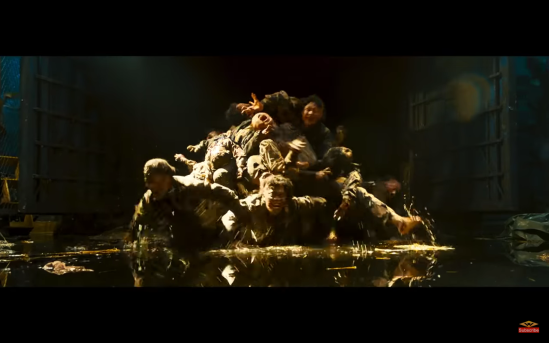
The highly anticipated sequel to South Korea’s 2016 sleeper zombie hit, “Train to Busan,” docks into U.S. theaters and VOD services on August 21st and is entitled simply, “Peninsula.” From the bullet train rails to the a devastated Korean port, the predecessor film’s director, Yeon Sang-ho, returns with a zombie overrun post-apocalypse that completely metastasized Korean derived from a biological agent quickly spreading throughout the two cinematically unified, North and South Korea. Joo-Suk Park returns as co-writer alongside Yeon to provide heart clenching, brutal action-horror suspense and a human sense of selfless compassion that won the hearts of many genre fans with “Train to Busan.” Zombie hordes rampage down streets, alleyways, and toppling over cars, fences, and other structures as a collective flesh easting unit that specializes in dominating and ravaging for the pure motive of infection and while that sounds all hip and cool that the “War World Z” and “I Am Legend” running zombie pandemonium makes for a glitzy entertainment feedbag, the Next Entertainment World and RedPeter Film production punches down on the gas pedal of gaslighting audiences with more of a “Fast and Furious: Tokyo Drift” with zombies, revving more to the tune of an exasperated exhaust rather than finishing strong with gripping storytelling.
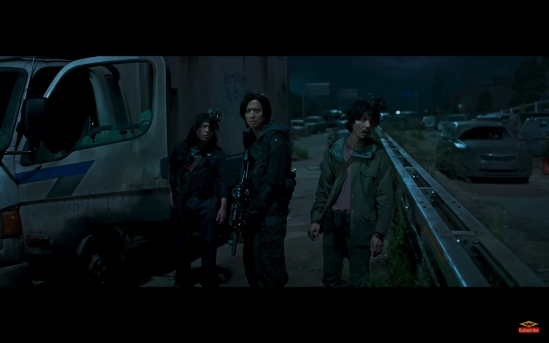
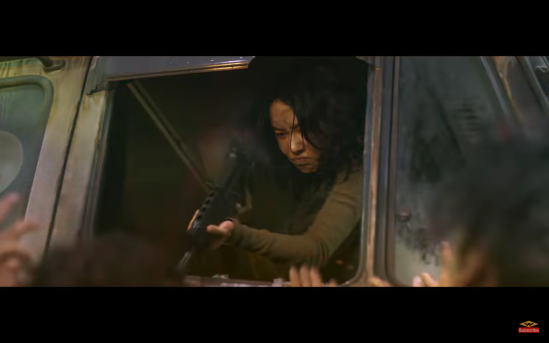
As a standalone film, the story doesn’t return the surviving characters from “Train to Busan.” Instead, a whole new set of characters reset the parameters of expectations, starting with the guilty conscious of the grief-stricken ex-soldier, Jung Seok, played by Dong-won Gang, who will star in Scott Mann’s upcoming disaster film “#tsunami.” Seok’s a reserved and stoic individual whose good a gun play, but isn’t the thinker when a plan is needed in place and while Dong-won Gang gives a par performance, the overall package of the lead character is sorely two-dimensional. This leaves room for other characters flourish, such as the mother and children Seok attempts to save on a second go-around. The mother, played by Lee Jung-hyun, has more grit that clearly defines her underlining hope for not only her salvation, but also her children who’ve known nothing but death, destruction, and meaning of being devoured growing up in the midst of a zombie apocalypse. On the slim change of success, she implements a plan to infiltrate Unit 631, former military turned murderous scavengers, to steal back a satellite phone and a truck full of cash while not becoming zombie chow or get caught in Unit 631’s sadistic survival methods. That brings us to the villains, the real villains, where are not the zombies, but the section 8 soldiers of Unit 631, Captain Seo (Koo Kyo-hwan) and Sergeant Hwang (Kim Min-jae). Though Seo and Hwang bring internal tension to the table, a mental game of cutthroat chess, they’re inevitably soft against the main threat, a combined effort of Jung= Seok and Min-jung, and don’t spill enough blood and craziness onto the screen to make them worthy of the antagonist position. “Peninsula” rounds out the cast with Kim Do-yoon, Lee Re, Lee Ye-won, Moon Woo-jin and Bella Rahim.
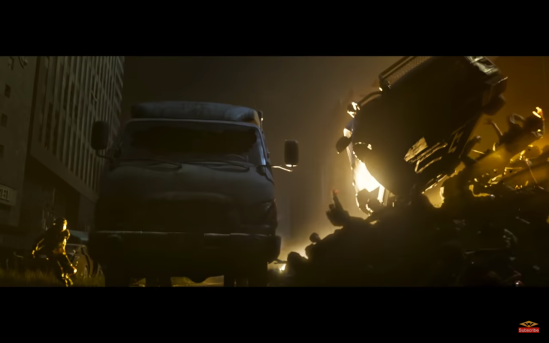
As almost methodical as it is with any second film in a series, “Peninsula” failed to be a rejuvenating and transcending sequel to “Train to Busan,” abandoning the first story’s benevolence for CGI flair that extends to not only the zombie hordes, but to the car chases. As excellent as the rendered zombies are slammed against the drifting cars can be represented, in what “Peninsula” can be described as an “Escape from L.A.” meets “Land of the Dead” meets “Mad Max: The Road Warrior,” the cars themselves are a product of computer imagery with little authentic driving happening. While the effects are not bad (they’re pretty good chiefly obscured by dim lit night scenes), the sensation of being scammed can’t be ignored as the vehicles operate unnaturally and maneuver in impossible situations without blowing a tire or upending or just frankly be dead in the water with an overheated and stress tussled engine that frags zombies left and right, becoming a collective character to have the highest kill count. That disingenuous feeling also spreads to the overly long-winded ending that tries really, really hard to capture a courageously defiant and heroic moment of family and personal redemption and much of the blame lies on director Yeon Sang-ho with a drawn out awkwardness and edit that made it seem satirical. In light of some positive words for “Peninsula,” the zombies are a greater, gigantic force that swarm on a colossally epic scale more so than the much more compact “Train to Busan” and, as aforementioned, the structured CGI isn’t of the degraded detail variety so the hordes never look cheap or obviously artificial alongside the more palatable, practical versions. What’s also interesting about “Peninsula” and what makes it separate from “Train to Busan,” which perhaps laid the foundation for, is “Peninsula” has integrated the western counterparts as English speaking actors chime in as U.S. Military, U.N. peacekeepers, or English mafia bosses based in the U.K. This challenges the Korean actors to speak a few different languages, especially English, inclining “Peninsula” as more of a global problem than an isolated Korean one.
The zombie genre isn’t just defined by the ungodly amount of undead bodies reaping the world of every living soul, but is also defined by the diversity of chaos-driven social structures people find themselves confronted with in the action-heavy “Peninsula,” arriving into U.S. theaters on August 31 and distributed by Well Go USA Entertainment. This review will not contain the A/V aspects of the release as it’s a theatrical screening of the feature, but the theater specs will look something like this: projection is in scope lens format at an aspect ratio of a widescreen 2.39:1, a surround sound 5.1 stereo mix, Korean/English/Cantonese language with English subtitles, and has a runtime of just under two hours at 116 minutes. I will note that some scenes are very dark, but this only adds to the complete blackout of a civically desolated Korean peninsula. From fast trains to fast cars, “Peninsula” has retained the adrenaline popping rampant style with weaving, bobbing, and chassis chucking zombie bodies like the ball in a pinball machine despite a facile approach, but is ultimately missing that down-to-Earth social context complexity aimed to provoke thought and shed a few tears as an inferior part two of the “Train to Busan” universe.
Category Archives: Trailers
They Say There Are No Bad Children, But This is One “EVIL Boy” reviewed! (Well Go USA Entertainment / DVD)

Igor and Polina suffer through every parents’ worst nightmare; their son, Vanya, has gone missing. Three years later, Igor arranges an orphanage visit on the outskirts of Moscow to make Polina happy again by possibly adopting a young child, but their visit is cut short when Polina discovers the gruesome dead body of a basement keeper and a savage child barred away in a dungeon-like room. Polina is instantly imprinted by the child and convinces Igor to adopt him despite the difficult malnourishment and animal like behavior, but over the course of time, the child exhibits signs of behaving like their missing son and even starting to look like Vanya, their missing son’s name Polina has now bestowed upon the child against Igor’s wishes. As the feral child shows more signs of acclimating to his new life, Igor and Polina sense something more sinister from the child whose resembling more and more like Vanya every day and begin investigating into their adopted son’s origins, a well-kept dark secret guarded by the convent orphanage.

From examining horror films from our Northern neighbors in Canada to crossing the oceans and landing in Eastern Europe of the birthplace of Vodka, Russia, we’ll be taking a look at two recently released and storied dissimilar upcoming horror movies from Russia Federation, beginning with the belief that no country is exempt from the creepy kid genre in this Russian 2019 allegory entitled “Evil Boy” as the debut film from writer-director Olga Gorodetskaya. Also known as “Stray” world-wide or “Tvar” in the original dialect, “Evil Boy” is straight-forward, focus group approved, vanilla title of a story from one of Russia’s celebrated modern novelist and screenwriter, Anna Starobinets. Also dubbed as Russia’s “Queen of Horror,” Starobinets is a prolific adolescent thriller writer whose credits includes the compilation of short, chilling stories entitled “The Awkward Age” with the featured tale of a young boy’s life diary expressed through the voice of an ant colony living inside his body and the queen his brain as a conduit for her commands. “Evil Boy” is a production from a conglomeration of companies including Yandex Studio, Cinema Foundation of Russia, Dublab, and Reason 8 Films.

The titular character of Stray or Vanya allows no audience insight and we’re impelled into the perception of the grieved parents, Polina Belova (Elena Lyadova) and more so with the father, Igor Belov (Vladimir Vdovichenkov). While director Olga Gorodetskaya is new to the scene, the chemistry of Lyadova and Vdovichenkov have well been established from a baseline foundation set from their prominent collaborative roles in Andrey Zvyagintsev’s powerful small town corruption film, “Leviathan.” Their dynamic transcends a range of individual performances from crime into the horror realm with parents going through the stripping loss of a child that has compromised their marriage to the point of desperation to the eventual short term passion that has rekindled with the adoption of the Stray, a primal role befitting young Sevastian Bugsev in his introductory feature film. Giving Bugsev credit would be such an underwhelming praise as the eight year old not only nailed the savage child performance, but also endured an aggregation of makeup that gradually transforms his character over time. What’s interesting between the three actors is that they form this family love-triangle of sorts, where Polina embraces the child, but then is frightened of it and in a role reversal, Igor is skeptical of the child, but then tries to love him unconditionally. Just in that square footage, the amount of flux emotions and mindsets can favor one side over the other; yet, the actors pull it off, almost too well, creating a an unrest of feelings, conversations, and approaches to their characters. Key supporting roles include performances another fellow “Leviathan” thespian, Evgenly Tsyganov, as well as Roza Khayrullina, Konstantin Topolaga, Anna Ukolova, and Evgenly Antropov.

“Evil Boy” has some psychology behind it. Hell, even a few of the film’s posters are composited of Rorschach tests and what “Evil Boy” ultimately boils down to is how we interpret our grief of a loved one. Polina and Igor are written to exhibit multiple signs of the clinically coined Complicated Grief that follow the patterns of avoiding the reality of death, persisting nothing has changed, and a bleak numbness to the event. The motif of trying to replace something dear with something else, as a comforting mechanism, is consistently brought to attention and goes as far as leaving a forlorn image of the same motif as a finale twist to drop an atomic loop of melancholic isotopes on you. The psyche portion of the “Evil Boy” is as equally important as the evil boy himself as it’s only a representation of our characters’ will and grief, but whether it’s Starobinets story or Gorodetskaya’s script or both, “Evil Boy” has a yawning plot hole regarding the boy’s origins that’s briefly represented with a dialogue-less scene of cataclysmic and ritualistic images jumbled together for your mind to piece. This sort of passive logic translates equally to the unpalatable editing that plunges the story into a fit of turnaround key moments unable to linger and build upon and stress character developments and form audience relations. Much of the psychology the “Evil Boy” tries to impress is squandered by Gorodetskaya fleeting approach structure that can’t even be tied together by the genuine abstract creature itself when it’s grossly mutilated CGI blunder finally makes a grand entrance.
In the height of the “Sputnik” invasion that’s currently sweeping the Russian horror charts world-wide, explore into the inner space of an anguished mindset melded with conjured up changeling European folklore and you get “Evil Boy” on DVD courtesy of Well Go USA Entertainment come September 8th. The DVD is presented in a widescreen, 16:9 aspect ratio, that renders Ilya Ovsenev’s eerie and shadowy atmospherics, distinct in their own rite, between the sterile urban Moscow and the wooded outlier town where the parenting couple has a home in each to be alien to not only the child but also to the inhabiting parents. Ovsenev’s framing is poignant and harrowing, adding dread much needed to stir into the creature child. The image quality is relatively sharp, but there are moments of obvious color banding, such as around headlights, that suggests a lower bit compression that comes and goes with the nature of the scene. The Russian language Dolby Digital 5.1 surround sound rollicks in an immense range of sounds from the primal animal snarls of the young boy to car wreckage to the soft cries of a whimpering mother despite seemingly having a even-keeled tone storyline that should simmer with tension rather than overflow with nonstop action. The dialogue is clear and forefront available and the soundtrack lulls as a sleepy version of standard genre fare. English subtitles and dub track are available with the former show no sign of asynchronous harmony and no sign of errors in spelling or in timing. The only bonus feature available in the static menu is the trailer amongst trailers for other Well Go USA Entertainment releases. Perhaps, what could be construed as the Russian equivalent to Stephen King’s “Pet Sematary,” “Evil Boy” buries to reanimate suppressed grief through inclinations of folklore and psychosomatic ringers embodied by one creepy as hell kid.

Pre-order “Evil Boy” on DVD!

When Music Videos Go EVIL! “The Backlot Murders” reviewed! (Dark Force Entertainment and Code Red / Blu-ray)
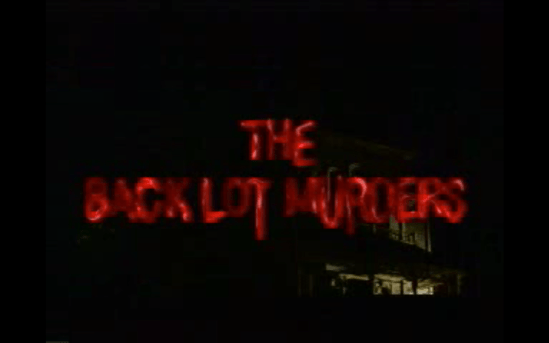
After a night of drinking that ends in breaking a bottle over the bar owner’s head, a struggling and internally conflicted rock band kicks out the cancerously unhinged and troublesome member before their rise to stardom. Unfortunately, all the talent went out door along with the excommunicated band member, forcing the band to impress with an extravagant music video shot on Universal’s iconic backlot, sponsored by their agent and the lead singer’s girlfriend’s music mogul father. Instead of intense pyrotechnics and scantily cladded female groupies dancing on their crotch, the band, their girlfriends, and the crew find themselves caught in the gloomy, labyrinth-like movie lot, housing spooky interior and exterior sets, unaware the lurking murderous manic taking them out one-by-one.
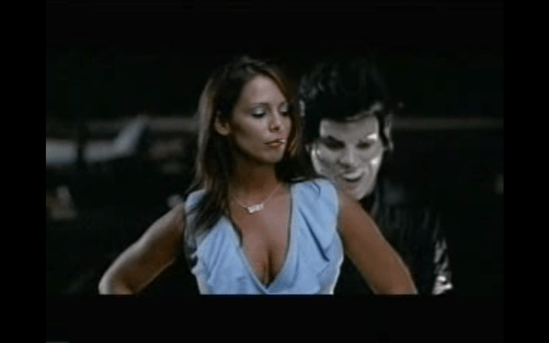
By far a polar opposite polished genre film than the sadistically raw brutal rape and murder extravaganza that was “Chaos,” writer and director David “The Demon” DeFalco dabbles in the early 2000’s revival of the slasher genre with his 2002 released feature “The Backlot Murders” in the wake of the widespread success of the “Scream” franchise. In much of the same way “Chaos” came to fruition derived from “Last House on the Left,” DeFalco, once again, finds inspiration in the form of cult horror director Wes Craven. However, DeFalco strays away from the meta-horror and trope-reversal techniques and replaces it with a satirical façade of the music industry where glam is more important than meaningful substance. The slasher-comedy carves up nods to Van Halen, Pearl Jam, Aerosmith, and even Elvis Presley with a horrendously skewed mask version the killer wears. “The Backlot Murders” were co-written by Paul Arensburg and Steven Jay Bernheim with the latter writer serving also as co-producer with DeFalco in association with Dominion Entertainment.
A contributing factor to “Scream’s” success was the diverse in career cast that clicked together as well as twisting archetypical roles into atypical whammy that veered audiences to the edge of their seats. “Scream” shocked audiences with the immediate death of a well-known actress right out of the gate, nabbed “Friends’” star Courteney Cox, “SLC Punk” and “Hackers” actor Matthew Lilliard, teen heartthrob Skeet Urlich, one of the Arquettes with David Arquette, and, perhaps, would have guaranteed Neve Campbell a slab of concrete for the Hollywood Walk of Fame along with an already cemented label as a scream queen and a final girl. The same eclecticism could be transfixed by “The Backlot Murders’” acquisitions but on a more obscure scale with a cast from all walks of life that includes the Roger Rabbit voice actor himself, Charles Fleischer, “Three’s Company” star Priscilla Barnes, 1997’s Playboy Playmate Carrie Stevens, and the late Corey Haim (“The Lost Boys”) as the band’s guitarist in a role that seemed below his fame stature. Most gaps are plugged with interesting characters treated with some backstory buildup that becomes more stagnant than footfall companions in order to get to know them better before their demise, but their persona conductors include Brian Gaskill (“The Bloody Indulgent”), Tom Hallick, Jaime Anstead, Dayton Knoll, Lisa Brucker, Ken Sagoes (“A Nightmare on Elm Street 3: Dream Warriors”), LoriDawn Messuri, Angela Little, and Tracy Dali.
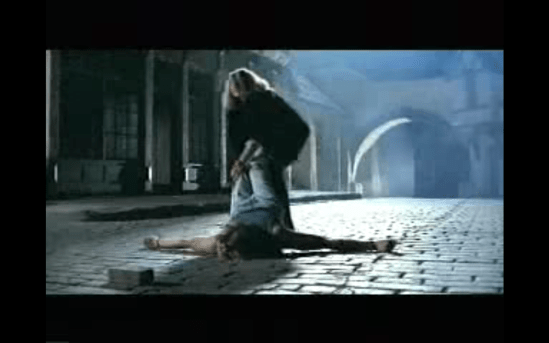
“The Backlot Murders” didn’t set out to revolutionize the slasher genre, but only relished in the after success and donned a more satire effort that purposefully retreated back into the conventional tropes to form an entertaining run of sex, drugs, and rock’n’roll gags, but the one thing missing, and it’s a doozy, is the actual killer presence in the film who is treated as an afterthought of slim importance and chucked into a insignificant plot twist that forces DeFalco’s hand to become a routine hack’n’slash lemming. One positive aspect of “The Backlot Murders” is the extremely high body count that produces a continuous stream of nixing off a slew of characters with their own death scenes inside the renowned confines of a Universal backlot backdrop that’s not only good-humored irony but also a sizeable effort by the Bernheim/DeFalco producing team. Yet, despite the high body count, the kills and gore felt sorely uninspired and underwhelming, rehashing into homage death scenes from “Friday the 13th” and “Scream” with a few forgettable approaches to call its own, until DeFalco breaks the damning goreless streak with a gruesome Columbian necktie effect that goes for the throat. I make “The Backlot Murders” seem unenjoyable and heartless when, in fact, the early 2000 slasher-comedy is immensely funny with a Charles Fleisher gold recorded, laugh track amongst the relentless mocking of the music industry from a far in this true to form slasher accessorized with a high body count kill dozer of a villain.
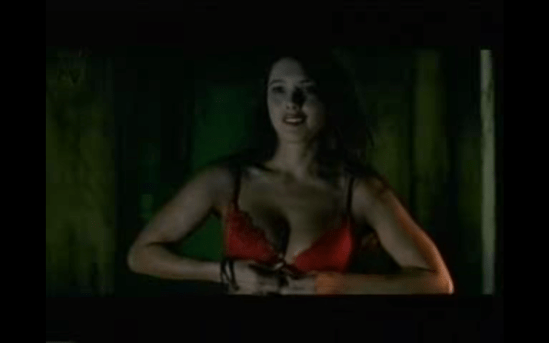
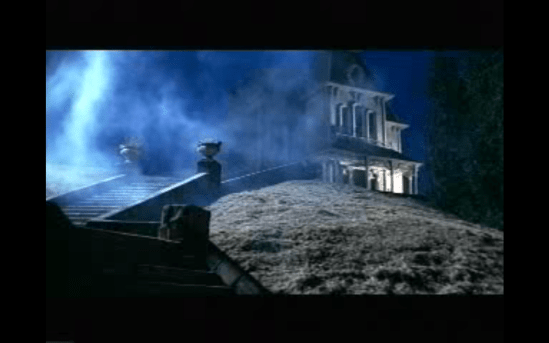
When things are quiet on set, “The Backlot Murders” evoke the slasher spirit on a new-to-Blu Blu-ray release in the U.S. from Dark Force Entertainment and Code Red with MVDVisual handling distribution. The 1080p, hi-def release is presented in an anamorphic widescreen from a brand new 4K scan of the original 35mm negative. The cool contextual colors render nicely amongst the shadowy gloom and foggy backdrop that’s reminiscent of a softly lit late 90’s and early 2000s slasher. The textures are sharper than the Razor Digital DVD release; the tactile feeling of asphalt when a bluish white glow hits the pavement or the gritty backlot sets vibrant with an ominous glow strike powerful chords of a lively presence from the transfer. There doesn’t seem to be any cropping, edge enhancing, or any other manipulation to the transfer present. The English mono track, which leans away from the LFE, has the opposite, lackluster appeal with a single channel blockade that doesn’t project the bands pyrotechnics, the screams of being chased, and settling for limitations on other wide range of girthy resounding audio. However, the dialogue is clear, unobstructed, and in the forefront. Bonus material includes a new audio commentary with director David DeFalco and Code Red’s Banana Man plus three new and very bizarre interviews with Carrie Stevens lingering from effects of the #MeToo movement to making home fudge, with Charles Fleisher and dissociative disorder or madman genius insight, and ending with a fairly regular interview with Brian Gaskill recollecting the film and his career through a tough industry standard. The Fleisher and Gaskill interviews end with a video op with The Demon himself, David DeFalco. “The Backlot Murders” had forefront potential of systemic slasher films of the time period, but pitter-patters for levity and a sweeping kill count that reconstructs the dread into death and comedy.

“The Backlot Murders” on Prime Video!

EVIL’s a Little Furball Wielding a Submachine Gun in “Killer Raccoons! 2! reviewed! (Digital Screener / Indican Pictures)

Ten years after the campsite mayhem of a raccoon attack that supposedly killed everyone and incarcerated Ty Smallwood for a decade in the wake of a governmental coverup, Ty, who now goes by the name Casey, is released from Prison located in Independence, Colorado and meets up with his pen pal Darlene, the younger sister of Ty’s girlfriend who was murdered by the killer raccoons. The two board a train on Christmas Eve heading toward Washington D.C. where Casey will attempt to explain to Darlene just how his sister died, but the thought dead former camp counselors, conscripted by the sinister Ranger Rick Danger, team up with elite mercenary raccoons to hijack the train to usurp a military weaponized satellite manned by a trained raccoon astronaut to inflate their offshore bank accounts. With the assistance of a train porter, Casey must recall his raccoon stopping abilities in a convergence that reunites enemies and friends back together in once again a diabolical raccoon assault.

The not-so highly, yet enthusiastically wish granted anticipated sequel you never knew you wanted to “Coons: Night of the Bandits of the Night” is here! “Killer Raccoons! 2!” dusts off the taxidermized black masked and ringed tailed trash can diggers for another round of loco-motional chaos, written and directed by Travis Irvine. Though the two stories span only ten years apart, the precursor film and its predecessor are released 15 years apart with “Coons” being released in 2005, hitting under the radar of retail shelves by the indie distributor, Troma Entertainment. Irvine’s follow up film, which is also known by “Killer Raccoons 2: Dark Christmas in the Dark,” is a hot take spoof on one particular insane Steven Seagal action film from the mid-90’s, when the 7th-dan black belt in Aikido Steven Seagal still had his slim build and audiences still took him seriously, also while giving minor homage to iconic action films over the decades. Irvine’s Ohio based production company, Overbites Pictures, finances an over-the-top critter action clash with ample dick jokes and a crude sense of admiration.

On any given sequel, returning actors would step back into their character shoes, donning, once again, the persona woven specifically for that role to reignite the same soul for a new plot, but with a few titled “Killer Raccoons! 2!” the customary guidelines and conventional means of filmmaking become shot out of the sky by a giant dick shaped laser orbiting in space. Thus, comedic actor-writer Yang Miller replaces Lehr Beidelschies as Ty Smallwood, James Myers replaces Nic Maier as the camp counselor turned eunuch and number one bad guy, and Mitch Rose replaces Brian Kamerer, being the best Eric Bogosian impersonator that can be. I bet now you can guess with Seagal flick Irvine spoofs! Yet, some of the original cast returns, such as Zach Riedemaier, Kasey Cooper, Colin Scianamblo, and Tom Lyons, bracing themselves for another interspecies skirmish. The new and old cast offer a seamless one-two punch of thirst quenching pasquinade, but in all fairness, I never saw “Coons: Night of the Bandits of the Night” and don’t really have a point of reference, but the confluence of confidence surrounding these outlandish performances doesn’t perpetrate a sense of disconnect. New roles played by new blood also courses through the sequel’s jiggly veins and what better way to fight raccoons than with a hedgehog; legendary porn star Ron Jeremy harnesses the dim-wit power of Lord Helmet from Space Balls, becoming military brass with a gaudy general’s cap and an aloof sense of what’s going on. The sequel rounds out with Briscott Stevenson, Michelle Weiser, James Adomian as a version of the presidential hopeful Bernie Sanders, and comedian actor Ron Lynch as General Negligence.

By now, if you haven’t guessed, “Killer Raccoons! 2!” is a rumpus-raccoon mockery of Steven Seagal’s all aboard follow-up of anti-terrorist tactics in “Under Siege 2: Dark Territory.” At first, Irvine sets up Ty Smallwood’s eventual release from prison and coming to know his pen pal, Darlene, while also running into a few other character to which one conversation leads into how prison turns you into a completely different person, a poke in humor at itself for having not the same actor play the lead. The initial backstory ran through the typical “Airplane!” farce with a few more dick jokes, such as the satellite being christened PEN15. Get it? Once the train chugs along and the introduction dust settles, Irvine nearly does a scene for scene with the Seagal sequel, capturing almost identical shots within a familiar storyline. This hilarious reenactment flatters the only way a low budget knows how with poor composite effects that add to the hilarity and Mitch Rose really nailing Eric Bogosian; I can’t stress that enough. There are some performances that are too over over-the-top, stepping more toward terribly mindless and silly of unintentional inimical aftertastes. “Killer Raccoons! 2!” doesn’t take itself seriously and we shouldn’t take it seriously either in this fun feed error Xerox copy of “Under Siege 2: Dark Territory” run amok by pesky raccoons!

The fury-bandito train ferociously pulls into the action-packed and explosive station come October 1st onto DVD from Indican Pictures. Already released theatrically in the mid-west and on digital platforms from this past July, “Killer Raccoons! 21” will claw and scratch a foundation before physical format that will resonate more older audiences familiar with the 1995 Seagal film, but potential viewers should trust in the diversity Indican Pictures strive for and know that “Holy Hell” was an equally profanely funny feature raising eyebrows and regurgitating laughs. Since the screener is digital, there will be no critique on the A/V and there were no bonus material available from the forthcoming DVD, but there is a short bonus scene after the end credits. The broad-based humor of “Killer Raccoons! 2!” can cause long-lasting laughter from that cull the most mediocre action film and serve it up as the base for a critter-infested gun-toting comedy-thriller!

Available to rent on Prime Video!

A Lake Swimming With EVIL Off of “Mermaid Isle” reviewed! (WWMM and MVDVisual / DVD)

On a nearby island with an infamous past, four friends come to dock on the island from a pleasure craft cruise to explore the adjacent and serene lake surrounded by woods. What was supposed to be a fun, relaxing, and romantic getaway turns frantic when one of them accidently falls into the lake and is bitten by a mysterious unseen creature in knee high water. With a storm brewing and the bite affects worsening, the group takes shelter inside a seemingly abandoned lakeside cabin receiving an unwelcome and surprise greeting from an old woman who immediately wants to kill the injured party, but is bitten during the small skirmish and kills herself in total fear. Bewildered, the group remains in refuge from the storm, sleeping through the worst winds and rain only to wake up to find the injured and one other friend missing. Their search brings them back to the lake where they discover once bitten, there’s no saving you as the lake is a breeding ground for vicious, blood hungry mermaids, spreading their transformative contagion with a single bite. As the survivors contemplate next steps, the old woman’s delinquent adult son returns home to find mother dead and sets out to kill her murder.

Popping my mermaid horror cherry with the Jason Mills’ ravenous take on the mythical half-human, half-aquatic creature feature, “Mermaid Isle,” released in 2020. The writer-director debuted his first genre feature back in 2009 with an attic dwelling creature terrorizing an unsuspecting and already fragile and distraught family in “Above Us Lives Evil,” also more commonly known as “They Came from the Attic,” but it wasn’t until 2015 when “Above Us Evil Lives” came across our critical lap and was reviewed rather favorably for the filmmaker’s first credited venture with the following excerpt observing Mills as a “promising” director with “attributes that can contribute to the horror community” through the “strategical” use of knitting visual FX work with practical prosthetics to supply an effective heinous attic monster on a penny pinching purse string. Over a decade later, Mills continued his successful ability to turn around project after project of independent b-horror that includes the markings of spiraling madness with “The Changing of Ben Moore,” a joint home and alien invasion thriller with “Alone We Are Not,” and even tackling the mysterious and carnage-laden mythical sasquatch in “Bigfoot Country.” The director’s latest sea-faring fiends maintain the basic principle features of a fabled mermaid: an alluring, half-naked maiden on the top half with a marine flipper-tail at the bottom. Yet, “Mermaid Isle” explores the darker side of the mermaid mythology with a schlocky, self-funding of the plagued island concept with his own production company, Millspictures Studios.
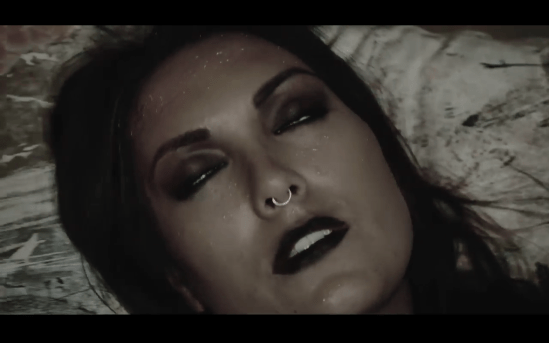
“Mermaid Isle” is very character dependent to push the story along and toward the secluded residing lake since the story concept doesn’t involve any victims to be wound up stranded, buoying in the water, and surrounded by deadly and infectious mermaids creating a filthy amount of dire circumstances of harrowing survival. Instead, we doggie paddle along with bland, monotonous, and uninteresting characters played by bland, monotonous, and uninteresting actors riding the only wave of substance of the lead character (Mark Reinhardt) being rejected upon his proposal to his short term girlfriend (Kristina Soroff). The other two in the group, an assertive goth (“Bigfoot Country’s” Kiana Passmore) and tagalong friend (Samuel Buchanon), offer little to warrant their survival as they’re targeted for either mermaid chum or to be marked for warped evolution. The young cast never click together as on screen friends or form a frantic group with a correlating enemy, but rather seem underwhelmed by the lake inhabited by evil mermaids being the source of their dilemma. There was much more interested in the double sided danger foreboding around the old woman (Elinor Walker) and her bad new son (Dan Martinez), whose mysterious ruffian background surfaces to the top as he’s eager to turn his newfangled life of a straighten arrow path is squashed back into the miscreant he was once was by hunting down those responsible for his mother’s death, but that also fizzles into oblivion. Hope for the character emerges when he declares, “time to do some bitch fishing,” as an oath to, once again, contain the mermaid contagion from spreading by some noble crusade of, oh, I don’t know, spear fishing the hell out of the creatures or taking a dive into the depths of the unknown and do a little hand-to-flipper combat. Sadly, “Mermaid Isle” continues to miss chances rewarding viewers with potential much needed plights. The film rounds out with Liam Tait, Austin Richards, and Garnet Campbell in some unresolved, barely associating epilogue set four months later.
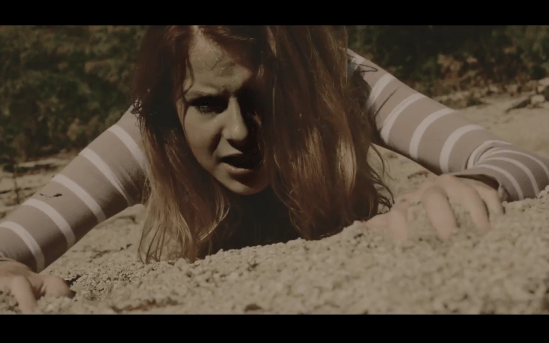
“Mermaid Isle” struggles to come up for air as an exalting mermaid horror, especially being released in 2020 amongst a sea of competing indie interests. Yet, Mill’s story spans over three and half decades beginning with a backstory, told through the words of newspaper clippings from 1983, honing in around a prefacing story of a father and son being murdered by a mermaid bitten daughter and transforms to ravage portion of the family. While the news clipping claim hoax, the mother, the old woman, who we visit in the story later at the cabin, is shuttled off by authorities to a psychiatric ward because of her rant and ravings about killer mermaids. While the slightly crafty, yet also chintzy soaked way to setup the film is engrossing enough to keep us interested at the start, the small budget stiffens any kind of any remotely rudimentary devices to then mingle man versus unnatural nature in a project too big for the budget’s britches. Further reaffirmations assume the assigning of multiple hats amongst the crew and cast, including Kiana Passmore is also the first assistant director, Garnet Campbell is the line producer, and the Mills and the Passmore families extending their services as credited Crafty and Location scouts. The story logical capsizes the moment the movie is popped into the player. For instance, the movie is entitled “Mermaid Isle,” but the Island is adjacent to a river and on the other side of that river is a lake so the premise really has nothing to do with the island, but rather a lake. The DVD back cover mentions the four friends attempting to conjure (spelled conjueron the back cover); yet, there’s none of that conjuring jazz and nothing to affix the detached epilogue to the rest of the film, as previous stated. Lastly, the DVD front cover has more gore, more skin, and even a shark in the water. Low and behold, none of those enamors exists. I will say this about “Mermaid Isle,” the mermaid itself looks convincing, obscured enough around the seams and the physical fish tale to pull off an effective mermaid creature with pitch black eyes and a face flush with hunger.

If feeling adventurous, jump into the deadly waters of Jason Mills’ “Mermaid Isle” on DVD courtesy of World Wide Multimedia Entertainment, an affiliate of Alchemy Works, and MVDVisual. The not rated, 80 minute feature, is presented in a widescreen presentation, 1.66:1 aspect ratio, and the overall video image quality is not too terrible, but lacks breadth of color, compressing the details of the woods, the rocky lake shore, the old cabin, and the snow-covered trees more favorably than would have expected. Some aliasing during more actiony sequences in the water with the mermaid swimming. The English language 5.1 surround sound mix is a complete lackluster in regards to dialogue. The muffled vocals are nearly indiscernible levels for more than half the dialogue track and heavily overshadowed by ambient mix and, a bright spot on the release, the Thomas Beckman viola that almost feels too Renaissance to be paired with “Mermaid Isle.” Aside from a static menu with chapters, there were no special features included. Having no point of refence having never seen “The Lure,” “She Creature,” or even “The Mermaid: Lake of the Dead,” “Mermaid Isle” sinks the aquatic humanoid subgenre deep into Davy Jones locker for greenhorn viewers, but bares intrigue at times with the idea of a menacingly unfathomable creature stirring in the blue waters, sloshing up enough to give you the creeps and not bother with the movie itself.
[https://www.youtube.com/watch?v=wWcq9bQGb6I]

“Mermaid Isle” available on DVD. Click the poster.

 It's Bloggin Evil!