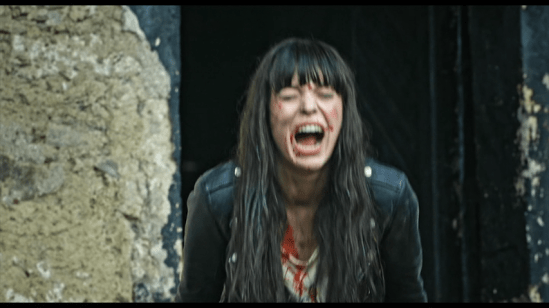
Gore Reel Releasing and CAV Distribution is slated to release Matt Farnsworth’s “The Orphan Killer” on Blu-ray/DVD combo come 12/13/2016 and you can pre-book the title on Election Day 11/08/2016!
““The Orphan Killer” is a tour de force murder flick that defies classification. It goes far beyond current trends in gore and breaks open a new suffering genre of horror. Marcus Miller is a serial murderer hellbent on teaching his estranged sister Audrey what it means to have family loyalty. His lessons are taught in massive doses of vulgar and unimaginable pain. Throughout her brutal torture we learn that Marcus is not the only Miller with Killer in the bloodline as Audrey proves to be a formidable adversary.”
Cast: Diane Foster, David Bachhaus, Karen Young, James McCaffrey, Matt Farnsworth
Special Features Include: Behind The Murder – Exclusive Video Diary
Trailer
Teaser
Music Clip
Slideshow
Blu-ray/DVD combo Specs:
SRP: $34.95 UPC: 881190600498 Cat: RGR004
Color 83 minutes In English with Spanish, French, Italian, Japanese subtitles
All Regions Widescreen Anamorphic 2.35:1 DTS-HD MA 5.1 Surround
Cynically unimpressed Zina agrees to partake in a friend’s nature photo shoot with idyllic mountains and forest splayed in the backdrop. Soon as the shoot begins, two disfigured and armed mountain men abruptly interrupt the foursomes’ serene surroundings, kidnapping the city folk by brute force, and holding them hostage in the basement of a ramshackle distillery. Confused and scared, Zina takes action, fighting back for her life against a family of hillbillies yearning to mix their victims’ organic essences into a fine, smooth-tasting, down-the-hatch liquor that recently become popular in the region.
Horror has finally found a home in Slovenia with Slavic writer-director Tomaz Gorkic’s freshman feature, the whimsically titled film known as “Killbillies! ” Alternatively known also as “Idila” originally and “Idyll” world-wide, the hillbilly survival horror-thriller is an unique feature in it’s own right, being the first horror film to be produced out of the European nation bordered by Italy, Austria, and Hungary. “Killbillies” savagely pits the entitlement of urbanity against the underprivileged and judged rural community who will kill for what they desire in an intense tale plastered with unforgiving violence and human rancidity. Gorkic’s film rivals America’s “Wrong Turn” series containing murderous, inbred mountain people and sets the foundational work for a potential “Killbillies” franchise to put Slovenia on the map and instead of rehashing the cannibal market, “Killbillies” can go out on a tangent by turning terrified victims’ brains in a tasty homemade brew.
Gorkic decisively also lays the solid groundwork of separating the two classes of characters with the beautiful and sensible urbanites in the models, the photographer, and the apathetic assistant, and the deformed and unhinged states of the no nonsense hillbillies played convincingly, and terrifyingly enough, by the bear-framed Lotos Sparovec and the gangly Jurij Drevensek inside the detailed workings of some gnarly prosthetics to sell the hillbillies from hell. The ugly twosome seek to extract their moonshining secret ingredients from a tough Zina, a role executed well by Nina Ivanisin, a prissy up-and-coming model Mia, played by Nika Rozman, a quiet photographer named Blitcz in Sebastian Cavazza, and a middle aged hair, makeup, and wardrobe assistant named Dragica given to Manca Ogorevc. Each role tackles a unique persona that’s vital to their characters’ survival and Gorkic writes clearly the characters’ purpose in how they interact when pressured upon.
While the visually visceral “Killbillies” requires a minor tweak here and there to only fine tune upon character development and to be slightly more forthright into the intriguing backstory with the liquor and even with Zina’s life struggling puzzlements, Gorkic ultimately captures the bones and soul that genetically makes up that mechanisms of bona fide horror as when the hillbilly duo proceeds through the extraction process with one of the victims, a montage of scenes, sold with composer Davor Herceg’s romantic gothic score, delivers a living, breathing machine of unspeakable mad science without ever divulging a word, without ever being gratuitously gory, and without ever being overly or explicitly taboo. The gore is just enough to sate with head bashings, decapitations, and even a “Walking Dead,” Negan style overkill with a very large, very nasty axe.
“Killbillies” is the latest brazen DVD release from Artspolitation Films and the release is presented not rated in a widescreen 1.85:1 aspect ratio that gorgeously and cleanly contrasts the beauty of the trees, mountains, and blue skies with the vicious ugliness that quickly grounds you back to reality in an epic struggle of life and death. Aside from a simple static menu, chapter selection, original trailer, and an option for English subtitles and English SDH subtitles are only available. Raw and acute, “Killbillies” fears nothing by dipping it’s bloody Slovenian toes into the horror pool for the first time and able to tread water for the full length of the story that ultimately becomes a deadly cat-and-mouse game.
Get your Killbillies on DVD and streaming video at Amazon!
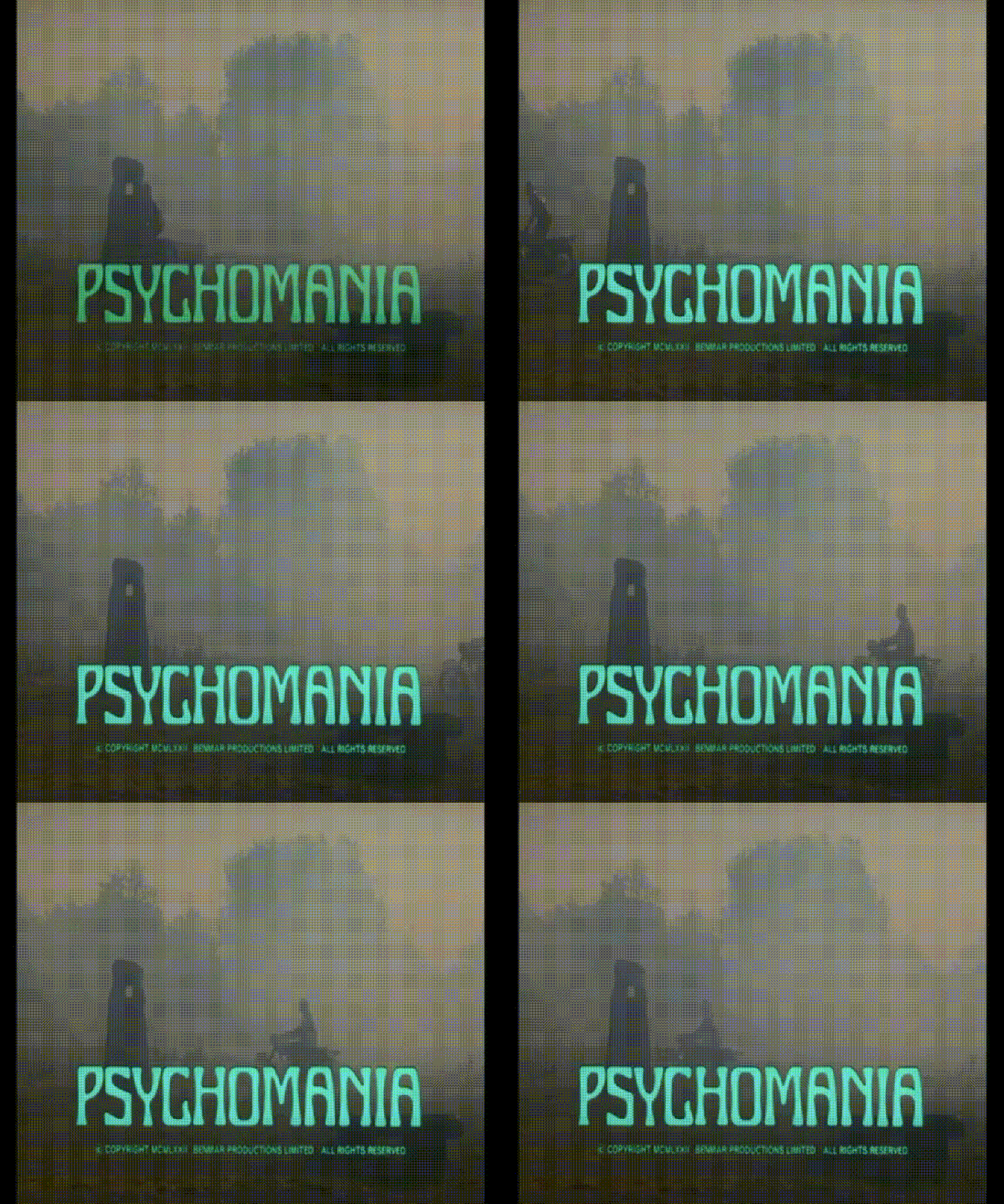
A terrorizing motorcycle gang named The Living Dead wreak mischief and murderous havoc amongst the local residents. When Tom, the gang’s leader, learns of his family’s dark agreement with the devil, he seeks to reap the benefits of the agreement’s eternal life bestowed upon his family, but before claiming a long-life of unstoppable hog-wild carnage, Tom must die first and truly believe he’ll return from the afterlife. Convincing the rest of the gang to kill themselves in order to return from the grave and live forever was easy, except his girlfriend Abby who wants to actually be alive. As the torment rips through Abby involving the man she loves, not all satanic bound agreements can last forever and Tom, Abby, and the rest of the gang are caught in a contract that’s all but binding.
“Psyhomania,” also known as “The Death Wheelers,” is a stunt-heavy horror film from “Kiss the Vampire” and “The Face of Fu Manchu” director Don Sharp and written by “Horror Express’” Julian Zimet and Arnaud d’Usseau. “Psychomania” is a fun, b-horror feature from the swinging London era of the 1970s and rosters a young cast of some seriously talented actors in Nicky Henson as Tom, Mary Larkin as Abby, and Ann Michelle as Jane Pettibone while also being graced with two veterans, George Sanders, who voiced Shere Khan in “The Jungle Book,” and Beryl Reid from “Dr. Phibes Rises Again,” and were most likely the most expensive actors on set, being well worth the cash to balance out a relative unknown cast at the time.
Yes, this film is British. Yes, this film is horror. But, no, “Pyschomania” is not a Hammer Horror film. The Don Sharp film lightly tip-toes through being a horror film with only the supernatural element placing the feature in the thriller category, but the PG-rated horror has other admirable qualities that certainly differentiates itself from the blood-heavy, frighten laden Hammer films. For instance, a story about an undead motorcycle gang should obviously entail motorcycle stunts and “Psychomania” delivers with surprisingly various top-notch stunts with, and without, motorcycles, involving dedicated stunt men and women challenged to be engaged in nearly all stunts, and whereas the blood does not run thick and heavy like with many fright flicks, the bikes certainly do and revs a different, yet welcomed, change of pace.
If the intent here was to make a serious film, the mark was missed by a good margin. Outdated and obsolete, “Psychomania” is the epitome of aging with dated hairstyles, dated clothing, and dated dialogue. If the intent was to be campy, Sharp and his team of willing participants hit the center of the bulls eye. The premise of a motorcycle gang committing themselves to a suicide pact only to come back and continue their barrage amongst humane society while choking out nearly everybody they feel tramples upon their aimless and ferocious cause seems like an outright folly. Who knew that in forty years time that “Psychomania” would be a British cult favorite, sparking a well-deserved upgrade Blu-ray and DVD combo release from the British Film Institute, also known by as the BFI.
BFI Flipside presents “Psychomania” on a Blu-ray and DVD combo presented in the original aspect ratio 1.66:1 and scanned and restored in 2k from preservation negatives. The 1080p Hi-Def Blu-ray runs on a BD50 gigabyte at 24 frames per second with a PCM mono audio mix. The PAL DVD runs about the same, near 25fps, and sports a Dolby Digital 1.0 mono audio mix. I was presented the DVD version for review and I must say the original print looks immaculate. The lens flares in the corner from previous releases have been extinguished. The colors and skin tones have never been more vibrant through the three layers of the black and white master copies containing yellow, blue, and cyan. The mono mix clearly states a purpose and goes through the ears without muddling and much defect. The BFI have also spared no expense on the bonus features that include various interviews with Nicky Henson and other cast, an interview with Harvey Andrews on the “Riding Free” single, a Hell for Leather documentary about the company who supplied the leather for the cast, a short remastering “Psychomania” segment, and other various extras that dive into British culture. I was a bit disappointed with the Sound of “Psychomania” segment as the track portion in the interview with film composer John Cameron seems to be overlaid by something totally off-the-wall and we’re unable to get the full 9 minute audio from the interview. The bonus material rounds out with original theatrical trailer and a nice, vividly colored illustrated booklet with new writing by Vic Pratt, William Folwer, and Andrew Roberts. BFI’s “Psyhomania” release is one of the best re-releases to hit the region 2 market and will re-hit the youth once again on it’s climbing cult success that branches off far from the bloodlust of 1970’s British horror.
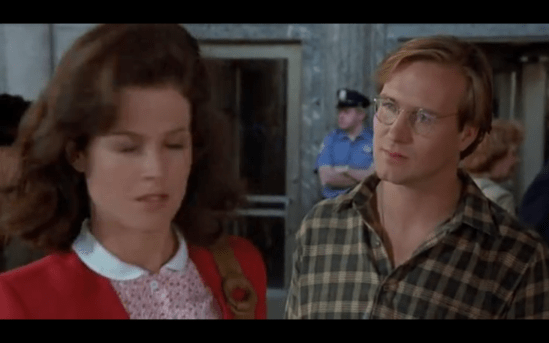
Daryll, a New York City night shift janitor and decorated Vietnam war veteran, becomes obsessed with beautiful female reporter and wealthy socialite Tony Sokolow. When Daryll claims to be a key witness to a murder of one his business building’s high profile tenants, a once in a lifetime opportunity opens up to meet Tony when she’s assigned to cover the murder and as Daryll pours his heart out to the reporter, he’s also torn by his claim that could place his war buddy friend Aldo, a hapless former employee of the recently deceased and the prime suspect in the murder investigation, in jeopardy even more. Is Aldo the killer or is the mystery much deeper, tied to a world unforeseen by Daryll whose working in the depths of the building’s janitorial confines?
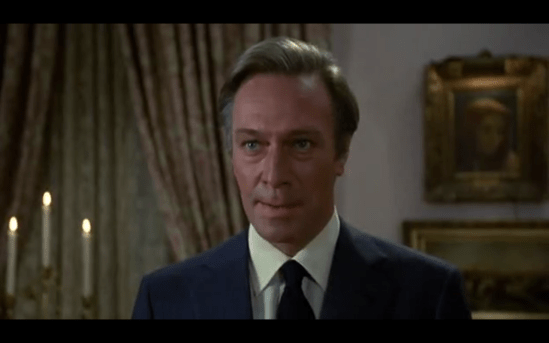
Hot off from her success from Ridley Scott’s “Alien,” Sigourney Weaver goes from sci horror-thriller to mystery-thriller and alongside her is up and coming co-star William Hurt in Peter Yates’ 1981 mystery drama “Eyewitness.” The film sparks a string of obsession suspense features that would span a decade and firmly place the genre into a popular notoriety among audiences who couldn’t get enough of the peeping tom debauchery. A hefty roster of talented actors also co-star, some on the verge of stardom to the likes of Hurt and Weaver, including Christopher Plummer (“The Sound of Music”) in the prime of his career, the crazy eyes of James Woods (John Carpenter’s “Vampires”), an un-grayed Morgan Freeman (“Se7en”), Kenneth McMillan (“Dune”), “Mission: Impossible” television series’ Steven Hill, and Pamela Reed (“Kindergarten Cop”).
Performances all around are phenomenal as every actor and actress cultivates their character’s purpose in the story and you can surely experience the humble beginnings to some of the biggest A-list celebrities of today; however, Hurt’s performance was one of the only concerning factors. Hurt’s portraying a modest, perhaps slightly traumatized, Vietnam veteran with an afar obsession toward an attractive public figure and his presentation was overly awkward and certainly creepy too the point where I even felt embarrassed and uncomfortable. What made the situation more bizarre was the verbal and facial exchanges between Hurt and Weaver’s characters. Tony didn’t quite seem affected by the oozing creepiness this supposedly good man seeps from every pore of his skin and she, in fact, embraces his forward, if not crossing the line, affections that would certainly warrant a restraining order in today’s society. Maybe social interactions vary from generations and decades, but this type of relationship building dialogue and scenes didn’t produce the appropriate type of chemistry between Weaver and Hurt reducing the strength of their bond.
The Steve Tesich script strummed the strings reminiscent to my viewing experience of George A. Romero’s “Land of the Dead.” Yes, you read that correct – “Land of the Dead” – and what does this zombie horror film have in common with “Eyewitness?” Well, in the 2005 film about the continuous decline of humanity in a zombie apocalyptic world, Romero had written a social commentary about the separating of social classes where, even in a dying world, the rich stayed safe in their loft, sustaining an obsolete lifestyle, and the poor suffer below their feet living in the present, but in the end, anyone and everyone is fair game for being unprincipled and for the undead. Tesich’s script does the same without being lavishly upfront and without the hordes flesh eating zombies. Beneath the obvious murder mystery lies the merger of the classes as Dyrall and Tony eventually fall for each other, but their friends and family on either side condemn the relationship, making the statement numerous times that a janitor absolute can not fall for someone as wealthy as Tony. James Woods’ Aldo becomes just another example out of many where a court-martialed and discharged Marine with erratic behavior and struggling with living a middle class life becomes suspect number one in a murder case, but with a victim whose profession was international trading, the pockets might be a bit deeper and with a laundry list of ill-will individuals.
Signal One Entertainment releases “Eyewitness” in the UK for the first time on Hi-Def region B Blu-ray anywhere with a 1080p presentation in a widescreen 1.85:1 format. The video quality is far superior than, of course, it’s DVD revival with the restoration of much of the natural color tones without a hint of compression artefacts or obvious image or edging enhancements from the 35mm stock footage. The English LPCM audio 2.0 track is fair, full-bodied, and well balanced with really no issues, especially not with composer Stanley Silverman’s lively score. Signal One Entertainment certainly knows how to treat a classic film providing a slew of extra features including an audio commentary with director Peter Yates and film historian Marcus Hearn from 2005, an audio only conversation with the director along with film critic Derek Malcolm and another conversation with another film critic Quentin Faulk on a separate extra feature. Composer Stanley Silverman discusses his approach to scoring “Eyewitness” and there’s also an alternative VHS presentation of the film under one of the original titles “The Janitor.” Original trailers and TV spots round out this robust bonus feature cache. “Eyewitness” on Blu-ray is a must own with a clean and refreshing version of a this classic whodunit thriller from Signal One Entertainment!
A dense English forest surrounding a decaying manor house sets as the hunting playground for a pair of seductive female vampires, Fran and Miriam, who have reigned a disconcerting terror through the area’s local inhabitants. When Fran lures and imprisons a touristing male as her bloodletting sexual hostage, Miriam believes Fran is diverging into a dangerous game of simply playing with her food for too long. Miriam proves to be right when a trio of campers stumble upon the vampires’ manor lair, causing a fair amount of distraction when the three friends attempt to uncover the secrets of the area and the myths of the house that will expose the true and terrifying nature of the two vampires. A mistake the three may wish they never would have made.
“Vampyres” is a Victor Matellano 2015 rendition of the 1974 José Ramón Larraz directed abundantly sensual, over sadomasochistic vampire film of the same title but also known as “Vampyres: Daughters of Darkness.” Matellano’s remake faithfully follows the original storyline and with the assistance of Larraz himself tacked on as a credited writer, Matellano was able to keenly hone in on the ambient tone and the graphic slaughtering display the story necessarily requires to quench it’s own thirst for blood. Let’s also not forget the sex, the sex, and the sex that absolutely sinks it’s teeth into of most scenes. Long time has passed since the rebirth of an erotic creature of the night; a plague of mindless ferocity has been the modern vampire. From “Blade” to “The Strain” to one of the more recent reviews of an independent film in “Black Water Vampire,” a dark cloud of a deformed and mutated species of bloodsuckers have been more popular with the masses. Matellano’s “Vampyres” is a love song to the erotic European vampire that’s powerfully seductive, classically gothic, and simply pure blooded with two fantastic femme fatales.
Underneath the dark and ominous cloaks are the beautifully succulent Marta Flich and Almudena León as blood fiend lovers Fran and Miriam. Flich and León have a combined total of 5 feature length films between them, including “Vampyres,” but where the duo lack in experience, Flich and León thrive with their onscreen chemistry that delivers an piercing intensity with a dynamic blend of softcore porn and tantalizing terror as if they’re real life lovers with a real life knack for killing. León has previously worked with Victor Matellano under the Spanish director’s prior horror film, 2014’s “Wax,” and their relationship growth comes whole with the addition of Marta Flich, a buxom brunette willing to savor every moment and put forth every effort into some extremely difficult scenes. No two women can make gore sexier than Flich and León.
Vampires Fran and Mirian heavily overshadow the remaining characters consisting of actors such as Verónica Polo, Anothony Rotsa, Victor Vidal, Christian Stamm, and Fele Martinez who, as a whole, do a fine job performing in this rekindled niche of horror. To add a bit of flare and to help “Vampyres” stick out from above other remakes involving an slew of unknown faces, “Dracula A.D. 1972” and Captain Kronos – Vampire Hunter’s” Caroline Munro and “Tombs of the Blind Dead’s” Lone Fleming have more than cameo appearances, providing familiar genre faces fans know and are attached to when riding along the reminiscing train from the era of which this film’s story is birthed. Munro and Fleming are also accompanied by other genre vets including “Zombie Lake’s” Antonio Mayans, Concrado San Martín from “The Awful Dr. Orlof,” and Hilda Fuchs and the late May Heatherly from 1980’s “Pieces.”
Visually, “Vampyres” dotes as cinematography worthiness in being a European inspired film from a Spanish production by not being flashy but rather grim and simple. Using elementary special effect techniques, “Matellano” doesn’t cheapen an already intentional trashy vampire schlock film with story stiffening CGI; instead, buckets of blood and practical effects elevate the aspiration toward the resemblance of a 1970’s inspired story complete with broken English performances. Set locations are purposefully vanilla, including a plain small bedroom with white sheets overtop a simple bed frame, a bleak forest inhabited with thin trees, and an isolated manor with middle life bones standing lifeless in the woods, and with key shots staged with vivid conventional colors, such as the bathtub scene that’s feels very clean even with the amount of blood used, and the cellar finale that’s very subtle in it’s background even if it’s the root motivation for the vampires.
“Vampyres” is one of the best remakes there is, there ever was, and there ever will be by staying faithful to the Larraz’s original film and Artsploitation Films should be basking in the fresh, warm blood of their latest and greatest release. José Ignacio Arrufat’s brooding score seizes to snare the soul from the well balanced Dolby Digital English 5.1 Surround Sound mix laid over a 2.35:1 anamorphic widescreen presentation. With a slight tilt toward a darker variation on the grayscale, the overall picture is clean and unhindered and even though stark colors don’t run throughout, the bland coloring provides richer qualities toward a excellent homage. One thing is for sure, blood red is the only vivid hue here. Bonus features include an Interview with Caroline Munro, a making of the “Vampyres,” and trailer reels of Artsploitation Films films. The modern masses can have their disease-ridden vampire genres for the very fact that director Victor Matellano’s “Vampyres” entices with an alluring butchery based on fundamental foundations of European horror values and endearment, resurrecting the erotic vampire once again!
Buy “Vampyres” on October 18th. Just in time for Halloween!