

Six dead women relive pieces of their previous mucky lives embodied in one seamless soul that’s trapped in the literally gory innards of their serial killer’s home. Forcibly held in the limbo of a filthy purgatory, each woman find themselves in a different, and extremely hellish, part of the house and each carry the same gruesome autopsy laceration across the front of their chest, crudely stitched together and coming apart at the seam ready to pop open their insides at any moment. Unknown to why their confined, an ill-fated reason develops at the end of the maze’s demented journey through the home made of severed body parts, decorated with pieces of human tissue, filled with decomposing bodies, strewn with ghastly entrails, and drenched with blood.

Director Phil Stevens composes an avant-garde horror story orchestrated with no dialogue what so ever through the duration and spatially effective in close, uncomfortable quarters . Certainly unique from anything else I’ve ever witnessed, “Flowers” doesn’t apologize for being overly gory and disgusting, pursuing a stomach-churning reaction from all allegoric angles. Slip-and-sliding through the murderous muck and goop, each of the six dead women seem hysterically unfaded, yet more intriguingly curious to their surroundings, even if that means putting their hands through a tonnage of viscera and ripping their own flesh open. Indie films like Phil Stevens’s “Flowers” will never catch the eye of most mainstream audiences and will never know of their existence, but a few lucky viewers, like myself, get to experience the surreal work from the horror underground. Fans of Marlan Dora’s “Cannibal” or Jörg Buttgereit “Nekromantik” will revel in “Flowers’s” grisliness and gloomy nature.
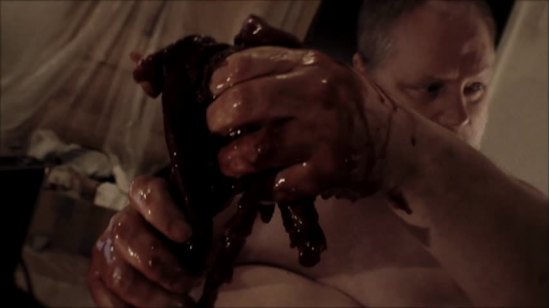
The cast is made up of six alternative lifestyle women, each one credited only as Flower 1 through 6, and take up a particular different segment and sprinkled into their story is their merciless and necrophiliac killer, only credited by the name The Exile. In sequential order, the Flowers are played by Colette Kenny McKenna, Krystle Fitch, Anastasia Blue, Tanya Erin Paoli, Kara A. Christiansen, and Makaria Tsapatoris and the killer is played by Bryant W. Lohr Sr. The majority of the actresses take on more than their literal roles in the movie. The physical body horror effects are applied by Anastasia Blue and Krystle Fitch to create open wounds across the actress’s chests and the uncleanliness costumes and wardrobes are provided by Makaria Tsapatoris, whose experience has been from the 15 year participation of the horror season attraction Eastern State Penitentiary in Philadelphia.

The abstract story is intensively focused on the women’s lives rather than their slaughterer The Exile. Their stories are personally tragic as if the Flowers are trying to purposefully or unintentionally ignore real life by way of drug abuse, prostitution, or both. Each actress has to put forth extra effort in their silent performances as dialogue is nonexistent and they’ve successfully compel themselves to act out the scenario, working with their surroundings and being, well, dead. The Flowers may not seem frightened of their killer’s house made of guts, but the Flowers are definitely disgusted, nearly tossing their insides in a few putrid cladded rooms. You may not want to eat while watching some of the segments. Very little is known about The Exile, a very large, but well kept man with a hankering to kill the gutter girls, bathe in their guts, and, sometimes, have sex with their gut-exposed dead body.

“Flowers” is available in two DVD editions, a standard one disc which is reviewed here and a three disc limited edition set, from Unearthed Films and distributed by MVDVisual. The technical video is presented in a widescreen 1.85:1 aspect ratio with a 2.0 dolby digital audio and, frankly, the two channel audio is all “Flowers” needs with no dialogue or major sound effects as a poetic soundtrack guides with harmony mostly through all of the audio work. The image quality is detailed and vividly enticing, but the colors are intentionally dull and for darker scenes that create ebony silhouettes that are practically not visible or coherent; these scenes only deter for only the first 20 minutes of crawling through the house’s bloody undercarriage and won’t ruin the remainder. For only the disc one edition, extras are fairly good with interviews with The Exile actor Bryant W. Lohr Sr., an audition tape of Makaria Tsapatoris, behind the scene stills, an isolated FX track, and commentary tracks with director Phil Stevens and associate producer “Ravage’s” Ronnie Sortor. I recommend the grotesque “Flowers” to any horror fan without a weak stomach and a mind for the abstract!

Category Archives: Trailers
Evil Makes the Naughty List! “Krampus: The Christmas Devil” review!

Thirty-years ago, little Jeremy Duffin barely escaped the clutches of the Krampus, the horned companion of Santa Claus who punishes naughty children the coldest weeks before Christmas. Now as a grown man and an officer of the law, Duffin, still haunted by memory of his own abduction, obsesses over the similar current child snatching occurrences and, on the direction of his captain, constructs a three man team to hunt down the child predator. Confronting the Krampus doesn’t go as expected as bullets fly harmlessly through the mystical creature, resulting in Jeremy becoming a brief prisoner and his team facing a more fatal outcome. Jeremy escapes and makes his way back home where Krampus homes in on, seeking to punish Jeremy’s only daughter Heather, but one of Jeremy’s prior arrested offenders was released from jail and also has vengeful plans for Jeremy and his family. A trigger-happy obsessed cop, a vengeance seeking convict, and a child punishing anthropomorphic becomes a superbly wrapped deadly and wild gift on Christmas Eve.
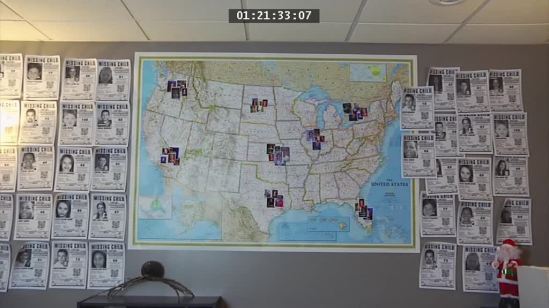
On the verge of Michael Doughtry’s “Krampus” being released in theaters, the UK’s High Fliers Films distributes to home DVD the older, more experimental black sheep brother “Krampus: The Christmas Devil.” I say older because this Krampus Christmas horror film, written and directed by Jason Hull, was released over two years ago. Now with all the interest in Doughtry’s bigger, star-studded production being released this holiday season, the Snowdog Studio production filmed in Eerie, Pennsylvania is finally receiving a home DVD release in the United Kingdom and was just released here in the States only a month ago as well. Now while “Krampus: The Christmas Devil” will be exposed to the world, I fear that Doughtry’s “Krampus” will completely overshadow this microbudget film and, in all honesty, will rightfully do so due to the feeble and disjointed plot.

The Jason Hull film’s swiss cheese story is missing many pieces to this Christmas tale puzzle. The begiining voiceover description of the Krampus backstory is great for those who know nothing of the myth, but in the duration, the creature travels to a particular part of the North Western side of Pennsylvania to solely strike the top ten misbehaved children in one year, 25 days before Christmas. Krampus, like his brother Saint Nicholas, travels the world in those hours to various lands to punish all the naughty listed children. The scope of Hull’s Krampus was written too narrowly, missing to portray Krampus as on a grander wickedness. Another plot hole is with Jeremy’s daughter Heather. Santa specifically requests Heather Duffin to Krampus by pointing out that she’s truly a terrible child, even worse than a child who tortures and murders animals. The reason why Heather is a horrible brat isn’t explained and is rather ignored. Heather seems like a sweet and smart girl even when she knifes a man who attempts to rape her. Heather’s wide open story plunges into a pit of wonder.
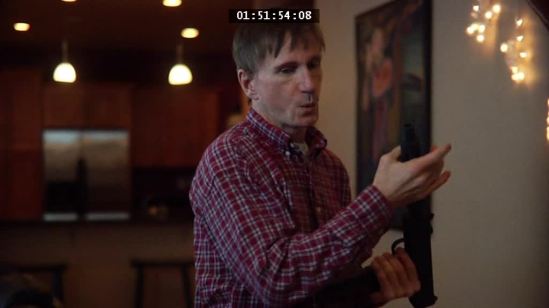
Bill Oberst Jr. is one of the big names attached to this project and his part is rather slim, playing the role of Brian Hatt, the released child rapist looking to strike a vengeful blow upon the Duffin family. Oberst, hands down, raises the value of “The Christmas Devil” tenfold by being a wisecracking villain with a submachine gun and showing no mercy. If Oberst was ever awarded a role in a Batman movie, he would be a fascinating, if not terrific, Joker. Just sayin’. Finding more the good in “The Christmas Devil” has yet to be seen. Aside from Bill Oberst Jr.’s superb wayward performance, only an extended topless scene of Model Mayhem model Angelina Leigh as Krampus’s cave-chained Pet slowly discharges any kind of titillating and riveting on screen arousal.

The production value is unmistakably low level and this reviewer wasn’t expecting much when considering sets and post-production quality, but Hull should have spent film funds on skilled talent to the likes of Oberst or to the opposite likes of novice actor Paul Ferm, who plays the part of a biker-salty Saint Nick with an on/off personality switch. Lead actor A.J. Leslie as Jeremy Duffin frustratingly shows no range and aimlessly makes his way through Duffin’s most conflicting and life-threatening moments. Even Duffin’s bar fight with costar Darin Foltz and his two cronies conveyed no raw emotion needed to sell the action and, speaking of the same bar fight, the staged event looked awfully fake all around.

The High Fliers Films and ITN distributed Krampus Christmas horror film is 82 minutes of discombobulated mess. The story crawls slowly across to coherency, lightly candy coated with moments of acting talent and gratuitous nudity. Surely to be blown out of the water by the bigger and badder PG-13 “Krampus” film, “The Christmas Devil” can be considered to be a low end starting point for the anti-jolly myth of Santa Claus, helping those to jump start in learning all about the horned devil-like character and his brat-napping ways. I’m unable to review the audio and video quality and bonus material of the film as I’m sent a DVD-R copy and doesn’t truly reflect through a burned copy. “Krampus” The Christmas Devil” comes to DVD and Blu-ray in the UK courtesy of High Fliers Films.
A Pair of Duo Dunces Take on Horror Homages. “Caesar and Otto’s Paranormal Halloween” review!

The homeless twosome Caesar and his half brother Otto haphazardly take down a notorious serial killer and are awarded a fall-to-winter housesitting gig at a powerful California politician’s summer home where multiple families have been brutally murdered. Their good fortune seems ill-fated as the two encounter strange house employees, random levitating objects, and an endless supply of dead bodies. Tagging along with the brothers is their drunk and inattentive father Fred who spearheads his own agenda in a house full of secrets. When Fred ends up trapped on the other side of the spirit world, Caesar and Otto’s antics strive far and wide within their bag of tasteless tricks to not only save their hapless father, but also save their very lives and, perhaps, the entire state of California. In the middle of all the chaos, Otto is informed that his once thought dead mother is truly alive and discovers he was born with a hidden talent that’s soon to be pertinent to his current and dire situation.

My second “Caesar and Otto” experience compares to nearly the same tomfoolery as their “X-Mas” inspired horror spoof, except that “Paranormal Halloween” is vastly more superior when considering the comedy quality. Caesar himself Dave Campfield once again stars and directors the spoof that pays tribute to many classic and modern horror films such as “The Amityville Horror,” “Paranormal Activity,” “Halloween”, and “The Conjuring.” Campfield joins forces once again with his longtime sidekick Paul Chomicki as Otto to produce and star in the Campfield’s and Chomicki’s four feature film of nitwit wonders Caesar and Otto who resemble a one more tool in the toolbox version of Harry and Lloyd from “Dumb and Dumber.”

Campfield pens more dialogue for Caesar who hilariously continues to generate a well-defined lisp while spit firing one-liners, comebacks, and insults at Otto and anyone and everyone standing in the vicinity. Chomicki’s Otto is the big lovable oaf whose on-going hunt for love in all the wrong places, but manages to catch a break in nearly biting the bullet by sheer dumb luck and stupidity. Campfield and Chomicki’s whole schtick isn’t groundbreaking as we’ve seen this kind of film before in “Scary Movie” and even outside the realm of horror with “Airplane!” Unlike “Scary Movie,” Campfield and his team dedicated horror icons maintain a sense of dignity and respect that honor horror more than just dumbing it down. My first experience with the “Deadly X-Mas” Caesar and Otto wasn’t a very pleasant one as I couldn’t grasp the scene-by-scene speedy pace, the cut rate budget, and the inexplicable reference, after reference, after reference structure and I was a bit hesitant in enduring another episode of their continuing legacy. Now that I’ve matured as a viewer a little bit more from two years ago, I can honestly state that “Paranormal Halloween” is calculated corniness and precisely patronizes faithfully the horror outlets.

Like the predecessors before, “Paranormal Halloween” contains the usual cast of entourage actors that coincide with Dave Campfield, Paul Chomicki, and Scott Aguilar as the fatherly Fred. Deron Miller again ends up shaggy and disoriented, Ken MacFarlane once again plays a guy with a J name, Avi K. Garg is calm and cool until he loses an arm, Ray Plumb quickly makes an appearance, Keith Bush sports a rad stash, Samantha Barrios makes another cut, and “Sleepaway Camp” legend Felissa Rose conjures up some on-screen time and this marks the second time I’ve seen her in a film that I’ve reviewed twice in a month. The credits also add other “Felissa Rose” type stardom actors from the similar molds such as “The People Under The Stairs’s” Sean Whalen, “Commando’s” Vernon Wells, b-horror vixens Tiffany Shepis, Debbie Rochon, and Brinke Stevens, and along with “Return of the Living Dead’s” Beverly Randolph. An excellent lineup for a horror spoof of this size. Tack on a few cute faced actresses and a nude scene from Model Mayhem model Jin N Tonic and you have a decent, well-rounded cast to support this Wild Eye Releasing film.

The Wild Eye Releasing backed production “Caesar and Otto’s Paranormal Halloween” won’t be the last of it’s kind (a hint from the film suggests that Caesar and Otto’s Spring Break of the Dead will be the next title) from funny guys Dave Campfield and Paul Chomicki. A second chance or a second look never hurt anybody and taking a plunge after a seemingly disastrous first round with “Deadly X-mas” will now be deemed as only a fluke. With giggly-garbage writing, a cast of willing horror legends, and cruise ship filled of homages (or horror ripoffs such as the same John Carpenter “Halloween” font used on “Halloween” in the title), “Paranormal Halloween” smarts oh so good and doesn’t apologize for any or all of it’s budgeted quality.

[trailer=https://youtu.be/CsUvnUiIvls]
Evil Exes Never Die! “Burying the Ex” review!

Max believes he’s found the perfect move-in girlfriend with Evelyn: she’s nice, she’s hot, she loves sex. However, when Evelyn’s over-protective, save the planet, go vegan or go home boorish attitude becomes too much for Max to bare, he attempts to break up their dwindling relationship, but ends up accidentally killing her long after making a solid promise, in front of a mysterious satanic genie figurine, to always be with her. Max’s regrets surge him into a depressive state until he meets the beautiful Olivia, the perfect opposite sex carbon-copy of himself. Everything seems to be coming together for Max until Evelyn digs up and out from her grave and returns to him as a decomposing and clingy zombie girlfriend, picking up right where their relationship left off.

The 2014 romantic horror-comedy “Burying the Ex” is the first feature film from “Gremlins” director Joe Dante since 2009; a six-year stint that resulted in the outcome of this odd, but familiar blended genre film. Dante hasn’t kept his directorial hands too much in the horror genre pot in over two decades with the small exceptions of a “Masters of Horror” short film and 2009’s “The Hole,” the director hasn’t lost his signature touch of dishing out deadpan humor and fusing a knowledgeable palate of horror to go with it making “Burying the Ex” one of the most morbidly fascinating horror releases in the modern zombie age. Another trademark of Dante is casting a familiar face and sure enough, Dick Miller makes a cameo appearance. I swear I thought he was dead.

“Burying the Ex’s” cast is compiled of seriously underrated, but without a double awe-inspiring generating actors and actresses with the reboot of “Star Trek’s” Anton Yelchin headlining the way as the film’s main character Max. Max’s passiveness quality fits perfectly with Yelchin’s dry delivery and awkward mannerism style and Max’s passion for horror feels natural coming from Yelchin with the actor’s similar background work from “Odd Thomas” and the remake of “Fright Night.” However, aside from playing Chekov from “Star Trek,” this character is more of the same from the 26-year-old actor. Yelchin’s antagonist portraying co-star Ashley Greene, from the vampire romance series “Twilight,” marks well being the strong, opposing character against Max, portraying the snobby and overbearing girlfriend Evelyn. Though Greene is usually quite beautiful and stunning in other roles, the Evelyn character is a breath of fresh (or rotten in this case) air with a bit a sassy appeal. Greene casts an already slightly models-like thin appearance with features that strike well with the characters overall gaunt look, creating a well on it’s way decomposing zombie.

The supporting actor and actress completely round out Dante’s playfully twisted take on a stalking ex-lover. Oliver Cooper has Max’s back as his sex-crazed, exploitive half brother Travis. Cooper’s fast talking, negotiating-type personality reminisces his “Project X” work and though Cooper’s range as an actor feels limited, Travis works here as being the yang to Max’s yin. Finally, the absolutely gorgeous Alexandra Daddario’s relieves the, if any, thrilling tension and Max’s shortcomings with a quirky, adorable, and cute as hell horror-inspired malt shop owner. Though Daddario’s role might not spark a social media firestorm like her “True Detective” bare it all role, Daddario’s Olivia attempts and achieves an one-eighty, pulling off a split personality from the standard hot girl part in these types of romantic horror-comedies and showing that even the most nerdy of girls can be the girl of your dreams. Daddario is also almost unrecognizable in this role when compared to her previous works.

The script penned by newcomer Alan Trezza needs some fine tuning. This fantastic hard sell doesn’t fall to fault from with the cast as the story moves along at a roadrunner pace and fails, purposely I’m speculating, to explain the background on the satan genie statue that’s extends the root cause of Max’s problem. Not even a smidgen of background to alleviate any the tiniest inquiries of satan genie is revealed and just leaves the audience wondering just who sent the evil wish granting product. However, the subtle tongue and cheek manner of Trezza’s first feature revels in quirky contentment, leaving the horror and the comedy as equals. “Burying the Ex” shares a similar story we’ve all seen before – “My Boyfriend’s Back,” “Life After Beth,” “Warm Bodies” – but each of those tales told have a distinctive quality and a cast of a different caliber.

Since this a screener copy from UK distribution company High Fliers Films, I’m unable to review the picture and audio quality nor comment on the extras, but as far as a distributed film pickup for the company to release, “Burying the Ex” will live, and return, beyond the grave again and again and again. Dante’s romantic horror-comedy feasts on horror homage and dry wit while delivering surprisingly only little gore. “Burying the Ex” is available on UK DVD from High Fliers Films and can be purchased from most UK online retailers.
Changing the Past Could Lead to Evil Outcomes. “The Man of the Future” review!
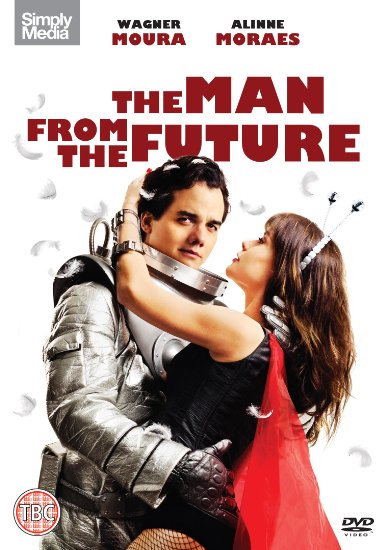
Joao, a brilliant university physicist, lives in a suffering life of depression, anger, and vengeance for the last twenty-years. Back in November of ‘91, the love of Joao’s life, the beautiful Helena, betrays him and humiliates him in front of a large crowd of his peers, leaving him with nothing and bestowing upon him the name “Zero” to forever imprint on him his worth. In 2011, he channels all his hate to develop a cost saving energy to show everybody that he’s not a zero, but when he locks himself in the chamber of his machine in a show of defiance, his machine creates a black hole in which he’s sucked into and brought back to the past to the very same day he’s humiliated by Helena. Joao is determined to change the past to make a better life for himself, but his actions cause an unforeseen butterfly effect to which causes him to return back to the past over-and-over again.

A powerhouse Brazilian sci-fi comedy from a conglomerate of production and distribution companies such as Conspiração Filmes and Globo Filmes from production and Paramount Pictures and Simply Media handling the distribution across a worldwide realm. “The Man of the Future” is directed by Cláudio Torres and stars “Elite Squad” and “Elysium” star Wagner Moura as Joao. Moura’s physical comedy in this role spawns a likable and zany character whose constantly an underdog fighting and clawing his way back up to the top by any means possible. The film’s very similar to Ashton Kutcher’s 2004’s “The Butterfly Effect” sans the comedy, but similar in the sense of Joao’s life drastically changing with each trip to the past.
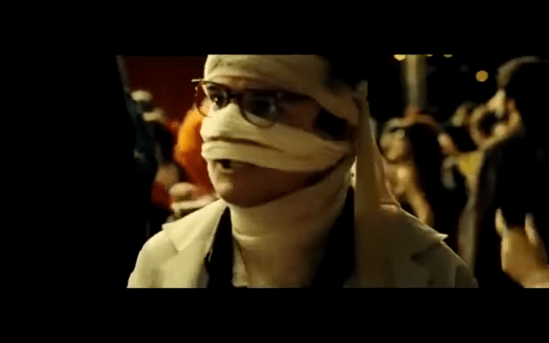
Moura’s costars compliment Moura’s Joao and the rest of the story. Former model Alinne Moras has a stunning beauty compared to the an average joe looks of Moura and her performance adds a bit of sassiness much needed in a comedy such as “The Man of the Future.” Moras delivers the sexiness and the female energy needed to keep up with Moura. A more subtle character is Joao’s good friend Otávio played by Fernando Ceylão. Ceylão dilutes the overzealousness in order to keep the zaniness in check and welcomes a change of pace. Moura and Ceylão’s only interact very briefly and don’t have the chemistry to the likes of perhaps Simon Pegg and Nick Frost, but when together, they’re solidly funny. Lastly, Maria Luisa Mendonça brings the wild card to Joao’s dilemma though her role as Sandra promises more of being a capital venturist looking to be all business and bossy. Mendonça scenes show more range than first thought and complete the main characters in good fashion.
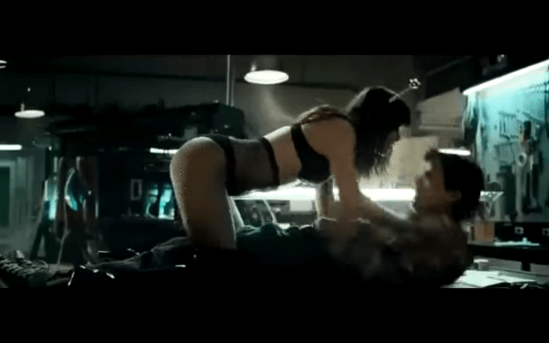
Though heart-felt, entertaining, and delivers a message of hope, the story creates it’s very own black holes, zipping the story past what feels like crucial points in the film. With each trip to the past, less and less of the story is conveyed and while the understanding that some scenes are omitted because they would just be rehashed, other scenes needed to be restaged to build upon Joao’s and Helena’s momentum toward a happier future. With any film about time traveling, there will be plot holes, inconsistency, and improbabilities and “The Man of the Future” is not invincible from these time traveling complications.

“The Man of the Future” is a science fiction film with solid computer generated effects especially being a product of Brazil. Since the disc provided to this reviewer was a DVD-R, diving into the presentation wouldn’t be appropriate. However, the production value doesn’t appear shoddy. The only gripe to state stems from the English subtitles that seem to come and go from the scene in a flash, leaving hardly any time to read the text before the next piece of dialogue. There is such rapid fire dialogue that, in my opinion, the subtitles can’t keep up. Aside from that, I wouldn’t disregard this sci-fi comedy and would recommend this South American native film without a second thought.

