

Tan and Javid go on a killing spree in anarchy-riddled Germany after their families were killed in a house fire in which emergency services were purposefully withheld. After slaying bystanders at a diner, they happen upon a script in a stolen car; the script reads line-by-line, word-for-word on everything the two men say and do. Simultaneously, the wealthy Eliana is hunting them down, seeking revenge for the death of her parents by collaborating with her parents’ former bodyguard to hire cold-blooded serial killers to kill the men. As Tan and Javid try desperately to not follow script, the two men seemingly can’t avoid their fate along with circumventing a variety of dangerous people crossing their path. Only a couple of people from the script can possibly save them, an Angel named Snowflake, and, possibly, the screenwriter himself.

Adolfo Kolmerer’s “Snowflake” has maybe little-to-no relevance to the derogatory term commonly used by right-winged conservatives when describing the assumed liberal millennial with a heightened sense of uniqueness and having a knack of being overly offended by, well basically, everything. Kolmerer’s “Snowflake” also has no correlation with the concept of winter, snow, or even Christmas. So, the question is, what the hell is “Snowflake” about? The 2017 shocker, also known originally as Schneeflockchen in the German language, is as cold and as unique as any snowflake mother nature can cruelly reign upon down a person and methodically compounds the series of gritty events, from two sets of characters, through a head-bearing funnel that’s supernaturally poised and brutally executed. From writer Arend Remmers, the script itself is smartly constructed as a narrative character, woven to become a pivotal motivator that not only churns out characters’ supposedly ill-fated destinies, but also a metaphysically, arch-able player in the grand scheme of gruesome revenge and absolute atonement that within the bookend pages of the treatment has unorthodox religious themes and a radical, almost anti-hero like quality of rising against the powers of racially insensitive autocratic and populist agendas. The film’s location of Berlin isn’t the only thing that’s anarchical driven as Kolmere and Remmers bends cinema conventional rules to enthrall one punch to the gut movie.

Erkan Acar and Reza Brojerdi play the brothers in arms, Tan and Javid. As they venture on nihilistically slaughtering quest to come face-to-face with their maker, Tan and Javid have nothing more to lose and Acar and Brojerdi depict themselves in that predicament while maintaining their characters’ seamless, longtime friendship, like watching two sets of personalities move as a single unit. Tan and Javid are hunted down by another character seeking vengeance for her parents are the wrong place, at the wrong time. Eliana has money, status, and all that she could ever want, but when she befriends her family’s bodyguard who is then let go from the position, she loses sight of the meaning of uncoupled protection in Berlin’s anarchy state and also loses sight of what’s truly important to her – her folks. When they’re slaughtered, Eliana, played by Xenia Assenza, is hellbent on exacting retribution. Assenza clearly proceeds with a cold, drafty personality for Eliana with unrelenting ambition. The character is scribed as ultimately over flawed if not even expressly obvious and Assenza does a fine job bubbling those flaws ever so delicately to the surface in every loss Eliana sustains. Tan, Javid, and Eliana have a very grounded reality about them when contrasted with other characters such as the superhero-esque Hyper Electro Man (Mathis Landwehr) with the steampunk power backpack of electrical power, a blind man named Fumo (Eskindir Tesfay) with fits of fury, and a madman named Caleb (“Braveheart’s” David Gant) who could very possibly be God himself. Electrifying, mysterious, and powerful can be their only descriptive adjectives that steer “Snowflake” into the graphic novel universe. David Masterson (“German Angst”), Gedeon Burkhard (“Inglourious Basterds”), Selam Tadese, Adrian Topol, Judith Hoersch, Alexander Shubert, and Antonio Wannek, Bruno Eyron, Martin Gores, Mehmek Kurtulus round out this amazing, eclectic cast.
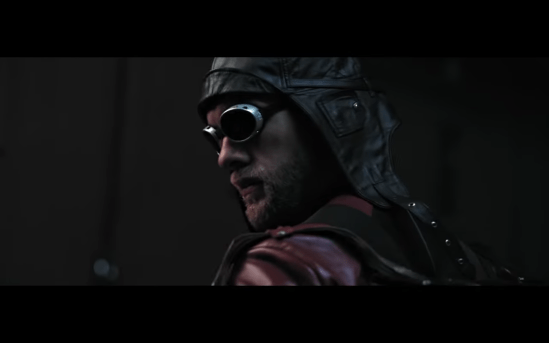
On a single read through of the synopsis on the Artsploitation’s Blu-ray back cover, trying to process the quickly summed up tale might also quickly scorch and burn off invaluable brain cells, but “Snowflake” has an immensely alluring nature once reviewed on a second read. Might not be a tearjerking romantic comedy and can be stupendously offensive with hints of barbarism, but the fantasy element, infused with Western composition at times, is stone strong with this film that’s more than just a Tarantino or Coen brothers’ akin film as the summary impresses to potential viewers. I’d toss in their some steampunk aspects of early Terry Gilliam or the delicate fable-isms of Marc Forster. It’s also a little razor blunt like Takashi Miike and perhaps could have surrealistically lobotomized and strenuous dreamlike sequences that speak to the likes of David Lynch, in choice scenes. Adolfo Kolmerer can be considered an equivalent to not one, but all of these visual icons and mega storytelling filmmakers.

Truly unique like an ice crystal falling from the winter sky, “Snowflake” falls onto Blu-ray home video courtesy of Artsploitation Films. Presented in 1080 and in a widescreen format, “Snowflake” vividly impresses with a broad color palette and a sleek, crisp digital picture. Hyper Electro Man has vibrant electrical currents snaking around his body and arms that aren’t just blurry blobs, but maintain two-tones of color and depth. Various decrepit buildings have the details pop out to bring an anarchy German to life. The German-English-Polish Dolby Digital 5.1 audio track has range, balance, and fortitude with a clarity and prominence in all spoken dialects. English subtitles are available. Bonus features included a behind-the-scenes look at “Snowflake” that clocks in just under a hour and trailers of other Artsploitation films. “Snowflake” has an original frame that’s built to sustain the broken westernized violence and is tightly glued together with likable berserk characters and an engaging labyrinthine story that ultimately feels genuine, versatile, and thematically relevant in, nearly, a not-so-abstract vision.
Category Archives: Uncategorized
Time Travel to Stop Evil via Astral Projection! “Mandao of the Dead” review!

Astral projection defined per Wikipedia: an interpretation of an out-of-body experience that assumes the existence of an “astral body” separate from the physical body and capable of traveling outside it. The otherworldly experience befalls suddenly upon Jamison Mandao, a young man living off the royalties of his late father’s flailing popular cereal brand, and his recently discovered, and also bewitching, new astral plane exploring powers land him in a macabre laced predicament with his adult squatting nephew, Jackson, and his nephew’s blood hungry, murderous ex-girlfriend, Maeve. With a little help provided by Jamison’s astral enthusiast relative, cousin Andy, and Maeve’s recent victim whose ghost is stuck in limbo, Jamison must use his astral projection to travel back in time, rearranging the series of events in order to not only appease the desperate pleads of a ghost, but to also save his daft, but good natured nephew becoming her next hapless fatality before the stroke of midnight segueing into the Day of the Dead when their chance to live again will rest in peace for eternity.
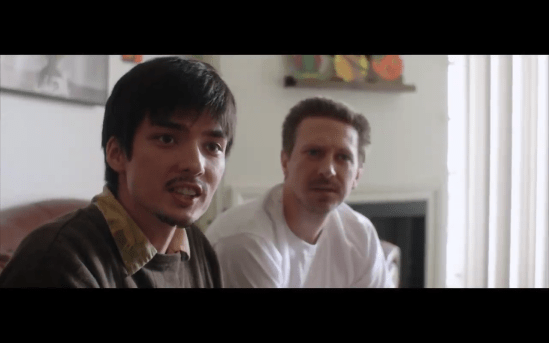
Here we go again with a time traveling genre film, the horror-comedy “Mandao of the Dead” from writer, director, and star Scott Dunn. Dunn’s sophomore feature film of 2018 dares the chances in being overly and, frankly, unnecessarily lambasted by internet trolls aiming to pick apart the film, hunting vigorously for time travel plot holes, but, and I reiterate this point again, that Dunn’s film is mainly a comedy where the laws of physics and ideas of probability have no bearing on Dunn’s grim fantasy loop. Despite the rather clichéd title suffix implying a facet from the zombie genre, “Mandao of the Dead” refers toward the post-Halloween, more traditionally Hispanic recognized Day of the Dead on November 2nd and while Dunn uses the day typically held for respect of past lives, the “Schlep” director conjures up a lively twist upon deathly circumstances that forms a cut-off date when that slither of twilight time for the dead ceases to be no more.

Alongside Scott Dunn as Jamison Mandao, Sean McBride buddies up as the freeloading nice nephew, Jackson. Dunn and McBride have previously worked together in Dunn’s first feature entitled Schlep and their rapport in “Mandao of the Dead” indubitably confirms a harmonious witty banter and a light-hearted dark comedy in fine, mechanical form. McBride’s spot on heartfelt halfwit Jackson nicely compliments Mandao’s knack for impatient contemplating. Throw a dude name Darth into Jamison and Jackson’s inert existence and things get dire and interesting. “2-Headed Shark Attack’s” David Gallegos isn’t portrayed as your friendly neighborhood ghost nor is he a malevolent one; instead, Darth begs for help and the cosmic universe delivers to him an astral projector and Gallego’s couldn’t be more sharply colorful with his spontaneous humor. Together, the three 30-something year-olds are pitted against the dark horse that is Maeve. Playing an incognito blood drinker, Marisa Hood has an innocence about her that renders a false sense of security and, in Jackson’s case, a pair of weak knees. Alexandre Chen, Sean Liang, and Gina Gomez round out the cast as characters finding their ways into the Day of the Dead debacle.

While we’ve seen where timelines become mangled by the interference of a time traveler and where the theme is fondled with in “Mandao of the Dead,” Dunn doesn’t over knead the narrative with it though certainly a centerpiece of the film as a whole. Mandao’s adventure with astral projection and his middling with the planes are only the beginning that have stirred a frenzy of unhappy campers in the spiritual world. The whole event of Mandao going back in time, twice, to save people is the proverbial tip of the iceberg and a welcoming taste of what’s to come from Dunn and his team. Shot in 10 days with a tight budget, Dunn, who also self-produced and edited the final product, has crystal clear storytelling abilities even with some of the rough, less glamourous edges encompassed within the world indie filmmaking. The characters are well written, from Cousin Andy, to Jackson, and to Darth, as their three various personalities colliding under a thin, blurry gothically influenced omen line.

“Mandao of the Dead” arrives onto Amazon Instant via Prime Video and presented in a widescreen, 2.35:a aspect ratio, and clocking in at a runtime of 74 minutes. No physical media specifications were provided now or for future release. With a budget around $13,000, the English stereo audio track and Panasonic GH5 image quality are finely calibrated and a flat out success for streaming platforms. No bonus features are included with this release. Vampirism, science-fiction, spirits, and astral planes, “Mandao of the Dead” is Scott Dunn’s golden genre-bending film of ghoulish and space and time continuum disproportions! So much so, a sequel has been announced, “Mandao of the Damned,” sparking a positive anticipated interest, by at least this reviewer, for the next chapter of a hapless, macabre adventures that Jay Mandao and Jackson will step into in the next astral plane!
This Babe Becomes an Evil Magnet! “Obsidian Curse” review!
Blair Jensen rode the highlife of drugs and partying until her arrest that separated her from Husband Roberto and her young daughter. Her release a year later thrusts her into a desperate state of self-effacement, swearing to not only to herself, but also to others a clean slate with a life of sobriety and future employment to better her odds at court ordered visitations with her daughter, but while incarcerated, Roberto left for another woman and her family is in the hands of Donna who is eager to do anything in order to stop Blair’s interposing unto her new life, including retaining a witch to invoke the Obsidian curse onto her. The curse attracts all nearby evil toward her. From flesh eating demons and zombies to murderous serial killers and powerful vampires, Blair is constantly on the run and with the help of a former archaeologic professor and his colleagues, she can better understand her dreadful predicament.

“Obsidian Curse” is the 2016 action-horror from schlock and knock-off B-horror director Rene Perez whose brought us such cinematic gems as “The Burning Dead” with Danny Trejo and the “Playing with Dolls” franchise that spawned two sequels, titled “Bloodlust” and “Havoc”. Perez, who also penned the script, has a slight obsession with Obsidian curses as he directed and co-wrote “Obsidian Hearts” in 2014 with nearly an identical premise that begs the question whether Perez just rebooted his own film to tweak and change here and there to gain redemption for initial mistakes? Having never viewed “Obsidian Hearts,” I personally can’t speak upon the film’s merits, but what can be commented about “Obsidian Curse’s” appeal is that the relentless action smothers any kind of insipid narrative traverse and is massively ambitious in wrangling a meshing of a monster mash. Perhaps too massive for it’s budget, Perez roams the locale landscapes as a flawed heroine flees from the flock of fearsome fiends following her like flies to a foul stench. How’s that for alliteration!

Party girl, Blair Jensen, is trying to regain her life after incarceration, but the convicted mother never had a chance. Stripped of her rights and left to fend for herself for the first time, Jensen is at the bottom, starting over, and attempting to claw her way back up the rank to mother of the year with young daughter, but Karin Brauns doesn’t fit the bill. The Swedish-born, blonde beauty is gifted with a paint brush and a canvas, but her talents don’t translate well as the downtrodden Jensen. Perez really over sexualizes her presence from scrip-to-screen that doesn’t seem necessary to the story and Brauns egregiously lacks capturing the struggles of her character’s life changing freedom and the struggles she must endure to survive an all-evil summons. The character is also written and visually portrayed poorly that follows a released felon fallen on hard times having a nice vehicle to drive around, a cell phone to use, and all the makeup applications and hairdo fashions bestowed to the character in every scene. Reggie Bannister should have been the lead, because the “Phantasm” actor really exhibits falling on hard times. Perhaps the most convincing actor on camera, Bannister’s archeological professor is diluted to just a mere paranormal researcher which resembles a shell of his former gun-toting Reggie role. The dimpled chinned Richard Tyson is no longer the seared image of Crisp from “Kindergarten Cop” in my memory bank. The aged actor also fills a professor role in Pere’z film, but, like Bannister, doesn’t register a pulse. Hard to swallow to very screen captivating actors being diminished in performance on a movie that’s engulfed in horror action. Rounding out the cast is former Playboy model Cody Renee Cameron (“The Neon Demon””), John Caraccioli, Julia Lehman (“Constantine” television series), Charlie Glackin (“Playing with Dolls”), and John Scuderi as the Vampire.

While “Obsidian Curse” has entertainment value, the value is rather low on the metric scale. What’s missing from Perez’s film is a rich, engrossing story that requires more than just peppered moments of indistinct human connections spread thin throughout the storyboard action sequences. Blair Jensen might have been the victim of a witch’s dastardly cursed as the bread crumb trail for monsters of countless configurations, but the mother was never tested as, well, a mother whose supposed to be fighting for her daughter and while a scene or two of malicious attacks and chases on Jensen is the rudimentary premise of her plight, the curse never truly agitates into a test of her maternal bond or her compassion for her friends. As far as the overall appearances of the creatures, they check the box as meeting expectations. The rubbery, latex look is conventional of horror creatures in the 1990s and you can see the awkward folds and the distinctive differences between makeup and skin as the two don’t move or mesh appropriately, but the creativity behind the general appearance offers a broad range of antagonists suited for carnage like an empty eye socketed demon with razor teeth who sees by holding up his detached eyeball with a bloody optic nerve dangling about and a vibrant blue vampire with medieval armor and has sexy, disposable women servants.
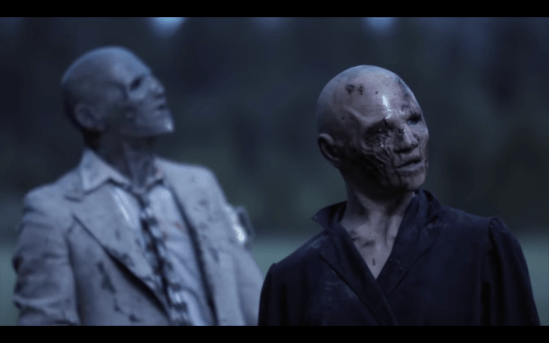
Breaking Glass Pictures distributes “Obsidian Curse,” in association with High Octane Pictures and iDiC Entertainment, onto DVD home video. The 79 minute feature runs on an single sided, double-layered DVD9 and is exhibited in an widescreen 1.79:1 aspect ratio. Picture quality maintains vibrancy without loosing the edgy details though a large percentage is filtered through a blueish tint. The drone sequences of Blair running through a field, whacking zombies with a basement ball, withstands the picturesque and lush backdrop and even with Blair makes a splash in a creek, the beads of spray really come out in the quality for a DVD. Though quick to edit, the gory scenes are visually tasty too. The digital dual channel audio track is par for the course, but there are some balance issues between score and dialogue that makes Karin Brauns’ accent difficult to interpret. The foley is all out of whack and could use tinkering to hone in or expand upon the range and depth; the repetitive chain rattle used in Blair’s ball and chain chase scene desperately needed to be mixed better. Bonus features include a sole photo gallery. “Obsidian Curse” subsequently cursed itself with a slew of monsters but displayed no character substance to bind the narrative together, leaving Blair’s character arch to flounder in a mindless and endless cycle of bashing in the hostile chromes of enticed evil.
Finding Love in the Most Evilest Ways! “Brutal” review!

One man kidnaps women, gags and bounds them inside his bleak apartment, and unleashes a fury of hate and disgust whilst searching for one woman who will understand him and his relentless, and vehement, scouring. One woman lures highly aroused men back to their apartment for what they believe will be a night of passionate embrace or of simplistic carnalities of inhibition. While the guys are thinking with the wrong head, the woman slices and dices them to a pulverized pulp of death meat and repetitively fillets their manhood postmortem without guilt. She, too, also searches for something, but is more reserved about it as she allows men to verbalize their needs and desires to her. As the two killers go through the melee day-by-day, they eventually find each other, but before realizing their compatibility, the killer inside themselves square off against each other in a one-on-one bout of maniacal mayhem that must unravel in blood before unsheathing true love.

Who knew that love could hurt so badly? Director Takashi Hirose exhibits a painful peak into two desperate swains callously searching for some understanding, some deep rooted mutual pain that plagues their own embodiment, in “Brutal,” Hirose’s 2016 feature that packs a bloody brawling wallop of the human will toward punitive punishment and desperate determination. The Japanese filmmaker also wrote and co-produced the three part chapters that segments Man, Woman, and Man and Woman into a commingled three act narrative of utter chaos that glorifies finding a soulmate in the most insane circumstances. E-Harmony. OKCupid. OnlyFarmers.com. None of these so-called matchmaker websites have the formidable fortitude to remove all the political niceties and to dig into the human psyche the way that only Takashi Hirose can to lure out and strip one person’s entire vulnerability and, essentially, the parts that makes us ultimately human into a raging, yet emotionally unstable, hapless lover.

Butch, the one and only moniker for the actor, portrays the Man who is a very strong and determined man that brings to his apartment many nice, and sometimes unsavory, attractive ladies; however, he doesn’t whip them up an aphrodisiac dinner or sweep them off their feet with a romantic Rom-Com. He likes to move the relationship along, at a hare’s pace, with getting down and dirty and in certainly not in a sexualized manner. Butch pinpoints the man’s ambitions, machine-like in his will with a hint of softness behind the eyes when plucking through the headcount of numerous women for his match. Ayano is equally compelling as Woman and though Ayano has brawnier range of comedies and dramas under her belt, she notches gore and shock as if it’s simple to get stabbed 50 times and be completely nude with unpleasant prosthetics garnishing the naughty bits of your body. Butch and Ayano are quintessential to “Brutal’s” languishing love story and present themselves with such confidence, which is made key from their previous work with Takashi Hirose – Ayano worked with Hirose in his dramatic horror short, “Bandaged” in 2011 and then Hirose worked with Butch in a 2012 zombie short entitled “Moratorium” that starred Japanese cult and former pinku actress, Asami. The film also stars Katrina Grey (“Vampire Reborn”), Takashi Nishina (“Ringu 2”), Naho Nakashima, and Nanako Ohata.

Hirose doesn’t hold back the punches. In fact, he’s added one or two more for good measures. Helmed by a three person crew and one visual effects artist, the special effects department ramps up the rampage and carnage, making poetry out of ruthless romanticism. The end result is absolutely killer with stab after stab, gore galore, and post-mutilation prosthetics of the naughty bits. Hirose steps aside for fight sequence director Satoshi Hakuzen to exalt his gift for action sequences. Having previously worked on “Resident Evil: Degeneration” and “Dead Sushi,” Hakuzen showcases his mixture of gore and shock horror and hand-to-hand combat in the smallest of quarters while still seamlessly continuing Hirose’s narrative. Yet, “Brutal” doesn’t follow much of the laws of basic human biology as when people are knifed multiple times, whether spreading punctures along the various parts of the body or more precise slices into one focused area like the crotch, they keep breathing breath and they keep moving like their Arnold Schwarzeneggers covered T-800 endoskeletons in “The Terminator” and that unfaithfulness to realism inches “Brutal” more toward a fantastical flavor.

Unearthed Films and MVDVisual present Takashi Hirose’s “Brutal” onto Blu-ray for the first time and it’s brutally honest with a phenomenally fair picture engrained from a singer layer BD and presented in 1080p with a widescreen 1.85:1 aspect ratio. Colors really match the film’s coarse tone of a desaturated hue where the blood runs like caramel colored water. Textures look fine, especially around the natural looking skin toned bodies of each person, and the no noticeable issues with compression. The Japanese language Dolby Digital 2.0 audio track fairs equally well with a prominent dialogue track and a sickening range of lacerating thrust that make wet whiff sounds of cold steel that much painful. Tatsushiro Hirose’s rock score unfortunately wanes in soundtrack behind the intensity of Man and Woman’s blood thirst for love to the point of almost non-existent. Subtitles sync up nicely to the dialogue track. Bonus features a clipped production progression of behind-the-scenes, trailers, and music videos. “Brutal” and Unearthed Films found each other, just as Man and Woman in their twisted circumstances, and present an entertaining 67 minutes that solidifies Takashi Hirose one hell of a romanticist and absolutely, 100% bestow his film a true-to-form designation.
Contamination Coverup by an Evil Corporation! “The Chain Reaction” review!

Former war veteran and hot rod enthusiast Larry and his wife, Carmel, take a weekend off from the children to vacation in Paradise, a retreat on the outskirt, rural area of Australia that includes pleasurable amenities such as fishing, swimming, and being an ideal location for a dirty weekend between two lovers, but an Earthquake triggers a major nuclear leak at Waldo, an international nuclear waste storage facility who aims to coverup to radioactive contamination. Heinrich Schmidt, an engineer who was deeply exposed to the waste flees from Waldo’s goons to reveal to anti-nuclear agencies the corporation’s dastardly concealments and warn locals of the tainted public water supply. With not much time to live and suffering from a serious head injury, Schmidt, with partial amnesia, is sheltered by an unsuspecting Larry and Carmel as they help him piece together his life while Waldo sends recovery and murderous thugs to quiet those who wish to leak information. Paradise is anything but as trouble brews between the vacationing Larry and Carmel, the witless locals, and Waldo in disclosing radioactive waste streaming through the water passage ways.
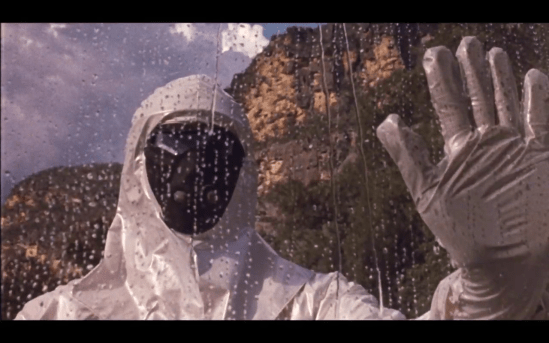
“The Chain Reaction” is the freshman film of writer-director Ian Barry released in 1980. Produced by “Mad Max’s” George Miller, “The Chain Reaction” was considered an unrelated companion piece that also starred a number of the same actors, but the action-thriller aligned more with the populistic nuclear disaster genre of the late 1970s and early 1980s. Whereas George Romero focused on accidental biological effects in his 1973 science fiction horror, “The Crazies,” Barry honed in on nuclear waste disaster and the reaction of those responsible, to what length of measures would be necessary and taken to keep exposure from happening. Caught in the middle are locals and unfortunate vacations, who actually take more a stand against tyrannical, above the law organizations. “The Chain Reaction” is packed with exciting car chases and glazed with testosterone enriched standoffs on a nuclear level.
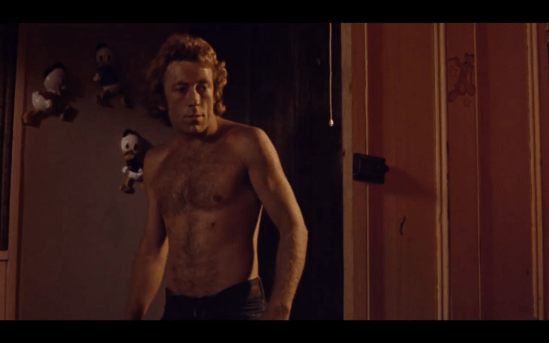
Steve Bisley steps into the lead role of hot shot Larry Stilson working his solid strong physique with a general moral, but still bad boy composure when unravelling and thwarting the Waldo conspiracy. Bisley costars alongside the late Arna-Maria Winchester. Winchester screams screen time sauciness, but as a mother of two, Winchester’s Carmel Stilson comes off as promiscuously uncharacteristic as a mother but, to be fair, Larry doesn’t necessarily yell conventional father either. However, I’m impressed by the turncoat engineer Heinrich Schmidt played by Ross Thompson, an Australia actor who can really accent well the German language and puts into his role a languishing, broken man trying to do the right thing. Together, the Stilson’s and Heinrich are tracked down by Waldo henchman Gray, portrayed by English actor Ralph Cotterill (“Howling III”). Cotterill’s menacing, stodgy dagger eyes make him a suitable villain, but falters in the screen time department, seeing not much action as needed to take care of monumental business against possible exposure. Huge Keays-Byrne (“Mad Max: Fury Road”), Richard Moir (“The Odd Angry Shot”), Laurie Moran, Lorna Lesley (“The Survivor”), and a cameo of Mel Gibson round out of the cast.

The overall problematic crux with “The Chain Reaction” stems from that director Ian Barry is no George Miller when presenting his own version of pacing a film. The narrative is casually abrupt and edited shoddily with very rough and hard to follow sequential events that are supposed to be a fiery ball of nuclear mishandling and underhandedness fury. Though highly doubtful Umbrella Entertainment took the censorship scissors to this Ozploitation flick, there are moments of bizarre, if not expurgated, cuts that debase the illustrative graphic violence. One particular moment in the climatic third act, a shotgun was only aimed to intimidate would be attackers, but never discharged. However, a character is seemingly gunned down with a blood splattered mid-section being the only clue of his demise, but like aforementioned, the shotgun was never fired. Barry’s riveting action story plays out mostly like this, reducing the action to a meager narrative withstanding only a few good car chase sequences, some character intimacy, and laced with some shrouded mystery.

Umbrella Entertainment presents under their Ozploitation Classics’ sublabel, Ian Barry’s “The Chain Reaction” onto a full High definition, 1080, region free Blu-ray with a widescreen 1.85:1 aspect ratio. Honestly, a slightly cleaner and re-refined release was expected. Natural grain is expected, but the lossy definition and blurriness could have been tweaked for optimal results on the print. No edging enhancements nor print damage detected surrounding the fair natural coloring, skin tones, and, sometimes, vivid photography from Russell Boyd (“Picnic at Hanging Rock”), which is surprisingly rather bland overall. The DTS-HD Master Audio dual channel track is excellent with upfront and clear dialogue, ample ambient range, and a clean harrowing and resonating classic disaster scenario score composed by Andrew Thomas Wilson in his sole composure credit. Bonus features are aplenty with extended Not Quite Hollywood interviews with stars Steve Bisley and Arna-Maria Wichester, director Ian Barry, and producer Ross Matthews, a couple of featurettes entitled Thrills & Nuclear Spills and The Spark Obituary, deleted and extended scenes, an early cut with alternate title of “The Man at the Edge of the Freeway,” and media spots from theatrical release, TV, VHS trailer, and image gallery. “The Chain Reaction” is far from noxious, but the nuclear disaster piece could have been more radiant, a quality very difficult to achieve deep in the midst of so many great titles similar in the genre category; yet, the Ian Barry action thriller is an entertaining adversity excursion nonetheless.
 It's Bloggin Evil!