
When a deadly robbery strikes one of Darcy Security Services armored cars, the security company’s chief executives aim to crack down on the already rigorous operational security protocols by implementing vastly unpopular and Union-irritating measures. The hit not only induces change to security procedures, but also opens up a can of worms that forces the hand of the three internal company men, who’ve been planning to steal from inside Darcy Security Services over the last five years, to accelerate their timeline. Their carefully laid out plan quickly becomes complicated when the mob gets wind of their elaborate heist, compelling the small three man crew to work for the crime boss without much of a choice as life and limb come to stake. Now the only thing that can stand between them and millions of dollars are two new Darcy recruits, a highly trained former police officer with a penchant for doing what’s honorable and a gun shy bloke targeted to be a prime suspect in previous armored car robberies.
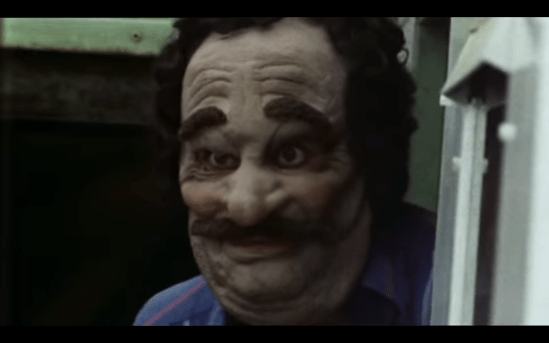
Based loosely on a pair of actual robbery events authored by novelist Devon Minchin, “Money Makers” bares a ruthless resemblance to hardnose acts of crime as filmmaker Bruce Beresford captivates as the maestro behind the orchestration of Minchin’s book that’s gritty and enthralling on the big screen. The “Driving Miss Daisy” and “Double Jeopardy” director also pens a script full of bloody encounters and unflinching greed that delivers “Money Movers” as the first R-rated feature to stem out of South Australian Film Corporation, a production company that, up until then, co-produced dramas, mysteries, and family films, such as Peter Weir’s “Picnic at Hanging Rock” and “The Last Wave,” with McElroy & McElroy and later co-produced the widely successful Outback horror “Wolf Creek” starring John Jarrett nearly 30 years later.

While numerous characters are subject to suspect and their roles’ intentions are guarded to the very end, the plot, for all intents and purposes, circulates around Eric Jackson, a former champion race car driver who now tenures as a 5-year senior security guard at Darcy’s, played by Terence Donovan. Donovan gives the performance his all with a wide range of subversive behavior. From cool, calm, and collective to feral gumption, Donovan race ends in drenching ferocity that’s fueled by his fellow costars who meet him at his level of performance. The most recognizable face, at least for me, is “F/X’s” Bryan Brown who portray’s Eric’s brother, Brian Jackson. They butt heads with former police officer Dick Martin and his no tomfoolery. The late Ed Devereaux had an old school acting method, very impersonal and straight forward like a John Wayne-type, and that worked perfectly in the role of Martin who befriends the projected patzy Leo Bassett played by “Quigley Down Under’s” Tony Bonner. Bonner’s able to capture Bassett’s unconfident, yet smooth persona that’s complete opposite of his partner Dick Martin, whose confident, but brash. What’s curious about the characters lies under the surface of a domineering male lineup – the women. Not one female character is apparent in a co-lead role and each role has a presumable flaw to them. Candy Raymond is an undercover private eye who uses her body and wits for information, Eric Jackson’s wife, played by Jeanie Drynan, has an absent and naive approach, and a handful of minor roles involving non-verbal girlfriends and late night secretary carnalities. The cast rounds out with Charles ‘Bud’ Tingwell, Alan Cassell, Lucky Grills, Hu Pryce, Terry Camilleri and Frank Wilson.

“Money Movers” doesn’t scream perfection, but plays a major influential part in the infancy stages of violent crime thrillers that paved the way for such films like “Heat” or “Point Blank” and supplies another keystone in constructing the genre a solid foundation. “Money Movers” is bookend with graphic shootouts and peppered with conniving dealings and unsavory characters toward a shoot’em up heist climax that Bruce Beresford was able to depict visually and script confidently. In early scene, the storyboards could have been revised, restructured, or reordered to unearth a clear picture of establishing character backstories and setup that still process a puzzling connection between their nefarious intentions, but the ample storyline corrects course quickly without loosing too much time to ponder about the after effects of the early scenes.

Umbrella Entertainment re-releases “Money Movers” on a PAL DVD home video. The region free DVD is presented in a widescreen, 1.85:1 aspect ratio. Definition is key as the colors are, for lack of a better word, washed, but the clear cut outline that produces a sharp finish image grants this release of “Money Movers” a seal of approval that isn’t asterisked with blatant enhancements. The English Dolby Digital 2.0 track is on point with clarity in the dialogue and properly aligned, volumed, and untarnished ambiance. What’s interesting about “Money Movers” is the lack of a score that forces the viewer, subconsciously, to hone in more acute to the characters and their brazen actions. Bonus material includes “Count Your Toes – a making-of featurette with writer-director Bruce Beresford and cast members Bryan Brown, Terence Donovan, Tony Bonner, and Candy Raymond. There’s also the theatrical trailer and Umbrella Entertainment’s propaganda material. One of the first to be up on a prestigious pedastal of heist films, “Money Movers” is a violent, toe-cutting, experience armored with a great cast of acclaimed actors and filmmakers in this Ozploitation classic.
Category Archives: Uncategorized
Radioactive Evil Will Bite and Burn Your Ass! “Saltwater: Atomic Shark” review!

On the gorgeous and lively beaches of San Diego, an atomic level predator lurks underneath the clear, blue water, splitting the ocean surface with a large glowing red dorsal fin. Lifeguards, Gina and Kaplan, track a series of scorched dead fish washed ashore and determine that a catastrophic environmental event is afflicting the shoreline in the form of an atomic shark, a sunken Russian nuclear submarine byproduct roaming unstable through the ocean, ravenously devouring ablaze any boat or any person that it comes in contact with, and unwittingly ready to deploy a one megaton nuclear explosion if provoked with enough ammunition. Bogged down by incompetent supervisors and purposeful governmental misdirection, Gina and Kaplan turn to radical social media journalists, a perverted drone enthusiast, and a salty boat captain to form a ragtag team of shark hunters to save the West Coast from becoming a fallout wasteland for thousands of years.

Just when you thought it was safe to return to the genre, another made-for-TV cheesy killer shark movie breaches to the small screen surface, but this particular man-eater has bite. “Sharktopus” doesn’t have enough tentacle fortitude. Tornado sharks are just a bunch of wind bags minnows in comparison. And “Dinoshark,” well, that beast is just ancient history. All these other silky, grey predatory kings of the ocean are no match for this man-made mistake of a Godlike creature in the 2016 horror-comedy “Saltwater: Atomic Shark.” You’ll need a bigger boat or a bigger ocean or a bigger sense of humor as this nuclear fish bestows havoc and mayhem upon a usually quiet California coastline with a fiery belly. “Lake Placid vs. Anaconda” director A.B. Stone helms a script by Scott Foy, Jack Snyder (“Fatal Exam”), Griff Furst (“Ghost Shark”) that’s essentially Baywatch chummed with “Sharknado!”

Leading a group of amateur shark hunter is the novice environmental scientist and lifeguard Gina, played by Rachele Brooke Smith who has worked with writer-director Griff Furst previously on the 2016’s horror-mystery “Cold Moon.” Almost immediately, Rachele won the heart of this viewer as the amazonian built actress is tough as she is beautiful and all the while, never out of her lifeguard swimsuit. Her performance against a CGI monster shark is the best amongst her cast mates. She’s opposite Bobby Campo, as an injury sidelined lifeguard with a cavalier life persona. “The Final Destination” actor has the charm and the looks of a spring breaker, ready to drink tequila shots from between the cavernous cleavage of intoxicated co-ed, but Campo’s rides the fine line into as an attentive and cooperative friend to his leading lady costar. Bud Bundy, I mean David Faustino, reprises a similar role from his “Married with Children” days with Fletcher, a drone enthusiast with a penchant for videotaping babes on the beach. Second shark flick being released in the same year along with “Sharknado 4,” Faustino keeps the old comedy schtick well lubed for a slick chuckle or two in his scenes. “Atomic Shark’s” headliner, “The Lawnmower Man” Jeff Fahey, gears up as a stern boat captain hellbent on leaving himself out of trouble. Fahey provides his trademark soft blue eyes under a furrowed brow and a solid performance to earn him his payday as the most recognizable name on the credits. The remaining cast include Isaiah LaBorde (“Cold Moon”), Adam Ambruso, Mariah Bonner, Jake Chiassen (“Trailer Park Shark”), and Jessica Kemejuk, producer of “The Neighbor.”

While “Saltwater: Atomic Shark” can be appreciated for not taking itself too literal or too serious as it organically shouldn’t, the comedy portion teeters on a fine line between stalely outdated or casually tongue-and-cheek. For plot progression during one of the movie’s pivotal discoveries that lead the would-be heroes to the shark, A.B. Stone mocks up a yelp.com review graphic image for one of the story’s locales at a beachside restaurant named Tales from the Grillside that loses one star when characters are caught in the middle of restaurant patrons, and the catch of the day, start simultaneously exploding via radioactive instability. The spontaneous combustion of a snobby Guy Fieri type to kick off the magnificent event after eating the infected fish spells classical campiness in all it’s oddball allure, but when that yelp.com review comes up on screen and downgrades the grill’s three star review scale to two, the moment feels out of place, cheap, and unnecessary post bombastic detonations of fish guts and human entrails, splattering into the crevices every nook and cranny, are more than satisfying. Scenes containing comedic tension highlight some of the film’s best moments not involving the shark itself, especially when Mariah Bonner’s Felice, after losing her conspiracy theorist companion Troy to radiant jaws of the shark, takes all her angst out on Gina. Felice pins down Gina’s head while trying to spark a lighter to ignite a yacht full of dynamite and as the anxiety riddled score inches closer with Felice moving toward to lighting the explosives, the score abruptly cuts with each time Gina blows out the small flame. It’s a simple, yet well thought out moment with poised performances from both actresses to bring that flash of comedy to ahead.

ITN distribution and MVDVisual distribute the Curmudgeon Films’ “Saltwater: Atomic Shark” onto DVD home entertainment. Presented in a widescreen, 1.78:1 aspect ratio, the imagery consists of numerous ariel shots, especially from the implemented drones. The overhead view of the water is immaculate, yet portions of the picture, mostly in wide and long shots, faintly go into pixeling state due to most likely the data transferring speed. It’s not as heinous as imagined as the pixeling is quite miniscule. The English Dolby Digital 5.1 audio track is a well-rounded machine that pickups up the generic, yet sometimes catchy score, conveys a clear dialogue, and produces ambient sounds like the beach, explosions, and drones inside the metrics of surround sound. If you want to see vengeful, eco-friendly lifeguard ride an outboard motor under the ocean surface to deliver bundled sticks of TNT to a giant, radioactive shark, then this shark frenzy flick, “Saltwater: Atomic Shark” is right for you!

Sink your TEETH in this “Saltwater: Atomic Shark” DVD!

Evil Walks Among Us! “The Devil Incarnate” review!

In a time of Kings and nobility, a traveling beggar roams the open landscape. However, this man is no ordinary vagrant, but is the leisurely wary Devil reincarnated into the flesh, walking amongst mankind with one goal in mind: seeking pleasure by any means necessary. From pillaging to cheating and lust to murder, the haughty Devil has embarked on an oppressive journey as Mr. Leonardo, encountering all walks of life and swindling them of their morality and of their wealth. He’s joined by a young and poor servant boy, Tomas, as a traveling companion, schooling the God fearing lad in man’s corruptible virtues and exploiting their naïve or sinful nature. Though being a powerful immortal in true form, as man, the Devil can succumb to sickness, injury, and even death, but still maintains certain metaphysical abilities to provide an edge over those he bamboozles. In his mischievous encounters on Earth, Leonardo comes to realize that man might just be more immoral as the Devil himself when the Devil, in human form, can’t inflict as much havoc as the unscrupulous attributes of a profane mankind.

“The Devil Reincarnate” is worth it’s weight in ducats for all the Paul Naschy fans. Also known as “El Caminante,” not a literal translation with an interpretation as The Walker, the Paul Naschy starred, co-written, and directed film, under his birth namesake of Jacinto Molina, is a staggering approach toward the exhibition of humanity at it’s complete and utter worst in a cloaked slither of an Naschy anecdote that even the Devil couldn’t top man’s relentless and unremitting cruelty. Naschy’s pessimistic views, much which I’ve always agreed with, illuminate all that was, is, and will be wrong with human race and despite how barbaric and nasty his character, Leonardo, might be portrayed, Naschy manages to be essentially one of the only directors to make the Devil an anti-hero of sorts.

Paul Naschy is Spain’s most recognizable horror icon, recreating many of the iconic monsters and macabre films in his native land. Leonardo is a different sort of character for Naschy, one that doesn’t hide behind a mask or makeup, revealing a full-blown Naschy assortment of just him. As himself in Leonardo, he’s plays a terrible, down-right rotten bastardo who even belittles himself as a simpleton to lie and steal from wealthy aristocracy. Leonardo is smooth, skillful, charming, intriguing, and brutish much like I would imagine Paul Naschy would be in real life. Alongside Naschy, David Rocha portrays Leonardo’s servant companion, Tomas, and Rocha provides a youthful exuberance that translate to onscreen, giving Leonardo companionship, aid, and also assists in being the Devil’s experimental subject to see how long and how much the Devil can instill the dastardly advice and actions into the young man. “The Devil Incarnate’s” concupiscence fully enflames with some of Spain’s more provocative actresses such as Eva León (“Bahía blanca”), Adriana Vega (“The Night of the Executioner”), Blanca Estrada (“Horror of the Zombies”), and “Night of the Werewolf’s” Silvia Aguilar, whose bare rear-end is splayed on many of the film’s iconic posters and the limited edition Mondo Macabro Blu-ray cover with an upside down cross etched into her left butt cheek.

Honestly, “The Devil Incarnate” is exemplary of near perfection. Through the journeyman storyline, the performances maintain the highest caliber inside the realm of horror-comedy with Naschy at the helm, steering the multi-façade Leonardo with charisma, magnetism, and callous barbarity. Supporting cast complete Leonardo’s monstrous persona with pinpoint precision by shifting actors and actresses into diverse walks of life who then churn out comical, chilling, and overall controversial performances that spill into horror subgenre territories, like Nunsploitation for example. The powerful theme is an unfortunate, yet timeless blemish on human culture and society. Cheat, steal, and murder are the core elements conveyed by the filmmaker to suggest that the Devil doesn’t need to take form to stir up mayhem, but that there’s a little bit of the Devil inside us all to complete his bidding in a war against God. Story references the renowned biblical tale of Adam and Eve and the Devil’s temptation that ultimately curses the human race, bestowing upon them with original sin. There’s plenty of sin motifs to go around along with phallic notions through the Devil’s own wandering agenda that’s intertwined with leagues of potential disobedient individuals and shamed religious turncoats to paint a gloomy landscape of man’s most horrid shortcomings.
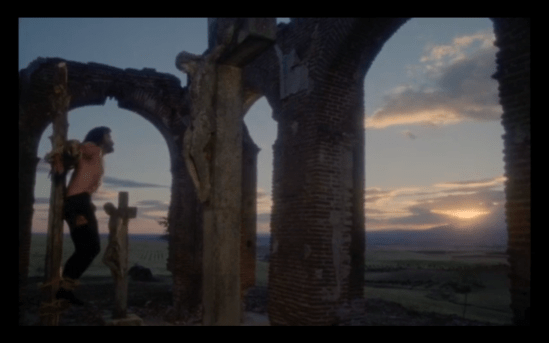
Mondo Macabro and CAV Releasing presents the unrated, non-limited edition of Paul Naschy’s “The Devil Reincarnate” onto a region free, 1080p, BD25 Blu-ray home video with a brand new 4k transfer from the film’s negative and displayed in a widescreen, 1.66:1 aspect ratio. For a negative from 1979, the transfer aims to please with hardly little-to-no damage or other deterioration flaws, no awkward cropping, and no tinkered enhancements detected. Coloring is flattering despite the hint yellowish tint. Some of the darker scenes lose sharp definition do to poor lighting, but there are breathtaking landscapes, especially when Naschy is strung up on the cross, with a vivid, natural aesthetic to the release. The Spanish Dolby Digital LPCM mono, at 24fps, with optional English subtitles packs quite a wallop with robust scuffles, clanking of swords, and a clear rendering of Ángel Arteaga’s zany and harrowing compositions. The extras include an introduction from Paul Naschy, exclusive interviews with costar David Rocha and Naschy’s sons, Sergio and Bruno Molina, a tour of Paul Naschy’s study and home, and exclusive audio commentary by Troy Howarth, author of various horror historical directors and moments in cinema. There’s no contest. “The Devil Incarnate” is, without a single seedling of doubt, the best film of Paul Naschy’s extensive body of work and it’s a film that reinstates an immense amount of melancholy into the soul when regression is setting in that human beings never have been and never will be better than the Devil himself.

Own it today! Click to buy at Amazon!

Burt Gummer is Back to Destroy a Long Time Evil Foe! “Tremors: A Cold Day in Hell” Review!
A remote Canadian science team is under the threat of a Graboid situation, hunting drill parties through the ice and ripping them to shreds with their snake-like mouth tentacles. The team phones the only known Graboid hunter, the legendary outdoor sportsman Burt Gummer, who flies from Perfection, New Mexico to the North of the border with his son Travis Welker to terminator their subterranean predator problem. Graboids aren’t the only problem as nasty Ass-Blasters also roam the sky. Stranded on a remote research station and stuck with non-combative administrative researchers, Gummer’s shoulders bare much of the battlefield burden, but the long time Graboid ass-kicker comes face-to-face with an internal Graboid stemmed disease that sidelines his ability to finish the campaign. Travis must pick up the reigns and band together a ragtag team of scientists to not only save Canada from a being swallowed from below, but also to save his father’s life by obtaining antibodies from a live Graboid.

Michael Gross is back! Reprising his role of Burt Gummer, the gung-ho military nut with a penchant for hunting down and killing Graboids, Gross straps on the HK-91 assault rifle once more for Universal’s “Tremors: A Cold Day in Hell,” the sixth installment to the “Tremors” franchise that began 27-years-old in 1990! The PG-13 creature feature is helmed by direct-to-video sequel director Don Michael Paul (“Tremors: Bloodlines”), written by two-time “Tremors” sequel writer John Whelpley, and release appropriately enough on Universal’s 1440 Entertainment label. Whelpley relocates the franchise away from the blistering heat, the scorching sand, and the denim-camo-plaid sporting bedrock to cooler climate of the Canada’s 49th parallel north. Under the ice and the chilled soil are pre-pre-cana Graboids awakened by the ever looming effects of global warming. Al Gore was right; Global warming will kill us all…by rousing the underground beasts who’ve been dormant for thousands of years! The very one aspect the filmmakers wanted shiplap together for this next chapter is to perilously put the invincible Burt through a taste of own mortality, plaguing him with a symbiotic Graboid worm that puts him on the edge of death, and introducing a worthy replacement, or perhaps a legacy, in his son, Travis Welker.
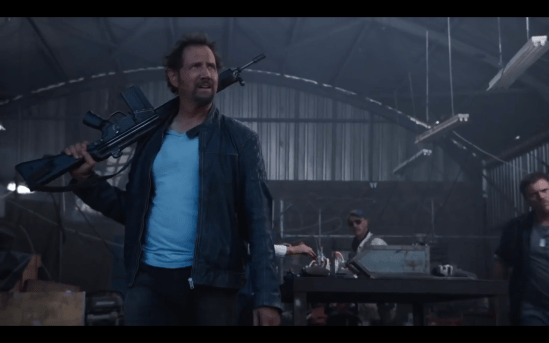
Welker is a returning character from “Tremors: Bloodlines” portrayed by comedian Jamie Kennedy. His role as Brad “B-rad” Gluckman from “Malibu’s Most Wanted” has been forcibly seared in many of our minds and his horror enthusiasm captured our black hearts as the lovable Randy Meeks in Scream, but being Travis Welker nearly upends those personas and transform him into a smooth talking, fast thinking, son of a gun whose perfect to match wits with his on-screen old man, Burt. “Tremors 6” is essentially the Burt and Travis show, leaving many other characters up as red shirts, but waver a handful as potential love interests and bone headed comedic reliefs. Starting with South African Tanya van Graan (“Starship Troopers 3: Marauder”) as the kinda kooky Jamie Kennedy love interest in Dr. Rita Sims. Sims is nearly all over the board being the lead scientist on the research expedition to a complete bad ass with a rifle to being a sultry fox who goes commando with no underpants in the arctic. Then there’s Jamie-Lee Money, just on the cusp of her career, plays Valerie McKee, the offspring of “Tremors'” Valentine McKee (Kevin Bacon) and Rhonda LeBeck (Finn Carter). Money looks the part, but the character is severely downplayed and lifeless that mistreats the legacy of Val who was spontaneous, inventive, and naively charming. Other characters come off goofy, oddball, and arbitrary or insignificantly used played by Greg Kriek (“Lake Placid: Legacy”), Stephanie Schildknecht (“Accident”), and Kiroshan Naidoo.

The entire Tremors franchise has been through a wringer of changes over the last 27-years that has really stretched the incredible substratum monster thinner and thinner. Reducing the physical formidability down to a visual effects monstrosity that still preserves a somewhat tongue-and-cheek campiness, “Tremors: A Cold Day in Hell” doesn’t quite have the “Tremors” flavor. Perhaps it’s the arctic setting. Perhaps it’s the inane special effects. Perhaps it both, but one thing is certain and that is Michael Gross being solidified as the unwavering face of the franchise, but even with that constant variable, this sixth installment attempts to lure back in the original fan base by referencing the original film in numerous instances, such as with Valentine’s daughter, Valerie, or even with Burt’s famous one-liner when he shot-to-death the basement crashing Graboid from the first film, but instead of saying “rec room,” he yells “airplane hangar” as the Graboid explodes in a gush of orange blood as it rams into an underground electrical barrier. It’s a bit of a farce. Yet, there’s still an immense amount of enjoy-ability, energy, and Graboid fun to be had.

Universal releases the PG-13 “Tremors: A Cold Day in Hell” on the home video, 1440 Entertainment label, with a combo Blu-ray + DVD + Digital disc. The 1080p High Definition Blu-ray was viewed for this review which is presented in a widescreen 178:1 aspect ratio and the image quality is deep with details. The terrains absolutely come alive to the screen and, at the same time, expose the visual effects work. No matter how much the visual effects team tries to create an Canadian arctic atmosphere, the sands of the South African landscape couldn’t be optically opaqued. Nonetheless, facial features, character attire, and even the explosions, cascading, and orange Graboid blood gooing is sharp with precision definition. As far as audio, the English DTS-HD Master Audio 5.1 surround sound caters to every audible fissure with an attractive ambiance track (ass)blasting with baritone and ripping semi-automatic fire cues. Dialogue comes over clean and the soundtrack has healthy bones, aside from it’s generic, low-budget assortment. Extras include a making of “Tremors: A Cold Day in Hell” that’s broken down into multiple, short chapters, the anatomy of a scene, and inside Walter Chang’s kitschy market. Since the breaking news that SyFy will not longer move forward with the anticipating Tremors television series with Kevin Bacon, “”Tremors: A Cold Day in Hell” signifies that the withering franchise will not stray from Burt Gummer’s one-man show anytime soon; still, the sixth installment provides a healthy amounts of witty banter and a swimming pool full of Graboid gore, two foundational motifs still vibrant in the Tremors universe.
Returning Home to Unroot Evil! “Insidious: The Last Key” review!

Hot off the Quinn Brenner case, parapsychologist Elise Rainier receives a phone call from Ted Garza regarding paranormal activity at his house in Four Keys, New Mexico. The location happens to be the childhood home of Elise, where her father viciously abused Elise to stop her supernatural gifts and also where her mother was brutally murdered by a fearsome and hatred-energized demon known as KeyFace. Reluctant to return where memories revel in persistent and continuous nightmares, Elise and her two eager assistances, Tucker and Specs, take the case to aid the Garza’s request for a cleanse and to conclude the haunting and scarring chapter in Elise’s life, but the demon yearns power by luring Elise back to where it all began. With the help of her brother and two nieces, Elise’s family and friends aim to be a force against pure and undiluted evil hidden in the further.

Full disclosure….Insidious: Chapters 2 and 3 is not in my well versed cache of watched movies. I thoroughly enjoyed the atmospheric hit that is James Wan’s 2011 “Insidious” film starring Patrick Wilson, Rose Byrne, and the incredible Lin Shaye, but since that time, neither of the sequels have wandered into my unsystematic path. Except now. “Insidious: The Last Key” is the latest installment to the “Insidious” franchise and universe that’s directed by Adam Robitel, screenwriter of “Paranormal Activity: The Ghost Dimension” and written by franchise writer Leigh Whannell. In the grand scheme of chronological viewing, catching “The Last Key” first won’t divert and confuse too much from those on a methodical storyline timeline. Robitel’s chapter is a sequel to the prequel, “Insidious: Chapter 3,” and aside from an Easter egg here and there, there’s little reference and nothing substantial bonding to the next two films that are in sequential order.

Lin Shaye returns to reprise her role as parapsychologist Elise Rainier for the fourth time, picking up her character’s telepathic shtick like it was yesterday. Shaye’s one of acting talents that just flourishes like wild fire no matter what the type of role or movie she’s in or even affiliated with. Her ability to adapt and to get down and dirty with her characters proves why we love her thespian range from bust-a-gut comedies like “There’s Something About Mary” to indie horrors like “Dead End.” The now 74-year-old actress is more red hot now than ever as Elise Rainier whose even more popularized by her co-stars, writer, Leigh Whannell and and Angus Sampson as Specs and Tucker, whom like Shaye have reprised their roles for a fourth time. The comedic duo lighten up the dark toned premise, offering up dad jokes and snickering hairdos to offset to jump scares and gnarly KeyFace. Spencer Locke (“Resident Evil: Extinction”), Caitlin Gerard (“Smiley”), and the original 1971 Willard, Bruce Davison, play the supporting cast of Rainiers long lost, reunited family members caught in the middle of her quest for conclusion. Rounding out the cast is Kirk Acevedo (“Dawn of the Planet of the Apes”), Tessa Ferrer, Josh Stewart (“The Collector”), and contortionist, and Doug Jones’ Spanish rival, Javier Botet as KeyFace.

“Insidious: The Last Key” works on many positive levels: has a solid premise with Elise burning to finish the nightmare she had unleashed many years ago, subplots involving Ted Garza’s role and Elise’s abusive father, a dysfunctional family relationship between all the Rainiers, and some serious eye-popping scares throughout. The further also opens up more and becomes a vast area for exploration into all the creatures, ghosts, and demons that lurk in the otherworldly dimension, setting up future sequels and/or spinoffs. What doesn’t work as well is the rather anemic and lackluster climatic finale that took KeyFace from an extremely high frightfully monstrous pedastal, continuously building up the character to be the most powerful antagonist Elise has yet to encounter, and have the rug pulled right from under it’s horrid feet by squandering it formidability, flattening it with the single uppercut swing of a… lantern.

Adam Robitel’s “Insidious: The Last Key” finds a home on a Blu-ray plus Digital HD combo release by Sony Pictures and Universal Home Entertainment. The release is presented in high definition 1080p with a widescreen, 2.39:1 aspect ratio. The image quality just tops out with overly spooky cool blue hue that’s gloomy, dark, and ominous, all the attributes perfect for a supernatural thriller, while managing to sharply define the details on the actors and their surroundings. The English 5.1 DTS-HD track stings where jump scares are prevalent and appropriate. Dialogue has clarity with mild ambiance supporting the localized and conventional horror audible moments while brawny LFE bursts on-screen in a bombardment of scare tactics whenever KeyFace suddenly shows face. Bonus features include an alternate ending (complete with cheesy one-liner from Lin Shaye), eight deleted scenes, a look into the “Insidious” universe, going into The Further, Lin Shaye becoming parapsychologist Elise Rainier, and a segment entitled “Meet the New Demon – Unlocking the Keys” to KeyFace. Perhaps not the epitome of the franchise, but “Insidious: The Last Key” absolutely fits into the franchise’s ever expanding universe and unlocks more of the spine-tingling backstory to one of horror’s contemporary and unremitting heroines ready to confront evil.

“Insidious: The Last Key” purchase at Amazon!


