One Man Tries to Reclaim his Life When EVIL Suddenly Invades! “The Unthinkable” reviewed (Magnet Releasing / Digital Screener)

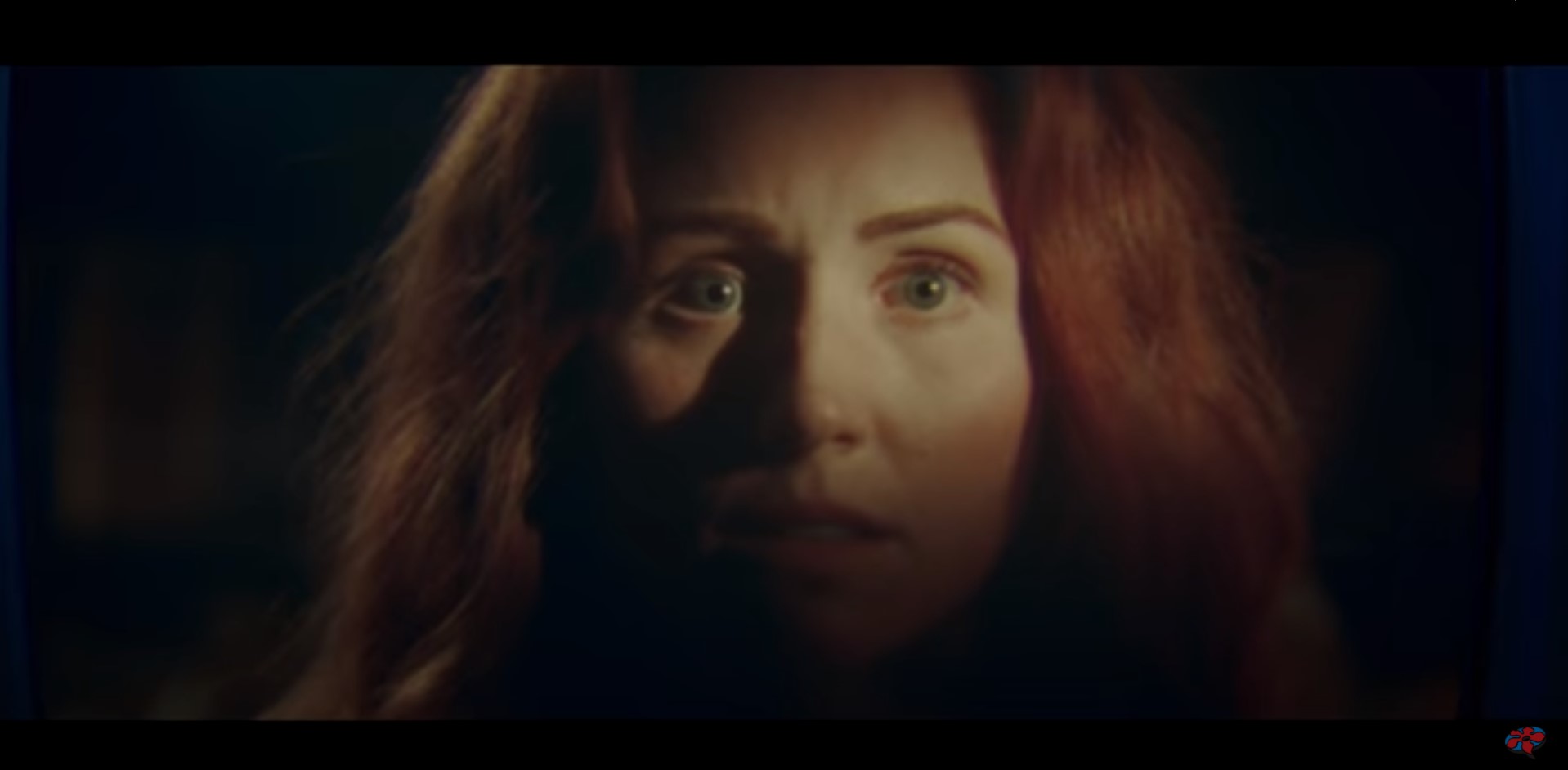
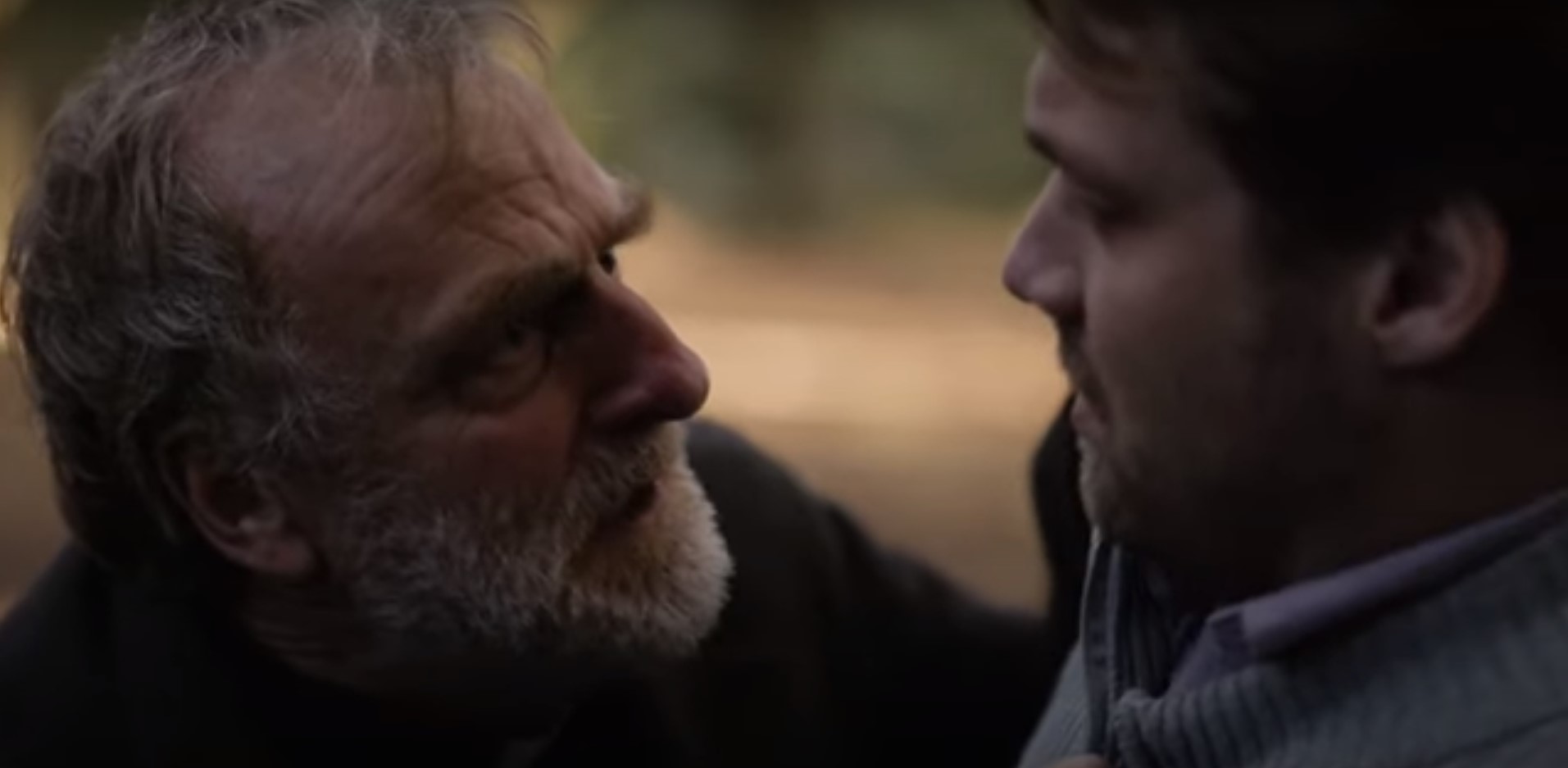
Out in the country of Vånga, Sweden, Alex endures his ex-military Father’s demanding and verbally abusive posture.  His only relief is spending time with Anna who is in a similar circumstances with her mother.  The two spend many of their days together amusing themselves on the church piano until Anna is forced to move away to Stockholm, leaving Alex to face his father’s wrath alone.  Alex runs away for his childhood home and, years later, becomes a popular piano recording artist influenced by his time with Anna.  When he returns to Vånga during a time of countrywide unrest to purchase that same church piano of his fond memories, Sweden comes under attack by an unknown force as major roadways out of the country have been blown to smithereens, every power station is the target for destruction, and the rain is contaminated with an airborne chemical that makes people lose their memories and become disoriented.  Alex has to reconnect with his father in order to save Anna, the love of his youth, to survive the unthinkable. 

An invasion on the scale that you’ve never seen blitzes with explosive stunt work and stunning visual effects.  Victor Danell’s action-drama “The Unthinkable” comes out of nowhere with a hard stop pivot of a love story turned survive at any cost as the film’s country of origin becomes warzone raided without mercy.  Under the original title “Den blomstertid nu kommer” in the native tongue, Danell directs and writes “The Unthinkable” along with co-writer and star Christoffer Nordenrot, though credited as their collective production group, as the two team up again after nearly a decade after working on the comedy “Soundcheck,” directed by Danell.  What started as a crowdfunded Kickstarter campaigned ended up being a multi-million dollar production and with such growing fascination amongst eager fans, the 2018 found more financial backing from the former Swedish cinema chain company, SF Bio AB, now known as Filmstaden and is presented as the first feature film of a filmic collective known as Crazy Pictures in co-production with CO_Made and Film I Väst.

As mentioned, writer Christoffer Nordenrot finds himself at the center of the story as Alex, a passionate pianist fighting back against well-armed, well-supplied unknown militant forces all the while processing a dam breaking flood from the rebuilding of shattered emotions when returning to his quaint hometown after abruptly escaping his overbearing father (Jesper Barkselius).  Socially awkward with an obsessive proclivity, but wielding an intellectual thought pattern, Alex appears to be a person likely on the spectrum, but bottles much of his emotions internally, biting his lip at every moment his father disparages him or his absconding mother. When his only friend in the world, a girl named Anna (Lisa Henni, “Haunted Evil Dead”) whose roughly the same age, is being pulled away from Vånga to live in Stockholm with her mother, Alex undergoes a rapid descension of one heart ache to another that leads to him able to flourish and exceed on his own as a new wave pianist, engineering a combination of electronic beats of sound machines with the simplicity of soul from the piano to arouse his repressed emotions for an grandstand audience. Alex finds his way back Vånga for personal gain, a childhood piano him and Anna shared making music over, and to attend the sudden death of his mother from a previous, individual attack in Sweden, but what he stumbles into is avoiding his father at all costs, being swept into a returned Anna’s radial allure, and, oh yea, a massive proclamation of war by an aggressive, chemical warfare and shoot-on-sight enemy of the Swedish people. This is where I find Alex to have a chip-on-his-shoulder complex unhealthy for everyone around him as he doesn’t look past the past and punitively causes discord with his father, who is trying to save not only the last standing power station in all of Sweden himself, but essentially trying to save his entire country, and Anna when Alex finds out she has a husband and child after an afternoon of rollicking in the hay and sharing various moments around town. Performance wise, Nordenrot might not be the action star of tomorrow in his character’s one note of early on narcissism and bad judgement, but challenges himself in the role by losing and gaining weight to accomplish years of age appearances from teenage boy to mid-30’s man and is good enough to swashbuckle against relentless military helicopters and a slew of men capping of M60 machine guns in his direction. Pia Holverson, Krister Kern, Alexej Manvelov, Magnus Sundberg, and Ulrika Bäckström round out “The Unthinkable’s” cast.

With a runtime of 129 minutes, “The Unthinkable” has a lot of story to tell with an ample amount, practically divided in evenly, imparted into two stories – one forgotten romance and family squabbles rekindled and the other a bombardment of annexing Sweden from the country’s own residents by deadly force. The pivot also never feels gradual as act one is all about teenage Alex and Anna growing more than just accustomed together despite lingering family troubles. Once completing the transition from boyhood to successful music man, an irksome sensation still nags in the back of Alex’s mind as he can’t find happiness in all of the boo-koo-bucks his albums and concerts afford him. This leads “The Unthinkable” into a territory of complete selfishness by waterlogging a Red Dawn offshoot concoction, teetering on speculation of Russian invaders eroding the memories in some aspect of chemical weathering, with Alex being one hell of a selfish guy and he’s the supposed hero of the story, but for the sake of me can’t explain his inabilities look past his father’s conspiratorial obsessions and anger issues, his muse’s moving on her with her life with a family after he fled his hometown, and he definitive choice of unable to live with the fact that she’ll never be with him despite all the adversity raining down upon him at the same moment he internally crumbles at his pent up emotions. Cynicism drives the story to a tainted sham ending that’s supposed to be touching and full of heartfelt sacrifice on the part of the hero, yet how can a hero commit himself to an irreversible without an inkling of danger against those he’s doing this for? I, personally, feel cheated by “The Unthinkable’s” character arc, but one thing is for sure is the seamless practical and visual effects action of top shelf quality. Between the great stunt work of remote control tractor-trailers to the computer generated helicopter crashes, reality and fantasy blur to the point where your brain can’t tell the difference. “The Unthinkable” excels in heart-racing action and thrills with narrow escapes from disasters.

An assault on not only the soul of the country of Sweden, but also on it’s people’s memory banks as Crazy Pictures’ spins Russian meddling into an extreme aggression with an epic imperious campaign in “The Unthinkable” that attacks the visual cortex with jaw-dropping affray. Magnet Releasing, a subsidiary of Magnolia pictures, presents “The Unthinkable” in a widescreen, 2.39:1 aspect ratio, and has made boots on the ground showings in theaters and on-demand this month on May 7th. Hannas Krantz, another member of the Crazy Pictures collective group, delivers the war at home on Swedish soil with hard lighting, greyly somber moments of confusion and fleeing, and yellow gunfire illuminated nights after an airy love story, basking in warm, inviting yellows and pleasing in comfortable locales, crumbles to harden our narrative hero. Krantz leaves just enough negative space for the VFX team to implement their movie magic in the makings of a clandestine assault. There were no bonus scenes during or after the credits. Becoming lost in “The Unthinkable’s” high powered effects can become enthralling when climbing the latter of every scene being just as intense and bigger than the last; however, Alex’s arc of a lovesick boy never fully exits from the grown up version of himself, thwarting any kind redemption and respect because of very unlikable and intense egomania.

Rent “The Unthinkable on Prime Video!

To EVIL, Just Another Slab of Meat for the Butchering. “The Slaughterhouse Killer” reviewed! (Breaking Glass Pictures / Digital Screener)


The local swine slaughterhouse perfectly suits the solitude of Box, barely sating the fervent urge of his killer spirit, but when a young ex-con, Nathan, who is trying to walk the straighten arrow with his girlfriend, falls under Box’s wing at work, keeping that urge at bay is proving more difficult with a likeminded companion.  When the workplace bully pushes Nathan too far, Box orchestrates a killer opportunity to murder the bully in his own home as a gift to the young parolee.  The death of their intimidating colleague solidifies an unique relationship between the men, opening Pandora’s box in their small town where no one is safe from their lust for blood.  As the bodies pile up and their corpses are ground up into chuck at the slaughterhouse, their relationship is tested when a child becomes the unintended next victim, severing the unspoken principles of their bond. 

“The Slaughterhouse Killer” is director Sam Curtain’s entry into the minds of bloodlust wolves living in sheepskin day-to-day amongst the clueless flock.  The senseless violence-laden thriller out of Tasmania, Australia is the sophomore feature from the “Blood Hunt” writer-director and is co-written with Benjamin Clarke.  The pair harness their continued onslaught for aggression from “Blood Hunt’s” human race cruelty with a rumbling storm brewing, waiting, for the right conditions when two very different people find a common interest by setting a little part of their world on fire.  The indie picture is streamlined through Curtain’s Stud Ranch Films entertainment banner and is backed by Black Mandala, a big and upcoming label showcasing an expertise in extreme low-cost horror, under the producer’s eye of Nicholas Onetti who has supported a number of genre fan favorites under his banner such as “The Barn,” “Aquaslash” and has even collaborated with brother, Luciano, on the 70’s giallo inspired  “Abrakadabra” and “Francesca.”  If Onetti is attached, prepare yourself for merciless and bloody circumstances in this particular ozploitation maniac thriller. 

You obviously can’t shoot a film titled “The Slaughterhouse Killer” without the slaughterhouse setting garnished with meathook strung up and process gutted livestock much in the same way the killer can’t fall into the average-looking joe category.  In steps Craig Ingham, a Sydney born 6’4” big fella with distinct facial features that includes a gleaming bald head and an angry sneer delineating fiercely from his bulbous, pink-as-a-pig cheeked face.  Ingham has an uncompromising maniacal approach of being large and in charge under a lame façade of a daft abattoir employee.  To balance out the oversized archetype antagonist, usually from one that lumbers around in slashers genre circles, hacking away at sex-crazed teens, James Mason buoys “The Slaughterhouse Killer” from capsizing in that humdrum trope of tasteless, flat water by adding a pretty face to the madness that is equally as ugly on the inside in character in what becomes the Laurel and Hardy of exploitation horror.  However, there’s nothing remotely funny about the performances of two men becoming unlikely best buds, drinking beer, and making hamburger out of the sheila from next door, but they do act like a pair of chuckleheads searching for motivation with their roles and instead come up empty handed in the arbitrary of Curtain and Clarke’s headway halting story.   “The Slaughterhouse Killer” is simply a two man show that aims to cycle through their unusual connection with Kristen Condon (“Sheborg”) as Nathan’s girlfriend, Tracey, and Dean Kirkright (“Cult Girls”) as the unfortunate workplace bully rounding out the small cast of collateral damage characters.

One of the biggest problems with “The Slaughterhouse Killer,” a tale that’s supposed to be driven by the characters’ dysfunctional ties to society and their knack for violence, is that very lack of purpose Box and Nathan get out from the random bloodlust.  Nathan, on parole for we don’t know what, easily falls bewitched by Box’s gore giddiness and willingness to let Nathan into his little big secret.  Without Nathan’s incarcerated backstory, a sentence served that proved nothing but his ability to still land a job, doesn’t age well as the film progresses and just seems to be there in a glint of development substance that never circles back.  Box falls onto the same static line of where the hell is his arc heading as the film opens with Box resting sweaty in his whitey-tighty inside his ramshackled shack.  There’s not much too Box’s creepy disposition other than keeping his squinty eyes glued to a rather attractive woman’s behind and taking abusive orders from the abattoir boss, but what he sees in his new guy to take him on a journey of bloodletting is something of a mystery that never pans out.  Even Box’s bound and blinded plaything in a padlock trunk transcends every act met, creating a glass ceiling of knowledge to the inner workings of his warped thinker.  Box and Nathan’s nihilism and madness unleashed is the purest part of Curtain’s film as the sensation is like a fat kid in a candy store where the two men can just go to town by butchering the residents of their own town by any means seen fit to them, but in the grand scheme of cinema, there are far superior violent films to consider.

As if it was destined to be, “The Slaughterhouse Killer” finds friendship with a kindred, malignant soul to carry out dark fantasies and Breaking Glass Pictures brings us this tale of two treacherous serial killers onto VOD and DVD this month of April. Digital platforms will include Vudu, iTunes, Google Play, Amazon, Fandango, and more. Presented in a widescreen, 1.78:1 aspect ration, and recorded in 4K, cinematographer Leuke Marriott rejoins Curtain on the director’s second feature, providing 78 minutes worth of intimate imagery invasive on Box’s grimy lifestyle and Nathan’s furrowed brow by corralling much of the action directly in front of the camera. Marriott might not employ novel angles and techniques but makes up with holding tight and fast on the brutality and the meatgrinder of Box and Nathan’s vile run while also supplying a few bold filters, such as a rich blue and a light yellow, in more unsettlingly taut moments and capturing some of Tasmania’s landscape with aerial drone shots of Arthur’s Lake with the trees seemingly floating up out of the tenebrous water. “The Slaughterhouse Killer” has the title of a 80’s printed VHS SOV and leverages the ogre villain to the max, but can’t muster a rooted sense of purpose, not even a simple reason such as pure, unadulterated evil, to drive a span of violent behavior to be a worthwhile token to the viewer.

Own on DVD or Watch on Amazon Prime Video!

Transcend This Life With an EVIL Elixir! “At Night Come Wolves” reviewed! (Gravitas Ventures / Digital Screener)


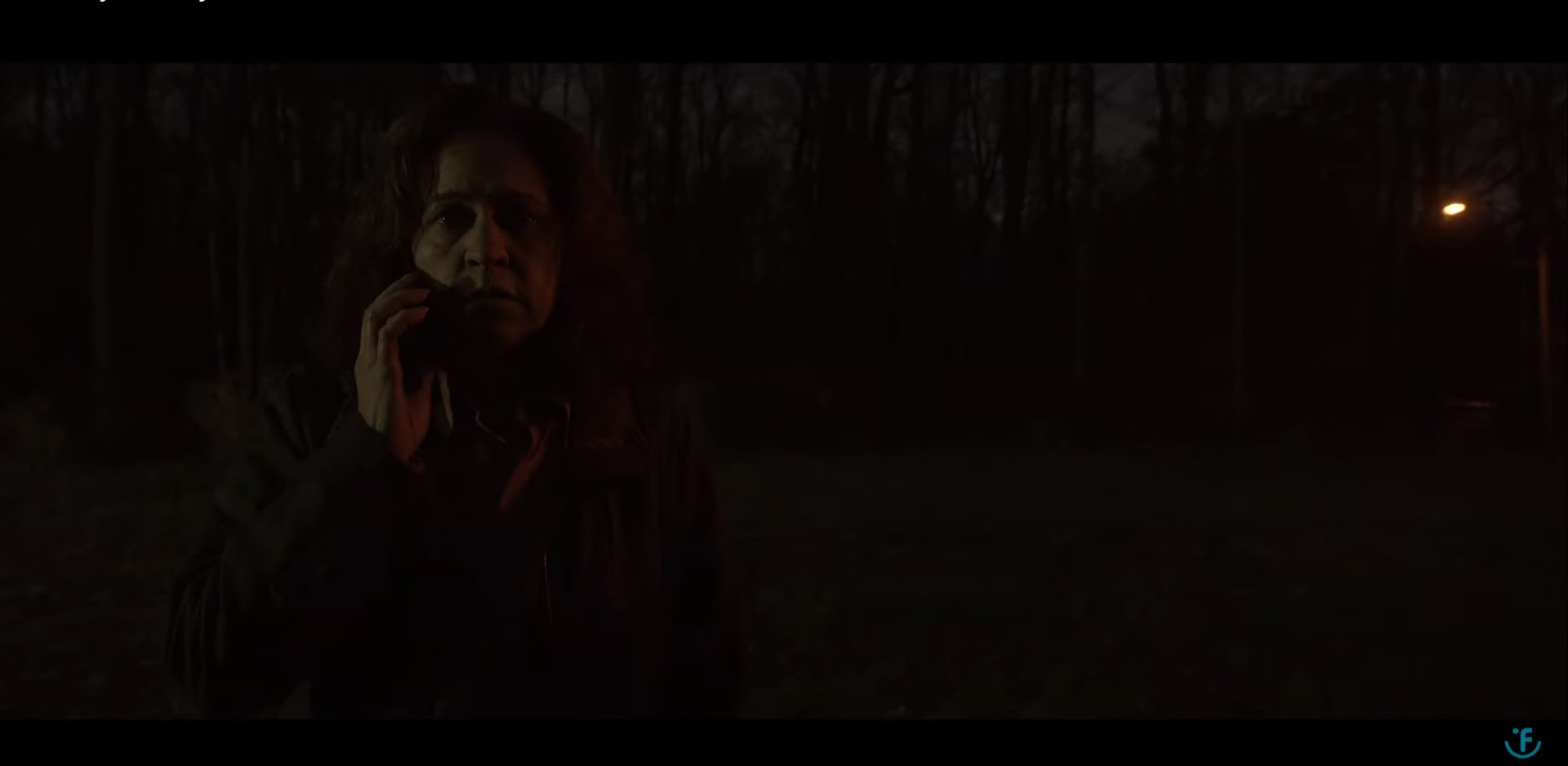
Leah has tirelessly tried everything to please her misogynic and negative husband Daniel, even going as far as dressing up in a skimpy and sexy Wonder Woman outfit and serving him his cake in more ways than one.  Yet, nothing seems to be chipper his spirit as he barrages her with meanspirited down talk that disparages her in every possible way.  Fed up with it all and hightailing their home before she does something rash, Leah drives aimlessly to get away from him and winds up, out of gas, at a diner where she meets Mary May, an acolyte to cultist Davey Stone who believes an elixir made from a forgotten, thought extinct, plant will transcend their existence beyond the cruel world of the now.  What the elixir actually does is something far more horrifying.

Verbal abusers, cult leaders, murders.  The crazy doesn’t stop there in Thomas J. Marine’s debut feature film, “At Night Comes Wolves,” landing it’s anti-sexism and anti-misogynistic messages upon the world on digital platforms this month.  Marine comprises his three short 2015 through 2017 films – “Paris, My Love,” “The Call to Future,” and “Object in Reality” – together with central narrative to bring new life into each one of his projects and also create something new from half the work being already filmed years earlier. Marine, or TJ as credited, writes a genre abstract story out of the pieces he tries to puzzle together, wildly cutting and pasting his shorts together as he continuously self-funds that extends into the filler narrative of his 2021 film under his own copyright, leaving “At Night Come Wolves” as a piece of true work from an auteur.

Beyond the first scene of a bound woman to a chair, bleeding from her hungry eyes and mouth, “At Night Comes Wolves” opens with Leah, “On-Site’s” Gabi Alves in her sophomore feature film, coming under hellfire from her loathing husband Daniel (Jacob Allen Weldy). Alves comes off with the submissive, will-do-anything to be a pleasing wife starkly contrasted against Weldy’s take-it-all and give nothing sexist persona; however, their relationship strays into Daniel’s bizarre sexual fetishes and watching his sexually objectified wife become the plaything for another man, a black man to be specific. The scene is brief, but powerful, perhaps the most powerful 10 seconds in the entire film that could have been, or rather should have been, the very principal theme of “At Night Comes Wolves'” subjugating prejudice roots. Instead, Leah throws in the towel and deadheads to nowheresville, serendipitously running into cult acolyte Mary May (Sarah Serio) and cult leader Davey Stone (Vladimir Noel). Stone’s fancies himself as an alchemy enthusiast, mixing his vintage bottled potions of unmarked substances that produce a variety of outcomes, usually ones Stone doesn’t expect and that thinly becomes the plot point genesis of Marine’s shorts. The entire dynamic becomes a glass ceiling as the story kind of just ceases to make logical sense when Leah deliveres Stone and Mary May to Daniel in a reconnect from the past of bad blood crossing paths again and along for the ride is Daniel acolyte Susanne (Colleen Elizabeth Miller “Leaf Blower Massacre 2”) whose down to drink Daniel’s demented womanizing Kool-Aid. Joe Bongiovanni, Myles Forster, Madeleine Heil and Byron Reo are sprinkled into servitude of “At Night Comes Wolves'” contorted three prong story.

Marine might repurposed his shorts into a Frankenstein feature to resuscitate new life into his lifeless projects, but the concept of regurgitating material itself isn’t totally unheard of while also being not widely popular amongst the mainstream crowd and even well-backed, risk-taking B movies due to the innate choppiness consequence.  Whether the restructure comes in the form of a web episodes strung together as in Nicholas Tana’s “Hell’s Kitty” or from lengthy shorts of one continuous story as with Joe Lujan’s “Rust” being a prime example of his short films, “Rust” and “Rust 2,” having been meld together years later, the narrative planes always seem and feel fragmented and staggered to the point where convincing audiences of a seamless story becomes a blurred line of why even try as filming styles, crews, actors, and even equipment change over time and “At Night Comes Wolves” suffers from that very incoherency with an intended non-linear storyline inelegantly sewn together by backtracking segues. Marine has two, if not three, very different ideas floating around his feature with one being very poignant, another identifying ideological radicalism with sexism undertones, and the other being just for the hell of a horrific good time with the undead. Of course, you don’t ever see the finale coming because, let’s face it, there’s never an established clean and clear objective in the narrative that floats in time and space. Hell, I don’t even know if it’s supposed to be partly a comedy or not with the incorporated park ranger scenes with Joe Bongiovanni and Vladimir Noel that are offbeat funny. This is the hand Marine dealt himself and it wasn’t a pretty one, yet somehow his ambition made a semi-intelligible presentation of a cult group toppling another more depreciating cult group before transcending into the seedlings of the apocalypse. And all I can do by the end of the movie is ask myself, what the hell did I just watch?

Don’t let this review scare the preeminent pants off of you from checking out and judging for yourself TJ Marine’s 2015, 2017, or, maybe, 2021 released films within a film as “At Night Comes Wolves” hit digital platforms this month of April, including iTunes, Google Play, Fandago as well as available on cable and satellite VOD services. Clocking in at 77 minutes, the unrated “At Night Comes Wolves” is out now released by worldwide film distributor Gravitas Ventures.  Aside from that singular moment of marital dysphoria that leads into an uncomfortably potent fetish of sexual desires and some witty repartee between a pair of colorful characters, TJ Marine’s reworked story might actually weaken the mystifying intrigue of his shorts as he plucks holes and fills gaps with new footage in a forced teetering of trying to make a comprehensible notch in the movie market.

Rent or Own “At Night Comes Wolves” at Amazon.com!

Unleashed, Nature Inspires the EVIL in All of Us! “In The Earth” reviewed (Neon / Digital Screener)

A deadly virus has ravaged the world, placing the inhabitants on a high alert edge of incessant sanitation and relentless paranoia. Martin, a scientist from the city, ventures to an ecological nature preserve to convey equipment for tests being conducted deep in the forest. Park Ranger, Alma, guides him on a two day trek toward a camp in total isolation supervised by Dr. Olivia Wendle, but during the second day of the journey, Martin and Alma are attacked in the middle of the night, left with no gear and a vague sense of what happened. The virus has yet to stake a claim on those living within the woods, but another malicious-driven presence, entombed by superstition and mental manipulation, enacts the forest to come alive around them, forcing them into a direction that presents a summoning of nature’s folkloric revenant.

COVID-19 has brought a tremendous amount of sorrow and an unforgiving plight upon the world, but for a few filmmakers, a global pandemic has been a source of inspiration that been a silver lining amongst the Earth’s population upheaval. Director Ben Wheatley tapped into that filament, you could say ,with his man versus nature mystery horror “In The Earth.” The filmmaker of “U is for Unearthed” short from the “ABCs of Death” and soon-to-be helming the follow up big screen sequel to novelist’s Steve Alten’s widely popular monster shark book series with “Meg 2: The Trench,” Wheatley writes and directs a quarantine start-to-finish feature that also incorporates the pandemic into the story, much to the same likes as Rob Savage’s “Host” that uses the virus as a means to drive the characters into doing something they normally wouldn’t be doing. The UK production is from Wheatley’s founded Rook Films and Neon, who last co-produced Brandon Cronenberg’s violent sci-fi thriller, “Possessor.”

With the pandemic resulting quarantine and a story set in the thicket of woods, “In The Earth” is innately slim around the casting waistline that concentrates the performance zest amongst a few, beginning with the introduction of Martin the scientist walking up to the sentry lodge located at the forest edge. Played by Joel Fry (“Game of Thrones”), the London born actor must endure as a hapless city boy taking woodland shots on the chin without much complaint, but definitely a grimace, a whimper, and a pass out. Guiding Martin through the woods is Alma, a seasoned park ranger under the eye of “Midsommar’s” Ellora Torchia who balances out her travel companion’s near ill-equipped, yet hazardously attempting, roughing the outdoors. Martin and Alma are nearly mirrored by the only other two people they come across in the forest – Zach and Dr. Wendle. Yet, Zach and Dr. Wendle’s similarities channel through how they instrument a link to the forest being, known as Parnag Fegg, that calls them to release it from the timber and foliage prison. Zach (Reece Shearsmith of “Shaun of the Dead”) honors Parnag Fegg with ritualistic images and symbols while Dr. Wendle (Hayley Squires) uses a combination of technological lights and experimental music to speak with the powerfully alluring presence. Shearsmith is devilishly certifiable with Squires backing up his character craziness with her own version that never places Martin and Alma into a safe haven’s circle. “In The Earth” rounds out the cast with Mark Monero and John Hollingworth.

“In The Earth’s” binary coding of nature versus urban, plus sublets of traditions versus technology, runs as a seamless motif to a bigger theme that nature has a global network web of personified communication and reason. I imagine Wheatley succeeded in what M. Night Shyamalan tried to accomplish in the Mark Walhberg’s headlining “The Happening” with bringing nature to the forefront stand against man who continuously seeks to destroy themselves and the world, forcing nature’s hand to take drastic measures, but Wheatley’s film more so tells not the story of a worldwide assault on mankind but rather as the resurrection of a single entity, an archaic necromancer of local legend, eager to walk the Earth once again after being driven to disembody their spirit to the forest. “In The Earth” also provokes a literal meaning toward an age old saying of “nature calling” by using the aforesaid network to unconsciously lure specific individuals into the woods and gather near a gateway relic or stone,. This act of intention calls for a sacrifice of purity and so one of the four individuals – Alma, Martin, Zach, and Olivia – will involuntary be the vessel of Parnag Fegg’s return while the others, under the persuasion of forest spirit, due it’s song-and-dance bidding. Ben Wheatley taps into a very John Carpenter archetype of people on the cusp of unleashing certain doom upon the world, invoking not only a spirit but also that very sense of last stand against damnation as epitomized in “The Thing” and “The Prince of Darkness.” “In The Earth,” however, isn’t so easy to see the forest through the trees with an first act setup that zips through the situation that leads Martin and Alma trekking through the woods and Parnag Fegg is only briefly dappled to be a dangled carrot for bigger things to come.

A chiseled, fey story with a dark, ominous cloud of impending doom lingering overhead, “In The Earth” is transcendence horror at it’s finest. Neon is set to release the R-rated, 107 minute film, “In The Earth,” in theaters on April 30th. The scaled down budget didn’t hinder Wheatley’s grand platform and with Nick Gillespie’s sophomore credit as feature film cinematographer, the playbook was unwritten for Gillespie to rework how to shoot a film under the confines of a pandemic with limited cast, a living forest, and still maintain safe social distant practices under strict mandated guidelines. Gillespie formulated wide-angles to capture an expanse of trees diminutively enshrouding the characters, almost like the forest was going to gulp them at any moment. A composition of artful imagery compiled together in a collage of intoxicating colors and feverish styles interprets nothing concrete in the heroines journey of an nearly unknowable presence only knowledgeable by world of mouth, leaving also the audience induced with a psychedelic vision at the whims of Wheatley’s direction. There were no bonus scenes during or after the credits and the perfunctory ending opens the door for interpretation that can be more impacting than a firm resolution. Born and bred from the depths of the coronavirus pandemic, “In The Earth” dispatches a diversion from the immediate, the real world, and the tumult of a virus with a bewilderingly diversion of troubling folk horror sown directly into Mother Nature herself.

Family Tree Rooted by Grounded EVIL. “Sator” reviewed! (Umbrella Entertainment / DVD)


Living alone deep among the tall trees and the dark and deafening foliage around him, a tragic past involving the disappearance of his mother haunts the very core of Adam’s broken spirit as he wanders the forest he grew up in and that has also been an afflicting mystifying presence of family lore.  His grandmother, Nani, for a long time has been commenting being the receptor of a dark forest entity named Sator who internally speaks to her and has her write down unintelligible messages; Sator’s words have also whispered in Adam’s ears as well as his vanished mother’s.  Adam ceaselessly searches the clues daily, even setting up a night vision deer cam and ringing out into the woods with a homemade calling flute.  As Adam and his family struggle to rebuild their once strong bond, Sator emerges with an intent to sever what’s left of the tattered strings of family ties, bearing down on the isolated Adam in attempt to insidiously claim more of his kindred for the forest.    

Rich in personal family indispositions that trickle down to unravel everything dear, Jordan Graham’s sophomore supernatural film of a sinister spirt, “Sator,” is much better than my attempt at an alliterated sentence structure.  The 2019 film, hailing out of California, with the forest sequences from Yosemite National Park, is a blend of pristine splendor as it is a nocturnal nightmare in an allegory of mental illness and the distortion of family because of the effects.  For the “Specter” director and screenwriter, particulars of “Sator” intertwine the authenticity of the filmmaker’s ancestry with the ominous unknowns of horror in a DIY production that looks bigger and grander in worth than in actuality.    Graham’s production banner, Mistik Jade Films, and in association with Yellow Veil Pictures, the company behind the colorful demonically intrusive thriller, “Luz,” funds the film with Jordan Graham serving as executive producer alongside Jennifer Graham and Elias Adamopoulous.

“Sator’s” a family and friends affair that opens with Gabriel Nicholson silently, patiently, and near aimlessly wandering through the woods as Adam walking alongside his mutt and carrying a hunting rifle. Jordan Graham’s childhood friend since early teens, Nicholson fills adequately the role’s achy privation and does so without saying so much as a paragraph in the full 85 minute runtime. While “Sator” snuggles up to Adam’s incessant need to check deer cams and conduct daily searches around every rock, tree, and bush, the character isn’t the nucleus essential to Sator’s generational influences that spread like a cancer over Adam’s lineage and he’s where the buck stops. Instead, Jordan Graham’s grandmother, June Peterson aka Nani, bears unwittingly and unimpressed brunt of the actor’s burden to perform due to Peterson’s longtime battle with dementia. Her scenes are authentic and natural in discourse with the recollective ramblings of Graham’s family’s resident topical presence – Sator. Peterson holds all the cards for her grandson’s inspiration from the very name of the entity that speaks to her to the automatic writings set in motion during a stint of Sator’s sometimes hours upon hours of inner ear verbal instructions. Graham doesn’t exploit his grandmother, but rather tells her story in a way dementia allows her not to with recording her experience, with the papers of her automatic writings, and with extending Sator into a metaphor for family strife and mental illness. Rarely are Nicholson and Peterson on screen together, but they come in proxy of one another through the supporting characters played by Michael Daniel as Adam’s troublesome brother, Pete, Rachel Johnson as an unusual relative, Evie, and Wendy Taylor as the bygone mother only remembered in flashbacks and Adam’s documentary memories.

There are movies out in cinema land released for the sole purpose of dishing out entertainment complete with exorbitant special effects and a high profile cast surely to make good on bank statement returns and then there are some with a more somber, but well-crafted, personal story.  “Sator” is the very epitome of that latter category as director Jordan Graham’s profoundly personal story that is tailored to his specifications without the temptation of commercial success.  With dividends on the backburner, “Sator’s” arthouse quality stamps a staid dread of distressing imagery and stillness emblematic from an imprinted personal experience that has been dissected and dispersed to give the entity known as Sator a fluid corporeal form.  What also scores high marks is the ideology of Sator created by, or perhaps more accurately channeled through, June Peterson, forming the breadth of life out of an unseen concept glamourized with unimaginable abilities and attributes that can foraged out of Paganism or Satanic scriptures and have nature be the embodiment of its unholy divinity.  Graham not only unnerves you as passenger looking into eerie family history with “Sator’s” transmissions at the narrative core, but also serenades with serrating stridency in his audio and visual compositions that includes some fantastic gore and torching.  The one thing to point out that “Sator” falls short on is understanding the next jump in the narrative as Graham leaves unclear wide gaps unexplained with only a bit of passive dialogue to gnaw on to get caught up.  In a story that’s already subversive on the plainspoken, “Sator” could use some straight talk to get more inside the dissonance of the entity’s inimical ways.

Let “Sator” whisper into your ear on an Umbrella Entertainment home DVD release. The region 4 DVD comes standard in a NTSC format, like of the Australian distributor’s releases do, and is presented in a widescreen, 2:35:1 aspect ratio. Image quality is paramount for a downbeat psychological horror set inside the absence of noise of a pin drop forest and the release delivers a stunning transfer with elaborating details in the forest setting. Perhaps slightly on the darker on the scale, the engulfing blackness of the cabin, the woods, and Nani’s home add to the surrounding cryptic presence notwithstanding the absence of a body to call the villain. The darker shadows Graham creates sees better contrast in dreamlike sequences with the deep blue sky with a moon over head, the silhouette of the trees, and Adam standing small against the tall trees in his white skivvies, creating stark poetry in the image alone. Graham also incorporates a documentary style, through the mind’s eye of Adam, to replay events like flashbacks that set the stage for the present. The English language Dolby Digital 5.1 surround sound is works inline with the rubato score that creates a pulls and tugs on the emotions. The dialogue isn’t so lucky as actors can only be heard mumbling the lines with the exception of Nani with her natural, genuine talk. Like many of the Umbrella DVD releases, there are no bonus features includes and there are also no bonus scenes during or after the credits. “Sator” thrives as holistic horror with the insurmountable belief that there are far worse things out in the world than mental deterioration that spur random acts of equivocality.

Own Sator on DVD from Umbrealla Entertainment (Region 4)