EVIL Will Scrape You Clean Right to the Bone in “Scavenger” reviewed! (MVDVisual – Cleopatra Entertainment / Blu-ray)

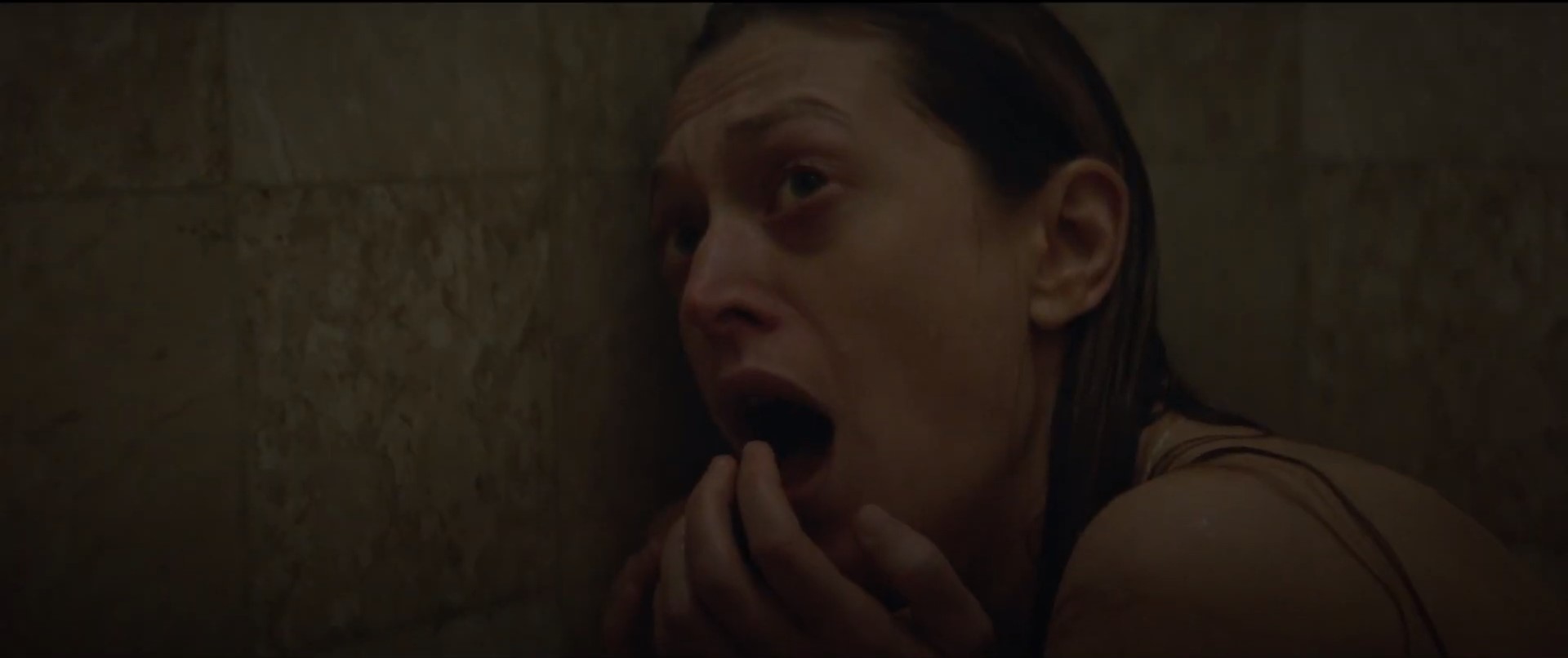
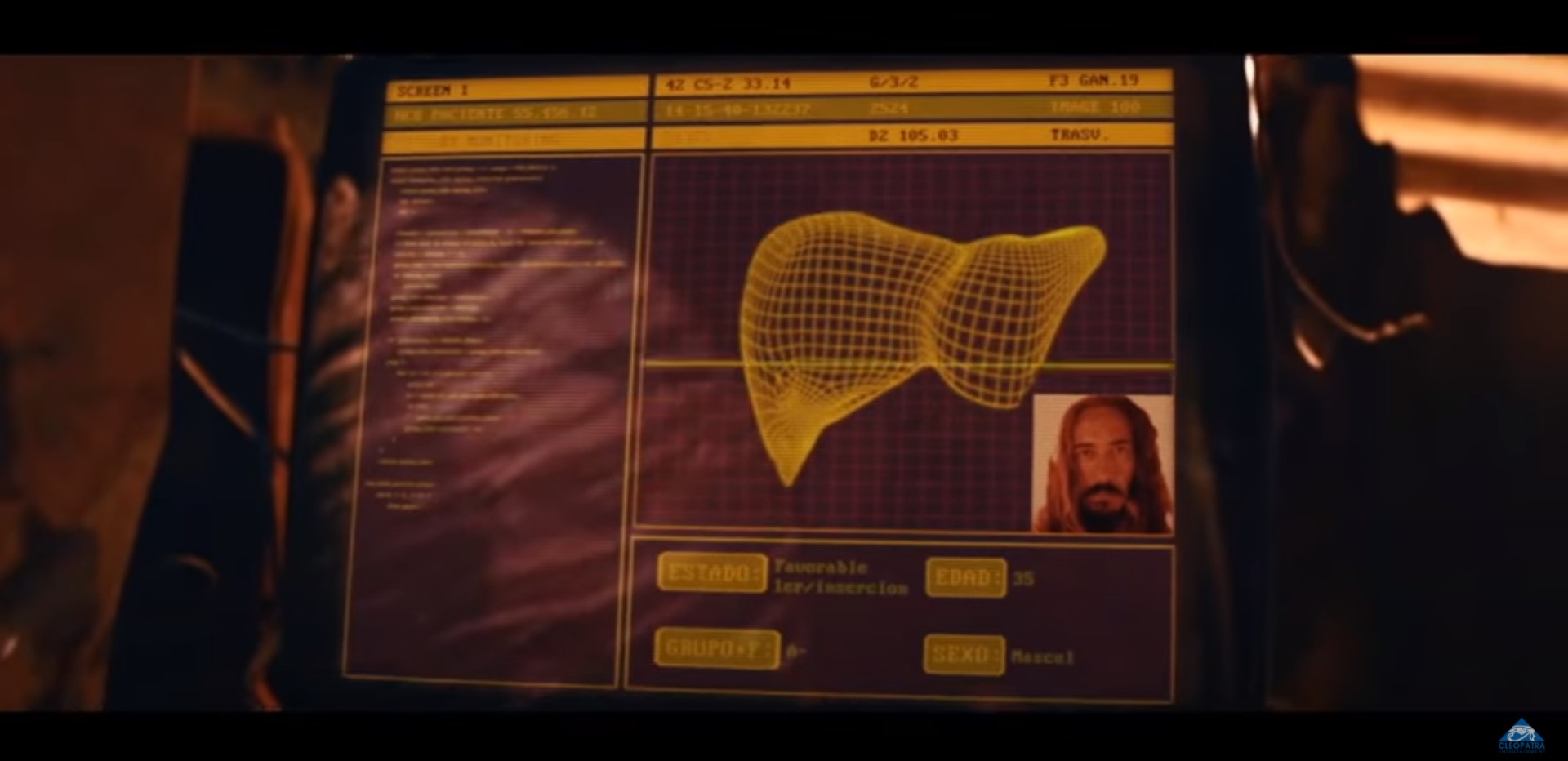
A ruthless post-apocalypse world consists of killing others for their vital organs and sell them on the black market to earn a living or to score the next high.  The latter is the life Tisha lives as a bounty hunter assassin sustaining through a bleak existence of the next job and another hit.  When a new job brings her ugly past to the present, no payment is necessary as she gladly assassinate a smutty bar owner and brutal cartel head.  Things don’t go as planned when Tisha winds up naked on one of grimy sex mats of her target’s whore house after encountering and being seduced by Luna, the boss’s best laid side piece stripper and confidant.  The assassin must fight tooth and nail to survive on her filthy course to truth-hurting vengeance.

A complete ball of filth and fury is how I would begin to describe Eric Fleitas and Luciana Garraza’s sordid wrapped “Scavenger,” hailing from Argentina with wild west undercurrents in a post-apocalypse wasteland that makes George Miller’s barren lands look like Disneyworld.   Titled originally as “Corroña” in española,  the filmmakers also pen the violent screenplay alongside a third writer in Shelia Fentana to produce their very first feature length credit together that clocks in at 73 minutes, and 73 minutes is plenty enough to be entranced and be gorged by the anarchist sleaze, galloping gore, fast cars, and loose whores.  The trio financially self-produce “Scavenger’s” journey to silver screen fruition while Ronin Pictures provides special effects work that can rival the best independent productions. 

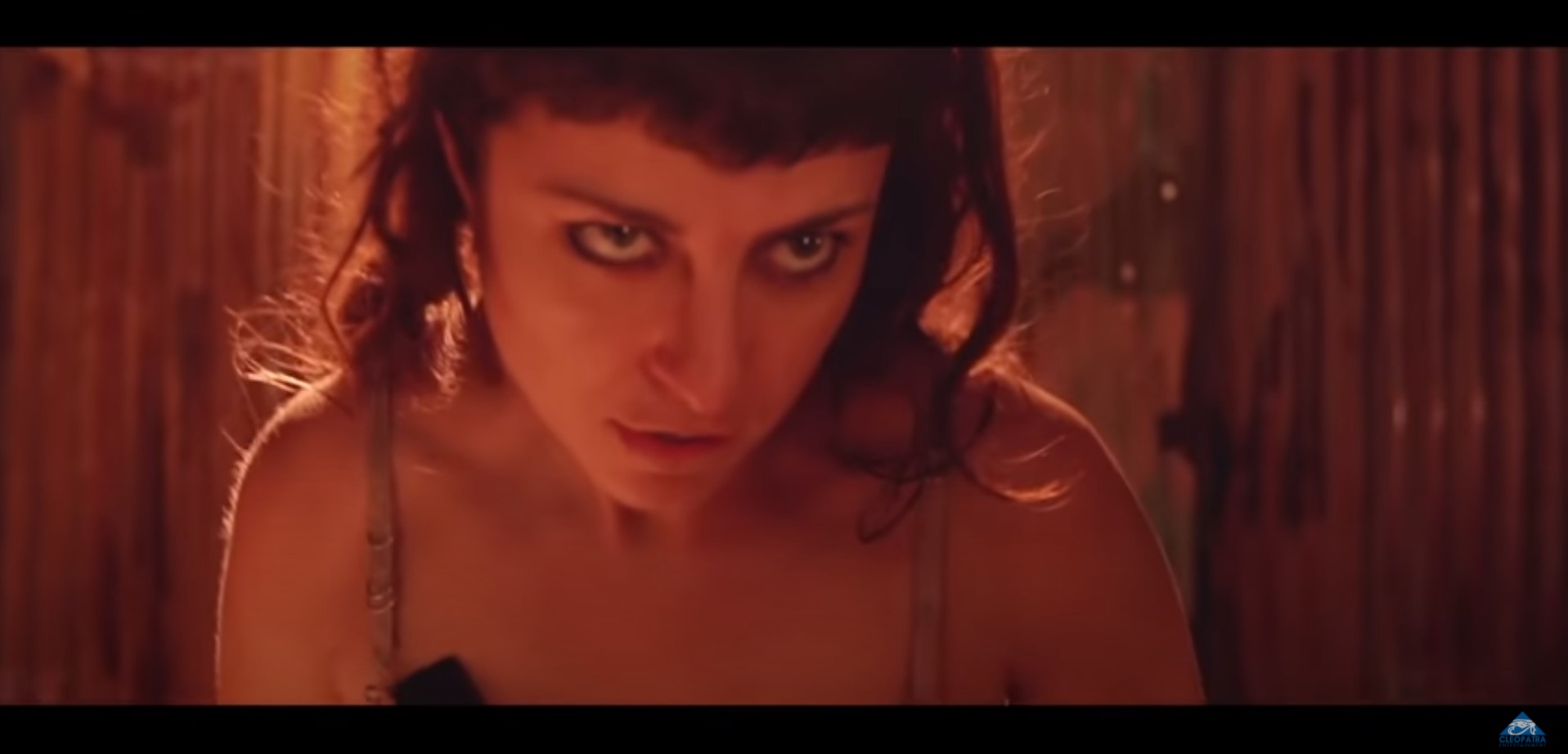
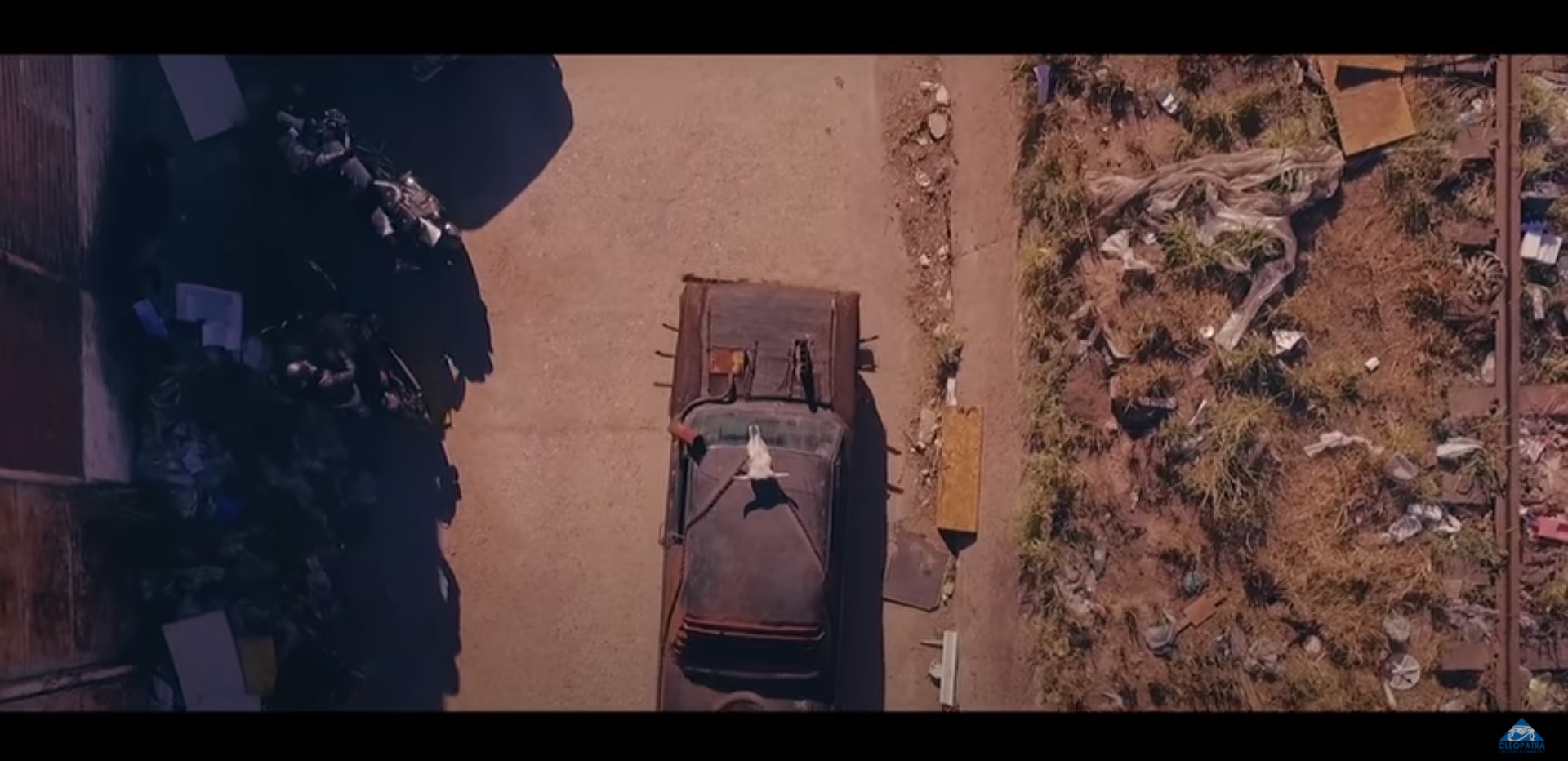
The role of Tisha is not a pleasant one, no role in where the protagonist being raped is pleasant to begin with, but to compound the character with a nasty drug habit, a gruesome vocation, traumatically scarred past, and be the objectifiable plaything for a bunch of society-fallen degenerates, Tisha’s fortitude had to be uncompromisable and her sensitivity dialed way down to zero in order to survive in her cutthroat world where not even your bodily organs are safe.  In steps Nayla Chumuarin, a fresh face Argentinian actress unknown to the majority of general audiences, ready to slip into a demanding role antithesis to Mel Gibson’s Max Rockatansky that’s only similar in a very few ways.  Geared in masculine attire, sporting a pixie cut, and gleaming with sweat and dirt from head to toe, Chumuarin offers up an intriguing anti-femme fatale in a more cold shouldered assassin vibe with a fast barb wired cladded car and who can handle herself around all types of antagonists, even those two times her size and are a disfigured mutant!  Tisha tracks down Roger, a brothel and bar owner who has ill-fatedly crossed paths with Tisha in a previous life.  Played by Gonzalo Tolosa, the mohawk-sporting Roger abides by his own set of rules unless they’re coming out of the sensual viperous mouth of Luna (Sofia Lanaro), Roger’s stripper girlfriend with a true sense of the femme fatale archetype.  Together, Roger and Luna call the shots and lust suck each other faces in the torment of Tisha who by the end of the film just wants to waste them both from the face of the post-apocalypse Earth.  Fleitas and Garraza purposefully and rightfully omit much of the backstories from most of the film and slide them in, crashing down like a house of falling cards, right on top of not only the characters but also the audience in a moment of realization and shocking truth from everything that has happened in the story up to that climatic end.  “Scavenger” rounds out the cast with Tisso Solis Vargas, Denis Gustavo Molina, Norberto Cesar Bernuez, Vanesa Alba, Rosa Isabel Guenya Macedo, and Gaston Podesta as the Mutant.

“Scavenger” is pure debauchery nonsense.  A gore loaded free for all.  The story is about as ugly as you would expect with the exploitation of carrion from those slowly succumbing to death in one form or another.  “Scavenger” is an entertainment juggernaut doused in corrosive material that will either disgust or amuse, depending on your temperament, with no middle ground to balance.  Characters are driven by unadulterated greed or rage, even the heroine of vengeance who just a few scenes prior stabbed a man in the back to harvest his organs, without one morally redemptive character to relieve the incessant current shocking the mind’s nipples with searing voltage.  Fleitas and Garraza slather in a laissez-faire fashion the exploitation veneer of grindhouse muck to serrate the unsavory snaggleteeth even sharper, but there are points where too much of a good thing becomes bad to the film’s health.  As such is with the licking of the face motif.  Like Quentin Tarantino and his obsession with closeup shots on female’s feet, Fleitas and Garraza shoot a handful of scenes of sexually engaged males lapping the sweat and pheromone droplets from the faces of their carnal conquests in all types of scenarios from rape to consensual.  The saliva wet, grainy muscle just slides right across the soft flesh covered cheekbone in more scenes that I cared to count in what seems more like a filmmaker fetish than an object necessary to overboard the obscenities.  It’s a weird action to call out but happens more than just a couple of occasions and between different characters.  The pacing’s fine albeit a few nauseating slice and dice editing that doesn’t take away or hinder in abundance understanding the progression of Tisha’s journey, but definitely causes a bit of blurriness on the heroine’s perspective of whether what she’s experiencing is a nightmare, a flashback, or a bad trip from whatever narcotic she withdrawals from that once injected speeds her into a kill monger. 

If what I’ve gone over doesn’t entice you, I can tell you this much.  “Scavenger” is perhaps the best Cleopatra Entertainment film release I’ve seen up-to-date.  The subsidiary of the independent record label, Cleopatra Records, Inc, in collaboration with MVD Visual release the South American grindhouse-fest film on a 2-disc Blu-ray and Compact Disc set featuring the film’s soundtrack, including music from Rosetta Stone, The Meteors, The 69 Cats, Philippe Besombes, Damon Edge and more with a full artist list on the reverse side of the cover liner along with alternate cover art of the film.  Presented in a widescreen 16:9 ratio, don’t expect a high-definition output with a homage to grain and a warm high-key contrasts to augment the desert outward show under the eye of Sabastian Rodriguez.  Negative space is only used for intense shadows to cloak the lurking menace around every corner.  There’s a variety of shots, including some great wide shots and crane angles, that sell “Scavenger” beyond the frenzy of blood-soaked and furrowed brow closeups.  There are four audio options available:  a dubbed English 5.1 surround and a 2.0 stereo as well as the original Spanish dialogue track in a 5.1 surround mix and a 2.0 stereo.  Unfortunately, the Spanish tracks do not come with option English subtitles so if you don’t understand the language, you’ll need to sit through the always awful English dub; however, this particular dub track is not obviously horrendous.  With all the Cleopatra Entertainment titles, the soundtrack sticks out like a sore thumb to promote their investments with high quality sound but also in true Cleopatra Entertainment titles, the lack of bonus features continue with “Scavenger” with only a theatrical trailer and an image slideshow.  “Scavenger” is a particular breed of film where you just flip your mind’s decency switch to off and gladly watch the world burn in depravity to get your jollies off.

Own “Scavenger” on Blu-ray and Soundtrack CD combo Set!

Censorship is the Very Definition of EVIL! “Censor” reviewed! (Magnet Releasing / Digital Screener)


British film censor, Enid, views video nasty after video nasty day in and day out, certifying ratings based on the realism of the violence, and receiving public hellfire when a gruesome murder is vilifies her approval of a film.  After viewing one in particular that strikes a familiar nerve, one involving around the circumstances of her little sister’s disappearance from years ago, she digs deeper into the filmmaker’s background, piecing together a puzzle that her sister may still be alive.  With her parents given up hope declaring their youngest deceased and under mounds of criticism pressure from inside and outside of work, Enid’s lone rove through distasteful filmic horror and probing the crew involved sends the censor into a frantic frenzy between what’s real and what’s not. 

For the record, just so we’re clear between you and I, film censoring is a complete crock that limits artist expression and can negatively alter the tone of work far from the original message or effect.  I can see where censorship is necessary for the greater good when considering public television that aims to evade young eyes from extreme violence, gore, nudity, and harsh language while still appeasing adults with a semi-intelligible cut of the film, but to have the MPAA, or any censor board for that matter, do what they do in order to classify and certify a rating to meet a criteria is a slap in the face of personal responsibility.  Yes, some individuals need a rigorous structure to tell them what to do, but you know comical and asinine when there are three different cuts of a film in the U.S. market, not to forget to mention all the various versions around the globe to sate countries distinct regulations and requirements.  Luckily, Prano Bailey-Bond’s immersive reality checking horror, “Censor,” makes no assumptions on the matter and we can just enjoy the dark side of story based off the UK filmmaker’s 2015 short entitled “Nasty.”  The story, set in the 1980’s at the height of violent and gory VHS movies known as video nasties, is co-written by fellow “Nasty” writer Anthony Fletcher and is produced by the London based, female operated and story-driven Silver Salt Films as the company’s first feature credit and is financially supported by the Film4, Ffilm Cymru Wales, and BFI.

If not for Irish actress Niamh Algar in an virtuous cyclone encompassing lead of Enid, a stern censor agent, the dismal atmospherics whirling around Enid’s processing of possible new evidence in her sister’s vanishing wouldn’t be as timorously potent.  The “From the Dark” and “Raised by Wolves” actress embodies a strong stoic stance of not only a censor with a target on her back every time the public blames her for ill-fated news involving the extreme films she approves, but also as a woman in the workplace who is subjected to subtle objectifying by male coworkers, in which some are more privately outspoken than others, and male film producers with a diminutive eyesight of her professional demeanor by making unwanted advances in lieu offering their support to make their films depicting rape and murder of usually female victims more approachable and marketable to the censor board.  Algar perfectly poises Enid in her ticks, the abrasive fidgeting of her nails against each other or the slight rolling back of her shoulders that makes an awful, unnatural cracking sound, sharpen Enid’s complexion.  Even Enid’s hard gulping is felt in unison of the tension of a woman on a verge of sudden collapse.  Clearly the film’s one and only frontrunner as we dine off Enid’s sole perspective, Algar runs off with “Censor’s” gloomy tone by her performance of unwavering convictions blended with throbbing agitation in her character’s repressed explosion trajectory.  Supporting players do their part living in Enid’s unique vision with Sophia La Porta, Adrian Schiller, Clare Homan (“Afraid of the Dark”), Andrew Havill, Guillaume Delaunay (“Victor Frankenstein”), Richard Glover, Clare Perkins, Danny Lee Wyner, Vince Franklin, Nicholas Burns, and Michael Smiley (“The Nun”) as a topnotch sleazy extreme film producer rounding out the cast.

Performances all around are stellar and the idea is sound as I can see a video nasty censor of the 1980’s fall victim to the job because of an unclear and checkered past, but problems with pacing jet Enid from composed posture to immediate wreck in a blink of an eye without much of a fundamental development for unravelling being greatly depicted other than the jarring movie that sends her spiraling for answers.  This doesn’t hurt “Censor’s” main theme of the inconclusions of what really drives the murderous animalistic qualities in all of us regarding nature versus nurture.  The longstanding idea that video nasties promote influential violence and sordid behaviors has been the talk of controversy for decades and science, at least none of that I’ve read, hasn’t 100% proven that extreme films dictates the mind’s will other than those impressionable in the sponge-like children.  Bailey-Bond decides not take a stance in declaring a clear cut opinion, merging both assumptions together in a mesh of madness still leaving the theorists spinning their notions and evangelical nuts spewing their anti-liberal arts sermons.  What really sells “Censor” for me personally is the tell all climatic finale of Enid’s disturbing outcome in a warped contraview, flipping back and forth through the static of the back button during the times of higher numeral, unsubscribed pay-per-view channels where glimpses of picture pop into the frame for a split second.

“Censor” is nowhere near what’s consider a video nasty, but the Prano Bailey-Bond psychological thriller still has the grip of an inexorable depth for what’s to come, for violence, far from hitting the cutting room floor as the film heads to theaters June 11th and on demand one week later June 18th from Magnet Releasing. Shot in two aspect ratios, more so in a widescreen 2.39:1 aspect ratio than in the pillarbox 1:33:1 to reflect the video nasty format in the time period, Bailey-Bond and director of photography, Annika Summerson, continue to stay as true as possible to the Golden Age of 80’s horror by shooting in 35mm in a handful of various style to blend Enid’s reality with the fiction of lurid dreams and the daily grind of workplace hazards (which, to me, watching horror movies all day long sounds like a dream job! The censoring part, no so much). Runtime clocks in at 84 minutes with no wiggle room for bonus scenes during or after the credits. The Brits have always had a hell of a go with film censorship, weaponizing and vilifying for political gain, as films become the lamb for the slaughter for public outcry against social-economical woes, even arts bedeviled by the harsh censors of it’s own country, and “Censor” aims to be the carrier wave of that historical downspout of misguided judgement while also shredded the thin moral fabric of one woman’s reality into tiny bits of off the rocker guilt.

A Diary Full of EVIL Secrets. “The Darkness” reviewed! (Reel2Reel / Digital Screener)

David inherits his ailing grandmother’s countryside cottage and holidays with his novelist girlfriend, Lisa, who seeks a little refuge to inspire her next big bestseller.  As soon as they arrive and Lisa discovers an old storage chest in the attic, Lisa’s is pulled by a call of a supernatural entity that lures her outside to an unmarked grave, an ominous cave suspected with evil fairies, and a diary that tells the horrifying accounts of a murdered woman.  Their time at the cottage take a toll on Lisa who’s strange behavior places concern on David.  An ostracized priest forewarns possession, death, and the stakes if Lisa remains in the area that’s haunted with witches, ghosts, changelings, and betrayers. 

Originally titled “Dorcha,” an Irish term for dark, and then rebranded as “The Darkness” for the remainder of the English speaking residents of the world, the 2021 released multifaced specter and fairy Irish folklore spectacle is the directorial debut of Tharun Mohan, a current producer for the 2021 United Kingdom vampire versus human boiling point coexistence television series, “Age of the Living Dead,” co-starring our good genre loving friend and actor, Bill Oberst Jr.  While Bill Oberst Jr. is not a part of “The Darkness” (my apologies if I gave a sense of false hope), Mohan, from off the pages of his screenplay, aspires to illuminate Irish mythology as an alluring gothic horror mixture of mystery with fear sans the more popular little green men defending pots of gold.  The self-produced film under the Tharun Productions is the banner’s first feature with Aoun Khan, Neenu Mathai, Anoop Pillai, and Monique R. White serving as executive producers.

While we don’t get Bill Oberst Jr. (still hurts), we do get someone just as good with “The House of Bly Manor’s” Amelia Eve!  The UK actress headlines “The Darkness” in the role of Lisa, the struggling novelist looking for a slice of inspiration but instead receives the whole pie of possession.  Eve lives it up as an entity puppeteering her youthful outer shell in the filth and muck, stuffing her face with all the food in the cottage, and, at times, imitating an urbanity style of death.  Meanwhile, her boyfriend David (Cyril Blake) would have probably unintentionally babe’d her to death if she wasn’t already being haunted by a vindictive Victorian spirit.  “The Darkness” is Blake’s introductory role into feature films and the 36 year old, South Yorkshire actor can’t quite capture sincerity when it comes to his girlfriend’s unusual behavior.  David also just wanders to-and-fro around town in an aloof manner for more than just one reason until things become dire with Lisa and  then is that only when he’s starts to get really involved and attempt to fix whatever’s afflicting  Lisa, even if he has to entertain an informed, but shunned, eccentric priest (John Sudgen) with tea and biscuits in order to get just what the hell is going on.  A number of side characters pop up with an inclining of importance, such as the nosy waitress (Marian Elizabeth), a powerful witch (Gillian Kirkpatrick), and a determined historian (Mary Drake), but fall short of any real significance by fluttering in with just enough motivational tidbits and then flutter out of the scene and let the principle characters work out the rest.  “The Darkness” is a dual timeline narrative with the current story focusing on Lisa’s bubbling black enchantment slowly taking over her body with the backbone base layer account of events providing a tell-all mystery driving Lisa mad with a menacing spirit.  Occurring around a few decades ago before Lisa and David arrive, Niav O’Connor (Katherine Harthshorne) mysteriously disappears from her husband Bryan (Adam Bond), but much of this is revealed through the Lisa’s obsessive reading of Niav’s diary which begs the question, how did Niav write her demise in the diary pages if she was already dead?

And that last sentiment ultimately describes Mohan’s film, as an unfocused and trite expression of amateur storytelling.  There’s difficulty in trying to nail down, or taking a stab at anything as the saying goes, in the “The Darkness’” many moving parts and many fiends in the off shoots Mohan tries to tie in from all various directions.  Even in the film’s final scenes, Mohan had to pen in one more twist that corrodes even further the integrity of a much desired narrative about Irish mythologies and the malevolencies that spur them. Myths are the heart of “The Darkness,” more specifically with the changelings who are fairies that replace real people, and Niav and Bryan O’Connor’s ghastly tale echoes the non-fictional account of Bridget Cleary, an Irish wife murdered by her husband under the suspicion that his wife was a changeling. Connections made between the past and present are roughly tied together at best with only Niav’s unearthed and charmed diary serving as a conduit to possess Lisa’s curious id. The pursuit of revenge for her untimely demise falls upon… well, that part of the story is undoubtedly vague as Niav seems to be resurrecting from the grave, so to speak, to reveal dubious secrets held by relatives from the lineage of her husband Bryan and cling her spiteful lifeforce to that bloodline and haunt O’Connor descendants like a severe post traumatic stress disorder; yet the vapid ending doesn’t justify the means, falling short the buildup of the hallmarks of folklore horror in witches, changelings, fairies, dark arts priests, and ghosts with anything but spectacular.

No cheap thrills, no gore, no nudity. “The Darkness” relies heavily on the suspense of the gothic tale itself to drawn in and spook audiences as the Mohan film creeps onto digital streaming services and video on demand this month, May 3rd, from the fresh-faced independent UK distribution label, Reel2Reel. The production value on “The Darkness” catches the passing aesthetically expensive eye while still being an economically financed and that’s a big credit to director of photography, Ariel Artur, getting the artistic shots that displays time and patience in getting the minor key angles right to at least extract a gripping moment of apprehension, resembling 60’s and 70’s European horror to likes of Hammer Horror or Amicus in appearance alone. As far as bonus scenes during or after the credits, there are none. As a starting line feature, “The Darkness” is not terrible. Let’s be clear on this as Tharun Mohan understand the fundamentals of filmmaking with sound positioning of characters in scenes, a superb, expensive look on a value size budget, and the Amalie Eve’s crazed performance is a thrill in itself, but envisioning the structure still remains behind the blinders, leaving “the Darkness” just an aimless shot in the dark.

For One Exhausted Truck Driver, EVIL is on the Move! “Goodbye Honey” reviewed! (Freestyle Digital Media / Digital Screener)

Dawn has been driving for over 30 hours straight schlepping a customer’s belongings from point A to point B. Unable to keep her eyes from closing, she pulls over and parks in an empty lot of a state park. Before Dawn could close her eyes, a mysterious and frightened woman approaches her asking for help, informing Dawn that she has been held captive for months. Treating with suspicious eyes, not fully trusting this young woman’s thinly laid out accusation, the exhausted truck driver is eager to protect her truck from would-be thieves and vandals, but decides to assist though her phone is broken and her truck keys are lost, leaving the two women stranded in the middle of nowhere with a radical abduction story and the captor is not too far behind. What seemed to be a quiet night of deserved rest and relaxation for a truck driver who just drove straight-through without much as taking a break is about to unfold an eye-opening, harrowing ordeal that puts the two women in for the long haul.

Would you trust a harried and jonesing-looking straight knocking on your day cab door of your straight moving truck in the very early AM hours of the night? This iffy scenario plunges audience into that exact pressure point of Max Strand’s feature film directorial debut of “Goodbye Honey.” The 2020 abduction-thriller is also written by Strand and co-written alongside Todd Rawiszer, collaborating for a second time since 2011 for their cannibalistic-comedy, the family kills together, eats people together, “The Labbinacs.” Generally most abduction thrillers takes the viewpoint of the captive, but for “Goodbye Honey,” Strand and Rawiszer take the perspective of an outsider with unlucky happenstance and makes persevere over their own hang-ups in the dealt lousy hand called life. “Goodbye Honey” is produced by Joshua Michaels from the Examined Dots Pictures, a subsidiary of the video media company, Examined Dots Media, and is the first feature length film production from the company.


The point of view from the trucker sparks a clean slate inception of events as Dawn is oblivious to the entire occurrence that has scared and scarred this young woman whose animal instincts have kicked in and is working against her advantage with Dawn as desperate spurs her to act instead of thinking logically about what to do.  Pamela Jayne Morgan (“The Manor”) headlines “Goodbye Honey” in her first breakout role of 2020 stepping into not only an impromptu lifesaving moment but also into the steel toed shoes of a trucker’s life behind the wheel that features sleeping in her cab, eating lunch in her cab, and being driven into the ground by a demanding, world’s most dangerous, profession.  The only uncouth trucker habit Morgan does not do in her cab is urinate into a bottle.  Oh wait, she does bottle potty!  However, the circumstances surrounding that moment is not because of her profession and only adds to the many layers, including her tragic background and lost ambitions, that makes Dawn a complex character working the mental gears to do what she can to survive and save a life in terror’s grip.  And just like Dawn, we’re weary to believe the fantastic accusations coming out of Juliette Alice Gobin’s lip-quivering mouth who sizes up to the very still with fright the shaken and traumatized abductee in Phoebe as she narrowly escapes her captor, played by Paul C. Kelly (“Devils Prey”).  Gobin debuts her talents in horror with flawless strokes that paints Phoebe more of a misunderstood threat than a distressed victim of kidnapping.  Morgan and Gobin’s hot and cold dynamic perfectly rouses doubts as nothing, at first, is entirely clear.  “Goodbye Honey” has an indie size cast, but the performances are robust with layered intensity from the principle roles to the momentary characters played by Peyton Michelle Edwards, Rafe Soule, Jake Laurence, and Keara Benton.

There’s always been this uniquely bizarre fascination of which story angle an abduction thriller should play from and in “Goodbye Honey’s”, the story doesn’t follow a linear narrative of the abductee but backtracks with anecdotal flashbacks as Phoebe divulges the events leading to her snatching and how’s she’s been isolated in a small room for months to her only hope and savior, an emotionally downtrodden and physically fatigued Dawn.  While not entirely new, as we’ve seen a structure similar in John Oak Dalton’s “The Girl in the Crawl Space” that relives the victim’s held captive experience through mental flashbacks and therapy sessions, “Goodbye Honey,” bills far superior dread unlike the 2018 film, which suffers from monotonous exposition and topical offshoots.  Strand plops us in the unravelling thicket of action with gripping what-ifs potentially lurking in the midnight shadows surrounding Dawn’s painted white beacon of hope on wheels.  Character curveballs also hit empathetically hard with twist and turns coming out of the ears of all the narrative pawns and not just confined to the black and white abduction that brings them together. As much as Phoebe needs Dawn’s help to escape the clutches of her captor, Dawn also needed Phoebe’s accidental life purpose healing that fills the void in Dawn’s life left by the passing of her husband and reaffirms her passion for helping people no matter her personal circumstances.  Oddly enough, I found Kelly’s captor lacked substance to the story other than the characteristic ploy of revenge that agitates the action as his endgame for Phoebe isn’t exactly clear other than spouting, “she needs to pay.”  The serendipitous connection between Dawn, Phoebe, and the abductor has designer destiny stitched into the natural fabric of life in an almost comical happenstance of events, but makes for good entertainment nonetheless knowing that there is a circle of connectivity, a sense of purpose, and a reason to fight back in “Goodbye Honey’s” pressure cooking recipe.   

On May 11th, “Goodbye Honey” was released on digital HD and on cable VOD in North America from Freestyle Digital HD after a successful stint of festival wins including Best Thriller Feature, Best Actress (Pamela Jane Morgan), and Best Supporting Actor (Rafe Soule) at the Garden State Film Festival, Best Lead Performance (Juliette Alice Gobin) at the Nightmares Film Festival, and Best Actress (Morgan) at NOLA Horror Film Festival. Todd Rawiszer didn’t just co-write the film he also shot the film, his first feature film credit at a cinematographer. Inside 96 minutes and with a narrative taking place over a single night, Rawiszer casts a variety of hard lit shadows with glimmers of intermittent portable lights and neon reds kept tight with medium to closeup shots and rarely venturing out beyond that range with clarity as much of the wide shots or long shots are obscured, in a haze, or blurry to the eye as Rawiszer never wants you to know what’s exactly out that far. A pair neat editing montages by Jay Yachetta, with the meal plate and door slamming alongside Phoebe going mad with stir crazy is some of the best work I’ve seen a long time that can trigger an epileptic episode and still be insanely cool in the cruelty. Top those montages with an aggressive sound design and you’re head will surely pop off with unsettling jubilation. No bonus scenes during or after the credits are included. Regardless of budget or the stigma of low budget pictures, nothing but good vibes and good things to say generally about Max Strand’s “Goodbye Honey,” a startling trembler of persistence to outlive a night of terror that stars two stellar leading ladies at the heart of the film’s success.

Rent or Own GoodBye Honey on Amazon Prime!

One Hundred and Twenty-Nine Men, Two Ships, and One EVIL Beast Trapped Together in Icebound. “The Terror” reviewed! (Blu-ray / Acorn Media International)


Departed from English ports in 1845, two exploration sailing ships, HMS Erebus and HMS Terror, sought to chart a northwest passage through Artic waters above North America.  Bound for King William Island with over 120 men between the two vessels, the traversers found themselves icebound as the Winter months froze the arctic waters completely and solidifying their positions within one large ice mass.  Their story doesn’t end there as months pass, even through the summer, and winter’s firm grip shows no sign of rising above zero degrees, sweating the brow of the few experience Arctic officers.  To top off their troubles, a vicious polar bear, or some kind of supernatural beast connected to Innuit people, hunts down and ravages a few unfortunate Royal Navy seamen.  Low of provisions and spirits, a combination of infinite winter madness and trembling fear weigh heavy on the seafaring fellows frozen in an icy cold Hell. 

Straight from the ill-fated expedition in British maritime history, the mystery surrounding Captain Franklin and his crew’s death and disappearance in the Arctic is given the hypothetical explanation and supernatural treatment in season one of the AMC series “The Terror.”  However, the tale is more relative to the adapted novel of the same name written by American author Dan Simmons who specialized in science fiction and horror.  Adding elements of a monstrous presence stalking them in the shadows of a bleak tundra, Simmons’ historical fiction turned television series blurs the lines of non-fiction and fiction with chilling atmospherics and the indelicacies of human nature when necessities for survival are pushed to the extreme and are in short supply.  “The Terror” is backed by a strong executive producer team in Ridley Scott (“Alien”) and notable historical television producer David W. Zucker (“Mercy Street,” “The Man in the High Castle”) with writers Max Borenstein (“Godzilla vs. Kong”) and Andres Fischer-Centeno (“Under the Dome”) penning the screenplays with Tim Mielants, Edward Berger, and Sergio Mimica-Gezzan directing a total combined 10-episodes under the Scott Free Productions and Entertainment 360 flag. 

The AMC television thriller scores an amazing cast of seasoned English and Irish actors refined in their skills of becoming a part of the history their work reflects.  Chiefly surrounding the top three principle commanding officers, “The Cook, the Thief, His Wife & Her Lover’s” Ciarán Hinds as Captain Sir John Franklin, “Underworld: Blood Wars’” Tobias Menzies as Commander James Fitzjames, and with a foremost focus on “Resident Evil:  Apocalypse’s” Jared Harris as Captain Francis Crozier, an unique dynamic courses through the speckled personalities of each commander in the face of duty for Queen and country and in the certain finality to their crisis from the God-fearing Franklin, to the command prodigy Fitzjames, to the more sage practicality of Crozier.  Each also have their own flaws that inadvertently put a blight on the already ill-fated mission of charting a passage through the frigid bleakness of the Arctic ice and how they interact with a doubt inching motley crew of novice and experience sailors, especially between the stark contrast of fellow principle characters in the amiable Harry Goodsir (Paul Ready), whose personality is reflected by his name, in confliction with the more menacingly conniving shipmate Cornelius Hickey (Adam Nagaitis).  Both Ready and Nagaitis perfect their roles in convincing the audience on how we should feel about moral compass as they become the nerve center that drives the tale of continual darkness.  Praiseworthy performances definitely go to the entire cast, that also includes Nuuk native and Greenlandic band frontwoman, Nive Nielsen as well as Ian Hart, Alistair Petrie, Trystan Gravelle, Tom Weston-Jones, and Richard Riddell, pinpointing and bringing to life the mid-19th century Royal Navy speak, look, and mannerisms that adapt over the length and breadth of “The Terror’s” forlorn themes of two ship’s crew stranded in what could be said is a strange and alien terrain that evokes madness and fear in the longer you reside. 

The information surfaced about Franklin’s lost expedition with the discovery of possible cannibalism evidence discerned in the early 90’s and, more recently, the found wreckage of both the HMS Erebus and HMS Terror within the past decade add insurmountable coils of surreal realism around the true tragedy of both ships when embellished supernatural elements of an Inuit spirit animal stalking, hunting, and ravaging the crew.  Simmons novel and the series go hand-and-hand story wise but pull visually inspiration from Sir Edwin Landseer’s painting entitled “Man Proposes, God Disposes” where one polar bears tear at what’s left of a ship’s mast and another swallows what looks like human ribcage remains in a surely more a powerful image that’s aligned with the series in the offering an outcome of when it comes to man versus nature, nature will unduly win on it’s own frozen turf. AMC and Ridley Scott undoubtedly knew how to showcase a character driven story where over the time relations build and deteriorate between crew, officers, and a mingle of both and in that stretch of time, the passing of time itself has seemingly stood still as the nights become longer, routines are made, and the ships are stuck on the ice like a warm tongue pressed against a frozen metal pole, but, in the 10 episode series, the story stretches over a nearly two year period and the production is able to connect together next scenes to the previous ones without having to address each and every moment or exposition enough information to avoid the explanatory segue. This method of filmmaking always leave a smidgen of unknown, leaving viewers like us on tenterhooks and in an agitated state that we’ll never fully understand or fulfill that missing part of the mysterious portions and lapses in time. The unfortunate real life story itself casts an alluring wonder and I would even go as far as maritime excitement even if stemmed out of tragedy; that’s how “The Terror,” affixed to the rising ice in an infinite frozen sea of stalagmites, dresses every episode with a less is more garb. “The Terror” endures for a long time in the mind set to replay the desperation and the poignancy of the character’s madness, fear, cold, hunger, and the rest of their godawful bad luck.

A story relished with new fright and unsullied violence with every repeat viewing is now available on a two-disc, region 2 Blu-ray from Acorn Media International. The 10-episode series is presented in a widescreen, 16:9 aspect ratio, on two PAL encoded discs with a total runtime of 453 minutes. The image pails in comparison to the perilous subject matter with a more softer, hazier picture than the harsh, snowy environment setting. Yet, I find that the subpar high definition not to be a complete distraction as much of story plays out in the dark or in the thick of flurries meant to obscure the eyes from seeing reality before biting your head off. Two different audio options are available on the release – a DTS surround sound 5.1 and a Dolby Digital PCM Stereo 2.0. Both tracks have high audio discernible marks as a well-balanced whole with the dialogue cleanly present, the ambient noise, especially the continuous wood creaking on the ships being squeezed by the ice, finely tongued for ever musket shot and snowy foley, and a respectfully insidious soundtrack that makes the body’s blood curl. Option English subtitles are available. I do think the bonus features are a little on the cheap side with only AMC’s behind-the-scenes commercial break segments making the cut on this release, complete with the AMC logo in tow, but the special features include Ridley Scott on “The Terror,” a look at the characters, the boat and visual effects, and concluding with an inside look at each episode featurettes. By the end of the last episode of “The Terror,” you won’t feel chipper, you won’t feel happiness for a long time; yet, you’ll want more and wished season 2 continued the story, but after an impressionable gnarly grand finale, “The Terror” season one is one of the best televised horror shows to come out in a very, very long time.