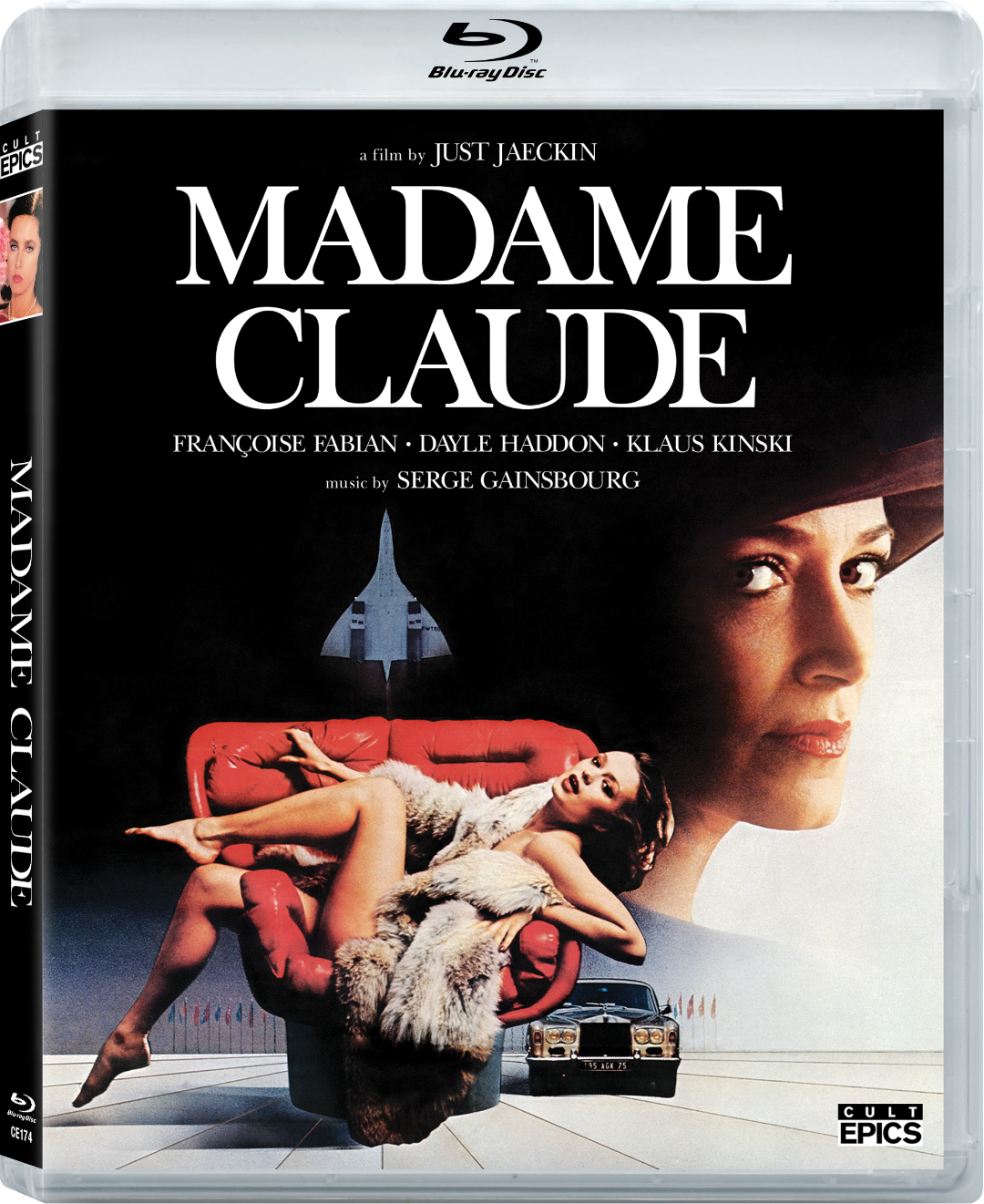
Classy Brothel Girls Bring Dirty EVIL Secrets to “Madame Claude” reviewed! (Cult Epics / Blu-ray)

A high end Paris brothel ran by the influential Madame Claude sends the most beautiful and sophistical women to wealthy and powerful dignitaries all over the world to satisfy their most sexual desires.  Her lucrative business becomes a governmental target seeking to collect back taxes on the illicit business.  However, the French government is the least of her worries when a playboy-aspiring rake and amateur photographer snaps photos of Madame Claude’s clients in compromising situations that can be ruinous to their status.  The CIA becomes involved when unscrupulous business dealings involving an American and Japanese companies connect to Madame Claude and her potentially persuasive young women after rumored photographs put the Madame Claude in the middle.  Two governments, big businesses, a jet setting brothel, wealthy socialites and a nosy photographer become involved in lies, secrets, and the potential for murder.

Part biography, part fiction, “Madame Claude,” also known as “The French Girl,” is the 1977 released erotic and political thriller based off the real Madame Claude, Fernande Grudet, as her life of prostitution management and scrutiny unfolded before the public eyes in the mid 1970’s.  Erotically and elegantly sexy with gorgeous women groomed into lust and ensnared into the lion’s den of exchanging powers, “Madame Claude” became the third film from the immensely successful erotic French director, Just Jaeckin, following 1974’s “Emmanuelle” and 1975’s “The Story of O.”  Jaeckin, pressured by his financiers to continue his success in the highly sought eroticism, returns to the randy genre, but this time with a story to his liking, one that is embroiled in the background of a bribery scandal involving aerospace company, Lockheed, at the heart of it. From a script by crime-action writer André G. Brunelin, based off the book of memories of Madame Claude by Jacques Quiorez, Jaeckin splices visual elements of each story together to form not only an arousing sexual lamination but also a cloak-and-dagger tenser of a film. Shot primarily in Paris, with minor shoots in the Bahamas and Washington, D.C., especially the scenes on the faux White House, “Madame Claude” is a production of Orphée Arts of Paris with Claire Duval on as executive producer.

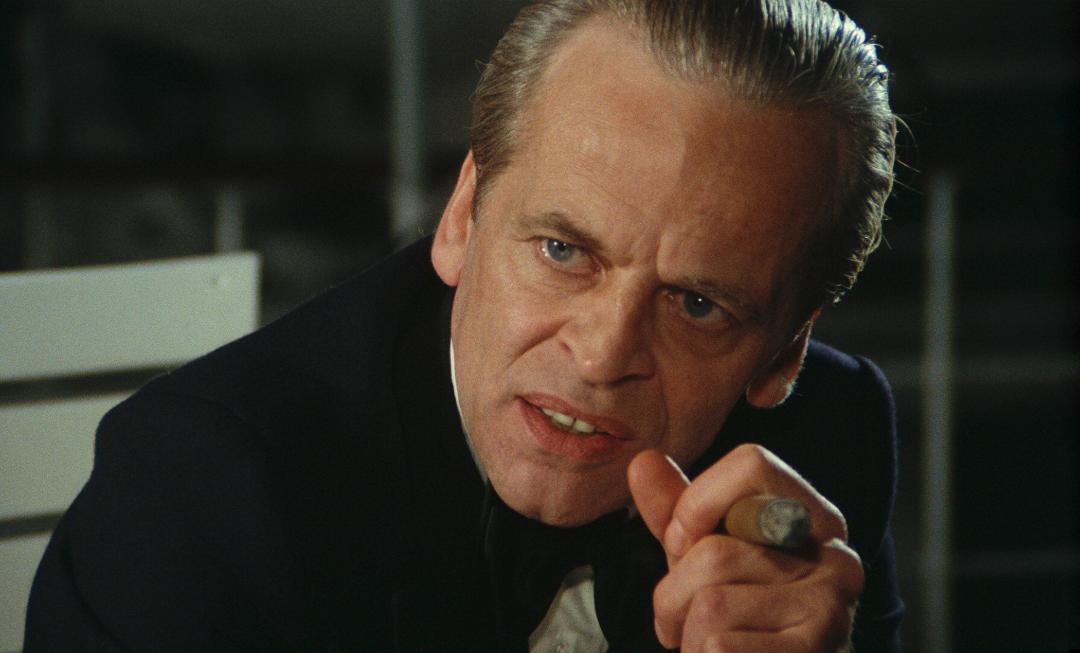
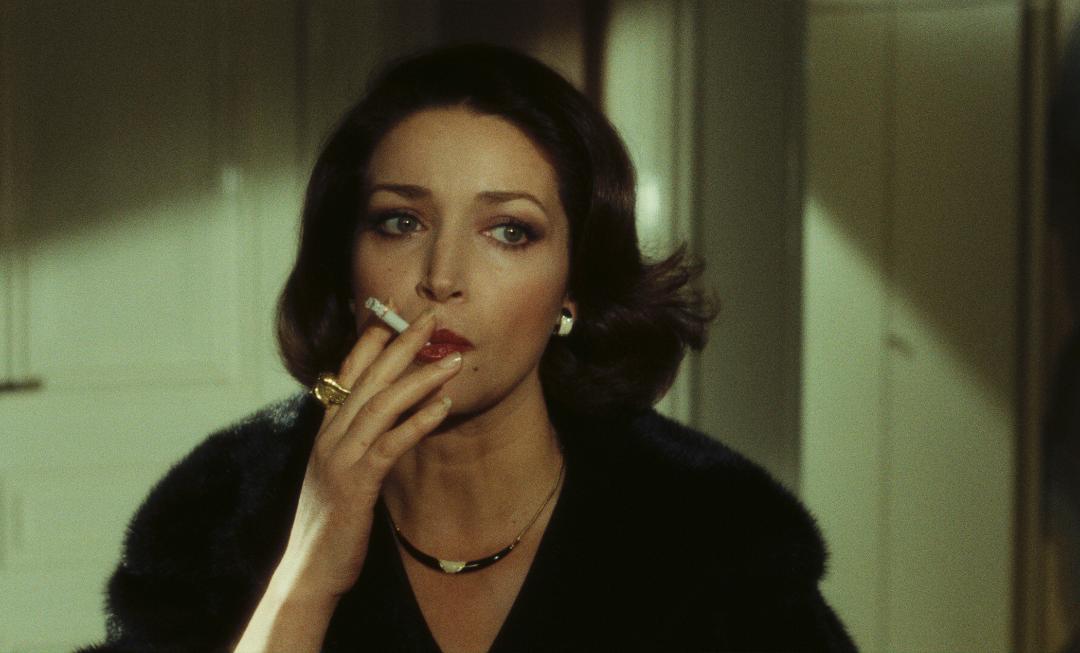
While the titular character is the obvious centerpiece, Jaeckin mingles the characters around each other in a game of espionage chess toward the endgame of checkmate. Keystone to everyone’s problems is Madame Claude, played by renowned French actress and early onscreen sex object, Françoise Fabian, who previously had roles in the paranormal pubescent horror, “Expulsion of the Devil,” a more comedy-friendly brothel film, “Holiday Hookers,” and among many other films predating 1977, but not until later in Fabian’s career did show rocket to success, playing older, more aligned, women that strongly championed feminism, such as portraying “Madame Claude” who used sex as a means to gain control and power of men, and pushed it to the brink of the era’s cinematic limits. “Horsehead’s’ Murray Head plays the photographer schmo, David Evans, making Madame Claude’s life complicated. An about town ladies man, Evans goes to each of Claude’s girls one-by-one and, for some reason or another, they invite the handsomely charming, but brutish, amateur porn photographer into their bedrooms, sleeping his way into blackmail scheme that will bring down the most powerful brothel head in all of Paris while also lining his pocket with not only money but power among the socialites who treat him like the village idiot. Head’s nails down the fast-and-loose aspect of Evan’s personality that treats his stratagem like a game he’s already won, but when the government agencies come knocking on doors, Head about faces Evan’s waggish incompetence to a frightened man looking around every corner for danger. It’s wonderful to see Head interact with Klaus Kinski (“Nosferatu the Vampire”) and Marc Michel as a ridiculed subordinate in an examination of social status as Kinski and Michel flaunt expensive taste and lavish orgies in lieu of decency, but it’s Murray Head, playing the fool with cemented proof that would put all them of into shame, as the aspirer to their life of luxuries. The beautiful Dayle Haddon (“Cyborg”), Vibeke Knudsen-Bergeron (“Spermula”), and Ylva Setterborg stun in just a handful of the very elegant, and very naked, women acting as Madame Claude’s international bound employees. Other cast of characters in “Madame Claude’s” game of lies and spies include Robert Webber (“Death Steps in the Dark”), Jean Gaven (“The Story of O”), François Perrot, André Falcon, and Maurice Renot.

Following his films “Emmanuelle” and “The Story of O,” Jaeckin’s “Madame Claude” strays into an atypical kind of formulaic eroticism downplaying the sexual excursions and discoveries for a more typical crime drama affair. Jaeckin’s directorial abilities can take you on an exotic tour around the world and onto the fleshy planes of some of the most gorgeous and provocative women to ever grace the screen. Yet, “Madame Claude” trims substantially the skin with a more precise execution to be more of an oil lubricating the machine rather than the gear that actually operates the mechanism to entail sex as a misused tool for motivation and bribery. These scenes of fleeting eroticism outright shine Just Jaeckin’s proclivities with mirrored reflections and becoming lost in the entanglement of sexually enflamed bodies and these scenes outright shine Jaeckin’s intent on delivering a corkscrew crime drama with double-dealings, wiretapping, and counterintelligence gathering as what unfolds isn’t clearly delineated between Madame Claude, David Evans, the French and U.S. Governments and the Lockheed scandal that actually becomes sidetracked at times by the infiltrated sex-training of Madame Claude business as the brothel head has to train an alternative misfit new girl and send her to the Bahamas work trip shortly after a quick one-night-stand initiation with one of the Madame’s trusted former beaus. We wholeheartedly become more intrigued and fascinated with Madame Claude’s feminist principles, recruiting subjugated women to use their sexuality to dominate and become wealthy in the process. In more than one scene, Madame Claude flaunts self-admiration in transforming star-crossed girls into young women fortune bound with their promiscuous ways. Madame Claude’s murky backstory caresses her complexities of anti-man without detail delving into the turning point catalyst that made her become who she became to be, an affluent Madame, other than a seemingly emotionally and controllably invalidating romantic experience with a long time friend and business companion, Pierre (Maurice Renot).

Cult Epics sustains another forgotten classic into a celebrated Blu-ray release with a new 4K HD transfer of “Madame Claude” from the original 35mm negative, supervised by the original cinematographer, Robert Fraisse. Housed on a BD50, the region free release maintains the impeccable coloring under Fraisse’s soft glow with no cropping or undue enhances that tries to put out fire with gasoline and, aside from a discolored yellow-greenish, translucent stripe, perhaps a loose film roll, during the opening scene, the image quality is clean and pleasing in it’s natural 35mm grain. The English and French language audio tracks come with three options: LPCM 2.0 mono, DTS-HD Master Audio 2.0 mono, and a Dolby Digital 2.0 Stereo. The DTS-HD Master Audio had the highest marks, slightly topping Dolby Digital stereo with a little more gusto in the pipes. Audible dialogue is clean and forefront, but the engineered dubbing laid over Murray Head and, even, the self-dubbing of Dayle Haddon can be off-putting at times when actors’ voices seem to not be sharing the same vocal space with others on screen. French composer Serge Gainsbourg’s lounge, yé-yé score tuned into that erotic soufflé of light and airy pop music that can be often dreamy with singsongy female vocals, complimenting the softer, sexier side of Jaeckin’s film while also playing into period melodies of the 1970’s. Cult Epics always has down right with resurrecting obscure erotica for not only quality sake but also to arm the hell out of the releases with bonus material. Included with “Madame Claude” is an audio commentary by Jeremy Richey (author of the upcoming book entitled Sylvia Kristel: from Emmanuelle to Chabrol), a high definition, Nico B. produced interview with director Just Jaeckin from 2020, the vintage French theatrical trailer, a promotional photo gallery, and Cult Epics previews. Not the most sensual film shot by the renowned maestro of venereal visuals, Just Jaeckin explores his versatility by acclimatizing familiarity with new horizons surrounding brothel delights with shadow games and the new 4K Blu-ray from Cult Epics is the one, and only, way to experience it all in “Madame Claude.”

Cult Epic’s “Madame Claude” on Blu-ray. Available at Amazon – click the poster!


Two People Living in Different Times Linked By an EVIL Secret. “Dead Air” reviewed! (Freestyle Digital Media / Digital Screener)

As a single parent of two teenage girls, William stows away the painful memories of the death of wife some two years ago.  When rummaging through boxed away belongings, he stumbles upon an old ham radio and a diary that once was his late father’s, who tragically was killed during William’s youth.  Psychiatric sessions aim to resolute a traumatic event from the past William can’t seem to recall and has plagued him over the decades and well into adulthood, but all his problems converge when he befriends another amateur radio user, a woman, that simmers a progression of unraveling his past rooted by an unfathomable secret the woman holds that will collide William’s past and present to alter his future. 

Not to be confused with the 2009 same titled film of bio-terrorism turned zombie horde starring “The Devil’s Reject’s” Bill Moseley or mixed up with 2000’s “Frequency” where Dennis Quaid’s character phenomenally reconnects with his deceased firefighter father over an old ham radio, Kevin Hicks’ “Dead Air” also shears linear time by embracing supernatural elements over the air waves of an archaic means of communication and though flesh eating maniacs don’t ravage the world, another terrible humanoid race in the Nazi’s are brought to the proverbial table.  Nazis, traumatic past, jumbled paranormal radio transmissions, clandestine spies – Kevin Hicks directs a multifaceted suspense mystery thriller penned by wife, Vicki Hicks, marking yet another notch in their collaboration history that includes a strong history of horror-thriller credits from 2010, such as “Paranormal Proof,” “Behind the Door,” and last years “Doppel.”  The husband and wife combo produce the “Dead Air” under their homegrown production company, Chinimble Lore.

However, Kevin and Vicki Hicks do a little more than just be a presence behind the camera, they’re also in front of the camera, co-starring across each other as the principle leads who never come face-to-face as they interact solely by tuning into the radio frequency of the ham radio.  Their respective roles of William and Eva douse “Dead Air” with plenty of cover-your-base exposition in building a long distance friendship that turns sour when truths are revealed by supernatural circumstances.  Before the pinnacle reveal, a stitch in time ripe to be altered, Hicks has to be a widowed husband and father of two teenage girls while parallelly secretly dealing with an unidentified trauma from his past.  The trauma doesn’t peak through in Hicks’ performance as William goes about his day either emotionally comforting his temperament diverse daughters with the loss of their mother or always sitting in front of the ham radio eager to speak with a newfound chat buddy, the adversely taut Eva.  Vicki Hicks shelters in place as the paranoid agoraphobic, though not yet understanding what that term means just yet, as the cagey Eva and Hicks cements Eva’s covert dealings with suspicious eyes and a cryptic gait that tells us she’s chin deep into counter intelligence.  “Dead Air” focuses nearly exclusively on the William and Eva radio hour, but minor characters are sprinkled for support traction with Luca Iacovetti, Chris Xaver, Ryan C. Mitchell, and real life sisters playing sisters on screen and co-producer Mark Skodzinsky’s daughters, Madison Skodzinsky and Mackenzie Skodzinsky. 

As far as indie films go, Chinimble Lore is well versed in the expense saving concept providing “Dead Air” with limited locations of about three or four primary small and conventionally decorated indoor sets, low-key in the little-to-no high-dollar, high-concept action, and having the filmmakers step into the shoes of the principle characters of William and Eva. Don’t expect “Dead Air” to be knocking socks off with mind blowing choreographed sequences or any type of painstaking visual or practical special effects in a story concentrated script constructed to be a fable filled with second chances and righting the wrongs through unexplained phenomena; yet, when blindly vehement to correct the past, the unintended butterfly effect could also take away what’s precious to you. Vicki Hick’s script meets that cautious tale bar, but doesn’t exceed the darn thing as the mystery element, William’s insights into who Eva’s true self and calling and how he’s supposed to stop her despite living decades a part, to which the film could only express verbally instead of plastering a veneer to show, can be quickly solved in “Dead Air’s” blueprints of foreseeable plot points. One thing that teased the imagination and should have been explored further is William’s psychiatrist performing hypnotherapy to unearth his trauma, but then opens the Pandora’s box of well, why the hell didn’t the psychiatrist try this in the first place?!? William notes spending $40 an hour on therapy sessions and we see him sit in at least 3 times with dialogue extending that to a higher number. Either William’s psychiatrist is a hornswoggling swindler or a daft healthcare worker with poor practice management. Either way, team Hicks, between their repertoire of directing, screenwriting, and acting, can’t smooth out the film’s rough patches enough to be an original twisty thriller backdropped with an ethereal external force communicating from beyond the grave to save more than one soul, leaving “Dead Air” radio silent.

Freestyle Digital Media sends signals from the dead with Kevin Hicks’ “Dead Air” available now on Video-On-Demand across North American digital HD, satellite and cable VOD through platforms Including streaming services iTunes, Amazon Video, and Vudu and cable services Comcast, Spectrum, and Cox.  The 91 minute runtime could have been cut to a leaner 70 to 75 minutes to not only dilute the impact of a dialogue-saturated narrative but also trim a forced subplot of William’s cancer-struck wife that doesn’t quite enact the depth to William’s background that it was intended to do.  Presented in a widescreen 1.78:1 aspect ratio, cinematography by Kyle Carr is digitally clean with a blanketed combination of hard and soft lighting in a rather warm glowing color palette of yellow, red, and jade, but the camera work and shots are standard in technique, not offering much in the way of style since most of the shots hover on medium closeups of William and Eva chit-chatting over the radio.  The light rock tracks composed by Kevin Hicks and performed by the versatile music man Lonnie Parks are sprinkled in to engage a sense of passing time correlated with the storyline events, but the soundtrack’s genre tone sounds like a transistor radio out of place of a story built on a ham radio’s static and garbled messages and would have been more poignant with more of Parks’ mellow-brooding engineered score.  The digital screener was not accompanied with any bonus features and there were no bonus scenes during or after the credits.  Part of “Dead Air’s” demise is the fact that “Frequency” established an already familiar foundation over 20 years ago with nearly the same plot studded with star power and a large pocketed budget, but the story’s engaging enough with supernatural radio waves and the clandestine ties to Nazi spies to keep a progressive interest despite our good hunch on the climax and the finale. 

Rent or Own “Dead Air” digitally on Amazon Video by Clicking the Poster!

Love. A Complicated EVIL. “Me You Madness” reviewed! (STX Entertainment / Digital Screener)

Catherine Black, a materialistic and narcissistic hedge fund businesswoman, prides herself on expensive fashion, a healthy appetite for wealth, and a keen appreciation for 80’s music.  There’s also one little other aspect of Catherine’s life that excites her immensely, she’s a total sociopathic serial killer and cannibal who gets off on inviting the detrimental to society to her Malibu home for the slaughter.  When petty thief Tyler thinks he’s pulling a fast one over the megalomaniac by casing her lavish home full of luxurious jewelry, cars, and décor, he’s actually walked into a trap set by murderess.  Toying with her prey before springing her trap, a typically emotionally detached and cold Catherine begins to feel something for not only Tyler’s ruggedly handsome looks but also for his down to Earth knowledge of the world around him, but upon his discovery of her freezer full of preserved dismembered body parts, a love and hate cat-and-mouse game ensues as Catherine and Tyler battle it out between either their individual survival or to pursue the sensation of madly falling for each other. 

A hyperbolic whirlwind in how opposites attract to the new wave tune of an 80’s soundtrack with a glitzy siding of the modern macabre, “You Me Madness” visually defines the coined idiom to be crazy in love.   The debut dark comedy of 2016’s remake of “Cabin Fever” and “The Midnight Man’s” actress, Louise Linton, introduces the Scotland native not only as a director, but also as a screenwriter, penning “You Me Madness’s” unflinching admiration to homage music, films, and their clichés and incorporate them into a fiercely funny comedy that sows unusual seeds of love.  Shot primarily on location in Malibu, set atop of a promontory in and around the sleek modern Ed Niles’ glass-and-steel architecture of the marvelous Henman House, that lists with a hefty price tag of nearly ten million dollars in today’s housing market, and has been the backdrop as Johnny Rico’s family home in Paul Veerhoven’s 1997 authoritarian war on the bugs, “Starship Troopers.”  Linton’s Stormchaser Films serves as the production company with financial backing from Christopher Rush Harrington (“Dead of Winter”), Jijo Reed (“Deadly Famous”), and Christelle Zeinoun.

If I didn’t know any better, I would say “Me You Madness” is the riley, subconscious projection of Louise Linton who not only directs and writes the film but also leaps into to the star role as the self-absorbed Catherine Black.  It is my opinion that Linton’s desire to be a filmmaker stems from her love of moves, especially from the 1970s and 1980s, from the slew of references deliberately spoken throughout to either bring attention about and to avoid the overused tropes all together or a story structure style to galvanize the, sometimes historically ridiculous, long lineage of serial franchises like with “Texas Chainsaw Massacre” when Catherine wields a chainsaw and stops to quickly turn toward the camera to harp about the series longevity.  But, in any case, Linton is wonderful as the powerful corporate sociopath saturated in elegance and is near impervious in breaking her principles about stylish perceptions whether be her designer made outfits during kill mode or keeping red wine, and blood, of her Italian-purchased sofa…or is it a couch?  Linton is opposite the sweet, yet skillfully crafty, innocence radiated from Ed Westwick as conman Tyler Jones.  The British born actor steps into an entirely lighthearted, yet dark, role that’s undoubtedly different from his previous cache of disconsolate films of “Children of Men” or “S. Darko,” the sequel to “Donnie Darko,” with stories of gut-wrenching dread and a general sense of uneasiness throughout.  Despite having a black-comedy tone, “You Me Madness” evokes Westwick to gleam with hopeless love for a smart and beautiful woman undeterred by her then wanting to then needing to kill him because he knows too much about he in spite of her feelings for him.  As you see, the coupling dynamic in this Catherine Black and Tyler Jones show is tremendously complex and both actors are able to reach that level of radical commitment of killer zany passion but only to a limited extent.  Linton terribly overshadows Westwick’s dry, almost deadpan, manner that leaves Tyler feeling unworthy of pursuit because here you have this beautifully intelligent and aggressively possessive woman with Linton’s grand presence coming to life on screen over everyone, and everything, in the film and in strolls a rather silent and express soft Westwick that doesn’t quite fit the bill. 

What I found to be thoughtful and carefully worked was Catherine Black’s image from the male perspective.  Like I said, Catherine is a power-hungry, manipulative, and material-driven narcissist but also beautiful, elegant, and well-versed at stratagem, but this larger-than-life character isn’t demeaning to women as a whole nor is she degraded by the, essentially, the one man in this story with her.  Most rape-revenge or women with a cause narratives inflict a barrage of choice nasty descriptors, such as cunt or bitch, toward the heroine or anti-heroine because she’s battling back against the man or men who’ve wronged her or a loved one. Linton further moves away from the odious layers of destruction lamina by stylishly beefing up the neon effervesce exterior and glam lifestyles of the rich and famous hyperextended upon with a love of an 80’s music soundtrack complete with 80’s arbitrary dancing with Ed Westwick jumping, kicking, swaying, and hypersexualizing dance moves around the Black’s house to the omnipresent soundtrack that includes bands Yello, New Order, The Pointer Sisters, A-Ha, The OJ’s, and Thompson Twins just to name a few. Linton also adds a meta touch where the main characters can turn and narrate directly at the audience to narrate their thoughts.  The unlikely of couples Tyler and Catherine have a relationship that’s being sewn together during their deadly love skirmish right before our eyes as the Catherine led audiences with a narrative disclosure of her confined world seeps into Tyler’s unguarded bubble to the point where he can now turn to the camera and speak to the audience that forms a stronger bond between them.  Yet, “Me You Madness” doesn’t quite have that perfectly coursed transition from enemies to lovers with a story that starts to become lost in itself from being built up strongly by Linton establishing, overtly, Catherine Black’s dark lifestyle choices and the kill scenario plot on this street smart thief to then watering down Catherine’s intense resolute that peters into a shoulder shrug of giving up and in to Tyler after a ferociously hellbent to cut his throat and Hannibal Lector him for dinner.

“Me You Madness” starts off hungry like a wolf film that gets physical with a smooth criminal but turns into a total eclipse of the heart that’s addicted to love and is never gonna give you up!  “Me You Madness” hits video on demand services Valentine’s weekend, releasing February 12th, distributed by STX Entertainment (“Hardcore Henry,” “The Boy”). The 97 minute duration is a celebration of enriched love more powerful than money, fancy things, and diabolical desires while also contributing playful banter and dazzling with the overkill of a voluptuary femme fatale. Ray Peschke’s cinematography grasps the “Miami Vice” vibe. Peschke’s can be on both sides of the coin with a sterilizing bright white of elegance to then flip around into a drug-fueled, kind of smoky robust color variant scene chosen carefully from a broad palette to accentuate the mood. Obviously, going full neon is important too and with Catherine’s dark room spin class, you get that rich fluorescent coloring when all riders are adorned in wearable glowsticks and a neon light illuminates their light colored clothing. Since “Me You Madness” is a brand new film opening right into the video on demand market, there were no bonus materials with the feature nor were there any extra scenes mid-or-after credits. Often wordy to be an adjunct of pop culture name-dropping, “Me You Madness” still renders as a beautifully shot, sybaritic-inclined film that slightly misses the intended mark of connection and love, but does take us out of our dreams and down the lane of playful nostalgia and frivolous fun.


Watch “Me You Madness” on Prime Video! Click the poster to watch!

The EVIL Experiments of Dr. Frankenstein’s Great, Great Grandson in “The Hideous Bog Monster” reviewed! (Cheezy Movies / Digital Screener)

Fouke, Arkansas is a small town about to have big problems when a maximum security hospital maniac escapes and now roams loose in the woods.  Disguising himself as the infamous hairy bog creature of local lore, the lunatic embarks on a killing spree, massacring the local game hunters, and collecting their dead corpses for the unholy experiments of Dr. Frankenstein, the fourth generation heretic from a long lineage of conducting evil scientific practices.  Together, the lunatic and Dr. Frankenstein plan to use a stolen ancient Vatican book, not meant for the eyes of man, for his sadistic work of defilement, but a supernatural warrior, an elite team of Vatican assassins, and the local yokels seek to join forces to stop evil at all cost. 

Backwoods horror has never been more backwards when trying to absorb James Baack’s escaped lunatic killing, Satanic cult worshipping, slasher-esque aping, demon slaying, rootin’-tootin’ “The Hideous Bog Monster” released in the most backwards, backlogged, backache year of the global pandemic of 2020.  By now, you’re probably thinking you’ve never seen so many backs in one sentence in all your life, but James Baack, who wrote and directed the 2020 film, is no stranger repeating himself at the helm of homemade schlock and title pulpy horror as the filmmaker has made a career behind the 70’s-inspired horror entitles, such as “Dracula’s Orgy of the Damned” and “Werewolf Massacre at Hell’s Gate.”  “The Hideous Bog Monster” is a production of Baack’s Chicago-area centric The Great Lakes Artists Group, using the Arkansas folklore of the Fouke Monster of Boggy Creek as a foundational backdrop for more sinister practices, shot in nowhere near Arkansas, but all over tarnation in Illinois.

Movies similar to “The Hideous Bog Monster” usually involve a tightknit troupe of cast members that have performed in some way, shape, or form in previous James Baack productions in a kindred melting pot of close friends and family members.  Tina Boivin is one of those actresses who has had a role in every James Baack film to date.  This time, Boivin braided her red hair and hiked up her booty shorts resembles a redneck version of Dave Thomas’s Wendy in Sally Bell, a foul-mouth, uncouth, hayseed maiden caught in the mix of all hell breaking loose in and around Boggy Creek.  Sally Bell is joined by her equally unsophisticated friend, Flunky (James Baack), and the elite Vatican hitwomen, The Sisters of St. Tommy Gun, to do the Lord’s work with disparate to the story planetary names in Sister Saturn (Bianca Baack), Sister Venus (Jenna Aboukamar), Sister Jupiter (Tanya Raz), and Sister Mars (Suzy Streske).  As what seems like a climatic clash of a good versus evil showdown, the action is sorely subdued to little excitement, exhilaration, and enthusiasm to the spirited adversaries who are eager to destroy, but barely use the zapping powers, automatic rifles, submachine guns, and hand-to-hand combat blades they’ve been so graciously armed with and, instead, Baack weaponizes only the wit of Sally Bell to verbally assault otherworldly demons. Hasn’t the filmmakers heard of sticks and stones will break my bones, but words will never hurt me? Depth is also lacking behind the eyes of every one-time use characters, especially in Herbie Savages’ deranged killer dressed up in a Spirit Halloween bought gorilla outfit to exude his insanity and obsession with the Bog Creek monster. The remaining cast rounds out with Andrew Baack, Wendy Pierson, Kandace McVickar, Steve Galayda (also producer), Nicholas Baack, Evan Pierson, Tom Ziellienski, and Pete Alessi as Dr. Frankenstein.

“The Hideous Bog Monster” follows no rhyme or reason story structure that ultimately feels, at every possible angle, very arbitrary coming to ahead. Paced like a slug riding a sloth dragging it’s long-nailed feet through the strong winds of category five hurricane, a resembling randomizing character generator also creates pop up characters adding to the enigmatic puzzle dish of cryptic and longwinded exposition and then disappear in the blink of an eye in a fueling the flame to only be quickly extinguished in a heap of plot-choking smoke moment. Between pillaring principle leads are the Witch, Lumpy, the Apprentice, and even Dr. Frankenstein, who exceed the amount of allotted strain in following these half-built story arcs, causing a major slow down of the story progression. Partnered with run amuck scenarios that have little-to-no links of connective tissue also dampens the likelihood of seeing “The Hideous Bog Monster” from beginning to end without feeling either confused on just about everything thrown at the audience, hoodwinked by the decently illustrated poster art, or exhausted to the point of surrender in keeping up with James Baack’s four-letter word spouting clunker. Much like many urban legend spun horror films, the Fouke Monster has had about the same amount of butchered luck down the cinematic avenues as Big Foot and there have been better films, such as “The Legend of Boggy Creek” in 1972 to “The Legacy of Boggy Creek” in 2009, inspired by the nefariously elusive swamp creature since the mid-70’s after it’s so-called sighting in Fouke Arkansas.

Another small town is on a trope-laden path to terror as “The Hideous Bog Monster” set to be unleashed upon us all in 2021 on DVD courtesy of Cheezy Movies (aka Trionic Entertainment). The region free, 110 minute runtime release will be presented in a widescreen, 16:9 aspect ratio, and will be not rated. While I can’t comment on the DVD’s audio or visual components due to the digital screener provided, the SOV-esque of “The Hideous Bog Monster” shimmies barely into the said style made popular in the low-budget 80’s and 90’s horror scene, capturing crudely the video recordings of creative horror filmmaker and despite poor output quality, regardless of a digital screener or not, but Baack was able to garnish some respectable eerie shots like the opening of the film of a young boy wondering through a desolate trailer park on a foggy day. What happened to the young boy after being chased by the phony bog monster? Nobody knows and nobody explains what happens, what’s going on, or where’s things are going as gaps continuously riddle holes in James Baack evil has come back to small town America in a slap-happy slap-comedy horror squeezed dry of terror, but pumped full of unfunny hillbilly rhetoric.Another small town is on a trope-laden path to terror as “The Hideous Bog Monster” is set to be unleashed upon us all in 2021 on DVD courtesy of Cheezy Movies (aka Trionic Entertainment). The region free, 110 minute runtime release will be presented in a widescreen, 16:9 aspect ratio, and will be not rated. While I can’t comment on the DVD’s audio or visual components due to the digital screener provided, the SOV-esque of “The Hideous Bog Monster” shimmies barely into the said style made popular in the low-budget 80’s and 90’s horror scene, capturing crudely the video recordings of creative horror filmmaker and despite poor output quality, regardless of a digital screener or not, but Baack was able to garnish some respectable eerie shots like the opening of the film of a young boy wondering through a desolate trailer park on a foggy day. What happened to the young boy after being chased by the phony bog monster? Nobody knows and nobody explains what happens, what’s going on, or where’s things are going as gaps continuously riddle holes in James Baack evil has come back to small town America in a slap-happy slap-comedy horror squeezed dry of terror, but pumped full of unfunny hillbilly rhetoric.


Purchase “The Hideous Bog Monster” on DVD by Clicking the Poster!

And We All Thought Puppy Mills Were EVIL! “Breeder” reviewed! (Eureka Entertainment / Blu-ray Screener)

Avid and accomplished equestrian, Mia, yearns for a child of her own with husband Thomas as the clock on her ovaries continues ticking into her 30s, but something keeps her husband from digging himself out of a sexually frustrated trench, causing strain on their marriage.  Mia thinks his imperative financial venture, a collaboration alongside ruthless businesswoman and unorthodox scientist named Ruben, has made him sexually reclusive being wrapped up in a delicate investment of reversing the aging process that could crumble at any time, but when a beautiful and youthful neighbor goes missing after frantically showing up bloodied at her front door, Mia follows her trail to an abandoned candy factory where Ruben holds hostage young women for her violating biohacking experiments.  Becoming caged herself at the mercy of Ruben, Mia, and the rest of the women, are left to the sadistic and misogynistic whims of Ruben’s henchmen, the Pig and The Dog, in between the good doctor’s examinations. 

What happens when the powerful elite, using wealth and influence, circumvent ethical red tape in order to receive medical advancements as soon as possible?  Director Jens Dahl and screenwriter Sissel Dalsgaard Thomsen explore that radical and illegal biohacking ideology with an intense and extreme feminist view in their 2020 released, invasively graphic, horror thriller, “Breeder.”   Hailing from Denmark, not too many extreme films come out of the Nordic country, but taking a cue from their German neighbors from the South with a sexual and age dysphoria viscosity, “Breeder” takes an urban legend-esque approach to age defying that’s more Countess Bathory than anything Aveeno facial creams could ever manufacture in a story based on biohacking blended loosely with the French folklore of Bluebeard where an affluent man has an obsessive habit in murdering his wives, one after another, per director Jens Dahl.  “Breeder” might not be that black and, well, blue with a tough love message and an illicit theme of subversive genetical achievements produced by Peter Hyldahl, Amalie Lyngbo Quist, Penelope Bjerregaard and Maria Moller Christoffersen of Beo Starling (Beofilm) production company.

Leading the pack of caged, exploitered women in this human puppy mill comes with a hefty price of compromising positions and uncomfortable scenarios. The 32-yeard old actress, Sara Hjort Ditlevsen, plays an age appropriate Mia whose coming down to her last straw when coming to her husband’s inability to commit to their teetering marriage, but Mia comes with a twist in that she never gives up, achieving her end goal even if that means strapping on her riding boots and stirrups, dropping her panties, and digging those spurs into her hind parts while masturbating just to release the sexual tension. Ditlevsen gives a gradual fuming performance gaslit by the abusing sustained by the sadistic misogynist, monikered The Dog (Morten Hoist) who, in appearances, has the visual looks of a greasy Bill Oberst Jr. Jackson Pollock’d from a Mads Mikkelsen portrait and has the temper to match. The Dog and his partner, The Pig, played by Jens Anderson in an unbalanced contrast to the The Dog’s screen time, are harnessed and weaponized by a mad scientist role that was originally intended for a man before screenwriter, Sissel Dalsgaard Thomsen, had an epiphany that her feminist script was playing right into that systemic, male dominant, structure. Instead, the role was flipped, in gender only, and performed by “Wild Witch’s” Signe Eghom Olsen. Olsen gives a chillingly cold performance in Ruben’s contradictory indifference for life by snatching youth and beauty from young women, those who spite Ruben just by the mere fact of their innate good genes and healthy reproductive system, and selling the epitome of their stolen essence to the highest, or oldest, bidder in an age-reserval scheme. Ruben does have another motive with self-preservation as her rare genetic makeup makes finding a genome match nearly impossible, but she slays away a lot of women and a lot of infants in order to unearth her type. Anders Heinrichsen, Eeva Putro, Elvira Friis, Eja Rhea Mathea Due, Oksana Kniazeva, and Sara Wilgaard Sinkjær round out of the cast.

One of the “Breeder’s” core themes is the power one holds over another, but absolute control is not a singular reoccurring motif as power ebbs and flows from one character to another in a rolodex of examples that include Thomas’s financial control of Ruben’s rebellious operational decisions, The Dog’s inhumane dominance over captive women he loathes, and, on the receiving end, an enslaved woman’s embracing of a submissive, masochistic posture to The Dog’s punishing sadism, but control can be fleeting as seen in many movies yet proved to be in an abundance in Dahl’s “Breeder” with plot points that overturn sovereign power through a pendulum sway of brute, bloody force and hostage exploitation ugliness.  One bizarre recurrent through the cat and mouse power struggles is urination.  Yup, bodily fluids make an appearance, but go beyond the one-time shock value affect with three, count them three, acts of peeing in which two scenes reflect dominance as the powerful relieve themselves all over the, at that time, docile weak as a dog would when marking his claimed spot in the yard.  “Breeder” continues the varied questionable character tactics when primary plot turning points fail to impress plausible reactionary needs; an example would include when Ruben uses Thomas’ affection for Mia to control his unpredictable behavior, but the obsessed mad scientist, not to be bested by losing her financial support, lets Thomas run freely around her private abandoned factory of horrors which allows Thomas to become a monkey wrench in her biohacking laboratorial machine.  The same easy street escapes run rampant throughout and is even unintentionally spoofed when one women is able to escape not once but twice The Dog and The Pig’s rigorous grasps, taking “Breeder’s” serious new wave extreme a level down to a sickly stage of story blunders with rough draft written characters and scuffle.


If golden showers are not the extreme go-to for brutal survival horror, “Breeder” offers a variety of acrid amenities from stapling lips together to a trash can full of dead, dismembered babies and is homeward bound in the UK on Blu-ray from Eureka Entertainment under the company’s Montage Pictures banner.  Available February 15th, 2021, the first 2,000 prints of the Blu-ray will come with a limited edition O-card slipcase.  If you’re not a physical media aficionado (…loser.  J/K), “Breeder” will also be available digitally and will be presented in the film’s original aspect ratio of 2.35:1.  The Danish language DTS-HD MA 5.1 audio mix will be accompanied with optional English subtitles.  Since this review is based off a Blu-ray screener, I will not go into depth with the audio and visual conditions, but the cinematography work is from the sophomore feature of Nicolai Lok.  Behind the camera, Lok’s settles on a drab color schemes of mostly black and grey of a sterile environment, with the Lindberg house or inside Ruben’s medical popup tent, along with hard yellows, like mustard, to accentuate the rust and grime in closeups to medium shots within the tight confines of the abandoned candy factory turned into an unsweet meat market, but uses a fisheye lens on the regular to the effect I couldn’t pinpoint other than to fishbowl dysphoria an already narrow area. The end result made scenes unnecessarily warped for the viewers already stomaching a large amount of women battering. The special features included an October 2020 answer only interview with director Jens Dahl and screenwriter Sissel Dalsgaard Thomsen discussing in depth the reason they wanted to make this film. “Breeder” opens with Mia prancing her horse Karat and she inner dialogues how they move in tandem, but she questions the pecking order of master and prisoner between them knowing for certain she’s Karat’s jailor and that translates perfectly into her own subhuman treatment as a branded and caged animal for the pleasure of others; however, this type of depth thinking begins to rotate the hamster wheel but, as soon as momentum picks up on those tiny legs of collusion and betrayal, a gradual limp slows that hamster’s endurance with not enough plot developmental pallets to digest in order to keep up the effort.