EVIL is Undead…And Rides a Shark! “Sky Sharks” reviewed (Umbrella Entertainment / DVD)

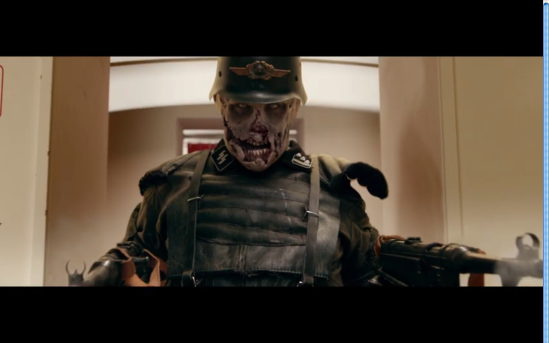
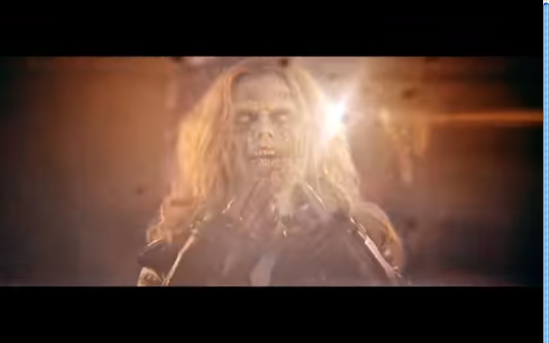
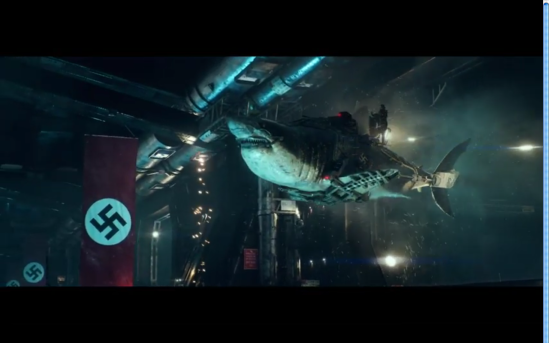
Former Nazi scientist Dr. Klaus Richter’s past has finally caught up with him after 70 years when a clandestine German laboratory, disguised as an aircraft-battleship hybrid, thaws from behind a globally warmed sheet of frozen ice and rock, releasing Dr. Richter’s regenerated legion of undead Nazi super-soldiers piloting genetically engineered flying battle sharks complete with guided missiles alongside their razor sharp jaws.  Loyal to the Third Reich, the sky sharks continue their master race patronage with a blitzkrieg in the skies, attacking commercial aircraft, boarding the cabins, and slaughtering every last person on board before crashing.   Now contractually working for the U.S. Government as the biggest name in technological advancement, Dr. Klaus, with the help of his two daughters, has a plan to nullify the sky sharks’ defenses to make them vulnerable to his latest newest experiment in warfare, Dead Flesh, under the guidance of his fellow covert government agency heads.

Apex predators of the waters are now apex predators of the skies in Marc Fehse’s ridiculous, frenzied, and utterly mad ultra-violent Nazi-exploitation, “Sky Sharks.” Soaring through the heavens soaking fluffy white clouds with blood, the Carsten Fehse and A.D. Morel co-written film took off virally in 2020 with the promise to the internet, especially horror fans, of zombified SS soldiers mounted standing on humungous Great White, Hammerhead, and Megalodon jet-propelled sharks. Fehse’s team delivered. “Sky Sharks” has not one single serious bone in all it’s cartilaginous gory-glory body in what’s Fehse’s second film behind the 1999, straight to video, “Mutation” involving the what-if factor of a surrealistically free reigning and sadistically unbridled Nazi force hellbent on winning World War II no matter how many lives needing to be sacrificed for the sake of the Führer’s dominion. The Germany-made production is a Fuse Box Films and Fantom Films.

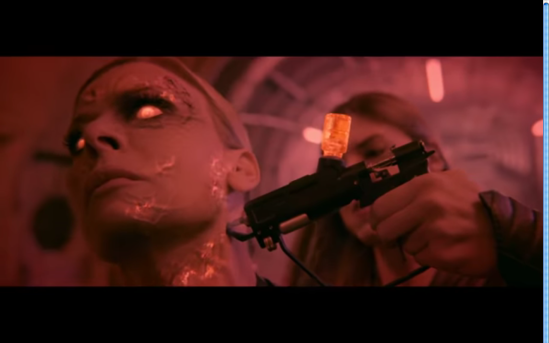
“Sky Sharks” is studded with cult stars, but those studs pop out mostly after the carnage-laden opening scene of passengers on a commercial flight being ripped to shreds by undead super-soldiers hog-wild about killing. Robert LaSardo (“Strangeland”), Lynn Lowery (“Model Hunger”), Tony Todd (“Candyman”), Diana Prince (“The Last Drive-In with Joe Bob Briggs”), Mick Garris (director of “Critters 2”), Dave Sheridan (“Scary Movie”), Amanda Bearse (“Fright Night” ’85), Asami (“Gun Woman), Naomi Grossman (“American Horror Story” franchise), Lar Park-Lincoln (“Friday the 13th Part VII:  The New Blood”) and “Mortal Kombat’s Shang Tsung himself, Cary-Hiroyuki Tagawa, make an appearance in some minor way, shape, or form, but since “Sky Sharks” is a German production, much of the cast is geared toward German and Austrian actors with Thomas Morris spearheading the lead role of the inverted mad scientist, Dr. Klaus Richter, a centenarian mastermind behind the birth and, hopeful, destruction of his monstrous airborne jaws of death experiment.  The role itself isn’t very exciting that refrains Morris to be nothing more but a talking head who recounts his failed World War II and Vietnam resurrection serum to turn the tides of war.  While Dr. Richter has immense blood on his hands from a long and rich background, the present day Richter has lackluster appeal and Morris doesn’t provide much zest either.  More complexities reside in Richter’s two tech-savvy and kickass daughters, Diabla and Angelique.  Their signifying names alone provide some foreshadowing of events, but the close sisters are boots on the ground with their father being the eye in the sky; yet, Diabla and Angelique have been kept in the dark from their father’s horrid past that factors little into parting ways from being daughter’s little girls.  Blonde beauties Eva Haberman and Barbara Nedeljakova successful roles in Germany and the U.S. include “Hostel” and the sci-fi tele-series “Lexx,” but their blind obedience to the patriarch roles downscales any moments to shine individually as free thinking agents of good.  Any other character factored into “Sky Sharks’” whiplash narrative come and go without a single ounce meaningful impact becoming background noise for the fray. There’s not even a singular villain to speak of as a focal point to direct a challenger against forces of good.

As much as the concept excites me on an obscurely dysfunctional level, a real telling tale of who I am as a person, who also praises “Snakes on a Plane” as cult candy, “Sky Sharks” has atrocious issues with pacing and story quality.  The opening scene sets up what to expect of gore drenched Nazis yoking back on genetically mutated sharks, zipping through high altitude to acrobatically infiltrate commercial planes for complete and total annihilation of every passenger onboard.  Tickles me in all the right places.  Yet, the sky sharks’ unveiling background whizzes past right into death from above world apocalypse, skipping keynote details resolving the giant warship beached on the Antarctic ice.  Fehse decides to redirect our focus with a bunch of explicit violence and sex and while that’s all nice and good…really good…the misdirection can’t coverup the necessities needed for a good story even if the story is absolutely bonkers. The visual effects are not distinct from the ream of shark-sploitation films that have become popular over the last decade in a cheaper slaved effort to capitalize on the majestic beasts of the sea…who sometimes mistake a surfer for a sea lion. The flying sharks swim in a stiffly pattern and move inorganically through their uncharacteristic ecosystem as they rocket in a school of steampunk nightmares. Not all visuals fall short of satisfaction when they’re appropriately blended with practical effects. Under that hood of tangible horrors is “Iron Sky: The Coming Race’s” Martin Schäper and, the legendary, Tom Savini, who we haven’t seen special effects work from since 2012’s “Death from Above” (an also fitting title for killer sharks in the sky). Schäper and Savini bring it with blood. Each plane sequence, there’s two of them, exhibit different deaths with each one more outrageous than the next. My favorite is the inverted periscope through a guy’s cranium and having a looksie at the screaming, bloodied passengers. “Sky Sharks” is, literally, an over-the-top scream of slice’em and dice’em fun.

Cresting through the blue yonder and painting the sky blood red is the deadliest gang of shark riding Nazi’s to ever grace a cinema platform in “Sky Sharks,” coming to DVD in Australia, no stranger to large, deadly sharks, courtesy of Umbrella Entertainment in association with Raven Banner. The NTSC encoded, region 4, rated R release will present the film in a widescreen 2.35:1 aspect ratio. “Sky Sharks” is a turbulent wonderland of rustic computer generated visual effects with a Marco J. Riedl and Olaf Markmann cinematography, typifying a clashing style, of keeping actors tightly in focus to sell a futuristic fluorescent environment. A few scenes give a sense of layered paper mâché sitting in front a green screen as the forefront images seemingly pop out of their backdrops. The English and German Dolby Digital 5.1 surround mix falls victim to an overpowering score of a weak dialogue track that washes key pieces of exposition that might explain more as the scenes fleet away in the rushed paced 103 minute runtime. Aside from a brilliantly detailed DVD cover robust with a glowing eyed, half-decaying Nazi soldier as centerpiece amongst flying, weaponized sharks and Robert LaSardo and Lynn Lowry cameoing off to the left side with a half-naked female warrior on the right, the DVD has no bonus features included. After the credits, a fake commercial for “Sky Frogs,” starring that half-naked female warrior I just mentioned, is a satirical happy ending full of even worse, 80’s caliber, visual effects worlds and frogs. Though not at the top of the food chain being one of the grossly ostentatious and shoddily visual effects films ever, the mindless, search and destroy, crudeness of “Sky Sharks” chums our oceans of entertainment with some of the bloodiest fun we’ve seen in a long time from a Nazisploitation.

Own Umbrella Entertainment release of “Sky Sharks” on DVD! Click the poster!

In the S.H.U., The EVIL Comes From Within. “Caged” reviewed! (Shout! Studios / Digital Screener)

Psychiatrist Dr. Harlow Reid is sentence to life in prison after being convicted of murdering his wife.  With his assets frozen and his legal representation dropping him as a client, Reid is forced into being his own legal counsel.  To make matters worse, a female prison guard’s perverse pleasure is to slowly torture him while in her custody at solitary confinement.  His only means to enter general population is to behave and confess to the crime he contests, but he continues to maintain his innocence by refusing to sign the confession, remaining alone and withstanding abuse until he can write a formal plea to a judge to reconsider the facts in his case.  As the days turn to weeks and weeks turn to months, the usually stable minded Dr. Reid, alone with his thoughts, has his fortress of reality buckle under the heavy burden of isolation compounded with the maltreatment and his personal demons that struggle with the actual events in his wife’s sudden death, questioning himself that her death might have been at his hand.

Inside the clink is a maelstrom set in a pressure cooker. Ready to explode at any moment are cons of, mostly, unsavory personalities simmering with pent up anger, desperation, and ill-will positioned by equally fraught guards harried by timebomb temperaments and undervalued in training and payment. In Aaron Fjellman’s written and directed debut feature film, “Caged,” the strain festers toward being hell behind bars in a ruthless determination of survival. Also once known as the working title, “The S.H.U,” Fjellman constrains his American-made, and inspired, big house thriller with a minimalist approach set with a backdrop of chiefly the solitary housing unit to lock up viewers in, as witnessing accomplices, with a protagonist’s downtrodden path of mental degradation as well as being humanly degraded. Aaron Fjellman produces his film for production company Panic House Films and Shifty Eye Productions with the latter a company created by the film’s star, Edi Gathegi, serving on the board as executive producer.

It’s no big surprise that Edi Gathegi dons the prison house jumper and clanking shackles in this social commentary thriller. The “Blacklist” and “X-Men: First Class” actor knows a good role when he sees with, especially inside the body and mind of one Dr. Harlow Reid. Gathegi regularly has to battle with himself filtered through the madness of the S.H.U. mind-breaking solitary with a little fanning of the flames from sadistic prison guard, Officer Sacks. In an extremely ghastly transformation, Melora Hardin goes from a classic beauty with a big smile and high cheek bones to baring an unflattering lumpy posture with hair pulled back in a tight, short ponytail overtop a demonizing trope of a scar down the left side of her face and an assured cockiness symbolized by the gum smacking that’s sometimes becomes the only thing in the camera frame. As Gathegi masters the ideals of a convict presuming himself innocent, Hardin lurks beyond his cell door as the devilish guard over his shoulder. Officer Sacks defines a face with a story and her story has a hard on for power over prisoners, especially affluent ones or, maybe, those of African American descent in a tinge of racist undertones as Fjellman notes on the racial injustices in the prison system. A smidgen of that notion is supported shown in Officer Sacks behind-the-back passive aggressiveness toward Warden Perez. “Annabelle’s” Tony Amendola truly delivers being a heartfelt ally, yet sturdy firm handed warden with Reid. Perez, an expressed Catholic, seeks Reid’s redemption through the admittance of wrongdoing and that becomes the steadfast barrier Reid has to hurtle that will test his convictions and his sanity. “Caged” rounds out with Mick Jagger’s son, James Jagger, as Reid’s unhinged S.H.U. bedfellow who speaks in hyperbole of inmate hauntings in an opaque analogy of guilt mixed with madness, and “Westworld’s” Angela Sarafyan told through flashbacks and supernatural induced psychosis as Reid’s wife, Amber.

To tell an inmate’s nearly yearlong story succumbing to the brutal and segregating abuses surrounding him in solitary confinement is a tremendous feat working into the mental cracks and exploring the fallacies. Yet, Aaron Fjellman made his fictional interpretation look easy by relating a surreal, but telling story in just 80 minutes, gripping with metaphorical concepts of an overcrowded prison system preying on uncontested obedience, even if the lengths taken to obtain complete compliance is trauma exacting torture of draconian policy, by primarily privately funded institutions with little-to-no funding or resources to manage. “Caged” is very fleeting with montage upon montage of Harlow Reid’s day-to-day, but never becomes a monotonous roundabout vivarium of Reid sitting hopelessly-looking in his cell. Gathegi’s put to work as a man determined to challenge the system that engages Reid to keep sharp and in shape by working out in various exercises, entertain an unhinged neighboring inmate with his ramblings and blurbs of crazy talk truths, and feverishly work on his legal case by any extraordinary measures, including using his own blood as ink. Yes, “Caged” can elicit a genuine sense of horror, a perspective on psychological terror, and be an eye-opening gasp of real life prison dread when good versus evil is mirrored in reverse with the good guys not being the prison guards. Fjellman imprisons us all in “Caged” by culminating the fact that no matter your social circumstances, the S.H.U. breaks everyone.

Orange may be the new black, but Aaron Fjellman’s bleak fretting “Caged” jars with somber authoritarian power. The new thriller released by Shout! Studios premiers unrated on VOD and digital January 26th. “Caged” is film by director of photography, Jessica Young, with an Arri Amira camera and presented in a widescreen format, 16×9 aspect ratio, and, typically, the Amira camera versatility is in the use for low-budget films, perfect for “Caged” in it’s nearly singular setting and two-tone, steely gray and black, atmospherics that naturally have devoid color vibrancy. CJ Johnson, who will soon see his musical scores in a pair of upcoming Friday the 13th fan films, lines “Caged” with a soft, building industrial score that tunes the disquiet in Reid’s racked inner conflict. With this digital screener, there were no bonus materials or any bonus scenes during or after the credits. Through the use of visual and audible horror tropes and with potent performances from Edi Gathegi and Melora Hardin, “Caged” is a ghost story told for the unspoken voices victim to long-term confinement.

Click the poster to pre-order “Caged” at Amazon!

Being Slobby Drunk Doesn’t Excuse EVIL Deeds. “Promising Young Woman” reviewed! (Focus Features / Digital Screener)

On a weekly basis, Cassandra hits the night clubs and drinks herself into a stupor.  A male “Good Samaritan” will come over to assess her well being only to be selfishly determinedly for her to return to his place for a nightcap.  When on the verge of passing out or too immersed in drunken lethargy, the man makes his move with uninvited, unwanted show of handsy affection.  That’s when Cassandra springs her trap.  Feigning inebriation, the clearheaded Cassandra rouses a sobering, befuddled moment of blank expression, misplaced justification, and anger when the man’s seemingly easy lay catches them in an unsolicited sexual violation.  Her traumatizing past has molded her to become very good at pretending to be vulnerable until hearing a familiar name of a man, long thought to be out of the country, sends Cassandra down an itemized path of vengeance that not only includes ruining the life of the source of her unorthodox, yet necessary, campaign but also clump in every facet associated in with his shining existence.

If you needed a slap across the face in order to reassert yourself from the painful numbness of incessant news stories of young women being the vilified victims of sexual assault then “Promising Young Woman” is a stinging hot whack of four fingers, a thumb, and an open palm of wake the hell up!  From Emerald Fennel in her debut written and directed full length feature film comes a blunt narrative of systemic injustice involving rape and the social delusions stemmed out of grades of maturity, lengths of time, and levels of alcoholic drinking.  Coming off fresh from her recent role on Netflix’s period biographical drama, “The Crown,” Fennel draws motivation for her black comedic thriller from the infamous Brock Turner case of sexual assault on Chanel Miller that turned into a conviction judgement with abhorrent caveat in his early release for good behavior that the white, educated, star athlete’s life shouldn’t be destroyed because he’s a promising young man [sic].  “Promising Young Woman” targets every broken system that is meant to protect violated women despite their socializing determined conscious or unconscious state of affairs and has some mega star powers producing the social commentary material in such with “Suicide Squad” and “Bombshell” star, Margot Robbie, under her co-founded LuckyChap Entertainment along with the film’s star, Carey Mulligan, as executive producer. FilmNation Entertainment’s Glen Basner and Ben Browning fully finance the first real award contender of a 2021 release.

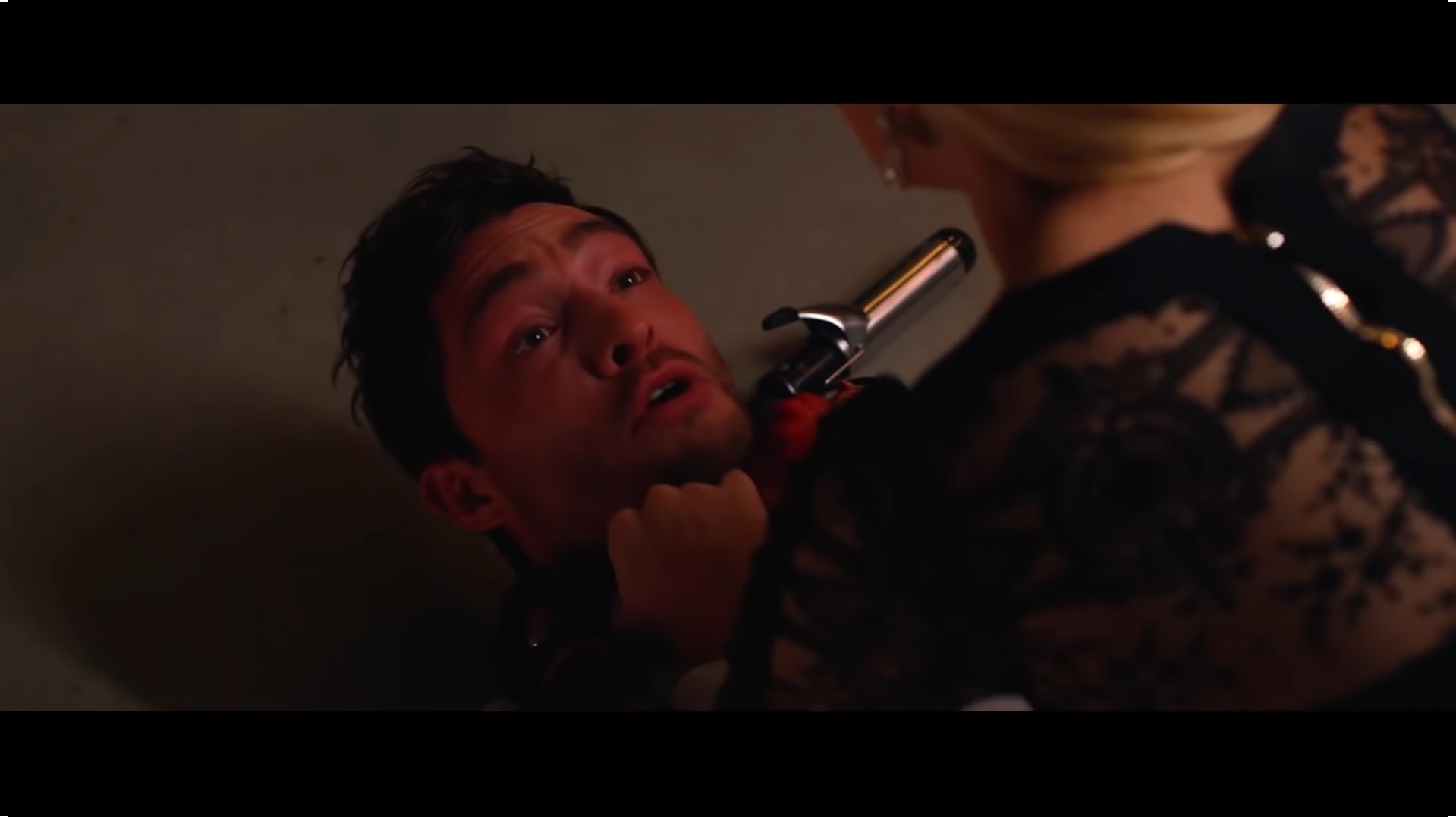
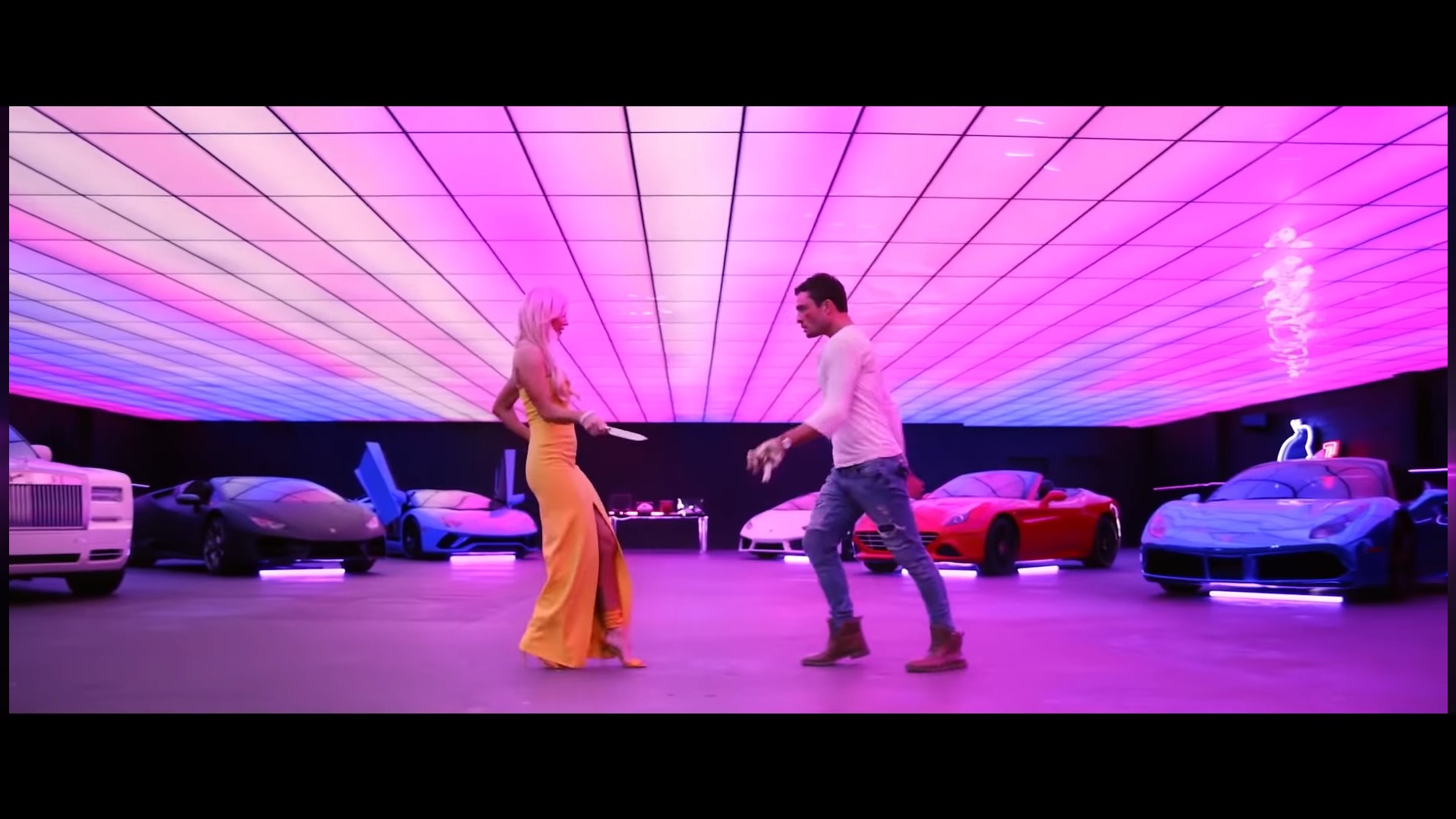
“Promising Young Woman” has an all-star, diverse class of actors surrounding principle lead, “Drive’s” Carey Mulligan as the methodically standoffish Cassandra, caught in a web of denial, self-depreciation, and straight up ignorance of the hurt caused directly and indirectly to whichever means to satisfy their own different shades of gray conscious. Mulligan is terrific as a coarse character rare to be juxtaposed against a veneer of bubble-gum chic with a reserved demeanor outside her burning the midnight oil working hours and coming out like a ferocious grizzly bear when calling out club scouting douchebags on their objectionable behavior. When Cassandra crosses paths with Ryan, comedian and “Eighth Grade” writer and director, Bo Burnham, Mulligan’s range is tested to take that disinterested and glassy eyed crusader and turn to a state of daily conformist complacency, the very dangerous thing Cassandra seeks to rectify one man after another, that slips Cassandra out temporary from her anti-heroine role until her dolled up, doughy eyes snap toward the camera and into a kill mode that goes straight for the pervert’s throat. An inclusive cast speaks volumes on not only how “Promising Young Woman” incorporates different ethnic and genre backgrounds and ages, but also doesn’t throw man to completely under the bus as Satan’s puppet on Earth with performances from Laverne Cox (“Orange is the New Back”), Alfred Molina (“Spider-Man 2”), Jennifer Coolidge (“American Pie”), Clancy Brown (“Starship Troopers”), Adam Brody (“Jennifer’s Body”), Christopher Mintz-Plasse (“Kick-Ass”), Alison Brie (“Scream 4”), Connie Britton (“American Horror Story”), and Molly Shannon (“Hotel Transylvania”).

“Promising Young Woman” wields a powerful theme to shed a brilliant light on everything that is fragmented with the way sexual assault accusations, trials, and punishments are handled.  The film also probes deep into the soul in how people who are not directly affected digest sexual assault but become accomplice in proximity in a range exhibited from complete, unnerving guilt to locking away the events in their mind in order to forget.  Fennel plausibly fashions a motif of passing judgement from assailant to victim while chiseling out the flawed logic in each deplorable excuse as to why a University Dean, a defense lawyer, and a good friend could cold-heartedly denounce, and frankly not lift one single finger threaded with moral fiber about, a young woman’s accusations.  The unpleasantry core of “Promising Young Woman’s” topical subject is nestled inside a sparklingly and colorful cladded showcase, housing an energetic and upbeat arrangement around a dark tone that, in a way, reflects the pretense goggles most see through to avoid any responsibility or conflict.   Empathy never seems to run it’s course as Fennel treads without fear on a mission to take back the blasted to smithereens dignity by deconstructing and exposing every unjust particle in this atypical rape-revenge thriller robust with heart paraded on by an ugly truth.

Remember when I said this film is a slap in the face wake up call? It’s more of a gut check, a conversation starter, and a watershed moment rolled up into one and now “Promising Young Woman” will land right into all the living room smart television sets in America with a Friday, January 15th VOD release from Focus Feature films. The rated R, 113 minute runtime release presented in a 2.39:1 aspect ratio will available for a 48-hour rental on Amazon Prime, Apple TV, Vudu, Fandango, and Google Play, but if you don’t want to wait and want to brave a pandemic climate, select theaters have showings available. Benjamin Kracun’s camerawork, shot on an Arri Alexa, offers a lush and delicate milieu surrounding Cassandra who, with a Panavision lens, gleams in the scene and the soundtrack, comprised of early 2000’s pop inspired from Spice Girls, Paris Hilton, and even a strained violin rendition of a Britney Spears track, cues moments of levity before annihilating the live of the blank conscious. As far as special features go, there were no bonus materials or scenes included. “Promising Young Woman” revamps the way women approach vigilante justice with a candy coated shell and the maestro behind it all, Emerald Fennel, aims to redact or nullify the expression promising young man to no longer be a part of the conversation.

Pre-order “Promising Young Woman” on Blu-ray or DVD. Watch it on VOD come January 15th

EVIL Exploits Your Fears in “Phobic” reviewed! (Samuel Goldwyn Films / Digital Screener)

The most vulnerable are being chained to chairs and tortured by the terrifying weight of their own extreme phobias until their bodies can no longer take the stress, fatally collapsing where they sit due to heart failure.  Homicide detective Riley Sanders notices frightening similarities to her own abduction months earlier where the kidnapper tortures the stunned detective with an intense light on repeater.   Refusing to believe her abduction and the case she’s investigating are linked, her partner, Paul Carr, continues to insist that her traumatic experience might be key to solving the homicides and finding the killer.  As the detectives dig deeper into a radical psychiatrist’s phobia program whose patients are showing up the killer’s victim list, they find themselves at the center of a disturbing experiment that aims unleash an inner, and only ever theorized, phenomenal ability.

Bryce Clark’s psychological cop thriller, “Phobic,” tales an irregular and irrational serial killer objective derivative of David Fincher’s “Seven” twisted quietly with elements from the superhero universe. Darkly toned exploitation of forcing the worst of the worst fears upon the those already cripple down by their distinct aversion, the 2017 shot “Phobic” marks the return of a Clark written and directed full length feature since the filmmaker’s 2012 debut in both categories with a romantic-comedy starring Mischa Barton.  Both polar opposite films were shot on location in Salt Lake City, Utah, Clark’s residential city, surrounded by picturesque ice capped mountains overlooking the illuminated, pedestrian-saturated metropolitan area home to the story’s wicked psychotronic experiment that literally frightens people to death.  “Phobic’ is a production of Storylab and Pale Moon Entertainment.

Two detectives continue to peel back the arcane layers of the unusual case before them with detective Riley Sanders at the heart of the matter being linked to the recent string of methodical abductions tailored specifically with the victim.  “Looking Glass” actress Jacque Gray dichotomizes Riley not only as a persistent investigator eager to bring this case to an end but also as a struggling closeted neurotic with her own fears that bleed through the celluloid.  Clark makes sure to underscore Riley’s nightly routine before going to bed with her constantly turning on and off lights in her path to represent a lingering but indeterminate phobia response.  Riley is supposed to be this tough, but law abiding cop, who survived a harrowing ordeal, but Gray hardly expresses Riley’s scarred rigid soul, representing more so in the lines of coloring her disposition by the numbers that refuse to waiver outside normalcy.  Devin Liljenquist is even more so vanilla as Riley’s partner, Paul.  As his introductory feature film, Liljenquist’s doesn’t carry the range of a cop who cares, topping out with a straight-faced sleepwalk that challenges the stakes and can be considerably creepy, like subtly sexual grooming predator, when Paul is trying to convince Riley to open her fears with him.  The character audiences deserved, or better suited as Riley’s partner to provide contrast, would have been the third scarcely screened detective on the case that occasionally popped in as the first investigator on scene of a crime in Alex Nibley’s Detective Hank Ferry.  The slightly elder detective, complete with Nibley’s stark white, Anderson Cooper hairstyle, had a quick, dark wit and cavalier presence about him that breached the Riley and Paul uncharismatic stiffness with a relieving change of pace dynamics between colleagues.  You couldn’t wait to see Detective Ferry to make a reappearance, but sadly, his character is sorely underutilized for only a couple of moments.  “Phobic’s” in-and-out supporting cast includes James Jamison, Tiffani DiGregorio, Fred Spencer, and Ernie Lively as Riley Sanders secret-keeping father.

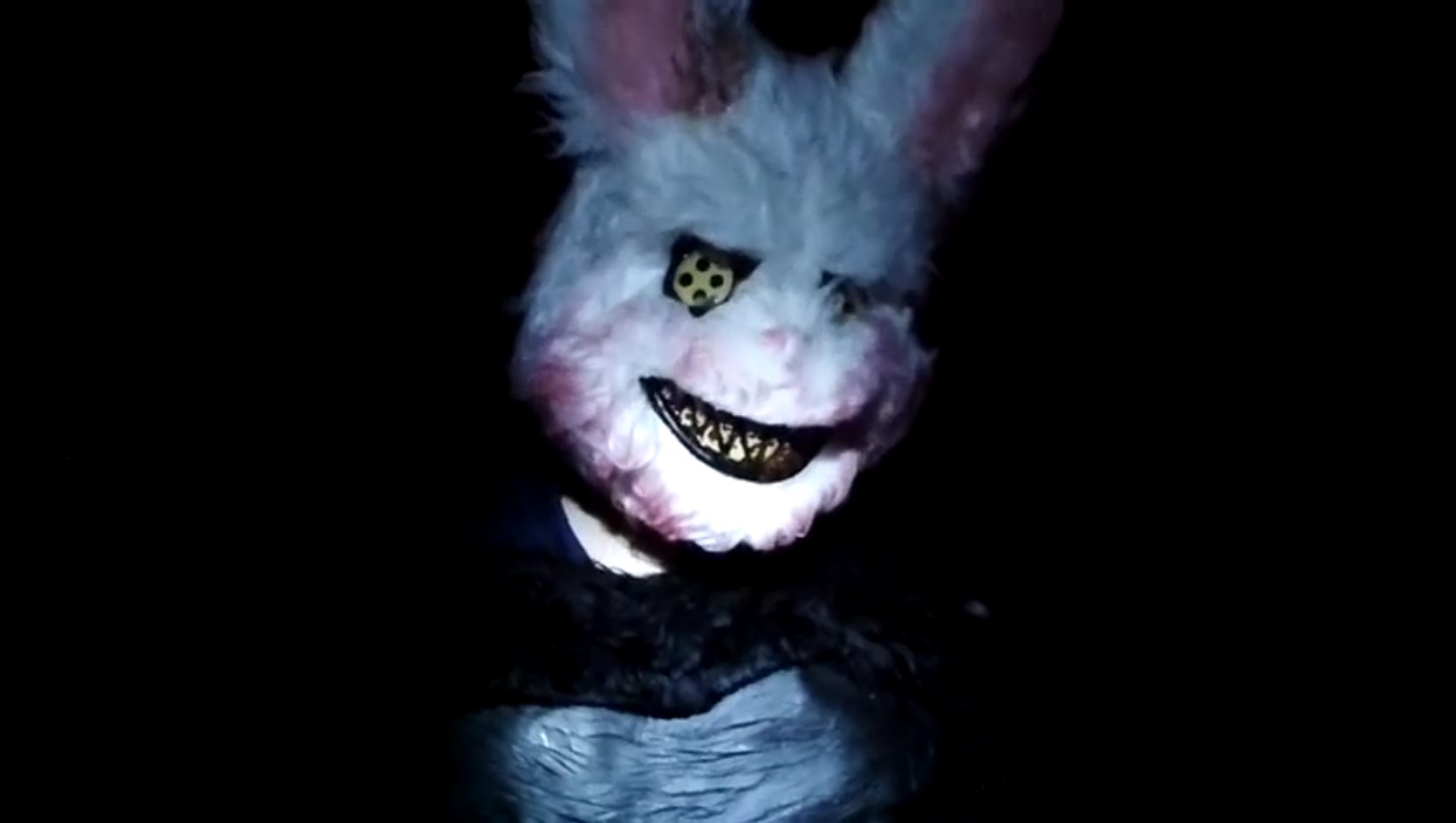
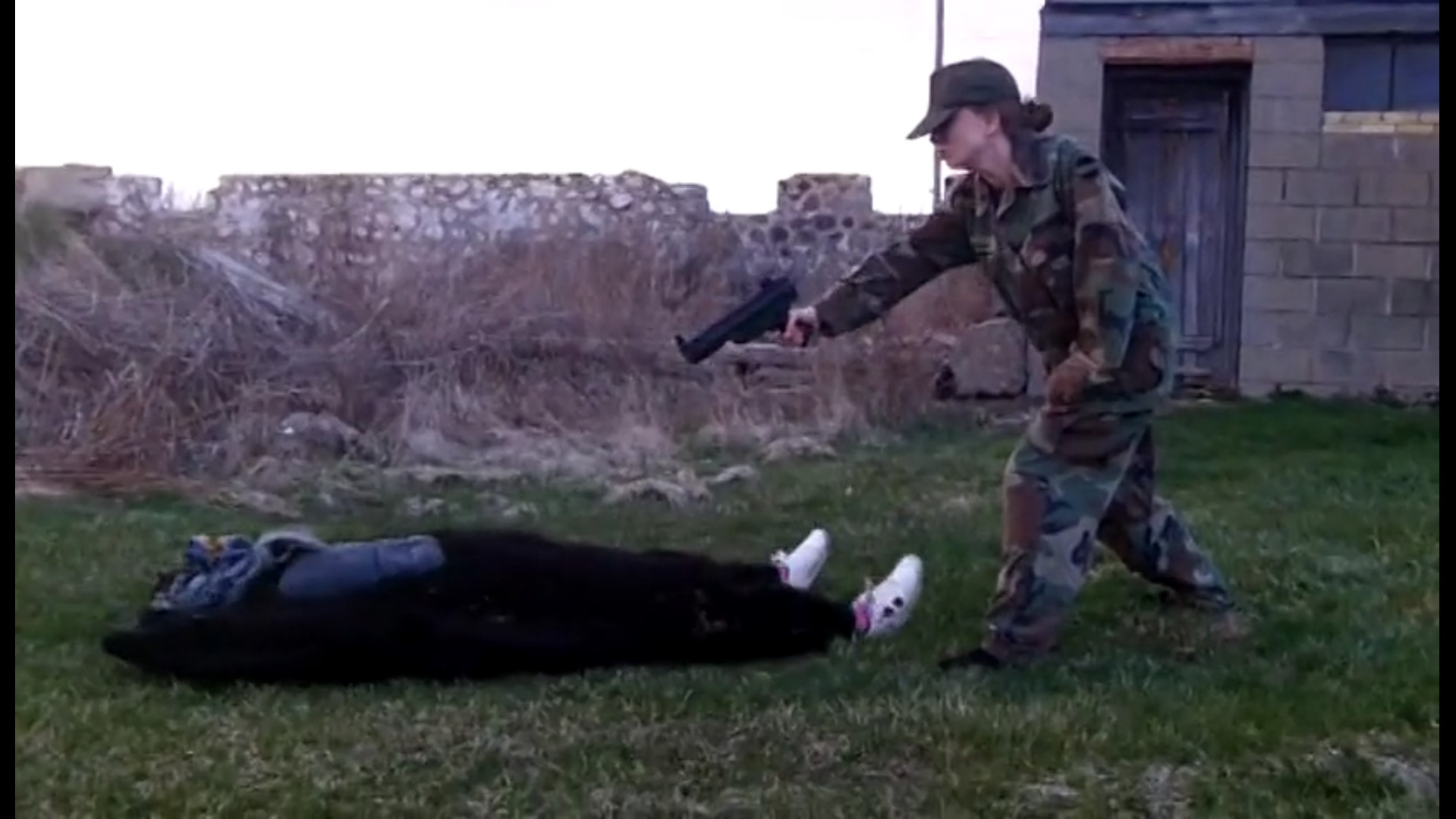
“Phobic” follows a basic detective thriller in tracking down a homicidal maniac with a niche kill tactic that bread crumbs one of the investigating officers into being subverted by a conflict of interest stemmed from her past. However, out of Salt Lake City’s blue skies, Clark suddenly pivots in his script, diverting from a dark, gritty Finchian narrative to an acutely forged new shape of revival and hope, a shape that bares no cape, no mask, or no bald, psychic power yielding man bound to a wheelchair playing headmaster of a school that serves as a façade for an elite team of powerful, do good mutants. If my hint wasn’t overly blunt, let me be utterly clear, “Phobic” has no distinct x-factor but goes from fears to fight with the psychotronic theory where energy and strength derive from stress and fear over the witnessing the impending doom of a loved one. Urban legend surrounding the notion of hysterical strength siphons away the psychosomatic element from the grooves of the cop thriller and Clark copiously throws in crucial red herrings to keep viewers muddling and not Professor X cerebral filling in the gaps unraveling an unlikely and unrealistic prospect of superhuman truth, but “Phobic’s” off-the-cuff pivot is a quick to squander all that’s been built in what’s essentially Bryce Clark’s house of cards to discombobulate an audience with polarizing story principles, rebranding an assayed horror-thriller into rabid conceit.


Easily one of the most idiosyncratic and unanticipated films of 2020, “Phobic” induced fear into audiences panic-stricken hearts this past December 15th onto multiple digital platforms courtesy of Samuel Goldwyn Films, the distributor that brought you “Daniel Isn’t Real” and “Pet.” Brandon Christensen’s tenebrous cinematography is shot on a 6k red epic dragon with ultra definition displaying full range of details in every scene and despite the somber tones created by a slew of gaffer up lighting, we get some really rich natural coloring, even in the baby blue eyes of Ernie Lively, when Christensen isn’t blue or red tinting the lens to underscore the killer’s aftermath crime scene. While the cinematography is good, the editing can be pestilent expression of style to represent Riley’s sporadic and continuous reliving of a reoccurring memory. The stock score is just that set on autoplay for nearly the length of the 81 minute runtime with engineered eruptions in the pitch to denote the jump scares. There were no bonus features included with the digital screener nor were there any bonus scenes during or after the credits. The bland acting hurts “Phobic’s” exploration of the psychological symbiotic energies between that of the mind and body, but the film boils down to have a fascinating perspective on the detective thriller by reshaping the surface with bold expectations of an uncharacteristic, dormant fear free all.

Own or Rent “Phobic” by Clicking the Poster!

EVIL’s All Inclusive Resort. “Paradise Z” reviewed! ((Yet) Another Distribution Company / Digital Screener)

Sylvia and Rose are living the life of harmonious luxury together on a beautiful and serene Thailand resort. There’s only one tiny problem with their first-class accommodations: the world surrounding them is overrun by a population of rabidly crazed zombies. After establishing a rigorous routine of perimeter checks and pool time, food and gas are running dangerous low to keep a secluded and safe survival lifestyle sustained, leaving them no choice but to venture out to nearby villages in search for fuel, but the smallest of sounds could invite the hungry dead to storm their idyllic retreat. No matter how careful scouring outside the gated walls of isolated tranquility, the zombies’ insidious ways infest as bad resorts guests that turn Sylvia and Rose’s make-due habitation to their prospective tomb when all routes of escape are foiled by flesh-feasting zombies. The couple must rely on each other for survival.

There’s trouble in paradise from Wych Kaosayananda’s melancholic-apocalypticism horror “Paradise Z” focusing on two young women, romantically brought together by undead circumstances, to outlive the encompassing fatalist outlook. Marketed in the United Kingdom as a “Lesbian Zombie Apocalypse Gore-fest” and having been through the wringer with title changes from the original title of “Two of Us” to “Dead Earth,” as called in the States, the uptrend to incorporate the Z in any zombie film has been a musky motif ever since Max Brooks introduced the epithet for his 2006 zombie apocalypse novel, “World War Z,” yet that doesn’t stop writers Kaosayananda and Steve Poirier in dishing out a sanguine trilogy with “Paradise Z” laying the ground work as the first installment and “The Driver,” the third installment, following suit shortly after wrapping production on “Paradise Z.” With the second film, “The Rider,” is still in pre-production and the shot films released out of sequential order, Kaosayananda’s unconventional trilogy methods caters to a seemingly budget and location ready-timeline to which characters from all three films will interconnect the dissociated titles under the filmmaker’s self-funded production company, Kaos Entertainment.

Throughout the entire 1-hour and 35-minute runtime, there are only five speaking roles with three of those roles rarely comprising of about four minutes of combined dialogue, assigning by default much of the chitchat the principle characters, Sylvia and Rose. For the first nine and half minutes, Milena Gorum and Alice Tantayanon don’t say a single word as the day’s routine of waking up, showering, topless swimming, poolside yoga, lunch, and other recreational activities dominate the setup of quietude. When Gorum (as Sylvia) and Tantayanon (Rose) do utter a few words, they’re muttered projection is nearly unintelligible with little effort into the purpose of speaking. Born in Los Angeles and now, predominately, a New York city fashion model, Gorum has come across my radar before with a bit Succubus role in the 2017, Cleopatra Films produced demonic thriller, “The Black Room,” opposite Lin Shaye, Lukas Hassel, and Natasha Henstridge and though “Paradise Z” provides Gorum with her first lead role that showcases her immense beauty but limited acting range. The same wooden expressive opinion can be said for the little known Alice Tantayanon whose pigeonholed herself into a Kaosayananda celluloid corner with her only credits being three of his films. Sylvia and Rose rarely separate from each other sides, being lovers noodled into a pot of thick zombie soup, in a rigid position of affixed dynamics difficult to gauge how either one of them is handling the situation. When a show of complexity is finally unveiled, such as when Sylvia murders in cold blood two other survivors and turns to Rose to say it’s better this way, those actions somewhere along the story from there on out should be dissected in explaining just why lacerating two men to death is a good thing. Of course, we can all assume the survival of the fittest and selfish obvious reason that two rugged men are looking for more than just a box of Twinkies and an unopened can of goulash substitute from two good-looking ladies outside the safety of their homemade stronghold; yet, doesn’t answer where the killer instincts root and Kaosayananda shelves that bit of human nature when the zombie caca spreads throughout the resort upon their return that also evaporates a steamy sex scene and inklings of frustration for their dwindling supplies and mundane routine symbolizing an inching wedge between them. “Ghost House’s” Michael S. New rounds out the cast the DJ, an on-air beacon of infected information.

An Elysian-fabricated getaway resort can be an ideal hunker down for an apocalypse of the zombie kind. Mega resorts have a large footprint that are usually gated and fenced, plenty of food and lodging to accommodate a small village, and an escape route from the beach to the open waters where we all know zombies can’t swim. That works here for “Paradise Z” and almost plays like a pillar character that embeds the women survivalists from going on walkabouts, creating a real sense of comfortable isolation and simmering paranoia of the outside world. Kaosayananda, who can’t quite get the bad taste that lingers from out his mouth with the panned Antonio Banderas and Lucy Liu starring critically slammed and chaos-riddled film “Ballistic: Ecks vs. Sever,” left himself to his own devices in trying to rebuild his career shooting in Thailand, but “Paradise Z” crumbles as a stepping stone trilogy that lacks proper severe conflict of placing the heroines into a tight, perhaps inescapable, spot. What the couple have to escape from are the wild, warm flesh-craving leftovers of a plagued mankind, springing to a sprint at the first audible or visual morsel that tickles the eardrums, but the patchwork caked-face, grayscale zombies don’t render the likes from the bygone Golden Age of Horror, or even the current Golden Age of Modern Horror for that matter, in what looks and feels like cheap knockoffs of the genuine fictional man-eaters by rouge applying professionals. What Kaosayananda has made here is a two-tone, straight-forward, out-smart the dumb zombie breed of uninspired mirth, burdening the actresses to shoulder the story on looks alone rather than include emotional depth oppressed by the Z-factor.

Spend your vacation in a halcyon “Paradise Z” exclusively releasing on UK digital platforms come the new year on January 4th from the marginalized advocating distributor (Yet) Another Distribution Company. In regards to cinematography, presented in a widescreen 2.39:1 aspect ratio, Kaosayananda safely approaches most stories set in Thailand with a warm, yellowish glaze overtop the lush tropic vegetation, but, aside from a class I rapid stream the women decide to cool off in on a whim, without weapons and, basically, in their skivvies, outside the resort walls, there’s a limit to the Thai landscapes that doesn’t reach beyond the resort perimeter sufficing to just the surrounding allure rather than cutting in scenes of breath-taking grandeur. Kaosayananda occasionally reduces the frames per second to emphasize certain scenes with slow motion, such as with Gorum and Tatayanon’s topless make out session or when the two are back-to-back unloading an unlimited amount of ammo against a rushing horde with every shot being a fatal one; the silver lining here is the scene is at least aesthetically cool to watch. However, once again, Sylvia and Rose are given winning hands to play without as much showing their cards that work backwards their highly skilled background of arms fire. With the digital screener, there were no bonus material or bonus scenes included. No need to check the yelp reviews on holiday spot as “Paradise Z” is a four star resort with one star performances battling an underwhelming, minimum gory zombie contingent without dutifully jeopardizing survivors enough for the sake of gratefully being alive.