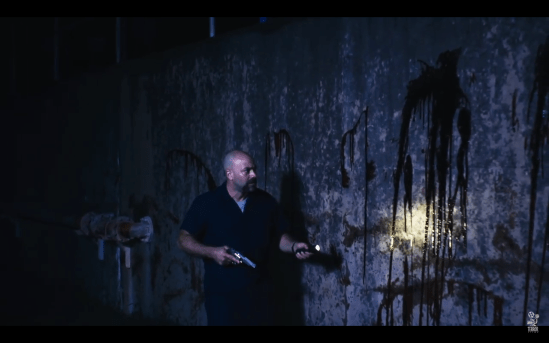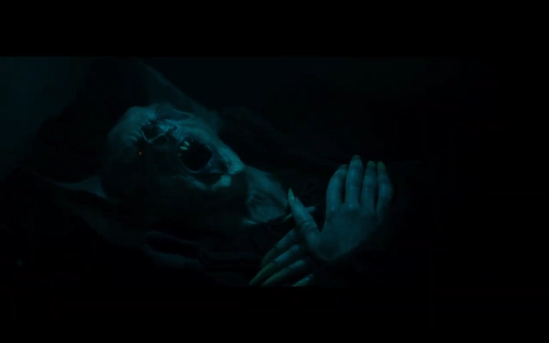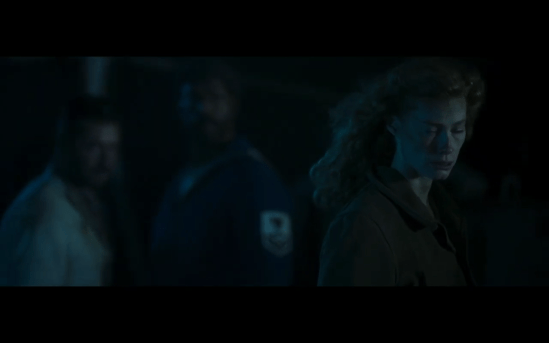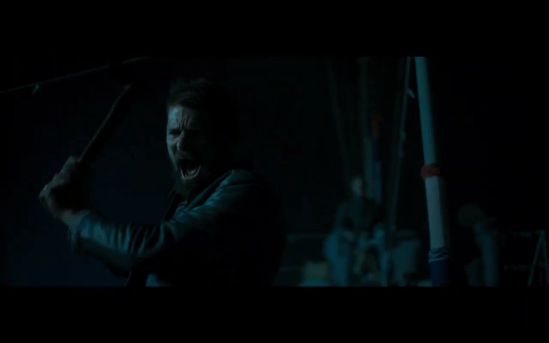
When EVIL Isn’t That Black & White. “Choir Girl” reviewed! (Nexus Production Group / Digital Screener)

Eugene lives a lonely, pitiable existence.  Residing with his ailing father in a slum neighborhood, his photography background captures the crime and the desolation that surrounds him, snapping pictures without ever interceding with his crime-riddled subjects, in an attempt to hold an exhibition or sell his work to a high profile magazine, Slipstream, as his ticket out of the despair that engulfs him.  When Eugene stumbles upon young teenage girls being drugged and held for prostitution, he becomes fixated on Josephine when a low-level editor, seeing her as a professional stepping stone, prods him for more pictures that evoke hope out of her situation, but when he finally intervenes, helping her escape, Eugene falls into a world of a massive prostitution ring with doctors, cops, and major organizations on the payroll and a kingpin named Daddy at the helm.  The deeper the debt placed upon him for showing compassion to Josephine, the more the lines blur on whether he’s become his muse’s lone savior or just his meal ticket out his current life.

How far will your moral principles take you to save a teenage girl when you’re locked into a no-win situation?  That’s the theme explored to a shocking sexual assault conclusion in John Fraser’s 2019 unscrupulous Australian thriller, “Choir Girl.”  Introducing Fraser’s first credited written and directed full length feature film, shot entirely in black and white, the Melbourne arthouse and a goose egg-fairytale version of “Pretty Woman” speaks volumes toward the perceived illegality of immigration, the horrors of sex-trade, and the touch-and-go balance act between doing what’s right and self-serving opportunities with a 15-year old girl’s fate dangling at the end of a line.  “Choir Girl” is produced by Ivan Malekin under his Melbourne based label, Nexus Production Group, along with Lucinda Bruce serving as co-producer.

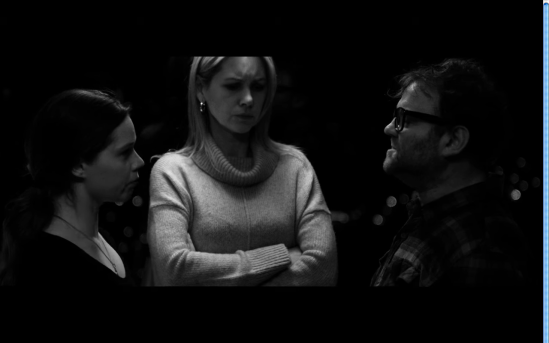
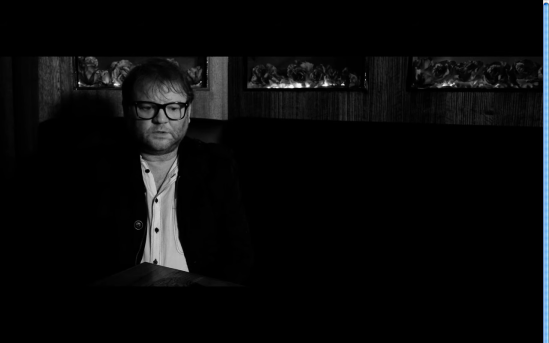
To carry “Choir Girl” through the muck of it all, a strong performance must arduously burden the gravity of the content and Peter Flaherty astounds with an ingloriously flawed and unlikely hero, Eugene.  “The Butcher Possessions” and “KIllervision” actor masts a greasily haggard with bordering neurodevelopment issues, disheveled in his attire, and walks with a noticeable limp, made intentionally noticeable when as he walks away from characters and situations.  Though Eugene seems meek, the shutterbug aches to improve himself by seemingly exploiting others as a freelance photographer and being persistent in that pursuit until becoming engrossed into a 15-year-old prostitute’s life struggle blossoming before our eyes a rather unsettling grown man and teenage girl relationship that assumes a pedophilia ideology of adoring the child to the extent of protection, but also falls in to grooming and sexual exploitation.  The film introduces audiences to Sarah Timm, playing Eugene’s muse, Josephine, an Eastern European illegal immigrant who literally has nothing left that is her own, this including her body, when forced into sex slavery so when Eugene and other characters call her diminutively by Jo, she immediately corrects them to call her Josephine in order to keep the one thing left that is still hers, her name.  In her first feature role, and a mightily demanding role it is with the amount of discomfiture of playing essentially an abused child, the German native will have audiences overlooking the fact that she’s portraying a teenager in the sordid sultriness of sex-trafficking with crafting Josephine’s war-torn history and pre-adolescent childhood stories as always the girl in the background, the unpretty forgotten girl that blended in and no one noticed, until she’s a part of a much larger, more ferocious, uncompromising system that Daddy (Jack Campbell) dictates with CCTV live feeds of every sleazy, scummy hotel bedroom in his syndicated footprint.  The cruelty that Jack Campbell reins savors every facet of Daddy’s being on screen with an intent to be a immovable roadblock in Eugene’s advanced for progress and for John Fraser’s “Choir Girl,” the character development and personalities find justification from the cast with the exception of one, the low on the totem pole and self-absorbed Slipstream magazine editor, Polly.  Krista Vendy imposes on Polly’s rabid  narcissism with an incredibility that becomes the underbelly amongst a bloc of solid performances.  Andy McPhee (“Wolf Creek”), Lee Mason (“The Caretaker”), Jillian Murray (“Body Melt”), and Kym Valentine fill out supporting roles. 

I love the juxtaposition opening of Eugene in his dark room in the middle of photographic processing his oblivious subjects, including a drug abusing child with a hypodermic heroine needle sticking out of his arm, a blowjob being serviced between a wall and bushes, or the aftermath of man being beaten with his assailants walking away from his leveled body, and then the title fades in from black and the next scene is of a framed magazine cover with the cover title “It’s All Back and White.”  The sequence sets up perfectly the entire premise driving “Choir Girl’s” gray area circumstances that nothing substantial, meaningful, or controversial can be black and white. Plus, the entire film is shot in black and white furthering the contrivance of the theme. The gray area challenging Eugene is a tightrope walk when squeezed for payment for snatching Josephine by the amoral organization claiming property theft, making him submit to the idiom of pulling his strings like a marionette or shooting at his feet to make him dance for insatiable perverse satisfaction. Eugene rarely displays remorse in his demeanor, face, or actions for the things he does and doesn’t do when faced with adversity in a slither of sociopathic idiosyncrasy, but when outright criticized for his inaction, he’s able to right wrongs with deplorable methods like a toddler trying to mop up a grape juice spill with mother’s expensive, white dress. There’s a bit of innocence or naivety in Eugene’s mind as you can almost see the gears slowly spinning when confronted but in the defense of the man who no really gave the time of day, those gyrating mice wheels of delicate thought snuck past every contingency against Eugene surviving Daddy’s deadly game, leading to an unsavory solution that puts the viewer in an awkward spot to either avert the eyes or remained captivated to see it through.


I, for one, remained seated, steadfast to the end, hypnotized by audacity of John Fraser in his feature film directorial, “Choir Girl,” that has arrived onto Apple’s iTunes. The unrated film is presented in it’s original aspect ratio of a widescreen format and will have an English language Dolby Digital 5.1 surround sound availability. Though derided as kitschy at times, the black and white veneer works here inside “Choir Girl’s” vascular system of catch-22s and director of photography, Mark Kenfield, rides a consistent straighten arrow style with steady cam shots, decent framing, and some tracking shots without pushing the envelope in regards to angles or oscillation. There were no bonus content or additional scenes during or after the credits. “Choir Girl” sings no praises of hallelujah. Offers no solace in time of hardship. If you’re looking for a movie that touches you, then you’re in for a rude awakening as “Choir Girl” obliterates the moral standards, leaving faith outside, with a severe penance in abetting the Devil’s work, selling their soul to do what’s right.

The Bends Can Be EVILLY Depressurizing. “Breaking Surface” reviewed! (Music Box Films / Digital Screener)

Two half-sisters, Ida, and Tuva, return home to spend time with their mother, preparing for a family dive in the frigid Norwegian waters near an isolated rock cliff.  When the mother withdraws because of her health, the sisters embark without her.  When a sudden rockslide traps Tuva, also the more experienced diver, between a rock and a hard place Ida must race against the clock to free her from being pinned to the bottom floor before viable air runs out, but with most of their gear under the rockslide rubble on the topside and only a few usable spare air tanks available, Ida, paying no heed to decompression sickness with her hasty reoccurring ascents to the surface, will do whatever it takes save her sister, even if that means being detrimental to her own life.

Scandinavian filmmaking has always been in this personally dissatisfying commercial stasis of public recognition oversight for years even though there are a number of projects, birthed from Sweden or Norway, that have the budget for success, compelling storytelling, and still fly shamefully under the radar and most audiences, speaking more for the U.S. based general admission moviegoers, don’t ever get the chance to experience without the bombardment of marketing or, perhaps more so, they intentionally skip over to titles with, who in large popcorn and soda glazed eyes, are well-known, recognizable thespian faces, or maybe a trailer they’ve seen during their morning daily talk shows and “Keeping Up With the Kardashians,” or for the worst reason of all, the subtitles are a big deterrent since Scandinavian films are in Scandinavian languages, but one of those films that depicts the immense Baltic beauty landscape but can also be edgy with touch of sensationalism is Joachim Hedén’s “Breaking Surface.” The director’s fourth feature length film in 2020 is woman versus nature, time versus the elements, when scuba diving hits direly rock bottom. Hedén wrote the film that’s presented by a Swedish and Norway co-production of companies, including Water Feature Films in association with Film i Väst, Film i Skåne, Umedia, Filmfond Nord, Sveriges Television, and Weggefilms. Julia Gebauer and Jonas Sörensson serve as producers.

At the core of the diving mishap are two sisters, Ida and Tuva. Half-sisters to be exact that are written with tremendous interfamily complexities because of their mother remarries Tuva’s father angle plus incorporating their own personal hang ups in adulthood with the genesis of their problem is stuck in the past. “Breaking Surface” is a woman domineered thriller, challenging the stereotyped patriarch activities of men and, to an extent, whatever role that is inhabited by a man is exhibited in not a good light. It’s reminiscent of the “47 Meters Down” films in more ways than one with scuba diving and an inclination for female principle characters dealing on hand with the cards dealt together to survive the elemental odds. Moa Gammel and Madeleine Martin play the respective leads of older sister Ida in the midst of divorce proceedings that comes complicated with two small children and has mother issues that she projects onto her younger half-sister, Tuva, who lives at the top of the food chain fearlessly and isn’t grounded by anyone, anything, or anywhere. Gammal and Martin instill into their characters a reaffirmations of their talents with Ida being a more recreational diver whereas Tuva lives and breaths underwater professionalism. This dynamic unfolds nicely when Tuva is trapped under a rockslide and her older sister has to be instructed, painfully detail-by-detail, what to do. At times, Ida is a character at a point of collapse because of how overly incompetent she can seem with no-brainer solutions; yet, this is where I believe Hedén to excel at scribing realism because no matter how frustrating can Ida’s actions be, any situation under that much pressure (pun intended) can discombobulate the mind, body, and senses. If my sister was trapped under a rock at the bottom of the sea floor, my id would explode and she would asphyxiate and drown before I could compute the situation. Yet, Ida comes around in her arc, completing more confidently and independently the challenges that face her despite their increase in difficult and severity with only minor eye-rolling cringes loitering in and between the second and third acts.

“Breaking Surface” is a modestly paced film with a slim runtime of 82 minutes that captures the entire trialing day odyssey of conquering nature, time, and death while decompressing fraught mental retentions of estranged sister and motherhood, parroting life circumstances, and a past event parallel that’s nearly paralyzing. As much as underwater thrillers excite as one of my personal favorite subgenres, there are downsides to “Breaking Surface” timing that felt limitless when Ida struggles to regain control from failure-after-failure of hopeless rescue endeavors of the most easiest of solution routes, but when the older sister resurfaces from below for a second time, a quick lap to a neighbors house didn’t quite jive with time and space, especially when the Sweden-residing Ida has to frantically read a map of a near alien Norwegian coastal topography. Miraculous, Ida is able to arrive at her destination, rustle about an absent homeowner’s isolated cabin for internet, phone, or an essential tool, and be back in half hour to scuba back down again toward her sister. I would imagine the series of event would have been on the better part of an hour, but what do I know about Norwegian landscapes? On the topic of knowing stuff, since I’m not a diving expert or aficionado, Hedén, in my eye, was able to sell explaining scuba diving jargon and actions with brief but natural expositions that forms innately with Ida’s recreational side of the activity. While not as tenderly macabre as “Let the Right One In” nor as wonderfully gory as the inane undead Nazi horror, “Dead Snow,” “Breaking Surface” is an oxygenated subaquatic air gasper tussling with submerged phrenic psychological and physical problems of two sisters trying desperately to save their frayed relationship.


As breathtaking as the Scandinavian artic north coastlines are, the icy waters of “Breaking Surface” will definitely take your breath away as an exhilarating underwater survive the clock time chaser. Arriving on VOD platforms on December 15 courtesy of Music Box Films under their Doppelganger Releasing banner, the film will be available on iTunes, Google Play, Amazon, Vudu, and YouTube presented in a widescreen, 2.35:1 aspect ratio, and in a Norwegian and Swedish language 5.1 surround sound with optional English subtitles. Anna Patarakina’s nominal two-tone cinematography induces a steely gray and blue cold environment of Scandinavian’s artic snow covered north. Patarakina captures the immense grandiose of Norway’s Lofoten’s mountains of serenity encircling their imminent, uncertain fate. Eric Börjeson joins the crew as the director of photography underwater and Börjeson, whose credits include “Let the Right One In (that unforgettable pool scene), keeps the shots tight from wandering beyond the cobalt blue, almost black, waters, fulfilling a nerve-splintering sense of disorientation. There were no bonus features included with this release nor were there any bonus scenes during or after the credits, but I did find Juliet Simms’ “100 Little Deaths” to be a great rock-n-roll outro singled to signify the multiple possibilities the two sisters could have met their maker. “Breaking Surface” flurries with a cliffhanging suspense in an extreme counterpart of blending family therapy with acute disaster that brings two incongruous sisters back into restored harmony.

Chronicling the Cannibalistic, Necrophilism EVILs of a Serial Killer is for Adult Eyes Only! “LoveDump” reviewed! (A Baroque House / Digital Screener)

July, 2003 – a hollow-hearted serial killer, Denise Holmes, moves into a motel room of a populated metropolis of the West Coast.  Journaling every perverse and murder-lust desire in a diary, the unspeakable acts of sex and death blend together as one as the urge to kill grows bolder, leaving a trail of gore in the wake.  Paranoia begins to sink in after the last execution of an innocent victim and desecrating their bloodied, decapitated head in an inerasable moment from the mind. What you’re about to hear are the audio recordings of Denise Holmes’ diary inserts, read by Detective Jamie Reams whose giving a tactile voice to a wraith-like monster.

Over the years, the term Horror has been exploitatively glamourized for capital, trendsetting and bedazzled with glitzy gems of tamed teenager torment that sold the strung up, struck down, and sliced-and-diced adolescent carnage-fodder into each and every way the human brain can conceive with only a tweak of difference adorned with each ornate kill. Horror has also become garish with gorgeous women for the gratuitous donation of bare skin for the camera and the audiences to entice and gawk at the beauty in death. I’m not going to lie, I eat every millisecond of film of the good, the bad, and the ugly when it comes to horror, and, truthfully, horror has been making a strong stance in the last couple of years and I’ve been embracing the subtle tingling of mind game thrillers to the overtly ostentatious gore-soaked slaughterhouses of a genre with the broadest spectrum known to the cinematic universe. The filmmaker under the alias of SamHel pushes our tolerance for extreme content to the breaking point with the written-and-directed 2020 adult-fetish exploitation, “LoveDump,” an independent film from the USA under the production company, A Baroque House, that set out to pay homage to the graphic adult and fetish horror films of 1990s Japan.

The 33-minute short film only stars two performers in non-speaking, purely physical roles. First up, Wolvie Ironbear, an intersex non-binary adult content pansexual specializing in gothic and kink fetishisms, depicts the notorious necrophiliac serial killer, Denise Holmes, and Apricot Pitts, an unshaven fetishist whose also in the adult content creator realm, as a hapless prostitute who becomes a slayed statistic of sadism lured in by Holmes to greedily satisfy the nagging ghastly degeneracies. Most of the runtime runs with Ironbear licking at the chops, contemplating the next libidinous victim. Thick in the air is the sordidness moisture of solo self-gratification with unorthodox sex toys: a pig’s head, human blood, and other interesting, socially ignoble objects not fit to describe without dismantling in spoiler territory. Ironbear has to be a killer and a pretender, playing into a pretense that is a wolf in a sheep’s kinky-gimp clothing when Pitt’s prostitute steps into the motel room. Together, Pitts and Ironbear are electric, sexy, and give a damn good X-rated show of lust and macabre that turns the fever of carnality into a gruesome display of monomania participation.

“LoveDump” is not an attractive title, but suitable for unattractive content of desecrating the dead to the likes of Jörg Buttgereit’s “Nekromantik” and Marian Dora’s “Cannibal” while striving to be akin to Japan’s extreme horror like “Splatter: Naked Blood” or the notoriously sought after Guinea Pig films. “LoveDump” has an outrush of a snuff film that emanates a deep, dark secret club with elite memberships under pseudonym-ship in the producer and production departments. The makeup and special effects prompt disconcert of an upholding quality for an indie picture and, so much so, the affect of the human soul skin-crawlingly good that we can’t find ourselves looking away when the urge to be squeamish is strong. SamHel’s film digs niche graves that not everyone will have the courage enough to step into by choice. For myself, “LoveDump” is purely curious voyeurism, ingesting and digesting the film as an informational vessel of visceral paraphilias and without a solid plot to chew on, “LoveDump” is a straightforward stitch in time gorging more on graphic imagery than story and that is where the A Baroque House flick loses me to an extent.

Don’t expect palsied love-stricken hearts to be oozing with jubilee affections; instead, expect a romantic bloodbath of narcissism in a solo courtship like none other in SamHel’s ultra-gory “LoveDump” on a limited edition DVD and Blu-ray from A Baroque House. The camera work by the monikered Excessive Menace renders a SOV resemblance from the 90’s with a lot of unsteady handheld shooting as well as adjusting the clarity of focus, but the frames do flicker noticeably which can be a minor nuisance. Almost all the sex and gore scenes are in an extreme closeup the gives you an extreme eye feel for the commingling faux blood and real semen. One of my only gripes is with the angles in the intercourse with Apricot Pitts that didn’t translate over well without the proper focus and lighting to be as a graphic as possible. Since provided with a digital screener and the screener provided is a rough cut of the short film, there were no bonus material included, if there were any. The limited edition physical packaged Blu-ray will include the full HD uncut version of the film, a still gallery, a behind the scene making of, and trailer. I assume the LE DVD contains the same features, but are not specified. Be warned! “LoveDump” is not teeny-bopping horror filmed for any Joe Schmo to casually sit down to Netflix and chill with their partner, unless they’re into switch BDSM with an ichor fetish and, in that case, “LoveDump’s” an avant-garde aphrodisiac bred out of extreme and unwavering compulsions.

EVIL Hatches a Plan Against EVIL! “Death Laid an Egg” reviewed! (Cult Epics / Blu-ray)

The Chicken farm and trading association industry lies on the fringe of near collapse and poultry scientists are hastily working on a solution experimenting with chicken embryos to create more meat for a nosediving commerce, but that doesn’t concern farm owner Marco whose more interested in having an affair with his wife’s young and beautiful cousin, Gabrielle, as well as moonlighting in his perverse side hobby of killing prostitutes at a hotel room.  Marco’s wife, Anna, who runs the farm single handily with the assistance of newly purchased machines, is ignorant of Marco and Gabrielle’s more-than-casual dalliance.  When a genetic modification accident produces the bulbous, meaty parts of live chickens without the heads, necks, and wings, the chicken association sees this changing event as the potential saving grace for chicken farmers everywhere and a financial reconciliation from foreboding ruin, but Marco wants nothing to do with the horrors of livestock manipulations and abominations.  Unable to understand his hesitation, Anna’s frustration is compounded by an anonymous note about Marco’s “affairs” with prostitutes that sends a simmering love triangle into a deadly internal coup.

What came first, the Chicken or the Egg?  In Giulio Questi’s inverted giallo thriller, “Death Laid an Egg,” the insoluble question parallels another question, who is deemed more sordid, an unchaste husband with a decadent desire for killing prostitutes or those conniving a plot involving murder to expose his vices and overthrow his wife for total control of their budding chicken farm? The 1968 Italian Giulio Questi and Franco Arcalli (“Tis Pity She’s A Whore”) written collaboration roosts at the edge of being an Italian murder mystery because of the atypical structure not terribly familiar to the genre and it’s fandom. Instead an unknown, gloved hand killer with a switchblade reflected with gleamingly terrified eyes of a barely clothed young woman screaming at the very top of her lungs, “Death Laid an Egg” is an Italian-French coproduction between Summa Cinematografica, Cine Azimut, and Les Films Corona.

At the epicenter of this switcheroo intrigant and strange triangular love affair are Marco, his wife Anna, and Anna’s younger cousin, Gabrielle, and only one of them, one of the three inside and out of the chicken farm, don’t entangle themselves in illicit activity.  French born actor, Jean-Louis Trintignant, stars as the diverging Marco with infatuating love sickness for his wife’s secretarial cousin, Gabrielle.  The “So Sweet… So Perverse” and “Malevil” star emits a pressurizing performance, ready to melt down and volatilely combust, when Marco agitatedly paces between Anna (Gina Lollobrigida of the French versions of “The Hunchback of Notre Dame” of 1956) and Gabrielle, played by a relatively newcomer to the silver screen from Sweden in Ewa Aulin (“I Am What I Am”) to traverse from an old love to a new love despite the possibility of losing his entire livelihood.  The two female principles’ distinct personalities make for a great Trojan horse of shocking betrayal that goes against the grain and against the proverb that blood is thicker than water and Questri exploits with hard unstrung scenes of choppy segues that leave behind granular clues to their intentions in an almost abstract, auteur series of events.  When the love triangle because a quartet and actions become clearer with the clarity in advertisement specialists, Mr. Mondaini’s, underhanding involvement, a role shrouded in apprehensive mystery by Jean Sobieski, the enigma dissipates rapidly into a more tempered narrative of ill-tempered acts.  None of the four actors are cherished with equivalent screen time, orbing around more Marco’s ping-pong, zig-zag unconventional philandering and Gabrielle’s supporting role as Anna’s relative confidant, and this creates a visceral tension in the forefront of a economic crisis in the chicken farm market.

Giulio Questi always seemed to be pulling back the, excuse the pun, yoke to never let “Death Laid an Egg” fully nosedive into a blaze of a gruesome glorified giallo full of sleuth paranoia and scantily-cladded female victims stalked, hunted, and, eventual, murdered, but the Italian film, which saw a fair share of censorship cuts bordering around those aforesaid attributes, had no pretense about being a part of the traditional sense of the genre in the first place.  I wouldn’t even consider Questi’s film a typical example of the giallo’s Poliziotteschi subgenre though may have been more of a byproduct of the time period with the chicken economic crisis being a metaphor for the socio-political unrest, known as Years of Lead, that began in Italy in the 1960s.  The story’s crestfallen poultry association and it’s desperation for a godsend out of the newfangled embryotic manipulation procedures parallel, or perhaps even dominate, the plotline with a subplot coiled around Marco and Anna’s estranged life together in an allegorical fashion; the bastardization of genetically altering embryos is forcing the chickens’ hands to unravel a certain, horrible way and the same can be said for Marco and Anna who succumb to duplicitous external forces manipulating their every move toward an outcome that’ll likely destroy and takeaway not only their nest egg farm but could also cost them their very lives.  “Death Laid an Egg” does present a substantial amount of sexualization where Questi focuses, and sometimes lingers on, the half-naked portions of the actresses bodies.  The established Gina Lollobrigida and the up-and-coming Ewa Aulin, plus a handful of bit role prostitutes, show a fair amount of skin without ever baring the tongue-lapping essentials with Questi, in a stream of elegance, captures their shadowy curvatures and even loiters on the more publicly unpopular parts of women, such as around the abdomen or the shoulders, while obscuring more private areas with on set censoring, perhaps due in part of the Italian censor boards guidelines of the time.  In a feverish attempt to unclog Giulio Questi’s inscrutable character exploits, “Death Laid an Egg” shrouds itself with pygmy themes of obsession between death, lust, and control that tip-toe over a cracking, crackling egg shell in a rouse of debauchery indiscretions.

Releasing on a very special edition Blu-ray release, genre label Cult Epics proudly issues a limited edition, Hi-Def package of “Death Laid an Egg” with two versions of the Giulio Questi avant-garde giallo on a region free BD50, a 105 minute director’s cut and a 91 minute alternate international giallo Plucked version. Both versions of the film went through a 2K HD scan from the original 35mm negative, that’s been preserved quite well, renders a touch of pristine celluloid with hardly a flaw in it’s crisp technicolor perspicuity amongst the natural, stressed grain in a widescreen 1.85:1 aspect ratio presentation. The Italian-English mono 2.0 LPCM casts a lively track across it’s broad audio spectrum with clear, forefront dialogue leading the charge with the purposeful and prosaic ambience and the harshly dissonance of viperous synth-and-string soundtrack from Bruno Maderna in strong supporting roles. Bonus features are aplenty with no only the alternate Plucked version of the film, but also with exclusive content such as a director’s cut commentary with Troy Howart & Nathaniel Tompson, a review by Italian critic Antonio Bruschini, a final interview with Giulio Questi entitled “The Outsider,” the short film by Questi “Doctor Schizo and Mister Phrenic” from 2002, with English and Italian language trailers, a reversible sleeve, and a limited slipcase printed with Fluoro inks! “Death Laid an Egg” dispenses more than just an effectual variation of giallo being also an odious bullet piercing the ramifications of modern technology and played on the blinding perversions of the weak minded that became the seeds that sowed their own ruin.

Own SE of “Death Laid an Egg” on Blu-ray!

This Little EVIL Piggie Went to the Post-Apocalypse Human Meat Market! “Bullets of Justice” (The Horror Collective / Digital Screener)

The years following the third World War, America has been overrun by the Governments very own super soldier weapons project involving splicing the human genome with pig DNA.  The creatures, dubbed Muzzles, have occupied the country 25 years later and have turned the tables on the human species, capturing, breeding, slaughtering, and eating their packaged to serve meat.  When humanity created a toxin to combat the Muzzles, they inadvertently released a gas that sterilized the entire human population and the last of the human survivors have formed a resistance who aim to seek out and destroy The Mother, the continuous Muzzle breeder no man has ever seen, but is supplied large volumes of man meat in order to maintain Muzzle production.  The task to root out the mother’s trough of carnage falls upon Rob, a human bounty hunter working for the resistance, and his mustache sporting Raksha, who never loses a fight.  Together, Rob and Rahska butcher their way through a pigsty to locate and kill The Mother, but not every human shares their hope for mankind. 

“Bullets of Justice” is a hog wild, Bulgarian-made, bulldozing bloodbath of a post-apocalyptic exploitation may-ham from the warped (or genius?) minds of co-writers Timur Turisbekov and Valeri Milev with the latter sitting in the director’s chair.  Milev, who directed the 6th installment, “Last Resort,” of the “Wrong Turn” franchise, collaborates with first time filmmaker Turisbekov and pulled out all the stops in this outrageously funny, insanely gross, and eyebrow raising delicatessen of deprave cold cuts.  Initially considered as a pilot for a television series and later tossed around as a potential short film, “Bullets of Justice” found invigoration and traction as a feature length film from premise’ author Timur Turisbekov that led to a crowdfunding campaign on Indigogo to cover the remaining post-production costs of all the material shot by Turisbekov and his friends.  Zenit TT serves as the production company.

Blasting away sounders of swine, graced with the visual effects washboard abs, and is able to score tail of every single last human woman he comes across in this dog-eat-dog world, even his sister’s, is Timur Turisbekov as humanity’s last hope, Rob Justice – hence, “Bullets of Justice.”  Rob’s a stone-faced and skilled Muzzle gravedigger with a penchant for being one step ahead of everyone else and Turisbekov can act out the part of an untouchable 80’s action hero with relative ease complete with fancy fighting choreography  and a thousand yard stare and though the dubbing track is undesirable, it satirically plays into the black comedic satire of the man versus pig post-war consequence conflict narrative and there’s a score of characters with all sorts of dialect dubbing that doesn’t single out just Turibekov.  Rob’s sister, Raksha, stuns even with a stache on the upper lip of the darker attributes of Doroteya Toleva in what is perhaps her most memorable, if not most bizarre, performance that adds more of an aggressive balance to Rob’s stoic demeanor.  “Bullets of Justice” freely offers up plenty of nudity to go around from male full frontal to female full frontal though neither Turisbekov or Toleva bare them true selves as body doubles and movie making magic fill in the private parts, but there’s plenty of dirty, glistening in sweat, real skin from actresses, such as stuntwoman and actress Yana Marinova (“Lake Placid 2”) and the introduction of Ester Chardaklieva, to fill that authenticity void plus a few heftier and plump extras in the roles of slaughterhouse pig fodder.  What’s most frustrating about these quintessential apocalypse and ostentatious characters is that their development and arcs never, ever come to term of a poorly knitted post-production. I wanted to learn more about the antagonist with “the most beautiful ass,” Rafeal, played by male belly dancer Semir Akadi, I wanted to understand Askar Turisbekov’s General Askar betrayal, and even dive into what drove “Machete’s” Danny Trejo’s Godless dogma as a single parent to young Rob and Raksha in his small bit role. “Bullets of Justice” rounds out with Dumisani Karamanski, Alexander Ralfietta, Neli Andonova, Gregana Arolska, Svetlio Chernev, Dessy Slavova, and Doroteya’s twin sister, Emanuela Toleva, in a small dream role.

Being spurred as a potential television series or a short film, “Bullets of Justice” barely formulates a step-by-step story as the genesis of a surreally articulated full length embattlement with pre-scripted, pre-funded, and pre-shot scenes full of head turning high cost stunts, explosions, and with World War II replica weaponry (50 caliber, MP 40, STEN, etc) of already completed shots for a particular medium in mind, which was unfortunately not a feature. This is where post-production needed to step up to fill in the gaps, to muster visual segues, in order to piece the unsystematic scenes into a single unit of thought, but the second act inevitably goes off the rails as taut tangents snap like over tightened cable cords when Rob and Raksha team up to flush out The Mother and then one of the next scenes has Rob smack dab in the middle of being teleported, his future has developed the mode of travel through time and space, and while the viewer tries to interpret whether this is a dream or a style of the director’s auteur expression, Rob is actually teleporting to, well, we don’t really know where initially. Crucial backstory elements come whirling in to explain Rob trying to go back to the year just after the third world war to unearth where the mother might be hiding, but keeps missing the exact date. How Rob gets back to his own time is not known; Yet, these series of unexplained inconsistencies reap the benefits of such a gory good time that includes midgets firing submachine guns and dropping grenades out of the jetpack of a flying pig-man wielding a minigun on each arm – an entirely insane concept. Is “Bullets of Justice” a well-made, well-rounded film that would make your film professor proud? Probably not. Yet, here’s the kicker, a theory of mine that might explain everything. Rob Justice is actually daydreaming the entire degrading society where he is the lone savior of mankind, never missing a target, bedding all the women, idolizing a villain, and that end shot ties those concepts all together. Again, just a theory but it’s a damn good one.

A highly-recommended blood, sex, and pigs with machine guns exploitative romp and ruckus, “Bullets of Justice” overindulges with vice transfixing visual and imaginative dexterity that can now be experiences on multiple VOD platforms such Amazon Prime, Apple TV/iTunes, Google Play, Xbox, and Vimeo distributed courtesy of The Horror Collective (“Blood Vessel”). Orlin Ruevski’s cinematography is impressively expensive without actually costing an arm and leg with a well stocked cache of wide shots that capture the simulated war-torn world and girth of rural landscapes while simultaneously, through the use of low contrast and darker color tones, harness shots of grime and graveness of the Turisbekov’s pig-utter chaos that ensues. Combine Ruesvki’s expeditiously confident totalitarian style with the campy visual sfx from the Bulgarian based Cinemotion LTD, same visual effects company on “Tremors 5,” a rare and beautiful species of film emerges from the edge of rotoscoping to the go-big-or-go-home ludicrous-speed composites. Since this is a digital release, there were no accompanying bonus materials or scenes. With non-stop melees and a flavor for the tasteless, “Bullets of Justice” rattles along as a pure, uncut dystopian fantasy big on the pig and galore on the gore.


Must Watch “Bullets of Justice” on Amazon Prime!