EVIL Hoodooism is No Mumbo-Jumbo! “Spell” reviewed! (Paramount Pictures / Digital Screener)

Marquis E. Woods is a powerful defensive attorney good at his job, attaining wealth and position to the likes he’s never had as young boy raised by a fervent and abusive father in the Appalachian mountains of Kentucky; a life now he always wanted he can now share with wife, Veora, and pass to their children, Samsara and Tydon.  The news of the death of his father sends him and family on a flying to the rural part of Kentucky to pay their respects in Marquis’ personal small aircraft.  A terrible storm forces down the plane down in a remote wooded valley and an injured Marquis wakes up in attic on a farm ran by a proclaimed rootwork old woman, Ms. Eloise, with her husband and oxen-strong farm hand.  Trapped and concerned for his missing family, Ms. Eloise slowly nurses him back to health with a Boogity, a Hoodoo figured representation of Marquis comprised of his flesh, blood, and other DNA elements, but her Southern hospitality isn’t for good intentions as she mends and prepares his wounded body, brewing a sinister spell upon his soul, for the forthcoming blood moon that lies days ahead.

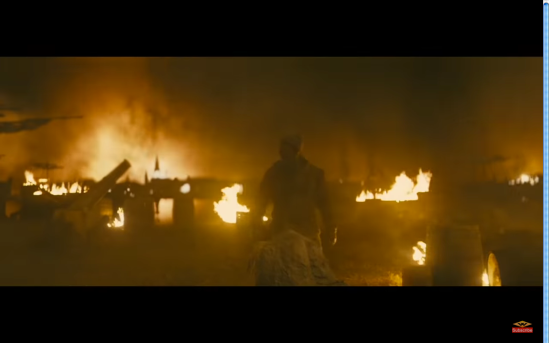
Experiencing Hoodoo dark magic horror back on a bigger production scale is on the same extraordinary gamut in discovering the lost city of Atlantis.  Well, maybe not as profoundly archeological as discovering Atlantis, but still immensely impactful. Films like the Mark Tonderai directed “Spell” hit like a ton of brick-shaped talismans, fettering the imagination with hexes that bewitch fascination and captivation, and roots through an endless torrential fountain of ancient beliefs to scour the dark side of the practices for celluloid terror. “The House at the End of the Street” director Tonderai moves away from restraints of PG-13 horror before heading into a stint of helming television episodes only to make a glorious return back to features with the R-rated black magic action-thriller, “Spell,” penned by Kurt Wimmer who knows a thing or two about action-thrillers as the writer of the gun-toting, martial arts dystopian, “Equilibrium,” and bloodily vindictive thriller, “Law Abiding Citizen”.  Filmed in Cape Town, South Africa that, through the slight of hand of movie magic, turns South Africa into rural Kentucky, “Spell” is a co-production of Paramount Pictures, LINK Entertainment, and MC8 Entertainment as well as being a product of puncturing the rarely topical social class and racism division within the same race.

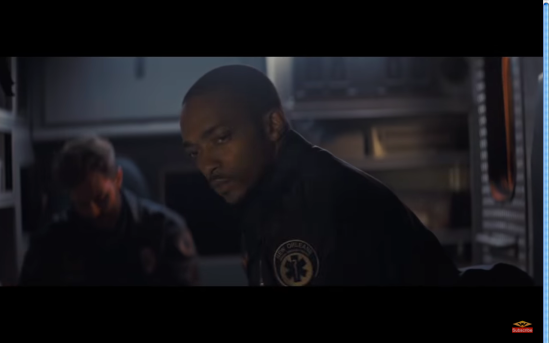
To play a determined and savvy father and husband on the ropes of survival, “Power’s” Omari Hardwick steps into the detained role of Marquis E. Woods, surely prepping himself against Ms. Eloise’s wicked dark magic before battling the flesh hungry undead in the upcoming Zack Snyder zombie-geddon horror, “Army of the Dead.” Hardwick is the ideal actor for a role that, at times, can be physical; his athletic build suits also Woods’ affluence though not required as scene with the brawny farm hand that introduces South Africa’s very own fitness entrepreneur, Steve Mululu.  Woods is pitted not only against formidable muscle, but also has to outwit the four or five lifetime smarts of an old root woman, Ms. Eloise, diabolically portrayed with a legendary entrenched Southern vernacular by the “Urban Legend” actress, Loretta Devine.  On the downside of the character, Ms. Eloise is rich with historical saturation that goes unchecked and unexplored and she seems a little more slapdash with her rituals and her captives.  In what really is a mind game of wit and Podunk wizardry between Hardwick’s Marquis E Woods and Devine’s Ms. Eloise, the remaining cast for “Spell” shoulders only little to annex more substance toward the tensions between the two principles, including performances from Lorraine Burroughs, John Beasley, Andrew Jacobs, Tumisho Masha, RJ-Karlo Handy, Hannah Gonera, and Kalifa Burton.

Aforementioned, “Spell,” between the domestic xenophobia opulence dividing the Woods family, the quaint, yet tangible body horror, and the abhorrent mysticism surrounding Hoodooism, teeters on loose ground with not only Ms. Eloise’s foundation, but also with main character, Marquis E. Woods, who suffers continuously from trauma-induced nightmares of his abusive father. Through flashbacks, Marquis is beaten with verbal assaults and even, seemingly, being stabbed or mutilated by his father. Yet, that’s about as far as the flashback dynamic progresses the thread bare bond until a minor moment at the climax is when Marquis then embraces his father’s aggressive nature, tuning more into a theme of stative stance that Marquis and father might not have seen eye-to-eye, but the son learns to survive through amplified evil by way of his father’s tough, tortuous care. The relationship circles backs with Marquis’ entitled children, whose piggyback wealth has molded them indifferent against the benefits given to them and partisan toward the backwoods people of color, and “Spell” becomes an insidious allegory creeping into the fold with a little tough love from your parents, in this case father, will go a long way. “Spell” also rarely pulls any punches with a welcoming cringe of ghastly violations of the human body (that pulling, inserting, and then re-pulling out the spike in the bottom of the foot gag will make you actually gag!) and inside the rustic and isolating confines of Ms. Eloise’s Kentucky farm compound, there’s a rough-hewn atmosphere that elevates the subgenre, shaking it to the core at times.

“Spell” is terrific urban horror tinged with “Misery” but driven by historical oppression stemmed Hoodoo, releasing just before Halloween on October 30th distributed by Paramount Players, a division of Paramount Pictures that’s still very much in it’s infancy. Jacques Jouffret (“The Purge” franchise) has a tight knit and jarring cinematography that puts the audience in the front, debilitating seat, empathizing the mind-warping effects that Marquis faces with a violent plane crash, nerve seizing torture, and banding Hoodoo hallucinations. Plus, there is fancy crane camerawork that marvels to capture multiple actions between characters. The score from Ben Onono fulfills the tension-riddle need with incessant zest, complimenting the narrative tenfold. Since “Spell” is a brand new release, there were no bonus material included and there were no bonus scenes during or after the credits. Don’t belittle the Boogity in this year’s most unique and contending horror movie that casts a “Spell” over the rest of the competition.

Pre-order “Spell” on Prime Video


Pass or Fail Weekend is Evil’s Playground. “Camp Twilight” reviewed! (DarkCoast / Digital Screener)

On the verge of failing and having to repeat a grade, six students are given the opportunity to spend one technology free weekend at Camp Twilight with their homeroom teacher, Ms. Bloom, and principal, Mr. Warner, as chaperones.    Planned with a series of outdoorsy, bonding activities, the weekend will serve to boost their grades to the cutoff line for graduating and, for some, maintaining their spot on the high school sports teams.  A local urban myth has haunted the camp’s reputation based off a grisly scene of murders a few years back, but the revamped park now serves as a community safe zone overseen by three dedicated, and also quirky, park rangers:  Art, Bob, and Chief Tom.  On a weekend where none of the students wanted to attend, forced by the threat of academic failure, an ominous figure revives the camp’s notorious past as one-by-one campers, teachers, and park rangers fall victim to a hooded killer’s impulse for blood.

Summer camps and masked serial killers are as synonymous as the vast ocean is with the dreadful thought of man-eating sharks.  “Friday the 13th, “Camp Blood,” and “Sleepaway Camp” have made a fortune and a franchise off the backs of the hapless summer campers, hacking and slashing away at the pre-martial sex crazed, the love struck wimps, and the overconfident jocks to build a flawless, ultimate killing machine series.  Will director Brandon Amelotte’s debut slasher, a horror-comedy entitled “Camp Twilight,” claim stake in the genre being the next persevering serial killer franchise?  For starters, the USA-made, indie feature releasing later this month has a leg up with “Sleepaway Camp” scream queen Felissa Rose headlining a cast that also includes a few other genre favorites as well as co-written the script with Amelotte.  Shot on the grounds of the palm tree lined Markham Park, “Camp Twilight” trades in mountain bike trails, disc golf, and it’s outdoor weapons range for machetes, lots of machetes, and is a product of Rick Finkelstein and Brandon Amelotte’s Florida based Entertainment Factory productions and, also Amelotte’s, Pelican Films.

As mentioned, genre icon Felissa Rose ditches the awkward teenage camper from the finale traumatizing “Sleepaway Camp” for a hyped-up, goody two shoes high school teacher in Ms. Bloom.  The top billed Rose brings the energetic know-how of her fully present, larger than life, broad range persona who audiences will never know exactly where her character stands until it’s lethally too late!  Rose is joined by more fresh faced, incredibly automaton co-stars in the roles of the six students and principal, played by the executive producer Barry Jay Minoff.  Minoff and Rose are supposed to be a couple concealing an affair, hiding their lustful courtship very poorly around the students, but both roles are completely under written, unexplored, and unfulfilling in the grand scheme of their pivotal plot point.  Little can be said differently about the students with a range of interrelationship intricacies that tried to be fleshed out as psychological terror triggers in lieu of their already conventional teenage sensitivity struggles.  There are other cult genre vets alongside Rose but in minor, more cameo-esque roles.  Linnea Quigley (“Return of the Living Dead”), Camille Keaton (“I Spit On Your Grave”), and Vernon Wells (“Innerspace”) add more or less star power to the fold, supplementing virtually nothing to the narrative but campy slasher fodder for fans to gobble up.  More impressively is Dave Sheridan bringing forth a version of “Scary Movie’s” loveable dimwitted cop, Doofus, with Ranger Bob, adding a great deal of the substantiated comedy toward “Camp Twilight’s” campy ebb and flow.  Cougar MacDowall, Thomas Haley, Hayleigh Hopkins, Harris Sebastian, Dondre Tuck, Brooklyn Haley, and Steven Chase, with “Truth or Dare’s” Jessica Cameron and Sport’s Illustrated model-turned-film producer, Tracy Lear, filling out the troupe lineup.

I wish I could say that “Camp Twilight” is a campsite of entertainment, a paradisal slasher of genius design, offering up a new breed of deranged psychopathy to the likes we’ve never seen.  Unfortunately, I couldn’t make heads or tails out of Brandon Amelotte’s derivative and tired trope-laden slasher rippled with loose and forgotten subplots and characters while at the same time being a heap of longwinded exposition that still way after viewing can’t fully explain the turbulent core of the story.  I hate to knock anything Felissa Rose touches, but I would be doing an injustice and a disservice if I tried to play up a slack script that starts off picturizing a campy horror-comedy but plays out the third act with critical revelations without a hint of funny bone material. The kills follow the trend of a lighthearted horror comedy, albeit the pelting of F-bombs, with “Camp Twilight’s” holdall of off screen deaths, barely scratching the surface with on screen kills rendered only by closeups, and not particularly bloody, intense, or nearly as menacing by a black hooded killer in jeans creeping up on prey in a well-lit campground with lots of room to run. The same company, Entertainment Factory, behind the horror icon drenched disappointment, “Death House,” should have been a clue into “Camp Twilight” critical success, but much like the “Death House,” both films are a totality of mess.

Not a fan of the outdoors? Hate bugs, snakes, and all things that go bump in the night? Does your fear of an unclear, inaccessible toilet seize you up? DarkCoast has you covered with their digital release of “Camp Twilight,” arriving onto digital platforms come November 1st, 2020 – Day of the Dead. The release platforms will include InDemand, DirecTV, FlixFling, Vudu & Fandango. The A/V qualities will not be reviewed due to the digital screener provided for this new film release, but I will say much of the soundtrack sounds stock file-ish (and there is no composer listed which would be a dead giveaway) and the Adam Beck cinematography is too well-lit, benumbing any kind of intense emotions that would correlate with the action. There were no bonus features included with the release nor were there any bonus scenes during or after the credits. “Camp Twilight” plays into it’s own title as a dim denticulated slasher that’s far too breathy and far less spirited and so the question stands, will “Camp Twilight” be the next slasher hit to spawn a lengthy, decade spanning franchise? The answer is no.

Youtubers EVILlog a Malevolent Presence Inside Their Home! “8ight After” reviewed! (PovertyWorks / Digital Screener)

Vlogging husband and wife, Vince and Deanna, digitally showcase their married life to the world from their vacation travels to exotic coastlines to the day-to-day, mundane tasks that includes home renovations.  When they demolition a wall in order to install a French door in the master bedroom, they discover a mysterious box containing a Portate (carrying) cross hidden within the wall.  Every night since then, Godfearing Deanna has felt a profound presence in the house, experiencing supernatural phenomena, such as grabbing at her feet and possessing her body, almost on a nightly basis, especially 8 minutes after 1:00 AM.  The compilation of footage from Vince and Deanna’s vlog cameras around the house capture the seemingly malevolent events, but Vince, being the ever agnostic skeptic, tries to invalidate any paranormal occurrences, passing them off as more feasibilities explanations.  Yet, the bumps in the night continue to place Deanna in inexplicable danger, forcing Vince to reconsider his position on God in order to save his wife.

CCTV horror has been quiet over the last few years, but 2020 has seen a fair share of the stale, declining genre that’s become more repellant than a draw for audiences; yet these new ventures into CCTV horror have splashed into a Lazarus pool, rejuvenating a slither of lifeforce within genre, with limited theatrical and VOD releases into the volatile cinema market.  Vincent Rocca’s written and directed multi-camera spectral thriller, “8ight After,” is a found footage horror-comedy that is an analogue releasing on the heels of moderate success, following the making-of an active shooter thriller, “Mother of Monsters,” and the hellish hotel imprisonment of souls of “Followed,” another apparitional aghast blending CCTV and handheld footage in a vlog style.  Rocca’s sophomore directorial comes nearly a decade and half after his 2006 feature film debut, a comedy entitled “Kisses and Caroms,” and is produced by Rocca’s less-is-more production company, PovertyWorks Productions, that aims to produce funny and profitable films and shorts on a miniscule budget.  In “8ight After’s” case, the production cost totaled a whopping zero being Rocca’s own actual camera footage of and around his home and the use of handheld’s and phone cameras when out and about. I’m also positive he didn’t pay his wife a dime.

“8ight After” fits right into the PovertyWorks’s comedy portion of its business model, especially with Vincent Rocca in the lead role as a practical joker-goofball of a husband (who really has the vocal projection of the late Bill Paxton), leading the charge of the voyeuristically invasive vlogging lifestyle as well as being a religiously laidback soul with an atheist belief set.  In stark contrast to his convictions is his wife Deanna, played by his real wife Deanna Rocca, who brings a knowledge of faith for a subplot of inner family squabbles about their mixed relationship to God.  When I say “8ight After” is invasive, I mean the film is a truism of invasiveness that not only is a near tell all of Vincent’s life as a videophile and Deanna’s vocation as a zoo vet but also fractures into the story their recorded travel escapades from their VinceRocca Youtube channel show, “Life Doesn’t Suck,” that discusses and logs their destination highlights of various locations from around the world.  The energy from their Youtube channel transcends over into the scenes committed to the necklace narrative with a bout between comedy and horror that peers Vince and Deanna’s religious fervors.  Deanna shoulders more of the in character plights with the subtle, but effective, person plagued by a unremitting presence and has to become possessed, sleepwalk, and look menacing toward her husband when the time is right for the all-seeing camera.  

Compiled like a documentary (or mockumentary?) and presented in a meta format by spinning and weaving the Rocca’s exuberant régime of life and love into an undercurrent of hidden terror, “8ight After” has unique cinematic properties, utilizing his reality television fluff techniques and editing, and tackle themes of family upheaval contentious topics like religion and gun control, to wrap “8ight After” complete on a zilch budget that rides the seams of fact and fiction.  For the most part, “8ight After” tenderly progresses organically with little staged affect as the high school sweethearts play to their most innate strength – 20 years of marital bliss – and chips in sparsely the sarcastic wit of Vince Rocca (did I mention he sounds exactly like Bill Paxton?) through a tech-recorded compiled story that’s well built up initially with convincing acting and strange and spooky incidents that, like most found footage films, point to specifics pieces important to the narrative. There are even a couple of homages to great horror classics like “Jaws” and “Exorcist III.” But then in a turn of sudden events, the revealing climax fizzles like the air wheezing quickly out of an inflated balloon.  The finagled ending stinted completing something uniquely branchlet from the found footage genre and something that had solid momentum and steam of an escalating snowball toward the essence of a presence, but became grounded by the acute conclusion to the matter in such a matter-of-fact fashion that it completely killed the mood, tone, and disposition “8ight After” carried in preponderance.

Become wrapped up in the lives of a pair of vloggers and see them suffer the wrath of a stubborn spirit in “8ight After” that was released October 15th on various digital retailers, including Amazon’s Prime Video. The film is unrated and has a runtime of 97 minutes and has an accompanying English language 5.1 surround sound audio mix with optional English subtitles. There were no bonus material included, but you can live vicariously through Vincent and Deanna’s touristy adventures of swimming with manatees, paddle boarding, and visiting breathtaking waterfalls. Also, you can purchase Vincent Rocca’s journal notes put into paperback, of the same title as the movie and also on Amazon, that goes hand-and-hand with the film; it’s also available as an audiobook. “8ight After” tempers with a well braided blend of found footage comedy and horror from a pair of seasoned Youtubers that then suddenly trails off, leaving us holding the baby in trying to make sense of an nonsensical ending.

Watch “8ight After” on Prime Video!


Read or listen to the book on Prime Video!


EVIL is Out For Blood! “Attack of the Unknown” reviewed! (Gravitas Ventures / Digital Screener)

A Los Angeles SWAT team raids a syndicate congregating big narcotics deal that leads to the arrest of the local high profile drug lord named Hades.  In transporting Hades into federal custody, massive alien ships suddenly loom over the city, beginning a merciless extraterrestrial invasion that forces the close knit SWAT team, Hades, and a handful of low on the totem poll federal agents to take shelter at an inmate detention center housing dangerous criminals as everyone outside, fighting for their very lives on the streets of an ablaze metropolis, are swarmed and killed by tentacle spearing, blood sucking aliens.  Running low on ammo, cut off from any kind of rescue, and aware that an attack on them is imminent, the survivors must band together to plan their continuous survival and understand what the aliens want from them before being raided for their blood.

“Independence Day” meets “Assault on Precinct 13” in the blood marauding mayhem of the alien invasion action film “Attack of the Unknown” from writer-director Brandon Slagle (“House on Manson,” “The Dawn”) based off a story by producers Michael and Sonny Mahal of the Mahal Empire production company. The American made, Los Angeles and Las Vegas shot Sci-Fi embattled entanglement labors an intensive visual effects heavy bombardment that bares an unbiblical similarity of the David versus Goliath parable.  Instead of using stones and a slingshot to bring the formidable giant down, gunfire and hand-to-hand combat serve as the nearly useless weaponry of choice against these spacemen, with a slight inspiration of H.R. Giger’s biochemical flare, searching for the junkie’s high of medicinal hemoglobin.  Alongside the Mahal Empire, the company behind the artistry of supernatural-sins, “Art of the Dead,” Spicy Ramen Productions (“Murder Van”), FilmCore (“Clownado”), and Blain-Y-Bootleg Films also stick their producing tentacles into the narrative that entails expropriation of human blood by otherworldly beings.

“Attack of the Unknown” reunites “Art of the Dead’s” Richard Grieco and Tara Reid once again in a non-scene sharing feature, but, this time around, Grieco lands the lead role of Vernon, a long-in-the-tooth cop going through a brutal divorce, going through cancer, and must be the person to save during the invasion…wait, what? Yes, forget the women, children, and possible any other last hope for mankind, Vernon, through the eyes of his SWAT brethren, becomes early on the favorite for survival, but only later into the story does the fact of Vernon’s fatalistic, cancerous blood is the cure for dominion dominance, something that should have been noted when Vernon is labeled as must live. Grieco’s austere soul for Vernon disposes a man without a care or is unpredictable and while the role is overall solid, Grieco is a bit theatrical with the performance. On the short end of the stick is Tara Reid whose barely in a folklore tale told by Hades as a severely brief conclusion on why these malevolent space invaders have landed on planet Earth. Former “Hellraiser: Revelations'” cenobite, Jolene Andersen, and typecast bad guy, “Strangeland’s” Robert LaSardo, without an alternative, had the most intrigue without having a lick of depth with their characters. Andersen is the only female SWAT member, Hannah, with an unexplained connection between her and Vernon other than being colleagues, but Hannah is a bit of a Jane of all trades able to hold her own in a humbling kind of way, making her more likable. On the other hand, the mysterious temperament challenges us to figure out what LaSardo kind of person is Hades; obviously named after the lord of Hell, the drug kingpin isn’t devilish in the least and has the tendency to be more of a stubborn and angst tween. The cast list is huge but the main players involved rounding out the cast list is Douglas Tait, Robert Donovan, Paul Gunn, Mouine Omari, Clay Trimble, Gerardo de Pablos, King Jeff, and, not forgetting to mention as Featured Dancer #1, adult actress Tasha Reign.

Slagle has to reign over and rein in the slew of competing talents and the story’s first act of an indeterminate direction. When the narrative finally settles upon the alien encircled detention center with the survivors’ back against the wall, a harried subplot with two, nearly off the clock San Fernando cops encountering a crashed ship in the desert on the outskirts of town is pushed aside; instead of a smaller, parallel story alongside the SWAT’s predicament, the two cop encounter becomes a bookend story that feels sorely out of place and sheepishly wrapped up. Another out of place aspect, an unfillable character arc within the core story, is with an out of element survivor, a vlogger from Texas, who is the only unqualified defender against an attack and supposed to be on this tangent of earning his “got your back” badge (anyone from Texas, the Alamo state, should know a thing or two about a last stand), but by the time the vlogger musters the courage to shoot back at the bloodsucking tentacles during an elevator escape, the moment is way too late and way too underwhelming to make an impact, leaving his presence wasted amongst a motley crew of rough and tough officers and criminals. Luckily, the Mahal production has plenty of capital to go around to render a bolstering blend of practical and visual effects that tags “Attack of the Unknown” as Slagle’s Michael Bay attempt of a Sci-Fi action film. The visual effect composites are verisimilar in comparison to big budget Hollywood and the practical work, whether be with the fleeting gruesome deaths (ripping off the crown of the head scene was pretty nasty), the alien spacesuits, and the alien’s classic bug eyes and small mouth, harped back on a throwback science fiction alien attack sans the ray gun trope.

For an indie production, “Attack of the Unknown” has a palpable core story with promising visuals that has invaded all major VOD platforms this past August courtesy of Gravitas Ventures. The A/V qualities will not be reviewed due to the digital screener provided, but just to comment on the rigors of budget films, the depth perception issues in the composited effects and the sounds effects not always necessarily syncing properly with the action (i.e. explosions), cold cocks us back down a peg that “Attack of the Unknown” is an indie film. The music score is provided by Scott Glasgow (“Hatchet III”) and the shots are provided by Michael Su, who I thought garnished really neat scenes with smoke and brilliant light. Bottom line, “Attack of the Unknown” just ekes out being entertaining enough but the space vampire’s ground assault traverses a rocky road of dry performances and unfocused bearings that cultivates earnest dramatics progressing into one ginormous space ship-sized cliché.

Available to Rent on Amazon!

How Far Will Three Detectives Go to Stop Evil? “Memories of Murder” (Neon / Digital Screener)

Two impractical detectives of the Gyunggi province of South Korea investigate a pair of rape and murder cases involving two beautiful and unrelated women found with their hands bound behind their backs, gagged with a rock tied into their mouth, and with their panties covering their heads.  Known around the province for their torturous interrogation tactics, the detectives bully a mentally handicap young man and the local pervert into confessing to the heinous crimes, but when a Seoul investigator arrives into the village, drawn in by the curiosity and coincidence of the murders, a larger scale serial rapist and murderer, calculating his every move, is unearthed, connected by series of events leading the small police force to reevaluate their handling of the murders that have become more gruesome than the next with every victim. 

Before his inevitable recognition from the 2019 Academy Awards for his socially skewed hierarchy thriller, “Parasite,” that historically won Best Picture, Directing, International Film Feature, and Original Screenplay categories, even before his breakout success amongst fans of the horror genre with the creature feature, “The Host,” and an introduction into the American film market with another social class commentary, the dystopian standoff that was “Snowpiercer,” starring the Captain America portrayer himself, Chris Evans, filmmaker Bong Joon-ho had an eye for crafting his vision on camera and a knack for nerve-shredding storytelling as a writer in the early 2000’s with his 2003 sophomore feature, a crime drama entitled “Memories of Murder.” Originally known as “Salinui chueok” and written by director, the film is an encryption of a murder mystery encoded from the real life serial crimes in the Hwaeseong province in the 1980’s, Bong Joon-ho’s film takes place in 1986, and renders an engrossing story structured like a modern day Jack the Ripper emerging out of the unpleasant anecdotes of Korea lore stirred with themes of consequences as a result of careless failures and the inadequacy of effort no matter the analyzed angle.  CJ Entertainment, Muhan Investment, and Sidus serve as production companies of this somber sleuth mystery.

Despite their different methods of interrogations and investigation pursuits, the story hammers down on the three detectives’ across the board search for a methodical killer rather than a killer’s betokening perception of events as the detectives, individually flawed with ill repute and personally challenged, separately come unglued, make mistakes, and suffer the consequences of their public inanity, but when they click in harmony and rally on the same page, the truth almost hops into their laps rather than at a snail’s pace stemmed from internal competition for apprehension success. Song Kang-ho has played the constant, the unparalleled keystone, in Bong’s two decades of film credits, beginning his collaboration with the acclaimed director in “Memories of Murder” as the province’s ineffectual blowhard detective, Park Doo-man. With a deadpan stare, Song Kang-ho debones the Park Doo-man to his rudimentary base, a waggish con artist in an officer’s casual attire, and the actor defines Park’s arc so clearly, distinctly, and with ease that you can actually see Park Doo-man’s soul just become utterly crushed by not only the tough case but also when it’s clear that he must separate himself from his partner Cho Yong-koo (Kim Roe-ha) after a foolish bar fight of steadfast conviction and begin to accept his counterpart rival Seo Tae-yoon (Kim Sang-kyung) to no longer be the buffoon when bodies continues to pile up. “Memories of Murder” round out with Song Jae-ho, Byun Hee-Bong, Ko Seo-hie, Park No-shik, and Ryu Tae-ho.

In the battle to be top cop that nabs the worst criminal the province has ever seen, a disastrous paradox thwarts their oath to protect and serve the community as the two detectives, in their haste for swift justice, don’t see eye-to-eye on issues of evidence and actual detective work with a levelheaded outside investigator putting his foot forward delivering a working, if not more rational, model of a killer’s mind.  The innate detective, Park Doo-man, relies heavily on the circumstantial from gossip, relayed by the province investigator’s soothing nurse who he’s also seeing romantically, to superstition, visiting expensive shamans and claiming to have supernatural sleuth abilities himself, in order to cheat corners in hoping the information will present itself like an elegantly wrapped gift with a bow on top.  At the other end is the outsider, detective Seo Tae-yoon, from the metropolis area of Seoul and the big city detective, who sees more of these types of crime in his urban backyard, conducts a factual investigation based off research and relying on experience that gives him intuition into how the killer thinks.  Clarity in the contrast concedes more so when the third detective, another province resident, Cho Yong-koo, refuses to change his ways of brutal violence and torture as he continues his flying kicks right into the chests of suspects whereas his partner, Park Doo-man, relaxes his greed for admiration when the number of deceased women becomes unnerving and public trust in law enforcement rapidly diminishes; the reality sets when his counterpart, Seo Tae-yoon, produces results closer to an arrest based on fact.  Bong Joon-ho’s approach at the beginning would not be a conventional one that mingles rape and murder with the bumbling antics of a small town police force that’s outrageously zany at times.  The zaniness comedy subsides and is replaced with an air-letting dismal outlook of vulnerability and powerlessness in making little-to-no headway into a case that keeps getting grislier and grislier with the killer not inserting objects into his female victim’s vagina.  Trusting the system is even more disquieted so when the most latest and reliable crime solving techniques in the mid-1980s, from America none-the-less, proves to be astonishingly inconclusive, making the case seem like a no-win situation that then reverts back to the idea that sometimes even the most careful and meticulously handled cases, without the use of force, are not solvable. 

The powerful knuckle-biter “Memories of Murder” rattles with anxious tension and is chartered gracefully through the unrivaled eye of Bong Joon-ho.  Now making it’s grand return exclusively to theaters nationwide October 19th and 20th, “Memories of Murder” will be exhibited digitally remastered for U.S. audience for the first time since it’s initial release since 2003 courtesy of a partnership between Neon and Fathom Events.  The limited theatrical running with include exclusive content and a post-screening conversation between Bong Joon-Ho and “Shaun of the Dead” and “Hot Fuzz” director, Edgar Wright.  Since I’m unable to compare the digitally remastered with the initial release, all I can say is that the film presentation appears steady, tight, and clean with Bong’s sepia tone to incept a memory fragment of the past and shot to entice an unfathomable crime drama captured as beautiful gaslit dissonance between background societal unrest, the case at hand, and the audiences’ unsuspecting role as the potential suspect. The screener provided is a digital screening link and might appear different in a theater sitting. The English subtitles were clearly visible with some minor errors in spelling. Again, this might vary in theaters. There were no bonus material on this screener, but, remember, that the limited run event on October 19th and 20th will have the exclusive bonus content and the Wright and Bong conversation. Unforgettably wrung with wraith-like anecdotal properties, “Memories of Murder” can be labeled as Bong Joon-Ho’s exemplary film, even better than his current work that won him an Oscar.