To Be EVIL, You Must Capture EVIL! “Thir13en Ghosts” reviewed! (Blu-ray / Scream Factory)

Screen shot 2020-07-24 at 9.53.06 PM
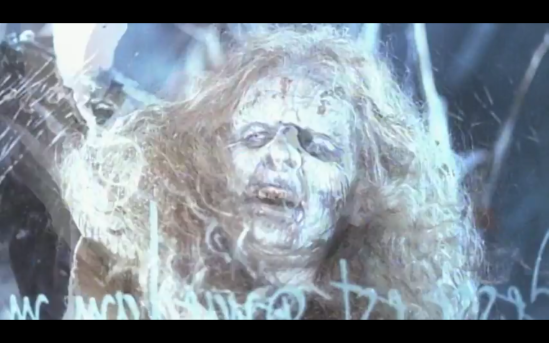
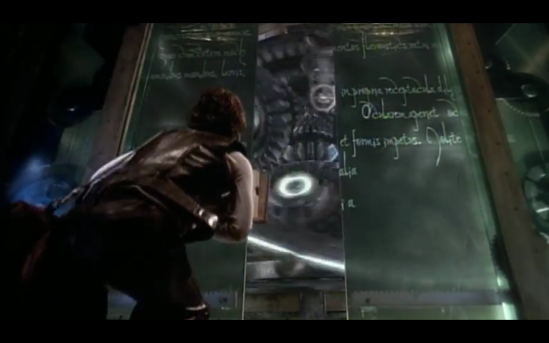
A maniacal and obsessed ghost hunter, Cyrus Kriticos, traps 12 tormented and violent spirits with the help of an avaricious, but anguished psychic, Dennis Rafkin, but when trapping the last ghost, the worst of the worst, a barbaric mass murder in life and in death named Juggernaut, Cyrus is killed in the process. His death leads to the inheritance of a one-of-a-kind house to his widowed nephew, Arthur, and his two children who are barely scraping by after the unexpected fiery death of their beloved wife and mother. When they enter what seemingly feels like a godsend house, immaculately structured entirely out of glass and metal, they find themselves trapped inside after tripping a series of mechanism that turn the isolated and elegant abode into a labyrinthic machine. Stuck inside with Arthur and his family are Dennis Rafkin and a ghost friendly liberator, Kalina Oretiza, who explain that the house is actually an evil machine with a goal of opening the eye to Hell and that the ghosts, imprisoned in the basement, are components that are being set free one-by-one in order to fulfill the ritual.
Screen shot 2020-07-24 at 9.52.18 PM
In the world of remakes, only a select few ever surpass the original. In fact, on rare occasions, do remakes actually replace the original due in part to being beyond respectful as well as masterful amongst critics and genre fans that have bestowed the reimagining an untouchable rendition to which no one can find anything wrong with it; this films include John Carpenter’s “The Thing,” David Cronenberg’s “The Fly,” and Chuck Russell’s “The Blob,” with Zack Synder’s “Dawn of the Dead” and Tom Savini’s “Night of the Living Dead” receiving well-deserved honorable mentions, because let’s face it, topping George Romero’s original work can be said to be blasphemous slander. What about those remakes in between? Those just above the pile of awfulness that generally makeup remakes? I consider Steve Beck’s “Thir13en Ghosts” to be one of this mid-level remake films that registers well with fans, but on the flips side of that coin, doesn’t ascend to total prominence over its predecessor. Written by longtime Full Moon Entertainment writer Neal Marshall Stevens (“Hideous!” and “The Killer Eye”) and Richard D’Ovidio (“The Call”), “Thir13en Ghosts” is a 2001 near-total rework of the 1960 William Castle directed and Robb White scripted “13 Ghosts” that used gimmicks like 3D specter glasses to draw audiences into the theater. “Thir13en Ghosts” was the second film after another William Castle remake, “House on Haunted Hill,” of the newly formed, William Castle nod-to, Dark Castle Entertainment, a division of Joel Silver’s Silver Productions formed by Silver, Robert Zemeckis (“Back to the Future”), and Gilbert Adler (“Bordello of Blood”) that honed initially on producing stylishly modern takes on classic gothic horror, such as “Ghost Ship,” the remake of “House of Wax,” and “Orphan.” What came out of this collaboration between Steve Beck and Dark Castle Entertainment is a complete dismantling of the wood paneling and lament flooring story for a modern marvel to emerge of unique terror that hasn’t been duplicated since.
Screen shot 2020-07-24 at 9.52.11 PM
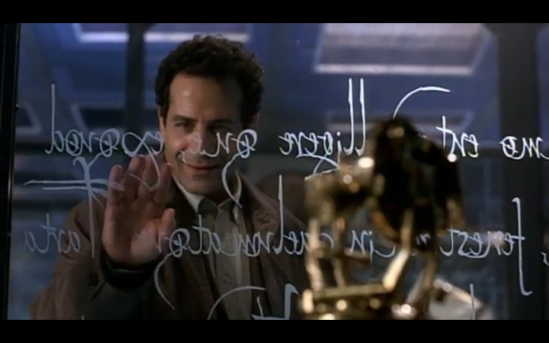
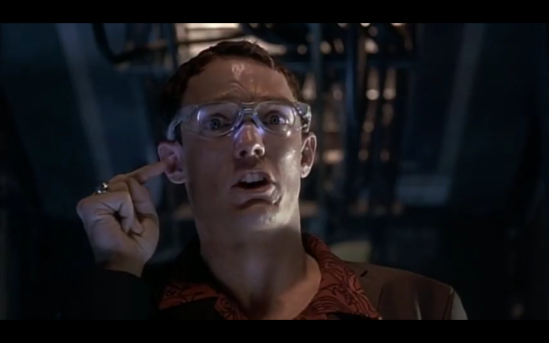
“Thir13en Ghosts” has an impressive, if not all-star, cast with diverse range of styles and experiences that it’s almost dumbfounding on how the filmmakers were able to contract some of these talents, including F. Murray Abraham, who has had an already eclectic credit list with “Amadeus,” “Surviving the Game,” and Mimic, and Tony Shalhoub who hand standout performances in “Addams Family Values,” “Men in Black,” and “Galaxy Quest.” Abraham and Shalhoub bring a sense of classical and methodological structure in a stark contrast between rationality and irrationality built upon an indifference of solitude and a sense of family. Then, there’s the comedic relief in the midst of danger, Matthew Lilliard (“Scream”) as the suffering psychic who uses his wit tongue to spur others and introducing hip-hop artist, Rah Digga, in one of her only motion picture performances to alleviate suspension with more tongue-and-cheek moments. Lilliard and Digga offer up two different comic styles while sustaining the underlying severity of being trapped inside an evil machine full of violent ghosts. Shannon Elizabeth, who we all know by now as the stunning “American Pie” girl, Nadia, or as I know her as the unfortunately raped and murder victim of a killer snowman in “Jack Frost,” plays Arthur Kriticos daughter, Kathy, who still a fresh faced newcomer to Hollywood despite being a hot commodity after her topless role in “American Pie.” The superb support roles don’t end there with notable roles from JR Bourne (“Ginger Snaps Back: The Beginning”), Matthew Harrison, Alec Roberts, John DeSantis, and EmBeth Davidtz, Sheila from “Army of Darkness,” as the ghost liberator.
Screen shot 2020-07-24 at 9.52.48 PM
It’s hard to believe that “Thir13en Ghosts” is nearly 20-years old. I still recall my 17 year old self sitting in for a theatrical showing, remembering the opening gargoyle growling as the Dark Castle Entertainment logo reveals itself during the opening title credits, and coming out of the maze-like, gory-ghost film having experienced something special, even if then I didn’t understand why, only to years later realize that I’ve never seen something like “Thir13en Ghosts” before in my life. How does a remake reinvent itself so much that it can separate itself from the original film while also beguile with fresh ideas and no take a slew of browbeating chirps from those who holdfast that the original is the one and only? Most remakes cheaply throw gore to the wind, adding buckets of blood in hopes to satisfy horror buffs, but what winds up happening is that we ultimately get bored, having experienced blood and guts from singular storied films. “Thir13n Ghosts’” premise isn’t the only worthwhile experience that deserves praise, but also the spectacular production design by Sean Hargraves that thrusts the glass house concept into new heights with the house actually becoming an interestingly steampunk character itself and the prosthetic effects from a team spearheaded by a trio of the best special makeup effects artists in horror today, such as Howard Berger, Robert Kurtzman, and Gregory Nicotero., turning ghoulish encounters to ghastly visions that convey truly a tormented soul in the 12 ghosts. Though the story itself isn’t perfect, flawed at times with static character development and a few plot holes involving the ghosts and sequences of events, “Thir13en Ghosts” remains a cult favorite gaslit by frightening imagery, a solid cast, and unforgetting production design that started 21st century horror off brazenly strong.
Screen shot 2020-07-24 at 9.52.36 PM
Collect all “Thir13en Ghosts” on the Collector’s Edition Blu-ray courtesy of Scream Factory sheathed in a cardboard slip cover and has a reverse artwork liner that has the original poster artwork and new vivid illustration by Joel Robinson. Presented in a 1080p, high definition widescreen, 1.85:1 aspect ratio, from the original 35mm negative, “Thir13en Ghosts” shares a consistent image and vibrancy layer with the DVD version with an enhanced color stability. No edge enhancement or cropping adjustments rendered or any other blemishes to speak of, but the softer details could have been sharpened to gave a hard edge around the non-spiritual energy. The English language DTS-HD Master Audio 5.1 boosts the already hefty soundtrack that’s full of explosions and ghostly swooshes and moaning hums, finished off with grand, orchestra soundtrack by John Frizzell It’s been said that audience had to excuse themselves from the film due in part to the overbearing noise coupled with the strobe-like imagery, but the overall audio and visuals are a combined one-two punch of sensory power that works well. The Scream Factory release has new interviews in the bonus material, including sit downs with actors Shannon Elizabeth, Matthew Harrison, and John DeSantis and producer Gilbert Adler. There’s also a audio commentary with director’s Steve Beck, production designer Sean Hargraves, and special effects artist Howard Berger. There’s also an in-depth look at the creation of the thirteen ghosts in a small featurette, their backstory profiles, and the theatrical trailer. However you want to call it, whether it’s “Thir13en Ghosts,” “Thirteen Ghosts, or “13 Ghosts,” this new century remake still holds up to today’s horror lot with spellbinding phantom pandemonium in a glass box!

“Thir13en Ghosts” on Blu-ray on Amazon.com

The Maestro Delivers Us From EVIL! “P.O. Box Tinto Brass” and “IsTintoBrass” reviewed! (Blu-ray / Cult Epics)


Tinto Brass, whose very name is synonymous with erotica cinema, presents a tantalizing series of letters and videotapes, written and recorded for him by adoring women executing their most sensual fantasies, exploiting their carnal desires, and giving the director a peak into their wet dreams. Brass’s lovely young assistant retrieves numerous submissions from his P.O. Box and as Brass scours through the countless correspondences, attempting to penetrate through the mundane to find that special something from his female fans, the stories become animated from text to short film visuals that involve spread eagle voyeurism, reluctantly desiring wife swapping, and a little husband and wife role playing to spice up their drab marital sex life by incorporating home movies. Each woman is able to confide in the maestro who harbors a gift for delivering classy and joyous erotica to not only the cinema market, but also into his admirers’ private lives.

While America became gradually engrossed by the Showtime syndicated erotic drama series, “Red Shoe Diaries,” hosted by “X-Files” David Duchovny that showcased unconnected sensual stories from women who bared it all in heated encounters with male companions, the Italians’, who were experts in erotica cinema that this time, had their very own, slightly more explicit, version released in 1995 in full-length feature form, cleverly titled “P.O. Box Tinto Brass,” from director, and as titular presenter, the erotic master himself, Tinto Brass. Originally titled “Fermo posta Tinto Brass” in the native dialect,” “P.O. Box Tinto Brass” arrives on a new and restored 2-disc Blu-ray release from Cult Epics and acts as a celebration on not only the filmmakers’ immensely arousing body of work, but also a celebration on the director himself who has the uncanny ability to unearth the hidden away desires in all from his tongue-and-cheeky intimacy story arcs that relieve suppression for exploration of our natural sexual ambitions without the culpability instilled by taboo cultures. Granted, some of the material presented might feel dated and not as salacious as every John and Jane Smith can now utilize their God-given bodies to amass a modest fortune across the world wide web of sex, but to understand today’s culture, which still seems a fair share of sexually oppressive forces, we must look at Tinto Brass’s gift in normalizing what once was bedroom only material. Brass, who sport smoking a signature cigar throughout the film, uses his platform and becomes the vessel of expulsion to remove the privacy and shaming barriers that hinder healthy sexual appetites and, literally, creates a tactile representation of sexual jubilee with little-to-no seething judgement other than that of the character’s own restrictions. There are a ton of Brass trademarks shots that include, but not limited to, the hairy vulvas, a playfulness toward the vagina, exhibitionist flaunting, loads and loads of butt and breast angles in and out of clothes, elaborate location patterns on a grand, maybe art deco, scale, and, perhaps his most notable trademark, the expansive range of setting up elegant shots reflected off mirrors. As a whole, “P.O. Box Tinto Brass” brings a lighthearted and free atmosphere that’s uninhibited and sexy during and between each segment and while Brass is no doughy-eyed David Duchovny, I would be remiss in the lascivious eyes of Tinto Brass if I didn’t mention that after immersing ourselves in the “P.O. Box Tinto Brass” anecdotes, me and my wife had the most passionate, free verse sex we ever had since we’ve tied the knot 8 years ago, an experience that’s akin to an economically-friendly version of sex therapy. Thank you, Maestro!

This leads us into the second disc of this Cult Epics epic release with a 2013 documentary, entitled “IsTintoBrass,” from a longtime Tinto Brass colleague and good friend, Massimiliano Zanin, who delves more into Brass’s political, experimental, and monumental work compositions that shaped the director into who is now the renowned eroticism auteur with a belief and a slogan that the ass is the window into the soul. Thought being born, bred, and flourish as an Italian filmmaker, “IsTintoBrass” speaks volumes about his French influences and his life guiding time at the Cinémathèque Française in Paris where he met Henri Langlois and Lotte H Eisner who exposed Brass to rare, unseen films His time Cinémathèque Française afforded him praise on his first films, such as “Who Works Is Lost” and “Attraction,” that were to the likes of French directors like Jean-Luc Godard and were labeled as a blend of part French New Wave movement and pop cinema. Zanin guides us through Brass’s continuous battles with censorship boards whose biggest problem with his filmic formations was not the nudity, but the supposed transgressions against conventional cinematic norms, especially with “Salon Kitty” that was an atypical example against the latter half of his career and used sex as a means of power of another person. His entrenched struggles didn’t end there as the documentary also shed lights on filmmaker’s most controversial work, “Caligula,” which became not his work due to a an underhanded producer who decidedly desired more sex than story and fought Brass, in more than one court of law, for the rights. Notable friends, colleagues, and film critics go through the eclectic Tinto Brass timeline, recalling and reexamining his decisions and aspirations into a multinational praise of his work. Some of these speakers included Franco Nero (“Dropout”), Helen Mirran (“Caligula”), and Sir Ken Adams (“Salon Kitty”). Plus, there is plenty of T and A to go around,

If Tinto Brass didn’t have a stroke in 2010, Zanin’s documentary wouldn’t have been made three years later as it’s a highlighted tribute of one remarkable Italian filmmaker’s life achievements stemmed from something as terrible as a life threatening ailment; yet, that’s how these things usually go, right? A retrospective acknowledgement, usually overwhelming positive in general, of a great artist whose work is greatly admired, frequently in a posthumous manner. In this case, Zanin saw fit to encase a historical record on Tinto Brass before meeting his maker, beginning with a really vigorous look into his inspirations at the Cinémathèque Française, chalking up much of his earlier work to his time spent looking through reels upon reels of avant garde films, but then Zanin quietly fades out of the path that elevated Brass as the cherished erotic connoisseur. Zanin’s story takes this awkward tangent to only skim the surface of Brass’s erotic films, which is strange since Zanin’s known and collaborated with Brass the last 20 years, about 13 years when this documentary was released, and penned a pair of his Brass’s saucy scripts, “Cheeky” and “Monamour.” Yet, the last 20, if not 30, years is surprisingly fleeting in Zanin’s capsulated effort to immortalize Tinto Brass. Still, the overall film is perhaps more endearing than Tinto Brass would have ever imagined, especially as brash and as perverse as his image portrays him outside the parameters of the filmic dome. Inside that dome, Brass has obtained throughout the decades a following of professional admirers and adoring fans who see him for what he truly is, himself. “IsTintoBrass” isn’t a gratuitous or perverted exhibition of an old man’s horniness; it’s an intoxication of what it means to actually be free from the repressive nature of censorship, the rapturous high of being an unchained artist, and being an obsequious master craftsman of cinema.

Cult Epics delivers a 2-disc limited edition Blu-ray of Tinto Brass’s “P.O. Box Tinto Brass” and Massimiliano Zanin’s “IsTintoBrass.” “P.O. Box Tinto Brass” has been newly restored and re-mastered in 4K high definition from the original 35mm negative and presented is a widescreen, 1.85:1 aspect ratio. The picture is absolutely stunning that revels in the burst of primary colors Brass was keen to implement. The details and the tones on the naked skin flesh out every beauty mark, fiber of hair, and every pore. Typically, Tinto Brass films run purposely a little soft to create a dreamlike, if not fantasy-like, setting to obtain a jovial mood setting for the uninhibited moments, but the details are still strong throughout. “IsTintoBrass” is presented in a widescreen, 1.85:1 aspect ratio, from a 2K transfer scan of digital video, aside from the snippets of Brass’s work. Video presentation is like crystal that obviously wouldn’t distinguish any kind of transfer anomalies because there wouldn’t be any. The Italian language 2.0 Mono LCPM/DTS-HD Master Audio 2.0 Mono (“P.O. Box Tinto Brass”) and the DTS-HD Master Audio 5.1 Surround (“IsTintoBrass”) are clearly discernible in all regards, especially in the Tinto Brass directed feature form ’95 with a clarity in the speech, a softer ambience that supports the dialogue rather than be level with it or overwhelm it, a range that mingles to support the dialogue as well. English subtitles are available on both discs. To smooth off any rough edges is a score by Riz Ortolani (“Cannibal Holocaust”) with a vibrant, cheeky score that fits perfectly into Brass’s wheelhouse of curvy, adventurous women. Bonus features on the first disc includes a 2003 interview with Tinto Brass who gives a brief background on his cinematic start, poster and photo gallery, and the trailer. Disc 2’s bonus material includes an interview with writer-director Massimiliano Zanin providing his reasoning for this documentary, a Tinto Brass achieve photo gallery, a couple of short interviews praising Brass’s passion, and trailers The package is also a work of art sheathed inside a cardboard, black and blood red slipcover and inside the casing is a 48-page booklet of Gianfranco Salis stills from the Tinto Brass achieve which are beautiful and almost Playboy-esque. To experience Tinto Brass is invaluable enough, but to experience his films in high definition is without a doubt worth it’s weight in gold with the powerhouse release of “P.O. Box Tinto Brass” and a retrospective documentary “IsTintoBrass” from Cult Epics!

Check out the LIMITED EDITION “P.O. Box Tinto Brass” release!

EVIL Uses EVIL as a Conduit in “Amulet” reviewed! (Digital Screener / Magnet Releasing)


Tomaz, former Eastern European soldier of war is now living homeless in London, squatting overnight in rundown buildings with other displaced individuals and families. When the building he’s sleeping in goes up in fire, he’s injured upon escape and wakes in a hospital to learn that a nun found him and his belongings, leaving him a note to visit her upon his release. The nun, Sister Claire, offers him food and a bed in exchange for dire house maintenance for a sickly mother, Miriam, and her caretaker daughter, Magda. As time passes, Tomaz begins to fall for Magda, but her odd behavior and the dying Miriam’s severe skeleton living accommodations in the attic as well as her frail, pail body nag at Tomaz’s conscious that something is awfully amiss. However, his present enigma isn’t the only thing tugging at his tormented conscious when faced with the shocking truth of his residence.

Actress turned filmmaker, Romola Garai, makes her full-length feature debut with a fissionable creepy, punish-thy-sinners, slow burn horror film entitled, “Amulet.” The UK production is written and directed by Garai, who previous work includes main cast acting roles in Joe Wright’s World War II dramatic thriller, “Atonement,” the sci-fi horror “The Last Days on Mars” along with costar Liev Schreiber, and filling in some tremendous shoes in the prequel to the 1987 rom-edy, “Dirty Dancing,” “Dirty Dancing: Havana Nights.” Now, Garai peers through camera lens, orchestrating from the director’s chair, an eerie body horror tale that involves demons, past regrets, and a diabolical, antiheroic nun conniving for the sake of humanity. Speaking of which, humanity is one of the central themes that “Amulet” explores in hellish fashion as our actions determine the outcome of our various shade of humanity forged ourselves and how we will be judged accordingly. “Amulet” is a production of Head Gear Films and Kreo Films FZ, and Metrol Technology, who have all collaborated on “Cargo, as well as in association with “Shed of the Dead’s” Trigger Films.

Cast in “Amulet’s” only male role is the Romanian born Alec Secareanu as Tomaz. The graduate of Caragiale Academy of Theatrical Arts and Cinematography actor envelops himself into a trouble ex-soldier without a country, unwilling to return to a worn-torn land in hopes to relieve himself from reliving the past. Secareanu exudes tenderness for Tomaz in order for audiences to empathize for a homeless man who has agreed to assist Magda and her ill mother. Garai engrains Tomaz with such sentimentality, it’s proves difficult to see the man any other way until the filmmaker incorporates Magda into the mix, a capricious role imparted upon to “Blade Runner 2049’s” Carla Juri. Juri moderately reprises her eccentrically free performance from the 2013 comedy-drama, “Wetlands,” as a seething promiscuous and alluring woman but, in the darker vision of “Amulet,” Magda is a servant of her dying mother who has a lying in wait, sheathed vocation yet to be revealed until Tomaz’s curiosity becomes too much. Secareanu’s and Juri’s performances define the characters with no details left out, but the overall best performance goes to Imelda Staunton as Sister Claire. As professor Dolores Umbridge from “Harry Potter and The Order of the Phoenix,” Staunton was maniacal as she was sophisticated, channeling that same energy into Sister Claire as a double-dealing nun with a fraudulent ebullient attitude. Sister Claire was molded surely for the English actress whose high cheekbones, tight mouth, and round eyes give her a perfect blend of meek malice. “Amulet” rounds out the cat with Angeliki Papoulia and Jacqueline Roberts.

“Amulet” scores well as a feminist’s film, more so as the debut film from a woman filmmaker, that takes the horrifying actions of men and, literally, demonizes their red herring benevolence, but, in Garai’s style, that isn’t overly provocative and megaphoned from a soapbox. The doleful, sometimes frivolous, tone regales in a bleaker light of conniving and withholding intentions. While “Amulet” relishes inside an original thought, the story ebbs with disjointed connective dots. The story itself isn’t linear as we’re moved back and forth between Tomaz’s tenure at Madga’s residence and his wartime past being posted up far from the frontlines in isolation, a moment Tomaz continues to relive while dreaming during his time his hands are self-bound with tape, a curious event that becomes important to note as the story unfolds. While the story isn’t linear, that is not why the audiences’ problematic pursuit will be challenging, but more so with the discerning of the amulets role amongst the trifecta of outcomes for Tomaz, Magda, and Sister Claire. The amulet, which is unearthed by Tomaz in the middle of the woods during his draft, is a woman with a shell headdress. Shells are a common motif throughout, serving as a warning of what to come. In some Christianity folklore, shells are a sign of light and salvation and, in a way, serve as Tomaz’s path toward salvation from a lost soul to provided a purpose with unholy consequences. It’s all interpretation, but “Amulet” is a novel look at blending religious predestination with a grim mythological tenor as an excellent melting pot source of ghastly affliction.

From Magnet Releasing comes the twisted tale of transgressional talisman, “Amulet,” from first time filmmaker Romola Garai. Since this film will release potentially in theaters and definitely on demand on July 24th, the digital screener will not be reviewed on it’s audio and video technical aspects, but Laura Bellingham, the direct of photography working on her debut full-length feature as well, introduces an uncomfortable warmth that engulfs the characters. It’s a reoccurring fire like theme, from Tomaz’s hotel inferno to Madga and Miriam’s home, that could be synonymous to the accommodations of fire and brimstone. Dialogue clarity is good and the ambience is equally fine. The soundtrack by Sarah Angliss didn’t do much for story, striking a pretermit chord in order to focus more on the story. There were no bonus features included with the digital screener nor were there any bonus scenes during or after the credits. “Amulet” is the very definition of feminist horror that bludgeons the stereotype and is well executed to deliver not just a subvert message of importance, but a damn fine film of dreadful body horror and artful mythos.

A Crush Can Be EVIL’s Best Instrument of Earth Devouring Destruction! “Day 13” reviewed! (Digital Screener / Breaking Glass Pictures)


Colton has grown up more quickly than he expected. His father has abandoned him, his younger sister, Rachel, and mother, he’s become responsible for the daily chores, and has taken over partial parental duties when comes to Rachel, especially when their mother escapes to a 16-day getaway to decompress. While overseeing his daily errands and sister-sitting duties, the old, vacant house across the street shows signs of life when a father and daughter move in. Curiosity gets the better of Colton as he snoops around the house and bumps into Heather, the reclusive daughter who he immediately takes a shine to, but when he witnesses peculiar activity from the father, Colton is convinced of ill-intentions toward his daughter. Colton and Heather scheme ways to prove his wickedness and the mysteries behind the old house and previous family disappearances, but when her father’s grasp grips tighter, Colton’s decides to take Heather’s safety to the next level even if he doesn’t know or understand exactly the occult dealings he’s charging himself into.

Debuting her first full-length feature film, “Day 13” is the upcoming occult horror film that has reckless teenager whims, satanic sacrificial rituals, cat delicacies, and an Earth conquering demon from director Jax Medel from a script penned by Dan Gannon and Walter Goldwalter. Distributed by the genre bending Breaking Glass Pictures, which will be released August 8, 2020 on Video on Demand, “Day 13” simmers vehemently with teenage romance coursing through ominous waters that exploded violently with an archaic doomsday-apocalypse of brimstone and hellfire. Shot in and around Beverly Hills, Burbank and other suburbanite locations of the greater Los Angeles area of California, “Day 13” gleams with a West Coast vibe that quickly clouds over darkly, casting an ominous sensation like a lurking, shark shape shadow gliding through surfer saturated beach waters throughout. “Day 13” is a production on KAPOW Entertainment, which is founded by Jax Medel along with Richard C. Brooks, giving the filmmaker complete omnipotent over her project.

Hot off the coattails of hit Amazon Prime (“Transparent”) and Netflix (“13 Reasons Why”) series, Alex MacNicoll expands his portfolio further in the feature film market beyond his roles in “The 5th Wave” and “The Last Rampage,” tackling the occult playing a high schooler. The then 18-year-old during production, MacNicoll just left the grades of 9 through 12, but has been an actor since the age of 14. “Day 13” marks his second time playing a character named Colton who has eerily the same personality traits as his “Transparent” Colton that exudes the nice kid persona. As Colton Fremont, MacNicoll has to grow up sooner than he should when his father skips out on the family, a fact that’s barely divulged of any detail. MacNicoll is sure footed in his portrayal of a young, dumb, but great kid, bored out of his mind with the best intentions at heart. When a father and daughter move into the neighborhood’s spook house next door under surreptitious conditions, Colton becomes that old idiom, the mice will play while the cat is away, as he begins to spy on his neighbors, become enthralled by the recluse daughter, Heather (Genevieve Hannelius), and begins to routinely break into her house to see if she is okay from her strange and strict father. The father, who all we know is her adoptive father and has those strict rules we mentioned, is played by “Karate Kid’s” very own Cobra Kai master, Michael Kove. Kove’s relatively hidden away from the camera, given the perception his character, Magnus Travold, is up to no good behind the drapes until he’s hunting for intruders with an axe through the creaky halls and staircases of his new home. The dynamic between Travold and Colton is non-existent and the dynamic between Travold and Heather also sparks little hesitation about the old man’s intentions, but we’re privy to his cloaked dealings of rite and Heather’s unexplained abdominal pangs and it’s as if Jax Medel is literally drawing a picture of a visual 2+2 for audiences who may not connect the dots, fabricating devil perversity for the sake of story structure. “Day 13” rounds out with a supporting cast that includes “Angel 4: Undercover’s” Darlene Vogel, Meyrick Murphy (“The Walking Dead”), and JT Palmer.

While Medel’s experience hovers around the realm of the short film, there’s immense growing pains in her transition into feature film for the young filmmaker. Style, story structure, perception of time, and character development bare the brunt of Medel’s inexperience. The style is ultimately the best out of the four talking points as it’s just a personal opinion and observation that points out the plain rudimentary look of the picture that isn’t establishing a personal touch or a voice of her own talents. Medel can piecemeal a film together, but without any substance to stand out amongst the fray. As for the story structure, it collapses on itself nearing the end of act 2. Colton is now seemingly obsessed rather than concerned with Heather, purchasing nearly $1000 (on who’s credit card and not have the bank ping it?) worth of video equipment to spy on her and her father. Heather, even though she’s aware of Colton’s spying, only embraces on baseless accusations toward her father which blurs the line on Colton and Heather’s bond. At this point is where the perception of time goes into hyperdrive that accelerates their young teenage coupling into a quizzical love for each other without so much of a courtship of any sort, Colton’s deranged obsession with the house and residents that structures more curious enigma barriers over the house itself rather than Heather, and the nights leading up to the twisted climatic finale that skips stirring up suspense with frantic bewilderment of the players wondering the house looking for one another. When Colton’s best friend, Michael, decides to help him spy on and infiltrate into the neighbors house without so much batting an eye, I think he was also caught up in Colton’s infectious mania because all Michael wants to do is go out on his boat and be with his girl.

Countdown the days until “Day 13” hits online video on demand retail shelves, such as Amazon, iTunes, Google Play, Xbox, Playstation, Vudu, Fandango & Vimeo, courtesy of Breaking Glass Pictures. Since the screener was digital, video and audio technical specs will not be critiqued. A couple of things to point out about the inherent A/V aspects are important to note if deciding to stay in one Friday night to watch a scary movie. Though much of the film bares little effect of any kind and relies more on practical realism for the majority, when the visual effects by Mat Fuller (“ABCs of Death 2”) do come into the fold, they are slightly clunky, but by and large, not bad considering “Day 13’s” indie budget and are sorely underused when the full of demon apocalypse takes shape. The other takeaway from this review is about the odd ambient soundtrack as I wasn’t sure if I was watching Colton, Heather, and Travold in a house or on an 18th century mast ship. The house’s creaky hardwood floors sounded more like the swaying of a the Santa Maria pulling up into Plymouth Rock. There were no bonus material included with the digital screener nor were there any bonus scenes during or after the credits. “Day 13” has an intriguing premise of fraught young love topped with black magic, but, like the old superstitions of the number 13, Jax Medel’s debut fell upon bad luck, bad timing, and bad basics.

Shooting Up EVIL May Cause Hellish-Hallucinations! “Ozone” reviewed! (Temp Digital / Blu-ay and DVD)


On a stakeout to meet an informant, Detectives Eddie Boone and Mike Weitz are ambushed by a drug dealer named Richter and become separated in the fierce firefight. While detective Weitz tracks down their traitorous informant into a decrepit druggie den, Boone wrangles with Richter who injects him with a new street drug called Ozone. Unable to locate his missing partner for days, Eddie breaks standard police protocols to find his longtime friend and partner by digging into Ozone’s grimy underworld filled with powerful hallucinogenic manifestations from the drug that turns users into mindless mutated addicts and killing machines. Eddie will have to go through Hell to stop the distribution of Ozone and to rescue his partner from an elevated and fully transformed drug lord with unconventional powers that believes Eddie is key to his world dominance.

First, “The Dead Next Door.” Then, “Robot Ninja.” Now, TempVideo and MakeFlix present the next super-duper, 2-disc collector’s release from the visionary B-movie director, J.R. Bookwalter, with his 1995 horror film, “Ozone.” Co-written with the visual effects artist from “The Talisman” and “Subspecies 4: Bloodstorm, David A. Wagner pens his one and only option in which Bookwalter immediately took a shining to following a string of very taxing and bargain titles for a flyby label. Able to by clairvoyant with how “Ozone” should be constructed, deep inside the creative process of his auteur mind, Bookwalter felt desire to oversee the production, taking the helm on just how he would make an ambitious project come to a life on a microbudget. “Ozone” parallels the subculture of powerful narcotics, like heroin or cocaine, and amplifies the conditions of the euphoria side effects to monstrous, unpredictable heights through a labyrinth of what the hell is going to happen next? Mostly shot in Akron, Ohio, “Ozone” is a production of Bookwatler’s own company, Suburban Tempe Company aka TempeVideo, on an astonishingly low-budget of $3500 and a handpicked cast and crew.

Comprised mainly of Ohio based actors, “Ozone” finds it’s star in James Black who has previously worked with Bookwalter on “Zombie Cop” and “Chickboxer.” Black went on to stardom, making a living off of the Hollywood limelight by having roles in such films as “Soldier” alongside Kurt Russell and “Out of Sight” with George Clooney among many other television and movie roles, but Black’s humble beginnings shouldn’t be overlooked. His performance as the lead character, Eddie Boone, highlights his attributes as a leading man. The physicality of the former professional football player with good looks catches the corners of eyes that the man from Lima, Ohio can act as well as do action scenes professionally and effectively despite budget limitations. However, “Ozone’s” talent doesn’t end there with Black’s co-stars who wear multiple hats in other roles or behind the camera. Case in point is Bill Morrison and James L. Edwards as the two makeup a total of five characters in the film as well as serving to be critical components as crew. Morrison dons two roles plus crafting the special makeup effects and miniatures. Edwards supports three roles, including the main antagonist in what looks like a hefty body suit. Morrison and Edwards going through the rigors of makeup to pull off various characters with polar personalities provide “Ozone’s” well-rounded, always interesting, idiosyncratic individuals Eddie encounters through his misadventures of drug-fueled nightscapes. Tom Hoover, Michael Cagnoli, Michael Beatty, Jerry Camp, Mark S. Bosko, Wayne Alan Harold, Neil Graf, Leo Anastasio, Parris Washington, and Lori Scarlett in an unforgettable birth of a mutant baby scene rounds out this cast of colorful characters.

“Ozone” is a gooey, gory, gumshoe of a horror film baked on narcotics laced with nightmares and for the budget price of a dime bag, J.R. Bookwalter injects a full-fledged, black tar, down the rabbit hole thriller that’s akin to a Clive Barker Faustian concept. “Ozone” draws similarities from “Hellraiser” as well as could find strong congruence with “Lords of Illusions,” a film which was released the same year as “Ozone” in 1995. Instead of magicians of the occult, the use of a more salt of the Earth drug is a powerful, tangible substance that reflects relevance more so than of fantasy. Audiences can relate more to the idea of the twisted wrenching of habitual use of not only illegal drugs, but with perhaps medications, alcohol, or any number of other addictions that seemingly take over one’s life and replaces it with the worst part of themselves. The mysterious encounters Eddie Boone is subjected to during his tour of the drug enlightens the hardnose detective to an out of body horror experience wretched with disfigured humanoid shells and countless mutants determined on cornering the market on living not sober not on their own volition. The use of the new morph special effects merged with the respectable practice effects by Bill Morrison and his team gorge on body modification and overpowering death as synonymous to being high.

Just like “The Dead Next Door” and “Robot Ninja,” “Ozone” receives the king’s treatment into a duel format, 2-disc Blu-ray and DVD Signature edition release. Shot on Super-VHS C videotape in 1995 and then transferred to DVCAM in 2002 for the DVD remastering, the 2020 upgrade used the DVDCAM masters were captured as ProRes 442 HQ QuickTime video files for a new and comprehensive color upgrade, additional deinterlacing, and amend any other Super-VHS C tape imperfections. What resulted for the Blu-ray release is a super clean and enhanced look presented in the original 4:3 (1.33:1) aspect ratio of perfectly color corrected hues, brilliantly effusing various colors to coincide with the artistic storytelling of Eddie Boone’s trippy trek through “Ozone’s” chthonic evil. Seldom do minor blemishes pop up; in fact, you won’t even really notice when godsmacked on “Ozone’s” uncanny use of budgetary limitations. The English language DTS-HD Master Audio 5.1 surround sound mix is equally as impressive. Pulled from the DA-8 tape achieve of the original audio masters on an eight-track cassettes, all of the dialogue and some original sound effects were used as the basis for the new restoration in which Maui Holcomb and director, J.R. Bookwalter enhanced over the course of 18 years. Dialogue cuts to the front of the line, mixed and balanced well with the explosions, gunfire, and other skirmishes, delivering a flawless and discernable product. Depth and range render nicely throughout. The DVD specs are the original 1994 VHS version also in the original aspect ratio with an English language Dolby Digital 2.0 stereo mix. Jens C. Moller grand score elevates “Ozone” to the “next stage,” as the street mutates would coin it, offering up a bountiful, robust score that simultaneous blends action and horror seamlessly. If you’re looking for every nook and cranny bonus material on “Ozone,” you got it with an extensive bonus package on the Blu-ray disc that include a 2020 audio commentaries from J.R. Bookwalter, a 2003 commentary with the director and star, James Black, 2003 commentary, entitled “Street Zombies” from Bookwalter, bloopers and outtakes, production art and stills, news’ topic reels from 1993, promotional gallery, “Ozone’s origins explained through “Paying for Your Past Sins” with J.R. Bookwalter, “Into the Black” with star James Black and how he became involved, a 2003 location tour with actor James L. Edwards, behind the scenes footage with the only audio available is a commentary by J.R. Bookwalter, early test footage, and Tempe trailers. The DVD has additional material, such as awesomely isolating the musical score, 2020 audio commentary with Doug Tilley and Moe Porne of the No-Budget Nightmares Podcast, scenes from the Spanish dubbed version, the 1992 B’s Nest Video Magazine Intro, the original trailer, the Japanese trailer, the “Street Zombies” trailer, and more Tempe DVD trailers. The not rated, 81 minute, region free release also has optional English and Spanish subtitles. Inside the casing, which has a reversible wrap cover with the original VHS cover, housed inside a cardboard slipcover of revamped artwork by graphic designer Timothy Rooker includes an eight-page color booklet with liner notes by Tempe historian Ross Synder; it’s a good read up on “Ozone’s” conceiving and a little history on SOV of the 1990’s. Exquisitely enhanced and lush with material, the Signature Edition of “Ozone” just might be the definitive one of the wildly insane and bloodied occult cop fiction of independent horror ingenuity.

Available for pre-order. Hit shelves August 11th!