A World Lost in Time Ruled by the EVILEST Animated Lizards with Spears! “The Primevals” reviewed! (Full Moon Features / Blu-ray)

Yetis! Reptiles! “The Primevals” Lives Up To Its Title!

Himalayan Sherpas kill what was once considered the mythical Yeti.  The corpse is then donated to a U.S. university for scientific study.  When the grand reveal and world announcement that the abdominal snowman does exist, not only does the mankind go into a frenzy of questions and shock, but also proves sound one self-ostracized student’s long-rejected university thesis on the creature’s existences.  Teaming up with the university scientific department head, who now apologetically regrets personally rejecting his thesis based of speculatory concepts, an expedition to the Himalayas is formed to find, capture, and study the Yeti and sets in motion yet another discovery of a lifetime, a thousands of years old reptilian and technologically advanced alien race that have isolated themselves and have settled in a manipulated climate control river valley of the mountains and has surgically altered the minds of the Yeti to be more aggressive for battle and entertainment. 

“The Primevals” is a film 30 years in the making and is new film by a director who has long since passed away.  The 2023 released Full Moon production began its journey in 1993 with director David Allen, a visual and special effects artist who held prominence in Charles Band’s company as one of the go-to effects artists having played a big part of the crew in the “Puppet Master” franchise as well as note-worthy outside Band’s company with 1970’s “Equinox” and Joe Dante’s “The Howling” with stop-motion animation.  “The Primevals” relies heavily on stop-motion for the Yeti and reptilian race creatures based on Allen’s co-script treatment with another stop-motion and depth/dimensional effects master in “The Gate’s” Randall William Cook.  With all the live-action shots completed over the course of five years due to do Full Moon financial issues and “The Primevals” being an ambitious endeavor, David Allen untimely passes and the film is shelved for the unforeseeable future.  Once the ground under his feet was solid again, Band initiated an Indiegogo campaign to get the film finished and did so with a humble amount raised from contributors.  The Full Moon production was filmed in Romania, with the coproduction of Castle Film Romania, with additional mountain scenes filmed in Italy at the Dolomites mountains. 

Perhaps one of the more wholesome productions from Full Moon, “The Primevals” embraces that made-for-TV bravado of an expedition trek into a journey of the lost world.   The selected expeditioners are diverse enough to encourage character backstories and development, beginning with the civilized contentious history between Matt Connor, a former student whose Yeti thesis was rejected, and Dr. Claire Collier, the department director who did the rejecting on Matt Connor’s paper.  While the opportunity for a smug I-told-you-so moment is missed with a greater rebuff of excuses from the academia elite, respective role takers Richard Joseph Paul (“Oblivion,” “Vampirella”) and English actress Juliet Mills (“Beyond the Door,” “Demon, Demon”) are a cordial couple of platonic researchers who put their differences aside for the greater good of science.  In the real world, this premise wouldn’t fly and really harks back to underneath the bedrock of golden age cinema where creature features and lost world genre films reside.  They’re joined by the sport-hunting rehabilitated tracker and overall sensitive macho man Rando Montana, played by the screaming old man in the woods from “A Quiet Place,” Leon Russom.  Russom’s portrays a solid enough tough guy without really being challenged as such and that hurts Rando’s likeability, credibility, and survivability.  The grittiness, through the vessel of revenge, comes more from the Himalayan Sherpa with a grudge Siku by Tai Thai (“Killing Zoe”).  Walker Brandt (“Dante’s Peak”) rounds out the ensemble, whitewashing as a Sherpa sister to Siku.  With no real motive why she joins the expedition, Brandt’s character Kathleen dons the possible love interest role to Matt Cooper but that also doesn’t necessarily flesh out and secludes Kathleen’s contributions and presence as unnecessary.  Now, perhaps if she played a red shirt character, that would be another story. 

For a 30-year-old production, which still boggles my 40-year-old mind that it was only 1993, “The Primevals” footage was kept in great care by Charles Band and Full Moon Entertainment as it lies and waits to be restarted, and modernly restored, after it’s energizing battery, Director David Allen, suddenly dies.  The film embodies a show of perseverance by Band and company to not only have this homage of harrowing Earthbound sci-fi feature not be lost forever but also to posthumously honor David Allen and his legacy.  The stop-motion animation that was later added to the live action shots has near a seamless quality and is smoother, livelier than earlier examples of its anthropomorphic kind with stronger depth in the matte imagery to create the illusion of space and girth and puppeteering conjoined with more frames represent a sharper realism.  Granted, the Yeti and reptilian race still have the rad appearance of tangible 1990s toys but stop-motion has become a lost art that’s seeing a bit of a comeback in indie horror and sci-fi and it’s a welcome revert from the glossy, smoothed over, and ridiculously unnatural and impalpable computer-generated visual effects of certain films today. 

The epic arrives onto the home media format with a Full Moon Features single disc Blu-ray release.  A single-layered BD25 presented in a 1080p high definition and widescreen aspect ratio of anamorphic 1.78:1, “The Primevals” emerges generally seamless, especially since the work completed on the film spans over multiple decades.  However, what I suspect is the original 35mm print has been slightly smoothed over in the 2K processing and gives “The Primevals” a cleaner, sterile façade without the presence of natural grain.  Now, that’s not deeming the transfer as an enhanced flaw but rather just an observance as the image does favor the retro-adventure style of what the project aimed to accomplish.  Matte landscapes and miniaturized objects and characters meld and unify into one frame thanks to Randall Cook’s dimensional knowhow, the details on David Allen’s puppets, and a solidly uniform transfer of diffuse color, lower contrast, and cared for print.  The English language audio has two options, a Dolby Digital 2.0 and 5.1, both containing lossy clear, robust dialogue overtop a lively energetic and epic orchestra score by Charles Band’s brother, Richard Band.  Synchronized Foley assists in the anthropomorphic puppetry come to life and can be perceived instinctually through the side and rear channels.  There’s not a ton of LFE in what is more of one-sided octave above around the 4 or 5th.  Subtitles are available in English only.  One area that lacks substance in where one would think after 30-years of effort to get “The Primevals” out from the shadows is the special features.  Likely due to budget constraints, there is no showcasing of bons materials that structure around the struggles of finishing the film or a tribute to David Allen’s legacy and that greatly diminishes a portion of “The Primevals’” context value to audiences that may not be aware of the film’s historical troubles.  The only special feature listed under the static menu is the official trailer.  The standard physical release has little going for it too with a traditional Blu-ray Amaray casing sporting an epically rendered illustration of what to expect and a suitable homage to classic stop-motion adventure-creature celluloids.  Inside is a blue washed image of a Yeti pressed on the disc and there are no tangible inserts included.  Full Moon backdates the numerical order of catalogue releases and lists it as number 87.  The region free Blu-ray comes not rated and has a runtime 91 minutes. 

Last Rites: While its phenomenal to see that the beleaguered “The Primevals” didn’t let death and financial ruin didn’t stop Charles Band and steadfast backers from ponying up time and funds to see this project through to a long-awaited release, and such a marvel homage the film itself is to behold, there’s still a frustration to be had against the standard release that shows little interest in bonus featuring Davide Allen to celebrate the man, the myth, and the story’s ultimate creator. That material you’ll have to wait until 2025 when Full Moon releases the 3-Disc Collector’s Edition.
Yetis! Reptiles! “The Primevals” Lives Up To Its Title!

Crooked EVIL’s Fixation for Chocolate and a Childlike Girl Will be its Sole Destruction. “The Dead Mother” reviewed! (Radiance Films / Blu-ray)

“The Dead Mother” Lives on a 2-Disc, LE Blu-ray/CD Set from Radiance Films!

A botched burglary of an art restorer’s home leaves the art conservationist dead and her daughter wounded by a shotgun blast at the hands of apathetic criminal Ismael Lopez.  Years later, the daughter, Leire, has grown into being a young and beautiful simpleton at a mentally disabled clinic where the mute girl often recesses to a caretaker’s city home off clinic grounds.  By coincidence, the lifelong crook Ismael catches sight of her on the street and becomes obsessed with her witness of his past transgressions.  Conferring with his love-hate girlfriend and felonious partner Maite, the two decide to kidnap her while she’s off clinic campus and put her up for ransom after Ismael couldn’t bring himself to initially kill her but an increasing preoccupation for the chocolate-fond and childlike Leire within a stoic Ismael places an insidious jealously and enigmatic strain between him and Maite that tests that already turmoiled codependency of affection and survival.

Emotionally recrudescent with multiple intrinsic layers of tough guilt, incontrollable desire, and maybe even a pinch of forbearing responsibility that can be labeled cossetting at times, “The Dead Mother” is a beautiful film with unsettling undertones from Spanish filmmaker Juanma Bajo Ulloa.  The “Baby” director cowrite the “The Dead Mother” alongside younger brother Eduardo Bajo Ulloa, their second collaboration after hit success with the duo’s crime thriller “Butterfly Wings” two years prior in 1991.  The Spanish film is shot primarily in Vitoria, Spain with the backdrop of a near classic medieval architecture of urban city with old wooden interiors, high ceilers, and gothic qualities, providing a relative old world air to a tale of petty ideals and madness that disintegrates by the mere site of pure, ingenuous goodness. Under the private and state run production companies Ministry of Culture and Gasteizko Zinema, “The Dead Mother,” or “La Madre Muerta,” is produced by Fernando Bauluz.

To obtain the intensity, the coldness, the unpredictable, the pitch-black humor, and the soft touch, Juanma Bajo Ulloa doesn’t hire a vocational dramatic.  Instead, the filmmaker chances actor just getting his feet wet the Spanish cinema with Karra Elejalde whose assortment of comedy and drama in his first years seasons him for the role of the reprobate Ismael Lopez, a coldhearted killer with a short fuse for anyone who defies or belittles him and, on the opposite side, can be pensive about his past and next steps in a haphazard way. Opposite Ismael is a devout partner/lover, equal in ruthless potential, yet happy, in her own way, to play house wife in their ramshackle, fly-by-night home.  Played by the Portuguese-born, Belgium-raised singer Lio, her stage name in lieu of Vanda Maria Ribeiro Furtado Tavares de Vasconcelos, the pop star, who still to this day floats between acting and singing, rivals Elejalde’s dark-and-light intensity within her own character’s amorous feelings for the petty crook and murder and would do anything to keep him, even if that means destroying what he adores.  And what does Ismael adore?  Ismael’s new fascination is with Leire, the once little girl who attempted to murder now all grown up, developmentally disabled, and beautiful.  While I can’t fault in any of “The Dead Mother’s” cast performances, I could not imagine Leire being portrayed by anyone other than Ana Álvarez (“Geisha”).  Exuding innocence in her eyes amongst a full-body vacuity, Lio might be the professional singer but it’s Álvarez who hits every note of amentia that constantly has us questioning how much of her facility is there, conscious of the bizarre love-triangle or the homicidal-involving abduction.  In the same breadth, a muted Álvarez talks with her eyes, her expressions, and her body language that subtly fidgets or does other under-the-radar subnormal behaviors to convey an unequivocal virtue starkly in contrast amongst her callous captors who enjoy playing house or even try to make her smile or laugh with jokes and play.  Eventually, the dynamic dissolves, like many love triangles do, between an advantageous perversion and deadly ultimatums that will result unfavorably for most.  “The Dead Mother” rounds out the cast with Silvia Marsó, Elena Irureta, Ramón Barea, and Gregoria Mangas.

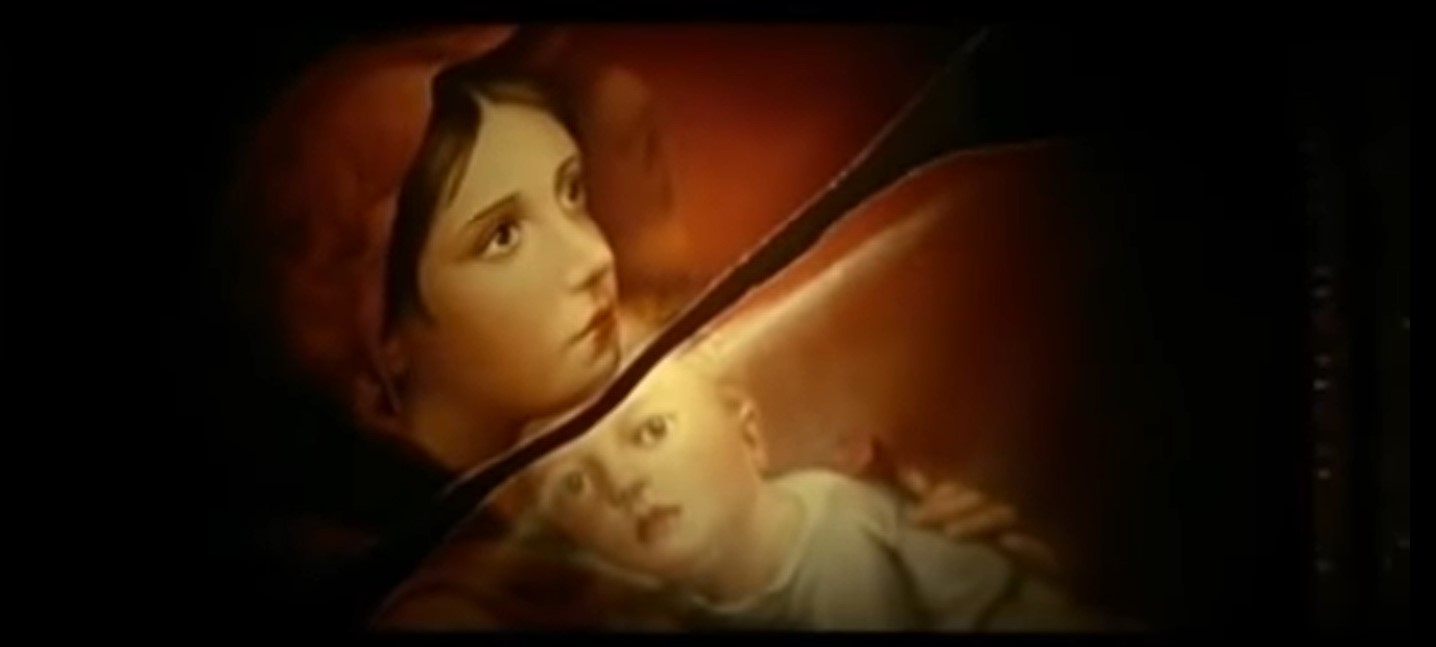
Ismael’s fixation toward Leire is so tremendously opaque without much exertion it’s difficult to understand the criminal’s ultimate motives, leaving audiences with a shrouded aftertaste of open interpretation.  Perhaps guilty from killing his mother all those years ago and nearly killing her, a wash of responsibility for her now placid and childish existence courses through him, driving him to do the bare necessity in taking care of her.  Another facet to Ismael’s curious interest is Leire’s inherent beauty despite her absent situational awareness.  His attempts to make the young woman’s empty expression become joyous with a smile fails, as if that blank-faced barrier keeps him from moving forward with something akin to being romantically involved.  In a couple of brief, uncomfortable viewing stints, Ismael gropes with the second time being passionately fondled by Maite in attempt to win over affection in what Maite believes is a duel between Leire for his attention.  Leire can be interpreted as a burden that has passed from the mother, hence the title, to Ismael, an assuming responsibility pseudo-father figure.  When Ismael kills Leire’s mother during the bungled burglary, a hint of a smile extends upon her face before the blood drips down her eyes in a fantastic POV shot by cinematographer Javier Aguirresarobe.  Supporting this theory is the Renaissance painting of mother and child with a tear in the canvas between them, a painting that Ismael lingers over for a few seconds while rummaging through the art restorer’s home.  The ambiguous nature of “The Dead Mother” only succeeds because of the confident performances and Juanma Bajo Ulloa’s august eye for the impeccable shots he wants and achieves. 

“The Dead Mother” arrives onto a limited-edition Blu-ray, to the tune of 3000 copies, from Radiance Films U.S. line.  The new 4K scanned transfer, restored from the 35mm negative and stored on an AVC encoded, high-definition 1080p, BD50, is presented in a widescreen 2.35:1 Cinemascope aspect ratio.  Juanma Bajo Ulloa oversaw the pristine cleaning of film strip defects and the new, frame-by-frame color grading at the Cherry Towers lab in Madrid, Spain.  The excellent work by the restoration company and Ulloa’s supervision of the process resulted in a naturally clean edged and detailed saturated transfer to rejuvenate the image with a fresh look.  The overcasting shadows and slate aesthetics with brilliantly hued low-key lighting suggest an immense lugubrious tone throughout, accentuated by the antediluvian structures. The Spanish language uncompressed 2.0 stereo audio absorbs what’s absent, which isn’t much, with an uninhibited, original fidelity of the dialogue, surrounding milieu, and the bordering whimsical string soundtrack by Bingen Mendizábal. There are no hints of hissing, cracking, popping, or fragmented damage of the audio track that persists on being punchy with every Ismael scuffle down to the very rustling of the chocolate wrapper in Leire’s chocolate-stained hands. While range is plentiful and natural, depth is not as utilized unless absolutely necessary, such as with the oncoming horns of the diesel trains in the trainyard or Ismael whistling between the pews of a decrepit church shot from the chorus balcony. English subtitles are available and optional. Special features on this limited-edition set include a Spanish audio commentary by the director with burned in English subtitles, The Story of the Dead Mother an archive behind-the-scenes featurette of retrospective interviews from 2008 and some raw footage of takes that’s, again, in the Spanish language with English subtitles, Bajo Ulloa’s short film “Victor’s Kingdom” aka “El Reino de Victor” from 1989 and now restored in a 4K scan, the film’s trailer, and photo gallery. Physical attributes impress within the clear, slightly thicker amary Blu-ray case that’s been conventional distribution use with Radiance Films in its near retro, austere facade. Sheathing a reversible cover of the original media artwork inside, the outside cover continues to remind me of its Arthur Fleck appeal with a doleful Ismael Lopez in his very best clown make up. Both discs, the Blu-ray and the CD soundtrack, are overlapped and locked in place pressed their respective black and creme coloring scheme. On the insert side contains a 35-page color booklet filled to the brim with captured film images, promotional images, and cast-and-crew posed pictures along with the CD track listing, cast and crew breakdown, and expressionism written pieces and essays by Eduardo Bajo Ulloa, Juanma Bajo Ulloa, Nacho Vigalondo, and Xavier Aldana Reyes. The unrated feature has a runtime of 111 minutes and his region free for all you worldly, cultured lovers of cinema out there. The mother might be dead but Juanma Bajo Ulloa’s converging of cynical odd behavior with the breakdown of status quo by a wicked curveball makes for a darkly cherub of Spanish filmmaking worth coddling in Radiance’s exceptional release.

“The Dead Mother” Lives on a 2-Disc, LE Blu-ray/CD Set from Radiance Films!

An EVIL Re-Imaging of a Donald Farmer Classic! “Savage Vengeance” reviewed! (SRS Cinema / DVD)

“Savage Vengeance” now available on DVD home video!

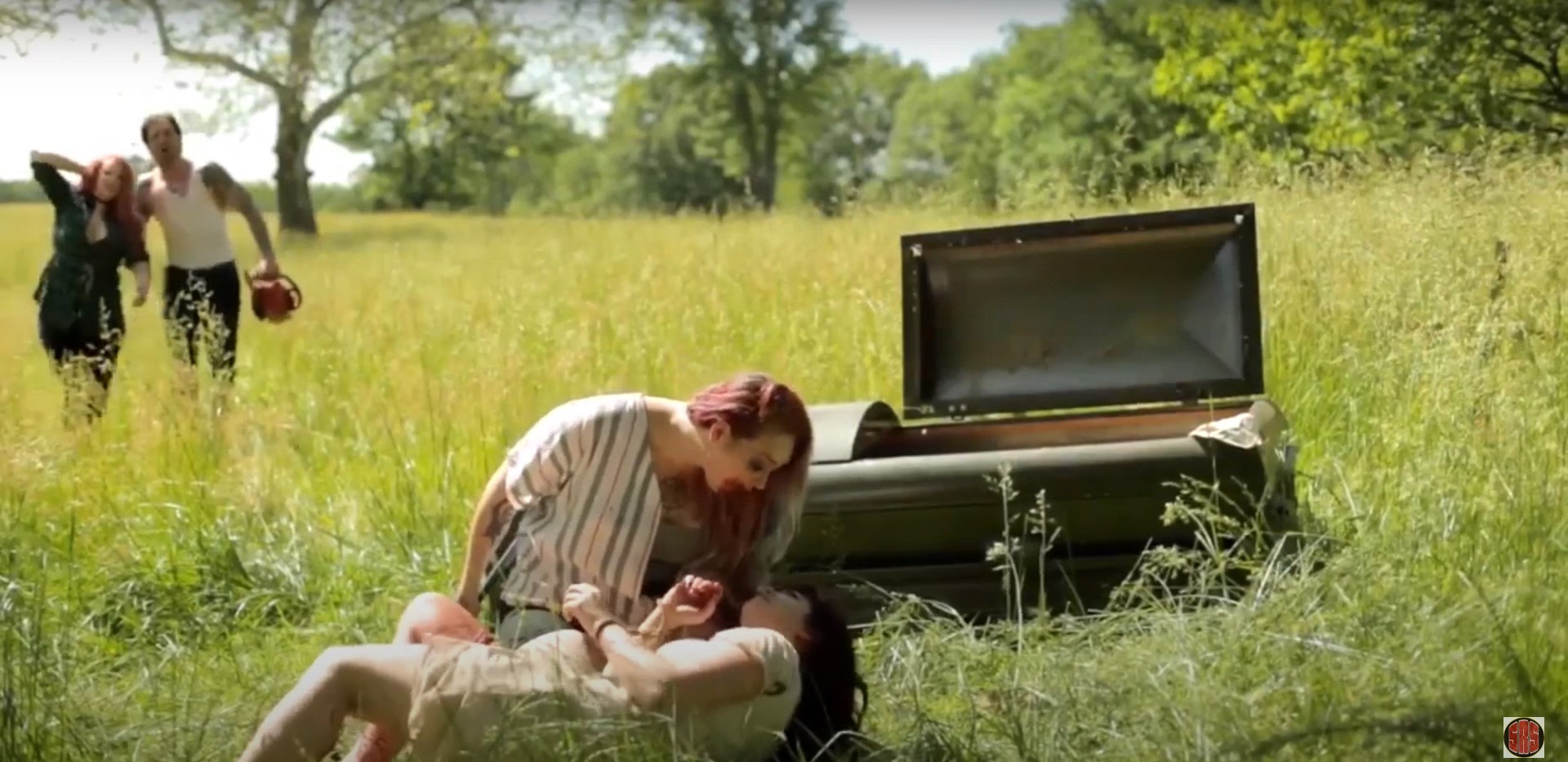
Best friends and law students Tara and Meghan take a much needed depressurizing road trip and run into a Ronnie and Thom, a pair of locals with car trouble looking for assistance at the nearby gas station.  Hesitate to offer a ride, Tara agrees to their proposal of a life for sleep accommodations at Ronnie and Thom’s lake house in the Ozarks.  A serene lake and a drink in hand relaxes Tara’s foremost suspicions about the sketchy couple who seemingly chill and all about a good time catering to Tara’s stressed out needs.  The next thing Tara remembers is waking up to Ronnie and Thom standing over her, tied up, and her and Meghan threatened to become dinner for a pair of bloodthirsty cannibals who’ve just about wrapped up their previous viscera meal, but Tara isn’t as innocent as she appears as she shares the same killer instinct as her captors.  A struggle ensues, the tables begin to turn, and what was once prey has now become the predator!

A re-imagining of Donald Farmer’s 1993 original of the same title starring “I Spit On Your Grave’s” Camille Keaton, director Jake Zelch takes a pun-intended stab at “Savage Vengeance” with a twist in the schlocky sordid and dark tale by replacing Farmer’s original motivation for revenge for cannibalistic carnage.  “The Haunting of Mia Moss” and “The Dark Web Tapes” director helms Farmer’s story as a base while attempting a revamp and build upon with new characters and new plot devices along with contributing screenwriting by “Another Evil Night’s” Jason Harlow and “Lycanimator’s” Sébastien Godin.  Shot in Tennessee, “Savage Vengeance” is a production of Zelch’s Missouri based company, Unreality, and is produced by the filmmaker and headlining star Tamara Glynn (“Halloween 5:  The Revenge of Michael Myers”) with Donald Farmer and Curtis Carnahan as executive producers, marking the third feature film collaboration between Carnahan and Zelch.  Stratosphere Films handled the theatrical distribution.

Zelch’s “Savage Vengeance” has an identity problem.  Having reformulated the original premise, which doesn’t offend me as I think reinventing the wheel can sometimes be fresh and creative under the same directive title, the script has trouble nailing down a proper principal by shooting, by my count, three different segments disconnected from each other and with three different protagonists leading the charge in each.  Tamara Glynn receives top bill despite only garnering about 10 minutes of screen time in the beginning due to much of the opening footage being lost due to backup hard drive failure, according to Zelch on the director’s commentary.  The “Terrifier 2” and “Halloween 5” actress is essentially captured, chained, and trying to find a way out after waking up in a scarce-looking attic but because of her aforesaid credits, the DVD front cover banner head makes for a great advert sell point.  Instead, modern scream queen Roni Jonah (“Kill, Granny, Kill!,” “The Bloody Man”) becomes the runtime face of “Savage Vengeance” as Jake Zelch intends for the girth of the story.  Jonah, as Tara, paired with Jasper Evans as best friend Meghan heading toward an in schtook situation not only the cannibals on the road ahead but internally with rape, pregnancy, and a dysfunctional love triangle that has more to do with illicit lust than love with Tara’s boyfriend David (Dave Ivan), a theme much closer to the original essence of Donald Farmer’s rape-revenge exploitation.  However, what’s assumed is taken for granted and not utilized to all its pathways the concept could have complexed the characters rather than freezing them in a face value understanding.  That understanding comes a tool against cannibals Ronnie (Kat Underwood) and Thom (Cody Alexander, “Eat the Rich”) who are your typical crazed anthropophagus antagonists, as well as sadistic sodomist as we see with Adam Freeman’s (“Debbie Does Demons”) character, of film.  When these characters meet and try to be merge an acquaintance or friendship, in Tara’s shoes, I might just be a little more judgmental of two heavily tattooed wanderers, the male sporting a knife sheathed in holster around his backside as he walks around his wifebeater tank-top, handing out to me mysterious drinks on their isolated, rural property.  The whole setup doesn’t do the story justice to Tara’s decision making but then again, she’s not as pulled together as Zelch’s useable footage relays.  The third segment pops up after initial closing credits with Jessa Flux (“Debbie Does Demons”) to possibly offer up an imminent sequel “Savage Vengeance 2:  Better Off Dead, starring Flux.

Almost seems unfair to cover and review Zelch’s “Savage Vengeance” because of so much of the footage being forcibly cut and the shot narrative going through essentially restructured surgery to make pieces segue and make sense on screen.  Honestly, the recut doesn’t work, leaving too much unanswered and too much to decipher to put a solidified stamp on the series of events.  Thus pushing forward the abridged cut may warrant an impartial review until a more definitive, complete cut sees the light of day.  The material “Savage Vengeance” shows currently splices together the MPEG files that survived the great blue screen of death and transfer fail, such as with the Tamara Glynn opening that’s only connected by the brief present of Ronnie eating cat guts and Thom surprising and looming over Glynn before her deafening scream.  The additional footage explained by Zelch added context to the cannibals and provided a memorable kill to setup the tone of Zelch’s homage to late 70’s rural horror.  Fortunately for Zelch, horror fanatic brains are wired differently, able to fill in most of the gaps of a formulaic building blocks; however, the success of this can also be attributed to Zelch’s scramble editing to make a semi-intelligible story with what’s left contextless of the low budget nitty-gritty.  Another highlight is the blood with pretty-penny special effects from the multi-hat wearing Kat Underwood and her colleague Erin Felts who drum the gore the best they can with prop dummies for splitting in two, a whistle dogged dildo-penis gag, and saucy blood and guts to give the film the edge it needs to tribute Farmer’s ferociously.

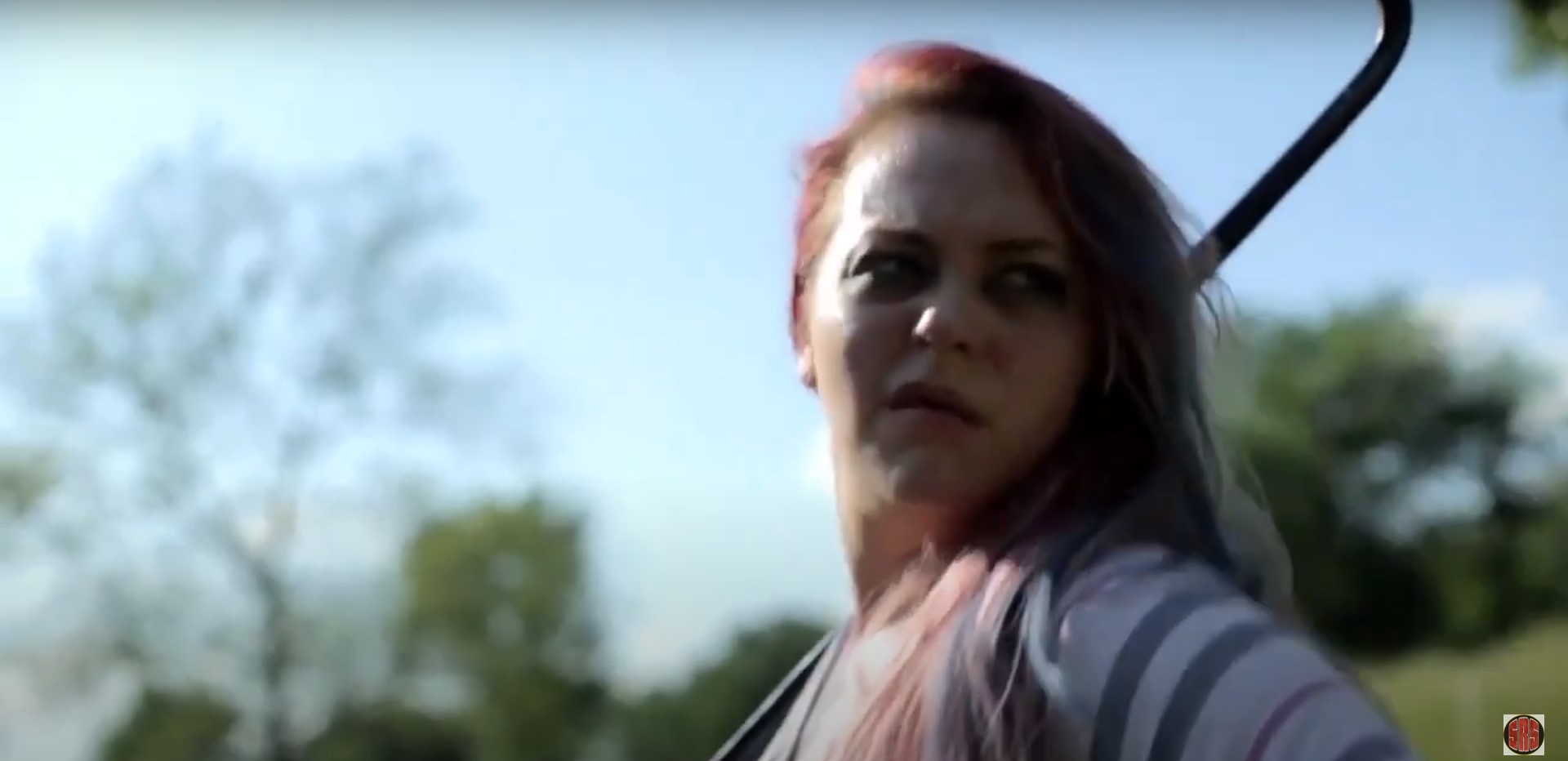
I’ve said it once and I’ll say it again, I do applaud SRS Cinema’s time, effort, and creativity in the physical media artwork as the gorgeously dripping blood, sex, and horror pulp is quintessential eye candy for fans in what is typically a microbudget and mediocrity poor effort in the graphic cover art department of terribly arranged and hack job compositions. None of that rubbish here with many of the SRS Cinema titles, including “Savage Vengeance” on DVD.  The 1.85:1 widescreen and 720p standard definition presented DVD5 might have a deliciously illustrated cover but the film itself is marred by the artificial VHS overlay of tracking lines and macroblocking, especially when Zelch aims for a 70’s exploitation veneer that was mostly 16 or 35mm.  Instead of a grainy-laced, dirt-spotted, cigarette-burned, and scratched up celluloid frames, or a resemblance of something akin to it, “Savage Vengeance’s” aesthetics only bask in the softer details of lower resolution clarity and in the ethereal of a delicate lighting that eliminates shadowy contours that offer depth.  Frame rate also seems to be slow down some sporadically throughout as well as the erratic focus as if you’re coming out of sleep and trying to regulate your eyes from dark to light.  The English Dolby Digital 2.0 audio mix stems from the onboard, built-in camera mic that captures the surroundings which has pros and cons, such as diluting the dialogue to a subdued audible.  Not a ton of balance from the surrounding environment when augmented sounds, like the zaps of the electric fence or the overpower roar of chainsaw decibels that don’t change in closeups or wide shots, make their way into the fold.  No subtitles are available.  Bonus features include a Jake Zelch commentary with scene-by-scene backstory and explanation as well as the full explanation of his lost footage, actor Adam Freeman commentary that revolves around his acting craft, male nudity on screen, and his opinions of rape and sexual assault in general, a gallery slideshow, and the feature’s trailer.  Aforementioned, the illustrated cover of Tamara Glynn looking slyly and sexy holding a blood chainsaw is primo quality on front of the standard DVD case.  Inside lies no insert and with the same image on the disc art. Until a completely restored version of director Jake Zelch’s vision, the filmmaker’s “Savage Vengeance” can barely stand as perspicuous testimony of an uncalled for 30-year-reimagining.

“Savage Vengeance” now available on DVD home video!

The Picked-On Runt Can Be EVIL Too. “Little Corey Gorey” reviewed! (SRS Cinema / DVD)

“Little Corey Gorey” Uncut and on DVD home Video at Amazon.com!

After losing his father to a fatal accident, little Corey Gorey is forced to relocate to a new home with his overweight, alcoholic, and verbally abusive stepmother and similarly so, racist brother-in-law, Biff.  Constantly receiving the short end of the stick, Corey tries to retain a normal life by buying Ozzy Osbourne concert tickets and meeting girls at high school, but when his bigger, older Biff raids Corey’s broom closet of a room searching for a pinup one-sheet, he discovers the concert tickets and hooks up with Corey’s dream girl from school.  In a fit of rage, Corey accidently kills Biff as the two scuffle and with that Corey sows the seeds of salvation as the teen who was constantly tormented and afraid to talk back now is eager to take his life back.  Keeping his stepmother tied to the couch and gagged from making noise, Corey dismembers what’s left of his brother into the storage freezer and includes the sociopathic girl of his dreams into the fold but when a nosy mail carriers begin to snoop around and a drug dealer is seeking payment for the cocaine he fronted Biff, the bodies begin to pile up and Corey finds himself over his head.

Talk about your unhappily ever after Cinderella story, “Little Corey Gorey” goes from rags to wreaking havoc by way of severing limbs and meat grinding body parts all the while trying to sweep a rebellious older high school girl off her feet in an attempt to run away from all the carnage and abusive adults.  Bill Morroni, credited as William Morroni in the film, wrote and directed his debut feature in sunny California that is anything but sunshine and good vibes in this 1993 released, dark horror comedy obscure to many horror fans. A real highlight of early 90’s low-budget horror done right with smartly placed and highly effective practical effects, “Little Corey Gorey” is a begrimed gem waiting to shine, produced solely by Morroni under his self-funded principal production over the course of a few weekends. 

What makes “Little Corey Gorey” half as enjoyable as it turns out to be is because of the cast.  Once plagued by unfortunate circumstances, such as an example with the untimely death Divine (“Multiple Maniacs,” “Pink Flamingos”) who was to have a lead role, that one might consider the film be cursed celluloid even before principal photography, Morroni was able to overcome with a perfectly suited set of talent to tackle Corey Gorey’s gruesome exploits of dysfunctional family survival.  The titular role was awarded to Todd Fortune whose diminutive size really plays against the larger and towering figures that make his life a living hell.  Divine would have stepped into the shoes of wicked stepmother Betty and even though Divine would have done phenomenally in a constant-drunk state of a barraging verbal abuse and torment, Pat Gallagher filled the cankerous role with despicable-inducing results and gives a real witch of a woman performance to not only Corey but also her actual on-screen son Biff.  Greg Sachs might be stiff as a board as the older brother with racist overtones and a compounding dislike for Corey, but Biff turns out twisted enough to be an antagonizing accomplice in building Corey’s pent-up survival garnished with ghastliness.  One of the more scene stealers is Brenda Pope as the bitchiest high school narcissist Jackie who has somehow swooned Corey’s rationality and has him hanging on her tongue with every lie.  From special feature commentary by Morroni, Pope was a real life true-to-form unpleasant person behind-the-scenes as well as in front of the camera but that doesn’t stop her good looks and devilishly delectable moodiness and conceitedness from drying out.   As a group, you can feel every resounding personality types and cluster of chaos that spits out sympathy for Corey despite the curated torture from those who are supposed to care for him and also feel not one ounce of pity for Corey’s tormentors turned minced meat at the hands of the water treading teen.  “Little Corey Gorey” has a neighborhood ensemble featuring parts by Edenia Scudder, Sabino Villa Lobos, Kristin Caruso, Bernice Smiley, John B. Tomlinson, and William Linehan has an escaped prisoner and mass murderer being built up by the news media with his convenient store killings only to be the only part of “Little Corey Gorey” to fizzle out in a subplot to nowhere. 

With a spiffy name, a thematically onboard cast, and some really good editing and camera work, “Little Corey Gorey” surprisingly has a lot going for it despite being shot on 16mm variational stock and using scratch audio, aka studio dubbing, that makes the 1993 feel and appear more rough and ready than necessary, like a wrinkled, toothless middle-aged man after smoking and drinking heavily for half his life, but in the grand scheme of things, “Little Gorey Corey” has held up moderately well in quality and in story.  Through the spikey colored wigs, cut off sleeve shirts, mullets running rampant, and good seat concert tickets with a price tag of $18 might have run their course over father time, bullying remains a hot topic to this day.  Dysfunctional family dynamics, blind and fatal obsession, drugs use, and being in the friend zone with a haughty hottie also hasn’t changed much.  You can’t help not feeling pity for Corey and the excruciating awkwardness of him pulling out all the stops in order for Jackie to notice his heartfelt, romantic gestures and advances only to be immediately blown out of the sky like a Chinese weather-spy balloon gliding over Montana.  Everything that happens to the thick-skinned kid culminates to a head, to a finale of penetrating his usually impenetrable, encrusted scar tissue of a shell that just seems right or justifiable that when the world pisses on you, you cut off its penis with a corded circular saw.   

“Little Corey Gorey” receives a new scan (upscaled?) of the 16mm source material and drops onto a re-release from SRS Cinema!  Though still framed in a full screen 1.33:1 letterboxed aspect ratio, the transfer looks much clearer than the original VHS release with brighter grading and an enriched image that delineates edges and some details.  The variation in 16mm stock is obvious, more so in only a handful of scenes in comparison to others, with only a very select few offering a shoddy, nearly obstructed view of focal objects.    One thing about the SRS Cinema DVD back cover is it lists a new HD transfer from original camera negative, but DVD can’t be high definition. Since the DVD and the limited-edition Blu-ray share the same cover, I assume this speck of information wasn’t removed, redacted, from the Blu-ray back cover. The English Dolby Digital 2.0 scratch track, aka dub track, is what it is – an on-budget audio format that has doesn’t quite run in the same space to the image but is still an impressive parallel audio track that synchs nearly identical to the actors’ mouths. There’s an obvious electronic hum throughout that never quits so the interference often drowns out slightly any ambient noise, if any, were added for depth and weakens the dialogue strength, which was not entirely robust at the beginning. Hair metal becomes “Little Corey Gorey’s” soundtrack to slashing with featured tracks from Creature because if you can’t hire Ozzy Osbourne to score your film, you get the 2nd, 3rd, or 10th best thing that brings the metal. The bonus features include a directory’s commentary, a 77-minute William Morroni interview that unboxes all the aspects of the film from individual cast bios to equipment availability and issues to marketing woes and to the whole kit and kaboodle in regard to his little movie, and SRS Cinema film trailers, including this “Little Corey Gory”. The DVD sports a beautifully grisly illustrated cover art, similar to what SRS Cinema accomplishes with all their other titles, with an accompaniment mustard yellow, retro-grading design. The disc art is duplication of the front cover art and there is no inserts inside the traditional DVD snapper case. The region free DVD comes with an uncut version of the film that has a total runtime of 91 minutes. “Little Corey Gorey” is a big gory lorry that drives a mean-spirited, misanthropic marvel right out of the 90’s and into our television sets as this forgotten film can no longer stay forgotten.

“Little Corey Gorey” Uncut and on DVD home Video at Amazon.com!

EVIL Masked as a Religion. “Bryan Loves You” reviewed! (MVD / Blu-ray)

All New Blu-ray release of “Bryan Loves You” on Amazon.com

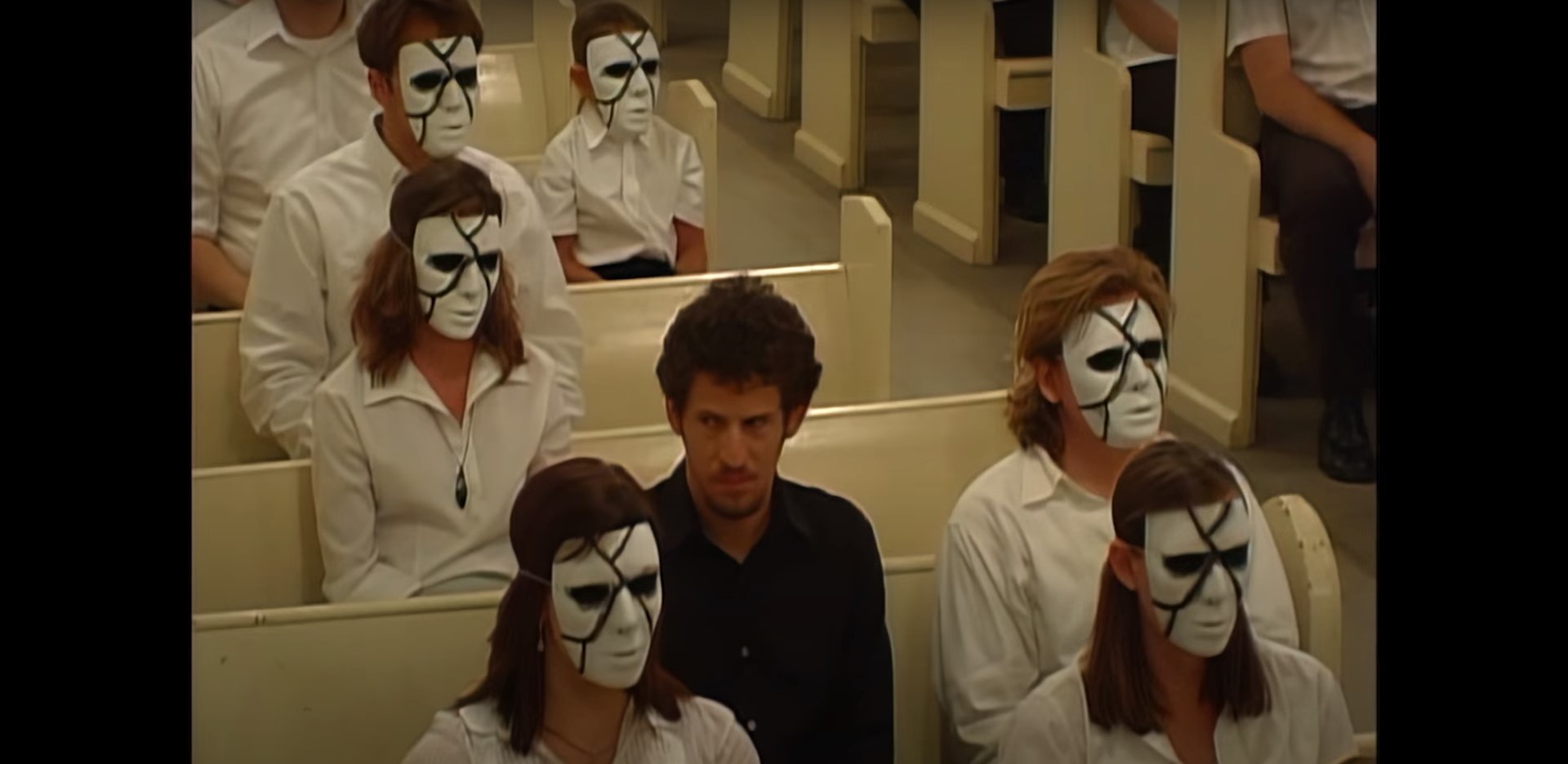
Something weird is spreading across a small Arizona town.  A chapter of a new religion has influenced most of the community into believing in Bryan, a pure and pious young boy from long ago who was brutally slain by the devil.  Jonathan, a local psychotherapist receives a camera from his uncle, also a health professional, with a self-recording that warns Jonathan that Bryan zealots are a dangerous, violent cult.  Deciding to document the situation himself, Jonathan repurposes the camera to clandestinely record the widespread Bryan gatherings and even infiltrate their church where they speak in tongues and wear the scarred mask of Bryan.  As Jonathan goes deeper into the uncomfortable insanities of Bryan’s world, the more Bryan followers takes an interest in reconditioning Jonathan. 

“Bryan Loves You’s” grainy SOV pseudo-documentary lacquer not only captures the icy blank stares, the unabating drone chanting, and the brainwashed coup of an insidious cult assimilating small town America, but the Seth Landau written and directed film also homogenously captures, all too presently well, that sense of ambivalent and conspiracy dread that knots apprehension uncomfortably in the pit of the stomach.  The 2008 released “Bryan Loves You” has the story set in 1993 Arizona made out to be a historical home video and CCTV recorded account of the analyzed and dissected suppressed footage coming to light for the first time incomplete with censored last nights and specific addresses to make the pseudo-doc appear more genuine and shocking.  Filmed in and around the suburbs of Scottsdale and Phoenix, Arizona, “Bryan Loves You” is a found footage subgenre production self-produced by Mike Mahoney and Seth Landau, under the filmmaker’s Landau Motion Pictures, and marks the debut feature film of Landau’s humble career that started roughly around 2003 as a production assistant on “Arrested Development.”

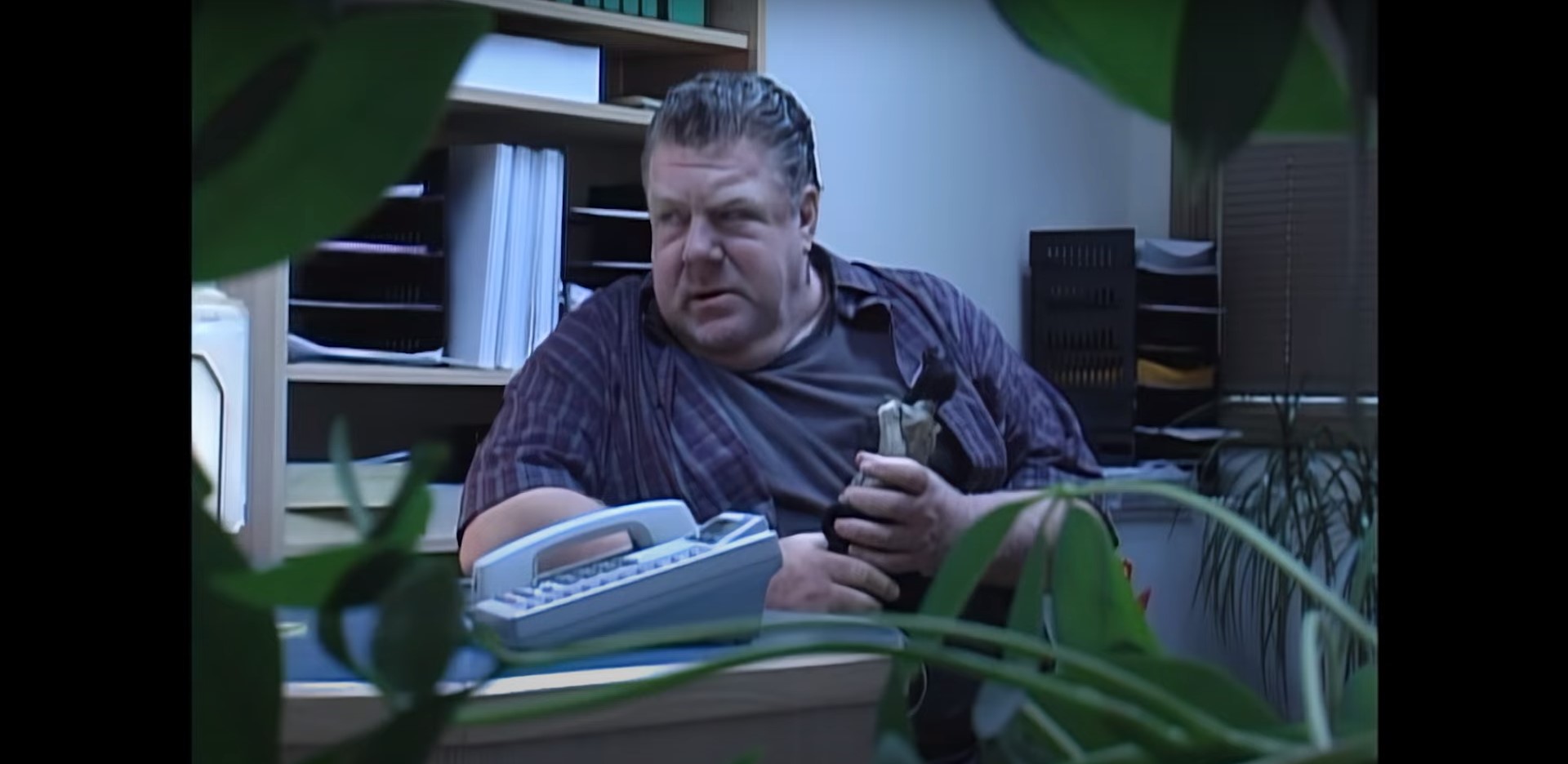
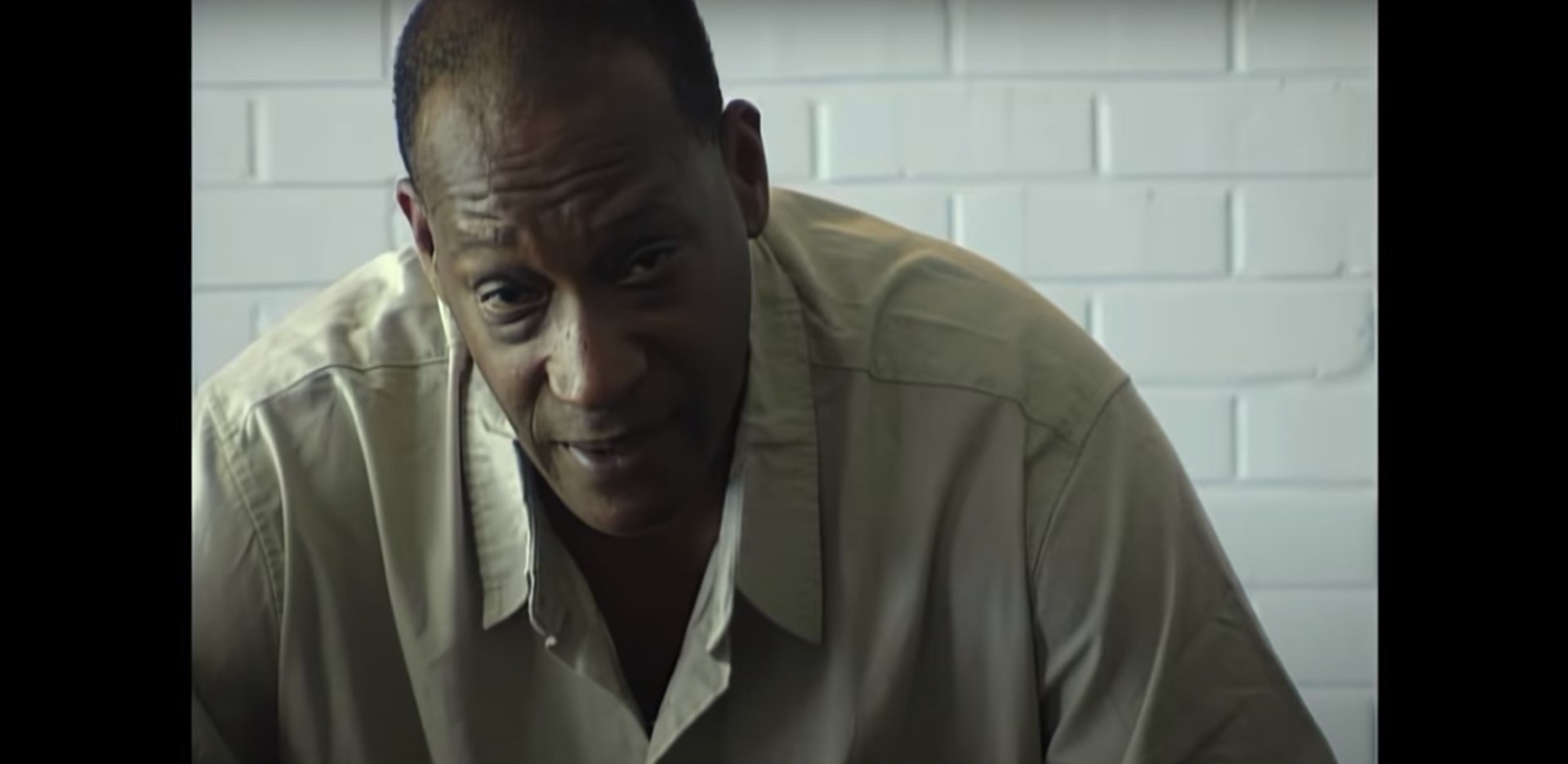
For the average popcorn movie goer, “Bryan Loves You” is about obscure as they come with a no-name director and a cast with relatively no-name actors with the exception of one that might have a chance of recognition by the common Joe Schmo.  Old heads may recognize George Wendt, one of the barflies from the sitcom “Cheers” and the Saturday Night Live sketch of Super Fans, in his brief and strange scene as a patient holding a doll that speaks to him about people who talk about him.  For chin-deep genre fans, Wendt is about the biggest A-lister you can have in an indie film and what’s unusual about “Bryan Loves You” is the stacked list of iconic made-by-horror names that make up the cast list.  It’s impressive.  Landau’s connection to the late great master of horror Stuart Gordon (“Re-Animator”) opened the door to George Wendt, who starred in Gordon’s “King of the Ants,” and, likely, led to the onboarding fan favorites such as Brinke Stevens (“The Slumber Party Massacre”), Tiffany Shepis (“Tromeo and Juliet”), Lloyd Kaufmann (“The Toxic Avenger”), Daniel Roebuck (“The Devil’s Rejects”), Chuck Williams (“Demon Wind”), and Tony Todd (“Candyman”).  Now, with these many names, none of them have starring roles and few have reoccurring scenes, but they are headlined to draw attraction for “Bryan Loves You.”  Honestly, the performances are hardly worth nothing.  Steves and Kaufmann have little dialogue and are shot at weird angles that makes them hardly recognizable.  Best scenes go to Tony Todd as a hesitantly disturbed and full of fear narrator standing in an empty board room and talking directly into the camera about what we, the audience, are about to witness, even directing viewers to turn away or to be ushered out of the theater (did this get a theatrical release?) if the content becomes too shocking to behold.  Seth Landau stars as the principal lead Jonathan who can’t be taken seriously as a psychoanalyst as there is no depth to the character in those regards.  Plus, as someone who’s supposed to uphold ethical standards, Jonathan breaks quite a few HIPPA regulations and breaks into houses with a camera, filming Bryan acolytes without their consent.  “Bryan Loves You” rounds out the cast with Tori King, Candy Stanton (“Exit to Hell”), Shane Stevens (“The Graves”), Jilon VanOver (“Bad Blood”), Tom Noga (“Anonymous Killers”), Jesse Ramiawi, Jacqui Allen (“Blue Lake Butcher”) and Daniel Schweiger (“Die-ner”)

Seth Landau’s found footage cult film is a rough cut of rudimentary psychological suspense restrained by its limiting low-ceiling budget.  The acutely hard cut editing and wonky framing is enormously puzzling within the narrative’s supposed single camera source documentary structure that suddenly diffuses into being a splice between Jonathan’s camera, which he loses halfway through the story, and a bunch of randomly placed CCTV footage across all of Arizona, in which some scenes are randomly placed in the desert where no structures are seemingly present to house a camera.  Who gathered and edited all this multi-video footage together?  Or does that play into the mystery, no matter how illogical, of adding to “Bryan Loves You’” unsettling allure?  What Landau does accomplish compares closely to what directors Eduardo Sánchez and Daniel Myrick were able to profoundly achieve with their unexpected breakout found footage blockbuster, “The Blair Witch Project.”  Now, I’m not saying “Bryan Loves You” had the audience gasping power as the “The Blair Witch Project” but the air in the story still feels very uncomfortably still, like in holding your breath, because something sinister is closing in and that type of disturbing presence, coupled with the erratic demonic behavior boiled to the surface if love for the almighty Bryan is absent, is all too relatable in today’s political climate.

Though “Bryan Loves You,” MVD Visual really loves Bryan right back with a high-definition Blu-ray release, remastered and upscaled from the original master source, a digital recorded standard definition, with an approved up-conversion of 172,800 pixels to over 2 million pixels per frame to achieve full HD.  For SOV, the handheld cam footage turns out more detailed than expected with suitable tinctures that are often less vivid in the found footage genre; however, there are still varying levels of quality from lower quality posterization to better than mid-grade delineation.  Though stated as presented in a widescreen 1:78:1 aspect ratio on the MVD Marquee Collection back cover, the actual ratio is a pillarbox 1:33:1 without straying from that display. The English language dual channel stereo track also has varying fidelity levels using the inconsistency of a built-in handheld mic but the good bones behind the range and depth retain the natural auditory proportionate. A few augmented audio tracks are snuck in for effect, such as the preacher’s demon-speak and the school PA system. English subtitles are optional. With a new Blu-ray release comes all new special features with a few short film-length interviews between filmmaker Seth Landau and George Wendt (44:50 minutes), Tiffany Shepis (50:49 minutes), Daniel Roebuck (59:35 minutes), and Brinke Stevens (31:46 minutes) touching upon more than just “Bryan Loves You” but also various career moments and other media cultural topics. Also featured are two commentaries: a 2008 commentary with Landau, select cast and crew, and JoBlo critic James Oster and a new 2022 commentary with only Landau. Plus, a brand new 2022 theatrical trailer. “Bryan Loves You” draws parallels to the 1993 Waco, Texas cult led by David Koresh of the Davidian sect preaching fire and brimstone, but writer-director-product Seth Landau adds his own supernatural concoction in a trade-in of doom and gloom for mindless devotion and diabolism that turns folks into followers and flesh-hungry fiends at times. Maybe not the prime cut of the cult genre but does stand out even if you don’t really love “Bryan.”

All New Blu-ray release of “Bryan Loves You” on Amazon.com