Starve EVIL With Unseen Faith. “A Banquet” reviewed! (Second Sight / Blu-ray)

After the long-term care of her terminally ill suffering husband, he suddenly commits suicide right in front of her and right in front of their oldest daughter who just came home.  Holly must now pull it together for her two teenage daughters, Betsey and Isabelle.  Drowning in debt to maintain a wealth front of normalcy, Holly puts on the facade to juggle life’s adversities to order to keep the family above water, but when Betsey is overcome by an apocalyptic vision that intermittently possesses her behavior, Holly’s unsure of how to cope as any threats of committing Betsey for treatment is rebutted by talks of suicide.   Betsey goes into deep trances, deep sleeps, and won’t eat despite not losing any weight and as imaginations run wild of what’s driving her unusual behavior, Holly must contend to survive and triumph not only in her daughter’s wellbeing but in all of the seemingly insurmountable problems threatening to tumble down and crush her spirit.

If you’re a fan of elevated horror then Ruth Paxton’s debut dysfunctional family drama horror, “A Banquet,” will tickle your thinking pickle.  While some would argue there is no need for elevated horror in the genre, sometimes exercising the old thinker can be immensely stimulating as well as scary in the same breath.  The 2021 psychological thriller-horror hailing from the United Kingdom was one of the first productions shot in the thick of government issued pandemic lockdowns that tossed the moviemaking job market into a frenzy, scary void of uncertainly and, what seemed like, an eternal limbo, similar to what “A Banquet” offers in its multifarious themes and interpretations that involve faith and religion, family hierarchy, and postural image.  With many departmental crews and cast out of a job and unable to find work during forced lockdowns, “A Banquet” became a beacon of hope and a chance to indulge a passion no matter how little it paid.  “A Banquet” is penned by Justin Bull (“Merge”) and was secured by first time producer Leonora Darby with Nik Bower (“Replicas”), James Harris (47 Meters Down”), Mark Lane “Cockneys vs Zombies”), and Laure Vaysse (“A Dark Place”) co-producing the conglomerated production from HanWay Films, Riverstone Pictures, Tea Shop Productions, and Reliance Entertainment Productions 8 LTD.

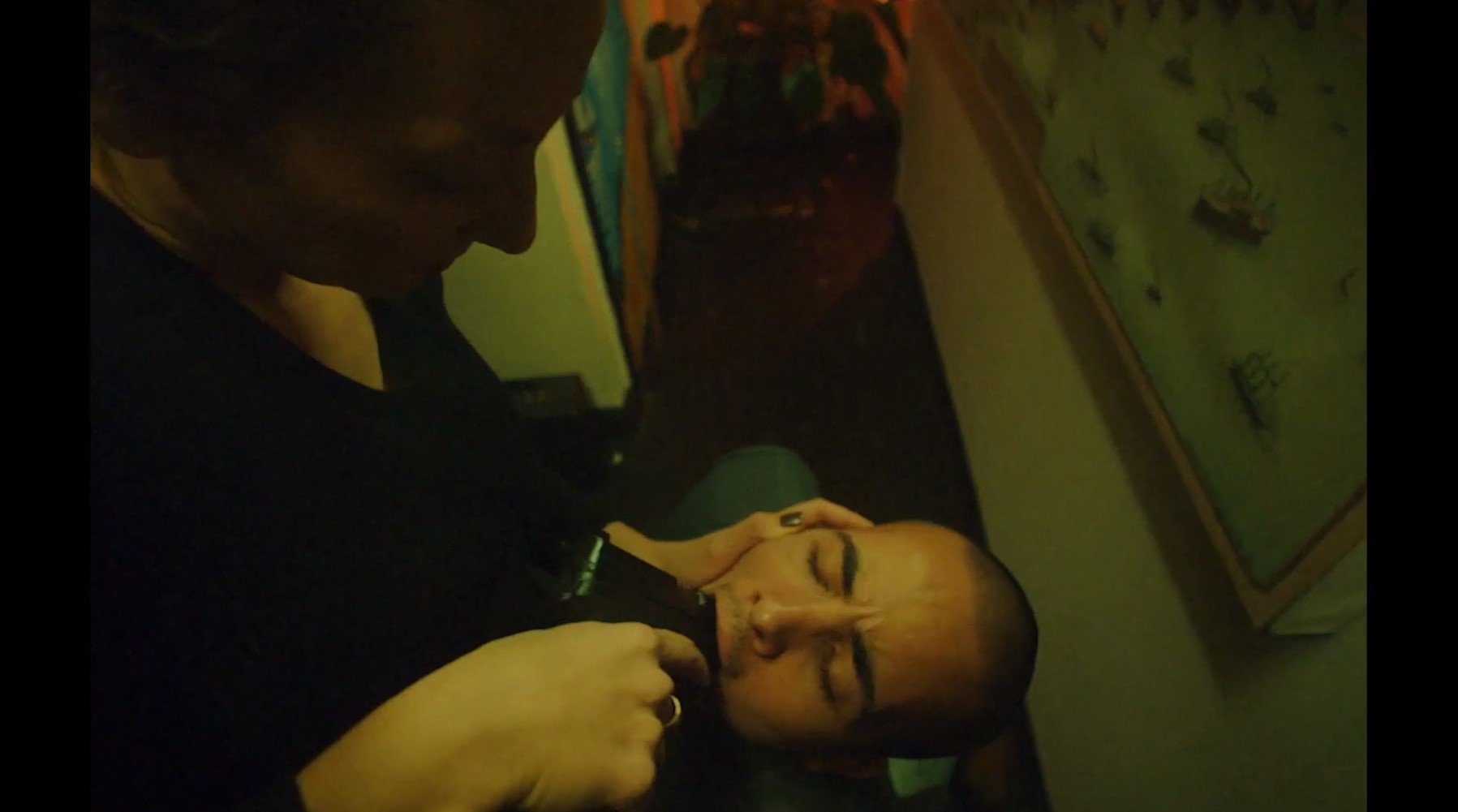
“A Banquet” surrounds around a nuclear family minus the patriarch who immediately removed from the picture within the first five-minute opener in a powerful scene of weary difficulty, distressing pain, and a harsh untethering of a burden that begins the inklings of the uncanny to come. Enter mother Holly (Sienne Guillory, Paul W.S. Anderson’s “Resident Evil” franchise) and her two daughters, Betsey (Jessica Alexander) and Isabelle (Ruby Stokes), into the frame weeks, maybe months later, and resided to the loss. Playing the center of concern is the raven-haired Jessica Alexander in what is one of her first feature film performances and it’s a doozy.  As Betsey, a mild-manner older teenage girl at the forefront of adulthood, Alexander earns the chance to showcase herself in a variety of ways with a role that transcends from a docile daughter to a variable vessel of unknown origin that’s haunting and unpredictable as you can never tell what’s taken control over Betsey is naturally good or evil.  Alexander even gets to dip her toes into, or rather dig her fingers into, gross and horrifying practical effects with brilliant results.  Opposite Alexander in the role of the mother, Holly, is Sienna Guillory, a beguiling veteran actress now in the throes of maintaining the routine and keeping appearances aggregated up to snuff.  Guillory exudes a bottled-up pressure that’s so immense it can be translate right off the screen and into the viewer.  There’s plenty of tension in the story but most of it is concentrated right on Guillory’s embodiment of a mother treading desperately in deep waters.  A maelstrom of frustration, fear, loathing, and neglect eviscerate Holly open to shoulder her family’s bleeding and she claws frantically, with poise, to cauterize the fissure.  Isabelle is a fascinating and almost unintentionally forgotten character that is meant to evoke that effect as the neglected younger sister.  While we’re constantly orbiting Holly and Betsey’s, we lose track of Ruby Stokes’s Isabelle yet the upcoming star for Netflix’s “Lockwood and Co.” Stokes paints a potent psychological picture of Isabelle being on the backburner.  Raw and tragic, Stokes subtly pushes Isabelle, who initially is the more cavalier and disobedient of the two sisters, to strive for attention in her own way whether be that longing glance into the stands when her mother isn’t paying her mind during figuring skating instruction or wanting to reluctantly engage in alcohol and sex just to outlet that notice me energy elsewhere.  Concluding this bloodline of women is the more draconian matriarch, Grandmother June, with an uncompromising and plain-spoken fascia erected by Lindsay Duncan (“Body Parts”).  Duncan’s fine snide performance compounds the pressure on Holly and is a cold bucket of ice water to her granddaughters when speaking her mind, telling them simply stop pretending, and remind them of their mother’s own historical mental problems in a matter-of-fact tone.  Between the four, there’s individualistic dominance over each of their domain without an ounce of withdraw or relief until the bitter end and that dreadful dynamic sets the tone for the “A Banquet” austere veneer and tone.

“A Banquet” is a lot to unbox and chew on in this women-driven created film.  Open for a many number of interpretations, based on one own’s spiritual outlook or personal opinions, Ruth Paxton tees up a broader theme of centrical growth of stepping outside another’s shadow.  The message can be applied to Holly and her two daughters as each one of them attempts to move forward or past a routine of some form of contempt.  Isabelle is trying to get out of her sister’s shadow, Holly bristles against her overbearing mother, and Betsey is being supernaturally guided through a symbolically painful transition of growing up into an adult as if the process came naturally. Blunt defiant moments shine Betsey’s overall separation from mother’s control, such as threatening to kill herself if her mother institutionalizes her or in during the number of elaborately prepped dinners that Holly slave over are just pushed aside and untouched by Betsey. Those dinners, in themselves, are a sign of privileged with fine dining right at their fingertips with no sign of hot dogs or sloppy joes in sight. Holly strives to maintain that sense of luxury, which is another form of control but, in this case, is Holly’s mother June whose elitist fundamentals enslave Holly to live up to the hype. Systematically, each member of the family, working up the ladder from youngest to oldest, breaks the inherent status quo. What Betsey undergoes is mystically charged after she emerges from the woods a changed woman and what might seem like a possession of sorts, we don’t exactly know if the extent of what inhabits her is wicked or actually good as the pendulum sways constantly between being enlightened and being cursed. There’s plenty of allusions toward a religious experience with encouragement of faith and rapture talk that not only spooks Holly but also makes her the primary subject of Betsey’s claim to save. When the time does come, and Betsey passes through a substitutionary atonement, the end scene shows Holly being embraced by a candescent light that illuminates from within her. Is it being saved or is it something else? Ruth Paxton smashes her first feature with an elevated deconstruction of a family obliviously rotting at the core and attacks the film with dispirited ambiance sewn to dread.

Feast your eyes on the new limited-edition Blu-ray set of Ruth Paxton’s “A Banquet” from Second Sight films. The region B, PAL encoded UK boxset presents the film in 1080p widescreen 2.39:1 aspect ratio with a frame rate of 23-24 fps. David Liddel’s deep and encroaching cinematography of somber is highly effective in dulling out any kind of hope that might try to sneak in and with Liddel’s close-to-mid shots of macro-sized foods of all fresh and decaying varieties and in the middle of the more volatile struggles between mother and daughter opens up “A Banquet” to a plethora scene being uncomfortable moments. Details are sharp and colors are about as rich as Liddel can make them inside a grey-covered world. The English language set comes with two audio options: a DTS-HD 5.1 and a LPCM 2.0 stereo. DTS is clearly more robust through the various channels with a well-balanced mix. Other than a few outlier moments in the forest that disperse the dialogue in a naggingly boxy echo that doesn’t fit the environment, dialogue is discerningly clean and clear of obstructions and damage, as if there would be any on a digital record. Optional English subtitles are also available. Bonus material includes an interview with director Ruth Paxton Deformity of the Flesh on creating her first film during the height of the pandemic, an interview with star Jessica Alexander Improvised Exorcism in which she discusses her experience soup-to-nuts from hiring to completion, an interview with producer Leonora Darby Producing a Feast who notes about the difficulties of being a first-time producer in pandemic time, an interview with cinematographer David Liddel Dark Edges on how he creates “A Banquet’s” gloomy aura and creative shooting angles, the Q&A from Glasgow Film Festival with Paxton, Alexander, and Sienna Guillory, and a making of featurette. The limited-edition physical boxset is a sturdy vessel of beauty with a rigid slipcase with new artwork by Jen Davies, a 56-page soft cover picture and essay book with thoughtful examinations by novelist Alexandra Heller-Nicholas (“1000 Women in Horror”), film critic and writer Jennie Kermode, and Heather Wixsn, the managing editor of the Daily Dead. The contents round out with 6 collectable art cards. The film has a runtime of 97 minutes and is certified 15 for strong threat, language, suicide, self-harm, and drug misuse. “A Banquet” is lavishly cataclysmic as a divinely damning dish of a broken, dysfunctional family made to order by first time director Ruth Paxton with more to say.


EVIL Has an Unbreakable Glass Ceiling. “The Five Rules of Success” reviewed (Ambassador Film Group / Digital Screener)

Upon his release from a long prison stint, a man incarcerated into the system since a young boy tries his hand succeeding in the outside world.  Alone with no family or friends for support and looking to keep his nose clean, he designs his own set of rules for success, including responsibly checking in periodically with his hardnose parole officer and saving up enough money and knowledge working at a restaurant to open his own.  When the path seems clear and everything seems to be falling into place for his chances as success, societal temptations gnaw at him as negative influencers tempt to steer him astray and his own goals try to illicitly fast track his efforts.  Will he fall into crooked society’s trap or will he persevere to reach his aspirations? 

Hard knocks.  That’s the simple, raw core theme of Orson Oblowitz’s “The Five Rules of Success.”  The 2021 crime-thriller is the third directorial from the “Corbin Nash” co-producer, but the second penned script following his debut, a seedy L.A. underbelly thriller “The Queen of Hollywood Blvd” from 2017.  The story is the first for co-writer Christian de Gallego who steps out of his international sales executive role to put his ideas onto paper.  As compelling as any story could be mirroring the struggles of a downtrodden ex-con in a society that browbeats and takes advantage of those on good intentions to rebuild, “The Five Rules of Success” is also a visual quest of imagery and color, produced and distributed by the Ambassador Film Group with de Gallego producing and Apurva Patel as executive producer. 

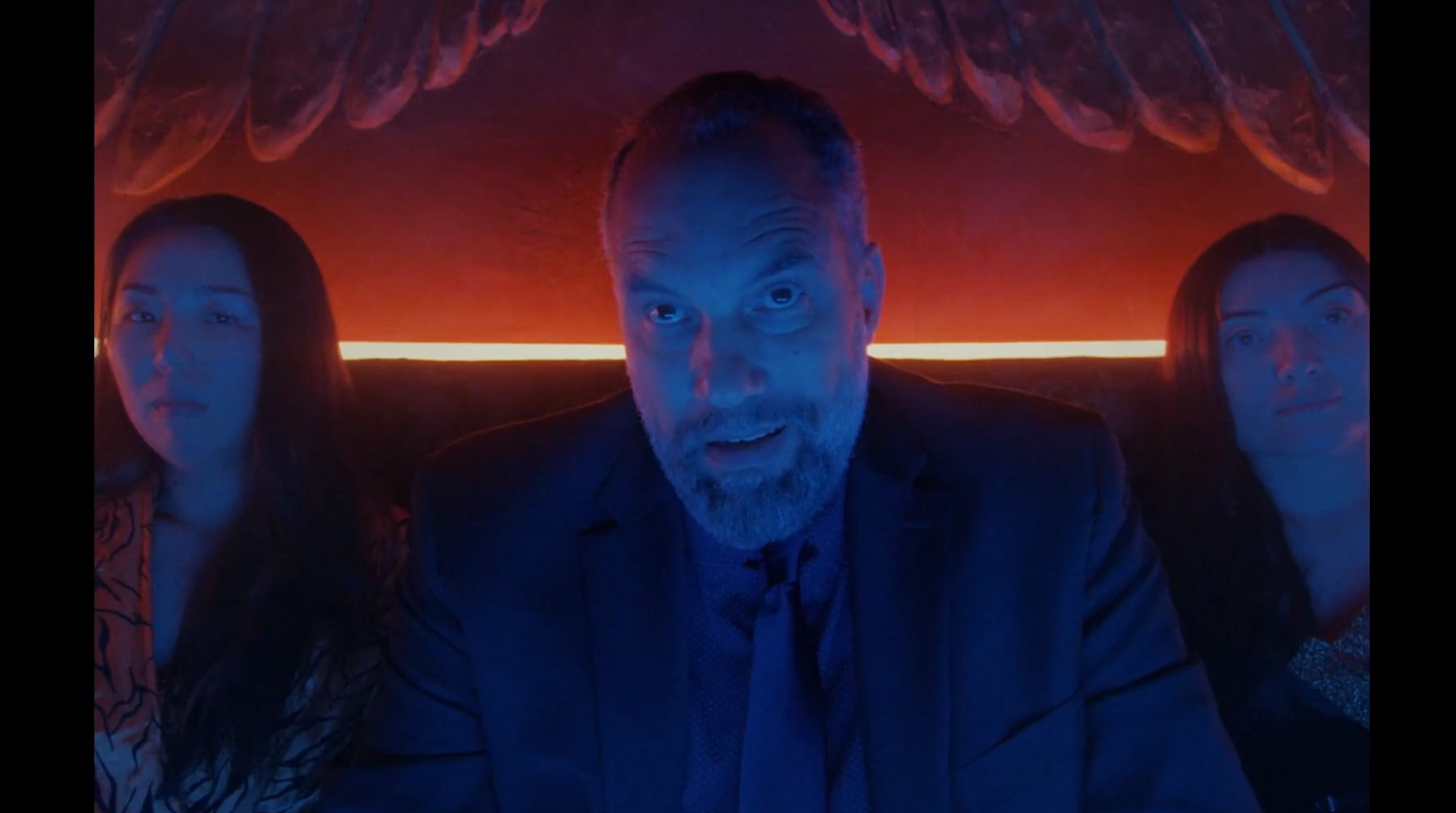
Stepping into his lead man shoes debut is Santiago Segura (“47 Meters Down,” “Scream: The TV Series”) playing the mastermind behind the five rules of success as X, as in X could be anybody.  However, X couldn’t have been more invested into than what Segura put into the story’s character as a man left to his own devices, without support, without a comforting presence, and without much guidance.  Segura’s range is limited to a monotone stare and tough guy attitude that never wavers or breaks and you have to wonder what X is fighting for to make his ambitious dream a reality?  Where does his determination root?  The fact that there is an absence in a grounding, sobering symbol all the more makes X more susceptible to the deeper end of society’s morality pool.  Along his rise up from the ashes, X meets colorfully sordid individuals feeding off his vulnerability due to either being on probation or stereotyped as being inclined to be favorable toward criminal activity…you know, being released from prison and all.  He’s befriended by Danny (Jonathan Howard, “Godzilla:  King of the Monsters”), a drug using goon who works alongside X at his father’s restaurant.  “Crocodile 2:  Death Swamp’s” Jon Sklaroff plays the stark contrasted Greek immigrant father, restaurant owner, and disappointed father to Danny.  Sklaroff and Howard couldn’t be more adversarial as a hardworking immigrant father who struggled to get to where he is today and a silver spoon fed son throwing his life away with riffraff, drugs, and as the restaurant’s cook.  The relationship formed between X and Sklaroff’s character is the wishful dreaming that X couldn’t be the son he never had and all X has to do is be patient and listen to a little friendly advice.  A more brazen and mysterious obstacle in X’s path is his parole officer, Emma, whose uppity authority holds X’s freedom in the palm of her hand played by Isidora Goreshter.  The line is blurry whether Emma has either the hots for X or is secretly a sadist and Goreshter offers to uphold that inscrutable presence with unscrupulous tactics. 

One way to crave out the meaning behind Oblowitz’s film is to not be standing high-and-mighty on greener pastures.  “The Five Rules of Success” sensationalizes real time problems with our prison system and the after effects of walking out a free man after years, if not decades, from a life that’s all you know to a life you know nothing about.  X’s past burdens him immensely as flashbacks, denoted in literal quick flashed cuts, of the downward spiral turning point in his childhood find their way into his determined route to success.  Ultimately, the past and present are one in the same where society sees not a boy, not a man, not a person, but a criminal and how we as a society be contemptuous of former convicts released back into our soicalled perfect public community.  There’s parallelism between each chaptered rule and the downward progression he sustains in his associations with the wrong people that start to twist his mindset, his rules, into the very unlawful reprehensible activities he tries very hard to avoid. Oblowitz does a nice job detailing X’s habits as a loner, working out his pent up frustrations by exercising, shadow boxing, and refining his rules, but the root of all evil is hard to ignore as cold hard cash, easy money for one of Danny’s illicit jobs, begins to lay out the possible steps to skip in order to fulfill his own ambition.  Despite the momentary monotone mishandlings from Segura, the story is well-written and mostly well played out with some scenes more intense than others with the subject material as you begin finding yourself rooting for the ex-con and booing the very society you yourself live in scot-free. 

Clocking in with a runtime at 83 minutes, “The Five Rules of Success” symbolizes the ups and mostly downs in the here and now game of chutes and ladders.  Having been released last month, July 30, be sure to check out the unrated feature available for purchase on your preferred platform of either iTunes or Amazon released by the Ambassador Film Group.  Oblowitz doesn’t just write-and-direct the film, but he also serves as cinematographer dabbling in a Kafkaesque arranged world with hints of tint, hints of different lenses, hints at overexposures, hints at strobe, and more.  Nearly every scene is comprised of a different shooting technique or editing visual that may or may not possibly induce a seizure as forewarned during the preface.  Stylistically, I can only compare and describe “The Five Rules of Success” as this:  Stanley Kubrick’s “2001:  A Space Odyssey” meets Darren Aronofsky’s “Requiem for a Dream.”  As far as extras go, there’s a quaint, no major dialogue memorandum scene after the end credits that speaks to vicious circles and permanency.  For a L.A. shot film that has more technique than bite, “The Five Rule of Success” is a success of an auteur’s written storytelling as well as the visual understanding of just how to tell that story in a surrealistic context. 

Rent or Buy “The Five Rules of Success” on Prime Video!

The Bends Can Be EVILLY Depressurizing. “Breaking Surface” reviewed! (Music Box Films / Digital Screener)

Two half-sisters, Ida, and Tuva, return home to spend time with their mother, preparing for a family dive in the frigid Norwegian waters near an isolated rock cliff.  When the mother withdraws because of her health, the sisters embark without her.  When a sudden rockslide traps Tuva, also the more experienced diver, between a rock and a hard place Ida must race against the clock to free her from being pinned to the bottom floor before viable air runs out, but with most of their gear under the rockslide rubble on the topside and only a few usable spare air tanks available, Ida, paying no heed to decompression sickness with her hasty reoccurring ascents to the surface, will do whatever it takes save her sister, even if that means being detrimental to her own life.

Scandinavian filmmaking has always been in this personally dissatisfying commercial stasis of public recognition oversight for years even though there are a number of projects, birthed from Sweden or Norway, that have the budget for success, compelling storytelling, and still fly shamefully under the radar and most audiences, speaking more for the U.S. based general admission moviegoers, don’t ever get the chance to experience without the bombardment of marketing or, perhaps more so, they intentionally skip over to titles with, who in large popcorn and soda glazed eyes, are well-known, recognizable thespian faces, or maybe a trailer they’ve seen during their morning daily talk shows and “Keeping Up With the Kardashians,” or for the worst reason of all, the subtitles are a big deterrent since Scandinavian films are in Scandinavian languages, but one of those films that depicts the immense Baltic beauty landscape but can also be edgy with touch of sensationalism is Joachim Hedén’s “Breaking Surface.” The director’s fourth feature length film in 2020 is woman versus nature, time versus the elements, when scuba diving hits direly rock bottom. Hedén wrote the film that’s presented by a Swedish and Norway co-production of companies, including Water Feature Films in association with Film i Väst, Film i Skåne, Umedia, Filmfond Nord, Sveriges Television, and Weggefilms. Julia Gebauer and Jonas Sörensson serve as producers.

At the core of the diving mishap are two sisters, Ida and Tuva. Half-sisters to be exact that are written with tremendous interfamily complexities because of their mother remarries Tuva’s father angle plus incorporating their own personal hang ups in adulthood with the genesis of their problem is stuck in the past. “Breaking Surface” is a woman domineered thriller, challenging the stereotyped patriarch activities of men and, to an extent, whatever role that is inhabited by a man is exhibited in not a good light. It’s reminiscent of the “47 Meters Down” films in more ways than one with scuba diving and an inclination for female principle characters dealing on hand with the cards dealt together to survive the elemental odds. Moa Gammel and Madeleine Martin play the respective leads of older sister Ida in the midst of divorce proceedings that comes complicated with two small children and has mother issues that she projects onto her younger half-sister, Tuva, who lives at the top of the food chain fearlessly and isn’t grounded by anyone, anything, or anywhere. Gammal and Martin instill into their characters a reaffirmations of their talents with Ida being a more recreational diver whereas Tuva lives and breaths underwater professionalism. This dynamic unfolds nicely when Tuva is trapped under a rockslide and her older sister has to be instructed, painfully detail-by-detail, what to do. At times, Ida is a character at a point of collapse because of how overly incompetent she can seem with no-brainer solutions; yet, this is where I believe Hedén to excel at scribing realism because no matter how frustrating can Ida’s actions be, any situation under that much pressure (pun intended) can discombobulate the mind, body, and senses. If my sister was trapped under a rock at the bottom of the sea floor, my id would explode and she would asphyxiate and drown before I could compute the situation. Yet, Ida comes around in her arc, completing more confidently and independently the challenges that face her despite their increase in difficult and severity with only minor eye-rolling cringes loitering in and between the second and third acts.

“Breaking Surface” is a modestly paced film with a slim runtime of 82 minutes that captures the entire trialing day odyssey of conquering nature, time, and death while decompressing fraught mental retentions of estranged sister and motherhood, parroting life circumstances, and a past event parallel that’s nearly paralyzing. As much as underwater thrillers excite as one of my personal favorite subgenres, there are downsides to “Breaking Surface” timing that felt limitless when Ida struggles to regain control from failure-after-failure of hopeless rescue endeavors of the most easiest of solution routes, but when the older sister resurfaces from below for a second time, a quick lap to a neighbors house didn’t quite jive with time and space, especially when the Sweden-residing Ida has to frantically read a map of a near alien Norwegian coastal topography. Miraculous, Ida is able to arrive at her destination, rustle about an absent homeowner’s isolated cabin for internet, phone, or an essential tool, and be back in half hour to scuba back down again toward her sister. I would imagine the series of event would have been on the better part of an hour, but what do I know about Norwegian landscapes? On the topic of knowing stuff, since I’m not a diving expert or aficionado, Hedén, in my eye, was able to sell explaining scuba diving jargon and actions with brief but natural expositions that forms innately with Ida’s recreational side of the activity. While not as tenderly macabre as “Let the Right One In” nor as wonderfully gory as the inane undead Nazi horror, “Dead Snow,” “Breaking Surface” is an oxygenated subaquatic air gasper tussling with submerged phrenic psychological and physical problems of two sisters trying desperately to save their frayed relationship.


As breathtaking as the Scandinavian artic north coastlines are, the icy waters of “Breaking Surface” will definitely take your breath away as an exhilarating underwater survive the clock time chaser. Arriving on VOD platforms on December 15 courtesy of Music Box Films under their Doppelganger Releasing banner, the film will be available on iTunes, Google Play, Amazon, Vudu, and YouTube presented in a widescreen, 2.35:1 aspect ratio, and in a Norwegian and Swedish language 5.1 surround sound with optional English subtitles. Anna Patarakina’s nominal two-tone cinematography induces a steely gray and blue cold environment of Scandinavian’s artic snow covered north. Patarakina captures the immense grandiose of Norway’s Lofoten’s mountains of serenity encircling their imminent, uncertain fate. Eric Börjeson joins the crew as the director of photography underwater and Börjeson, whose credits include “Let the Right One In (that unforgettable pool scene), keeps the shots tight from wandering beyond the cobalt blue, almost black, waters, fulfilling a nerve-splintering sense of disorientation. There were no bonus features included with this release nor were there any bonus scenes during or after the credits, but I did find Juliet Simms’ “100 Little Deaths” to be a great rock-n-roll outro singled to signify the multiple possibilities the two sisters could have met their maker. “Breaking Surface” flurries with a cliffhanging suspense in an extreme counterpart of blending family therapy with acute disaster that brings two incongruous sisters back into restored harmony.

No More EVIL Circling the Cage in “47 Meters Down: Uncaged” reviewed!


Mia and her family have moved from Chicago to Mexico’s Yucatan. As she struggles to acclimate into her surroundings and survives being the school’s most unpopular student, her father flourishes with his archeological findings of an ancient Mayan burial temple hidden under rising waters just off the coast. Mia and stepsister Sasha skip an unflattering weekend boat trip to join friends Alexa and Nicole who are privy to the underwater entrance of the remote ruin. The four use Mia’s father’s scuba gear to go exploring through the numerous narrow passageways and shrined openings of the burial temple, but their innocent adventure turns deadly when the sudden collapse of the entrance traps them inside. As they save every last breathe running dangerously low on oxygen, they come face-to-face with blind, monstrous Great White sharks with heightened senses of smell and hearing to track them down.

Terror has defined new depths with Johannes Roberts’ sequel to his critically praised and genre fan pleasing 2017 shark-horror “47 Meters Down.” Along with the return of screenwriter Ernest Riera and The Fyzz Facility team providing production and financials, Roberts once again dives into the murky waters of deep sea productions with “47 Meters Down: Uncaged,” working mainly underwater once more to capture weightless fear in the eyes of the actors to perform in a tough environment and perform against, what will be, computer generated adversaries. The success of “47 Meters Down” helped stem a sudden revival that swam from being a dwindling and cheap demonizing of sharks that have plagued the direct-to-video market for over a decade to bestowing the respect the man-eating fish rightfully deserve, showcasing that man does not rule the water. “47 Meters Down: Uncaged” continues the trend by chomping serrated jaws through the chummed waters of the great white shark schlock and crest with a heart pounding suspense and scares.

A couple of big names star in the sequel and by big, I don’t mean actresses who are mega superstars in their own rite. What I mean are the well-established and globally recognizable last names of Corinne Foxx and Sistine Stallone, the respective daughters of Academy Award winning actor and singer Jamie Foxx (“Ray”) and of one of the world’s biggest action stars of our lives, Sylvester Stallone (“Rambo”), debuting into the big time as one-half of the group of girls exploring the underwater temple. Across the aisle, the other two actresses that take a joy swim are Brianne Tju (“The Crooked Man”) and Sophie Nélisse, the latter being the high school oppressed and timid Mia who battles through her adolescent problems by being a leader in the shark infested tunnels. As four girls looking for a good time on the Yucatan, they’re tediously whimsical without the virtue of substance behind them aside from Mia’s brief bullying encounter and heart-to-heart moment with step mom. Joh Corbett is the most recognizable face sans just having a famous name. The “Sex in the City” actor – don’t ask me how I know that – has fatherly intentions in the role of Mia’s dad, the archeologist who discovers the flooded temple. Rounding out the cast is Khylin Rhambo (“Teen Wolf” television series) and Davi Santos (“Polaroid”).

All that is right with “47 Meters Down: Uncaged” is the isolating suspense and lurking terror that carries over seamlessly from the first film, despite both films’ pre-judging killjoy that is a PG-13 rating, and with the return of Mark Silk’s beautifully murky cinematography and Roberts’ choice of focal direction that engulfs the actors, the story sharpens to completely detach the real world from this shark threatening one. “47 Meters Down” had an equally beautiful, haunting, and industrially trance score, pitched perfect for the lethal space-like expanse, from Tomandandy and the musical duo return for another round with a broody audio vision that can be taken with you long after the credits roll. However, Roberts’ second installment has some issues. For instance, why keep the initial title? The 47 meters doesn’t exist as the protagonists go up and down through burial shafts without the utilization of a depth meter and could have benefited better with a standalone title. Not even a wet suit is worn so the hunt is not too deep where the frigid waters rules. The trend of those scenes that make you go huh? continue in a form of a plot hole of exactly where did those ghostly Great White sharks come from? There isn’t enough food down in the tight confines to sustain such eating machines, but they don’t seem to be crippled by the fact as they appear from out of nowhere after one of the characters makes their presence noisily known.

Like a persevering slasher, the jaws of death just keep on coming for you in “47 Meters Down” Uncaged” onto a 2-disc Blu-ray and DVD home video, with a digital download available, distributed by Lionsgate. Presented in a widescreen, 2.40:1 aspect ratio, with the Blu-ray BD-50 in 1080p High Definition, the digitally recorded, shot on an Arri Alexa according to IMDB, image captures, through the some fields of darker tints, the warranted definition and enough softness to maximize the aqua effect of a hazy and shadowy sunken ruin with silhouette inducing dark spots, corners, and passageways. Moments of vibrancy pop, especially with emergency beacons, to dazzle like a neon marquee in the pitch-black night sky. The ruin’s sharks themselves, though ghostly depicted and riddled with scaring, appeared too soft, an inescapable side effect from the visual FX team, and the same can be said with the sharks out in the open ocean that have unnatural movements along with their too clean look as if the light above surface wasn’t bouncing off them correctly. The English language 5.1 DTE-HD Master Audio mix has power and girth in an environment where sound is virtually stiffened. The Tomandandy score is absolute and denotes what it means to have an eloquently disruptive soundtrack to peak fear in conjunction with looming, flesh-ripping presences inside a dooming labyrinth. And what impeccable timing to have one of the recently passed Marie Fredriksson’s Roxette tracks showcased as the main song. #RIP Marie. Dialogue is clean and clear in the depthless communications of opened face scuba masks. Audio accessories include an English descriptive audio option, English SDH subtitles, and Spanish subtitles. Par for the course in the Lionsgate special features department with an audio commentary from writer-director Johannes Roberts, co-writer Ernest Riera, and producer James Harris. Plus, interviews with the cast in the making-of featurette entitled “Diving Deeper: Uncaging 47 Meters Down.” “47 Meters Down: Uncaged” is far from perfect and nearly drowns with an uncouth story that doesn’t represent Johannes Roberts first film’s good name, but the frenzy-laden successor has high energy, an olfactory for good PG-13 scares, and monstrous sharks that makes for an entertaining and terrifying swim.

Add “47 Meters Down: Uncaged” to your horror collection!