Eating Disorder? More Like EVIL Disorder! “Binge and Purge” reviewed! (SRS Cinema / DVD)

“Binge and Purge” on SRS DVD Home Video!  This One Is Hard to Keep Down!

Three former police officers now private sector detectives find themselves embroiled in a cannibalistic frame up by the police state in a near dystopian future.  Their no choice, self-preservation investigation leads them to a group of models who consume people in order to stay vibrant and young as if frozen in time.  The mastermind behind the models’ ravenous new diet is a former Nazi science experiment-turned-fashion designer who has not only spread his indelicacies throughout the fashion world but also into a corrupt authoritarian police department helmed by a sordid chief.   As more and more people succumb to the ghastly craving of human beings, the rebellious detectives embark on an ambitious plan to cut off the head of the snake by working up the fashion designer’s human-hungry hierarchy but are they too late to stop the meat-eating madness?  Has the world been forever infected by the touch of pure evil? 

The first Christmas horror film review of 2023!  Brought to you by the Canadian-born, “Meat Market” trilogy director Brian Clement, the filmmaker’s written-and-directed third feature, “Binge and Purge,” is the 2002 genre melting pot of action, horror, and comedy set in an undisclosed urban jungle of North America where a person’s legal rights no longer exist, beauty and fashion insidiously influence, and normalcy becomes rebel factions’ reason to fight tooth and nail to hang on to it despite the coursing corruption and taking refuge from repressive authorities on their tail.  While sounding glum and despondent, Clement’s addition of black humor adds a loose layer of lurid levity to the bizarro-world society mirroring our own that teeters toward a path of culture and humanity deterioration with radical political and influential figures.  Once considered being the third film in the “Meat Market” series and alternatively known as “Catwalk Cannibals” in other countries, “Binge and Purge” is produced by Clement under Frontline Films. 

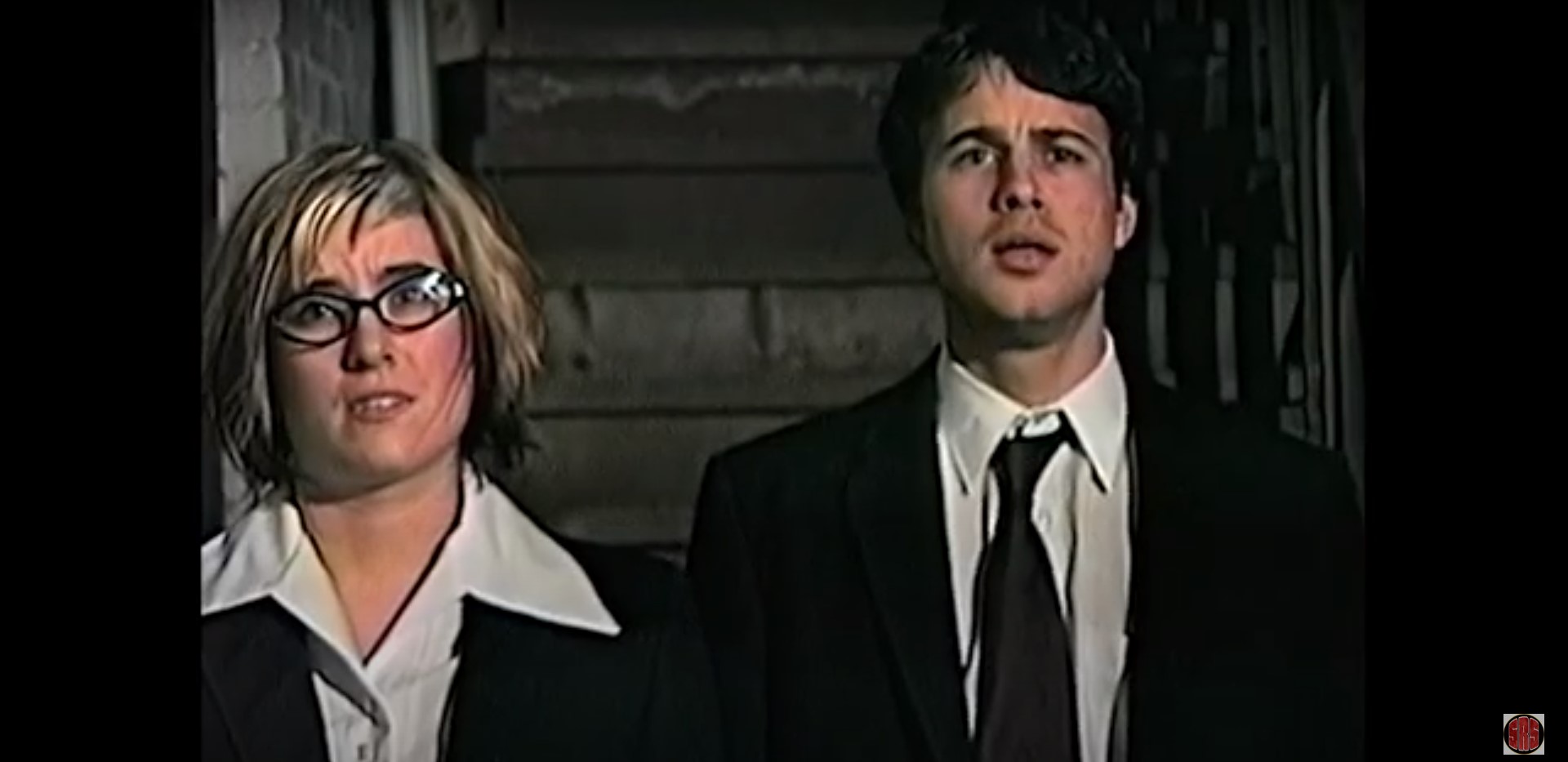
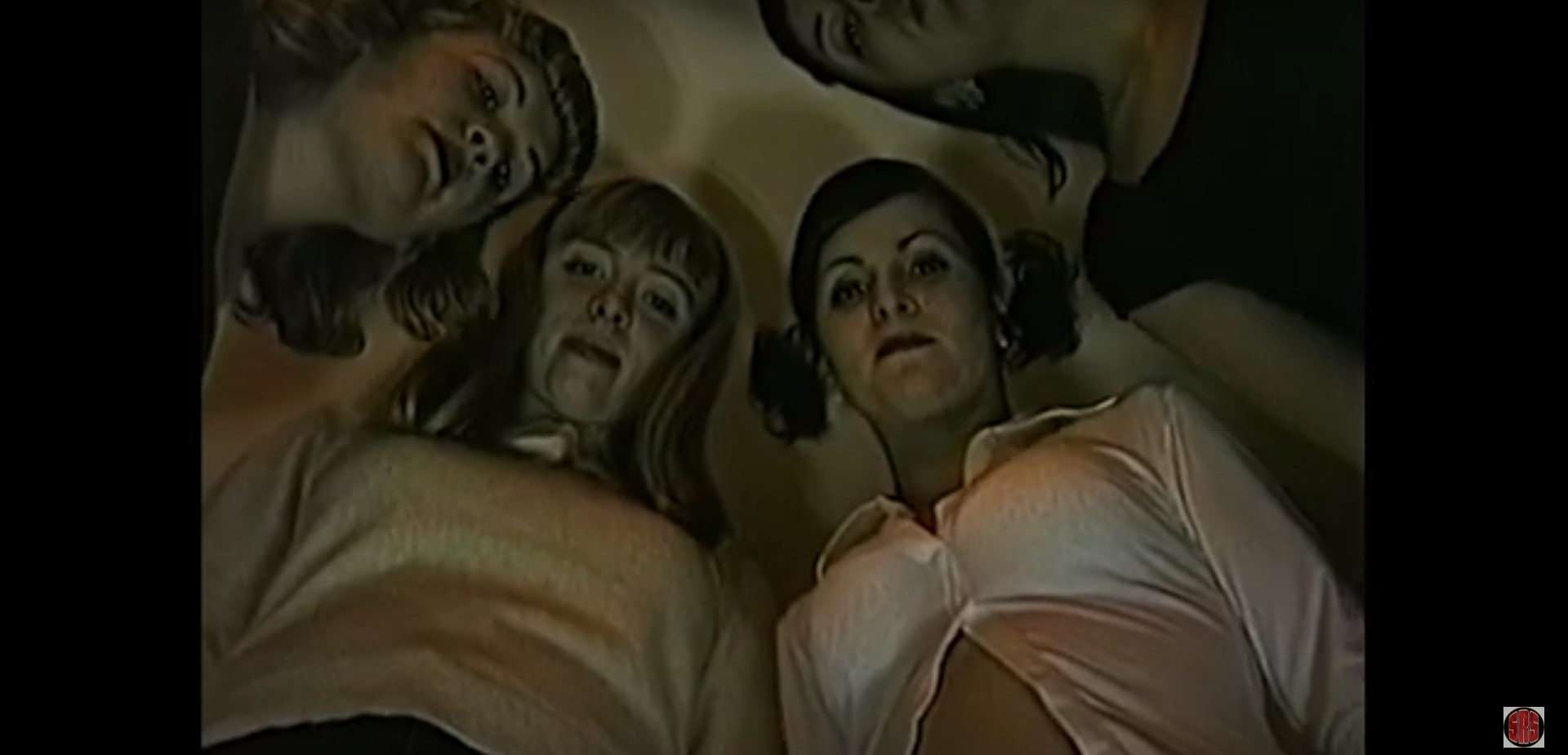
One thing to note about SOV independent production is the impressive number of cast involved.  The large cast helps manifest Clement’s ambitious dystopia and chaos-riddled world.  Without it, “Binge & Purge” would have been too anorexic to sustain selling grandiose on the cheap.  Typical formula for flesh-eater films persists with secluding a handful of principal roles, majority only speaking roles, fleshed out with an epic apocalypse contextualization of little-to-no dialogue, story arc, or any other sort of prominent screen time stock or background characters in a horde of the undead in crude bloodstained suits.  Clement establishes good guys and bad guys clearly but doesn’t necessarily the focal characters with an ebb and flow pattern between the three detectives May (Tamara Barnard), Vanzetti (Stephan Bourke, “Exhumed”), and Number 11 (Fiona Eden-Walker), who we gather was a former highly trained operative so engrained into the training and operations that her name was lost or forgotten, reduced to a number and the troupe of man-eating models under the eternal fashion designer Karl Helfringer (Gareth Gaudin). The models consist of not your slender-hip vixens with shaved down noses and hungry-looking figures but rather the curvy, pin-up types to wet a seemingly heathy appetite. Moira Thomas, Samara Zotzman, Amy Emel, Becky Julseth, Terra Thomsen and Melissa Evans lavish in so much delight over the sticky glop and spilling intestinal scenes of shoulder-to-shoulder cannibal chow downs that there isn’t an ounce of hesitation or disgust before enamel stabs into the fresh viscera but where the enthusiasm mostly falters is with the monotone dialogue deliveries with hardly any swing in inflection, tone fluctuations, or any kind of gesturing during the more emotive occurrences. “Binge and Purge” rounds out with Robert C. Nesbitt and Chuck Depape respectively as a fashion magazine reporter turned human hungry minion and the coke-snorting corrupt police captain.

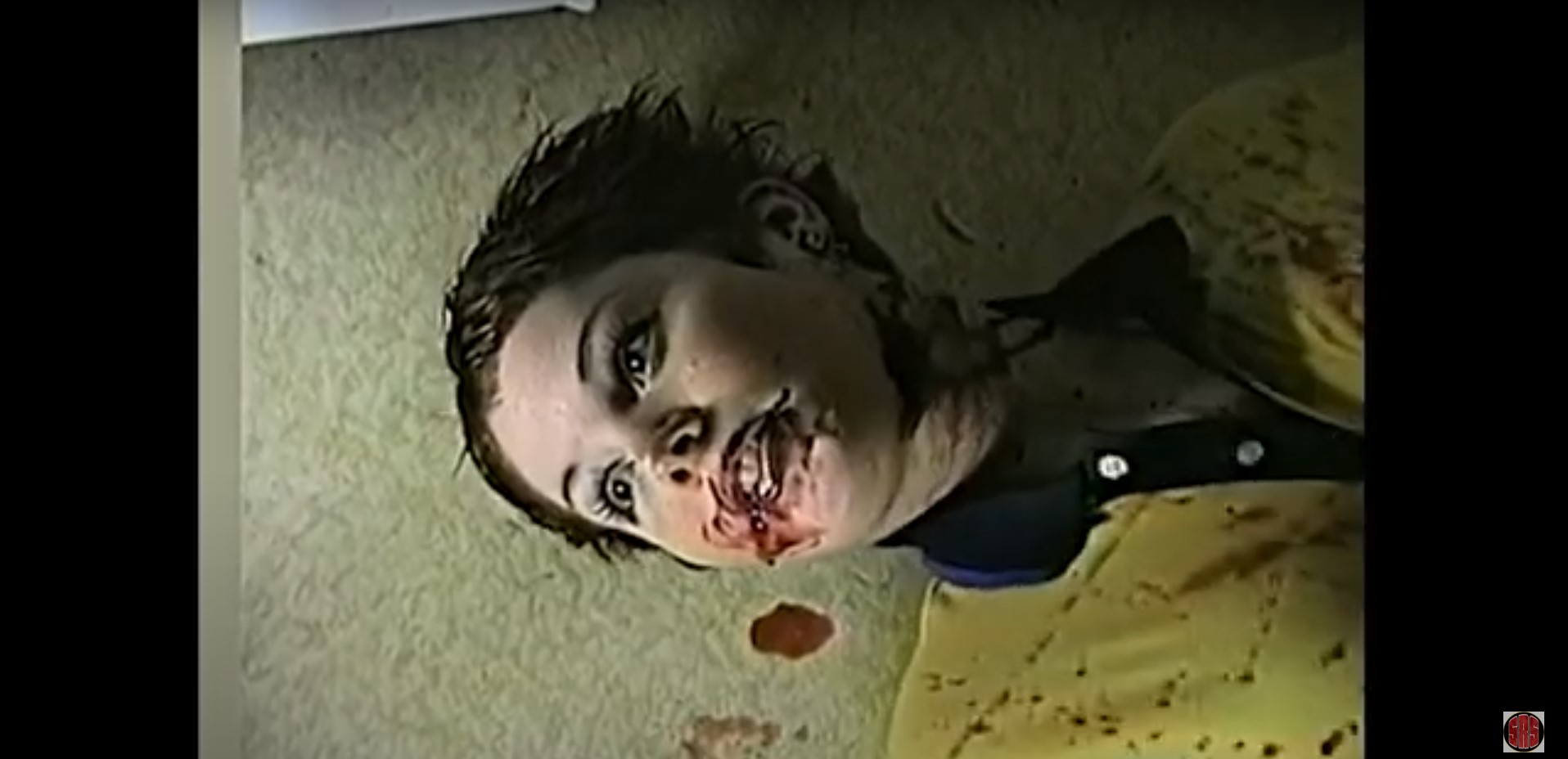
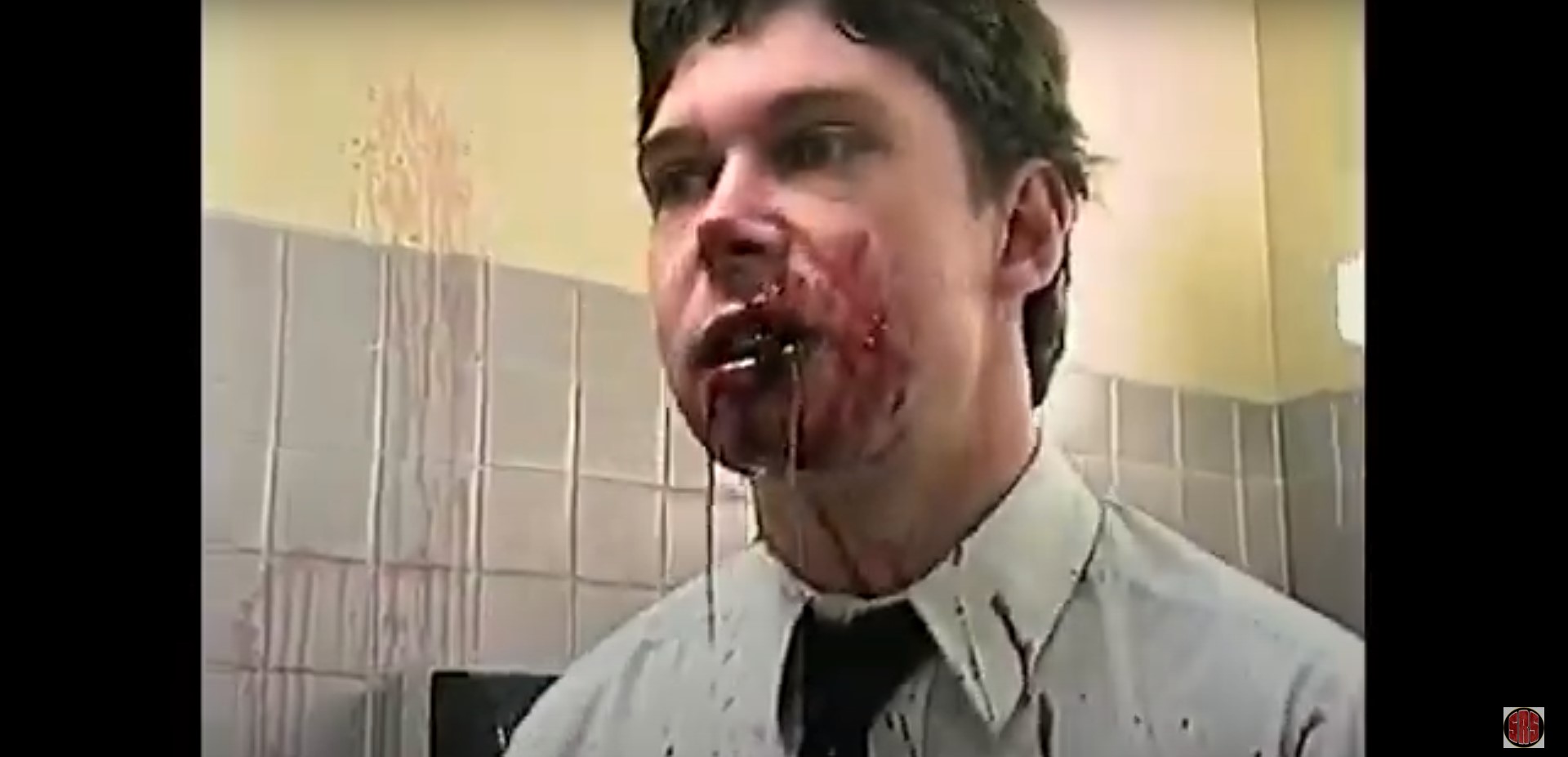
“Binge and Purge” is more than just a Christmas horror.  Amidst the meandering storyline of touching points in time and space with numerous characters and flashbacks skating on thinly laid context ice, such as the Spanish Civil War of the 1930s, Nazi experiments of the 1940s, and how America became a police state, the girth of “Binge and Purge’s” main coarse actually spans across the end of the holiday season in that week between Christmas and New Year’s, approximating a Y2K scare vibe of total chaos and confusion by way of cannibalism contagion instead of a feared computer bug, but that’s one area lacking in Brian Clement’s production laced with insatiable consumerism and consumption with in regard to really hyping up the cheerful holiday atmosphere to become besmirched by the corrupted filth of dirty cops, a plague of death, and a conspiratorial coup by high fashion.  The occasional Santa hat makes an appearance in a model shoot and the end of the year countdown denotes the pinnacle of a MP5 massacring finale, and though I can’t be certain, even the soundtrack sound to be distorted versions of the perennial Christmas classics, but that’s the extent of Clement’s holiday backdrop that would have easily fissure a chasm between “Binge and Purge” and the next low-budget cannibal shocker.  If you’re going to set the film during Christmas, deck the freaking halls, man!  Where Clement bedecks the film is with blood and gore that sees stringy sinew and a high body count’s insides become outsides over an encircling of edible entrails and on literally finger food trays.  Another shining highlight area is the action with agreeable submachine gunfire and the creative pyrotechnic-flares for explosion special effects that does rich up production value, inching the film more toward a magnetic, practical effect-laden, SOV spectacle worth the viewing calories. 

Shot on S-VHS, SRS Cinema gets their hands on the best master print director Brian Clement could carve out of his body of work. The MPEG2 encoded DVD presents the feature in 1.33:1 pillarbox aspect ratio in a 480p resolution. S-VHS master looks pretty darn good despite the caliginous reflection that produces more shadows and illumination on the tape, even if S-VHS offered better illumination as a format, and a lower, poor resolution than S-VHS’s Betamax predecessor. Still, this print has enough delimiting factors to produce a well-oiled image suitable for public distribution with a mix of neon warm and soft color capturing and crude lighting for maximum gritty-palpable product. The English LPCM mono track also has admirable lossless fidelity with a bitrate decoding of 192kbs, that has come typically standard, and greatly appreciated for audiophiles, on SRS releases. Some scenes are better than others, but the dialogue does retain some tail-end hissing and can be soft in spot. Otherwise, dialogue renders clearly enough. The release offers no subtitles. Bonus features include an archived audio commentary and a new SRS cinema produce audio commentary both of which include a self-deprecating Brian Clement going through his “least favorite” work’s production wishful do-overs, where the cast are nowadays, and his favorite gags and setups, a handful of deleted scenes, a slideshow, a new SRS cut trailer, and other previews for other SRS distributions. SRS Home Video release is mocked up with a retro VHS box-impression Amaray DVD case complete with graphically printed-in Please Be Kind, Rewind and Horror stickers. The not rated film has a runtime of 83 minutes and is region free. Nowhere near being a bulimic gorge for expulsion to empty one’s cinematic capacity, “Binge and Purge” is fully digestible grubby grub of horror, action, and comedy. 

“Binge and Purge” on SRS DVD Home Video!  This One Is Hard to Keep Down!

EVIL Embarks with Cons and Cops in “Project Wolf Hunting” reviewed! (Well Go USA Entertainment / Blu-ray)

“Project Wolf Hunting” on Blu-ray and Available for Purchase by Clicking the Cover Art!

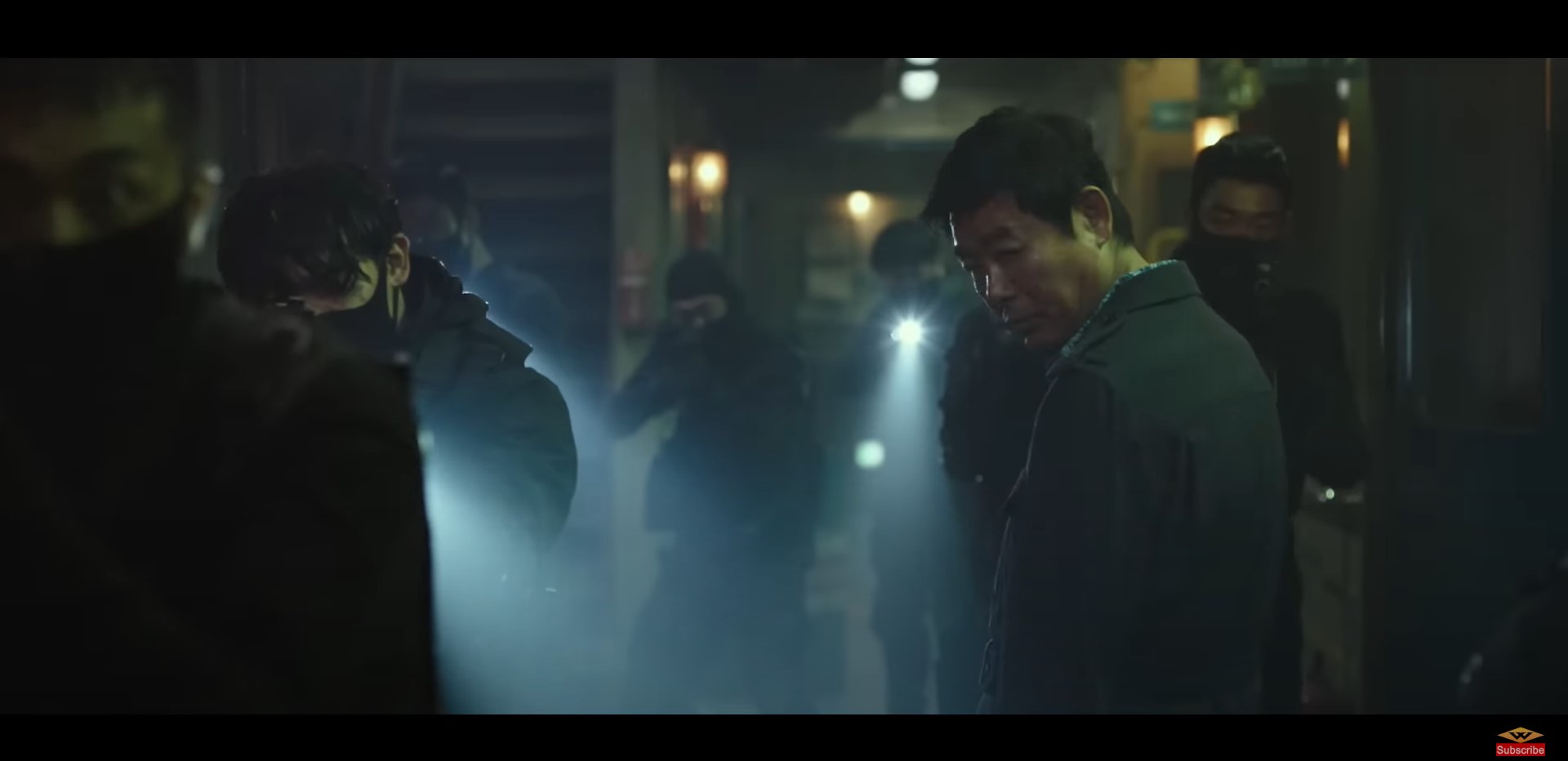
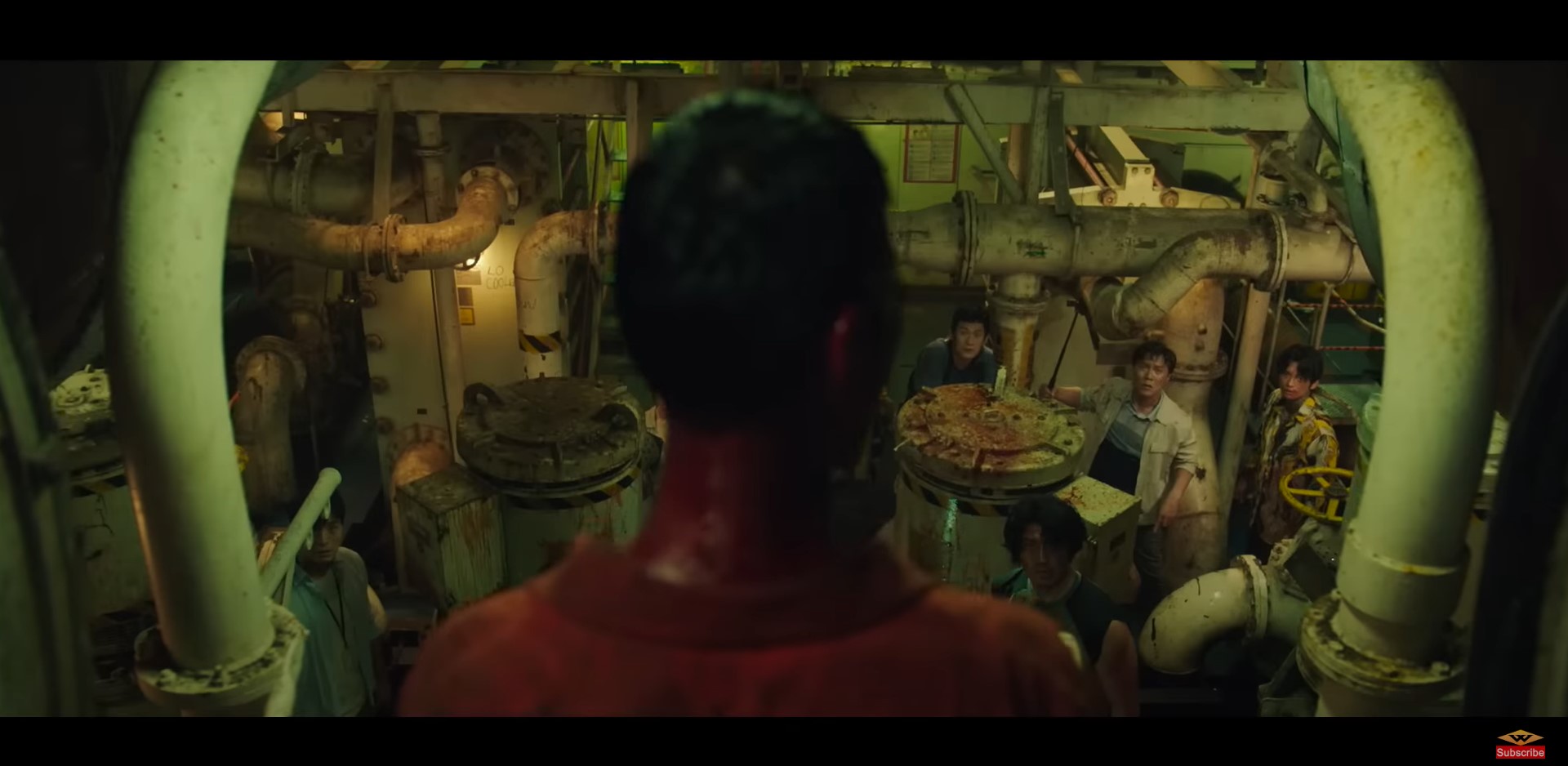
After a disastrous Philippines-to-Korea extradition processing of criminals that resulted in an airport suicidal bombing with multiple casualties, the procedure to transport dangerous criminals moves to a decommissioned Cargo ship known as the Frontier Titan.  The 3-day journey is expected to be a safer option to extradite Korea’s most wanted as highly trained and experienced detective accompany the criminals as armed escorts.  Every contingent has been covered except for what lies in the belly of the cargo ship.  Hidden in the bowel, underneath the engine room, a top secret biological weapon, involving an ancient wartime prisoner’s chromosomes commingled with the agility, strength, and prowess of a wolf, being transported across the sea.  When the criminals plan an elaborate seizing of the ship, the monstrous hybrid man known as Alpha is also inadvertently released and kills his caretakers, leaving him free to roam the ship and engage the good and bad guys alike as fair game to hunt.

Only a handful of times in my life have I’ve seen a film with so much blood.  “Project Wolf Hunting” is one of the bloodiest, most violent, Korean films to come out of 2022.  The hybrid action-horror with a genetically hybrid superhuman is the latest effort from writer-director Hongsun Kim, sticking with the horror genre after his positive reviewed 2019 evil spirit family drama “Byeonshin.”  The title, in reference to the operation of transporting Alpha through to East China Sea, into the Korean Strait, and dock at Busan, is the international marketing title for the Korean name “Neugdaesanyang” and is a film I can confidently and merely describe as “Predator” meets “Con Air” on a cargo ship.  Seasoned civic officers of the law, hardened criminals with sordid pasts, a special op consisted of superhuman soldiers are up against the odds to stop the Alpha, the original specimen.  Film between the ports of Busan, Korea and Manilla, Philippines, “Project Wolf Hunting” is the Korean venture production from Content G with Gu Seaon-mok serving as producer and is presented theatrical by The Contents On in association with CJ CGV.

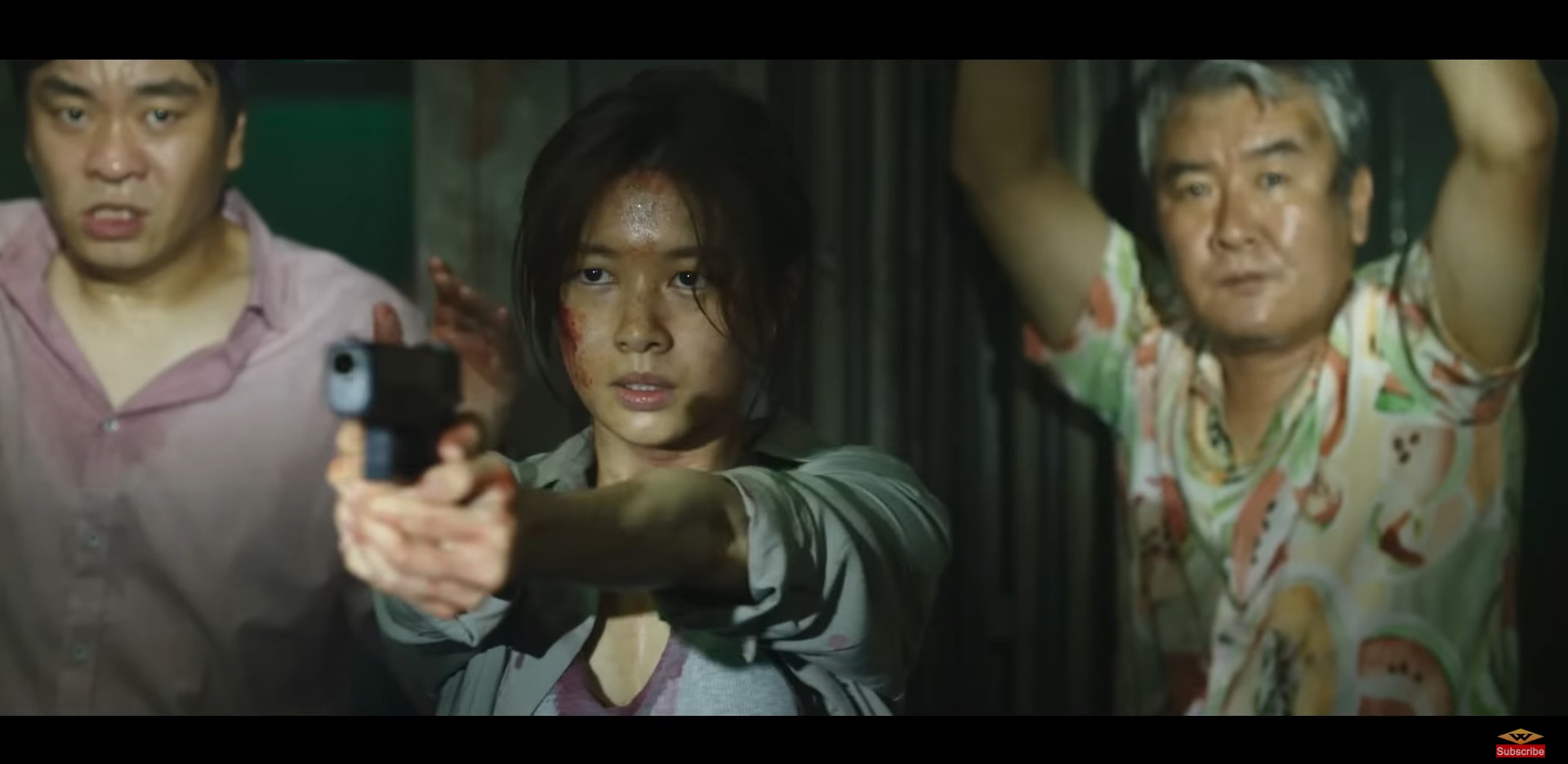
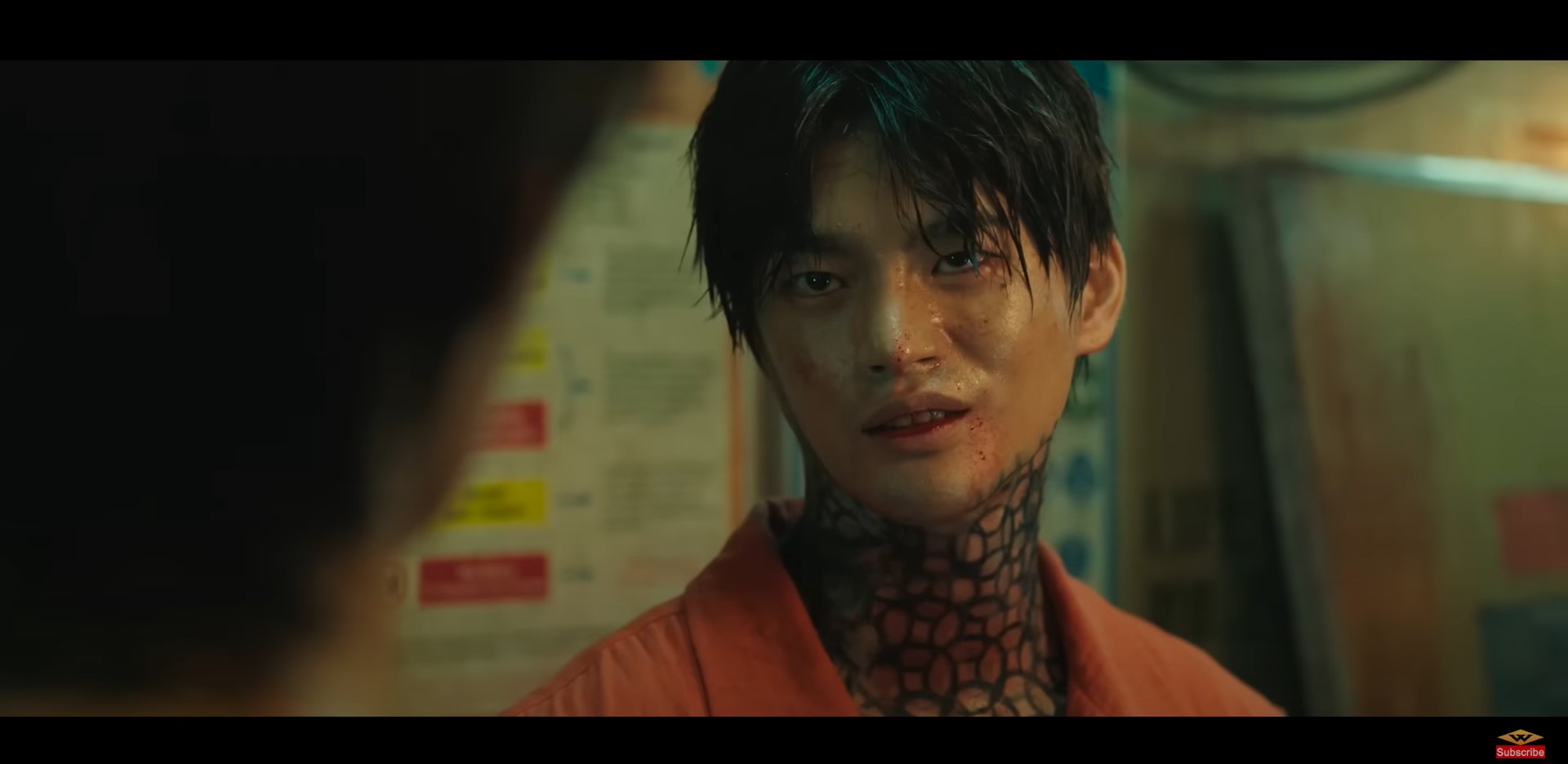
What’s interesting about Korean cinema is what you know what you’re getting with the characters who are greatly upfront, unpretentious, and full of attitude.  There are not a lot of false veneers with the cast of characters, something that can be said with most films spawned out from the Asia Pacific industry.  I might dangerously be overgeneralizing but from my viewings and writeups, but I’m fairly locked into my statement with confidence as “Project Wolf Hunting” paints a stark contrast of who’s who from the beginning without casting any doubt or even suspicion. Even with the some of the ship’s crew, Hongsun Kim clearly delineates their allegiances despite not coming right out with it initially and the cast immerse themselves into the appointed role with well-designed idiosyncrasies that seeing them out of character can be a bit of shock. Park Jong-doo perhaps is the most archetypical with Seo In-Guk, in his first feature performance, becoming the despot amongst the thieves. Guk transforms his appearance with full body tattoos to denote mafioso status and even takes that extra step with a few naked from the rear scenes to establish a conspicuous nonchalance for what anyone else has to think, say, or do. When many of the insurrectionary inmates take the ship, Jong-doo’s counterpart, Lee Do-il, isn’t so easily intimidated but is reserved and quiet in his strong posture. Dong-Yoon Jang offers a less violent option only to bide time for what’s ahead of them, the Alpha. Gwi-hwa Choi, who been hot right now in Korean cinema with having roles in “Train to Busan” and “The Wailing,” is the extraordinary and mysterious monster prowling to kill every single person on and off the ship’s manifest. With Alpha’s eyes stapled shut, maggots feeding off the festering tissue inside his mouth, and has a near spartan approach to liquidating, Choi completely transforms into the silent hunter with unstoppable and wild violent mode, but Alpha is only a name and the implicit meaning of the name does change hands throughout the course of the film that makes “Project Wolf Hunting” all that more the interesting. Female principals are not meek, weak, or helpless in his all-out brawl in a confined space with Jung So-Min as an eager cop with acumen and Jang Young-Nam as the dangerously uncouth companion to one of the mafia’s leadership and the fact that none of them are a love interest, or become even remotely involved romantically, sexually, or even innocently, speaks volumes on “Project Wolf Hunt’s” no room for romance rampage. The large cast lends to a high body and the acting pool rounds out with Dong-il Sung (“Byeonshin”), Park Ho-San (“The Call”), Chang-Seok Ko (“Lady Vengeance”), Lee Sung-wook (“Spiritwalker”), Jung Moon-sung (“The Cursed”), and Son Jong-hak (“Thirst”).

There’s so much blood. That statement was worth repeating. “Project Wolf Hunt” is reminiscent of the Japanese samurai films of yore or the absurd comedy gore film with geyser sprays of red with every blow.  Literally, tons of fake blood was used to coat the sets crimson in an impressive feat of movie magic carnage.  I’m also doubly impressed how the special effects team was able to achieve multiple sprays from out of the nostril cavities in what might seems small, insignificant, and simple looks amazingly palpable on screen that stopping to think about the difficulty in how that effect can be accomplished can be easily overlooked.  The blood sprays are only a fraction of the wide variety of violence and gore put on display and we’re treated to an abundance of slaughter and a superb, choreographed melee in each and every tightly confined skirmish that makes “Project Wolf Hunting” captivatingly adrenalized.  Production design creates the illusion of a cargo ship without question and the visuals, though soft in some scenes, sell the nautical voyage through clear skies and a storm rough patch.  Much of a part of “Project Wolf Hunting’s” success is cinematographer Ju-Hwan Yun’s framing.  The example I like to use is the post-elevator attack when the hoisting cord snaps that sends the lift plummeting down the chute with Alpha inside.  Yun then sends the shot from the top down the chute to the exposed opening of a mangled lift to see Alpha turn his eye-stapled face upward toward the narrowly escaping prey.  The shot gets the heart pumping and relays, in one sequence, the unkillable nature of Alpha.  If “Project Wolf Hunting” isn’t already thrilling enough with the brimming, cutthroat tensions spilling onto every deck between the police detectives and the criminals in their custody, the evolutionary plot twist that welds the age-old divide between the two frictions is a bloodbath you don’t see coming and one you’ll enjoy experiencing. 

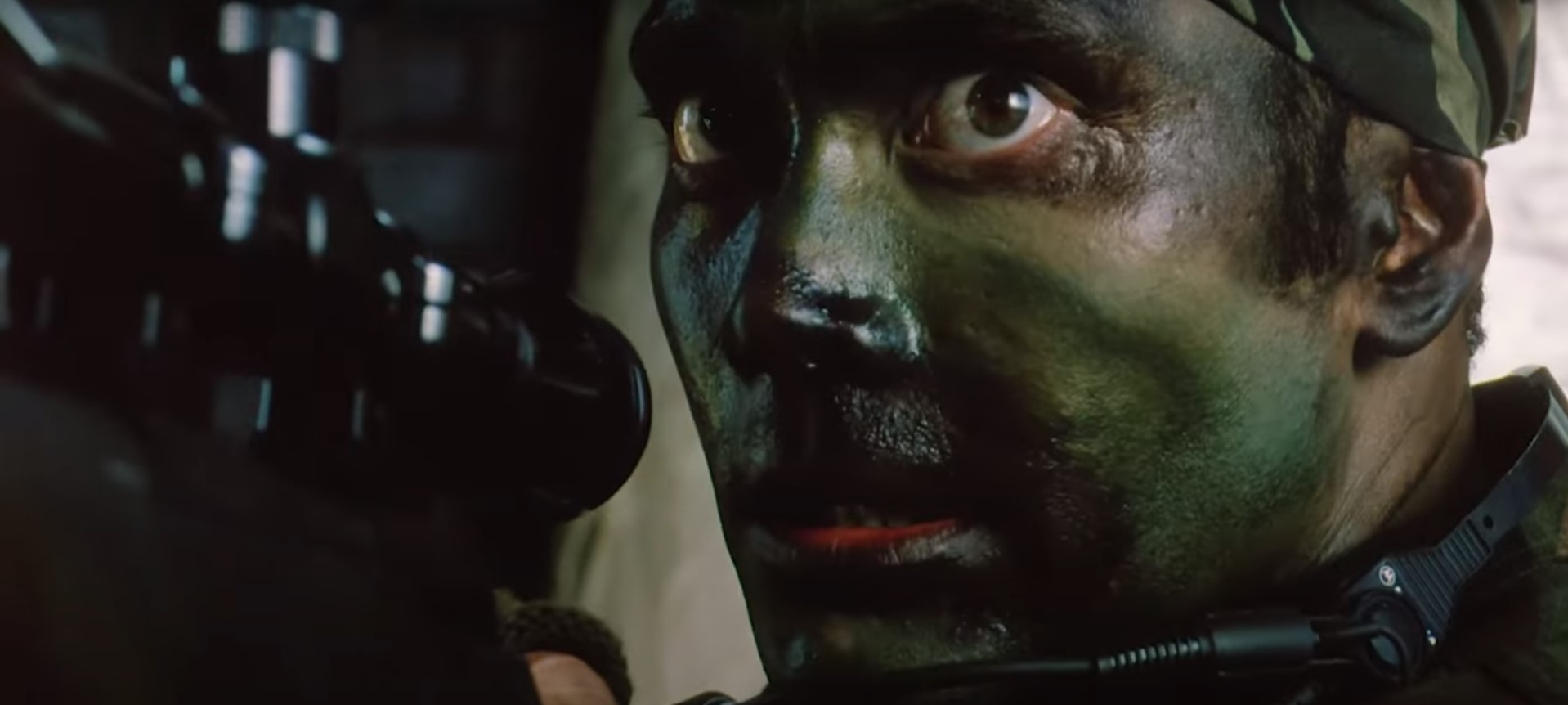
Action, horror, human experimentations, and with a complemental nod to the hard-hitting Asian cop films of 90’s, “Project Wolf Hunting” has teeth and stamina for 123 minutes of knockaround bloodshed. A winning Blu-ray release for Well Go USA Entertainment, the film is presented in a widescreen 2.39:1 aspect ratio. The AVC encoded BD50 offers a topnotch 1080p resolution that translates well to the big screen with granular detail in the interior and exterior of the cargo ship set and displays the stylistic choice of a warm color scheme consisting of prominently yellows and greens, providing less shadowy, higher contrast areas to suggest there is nowhere survivors can hide. Though quite a bit of CGI throughout the film, the end result doesn’t appear half bad with more fleshed out textures built into the renders to make them less gummy-looking. The release offers four audio options – a Korean and dub English 5.1 DTS-HD Master Audio and a Korean and dub English 2.0 stereo. Obviously, you receive more bang for your buck with the amped up surround sound option and don’t have to contend with dubbing if you go the original Korean language route. A high velocity range sounds strong through the rear channels with gunshots, the ship’s indiscreet hum, and the overall ricochets, clinks, and skirmish shuffles submerge an enveloping blanket of directional sounds right in your ears. The Korean dialogue is clean, clear, and vociferous in Korean inflections. English subtitles are optional and available well synched and error-free. Like status quo with other Well Go USA Entertainment releases, bonus features are an ornately produced, one-sided interview vignettes with the cast and crew and of the behind-the-scenes making of the film as well as a making of Alpha which was more actor Gwi-hwa Choi’s excitement about this different kind of role per his usual. The trailer is also available in the bonus content. Physical features include a traditional Blu-ray snapper with latch with the grisly, dirty face of Alpha blended into a black background. The film is unrated and is coded region A for disc playback. Despite minor convoluted expounding, “Project Wolf Hunting” kept the attention at high alert with a high body count, an indomitable super soldier, and a cargo ship load of blood.

“Project Wolf Hunting” on Blu-ray and Available for Purchase by Clicking the Cover Art!

EVIL vs EVIL vs EVIL vs EVIL vs EVIL etc., “Bigfoot vs Krampus” reviewed! (Ruthless Pictures / DVD)

Merry Kirstmas to all!  “Bigfoot vs Krampus” on DVD!

With Christmas time approaching and the Illuminati forces on the retreat, the Allies are in high spirits. Space rough neck Van Helsing considers taking his relationship with Allied Forces leader Princess Kali to the next level. Unfortunately Satan is set to ruin the moment. From the depths of Hell, the wicked Lord Of Darkness summons the demon spirit of Christmas, Krampus to wreak havoc on the living. Upon hearing the news, the clone of magician Aleister Crawley joins forces with the reptilian form of General Stalin and the Illuminati to mount a Christmas Eve attack on the Allies forcing Van Helsing and Kali to take drastic action. With help from the rowdy space rouge Bigfoot, the Allied Forces bait a syndicate of monsters to help take down the fiendish Krampus and restore peace to the galaxy.

Usually, I write my own storyline synopsis for the physical releases I provide review coverage for as there’s something about firsthand accounts that interpret more clearly and is more detailed in story events than the tagline plot that can be misleading at times, whether be a false marketing ploy to sham potential viewers into watching or goes to the other extreme with a less-than-desirable summary of drab when really the movie is much more magical, but with the 2021 released “Bigfoot vs Krampus,” the bizarre synopsis is worth every word count calorie.  Coming off the heels of a decent bigfoot picture from 1976 (“Creature from Blake Lake”) and playing into the festive Christmas holiday theme with the anti-Santa folklore, I was fingers crossed and impossibly hopeful to be two-for-two in the Sasquatch saga that kills two birds with one stone in doing my duty watching holiday-horror.  Boy was I terribly mistaken.  “Bigfoot vs Krampus” is just a full-length computer-generated cog in the machine of writer-and-director BC Fourteen and is a part of his so-bad-they’re bad versus film lot of an unofficial science fiction, comedic and satirical saga of generally evil in nature icons facing off against one another….in space.  “Bigfoot vs the Illuminati,” “Bigfoot vs Megalodon,” and even “Trumpocalypse Now!” and “Trump vs the Illuminati” really speak the filmmaker’s political stance as well really speak volumes on the filmmaker’s wayward clashes of alternative universes that amalgamates characters from horror, sci-fi, folklore, and video games into battle beyond the stars cratered epic. From executive producer Tony Cliftonson and producer Randall Finings, both involved with “Tickles the Clown, another spinoff in BC Fourteen’s gonzo-galaxy epic, “Bigfoot vs Krampus” is a production and a presentation of indie distributor Ruthless Studios.

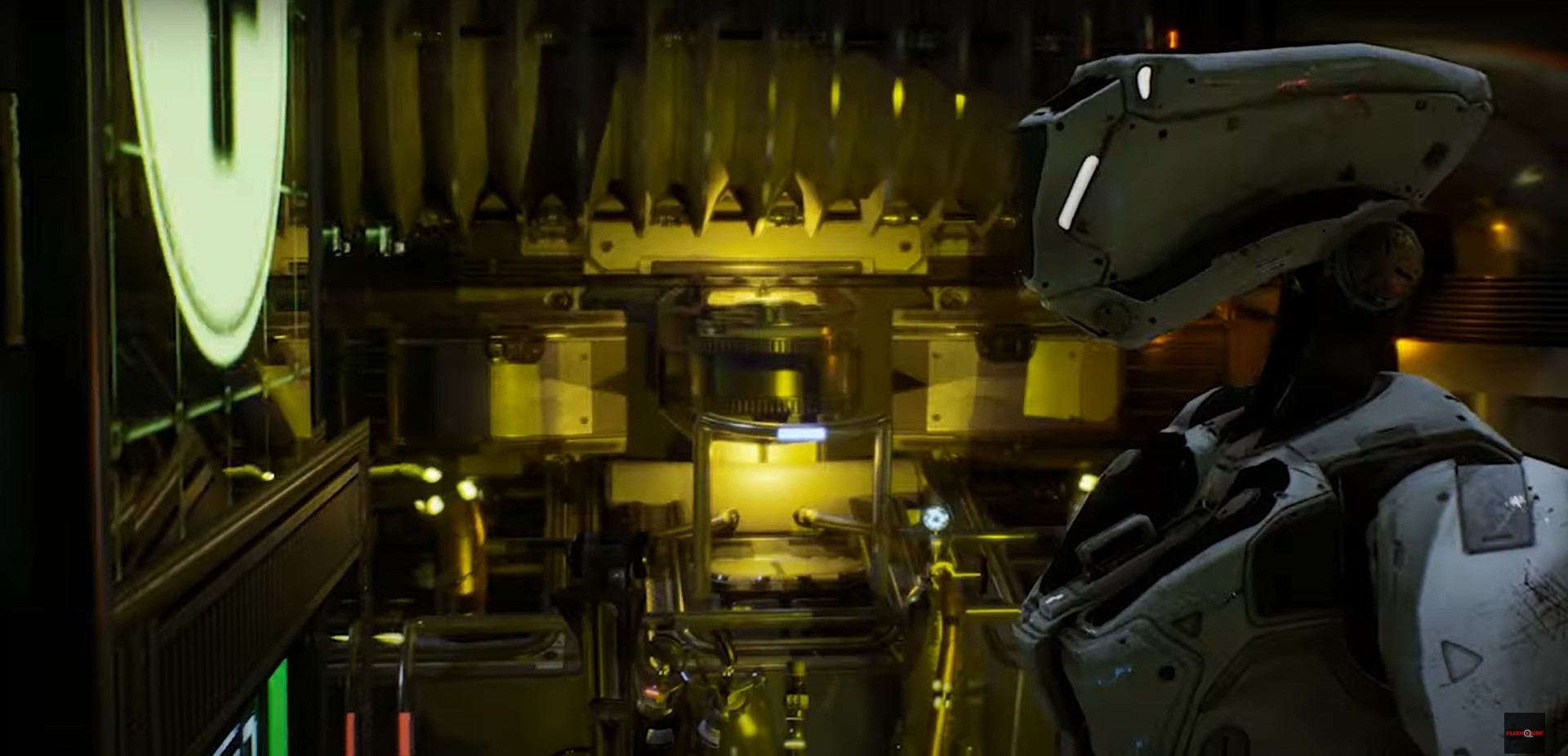
“Bigfoot vs Krampus” is total, 100% computer-generated graphics with only voiceovers to bring the highly kinetic, standing-in-place characters to resemble something that looks like life. BC Fourteen doesn’t stray too far from his regular voice talent as many of the same characters reoccur or popup randomly in this galactic gasbag of all talk and little action. When not voicing family friendly films, Marco Guzmán finds himself fouling the language barrier of space as he lends his vocals to the majority of principal leads and supporting char acters, such as the titular hairy primate Bigfoot who in the film sounds like a bastardized, sonorous, and raspy version of Fat Albert. Guzmán also voices another principal lead in Van Helsing, the 16th clone of the original vampire slayer. Known by his friends as V.H., Van Helsing looks less like a doctor with a stake and more like the Master Chief from Halo, never removing his helmet as he spews surefooted cockiness across the galaxy. Guzmán also voices the reptilian form of a reincarnated Joseph Stalin as well as the Egyptian sun God, Ra, who has ambiguous loyalties but can be useful to the allies as an all-seeing eye of the universe. Carli Radar voices humanities last hope and hero, Kali. The allied forces leader is pregnant with V.H.’s baby, a contentious sore point for Van Helsing who felt tricked into providing Kali a progeny, but has to become mankind and the illuminati, stereotypical green Martians with big black eyes and small mouths, last leader when the Illuminati’s Princess is destroyed by Krampus (who is oddly not listed as being voiced in the film’s credits), Satan’s partner in clinching power over the allies. The voice talent rounds out with Nate Trevors, Edson Camacho, Wes Bruff, Leslie Parsons, Simon Daigle, Carl Folds, Robert Forth, and BC Fourteen.

What do Bigfoot, Krampus, Megalodon, Clowns, The Terminator, Dummy Dolls, The Boogie Man, Werewolves, Satan, Anubis, Ra, and Jack Skeleton all have in common? BC Fourteen CGI’d their likeness into his…I don’t even know how to classify the film. I’ve had a run-in with a BC Fourteen film 8 years ago with 2014’s “Werewolf Rising” when the Pittsburgh, Pennsylvania-born filmmaker went under the name BC Furtney and aside from a stellar performance by the always captivating Bill Oberst Jr. and Irena Murphy baring a full moon going snout-to-nips with a werewolf, “Werewolf Rising received a mixed review but was still comprehensible with a start, middle, and an end. Though I stress the comedic and satire, a precaution must be instilled as the unfunny “Bigfoot vs Krampus” drags through the mud a trove of select horror and sci-fi pop icons in carbon copy tiny spaceships, flying around in a muddlesome mess, and rendered completely unnatural in an advanced resemblant version of the Goldsrc engine – you should see Bigfoot run down the ship’s corridors. If “Bigfoot vs Krampus’ were a series of cinematic story intercuts sewn together with gameplay axed entirely, I would believe it, and I’m sure, having spot check a few of the sequels, prequels, and spinoffs of the same caliber, that some animated scenes are recycled. There’s definitely recycling happening in this feature. If the war between the Illumanti-Humans-Bigfoot allied forces and every evildoer under the sun wasn’t thematic enough, the pseudonymous BC Fourteen throws in Van Helsing’s struggle with conscious as the cloned hired mercenary with legendary blood lineage skips town and on his baby’s mama because he does not feel appreciated in a fight that’s technically not his. The director also adds a subplot of Bigfoot checking in with old friend, and apparently cafe barista, Anubis to make sure the Sun Deity Ra isn’t fibbing about Van Helsing’s unexpected demise at the hands of Krampus. Everything does circle back around to an open-ended showdown for that next exposition heavy installment of intergalactic garbage made with no heart, no respect and very little effort.

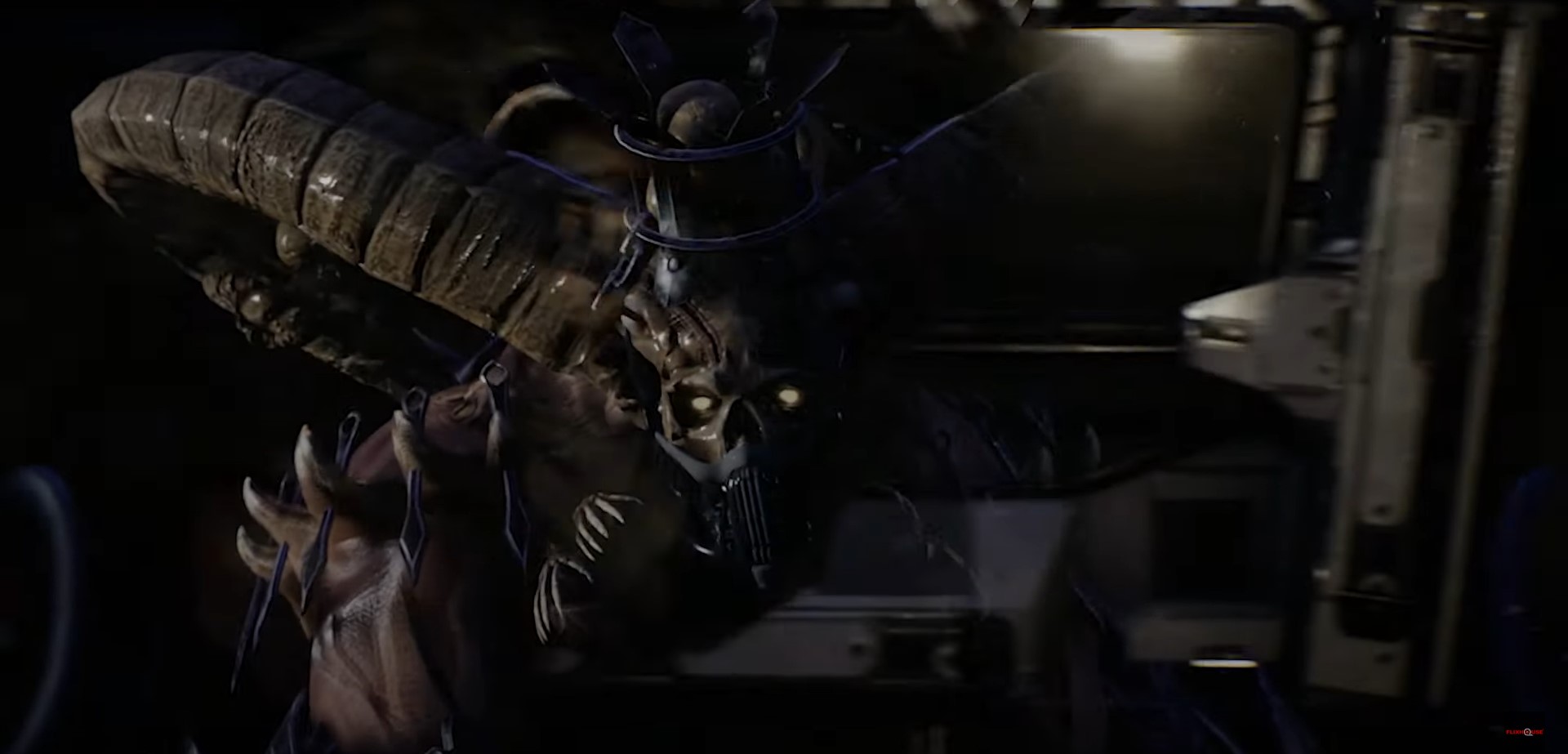
If the synopsis didn’t frighten you off from watching the film, text pulled word-for-word from the Ruthless Pictures’ DVD back cover, I surely hope this review left you with a bit of common sense prior to watching a cool and kitschy what if versus scenario. The Ruthless Pictures DVD presents the glossy computer graphics in a widescreen 1.78:1 aspect ratio. I will admit the animation provides here-and-there tactile moments, such as battle scuffs on robots or the ridges, grooves, and lighting on Krampus’s curled horns. All the animation looks about the same throughout, leaving a one-note taste that’s hard to wash out, but the at times, the CGI provides that nice ragdoll feel for humanoids Van Helsing and Kali and the lighting/shading does make appear more luxurious. Compression issues include background banding and splotches in darker spaces, but for the majority of the feature, those issues are limited. Though no listed on the DVD’s attributes, my players states “Bigfoot vs Krampus” has a single audio option – a Dolby Digital 2.0. For a science-fiction baster war, the lossy format is a lackluster that doesn’t surprisingly match all the other qualities, pushing out a mediocre 5-6Mbps average. Option English subtitles are available under the static menu. The DVD is a bare bones release with zero bonus content. The DVD is encoded region free and has a runtime of a merciful 70 minutes. Bigfoot films are back in the dumps again for this reviewer as “Bigfoot vs Krampus” is a flurry of insipidity and, the worst part of it all, it doesn’t add anything to the Christmas holiday horror subgenre with the Krampus module built-in for the sake of impersonating a something about as old as it’s folklore, a space invader.

Merry Kirstmas to all!  “Bigfoot vs Krampus” on DVD!

EVIL Comes in Pairs. “The Witch: Part 2 – The Other One” reviewed! (Well Go USA / Blu-ray)

“The Witch:  Part 2 – The Other One” – A Whole New Blu-ray Tale of Intensity.

A top-secret lab, known as the Ark 1 of Jeju Island where The Witch project is being conducted, is raided by ruthless mercenaries armed to the teeth with weapons and an enhanced superpowers resulting from The Witch project.  Eradicating every living person in the tundra camouflaged facility, one teenage girl emerges bloody from the carnage and wanders off into a neighboring snow-covered forest.  She’s rescued by Kyung-hee and her brother Dae-gil who inherited the land from their recently killed father.  The siblings are in a contentious situation of their own with a gangster uncle, Yong-du, who will stop at nothing to get his hands on the property, especially when he took care of the previous landowner.  With her Witch powers, the girl helps her kind rescuers to fend off a Yong-du shakedown, but the problems only begin there as the Ark 1 mercenaries are tracking down the girl’s whereabouts to finish what they started and a tactical team, enhanced with Witch powers too, has also been dispatched to eliminate the girl as an unpredictable global threat.  When all forces collide, the Earth will shake in a bloodbath of superpowers. 

A direct, but not an entirely direct sequel to the 2018 high-action Korean thriller “The Witch:  Part I – The Subversion,” writer-director Park Hoon-jung (screenwriter of “I Saw the Devil”) returns with a follows up the long awaited sequel “The Witch:  Part 2 – The Other One” that promises to be just as excitingly unrestrained with more players in the superpower game culminating to an explosive head that plays out like a hard-hitting Guy Richie storyline of intersecting plot threads except without wisecracking Englishmen.  The sequel follows another, and a handful of others in sperate, funneling threads, like the first installment’s principal character Koo Ja-yoon with insurmountable supernatural abilities except now everyone and their brother can “Twilight”-jump and Wolverine-heal, making the field even-steven to a known extent up until the grand finale.  Park returns as producer as well as newcomer Hyun-woo Kim, producer of “I Saw the Devil” and “Snowpiercer,” with Next Entertainment World and Goldmoon Films serving as production companies.

The sequel does not specifically revolve around first film femme fatale Koo Ja-yoon and turns the focus on a new prodigal Witch who has been cooped up in a lab since birth, hence why the film is not a full-fledged direct sequel as the storyline goes into an offshoot that later intersects. The face of the new witch is played by Shin Si-ah who makes her feature film debut.  When not covered in blood, Shin’s mostly reserved performance opens to light-hearted and childlike wonder as her character is experiences everything for the first time outside the Ark 1 lab.  Kyung-hee (Park Eun-bin, “Death Bell 2:  Bloody Camp”) and Dae-gill (Sung Yoo-bin, “Manhole”) take in the girl and become the warm absorption resemblance of family life or a life with romantic interests that can quickly be ripped away at any moment, sending the emotionally teetering girl into battle mode.  However, that sensation of relationships and tenderness hardly translates well on screen.  Perhaps losing some impact in literal translation, the trio’s dynamic retains a goalless fruition of connecting with other people, especially the superhuman powerless ones.  I found more complexities in the two factions seeking the same target – the girl.  Enigmatically opening with the mercenary raid on the secret Ark 1 lab and executing all in their path, we’re not immediately introduced to, and then barely given an introduction at all, is “The Cursed Lesson’s” Chae Won-bin’s mercenary boss lady and her squad of lesser-though of subordinates who all carry this overly murderous confidence with the latter being often measured inside their own group.  The other group is quite the opposite with the official tactical response team deployed by the Witch project head Dr. Baek (Jo Min-soo), a returning character from “The Subversion.”  Compiled as chief agent Jo-hyeon (Seo Eun-soo) and her second-in-command, a South African named Tom (Justin John Harvey). Seo and Harvey have a better act as the exchange is degrading and goofy in a comical manner with Jo as a workaholic lone wolf leader of an elite group of special ops while Tom brown noses his commander with new tech and offers helpful suggestions to which his commander either breaks or doesn’t use the new tech and views him as more of a warmhearted nuisance. Jin Goo completes the principal cast as a high-level gangster boss that would be big time in reality but in “The Witch’s” universe equates to an insignificant goon in a fancy coat. With an entourage of loyal henchmen, Jin Goo rubs elbows with his business smarts to get in bed with a clandestine organization as well as staying alive as long as he can in order to rob property right from under his niece and nephews’ nose. Goo plays the part with sly astonishment as he creates a pompous persona mildly shocked by awesome abilities of a young girl with the strength of 100 men.

What garnered much fascination with the 2018 film was the Korean dark, neo-noir tone intermixed with the uncanny abilities of a mystery person who can’t remember jack about their past. Park Hoon-jung essentially removes the simplified spine of “Part 1” and transplants it as the basis of “Part 2” with the similar added angles of a destroyed lab that supposedly no one survives but one person ultimately does and a pair of benevolent landowners who rescue, nurse, and essentially adopt the amnesiac girl back to 100% percent. “Part 2′” mirrored storyline is then targeted by at least three different angles represented by each bird-dogging group to add elements of change that include a contrast of comedy and austere posturing, the former being refreshingly novel to the two-film series that promises more to come after an open-ended finale. Returning to the sequel is the insane visual effects of “Twilight”-esque rapid movements and epic fight sequences with large explosions, a cold and bloody violent complexion, and high body count and while that’s all good and dandy for surface level popcorn effects, what’s agonizing is the how sped up they are as if every super occurrent was purposely depressed on fast forward by the power of three. If Park and his creative visual supervisors and gurus could have tempered down every other two moments with instead of having thrown cars, and among other things, seemingly skip multiple frames would have had more of a plausibility impact. The mélange complexity of multiple pursuers armed to the teeth and converging onto an unexpected teenage girl shacked up in a humble abode is a great classical spell of barnstorming besiegement that has the same improbability odds of survival as before betting on David versus Goliath until upended unto the aggressors, with all their guns and knives, who now need a prayer and much more against the prodigal youth with a considerably more amount of Witch power.

A fierce force of controlled power, and unforeseen surprises, the long-anticipated sequel, “The Witch: Part 2 – The Other One,” has finally landed post-pandemic. Well Go USA Entertainment, who released the first installment on Blu-ray, has picked up the rights to release the sequel on the high-definition format, presented in a sleek and sharp 16:9 aspect ratio. Virtually no issues with the digital presentation, the Blu-ray’s 1080p heightens every aspect of detail, even to a fault with the wonky visual effects as mentioned earlier. The overall darker lit tone and range can sometimes give off the appearance of softer details but with solid contrasting, the outlining shapes up more so than often and there’s no compression distortion to render an ill-defined texture. The Korean-English Dolby Digital 5.1 mix, also available is a Dolby Digital 7.1 Atmos and a Stereo 2.0, delivers a formidable, comprehensible, and frenzy-favorable mix of balanced action and dialogue. Depth perfectly pitches the focus properly while the range fuses together mostly during the fighting sequences until there’s a deep and punch-packed explosion mushrooming into a ball of crackling fire. No evident issues with dialogue and the English subtitles synch well with no flaws. Bonus content features a glossy and sped-cut behind-the-scenes featurette and the theatrical trailer. Physical features include the original Blu-ray snapper case with a cardboard slipcover featuring the same cliff-note touching cover art as the snapper case. The NTSC Blu-ray come region A hardcoded, is unrated, and has a runtime of 130 minutes. Time flies when you’re engrossed in “The Witch: Part 2 – The Other One’s” take no prisoner thriller of transcendent turbulence.

“The Witch:  Part 2 – The Other One” – A Whole New Blu-ray Tale of Intensity.

EVIL Lights Up When Peeling Skin! “Human Lanterns” reviewed! (88 Films / Blu-ray)


Own this beautiful release from 88 Films of the “Human Lanterns”

Two respected and wealthy Kung-Fu masters have a long rivalry, trying to one-up each other at any cost even if that means stooping into their personal life to gain the most public admiration.  With the annual lantern festive approaches, to have the best and brightest lantern would sustain at least a year of gloating over the other master.  When a lantern maker with a retaliation mindset against one of the more boastful masters is hired to make his festival entry, the lantern maker exacts horrifying revenge by fueling their feud behind the scenes. Kidnapping beautiful women who are dear to each master and exploiting their soft delicacies for his crazed creations, the maniac lantern maker turns the village upside down, forcing the local constable into an impossible investigate into the village’s most popular residents when none of the evidence points to the other.

“Ren pi den long,” aka “Human Skin Lanterns,” aka “Human Lanterns” is a grisly Kung-Fu murder-mystery that’ll make your skin crawl right off from your body. The stylishly colored and ethereally varnished 1982 Hong Kong film is written-and-directed by Taiwanese director Chung Sun (“Lady Exterminator) that blended the likes of a giallo mystery into the well-choreographed martial arts mania with the profound Kung-Fu screenwriter, Kuang Ni (“The One-Armed Swordsman,” “The Flying Guillotine”), co-writing the script alongside Sun. While not as ostentatiously gory or as cinematically profane as the 80’s released Category III certified films that rocked Hong Kong audiences, and the censor board, with shocking, gruesome imaginary and content, “Human Lanterns” does sit teetering on the edge with mostly a tame Kung-Fu feature that quickly turns into the blistering carnage of a basket case, or in this a lantern maker, who uses hiding as a double entendre. “Human Lanterns” is a Shaw Brothers Studio production executively produced by the oldest of two brothers, Rumme Shaw, and, then new to the Shaw Brothers’ board of directors, producer Mona Fong.

“Human Lanterns” starred two the renowned names in martial arts films from the 1970s and well into the 1980s with “Fist of Fury” and “The Swordsman and the Enchantress’s” Tony Liu as the impeccably arrogant Lung Shu-Ai with a self-image to protect more than the women in his life and “Bloody Monkey Master” and “Return of the Bastard Swordsman” Kuan Tai Chen sporting a sweet mustache as Lung’s longtime rival, Tan Fu. Shu-Ai and Chen have really spot on, well-versed, fight sequences together braided into their play off each other’s character’s haughty personas. While behind the curtain of overweening and defiance between the two masters, Chao Chun-Fang unceremoniously sneaks into the fold by happenstance as Lung offers him money for the best lantern this side of the lantern festival. Lung and Chao Chun-Fang, played with a demented, idiosyncratic duality from Leih Lo (“The Five Fingers of Death,” “Black Magic”), another master in the art of fighting in his own style, have an inimical past…well, at least thought so by Chun-Fang. In a sword dual over a woman, Lung defeats Chun-Fang and purposefully scars him above the left eye, causing him the inability to look up, and while the lantern maker has stewed for many years, training all the while to be the best fighter, his tormentor Lung Shu-Ai has nearly all forgotten about the incident and found trivial enough to ask Chung-Fang to make him a lantern and offer him out for drinks for being old buddies of yore. However, this yard pulls the wool over the eyes of self-centered, the upper class, and the unruffled nonchalant as Chung-Fang takes advantage of the Kung-Fu masters naivety and uses the rival as a screen to cover up his kidnapping deeds of the women in their lives, played by Ni Tien (“Corpse Mania”), Linda Chu (“Return of the Dead”), and Hsis-Chun Lin. “Human Lanterns” rounds out the character list with a hired assassin in Meng Lo (“Ebola Syndrome”) and a competent but out of his league village constable in Chien Sun (“The Vampire Raiders”).

The look of “Human Lanterns” is often dreamy. No, I don’t mean dreamy as in gazing into the strong blue eyes of your tall and dark fantasy man. The dreamy I’m speaking of is produced by cinematographer An-Sung Tsao’s luminescence that radiates of background and the characters through the wide range of primary hues. Tsao’s colorful and vibrant eye doesn’t clash with the vintage era piece consisting of impressively detailed sets, a costume design plucked straight from the 19th, and hair, makeup, and props (which I’ve read some of the blades were authentic) to bring up the caboose of selling the completed package of delivering a spot-on period film. When Leih Loh dons the skull mask, an undecorated and unembellished human skull, with wild, untamed hair sprouted from every side of the eyeless mask, Loh transforms into a part-man, part-beast jumping, summersaulting, leaping, and seemingly flying through the air like a manically laughing ghost. The visual cuts petrifyingly more than described and if you add an extensive amount of Kung-Fu to the trait list, “Human Lanterns” has a unique and unforgettable villain brilliantly crafted from the deepest, darkest recesses of our twisted nightmares. “Human Lanterns” has a wicked and dark side that balances the more arrogantly campiness of Lung and Tan’s hectoring rivalry. When Lieh Loh is not skinning in his workshop or Lung and Tan are not bullying each other into submission, there’s plenty of action with the heart stopping, physics-defying martial arts that just works into the story as naturally as the horror and the comedy. With shades of giallo and fists of fury, “Human Lanterns” is Hong Kong’s very own distinctive and downright deranged brand of good storytelling.

88 Films lights the way with a new high-definition Blu-ray of the Shaw Brothers’ “Human Lanterns” from the original 35mm negative presented in Shawscope, an anamorphic lensed 2.35:1 aspect ratio that more than often displays the squeeze of the picture into the frame. One could hardly tell the upscale to 1080p because of the very reason I explained in the previous paragraph of the airy An-Sung Tsao façade that softly glows like bright light behind a fog. Nonetheless, the image quality is still stunning and vivid, a real gem of conservation and handling on this Blu-ray release. The Mandarin dubbed DTS-HD 1.0 master audio is synched well enough to the action for a passing grade. The foley effects, such as the swipes and hits, are often too repeated for comfort, but adds to “Human Lantern’s” campy charm. The newly translated English subtitles are synchronous with the picture and are accurate but, in rare instances, come and go too quickly to keep up with the original language. The release comes not rated with a run time of 99 minutes and is region locked at A and B. Why not go full region free is beyond me? Licensing? Anyway, special features include an audio commentary by Kenneth Brorsson and Phil Gillon of the Podcast On Fire Network, “A Shaw Story” interview with then rising Hong Kong star Susan Shaw who talks about the competitive and easy blacklisting Hong Kong and Tawain cinema market, “The Beauty and the Beasts” interview with in story brothel mistress played by Linda Chu often harping upon not wanting to do nudity despite directors begging her, “Lau Wing – The Ambiguous Hero” interview with Tony Liu that comes with its own precaution title card warning of bad audio (and it is really bad and kind of ear piercing) as the lead man really regales his time on set and in the industry between Golden Harvest Productions and Shaw Brothers Studios, and rounding out the main special features is the original trailer. The package special features is a lantern of a different color with a limited edition cardboard slipcase with new artwork from R.P. “Kung-Fu Bob” O’Brien, a 24-page booklet essay entitled “Splicing Genres with Human Lanterns” by Barry Forshaw accompanied by full colored stills, posters, and artwork by O’Brien, a double-sided fold out poster, and reversible Blu-ray cover art that can be flipped from the same, yet still awesome, O’Brien slipcover art to the original release art. The new 88 Films’ Blu-ray set conjures a renaissance satisfaction like none other for a highly recommended, genre-ambiguous, vindictive affray.

Own this beautiful release from 88 Films of the “Human Lanterns”