Beckerland Fosters Deranged EVIL Upon POWs! “Opposing Force” reviewed! (Scorpion Releasing / Blu-ray)

“Opposing Foce” now in Control of Blu-ray Home Video!  

Air Force Lieutenant Casey has initiative, determination, and something to prove being the first woman to be approved for a special and notorious evasion and escape course on a remote U.S. base Philippine island.  The course simulates downed Air Force pilots behind enemy lines where they either have to evade capture or escape as POWs without divulging U.S. secrets.  The simulating is meant to break down the individual physically and mentally through psychological and physical torture that nearly blurs the regulation guidelines of the United States military, but has been proven to be an effective training to withstand the most brutal of POW conditions despite the course’s infamous reputation.  Casey joins the ranks of participants, a young group of eager male officers and one experienced Major Logan looking to requalifying for action, and are dropped into the simulated enemy combat zone controlled by General Becker, a calculating commanding officer who has succumb to his opposing force role.  Becker’s unconventional and illegal tactics exploit Casey’s gender in the name of training her, but his knowingly criminal activity puts the rest of the trainees in danger and it’s up to the Logan and Casey to stop him and his opposing force in an all hell breaks loose war.
POW exploitation has been missing in modern day cinema.  A subgenre that is a dark, degrading note of unscrupulous and vengeful action has been exclusive to the 1980s for far too long, barely being reprised throughout the proceeding decades.  Not to be restricted to the popularization films of Chuck Norris of the “Missing in Action” franchise or of Sylvester Stallone’s Rambo II and III, these camp from Hell films run the money and production gamut, pulling inspiration on conflict wars before the decade, such as Korea, Cambodia, and even as far as World War II.  For mainstream, the jungle entices with harrowing heroism that glorifies determined, strong-arming patriotism while showcasing America’s enemies as Geneva Convention ignoring villains who deserve every ounce of blow’em up, shoot’em up at the hands of escaped captees or an elite team, or a one-man, rescue mission.  Nazis saw more action in the low-budget Eurotrash market with sexploitative women-in-prison camps ran by the sleazy, inhumane, and experimenting Gestapo mostly.  American filmmaker Eric Karson, director of Jean-Claude Van Damme actioners “Black Eagle” and Lionheart,” moves away from the Muscles from Brussels and into Tom Skerritt’s mustache behind bamboo bars in the 1986, American-versus-America military-thriller “Opposing Force.”  Penned by Linda J. Cowgill, under the pen name of Gil Cowan in what’s likely a name change spurred by sexism in the industry, originally titled the script as “Hell Camp” but took the name “Opposing Force” based off the antagonistic enemy labeled as OPFOR right on their chest.  “Opposing Force” is coproduced by “Skinner” and “Final Mission” producer Tamar E. Glaser and “Sometimes They Come Back… for More” producer Daniel Zelik Bert under the theatrical distributors of Orion Pictures. 
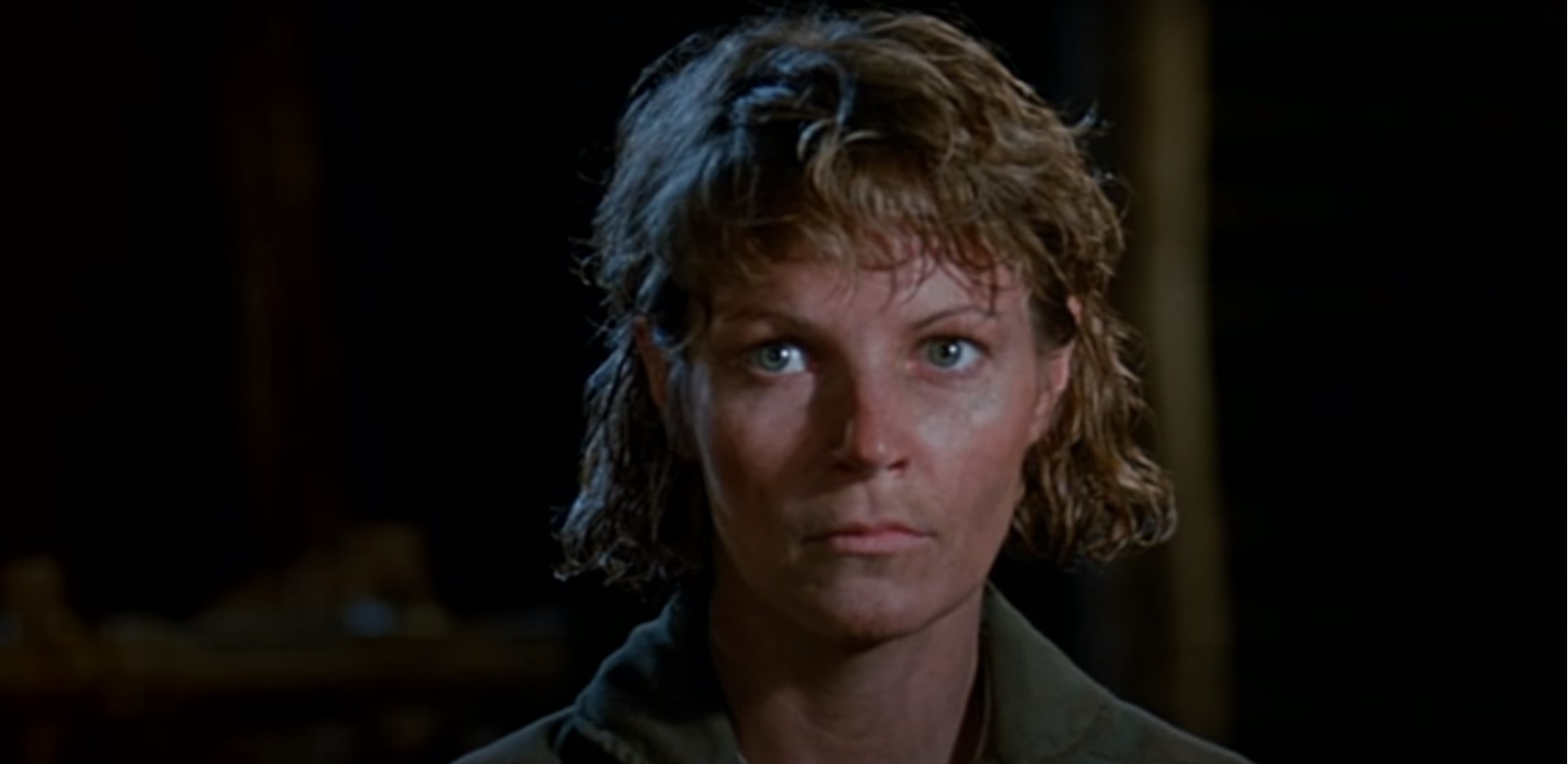
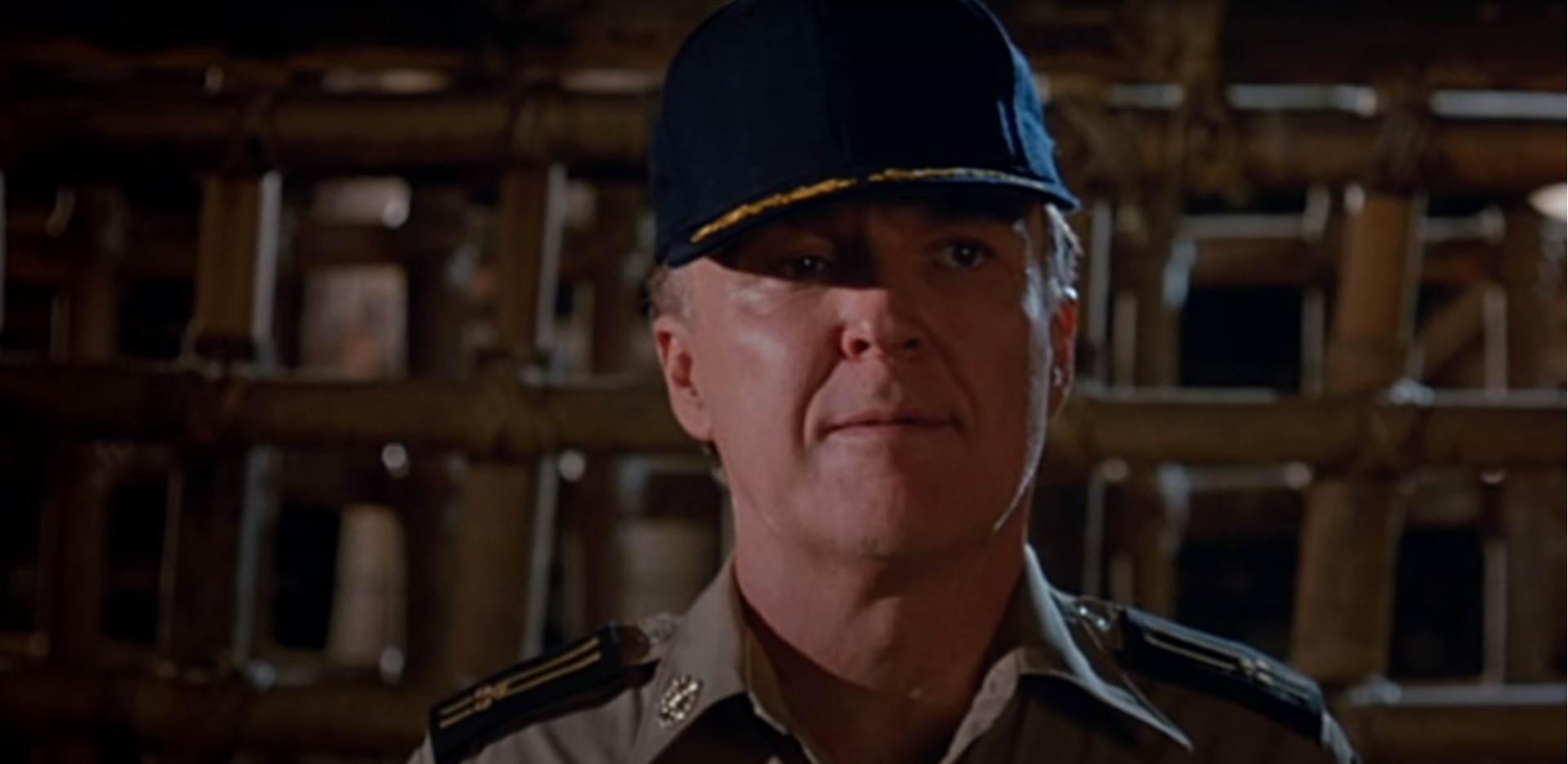
We already know Tom Skerritt’s world-renowned mustache is in the movie and is the star of the show, but Tom Skerritt is in there as well as the man behind the stache as the seasoned boot Major Logan.  The “Alien” and “Contact” actor become the patriarchal figure to a bunch of figurative sons in younger course participants and overprotective of one figurative daughter in Lt. Casey in a wildly uncharacteristic situation brazenly exploited in unconventional mainstream means in the uncomfortable skin of Lisa Eichhorn (“Deus”).  What Lt. Casey goes through is more on familiar ground with the low-budget sleaze of women-in-prison grindhouse and while it’s certainly jarring and unexpected, It’s a welcoming chance for an upper tiered independent film with big names attached.  A couple of the other big names attached are Anthony Zerbe (“The Omega Man”) and Richard Roundtree (“Shaft”) as Commander Becker and his staff sergeant Stafford.  Becker and Logan mirror each other as veterans that have graded into either being corrupted by power or to be righteous in doing what’s right.  Yet, but Zerbe and Skerritt play into what the experienced actors know best, their trademark stoicism.  Tack on Eichhorn’s equally endurable fortitude and a three way standoff erects a monumental solemn stalemate of relatively the same attitudes until the last straw breaks the proverbial camel’s back and war erupts.  Roundtree at least develops Stafford’s internal conflict when the job bites at his conscious, becoming the connection needing convincing of Becker’s crossing over to the darker side of power like a Sithlord in public face disguise.  The narrative physicality aspects piece together a grueling atmosphere that each actor undertakes appropriately by their determined military rank, but as eloquently as Lt. Casey puts it to the aging Major Logan, “You got a limp and I got tits; these aren’t great things ot have in the military,” sets up themselves as misfits-to-heroes that were being crapped on all their careers for their antithetical military image.  “Opposing Force” rounds out the cast with a bunch of moaning male air force participants in the middle of it all with performances from Paul Joynt (“Echos”), Robert Wightman (“Impulse”), George Cheung (“Rambo:  First Blood Part II”), and John Considine (“Circle of Power”).
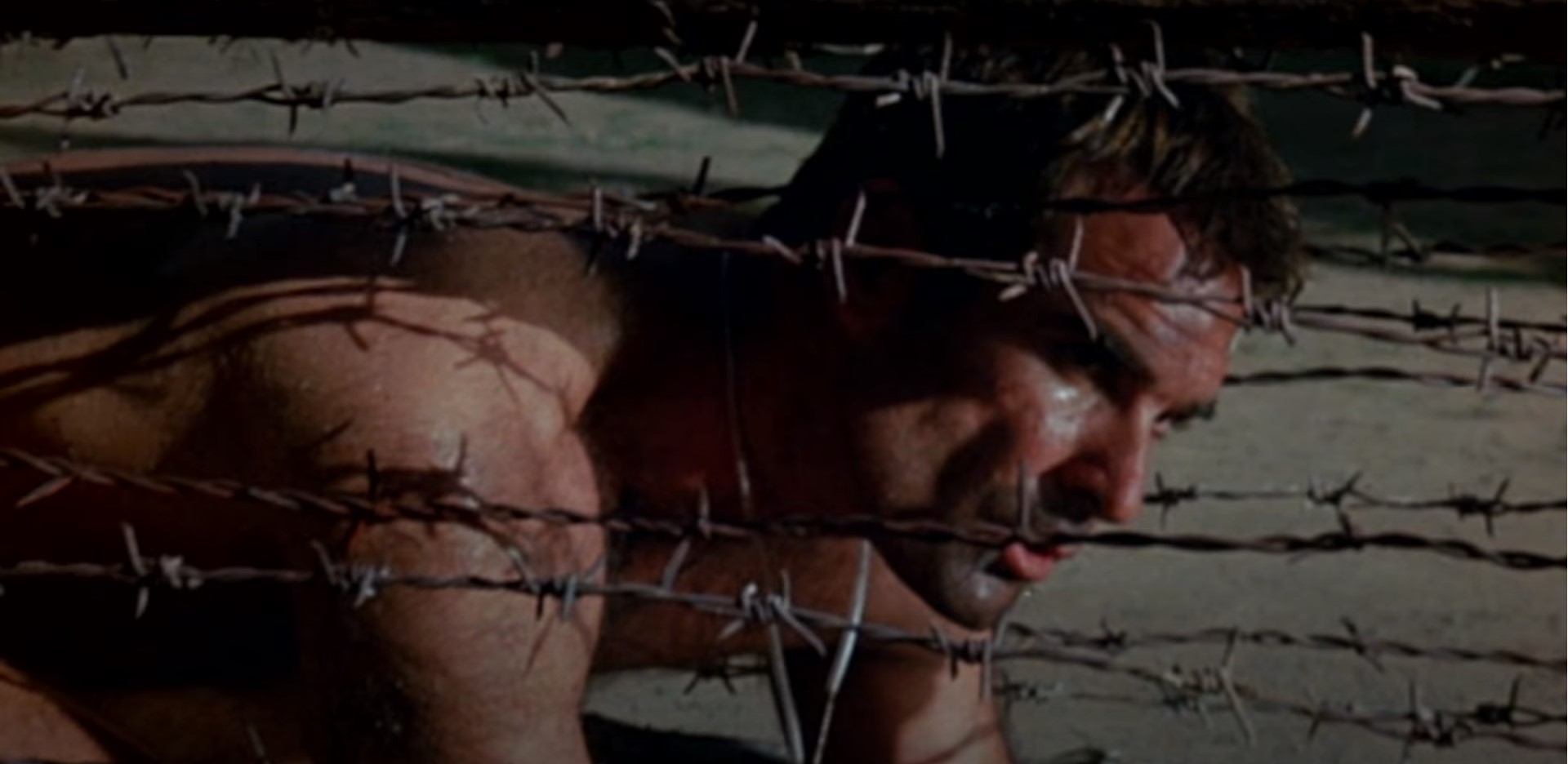
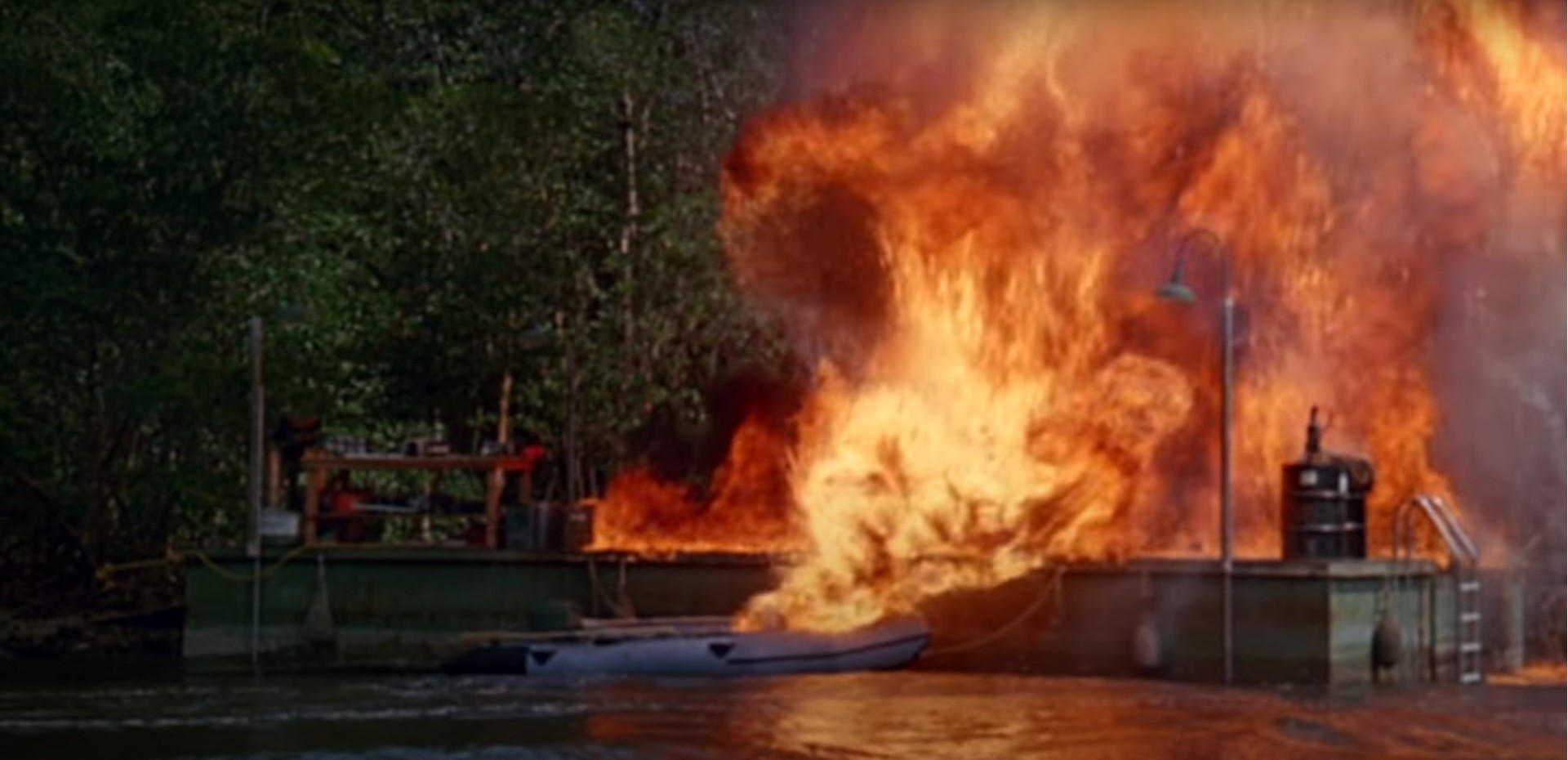
Influenced by the U.S. Military’s real life training program known as S.E.R.E. (Survival, Evasion, Resistance, and Escape.), Cowgill uses the program to formulate “Opposing Force’s” principle groundwork in setting up the jungle POW scenario on a remote island that goes through the motions of no chance of a rescue and aid of any kind.  Participants are throw into a survivalist gauntlet that turns surprisingly rough aggressive when physical and mental tortures are instilled upon those thinking the training would be a walk in the park.  This particular training simulation is unique to the OPFOR team with an aging officer looking to requalify for combat and the first woman to ever be accepted into the course due to a loophole, throwing new challenges to an embedded far too long commander who can easily break a man’s spirit but tiptoes around the possibilities of what to do with a woman until his insidious power and authority blurs right from wrong and takes the torturous tactics and enhanced interrogation techniques too far, beyond the limits of what’s necessary and beyond the limits of human decency all in the name of reinforce training.  The grueling torture and bush action is palpable enough to contrast the naked, sweaty, and battered bodies with the M1A1 bursts and munition explosions galore.  Only one aspect adds an out of place measure in the narrative and that is of the rest of the POW contingent and their seemingly wishy-washy decision on whether to escape, stay put, or join in the fight against Becker and his live-round shooting island battalion; the group disperses into the jungle only to fade from the climatic third act Major Logan, Lt. Casey, and Botts defending their lives against a treacherous throng and their wicked commanding warden.  Their disappearance doesn’t allow for closure for the acts against them during the entire ordeal and becomes a fizzling distraction.  Another distraction is the severely cut ending that freeze frames on Eichhorn’s final act with her voiceover exposition post-battle in what feels sorely rushed to complete.  The Blu-ray bonus features has an extended ending that’s more completist approach in wrapping up the story sutibly.  For a POW film, “Opposing Force” is an archetype of its originating decade that sates the subgenre’s need to pit an overreaching and ruthless camp head against the resiliency and determinate of the America fighting spirit. 
A re-release from the 2019 Scorpion Releasing Blu-ray comes “Opposing Force” reprising a presence on online retail shelves.  The AVC encoded, high-definition, BD25 is presented in 1080p resolution with a widescreen 1.78:1 aspect ratio.  Identical to the earlier Blu-ray 4 years prior, the image quality is freshened up quite a bit from the likely 35 mm print source into a detail-laden HD transfer that offers a lush jungle-scape to be in juxtaposition against the camp from within its center, a large guerilla compound bathed in browns and greens make for good POW-themed pageantry.  Skin tones and individual features flesh out nicely, adding detailed levels of salubrious status over the course of the day-to-day detainment. The English language DTS-HD master audio 2.0 leans toward a softer dialogue mix that, for the majority, is discernible despite favoring “Opposing Force’s” selling points: large explosions, pepper potshots, and militant vehicles running rampant around and above the island terrain. Dialogue’s clear enough to emerge without much hinderance with enough depth to provide a sense of position and the audio layer is remarkably clean with no hissing, popping, or static. English subtitles are an available option. Special features include an audio commentary with director Eric Karson, the trailer, and that extended ending I mentioned, and noted preferred, earlier in the review. The traditional Blu-ray snapper casing includes a rendition of the alternate titled “Hell Camp” poster with a more titillating illustrative lookalike of Lt. Casey in shredded rags and ride-up shorts with hands tied above her head and looking over her shoulder. The warm yellow with a hint of white stirs in an element of jungle heat ramped up by also providing the cage accommodations in the background to let it be known you’re about to watch an exploitation POW film. Locked on a region A playback, “Opposing Force” has a runtime of 98 minutes and is rated R. Eric Karson manages to find a place amongst a serrating subgenre that takes an ostentatious, yet not entirely fictious look, at prisoners of war with his “Opposing Force” actioner that goes to convey that not every unethical and malintent camp leader is a foreigner; evil can also be domestically grown.

“Opposing Foce” now in Control of Blu-ray Home Video!  

The EVIL Gutierrez Family Accommodations are to Die For! “Fucking Bastards” reviewed! (Wild Eye Releasing / DVD)

Those “F**king Bastards” on DVD at Amazon.com

On the walk path to Santiago, on an isolated stretch of the trail, hikers Richie and Lucia run into a bit of bad luck when Richie’s foot is severely injured by a speeding car driving recklessly on what’s typically a walking path.  Needing immediate aid, they’re forced down a offshoot path to the isolated Hotel Gutierrez, a local hostel ran by the eccentric manager, Arturo Gutierrez, and his family.  Unsure about the odd hostel manager and even more unsure about the temperamental cook serving questionable, gloopy slop but continue to entertain their hosts’ hospitality to not offend or make upset, Richie and Lucia quickly realize they’ve made a grave mistake in staying when the Gutierrezes are actually a deranged family of cannibals exploiting their guests for the one thing, to be the main course on the Gutierrez menu.  The path trekkers find themselves on the receiving end of a butcher’s block that might not have been an accident after all.

“Jordidos Kabrones” aka “Fucking Bastards” is the 2012 precursor film to Manolito Motosierra’s “Spanish Chainsaw Massacre” from 2017, introducing viewers to the morbid-madcap antics of the Gutierrez family. The comedy-horror uses the Camino de Santiago, or the walk to St. James, as the backdrop that ultimately leads to an unprovoked massacre of the pilgrims traversing to the shrine of the first martyred apostle St. James at the cathedral of Santiago de Compostela in Spain. Some believe that walking the trail is a part of a sinner’s expiation toward God. In Motosierra’s case, as seen in “Fucking Bastards,” the seemingly normal hiking trail is a gateway to Hell for all when a local family exploits the pilgrimage as a source of unconventional comestibles that has been a tradition passed down from generation to generation. Over-the-top with nauseating ordure and gore, Motosierra refuses to hold back in the mire situation that leaves Richie and Lucia being the unfortunate guests of the Gutierrez hostel. The feature is produced by Motosierra and Kiko Navarro, who’ve went on to collaborate on “The Corpse Grinders 3” and “Spanish Chainsaw Massacre,” assistant producers Santi Banjo and Fernando Montano Galvañ, and is a Spanish conglomerate production of AGP Productions in association with Olga Underground, Yosoyfande Reanaimator Association, Dark Times Visual, Esquizoide Productions, San Jorge School of Film and Audio, and the Alcoi Film Office.

If you’re like me and ended up watching the follow up film, “Spanish Chainsaw Massacre,” first, then you may recognize a couple of familiar faces in “Fucking Bastards” of the atrocity paving duo of Arturo and Guti Gutierrez, played by José Luís Tolosa and Manuel Rodriguez. Tolosa tall stature, wide, sinister grin, and antsy movements perfects Arturo’s wildly tormenting behavior as the collected, but not also cool and calm, head of the family. Then, there’s Guty, the clearly deranged imbecile delighted to follow Arturo’s direction and take verbal abuse times infinite as long as he gets to tenderize, fillet, and serve up guests for breakfast, lunch, dinner, and dessert. Rodriguez plays a derived goof that’s nothing really to note and write home about in his goon and goof performance that does support Arturo’s more sophisticated role as a deviant duo. While “Spanish Chainsaw Massacre” inundated viewers with extended family member of maniacs, “Fucking Bastards” starts out with slow with select immediate relations, such as their veiled and grunting grandmother played by Motosierra himself. The Gutierrez family’s pilgrim victims come in pairs. The main hapless marks are Richie and Lucia, played by Ricardo Pastor and Miriam Larragay and who both went on to have a new role in Motosierra’s “Spanish Chainsaw Massacre,” are suitable enough saps to be slaughtered by their own dimwittedness by ignoring that little voice inside their heads screaming at them to run for the hills upon meeting Arturo and Guti. Pastor and Larragay, compared to Tolosa and Rodriguez, are satisfying normal pilgrims without life infractions, without ulterior motives, and with nothing other than the backpacks on their back on what should have been a simple hike to pay respects to St. James and God, making their detour-to-death that much more nihilistic and grotesque. Sonia Ayala, Pedro García Oliva, Xima Perpinyá Mira, Marino, Yolanda Berenguer, Raúl Darío Gandoy, Jaime Martínez Moltó, and Jaime Martínez Moltó round out the cast.

By all means, “Fucking Bastards” is no great cinematic masterpiece. With an offensive title, not one person should expect it to be a great Spanish cine, but what should be expected from the Manolito Motosierra picture is a ton of gore and a load more of offensive and garbage slopped material to flaunt to shock the casual cinema consumer or speak the niche lurid language of gore film fiends around the world. Motosierra accomplishes both as “Fucking Bastards” will disgust the weakest of stomachs and will galvanize others to glue themselves to the story to see what happens next. Those viewers excited for the kills will find the gore effects to be inconstant at best from special effects artist Ruben Vallés Guerrero who has worked the movie grade gamut from the micro-indies, such as “Fresh Flesh,” to moderately budgeted films like “Down a Dark Path,” starring Uma Thurman (“Kill Bill”), and “A Monster Calls” with Sigourney Weaver (“Alien”) and Liam Neeson (“Darkman”). The Motosierra picture became a jumping point for Guerrero to show off his effects skills and delivers on some Tom Savini-inspired hand chopping and leg slicing but in the same breath also approves the use of an augmented plastic baby, with non-lifelike stiff arms and legs, in the bashing of a pregnant woman to force deliver. Whether due to limited funds, or the content was too shocking overall, or out of respect for depicting infant children in hugely Catholic culture, the scene sorely cheapens the already shoddy, low-budget production with artificial appearances. Refreshing is not a term I would say defines Manolito Motosierra’s “Fucking Bastards” but there’s a sense of unassuming relief from the lack of pretense because from front cover to end credits, you know exactly what type of vulgarity to expect.

Coming right in as spine number 69 on Wild Eye Releasing’s Wild & Extreme label, “Fucking Bastards” offers its sadistic viewing pleasure onto DVD home video. Presented in an open matte widescreen 1.78:1 aspect ratio, the feature is housed on a lower storage format, likely a DVD 5, that suffers tremendous compression pockmarks, such as smoothed out textures, blotchy-pixelated patches, banding, and contrast issues. Video presentation is watchable and not a terrible eyesore but definitely not the pretty picture around with a good portion of the issues stemming from commercial grade equipment. The Spanish language Stereo 2.0 audio tracks varies in dialogue levels, leaving depth unaccounted for and very little in range value as there’s not much of an ambient arrangement. Though varied, dialogue is clean and clear with English subtitles that have some synch/timing issues. There were a few occurrences where the subtitles on flashed and vanished in an instant. The English subs are also severely consolidated with characters’ throwing out much more than what is being translated…trust me, I know enough Spanish to tell. Bonus features only included the theatrical trailer plus other Wild Eye previews which, in my opinion, are worth checking out. No dialogue, just impressively edited, impressively scored, make-you-want-to-check-it-out handful of trailers that include “Death to the Ten Commandments,” “Gore Grind,” and “The Thrill of a Kill.” Stay tuned for an after credits bonus scene that displays the horrors of the Gutierrez children. The exterior features include a clear DVD snapper with a photoshop filtered act of asphyxiation on the front cover while the inside reveals a reverse cover of a screen grab of one of torturous moments of the story. The Wild Eye release of the film is unrated, has a runtime of just over an hour at 63 minutes, and is region free. Get your gonzo gore on with Manolito Motosierra’s humble beginnings in “Fucking Bastards” that could be considered the Rob Zombie’s Firefly family of Spain.

Those “F**king Bastards” on DVD at Amazon.com

EVIL Spirits and Japanese Internment Camps in “The Terror: Infamy” reviewed! (Acorn Media International / Blu-ray)

Chester Nakayama floats through life living with his immigrant parents on Terminal Island in San Pedro, California during World War II. A photographer hobbyist who helps on his father’s fishing boat and studies at a university, Chester doesn’t have steady employment and has recently learned his girlfriend, Luz, is pregnant with his baby. But those are not the height of Chester problems, or his family’s, when the country of Japan declares war on the United States by bombing Pearl Harbor and mysterious deaths surrounding the Nakayama family point to ancient Japanese beliefs of a Yūrei, or a ghost, clinging to a grudge. As the years past, Japanese American citizens are move from one internment camp to the next with no end in sight being projected as potential spies for the country of the rising sun and for Chester, Luz, and his family and friends, the Yūrei’s scheme endangers Chester’s life and legacy.

Following the success of the Ridley Scott (“Alien”) produced AMC horror television series, “The Terror,” the second season aims to build a new path of dread with a storyline plucked from the late 1900’s of two stranded artic explorer British ships trying to navigate a Northwest passage and now placed in a whole new and different, massive turbulent story and setting laid out in the early-to-mid 20th century during World War II America with Japanese Internment camps.  The second season comes with a partially new title, “The Terror:  Infamy” along with a new cast and new crew as well.  The subtitle’s double entendre refers to the then era United States 32nd President Franklin D. Roosevelt’s Day of Infamy speech given to the public after the assault on Pearl Harbor and also refers to another American infamous time of the mistreatment of the country’s own citizens, the Japanese Americans, placed into internment camps and constantly scrutinized as potential Japan spies.  “Infamy” showrunners Guymon Casady, David Kajganic, Scott Lambert, Alexandra Michan, Jonathan Sheehan, and David W. Zucker, along with Ridley Scott, return to the AMC, Entertainment 360, EMJAG Productions, and Scott Free Productions series.

At the tip of the ensemble cast spear, most consisting of Japanese heritage actors and actresses, is Derek Mio as the Yūrei plagued Chester Nakayama.  Perhaps the biggest role for the Mio, the role transcends Chester from a stagnant part-time fisherman on the dead-end Terminal Island settlement of San Pedro, California to a responsible man of action that sees Chester fight for his family, his wife, his children, and even fight for his country despite the maltreatment in order to course his loved ways safely through a plethora of evil.  While the character grows in an arc of accepting responsibility as a son, husband, and father, Mio never expresses the range of a story of his magnitude that takes him across various domestic terrains and on the other side of the conflict-engulfed world as he’s afflicted by a malevolent spirit.  Constantly confident and seemingly unafraid, Chester just simply endures the hardships along “The Terror’s” bombardment of grim reality.  Comparatively, the younger Japanese American generation are culturally more expressive next to the immigrated older generations in Chester’s father (Shingo Usami) and eldest family friend Nobuhiro Yamato (“Star Trek’s George Takei”) who we witness keep mostly in line with their stoic composures.  Takei, born in 1937, and his family were actually forced into living in converted horse stables and official internment camps across the country during the War and that gives the series a morsel of 100 times it’s weight in authenticity with firsthand experience. Along with the deep sympathies and an infinite amount of shame for the wrongfully imprisoned citizens of war, there’s also immense compassion for Chester’s wife, Luz, played by Chrstina Rodlo (“No One Gets Out Alive”). Rodlo runs the gambit of emotions that convey happiness with her time with Chester, to despondent loss, and to fear while on the run from the American government as well as an evil spirit who threatens her child. Just like the first season of “The Terror,” character staying power is often short lived as the horror and, well, the terror catches up to them in one way or another, but we see fine performances from Miki Ishikawa (“I Don’t Want To Drink Your Blood Anymore”), Naoko Mori (“Life”), Alex Shimizu, Lee Shorten, Hira Ambrosino, and Kiki Sukezane as the incessantly stubborn Yūrei and C. Thomas Howell (“The Hitcher”) with another flimsy performance as a hardnose major serving as head of an internment camp.

Subtly contrasting two very different kinds of horror between the yore of the fantastical Kaiden ghost stories coming to fruition with the Yūrei and the very non-fictional blight on American history that was falsely imprisoning American citizens with Japanese roots no matter what age. Both unsettling constructs are unequivocally provided equal weight in dread much like with season one that showcased the dog-eat-dog desperation of man isolated and trapped in extreme terrain with the supernatural forces of nature with a monstrous, polar bear like creature hunting them down one-by-one. Though the same dance, but a different song, season two has a very welcoming different take of blending of yore with lore that separates itself into a new entity, a new engagement, and a new facet of terror very befitting to the anthological series. Eventually, “Infamy” starts to lose steam when the Yūrei side of the story insidiously infringes fully into the fold when Chester and Luz have fled the internment camps and are living in nowheresville New Mexico. The camps fade away from the story and also from our consideration with only bits and pieces to chew on just to check in on principal characters and has a resolution that’s about as cheated as the Japanese Americans survivors given $25 by the American government to start a new life. Yet, “The Terror: Infamy” is poignant and informative, a better picture of what really happened on the American home front better any textbook could ever properly depict, and exposes the mainstream into the Kaiden-verse of Japanese culture.

The 2-disc, 10-episode Blu-ray set comes from UK distributor, Acorn Media International, with each episode with a runtime on an average of 40 to 45 minutes long and a total runtime of 419 minutes. The region 2, PAL encoded release is presented in a standardized for television widescreen format of 16X9 and the Acorn release doesn’t present a flawless picture with noticeable issues with severe cases of banding and compression artefacts around the darker portions of the scene and trust me, “Infamy” is plenty dim and leaden between John Conroy and Barry Donlevy’s cinematography unlike the previous season’s artic white landscape that brightens much of the frame. The Dolby Digital soundtrack produces a better product with satisfactory quality in all categories of score, ambient noise, and dialogue and is accompanied by well-synced and timed English subtitles. Bonus features include a look at the series part 1 (for disc 1) and part 2 (for disc 2) and the biographical and inside the head look at the characters through the eyes of their portrayers. “Infamy” is UK certified 15 as it contains the AMC edginess of bloody graphic content as well as some offensive language. “The Terror” series as a whole has remarkable historical insight commingled with soul-stirring, skin-crawling old wives’ tales. “Infamy” may not supersede its predecessor but is still one hell of an engaging and unique story that salivates us into wanting a third season.

EVIL’s on the Shallow End of “Deep Space” reviewed! (Scorpion Releasing / Blu-ray)

“Deep Space” Invades Blu-ray on Amazon.com!

A government funded space craft containing a monstrous biological weapon crashes to Earth.  The organic creature is genetically coded to be a killing machine with a craving for eating it’s enemy and, now, it’s loose in the city and not responding to the scientists’ command self-destruct codes.  Tough and obstinate cop Ian McLemore and his partner, Jerry Merris, are ordered ot investigate the crash site before government agents take control of the case, even removing a pair of strange organic pods with them for further examination.  When a couple of close colleagues are shred to pieces at the hands of the creature, McLemore will stop at nothing to figure out what’s wreaking havoc in his city and blow it away.  

1988 – a weird, yet greatly satisfying transitional period of fading 80’s horror into nipping at the insanity of 90’s brazen prosthetic creature effects right before the turn of the computer generated decade.  Granted, Fred Olen Ray’s Sci-Fi horror “Deep Space,” which is ironically set on Earth, is very much an enamored 1980’s horror, but the Olen Ray film is where you can kind of see the turning of change on the horizon when the story’s ideas become too grandiose for tangibility alone, no matter how much us fans love to see practical effects over CGI.  The script, cowritten between Olen Ray and T.L. Lankford (“Hollywood Chainsaw Hookers,” “Fatal Passion”), is massive more expensive than anything the filmmaker’s had previously done and with a $2 million budget, “Deep Space” gets a giant explosion, high speed car scenes and wreckage, the iconic face and voice of Charles Napier, a Xenomorph-like creature, and a ultra-bloody chainsaw scene that could give “Evil Dead’s” Ash Williams a run for his money.  “Deep Space” is a production of Trans World Entertainment (no, not the same monikered company that sunk money into the bleeding financially physical media brick and mortar outlets like FYE, Camelot Music, or Suncoast) and shot in Los Angeles under producers Olen Ray, Alan Amiel (“Inner Sanctum”), and Herb Linsey (“Neon Maniacs”) with Yoram Pelman (“Commando Squad”) as executive producer.

At the center of the chaos is Ian McLemore, a hardnose and stubborn, harmlessly sarcastic detective who goes against the authoritative grain and cuts through bureaucratic tape to get the job done.  Playing McLemore is the unmistakable Charles Napier.  The “Rambo:  First Blood Part II” and “The Silence of the Lambs” actor, who is about as legendary as they come in supporting roles, lands his own lead man role with his own buxom beauty romantic leading lady in Ann Turkel {“Humanoids from the Deep”), as a new, but experienced, cop, Carla Sandbourn, on the L.A. force.  Experiencing Napier as an attractive male lead was a little more off-putting that initially thought.  The veteran actor, who began a career in the movie picture industry in his early 30s which was later than most of his counterparts, is hovering around early 50s in this role, middle of the ground with his physical appearance, and has a masculine square chin akin to Ron Pearlman with matching hair color to the “Hellboy” actor.  At an age gap of approx. 10 years between them at the time of filming, Napier and Turkel make their courtship appear easy; in fact, almost too easy as Turkel’s drops her shirt at the mere sight of McLemore dressed as a Scotsman blowing away at bagpipes for a gag effect in sleeping with him.  Both Napier and Sandbourn are charming enough to pull off a love affair without causing too much of a they’re so old stir.  “Serenity’s” Ron Glass plays the casual with the flow Partner Jerry Merris, “The Inglorious Bastards’” Bo Svenson is full of patience as the McLemore insubordination absorbing Captain Robertson, and the original Catwoman herself, from the Adam West “Batman” television series, Julie Newmar as a psychic who can clairvoyantly see the creature’s murderous mayhem.

The fact that “Deep Space” doesn’t take place at all in space is innately tongue in cheek to begin with, but that brand of flippancy courses through the film’s veins despite the blood splattering and semi-serious veneer, weaving between an action-horror and a horror-comedy during the entire 90-minutes.  Some of the comedy is intention, such as McLemore’s husky wit and sarcasm, but there’s also the extremely foggy campy side to this gem.  Some of these elements include the creature being hinted as a genetically mutated cockroach or the left field use of Julie Newmar’s psychic abilities that are randomly injected the storyline for the sole purpose of forewarning McLemore over the telephone rather being an intrinsic piece to stopping the creature.  The creature carnage would undoubtedly be investigated and exterminated without the psychic’s help, making her character farcical in futility.  “Deep Space” also pulls a little inspiration from “Alien,” maybe even the sequel, “Aliens,” with a toothy, long-headed, and eyeless black organism that resembles much like a Xenomorph or the Xenomorph queen and there’s also a near shot-for-shot sequence of a security guard whistling to and trying to persuade a cat to come to him while the monster rises from behind and strikes a fatal blow.  The scene is very reminiscent of Harry Dean Stanton’s death in “Alien.”  Being campy has it’s highlights but never can fully overshadow scenes that erect suspense or are saturated with gore which “Deep Space” has both with a combination of editing and piercingly sharp sound design and a rip-roaring, blood-splattering chainsaw kill that’s leaves that good metallic taste in your mouth.

There’s no escaping the blood-hungry tentacles of the “Deep Space” monster coming at you in a brand new 2018 high-definition master Blu-ray from Scorpion Releasing, leased from MGM, and distributed by Ronin Flix and MVD Visual. The hard-locked region A Blu-ray is presented in an anamorphic widescreen 1.85:1 aspect ratio and is rated R. Fred Olen Ray knew how to develop an eerie, twirling fog and wind atmosphere and this master crisps up that iconic trope image. Textural details and natural-appearing skin colors are delineated nicely throughout as you can make out every little blemish and hair on a shirtless Charles Napier as well as really getting into the slimy orifices of the creature and having a sense of its viscosity with a decisive sheen. Black areas are inky and dense with the right amount of grain in the overall picture and no obvious signs of image posterization, retaining the natural shadowing, along with no cropping or border enhancements. The English language DTS-HD master audio stereo finds common quality ground with a tidy dialogue track that does Napier’s resonating and recognizable jest justice. However, there is some hissing early on into the film, especially in the lab scenes in the contentious dialogue between the military general and the lead scientist. Omar Tal’s sound design proves vital to the story that relies on the screeching, the scuttling, the whooshing of tentacles, and the booming roars of the creatures, coinciding appropriately with Alan Oldfield and Robert O. Ragland’s rather run of the mill serrated and discordant electronic score. What “Deep Space” Blu-ray lacks is robust extras with only an audio commentary with director Fred Olen Ray and a scene selection index. “Deep Space” ages about as well as you expect over the last 35 years, but this Fred Olen Ray creature feature relic becomes rightfully preserved for being quintessential B-movie verve that no longer seems to exist in today’s age and also the fact that Charles Napier wears a kilt.

***Stills do not represent or were captured from the Blu-ray release

“Deep Space” Invades Blu-ray on Amazon.com!

One Hundred and Twenty-Nine Men, Two Ships, and One EVIL Beast Trapped Together in Icebound. “The Terror” reviewed! (Blu-ray / Acorn Media International)


Departed from English ports in 1845, two exploration sailing ships, HMS Erebus and HMS Terror, sought to chart a northwest passage through Artic waters above North America.  Bound for King William Island with over 120 men between the two vessels, the traversers found themselves icebound as the Winter months froze the arctic waters completely and solidifying their positions within one large ice mass.  Their story doesn’t end there as months pass, even through the summer, and winter’s firm grip shows no sign of rising above zero degrees, sweating the brow of the few experience Arctic officers.  To top off their troubles, a vicious polar bear, or some kind of supernatural beast connected to Innuit people, hunts down and ravages a few unfortunate Royal Navy seamen.  Low of provisions and spirits, a combination of infinite winter madness and trembling fear weigh heavy on the seafaring fellows frozen in an icy cold Hell. 

Straight from the ill-fated expedition in British maritime history, the mystery surrounding Captain Franklin and his crew’s death and disappearance in the Arctic is given the hypothetical explanation and supernatural treatment in season one of the AMC series “The Terror.”  However, the tale is more relative to the adapted novel of the same name written by American author Dan Simmons who specialized in science fiction and horror.  Adding elements of a monstrous presence stalking them in the shadows of a bleak tundra, Simmons’ historical fiction turned television series blurs the lines of non-fiction and fiction with chilling atmospherics and the indelicacies of human nature when necessities for survival are pushed to the extreme and are in short supply.  “The Terror” is backed by a strong executive producer team in Ridley Scott (“Alien”) and notable historical television producer David W. Zucker (“Mercy Street,” “The Man in the High Castle”) with writers Max Borenstein (“Godzilla vs. Kong”) and Andres Fischer-Centeno (“Under the Dome”) penning the screenplays with Tim Mielants, Edward Berger, and Sergio Mimica-Gezzan directing a total combined 10-episodes under the Scott Free Productions and Entertainment 360 flag. 

The AMC television thriller scores an amazing cast of seasoned English and Irish actors refined in their skills of becoming a part of the history their work reflects.  Chiefly surrounding the top three principle commanding officers, “The Cook, the Thief, His Wife & Her Lover’s” Ciarán Hinds as Captain Sir John Franklin, “Underworld: Blood Wars’” Tobias Menzies as Commander James Fitzjames, and with a foremost focus on “Resident Evil:  Apocalypse’s” Jared Harris as Captain Francis Crozier, an unique dynamic courses through the speckled personalities of each commander in the face of duty for Queen and country and in the certain finality to their crisis from the God-fearing Franklin, to the command prodigy Fitzjames, to the more sage practicality of Crozier.  Each also have their own flaws that inadvertently put a blight on the already ill-fated mission of charting a passage through the frigid bleakness of the Arctic ice and how they interact with a doubt inching motley crew of novice and experience sailors, especially between the stark contrast of fellow principle characters in the amiable Harry Goodsir (Paul Ready), whose personality is reflected by his name, in confliction with the more menacingly conniving shipmate Cornelius Hickey (Adam Nagaitis).  Both Ready and Nagaitis perfect their roles in convincing the audience on how we should feel about moral compass as they become the nerve center that drives the tale of continual darkness.  Praiseworthy performances definitely go to the entire cast, that also includes Nuuk native and Greenlandic band frontwoman, Nive Nielsen as well as Ian Hart, Alistair Petrie, Trystan Gravelle, Tom Weston-Jones, and Richard Riddell, pinpointing and bringing to life the mid-19th century Royal Navy speak, look, and mannerisms that adapt over the length and breadth of “The Terror’s” forlorn themes of two ship’s crew stranded in what could be said is a strange and alien terrain that evokes madness and fear in the longer you reside. 

The information surfaced about Franklin’s lost expedition with the discovery of possible cannibalism evidence discerned in the early 90’s and, more recently, the found wreckage of both the HMS Erebus and HMS Terror within the past decade add insurmountable coils of surreal realism around the true tragedy of both ships when embellished supernatural elements of an Inuit spirit animal stalking, hunting, and ravaging the crew.  Simmons novel and the series go hand-and-hand story wise but pull visually inspiration from Sir Edwin Landseer’s painting entitled “Man Proposes, God Disposes” where one polar bears tear at what’s left of a ship’s mast and another swallows what looks like human ribcage remains in a surely more a powerful image that’s aligned with the series in the offering an outcome of when it comes to man versus nature, nature will unduly win on it’s own frozen turf. AMC and Ridley Scott undoubtedly knew how to showcase a character driven story where over the time relations build and deteriorate between crew, officers, and a mingle of both and in that stretch of time, the passing of time itself has seemingly stood still as the nights become longer, routines are made, and the ships are stuck on the ice like a warm tongue pressed against a frozen metal pole, but, in the 10 episode series, the story stretches over a nearly two year period and the production is able to connect together next scenes to the previous ones without having to address each and every moment or exposition enough information to avoid the explanatory segue. This method of filmmaking always leave a smidgen of unknown, leaving viewers like us on tenterhooks and in an agitated state that we’ll never fully understand or fulfill that missing part of the mysterious portions and lapses in time. The unfortunate real life story itself casts an alluring wonder and I would even go as far as maritime excitement even if stemmed out of tragedy; that’s how “The Terror,” affixed to the rising ice in an infinite frozen sea of stalagmites, dresses every episode with a less is more garb. “The Terror” endures for a long time in the mind set to replay the desperation and the poignancy of the character’s madness, fear, cold, hunger, and the rest of their godawful bad luck.

A story relished with new fright and unsullied violence with every repeat viewing is now available on a two-disc, region 2 Blu-ray from Acorn Media International. The 10-episode series is presented in a widescreen, 16:9 aspect ratio, on two PAL encoded discs with a total runtime of 453 minutes. The image pails in comparison to the perilous subject matter with a more softer, hazier picture than the harsh, snowy environment setting. Yet, I find that the subpar high definition not to be a complete distraction as much of story plays out in the dark or in the thick of flurries meant to obscure the eyes from seeing reality before biting your head off. Two different audio options are available on the release – a DTS surround sound 5.1 and a Dolby Digital PCM Stereo 2.0. Both tracks have high audio discernible marks as a well-balanced whole with the dialogue cleanly present, the ambient noise, especially the continuous wood creaking on the ships being squeezed by the ice, finely tongued for ever musket shot and snowy foley, and a respectfully insidious soundtrack that makes the body’s blood curl. Option English subtitles are available. I do think the bonus features are a little on the cheap side with only AMC’s behind-the-scenes commercial break segments making the cut on this release, complete with the AMC logo in tow, but the special features include Ridley Scott on “The Terror,” a look at the characters, the boat and visual effects, and concluding with an inside look at each episode featurettes. By the end of the last episode of “The Terror,” you won’t feel chipper, you won’t feel happiness for a long time; yet, you’ll want more and wished season 2 continued the story, but after an impressionable gnarly grand finale, “The Terror” season one is one of the best televised horror shows to come out in a very, very long time.