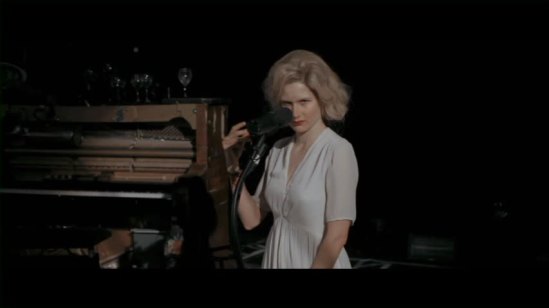
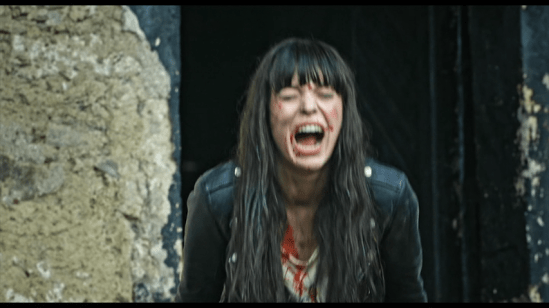
Cynically unimpressed Zina agrees to partake in a friend’s nature photo shoot with idyllic mountains and forest splayed in the backdrop. Soon as the shoot begins, two disfigured and armed mountain men abruptly interrupt the foursomes’ serene surroundings, kidnapping the city folk by brute force, and holding them hostage in the basement of a ramshackle distillery. Confused and scared, Zina takes action, fighting back for her life against a family of hillbillies yearning to mix their victims’ organic essences into a fine, smooth-tasting, down-the-hatch liquor that recently become popular in the region.

Horror has finally found a home in Slovenia with Slavic writer-director Tomaz Gorkic’s freshman feature, the whimsically titled film known as “Killbillies! ” Alternatively known also as “Idila” originally and “Idyll” world-wide, the hillbilly survival horror-thriller is an unique feature in it’s own right, being the first horror film to be produced out of the European nation bordered by Italy, Austria, and Hungary. “Killbillies” savagely pits the entitlement of urbanity against the underprivileged and judged rural community who will kill for what they desire in an intense tale plastered with unforgiving violence and human rancidity. Gorkic’s film rivals America’s “Wrong Turn” series containing murderous, inbred mountain people and sets the foundational work for a potential “Killbillies” franchise to put Slovenia on the map and instead of rehashing the cannibal market, “Killbillies” can go out on a tangent by turning terrified victims’ brains in a tasty homemade brew.

Gorkic decisively also lays the solid groundwork of separating the two classes of characters with the beautiful and sensible urbanites in the models, the photographer, and the apathetic assistant, and the deformed and unhinged states of the no nonsense hillbillies played convincingly, and terrifyingly enough, by the bear-framed Lotos Sparovec and the gangly Jurij Drevensek inside the detailed workings of some gnarly prosthetics to sell the hillbillies from hell. The ugly twosome seek to extract their moonshining secret ingredients from a tough Zina, a role executed well by Nina Ivanisin, a prissy up-and-coming model Mia, played by Nika Rozman, a quiet photographer named Blitcz in Sebastian Cavazza, and a middle aged hair, makeup, and wardrobe assistant named Dragica given to Manca Ogorevc. Each role tackles a unique persona that’s vital to their characters’ survival and Gorkic writes clearly the characters’ purpose in how they interact when pressured upon.

While the visually visceral “Killbillies” requires a minor tweak here and there to only fine tune upon character development and to be slightly more forthright into the intriguing backstory with the liquor and even with Zina’s life struggling puzzlements, Gorkic ultimately captures the bones and soul that genetically makes up that mechanisms of bona fide horror as when the hillbilly duo proceeds through the extraction process with one of the victims, a montage of scenes, sold with composer Davor Herceg’s romantic gothic score, delivers a living, breathing machine of unspeakable mad science without ever divulging a word, without ever being gratuitously gory, and without ever being overly or explicitly taboo. The gore is just enough to sate with head bashings, decapitations, and even a “Walking Dead,” Negan style overkill with a very large, very nasty axe.

“Killbillies” is the latest brazen DVD release from Artspolitation Films and the release is presented not rated in a widescreen 1.85:1 aspect ratio that gorgeously and cleanly contrasts the beauty of the trees, mountains, and blue skies with the vicious ugliness that quickly grounds you back to reality in an epic struggle of life and death. Aside from a simple static menu, chapter selection, original trailer, and an option for English subtitles and English SDH subtitles are only available. Raw and acute, “Killbillies” fears nothing by dipping it’s bloody Slovenian toes into the horror pool for the first time and able to tread water for the full length of the story that ultimately becomes a deadly cat-and-mouse game.
Tag Archives: Artsploitaiton Films
Decadent Evil Takes the Form of Two Blood-Sucking Lesbians! “Vampyres” review!

A dense English forest surrounding a decaying manor house sets as the hunting playground for a pair of seductive female vampires, Fran and Miriam, who have reigned a disconcerting terror through the area’s local inhabitants. When Fran lures and imprisons a touristing male as her bloodletting sexual hostage, Miriam believes Fran is diverging into a dangerous game of simply playing with her food for too long. Miriam proves to be right when a trio of campers stumble upon the vampires’ manor lair, causing a fair amount of distraction when the three friends attempt to uncover the secrets of the area and the myths of the house that will expose the true and terrifying nature of the two vampires. A mistake the three may wish they never would have made.

“Vampyres” is a Victor Matellano 2015 rendition of the 1974 José Ramón Larraz directed abundantly sensual, over sadomasochistic vampire film of the same title but also known as “Vampyres: Daughters of Darkness.” Matellano’s remake faithfully follows the original storyline and with the assistance of Larraz himself tacked on as a credited writer, Matellano was able to keenly hone in on the ambient tone and the graphic slaughtering display the story necessarily requires to quench it’s own thirst for blood. Let’s also not forget the sex, the sex, and the sex that absolutely sinks it’s teeth into of most scenes. Long time has passed since the rebirth of an erotic creature of the night; a plague of mindless ferocity has been the modern vampire. From “Blade” to “The Strain” to one of the more recent reviews of an independent film in “Black Water Vampire,” a dark cloud of a deformed and mutated species of bloodsuckers have been more popular with the masses. Matellano’s “Vampyres” is a love song to the erotic European vampire that’s powerfully seductive, classically gothic, and simply pure blooded with two fantastic femme fatales.

Underneath the dark and ominous cloaks are the beautifully succulent Marta Flich and Almudena León as blood fiend lovers Fran and Miriam. Flich and León have a combined total of 5 feature length films between them, including “Vampyres,” but where the duo lack in experience, Flich and León thrive with their onscreen chemistry that delivers an piercing intensity with a dynamic blend of softcore porn and tantalizing terror as if they’re real life lovers with a real life knack for killing. León has previously worked with Victor Matellano under the Spanish director’s prior horror film, 2014’s “Wax,” and their relationship growth comes whole with the addition of Marta Flich, a buxom brunette willing to savor every moment and put forth every effort into some extremely difficult scenes. No two women can make gore sexier than Flich and León.

Vampires Fran and Mirian heavily overshadow the remaining characters consisting of actors such as Verónica Polo, Anothony Rotsa, Victor Vidal, Christian Stamm, and Fele Martinez who, as a whole, do a fine job performing in this rekindled niche of horror. To add a bit of flare and to help “Vampyres” stick out from above other remakes involving an slew of unknown faces, “Dracula A.D. 1972” and Captain Kronos – Vampire Hunter’s” Caroline Munro and “Tombs of the Blind Dead’s” Lone Fleming have more than cameo appearances, providing familiar genre faces fans know and are attached to when riding along the reminiscing train from the era of which this film’s story is birthed. Munro and Fleming are also accompanied by other genre vets including “Zombie Lake’s” Antonio Mayans, Concrado San Martín from “The Awful Dr. Orlof,” and Hilda Fuchs and the late May Heatherly from 1980’s “Pieces.”

Visually, “Vampyres” dotes as cinematography worthiness in being a European inspired film from a Spanish production by not being flashy but rather grim and simple. Using elementary special effect techniques, “Matellano” doesn’t cheapen an already intentional trashy vampire schlock film with story stiffening CGI; instead, buckets of blood and practical effects elevate the aspiration toward the resemblance of a 1970’s inspired story complete with broken English performances. Set locations are purposefully vanilla, including a plain small bedroom with white sheets overtop a simple bed frame, a bleak forest inhabited with thin trees, and an isolated manor with middle life bones standing lifeless in the woods, and with key shots staged with vivid conventional colors, such as the bathtub scene that’s feels very clean even with the amount of blood used, and the cellar finale that’s very subtle in it’s background even if it’s the root motivation for the vampires.

“Vampyres” is one of the best remakes there is, there ever was, and there ever will be by staying faithful to the Larraz’s original film and Artsploitation Films should be basking in the fresh, warm blood of their latest and greatest release. José Ignacio Arrufat’s brooding score seizes to snare the soul from the well balanced Dolby Digital English 5.1 Surround Sound mix laid over a 2.35:1 anamorphic widescreen presentation. With a slight tilt toward a darker variation on the grayscale, the overall picture is clean and unhindered and even though stark colors don’t run throughout, the bland coloring provides richer qualities toward a excellent homage. One thing is for sure, blood red is the only vivid hue here. Bonus features include an Interview with Caroline Munro, a making of the “Vampyres,” and trailer reels of Artsploitation Films films. The modern masses can have their disease-ridden vampire genres for the very fact that director Victor Matellano’s “Vampyres” entices with an alluring butchery based on fundamental foundations of European horror values and endearment, resurrecting the erotic vampire once again!
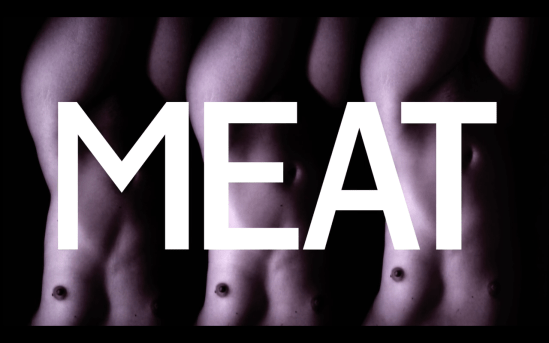
Dutch Avant-garde is the Next Evil on the Butcher’s Slab! “Meat” review!
A young and beautiful butcher shop assistant succumbs to the middle-aged butcher’s sexual advancements and fantasies at the workplace after she catches glimpses his sorrow, but when the butcher ends up naked on the shop’s floor with his throat cut, the assistant becomes the number one murder suspect for an inspector who coincidently looks almost identical to the deceased butcher. As the investigation deepens into the assistant, the inspector’s solemn, solitary life blurs to an assimilation into the butcher’s and his suspect turns from being a prime target to being a crucial part of the his physical and mental altering integration into the dead butcher.

“Meat” is a powerful transcending film seismically barreling through a Lynchian structure consigned to provoke the consequences of unhappiness and the consequences of poor choices during unhappiness. Directors Victor Nieuwenhuijs and Maartje Seyferth have orchestrated a moderately expressionistic arthouse Dutch drama told in a spiraling sexual context. The meat in “Meat” and the sex in “Meat” clearly share a correlation, peppered as motifs from start to end, and the positive and negative dimensions of the two are so obscured that pinpointing the differences between them are impossible, but both are for sure the last hope for the butcher and his assistant Roxy to embody the essence of sex and meat for opposite reasons. Whereas Inspector Mann simply drags wholeheartedly through his existence, expressing his numbness toward his mundane job and harshly breaking up with his lover without an ounce of compassion. Its until the butcher’s case lands in his lap does the Inspector shows signs of life again.

If you notice that lead actor Titus Muizelaar’s dual roles have purposefully generic labels. The butcher is credited as just the butcher while the Inspector has a proper name, but the name Mann is just as indistinguishable as if the character was christened Guy. The synonym character was intended for blending, to blur their personas, and to transform one into another. To explore the transformation, “Meat” begins a parallel between the butcher who, in a metaphorical sense, has his cake and eats it too and the inspector painstakingly limps from one spot to another. A contrasting experience between the two firmly establish their individualities. Then, the film shifts gears midst a catalyst with the butcher’s mysterious death, forcing the female assistant, an uninhibited role performed uninhibitedly by Nellie Benner, to be the resilient gateway for the inspector. Third gear shifts into the inspector being more and more intrigued, if not extremely envious shown very subtly, by the butcher’s seemingly unchained facade. Each character emits an expressionless stature with a deep-rooted ugliness burrowed inside and each desire a change in their turmoiled lives, whether it’s sustaining love, seeking love, or able to love in order to battle every aspect of oppressive depression.

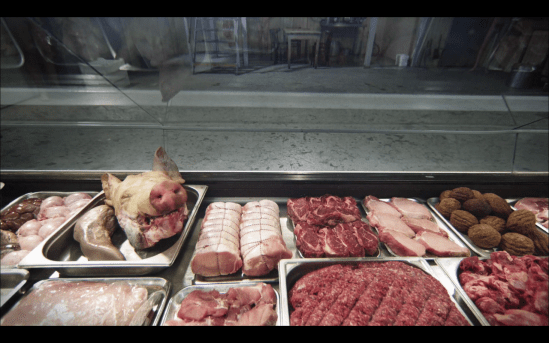
The uncomfortable open and intimate relationship between the butcher, Wilma Bakker’s Tiny, and the shop owner and the psychosexual workplace harassment involving the enthusiastic, video-documenting assistant filets the juicy bits from the bone with numerous innuendoes and explicit carnal exhibitions taking brazen residence within the animal blood stained walls of the butcher’s small meat market. You’ll never look at steak, pork chops, and leg of lamb the same way again! Only when “Meat” transitions into that second gear does the erotica becomes less erotic and more forced and horrifically exploitive. Scenes of undisclosed rape and of blatant genitalia speak upon that aforementioned correlation of raw meat and sex; no choice is given to the cow when the cow is killed and slaughtered for the cow’s delicious beef and the same can be said in sex as it’s taken without much consent and it’s being reaped for the benefit of others.

Graphically infrasexual and skewed beyond simplicity, “Meat’s” refreshingly loaded with unpleasantries and basted moistly with an outer layer of perversion that drips into an oven of thriller surreality. The Artsploitation team lives up to the moniker by, after being long overdue, crafting a home video release of 2013’s “Meat” aka “Vlees” onto DVD and on digital home video. The digital screener provided for review doesn’t give much insight into the audio and video qualities or speak to the testament of the special features. However, “Meat” is a phenomenal film that’s well-aged and ready to be rubbed, tenderized, devoured in all senses of the meaning.
Internal Evil is Subtle. “Fever” review!

High school classmates Pierre and Damien have just murdered a street woman inside her own apartment days before their French placement examinations. After hearing of the gruesome news, Zoe, a young optician working on the same street, recalls the two boys bumping into her, dropping a black glove on the sidewalk, and she begins to formulate her own radical theory, putting two-and-two together that the teens could be the very culprits fleeing calmly from the scene. Meanwhile, Pierre and Damien continue on with their examination studies over the Easter holiday, believing their heinous crime was not personal but of chance, making the offense not a crime at all. Zoe continues her pursuit of curiosity toward the murderers by not informing the authorities of her suspicions; instead, Zoe uses the crime to become self-aware of her fragile and stagnant relationship with her long time boyfriend while the two teens perverse over the concept of committing another murder.

Leave it to the French to make a bloodless and non-violent crime drama that’s more arthouse than conventional. Based on the Leslie Kaplan 2005 novel, “Fever” is the 2014 freshman film from writer-director Raphael Neal that dives sharply from the murderous act and into the internal struggles that lead Damien, Pierre, and Zoe into a turmoil path. Pierre and Damien think they both won’t be affected by their crime and that their moral conscious will remain clean on the philosophical notion that chance doesn’t warrant being unethical, immoral, or lawfully wrong. Damien basks in this belief more than Pierre, but still succumbs to the inevitable intrinsic battle. Yet, the two boys face separate inner warfare: Pierre’s frightened he’ll be caught by Damien’s nonchalant cockiness, looking over his shoulder constantly and fretting the off chance a witness has already spilled their dastardly secret to authorities whereas Damien fears that his chance theory is being blown to smithereens due in part of his ancestral legacy where his grandfather had cooperatively slain hundreds, if not thousands, of Jews during World War II because the Nazi’s ordered him.

Neal’s envisioning, as a director and a writer, flounders with a wishy-washy, by the waste side, telling when trying to convey the character centric story. From the beginning, Pierre and Damien’s sociopathic nature weakens from time to time with an invading moral conscience, like with in Pierre, but Damien’s difference lies with him questioning his justification of murder, but Pierre and Damien’s quiescent state about their family’s issues spots the story like a dirty window unable to view through clearly, leaving a vague and murky background and present state of mind for both characters. The twosomes’ up-and-down state of minds displays no consistence in their behaviors as they’re friends one instance, squabbling and bickering the next, then back to friends shortly after. Issues with angry and abandoning fathers, lustful mothers, and, apparently, genocidal grandfathers have deeply rooted themselves into the boys’ psyche like poisonous mushrooms kept in the dark to thrive to be eaten by mistake. Neal never relays that sense of foreboding wickedness. The same goes with Zoe as a character with really no background whose starting to go through a metamorphous, reforming her position in an unexciting relationship and developing, through subtle hints, a strangling desire after learning about to incident across from her shop. Yet, her full transformation never completes itself, placing her character, and the teens, into a volatile decline of shortcomings.

Though not too familiar with the actors themselves, their performances overshadow the film’s overall divergent plots. I was very struck by Martin Loizillon’s portrayal of Damien with the cold-heartedness that completely blankets his façade and his exerting of unorthodox spontaneity that doesn’t shy away from creating an uncomfortable scene. Pierre Moure contrasts Loizillon appropriately with a shyly frigidity, secretly yearning for more blood, Pierre Simonet. The red-headed Julie-Marie Parmentier displays the same kind of coldness reflected by the Pierre and Damien, but in actress’s own style of curiosity and intrigue with a minuscule hankering for sexual fetishes or self-morbidity. Then there’s duo lingo French singer Camille playing a role of non-fictional popular song artist Alice Snow whose hit English single, “Fever,” serves not only as the title of Neal’s film, but also symbolizes the foundation of the characters’ conflicts.

Artsploitation Films courteously distributes the Strutt Films’ production of “Fever” onto an unrated DVD with a sleek widescreen presentation with a 2.35:1 aspect ratio. The video’s clean with bright, Spring-like colors opposite the more customary, French influenced film noir that’s more common toward crime thrillers. The French 5.1 surround sound mix comes with English subtitles. While the soundtracks and the dialogue tracks are distinct and lively, there’s a slight error involving omitted subtitles, but the flaw only affects a petite portion of the dialogue, if you’re not tuned into French dialogues. “Fever” displays a mixture of psychological drama that mirrors the infamous Chicago crime of Leopold and Loeb of 1920 and Fyodor Dostoyevsky’s pathologic philosophical novel “Crime and Punishment.”
Evil Lends a Helping Hand! “Bloody Knuckles” review!

Travis, an underground shock comic artist, stirs up a world of trouble with Chinatown crime lord and illegal pesticide seller Leonard Fong when his latest issue of Vulgarian Invasion makes the criminal kingpin a colorfully filthy farce. In response, Fong and his goons table saw Travis’s writing hand off. With his livelihood separated from the rest of his body, Travis falls into a depressive slumber to where he doesn’t leave his apartment, find new work, or even take a stand for revenge. The same cannot be said for his decomposing hand that suddenly revives and confronts Travis. Looking to settle the score with Fong and his gang, Travis and his appendage join forces with a true to life S&M superhero based of one of Travis’s caricatures and take up arms (get it?) against Fong’s criminal syndicate.

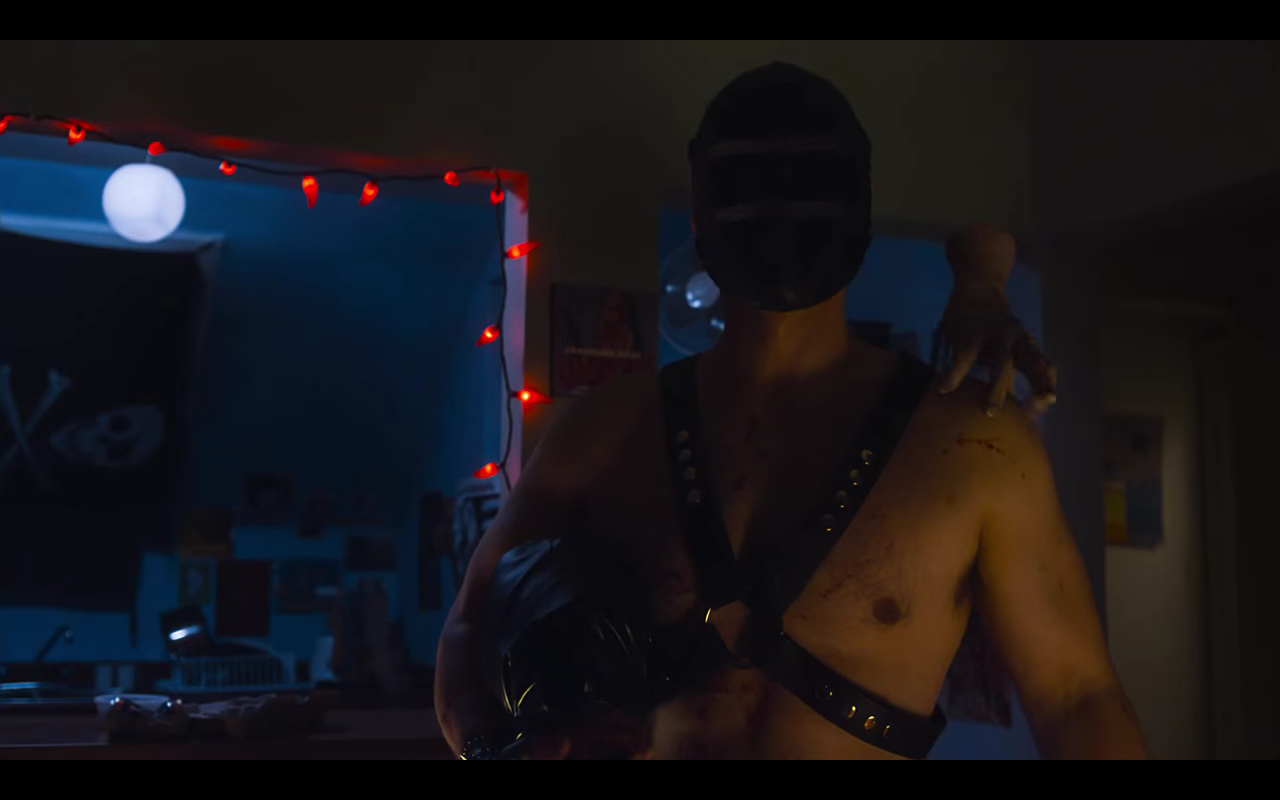
“Bloody Knuckles” is vulgar, distasteful, and offensive – I loved every minute of it! Director Matt O.’s (Matt O’Mahoney) debut feature film from Canada makes “Idle Hands” seem weak and childish in comparison. The “Addams Family” Thing is a cutesy puppy dog whose sporting a knitted winter sweater while the “Bloody Knuckles” Hand is cracking skulls as it’s cracking it’s own bloody knuckles in a spiked leather jacket. This Hand is more like the Ash’s evil hand from “Evil Dead 2!” There hasn’t been this much fun in a film in awhile and I’m considering the Matt O. film to be one of my favorite horror Blu-ray releases of 2015 from Artsploitation Films. “Bloody Knuckles” has it all: limitless violence, scrupulous comedy, glorified gore, a penchant for the politically incorrect, nudity, a living severed hand, and a gay S&M badass looking to spank to death the opposition.

Mainly, the underlying message of “screw censorship” hits, in a good way, the main artery for this reviewer as our lovely site, Its Bloggin’ Evil, is all about pushing the boundaries, divulging the full story, and leaving everything out on the table for all to bare witness. Being crass is nice too and that’s “Bloody Knuckles” schtick; a unique stance that most films and filmmakers won’t risk due to the fear of their work not being picked up and released, shunned and stored deep in the depressing closets of death and disparity. “Bloody Knuckles” splays the notion of artistic freedom throughout the duration and in many different formats from comics, to the press, and to shock art.

The special effects were top notch quality and handled by the Academy Award-nominated company Image Engine of Vancouver, who had their hands mixed into major studio work such as James Gunn’s “Slither,” HBO’s highly praised television series “Game of Thrones,” and the prequel to John Carpenter’s “The Thing.” The Hand, whether as a live hand with makeup or a prosthetic one, never looked underfunded or cheesy. The Hand was given a Frankenstein life and was appropriately made into a sympathetic character. Even though Hand is part of Travis, Hand is actually a woman’s hand, Krista Magnusson’s hand to be exact, and not even for a second will you be able to tell. The rest of the effects don’t disappoint; the exaggerated gruesomeness of certain effects shots brings back memories of watching “The Stuff” and “Riki-Oh: The Story of Ricky!”

Aside from Krista Magnusson, the lineup of actors and actresses were destined to portray these character roles. Kasey Ryne Mazak as the ruthless and merciless Leonard Fong had pegged perfectly the well-dressed with an oversized ego but with a short stature stereotype. Dwayne Bryshun as Homo Dynamous, a Travis’s gay S&M superhero, brings to life such as an extravagant character, turning a simple gay caricature into a living and breathing bondage Bond. Lead actor Adam Boys as Travis could turn on the charm, the sarcasm, and the girly scream on a dime and so naturally that Travis instantly becomes a likable character. The witty and gritty banter between all the characters, even Hand using the type-to-speech function on Travis’s computer, is well written and doesn’t bog down the blitzkrieg story.
I can’t say I’ve yet to come across a poor release from Artsploitation Films. Aside from a controversial and entertaining subject matter of the films, the Blu-ray’s 1.78:1 aspect ratio has great quality that can outshine many competitors. The Blu-ray of “Bloody Knuckles” contains a clean and sharp image that doesn’t become murky in the darkness to which the film is mostly set, whether being night outside or in dark inside quarters. There’s slight posterization during the a few pitch black night sequences, but I found that everything was nicely outlined or visible without little interference from it. The 5.1 DTS-HD Master Audio is the preferable option if you have the equipment; the dialogue is at the forefront which is key for this film and the rest of the tracks are well-balanced. Other audio options include a 5.1 Dolby Digital and a 2.0 Dolby Stereo. There are tons of extras clocking around 130 minutes worth of content and the icing on the cake with the whole release is a portion of Travis’s comic Vulgarian Invasion on the reverse side of the Blu-ray cover art. Hands down, “Bloody Knuckles” is a must own!