
“The Dead Mother” Lives on a 2-Disc, LE Blu-ray/CD Set from Radiance Films!
A botched burglary of an art restorer’s home leaves the art conservationist dead and her daughter wounded by a shotgun blast at the hands of apathetic criminal Ismael Lopez. Years later, the daughter, Leire, has grown into being a young and beautiful simpleton at a mentally disabled clinic where the mute girl often recesses to a caretaker’s city home off clinic grounds. By coincidence, the lifelong crook Ismael catches sight of her on the street and becomes obsessed with her witness of his past transgressions. Conferring with his love-hate girlfriend and felonious partner Maite, the two decide to kidnap her while she’s off clinic campus and put her up for ransom after Ismael couldn’t bring himself to initially kill her but an increasing preoccupation for the chocolate-fond and childlike Leire within a stoic Ismael places an insidious jealously and enigmatic strain between him and Maite that tests that already turmoiled codependency of affection and survival.
Emotionally recrudescent with multiple intrinsic layers of tough guilt, incontrollable desire, and maybe even a pinch of forbearing responsibility that can be labeled cossetting at times, “The Dead Mother” is a beautiful film with unsettling undertones from Spanish filmmaker Juanma Bajo Ulloa. The “Baby” director cowrite the “The Dead Mother” alongside younger brother Eduardo Bajo Ulloa, their second collaboration after hit success with the duo’s crime thriller “Butterfly Wings” two years prior in 1991. The Spanish film is shot primarily in Vitoria, Spain with the backdrop of a near classic medieval architecture of urban city with old wooden interiors, high ceilers, and gothic qualities, providing a relative old world air to a tale of petty ideals and madness that disintegrates by the mere site of pure, ingenuous goodness. Under the private and state run production companies Ministry of Culture and Gasteizko Zinema, “The Dead Mother,” or “La Madre Muerta,” is produced by Fernando Bauluz.
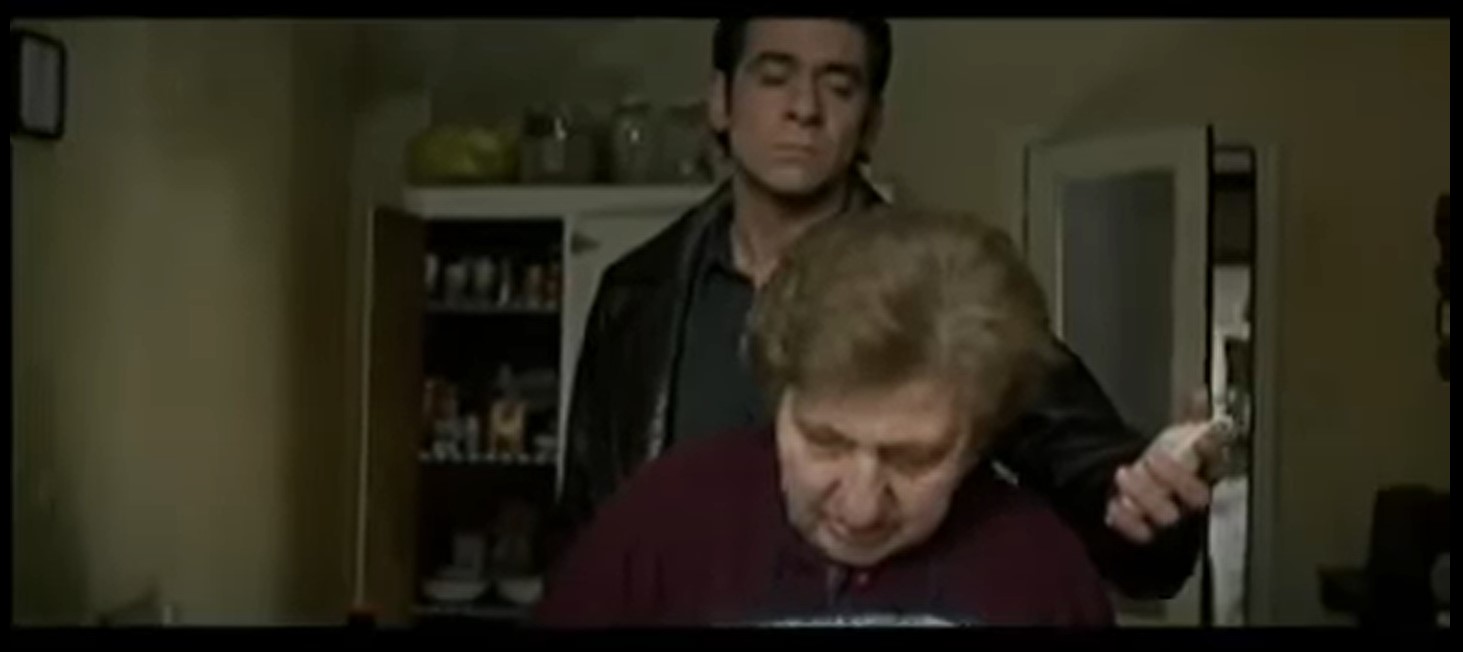
To obtain the intensity, the coldness, the unpredictable, the pitch-black humor, and the soft touch, Juanma Bajo Ulloa doesn’t hire a vocational dramatic. Instead, the filmmaker chances actor just getting his feet wet the Spanish cinema with Karra Elejalde whose assortment of comedy and drama in his first years seasons him for the role of the reprobate Ismael Lopez, a coldhearted killer with a short fuse for anyone who defies or belittles him and, on the opposite side, can be pensive about his past and next steps in a haphazard way. Opposite Ismael is a devout partner/lover, equal in ruthless potential, yet happy, in her own way, to play house wife in their ramshackle, fly-by-night home. Played by the Portuguese-born, Belgium-raised singer Lio, her stage name in lieu of Vanda Maria Ribeiro Furtado Tavares de Vasconcelos, the pop star, who still to this day floats between acting and singing, rivals Elejalde’s dark-and-light intensity within her own character’s amorous feelings for the petty crook and murder and would do anything to keep him, even if that means destroying what he adores. And what does Ismael adore? Ismael’s new fascination is with Leire, the once little girl who attempted to murder now all grown up, developmentally disabled, and beautiful. While I can’t fault in any of “The Dead Mother’s” cast performances, I could not imagine Leire being portrayed by anyone other than Ana Álvarez (“Geisha”). Exuding innocence in her eyes amongst a full-body vacuity, Lio might be the professional singer but it’s Álvarez who hits every note of amentia that constantly has us questioning how much of her facility is there, conscious of the bizarre love-triangle or the homicidal-involving abduction. In the same breadth, a muted Álvarez talks with her eyes, her expressions, and her body language that subtly fidgets or does other under-the-radar subnormal behaviors to convey an unequivocal virtue starkly in contrast amongst her callous captors who enjoy playing house or even try to make her smile or laugh with jokes and play. Eventually, the dynamic dissolves, like many love triangles do, between an advantageous perversion and deadly ultimatums that will result unfavorably for most. “The Dead Mother” rounds out the cast with Silvia Marsó, Elena Irureta, Ramón Barea, and Gregoria Mangas.

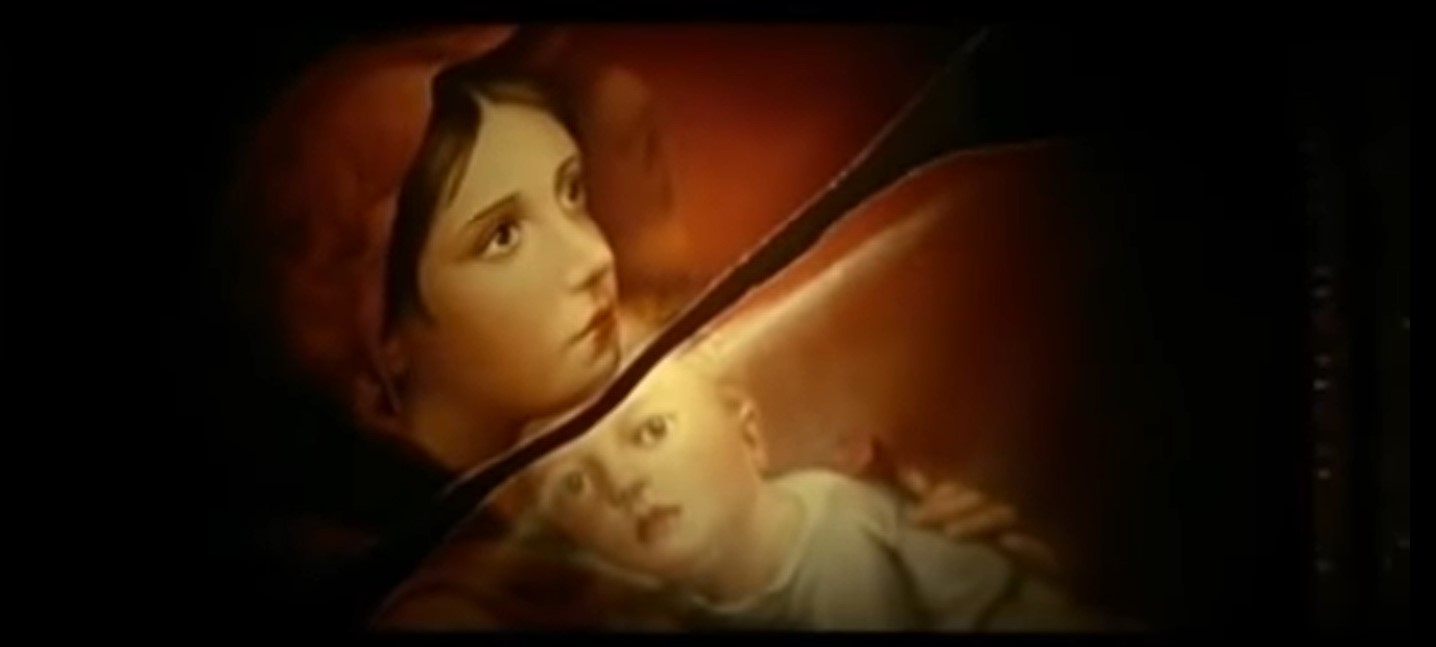
Ismael’s fixation toward Leire is so tremendously opaque without much exertion it’s difficult to understand the criminal’s ultimate motives, leaving audiences with a shrouded aftertaste of open interpretation. Perhaps guilty from killing his mother all those years ago and nearly killing her, a wash of responsibility for her now placid and childish existence courses through him, driving him to do the bare necessity in taking care of her. Another facet to Ismael’s curious interest is Leire’s inherent beauty despite her absent situational awareness. His attempts to make the young woman’s empty expression become joyous with a smile fails, as if that blank-faced barrier keeps him from moving forward with something akin to being romantically involved. In a couple of brief, uncomfortable viewing stints, Ismael gropes with the second time being passionately fondled by Maite in attempt to win over affection in what Maite believes is a duel between Leire for his attention. Leire can be interpreted as a burden that has passed from the mother, hence the title, to Ismael, an assuming responsibility pseudo-father figure. When Ismael kills Leire’s mother during the bungled burglary, a hint of a smile extends upon her face before the blood drips down her eyes in a fantastic POV shot by cinematographer Javier Aguirresarobe. Supporting this theory is the Renaissance painting of mother and child with a tear in the canvas between them, a painting that Ismael lingers over for a few seconds while rummaging through the art restorer’s home. The ambiguous nature of “The Dead Mother” only succeeds because of the confident performances and Juanma Bajo Ulloa’s august eye for the impeccable shots he wants and achieves.

“The Dead Mother” arrives onto a limited-edition Blu-ray, to the tune of 3000 copies, from Radiance Films U.S. line. The new 4K scanned transfer, restored from the 35mm negative and stored on an AVC encoded, high-definition 1080p, BD50, is presented in a widescreen 2.35:1 Cinemascope aspect ratio. Juanma Bajo Ulloa oversaw the pristine cleaning of film strip defects and the new, frame-by-frame color grading at the Cherry Towers lab in Madrid, Spain. The excellent work by the restoration company and Ulloa’s supervision of the process resulted in a naturally clean edged and detailed saturated transfer to rejuvenate the image with a fresh look. The overcasting shadows and slate aesthetics with brilliantly hued low-key lighting suggest an immense lugubrious tone throughout, accentuated by the antediluvian structures. The Spanish language uncompressed 2.0 stereo audio absorbs what’s absent, which isn’t much, with an uninhibited, original fidelity of the dialogue, surrounding milieu, and the bordering whimsical string soundtrack by Bingen Mendizábal. There are no hints of hissing, cracking, popping, or fragmented damage of the audio track that persists on being punchy with every Ismael scuffle down to the very rustling of the chocolate wrapper in Leire’s chocolate-stained hands. While range is plentiful and natural, depth is not as utilized unless absolutely necessary, such as with the oncoming horns of the diesel trains in the trainyard or Ismael whistling between the pews of a decrepit church shot from the chorus balcony. English subtitles are available and optional. Special features on this limited-edition set include a Spanish audio commentary by the director with burned in English subtitles, The Story of the Dead Mother an archive behind-the-scenes featurette of retrospective interviews from 2008 and some raw footage of takes that’s, again, in the Spanish language with English subtitles, Bajo Ulloa’s short film “Victor’s Kingdom” aka “El Reino de Victor” from 1989 and now restored in a 4K scan, the film’s trailer, and photo gallery. Physical attributes impress within the clear, slightly thicker amary Blu-ray case that’s been conventional distribution use with Radiance Films in its near retro, austere facade. Sheathing a reversible cover of the original media artwork inside, the outside cover continues to remind me of its Arthur Fleck appeal with a doleful Ismael Lopez in his very best clown make up. Both discs, the Blu-ray and the CD soundtrack, are overlapped and locked in place pressed their respective black and creme coloring scheme. On the insert side contains a 35-page color booklet filled to the brim with captured film images, promotional images, and cast-and-crew posed pictures along with the CD track listing, cast and crew breakdown, and expressionism written pieces and essays by Eduardo Bajo Ulloa, Juanma Bajo Ulloa, Nacho Vigalondo, and Xavier Aldana Reyes. The unrated feature has a runtime of 111 minutes and his region free for all you worldly, cultured lovers of cinema out there. The mother might be dead but Juanma Bajo Ulloa’s converging of cynical odd behavior with the breakdown of status quo by a wicked curveball makes for a darkly cherub of Spanish filmmaking worth coddling in Radiance’s exceptional release.





 It's Bloggin Evil!