A 13-Year-Old Girl is EVILLER than Skinheads! “Becky” reviewed! (Ronin Flix / Blu-ray)

“Becky” is Clearly a Special Girl!  Purchase the Blu-ray by Clicking the Below Cover!

Cancer has taken Becky’s mother away from her.  Over the past year, the 13-year-old girl finds comfort in being angry, especially at her father who choose to move forward with his life that stirs a flurry of pent up uncomfortable, rage-filled emotions inside the teen.  As Becky stays in her constant stew of angst, her father surprises her with a trip to their cabin getaway he initially planned to sell but had a change of heart.  There is one small caveat, he plans to propose to his girlfriend who joins them on the trip, cornering Becky into one-sided fight and meltdown with those who love her and care for her and sending her to retreat into her woodland fort.  At the same time, a group of escaped convicts take her family hostage in search for a mysterious key left behind by the escapee’s neo-Nazi leader, Dominick.  Dominick has planned for years every possible scenario to secure the key that will undoubtedly serve every race with what he thinks they deserve, but Dominick didn’t plan for one scenario:  Becky. 

Amongst the movie nerds, there’s a particular phenomenon that occurs when a film is first mentioned across the internet and an immediate acclaim and attraction follows in its wake toward the film’s actors or actresses flipping the script on their stereotyped industry roles and playing totally unorthodox personalities that may shock. “Becky” was one of those films.  The 2020 released home-invasion, revenge thriller has been labeled by critics and fans alike as a horror, but the Jonathan Milott and Cary Murnion codirected production is more than just blood and guts.  The Ontario, Canada production is based off an original and debuting script from Nick Morris with “The Devil to Pay” and “Rattle the Cage” screenwriting husband and wife team, Lane and Ruckus Skye who have specialized credentials in the thrillingly brutal, hardnose character genre.  With a punk energy and engrossing family themes, “Becky” is a heart-stopping, heart-stomping, mischief making, ball of fury.  Jordan Beckerman of Yale Entertainment (“Cut/Print”) and Boulderlight Pictures’ J.D. Lifshitz and Raphael Margules (“Barbarian”) serve as the U.S. production companies in association with Bondit Media Capital, SSS Entertainment and Buffalo 8 Productions and is presented by Quiver Distribution and Redbox Entertainment. 

Aforementioned, this strange manifestation of hype for an upcoming feature leads the world, or at the very least film aficionados, in extreme anticipation. The conspicuously, incongruous piece glimpsed briefly in the trailer, one-sheet, posters, and stills claws for our attention as our brains can’t quite compute or process Kevin James in an Aryan acolyte. With a shaved head, long beard, and covered in swastikas, SS doppel sigrune, and other various Nazi-symbolic tattoos, Kevin James transforms his loveable and comedic “Paul Blart: Mall Cop” and “I Pronounce You Chuck & Larry” self into a ruthless and irredeemable skinhead. James absolutely nails the look of escaped convict and neo-Nazi Dominick with growing out his facial hair and shaving his head that takes his usually unassuming presence to a whole new level of calculated evil, but the script spoon feeds Dominick too much leeway to tolerate insubordination amongst his four-man crew, to allow hostages to talk back, spit in his face, and antagonize against his goals, and lacks the know-how of how to appropriately bait Becky with her own family, if Dominick is truly a despicable person as we’re lead to believe in earlier scenes of an approved prison leadership shanking and the implied murdering of children sitting in the backseat of a family roadster he aims to hijack. Yet, Dominick allows to be taken advantage of despite his cruelty stating to the contrary. In a stark contrast to evil embodied, there’s teenage girl Lulu Wilson.  The New York City child actress has been quickly making a name for herself in the horror genre, as a scream queen prodigy of sorts, with having supporting roles in “Deliver Us from Evil,” Ouija:  Origins,” “Annabel:  Creations” and Netflix’s “The Haunting of Hill House” before landing the titular lead in “Becky.”  Instead of scared pretense, Lulu Wilson gives a visceral, violent performance.  It’s teenage angst on steroids.  “Becky” is the only child versus adult cat-and-mouse game where the audience will get more out of the younger, smaller rival full of enraged paroxysms.  Joel McHale is another comedic actor wiggling his way into more dramatic roles that expand not only his resume but his range to showcase the other side of the once syndicated television comedy host.  From his stint into horror alongside Lulu Wilson in “Deliver Us From Evil” and in dark comedy, such as “Happily” that released the same year as “Becky,” McHale is finding a different voice other than laughter that has come natural to the actor and does show a lot of promise in more compelling roles as in “Becky’s” widowed father looking to move forward with his life but treads on pins and needles with his angry daughter.  Those relationship complications between Becky and her father never wander but rather do wonders for the connection on coming to terms with little go of the past.  The robust range of characters continue with an eclectic and noteworthy remaining cast that includes Amanda Brugel (“The Handmaid’s Tale”, “The Infinity Pool”), former Canadian-turned-actor Robert Malliet (“Pacific Rim,” “300”), Ryan McDonald (“He’s Out There”), James McDougal (“Heinous Acts”), and Isaiah Rockcliffe (“Random Acts of Violence”).

Kids committing hyper-violence in films is not entirely uncommon but they’re also not run-of-the-mill either.  Yet, films like “Becky” produce an unsettling affect that churns in the back of our psyche when witnessing a young teen girl intently stabbing a grown man with a jagged ruler and a handful of colored pencils in the neck.  Fans and critics label “Becky” as an adult, violent version of “Home Alone,” but the comparison I would draw would be closer to “Die Hard” for the barely young adults.  “Becky” plays out like a graphic novel or a young adult novel, stylish and impulsive in its edgy execution and character.  Unlike “Home Alone,” hardly anything sweet and endearing radiates from Milot and Murnion’s ferocious family retaliator and though Becky may set a trap or two (really just one trap) to inflict pain and punishment on her pursuers, the youngster is more inclined to John McClane wing it as the plot plays out, going toe-to-toe, face-to-face with adults two and three times as big as her without a moment of hesitation. There are some unique and graphic death scenes that ooze Becky’s personal satisfaction, and the Derek Liscoumb (“Possessor”) special effects blood reel is perforating, shredding, and cutting to pile on perfection as the kills go deeper into mutilate pool. Tremendous raw emotion superhumanly strengthens Becky’s adrenaline rush as the tragedies aggregate into one big horrific destruction of familyhood, contradicting the first act’s despisal of her father with a regret-filled, redemptional theme that without family there’s nothing else to lose. Its powerful for Becky to lose people she, in the moment, abhors yet are close to her because of her own unworked out pain and suffering that in all innocence pit her against the world.

“Becky” is the quintessential diamond in the rough as an unsurprising hit with fans. This small, independent Canadian film can hold its own in story, style, and sanguinary. With a sequel in the works, entitled “The Wrath of Becky,” our friends at Ronin Flix have released a collector’s edition Blu-ray to enlighten those new to Becky’s inherent mean streak. Released on an AVC encoded BD50, the feature is presented in 1080p high-definition on a widescreen 2.39:1 aspect ratio. Nothing to particularly note negatively on the digitally recorded image quality to the tune of compression storage as there doesn’t appear to be an issue with a clean-cut picture that delineates the hell out of the image, capturing every contour, fiber, and skintag inconvertible. Colors are potent with a natural grade along with plenty of textures to salivate over with a palpable tongue, such as Becky’s wool hat or Kevin James’s thick beard. The compressed image unloads at a gloriously hefty 36-38Mbps. The CE comes with two lossless English audio options – a Dolby Digital 5.1 Master Audio and a Dolby Digital 2.0 Stereo. Unless your audio outputting on the television speakers, the surround sound is the optimal and preferred choice for “Becky’s” unmanage mischief making through the rustling brush. The small aspects of her plotting and executing her revenge are what give the ambient padding meaning and offer a plentiful and grotesque semiliquid, semi-flesh sound effects. Dialogue comes through clean, clear, and robust. Optional English subtitles are available in SDH. Over 60 minutes of bonus features are on this release with interview commentary by directors Jonathan Milott and Cary Murnion, an interview with Joel McHale, and an interview with Lulu Wilson that all pretty much do a similar roundtable of remarks of their time and experiences working with each other. Milott and Murnion provide more backgound, backstory, and insight to their directing process compared to solo directors. Behind-the-scenes gallery, fan art, audio commentary with Lulu Wilson and screenwriters Ruckus and Lane Skye, and individual pre-feature introductions by the directors. Physical features include a cardboard slipcover of composite art by Tim Johnson, which is also on the latch-featuring clear snapper case cover art, a reversible cover art featuring a solo Lulu Wilson, and an anime-esque, illustrated disc art by Andrea Michel. The Blu-ray is rated R for strong bloody violence, graphic images, and language with a runtime of 94 and is region A locked. “Becky” is brutal with blood and guts galore and is more fun than can be describe with Lulu Wilson delivering an atomically hot-headed performance and Kevin James sporting uncharacteristic, fascist tats.

“Becky” is Clearly a Special Girl!  Purchase the Blu-ray by Clicking the Below Cover!

The Greatest Trick EVIL Ever Pulled Was Convincing Couples the Perfect Marriage Ever Existed. “Happily” reviewed! (Saban Films / Digital Screener)

Tom and Janet have been married for 14 years.  By that amount of time elapsed, marriage has moved past the honeymoon stage and settled into routine with the spark having dulled and sex life becoming nearly, if not totally, stale, but for Tom and Janet, their libidos are the equivalent to hormone-driven teenagers.  Their marriage has happily sustained over the years, never veering off course, but when a couples’ retreat invitation is rescinded by their friends because of the envied desire for each other and a mysterious man arrives at their door step next day offering a syringe injection that will cure them into a normal married couple, Tom and Janet believe they’re a part of a sick joke by one of their so-called friends, leading to a dead body, a brief case of unknown substance, and a re-invitation to the couples’ retreat where they must figure out who is and who isn’t of the four other couples are on team Tom and Janet.  Yet, the trip founded on the idea booze and relaxation turns into a disclosure of lies, secrets, and deadly disconnections. 

What’s the secret to a long lasting marriage?  Good sex, obviously.  But can an ostensibly impenetrable marriage be flawless?  That’s one of the themes writer-director BenDavid Grabinski toys with in his inaugural feature film directorial of “Happily” that disparages the unsullied union of Tom and Janet by a quartet of couples, who are also Tom and Janet’s closest friends, who aim to stick it to the happy couple because of their own marriage and life failures.  Grabinksi, creator and writer of revamped “Are You Afraid of the Dark?” television series, incorporates that element of grim tale mystery for allegorical effect into the psychology of envious, mal intent friends projecting their negativity on Tom and Janet’s positivity and love.  “Happily” is a production of the Arizona based Common Wall Media, an indie record and film production labeled owned and operated by Chuckie Duff, and, perhaps, the reason “Happily” has a killer soundtrack that includes Tim Capello “I Still Believe.”  Jack Black (“Tropic Thunder,” “Goosebumps”) also produces the film under his Electric Dynamite Productions, Inc. banner in collaboration with Indy Entertainment (“Nightmare Cinema”). 

I find extreme difficulty seeing Joel McHale in anything remotely with a serious tone for someone who grew up with the comedian during his 12 season days of E!’s spinoff of Talk Soup titled simply, The Soup.  McHale’s range as a funny man is beyond being paramount with great comic timing and able to deliver an unlimited amounts of laughs in just his mere expressions and that has translated well into his filmic career from comedies such as “Ted” to “The Happytime Murders” and even well into his more earnest and darker roles in “Deliver Us From Evil” and, his most recent release which is “Home Alone” for a more mature audiences, “Becky.”  In “Happily,” McHale plays Tom, a loving husband to wife Janet who can’t keep their hands off each other and never fight for more than half a day in what’s staunchly considered a perfectly sickening marriage by their closest friends.  One thing I’ve learned from watching Joel McHale in this role is not only can he bear the weight evenly of an emotional thriller, but the guy is jacked!  Opposite McHale is “Penny Dreadful:  City of Angels” star Kerry Bishé, matching the sexual and profound tone as the wife, Janet. Bishé takes on Janet’s ever benevolent wifedom, elevating it to a whole new level as the working spouse, ready to gratify Tom by any means possible and in any compromising position possible, who’s also served hand and foot by the same man who knows how to reciprocate at the right moment. Bishé’s a favorable compliment to McHale as a power couple daring the odds together on the same page until losing they’re way because, simply, they’re inevitably human. Tom and Janet square off against four other couples under suspicion of a suspected prank-gone-wrong after meeting with a mysterious man played by “Office Space’s” Stephen Root. Could the pranksters be the flamboyantly affluent, but unaffectionate Karen and Val (Natalie Zea of “The Following” and Paul Scheer of “Piranha 3DD”)? Could it be the uptight lesbian couple Carla and Maude (Shannon Woodward of “Westworld” and Kirby Howell-Baptiste of the upcoming “Cruella”)? Or is it the carefree Patricia and her inhospitable husband Donald (Natalie Morales of “The Santa Clara Diet” and “Mastermind’s” John Daly)? Maybe its the anger unmanaging Richard and his newfound fiancé Gretel (Breckin Meyer of “Freddy’s Dead: The Final Nightmare” and Charlyne Yi of ” Puppet Master: The Littlest Reich”)?

Grabinski forcibly shoves the happily in “Happily’s” Tom and Janet’s marriage down our throats with a diabolical lustful half-exposition, half-hanky-panky action before title sequence intro into their infinity spicy life. The couple screw like two teenage rabbits hopped up on an aphrodisiac more than a typical mundane couple of 14-years should ever seen in their union’s lifetime, but, then, Grabinski throws in the proverbial monkey wrench into the gears. The question comes up, and lingers throughout, whether Tom and Janet are inherently broken, a defect in their existential creation, and that begins to snowball down the hill of insidious thoughts as the protagonists have their idyllic marriage tainted by the hair brain idea of a stranger, carrying two syringes of an insta-fix made up of unknown, illuminating material, who beguiles them with bureaucratic niceties to lie his way into their home and tells them he works for a higher power. Is this mysterious man God? Perhaps, the Devil? Grabinski smartly keeps that little detail under wraps and, for the first half of the film, stays a mystery upon itself. In time, each couple begins to unravel cankerous secrets, all of which have been targeted at Tom and Janet for their perfection and that’s perhaps where “Happily” struggles a bit as a story as Grabinski has a rolodex of past events being flipped through a plethora of interaction exposition, leaving morsels to try and puzzle the uneasiness of the morose couples’ retreat together. The long and short of the story is that the audience will need more morsels to chew on, get the creative juices flowing, to understand character motivations because, in the end, “Happily” is one big couples therapy session of divulging secrets to wash away, more or less, soul-deteriorating sin.

Before all hope is lost between two people, an intervention is warranted, even if it’s a divine one in BenDavid Grabinski’s dark comedy “Happily” heading our way to theaters, digital, and on demand come Friday, March 19th from Saban Films. The R-rated film runs for 96 minutes is presented in a widescreen 2.39:1 aspect ratio that gets to showcase more of Adam Bricker’s luridly dreamy style. The “Starry Eyes” cinematographer instills a firm taste of precise, primary coloring tinting that evokes the intensity of the scene rather than pitching an outlined overlay on top of his soft lighting. The red “Predator”-esque vision through CCTV lens is a nice touch of also breaking up the more natural lit scenes for that ominous approach. Since “Happily” is coming to theaters, there is obviously no bonus material, but stick around for scenes during the credits and after credits. Lies, betrayals, murder, and the uncanny are soaked into “Happily’s” absorbent fibers as one of this years best dark comedies that hones in on ascertaining that nothing is perfect but the perfection that you make together.

EVIL Presses the Reset Button For Killer Results! “To Your Last Death” reviewed! (Quiver Distribution / Blu-ray)

Miriam DeKalb has just survived a bloodbath inside her tycoon father’s high-rise, walking out shaken, bloodied, and carrying an axe.  When the police detain her in the hospital, construing a case against her for the death of her siblings and father based off her previously unhinged mental state inside a psychiatric institute, Miriam is visited by an otherworldly being known as the Gamemaster.  Miriam is given two choices:  stay at the hospital to be pursued as the murderous villain in her harrowing escape from near death or restart her traumatizing experience to save her siblings in an intergalactic wager by infinite being gamblers eager for amusement, blood, and a clear winner.  Miriam’s foreknowledge of how the events play out should give her an edge in saving her family, but the restart is the Gamemaster’s game with the Gamemaster’s rules as timelines and outcomes are determined limitless. 

“To Your Last Death” is a science fictional brawl of Darwinism in this eviscerating adult animated survival horror from director Jason Axinn.  Originally titled as “The Malevolent” during the crowd-funded Indiegogo campaign, which raised 114% above film’s budget, “To Your Last Death” is Axinn’s first full length feature from a script co-written by Jim Cirile (writer of horror-comedy “Banned”) and is the first credited work of Tanya C. Klein, both who’ve previously collaborated on the superhero short “Liberator” in 2016 starring the original Hulk himself, Lou Ferrigno  With an animated direction similar to that of FX’s “Archer,” Cartoon Network’s “Metalocalypse,” or an even slightly more advanced version of “Space Ghost Coast to Coast,” but, in fact, the hand-drawn, puppetry style animation is the first ever 2-D animated horror under the meticulous art direction of Carl Frank along with lead artists Luca Romano and Vicente Saldivar, who interned on “Metalocalypse,” that keeps in tune with the adult themed animation trend, but levels up the explicit nature that kisses the sordid substance of “Heavy Metal” with strong bloody violence and some nudity.  “To Your Last Death” is the first feature film of Jim Cirile and Tanya C. Klien’s Coverage Ink Films, a subsidiary of the screenplay analysis and development service group, Coverage Ink, and Quiver Distribution (“Becky”) with Cindi Rice, Paige Barnett and Jason Axinn taking on a producer role. 

The voice work is comprised of some of the most distinguishable voices in genre land; voices that carry the unparalleled weight in intensity, tenor, and madness to their darkly depicted illustrated characters.  You can almost feel the veins throbbing out of Ray Wise’s neck when spewing the murderous insanity of warfare kingpin and diabolical businessman, Cyrus DeKalb.  The “Dead End” and “Jeepers Creepers 2” actor’s inhumane avatar, who looks just like him, devises a plan to solidify his company’s legacy by eliminating his four children who, if banding together, can derail his egomaniacal runaway train.  His children are distinct individuals themselves, beginning with the BDS&M buff and death metal rocker, Ethan (Damein C. Haas), a pill-popping wrist cutter, Kelsy (Florence Hartigan “Phoenix Forgotten”), and a mirror-image disappointment and homosexual, Collin (Benjamin Siemon “Thankskilling 3”).  The fourth child, Miriam, is the principle lead.  Voiced with perpetual mixed reactions by Dani Lennon, a regular from the videogame-themed horror comedy and zombie apocalypse television series, “Bite Me,” Miriam’s complexities stem from a web of junctures that lead her to being a control freak amongst her siblings, an obsessive activist against her father, and a certified schizophrenic, but Miriam is also pragmatic with the strongest will to see through and survive her maniacal father’s abhorrence.  While everyone’s voice work is solid, Steve Geiger’s Eastern European accent replicated for the sadistic, warmongering henchman, Jurek, imprints a nightmare man unabashed by his decadent desires.  You wouldn’t think just be reading this review, but Bill Moseley (“Devil’s Rejects”) and William Shatner (“Star Trek” franchise) also have voice roles that are more cameo resembling as Moseley voices a short lived, facially disfigured hired gun and Shatner is the narrating voice in between the void as the Overseer, filling in with cryptic exposition of the Gamemaster’s existence, much like his narrative work on the reboot of the children’s show, “The Clangers.”   Mark Whitten, Bill Mishap, Rom Lommel, Paige Barnnet, Jim Cirile, Tanya C. Klein, Ruairi Douglas, Jason Axinn, and “Deadpool’s” Morena Baccarin as the Gamemaster round out the cast.

The way “To Your Last Death’s” story is structured runs along the same quivering line that’s equal to pure madness and this narrative path of unstoppable carnage is purposefully trekked to dislodge any judgements about what we, the viewer, think we know about the Gamemaster’s macabre game for galactic gambling.  Is the whole “Saw”-like designed bloodbath really a part of Cyrus DeKalb’s hatred and vindictiveness toward his children or is the lucid experience just a figment of Miriam’s break from reality?  Remember, Miriam was depicted to an ex-committed, living with and within the pressures of her father’s ever present, looming shadow. Miriam finds herself repeating moments but blueprinted differently than before or is manipulated by the Gamemaster’s gamer’s high for the adrenaline voyeurs betting on the outcome. The story’s effervescently fluid in pivots, tactics, and style; yet, the constant modify and rebuild was, perhaps, done one or two many times as staleness begins to set in and I eventually find himself anxious for a more linear goal for Miriam and her siblings to be out of limbo, out of being hacked to pieces on the fourth or fifth go-around, and reach the final stage, the final boss, to not be jerked back (or jerked around) to the beginning or midpoint like in unendurable game of chutes and ladders. Soon after that sensation of being uninterested in another rewind, the feeling immediately washes away as the story finally did progress, climax, finish, end, close, and put to sleep a rotunda of violence engendered by cosmic sadists that is “To Your Last Death.”

Like some warped version of “Clash of the Titans,” the insouciant Gods in “To Your Last Death” are not generous or kind in their gamble of human entertainment on this Blu-ray release distributed by Quiver Distribution. The feature is presented in a windscreen 1.78:1 aspect ratio with rich colors through but favor toward scenes splotched of dark red or saturated in full tints of blue. The animation can be a little jagged at times but tolerable and only one scenes stood out compromised with two character stuck still for a few seconds too long and color banding rear its little ugly head on their animated faces. The English Dolby Digital 5.1 surround sound renders equally gratifying that includes a pulsating and terror riddled soundtrack by Rene G. Boscio. Typical with animation, ambience is generally underused as the filmmakers control much of what’s in the frame and the same can be said with this film, but with the much of action stationary inside the building, the confinement fills in the auditory gaps in conjunction with lucrative and well timed effects, such as a ripping roar of gas guzzling chainsaw, the squirting sounds of blood sprays, and even with the lossless details of minor necessities, such as Jurek whistling, to build upon character development. Dialogue is prominent, clear, and syncs okay with the marionette animation. The Blu-ray case is sheathed in a cardboard slipcover, both arranged with the same front and back cover image and layout. The bonus features are lack as the bare bones release only comes with a high definition trailer of the film. “To Your Last Death” is this year’s cinematic graphic novel to knock back and lap up, loaded with transcendent selfish twists and second-chance carnage with dysfunctional family issues spot lit on center stage.


Pre-Order “To Your Last Death” for a October 6th release!

Defy EVIL to Live! “Alone” reviewed! (Magnet Releasing / Digital Screener)

Six months after the suicide of her husband, Jessica struggles to cope living in the city that holds too many fond memories of her once happy life with her husband.  Jessica packs her things and quickly drives out to the wilderness, separating herself from the city as well as her unsupportive parents.   On the road, she encounters an incessant man following her every track before violently kidnapping her and hiding her away in a bare room of an isolated cabin deep within the woods.  Her escape opposes her not only against a calculating captor hot in pursuit, but also against nature’s unforgiving elements, showing little mercy to Jessica’s dire and desperate getaway. 

From eluding the flesh hungry, running zombies of Syfy’s “Z-Nation” and Netflix’s “Black Summer,” director John Hyams has us fleeing once again for our very lives against a more realistic monster in his upcoming abduction thriller, “Alone.” Screenwriter Mattias Olsson takes a backseat from directing “Alone,” which is a remake of his written and co-directed 2011 Swedish film, “Gone,” paralleling the premise about a woman fleeing a family tragedy only to be followed and kidnapped by a man driving a SUV.  Shot in Oregon’s silvan outskirts, “Alone” is a survival thriller with emerging themes of taking back one’s life in more ways than one and no more running from an unbearable past built into a conceivable terror situation that has unfortunately been a common episode all over the globe.  “Alone” will be the second feature film produced under Mill House Motion Pictures, under the supervision of founders Jordan Foley and Jonathan Rosenthal, the latter having a small role in the film, and is also a film from a second Jordan Foley company, Paperclip Limited, who has Lisa Simpson voice actress herself, Yeardley Smith, as one of the active partners, and, lastly, in association with XYZ Films.

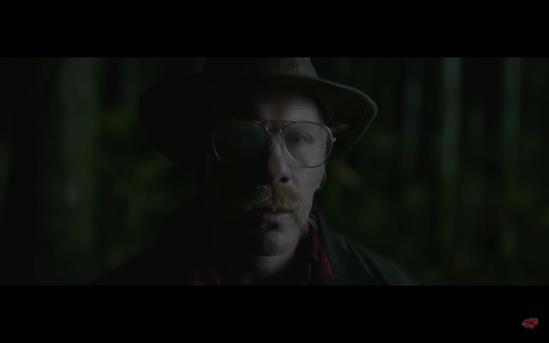
The up and coming young actress, Jules Willcox (“Dreamkatcher”) stars in the lead of Jessica who hasn’t have a friend in the world, alienating herself from her former life and her parents with a sudden escape to the Oregon wilderness.  The physically demanding role withstands the brunt of constant attack, whether from Marc Menchaca’s unnamed assailant character or the natural elements of the forest that include from the massive rapid rivers and torrential rains to the smallest of roots that spear her bare feet while on the run.  Willcox also brings to the role an indistinct mindset, jumbled with the lingering and complicated suicide of Jessica’s husband, paranoia, and an instinctual reaction to survive, especially through Willcox’s eyes that arch from fear to fortitude.  To really envelope Willcox in that unwarranted fear of harm and pushing her character into the unknown of the adversarial complex that is mother nature is Marc Menchaca as a conniving creep looking to do as much pleasurable damage on his bogus business trip as possible.  Menchaca also looks the part, resembling an out of place 70’s-80’s serial killer with round thin-framed glasses and a moderately bushy handlebar mustache overtop a sturdy frame.  Now while these attributes are not indicative to just serial killers, they sure as hell work well on screen to really sell the intensity that Menchaca delivers as a faux Ned Flanders type nice guy, a sheep in a wolf’s clothing so to speak, who acts a lure against his prey before venomously striking.  The small cast rounds out with Anthony Heald of the Anthony Hopkins “Hannibal” films in a small, yet uncharacteristic, good guy role as a hunter caught in the middle of Jessica’s situation.

While suicide might be the catalyst that compels Jessica to drive into the middle of nowhere, Matthias and Hymans only utilize the power theme as an instrument against Jessica’s psyche.  Jessica runs and hides from polite and comfortable society, but the recently widowed soon discovers that she can’t outrun her past as she hits a perverse wall constructed in the form of a man of sordid pleasures and sociopathic tendencies.  Her kidnapper becomes, in a way, her therapist who, at one point, pins her to the ground and scrolls through the personal photos on her tablet, forcing her to talk about her husband up to the point of his death, and consistently throughout the film that his actions were cowardly, removing the blame from her and onto him while emphasizing her tremendous guilt for not seeing the signs earlier.  “Alone” blossoms a wildly curative dynamic that encourages Jessica to then defend herself and her husband’s memory by standing up against not only the man’s relentless chase, but also her guilt.  The thick Oregon setting becomes a security blanket, sheathing her endless dismay, but the forest is actually does more harm than good for Jessica.  Only when does Jessica steps into a wide clearing of lumberjacked tree stumps does hiding from all the pain and torment become no longer an option as she makes her last stand against her attacker, unloading her fear, anger, and guilt upon the man by exposing him as an oppressive killer. While immersed in watching, “Alone” will deprive oxygen from your body that’s desperately gasping to fill your lungs with air in every harrowing chapter, but “Alone” is a breadth with a throng of digging out of despair overtones and a conduit for self-repair that’s unraveled symbolically through the afflictions of bona fide sadism.

“Alone” rises above the call of arms against predatory men in this thrilling remake from John Hyams, releasing into Theaters and VOD on September 18th from Magnet Releasing. The rated R, 98 minute feature will not have the A/V specs critique due to the digital screener, but Federico Verardi (“Z-Nation”) grasps the elegant threat of the woods by using drone shots to shoot the very tippy-top of the swaying trees that conceal the ground, as if obscuring the atrocity being committed below, and applying low-contrast to make insidious hard shadows against green lush that turn beauty dark and deceitful. *Director John Hyams has noted the rapid’s scene where Jessica temps fate to escape her pursuer was practical and performed by stuntwoman Michelle Damis and though looked a little off around the Jessica’s unsubmerged profile as she’s whisked away down the river, the effect is 100% legit. “The Pyramid” and “Becky’s” Nima Fakhrara scores a low-impact tremble for most of the feature with Jessica’s running through the woods is accompanied an equally low-impact drumming, letting the ebb and flow of resonating forest ambience engulf much of the soundtrack to solidify it as a correlative character; even the end credits is purely nature’s ambient noise. Since “Alone” is a brand new feature, there were no bonus material or bonus scenes during or after the credits. “Alone” knicks the core of vulturine power, but turns the tables toward more feminist revelation to fight and take back one’s life.

*Correction: Previously stated the rapids scene was CGI.


EVIL Doesn’t Joke Around. “Let’s Scare Julie” reviewed! (Shout Studios! / Digital Screener)


After the sudden passing of her father, Emma stays with her cousin, Taylor, along with her aunt and drunkard uncle. Taylor pressures Emma to be part of her prank habitual group of friends, trying to convince Emma how this is how things will be from now on while also trying to be a compassionate shoulder to her reserved cousin. With Taylor’s uncle passed on the sofa downstairs and her mother flying in from out of town, an impromptu sleepover encourages the group of girls to connive a break-and-entering prank to scare a new neighbor, a teenage girl named Julie, across the street. Emma half-heartedly participates by producing a way into the house, allowing her cousin and her heedless new friends onward on their scaring scheme, but when only two of the four girls return, the prank has turned terribly wrong as an urban legend about the house across the street might actually be true.

Breaking out from helming television documentaries and into the genre feature realm is filmmaker Jud Cremata debuting with his written and directed bloodcurdling slumber party, “Let’s Scare Julie,” premiering on in home theaters on digital and VOD come October 2nd, 2020. Starting off Halloween with an innovative filming structure and a good ole fashion horror tale, Cremata never eases on the reins of terror from nearly a single, continuous take of his mischievous teenage girls meet malevolent ghost story that occurs over a single night, condensed further to a time frame that’s almost parallel to the film’s runtime. Formerly known as “Let’s Scare Julie to Death,” the Santa Clara filmed, real time hijinks gone awry spook show is the first horror production from the Los Angeles and Moscow based Blitz Films in association with “Becky’s” Buffalo 8 Productions. Jud Cremata and Marc Wolloff produce the feature alongside Blitz Films’ Eryl Cochran and Nick Sarkisov.

Comprised with a small cast of new talent, “Let’s Scare Julie” focuses around a group of five teenage girls and one elementary grade school girl concentrated more so around a life rebounding Emma played by Troy Leigh-Anne Johnson, making her introduction into feature length films. What makes this a phenomenal role and performance for Johnson is the fact that the young actress has to maintain in-character for the entire length of the film with the camera rarely parting away from her in every moment of the nearly continuous take and she has to adjust her dynamics with a variety volume of characters ranging in temperament from meek, to obnoxious, to terrifying, to drunk, and to the perpetuance of adolescence behavior from her protective, yet peer pressuring cousin Taylor (Isabel May), the obnoxious goof Madison (“Ladyworld’s” Odessa A’zion), the unassertive duddy Paige (Jessica Sarah Flaum), and the confident showoff Jess (“Unearth’s” Brooke Sorenson). Individually, the characters are well developed, hinting more towards unravelling their true selves with each progressive moment their on screen, but not overly enough to have each figured out and that leaves their hopeful futures in ruin, offering more substance to their potential demise. Rounding out “Let’s Scare Julie” cast is Dakota Baccelli, Blake Robbins (“Rubber,” “Martyrs”), and Valorie Hubbard (“Resident Evil: Extinction”) as the evil spirit, Ms. Durer.

Uncomplicated with less fancy footwork adorned, “Let’s Scare Julie” is all about the story and less about the effects hoopla usually associated with vindictive phantasma creepers, especially ones like Ms. Durer who like to seep into her victim’s personal bubble using voodoo black magic dolls while wearing nothing more than her dirty nightgown and scathing glare on her face. The simplicity of the movie is almost refreshing in the inherent campiness of the anecdotal urban legend spieled by the girl living next to the house of ill repute, but one thing about the story that irks me is the marketing of “Let’s Scare Julie” being shot in one continuous take; yet, there are a few edits that not necessarily cut to a different scene, but rather just jump seconds of a frame and continue the moment. Whether the edit’s intent was because of timing, reducing frames in a scene to meet a certain runtime, or to give the actors a slight break, the expectation wasn’t fully met when the handful of edits are slipped in condemning that anticipated single take to just a still impressive compilation of long takes. Chuck Ozea’s maneuvering cinematography seamlessly tells the tale without so much of a hiccup as the veteran music video DP choreographs somewhat of a dance around Troy Leigh-Anne Johnson to capture her slow simmer into terror. “Let’s Scare Julie” does more with less as a round about ghost story, building up suspense above the guise of guilt-riddled themes without placing the perspective in the middle of the supernatural action.

Sometimes, pranks backfire and, in this case, this prank is to die for in the Shout Studios distributed “Let’s Scare Julie,” scaring up into home theaters on Digital and On Demand at the beginning of Halloween season on October 2, 2020. Being a brand new film, there were no psychical media specs to report nor would there would be any A/V if specs were available since this review copy is a digital screener of the film. As a digitally recorded production in this day and age, expect the found footage-like video and sound as faultless as expected, but the quality will be determined by your internet connection and streaming platforms. There were no bonus material with the screener nor were there any additional scenes during or after the credits. Five teens’ prank spree ends on a dark and stormy night of terror where urban legend trounces cruelty over shenanigans in the crafty and solid shiver-inducing “Let’s Scare Julie.”

Pre-order “Let’s Scare Julie” on Prime Video.