

When half of an archaic crucible is discovered while excavating in the basement of an old Victorian mansion, Isabelle, an assistant museum curator, is hastily dispatched to authenticate the finding and to confirm the analyst that the cauldron is, in fact, the missing second half to the one in the museum’s possession. Isabelle is greeted by the estate owner, Karl, his wife Evelyn, and their eccentric daughter Scarlet who welcome Isabelle to stay with them while she evaluates the crucible. The unnerving manor home keeps Isabelle awake at night as she frightfully witnesses silhouettes of a young woman wandering through the haunting corridors and the untended rooms. As Karl brushes Isabelle’s nightly concerns to the side, impatiently urging her to summon for the other half of the piece and finalize a match that would then focus on the crucible’s value, the young curator can’t shake the continuously dreadful sensation that danger lurks in every dark corner of the estate and that the residents are inherently grooming her for a sinister awakening of immortality and power.

Writer-director Iain Ross-McNamee has diffidently checked all the British-gothic horror boxes in his latest film, a brooding vampire macabre entitled “Crucible of the Vampire.” “The Singing Bird Will Come” director co-writes the script with Darren Lake and “I Bought a Vampire Motorcycle” screenwriter John Wolskel to reel in the once was, the gilded age of British horror that made a nick in time with the vehemently violent and boldly colorful enriched Hammer Horror. Like other genetic make-ups of horror bodies, Hammer Horror has a genome of a check list of self-defining attributes and “Crucible of a Vampire” aims to notch a few key elements including the Gothicism finesse, the sexually unchaste vampire, and, also, to deliver big horror on a small budget. Ross-McNamee places stakes not into the cold, bloodthirsty hearts, but more so into construing a film that isn’t a carbon copy of the old days, adding a contemporary digital presentation that’s laced generously with contemporary photography techniques even when the opening prelude is set in the 17-century and shot in a sepia style.

The story centers around the assistant curator, Isabelle, who has wearisome tendencies of 24/7 suspicion, being a pawn in every sense of the word. From the head curator to Karl’s family, Isabelle finds herself alone in tight spots and not many people she can count on. There are a couple of characters that are potential allies, but their feeble attempts in buffering Isabelle from the house’s evil secret are no thinker than a single sheet of college rule paper. Isabelle herself is her strongest defense and when push comes to shove, the curator turns ass kicker against a family of vampire acolytes. Katie Goldfinch handles Isabelle with reasonable composure, if not slightly timid at times, especially during fight sequences. Goldfinch sustains her lead performance of her sophomore feature film that is exposition heavy to formulate an isolating and intimidating dynamic between her and Karl’s family. Karl’s portentous cruelty is town-renowned, shaped by rumors and peppered with truisms and Larry Rew channels Karl precisely. The “Underworld: Rise of the Lycans” actor has traditional methods of able to creep one out by standing still and speaking with a vigorously commanding tone, but Rew feels significantly older compared to his wife and daughter. Karl’s wife, Evelyn, stammers as a wild card in a role that seems to go nowhere and Babette Barat can only strut her hippie performance of Evelyn so far until we’re wondering what’s significance as a mother, as a wife, and as part of the crucible grand scheme. Scarlet had the opposite effect as the daughter was overly forward with defining her intentions that toward Isabelle that involved stealing, desiring, and chastising. Scarlet’s predestined for villainy and actress Florence Cady provides a fringe heavy and tantalizing seductive performance. So much so, Cady nearly becomes the female lead, but certainly overshadows the crucible’s calling, a vampire named Lydia, a non-verbal role with barely much screen time given to wild-eye, teased haired, and paled Lisa Martin. Angela Carter, Brian Coucher (1995’s “Underworld”), Phil Hemming, Aaron Jeffcoate (AMC’s “The Terror”), Charles O’Neill (“Cripsy’s Curse”), and the UK Bob of “Bob the Builder” Neil Morrissey co-star.

If “Crucible of the Vampire” is supposed to be a reawakening of British gothic horror, Ross-McNamee went without the vibrancy of color and went without much of the fervent violence that Hammer Productions was keen on. “Crucible of the Vampire” sustains a dissimilar path focally toward more exposition to forefront a narrative until an action climax that’s initiated by awkwardly edited gratuitous nudity and weak character flaws. Like being brewed inside the ironclad enclosure of a crucible, the filmmaker simmered a story that quietly bubbled to the surface until it boiled over uncontrollably and extinguished itself, splattering onto the floor below in a heap of smoke. Act three is misshapen by the prior two acts with one issue being Isabella transforming in an instant into a complete bad ass when faced with death because of her pure, virgin blood. In a blink of an eye, she literally kills five acolytes with a melee weapons that include a rustic knife, the crucible, a metal pipe, and a fired filled chalice. The kill by fire chalice and other igniting instances during the film saw shoddy outcomes of superimposed, computer generated fire which really do speak the inane quality of the visual effects. Even with the practical effects, blood doesn’t spray or gush onto a wall when a vamp victim has his throat become the main course; instead, the effect squirts on the adjacent wall like from a condiment squeezer, losing a sense of convincing value.

ScreenBound Pictures presents “Crucible of the Vampire,” a Ghost Dog Films’ production, onto an all region PAL dual format, DVD/Blu-ray home video release. The Blu-ray is presented in 1080p with a widescreen, 2.35:1 aspect ratio. Picture looks absolutely gorgeous with the natural color palate, but slightly stodgy with the blood red vampire vision in only a couple of brief scenes. Details are fine and textures slice through, especially in the opening segments of Isabelle walking along the river line, and in conjunction with aesthetic wide shots that monolithic structures, like an old giant tree or the Victorian home. The English Dolby Digital 5.1 LCPM uncompressed audio track is not a film that necessarily needs five channels, but does utilize them when the night churns out bumps in the darkness. The dialogue has prominence, depth, and range without breaking or interrupting the audio lineage. The staid score by Michelle Bee and Amanda Murray floundered in the lossless audio as an unfortunate miscue to reel in and hammer away the gothic vision. This release came with no bonus features in a day and age where most Blu-rays do have some sort of extra content. “Crucible of the Vampire” has earned merit in the traditional British gothic horror sub-genre that’s been flailing over the years, reinvigorating the concept of dark arts and lesbian vampires, but loses footing at crucial moments that ultimately unglues the narrative.
Tag Archives: blu-ray


This Apartment Block is All About the Evil Beast with Two Backs! “Blue Movie” review!

After spending five years in incarceration for being convicted of having sexual relations with a 15-year-old girl, the now 25-year-old Michael has been released and is in the hands of a parole officer, Eddie. Eddie arranges housing for Michael in an apartment block, providing some pocket cash and job prospects to get the reserved demeanor parolee back on his feet and reintegrate him back into society that has radically changed in his favor in half a decade. Though having these advantages at his fingertips to start a new life, non-violent sexual urges still race through Michael’s blood and Eddie has nested him right smack in the middle of many young women with hefty promiscuous appetites. Michael must try to keep up the tiresome façade of clean living when Eddie’s sudden pops up as he continues his sexual escapades through the likes of married women, threesomes, and kinky block flat neighbors.

Viva la revolucion! Or should I say, “Lang leve de revolutie” in this censor ban breaking Dutch sex-comedy, “Blue Movie,” from breakthrough writer-director Wim Verstappen alongside cowriter Charles Gormley. Verstappen and Gormley’s experience on the 1971 feature forms a long time collaboration through an immense body of work of films in the 1970’s including “Dakota,” “Alicia,” and “Don’t Worry Too Much.” Masked an adult romance, “Blue Movie” exploits sex to be the symbolism of choice when exhibiting the Netherlands antiquated view on censorship that bogged down their local film industry and led a bold, new Dutch filmmaking expanse that goes onto dismantling the Dutch Censorship board.

Michael is a cool cucumber, who just step one foot free out of prison. On parole and looking to restart his life again from the generous assistance by a parole-like officer, Michael is set up an a apartment block with a view of the land, but the ex-con looks inward, at his neighbors, his beautiful, succulent, and promiscuous flat mates that hone in the fresh meat. Hugo Metsers captures Micheal’s essence, a gentle ex-con, even when Metsers’ sporting thick, under-jowl mutton chops. Then there’s Eddie, whose in a parole officer type position, yet tries eagerly to be puritanical guardian angel on Michael’s sordid shoulder. Seemingly part of some foundation that helps ex-cons get back on their feet, as I assume this to be a Netherlands’ societal reform program of sorts, Eddie solicits his steer clear and keep your nose clean advice, randomly checks in at all times of the day, and even makes furniture purchases for Michael’s bare flat. Eddie’s nose is so intrusive, he oversteps his position in an attempt to sweet talk a building tenant on Michael’s behalf, right out outside the parolee’s flat door. Helmert Woudenberg, another actor in Wim Verstappen’s cache of talent, does annoyingly helpful well. Woudenberg, who later had a role in Dick Maas’s “Amsterdamned,” portrays Eddie’s antiquated beliefs on Netherlands sex culture with such poised conviction that the character does feel like a lonely satellite cut off from progressing mothership. The women characters are extremely important in Blue Movie because they’re key to Michael’s motivation to not be only rooster in the hen house but to help him find actual love and while not one actress plays opposite to Michael, Ine Veen’s Julia stands out as the pivotal moment in Michael’s stagnant and sleazy stint. Julia is beautiful and coy as she’s casually noted to Michael upon their first exchange that she rather listen than to talk, but Julia comes with baggage – a child. The only child in Verstappen’s film is the main obstacle in Michael’s conquering of the opposite sex in the entire apartment block. He even backs out of a date with Julia upon seeing her tending to the child’s need first, transferring his needs into being very brash and childlike, but once Michael sustains and profits from his transient lifestyle, an obvious void is left unfulfilled until Julia strolls back into his life. Veen’s blue eyes are striking and could be theorized why this movie is titled “Blue Movie” as she’s truly the object of his affection. Ursula Blauth (“Sex is Not for Virgins”), Kees Brusse, Carry Tefsen (“Diary of a Hooker”), Marijke Boonstra (“Obsessions”), Monique Smal, and Mimi Kok from “De mantel del Liefe” costar.

While Verstappen’s film was an influential piece during the Netherland’s anti-censorship and freedom of expression movement that allow creativity and taboo material to flow less restrictively, the filmmaker, or rather Jan De Bont, was a technically careless cinematographer. Sure, “Blue Movie” was on produced on micro-budget shot in a cramped location that’s very intimate and authentic for the material, but Verstappen and Bont let slide various goofs in the final cut, such as boom mic shadows, the boom mic itself, and, I believe, the director’s hand going in and out of frame twice in one scene. Along with the crew and equipment mishaps, the script or scheduling shooting has perplexing timing issues that defy the natural order of passing time. Michael goes through a series of events in, what is assumed, his initial weeks at the apartment block and even the jump between having elicit affairs with a married women and being the third party of group sex in a romping montage have plausible time possibilities. Yet, Michael’s story teleports into his money-making scheme of selling the sexual lifestyles of the rich and horny. There was no brainstorm light bulb that sudden illuminates his status from no job bed wanderer to the CEO of variety sex shows staged in his 2 bed, 1 bath flat.

From the company that delivered “Frank & Eva,” Cult Epics presents another Netherlands film, “Blue Movie,” onto a Blu-ray/DVD combo release. Shot in a 1.37:1 aspect ratio, aka Academy Ratio, the original negative has remained virtually unvarnished and Cult Epics presents a new high definition restoration and transfer by the Eye Film Institute. Natural grain looks great. The coloring remains stable throughout and the hues border the natural and just below slightly too brilliant – Ine Veen’s blue eyes could be made a case. The Dutch and German Dolby Digital 2.0 audio track is, again, a fine transfer with clear dialogue and not a pinch of pops or crackles. The optional English subtitles are well synched without translational error. Bonus material includes pre-debut film interview with director Wim Verstappen, interview with producer Pim de la Parra at the Sex Wave Festival, interview with Hugo Metsers Jr. about his father later in life and his erotically charged moment on the first time he saw his father’s film, Eye Film Institute featurette, “Blue Movie” HD poster and photo video gallery, and the original Scorpio Films trailer of the film. Wim Verstappen pioneered the Dutch Sex Wave with “Blue Movie,” a controversial artistic brief rendition of the Netherlands’s breakneck cultural upgrade to a more fluid and modern lifestyles and cinema sauté.
Half-Woman, Half-Machine, All Evil! “SheBorg” review!

Brought before an intergalactic sentencing, a chaos-driven cyborg faces extreme persecution for committing heinous acts across of destruction and death amongst the galaxy, but desperately escapes on a small shuttle pod aimed directly for the planet Earth. The cyborg craves massive amounts of energy to contact others of it’s species for world domination and also needs to feed off of animal flesh to sustain. The local anarchist Dylan and her friend Eddie team up with a alien enthusiast and a provincial cop to thwart human annihilation as the cyborg assimilates the townsfolk into it’s own flesh hungry minions, doing the bidding of constructing a solar system reaching power source to create a space antenna. The world’s hope relies on a pair of anarchy subversives to stop a monstrous sheborg who believes chaos will provide for planetary obliteration.

Its Bloggin’ Evil has been around the bush a few times with director Daniel Armstrong, a name known very well here by previously reviewing two of the filmmakers films under his Strongman Pictures label, the 2015 wrestling-sploitation “Fight Like A Girl” and the slasher on blades “MurderDrome” from 2013, and there has been much appreciation for the ballistic, ass-kickin’ carnage and indie horror mayhem Armstrong is so strongly passionate about in his films. The 2016 “SheBorg” is no different as the film revels in many of the same feral totalities. The Australian writer-director favors the 80s-90s science fiction and horror cultural elements for not only his earlier works but also for “SheBorg,” cherry-picked specifically for the mechanical madness. From “Star Trek,” to “Ghostbusters,” and to “Back to the Future,” “SheBorg” affectionately homages these films through the dialogue in an explicitly melee narrative that oozes with crazy, feasts on the flesh, and gorges on heartily on dismembering and assimilating all in a path to geek fandom.

Dylan lives to subvert the establishment, even if that means derailing her politically obsessed, sorry for excuse father, Mayor Jack Whiteman, and the self-indulged agitator is played by Whitney Duff alongside “MurderDrome’s” Daisy Masterman as Dylan’s best Kung Fu knowing mate Eddie. Duff and Masterman are a solid budding duo who can expel eccentricity and calmness as a single, combative unit against an seemingly unstoppable mechanism of man killing, the Sheborg. The mechanical alien is mechanically performed by another “MurderDrome” casted and “Fight Like A Girl” actress Emma-Louise Wilson. Wilon’s robotic coldness sounds actually very Russian in performance, as if the Eastern Europeans were gearing up for war with killer, flesh eating cyborgs, but Wilson’s contrast to the uncouth Duff and Masterman tagteam is comedic bliss that symbolisms freedom over tyrannical subjection. Sean McIntyre, Mark Entwistle, Louise Monnington, Jasy Holt, and Tommy Hellfire fill in the rest of the “SheBorg” cast.

Labeled as a Neo-Pulp sci-fi, horror film, “SheBorg” encapsulates the essence of a schlocky B-horror, charmed with two-bit practical and visual effects. Yellow alien blood sprays and cascades like neon Kool-Aid, the assimilated have oversized and gaudy optical lens over one eye, and there’s also some eye popping, heart ripping, and dog eating gore to appease every facet of a modern sci-fi horror. Once titled “SheBorg Prison Massacre” and then retitled to “Sheborg Puppy Farm Massacre,” Armstrong drops the ancillaries and simply presents his Daisy Duke-cladded killing machine film as “Sheborg” that continues a trend, whether intentional and ill-conceived from selective viewings on my part, of having a heroine in the lead role, such as “Fight Like a Girl” and “MurderDrome” with the latter involving an all-woman roller derby gang. Armstrong’s seemingly trademarking his films with rebellious women, whom are at odds with the world around them, and are coming out on top hauling away being more of a kick-ass warrior than before the a nemesis made the scene.

“SheBorg” is now available on Blu-ray courtesy of WildEye Releasing and MVDVisual. The 1080p resolution in a widescreen 1.85:1 presentation release has an underwhelming image quality. Details flutter sporadically in the woodsy locale in and around the puppy farm and night scenes have coagulated blotches of the unsharp nature. A few sequences turn out brilliantly poetic like when SheBorg frightfully exits through a mist-cloaked, open aired windshield of one of her three junkers turned into a makeshift solar system communicator. The 5.1 Stereo works for the budget, but while the punk rock score by KidCrusher befitted the anarchist lead, syncing with the rest of the film was far from being symbiotic. Dialogue was clear enough and ambience was fine, even if it was slightly over-exaggerated. Bonus features include a medium-length Behind the Scenes documentary that has engrained interviews with director Daniel Armstrong and selective cast; the BTS-feature is more tell all of Armstrong’s visionary mechanics and where he pulls inspiration from. There are also music videos and trailers. Resistance is futile as “SheBorg” is a must-see cybernetics battle royal in the realm of Ozploitation.
Two Evil Guys Stick to the Script! “Snowflake” review!

Tan and Javid go on a killing spree in anarchy-riddled Germany after their families were killed in a house fire in which emergency services were purposefully withheld. After slaying bystanders at a diner, they happen upon a script in a stolen car; the script reads line-by-line, word-for-word on everything the two men say and do. Simultaneously, the wealthy Eliana is hunting them down, seeking revenge for the death of her parents by collaborating with her parents’ former bodyguard to hire cold-blooded serial killers to kill the men. As Tan and Javid try desperately to not follow script, the two men seemingly can’t avoid their fate along with circumventing a variety of dangerous people crossing their path. Only a couple of people from the script can possibly save them, an Angel named Snowflake, and, possibly, the screenwriter himself.

Adolfo Kolmerer’s “Snowflake” has maybe little-to-no relevance to the derogatory term commonly used by right-winged conservatives when describing the assumed liberal millennial with a heightened sense of uniqueness and having a knack of being overly offended by, well basically, everything. Kolmerer’s “Snowflake” also has no correlation with the concept of winter, snow, or even Christmas. So, the question is, what the hell is “Snowflake” about? The 2017 shocker, also known originally as Schneeflockchen in the German language, is as cold and as unique as any snowflake mother nature can cruelly reign upon down a person and methodically compounds the series of gritty events, from two sets of characters, through a head-bearing funnel that’s supernaturally poised and brutally executed. From writer Arend Remmers, the script itself is smartly constructed as a narrative character, woven to become a pivotal motivator that not only churns out characters’ supposedly ill-fated destinies, but also a metaphysically, arch-able player in the grand scheme of gruesome revenge and absolute atonement that within the bookend pages of the treatment has unorthodox religious themes and a radical, almost anti-hero like quality of rising against the powers of racially insensitive autocratic and populist agendas. The film’s location of Berlin isn’t the only thing that’s anarchical driven as Kolmere and Remmers bends cinema conventional rules to enthrall one punch to the gut movie.

Erkan Acar and Reza Brojerdi play the brothers in arms, Tan and Javid. As they venture on nihilistically slaughtering quest to come face-to-face with their maker, Tan and Javid have nothing more to lose and Acar and Brojerdi depict themselves in that predicament while maintaining their characters’ seamless, longtime friendship, like watching two sets of personalities move as a single unit. Tan and Javid are hunted down by another character seeking vengeance for her parents are the wrong place, at the wrong time. Eliana has money, status, and all that she could ever want, but when she befriends her family’s bodyguard who is then let go from the position, she loses sight of the meaning of uncoupled protection in Berlin’s anarchy state and also loses sight of what’s truly important to her – her folks. When they’re slaughtered, Eliana, played by Xenia Assenza, is hellbent on exacting retribution. Assenza clearly proceeds with a cold, drafty personality for Eliana with unrelenting ambition. The character is scribed as ultimately over flawed if not even expressly obvious and Assenza does a fine job bubbling those flaws ever so delicately to the surface in every loss Eliana sustains. Tan, Javid, and Eliana have a very grounded reality about them when contrasted with other characters such as the superhero-esque Hyper Electro Man (Mathis Landwehr) with the steampunk power backpack of electrical power, a blind man named Fumo (Eskindir Tesfay) with fits of fury, and a madman named Caleb (“Braveheart’s” David Gant) who could very possibly be God himself. Electrifying, mysterious, and powerful can be their only descriptive adjectives that steer “Snowflake” into the graphic novel universe. David Masterson (“German Angst”), Gedeon Burkhard (“Inglourious Basterds”), Selam Tadese, Adrian Topol, Judith Hoersch, Alexander Shubert, and Antonio Wannek, Bruno Eyron, Martin Gores, Mehmek Kurtulus round out this amazing, eclectic cast.
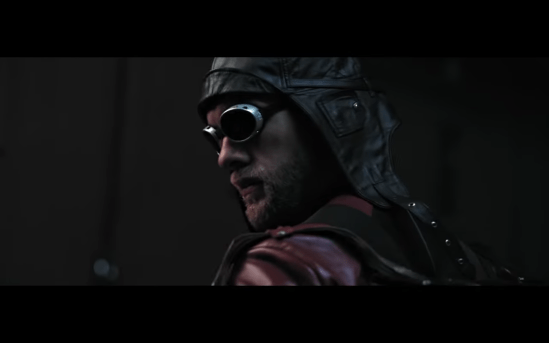
On a single read through of the synopsis on the Artsploitation’s Blu-ray back cover, trying to process the quickly summed up tale might also quickly scorch and burn off invaluable brain cells, but “Snowflake” has an immensely alluring nature once reviewed on a second read. Might not be a tearjerking romantic comedy and can be stupendously offensive with hints of barbarism, but the fantasy element, infused with Western composition at times, is stone strong with this film that’s more than just a Tarantino or Coen brothers’ akin film as the summary impresses to potential viewers. I’d toss in their some steampunk aspects of early Terry Gilliam or the delicate fable-isms of Marc Forster. It’s also a little razor blunt like Takashi Miike and perhaps could have surrealistically lobotomized and strenuous dreamlike sequences that speak to the likes of David Lynch, in choice scenes. Adolfo Kolmerer can be considered an equivalent to not one, but all of these visual icons and mega storytelling filmmakers.

Truly unique like an ice crystal falling from the winter sky, “Snowflake” falls onto Blu-ray home video courtesy of Artsploitation Films. Presented in 1080 and in a widescreen format, “Snowflake” vividly impresses with a broad color palette and a sleek, crisp digital picture. Hyper Electro Man has vibrant electrical currents snaking around his body and arms that aren’t just blurry blobs, but maintain two-tones of color and depth. Various decrepit buildings have the details pop out to bring an anarchy German to life. The German-English-Polish Dolby Digital 5.1 audio track has range, balance, and fortitude with a clarity and prominence in all spoken dialects. English subtitles are available. Bonus features included a behind-the-scenes look at “Snowflake” that clocks in just under a hour and trailers of other Artsploitation films. “Snowflake” has an original frame that’s built to sustain the broken westernized violence and is tightly glued together with likable berserk characters and an engaging labyrinthine story that ultimately feels genuine, versatile, and thematically relevant in, nearly, a not-so-abstract vision.
Contamination Coverup by an Evil Corporation! “The Chain Reaction” review!

Former war veteran and hot rod enthusiast Larry and his wife, Carmel, take a weekend off from the children to vacation in Paradise, a retreat on the outskirt, rural area of Australia that includes pleasurable amenities such as fishing, swimming, and being an ideal location for a dirty weekend between two lovers, but an Earthquake triggers a major nuclear leak at Waldo, an international nuclear waste storage facility who aims to coverup to radioactive contamination. Heinrich Schmidt, an engineer who was deeply exposed to the waste flees from Waldo’s goons to reveal to anti-nuclear agencies the corporation’s dastardly concealments and warn locals of the tainted public water supply. With not much time to live and suffering from a serious head injury, Schmidt, with partial amnesia, is sheltered by an unsuspecting Larry and Carmel as they help him piece together his life while Waldo sends recovery and murderous thugs to quiet those who wish to leak information. Paradise is anything but as trouble brews between the vacationing Larry and Carmel, the witless locals, and Waldo in disclosing radioactive waste streaming through the water passage ways.
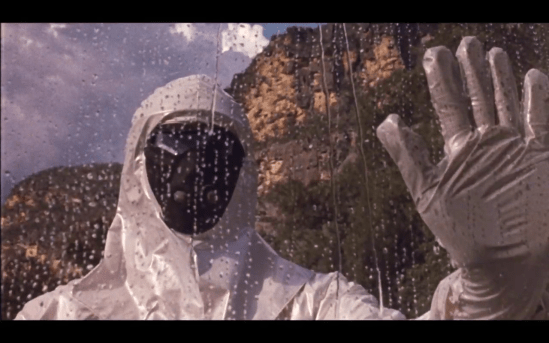
“The Chain Reaction” is the freshman film of writer-director Ian Barry released in 1980. Produced by “Mad Max’s” George Miller, “The Chain Reaction” was considered an unrelated companion piece that also starred a number of the same actors, but the action-thriller aligned more with the populistic nuclear disaster genre of the late 1970s and early 1980s. Whereas George Romero focused on accidental biological effects in his 1973 science fiction horror, “The Crazies,” Barry honed in on nuclear waste disaster and the reaction of those responsible, to what length of measures would be necessary and taken to keep exposure from happening. Caught in the middle are locals and unfortunate vacations, who actually take more a stand against tyrannical, above the law organizations. “The Chain Reaction” is packed with exciting car chases and glazed with testosterone enriched standoffs on a nuclear level.
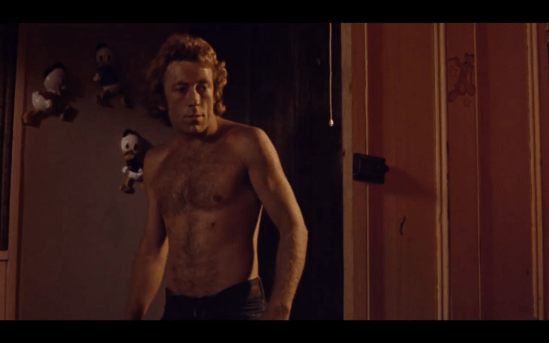
Steve Bisley steps into the lead role of hot shot Larry Stilson working his solid strong physique with a general moral, but still bad boy composure when unravelling and thwarting the Waldo conspiracy. Bisley costars alongside the late Arna-Maria Winchester. Winchester screams screen time sauciness, but as a mother of two, Winchester’s Carmel Stilson comes off as promiscuously uncharacteristic as a mother but, to be fair, Larry doesn’t necessarily yell conventional father either. However, I’m impressed by the turncoat engineer Heinrich Schmidt played by Ross Thompson, an Australia actor who can really accent well the German language and puts into his role a languishing, broken man trying to do the right thing. Together, the Stilson’s and Heinrich are tracked down by Waldo henchman Gray, portrayed by English actor Ralph Cotterill (“Howling III”). Cotterill’s menacing, stodgy dagger eyes make him a suitable villain, but falters in the screen time department, seeing not much action as needed to take care of monumental business against possible exposure. Huge Keays-Byrne (“Mad Max: Fury Road”), Richard Moir (“The Odd Angry Shot”), Laurie Moran, Lorna Lesley (“The Survivor”), and a cameo of Mel Gibson round out of the cast.

The overall problematic crux with “The Chain Reaction” stems from that director Ian Barry is no George Miller when presenting his own version of pacing a film. The narrative is casually abrupt and edited shoddily with very rough and hard to follow sequential events that are supposed to be a fiery ball of nuclear mishandling and underhandedness fury. Though highly doubtful Umbrella Entertainment took the censorship scissors to this Ozploitation flick, there are moments of bizarre, if not expurgated, cuts that debase the illustrative graphic violence. One particular moment in the climatic third act, a shotgun was only aimed to intimidate would be attackers, but never discharged. However, a character is seemingly gunned down with a blood splattered mid-section being the only clue of his demise, but like aforementioned, the shotgun was never fired. Barry’s riveting action story plays out mostly like this, reducing the action to a meager narrative withstanding only a few good car chase sequences, some character intimacy, and laced with some shrouded mystery.

Umbrella Entertainment presents under their Ozploitation Classics’ sublabel, Ian Barry’s “The Chain Reaction” onto a full High definition, 1080, region free Blu-ray with a widescreen 1.85:1 aspect ratio. Honestly, a slightly cleaner and re-refined release was expected. Natural grain is expected, but the lossy definition and blurriness could have been tweaked for optimal results on the print. No edging enhancements nor print damage detected surrounding the fair natural coloring, skin tones, and, sometimes, vivid photography from Russell Boyd (“Picnic at Hanging Rock”), which is surprisingly rather bland overall. The DTS-HD Master Audio dual channel track is excellent with upfront and clear dialogue, ample ambient range, and a clean harrowing and resonating classic disaster scenario score composed by Andrew Thomas Wilson in his sole composure credit. Bonus features are aplenty with extended Not Quite Hollywood interviews with stars Steve Bisley and Arna-Maria Wichester, director Ian Barry, and producer Ross Matthews, a couple of featurettes entitled Thrills & Nuclear Spills and The Spark Obituary, deleted and extended scenes, an early cut with alternate title of “The Man at the Edge of the Freeway,” and media spots from theatrical release, TV, VHS trailer, and image gallery. “The Chain Reaction” is far from noxious, but the nuclear disaster piece could have been more radiant, a quality very difficult to achieve deep in the midst of so many great titles similar in the genre category; yet, the Ian Barry action thriller is an entertaining adversity excursion nonetheless.

