Dark Universe Resurrects an Ancient Evil! “The Mummy” (2017) review!


Entombed under the volatile sands of what’s now the Iraqi dessert, an ancient Egyptian princess Ahmanet, who made a pact with an evil God named Set, lies and waits for more than 500 years to rise again and fulfill a destined promise to birth hell on Earth and rule the world. Ahmanet resurrects after being mistakenly unearthed by loose cannon treasure seeker Nick Morton and curses a reign of archaic terror over Nick and all of modern day London in search for a gem cladded dagger to make good on her pact. With the help of a well-funded secret organization called Prodigium ran by mysterious physician Dr. Henry Jekyll, and skillful researcher Jenny Halsey, the cursed Nick will need all the help he can muster to save himself and humanity from a mummified, hellbent she-devil.

Alex Kurtzman’s “The Mummy” is the gateway reboot that’ll give life once again to Universal’s classic monsters and place them in Universal’s newly established realm known as Dark Universe, think what Marvel accomplished with Marvel Comic Universe but with monsters. The kickoff action-horror has the delectable adventure wit seen from the Stephen Sommers directed, Brendan Fraiser starred trilogy from 1999 to 2008 while channeling the Boris Karloff mysticism and menace that made a frightening black and white classic. So, how did Kurtzman exactly provide new breath to an ancient, decrepit mummy that’s been redone two times over and has been spun off more ways than wrapped? One major way was to be the inaugural launch of Universal’s Dark Universe that opens the door for other classic monsters such as Frankenstein, Dracula, and The Creature from the Black Lagoon. In fact, Dr. Jekyll and Mr. Hyde makes a brief appearance as the head of the Prodigium, the ringmaster that’ll be the epicenter connecting creatures together. In another aspect, Kurtzman isn’t afraid to use practical effects, such as Ahamanet’s mummy minions, while also lighting up the screen with some brutal thrilling moments, such as murdering a baby and killing pilots with a murder of crows, that clearly separates the 2017 film from it’s 1999 predecessor, but watch for the quick scene easter egg that pays homage to the Fraiser film.

Upon first hearing Tom Cruise would star in a reboot of “The Mummy,” a long moment of hesitation washed over like a cold wet blanket as the “Mission Impossible” star hadn’t tackled a horror film since the adaptation of Anne Rice’s 1994 Lestat film “Interview with the Vampire” during a time when Cruise bathed in dramatic thrillers and added quite a bit of finesse to his characters. However, with every passing year, Cruise becomes more and more involved with not only his love for acting, but sides heavily with the unquenchable need to a part of action films and “The Mummy” promised to display his enthusiasm for accomplishing his own rigorous stunt work and the script provided the heart-throbbing intensity that’ll sure to awe audiences. Cruise’s performance as a shoot first, ask questions later Nick Morton snugly fits the razor sharp mold the megastar has equipped himself ever since the first “Mission Possible” film over two decades ago, but as a selfish knucklehead, Cruise short sells the charm with a flat expressive tone and doesn’t progress his shell of Nick Morton to a enlightened savior battling for the fate of humankind. Yes, there are other actors in “The Mummy” other than Cruise. Russell Crowe fills the mighty big shoes of Dr. Jekyll and Mr. Hyde, splitting his personalities into two and fulfilling both characters to the very epitome they’ve been classically scribed. Love interest Annabelle Wallis (who was also in John Leonetti’s “Annabelle”) sparked little-to-no chemistry with a overpowering Cruise and she felt rather like a Robin sidekick in a Joel Schumacher Batman film, but Wallis did a fine job as a historical researcher with a lifelong goal of discovering ancient artifacts. Algerian actress Sofia Boutella as the titular character was almost non-existent until the filmmakers had to scramble to redesign the villain due to similarities in another film, but the dark features of Boutella and her elegant performance made Ahmanet lustfully scary with dual irises and body-riddled tattoos, like a wild animal with deep blue eyes, and she sinks into Ahmanet’s malevolent soul and embraces the darkness that is the mummy. Jake Johnson (“Jurassic World”), Courtney B. Vance (“The Last Supper”), and Marwan Kenzari, who will star in Guy Ritchie’s upcoming “Aladdin” film, costar.

Now while “The Mummy” is overly successful and generally positive, an itch of amiss pains a slimly slithering way nearly through the entire runtime. Perhaps because the premise involving a mummy sets itself more in the dank and dark allies of London rather than in the hot Egyptian sands where thirst, heat, and isolation provide a slew of dangerous possibilities. During multiple scenes, a looming sensation that Jack the Ripper would pop out with blade in hand ready to strike at Jenny Halsey’s non-prostitute neck, but like a good adventure film, the story’s progression goes through numerous UK hotspots such as the Natural History Museum and tries to blow up London with every Mummy superpower. Ahmanet compounded concerns about her powers such as the introductory prologue of her characters, told in flashback scenes, where after she obtains all this evil power, the princess is easily taken down by Egyptian guards with blow darts and spears. You figured a Demigod like Ahmanet would be able to summon creatures to her aid, mold the sands of Egypt to free her, or resurrect other Egyptian dead, but none-the-less she was mummified alive and buried thousands of miles away under a giant crypt.
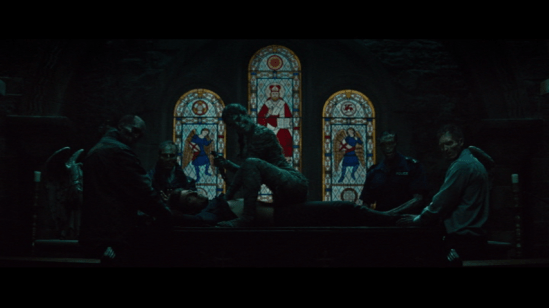
“The Mummy” is a win for the first of many Universal reboots under the Dark Universe label. The September 12th release of the 2-disc Blu-ray/DVD combo set, with also a digital copy, clocks in at a hour and 50 minutes and is presented in 1080p High Definition 2.40:1 aspect ratio with no flaws in the image, quality is crisp, and the coloring is naturally lively. The digital effects don’t exhibit an amateur hour complexion that was more attuned to the 1999 film, a different time two decades ago. The Dolby ATMOS is booming with LFE action that reverberates nicely with every nail-biting mummy scenes; certainly balanced with the surround sound. The dialogue is coarse at times during these intense sequences but overly prominent and clear for the most part. Extras on the release are about as monumental as the antagonist with deleted and extended scenes, Cruise and Kurtzman: a conversation, Rooted in Reality – a behind-the-scenes look at the making of “The Mummy,” Life in Zero-G: Creating the Plane Crash, Meet Ahmanet – the stark villain, Cruse in Action – a segment involving Cruise’s action in the film, Becoming Jekyll and Hyde, Choreographed Chaos, Nick Morton: In Search of a Soul, a graphic novel about Ahmanet, and featured commentary. “The Mummy” is all Cruise, all the time, but lives and breathes like a true Universal classic monster movie in modern day, providing superb visuals, an engrossing storyline, and delivers an action-topping-action ferocity. A whole new line of respect must be bestowed upon star Tom Cruise for his insane work ethic and his dedication to any project, especially a one half horror film that redesigns the gender of the iconic villain while maintaining the values of the original.

Pre-Order your Copy of “The Mummy” starring Tom Cruise right here!

Marco Ferreri’s “The Flesh” and the Blu-ray desire! September 12th release!

Cult Epics has announced in a press release the upcoming Blu-ray/DVD combo of Marco Ferreri’s 1991 romantic black comedy and cult film “The Flesh” set for a September 12th release date. For this first time ever, the Italian film will be release with an upgraded HD transfer from the 35mm negative and exclusive bonus material including Behind the Scenes of The Flesh, Interview with Marco Ferreri, Francesca Dellera, Sergio Castellitto from the Cannes Film Festival 1991, Original Theatrical Trailer, The Flesh Lobby Cards photo gallery, Original art Slipcase with newly commissioned artwork by Gilles Vranckx – limited to first 3000 copies!!!

Synopsis:

THE FLESH (La Carne) is a romantic black comedy about a divorced piano player named Paolo (Sergio Castellitto) who meets and falls in love with a most beauteously busty woman (bombshell Francesca Dellera), who uses her special powers to turn the man into her sex slave. The film depicts the oftentimes torturous nature of carnal desire and the erotic power of women in a cinematic work where Francesca becomes a symbolic representation of male desire, with her voluptuous figure and sex appeal being intoxicating to Paolo. While he is completely taken by his desire for Francesca, she eventually gets bored with him and decides to leave. Unfortunately for Francesca, Paolo loves her and has no intention of allowing her to go.

Home

Evil Lusts, Stimulates, and Impregnates! “The Black Room” review!


Paul and Jennifer Hemdale snag a great deal on their dream home withstanding an ugly past considering the previous homeowner who disappeared without a trace and a woman ending up badly burned. Despite the stigma surrounding the house, the Hemdales vow to turn their first home into a marital love nest, but every instance in which one of them is ready to break in the new home underneath the sheets, the other falls flaccid, as if something is keeping them from making love. Beneath the first floor, in the darkest part of the basement, there lies a locked black room with ritualistic pagan writing sprawled inside every wall, floor, and ceiling surface and an demonic incubus, lying in wait for the perfect opportunity to reinstate a master plan to take over the world. When Paul becomes a host for the incubus, the body count rises when repairmen, friends, and family come calling to their home and Jennifer must discover what’s causing her husband to act like a perverted jerk before she too falls into the incubus’s malevolent grip.

“The Black Room” mixes dark demon humor with perversions in a butt-cheeky horror comedy written and directed by Rolfe Kanelsky, whose credits in “Nightmare Man” and “Emmanuelle 2000: Emmanuelle’s Intimate Encounters” have sure to have aided in the director’s seamlessness in blending an erotic tone with an aggressive horror element. Kanelsky’s cavalier approach to the 2016 film, “The Black Room,” hints at the Sam Raimi approach with the unexpected and the bizarre mischief of the demon and a violin heavy folk-artsy soundtrack style with jump scare after jump scare techniques, but without going full blown with “The Three Stooges” antics as Raimi is well-known to implement. Instead, Kanelsky’s far more subtle and isn’t afraid to be verbally pun awful, even during more positionally vulnerable scenes involving actresses. Whereas most horror films uses horror as an exploitative tool or an ultimate means to be hacked to pieces, “The Black Room” transforms nudity, and sex, into a running joke much like a Troma production would gravitate to, with “Tromeo and Juliet” being a prime example, and then punch the joke into hyper drive by either being overly gory or ridiculously impractical.

In all honesty, “The Black Room” is the second Cleopatra Entertainment title reviewed at Its Bloggin’ Evil, with the first being a clunky deal-with-the-Devil thriller entitled “Devil’s Domain” by director Jared Cohn, but Cleopatra’s latest entry into the demonic hierarchy enrolls more star power to provide legitimacy in the horror realm by casting horror hall of famed actress and “Insidious” series star Lin Shaye as the snarky previous house owner with a dwelling secret and as well as “Species” series and “Ghost of Mars” actress Natasha Henstridge as the lovely Jennifer Hemdale. Shaye’s dedication to any project, big or small, places the four-decade-careered actress as a beacon of hope for the indie project and Henstridge, still oozing that blonde bombshell of sexiness image, is the proverbial cherry on top. Shaye and Henstridge bare a heavy cast presence without having to bare much skin, but there’s a fair amount of nudity to behold from actresses Augie Duke (“The Badger Game”), Jill Evyn, Alex Rinehart, cheesy horror goddess and “Killjoy” actress Victoria De Mare, and a full frontal nude debut by Milena Gorum in her first credited film. When you’re done ogling over the female roster, a tall, baritone voiced Lukas Hassel illuminates as the sleazy parasitic host of an sex-crazed incubus, embracing every tall, dark, and handsome aficionado to dream of Paul Hemdale in a variety of gore-raunchy segments while maintaining a straight face about the filth that seeps from his character’s mouth. Rounding out this cast is a “Skarkansas Women’s Prison Massacre’s” Dominique Swain as the film’s third headliner on the Blu-ray cover and intro credits, one of my personal favorite supporting actors James Duval (“Cornered!”), Caleb Scott, Robert Donovan, and with genre favorite Tiffany Shepis.

While the story’s nuts and bolts of “The Black Room” consists of demons, possession, and world domination, lots of sex, sex talk, and sexual situations litter every scene. Yes, the demon is an incubus and by very definition of the term, a demon who makes sexual advances on women while they sleep, whole-heartedly defines the amusing premise. Maybe with Kanelsky’s background in softcore erotica, sex comes second hand and writing all the associations with the act is easier for the filmmaker who installs both main characters, Paul and Jennifer, with an insatiable sex drive from beginning to the end. Even with side characters untarnished by the incubus’s powers, such as the perverted water heater repairman, become a slave to the story’s grossly sexual tension. Now, I’m not complaining, but the continuous play on sex is odd without the slither of a moral growth. After all is said and done and the characters walk away from a deadly supernatural cluster-you-know-what, neither Paul and Jennifer progress, knowing nothing more from when they first started, and plateau to a level right from the start when first purchasing the dreadful dream home.

Cleopatra Entertainment and MVDVisual present “The Black Room” on a region free Blu-ray with 1080p on a 2.39:1 aspect ratio. Coloring is everything and the range of hues in “The Black Room” vividly crisp off the screen and the filter lighting smoothly goes unnoticed when sudden changes from natural to red flare up. For most of the 91 minute runtime, a clean image plays out a levelness throughout, but film grain presents itself in last moments of said titular room and the digital effects are gaussian soft that it’s penalizing. The English Dolby Digital 5.1 mix has a compressed audio that’s not up the spec when considering Cleopatra is a major record label. The dialogue is clean and prevalent, but sorely soft at times with ranges between ambient, soundtrack, and dialogue fluxing more on the lower volume totem poll rather than being beefy and in charge. Audio is passable, being free from damage and distortion, but a little more range would do this demon dance some justice. Bonus material includes commentary with director Rolfe Kanelsky, star Natasha Henstridge, supporting actor Augie Duke, and producer Esther Goodstein, a slew of extra and extended scenes, a severely anemic behind-the-scenes short, a brief blooper reel, slide show, storyboards, and the film’s trailer. When considering between the two demonically-charged Cleopatra Entertainment productions “Devil’s Domain” and “The Black Door,” there’s no contest as the latter is technically a much better film and a lot of fun to watch and sure to be every gore and sex-hound’s wet dream with titillating special effects, especially with an invisible entity seducing a sleeping Alex Reinhart with a major titty-twister, and a dark sense of humor of unholy pleasure.

“The Black Room” on Blu-ray!

When Grief Strikes, Evil Gets Insane! “Beyond the Darkness” review!


The fiance of an orphaned villa owner named Frank dies in within their last loving embrace. Struck with immense grief, Frank digs up his fiance’s freshly packed corpse, injects her with embalming fluid, discards her major organs, installs glass eyes into her eye sockets, and processes her to be with him forever as a taxidermal doll laying in the bed next to him. Presumably behind Frank’s fiance’s untimely death is Iris, the family housekeeper who has an unhealthy obsession with Frank and his wealth, and when Frank instability goes beyond the means of all reason, an ill-tempered and mentally paralleled Iris swoops in to be Frank’s comfort, voice of guidance, and abetting culprit to Frank’s crimes as he can’t seem to stop killing young women in order to either replace or protect his adored doll and when a nosey mortician snoops around his residence, turmoil between Frank and Iris boil over in a heap of violence turned into a showdown of ill-fated and gruesome death.

“Beyond the Darkness” is by far beyond sick. Director Joe D’Amato (Aristide Massaccesi), one of Italy’s legendary video nasty filmmakers, reaches far into the darkest crevices of the criminally insane and exhibits every aspect of cold and brutal murder when the small window of opportunity and hope goes horribly wrong. The 1979 film shot in the Bressanone area of Italy exudes breathtaking countryside hills; so serene and peaceful that when Frank’s mind breaks and he crosses into an irreversible dark state, his frigid and murderous emotions make him a monolith that shadows the expansively green landscape. Tack on an equally demented housekeeper with a penchant for diabolical motives and the juxtaposition is no where near being level, creating this idyllic nightmare of taxidermy slaughter, a rancid deterioration of the mind, body, and soul, and a perversive obsession of inhuman replacement.

A baby faced Kieran Canter stars as the orphaned villa owner Frank Wyler who can’t handle one more tragic death of a loved one and Canter provides the blank stare, the outer shell of a spent and lost lover, despite his attractive attributes just like his the inner bones of his villa manor and speaking of juxtapositions, “The Other Hell’s” Franca Stoppi over achieves Iris’s internal and external ugliness. Iris, a seeming fixture of a puritanical matriarch in her dress and stature worn magnificently by Stoppi, uses manipulation and supernatural forces to gain power right under Frank’s already malfunctioning mentality. In the light, Frank and Iris are polar opposites, but they break bread together in the dark, feasting off each other’s malice. “The Beyond’s” Cinzia Monreale dons a dual performance as the corpse of Frank’s fiance and of her living sister. Monreale’s amazing performance in being such a still carcass struck a recall chord in me thinking of Olwen Kelly’s eerie portrayal of a slab table stiff in “The Autopsy of Jane Doe.”

Speaking of autopsies, when Frank begins his taxidermal procedures, surgically slicing down Cinzia Monreale’s freshly demised midsection, the attention to detail rapes the spine with chilling ferocity and though dated within the confines of the practical special effects from nearly forty-years ago, D’Amato’s controversial and unquenchable need for violence doesn’t hold back the gore, the guts, and the glory of chopping a British slag into pieces with a butcher’s knife and tossing her overweight remains into a cast iron tub-cauldron of skin-eating acidity only to have her partial face float up to the surface in a display of how far these vile characters are willing to entertain their pure evil. “Beyond the Darkness” lives up the title with the barbaric nature of the characters who clamp down their teeth and rip out the flesh of their, burn alive joggers in an industrial grade furnace, and store corpses like valuable baseball cards of your favorite major league players. Yes, “Beyond the Darkness’s” gold is worth it’s cinematic weight in gore.

Severin’s 2-disc Blu-ray and CD Soundtrack release of Joe D’Amato’s “Beyond the Darkness” is presented in HD 1080p 1.67:1 aspect ratio. The image quality is strong, unmolested, and rich with a vibrant color palette that gets ickier with every organ removed, every body part dismembered, and every shocking event unraveled. A dubbed English DTS-HD master and an Italian Dolby Digital dual channel mix are quite good, spanning out a brazen fidelity of leveled ranges and the Goblin soundtrack enriches every scene with gothic notes of progressive rock. Check out the CD Soundtrack “Buio Omega” (“Beyond the Darkness”): The Original Motion Picture Soundtrack to get an isolated experience of one of horror’s most fascinating scoring groups known worldwide. Bonus material is aplenty with a retrospect interview on the late Joe D’Amato entitled “The Horro Experience,” an interview with Actress Franca Stoppi entitled “The Omega Woman,” an interview with Cinzia Monreale entitled “Sick Love,” a live performance of “Buio Omega by Goblin, a visit to set locations, and the theatrical trailer. Severin completes a snazzy package and includes an plethora of auxiliary material for this ultra-violent video nasty that’s delivers the uncut and uncensored blood and nudity in a twisted 94 minutes of “Beyond the Darkness.”

“Beyond the Darkness” + Goblin on Blu-ray!

Evil Gets Snuffed and Blued. Blu-ray That is! “Effects” review!


Special effects technician Dom joins a small cast on the scenic outskirts of Pittsburgh to work on a horror film with wealthy director Lacey Bickel at the helm. Filmmaker Bickel’s indifferent passion about obtaining the perfect shot for his movie puts Bickel at odds with the other cast and crew, rendering Lacey just another irregular and peculiar director attempting to show the general public his ultimate vision, but during one particularly odd behavioral moment, Dom was subjected to the exhibition of a presumably snuff film possibly directed by Bicket during a coke-filled round table discussion. Dom begins to suspect that the movie he’s laboring over isn’t the sole objective of Bickel’s, but stays quiet about his instincts and he forms a romantic relationship with Celeste, a gaffer whose worked with Bickel prior to, and the two resume their work on the film despite the being the oblivious subjects of a real snuff film.

In 1978, the Godfather of the modern zombie film, the late great George Romero, had an inner circle of friends conjure up their own funding for an idealistic, ahead of it’s time horror film entitled “Effects” with then newcomers and Pittsburgh natives Dusty Nelson at the helm, John Harrison producing and starring as the offbeat Lacey Bickel, and post-“Effects” “Day of the Dead” and “The Dark Half” editor, Pasquale Buba, as the other producer. Filming had wrapped with tons of positive public review potential to be the next big horror film of it’s time being produced out of Pittsburgh, but a major distribution complication had put the kibosh on any theatrical and home release run, leaving “Effects” to be shelved for nearly thirty years until 2007 when Synapse released the film on DVD. The snag resonates soundly with the group of filmmakers who are probably more than acquainted with their friend and colleague George Romero’s “Night of the Living” and the copyright problem. However, the American Genre Film Archive, or AGFA, began a kickstarter funding campaign to buy a 4K scanner to remaster cult and underground titles to Blu-ray and “Effects” became one of the first selected!

“Day of the Dead” star Joe Pilato stars as special effects technician Dom and Dom is a far cry from being his future role of the sadistic and stir crazy Captain Rhodes. Pilato brings a lot of peace and tranquility to his mild mannered, if not very gullible, character. Along side Pilato is another fellow “Dead” series star, Tom Savini, as portraying not his trade of a special effects tech, but as a producer of sorts in the film. Off camera, Savini handles the gruesome special effects with a straight blade and gunshot sequences. In character, Savini doesn’t stray too far from his character on “Dawn of the Dead,” donning the black leather jacket and sporting a cocky-jerk attitude. Producer John Harrison also has a role as the callus director Lacey Bickel who bosses around his two surface actors “Life of Brian” actor Bernard Mckenna and a “Dead” series dead head zombie in two of Romero’s films, a Mrs. Debra Gordon. McKenna delivers question mark after question mark of a performance that Matthew Lillard, perhaps, imitates the best in Wes Craven’s “Scream” whereas Gordon just provides a straightforward background performance with her scene with Lacey conversing over the idea of stress releasing sex being one of the more intense moments of the movie. Susan Chapek, Charles Hoyes, and Blay Bahnsen complete the cast.

Despite the modest budget, Nelson and his team construct monumental frightening moments. When Dom, Lacey, Lobo, and Barney converse around a mirror laced with coke, Lacey wants to show Dom a film after their sharing their opinions on what the general public will or will not pay to see. The actors’ faces and reactions as the snuff film rolls is on the brink of teeth clenching madness. The catalytic moment bombards questions internally into the group of presumably professional people and starts the separation between whose really in control of their fates. “Effects” is a movie within a movie and a deception within a deception where the characters have more than one role and pinpointing their specific purpose is difficult to land that Nelson’s film will have your head spinning with guesses. A fierce and boldly ambitious film from a scrappy Pittsburgh crew of talented filmmakers taking a risk with an intricate plotted thriller.

AGFA and MVDVisual present Dusty Nelson’s “Effects” for the first time on a region free Blu-ray. The 1980 thriller has been scanned and restored in 4K from the only existent copy of the 35mm negatives and delivered the original aspect ratio, an anamorphic widescreen 1.85:1. The image quality is better, but only slight above the Synapse DVD that sourced from 16mm negative and still maintains a healthy dose of noised induced and film grain and print damage. The color palette has a dullish grey-brown combination fairly noticeable to the naked eye. The English DTS-HD dual channel audio has hints of a hiss and faint crackle in more scene intense segments, but relatively clean and clear inside a limited range. Extras included are an updated version of Synapse’s retrospective documentary entitled “After Effects” that brings a stingy melancholy when seeing George Romero converse with his friends. There are also two short films by John Harrison, an archival commentary track, and liner notes by AGFA’s Joseph Ziemba. Plus, the AGFA Blu-ray has a snazzy illustrated cover, with reverse cover art, encasement. “Effects” glorifies snuff film with ample attention to detail and precision that only this Pittsburgh all-star team of filmmakers could produce on a limited budget and AGFA, alongside MVDVisual, amplify their efforts by a hundredfold with a remastered transfer withstanding straight razor home movies, a bombastic car explosion, and cloak and dagger guerilla filmmaking that’ll have you second guessing if the effects are only movie magic or not?

“Effects” on Blu-ray by AGFA and MVDVisual!