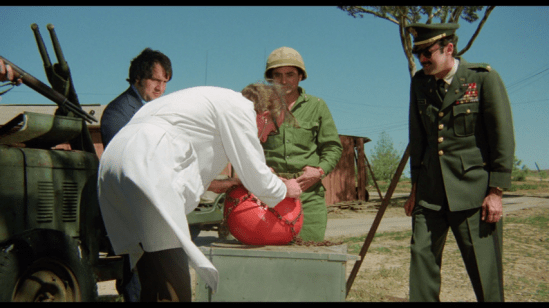
The United States comes under a relentless siege from a formidable foe unlike any other. An enemy that’s risen from the ground up to overthrow the very soil Americans’ inhabit. Flashing proudly their red colors, this adversary will fight and destroy anyone in their path. The attack of the killer tomatoes will seek to end mankind and take over the world! As desperation sets in, top U.S. generals, under the aloof guidance of the President of the United States, assemble a motley crew of special ops that become America’s best hope against a vicious barrage from the killer fruit….or are they vegetables? Under the leadership of Mason Dixon, his team will infiltrate, investigate, and, if lucky, exterminate the rotten to the core tomatoes. From the glossy red cherries to the plump big boys, the round ripe killers are hungry from human pulp and only Dixon and his team can stop them!
Courtesy of the MVD’s Rewind Collection, a newly released line of retro cult cinema, comes the impeccably unsystematic comedic spoof “Attack of the Killer Tomatoes!” for the first time on high definition Blu-ray! Writer-director John DeBello, along with his co-writers and fellow many hat wearing cohorts Costa Dillon and J. Stephen Peace, takes satire to the composter, lets it fester for a month, and releases a heaping pile of slapstick gold to the masses. The zany indie production, backed by various family members and local mom and pop retail operations, has been a horror comedy staple for past 40 years with not-so-cutting edge timeless humor that pokes a satirical finger at other more serious ventures such as Alfred Hitchcock’s “The Birds” with the film opening with a message about viewers brushing-off jovially the Hitchcock subtle creature until the event actually happened with aggressive, unflinching fowls terrorizing a small town and in that context, a film about killer tomatoes was born. DeBello’s film aimed to poke fun at many other things as well and successfully pulled the wool over the eyes of critics who remarked how awful his film was to behold, but that was the director’s sought-to, goal line intention.

Out of a cast of untrained talents and actors and actresses who never saw the bright lights and prepped sets ever again, only one actor stands out as a recognizable face and household name and that face and name was of Jack Riley as a Government slug. I might be a sucker for classic re-runs, but I remember Riley from his stint on “The Bob Newhart Show” and his very presence in “Attack of the Killer Tomatoes” legitimizes not on the film’s creditability but set the humor tone that was to be expected and despite almost being killed during filming as the rented helicopter accidentally crashes with him in it, the comedian rose from the ashes like a reborn phoenix and suggested to use crash footage to seemingly boost the pint-sized production value. However, it’s David Miller, who has zero interactions with Riley, in the lead role as a Mason Dixon. Though with an uncanny resemblance to the late funny man John Belushi with the wavy dark hair upon his short round figure, Miller goes fairly dark, as in quiet, for his leadership role as perhaps the only sane, and logical, character in the entire sequence of misfits. Dixon’s right hand Lt. Wilbur Finletter is played by co-writer, co-producer J. Stephen Pearce who courageously commits himself to doing all his own stunt work in a film that proudly wishes to just have a good time. Pearce’s approach to the lieutenant is with a sullied gung-ho persona that’s effective, but barely in the eyes of Mason Dixon. Dixon’s love interest Lois Fairchild, the only credited role of actress Sharon Taylor, inarguably is involved in an awkward game of being coy with Finletter as Fairchild, being a rookie reporter, aims to get the story at any cost while Finletter’s dimwit has him skate around her advances and oblivious to her information seeking intentions. Rounding out the cast is George Wilson, Eric Christmas (“Porky’s), Ernie Meyers, and Ron Shapiro.

Before “Scary Movie,” before “Naked Gun”, and even before “Airplane!,” “Attack of the Killer Tomatoes” had tailored, if not probably pioneered, this particular gag humor and in today’s day-and-age of political correctness, films like John DeBello’s are much like the Dodo bird – extinct. In the mix of light hearted witticisms, a number of racial, sexist, and overall bad taste cracks lie sporadically about the 87 minute runtime that wouldn’t make past the MPAA standards of today, that would invoke public ridicule and outcry for the filmmakers’s heads, and would unjustly place on a blacklist mark all involved, but just like a many number of these cinematic relics, they’re grandfathered into the fold. Though I doubt many millennials have even heard of the killer tomato franchise which would be baffling since health conscious wackos would enjoy seeing genetically modified tomatoes run a rampage, proving their points.

“Attack of the Killer Tomatoes” arrives on a special collectors edition Blu-ray/DVD combo set from MVD’s Rewind Collection. For the 1978 film, this release, presented in an AVC encoded 1080p 4k digital transfer of a 1.85:1 aspect ratio, is by far the best yet with a rich coloring range that pop and bring new life to the cult favorite. Hair line blemishes and some blotchy moments rear ugliness every so often, but the outcome of this release is astonishing when compared to previous DVD versions. The mono uncompressed PCM track reinforces a well rounded release when technically speaking. The dialogue is crystal clear and the musical numbers go off without a hitch. Perhaps, not as resonating as one would hope, but in the end, the mono track really sounds good here. Bonus features aplenty with audio commentaries from director John DeBello, J. Stephen Pearce, and Costa Dillon, three delete scenes, a collection of old interviews from cast and crew entitled Legacy of a Legend, a discussion on the helicopter crash, and “Attack of the Killer Tomatoes” original 8mm short film plus much, much more. Roughly about two hours of bonus content on this release makes it certainly a definitive collection. It took only 40 years for “Attack of the Killer Tomaotoes” to receive the treatment the John DeBello directed creature feature rightfully deserves and though might stink like rotten organic matter, there’s certainly nothing like the splat-fest riot of rolling, death-dealing fruit fleshed with trail blazing comedy unlikely to be repeated in today’s uptight community.
Tag Archives: blu-ray
The Myth. The Legend. The Evil…. “Leatherface” review!

Texas 1955 – the pride of the Sawyer family was not their tattered farm, but a bloodline taste for something else – callous murder and a penchant for human flesh. Verna Sawyer sought to instill that pride into her children, especially her youngest, Jed, but when Hal Hartman, hard nose local Sheriff, learns that his daughter becomes victim of the Sawyer’s suspect nefarious carnage, he executes the law to his advantage, deeming the Sawyer house unfit for children and removes Jed from his labeled degenerate mother Verna. Ten years later, a group of teenage patients escape a mental hospital, kidnap a young nurse, and reek bloody havoc in their voyage to Mexico in an attempt to elude the very same lawman who put them away, but this time, Hartman isn’t adhering to the law, straying off his moral compass to pursue a vengeance mission against unprincipled youth that’s personally driven by Jed and the Sawyer family. Once the embattled Hartman catches up with his prey, a series of gruesome events lead to the creation and the construction of one of the most notorious killers Texas will ever see.

I love a good origin story. There’s something to be said about understanding the commencement of character, to be in the shoes of a long running icon, and to be able to sympathize with their story no matter how atrocious. Directors Alexandre Bustillo and Julien Maury’s 2017 “Leatherface” does just that with the film’s own origin enlightenment on how the chainsaw wielding, human skin mask wearing psychopath came to fruition inside a home of unspeakable brutality and influenced externally by a unforgiving society. From a script penned by Seth M. Sherwood, “Leatherface,” serving as a direct prequel to Tobe Hooper’s “The Texas Chain Saw Massacre,” briefly touches upon the preteen years to setup the catalytic road trip from hell, birthing a monster in a time of adolescence and if part of a legacy spanning over forty decades inspired by Ed Gein, the real life human skin wearing and notorious serial killer, then you damn well know “Leatherface” has to be genetically predisposed to be ultra-violent drenched in blood splatter. The French filmmaking duo, who’ve helmed 2007’s “Inside” and had directed the “Xylophone” segment in “The ABCs of Death 2,” nail the dark and gritty tone that not only breathes a gassy and exhaust fumed life into a massive flesh-ripping chainsaw, but also inflicts heartlessness across the story board into a heartfelt homage to the characters and to the story fathered by Kim Henkel and the late Tobe Hooper, both of whom were attached as executive producers.

Over the years, many actors have held the mammoth power-drive cutting tool in their hand that’s ready to chip away at flesh such as Andrew Bryniarski (“The Texas Chainsaw Massacre” 2003 remake), Bill Johnson (“The Texas Chainsaw Massacre 2”) and, most famously, Gunnar Hansen, the original Leatherface. However, I’m not going to divulge who the pubescent Leatherface is in the story because the film plays out as a who out of the group of degenerate teens is the son of Verna Sawyer, even though you can easily obtain the information in a simple click and search on Google. Instead, Sam Strike, James Bloor, and Sam Coleman portray the three escapees who are accompanied by an equally insane sociopath in Jessica Madsen and an eagerly novice kidnapped nurse by Vanessa Grasse. Amongst a sea of English actors are a pair of vets to shepherd the young cast and be the embattled bookends to the dawn of an icon. Lili Taylor (“The Haunting”) and Stephen Dorff (“Blade”) face off as Leatherface’s mother, Verna Sawyer, who butts horns with a longstanding sheriff, Hal Hartman, with a steadfast vendetta against the Sawyer family. Christopher Adamson (“Razor Blade Smile”), Nathan Cooper (“Day of the Dead: Bloodline”), and Finn Jones (“Wrong Turn 5: Bloodlines”) co-star.

Usually with a pair of directors, two different styles spawn to an end result. With Bustillo and Maury, styles merge into a seamless effort of elegant wonders. Each shot emerges a purpose to the story whether it’s painting an image of the Sawyer’s death house to pulling a one-eighty with characters, the filmmakers ability to combine each element into a single story, that has such a close knit cult following, and still manage to cinematically pull off the atmosphere, the grit, and the gory carnage of a Texas Chain Saw Massacre film is impressive. Cinematographer Antoine Sainer, whose worked previously with the directing duo on the “The ABCs of Death 2’s” segment “X,” has the ever so poised eye that’s able to well-round and solidify Leatherface’s terror tenor, particular exampled in a foot chase scene through a moonlit forest, smoke bellowing out of a growling chainsaw, and a tattered young girl bawling, screaming, and fleeing for her life from a deranged masked killer whose huffing, snarling, and growling during the pursuit.

Lionsgate Home Entertainment presents the Millennium Films produced “Leatherface” onto Blu-ray + Ultra-violet combo disc, a MPEG-4 AVC encoded disc with a 1080p resolution and presented in a widescreen, 2.38:1, aspect ratio that displays the Bulgaria landscape in a yellowish-brown, Texas-like backdrop. Details are noticeably fine that exquisitely reveal the death and destruction of the Sawyers and those who unfortunately surround the family. The English DTS-HD Master Audio 5.1 track evenly distributes and consistently a range of engrossing fidelity, ambient, and dialogue layers. Bonus material includes a play feature with an alternate ending that’s less superior in contrast to the final product, deleted scenes, and a behind-the-scenes making of that includes brief interviews with directors Alexandre Bustillo and Julien Maury, actors Sam Strike, Stephen Dorff, Lili Taylor, and others, and goes behind the scenes in creating the tone and style of “The Texas Chain Saw Massacre” while implementing their own vision. “Leatherface” forces the unsavory and unpleasant down the throats of TCM fans, jamming an attempt to exposition a futile chance to a destined maniac of cannibalistic proportions and manages to mix up the Tobe Hooper’s weathered franchise with a barbaric bruiser of a tale.
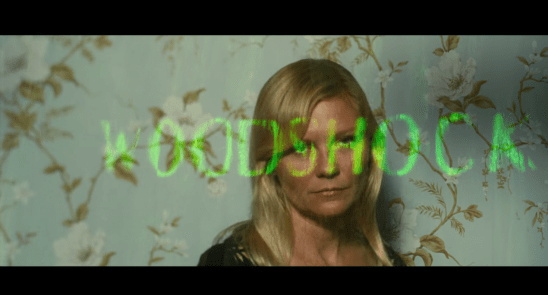
Trippin’ on Grief Conjures Internal Evil. “Woodshock” review!

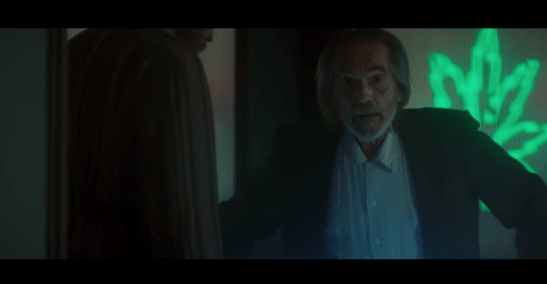
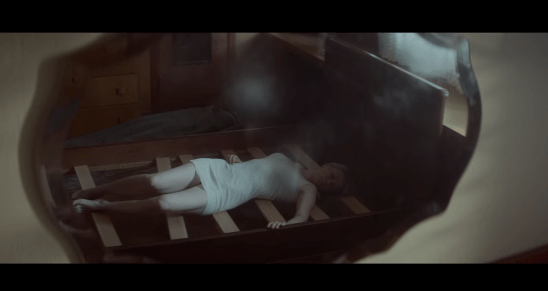
After suffering the tremendous loss of her in-home hospice cared mother, Theresa descends into an inescapable state of grief and severe isolation inside her mother’s woodland home. Stumbling through life, she manages to show up at work, a cannabis distributor in town, with the verbal encouragement from her eccentric boss, but Theresa’s mind can’t grasp the reality of the situation and loses focus resulting in another tragic loss when she mistakenly hands over fatally potent pot to the incorrect customer, subsequently a friend. Along with grief and isolation, guilt comes into the fold and she begins lighting up her own stash of mind altering cannabinoids that thrust her mindset into disjointed delusions and sleepless strolls through the forest.

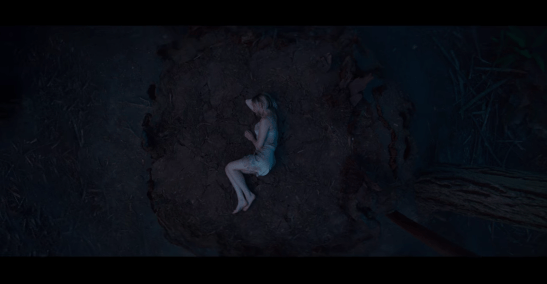
“Woodshock” is the 2017 drama thriller directed by two sisters: Kate and Laura Mulleavy. Credited as their freshman film, the Mulleavy sisters embark on an internal, unhinged perspective from their main character, Theresa. With that in mind, the filmmakers’ use of nature has both a symbolic and practical substance that paints the inner workings of Theresa’s thought process. Shot on location surrounded by the giant red oak trees of Northern California puts Theresa, this tiny human being, right smack dab in the middle of ginormous towers of pure ancestral nature and unable to fathom the full scope of the trees metaphorically explores how Theresa is unable to fully comprehend the overwhelming amount of emotions she ultimately succumbs to that lead her down a darker path. Nature, whether trees, butterflies, or, more so in general, landscapes, becomes a familiar motif throughout the film with the trees being the most repetitive aspect being exhibited in numerous scenes of being harvested by loggers, stripped and stored at mills, and lingering remnants of their once intact past.

“Melancholia’s” Kirsten Dunst fully embraces the role of Theresa with her mind, body, and soul by not holding back in a role that demands more of a solitary, voiceless performance blanked with grief. Dunst nails it with ease. Accompany the Sam Raimi “Spider-Man” actress is Denmark born Pilou Asbæk as the pot dispenser shop owner Keith who conspires to work out deals with his special customers in need of once and for all ceasing the pain of ailment. The dynamic between the two is hot and cold as the sensation of tension is always present even if the dialogue is not. Asbæk’s Keith actually drives the plot, creating situations that put Theresa in a dilemma inducing pickle and he certainly takes advantage of her grief. Asbæk smug performance couldn’t get anymore complex as he portrays an arrogant, hippie-esque pot shop entrepreneur in a small Washington state town, but exhibits a softer side, especially for his friends and for Theresa, at times. Joe Cole (“Green Room”), Steph DuVall (“Scanner Cop”), and Jack Kilmer costar.

“Woodshock,” as a whole, attempts to grapple too much in the dimension of the subliminal. The Mulleavy sisters focus on symbolizing and using metaphors rather than being straight shooters to communicate Theresa’s internal struggle and between the montage of trees, the vibrant visuals, the double exposures, and various angles of a single action, there’s a choke that occurs, making apprehension hard to swallow. The siblings also display their inexperience at times. Despite completing impressive artistic visuals and able to create some slight movie magic as independent filmmakers, the directors’ choice to keep scenes from being cut and left on the editing room floor are questionable. One example would be Keith in the bar, moving his arms in a slow, locomotive motion, listening to a mellow track on the jukebox This scene is late is near the latter part of the film and doesn’t convey anything more about the character than already established with no transition scene to provide any kind of setup, background, or foreshadowing.

Lionsgate Films presents “Woodshock” onto a slip-covered High Definition, 1080p Blu-ray plus Digital HD. The MPEG-4 AVC encoded BD-25 disc has an widescreen aspect ratio of 2.39:1 that’s conventionally stable. Faint grain filters through, but this could be an intentional cinematography tactic. The English DTS-HD Master Audio track isn’t wired to pair with such slow, mellow storyline that doesn’t have a range to fully test the HD quality except for invigorating Peter Raeburn’s enlightening hodgepodge score. The dialogue track is muddled and nearly unintelligible by the overshadowing score. Bonus material includes “Making Woodshock: A Mental Landscape” that opens up Kate and Laura’s intentions in expressing Theresa as a character, their style in filmmaking, and to up sell their cast and crew. “Woodshock” is an artistic visual stimulation with no rival, but Kate and Laure’s inexperience emanates through more than their subliminal sub-contexts. Kirsten Dunst marvelously challenges herself that inarguably gives her even more of a range as an actress that only proves her ability to not be a one trick pony in and out of Hollywood.
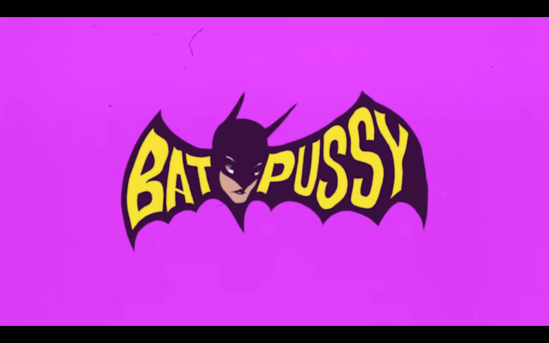
When Evil Strikes in Holy Gotham City, Only One Hero to Call… “Bat Pussy” review!

Good for nothing Buddy and his two-bit working girl wife Sam bicker slangily about their sexual performances. As Sam lays nude in bed and a naked Buddy flips through a sleazy magazine in search for the new positions to experiment, the two become inspired to ravage each others’ privates all the while expletives toward one another fly. Soon, Buddy decides to start snapping photographs of his nude wife as part of a plan to create an adult spread, like in the magazine. Deep inside Bat Pussy’s headquarters, a tingle in her twat informs her that somebody, somewhere is creating porn in her holy Gotham City and she quickly dresses from nightgown to bat suit to spur into action. The not-so-caped crusader jumps onto her Hoppity Hop and makes haste across town to intervene, but as soon as Bat Pussy dives in to stop the perversive pornographic nature, she dives right into the fold of lustful, foulmouth appetites.

American Genre Film Archive and Something Weird Video, partnered with distributor MVDVisual, releases a restoration of one of the earliest known porn parodies, “Bat Pussy,” onto Blu-ray that spoofs, horrendously, the Adam West starred “Batman” television series from the late 1960s. As far as a porn is considered, “Bat Pussy” lacks any sensical sexual action resulting in a double one-two punch wham!-bam! of no plot and no actual sex; instead, Buddy and Sam’s southern caints and worsh tub conversing of ignorant and pointless potty mouth conversation is more entertaining than Buddy’s limp impotence that dangles between the legs of being bizarre foreplay with the very freckly and curvy Sam. Since both of whom are seriously unattractive in appearance and performance, “Bat Pussy” has the stigma of being the worst porn ever produced. The actress behind “Bat Pussy” has far superior attributes than compared to her costars, but lavishes in a twang that’s hard to ignore and her vigorously tasteless implementation into Buddy and Sam’s awkward makeshift threesome is beyond the point of cringe worthy.

“Bat Pussy’s” gridlocked and effortless plot isn’t much to write about unless a bonus movie accompanies it and, in this particular release, “Robot Love Slaves” waits to be received in the bonus material. The bonus feature tells the story of Clark, a mad scientist who creates pleasure gifting robotic women in spite of a conniving wife whose scheming to be handicapped to steal her Husband’s groundbreaking work and be in the arms of her illicit and conspiring lover, Dr. Dicks. Clark constructs four pleasure bots, testing two of them on his friends with their specific built in sexual qualities, and keeping two for himself until the very right moment to strike against those who seek to dethrone him of his creation.
“Robot Love Slaves,” also known as “Too Much Loving,” is another early 1970s stag film. The science fiction sexploitation arouses a little better than the main feature and consisting of a plot that starts from A-to-Z and more striking women involving Sandy Carey (“Drive-In Massacre”), Sandy Dempsey (“Country Hooker”), and Candy Sampler (“Flesh Gordon”). Though roughly and technically hardcore, “Robot Love Slaves” is more softcore not by directorial design, but by edited manipulation that serves as a drastically cut-downed final product; nonetheless, the overall tone plasters a more earnest setting of deception, sadism, and pleasure rather than fooling around in a waste of runtime. Billy Lane and Adam Ward costar.

AGFA and Something Weird Video’s MVDVisual distributed “Bat Pussy” and “Robot Love Slaves” is a restoration of cult bric-a-brac right onto Blu-ray home video presented in the original aspect ratios of 1.33:1. “Bat Pussy” has been through a 2k scan from the only surviving 16mm print in existence found in the back room of Paris Theater in Memphis, Tennessee. The restoration puts the pieces in order that result in a slightly washed glaze from the dated print. Scratches and grain remain evident, but, like the not-so-hardcore material, nothing too obscene. The mono audio track is more interesting with pieces of the audio track removed upon the unknown director’s direction; during some points of the awkward romping, the audio would cut out, Buddy would look up, audio would come back in, and Buddy would say, “what?” and then the audio would cut back out. You’d have to see hear it to believe it. “Robot Love Slaves,” which also went through the 2k scan from the 16mm elements, suffers far worse from father time. Doesn’t help that the film is also heavily cropped and edited to avoid being extremely explicit. The audio track cuts in and out near the end, popping with distortion under a low ranged ceiling, and flushed with hisses. Bonus material includes a commentary track from Something Weird’s Lisa Petrucci and Tim Lewis, crime-smut trailers and shorts from Something Weird Vault, and liner notes by Lisa Petrucci and Mike McCarthy. The vivid and hilariously illustrated “Bat Pussy” blu-ray cover is perhaps the most remarkable aspect of this release. Though both films are of unknown origins and much of the cast and crew are an enigma, “Bat Pussy” and “Robot Love Slaves” revel in a sexploitation realm all their own with wish-washy filmmaking and poor, but exuberant, performances from a cast who never spoke of these two, under an hour, cult hits ever again!
Wes Craven’s Evil After School Special! “Summer of Fear” review!

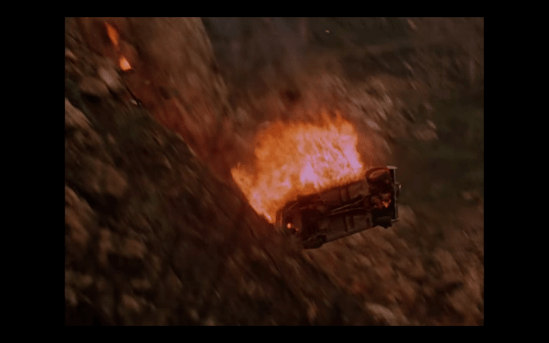
Julia Trent is left orphaned after the fatal accident of her parents that involved them falling to their fiery deaths when their car careens off a cliff attempting to drive their housekeeper home. The only family Julia has left is the Bryant family whom she hasn’t seen in over 15 years. The Bryants welcome their niece with consolation and open arms, inviting her to room with her cousin, Rachel. Rachel has the perfect life: a loving mother and father, a cute boyfriend, and the ability to ride and compete in horse competitions. However, Rachel’s world is upended when Julia enters her life and something just doesn’t seem right when Julia slowly begins to push Rachel out of her comfy position, bewitching the men in her life to turn against her and being the center of a number of considerable accidents. As Rachel suspicions grow and she becomes further attached from all those that surround her, an investigation ensues with Rachel at helm to retrieve what’s rightfully her’s from an underlying evil.

The late Wes Craven made for television movie “Summer of Fear,” also known as “Stranger in the House,” is a living relic; a time capsule type horror this generation will find difficult to grasp, like Nintendo’s Gameboy or music tape cassettes, with thrilling suspense unlike today’s cookie cutter product. After he shocked audiences with the controversial “The Last House on the Left” and crafted a shifty dream killer in “A Nightmare on Elm Street,” director Wes Craven embarked on a venture into the television movie scene that didn’t spur graphic content, but focused putting the supernatural in the forefront of reality with a similarity to that of “Tales of the Darkside” or “The Twilight Zone,” captivating audiences sitting in front of the boobtube with twists and thrills in a Halloween premiered NBC movie. Based on Lois Duncan’s novel of the same title and written for television by Glenn Benest (who also wrote another Craven directed picture “Deadly Blessings”) and Max Keller, Wes Craven greatly accepted the challenge of reaching a broad audience without being subversive and explicit, sharing his vision with another living horror icon in the starring role.

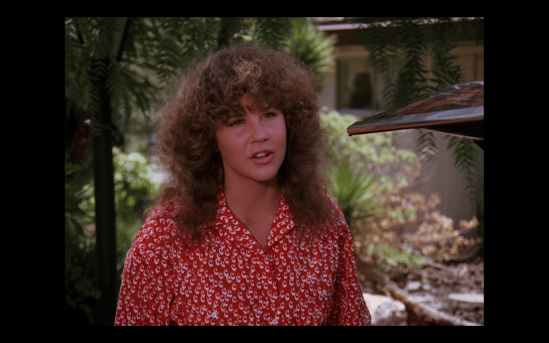
“The Exorcist’s” Linda Blair has a role that’s certainly a far cry from the possessed Reagan, but the 1978 “Summer of Fear” had opened up a sleuth-type role for Blair that made her more of the hunter than the victim. Blair’s raspy voice and spoiled girl attitude completes the privileged daughter of the household compared to her tall and charming rival, Julia Trent, in “Necromancy’s” Lee Purcell. Purcell compliments Blair all too well and, together, the on screen tension is ever present, even if slightly over exaggerated. From that point on, “Summer of Fear” was filled in by other great talent such as Jeremy Slate (“True Grit” ’69), Carol Lawrence, a very young Fran Drescher in the beginning of her career, Jeff McCracken, and Jeff East (“Pumpkinhead”), but the more fascinating role, that was hardly explored, is awarded to MacDonald Carey, the resident occult professor of the neighborhood. Carey’s has a very old school actor with a performance very familiar to Robert Mitchum and the veteran actor’s vast career felt very small here in the catalytic role as the confirming source for Rachel in her suspicions.

In addition to the withdrawal of the contentious content, “Summer of Fear” entertains on a minimalistic special effects stage that still pops with jaw-dropping suspense and still caters to an, even if slightly dated, story altering moment that rockets toward a maelstrom finish. All the while, Lee Purcell’s character has such glam and beauty that the bewitching sticks overpoweringly raw as a telling moment that beauty isn’t all that’s wrapped up to be and people can be ugly on the inside. Through brief glimpses into Julia Trent’s authentic past, including the mountainous Ozark retreats, one could conclude the story’s ultimate ending, but the fact that the actors embrace their rolls and Wes Craven connects himself enthusiastically to the project makes “Summer of Fear” a solid small box show of terror.

Doppelgänger Releasing releases the Wes Craven classic “Summer of Fear” for the first time onto Blu-ray home video. Transferred to a 1080p resolution, the presentation is certainly made from TV in the Academy, 4:3 or 1.33:1, aspect ratio. Image quality sporadically has moments of definition instability where the image goes fluffy or soft and amongst the duration’s entirety are a slew of white specks and noticeable grain, but the transfer remains solid over the decades that display a grandeur of vivid coloring despite some scenes of with an overburdening washed yellow tint. The English 2.0 DTS-HD Master Audio cleanly presents the feature with not a lot of flashy audio moments and the dialogue is clean and clear suggesting that the audio track aged very well. Bonus material includes an audio commentary track by director Wes Craven, an exclusive interview with Linda Blair, photo and poster gallery, and concluding with the original 1978 trailer. “Summer of Fear” might be obsolete in modern ways of terror filmmaking, but Wes Craven imprints a searing cult classic that brandishes more than just guts and gore. Instead, the father of “Scream” continues to impress beyond the grave, thanks to distributors like Doppelgänger Releasing, with the filmmaker’s expansive range that debunks many popcorn horror goers’ assumptions about the director and his films. “Summer of Fear” simply showcases that Craven was a jack of all trades when coming down to brass tax in creating a terrifying story.