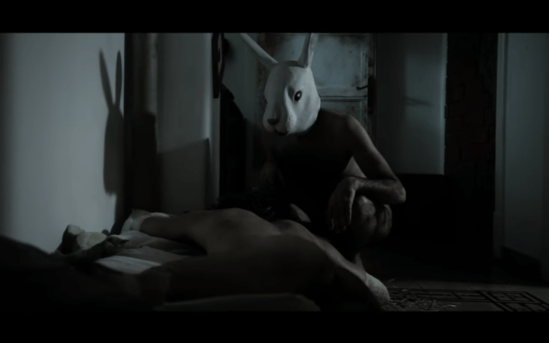
Albert’s just another lowly speck among the multifaceted masses of New York City. The lonely street hotdog vendor barely scrapes by in what could be considered a life, earning next to nothing to keep him on life support in the city that never sleeps. To impress a beautiful girl, a girl of his dreams, Albert accepts a position offered to him by an eccentric photographer and hopes to learn about creating art with a single click of a photographic camera, but Albert becomes the obsessive fixation of the photographer’s next breakthrough exhibit. Albert’s simpleton nature and the photographer’s edgy intensity pushes the aspiring artist to lure women into offbeat modeling sessions in the away photographer’s NYC flat. When he can’t retrieve the inspirational art out of his models, a frustrated Albert goes to extreme lengths to ensure his art is performed to his particular, elementary taste.

“Bag Boy Lover Boy” is the 2014 inaugural feature film debut of director Andres Torres who is one of the few directors out of countless others able to resuscitate the compellingly frightful grit of New York City long ago. I’m talking about the era of pre-Rudy Guiliani New York City in the 1980’s where graffiti splayed walls and the blue fluorescent of dilapidated charm was present on every grid blocked street. Torres, along with co-writer Toni Comas, supplements one of a kind character personalities very appropriate to inhabit the sinister ladened Big Apple. Characters who aren’t dolled up or even genuinely beautiful. Those characters who are easy on the eyes don’t have the inner soul to match, residing in them an defect of some sorts that makes “Bag Boy Lover Boy” feel all too real.

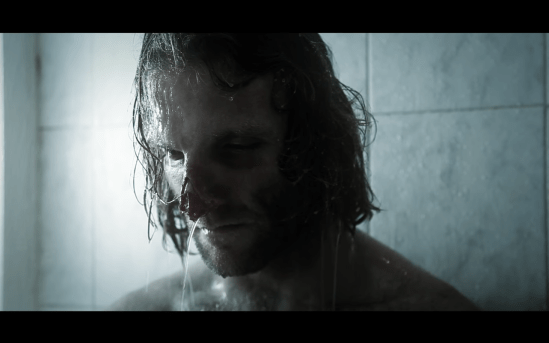
Jon Wächter, a director-actor with behaviors not too alien to that of his character, centers himself as that very bag boy, lover boy of Albert, the awkward citizen with a one track mind and living to fulfill no dreams, hopes, or goals. Wachter owns his role by giving no hints of aspiration to fortune or achievement until Albert meets the cynical Ivan, appropriately casted with New York City-based actor Theodore Bouloukos, is able to hone in on the streets’ muckiest ground level and incorporate a Ron Jeremy charm that’s shrouded sleazy, but devilishly smart. Ivan draws out of Albert a simple interest, a hope to create art through photography, but Ivan has other, more prosperous, plans for the gullible nitwit as model in his own artwork. Albert’s mind focuses solely on photography and not modeling, placing Ivan in a rather haste position to con his centerpiece with poor words of self-worth advice and filling Albert’s head with misogynistic directions when Ivan goes through his rather rough motivational spiel during shooting gigs. Albert then can’t separate reality with his newfound dream that puts “models,” played by Teena Byrd (“Ninja Versus Vampires”), Sarah O’Sullivan, and Adrienne Gori, in harms path. Kathy Biehl, Karah Serine, Tina Tanzer, Marseille Morillo, and Saoko Okano make up the rest of the cast.

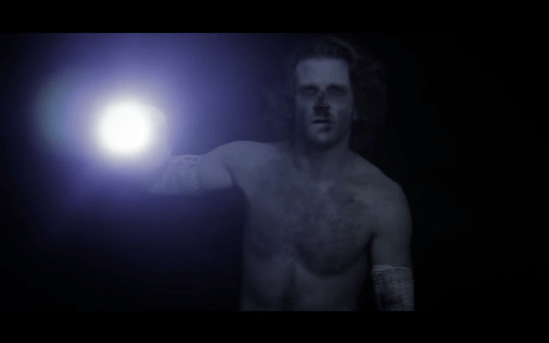
What I found most interesting in Torres film is Albert’s perception of himself. After a couple of, what he thinks are successful, shoots with the women he lures and drags up to the Ivan’s flat, Albert perceives himself as this eminent rockstar, exhibited very boisterously in a fantasy scene within Albert’s dingy one room apartment. What’s really ironic about the whole story is that Ivan honestly could deliver every bit of the wealth, women, and respect he promises to Albert and with these promises, he could obtain Lexy, the girl he hopes to win over, but with such a narrow mind, unable to go beyond to foresee a positive future, Albert self-destructs into infamy with only some non-permissive nudity polaroids to show for it. Torres and Comas Shakespearean-like comedic tragedy concept is a consistent conundrum for each and every one of us, not just the slow and low like Albert, but for us who think in the short term, despite whether what we accomplish now might not be a desire or may not be our sole purpose in life. Even peering into Albert’s erratic, overly-exaggerated, if not visually stimulating, mind stories are not to different from what perhaps the rest of us experience.

Severin Films presents the EXU Media production of “Bag Boy Lover Boy” for the first time on DVD and Blu-ray home video. The region free, not rated, gorgeously illustrated Blu-ray is presented in full HD 1080p. The image quality boasts vibrant colors and really exemplifies the naturally gross visual aspects of New York City streets. Various skin tones come out nicely unfiltered and untouched, especially the pasty Wächter and the olive skin of Tina Tanzer, with only brief moments of filters to accentuate subversive content. The dual channel English stereo isn’t half bad. Even though English is not Jon Wächter’s first language, the Sweden-born actor’s dialogue is clear and coherent. The rather mixed bag soundtrack and the Barbara de Biasi score have boastful fidelity and remarkable clarity. Extras include a meaty audio commentary from director Andres Torres, Theodore Bouloukos, and editor Charlie Williams, The Student Films of Actor Jon Wächter: “Got Light” and “The Never-Starting Story,” and the film’s trailer. “Bag Boy Lover Boy” is surrealistically realistic while being slightly exploitive and courageously risky. A satirical film with the proper fortitude to challenge our judgements about life and the paths chosen while leaving an uncomfortable aftertaste of profligate opportunities. Torres also leaves with us a film that we’ll never forget.
Tag Archives: blu-ray
Evil Attracts With the Fluorescent! “Feed the Light” review!

Sara, a desperate young mother, infiltrates a secret facility workplace under the false pretentions of becoming an employee of the critical janitorial department. After losing custody of her adolescent daughter Jenny in court, the child becomes misplaced when her custody awarded father, an employee, loses Jenny in the facility that’s conducting unusual activity involving the building’s light energy source. With everyone on constant edge and under the powerful and dangerous influence of the light, including her very organized and unstable employer, Sara is able to find a sympathizer in the head janitor and by exploiting his mental map and valuable knowledge of the building, Sara goes deeper into the structural bones of a nightmarish reality where evil lurks in the shadows and not everything is what it seems.

“Feed the Light” is a H.P. Lovecraft inspired sci-fi horror directed and co-written by indie filmmaker Henrik Möller with Martin Jirhamn sharing the co-write. The gothic tale stems from the Lovecraft short story “The Colour Out of Space” that tells the tale of a meteor crash landing in the hills near Arkham, Massachusetts, poisoning and deforming all the living creatures nearby that creates chaos amongst the locals. The light, that never dulls, becomes the driving force of everything malevolent and that carries over into Möller’s film, but isolates the setting to a dilapidated building instead of a natural landscape and focusing more on the people inside rather than vegetation or livestock as the Lovecraft short story builds upon. Originally shot in color, Möller thought best to suck the color out from the reel and produce a mostly black and white film, sprinkled with color at strategic moments, that would convey the importance of the ever-present light and interpret a far more dramatic effect to play out; a decision I whole-heartedly agree because if laced with color, much of the abandoned warehouse setting would be a monotonous eye-sore. Instead, black and white enhances the light’s presence, makes it almost seem to stand out amongst the greyscale, and give way to more inspirationally vibrant hues when they are revealed.

For Henrik Möller, this is the director’s first dive into feature films and for the filmmaker whose better known for his shocking shorts, “Feed the Light” doesn’t water down the deranged, creative machine that just steam-plows through a 75-minute runtime and still managing to be mechanically sound to comprehend the Lovecraftian tone. Lina Sundén fills the lead shoes as Sara and Sundén embodies complete innocence and bewilderment when her characters goes forth into this strange facility, but doesn’t show much fear as if a mother’s determination is her driving force to go beyond being what frightens her. Alongside Sundén is Martin Jirhamn, who you might remember me saying he co-wrote the script, as the sympathizing janitor. Jirhamn has collaborated on many of Möller’s shorts, feeling comfortable taking on the challenge of a full length feature by taking on more of a scripted role that has a face with two sides. Rounding out the cast of memorizing characters are “Not Like Others'” Jenny Lampa as an authoritarian boss of the facility who tries to keep Sara from going on Indian Jones and the Raiders of the Lost Ark in the basement and Patrik Karlson otherwise known as the VHS-Man and Jenny’s father in the film.

“Feed the Light” has undertones beyond that of Lovecraft. The story feels nearly anti-establishment, a surreal and extreme look at how doing the same job, in the same office, staring at the same fluorescent lights can make one loose one’s humanity. The boss is a strict enforcer of the rules and doesn’t shrug at the thought of one of her employee’s burning out as long as the job gets done, but it’s not burning out that’s the problem. The light symbolizes obedience and control, turning those with a soul into mindless workers. There’s an unseen power embodying them such as with the dog man, played by Morgan Schagerberg, who, literally, sounds and acts like a canine that just happens to have glittery dust goo ooze out of it’s anus. Yup, weird. “Feed the Light” is jarringly weird, but also laminates into the prospect of hidden doom that’s very similar to the truth is out there concept reveled in the “X-Files.”

The Severin sub-label, Intervision Picture Corp., usually subjects us to older projects, but embraces newer indie films such as Henrik Möller’s “Feed the Light” and with the help of CAV Distributing, Möller and “Feed the Light” can be exposed to every house hold on Earth as a region free Blu-ray in 1080p full Hi-Def. The full frame is a staple of Intervision and doesn’t necessary cause any distress over cropped images. There is a fair amount of interference, but again, only enhances the indie labels reputation. Other than that, the image is fine laid under a Swedish language dual channel audio track that’s well balanced with a brooding industrial soundtrack by Testbild, a Möller familiarity. There are two extras accompanying the feature: one is a making of featurette and the other is an interview with the director, Henrik Möller. “Feed the Light” is a science fiction oddity chocked full with surreal depictions and nightmare creatures with a Lovecraft base and a passionate director’s otherworldly view of how light and color powerfully dictate our everyday lives.
Will An Undercover Elite Three-Man Team Defeat A Evil Legion in a Small Texas Town? “Navy SEALS v Demons” review!

Washed up and dishonorably discharged Navy SEAL, Lieutenant Warren Carr, is haunted by the tragic death of his family and can’t manage to stop kissing the bottle, but when a Navy Lieutenant Commander offers him an olive branch toward redemption, one that involves facing the wrath of virgin blood thirsty demons in a Mexico bordering town called Jack County, Texas, Carr reluctantly accepts the black ops mission. Recruiting a pair of buddies of equally disgraced SEALS, Whiskey and Red, the three men go deep undercover as a bikers and join forces with an established Jack County biker gang to put a stop to the demons from spreading beyond the small town’s limits.

A good rule of them to live by when flipping through your DVD and Blu-ray library is if the film’s title reads and sounds like juvenile garbage – chances are – the film itself will be the same caliber, but there are diamond’s in the rough. For example, till this day, I still believe 2007’s “Shoot’Em Up” is one of the worst titled films, but the Clive Owen and Monica Belluci gory-action shoot out is great fun and undeniably attractive. Okay, so maybe that particular movie is a bad example, as “Shoot’Em Up” sounds pretty rad even if my 3-year-old daughter could have brainstormed a better title, but how about the AK Waters’ story, Charles Roy penned script, and Jeff Reyes directed film “Navy SEALS v Demons?” The common misperception is that a film entitled “Navy SEALS v Demons” must be an intentional farce, but is, in fact, a serious film about crotch rocket demons in search for pure virgin blood and three defamed Navy SEALS undercover as bikers who are hired for the black ops mission to take them out without support or backup. Demons weren’t the only prey of the American beloved, ass-kickin’ Navy SEALS as AK Waters, on the heel of Demons, had pitted the elite force against the living dead in a film entitled, you guessed it, “Navy SEALS vs. Zombies.” Put a KIA on the heads of demons and zombies, right up there with Osama Bin Laden, as our unsung heros can take on natural and unnatural enemies.

Built like a mountain Mikal Vega heads the charge as Warren Carr. Vega, with a resume that credits him a military or bodyguard typecast actor in some of Hollywood’s blockbuster films such as “Transformers: Dark of the Moon” and “G.I. Joe: Retaliation,” breaks from being a jughead extra for Michael Bay films and found a way to be a jughead lead actor in poorly produced nonsense filmmaking that has reared it’s ugly eye-sore head in horror films. By befriending AK Waters, Vega begins his career as a D-list actor with “Navy SEALS vs. Zombies” and working his way from there. Vega has potential and the talent, even if his talent’s rough and shaky at times. Alongside Vega are his two on-screen commando bros, Matthew R. Anderson (Red) and Les Brooks Jr. (Whisky). Together, the three don’t have great chemistry with no real bond forming that Military unspoken code of whether they live or die value. Liana Mendoza plays the semi-quasi female lead opposite Carr; her role of protective stripper mom doesn’t provide that one-on-one connection with Carr, especially since after her nipple-patch covered, incoherently edited lap dance for Carr upon his arrival into town was less than just okay (she’s much better in “Zane’s Sex Chronicles”), when her character is sorely underdeveloped to just be a waste of space and a fly on the wall. Lastly, there’s “Super Shark’s” Tim Abell as the ACES, special government agency whose acronym is never spelled out, acting head director Max Martini. Abell’s scenes in the command center are rather detached from the rest of the action. Abell does a fine job being the tough man in charge to a bunch of bewildered agents who look like they’re all sitting in a VFW mess hall, wondering how to keep operational their recon drone over Jack County, but Abell’s scenes are almost like a wasted effort in trying to sell his band of brother loyalty to Carr.

“Navy SEALS v Demons,” that’s not a typo in the abbreviated versus by the way, must have had storyboards that were shot from illustration-to-illustration because smooth transitions between scenes were anything but present. The 85 minute film also felt frustratingly rushed; for example, a portion of the finale tried to convey a death, a betrayal, and one other important antagonist upper hand all in 20 seconds of short clips, harshly edited together as the filmmakers said, “screw it, let’s just get it done.” The death of the major character didn’t get the respect the character deserved and I would be pissed if I was that actor, the betrayal comes out of far left field in such a brief scene, and the other scene, which I won’t go into details in case you want to actually watch this movie, goes relatively unexplained as well, but one can conclude that the dark powers of the head demon are Pied Piper-ly powerful. Special effects had some brief gory moments, all the demon makeup was obscured by off-screen voiceovers, structure impediments, and biker helmets, and to be frank, I’m still upset that Liana Mendoza, whose inherently sexy playing a sexy role, used pasties and the direction during the lap dance was to screen more of Vega’s mug of contempt as if the filmmakers themselves tried to intentionally censor themselves.

Ripped Boxers Entertainment and MVDVisual’s “Navy SEALS v Demons” goes to battle on Blu-ray home video. The Blu-ray’s image quality is actually quite good with an AVC encoded 1080p transfer presented in a 2.31:1 ratio. Color levels are balanced where needed, especially in the day time sequences, and skin tones naturally favor Carr’s middle-aged definition and heightens Mendoza’s ethnicity and womanhood. I can’t say the image quality did any justice to the demon makeup, rendering the oddly reddish hues on the shoddy latex an obvious quick job. The Dolby Digital 5.1 English only track has very little bite with some loss around the surround sound and the dialogue isn’t always in the forefront and clear. There are no extras on this release. “Navy SEALS v Demons” is, sadly, one of those bad low-rent movies with a low-rent title on a fairly good Blu-ray release and while Mikal Vega and Llana Mendoza share the intensity the story desperately needs, majority of the remaining is stale as week old bread, except for best part of the whole movie when Mikal Vega slaps around a lowlife biker in a barroom brawl. What will be AK Waters next versus project? Navy SEALS vs Vampyres, anyone?
In a Seemingly Fresh Corpose Lies a Legendary Evil. “The Autopsy of Jane Doe” Review!

An unknown corpse of a young woman, found naked and half-buried in the basement of a home involved in a gruesome crime scene, is strolled into a small town family morgue and crematorium by a puzzled local sheriff. Without any idea who this woman is and how to explain the her presence at the scene, the sheriff wants a cause of death on his Jane Doe as soon as possible and it’s up to Tommy and his son, Austin, to investigate what caused her demise and to determine her involvement in the grand scheme of the grisly events. When the medical examiners begin to peel back the layers, each segment of the autopsy reveals impossible and unspeakable horrors underneath her cold flesh that go against their combined years of medical experience and the deeper they dig into her body, the more the autopsy room becomes a spine-tingling area as strange occurrences begin to happen to the father and son. Their only hope in stopping the ominous terrorizing presence and surviving the hell-bent stormy night is to continue the examination in order to unravel the enigma that surrounds Jane Doe.

“Troll Hunter” director André Øvredal helms a contemporary horror masterpiece with the Americana horror film,”The Autopsy of Jane Doe, that can be described as American folklore lit ablaze with modern day macabre that plays like a gruesome adult version of the children’s game Operation. Øvredal pulls inspiration from present day classical horror, including such films as the widely popular James Wan franchise, “The Conjuring,” by not embarking on an overkill journey of heavy duty effects or relying on gallons upon gallons of fake blood to sell his film. Instead, André Øvredal’s “The Autopsy of Jane Doe” is patient, subtle, and massively creepy, utilizing the dated morgue and crematorium basement setting to construct a dreadful, despairing dungeon atmosphere and focus on being very particular with every scene having a function to take advantage of the overwhelming brooding aurora and pop scare moments that can scare the pants off a mannequin. Øvredal heightens moments of complete pin-drop silence to amplify the terror and plays with camera angles that linger longer to leave an unsettling residue pooled in a spine-tingled soul.

Not only is the Ian Goldberg and Richard Naing script palm-sweaty frightening, tack on A-list actors like Brian Cox (“Manhunter”) and Emile Hirsch (“Killer Joe”) as a father and son team pitted against a dead body and “The Autopsy of Jane Doe” jumps up by tenfold as a must-see. Brian Cox is masterful as the widowed mortician whose numb to the pain of life and shock of work, making him a dedicated professional at uncovering the truth inside corpses, and he’s well companioned with Emile Hirsch, the mortician’s eagerly loving son and apprentice to the family business. The only problem is Austin doesn’t want to be a part of the family legacy, but is rooted by his continuously cloaked grieving father and you can see the struggle in Hirsch’s wish-washy character. The pair of veteran actors play off each other well being a medical super duo by conducting examination procedures and digging right into the corpse of dead, disfigured bodies like it’s just another day at the office. The gorgeous Olwen Catherine Kelly is dead on being a dead body. Though Kelly literally doesn’t move an inch for the entire runtime, her slim frame and blank facial expressions are truly haunting, if not also alluring to behold.

Immediately, my first impression of André Øvredal’s film had me stroll back to the past, nearly a decade a go to 2008, with the Marcel Sarmiento and Gadi Harel thriller “Deadgirl.” The premise of the film told the story of two high school aged boys discovering a seemingly near dead young woman in an abandoned asylum; the dead girl being played by Jenny Spain. Whereas each film have their separate horrific identities, their end games bare supernatural similarities. What also separates André Øvredal’s film from Sarmiento and Harel’s “Deadgirl” are the two protagonists; instead of two teen boys pulling hormonal hijinks on a motionless attractive female body, Tommy and Austin are strictly professional, focused on their task to answer the riddle lying inside the very fabric and bones of Jane Doe. The only gripe I can bottom barrel scrape out is how Tommy and Austin had this big ‘what if’ epiphany that becomes the very basis of the entire film and, in my opinion, felt that scene was extremely chintzy and a cop out.

Lionsgate Home Entertainment delivers “The Autopsy of Jane Doe” from production companies 42, Impostor Pictures, and IM Global onto UK DVD and Blu-ray. Unfortunately, a DVD-R screener was sent to me, resulting in no true examination of the audio and video qualities and the only extra on the disc was a Q&A with directorAndré Øvredal. Even if viewers might be able to guess the nature of the corpse – I did about halfway through – “The Autopsy of Jane Doe” is still way ahead of it’s genre brethren in being the best horror film of 2017 with an unlimited amount of sinister wretchedness that tugs at your soul strings and weighs heavy in your mind’s cache as soon as the lights go out for bedtime. I would recommend this title to anyone seeking an unadulterated horror experience.
Evil Tempts With the Body and the Heart! “Inquisition” review!

In 17th Century France, the torturous and deadly persecutions of innocent lives at the merciless hands of the almighty Church coinciding with the vast number of ill-fated deaths from bubonic plague made the medieval era a ghastly and forsaken time. Religious pursuers, known as judges, sought to unearth those who hold contract with Satan, who lustfully weaponized their bodies, and faithfully serve the dark prince and burn them at the stake after vigorous torture to obtain a must-have confession. One particular and notable judge, Bernard de Fossey, travels to a small providence to serve similar inquisition standards, but falls in love for Catherine, the mayor’s eldest daughter who holds a secret affair with a passionate lover named Jean. When Catherine’s lover is suddenly murdered, Catherine’s uncontrollable melancholy thrusts her to shift loyalties toward the alluring power of Satan in order to reveal the person behind Jean’s murder. Bernard’s trapped between his brutal crusade and the love he has for Catherine and tries to protect her from persecution by his fellow judges and from the execution stake. While many innocent claimed women and the few who confess to witchery burn alive, the judge teeters carelessly through the conclave of trials as Catherine has her blazing eyes set to destroy the person responsible for her overwhelming grief.

The one and only Paul Naschy stars and directs, in his directorial debut under the moniker Jacinto Molina, the remarkable underrated “Inquisition,” an time-piece tale accompanied with Spain’s 1970’s macabre ornamenting from the beginning credits to the aflame tragic ending. Spanish horror generally has an unusual gothic knack that can’t be emulated. With the blunt visual cues and the in your face gratuitous sleaze that manages to be naturally appropriate in the same spatial existence, Spain’s horror scene was put on the worldwide map that cordially sat itself right next to Italian’s giallo and UK’s Hammer Horror. Putting aside the budget, Spain’s underground cinematic gems flourished in a time of governmental conservatism and, to the likes of “Inquisition,” were, If I may be so bold, well equipped with scenic locations and props, scored charismatically, shot beautifully, and even maintained some provocative acting from actors and actresses all over Europe and even the world who were willing to bare it all for the project.

A buff, and rather brutishly handsome, Paul Naschy stars as the ruthless witch hunter Bernard de Fossey, but that’s not all. Naschy dons another role as the formidable and all powerful Satan in a dual-role performance of good and evil, of sorts. As de Fossey, Naschy’s chiseled, if not slightly stoic, portrayal of a pious huntsman locks in that medieval aroma while as Satan, similarly stoic but often with a devilish charm that Naschy often pulls off well under the latex and makeup. “Your Vice is a Locked Room and Only I Have the Key’s” Daniela Giordano marvelously shapes her character. The leading actress’s Italiano dark features, piercingly cold eyes, and shameless willingness to bare it all, topped with an on-off switch of ferocity, makes Giordano a powerhouse antagonist against Naschy’s de Fossey. Mónica Randall, Ricardo Merino, Tota Alba in one of her last roles, Antonio Iranzo, Julia Saly (“Panic Beats”), Tony Isbert (“Tragic Ceremony”), and Loreta Tovar (“The Sinister Eyes of Dr. Orloff”) co-star.

Supporting the remarkable cast is the incredible work of special artists Francisco Garcia San José and Pablo Pérez. These two aren’t widely known for their talent, but their grit behind “Inquisition” shouldn’t go unspoken. Naschy’s Satan wouldn’t be a glowing-eyed, skull-staff carrying Baphomet without them nor would there be that pec-tensing nipple severing during a great torture scene. There’s something very simple about San José and Pérez’s work that speaks volumes that virtually delivers in the heinous acts of the inquisition to life and that give Satan an embodiment that has inspired many films even to today. For 1976, I’m in awe of the caliber of the effects, especially being a Spanish horror film that’s notoriously inherited being low-budget.

Mondo Macabro’s widescreen Blu-ray release of “Inquisition” deserves to be one of the best home entertainment releases of the year as it’s spectacularly gorgeous with an upgrade to a 1080p transfer from the original source material. Vibrant, natural coloring charms the pants of the depth and range in the image quality from various obstacles including such as night and day scenes. For a first time director, Naschy had the eye for cinematography and capturing the moment; Mondo Macabro takes his vision a step further by reducing the grain to a minuscule amount and without completely enhancing “Inquisition” with zooming and cropping to offset source material garbage. The Spanish dialogue and English dubbed 1.0 mono track score a high bitrate with flawless integrity from the source. Extras include a audio commentary with Rod Barnett and Troy Guinn, an interview with Paul Naschy and Daniela Giordano, a retrospect on Spanish horror from the 1970’s entitled “Blood and Sand,” and a lengthy Mondo Macabro marketing trailer.

In my opinion, Paul Naschy is the greatest Spanish horror film icon ever and “Inquisition” is some of his primo work. Mondo Macabro works miracles with original source materials, one of the best video distributors of cult cinema in the business, and continues to be a leader in releasing hidden and well-known gems of the genre. Together, “Inquisition” is powerful, is scary, is gritty, is detailed, and is sexy without being campy and schlocky. The mammoth amount of production value is well worth the price of admission alone. One of my personal favorite witch hunting films from the same decade is Vincent Price’s “Witchfinder General” as it has that same barbarity in the air, those merciless persecutions that led to the anti-Church movements, and that undeniable lead actor providing a strong performance. Nothing is scarier than fact and the “Inquisition,” though just a story on paper and reel, was based off real facts and that’s the kind of horror that sears into souls.