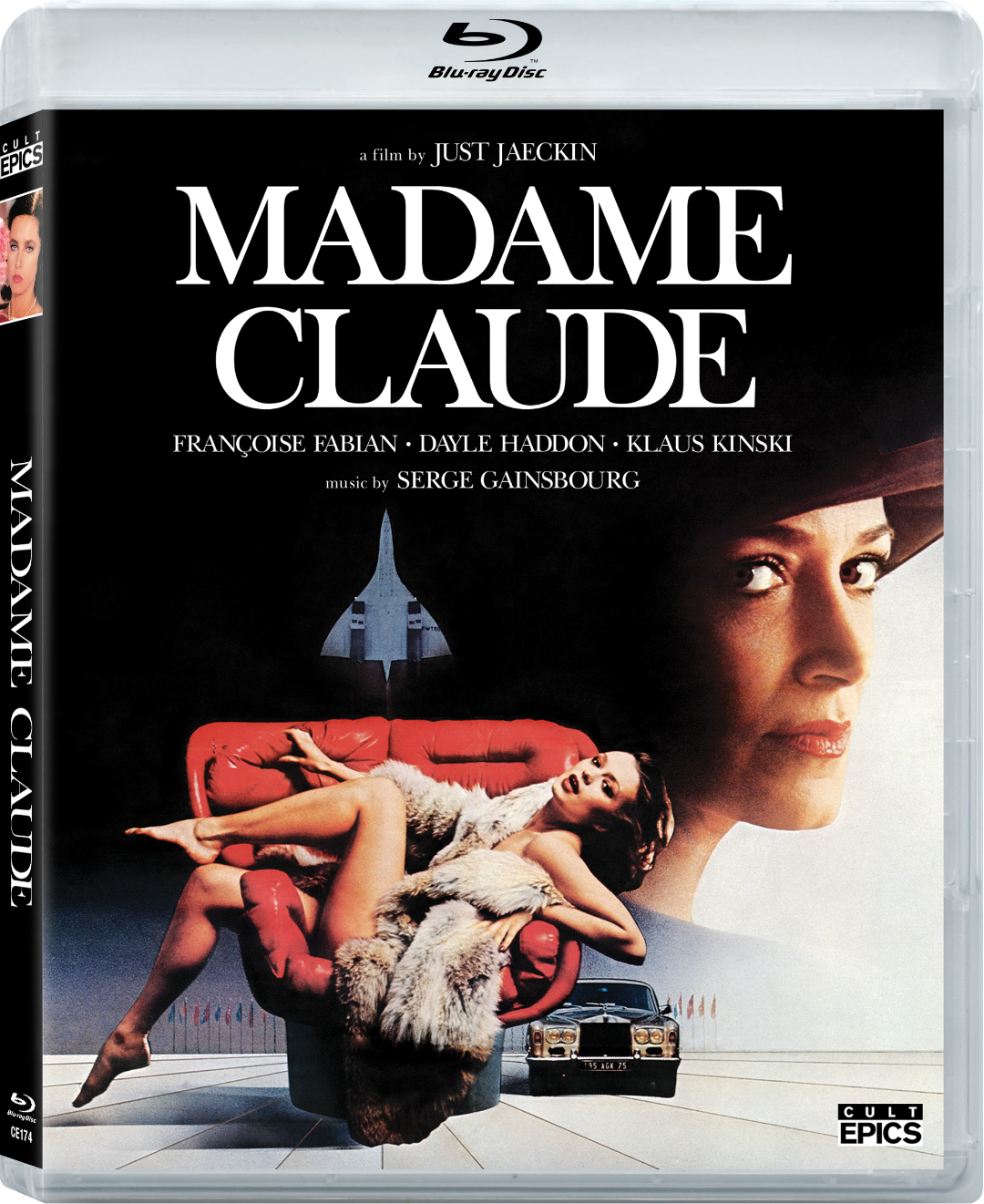
Classy Brothel Girls Bring Dirty EVIL Secrets to “Madame Claude” reviewed! (Cult Epics / Blu-ray)

A high end Paris brothel ran by the influential Madame Claude sends the most beautiful and sophistical women to wealthy and powerful dignitaries all over the world to satisfy their most sexual desires.  Her lucrative business becomes a governmental target seeking to collect back taxes on the illicit business.  However, the French government is the least of her worries when a playboy-aspiring rake and amateur photographer snaps photos of Madame Claude’s clients in compromising situations that can be ruinous to their status.  The CIA becomes involved when unscrupulous business dealings involving an American and Japanese companies connect to Madame Claude and her potentially persuasive young women after rumored photographs put the Madame Claude in the middle.  Two governments, big businesses, a jet setting brothel, wealthy socialites and a nosy photographer become involved in lies, secrets, and the potential for murder.

Part biography, part fiction, “Madame Claude,” also known as “The French Girl,” is the 1977 released erotic and political thriller based off the real Madame Claude, Fernande Grudet, as her life of prostitution management and scrutiny unfolded before the public eyes in the mid 1970’s.  Erotically and elegantly sexy with gorgeous women groomed into lust and ensnared into the lion’s den of exchanging powers, “Madame Claude” became the third film from the immensely successful erotic French director, Just Jaeckin, following 1974’s “Emmanuelle” and 1975’s “The Story of O.”  Jaeckin, pressured by his financiers to continue his success in the highly sought eroticism, returns to the randy genre, but this time with a story to his liking, one that is embroiled in the background of a bribery scandal involving aerospace company, Lockheed, at the heart of it. From a script by crime-action writer André G. Brunelin, based off the book of memories of Madame Claude by Jacques Quiorez, Jaeckin splices visual elements of each story together to form not only an arousing sexual lamination but also a cloak-and-dagger tenser of a film. Shot primarily in Paris, with minor shoots in the Bahamas and Washington, D.C., especially the scenes on the faux White House, “Madame Claude” is a production of Orphée Arts of Paris with Claire Duval on as executive producer.
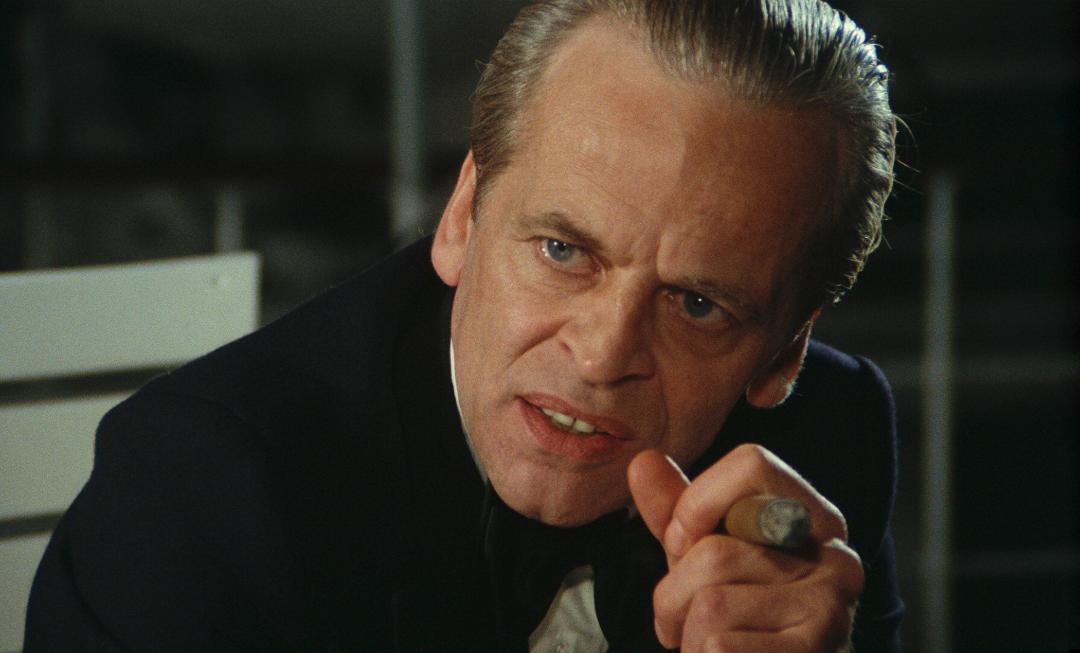
While the titular character is the obvious centerpiece, Jaeckin mingles the characters around each other in a game of espionage chess toward the endgame of checkmate. Keystone to everyone’s problems is Madame Claude, played by renowned French actress and early onscreen sex object, Françoise Fabian, who previously had roles in the paranormal pubescent horror, “Expulsion of the Devil,” a more comedy-friendly brothel film, “Holiday Hookers,” and among many other films predating 1977, but not until later in Fabian’s career did show rocket to success, playing older, more aligned, women that strongly championed feminism, such as portraying “Madame Claude” who used sex as a means to gain control and power of men, and pushed it to the brink of the era’s cinematic limits. “Horsehead’s’ Murray Head plays the photographer schmo, David Evans, making Madame Claude’s life complicated. An about town ladies man, Evans goes to each of Claude’s girls one-by-one and, for some reason or another, they invite the handsomely charming, but brutish, amateur porn photographer into their bedrooms, sleeping his way into blackmail scheme that will bring down the most powerful brothel head in all of Paris while also lining his pocket with not only money but power among the socialites who treat him like the village idiot. Head’s nails down the fast-and-loose aspect of Evan’s personality that treats his stratagem like a game he’s already won, but when the government agencies come knocking on doors, Head about faces Evan’s waggish incompetence to a frightened man looking around every corner for danger. It’s wonderful to see Head interact with Klaus Kinski (“Nosferatu the Vampire”) and Marc Michel as a ridiculed subordinate in an examination of social status as Kinski and Michel flaunt expensive taste and lavish orgies in lieu of decency, but it’s Murray Head, playing the fool with cemented proof that would put all them of into shame, as the aspirer to their life of luxuries. The beautiful Dayle Haddon (“Cyborg”), Vibeke Knudsen-Bergeron (“Spermula”), and Ylva Setterborg stun in just a handful of the very elegant, and very naked, women acting as Madame Claude’s international bound employees. Other cast of characters in “Madame Claude’s” game of lies and spies include Robert Webber (“Death Steps in the Dark”), Jean Gaven (“The Story of O”), François Perrot, André Falcon, and Maurice Renot.

Following his films “Emmanuelle” and “The Story of O,” Jaeckin’s “Madame Claude” strays into an atypical kind of formulaic eroticism downplaying the sexual excursions and discoveries for a more typical crime drama affair. Jaeckin’s directorial abilities can take you on an exotic tour around the world and onto the fleshy planes of some of the most gorgeous and provocative women to ever grace the screen. Yet, “Madame Claude” trims substantially the skin with a more precise execution to be more of an oil lubricating the machine rather than the gear that actually operates the mechanism to entail sex as a misused tool for motivation and bribery. These scenes of fleeting eroticism outright shine Just Jaeckin’s proclivities with mirrored reflections and becoming lost in the entanglement of sexually enflamed bodies and these scenes outright shine Jaeckin’s intent on delivering a corkscrew crime drama with double-dealings, wiretapping, and counterintelligence gathering as what unfolds isn’t clearly delineated between Madame Claude, David Evans, the French and U.S. Governments and the Lockheed scandal that actually becomes sidetracked at times by the infiltrated sex-training of Madame Claude business as the brothel head has to train an alternative misfit new girl and send her to the Bahamas work trip shortly after a quick one-night-stand initiation with one of the Madame’s trusted former beaus. We wholeheartedly become more intrigued and fascinated with Madame Claude’s feminist principles, recruiting subjugated women to use their sexuality to dominate and become wealthy in the process. In more than one scene, Madame Claude flaunts self-admiration in transforming star-crossed girls into young women fortune bound with their promiscuous ways. Madame Claude’s murky backstory caresses her complexities of anti-man without detail delving into the turning point catalyst that made her become who she became to be, an affluent Madame, other than a seemingly emotionally and controllably invalidating romantic experience with a long time friend and business companion, Pierre (Maurice Renot).
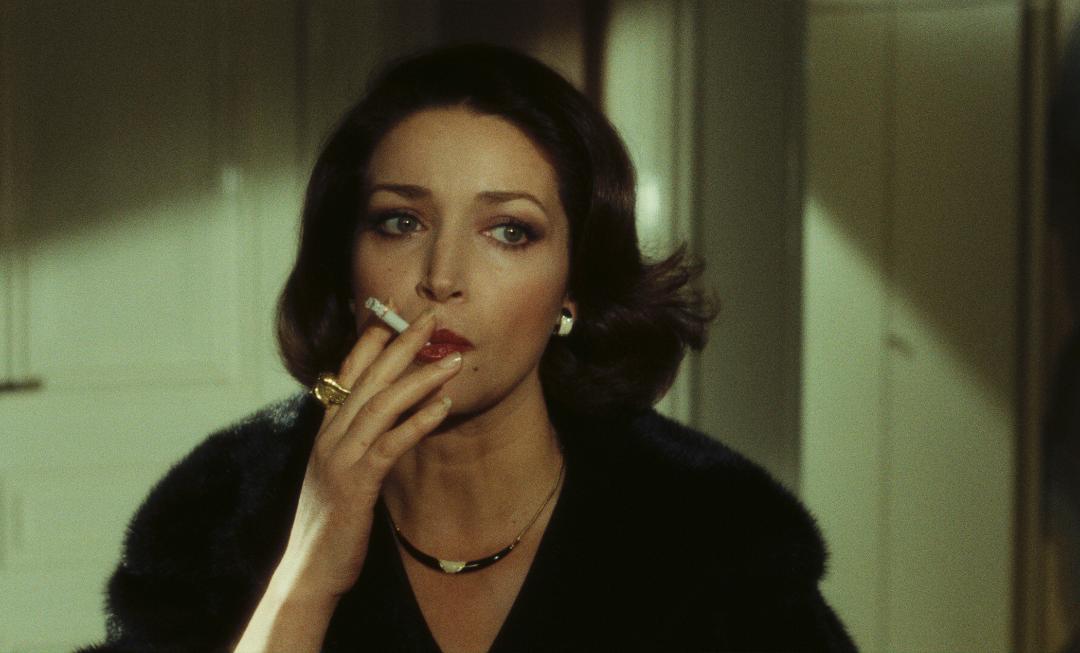
Cult Epics sustains another forgotten classic into a celebrated Blu-ray release with a new 4K HD transfer of “Madame Claude” from the original 35mm negative, supervised by the original cinematographer, Robert Fraisse. Housed on a BD50, the region free release maintains the impeccable coloring under Fraisse’s soft glow with no cropping or undue enhances that tries to put out fire with gasoline and, aside from a discolored yellow-greenish, translucent stripe, perhaps a loose film roll, during the opening scene, the image quality is clean and pleasing in it’s natural 35mm grain. The English and French language audio tracks come with three options: LPCM 2.0 mono, DTS-HD Master Audio 2.0 mono, and a Dolby Digital 2.0 Stereo. The DTS-HD Master Audio had the highest marks, slightly topping Dolby Digital stereo with a little more gusto in the pipes. Audible dialogue is clean and forefront, but the engineered dubbing laid over Murray Head and, even, the self-dubbing of Dayle Haddon can be off-putting at times when actors’ voices seem to not be sharing the same vocal space with others on screen. French composer Serge Gainsbourg’s lounge, yé-yé score tuned into that erotic soufflé of light and airy pop music that can be often dreamy with singsongy female vocals, complimenting the softer, sexier side of Jaeckin’s film while also playing into period melodies of the 1970’s. Cult Epics always has down right with resurrecting obscure erotica for not only quality sake but also to arm the hell out of the releases with bonus material. Included with “Madame Claude” is an audio commentary by Jeremy Richey (author of the upcoming book entitled Sylvia Kristel: from Emmanuelle to Chabrol), a high definition, Nico B. produced interview with director Just Jaeckin from 2020, the vintage French theatrical trailer, a promotional photo gallery, and Cult Epics previews. Not the most sensual film shot by the renowned maestro of venereal visuals, Just Jaeckin explores his versatility by acclimatizing familiarity with new horizons surrounding brothel delights with shadow games and the new 4K Blu-ray from Cult Epics is the one, and only, way to experience it all in “Madame Claude.”

Cult Epic’s “Madame Claude” on Blu-ray. Available at Amazon – click the poster!


Uncalcified Penal Glands and Designer Drugs are an EVIL Around-the-Clock Cocktail. “Synchronic” reviewed! (Blu-ray / Well Go USA Entertainment)

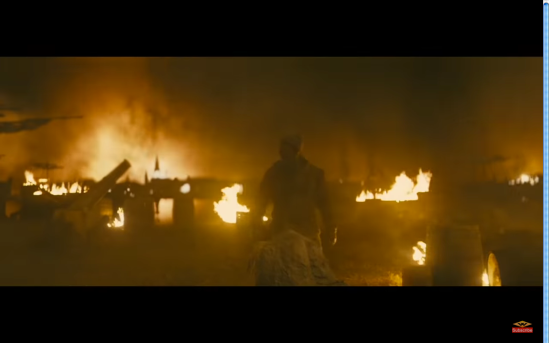
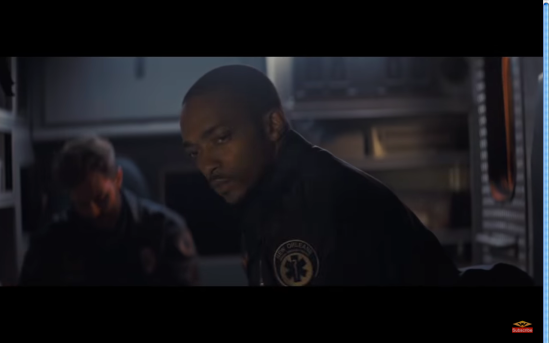
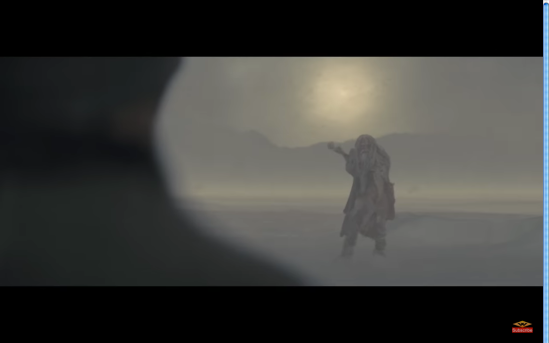
A new over-the-counter designer drug called Synchronic has been at the center of a string gruesome deaths in New Orleans.  Simultaneously, two best friend paramedics, Steve and Dennis, individually battle their own life-altering personal problems while responding to the grisly emergency calls.  With each horrific scene of Synchronic’s doing, Steve decides to take matters into his own hands by purchasing the remaining supply in all of New Orleans after Dennis’ teenage daughter mysteriously disappears after ingesting the drug.  With no leads on the missing girl’s whereabouts and after being visited by the time abstract ramblings of the chemist responsible for creating the drug, Synchronic’s harmful hallucinogenic properties have more tangible dangers than what meets the eye leaving Steve no choice but to pop one of the pills to understand where, or when, his friend’s daughter may have disappeared to.

I’ve said it once before and I’ll say it again, Aaron Moorhead and Justin Benson are visionary filmmakers with a penchant for the larger-than-life and otherworldly terrors.  From their directorial of a mind-bending death cult in “The Endless” to their producing hand in Jeremy Gardner’s lost love and creature feature, “After Midnight,” and Amy Seimetz deathly contagious, “She Dies Tomorrow,” under Rustic Films, the ambitiously talented duo returns with “Synchronic,” an anything but plain spoken, time-winding, Sci-Fi tale revolving around themes of redemptive purpose and grateful circumstances stitched by the uncanny temporal effects of artificial illicit drugs.  Lying somewhere between the cognitive warping psychedelic drug and feeling disconnected from the environment of a dissociative drug, “Synchronic” sojourns random grooves with the needle of time in a culminating enlightenment that now, the present, is a gift worth enjoying.     Along with Moorhead and Benson’s Rustic Films, Patriot Pictures, and XYZ Films bring to fruition the filmmakers’ biggest production yet. 

Like most of us during pandemic times, but not quite exactly like us who are working stressfully from home, is Anthony Mackie acting comfortably in his hometown of New Orleans, Louisiana.  The “Captain America” star temporarily hangs up Falcon’s wing harness to play lonely paramedic Steve frequented by his tragic past that has led him down a path of casual flings and an inability to attach to anyone romantically.  Opposite Mackie is Irish actor and “Fifty Shades of Grey” star Jamie Dornan as Dennis, a man kicking himself hard for marrying and starting a family too early in life that’s created a bizarre Prince and the Pauper dynamic where Steve and Dennis are envious on each other’s life.  Mackie is pitch perfect in the timing of a seemingly tailored-to-Mackie script that is funny as it is engrossing and thought-provoking.  “Synchronic” is truly the Mackie show with Dornan playing second fiddle as a compliment to Mackie’s more clandestinely troubled character who aims to upend and mend many wrongs in his life, including those of his best friend, and weaves in and out through the fabrics of time with Katie Aselton (“She Dies Tomorrow”), Ally Ioannides, Ramiz Monself, and Bill Oberst Jr (“DIS”).

Time travelling is a finnicky concept.  Lots of variables have to be ironed out in order to break the planes of chronological, set-in-stone, thinking and construe time as an infinite recording always available for repeat and playback.  Time travel is perhaps science fiction’s most powerhouse model, producing some of the most influential and staple films of the genre in our time that include “The Time Machine,” “The Terminator,” and “Back to the Future” that have carried out repeated viewings of admiration, a franchise legacy, and been the source of inspiration and remakes.  Plot holes and flaws in these films go without saying and are considered expected, but if filmmakers can get away with convincing audiences otherwise, then expect a blast from the past, present, and future.  Moorhead and Benson’s “Synchronic” has a gripping and cosmically vast story done in only one small corner of the world, the historically rich and diverse culture of New Orleans, and that isolating effect pressed upon by the distant and ominous unknown, a supremely niche and bracing style from the directors.  “Synchronic,” like time jumping films before it, has the anticipated plot holes in the mechanics of the designer drug’s side effects that are seemingly straight forward to the experimenting character only after attempting a handful of pill-popping jumps.  There are also no adverse butterfly effects stemmed from any of the Synchronic’s users.  You’ll find yourself lost in time over these questions that routinely shoot up other films to smithereens in the ole inconsistency corral thanks to Moorhead and Benson, along with the riveting and hilarious performance from Anthony Mackie, who suck you in with their relatable and humanizing story premised around Steve and Dennis’ life regrets mended by an eye-opening slight tear in the fabric of time to understand what you have now could have been a lot worse then.


“Synchronic” is stylish, Sci-Fi craftsmanship coming to you onto Blu-ray home video from Well Go USA Entertainment. The film is also available on DVD and digitally. Presented in 16:9 widescreen format, “Synchronic” barrages with a somber and slick, yet almost alien, plating over the Creole and double gallery architectures in a mesh of robust multicultural with the grimy slums, envisioned by director of photography, Aaron Moorhead, who, in part with Ariel Vida, the production designer, is able to capture era slithers native to Louisiana lineage. The Blu-ray comes with an English language DTS-HD master audio 5.1 surround sound that’s crisply makes distinct every track element defined by individual scenes. Jimmy Lavalle returns to collaborate with Moorhead and Benson once again to compose an unique compositional score that can only be described as driving nails into your soul while also being powerfully moving without being an echo out of inspiration. The release is rated R with a runtime of 101 minutes and comes with a fair amount of bonus features including commentary with Aaron Moorhead and Justin Benson, a making of featurette, a previsualization (a fancy word here for live-action storyboarding with a camera phone), a VFX breakdown (which is touched upon a lot in the making of featurette), a deleted scene, and an alternate ending that will doggone blow your mind! “Synchronic” is intense medication to repair a kindred friendship falling into disrepair in this literal mind-boggling must see it to believe it thriller. Expect more great things from Aaron Moorhead and Justin Benson to come!

Order “Synchornic” on Blu-ray by clicking the poster above!

And We All Thought Puppy Mills Were EVIL! “Breeder” reviewed! (Eureka Entertainment / Blu-ray Screener)

Avid and accomplished equestrian, Mia, yearns for a child of her own with husband Thomas as the clock on her ovaries continues ticking into her 30s, but something keeps her husband from digging himself out of a sexually frustrated trench, causing strain on their marriage.  Mia thinks his imperative financial venture, a collaboration alongside ruthless businesswoman and unorthodox scientist named Ruben, has made him sexually reclusive being wrapped up in a delicate investment of reversing the aging process that could crumble at any time, but when a beautiful and youthful neighbor goes missing after frantically showing up bloodied at her front door, Mia follows her trail to an abandoned candy factory where Ruben holds hostage young women for her violating biohacking experiments.  Becoming caged herself at the mercy of Ruben, Mia, and the rest of the women, are left to the sadistic and misogynistic whims of Ruben’s henchmen, the Pig and The Dog, in between the good doctor’s examinations. 

What happens when the powerful elite, using wealth and influence, circumvent ethical red tape in order to receive medical advancements as soon as possible?  Director Jens Dahl and screenwriter Sissel Dalsgaard Thomsen explore that radical and illegal biohacking ideology with an intense and extreme feminist view in their 2020 released, invasively graphic, horror thriller, “Breeder.”   Hailing from Denmark, not too many extreme films come out of the Nordic country, but taking a cue from their German neighbors from the South with a sexual and age dysphoria viscosity, “Breeder” takes an urban legend-esque approach to age defying that’s more Countess Bathory than anything Aveeno facial creams could ever manufacture in a story based on biohacking blended loosely with the French folklore of Bluebeard where an affluent man has an obsessive habit in murdering his wives, one after another, per director Jens Dahl.  “Breeder” might not be that black and, well, blue with a tough love message and an illicit theme of subversive genetical achievements produced by Peter Hyldahl, Amalie Lyngbo Quist, Penelope Bjerregaard and Maria Moller Christoffersen of Beo Starling (Beofilm) production company.

Leading the pack of caged, exploitered women in this human puppy mill comes with a hefty price of compromising positions and uncomfortable scenarios. The 32-yeard old actress, Sara Hjort Ditlevsen, plays an age appropriate Mia whose coming down to her last straw when coming to her husband’s inability to commit to their teetering marriage, but Mia comes with a twist in that she never gives up, achieving her end goal even if that means strapping on her riding boots and stirrups, dropping her panties, and digging those spurs into her hind parts while masturbating just to release the sexual tension. Ditlevsen gives a gradual fuming performance gaslit by the abusing sustained by the sadistic misogynist, monikered The Dog (Morten Hoist) who, in appearances, has the visual looks of a greasy Bill Oberst Jr. Jackson Pollock’d from a Mads Mikkelsen portrait and has the temper to match. The Dog and his partner, The Pig, played by Jens Anderson in an unbalanced contrast to the The Dog’s screen time, are harnessed and weaponized by a mad scientist role that was originally intended for a man before screenwriter, Sissel Dalsgaard Thomsen, had an epiphany that her feminist script was playing right into that systemic, male dominant, structure. Instead, the role was flipped, in gender only, and performed by “Wild Witch’s” Signe Eghom Olsen. Olsen gives a chillingly cold performance in Ruben’s contradictory indifference for life by snatching youth and beauty from young women, those who spite Ruben just by the mere fact of their innate good genes and healthy reproductive system, and selling the epitome of their stolen essence to the highest, or oldest, bidder in an age-reserval scheme. Ruben does have another motive with self-preservation as her rare genetic makeup makes finding a genome match nearly impossible, but she slays away a lot of women and a lot of infants in order to unearth her type. Anders Heinrichsen, Eeva Putro, Elvira Friis, Eja Rhea Mathea Due, Oksana Kniazeva, and Sara Wilgaard Sinkjær round out of the cast.

One of the “Breeder’s” core themes is the power one holds over another, but absolute control is not a singular reoccurring motif as power ebbs and flows from one character to another in a rolodex of examples that include Thomas’s financial control of Ruben’s rebellious operational decisions, The Dog’s inhumane dominance over captive women he loathes, and, on the receiving end, an enslaved woman’s embracing of a submissive, masochistic posture to The Dog’s punishing sadism, but control can be fleeting as seen in many movies yet proved to be in an abundance in Dahl’s “Breeder” with plot points that overturn sovereign power through a pendulum sway of brute, bloody force and hostage exploitation ugliness.  One bizarre recurrent through the cat and mouse power struggles is urination.  Yup, bodily fluids make an appearance, but go beyond the one-time shock value affect with three, count them three, acts of peeing in which two scenes reflect dominance as the powerful relieve themselves all over the, at that time, docile weak as a dog would when marking his claimed spot in the yard.  “Breeder” continues the varied questionable character tactics when primary plot turning points fail to impress plausible reactionary needs; an example would include when Ruben uses Thomas’ affection for Mia to control his unpredictable behavior, but the obsessed mad scientist, not to be bested by losing her financial support, lets Thomas run freely around her private abandoned factory of horrors which allows Thomas to become a monkey wrench in her biohacking laboratorial machine.  The same easy street escapes run rampant throughout and is even unintentionally spoofed when one women is able to escape not once but twice The Dog and The Pig’s rigorous grasps, taking “Breeder’s” serious new wave extreme a level down to a sickly stage of story blunders with rough draft written characters and scuffle.


If golden showers are not the extreme go-to for brutal survival horror, “Breeder” offers a variety of acrid amenities from stapling lips together to a trash can full of dead, dismembered babies and is homeward bound in the UK on Blu-ray from Eureka Entertainment under the company’s Montage Pictures banner.  Available February 15th, 2021, the first 2,000 prints of the Blu-ray will come with a limited edition O-card slipcase.  If you’re not a physical media aficionado (…loser.  J/K), “Breeder” will also be available digitally and will be presented in the film’s original aspect ratio of 2.35:1.  The Danish language DTS-HD MA 5.1 audio mix will be accompanied with optional English subtitles.  Since this review is based off a Blu-ray screener, I will not go into depth with the audio and visual conditions, but the cinematography work is from the sophomore feature of Nicolai Lok.  Behind the camera, Lok’s settles on a drab color schemes of mostly black and grey of a sterile environment, with the Lindberg house or inside Ruben’s medical popup tent, along with hard yellows, like mustard, to accentuate the rust and grime in closeups to medium shots within the tight confines of the abandoned candy factory turned into an unsweet meat market, but uses a fisheye lens on the regular to the effect I couldn’t pinpoint other than to fishbowl dysphoria an already narrow area. The end result made scenes unnecessarily warped for the viewers already stomaching a large amount of women battering. The special features included an October 2020 answer only interview with director Jens Dahl and screenwriter Sissel Dalsgaard Thomsen discussing in depth the reason they wanted to make this film. “Breeder” opens with Mia prancing her horse Karat and she inner dialogues how they move in tandem, but she questions the pecking order of master and prisoner between them knowing for certain she’s Karat’s jailor and that translates perfectly into her own subhuman treatment as a branded and caged animal for the pleasure of others; however, this type of depth thinking begins to rotate the hamster wheel but, as soon as momentum picks up on those tiny legs of collusion and betrayal, a gradual limp slows that hamster’s endurance with not enough plot developmental pallets to digest in order to keep up the effort.

EVIL is a Giant Cockroach Trying To Bite Your Head Off…Man! “Love and Monsters” reviewed! (Paramount / Blu-ray Review)

For seven years, monsters have ravaged the human race to nearly extinction after nuclear nations destroyed an planet killing meteor in space, but the radioactive debris that fall back to Earth mutated the smallest creatures into monstrous killing machines.  Humans have been divided into colonies forced into underground bunkers.  Joel Dawson has been barely surviving with bunk mates who see him as a liability in his inability to act when faced with a monster situation and has been unable to connect, romantically, with another person.  When Joel discovers his high school sweetheart is 85 miles away in another colony, Joel decides to leave the bunker safe haven and journey across the dangerous surface for seven days for the sole purpose of love.  Forced to face his fears and adapt to survive a perilous land full of giant centipedes, hungry massive toads, and a crusty crab the size of a two story building, Joel must rely on his instincts and the help of rule-following topside survivors to see again the girl he thought he lost.

Add “Love and Monsters,” a monstrously romantic creature feature, right up there with “Warm Bodies” as this decade’s version of horror and love dancing the tangled tango in this kill or be eaten comedy-love pursuit directed by Michael Matthews.  The 2020 release is Matthews’ sophomore directorial from a script co-written between Brian Duffield and Matthew Robinson off a Duffield’s original “Monster Problems” script.  Duffield is best known for penning last year’s water leviathan success, “Underwater,” starring Kristen Stewart, with “Monster Trucks’” Robinson coming aboard to finesse the grand adventure mechanism that makes “Love and Monsters” a singular trek through heart-thumping terrorland.  The Canadian production filmed in the amalgam terrain of Australia is produced by Dan Cohen and Shawn Levy, who both know a thing or two about doomsday premises in producing Netflix’s “Stranger Things” and the Denis Villeneuve sleeper sci-fi first contact film, “Arrival,” under 21 Laps Entertainment in association with Entertainment One and Paramount Pictures distribution in North America.

A singular journey of bushwhacking and survival falls upon the shoulders of a young man who hasn’t yet transitioned to be an adult. From the time he was 16 years old, Joel Dawson knew love, but didn’t know how to fend for himself when life gets tough….really tough, like, full of carnivorous creatures in an end of humanity and heading to extinction tough. Yet, as adults, we thrive on challenges as our brains have learned to adapt with each new level of adversity and obstacle. For Joel, being stuck in the past, reliving a swift romance, has suspended him in nowheresville as he struggles to find love and age-appropriate interaction with of his kind peers. Dylan O’Brian captures Joel’s inability to see the clearly world around him because, literally, he hasn’t seen or experienced the world for about a third of his young life. Portrayed early on in young adult fiction with his feet firm in the heartthrob remake of “Teen Wolf” television series and coming out of adapted for film “The Maze Runner” trilogy, O’Brien discovers that being feeble and lonely can be just as powerful as being a werewolf or a dystopian survivalist; instead, O’Brien up-plays the quirky, quick-witted, outcast with delusions about his solitary and unpopularity as he finds fortitude by trekking seven days through a monster-riddled hell to rekindle his relationship with Amiee, the last person he personally felt a connection to who hasn’t been squished under the foot of a Granddaddy Long Leg. “The Head Hunter” and “Underwater” star, Jessica Henwick, retunes her vocal chords to present her best American English accent in order to be Joel’s live-or-die love interest, if she hasn’t changed in the last seven horrible years. Yet, before Joel and Amiee reunite in what’s a finger-crossable moment of love again at first sight, the meek Joel Dawson needs to go through, what half the monsters outside have already gone through, is a metamorphosis of sorts to be bigger, tougher, and more self-reliant. This is where MCU alums, Michael Rooker (“Guardians of the Galaxy”) and Ariana Greenblatt (“Avengers: Infinity War”) step in. As Clyde, Rooker’s the Bear Grylls of monster land, knowing all the tips and tricks of topside survival all the while sporting a Richard Simmons perm, whereas Greenblatt, as the orphaned Minnow traveling in companion with Clyde, is just rugged despite her pintsize. “Love and Monsters” really focuses on these four individuals that mainly perpetuate only one of them, Joel, to be the best survivor he can be at the bottom of the food chain, but other minor characters do arise and nudge brash action that requires the solidity of an unbroken community chain. Dan Ewing (“Occupation”), Ellen Hollman (“Asylum”), Pacharo Mzembe, Tre Hale, Senie Priti, Amalie Golden, and “The Road Warrior’s” Bruce Spence makes a cameo appearance as Old Pete.

What I find interesting about “Love and Monsters,” that’s more prevalent in most post-apocalypse themed plots, is the lack of dog-eat-dog between humans.  While the story mainly skirts around the concept with a running gag that the real reason Joel left his colony is because he’s a no-good food stealer, Joel’s interactions with his and Amiee’s colonies, plus in his travels with Clyde and Minnow, showed no sign of deception or greed, a rare and humbling dynamic when starved, weary, and scared people are backed against a wall and cutthroat advantages are at arm’s length; instead, a real sense of community and compassion is committed that brings a sense of hope, not for just Joel in a world conquered by monsters, but for also audiences with pessimistic views about the volatility of man.  Even with all the fears of A.I hostile takeover, tender moments of man face-to-face with machine seals that threat into inexistence as Joel comes across a damaged MAV1S unit, an anatomical automaton built for servicing humanity, borders that plane of complex human emotions with all the right things to say and able to read what Joel needs to here to keep him moving in a sacrificial scene of the androids’ last hurrah before complete battery drain.  “Love and Monsters” doesn’t do a complete withdrawal from the hypodermic needle of inhuman poison, but the concept is certainly not the emphasis.  With a title like “Love and Monsters,” you want the monsters to be, at the very least, half of the story, as promised, and we’re treated to a slew of different monsters with different personalities and with different innate weapons. Not all the monsters are blood thirsty. Some are gentle, but judged for their immense size and scary physical attributes and Matthews points this important theme out in a trope about-face, signifying that just because this is a monster movie, doesn’t mean all monsters have been unjustly deemed vicious and terrorizing. In a way, these monsters parallel in being judged just as inaccurately as Joel is by his survivalist peers without so much as the benefit of the doubt and only when a trust evolves from out of being scared is when judgements wash away with sheltered conventional thinking. Diminutive inside a fantasyland of behemoth horrors, “Love and Monsters” has a tremendous heart with an interpersonal message about understanding connections with people inside the mixed-messaged confines of coming into adulthood.

If we don’t nuke ourselves out of existence first, the lifeforms underneath the soles of our shoes will gladly seize dominance for an easy, human-sized, snack in Michael Matthews’ “Love and Monsters” now released on Blu-ray plus digital, as well as 4K Ultra HD and DVD, courtesy of Paramount Pictures. The PG-13 action-adventure creature feature is presented in high definition, 1080p, widescreen 2.35:1 aspect ratio. Australia is already a futuristic land of gorgeous overgrowth and untouched wonder, Lachlan Milne trades in the practical (zombie horde) aesthetics of “Little Monsters” to a transcending larger types of monsters to scale an open world environment to eventually be combined with post-production visual effects of Kaiju-sized myriapods, crustaceans, and amphibians to just name a few. Award winning VFX company, The Mill, has seamless and organic creations that blend truth and deception with the scariest of ease as creatures explode out of the ground or lumber above head with no angle left uncovered or underdeveloped in giving audiences unmistakable visuals of our nightmares. The English language 7.1 DTS-HD master audio mix is the epitome of well balanced with clear dialogue, a complimentary soundtrack, and a long range and diverse depth of sound engineered monsters being monsters from low, sonorous gutturals to the high cracks and pops of creature movements. Inside a cardboard slipcover, The Paramount Pictures Blu-ray comes with a digital movie code to add to your digital movie collection to watch anywhere, but the release also comes with deleted scenes, a “Bottom of the Food Chain” featurette feature snippet interviews with the cast and crew, and “It’s a Monster World: Creating a Post-Apocalyptic Landscape” that dives into the natural preserve combined with production design to create the apocalypse illusion. Adventurously invigorating and outside the norm of telling story patterns, “Love and Monsters” romanticizes the post-apocalypse with a self love theme in a hope-inspiring and fun creature-crammed monster movie.

Blu-ray of “Love and Monsters.” Click poster to purchase at Amazon.com!

Money is the Root of All EVIL! “Beasts Clawing at Straws” reviewed! (Blu-ray / Artsploitation Films)

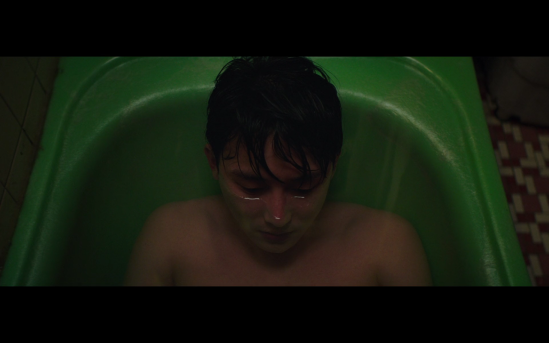
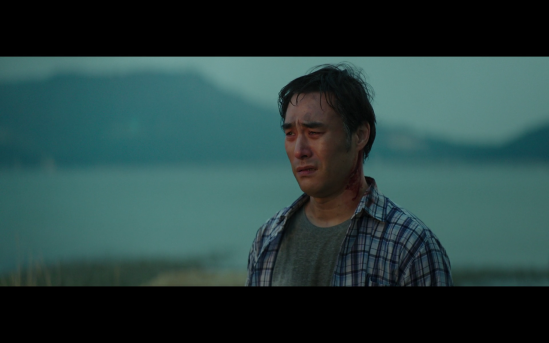
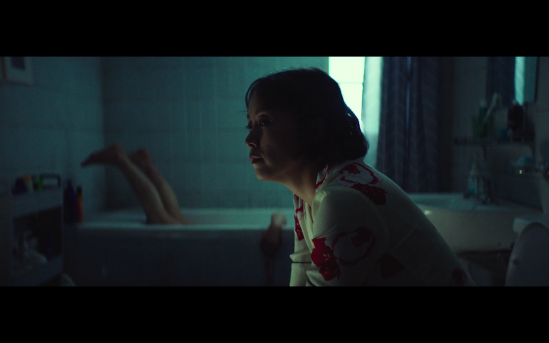
A middle-aged man working a meager job at a gentleman’s bathhouse finds a Louis Vuitton bag full of money when routinely checking the storage lockers at closing.  Unsure about what to do with the money, he stows the bag away in the backroom and continues a moral, yet pauper’s, life while dealing with financial and family troubles at home.  Meanwhile, a border customs agent finds himself in severe debt with an unstable loan shark after his girlfriend skates and disappears with a large borrowed sum.  With a week to come up with the money, plus interest, he calls upon his distant cousin to assist in scamming a scammer who illegally came into some money, but things go awry when an overly friendly and clingy cop begins to snoop around.  Lastly, a prostitute grinds tirelessly to work off a large debt her abusive husband continues to blame her for with night after night beatings.  She jumps into bed with a young, handsome foreigner and her eager to support female boss to off her husband and collect the insurance money.  Yet, these troubled souls find that sticking to their convictions doesn’t always bode well as the unexpected happens in a blink of an eye.

The Asian film machine has mastered the art of the crime thriller from a proven track record that began with Akira Kurosawa films, if not even before that, and has chronically grown stronger, and sometimes more peculiar, with choice stylistic elements, suggestive themes, and extreme violence that has garnered, to much disdain, Westerner attention over the last 20 years with films like Park Chan-wook’s “Oldboy” and Andrew Lau and Alan Mak’s “Internal Affairs” being Americanized with a Hollywood remake.  With that being said in an upward trend of remakes spilling over the edge, there would be no eye-brow raising surprise if the introductory film, the tri-narrative crime drama idiomatically titled “Beasts Clawing at Straws,” from South Korean filmmaker, Kim Yong-hoon, will one day grace the English silver screens in a diluted variation of a Brad Pitt featured carbon copy.  Based of the Keisuke Sone neo-noir novel of the same name, Kim Yong-hoon’s pulpy impression of against-the-wall misdeeds is dog-eat-dog dark comedy gold.  “Beasts Clawing at Straws” is produced by Jang Won-seok (“The Gangster, The Cop, and The Devil”) and is a production of Megabox Plus M films (“Zombie for Sale”) and B.A. Entertainment.

The three prong, greed-catapulting narrative converge characters separately at first and then string them linearly together when the picture becomes clearly what exactly each one of them is chasing, but every story is magnetized to a single focal point, a person under immense pressure, stress, and the malice forces that thirst for their humility, kinetically embarking on the bad choice choo-choo steaming toward the station of vary bad things.  Bae Seong-woo stars as a downtrodden Joong-man, a middle-aged man stuck in the rut of poverty with a geriatric, browbeating mother, a fatigued wife, and busting his rump in a dead end job.  Seong-woo combats himself as a man tight rope walking the thin line of ethic principles when opportunity knocks at his door, but his ill-timed strike to grab life by the balls blows up in his face in a farce of instant karma leaves him less than what he had before.  Then there’s a Tae-young, a comfortably Governmental positioned customs agent facing a different kind of hardship when his ex-girlfriend, Yeon-hee, disappears with a borrowed lump sum of a gangster’s money and he’s left on the fence.  “Illang:  The Wolf Brigade’s” Jung Woo-sung plays into the desperate stench of the superstitious and ambitious customs agent.  Slightly cradling the severity of the situation, Jung amply positions Tae-young’s dilemma that resembles spearfishing in a barrel and he’s the fish.  The last story follows the abused wife Mi-ran, played reservedly by Shin Hyun-bin as a desperate woman looking to bank her soon-to-be dead’s insurance money.  When Mi-ran is abetted by motive-dueling pair of instigators, she finds that paying her debt can be more severe than ever imagined.  While sitting back and basking in the stir-craziness of the leads’ turmoiled chaos, the best characters of the film are the supporting roles of Kim Jun-han as an intestine devouring, fanny-pack wearing henchman, Park Ji-hwan as Tae-young’s bumbling, but begrudgingly loyal distant cousin, and Jung Man-sik as a breezy mobster with a cherry, yet malevolent disposition.  Youn Yuh-jung, Jin Kyung, Jung Ga-ram, Bae Jin-wong, and Heo Dong-won round out the cast.

Non-linear yet interconnected in story, “Beasts Clawing at Straws” hawks a Tarantino layered thriller with colorful deplorables from all walks of life and luxuries.  Kim Yong-hoon nourishes the unbridled, free-for-all nature of diving into the murky, shark-infested waters uncaged and tethered with cuts of raw steaks dangling from the pelvis area in this two wrongs don’t equal a right account of mistrusting desperation and misguided optimism.  Kim’s style echoes the likes of the popular “Pulp Fiction” filmmaker along the lines of shooting techniques and a frank view of violence to tell the frantic clutching of hanging onto what is left of tattered lives and borrowed time while disavowing pure, unadulterated nihilism by at least giving characters a grain of hope.  With any non-linear, multiple moving part films, individual aspects tend to become lost in order for pacing and “Beasts Clawing at Straws” doesn’t fall into the excluded category as factors that play into the main quandary are left hanging, such as in Yeon-hee’s circumstantial results of jetting off with a mobster’s money as the assumption is there, but nothing is fully concrete in her storyline.  The same indiscernible spousal battery stemmed from Mi-ran and her husband’s severe debt that leads to transgressions beyond marital misuse isn’t privy to the audience of how circumstances come about surrounding their predicament and we’re forced to speculate and shoulder an explanation that doesn’t quite feel justified.  However, neither of the slapdash developments hinder “Beast Clawing for Straws’” steamrolling posture to get that desirable bag full of problem-solving, filthy lucre. 

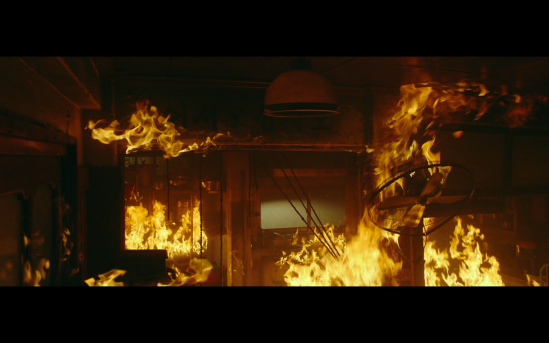
Artsploitation Films delivers a stylish and avaricious South Korea crime drama with “Beasts Clawing for Straws” into the U.S. Blu-ray home video market. The not rated BD25, high-definition 1080p release is presented in a widescreen, 2.39:1 aspect ratio, and nears the epitome of flawless. Aside from the picture slightly flickering, more noticeably on solid colored backdrops, the hue palette is absolutely gorgeous with the neon lights of South Korean cities, the breathtaking silhouettes of the natural mountains adjacent to a lifelessly still lake, and the variety of settings from an airy fish house to a modern, symmetrically designed bordello denote a keen eye by Kim Tao-sung. The South Korean language 5.1 DTS-HD Master Audio surround sound couldn’t be any better with a crystal clear aptitude for strong dialogue balanced in front of a robust soundtrack accompanied by deep range of ambience from fire crackling to the faint hint of rain drops audible from inside a restaurant, solidifying the depth package as well. English subtitles are available along with an English dub track in a dual channel Dolby stereo. What’s lacking with this release is bonus material as there is virtually nothing besides four Artsploitation trailers and the film’s own theatrical trailer. Parlous and deadpan funny, “Beasts Clawing at Straws” amazes as Kim Yong-hoon’s first time effort with the technical grace and the story construction that has been a paradigm for only a handful of notable directors able to execute an impeccable result.

Own “Beasts Clawing at Straws” on Blu-ray! Click the poster to go to Amazon.com