Second Sight Delivers the EVIL Goods Yet Again! “You’re Next” reviewed! (Second Sight Films / Blu-ray)

Limited Edition and Standard Edition Sets of “You’re Next” Available At Amazon!

Celebrating 35 years of marriage, Paul and Aubrey Davison invite their four children – Drake, Crispian, Aimee, and Felix – to their rural weekend manor along with their respective spouses for the occasion.  Tensions amongst strained family ties begin to boil over as siblings quarrel before they even share the first meal all together.  Yet, that’s the least of the family’s problems when animal masked intruders shoot crossbow arrows through the windows and are found hiding, waiting under the bed with machetes.  The surprising attack sends a surge of shock through them but not Crispian’s girlfriend Erin who intends on fighting back and defending herself with survival knowhow.  As the night carries on, the family is being brutally executed one-by-one in what is seemingly random acts of violence.  Unsure how many assailants are outside and the cell service not working, Erin and the rest of survivors attempt to survive the night until help arrives. 

Before being the directorial face behind the recent string of mega blockbusters, literally, in the “Godzilla vs. Kong” films, Adam Wingard had more humbling beginnings as an original horror storyteller.  From working with “Texas Chainsaw Massacre: Part II’s” Bill Moseley as a demented door-to-door salesman in “Home Sick,” to interlacing themes of drug addiction and haunting visions in “Pop Skull,” to thrill with an abusive pursuit of an escaped convict tracking down his ex-girlfriend in “A Horrible Way to Die,” Adam Wingard had a knack for extracting small time horror in a big way.  Although all three of those examples saw success at some level, the glass ceiling never really broke until a juncture point just after the turn of the decade in 2010 with “You’re Next.”  Screenwriter Simon Barret, who also before writing “Godzilla x Kong:  The New Empire,” wrote the U.S. home invasion and slasheresque horror-comedy as the fourth film under Wingard’s direction, following “A Horrible Way to Die,” “Autoerotic,” and “What Fun We Are Having;” however, Barrett has found moderate success of his own with “Frankenfish” and, one of my personal favorites, “Dead Birds,” with an early performance from Michael Shannon.  Barrett, alongside Jess Wu and Keith Calder of Snoot Entertainment, Chris Harding, Kim Sherman, and Brock Williams produce the Snoot Entertainment in association with HanWay Films production.
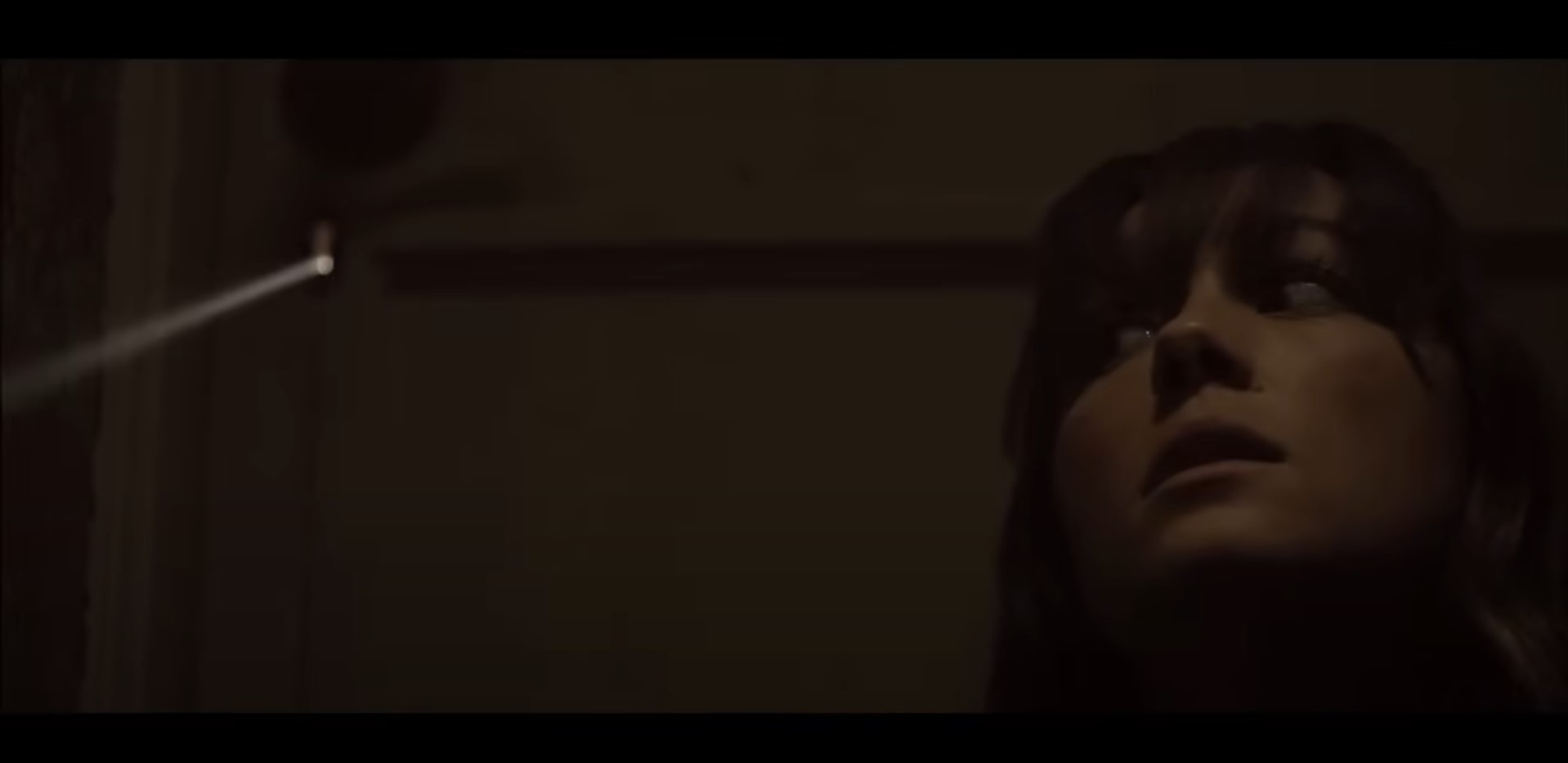
“You’re Next” reunites a cast of Wingard regulars, interchanged with good friend and fellow horror filmmaker Ti West (“The House of the Devil”) that has all but nearly faded the higher the filmmaker climbs the Hollywood latter.  The entourage includes “Hatchet II” and “The House of the Devil’s” A.J. Bowen as the pacifist academic Crispian, “Alien:  Covenant” and “Pet Semetary’s” Amy Seimetz as Crispian’s starving filmic sister Aimie, “The Sacrament” and Autoerotic’s” Joe Swanberg as the pompous older brother Drake, and “Pop Skull,” and “V/H/S’s” Lane Hughes as the Fox masked killer all of whom were in Wingard’s “A Horrible Way to Die” a year earlier.  Plus “Home Sick” and “Pop Skull’s” L.C. Holt dons a killer’s mask and director and friend Ti West of the highly popular X film series also has a brief role that plays into their whole dark nature of storytelling.  The inner circle of friends and usual casting smooths out to fills voids by adding a couple of marketable and genre renowned names to add a solidifying agent to “You’re Next’s” magnetism with “Habit” and “The Last Winter” actor-director Larry Fessenden as well as un-retiring one of the genre’s more respected and timeless scream queens and final girls in Barbara Crampton (“Re-Animator,” “Frome Beyond”) to be playing matriarch and host of the family being invaded upon.  Though marking her return back to horror, Crampton relinquishes her reins on the final girl trope, swallows her stardom by moving aside, and letting have that particular subcategory role to Australian actress Sharni Vinson (“Bait”) in one of her first handful of roles in a feature film.  Vinson will send shockwaves through audiences on her quick turn of character from a lovely, liberal oblique woman to a complete cutthroat badass that not only turns the tables on the attackers but also shepherds in a new fear or thrill – a worriment encompasses over the sociopathic bad guys.  “You’re Next” puts up a high body count with the rest of the cast body including the late Nicholas Tucci (“Choose”), Wendy Glenn (“11-11-11”), Margaret Laney (“Absence”), Rob Moran (“There’s Something About Mary”), and Kate Lyn Sheil (“She Dies Tomorrow”).

Before the film’s release in 2011, the home invasion genre saw an explosion of examples from class that wasn’t exceeding in quantity but rather rocketing skyward in quality.  The French had a good handle on concept with a bleak, ultra-violent coating that completely engrossed viewers as well as rocked their core with how nihilistic and cynical characters could become without a heroic, saves-the-day, or survival outcome, such as is the cast with 2007’s “Inside” and 2008’s “Martyrs.”  The American industry also attempts to capitalize on the niche market with “Funny Games” released in 2007 but that too is based off a European script from Austrian filmmaker Michael Haneke’s original film a decade earlier of the same title.  In all fairness, Haneke also helmed the remake starring Tim Roth and Naomi Watts.  Yet, American audiences adored their own success with Bryan Bertino’s “The Strangers” in 2008 and a remake of Wes Craven’s “The Last House on the Left” by director Dennis Iliadis in 2009 that conveyed that sort of callous violence and anarchial analogies.   Then in steps Adam Wingard and Simon Barrett’s entry of “You’re Next” of shared sadism and pessimism but sprinkles it gallows humor through the dialogue exchanges and impressions of character attitudes to make a hybrid that pulls inspiration from the likes of “Funny Games,” “The Strangers,” and “The Last House on the Left” and still finding individuality amongst the like without suffering from an identity crisis.   Protagonists and antagonists swerve through an interchangeable junction, flipping the script just when you think you’ve plotted the course of the storyline, and yet, a found sense of cold cock shock lands squarely when all is said and done and bits and pieces of the royale rumble characters are strewn about the battled ground mansion. 

“You’re Next” arrives at the UK label and friend to physical media Second Sight Films.  Second Sight’s single disc Blu-ray comes AVC encoded with 1080p hi-def resolution and dual layered with a BD50, projecting a consistent 24FPS.  There’s not much to terribly note about Second Sight’s quality release of Adam Wingard’s over 20-year-old, 4K shot film as digital stock hasn’t necessarily changed significantly for the better over the last two decades.  Presented in a widescreen 2.39: aspect ratio, Wingard and cinematographer Andrew Droz Palermo (“The Green Knight”) choose a warmer color pallet of mustard yellows and burgundies, accentuated by enveloping three-point lighting and the tweed dinner jackets and turtlenecks, to give it a retro 70s or 80s veneer in a modern time.  No banding issues or digital compression anomalies with the ample disc space.  Range is fine but limited to mostly the aforementioned color scheme.  Depth is almost limited in what is mostly a series of medium to closeup shots in an interior setting, but we’re treated to a mixed melee of close-up violence that sees splatter scatter the dark syrupy blood.  A DTS-HD 5.1 Master Audio mix layers a lossless fidelity consistency.  Dialogue has no issues with obstructions, favoring a clean and clear presentation of exchanges without losing inflection, tone, and vitality during the chaos, calmer moments, and tensioned exchanges.  A fugitive depth doesn’t sustain any kind of depth; again, with the close quarters action, we tend to forget Larry Fessenden’s blaring music left on repeat and noted to have at least three layers of depth from within the stereo’s room, between rooms, and outside the house.  Organic and inorganic ambience and action have seamlessly admixed without a sense of artificial notice.   A compilation of artist soundtrack isn’t invasive or intrusive with the assailants and that kind of dampens the effect but it’s an overall workable mix from Mads Heldtberg, Jasper Justice Lee, Kyle McKinnon, and Wingard himself.  Optional English subtitles are available.  Second Sight Films reliability to earn the right to re-release another modern production stands through again another special features laden release that includes a brand-new audio commentary with director Adam Wingard and writer Simon Barrett as well as archive audio commentary with Wingard, Barrett, and actresses Sharni Vinson and Barbara Crampton.   Another new feature is an approx. hour long interview Children of the 80s with Wingard and Barrett recollecting and going through the details for the genesis of the story and film.  Other new interviews include producers Keith and Jess Wu Calder the Most of Us, actor AJ Bowen Script is a Blueprint, actor Joe Swanberg Down in the Basement, actor Amy Seimetz Be Funny or Die, and production designer Tom Hammock Falling into Place.  Animated storyboards, an archival making of What’s Next?, and a video essay from Tim Coleman Slashers Don’t Die fill out the immensely packed second layer.  House in the standard Second Sight green Blu-ray Amaray for their standard lot, the front cover is gruesomely beautiful with a blood illustration of Sarni Vinson in character that’s also very telling of the film’s tone.  Like all their standard releases, this one comes with no inserts inside or other tangible bonus content.  The disc is pressed with another illustration of one of the masked killers.  The UK certified 18 release contains strong bloody violence, as well as language and brief nudity for those of us Americans wondering at home, in a 95-minute duration to which is encoded with a region B playback. 

Last Rites:  “You’re Next” denounces the helpless and the defensive character topes aimed to be slaughter like cattle in an abattoir.  Instead, this final girl and ferocious slasher and home invasion thriller goes against the grain and has gruesomely fun with its kills and thrills.   

Limited Edition and Standard Edition Sets of “You’re Next” Available At Amazon!

The Doctor’s Out. EVIL Will Make this “House Call!” reviewed! (Wild Eye Releasing / DVD)

“House Call” on DVD home video and Available to Purchase at Amazon!  Click the Cover Art to Buy.

Eager to prove to her parents she is responsible and old enough to undertake the babysitting duties of her little brother all by herself, 16-year-old Miriam is reluctant to phone her parents when little brother Vince becomes highly feverish in fear that they will take away future responsibility opportunities.  Instead, Miriam makes a late-night call to the family’s primary physician and begs for a discreet house call.  Hours go by and Miriam becomes increasingly concerned about Vince, but when the doctor is found dead on her doorstep, her brother’s welfare acutely alters from his feverish illness to the maniacs outside looking to score big on the family home.  The night turns into a fight for survival as the home alone siblings must outwit two murderous thieves who have their lustful eye on the teenage Miriam as well. 

Based off the novella of the same title from horror writer Ty Schwamberger, “House Call” is the first Schwarmberger piece to be adapted and completed into a full-length feature film.  The 2013 production’s script is adapted by Shannon Casto and while the credits list accompanying partner Michelle Henderson as the director, IMDB lists Casto as co-director the film. Both have worked alongside each other between 2005-2013 under their House, Texas-based independent film production company, Little Oak Film Group, which has churned out modest range of low-budget horror with “Sinner,” “Gut Instincts,” and “Protégé” to note as a select few.  Their joined by Parrish Randall as the third wheel in the director’s chair, – again, a credit that IMDB list but the film doesn’t but wouldn’t surprise me knowing a little more history between the trio.  “The Quick and the Undead”-starring and “Slaughter House”-directing Randall essentially helped segue Casto and Henderson into their own production company having the aspiring filmmaking duo under his wing in various crew and cast capacities as the owner of PRP Motion Pictures.  The Little Oak Film Group cofounders serve as executive producers on this self-made, little-known home invasion, survival thriller. 

Parrish Randall not only serves as co-director and provides the foundational support Casto and Henderson used to jumpstart their careers as filmmakers, but the platinum blond actor with dark facial hair from Groesbeck, Texas is also one of the lead principal characters, playing the nefariously nurtured John who has ambitions to live up to his mentor’s unfettered insanity and depravity.  Randall evokes his lite version of Bill Mosely’s Otis Driftwood without the full support of the deranged family.  There are inarguably many issues with how John is portrayed with an overflowing amount of dialogue despite Randall stealing the story with a magnetic presence on screen.  John’s expositional to a fault and is continuously repeating the same dialogue over-and-over, such as pointing out and elucidating again-and-again that Rock is his mentor.  Rock, played by Bill Dubois (“His Will Be Done”), features in a flashback of a cowardly John aiding and abetting Rock in the murder-robbery of a young couple and Rock is supposedly grooming pupil the way of psychopathy, but there really is not clear instruction from Rock other than provoke gun-drawn offices while your partner flees for his feared life. Now, after that character defining moment, John has become Rock incarnate and has also taken a student under his wing to invade, rob, rape, and murder in the family home of Miriam, played by Rachel Paul in her debut lead role, and Vince, played by Vincent Galyean. “House Call” deploys not only neighborhood disturbances but also disturbing undertones of the rape and murder of children as Miriam is 16 years old and Vince is ballpark 6-9 years of age. As kids under distress, tonal precision might not be Paul and Galyean strong suit, but their cues of delivery are on point where often times child actors tend to be forced or uncertain in conviction to sell the act. “House Call” rounds out the cast with James McCreight (“The Caretaker”), Troy Reynolds, Paul Moomey, Alison Esparza, Roger Dunn, Kristopher Smith, Chelsea Turcheck, Chi and the most experience and credited actor on set, Joe Grisaffi (“Doll Factory,” “Axe Murdering with Hackley”), as the creepy-glaring neighbor, Mr. Henderson, with the receding hair line and large hair.

While many issues come to the front of the mind regarding “House Call’s” poor longevity status, to be retained as a solid source of entertainment, and to be a total thrill at the edge of your seat home invasion horror film, the one major issue that egregiously needs mentioning is the lack stimulus surrounding John’s gut-stirring need to be as brutal as possible at this specific spot. Unlike Bryan Bertino’s “The Strangers” where the masked intruders mark their presence as simply just because, “House Call” drops the ball on even the most basic of unscrupulous principles amongst the villains. In fact, the flash back with mentor Rock puts John into a completely different, greatly sympathetic, and concerned light without ever exhibiting that epiphany of realization into becoming the crime’s worst-of-the-worst. John also mentions on multiple occasions how the scoped-out house is full of the nicer things, but once we’re inside, it’s all upper-middle class, mediocre monied valuables that don’t justify the cause. An implied reason for John’s obsession for pillaging is to solely have his way with teenage Miriam who, in another over explained bit of exposition, saw her outside washing down the family roadster. What’s baffling about his Miriam anecdote is that we the scene played out live as in a flashback sans the moment John set eyes on Miriam. Instead, we’re treated to the introduction of creepy neighbor Mr. Hendersen who gives Miriam an up-and-down once over and the scene is definitely more piquant than John’s drive by but misses a crucial plot point that drives the story to the moment of John’s and his accomplice’s introduction. Perhaps, the flashback serves to misdirect Mr. Henderson’s sleaze toward a pre-judgy determination that flips the script later in the last act. “House Call” doesn’t quite nail where it wants to be emotionally with lightly peppered comedy, oversalted exposition, and a sepulchral tone of child rape and murder that yearns to break the surface of its under seasoned bake.

In what’s likely interchangeable functions between Michelle Henderson, Shannon Casto, and Parrish Randall to oversee this adapted film to completion, as aspect that can be easily assessed when seeing their names credited multiple times under various roles, one thing is for certain – “House Call” is the epitome of independent horror moviemaking spirit. It all culminates to this point, an at home DVD release that can now stretch across the global in a region free decoding format. Wild Eye Releasing, in association with TomCat Films, presents “House Call” onto an unrated DVD with a widescreen 1.78:1 aspect ratio. A modern day, handheld SOV film, “House Call” crusts over with numerous blocks of noise interference, details are lost in the inferior resolution, the contrast between blacks and adjacent hues mesh together without firm delineation of objects, and the color palette, which is really the only thing good about the presentation’s lossy source material, has a handful of moments of vibrancy but for the most part is flat. The English language Stereo 2.0 audio mix has better integrity in reproduction. Slightly boxy through the two-channel output but dialogue remains clear and clean without crackling, popping, or hissing and has a meager but manageable, successful depth with no real range to note. Wild Eye’s standard releases normally go big on the bonus features and “House Call” is no exception to the route with only a handful of Wild Eye preview trailers of other films and I still applaud the distributor’s trailer creator because that craftsman (or craftswoman) can splice-to-sell a D-grade movie in under a minute. Release’s physical appearance comes in a standard black DVD snapper with a tenebrous cover art of a man silhouette front facing an every-room-lit stately manor and holding an axe by the side. A bit misleading but the gist of the story is there. Repeatability on the Ty Schwamberger adapted novella is time better served reading, or re-reading, the author’s original story as “House Call” is a 70-minute busy signal that will fail to connect with audiences.

“House Call” on DVD home video and Available to Purchase at Amazon!  Click the Cover Art to Buy.

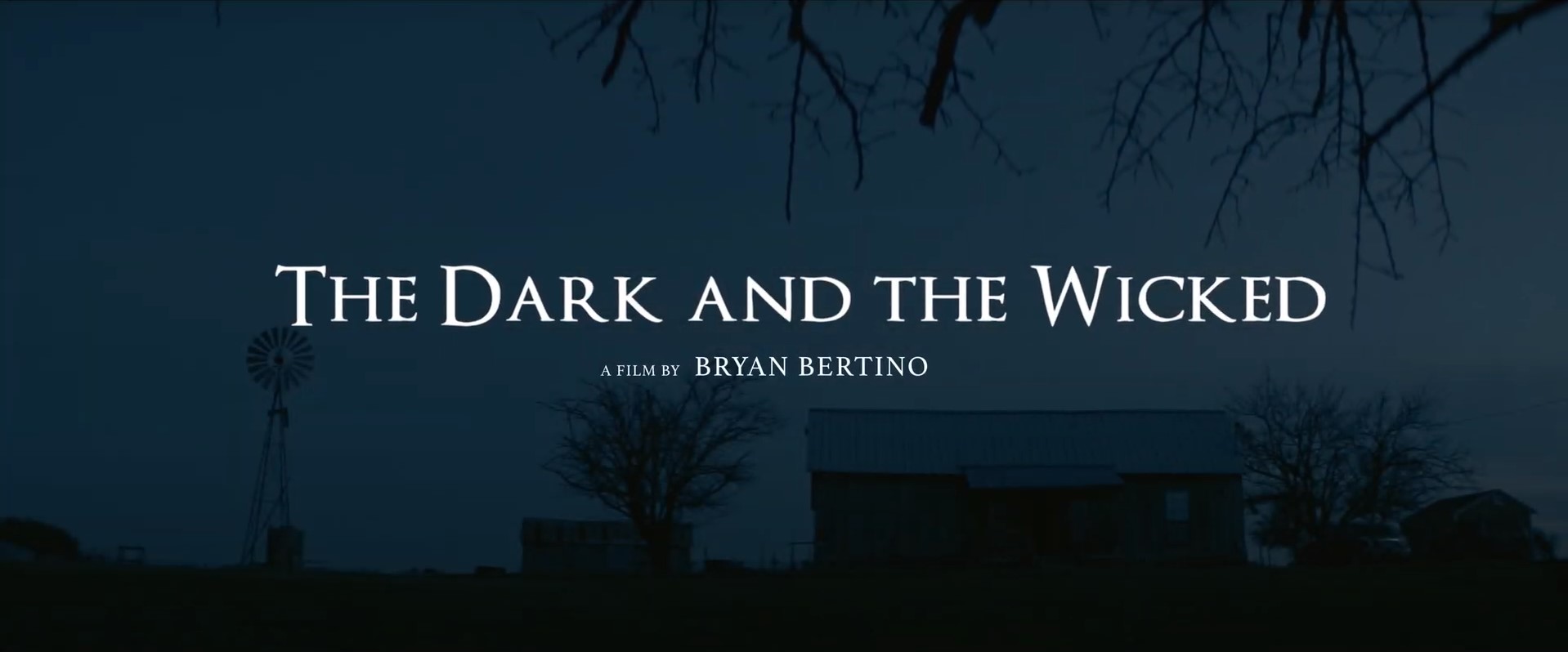
The Devil’s Tongue is a Powerful, Influencing EVIL. “The Dark and The Wicked” reviewed! (Acorn Media / Blu-ray)


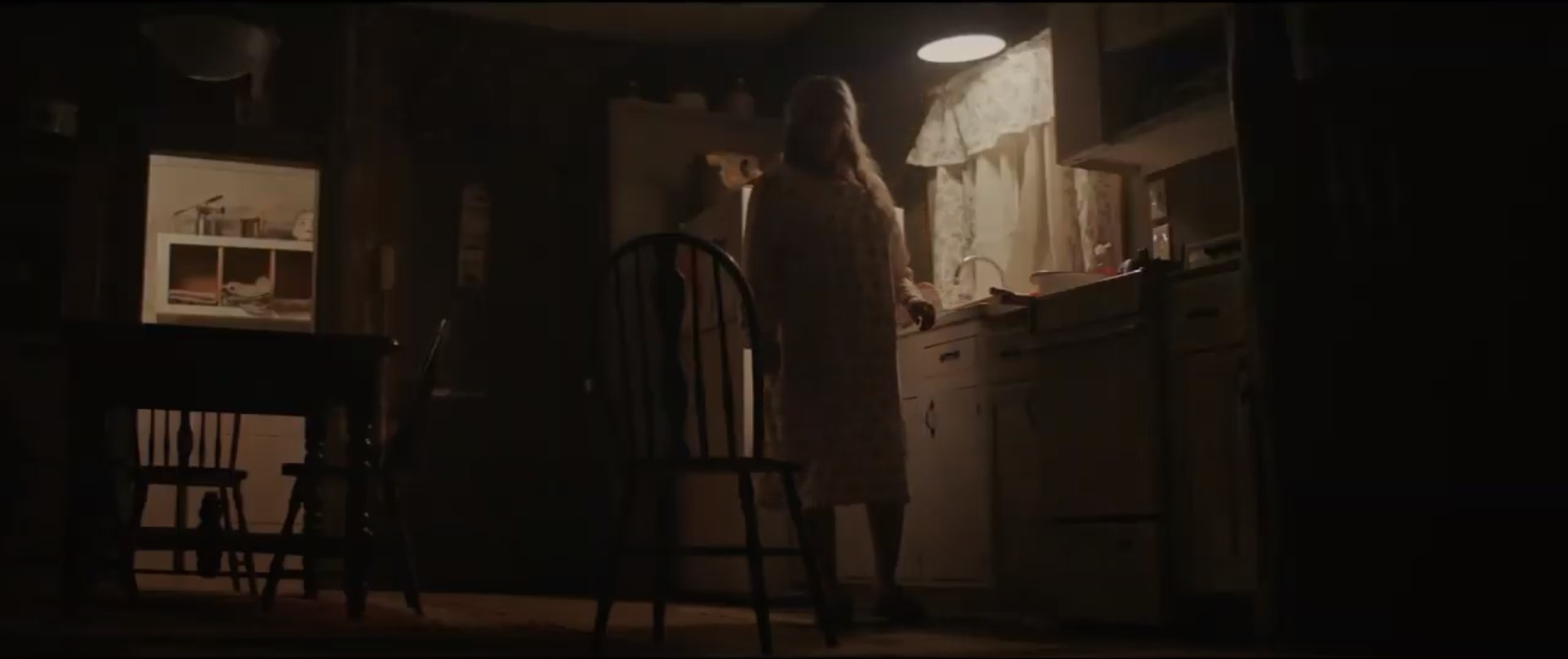
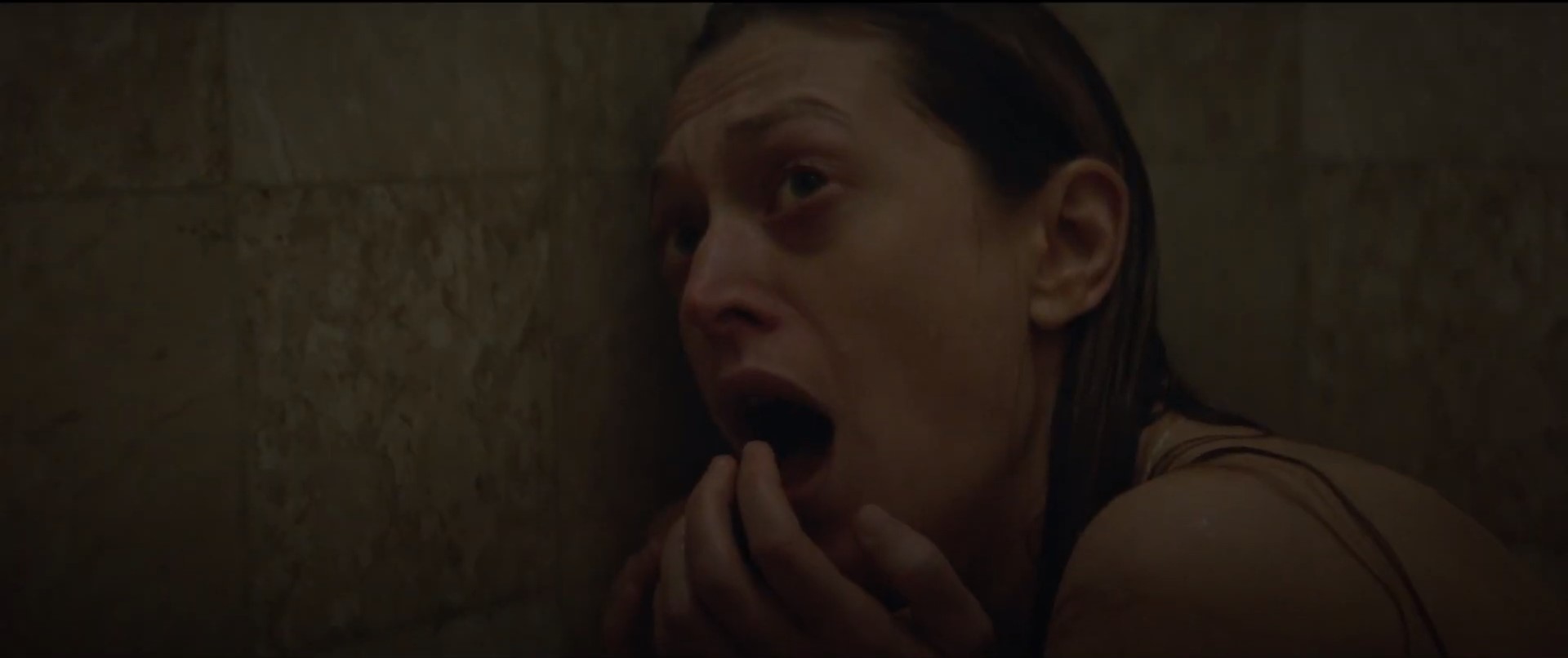
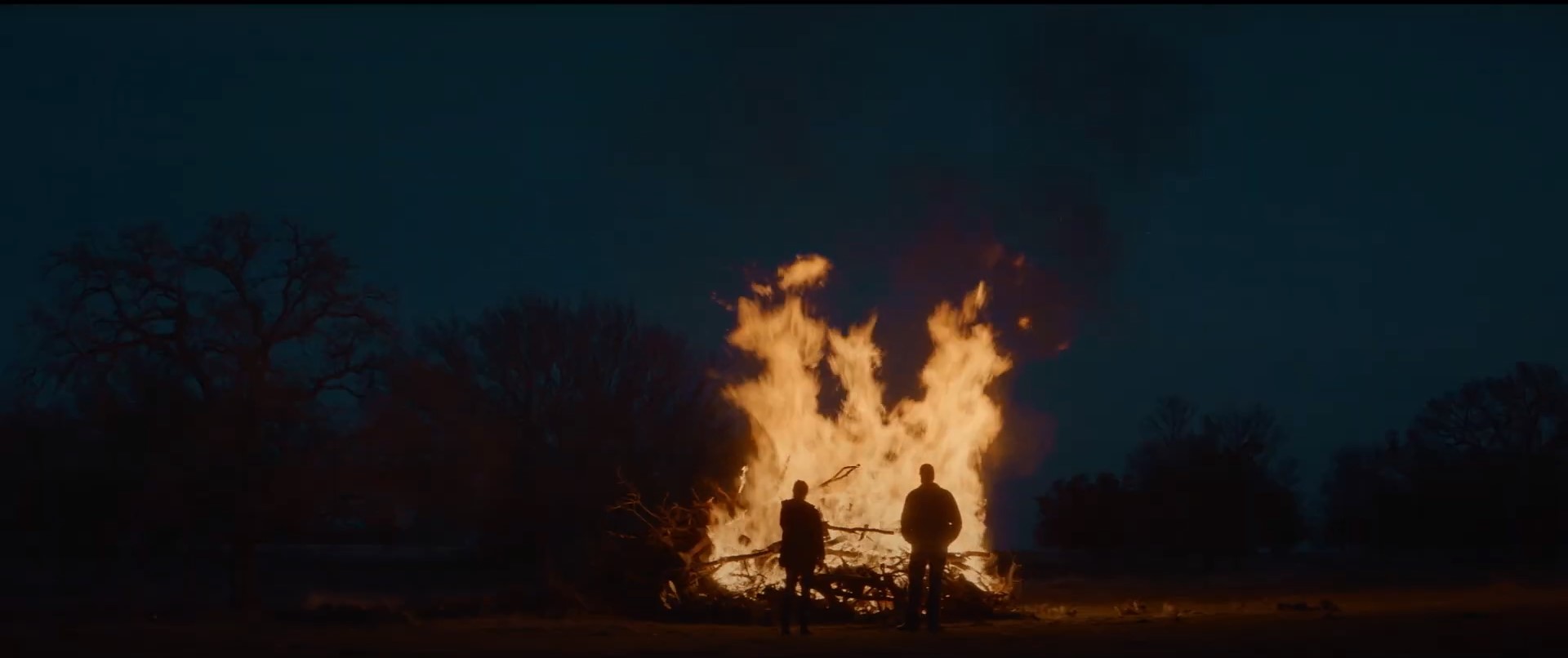
Siblings Louise and Michael Straker return home to their farmland house when their terminally ill father becomes bedridden.  A long time alone and isolated before her children arrived, Virginia provided suitable care for their father up until the voices started.  Lurking in between the shadows around the rural home, a menacing presence wedges itself into an already splintered family spirit as the harbinger of death coming for their father’s soul.  The influence of voices and grim visions tatter Louise and Michael resolve, testing their unconditional love for family and moral obligations, but evil can be very persuasive the closer their father comes to his end. 

The battle grounds of losing oneself during the verge of loss has commonly been a recurrent topic amongst indie films.  For filmmaker Bryan Bertino, the concept feels deeply personal.  “The Strangers” and “Monster” writer-director’s latest discomforting horror film, “The Dark and the Wicked,” uses Devil speak in mass, detrimental volumes as an allegoric device for the internal deconstruction of family, capitalizing for his tale the use of his family’s rural Texas farm house written as a threatening locale of isolation and the tenebrous unknown.  “The Dark and the Wicked’s” paganistic undertones heavily perceive a dissipating family structure’s disconnect from not only God but from the community who has been all but absent from coming to the fictional Straker family aid.  The 2020 released film is produced by Bertino’s production company, Unbroken Pictures, alongside Shotgun Shack Pictures (“Hurt”), Traveling Picture Show Company (“The Blackcoat’s Daughter’), and in association with Inwood Road Films.

To play characters accustomed to the rural lands of the Texas outskirts, “The Dark and the Wicked” required a range submerged with leisurely movements, a Lonestar draw, and to, of course, look good in plaid and Wrangler jeans.  The cast that emerged was nothing short of spectacularly precise in fabricating the lives of remote lives rural Texans, opening with a Texas-born Julie Oliver-Touchstone (“Bounded by Evil”) sewing dresses in the barn, tending the farm’s goats, and chopping produced in her white nightgown as who will be the catalytic mother, Virginia Straker, that passes not only the 24-hour hospice care to her children but also all the beneath the light misery that drives her terrified.  The girth of the story revolves around, Louise, “The Umbrella Academy’s” Marin Ireland, and Michael, Michael Abbot Jr. from the upcoming “Hell House,” as sister and brother who return back home upon the news of their bedridden father (Michael Zagst).  At this point in the story, where we meet Louise and Michael for the first time, a shrouded background puts a delectable side dish of mystery into making them initially interesting, but over the course of the 96 minute runtime, the enigma dissolves around why Louise no longer works from the Postal Service and what’s stringently being shied away from the thick layered division between the siblings from being close to one another.  The impending standoffish goes unspoken, never comes to a head between them as like the unfolding of “The Strangers” where Liv Tyler and Scott Speedman unravel and expose their marital struggles with the invisible wall between them before, and even in the midst of, being terrorized.  There’s something there that isn’t being part of the exposition or coming back around when the Devil comes really calling for their father’s doomed soul.  Instead, Ireland and Abbot simply assimilate well enough into their falling into farm life dynamics as the sister who must shoulder the responsibility of hospice care and the brother overseeing what could be considered man’s work of handling the duties of raising livestock.   We also get some messed up supporting second fiddlers to execute Satan’s handywork with performances Lynn Andrews, Tom Nowicki (“Conjurer”), Mindy Raymond (“Bigfoot Wars”), and “The Walking Dead’s” Xander Berkeley channeling his best Julian Beck’s Kane performance as a sinister Priest making a house call.

Bryan Bertino has a stillness about his films. Their creepily quiet, stirred in a somber stew of macabre, and utterly deranged in a nihilist coating. What appeals to me about “The Dark and the Wicked,” as well as “The Strangers,” is Bertino’s gift to deliver powerful fatalist realism. His stories couple earthly family drama with otherworldly malevolence stemmed from the deeper affects of prolonged relationship breakdowns that literally assigns a demonizing blame on the supernatural for people’s own crumbling failings. Another aspect is the godless presence wholeheartedly felt throughout from the Straker’s loud and proud proclamation of atheism to the lack of religious artifacts. Michael nearly tosses the priest out of his keester just for making checking and noting his mother’s recent unbeknownst connection to God to which Michael took great offense. This leads into the Straker’s lack of community connection as they seemingly are adverse or are agonized by those who wish to help and those who rather seem them burn under the guise of the malice presence. Goats are thematically prevalent to the story, especially when the shadowy Wicked hides amongst the herd, like a wolf in sheep’s clothing. Goats are often associated with Pagan beliefs, such as with the deity Baphomet, and the evils marked upon them by cultures all around the world and by having the Straker farm be a goat farm is more than just coincidence. “The Dark and the Wicked” brings chaos and confusion much like any circumstances where one or both parents die and all the burdens, all the consequences, and all the pure emotional baggage that comes with death is passed to the children whether the Devil is involved or not. When broken down rudimentary that decline of hope and overwhelming grief can cause a great amount of destruction for any family and even extend to friends with suicide being heavily portrayed in the film. Bertino masterfully touches upon every collateral damage output leaving no one spared from death’s, the Devil’s, hopeless hold on them.

Filled with frightening imagery, plenty of toe-curling suspense, and a loud silence of utter despondency, “The Dark and the Wicked” is a must own for any horror fan and, luckily for you, Acorn Media International just released the Bryan Bertino film on Blu-ray in the UK in alliance with horror’s favorite streaming service, Shudder. Listed as region 2, but more accurately a region B in Blu-ray format, the PAL encoded release is presented in a widescreen 2.39:1 aspect ratio. If there was one word to describe the comprehensive picture that word would be dark. Bertino maintains an eclipsing cinematography through hard lighting, matted lifeless colors, and a reduction tint to give it that extra gloomy blackness. Cinematographer Tristan Nyby’s first collaboration with Bertino is also the first debut into the genre field and Nyby comes out on top with an ability to show just enough, whether through shallow focus or obscured wide shots to always keep the depth and range of the unknown factor alive and frightening. In regards to the Blu-ray quality, “The Dark and the Wicked” has little to offer in details not because of the lack there of but because much of the film is shot in the dark, a fine midnight black with little-to-no wish or noise, and dim lighting . Facial details do appear slightly soft as you can’t make out the blemishes or even skin pores, but the intentional flat coloring steers much of that away from the senses. The English language DTS-HD Master Audio 5.1 surround sound is a boost of jumpscare ambient effects. The range and depth finely pitch the position of well-timed scares, especially when the strung together bottles, glasses, and cans rattle in a discordance. Dialogue has lossy muster that makes discerning characters’, especially Michael or his mother, Virginia’s, Southern draw. English subtitles are optional. Special features include only a Fantasia Q&A with actors Merin Ireland and Michael Abbott Jr that dive into their characters quite a bit and into Bertino’s morose mindset. Bleak and genuinely personal on a whole other level, “The Dark and the Wicked” is quintessential truth when talking about the Bryan Bertino Americana horror film and, believe you me, expect more devilish descriptors that’ll shock you.

When EVIL Knocks at the Door, Don’t Answer It. “The Strangers” reviewed! (Second Sight / Blu-ray Screener)


Kristen and James return home late from a wedding reception to James’ isolated family home off the main road. The joyous occasion becomes an afterthought when an unprepared Kristen declines James’s subtle engagement proposal outside the reception venue, straining their once jovial relationship into uncertainty of where it stands now. Before the couple discuss relationship next steps, a strange knock on the door around 4am becomes the initial stirrings of a clouted atmosphere brimming of paranoia, fear, and confusion when three masked strangers menacingly toy with the couple. The fight for survival in the dark early morning hours will determine their fate against strangers compelled to kill them just for the sake of killing.

Call me 12 years behind as I catch up on getting caught up into the brutal home invasion thriller, “The Strangers,” from writer-director Bryan Bertino. “The Strangers” has been panned by critics for being nihilistic and fraudulent with no plot twist In a premise that pits two innocent people against three violent hungry intruders, finding common ground with Wes Craven’s more sadist-driven “Last House on the Left” and the Charles Mansion murders of the late 1960s while also pulling harrowing experiences from Bertino’s own small town suburbia. As Bertino’s debut film, “The Strangers” has become something of a cult film over the years with discussion upon Bertino’s themes, especially the act of pure random violence upon another person, that has become more relevant today than ever. Universal Pictures also saw an intriguing quality illuminating in it’s filmic soul and farming it out the spec to their offshoot, genre label, Rogue Pictures, in association with Vertigo Entertainment, Mandate Pictures, Intrepid Pictures, and Mad Hatter Entertainment.

Bertino’s script attracted it’s leading lady in “Heavy” and “Armageddon’s” Liv Tyler who had to stretch her vocal range to the max in order to scream her head off like her life depended on it. As the disenchanted Kristen, Tyler brings beauty and tenderness to the heartrending woe of the newfangled corroding relationship Kristen and James are experiencing while serving as a stark contrast to the barbarism oppressed upon her. Opposite Tyler, and equally as disenchanted stricken in character, is “Underworld’s” Scott Speedman as Kristen’s beau, James, who difficulty to express himself in an unpredictable moment is greatly felt. Tyler and Speedman exact a crystal clear your head moment of awkward silence, frustration, disappointment, and heart ache that’s suddenly ripped from them, stolen in a away, by masked psychopaths. We’re never privy to their faces, keeping the mystery alluring and suspenseful, but the three actors, Gemma Ward, Kip Weeks, and Laura Margolis, exude a haunting and chilling performance of random acts of violence.

While performance wise is solid, the character logic struggles slightly for a viewer to embrace their actions seriously. I find that when the couple, being the only two terrorized people isolated in a quiet house, split up thinking the act as a sensible way of survival and is completely logical when, in reality, is hell to the no it isn’t! Three versus two together is better odds than three versus two split up, but, thinking outside the box, what if the split is emblematic of their dissolving relationship; no longer will Kristen and James do things together that make them more stronger and more accomplished as a pair. “The Strangers” can be indicative of many themes, whether instilled by Bertino or not who had complete control over the script and direction. Is there a theme of nihilism? Yes. Is there a theme of grim, unprovoked violence? Yes. “The Strangers” purposefully deviates from conventional cinematic means and outcomes, leaving that gutted feeling of dread and psychological torment in an unsullied, overwrought terror film. That uncomfortable pit in the back of your throat is the thick tension your unable to swallow in every moment of breathtaking fear; a feeling that’s very real when the hot flash sweat, producing adrenaline beads down your hair-raised skin, senses danger. The sensation is the welcoming byproduct Bertino’s “The Strangers” fosters toward being a legacy cult film, pivotal by all means as a rightful modern horror.

For his first feature run, Bryan Bertino has captured fear in a bottle with is shocking home invasion thriller, “The Strangers,” that’ll receive the Blu-ray treatment from a Second Sight limited edition release come September 28th. The UK release will be a region B playback format and presented in a widescreen 1.85:1 aspect ratio that’ll include the theatrical cut and the extended cut of the film. Limited to only 3,000 copies, the package will include a soft cover book with new essays by Anton Bitel and Mary Beth McAndrews plus stills and behind-the-scenes images and also include a poster with new artwork. Tomandandy’s floating and distinctive one tones, stretched and strung with the occasional interweaving string and percussion, score is not anything I’ve heard from them being unlike their sonorous scores from “47 Meters Down” or “Resident Evil: Afterlife” that meld a static-electronic rock, sometimes injected with adrenaline, to the action or inaction of the scene. Since a Blu-ray screener disc was provided for review, there will be no critique on the A/V quality. However, the screener did come with special features, including new interviews with director Bryan Bertino, editor Kevin Greutert, actress Liv Tyler, and the masked Pin-Up girl, Laura Margolis; however, be aware and warned that all the interviews segue into the sequel, “The Strangers: Prey at Night,” so there might be some spoiler moments for those who haven’t seen the sequel…like myself. Plus, rehashed special features from previous releases that dive into the same material the interviews provided, but also some exhibits shot locations, technical challenges, and some other brief interviews with cast and crew. A pair of deleted scenes are also available, but, surprisingly, the release won’t have the cut extended climatic finale you hear a lot of about in the new interviews and was in fact filmed, which would give the masked characters more depth into their methodology. Yet, the overall bonus material is vast with wealth of insight from the lengthy new interview material coursing through ever facet from the story’s genesis to the current reception of a film after little more than a decade ago. “The Strangers” is an advocate for the underdog independent narrative told through the eyes of a major studio willing to market and take a chance on pure terror over just putting butts in theater seats.