

“A Hyena in the Safe” is on Black Friday sale! Get It at Amazon.com
Eleven months after a jewelry safe heist at the Bank of Amsterdam, a group of specialized international thieves from all over Europe reunite at an Italian mansion estate during a city carnival celebrate used as a distracting facade for their gathering. Each have a key that form a coalescence to open the safe to ensure not one of them will swindle the others and make off with the jewels worth millions. Their ringleader Boris, who’s now deceased, hid the safe in his mansion with this wife Anna overseeing his plan and portion of their lifted prize. When one of the keys end up missing, a series of deceptions and murders begin a feisty vying for the each of the keys. One-by-one, the criminals fall for inconspicuous laid deadly traps and engage in murderous rendezvous until there’s only one left standing as the old saying goes, there is no honor amongst thieves.

Italy director Cesare Canevari, notable for his contribution to the exploitation subgenre with “A Man for Emmanuelle,” “The Nude Princess,” and the notoriously renowned “The Gestapo’s Last Orgy,” wrote-and-direct a post-caper, bordering giallo in 1968 titled “Una iena in cassaforte,” aka “A Hyena in the Safe.” Coming in on the incline toward giallo’s height of success, Canevari’s whodunit has less the conventional murder mystery elements but does have arouse that lack of trust amongst the principal characters, a high body count, a vaguely mysterious killer, and definitely a highly stylization of camera angles and visuals that’s correlates with the time period and give this giallo less of a terror firming shape and more of a “Clue” like profile. Canevari cowrites the script with Alberto Penna and is a production of Fering SRL based in Milano, Italy where the film was shot.
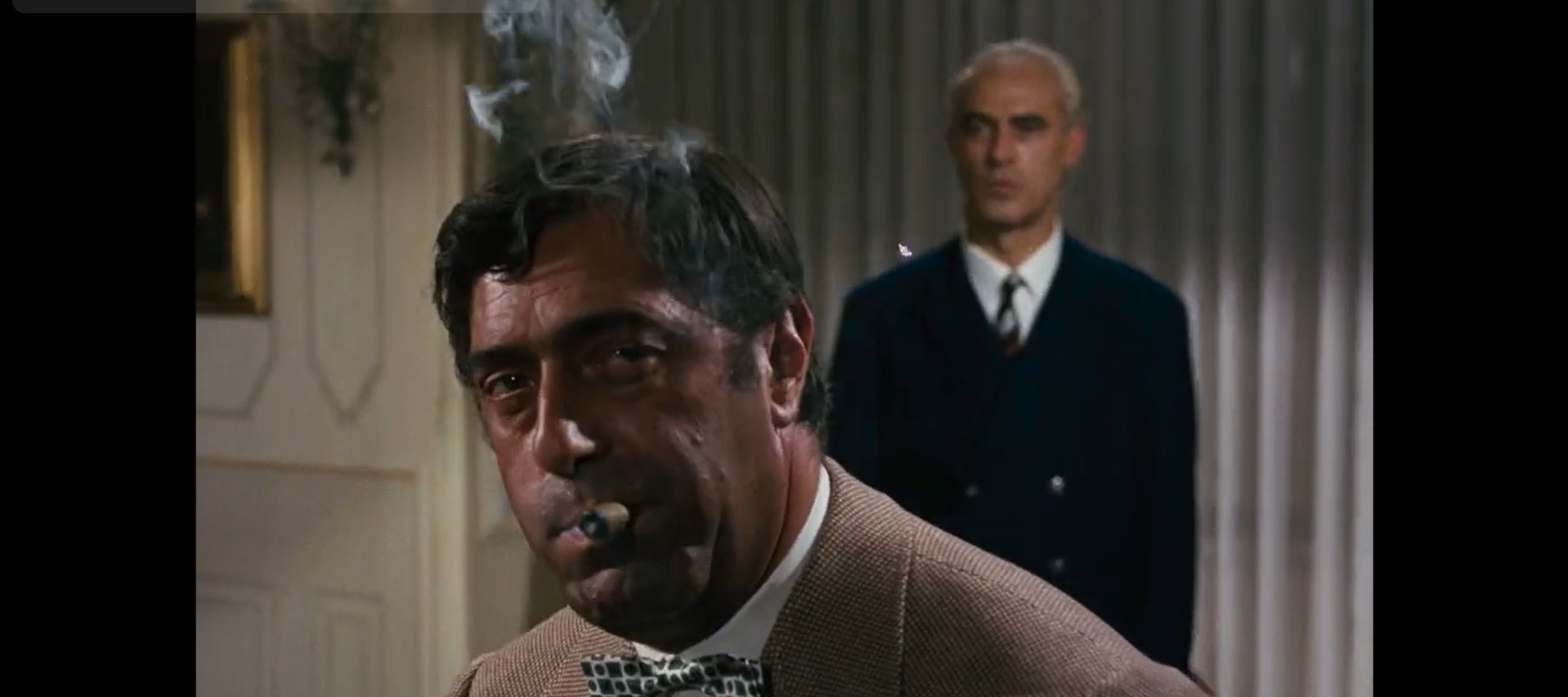
“A Hyena in the Safe” is carried by an eclectic, ensemble cast of international actors and actresses playing the roles that are not of their respective nationalities. Going around the horn first with the keyholding thieves begins with Stan O’Gadwin’s Klaus, the German, Ben Salvador’s Juan, the Spaniard, Karina Kar’s Karina, the Tangerine and the only non-European of the group, opera singer Dimitri Nabokov’s Steve, The Englishman, and “The Slasher … Is a Sex Maniac!’s” Sandro Pizzchero’s Albert, the Frenchman. The aforementioned cast primarily reduces to Italian and German actors in a virtually performance only role to exact and exude their character personality types in with Salvador, who gives Juan a thinking man’s confidence within a patient self and has a way of seducing women to extract information, or with Klaus, who’s aggressive pressing as an authoritarian German leans toward pursuit efficiency, or Steve, who’s quietly plotting multiple reserved schemes to deploy later. Those not a part of the heist crew from the Bank of Amsterdam is Anna, the criminal mastermind’s wife portrayed by Maria Luisa Geisberger, and she, too, is a keyholder but only because the attractive femme fatale takes over the helm with the storage of the jewel vault and implants her own brand of deception after announcing her husband’s demise from an illness. Jeanine (Cristina Gaioni) and Callaghan (Otto Tinard) are the last two who round out the ensemble in their corresponding roles of Albert’s blonde bombshell girlfriend who’s folded into the scheme at the chagrin of the others, and boy does she take a humiliating beating when Albert comes up short on his key, and the jewel appraiser who watches all the backstabbing unfold from the sidelines and counts down the bodies with the metaphorical removal of their party favor baggies, ones that would have been used to split the jewels between them upon opening the safe.
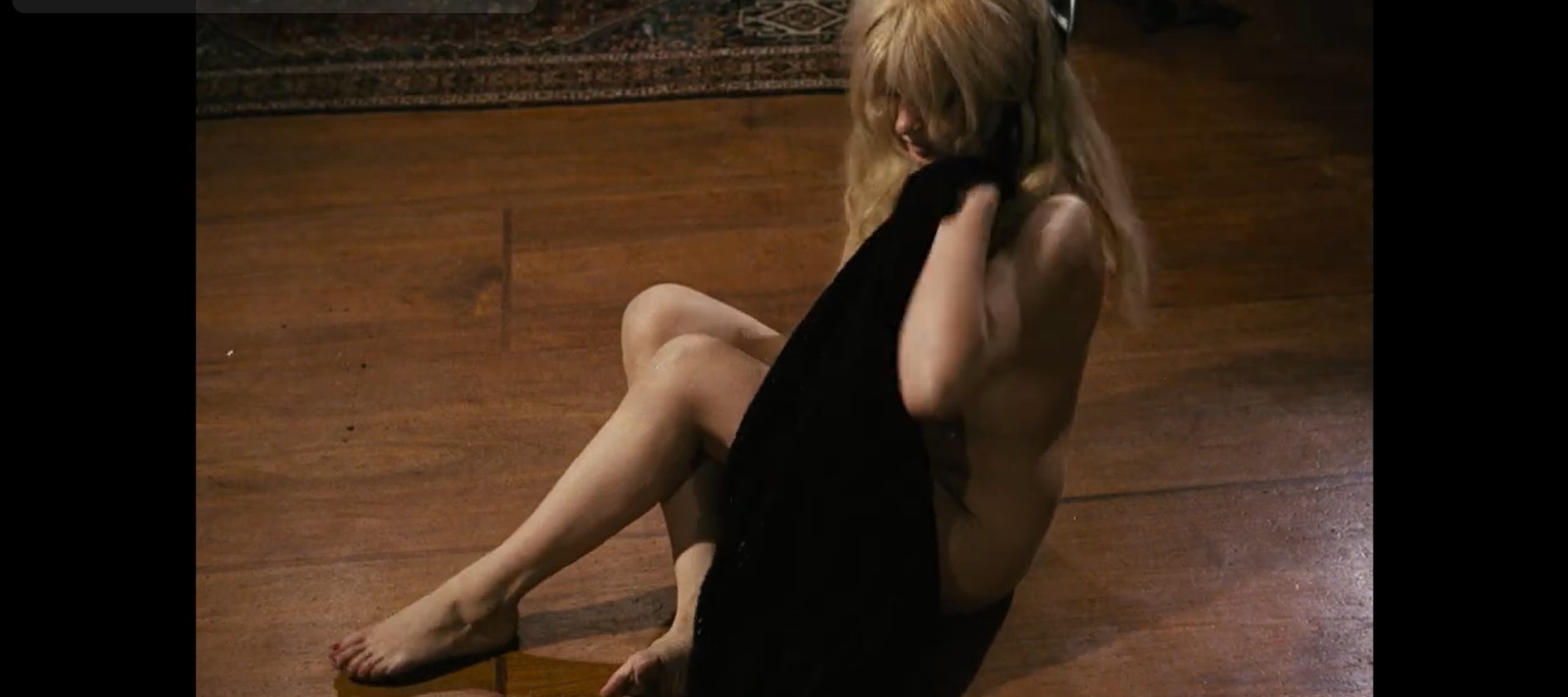
What’s interesting about “A Hyena in the Safe” is the beginning of the story plotted at the act of reassembling the team and only provide expositional context to a heist well after it’s been done, eleven months ago in fact. All the characters are fresh and unknown to the audiences, we don’t know their personalities, their skills, their habits, or their attitudes toward one another, and all that dynamical odds and ends has processed, forcing those new to the film to watch, listen, and learn their way through the personality types and the situation at hand. The tension is quickly laid out amongst the already side-eying and suspicious group of sophisticated thieves that react no differently from the lower class of thief with same cutthroat intent. Keeping up with Canevari’s edited pacing and unconventional angle shots that squeeze out the tension with taut framing on expression-filled cutting of eyes and fear-induced faces, the mounting intriguing factors wet story hungry appetites with playful catering of the imagery that also consists of fixed and tracking shots. Considering the film’s more conservative decade, Canevari builds tasteful implied sexual acts between conniving characters and is only explicitly, in physical means, when the scene calls for it, leaving gratuitousness begging to be let in. One aspect with the pacing that hurts the enticingly heightening pressure cooker between the first act’s slow trot through choppy seas of character dynamics to elucidate taciturn behaviors and backdoor alliances and the last act’s spit firing and cutdown of those who are left standing, there is seemingly no middle act to funnel the trepidation and mystery from one end to the other in an abrupt ease into a quickly diminishing situation that goes from murder mystery to battle royale with switchblade umbrellas, electrifying door handles, and an indoor garage that can turn into an asphyxiating fish tank in a matter of minutes. There’s an early James Bond campiness to the story’s temperament that can’t be ignored while be positively and simultaneously interesting.

Celluloid Dream’s third release title today “A Hyena in the Safe” arrives onto a new high-definition Blu-ray for the first time that’s AVC encoded onto a BD50 and presented in 1080p and in its televised pillar boxed full screen 1.33:1 aspect ratio. The restoration of the original, likely, 35mm film stock was done by Rome’s Cinelab Services from the original camera negative, which also included the color grading. The resulting transfer is peak restoration quality with a fresh coat of brilliant paint, a clear coating of texture producing details, and a virtually flawless image within the spherical lens picture. Perhaps slightly on the orange side, skin tones come through a variety of shades to match the nationalities of the criminal enterprising collective. Juan’s dinner jacket evokes tweed textures while Jeanine’s high, golden hair style never loses individual strands in the near all-bright-and-golden wash. The original Italian mono mix was secured from the optical sound negatives attached to the filmstrip. The mix had processed the Italian ADR in post and attached to synch to the celluloid, creating a near perfect pace and synchronicity with the conversational action though the lips doesn’t exactly match the actual words being spoken. Speaking of dialogue, for a mono track the nice and robust with clarity from an untarnished negative albeit it’s lack of depth and not from the true source, and that goes for ambience as well. English closed captioning is available. Special features pack the encoding with a commentary track by Celluloid Dreams found and film critic Guido Henkel, interview featurette 7 Guests for a Massacre with Cesare Canevari (misspelled Canevaro on the back cover), Albert actor Sandro Pizzochero, Nini Della Misericordia, journalist/critic Adriana Morlacchi, and journalist/critic Diego Pisati discussing the film’s influence and pizzas from cast, crew, and critic perspective, a video essay by Andy Marshall-Roberts Schrodinger’s Diamonds: The Duplicitous Mystery of Hyena in the Safe, a location featurette of the shooting setting The Mysteries of Villa Toeplitz, an image gallery, and the theatrical trailer. The two-faced cover art, same art of dead bodies falling out of a safe, is set with the primary English language on the cover with the Italian language title cover on the reverse side. The cover art on the encasing O-slip with a character composition design of a shadow-induced, high-contrast illustration by graphic artist Thu-Lieu Pham of Covertopia.com has slip art similarities with same art on both sides but with the title in either in English or Italian. In the insert is advert for Celluloid Dream’s previous two releases – “The Case of the Bloody Iris” and “Short Night of Glass Dolls” and its upcoming fourth release “The Black Belly of the Tarantula” while the reverse side gives credits and acknowledgement in regard to the film restoration. “A Hyena in the Safe” comes not rated, clocks in at 92 minutes, and is region locked for A, North America.
Last Rites: “A Hyena in the Safe” is a no laughs, all bite giallo caper once obscured from the public view now brought to the forefront of our attentions with a new Blu-ray release worth backstabbing for!


 It's Bloggin Evil!