EVIL Packaged Fresh, Never Frozen. “Raw” reviewed! (Second Sight / Blu-ray)

Brought up on a strict vegetarian diet by her parents, Justine became conscious that one swallow of meat down her gullet might start a chain reaction of life-threatening allergies. Her legacy acceptance into the prestigious Saint-Exupéry Veterinary School would have a set of challenges toward retaining that diet but her older sister, Alexia, who is still studying at the school and is also a vegetarian, would protect her from the intense hazing brought down upon the freshman class. When it turns out that Alexia gave into the temptations of peer pressure and egged her own to digest meat in a hazing ritual, Justine learns that her sister’s shielding won’t stand up against the forces of elder student pranks. From then on, a primordial animalistic behavior slowly transforms Justine from a quiet, awkward, and studious teenage girl into a party animal, an explorer of sexual awakening, and a herbivore whose slipping from her regime. Justine’s craving for raw meat digs deeper into the bone as the overwhelming need to consume human flesh spirals her down into an uncontrollable descent, turning the school’s exuberant hazing knaveries all the more dangerous.
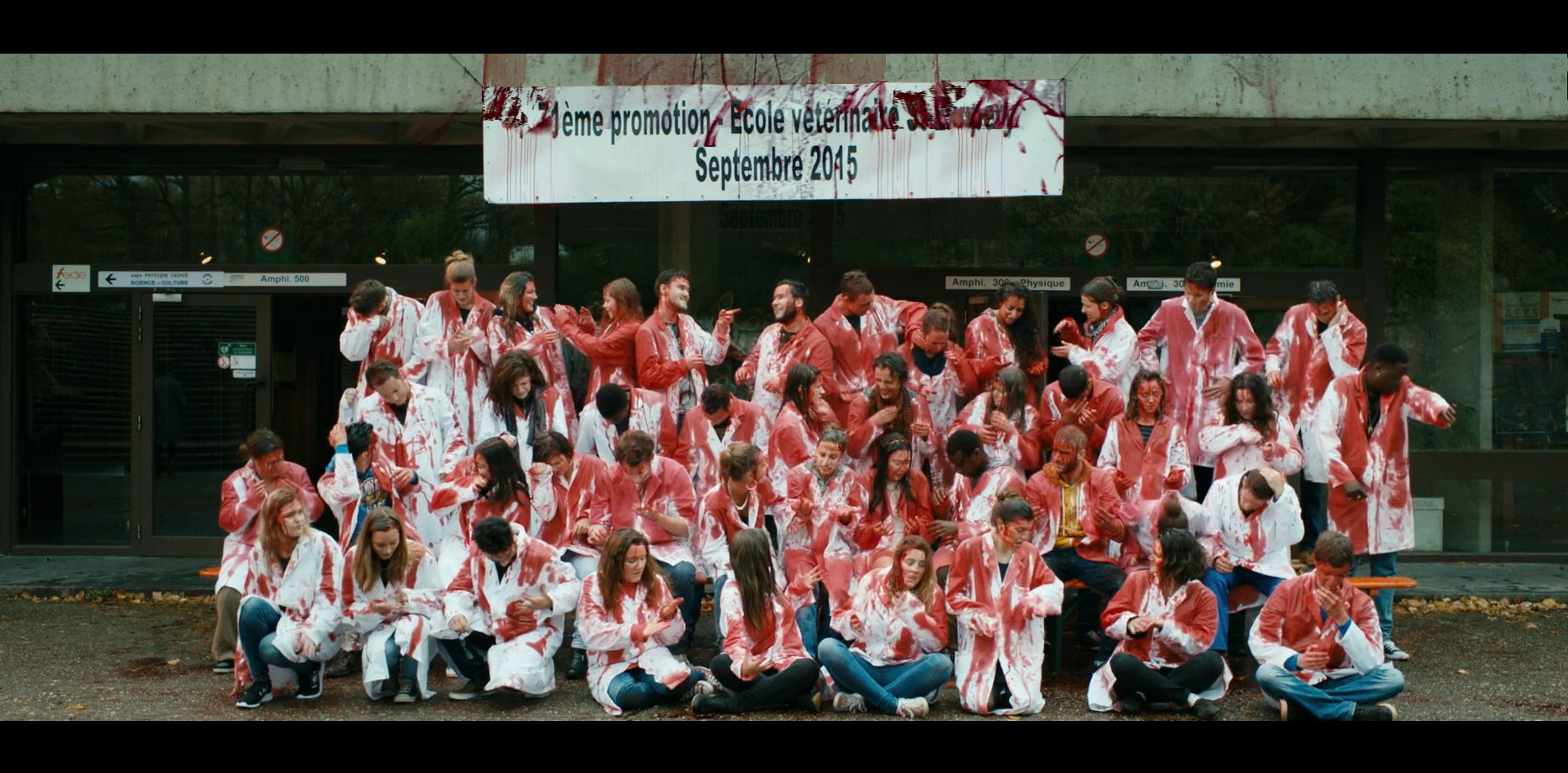
Having been a meat eater all my life, the transition to vegetarian would be a hard-fought war that would likely shed years off my life just as much as eating a thick, juicy cut of a steak seasoned to perfection and medium cooked. After all, the human race is born with tapered canines that rip through the tough flesh and meat first and then pass along the now tendered feed to our molars, our mashers, that would handle the soft, chewy substance for an easy ride down toward our stomach. “Raw” takes that approach one step further, or maybe two or three steps further, by coupling the sudden discourse from meatless to meaty meals that expands into cannibalism with a coming of age and finding one’s place in life story that can be relatable to us all. The French film is written-and-directed by Julia Ducournau, who reprised herself with another body horror sensation with last year’s acclaimed “Titane,” and was shot at an actual veterinary school in Belgium, the University of Liège. Originally titled “Grave” before being upgraded to “Raw,” the film is a production from a conglomeration of studio labels, including the first horror production for Petit Film. Rouge International (“Murder Me, Monster”), Frakas Productions (“Sea Fever”), Ezekiel Film Production and Wild Bunch (“Martyr”) serve as a few of the film’s other coproduction companies with Jean des Forêts, Julie Gayet, Jean-Yves Roubin, Nadia Turincev, and Cassandre Warnauts as producers.

“Raw” is not your typical girl journeying through the trials and tribulations of normal self-discovery.  For this, you need not your typical girl to play centric character Justine.  Enters 16-17 year-old Garance Marillier, the Paris-born actress with an established bond on and off screen with director Julia Ducournau having debut her acting in Ducournau’s 2011 short film “Junior” as a tomboy going through a strange corporeal transformation.  Fun fact:  Marillier has been cast as a different Justine in all three of her collaborations with Julia Ducournau – “Junior,” “Raw,” and “Titane” since 2011.  Marillier soaks into “Raw’s” Justine with not only a transcending behavior pattern performance that takes the freshman from stifled to uninhibited, but the young actress also overhauls a complete body language transformation that sheds Justine’s meek skin, literally displayed on screen, for a more confident and abrasive veneer.  Ella Rumpf (“Tiger Girl”) receives Justine’s inexperienced blossom-hood with an the older, already initiated, sibling having been fostered by rambunctious peers to break the sheltering chains her parents had shackled with and just like true to life sisters, there’s contention.  The vehemence venom between them when they’re on bad terms on screen can stop one’s breath, you can hear a pin drop, yet you still understand their sisterly connection and love no matter how messed up a situation might be, especially when involving boys, such as the pansexual fluidity of Justine’s freshman roommate Adrien, played by Rabah Nait Oufella.  “Raw” rounds out the small cast surrounded by a slew of extras with Laurent Lucas and Joana Preiss as mom and dad.

Julia Ducournau has the body horror genre down to the molecular level.  It’s as if the filmmaker studied every film and playbook of David Cronenberg just from researching her various work credits that target to restructure and regress the human condition into something far worse and watching “Raw” unravel a symbiotic relationship between natural and unnatural human development blurs that line of what is considered to be normal so disturbingly good.  Exteriorly, we notice the changes and can almost set a clock to way our bodies react and change over time, biologically and socially, within the context of our environment.  Internally, a whole unexplored set of conditions apply to the unpredictable mindset of transfiguration and that’s where Justine paves an unfounded roadmap for her sudden kick from being a veggie lover to a flesh craver. “Raw’s” undoubtedly an allegory of a young girl’s pubescence and coming of age into her own from, essentially, being on her own exploring her sexuality and exploring new interests as is such with going into university. Ducournau casually strolls through Justine’s drama and tension as much of the body horror overwhelms our morbid curiosity but her angsty complications, still very much underlined even being overshadows, retain a constant line of parallelism in a symbolic reality. Delicate touches of indelicate gore really spice up “Raw’s” entrenching story not for the faint of heart as well as vegetarians.
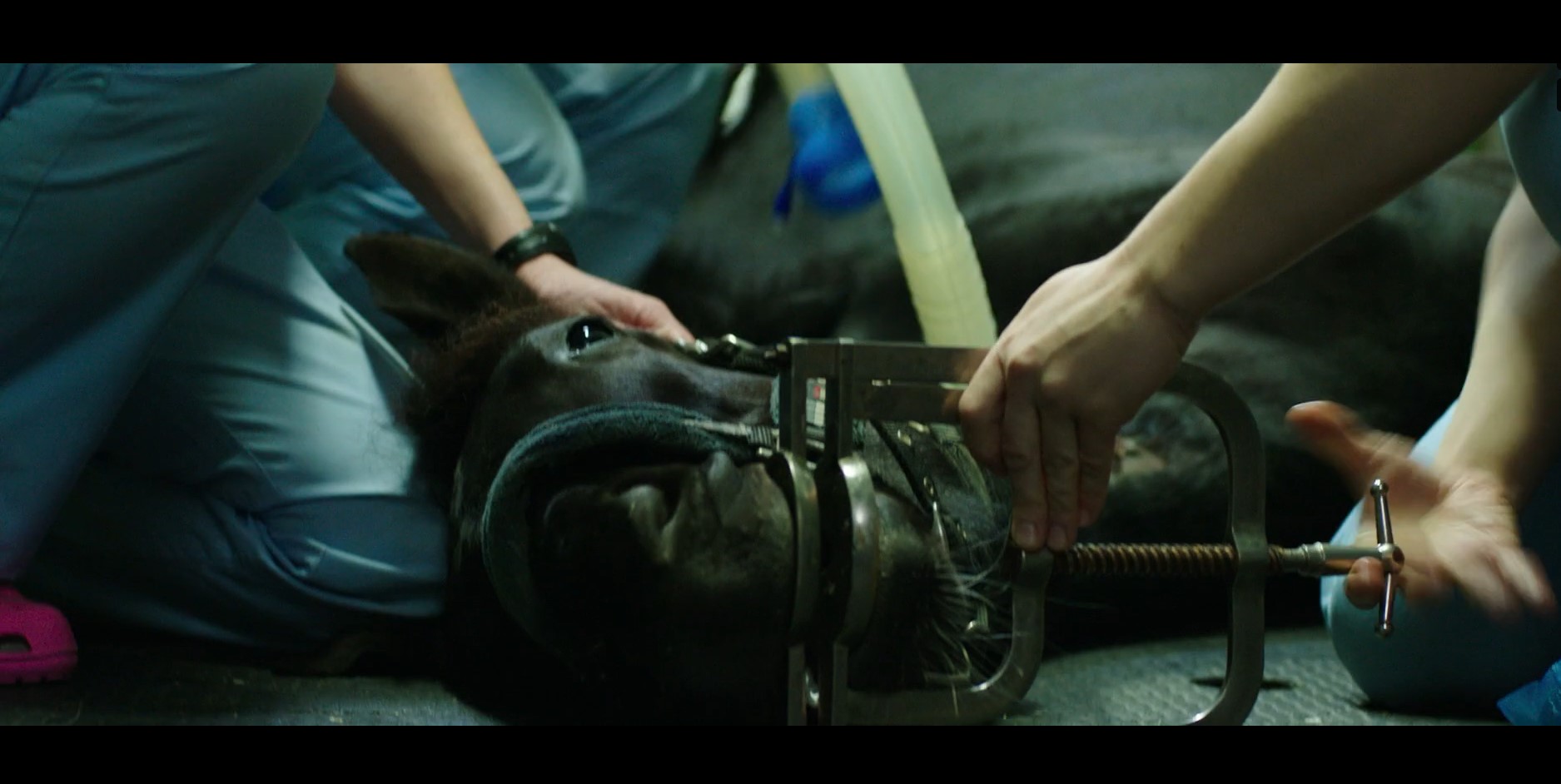
Hot off the heels of their now out of print limited edition release of “Raw,” Second Sight Films offers a second, standard release on Blu-ray home video. The UK label offers a single disc packaged, region B encoded, BD-50 of a 1080p, high-definition, 2.40:1 aspect ratio presentation, listed at running an average frame bitrate of ~24Mbps. Highly accurate on its bitrate average, the image is well diverse in discerning details without an ambiguous scene or spot in sight. The color often feels muted, dreary, like one long continuous overclouded day that presents an everlasting feeling of dismay. Yet, that isn’t all cinematographer Ruben Impens has to offer with arthouse framing of disturbing imagery and an opening freshman party scene that takes us through the cramp pockets of sweaty, half-naked partygoers in one lengthy, single shot that expels just about everything Justine will face at her time in veterinary school. The French DTS-HD 5.1 master audio superbly distributes the audio tracks with just right levels to accommodate each scene. If there’s a noisy, bass blaring party, the score rightly takes over and the dialogue takes a muted backseat but still clear and intelligible – or so I believe since I don’t understand French, but I can make out the syllables and inflections. Otherwise, dialogue is king and clear alongside an eclectic soundtrack of English indie rock and experimental tracks as well as Jim Williams guitar and industrial synth trek across that’s beautiful and, simultaneously, disconcerting disharmonic. If you missed out on the limited edition, don’t bite yourself as the standard edition as plenty of extra features, including an interview with actress Garance Marillier The Girl Can’t Help It, an interview with producer Jean des Forêts Making Ends Meat, an audio commentary by film critic Alexander West, an audio commentary with director Julia Ducournau and critic Emma Westwood, an interview with Ducournau A Family Affair, the featurette Raw A Votre Gout with Ducournau and Emma Westwood, a conversation between Ducournau and critic Alexandra Heller-Nicholas Quick Bites, a genre matters panel discussion, an Australian premier introduction and post screen Q&A with Ducournau and Kier-La Janise, and a handful of deleted scenes. The film runs at 99 minutes, comes with well synced English subtitles, and is certified 18 for strong gory images and injury detail. Taste “Raw’s” unseasoned, unadulterated, pure and simple line of hidden truths and manifesting urges that once crossed there’s no turning back as the person you once were, is no longer akin to an impossible burger but a fully tendered hunk of mouthwatering meat freshly cut and ready to sink your teeth into.

EVIL Slums In The Company of Others. “Hausen” reviewed! (Sky Atlantic / Eps. 1-4 / Digital Screeners)

Jaschek moves into a property supervisor position of a slum housing complex with his 16-year-old son, Juri, after the tragic fiery death of his wife. Trying to rebuild and rebound on what’s left of his and his son’s life and waiting for the insurance money to pay out, Jascheck tends to the decrepit building maintenance and, over time, meeting the cold, strung out, and peculiar tenants while Juri attends school and becomes interested with the building’s discretionary drug pushing youths. When a young couple’s baby goes missing, the mysterious disappearance motivates Juri into an investigation, leading his curiosity to discover that the building itself, and the insidious sludge that oozes nearly from every crevice, feeds on the suffering and pain of the inhabitants.

When a black, wet stain on the wall embodies a biological presence of asexual spores and elicits the instinctual first thought of alarm sounding bells ringing to back away in your mind, this is how Till Kleinert and Anna Stoeva injects fear and biotic crud with their new horror television series, “Hausen.” It’s Bloggin’ Evil got to sample the first four episodes of the German 8-episode series that showcases director Thomas Stuber’s dank complexion of anthropomorphized leeching of the lower class, filmed partially inside an East Germany, 20 plus year abandoned hospital, once known as the GDR Hospital, located in Berlin. Kleinert is the writer and director of 2014’s “Der Samurai,” pulling from his film the lingering disembodied or dreamlike and integrating that surrealism imagery for the new series, and collaborates with first time writer, long time producer Anna Stoeva, one half of the boutique film production company, Tanuki Films. “Hausen” is a production of the Berlin-based company Lago Film, who co-coordinated the production on David Cronenberg’s “A Dangerous Method,” under department head, producer Marco Mehlitz.

“Hausen” primarily focuses around a reestablishing father and son, Jaschek and Juri, after a tragic house fire that claimed the life of Juri’s mother. The series starts off with the two driving up to the housing complex and breaking themselves right away into a runaway rundown building that needs more than just a sprucing up. “Transporter: The Series'” Charly Hübner plays the handy father, Jaschek, with non-expressive can-do attitude that becomes a block of interrelation between him and his son Juri in another unreadable performance from Tristan Göbel of Lago Film’s “Goodbye Berlin. That inexpression is the intentional tone of “Hausen’s” entire cast of tenant characters who float through a barely-living existence, most living grubbily, few living in humble comfort, but all being exploited by the organic narcotic that’s living, breathing, and striving from the inhabitant suffering. Hübner and Göbel impassively shepherd along the story along that introduces new characters into new episodes that digs deeper into the complex’s black, oozy, heart symbiotically connected to a caretaker known as Kater, the very first character Juri and Jaschek meet upon arriving at the building for the first time. The autodidact Alexander Scheer touts an unkempt, dirtied, and made to look like a complete hobo in Kater who, unlike his onscreen cohorts, vitalizes the screen with wild-eye expressions and an unsurmountable jocularity and puckish wit. The series rounds out with stars Lilith Stangenberg (“Bloodsuckers – A Marxist Vampire Comedy”), Stefan Haschke (“Krabat and the Legend of the Satanic Mill”), Daniel Sträßer, and Andrea Guo.

“Hausen’s” intended aloof pulse courses consistently throughout, at least in the first four episodes, that piece together and induce layers of grayscale personalities that have been cross affected by the building’s malevolent life force and the subjugating delinquent class that feel no need to make their surroundings better as their stuck in a vicious cycle rut of drugs and despondency. “Hausen” allegorically uses horror to intensify the already tragic aspects of corrupted ethical life choices people make when drugs are prioritized as more important than others and even their own lives. The first episode features a young couple with an infant and as they attempt to stay clean and withhold what little money saved for a new and better apartment, the building reacts by taking measures in the form of tormenting the husband’s brittle sobriety as he’s caring for the baby alone. He passes out and wakes to find the familiar narcotic he can’t seem to escape on his person. The scene mirrors good intentions of abusers who fall into withdraw with the withdraws being symbolically displayed as the building’s evil doings to keep the pain profit flowing. Overall, “Hausen” drips with underbelly exploitation that doesn’t stop with just the adverse, malignant housing as it spreads into Juri and Jaschek’s tense relationship and into the ounce of good left inside them, fleshed out in scenes that become a crossroad of choices where choice A) is to do the worst thing possible to compromise the smidgen of hope left or choice B) to reserve themselves into taking the harder, but good moral standing, road and work at rekindling a tattered bond that would go against everything the “Hausen” has thrown at them.

A skyscraper of bleak and austere horror, “Hausen” houses a slick secretion of mystery in every crevice. The Sky Germany produced horrifying mystery-thriller is now out in the UK on Sky Germany’s sister-programming, Sky Atlantic. A statically lit doom and gloom scenes never venture away from the tinted battleship gray and blue color scheme that goes hand-and-hand with a cleaned up GDR hospital shots from cinematographer, Peter Matjasko, that’s reminiscent of David Fincher films = think “Alien 3” but with way less yellows. The black sludge is a satisfying unnatural pigment of midnight black that contrasts nicely against said tinted lens coloring, providing a catheter of continuously streaming tenebrosity. We’ll have to wait and see how Juri, Jaschek, and the rest of the tenants fair in the last four episodes that shafted us with a plummeting cliffhanger midway through and, hopefully, ItsBlogginEvil.com can provide more coverage on the unnerving new television series that will put a stain your soul.

An Elite, EVIL Assassin Loses Herself as the “Possessor” reviewed! (Neon / Digital Screener)

Tasya Vos is the top professional assassin employed by a hire-for-murder agency who uses surgically implanted brain transceivers to insert agents’ consciousness into a person’s body who can get close to their intended kill target. The no contact procedure has been successful with some severe drawbacks, such as the potential for slipping out of your own identity in being, in one way, a part of many distinct personalities. When Vos’s next assignment is to insert herself into the mind of the soon-to-be son-in-law of a powerful tech CEO, her individuality begins to crumble, losing her grip as the primary inhabitant of the body. The commingled souls share thoughts and memories and when Vos takes a backseat in a body that’s no longer under her control, her life becomes vulnerable to a confused and unhinged man seeking vindictive measures to evict the assassin from his mind.

Like an existential extension of his father’s career, writer-director Brandon Cronenberg’s foothold within sci-fi horror is anchored by functional practicality, substantial social commentary, and a knack for exhibiting cynical undertones in his sophomore film, “Possessor,” a gripping tech-thriller avowing the soft-pedaled ambiguous identity and corporate invasiveness. “Possessor” is the blood soaked corrosion of individualism that strips morality and replaces it with unapologetic nihilism in a film that feels very much David Cronenberg’s “eXistenZ” merged with Paul Veerhoven’s “Total Recall” with that plug-and-play dystopian coat of paint that’s being brushed over the quickly disappearing free will. Studios involved in the making of “Possessor” include Rhombus Media (“Hobo with a Shotgun”) and Rook Films (“The Greasy Strangler”) in association with a WarnerMedia division company, Particular Crowd.

“Possessor’s” leading lady, Andrea Riseborough, is no stranger to idiosyncratic roles in equally atypical films having starred in “The Duffer Brothers'” “The Hidden” and played the titular character in the avant-garde horror, “Mandy,” across from Nicholas Cage; yet, from her experience with big-budget studio films, such as “Oblivion” starring Tom Cruise, the English actress felt the uneasy atmospherics to be pressurizing and uncomfortable Riseborough has thus exceled with films such as Cronenberg’s “Possessor” that’s pivots into an alcove just off the main halls of horror and science fiction. Riseborough looks nothing like herself from “Oblivion” by sporting a stark white hair on top of a thin frame, which could be said to be the very counter-opposite of what a typical, bug-budget assassin should look like, but Riseborough delivers stoic and uncharitable traits of a character on the brink of losing herself. Christopher Abbot delivers something a little more chaotic when his conscious retreats back into the depths of his psyche only to then seep back into his mind where he stumbles to catch up on current events. The “It Comes At Night” Abbott disembodies himself not once, but twice, becoming an avatar for Tasya Vos to play, picking up where Abbot’s Colin left off, and then Abbot has to regain control, splicing Colin back into the cockpit where Tasya commands the yoke. The dueling dispositions cease being unique as one attempts to control the other in a mental and corporeal game of chess, confounding audiences of who is in control during certain scenes, especially when Colin goes into a blackout murdering spree of people Colin himself knows and trusts. As a puppeteer moving a marionette, pulling as an influential strings behind company lines, is Girder, a poker-faced agent head seeking the absolute best in the company’s interest, who finds her thimblerigger in Jennifer Jason Leigh. Leigh, whose experience with David Cronenberg’s “eXistenZ” brought a high level of cognizance to “Possessor” having been an cerebral deep virtual reality trouper previously, folds in the nerve of any level of management that would guilt someone else into doing the work necessary to get the job done. Girder opposes Tasya’s external humanity in a silent, but deadly manner by appealing to the killer instinct in Taysa, letting red flags of the out of body experience fly by the waist side that ultimately wears away at her star pupils moral conscious and turn her into a stone cold killer. “Possessor” cast fills out with Tuppence Middleton (“Tormented”), Kaniehtiio Horn (“Mohawk”), Rossif Sutherland (“Dead Before Dawn 3D”), Raoul Bhaneja, Gage-Graham Arbuthnot, and “Silent Hill’s” Sean Bean in a worthwhile role just to see if his role will succumb to a typical doomed Sean Bean character as the undesirable tech CEO.

Its safe and sufficient to say that Cronenberg’s “Possessor” is not a feel good story; the amount of tooth-chipping, eye-gouging, and throat stabbing gore takes care of any hope and ebullient energy that one could misperceive. Yet, while the disgorged grisliness stands on it’s own, Cronenberg possesses a factor of tropes that multiply the film’s bleak, icy landscape inhabited by unpleasant characters that ultimately seek and destroy the little good exhibited. The obvious theme is the disconnect from one’s own identity. Tasya Vos mental capacity nears the breaking point being an inhabitant of numerous bodies and with each callous, bloodletting assignment, Vos’ indifference for the things she should hold dear strengthens immensely drowns in the persona of another person and the psyche breaking acts of violence. Her latest assassination attempt even blurs the lines of her sexuality as her feminine body parts merge with Colin’s masculinity in one of the craziest sex scenes to date. Colin’s individuality is too threatened but from Vos’ intrusion, equating the quiet, strange behavior to a sudden vagary toward a person’s dejection, being estranged from their own life, on the outside of “Possessor’s” alternate reality of science fiction’s hijacking of one’s brain. On the subject of intrusion, a not-so obvious theme, but certainly has a strong motif, is the severe invasion of privacy. Vos’ spying on Colin and his lover for personality intel, Vos’ inspection of the entire Colin body while inside inhabiting him, and the data mining of Sean Bean’s character’s tech company, which pries itself through the optics of people’s computer cameras to garner information, such as the fabric of window curtains in this case, divulge an uncomfortable message that privacy is a luxury we are unable to ever grasp. There’s even a scene where Vos, in Colin, becomes a voyeuristic participant of a couple’s explicit sexual intercourse during data mining work hours. Despite the breadth of technology that are brimming near our fingertips today, “Possessor” has a very analog approach with dials and switches of seemingly antiquated electronic circuits, thus rendering the story grounded in nuts and bolts rather than being lost in the overly saturated and stimulated advanced tech. Beguiling with a somber serenade, “Possessor’s” a highly-intelligent work of diverse, topical qualms seeded by years of body horror and existentialism and is released into a world that’s perhaps not ready to come to terms with much of the themes it will present.

Come October 2nd* to select drive-ins and theaters, “Possessor” will be distributed uncut by Neon, implanted in the midst of horror’s biggest month of the year. Since not a physical release as of yet, the A/V attributes will not be critiques, but the film is presented in 1.78:1 aspect ratio and is under the cinematography direction of Karim Hussain, who has previously worked with Brandon Cronenberg on his debut film, “Antiviral.” Hussain adds rich two-tone coloring for a symmetry of sterilization that is, essentially, white and black with every shade of both in between tinted slightly with a dull hue on the spectrum and with the blood being that much more graphically illuminated against the backdrop. There are moments of composites that could render a person disabled with epilepsy, so be warned. The audio is a smorgasbord of a jarring ambience and soundtrack, adding to “Possessor’s” fluxing turmoil, but the dialogue discerns a little less sharply across; there was difficulty in understanding characters’ monologues or discourse who came across mumbling through scenes of fuzzy earshot. There were no bonus materials to mention nor were there bonus scenes during or after the credits. Perhaps the best movie you won’t see this year, “Possessor’s” an impressive follow up feature that reaches out beyond the outlining border of a vast and prolific filmic shadow looming over the filmmaker, but Brandon Cronenberg contrives new vitiated wonderments and is capable of casting his own umbra that would eclipse to throw light onto his soon to be seen cathartic body of work.


* Release date correction (9/29/20)

EVIL is One Big Vagina Looking Stain on the Wall! “Dead Dicks” reviewed! (Artsploitation Films / Blu-ray)


Becca’s careworn life, concerning for her mentally unstable brother as well as maintaining her expenses through the up and down cashflow of a bartender’s tour, suddenly gleams with a ray of hope when a prestigious opportunity she’s earned calls for her to move across country in a matter of weeks, but when her brother, Ritchie, leaves multiple distressing messages on her phone, Becca’s continuing efforts to care for her troubled older brother forces her to abandoned the bar’s night shift duty and check on him. What Becca finds is Ritchie’s dead body strung up in the closet, and another Ritchie dead body electrocuted in the tub, and a very much alive Ritchie walking around naked. The perplexing phenomena all stems around a vaginal resembling wet stain on the bedroom wall that birth’s another copy of Ritchie after each death, but with every copy comes copious amounts of provocative questions that keep Becca from leaving Ritchie’s forlorn and tormented side or is it something much more paranormal detaining her?

Welcome back to our part two of the unofficial look at independent Canadian horror with a totally different and existential horror entitled “Dead Dicks” from the dynamic directing duo of Chris Bavota and Lee Paul Springer. Also possessing creative control of their own script, Bavota and Springer flex their filmmaking muscles by initiating themselves into the feature film market with an alternative impression on the lingering effects of mental illness and suicide, which Bavota and Springer preface the film responsibly with a public service announcement for audiences where those struggling with suicide or those who know someone struggling can reach out for information and help via a suicide prevention hotline telephone number. Believe it or not, ItsBlogginEvil has been exposed to some script work by Chris Bavota who penned the tyke-terrible, otherworldly beings in “Ghastlies,” helmed by Brett Kelly, and while I admire Kelly’s legendary practical effects ambitions on a microscopic budget and “Ghastlies” praise to the cult of small creature features villains, like “Gremlins” or “Critters,” I ultimately found the film and the screenplay to be fragmented and unflattering that doesn’t live up to honoring the retro creature ideals in a heavily slapstick and erroneous attempt. However, from 2016 to 2019, Bavota has shown to have an increased level of story maturity in his writing with, perhaps, an assist from his colleague Springer for their subject matter and execution of “Dead Dicks,” a production of Bavota and Springer’s Postal Code Films company in association with Red Clay Productions and distributed by Devilworks and Artsploitation Films.

The low-key cast brings a blanket of intimacy that’s synonymous with how suicide is often a loner’s internal battle with themselves. In this regard, Bavota and Springer needed an alleviator for the somber material with a pitch perfect front man in order to radiate the dry humor and convey the relatively taboo message of speaking up, speaking out, and speaking for suicidal tendencies. They found that man to be Heston Horwin who the filmmakers had had in mind to play the role of Ritchie. Bringing the quick wit and exact timing to Ritchie’s compromised soul, and serving also as executive producer on the film, Horwin becomes the vexed tinkerer trying to problem solve the causality of his own immortality who is stuck in a loop, a motif of in death there is life that continues to pop up, and also contorts his personality to make Ritchie a Rubik cube of anxiety, twisting and turning with tacit body language that serves as a roadblock to his frequently burdened little sister, Becca, played by newcomer Jillian Harris. The strong female role is outlined with meticulously sage from a new actress submersed for the first time credited in an existential and cosmic horror with a genitalia fascination. The duo becomes a trio when Matt Keyes enters the fold as the annoyed apartment neighbor one floor door to be jostled into Ritchie and Becca’s abundant death dilemma. Also known in character as Matt, Keyes deceives as a snarky, impatient prude masking his nice guy principles but when enough is enough, Keyes goes into angry neighbor mode whose fed up with Ritchie’s loud music and building shaking incidents.

“Dead Dicks” doesn’t boil down to simply suicide as the main theme to digest, but sharpens the graphite toward a much broader point that incorporates the lingering shockwave effects of severe mental illness while touching upon the bitter aftertaste of post-suicide. Becca’s caught in Ritchie’s woeful web that results in her always picking up the pieces left in her big brother’s wake. The act of unreciprocated love for Ritchie stems from almost losing him when they were younger, an anecdotal story brought up a couple of times between Becca and Ritchie, and the image of his lifeless body in the hospital has been forever seared in Becca’s mind and body matrix to the point she feels indebted to protect him. It took Ritchie to die, multiple times, for him to understand the inflexibilities of the loop Becca is coiled into with his own unhinged state and can’t proceed forward with her own life. Each copy of his former self slices away a layer of unstable irrationality that have become blinders detrimental to his and his sister’s life and once he’s reached the core of his true self, clarity forms around processing the chaos around him, but doesn’t ever remove the sadness and pain that has been imprinted onto him over the years from family and friends distrust and disdain and that makes his argument to die that much more logical to himself because for Becca to be free from the loop, which is represented by being trapped inside Ritchie’s apartment and objects around him that go into restart mode like the earshot cacophony of heavy rock music starting over after every death, one of them must die and the other be reborn. All of this is in encompassed with a display of in your face genitalia, a discolored wall that suspends death, and grimly funny gore that seamlessly blend computer imagery and practical effect, making “Dead Dicks” a taut downcast, dark comedy full of ostentatious and provocative symbolism from our Canadian neighbors!

The seismically cosmic “Dead Dicks” is intrinsic to the creative fluidity of the indie film culture and is now available on an Artsploitation Films’ Blu-ray release. The release is presented in in a widescreen, 2.39:1 aspect ratio, captured with an Arri Alexa camera providing a clean digital picture vivid in detail and distinct depth. The entire color package denotes warm atmospherics, more so from Ritchie’s off white and mustard yellow apartment to the hot soft pink of the vaginal canal scene, that becomes a consistent and engrossing product worked by cinematographer Nicolas Venne to still be able to find the humanizing angle of each individual character. The English language Dolby Digital 5.1 surround sound for the first half is quite wonky that perhaps stems from mismanaged discerning the vocals properly, leaving the dialogue depth obscured from background to foreground and from foreground to background. On the story’s flipside, the issues are worked out which would suggest the cluster of shots and audio takes were eventually adjusted or tweaked to sync appropriately. Julien Verschooris’ score and the introduction of Tusk and Bruiser on the soundtrack is an eclectic mix of dramatic synth and grunge rock that impeccably keeps the nearly one-location film from getting stale with a coagulating of an energizing and mellow temperment which would usually have a counter-effective result. Bonus features include commentary by directors Chris Bavota and Lee Paul Springer, four video diaries from the directors that span from pre-production to after the first week of production, a FX featurette that exhibits Matt Keyes going through a cast mold for his head and how his wonderfully gore scene was accomplished, and, lastly, four trailers from films distributed by Artsploitation Films. “Dead Dicks” is pneumatically bursting with the compressed scent of David Cronenberg; a deluxe doppelganger dark comedy bound with provoking the consequences surrounding death in a surrealistic effort to ease in and move past an inexorable acceptance.

“Dead Dicks” available on Blu-ray and DVD!

A Birthday Bash Festers with an Evil Infestation! “What’s Eating Todd?” reviewed!


Todd’s birthday starts out fun with a birthday cookout that includes family, friends, and his girlfriend Valerie. Afterwards, his easy going uncle Carl drives Todd, his friends, and cases of beer to an abandoned factory in the woods where Todd has planned a one-night, underaged boozing, camping trip. The infamous factory has a manifold of ghost stories that circle around a single common piece – a cannibalistic maniac. When night falls, Todd suddenly disappears and his friends, including Valerie, believe Todd and his uncle Carl are revving up a good scare after Carl’s creepy campfire story earlier in the day, but when a dead, mutilated body is discovered, something sinister is hunting them and those stories about a cannibal killer no longer seem farfetched in an all-nighter fight for survival.

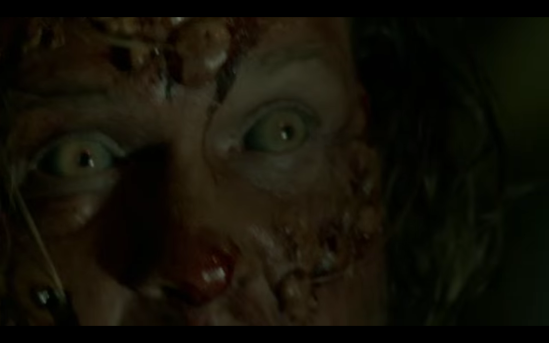
“What’s Eating Todd?” is a Here and Now production from a duo of women filmmakers with director Renata Green-Gabor making her directorial feature film debut from a story penned by first time screenwriter Brandi Centeno. The 2016 horror-thriller is a spun take on the weary zombie genre without necessarily going the full-fledged slow shuffle and moan zombie route from a story involving an antagonistic infected metamorphosing from an infestation strain of flies. The parasitoid concept is a closely related to a sensationalized man versus nature horror tale seen with a fair amount of anonymity attached and, the film, perhaps, could be an indie homage version of the George Langelaan’s short story, “The Fly.” Almost for certain that Green-Gabor received some sort of influence for “What’s Eating Todd?,” which she shot through the summer of 2013, from her thespian mentor Jeff Goldblum, the face of David Cronenberg’s remake of “The Fly” released 1986, and thus answered the call to chance her first steps into feature films that had this connect to her mentor while providing and retaining her own originality into incubational horror or even a small minute into body horror, releasing the film three years later.

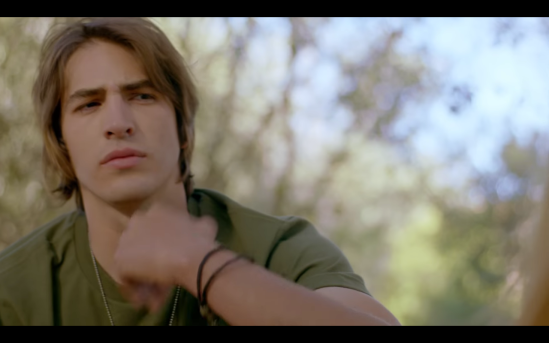
The marketing and selling points for “What’s Eating Todd?” is not the humble acting talent. It’s not a criticism. It’s the truth, as the cast is constructed of unknown names and unrecognizable faces. However, what is also true for a film written by female writer and quarterbacked by a female director is a leading role arising for an aspiring or established female actress. In this case, the role of Valerie goes to a modestly versed Madison Lawlor (“The Axe Murders of Villisca”) who not only becomes the strong and adaptive survivalist protagonist painted against a backdrop of coarse and flawed men who are either exposed of their short comings, involved in illegalities, or anguished to reveal their true nature. Lawlor maintains Valerie’s unwavering love and faithfulness to Todd, being the voice of reason amongst a naïve and obnoxious crowd that are mostly consisted of her cousin Alex (“Mega Shark vs. Mecha Shark’s Phil Biedron) and his friend Duane (“The Zombinator’s” Scott Alin). Alex and Duane are a couple of super frivolous “bros” primarily integrated into the story to raise the body count. Cousins Valerie and Alex do attempt some kind of meaningful connection regarding identity and status in the hierarchy of high school, but was meagerly written and comes to be more a bickering battle of perspectives. Biedron and Alin sufficiently exact the right amount of goofball, oversexed, and dumb-wit to pull off a surface level duo. Todd (“The Z’s” Adam Michael Gold) is certainly the biggest failure out of the group of friends. The birthday boy’s upheaval from being the luckiest guy in the world to the world’s biggest problem goes into squandered territory that floods more questions than answers into Todd’s from baseline growth relationship with Valerie to his revamped mentality and accomplishments from ambiguous, circumstantial backstory of flesh eating and conspiracies. The weight of Todd and Valerie’s connection is only expositional rather than shown and the groundless Todd absorbs the downfall during an anti-climactic finale of internal struggle with Valerie as the source material. The film rounds out with Danny Rio and Carlos Antonio.

Though the cast won’t draw in an audience, the snappy “What’s Eating Todd?” title might turn some heads in it’s direction. However, “What’s Eating Todd?” inherently sounds like a farce and if you’re expecting humor, disappointment will rear its ugly, funny-less head as Green-Gabor had no intentions for a comedy element. Another misleading of marketing is the Indican Pictures’ DVD cover, which I’m assuming is also the film’s actual poster, of a woman in a cutoff sleeve jersey t-shirt with “Zombie Killer” in the name field and holding a sword (katana, maybe?) while blurry silhouettes of lumbering undead move at an unknown pace toward her in the background. Let’s analyze the comparison between cover art and actuality. As mentioned, the story’s female heroine is appropriate to the cover, but isn’t contextually accurate to the film. Valerie, the supposed character on the cover, isn’t holding a sword nor is she dressed in a “Zombie Killer” jersey t-shirt. As for the zombies, the term zombie is only made in jest by one of the bros and there is some undead moments of gore including gnawing and ripping out the jugular, but no tearing out of intestines, no munching on fingers, nor are there any instances where eating people like finger-licking fried chicken is happening here. Plus, there is only one adversarial fiend and not more as the cover suggests.

Indican Pictures distributes a Here and Now Production of “What’s Eating Todd?” onto a not rated DVD home video. The region 1 release has a runtime of 89 minutes and is presented in an anamorphic widescreen, 1.85:1 flat aspect ratio, on a 35mm, hand held camera. The digitally shot image renders brightly and clean with hardly any flaws worth disclosing. The night scenes are slightly tinted blue with a higher contrast to lighten up the image without being overly dark in the middle of the woods without much natural lighting and the digital noise has little intrusiveness despite the budget constraints of an indie production. The English language Dolby Digital surround sound has adequate range and depth and, for the most part, a dominating dialogue presence. Brief moments of Revenge of the Bimbot Zombie Killers’ Andy George’s original score would drown out dialogue during imperative, but happened too far and few in between. Other than a typical static menu and preview trailers from Indican Pictures, no other bonus materials reside on the release. “What’s Eating Todd?” is not a zombie movie despite the hoodwinking cover. What Renata Green-Gabor did direct can be categorized as a branch of the undead, an infestation altering DNA that mounts to destruction on and around of the affected that, technically, no longer makes them a part of the living human race. In short, expect a sheep in wolf’s clothing in this roughly run-of-the-mill horror that aims high, but misses low by offering too little to sanction a good story.

Rent. Own. What’s Eating Todd? Do you know?