Luther the Berserk has EVIL Plans in the Bayou! “The Naked Witch” reviewed! (VCI / Blu-ray)

A string of horrific murders of beautiful women becomes the study of a six-person team of paranormal researchers who head down to the Louisiana swamplands surrounded by notorious superstition and urban legend for once being the home of witchcraft.  One of the researches, Tasia, is a sensitive, a highly psychic receptive woman and student of team leader, Dr. Hayes, to sense the area’s extrasensory waves thought to be behind the murders, especially the ones of a satanic ritualized nature.  On the isolated island, encircled by swamp and gators, a powerful Satan acolyte known as Luther the Berserk seeks to spellbound Tasia to complete his coven of witches and evokes the help of Jessie, a haggard crone with the ability of mind control over those with sensitive abilities.  One-by-one, the researchers are being picked off for the blood ritual and it’s up to the survivors to stop Luther before it’s too late.
A bold psychotronic of the 1960s, “The Naked Witch” has a tingly macabre aura about it that’s not swinging, swanky, nor is it groovy.  Also known primarily as “The Witchmaker,” there’s a thick circumference of dread and darkness surrounding the William O. Brown written-and-directed picture.  Brown’s sophomore film behind the 1965 “One Way Whaine” comedy about Hawaiian babes and bank robbers is a stark 180 degrees four years later that showcased the filmmaker’s range from laughs to terror on the cusp of the early days of the Satanic scare.    “The Naked Witch” has also been reissued as “Witchkill,” The Witchmaster,” and “The Legend of Witch Hollow” and while Brown’s film goes by many monikers, one thing is for certain is the film was shot partially on location in the mucky swamps of Louisiana during exterior locations whie the remaining interiors were in a Los Angeles studio.  The U.S.A. made film was produced by Brown with L.Q. Jones serving as executive producer and released independently under LQ/JAF Productions.

Personally, horror films like “The Naked Witch” that were produced through the 1950s and into the 1960s always share mixed feeling that can only be described as from “the content is revolutionary for Americana horror post-World War II cinema” to “the stiff, exposition acting just doesn’t work with the grim nature of the ahead of its time story,” and as Marty McFly once said back in 1955, “I guess you guys aren’t ready for that yet.”  There’s nothing inherently bad about “The Night Witch’s” acting other than the lack of emotional weight from the troupe needed to lift up and be on the same level as the story that includes hanging half-naked women upside, slitting their throats, and drinking their blood out of chalices in a coven on satanic confluence.  “Revenge is my Destiny’s” John Lodge is the exception that goes against the stagey type of stilted acting grain as lead satanist apostle Luther the Berserk, flashing devil hand gestures and acting like a wild man in his ravaging role that’s ambitiously true to character and subtly perverse in blood and in lust. The same passion portrayal of character is not extended the principal leads of “Green Acres’” Alvy Moore and “Deep Space’s” Anthony Eisley playing a pair of opposing scientists – Moore as the more supernaturally open-minded Dr. Ralph Hayes and Eisley has the rigid in rationality Dr. Victor Gordon.  Their conflict of beliefs creates another subplot satellite that abides by superstition and lore as well as the division it produces, a decent representation of the overall contrarianism inside people as a group, then you have Tasia, a medium struggling with her powers being pulled in two different directions.  The European heritage and Canadian born blonde knockout Thordis Brandt steps out of the saucy side role and into one of her more prominent performances as the Sensitive who is manipulated by Luther’s unholy powers over the coven.   The coven and researcher cast rounds out with Shelby Grant, Tony Benson, Robyn Millan, Burt Mustin, Warrene Ott, Helene Winston, Carolyn Rhodimer, Larry Vincent, Patricia Wymer, Del Kaye, Diane Webber, Valya Garanda, Gwen Lipscomb, Nancy Crawford, and Sue Bernard. 

“The Naked Witch” is not as graphic as one would assume with such a scandalous, provocative title.  Again, you must remember, the film is originally titled “The Witchmaker.”  Yet, for a 1960’s horror, William O. Brown’s satanic sorcery picture is too advanced for the era’s mostly puritanical audience.  I’d even go as far as saying “The Naked Witch” borders the line between the foggy and gloomy atmospherics and set productions of Gothic Hammer and the ever-close-to-the-edge designed no nudity or graphic death coverups of an early Russ Meyer production sans the zany cartoon sounds and the rapid-fire editing.  An abundant of dread hangs in the air of starched collars and secretary skirts that conjures more than just the Devil’s presence in the bayou but a heavy dealt hand of a no-win situation full of desperation and death.  The story itself evolves from the brutal, ritualistic killings of strung up and stripped naked young, beautiful women to a more focused objective of converting Sensitive Tasia into a full-fledged witch that completes Luther’s coven and resurrects his master for a diabolical Hell on Earth.   The broader strokes of “The Naked Witch’s” narrative places the fate in the hands of a group of students and naïve ignoramuses playing catchup to what’s really happening under their noses.  Of course, alarm bells never go off and panic never really sets in for the group of survivors after each death in what is more like an aw-shucks and move on reaction.  Granted the team is stuck on the island for a few days with no way to call for help but that doesn’t mean being not proactive or being crippled by fear doesn’t have a place amongst them and in the story, especially missing opportunities within the researchers to turn on each other by way of Luther’s manipulating witch, Jesse, who herself has her own drastic motivation with a blood ritual that make her young again. 

“The Naked Witch” is fairly cladded with atmosphere and ghoulish intentions instead of the mentioned nudity but the new VCI 2-Disc Format Blu-ray and DVD release provides the bare essentials with a restored 35mm archival print into 4K-UHD scan.  Presented in a widescreen 2.35:1 aspect ratio, the grading is rich and overall image and details look pleasing with depth in most scenes and grain is era appropriate appeasing.  Skin tones shade a little more toward orange but maintain within spec but on the higher end of a RGB.  The print has sustained some damaged with a slew of scratches, dust and dirt, and cell burns peppered throughout and can be a nuisance but nothing terribly critical to warrant narrative loss or a complete loss of viewing pleasure.  The English Dolby Digital Mono track offers little to try and immerse viewers into the swampy bayou and that’s a real shame since visual elements are detailed.  There’s minor background noise is palpable but not distinct to warrant attention.  Dialogue and the Bolivian born and “The Town that Dreaded Sundown’s” Jaime Mendoza-Nava’s gypsy-esque and minor key brass and percussion score are the heavy hitters in this presentation.  Dialogue has insignificant hissing and crackling but as a whole, the track comes over clean enough to firm pass well over grade.  Option subtitles are available.  The only encoded bonuses are a 2024 commentary track by film enthusiast and artist Robert Kelly and a poster gallery that include not just “The Naked Witch” but other 60’s horror pictures.  VCI’s standard Blu-ray incasement has one-sided still picture and illustrated compositional artwork that roughly produces the madness incarnated with the DVD on right and the Blu-ray on the left inside, individual pressed with images from the front cover.  The region free disc has a runtime of 99 minutes and the film is rated R.

Last Rites: “The Naked Witch” has no skin in the game in its necromancy ways but finds the fog of dread easy to become lost in with interesting characters and a ghoulish witch and ritual vise gripping it on both ends on a verge of being something more.
“The Naked Witch” on Dual Format DVD/Blu-ray from VCI!

EVIL is in the Eye of the Beholder! “Mansion of the Doomed” reviewed! (Full Moon / Blu-ray)

“Mansion of the Doomed” on Blu-ray.  Hold Onto Your Eyeballs!

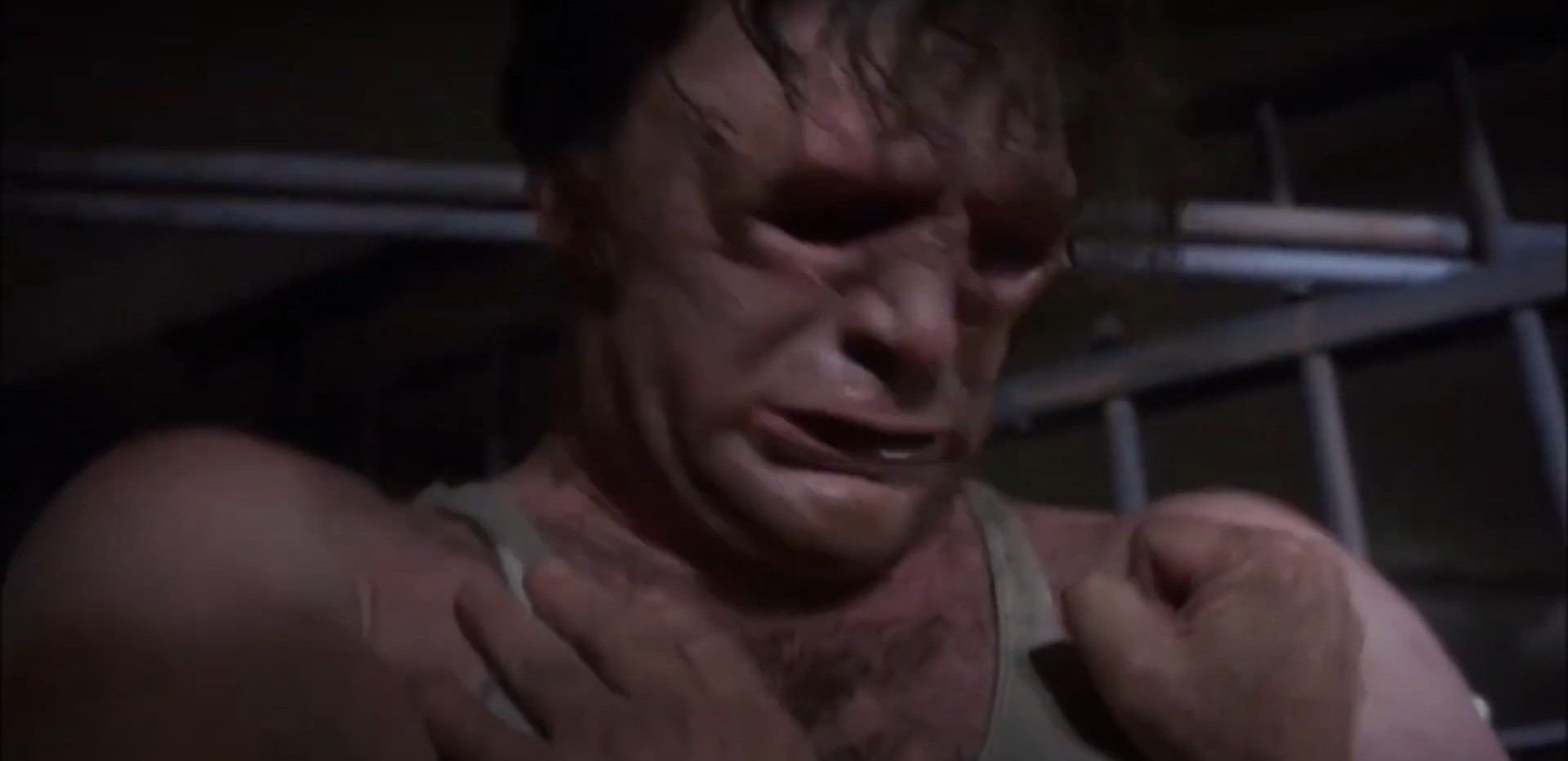
In a stroke of irony, renowned optometrist surgeon Dr. Leonard Chaney had a car accident that accidently causes his young adult daughter permanent blindness.  Obsessed by guilt and determined for her to see again, Chaney moves toward a not only radical procedure but also unethical one of a full eye transplant.  The catch for this type of surgery to be successful is the eye has to be extracted from a living patient.  Unwilling to wait for a donor, Chaney employs every deceptive tactic to lure unwillingly healthy and beautiful globular organ donors into his dark basement where he drugs them unconscious, surgically plucks out their entire eyes, and leaves them locked in a cellar cage, blind and crudely healed with scar tissue but still alive.  With each failed attempt at restoring her eyesight, the reminders of his experiments linger down below, screaming in pain, and pleading for their lives.  Soon, those pleas will ultimately catch up to him. 

Before his fascination with mini-sized maniacs of killer animated toys and malicious experimental oddities, Charles Band used to produce other types of original horror and the “Mansion of the Doomed” was one of them.  The 1976 Frank Ray Perilli (“Dracula’s Dog,” “Alligator”) written and the “Dead & Buried” and “Halloween 4: The Return of Michael Myers” actor Michael Pataki directed mad surgeon “Mansion of the Doomed” was the first feature film Charles Band officially stamped his actual name onto along with father and western screenwriter, Albert Band, as financial executive producer.  While “Mansion of the Doom” is known by various other titles around the world – “Massacre Mansion,” “Eyes,” “Eyes of Dr. Chaney,” “House of Blood,” “Eyes of the Living Dead,” and “The Terror of Dr. Chaney” – the one aspect that the film is firm in is its Hancock Park and estate shooting location in Los Angeles as one of the very first features to come out of Charles Band Productions company.

Lance Henriksen.  You know name, right?  Sounds familiar, yes?  The “Aliens” and “Pumpkinhead” actor, hot off the success of “Dog Day Afternoon” with Al Pacino, begins his tour de force of horror and dark science fiction with the Pataki mad doctor eye opener.  Dr. Chaney uses his misguided experimental expertise first on Dr. Dan Bryan, played by Henriksen, after Dr. Bryan’s recent romantic relationship breakoff with the recently blind daughter of Dr. Chaney, Nancy (Trish Stewart).  Before he became the narrating voice in TV’s “Knight Rider,” the veteran actor Richard Basehart, who also had a role in the 1977 “The Island of Dr. Moreau,” became his own inhumane medical malpractice physician in Dr. Chaney.  Though Basehart makes for the epitome of a professional doctor, his performance was the weakest link in the cast’s locks that didn’t exhibit the stress and desperation of a man continuously exploiting and disfiguring people for his own personal guilt release.  The guilt was not compounding as much as the story wanted to suggest, but we feel more empathetic to Dr. Chaney’s longtime assistant in Gloria Grahame (“Blood and Lace,” “Mama’s Dirty Girls”) who we can see her character dissolve with each abducted patient and affected to the core by their sightless screams.  “Mansion of the Doomed” rounds out the cast with Al Ferrera (“Dracula’s Dog”), Marilyn Joi (“Black Samurai”), Donna Andersen, JoJo D’Amore (“Dracula’s Dog”), and Katherine Stewart.

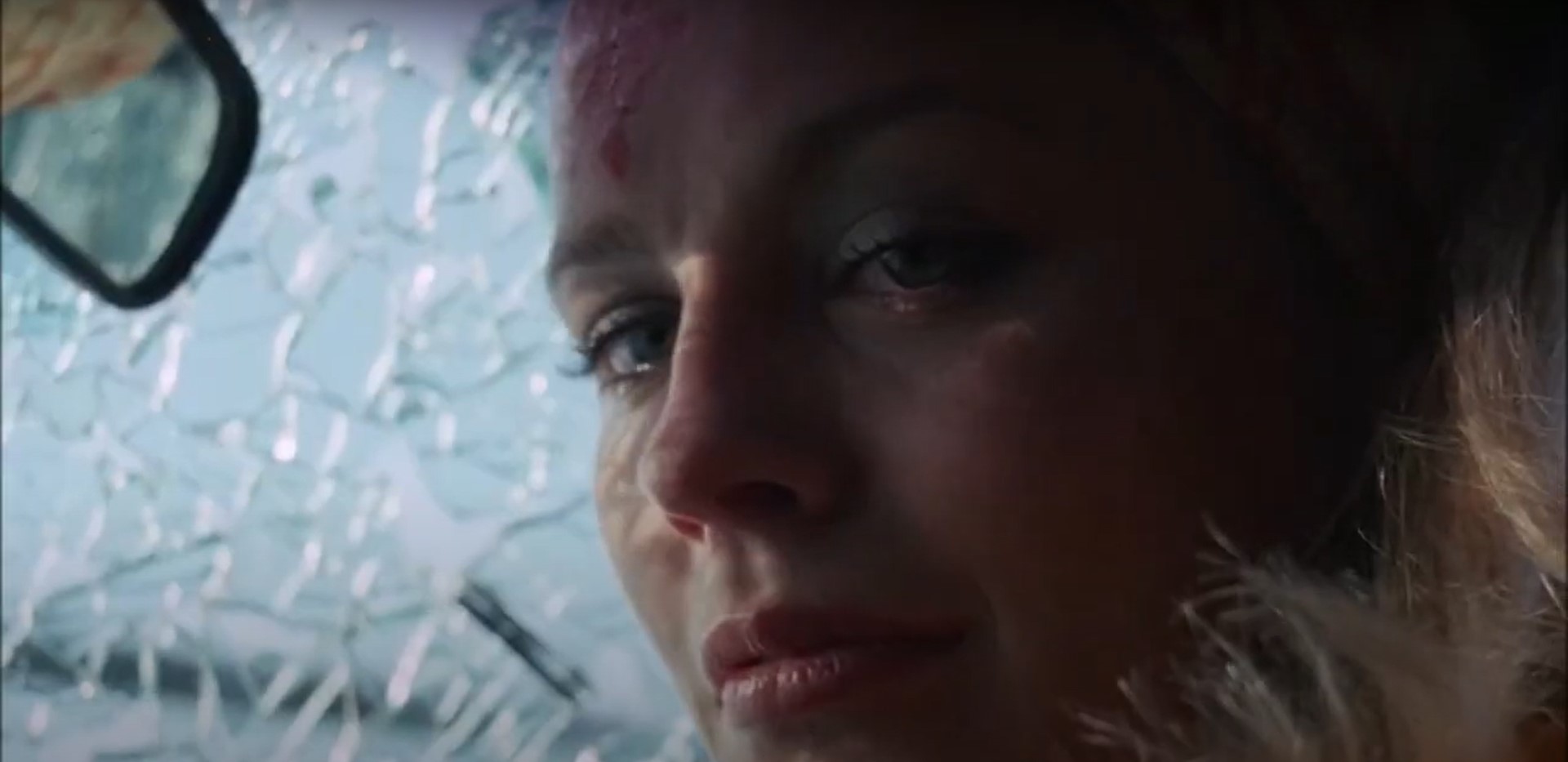
Michael Pataki’s “Mansion of the Doomed” is an eye-peeling shocker that’s dark and grim to the core and has an eye for cynicism. I could keep the eye puns going but that would be too easy to pluck out. Perilli’s story is rather plainly spoken with not a lot of fluff diving into medical or procedural jargon to bore you down into a loss of interest. Instead, the good doctor character goes right to work getting his hands elbows deep into the eye sockets of his victims and that’s how this particular exploitation perfectly crafted the balance by tabling the under stimulating medicalese with caged disfigured patients left to live in agony. Where Pataki and Perilli faltered some is in the preface by skimming the surface of the Dr. Chaney caused accident that rendered Nancy blind when she face-planted right into the doctor’s windshield as he swerves to not runover a mutt. In driver’s ed, you’re supposed to hit the small animal that runs in front of you in order for these kinds of accidents don’t happen! Told in the inner thought of a flashback, the force between the two immovable objects shatters the glass but leaves Nancy unscathed physically yet, somehow, she loses her sight in both of her eyes and while Dr. Chaney is unable to best the blindness with everything the surgical optometrist throws at it, perhaps that’s the unsolvable mystery that beleaguers abashedly an expert at the summit of their excellence. ‘Mansion of the Doomed” is not a feel-good film as not one single character has a positive outcome and having lost more than just their sight but also, to name a couple, their humanity and their hope.

Uncut, restored, and remastered onto a new Blu-ray release, Full Moon Features re-release “Mansion of the Doomed” onto 1080p, full high definition, from the original 35mm negative. Source material held up over father time with a pristine 85-minute uncut transfer to retouch in a pop of color and refine the details in a softer, more airy-soft image, presented in a widescreen 1.85:1 aspect ratio. Full Moon offers two audio options available with an English Dolby Digital 5.1 surround sound and a Dolby Digital 2.0 PCM. Though slightly staticky in the ambient and dialogue tracks, the balance works and is full-bodied around more essential scenes of surgery and the cries of anguish. Dialogue doesn’t sound overly boxy or hissy and the cult composer Robert O. Ragland’s (“Deep Space,” “Q”) classic orchestra score come across with a powerful range that speaks the scene without exposition. The region free Blu-ray has no extra features, leaving this release as a bare bone, feature only. “Mansion of the Doomed’s” harrowing ending induces stupefying blank stare and feels like a brick just walloped you in the face knowing that every pawn in this story loses at the hands of man disillusioned in playing God.

“Mansion of the Doomed” on Blu-ray.  Hold Onto Your Eyeballs!

EVIL’s on the Shallow End of “Deep Space” reviewed! (Scorpion Releasing / Blu-ray)

“Deep Space” Invades Blu-ray on Amazon.com!

A government funded space craft containing a monstrous biological weapon crashes to Earth.  The organic creature is genetically coded to be a killing machine with a craving for eating it’s enemy and, now, it’s loose in the city and not responding to the scientists’ command self-destruct codes.  Tough and obstinate cop Ian McLemore and his partner, Jerry Merris, are ordered ot investigate the crash site before government agents take control of the case, even removing a pair of strange organic pods with them for further examination.  When a couple of close colleagues are shred to pieces at the hands of the creature, McLemore will stop at nothing to figure out what’s wreaking havoc in his city and blow it away.  

1988 – a weird, yet greatly satisfying transitional period of fading 80’s horror into nipping at the insanity of 90’s brazen prosthetic creature effects right before the turn of the computer generated decade.  Granted, Fred Olen Ray’s Sci-Fi horror “Deep Space,” which is ironically set on Earth, is very much an enamored 1980’s horror, but the Olen Ray film is where you can kind of see the turning of change on the horizon when the story’s ideas become too grandiose for tangibility alone, no matter how much us fans love to see practical effects over CGI.  The script, cowritten between Olen Ray and T.L. Lankford (“Hollywood Chainsaw Hookers,” “Fatal Passion”), is massive more expensive than anything the filmmaker’s had previously done and with a $2 million budget, “Deep Space” gets a giant explosion, high speed car scenes and wreckage, the iconic face and voice of Charles Napier, a Xenomorph-like creature, and a ultra-bloody chainsaw scene that could give “Evil Dead’s” Ash Williams a run for his money.  “Deep Space” is a production of Trans World Entertainment (no, not the same monikered company that sunk money into the bleeding financially physical media brick and mortar outlets like FYE, Camelot Music, or Suncoast) and shot in Los Angeles under producers Olen Ray, Alan Amiel (“Inner Sanctum”), and Herb Linsey (“Neon Maniacs”) with Yoram Pelman (“Commando Squad”) as executive producer.

At the center of the chaos is Ian McLemore, a hardnose and stubborn, harmlessly sarcastic detective who goes against the authoritative grain and cuts through bureaucratic tape to get the job done.  Playing McLemore is the unmistakable Charles Napier.  The “Rambo:  First Blood Part II” and “The Silence of the Lambs” actor, who is about as legendary as they come in supporting roles, lands his own lead man role with his own buxom beauty romantic leading lady in Ann Turkel {“Humanoids from the Deep”), as a new, but experienced, cop, Carla Sandbourn, on the L.A. force.  Experiencing Napier as an attractive male lead was a little more off-putting that initially thought.  The veteran actor, who began a career in the movie picture industry in his early 30s which was later than most of his counterparts, is hovering around early 50s in this role, middle of the ground with his physical appearance, and has a masculine square chin akin to Ron Pearlman with matching hair color to the “Hellboy” actor.  At an age gap of approx. 10 years between them at the time of filming, Napier and Turkel make their courtship appear easy; in fact, almost too easy as Turkel’s drops her shirt at the mere sight of McLemore dressed as a Scotsman blowing away at bagpipes for a gag effect in sleeping with him.  Both Napier and Sandbourn are charming enough to pull off a love affair without causing too much of a they’re so old stir.  “Serenity’s” Ron Glass plays the casual with the flow Partner Jerry Merris, “The Inglorious Bastards’” Bo Svenson is full of patience as the McLemore insubordination absorbing Captain Robertson, and the original Catwoman herself, from the Adam West “Batman” television series, Julie Newmar as a psychic who can clairvoyantly see the creature’s murderous mayhem.

The fact that “Deep Space” doesn’t take place at all in space is innately tongue in cheek to begin with, but that brand of flippancy courses through the film’s veins despite the blood splattering and semi-serious veneer, weaving between an action-horror and a horror-comedy during the entire 90-minutes.  Some of the comedy is intention, such as McLemore’s husky wit and sarcasm, but there’s also the extremely foggy campy side to this gem.  Some of these elements include the creature being hinted as a genetically mutated cockroach or the left field use of Julie Newmar’s psychic abilities that are randomly injected the storyline for the sole purpose of forewarning McLemore over the telephone rather being an intrinsic piece to stopping the creature.  The creature carnage would undoubtedly be investigated and exterminated without the psychic’s help, making her character farcical in futility.  “Deep Space” also pulls a little inspiration from “Alien,” maybe even the sequel, “Aliens,” with a toothy, long-headed, and eyeless black organism that resembles much like a Xenomorph or the Xenomorph queen and there’s also a near shot-for-shot sequence of a security guard whistling to and trying to persuade a cat to come to him while the monster rises from behind and strikes a fatal blow.  The scene is very reminiscent of Harry Dean Stanton’s death in “Alien.”  Being campy has it’s highlights but never can fully overshadow scenes that erect suspense or are saturated with gore which “Deep Space” has both with a combination of editing and piercingly sharp sound design and a rip-roaring, blood-splattering chainsaw kill that’s leaves that good metallic taste in your mouth.

There’s no escaping the blood-hungry tentacles of the “Deep Space” monster coming at you in a brand new 2018 high-definition master Blu-ray from Scorpion Releasing, leased from MGM, and distributed by Ronin Flix and MVD Visual. The hard-locked region A Blu-ray is presented in an anamorphic widescreen 1.85:1 aspect ratio and is rated R. Fred Olen Ray knew how to develop an eerie, twirling fog and wind atmosphere and this master crisps up that iconic trope image. Textural details and natural-appearing skin colors are delineated nicely throughout as you can make out every little blemish and hair on a shirtless Charles Napier as well as really getting into the slimy orifices of the creature and having a sense of its viscosity with a decisive sheen. Black areas are inky and dense with the right amount of grain in the overall picture and no obvious signs of image posterization, retaining the natural shadowing, along with no cropping or border enhancements. The English language DTS-HD master audio stereo finds common quality ground with a tidy dialogue track that does Napier’s resonating and recognizable jest justice. However, there is some hissing early on into the film, especially in the lab scenes in the contentious dialogue between the military general and the lead scientist. Omar Tal’s sound design proves vital to the story that relies on the screeching, the scuttling, the whooshing of tentacles, and the booming roars of the creatures, coinciding appropriately with Alan Oldfield and Robert O. Ragland’s rather run of the mill serrated and discordant electronic score. What “Deep Space” Blu-ray lacks is robust extras with only an audio commentary with director Fred Olen Ray and a scene selection index. “Deep Space” ages about as well as you expect over the last 35 years, but this Fred Olen Ray creature feature relic becomes rightfully preserved for being quintessential B-movie verve that no longer seems to exist in today’s age and also the fact that Charles Napier wears a kilt.

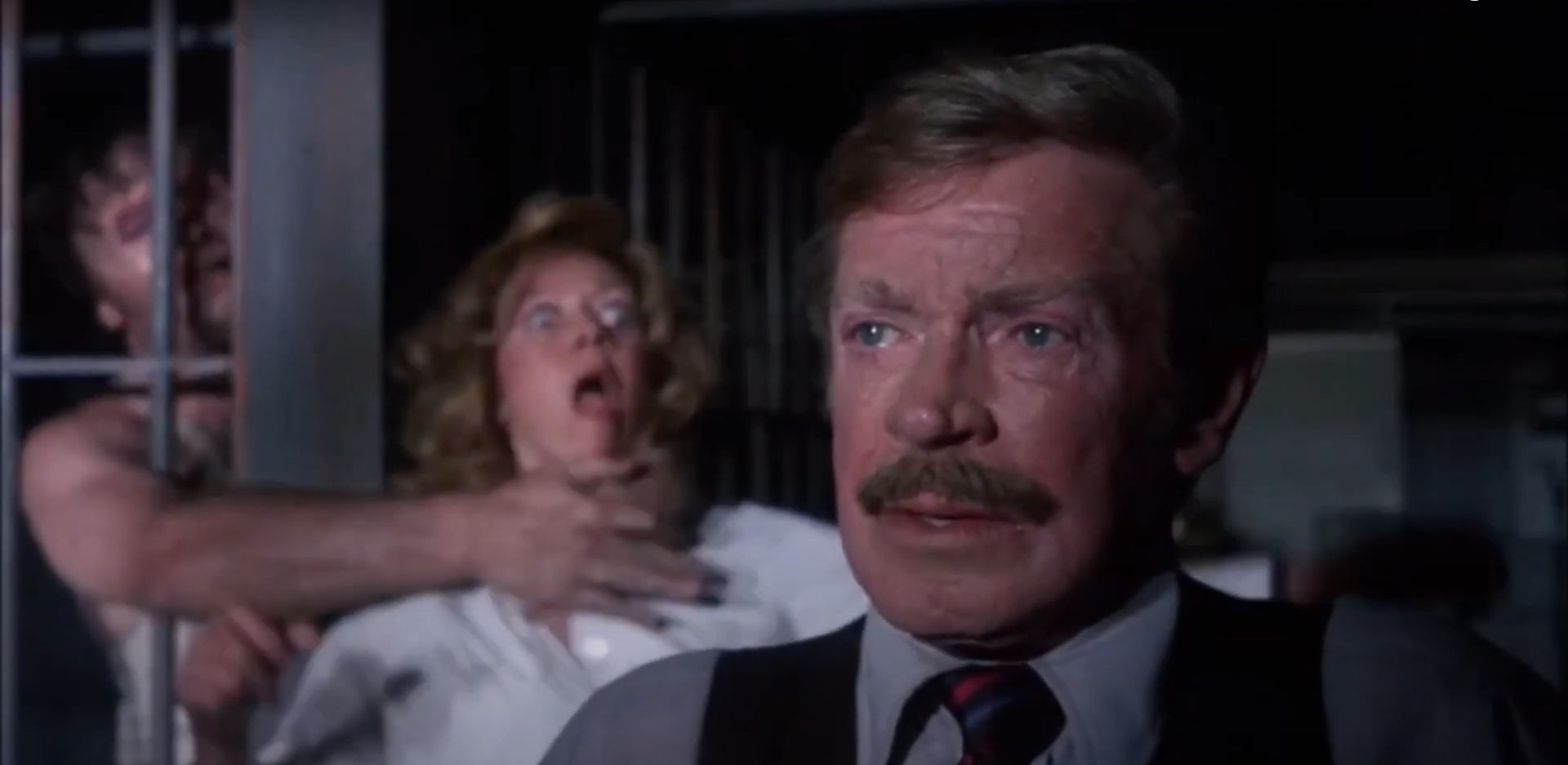
***Stills do not represent or were captured from the Blu-ray release

“Deep Space” Invades Blu-ray on Amazon.com!