Sometimes Sacrificing for Satan for Favors Does More EVIL Than Good! “Sex Ritual” reviewed! (International Media Network / DVD)

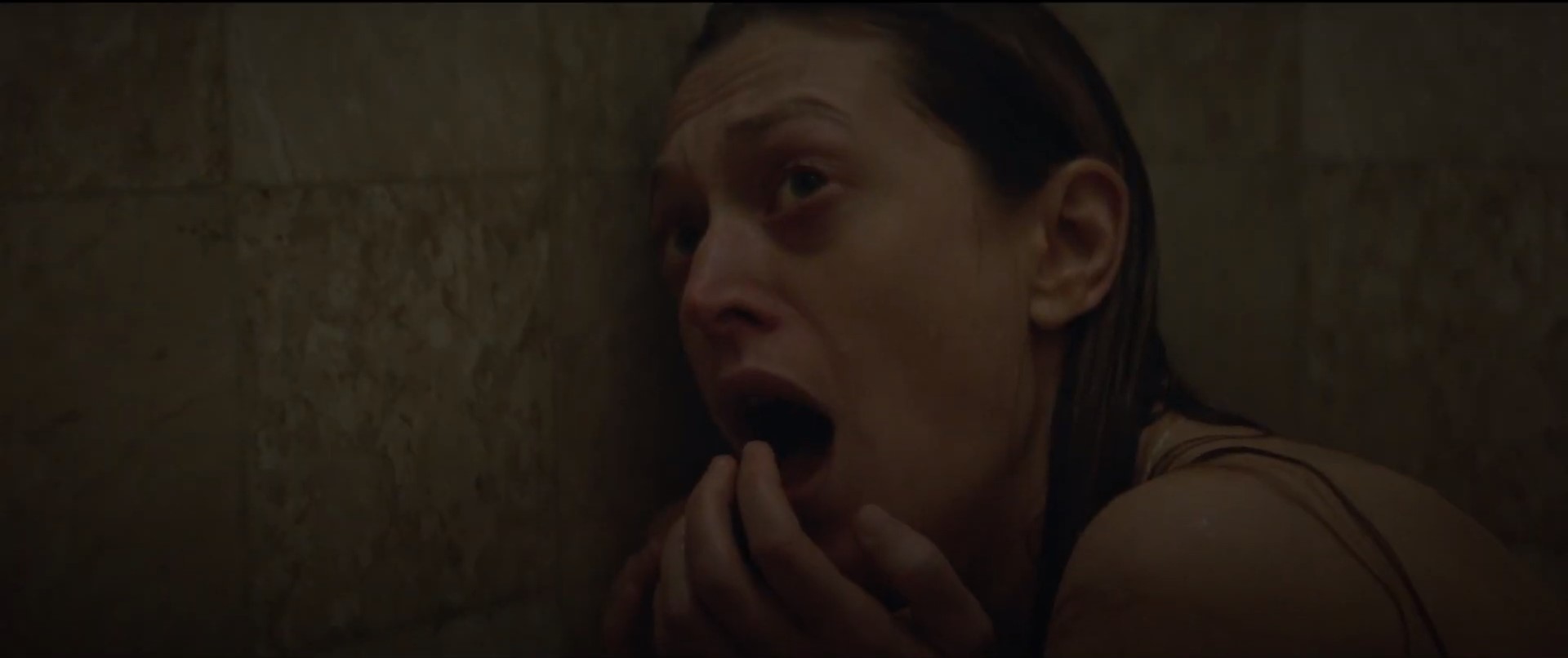
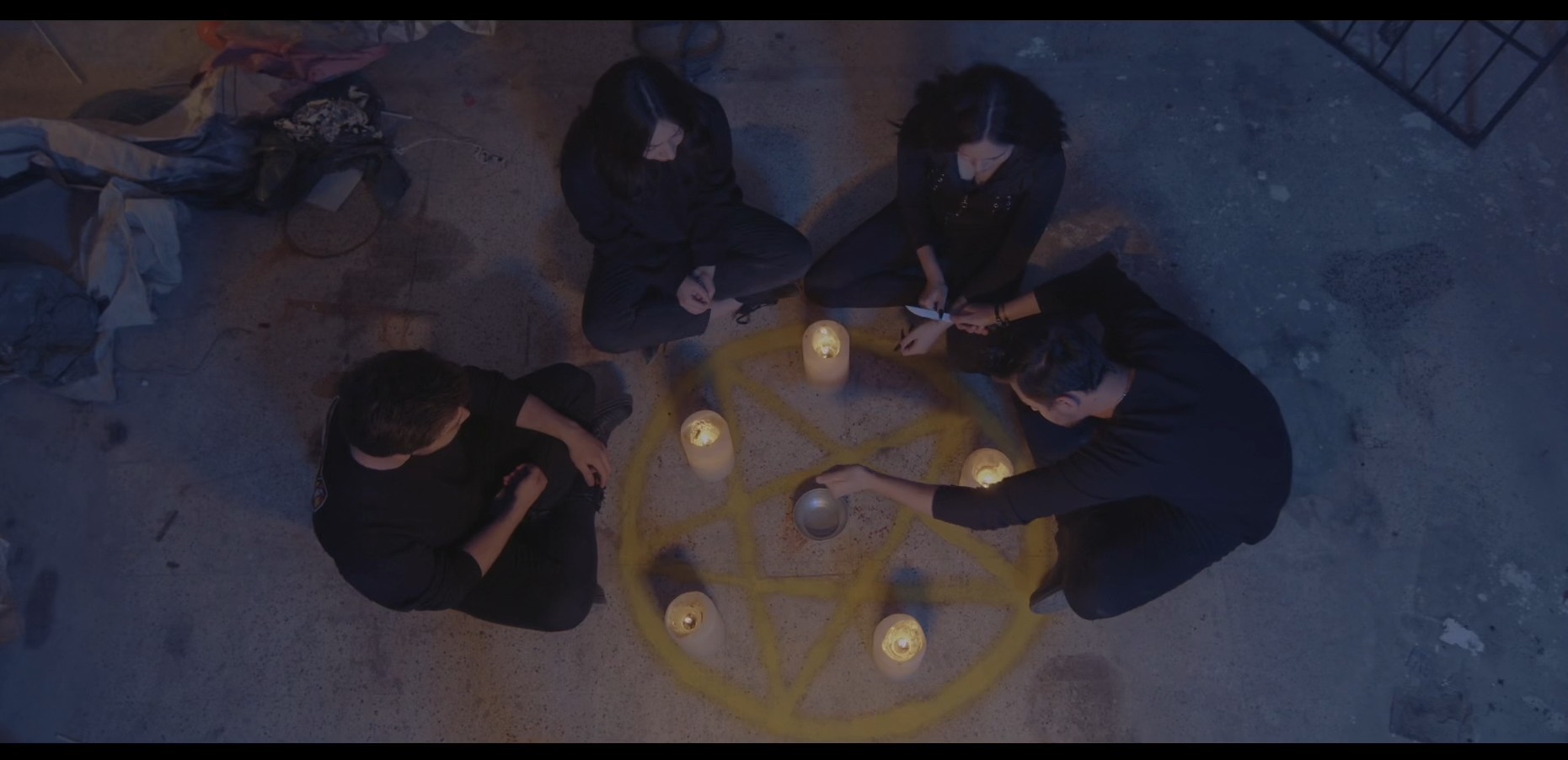
The sudden death of her mother has left Ceren in the hands of a pettish and immoral stepfather.  Smacked around and even possibly raped while unconscious, Ceren becomes reserved while being on defense whenever her stepfather is around.  She ultimately joins a satanist group at the behest of friend Tuna who has ulterior motives of human sacrifice for the 13th of the sacred year where a rare celestial alignment allows Lucifer to grant powers to his disciples in return.  Ceren’s reluctant to be the Satanists’ much needed fourth person for the ritual, involving drinking each other’s blood and eating a helpless kitten, has nearly pushed her to the limit but when a young woman, a promised sinner, is kidnapped, tortured, and murdered on a pentagram and all in the name of Lucifer, Ceren is pushed into immense guilt.  When each of their supernatural powers come to light, Ceren has the ability to resurrect her deceased mother who takes care of Ceren’s immediate problems, such as her abusive stepfather, as well as be a guide to help the falsely accused sinner, the sacrificed young woman, to take revenge on her satanic murderers.
Never in all my horror movie watching existence have I ever seen, or come across, a Turkish horror movie.  Well, there’s a first for everything and Özlem Yesilyurt is the first director to have his horror film from Turkey, entitled “Sex Ritual,” to cross my desk.   Granted, “Sex Ritual” is an eye-catching and provocative title with lots of loaded promises but the conspicuous title is a Westernized conjuring to lure viewers, like me guilty as charged, into an intriguing concept based off title alone.  The real title is “Seytanin Elçiler,” roughly translated as “The Messengers of Satan” a far, far cry from the more outshining “Sex Ritual” title.  The 2023 satanist horror that allures reclusive and repressed individuals into doing horrible things is a scripted story written by Askin Kartal (“Lilith Cinleri,” aka “Lilith’s Demons” and “Zina” aka “Other”).  Mert Ozan Düz (“Zina”) produces the film under his company, Mert Production Media.
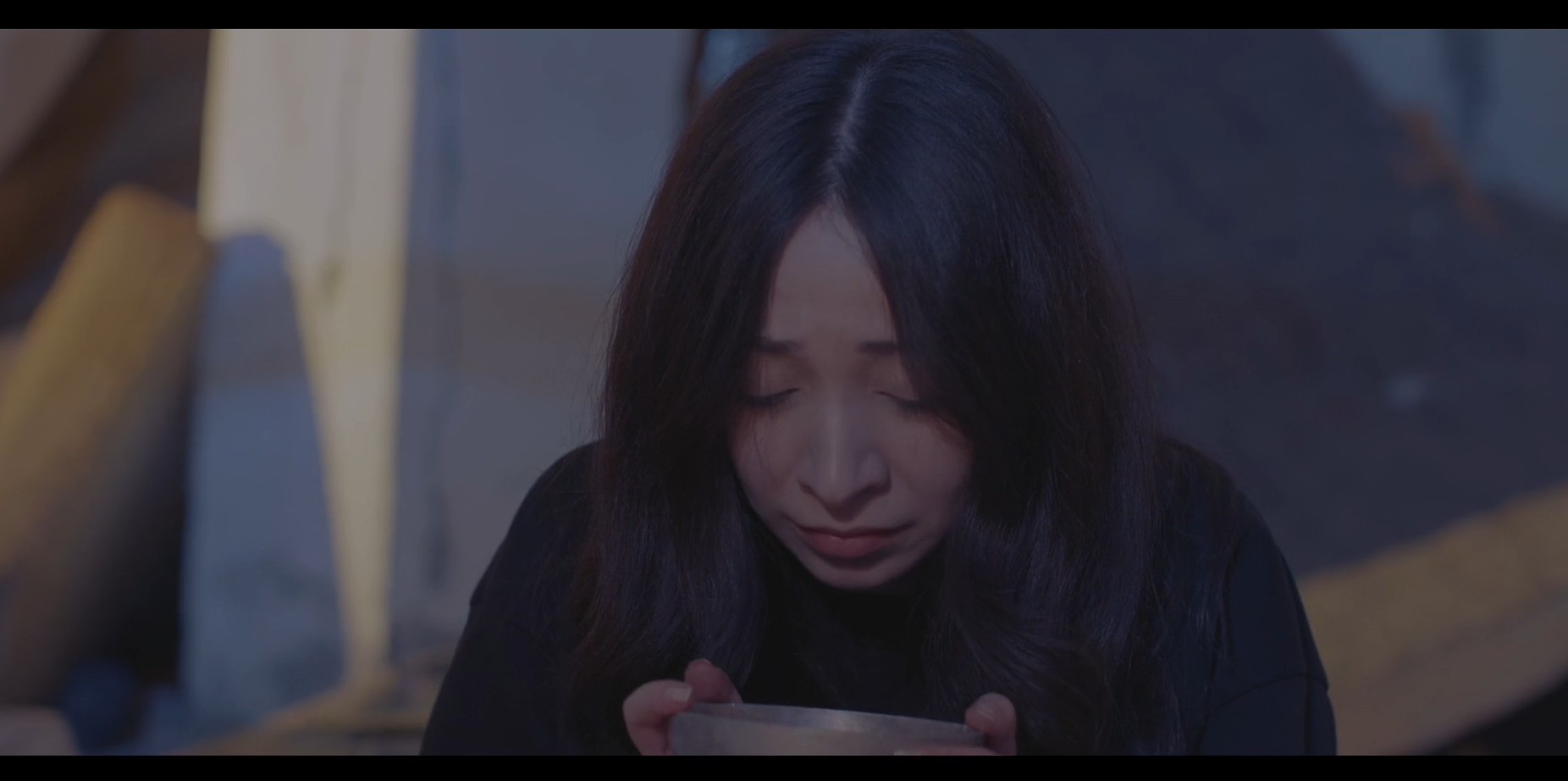
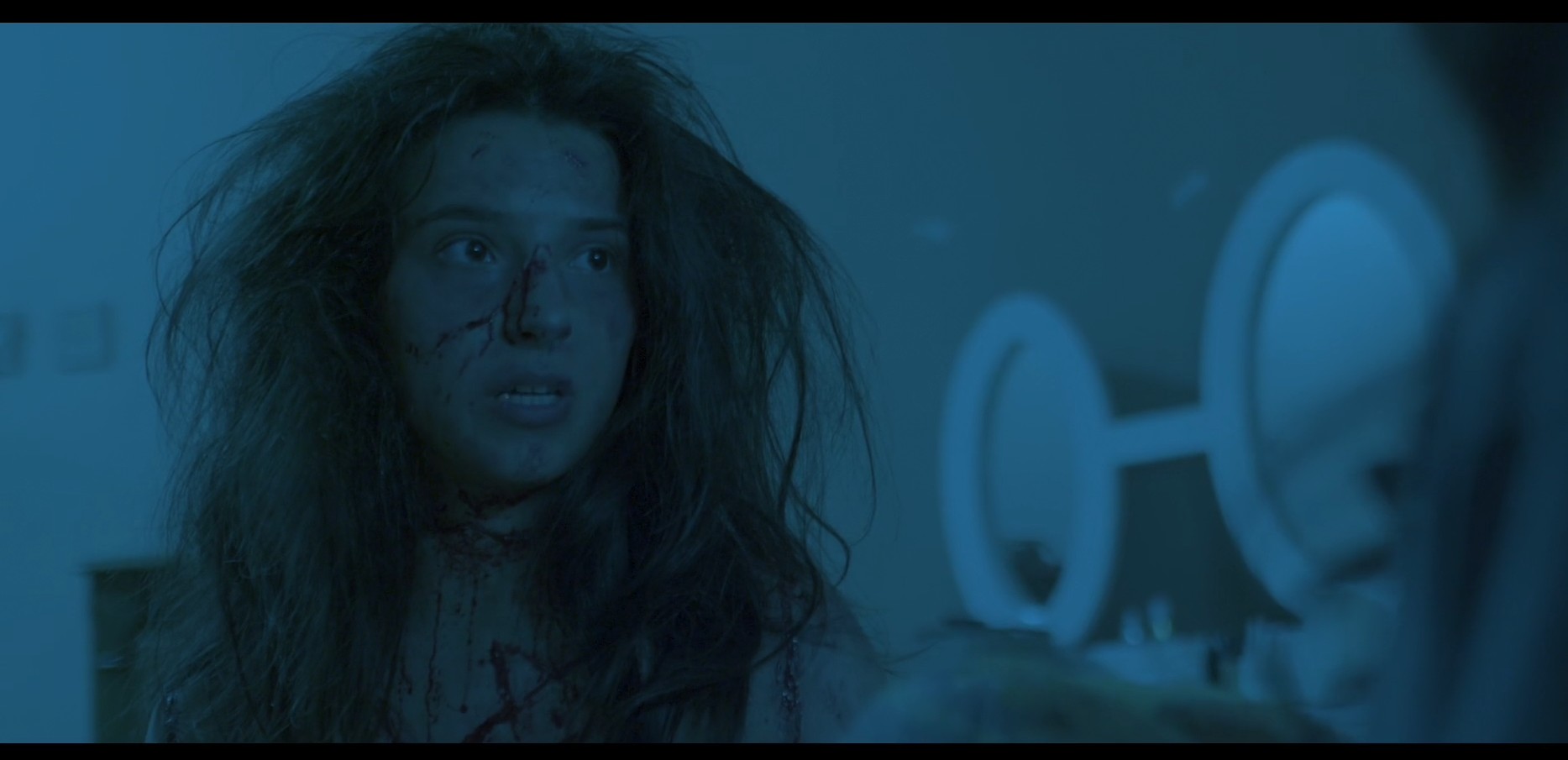
The story is casted entirely with Turkish actresses and actors with Yalçin Cemre at the center of the conflict.  Life browbeaten with her mother passing away and she now dwells under the ignoble thumb of an abusive stepfather, Ceren has little-to-no options in life until the opportunity to escape with a new set of friends, friends of the Satanic kind.  Ceren agrees to join at the constant behest of friend Tuna (Atilla Karahan) who has ulterior motives other than to be a good friend to the downtrodden Ceren in a pure case of netherworld summoning exploitation.  Not sure what Ceren was expecting, or perhaps there is some conjecture lost in translation, but when the satanists, which round out with Caner Gölgüoglu and Yagmur Yenice, begin to cut themselves, drink a bowl of their own blood, kill and eat cats, and the event murder with glee satisfaction, a hesitant Certain eventually goes with all of it without much of a stern opposition that makes her just as accountable for all the ritualized death at the groups’ hands.  Yet, the story makes her out to be the duped heroine and the savior of the sacrificed’s spirit, played by Renas Işıklı in life and death as the unfortunate young woman Selin who has her nipples cut off (not shown but implied with edits) during the sacrificial ritual.  Ceren uses her demonic powers for anti-hero good by taking revenge on those who’ve done inherent wrong to others, such as against her stepfather Kazim Arslantas along with Selin, by resurrecting dead mama (Esra Vural) to take exact the revenge. 
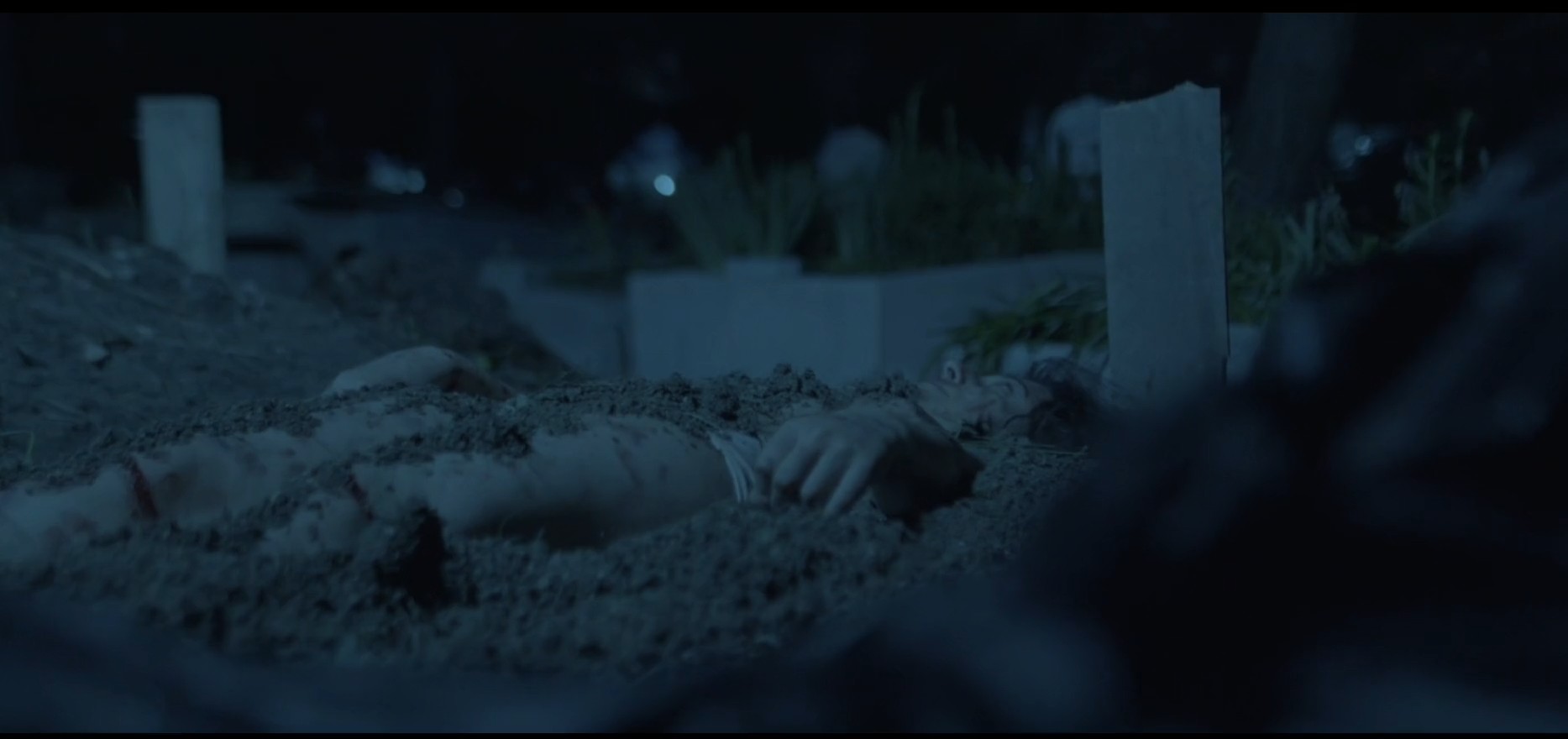
Özlem Yesilyurt’s feature can be construed as a very limited budgeted film with only a handful of simple, repeated locations (a scare abode, a vacant warehouse, outside bench), skirted-by special effects, and less-than-effectual emotional and dynamic dialogue between characters to progress a natural story.  Ceren’s stepfather talks a big improper game with threats and innuendos toward Ceren’s youthful beauty, but his actions are rather mild and any physical abuse, other than a handful of open handed slaps, have been crudely implied, barely registering a sexual encounter.  Strobe lights and some clinging-for-dear-life scab prosthetics make up more than most of the special effects efforts coupled by ham-fisted, overexaggerated performances that are more into theatrical play melodramatics rather than embodying a sense of practical realism.  The satanic enthusiasm between Tuna, Berk, and Asli finds refreshing footing with a disturbing appetite to do all the unspeakable rituals just to be granted unnatural powers, ones that prove to be fruitless against Ceren’s revivification of the dead which begs the question of who exactly did the satanist sacrifice for?  You would think if it was actually for Satan himself, he would not have gifted the fourth wishy-washy acolyte Ceren with a formidable ability over his true followers, unless Satan’s a real son of a bitch and likes to see the world burn no matter who bends a knee to him.  The “Sex Ritual” title is pushed to the seams, stretched to sell copies on a provocative promise that isn’t fulfilled as there’s no sex – voluntary, influenced, or forced copulation – to bring about infernal Hell on Earth, or at least in an inner circle of the desperate to be devilish. 
“Sex Ritual” is a conjured up Turkish horror now available in North America on DVD.  The MPEG2 encoded DVD5 comes courtesy of International Media Network, aiming to bring worldwide horror to western audiences.  Presented in a widescreen 1.78:1 aspect ratio, IMN isn’t the pinnacle of transfer quality but the digital picture has a fair amount of inherent success that has already done the preinstalled work but “Sex Ritual” is a release that’s essentially from farm to table with an ungraded picture within the framework of a 720p resolution, possibly upscaled through your player and television setup.  To its advantage, the feature doesn’t have the scenic, action, or special effects range to test the format and that makes the picture look better, cleaner, and with greater emphasis on detail than typical effects boosted horror with a snappier pace to build the intensity and the terror.  “Sex Ritual’s” often slowed down, lingers on scenes, because of the budget limitations and this results in never challenging the compression.  The audio is an uncompressed PCM Stereo 2.0 mixed in the Turkish language with English subtitles that synch and pace just fine with no sign of misspelling or broken sentence structures.  The little devilry ambiance instilled is held at bay, reserved to be only accessorial to the maniacal laughing and victimizing screams, and the dialogue supplied has prominence and strength between a mostly conversating narrative contrived of pressure, abuse, and bullying with little substance in Ceren’s beset angst and a proper farewell to dear old dead mother.  The generic stock soundtrack from Ekrem Düzgünoglu (“Lilith’s Demons”) lacks vitality to be impactful and sounds as it pulled and edited directly from a generated percussion and synthesizer you find free online.  For encoded special features, there is only a chapter selection on the static menu.  The physical DVD comes in a standard Amaray case with a simple, yet bold and captivating sleeve art with a similar relevance to Ceren and the pagan act with “Sex Ritual” hovering over top, a good marketable look for the IMN release.  The 82-minute DVD comes unrated, though not listed, with region free playback. 

Last Rites: Between the poor taste westernized title and the stale progression of the narrative, “Sex Ritual” has no path forward in summoning its darkest qualities for power and glory in this Turkish-made, low-budget, forgettable thriller.
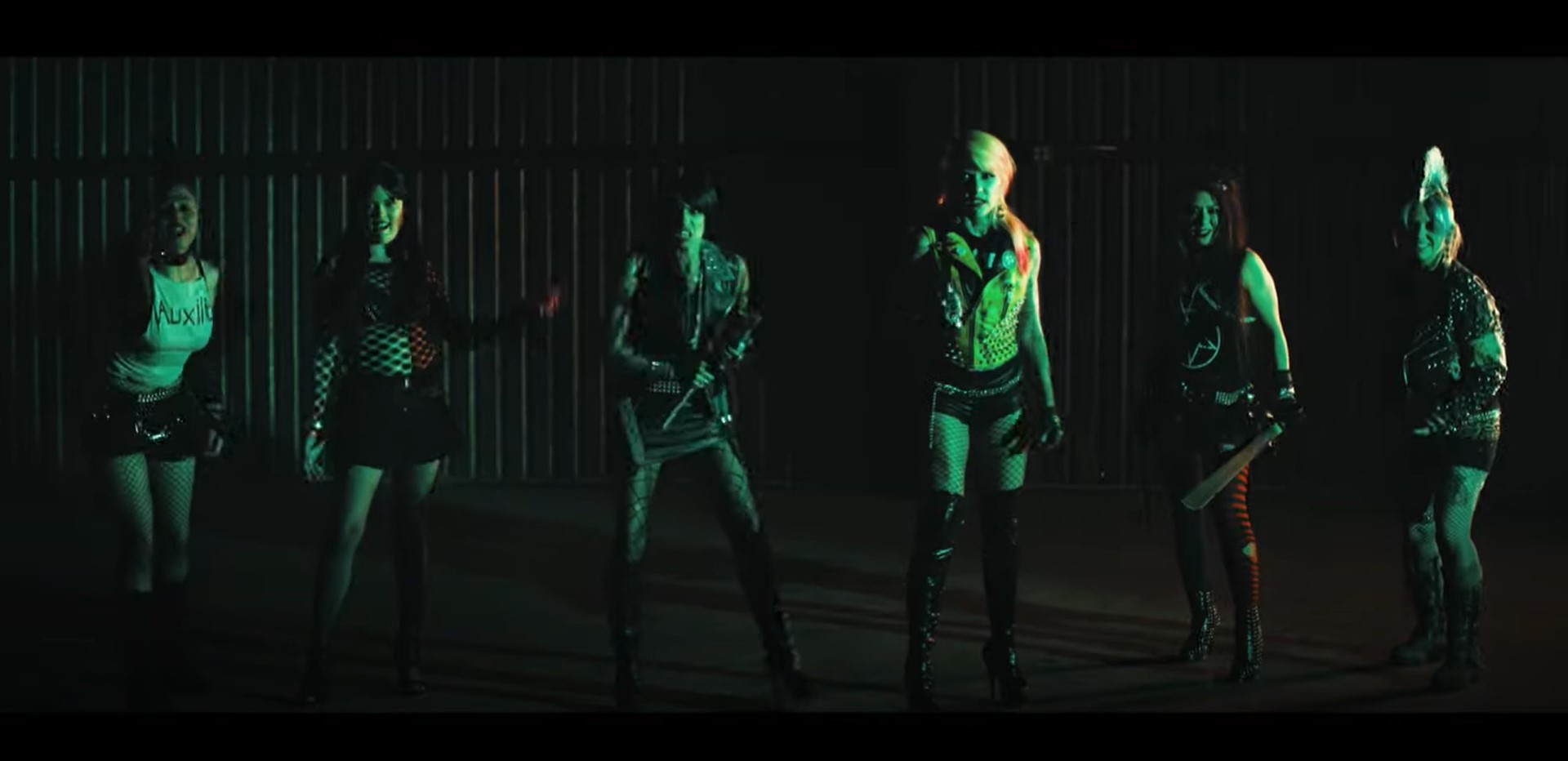
Sex Ritual Trailer (2026) on Vimeo

Mindy Robinson Takes on EVIL Strippers in “Brides of Satan” reviewed! (Dark Side Releasing / Blu-ray)


“Brides of Satan” available at Amazon.com!  DVD and Blu-ray!

Engaged happy couple Mary and Charlie want to dip their toes into debauchery before tying the knot.  When they patron a dive strip club, looking to unwind a nervous Charlie down a notch with a sultry, on-stage lap dance, the club is suddenly seized by three well-armed Satanist strippers looking for quick cash and a virtuous sacrifice to conjure a demon.  Kidnapped for the dark ceremony, Mary and Charlie find themselves in their grip with Charlie being murdered to complete half the ritual, but Mary is able to escape when a rival gang claims rights over the territory that sidetracks the Satanists summons.  Mourning over her fiancé’s death, Mary is taken under the wing of a junkyard sensei who trains her to fight and to be fearless against all those in her path for vengeance. 

From horror enthusiast Joe Bizarro comes the filmmaker’s first written and directed feature film, the pastiche grindhouse revenge-thriller “Brides of Satan.”  Bizarro, who co-produced “Another Plan from Outer Space,” the Lance Pollard offshoot homage to the Ed Wood Jr.’s iconic science fiction-horror “Plan 9 From Outer Space,” co-writes his 2021 exploitation with “Take Shelter” cinematographer and first time screenwriter Noel Maitland penned to be a wild-and-strange ride through the various territories of genre landscapes.  Film in and around the greater Los Angeles area, “Brides of Satan” stitches the perceived strange and unusual charisma of L.A.’s alt-scene offerings around a familiar framework with a few arbitrary bits of bizarre.  Along with Bizarro and Maitland is fellow executive financier Lance Pollard, who we mentioned had previous dealings with Bizarro, and the jacks of all trades Victor Formosa (“Iron Sky:  The Coming Race”) along with William Wulff, Celeste Octavia, Lisa Mason Lee, and Mike Ansbach serving as producers on the Joe Bizarro Studios labeled production. 

Right off the bat, the montage introduction of the tri-gang strippers, played by Alice McMunn, Joanna Angel, and Rachel Rampage, with sizzling eroticism and skin, seductively gazing into the camera and pole dancing captured in slow motion immediately sets the tone for the rest of the story. Laden from their colorfully neon-dyed hairstyles to their fishnet-led leathery platform heels with body ink, their focal opening is a bit of Joe Bizarro in a nutshell as well as an eclectic look into a cast comprised of goth, burlesque, body-mod, and fetish aficionados.  I was also hoping for a cameo from adult actress Joanna Angel’s husband Aaron ‘The Small hands’ Thompson, but alas, no such luck.  Though McMunn, Angel, and Rampage get the juices flowing and motivate the narrative into a plot point of character deconstruction, reconstruction, and revenge, neither of them are the top bill for lead role.  That responsibility falls solely on the “Evil Bong” franchise – wait, there’s an “Evil Bong” franchise? – actress Mindy Robinson that, through a (Joe) bizarro world, adds an interesting element of casting for the outspoken Republican commentator who happens to also be the girlfriend of former mixed martial artist and “Expendables” actor Randy Couture.  Robinson amiably plays a loving fiancé Mary to an equally amiably, yet unresolved, Charlie (Michael Reed, “The Disco Exorcist”). Eventually, Mary’s woman scorned vengeance becomes a juggernaut of kickass, learning geriatric kung-fu from a junkyard hobo, but Robinson disingenuously leaves her fluffy and bubbly self into a character who’s supposed to be this badass that beats half-naked Satan acolytes in one blow and can vanquish netherworld demons in the bat off an eyelash. Much of the film is Robinson promenading provocative and oddball locales, meeting more provocative and oddball characters, to track down her fiancé’s murderer in a forfeiture of commanding the scenes with scene-stealing presence. Though she bests an array of stud-cladded, garage punk baddies armed with arm drills, nail bats, and switchblades, their brief moments on screen leave more of an impact than the principal protagonist and much like the gang of three strippers, in which two-thirds of them cease to exist after approx. 15 minutes into the film, they’re built up as more prominent players in this psychos-ville showdown yet fizzle to literally just a passing moment in the narrative, giving way to a film full of nothing but near essentially cameos from Anatasia Elfman (“Shevenge”), Ellie Church (“Frankenstein Created Bikers”), Sarah French (“Art of the Dead”), and Damien D. Smith (“The Purge”). There are also true cameos from “Blood of the Tribades” filmmakers Sophia Cacciola and Michael J. Epstein, professional burlesquer Olivia Bellafontaine, and Madelyne Cruelly from the pirate punk band Yours Cruelly.

“Brides of Satan’s” gimmick is to live up to representing the yield of grindhouse cinema and for the most part, Joe Bizarro cultivates a passable resemblance by borrowing from the constructs and the ideals that came from them of the golden age of independent cinema decades between the 60’s and early 90’s and reworked them into his own passion project. “Brides of Satan” is undoubtedly derivative in most of designer elements, but I did find Bizarro’s concept of uniting the alternative network and B-movie troupers into a singular movement to be refreshing in it’s something you don’t regularly see or experience too often out of the shadows and living in the daylight. As disparaging as it may sound, the sensation becomes that carnival sideshow effect where the societal outcasted abnormalities entrance and pluck at your curiosity strings much to the same effect that ostentatious or surreal horror and sci-fi movies are a way to escape the harshness of one’s own bleak day-to-day reality. However, Bizarro didn’t quite achieve the paragon of his idea not because of his cast, who are mostly stupendously talented in their own rites, but rather more with a watery script barely sustaining flavor to its revenging aspects and supernatural rifts, the imbalance amongst characters, and a dialogue so intrusively oversaturated with hackneyed one-liners that the next words out of their mouths are predictable ones. That tiredness, that sparkless originality, that familiar taste again and again is what ultimately quells “Brides of Satan’s” fetching title and it’s weighted of promise.

Rowdy and burning with streaks of fluorescent colors, “Brides of Satan” is a come Hell and high-water tribute for exploitation film lovers and the Joe Bizarro debut is now on high-definition Blu-ray home video from Dark Side Releasing.  Presented in a widescreen 2.39:1 aspect ratio on a BD25, Bizarro and Maitland, whose technical trade in director of photographer is implemented here, opt for a tenebrously smoky and shadowy obscured grindhouse-noir that innately secretes tactile details but do offer that sense of mystique danger and a carnivalesque veneer at times, using lighting techniques to accomplish the desired look.  The English language Dolby Digital stereo has lossless quality from a 384kps bitrate that, despite its dual channel limitations, outputs decent robust tracks.  Dialogue is crisp and clear, ambient background noise and ransacking has ample range and depth, and the original soundtrack from Ausie Jamie Coghill (Jimmy C) of The Jimmy C Band offers a lounge-grunge-like Rock and Roll score hitting all the right notes apt to the narrative.  The opening monologue from Rick Galiher doing his best Vincent Price vocals.  If you closed your eyes and just listened to the tracks, you can distinctly hear every tone and note in everything from a wonderfully broad audible spectrum. The special features include an audio commentary with the director Joe Bizarro, a handful of deleted scenes and bloopers, a photo gallery of stills and alternate posters (which there are a ton of), and a short skit entitled “Rad Roommates,” a pseudo-sitcom produced by Bizarro about a man and his monstrous hairball of a lowlife roommate.  If you’re lazy and don’t feel like navigating through the menu options to the special features, wait until after the feature’s credits roll through as the special features will follow, beginning with “Rad Roommates.” The Dark Lord takes a bemusing backseat that drives “Brides of Satan” more toward solely being a revenge thriller with few incomplete spidering out subplots that belly up by its own creator. 

“Brides of Satan” available at Amazon.com!  DVD and Blu-ray!

The EVIL Peruvian Whistle of Death! “Face of the Devil” reviewed (MVD Visual / DVD)


Deep inside the Amazon jungle of Peru, seven friends getaway from university life by staying at a remote riverside resort.  No cell service.  No nearby towns.  The resort shelters an idyllic retreat for those looking to escape the mundane routine of the real world, but the jungle is also home to an indigenous evil entity, some may even label it the Devil.  Better known among the locals as el tunche, the trickster spirit prays on innocence and the naïve, psychologically tormenting with a foreboding whistle indicating it’s nearby presence.   With no help in sight and nowhere to hide, the jungle comes alive with an ear-piercing whistle that seeks to swallow the seven vacationers to their doom. 

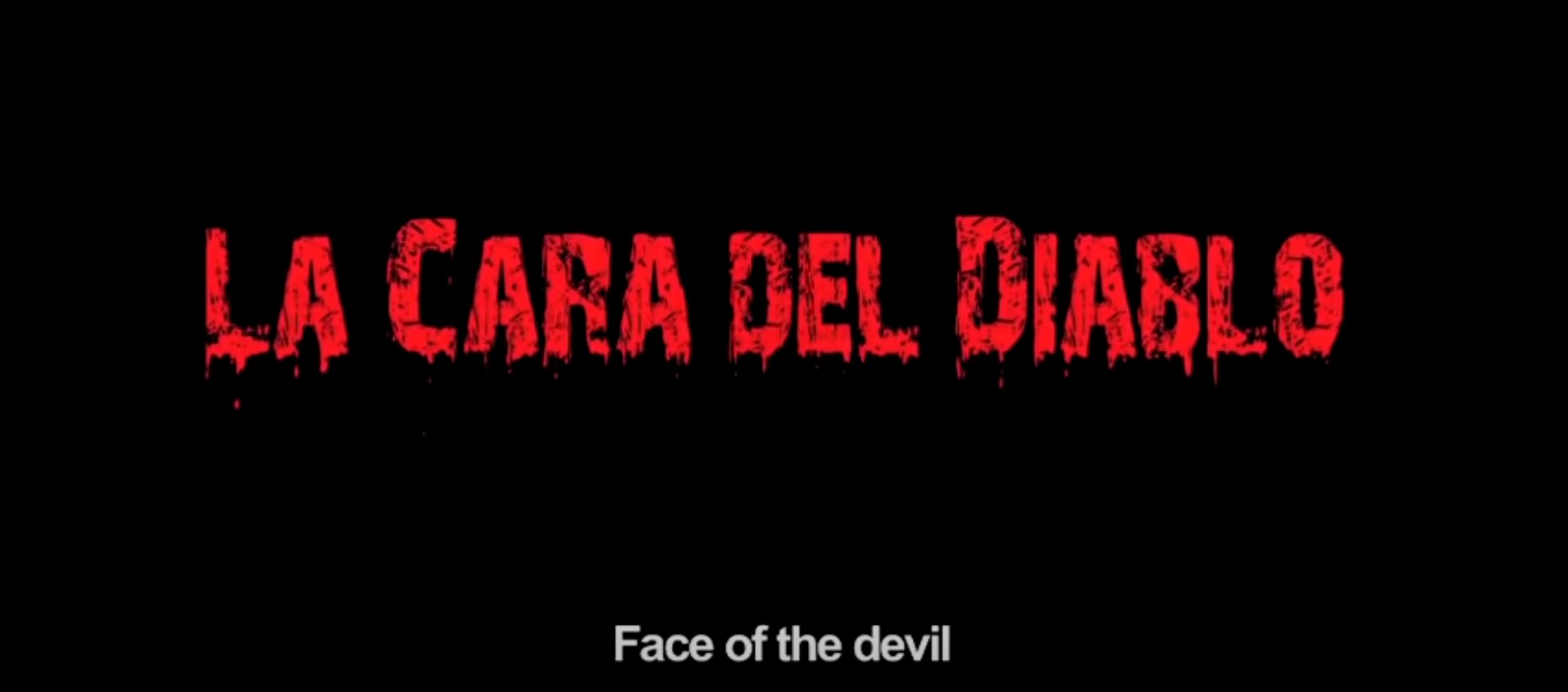
To some extent, horror lives and dies by permanency of myth and legends, cultivating inspiration from ancient, as well as new, mythical beasts and spirits and spin them into entertainment macrocosm or, perhaps, even to just simply to share the rarity of knowledge and heritage surrounding the tales.  If in American mountaintop forests bigfoot roams inconspicuously around populated areas, breeding enigma and scaring children around campfire stories, then in South American, el tunche does much of the same instillations for the Peruvians who inhabit their legendary fiend, preying on delinquent youths, in the dense jungle.  Outside of Peru or maybe even South America, el tunche is not globally known, but for one Peruvian film from 2014, local lore becomes broaden beyond confining borders and creeps right into our home video media players.  Director Frank Pérez-Garland helms the maligning mythos with “La Care del Diablo,” aka “Face of the Devil,” from a Vanessa Saba screenplay set in the ominous jungles of Peru plagued by a wandering and whistling evil spirit searching for those lost among the tall trees and foliage.  Peruvian based Star Films and La Soga Producciones spearheads the production located on set of an ecolodge in the uncommercialized area of Tarapoto just North of Lima and serving as producers are Gustavo Sanchez (“The Green Inferno”) and Varun Kumar Kapur. 

“Face of the Devil” is a hyper localized narrative that’s fully contained inside the jungles of Peru as well as a casting all Peruvian actors with zero other nationalities appropriating roles for a mythological tall tale extension that rightfully needs to be expressed by native filmmakers.  As such, you won’t recognize a face amongst the cast unless you’re eyeballs deep into South American cinema.   The film opens with a dream sequence of a young girl staring at her towering mother’s weird, unholy behavior that ends with her mother, played by writer Saba, quickly reaching out for child and abruptly awakens from the dream is Lucero (Vania Accinelli).  Lucero’s nightmares become an important reoccurrence, like an omen, that doesn’t seem to upset the college freshman despite the nightly fright, but other aspects upset her father to the point where he yells at her for wanting to go on a trip with her friends, signifying a quick trip into unspoken complications sanctioning Lucero’s mother death that worries the same fate may also fall upon his daughter.  Before we know it, a reluctantly agreed to Lucero is river boating with her six friends:  couple Mateo (Nicolás Galindo) and Fabiola (Maria Fernanda Valera), Camila (Alexa Centurion), Paola (Carla Arriola), Pablo (Guillermo Castañeda), and new boyfriend Gabriel (Sergio Gjurinovic).  The friends are seemingly full of life, love, and fun but the dynamic turns only slightly complex with love triangles that only go as far as being the butt of the weekend’s jokes.  The characters do very little in the story, splashing around in what seems to be an unreasonable number of ecolodge pools for most of the time while playing spin the bottle, truth or dare, skinny dip, or just make fun of each other because, as a trope bylaw, that is what college-age kids do to spark tensions and cause divisions, and I find the characters and their portrayers to be uninspired to do or be more that invokes the frisky wrath of el tunche.  Javier Valdez and Ismael Contrearas bookend the cast of characters as two polarizing stances on dealing with otherworldly spirits by either being cautions and frightened as Valdez is with Lucero’s papa or embrace the spirits for self-purpose as it is with Contreras who plays the resort owner. 

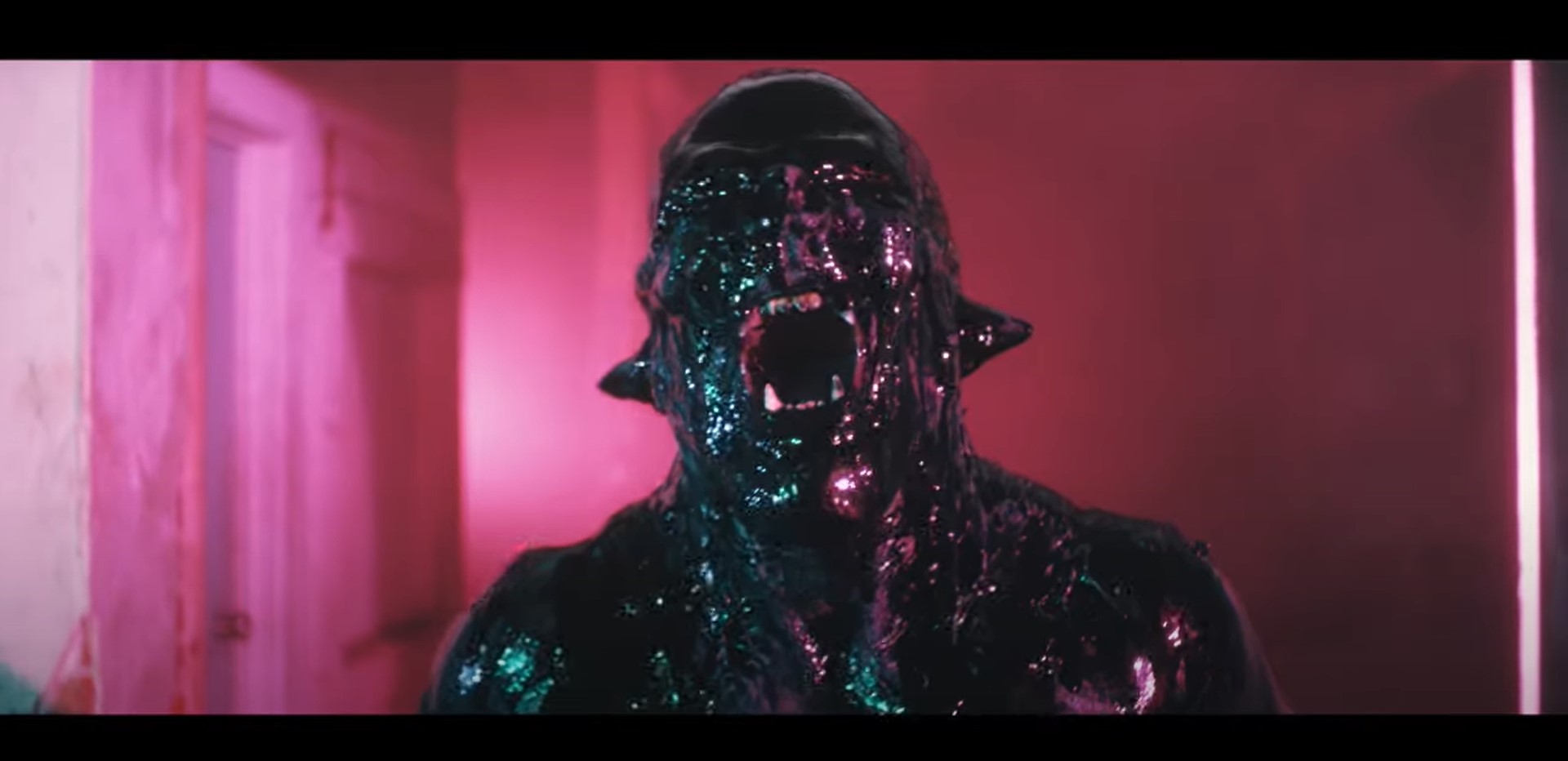
“Face of the Devil” has all the properties of an European-fried and campy-peppered supernatural kill tally, drawing elements from the jungle cannibal subgenre sans the cannibals and the teen slashers sans the slasher.   Instead, el tunche is an all but forgotten myth lost over time through the generations until “Face of the Devil” calls to mind the cautionary dangers of cultural wise tales for naïve and disrespectful youth who wind up on the deadly end of el tunche’s mean streak.  Saba’s script incorporates more than just your average urban legend come to life tale with a Diablo-sized pretext to why el tunche all of the sudden decides to besiege upon this particular group of vacationers.  Per the legend, el tunche gobbles up those lost in the jungle thicket, but Saba and Pérez-Garland’s religious context direction, including the motifs of the trinity cross and bodily possession, has the good-natured Lucero, infected by her mother’s randomized demonical occurrence, be the proximity key to el tunche’s unleashing.  Good versus evil also becomes strongly painted in the latter half of the narrative and is affixed to the lore’s distinctive construct.  The further Lucero is led from a path of spotless geniality, from her overprotective father, the more she experiences nightmares and the closer she is coming face-to-face with the malevolent forest entity feeding off her tarnished past.  Sadly, “Face of the Devil” weans off from nurturing el tunche into a singular idea with the entity depicted as, but limited to, an invisible presence, a black oil spill in the water, a pulsating yellow glow, or as Anna Gonsalves says in “Predator,” the jungle came alive and took them.  Even the current DVD release represents el tunche as a Lovecraftian-like creature with tentacles coiling out of the jungle river water and enclosing around a bikini-cladded sex symbol with a tattooed vagina – provocative!  Yet, inaccurate.  There are no tentacles and no woman with vagina ink.  “Face of the Devil” struggles with character motivations, sending boyfriends off into the woods without tools or guidance to find help, leaving the story to fend for itself solely on a slap-dashed gory ending that’s a little too late in salvaging the ferocity of one of Peru’s most mythical phantasmas. 

Like aforementioned, the DVD cover is a tad misleading, enticing with sex and tentacles topped with DEVIL in a big red font.  Now, you can go in eyes wide open with your own copy of “Face of the Devil” distributed by MVD Visual in collaboration with Jinga Films and Danse Macabre.  The single layer, single sided, region free DVD5 is 77 minutes presented in a widescreen 1.78”1 aspect ratio. Reason behind discerning the storage format to be a DVD5 is evident in the compression issues that clutters the picture with artifacts, leaving highly noticeable splotches to shake details to the core. There’s also the use of the vapid gray tint insipidly squashing any color and life from the lush green jungle Pérez-Garland finds himself extremely lucky shooting inside. Watching “Face of the Devil” felt cinematography akin to an episode of “The Handsmaid Tale” or “The Walking Dead” where a bland overlay masks more than just brightness and beauty of natural hues and light. The Spanish audio mixes have two lossy options – a 5.1 surround and a 2.0 stereo. Switching between the two, the 5.1 obviously has a little more robust soundtrack during the cacophony of jungle augury. Snakes hissing, bat clicks, the comprehensive soundbites of other animals in audio vibrational flight combined with the intense whistle, like a diluted train whistle, has ambient staying power to be the most effective element to el tunche’s death harbinger presence. Dialogue is less robust but prevalent and the English subtitles synch well without error. As far as special features, nothing beyond that of the static menu and there are also no bonus scenes during or after the credits. The opening title card credit sequence is about as artistic as the film allows itself to be only to then dwindling into pedestrian territory. Set in the Peruvian jungle deemed to be a major waste of location perfection as much of “Face of the Devil” buoys chiefly poolside with the cheap Dollar Store adhesive tape barely coupling a connection between local legend and the Devil in this wet behind the ears teenager-in-danger yarn.

“Face of the Devil” available on DVD at Amazon.com

The Devil’s Tongue is a Powerful, Influencing EVIL. “The Dark and The Wicked” reviewed! (Acorn Media / Blu-ray)


Siblings Louise and Michael Straker return home to their farmland house when their terminally ill father becomes bedridden.  A long time alone and isolated before her children arrived, Virginia provided suitable care for their father up until the voices started.  Lurking in between the shadows around the rural home, a menacing presence wedges itself into an already splintered family spirit as the harbinger of death coming for their father’s soul.  The influence of voices and grim visions tatter Louise and Michael resolve, testing their unconditional love for family and moral obligations, but evil can be very persuasive the closer their father comes to his end. 

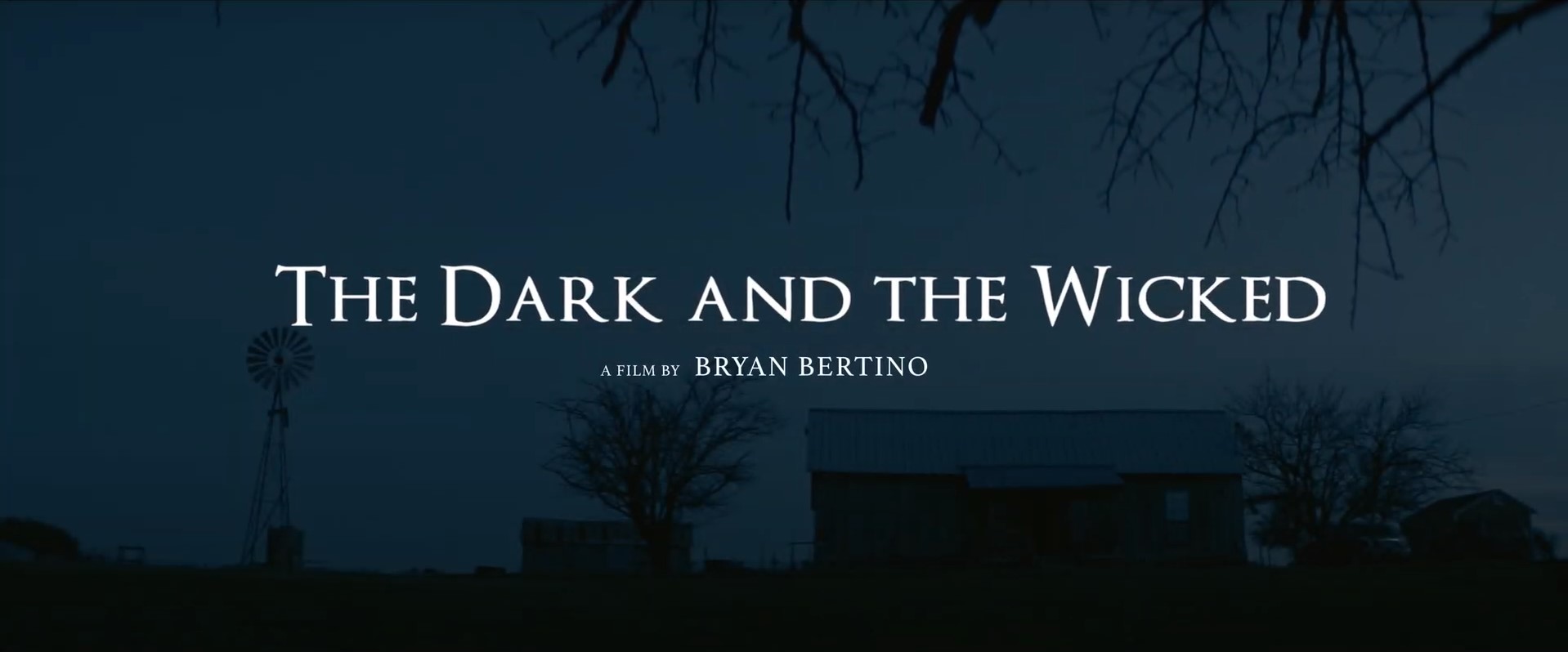
The battle grounds of losing oneself during the verge of loss has commonly been a recurrent topic amongst indie films.  For filmmaker Bryan Bertino, the concept feels deeply personal.  “The Strangers” and “Monster” writer-director’s latest discomforting horror film, “The Dark and the Wicked,” uses Devil speak in mass, detrimental volumes as an allegoric device for the internal deconstruction of family, capitalizing for his tale the use of his family’s rural Texas farm house written as a threatening locale of isolation and the tenebrous unknown.  “The Dark and the Wicked’s” paganistic undertones heavily perceive a dissipating family structure’s disconnect from not only God but from the community who has been all but absent from coming to the fictional Straker family aid.  The 2020 released film is produced by Bertino’s production company, Unbroken Pictures, alongside Shotgun Shack Pictures (“Hurt”), Traveling Picture Show Company (“The Blackcoat’s Daughter’), and in association with Inwood Road Films.

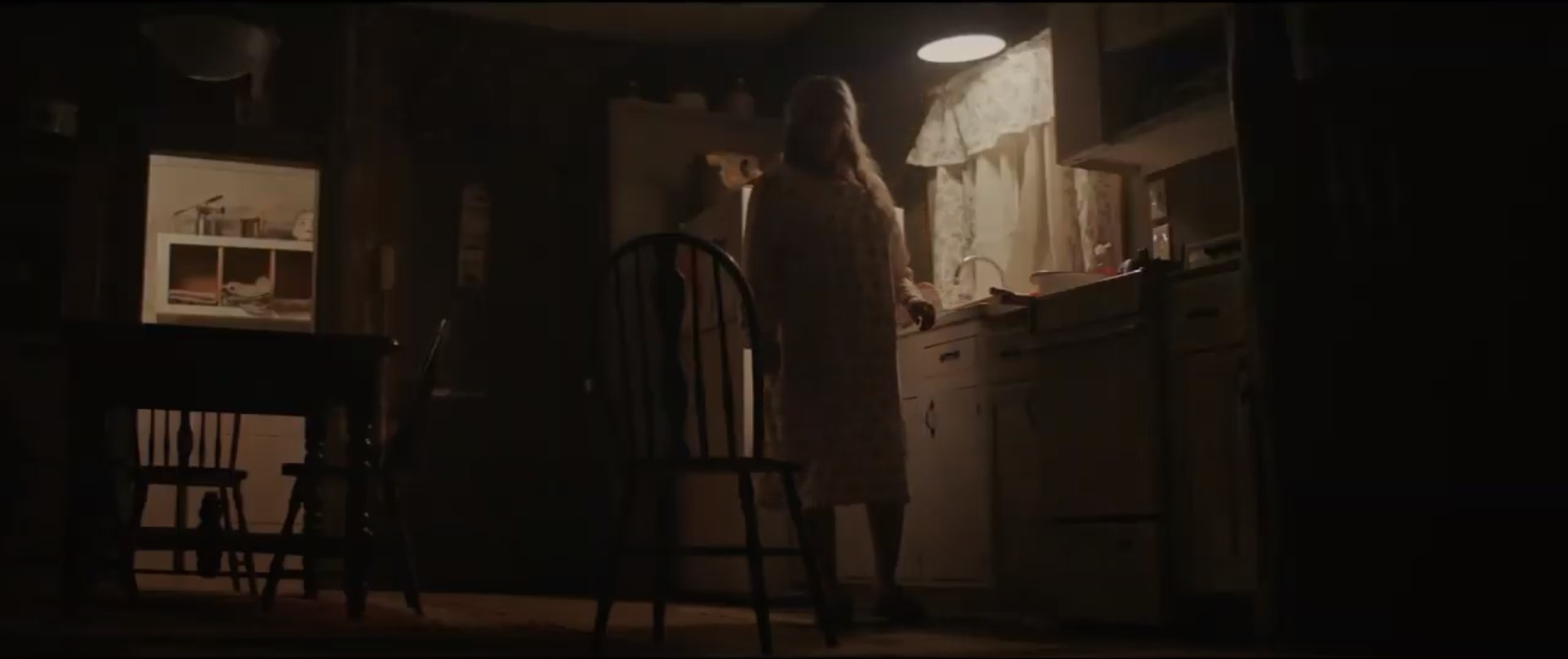
To play characters accustomed to the rural lands of the Texas outskirts, “The Dark and the Wicked” required a range submerged with leisurely movements, a Lonestar draw, and to, of course, look good in plaid and Wrangler jeans.  The cast that emerged was nothing short of spectacularly precise in fabricating the lives of remote lives rural Texans, opening with a Texas-born Julie Oliver-Touchstone (“Bounded by Evil”) sewing dresses in the barn, tending the farm’s goats, and chopping produced in her white nightgown as who will be the catalytic mother, Virginia Straker, that passes not only the 24-hour hospice care to her children but also all the beneath the light misery that drives her terrified.  The girth of the story revolves around, Louise, “The Umbrella Academy’s” Marin Ireland, and Michael, Michael Abbot Jr. from the upcoming “Hell House,” as sister and brother who return back home upon the news of their bedridden father (Michael Zagst).  At this point in the story, where we meet Louise and Michael for the first time, a shrouded background puts a delectable side dish of mystery into making them initially interesting, but over the course of the 96 minute runtime, the enigma dissolves around why Louise no longer works from the Postal Service and what’s stringently being shied away from the thick layered division between the siblings from being close to one another.  The impending standoffish goes unspoken, never comes to a head between them as like the unfolding of “The Strangers” where Liv Tyler and Scott Speedman unravel and expose their marital struggles with the invisible wall between them before, and even in the midst of, being terrorized.  There’s something there that isn’t being part of the exposition or coming back around when the Devil comes really calling for their father’s doomed soul.  Instead, Ireland and Abbot simply assimilate well enough into their falling into farm life dynamics as the sister who must shoulder the responsibility of hospice care and the brother overseeing what could be considered man’s work of handling the duties of raising livestock.   We also get some messed up supporting second fiddlers to execute Satan’s handywork with performances Lynn Andrews, Tom Nowicki (“Conjurer”), Mindy Raymond (“Bigfoot Wars”), and “The Walking Dead’s” Xander Berkeley channeling his best Julian Beck’s Kane performance as a sinister Priest making a house call.

Bryan Bertino has a stillness about his films. Their creepily quiet, stirred in a somber stew of macabre, and utterly deranged in a nihilist coating. What appeals to me about “The Dark and the Wicked,” as well as “The Strangers,” is Bertino’s gift to deliver powerful fatalist realism. His stories couple earthly family drama with otherworldly malevolence stemmed from the deeper affects of prolonged relationship breakdowns that literally assigns a demonizing blame on the supernatural for people’s own crumbling failings. Another aspect is the godless presence wholeheartedly felt throughout from the Straker’s loud and proud proclamation of atheism to the lack of religious artifacts. Michael nearly tosses the priest out of his keester just for making checking and noting his mother’s recent unbeknownst connection to God to which Michael took great offense. This leads into the Straker’s lack of community connection as they seemingly are adverse or are agonized by those who wish to help and those who rather seem them burn under the guise of the malice presence. Goats are thematically prevalent to the story, especially when the shadowy Wicked hides amongst the herd, like a wolf in sheep’s clothing. Goats are often associated with Pagan beliefs, such as with the deity Baphomet, and the evils marked upon them by cultures all around the world and by having the Straker farm be a goat farm is more than just coincidence. “The Dark and the Wicked” brings chaos and confusion much like any circumstances where one or both parents die and all the burdens, all the consequences, and all the pure emotional baggage that comes with death is passed to the children whether the Devil is involved or not. When broken down rudimentary that decline of hope and overwhelming grief can cause a great amount of destruction for any family and even extend to friends with suicide being heavily portrayed in the film. Bertino masterfully touches upon every collateral damage output leaving no one spared from death’s, the Devil’s, hopeless hold on them.

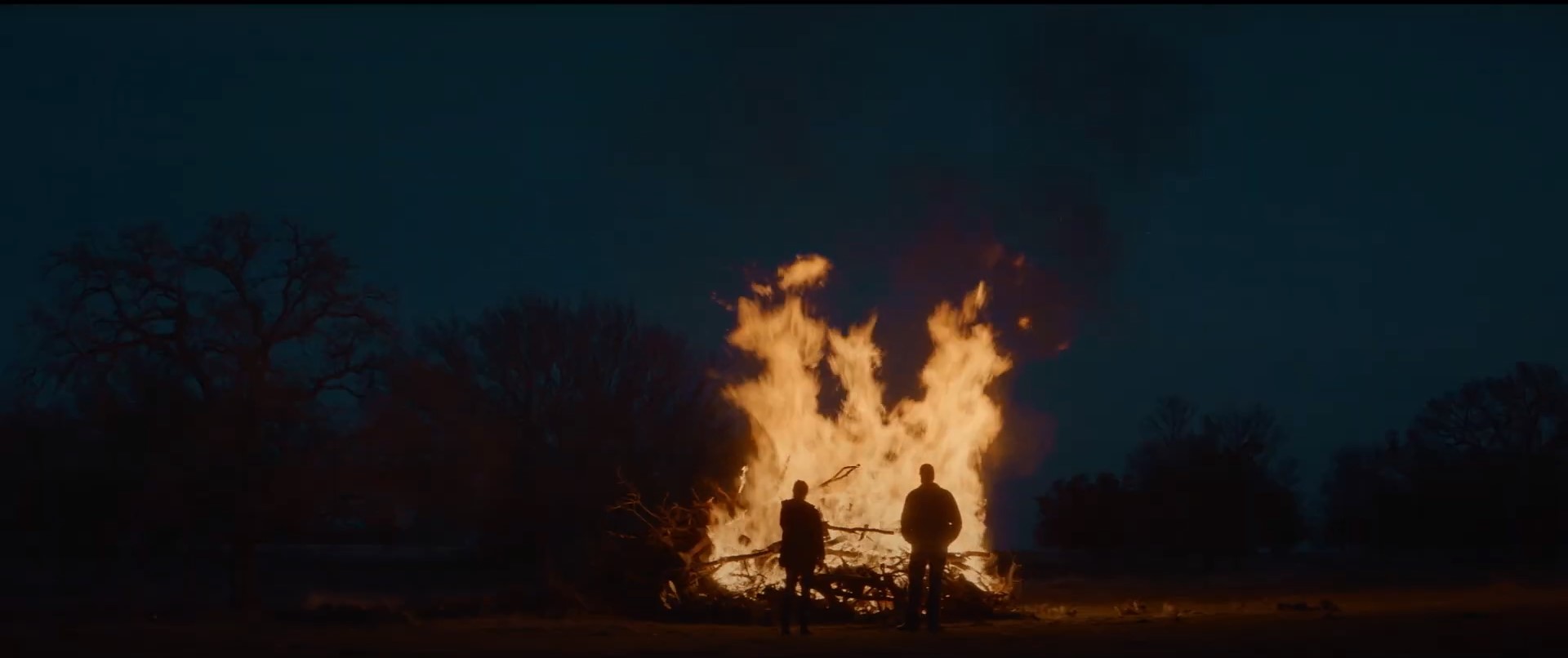
Filled with frightening imagery, plenty of toe-curling suspense, and a loud silence of utter despondency, “The Dark and the Wicked” is a must own for any horror fan and, luckily for you, Acorn Media International just released the Bryan Bertino film on Blu-ray in the UK in alliance with horror’s favorite streaming service, Shudder. Listed as region 2, but more accurately a region B in Blu-ray format, the PAL encoded release is presented in a widescreen 2.39:1 aspect ratio. If there was one word to describe the comprehensive picture that word would be dark. Bertino maintains an eclipsing cinematography through hard lighting, matted lifeless colors, and a reduction tint to give it that extra gloomy blackness. Cinematographer Tristan Nyby’s first collaboration with Bertino is also the first debut into the genre field and Nyby comes out on top with an ability to show just enough, whether through shallow focus or obscured wide shots to always keep the depth and range of the unknown factor alive and frightening. In regards to the Blu-ray quality, “The Dark and the Wicked” has little to offer in details not because of the lack there of but because much of the film is shot in the dark, a fine midnight black with little-to-no wish or noise, and dim lighting . Facial details do appear slightly soft as you can’t make out the blemishes or even skin pores, but the intentional flat coloring steers much of that away from the senses. The English language DTS-HD Master Audio 5.1 surround sound is a boost of jumpscare ambient effects. The range and depth finely pitch the position of well-timed scares, especially when the strung together bottles, glasses, and cans rattle in a discordance. Dialogue has lossy muster that makes discerning characters’, especially Michael or his mother, Virginia’s, Southern draw. English subtitles are optional. Special features include only a Fantasia Q&A with actors Merin Ireland and Michael Abbott Jr that dive into their characters quite a bit and into Bertino’s morose mindset. Bleak and genuinely personal on a whole other level, “The Dark and the Wicked” is quintessential truth when talking about the Bryan Bertino Americana horror film and, believe you me, expect more devilish descriptors that’ll shock you.

The EVIL Experiments of Dr. Frankenstein’s Great, Great Grandson in “The Hideous Bog Monster” reviewed! (Cheezy Movies / Digital Screener)

Fouke, Arkansas is a small town about to have big problems when a maximum security hospital maniac escapes and now roams loose in the woods.  Disguising himself as the infamous hairy bog creature of local lore, the lunatic embarks on a killing spree, massacring the local game hunters, and collecting their dead corpses for the unholy experiments of Dr. Frankenstein, the fourth generation heretic from a long lineage of conducting evil scientific practices.  Together, the lunatic and Dr. Frankenstein plan to use a stolen ancient Vatican book, not meant for the eyes of man, for his sadistic work of defilement, but a supernatural warrior, an elite team of Vatican assassins, and the local yokels seek to join forces to stop evil at all cost. 

Backwoods horror has never been more backwards when trying to absorb James Baack’s escaped lunatic killing, Satanic cult worshipping, slasher-esque aping, demon slaying, rootin’-tootin’ “The Hideous Bog Monster” released in the most backwards, backlogged, backache year of the global pandemic of 2020.  By now, you’re probably thinking you’ve never seen so many backs in one sentence in all your life, but James Baack, who wrote and directed the 2020 film, is no stranger repeating himself at the helm of homemade schlock and title pulpy horror as the filmmaker has made a career behind the 70’s-inspired horror entitles, such as “Dracula’s Orgy of the Damned” and “Werewolf Massacre at Hell’s Gate.”  “The Hideous Bog Monster” is a production of Baack’s Chicago-area centric The Great Lakes Artists Group, using the Arkansas folklore of the Fouke Monster of Boggy Creek as a foundational backdrop for more sinister practices, shot in nowhere near Arkansas, but all over tarnation in Illinois.

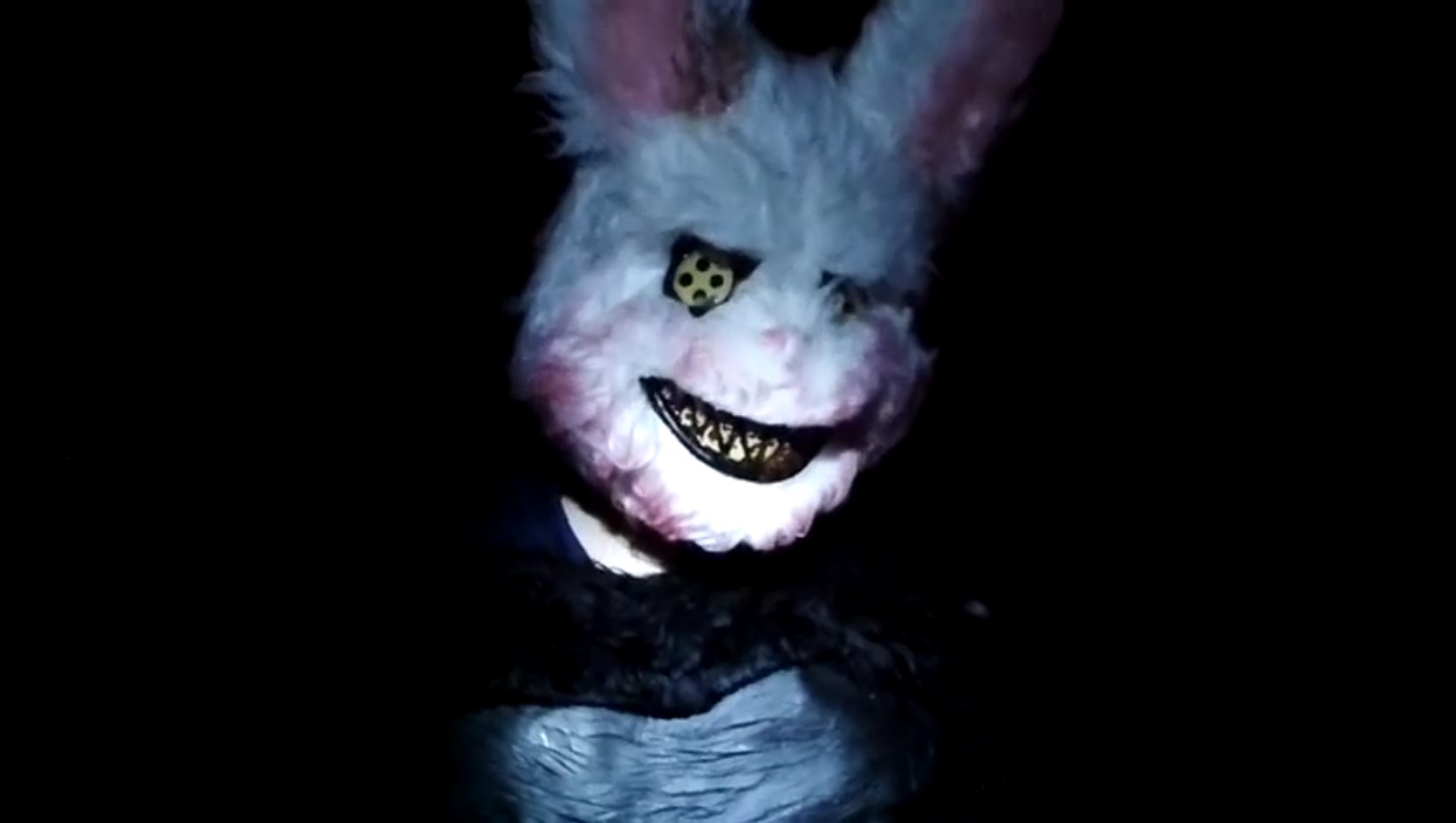
Movies similar to “The Hideous Bog Monster” usually involve a tightknit troupe of cast members that have performed in some way, shape, or form in previous James Baack productions in a kindred melting pot of close friends and family members.  Tina Boivin is one of those actresses who has had a role in every James Baack film to date.  This time, Boivin braided her red hair and hiked up her booty shorts resembles a redneck version of Dave Thomas’s Wendy in Sally Bell, a foul-mouth, uncouth, hayseed maiden caught in the mix of all hell breaking loose in and around Boggy Creek.  Sally Bell is joined by her equally unsophisticated friend, Flunky (James Baack), and the elite Vatican hitwomen, The Sisters of St. Tommy Gun, to do the Lord’s work with disparate to the story planetary names in Sister Saturn (Bianca Baack), Sister Venus (Jenna Aboukamar), Sister Jupiter (Tanya Raz), and Sister Mars (Suzy Streske).  As what seems like a climatic clash of a good versus evil showdown, the action is sorely subdued to little excitement, exhilaration, and enthusiasm to the spirited adversaries who are eager to destroy, but barely use the zapping powers, automatic rifles, submachine guns, and hand-to-hand combat blades they’ve been so graciously armed with and, instead, Baack weaponizes only the wit of Sally Bell to verbally assault otherworldly demons. Hasn’t the filmmakers heard of sticks and stones will break my bones, but words will never hurt me? Depth is also lacking behind the eyes of every one-time use characters, especially in Herbie Savages’ deranged killer dressed up in a Spirit Halloween bought gorilla outfit to exude his insanity and obsession with the Bog Creek monster. The remaining cast rounds out with Andrew Baack, Wendy Pierson, Kandace McVickar, Steve Galayda (also producer), Nicholas Baack, Evan Pierson, Tom Ziellienski, and Pete Alessi as Dr. Frankenstein.

“The Hideous Bog Monster” follows no rhyme or reason story structure that ultimately feels, at every possible angle, very arbitrary coming to ahead. Paced like a slug riding a sloth dragging it’s long-nailed feet through the strong winds of category five hurricane, a resembling randomizing character generator also creates pop up characters adding to the enigmatic puzzle dish of cryptic and longwinded exposition and then disappear in the blink of an eye in a fueling the flame to only be quickly extinguished in a heap of plot-choking smoke moment. Between pillaring principle leads are the Witch, Lumpy, the Apprentice, and even Dr. Frankenstein, who exceed the amount of allotted strain in following these half-built story arcs, causing a major slow down of the story progression. Partnered with run amuck scenarios that have little-to-no links of connective tissue also dampens the likelihood of seeing “The Hideous Bog Monster” from beginning to end without feeling either confused on just about everything thrown at the audience, hoodwinked by the decently illustrated poster art, or exhausted to the point of surrender in keeping up with James Baack’s four-letter word spouting clunker. Much like many urban legend spun horror films, the Fouke Monster has had about the same amount of butchered luck down the cinematic avenues as Big Foot and there have been better films, such as “The Legend of Boggy Creek” in 1972 to “The Legacy of Boggy Creek” in 2009, inspired by the nefariously elusive swamp creature since the mid-70’s after it’s so-called sighting in Fouke Arkansas.

Another small town is on a trope-laden path to terror as “The Hideous Bog Monster” set to be unleashed upon us all in 2021 on DVD courtesy of Cheezy Movies (aka Trionic Entertainment). The region free, 110 minute runtime release will be presented in a widescreen, 16:9 aspect ratio, and will be not rated. While I can’t comment on the DVD’s audio or visual components due to the digital screener provided, the SOV-esque of “The Hideous Bog Monster” shimmies barely into the said style made popular in the low-budget 80’s and 90’s horror scene, capturing crudely the video recordings of creative horror filmmaker and despite poor output quality, regardless of a digital screener or not, but Baack was able to garnish some respectable eerie shots like the opening of the film of a young boy wondering through a desolate trailer park on a foggy day. What happened to the young boy after being chased by the phony bog monster? Nobody knows and nobody explains what happens, what’s going on, or where’s things are going as gaps continuously riddle holes in James Baack evil has come back to small town America in a slap-happy slap-comedy horror squeezed dry of terror, but pumped full of unfunny hillbilly rhetoric.Another small town is on a trope-laden path to terror as “The Hideous Bog Monster” is set to be unleashed upon us all in 2021 on DVD courtesy of Cheezy Movies (aka Trionic Entertainment). The region free, 110 minute runtime release will be presented in a widescreen, 16:9 aspect ratio, and will be not rated. While I can’t comment on the DVD’s audio or visual components due to the digital screener provided, the SOV-esque of “The Hideous Bog Monster” shimmies barely into the said style made popular in the low-budget 80’s and 90’s horror scene, capturing crudely the video recordings of creative horror filmmaker and despite poor output quality, regardless of a digital screener or not, but Baack was able to garnish some respectable eerie shots like the opening of the film of a young boy wondering through a desolate trailer park on a foggy day. What happened to the young boy after being chased by the phony bog monster? Nobody knows and nobody explains what happens, what’s going on, or where’s things are going as gaps continuously riddle holes in James Baack evil has come back to small town America in a slap-happy slap-comedy horror squeezed dry of terror, but pumped full of unfunny hillbilly rhetoric.


Purchase “The Hideous Bog Monster” on DVD by Clicking the Poster!